I understood parts of it. The hero, Howard Roark, is intended, I think, to represent the ideal man in Ayn Rand’s terms: he is self-made, dependent upon no one else, answers to no one but himself, acts for no other reason than his self-interest. He is not selfish in that he does not take things that he does not earn, does not steal from others nor hoard things that others would find valuable; he does not seek to impose his ideas on anyone else. He is a mix of what I would call an artist and what Rand would call an artist, in that she puts a higher premium on production and industry than I do, and thus Roark’s art – architecture – is seen as grander, by Rand than it is by me, because Roark erects man’s greatest achievement, in Rand’s view: the skyscraper. The city. I don’t know that I see cities as the ideal human creation, but I agree that architecture is an art with a particularly elemental aspect, in that architects build our homes, build our places, and thus have great influence on our lives. I can live with that as a sort of pinnacle of value.
(By the way: it isn’t that I would argue that architecture is a lesser art than, say, literature or music or painting; it’s just that art has to have an impact on the viewer to achieve its highest, or deepest, effect, and for me personally, a building doesn’t have the same magic as the perfect poem or song or painting. Totally subjective. Speaking of subjective, Rand keeps trying to pawn off Roark’s architectural style as the perfect ideal, and I don’t see it that way; she’s clearly a fan of Modern architecture, and I like several styles. Unimportant but kind of annoying while I was reading.)
The villain, Ellsworth Toohey, is the opposite of Roark. He lives entirely through others, but focused on himself in a purely selfish, greedy, and therefore evil manner: Toohey seeks to control others, to force them to obey his whims, for no other reason than because he desires that control (Rand hints, as she states more clearly in Atlas Shrugged, that by denying his own self-interest, what Toohey really wants both for others and for himself, is death. Okay.). He uses public opinion, which he can sway, to intimidate or extort others until they obey him; if they will not, he tries to use it to destroy them. He tries to destroy Roark because Roark can’t be controlled, because Roark doesn’t care about public opinion. (One of the best exchanges in this book is when Toohey, having used his manipulative wiles to screw up Roark’s life, catches Roark alone and says, “You can tell me what you think of me,” because he thrives on hatred and envy and bile. To which Roark responds, “But I don’t think of you.” That was a great line.) But because Roark doesn’t care about public opinion – because he lives only for his own happiness, using only his own reason to determine his value – Toohey’s attempts to destroy Roark do not work. Roark, like the honey badger, doesn’t give a shit. I appreciate that. I can even admire it.
The other character I understood was Peter Keating. Keating is not the opposite of Roark, but the negative of Roark: he cares only for public opinion. He never uses his own standards, nor even his own ability to accomplish anything; like Toohey, he excels at manipulation, and Keating uses that manipulation to worm his way into people’s trust and then take credit for their work. He is supremely successful because of that, and absolutely miserable: the opposite of Roark. (Keating too is an architect.)
I got all of that. I could appreciate that story, of Keating competing with Roark and not really understanding why he feels like he’s losing even though he wins every award, every contract, every accolade that he and Roark both try for. I could appreciate the story of the evil Ellsworth Toohey trying to destroy the good Howard Roark, and Roark essentially winning that fight even though Toohey is appallingly effective at manipulation, just because Roark doesn’t care what anyone else thinks, and because he is good enough at what he does for the quality of his work to show through despite what the critics have to say about it (Among other things, Toohey is the premiere critic of architecture in the book.).
What I didn’t get, though, was the love story. The female protagonist is named Dominique Francon: she is the daughter of Peter Keating’s boss and predecessor as most-successful-but-least-actually-talented architect, and she is, like Toohey, a critic of architecture. She is also, like Roark, a Randian ideal in that she thinks for herself and cares not at all what others think of her. She enters into relationships as a self-interested party offering value for value, which is how Rand says that love should work.
The problem is that she loves Howard Roark. It wouldn’t be a problem, because Roark is the ideal man and therefore of course she loves him, except: their relationship starts when Roark rapes her. Straight up, not simply according to my overly-sensitive interpretation; Roark breaks into her house at night and rapes her, and when she refers to it later, she says “He raped me.” And then they love each other. They love each other so much, in fact, that Dominique leaves Roark and marries Peter Keating. Who, because she does not at all love him, she does not respond to, turning into a lifeless mannequin whenever he touches her (A particularly distasteful element that Rand also played up in Atlas Shrugged, with one of the female villains in that book.). Now, Dominique does this ostensibly because she can’t stand to watch Roark go through the crap he has to deal with from Toohey and all of his allies as they try to destroy his reputation and therefore the man himself, but I really don’t get it. I don’t get why she marries Keating, I don’t get why she then leaves him and marries Gail Wynand (who I also don’t get), and I don’t get why she loves Roark after he raped her. I don’t get what Rand is trying to say with all of this. I don’t get why Dominique is the ideal woman when her major quality seems to be her unearthly beauty (Which, as an unimportant side note, I also couldn’t see simply because Rand’s idea of beauty is not mine: Dominique is tall and thin and pale and cold and has hair that is repeatedly compared to a helmet complete with metallic sheen. But that’s neither here nor there: if she had been described as my ideal imaginary woman, I still wouldn’t understand her actions or role in the book.) and her determination to leave the man she loves and marry a man she loathes. I don’t get how that’s good.
My problem with the book is that the parts I didn’t get took too much away from the parts I did get. I can’t root for Roark when he’s a rapist. I can’t root for Dominique when I don’t know why she does what she does. I can’t root for Toohey or Keating when I do understand that they’re scum. I would actually root for Gail Wynand, who is a badass and also a Randian ideal: he is self-interested, motivated, hard-working, and entirely self-made. It seems that his failing that makes him a flawed character is that he has built an empire based on public opinion rather than his own ideals and reason. Wynand sought power, and he found it along with wealth by becoming William Randolph Hearst: he owns all of the trashiest, most sensational, and most successful newspapers in the country. In the second half of the book, Toohey goes after Wynand (Because Wynand has power that Toohey wants), and Wynand is finally destroyed by Toohey, though Wynand makes it a Pyrrhic victory for Toohey. I’m not sure why Wynand loses, though. Rand shows how manipulating public opinion, and really socking home the idea that altruism is the only good and anyone who is wealthy is greedy and therefore vile and selfish, can destroy an empire; that’s how Toohey takes Wynand down. But I think Wynand is not supposed to be a victim, here: he is somehow partly responsible for his downfall. He used his papers to manipulate public opinion in order to garner power, and that is finally turned against him; I suppose that is his evil, his tragic flaw. But I feel that undercuts the message of Toohey’s villainy, and it made me unsure if I should be mad at Toohey or Wynand. And then there’s the fact that Wynand falls in love with Dominique, and she marries him and loves him on some level – but then drops him like a hot rock and goes back to her rapist. (And I feel like I’m supposed to appreciate how Dominique can look past the fact of her rape, and therefore I’m being like a stick in the mud or a prude or something by harping on this. And if so, well, bite me.) So is this more evidence that Wynand is flawed and I’m supposed to admire Roark more than Wynand? I don’t. I see Wynand’s evil side, in his abuse of power; but I see Roark’s evil side in his abuse of Dominique. And Dominique’s evil side in her betrayal of – well, everyone, in one way or another; particularly herself.
Basically, I dislike everyone in this book, and so I can’t see the ideal aspect I’m supposed to appreciate and try to emulate. I was not made happy by the happy ending.
So I figure, either I didn’t understand the book well enough to appreciate it, or I did understand it, and it’s pretty much evil crap. Either way, I can’t recommend it.
I invite anyone who feels they can explain the book to me to do so. I completely accept that I am not a fair judge of it because I didn’t really get it, and I would like to understand it even if I still don’t agree with it, should that be the case.
We say we have to get me out of teaching. We say it often, laying in bed at night before we turn the lights off, when we usually turn to face each other, heads on pillows, and sort of put a punctuation mark on the day – sometimes an exclamation point, sometimes a question mark; but usually just a comma or a semi-colon, because the end of the day is almost never an ending, almost always a brief pause for breath before we go on with the next clause, the next day, separate from the last but still connected – always connected.
My life is a run-on sentence. And I don’t know how to stop it.
No: I know how to stop it. (And I’m going to leave this metaphor behind now, this navel-gazing grammatical pun. Jesus, Dusty. Get a life.) I could change my life quickly if I leave everything behind, including my wife and my pets, a sentence that took me several tries to actually write. I could change everything if I left everything. I do what I do so I can earn what I earn so we can live how we live: as we. But our bed, where we lay at night together, is actually the ground at the top of a cliff. Everywhere I go, I am at the top of this cliff. At night we lay together, our heads heavy on the pillows, and we look into each other’s eyes and I tell her how much I love her and she smiles at me and I love her more, and then we kiss goodnight, and roll over – and I stare off the edge of the cliff.
The cliff is the edge of my world. I don’t mean the end of life; I’m not talking about dying. I’m talking about where the place I am, the place I live, where it ends, abruptly, startlingly, dangerously. Honestly I have pretty much always stayed near that cliff’s edge, in various ways. But never too near: because I am a coward, I think. And though every night I look out into the open air beyond that cliff, to actually jump off that cliff and land somewhere entirely different – or perhaps instead of landing, take flight and sail across the sky, which is how I imagine it would feel to be a writer – I would have to leave behind everything I am now, everything that is this place where I live, this life where I live, where I sleep with my head heavy on my pillow and my eyes straining to look out farther but tired, so very tired, with the looking; but behind me (or no: before me, between me and the cliff, not to protect me but because she is even closer to the edge of that empty space that might hold a new life) is the best woman in the world, and at our feet lies the sweetest dog I’ve ever known, and nearby are a bird and a tortoise who need me, who are tied to me, who are weighing me down. And none of them – not even the bird, sadly – can fly.
Let me be clear: it is not my wife’s fault. She never asked me to get this job, never demanded a larger home, a larger paycheck, health insurance, stability, all the tethers of the modern world that tie me down at the top of the cliff, safe and immobile, able to turn my head and look out to eternity, growing and throbbing out there beyond the fall to the bottom. She doesn’t demand them of me now, never tells me when I talk of leaving teaching that I can’t do that because the family relies on my stable income and health insurance. She has never said that once. She never would. She lies with her head on her pillow, holds my hand, her fingers exploring mine as she imagines drawing my hands (as she imagines drawing everything), and says, with her eyes sad, “We have to get you out of teaching.” Now that she has tethered herself down right next to me – but closer to the edge of the cliff than I am – she says “We have to get ourselves out of this.”
Then we talk about how we can be free, mobile, able to pick and choose what we do with our lives, if we just buckle down and teach for three years and pay off all of our debts. Maybe four years. Maybe five. Tethered down right at the edge of this cliff, looking out into space, lying with our heads heavy on the pillow, holding hands.
I’ve never jumped off a cliff. I jumped off a swing into a river, once, but I landed flat on my back when I tried an ill-advised backflip; it hurt. I don’t remember if I went back on the swing again after that, but probably not; I’m a coward, and I always have been, and that’s why I’m still at the top of this cliff, near the edge but not on the edge. I’m looking out on this vista, this panorama, of wide open space, and I’m – I don’t know, shouting over the edge? Maybe whispering, blowing words like soap bubbles, glittering and evanescent as they drift pointlessly free? But I’m still here, on solid ground, holding on for dear life even though I am nowhere close to falling.
I should be falling. If I was a writer, I’d be falling; if I was falling, I’d be a writer.
Instead I am – yes, I know it. A spider. Remember the tiny ones at the end of Charlotte’s Web, how they spin out a single thread of silk and throw it up into the wind, letting the air lift and carry them away? That’s how I want to go out over the edge of the cliff; not free fall, not dropping down and just hoping that something will catch me, though I’m not sure now if that’s because I’m a coward or just because I don’t care for the thrill, never have, never liked adrenaline, never wanted to feel alive because I almost died. I hate stories that rest on that idea: that life is either risk or boredom, that everything that is lovely or pleasant or simple becomes blasé, because I feel like if I could live forever, I would just read all of the books that I won’t have time to read, and play all the video games, and walk over every inch of the Earth, and why would that get boring? I don’t believe that it would. And so I want to drift over the edge of the cliff, not plummet. So here I lay, throwing out single threads of silk, gossamer words, hoping that one of them will catch the wind and lift me free and sail me away through the sky – and my wife and our family with me.
I’m growing roots. I have been for years, though I frequently pull them out of the ground and let them wither and die. I don’t need the roots, though I don’t hate them; that’s probably why I let them grow, and maybe that’s why I haven’t gone over the cliff, because I don’t mind the slow growth, don’t mind drifting down into the earth instead of up into the sky. Maybe if there was a way to sink below the surface, grow a taproot large enough and deep enough and then pour myself down instead of drawing nutrients up, follow my own growth into the deeps, and then tunnel down through the cliff from behind its face, back behind the bones, down and down and down until I came to the bottom and then slid out from between the teeth, out with the breath of the earth back into the open air. Then I’d be in a new place, and not at the edge of a cliff looking out; then I would have changed, would have moved.
But I would have never flown. Never left the ground. Is that, could that be, what it would mean for me to be a writer? To move through the earth to new ground? Does that metaphor make sense?
Is this the thread that will lift me? Or the one that I can crawl down, like Dante down the leg of Lucifer, crawling down until suddenly he was crawling up, out of the depths of Hell to the mountain of Purgatory? But see, he was carried on that final voyage out. He was on a mission from God. All he had to do was hold on and wait.
I don’t think I can just hold on and wait. I think I need to move. I don’t know if I can fly and take my family with me – and I won’t leave them behind. There is nothing that would be better without them. I don’t even know why I say it, other than I know that most people who jump off the cliff, who make themselves suddenly into writers (or into flattened, shattered remains), go it alone. I don’t want that. I don’t think I ever have, but I know I don’t now. So the question is: do I keep throwing strands of silk into the air? Do I stitch them together into a single sail, and just wait for a wind great enough to lift me, and my wife, and our heavy heads from off of our pillows, and we can grab the bird and the dog and the tortoise in passing and carry them with us? Could there be a wind great enough to lift a sail large enough to carry us all aloft?
Or do I try to find a new way, this magic that will turn the earth beneath me malleable, let me alter the flow and the path of all things so that I grow in the wrong direction, turning the wrong into right? Honestly, I don’t even know what this metaphor means: would I write for the local scene, find local websites, write for the Tucson newspaper? Is that what it means to go down your own taproot, to go deeper into the earth, to become a writer by digging down? I don’t know. I want it to be magical, somehow, to be an alteration of the paradigm, a new path, a new alchemy that turns stone into water, just for me, so that I could swim through something that can’t be swum through – but though I can imagine that, I don’t understand it, I don’t know how I could do that, if it could be done. I don’t know if I’m creative enough to do it, if I have the wizardry to break the laws of nature. But since it took me four tries to actually type the word “wizardry,” I’m going to say the omens are bad.
Maybe I should try to climb down the cliff. Grind it out, slow and steady, keep working, keep writing, keep moving; no magic, just constant effort, every moment testing my strength to the limits, every moment hyperalert, looking for that next ledge, that next handhold.
I don’t know. I’m 42, and I haven’t started climbing yet. I might already be too tired just from lying at the top of the cliff. Lifting my head off that pillow every goddamn morning. Looking out at the expanse of sky and thinking about how wonderful it would be to sail away. Spinning my silken threads, my tenuous sails – watching them break and fall, or vanish off into the ether without me. And here I lie.
I don’t know how to fly.
Update.
Toni read this. We talked about it. And having talked to her about it, the answer is clear: we will be alchemists. We will swim through the Earth, and see where we end up.
I consider the metaphor of flight to represent getting published by a traditional brick-and-mortar company, selling books out of Barnes and Noble, the whole Best-Selling Author bit. I’d still like to fly. I’m going to keep sending up streamers of spidersilk, hoping that one will catch just the right breeze and lift me up into the sky. I would like that. For Toni, the same metaphor probably applies to suddenly hitting it big in the art world: becoming a name, being sold in galleries, getting commissions for public art, all of that. And that would be swell, too.
But that’s not the goal. Neither is the goal a safe and sure and trying descent.
No: the goal is to try something new. We plan to write and illustrate and sell graphic novels, and illustrated novels. I plan to go back to publishing a serial novel, which will be available as enriched and expanded e-books, featuring extra stories, back stories, side characters, and so on. Maybe we’ll run a book store. I will publish my novels, and she will sell her art – and we will see what we are capable of and where we can go. What new places can we discover, and explore? What exactly is down there, underneath us? Could it be even more intriguing, even more wondrous, than the sky above?
We will never jump off the cliff. And we will never leave each other behind. (Nor the pets.)
For some reason it took me a while to get to this one. My wife and I read every Stephen King book, and we generally get them and read them within a year or so of publication; this is one author we are willing to pay full hardcover price for.
Maybe that’s the reason, actually: maybe Duma Key sat on the shelf for so long because it’s not a hardcover; we bought it in mass market paperback, and what’s more, we bought one of those tall paperbacks – the “Summer beach read” edition, I’ve seen them labeled. And in terms of book format, I didn’t like it. It just seemed wrong. Off, somehow. Which, actually, is probably entirely appropriate.
Well, now I’ve read it, and: it’s not one of my favorites. It’s got some great elements to it. I loved that the main character, Edgar Freemantle, is an artist. I love when King is able to describe what it’s like to make art, to feel the need to make art, and especially the down side of it: the emptiness and exhaustion that come after working on art, the constant self-doubt and that nagging belief that these people only like your work because they like you. I also liked the scenery: set in the Florida Keys, in a salmon-colored beach house that the hero calls Big Pink, there are wonderful descriptions of the Gulf, of walks on the beach, of overgrown greenery, of grand old Florida houses. I liked the characters, for the most part, especially the key characters of Elizabeth and Wireman and Jack, the people that help Freemantle discover the solution to the mystery of Duma Key.
But I didn’t like the way the novel went bad. Now, all of King’s books go bad: the man writes horror, after all, and even when he’s not, he tends to put his characters in horrible situations. I’ve read The Dark Tower (No way that movie’s going to work, by the way. Not because of the casting, but because the beauty of The Dark Tower is the world that King built, this amazing world that has moved on. And it took King seven novels, ranging from 300 to 1000 pages each, to build that world. Make that into a movie, and it will be a month long. Which, actually, sounds pretty awesome, but I feel like those seats would get really uncomfortable after a while. And if you thought movie theater floors were sticky before . . .) and it’s definitely fantasy – but that is not a happy place, that world, and those are not happy lives those characters lead. So of course Duma Key would feature some terrible things. And like many of King’s books, this one starts off bad: because Edgar Freemantle was a builder, until he got crushed by a crane at one of his job sites. He suffered several crippling injuries, not least to his head, and his right arm was amputated above the elbow. The book starts with his recovery, and focuses on his troubles with speech and wild and violent mood swings while recovering from his traumatic brain injury. And like the other things that King has written since he himself got crushed by a car, this is vivid and detailed and very true to life. And then when Freemantle moves to Duma Key to continue his rehabilitation, it’s great: the Key is wonderfully depicted, and that’s where we meet all of the other good characters, and encounter the mystery, which is pretty cool. And then the majority of the book is Freemantle’s life as an artist on a Florida Key, and I liked it.
But then the horror comes in. And I feel like King got caught up in his own story as an artist in the Keys, whether he went there to write the book or only imagined them; because it’s almost like he forgot he was writing a horror novel. There is a sudden appearance of a horrible apparition, and it’s bad, but there doesn’t seem any reason for it. And then Freemantle is afraid of his mystical painting gifts (Those gifts, a result of both his injuries and the magic of Duma Key, were well done: but the change from being fascinated by that magic to being scared by it was not.), and I don’t see why. And then everything falls apart, as it often does at the end of King’s novels (and in life), but it all goes bad too quickly. It made me long for The Shining, or Insomnia: one of King’s books where the flow and the buildup of tension are just right, and you end up reading wide-eyed and dry-mouthed at three in the morning because you just can’t put it down.
Duma Key didn’t do that. It was good, I liked the ending and its solution to the evil mystery, and I loved the time on the Keys; but this wasn’t my favorite of King’s novels.
I am generally opposed to the standardization of education (which puts me, amusingly, in line with much of the GOP), but here’s a wish: if schools had all used the same curriculum when I started teaching that they use now, then Toni and I might have known better than to move to Oregon.
We’ve talked about this before, about whether moving there was a mistake. Because Oregon was bad for us. There were some good things: we made some friends; we bought a house and learned some of the treats and tricks of homeownership; it was a good home for our dog, Charlie; and we found our beloved mutant cockatiel Duncan there. But for the most part: the school where I worked for ten years was badly run and badly funded; the community was largely an ignorant backwoods that offered rednecks and mudding as its entertainments, Wal-Mart and Fred Meyers as its shopping; the weather was – I need something beyond “bad” here. Because the issue with the weather wasn’t that it was wet, or that it rained a lot; I grew up in Massachusetts, where it rains and snows and sleets a lot, and Toni is from the rainy section of California, so rain is not the issue. Bad weather is not the issue. But the weather in Oregon is not just bad; it is tortuous. The clouds descend, and seem to wrap around the world, from horizon to horizon; and then they do not leave for the better part of a year. There is nothing at that time in Oregon – not people, places, nor things – that is not coated and permeated with mud or mold. Everything is cold, everything is miserable; the natural world seems to want to curl up and disappear into itself, and you want to go too.
We spent ten largely unhappy years there, and came out no better than we went in, having gained nothing but – character. I’ll say that; Oregon builds character. Oh – and I won teacher of the year. And almost had my teaching license stripped from me in a four-year bureaucratic ordeal worthy of Kafka or Orwell, that earned me the new title of “morally reprehensible.”
We don’t regret moving to Oregon, because there were good parts, and because every place has bad parts. But it would be a good world if we had never moved there. And that world might have existed if I had taught William Carlos Williams’s poem “Raleigh Was Right” back in Escondido, California, in 2003.
The poem is the third in a series, which forms a conversation between three (Actually several; but three are directly connected to this) poets separated by about 350 years and an ocean – and by death. The conversation started with Christopher Marlowe’s poem “The Passionate Shepherd to his Love,” a poem in which a starry-eyed (actually sheepy-eyed) shepherd asks a nameless woman to come live with him and be his love. As an inducement he offers her a variety of gifts, all drawn from the natural world – beds of roses, a cap of flowers, a kirtle embroidered with myrtle. He also says they will sit on rocks and watch the shepherds feed their flocks, which tells you something about this guy’s standard of entertainment. The poem is a quintessential example of the pastoral tradition, mythologizing the Good Old Days Back in the Countryside, when everything was simple and everyone was happy sleeping on beds of roses and watching sheep eat. Marlowe got ripped for his youthful idealism (and his writing style, but that’s neither here nor there) by the older, jaded explorer/pirate/courtier/poet, Sir Walter Raleigh, who wrote “The Nymph’s Reply to the Shepherd.” Raleigh’s poem has that nameless woman rejecting the shepherd’s advances because she can’t take the naivete represented in an offer of love that comes with a cap made of flowers and the chance to sit on rocks; she also tells him that she thinks he’s full of crap (“If all the world and love were young/And truth on every shepherd’s tongue/These pretty pleasures might me move/To live with thee and by thy love.” The key word is “if.”) and she wouldn’t take his offer if he were the last man on Earth. Raleigh won the argument, mainly because both poems were published several years after Marlowe’s death (Which, I have to say, pretty much means that Raleigh loses the moral argument. Because arguing with a dead man is pretty low. But I won’t stoop to repeat his mistake. I’ll let Dr. Williams do it for me.), but that wasn’t the end of it; poets from John Donne to Robert Herrick to Ogden Nash have piled on to poor dead Kit Marlowe, mocking his poem and his theme. William Carlos Williams seems to have been the exclamation point, the last one to stick his nose in and say, “Yeah, what he said!”
But the aspect of the poem I am thinking of is not the whole nymph/shepherd/Marlowe/Raleigh thing. It’s the reasons Williams gives for siding with Raleigh’s nymph against Marlowe’s idealistic shepherd. These are good reasons.
Williams starts his poem with:
We cannot go to the country
for the country will bring us
no peace
This is why the nymph won’t go with the passionate shepherd and be his love: not because he’s an idiot, or because the gifts he offers will eventually fade and die (Which is the main reason why the Nymph says no in the Raleigh poem); but because he’s wrong: the countryside is not a wonderful place full of roses and dancing shepherds’ boys. It is a place that will bring us no peace.
Williams goes on:
Though you praise us
and call to mind the poets
who sung of our loveliness
it was long ago!
long ago! when country people
would plow and sow with
flowering minds and pockets
at ease –
if ever this were true.
The image of the countryside as a place where people can live simply, but also well, and be happy and also satisfied with their lot in life, is archaic, and probably apocryphal. “Flowering minds and pockets at ease,” the image of Thoreau at Walden, with his educated intellectual philosophizing and his life of rich simplicity – except Thoreau lived on Ralph Waldo Emerson’s property, close to his family and their resources, so never had to worry about paying rent, or taxes, or coming up with money for repairmen, or doctors, or all of the other things that mean people who work for a living – like farmers and shepherds – don’t get to “Simplify, simplify, simplify.” Believe me, when we lived in Oregon and needed to find a way to pay for a new roof for our house, we would have loved the chance to simplify; but that wouldn’t have kept the rain from reducing us to a chilly pile of rotting mildew. We needed $7000 for that. And it wasn’t simple.
The last stanza is the one that stands out to me, because recently Toni and I, because we are still dealing with money issues, since we are still somehow not wealthy – I don’t know why my teacher’s union dropped the ball on getting me my cushy overinflated salary, but I have never managed to get my chance to suck on the public teat – talked about living like an artist on an artist’s income (This is akin to feeding one’s self from a garden grown in a 10-gallon fishtank), and these were the lines that came to mind, and brought this blog into existence.
Not now. Love itself a flower
with roots in a parched ground.
Empty pockets make empty heads.
Cure it if you can but
do not believe that we can live
today in the country
for the country will bring us
no peace.
If ever there was a time when two people could live on a teacher’s salary, or even worse, two artists’ income, it is not now. (The lines about love don’t apply to me – that really is Williams picking on Marlowe, and also on his own era, World War II, and saying there ain’t enough love in the world to make a shepherd and his love happy in the countryside. Toni and I don’t have much, but we do have love.) It was not 2000 in southern California, and it really wasn’t in 2004 in St. Helens. Because in that tiny town out in the boondocks, especially after the economy collapsed in 2007 and shot out all of the equity we might have been able to save in the house we had bought in 2005, there was utterly no economic opportunity, particularly not for artists. We couldn’t sell art, we couldn’t sell our expertise; there was no chance to do anything but try to get by on a teacher’s pay. While the whole country was looking to cut teachers’ pay. And that made everything worse.
Here’s the reason: empty pockets make empty heads.
No matter how thoughtful, philosophical, and intellectual you are; no matter how deep your inspiration flows, no matter how energetic is your muse: when you have to worry about money, about paying the bills and buying food and finding $7000 you don’t have so you can pay for a new roof – you will not be able to think very much about art. We moved to Oregon partly so that we could focus on our art; it didn’t happen in the way we wanted it to, we couldn’t be as productive as we wished to be, and this is why. Because empty pockets make empty heads.
I hope that now, here in a place with a lower cost of living, that we will be able to cure this problem. But what I know now, beyond the shadow of a doubt, is this: do not believe that we can live today in the country. For the country will bring us no peace.
“[V]erse is ‘made.’ But the word ‘make’ is unsufficient for a true poem. ‘Create’ is unsufficient. All words are insufficient. Because of this. The poem exists before it is written.”
That, I didn’t get. “Where?”
“T.S. Eliot expresses it so – the poem is a raid on the inarticulate. I, Eva van Outryve de Crommelynck, agree with him. Poems who are not written yet, or not written ever, exists here. The realm of the inarticulate. Art” – she put another cigarette in her mouth, and this time I was ready with her dragon lighter – “fabricated of the inarticulate is beauty. Even if its themes is ugly. Silver moons, thundering seas, clichés of cheese, poison beauty. The amateur thinks his words, his paints, his notes, makes the beauty. But the master knows his words is just the vehicle in who beauty sits. The master knows he does not know what beauty is. Test this. Attempt a definition now. What is beauty?”
I read this to my class the other day. And then I stopped and challenged them as Madame Crommelynck, the aged Belgian artiste, challenges her protegéJason, the 13-year-old would-be poet: define beauty.
Here’s how I picture Madame.
My students couldn’t do it either. They did try, and they were annoyed with me when I disagreed with their assertions, but their answers didn’t work, not entirely. One said, “Every thing is beautiful,” because someone, somewhere, perceives it as such. I asked her if murder could be beautiful, and she said it could, to someone. But I beg to differ: I think anyone who considers murder “beautiful” is also murdering the word “beauty,” making it entirely meaningless. The same goes for any other extreme example: if we broaden the meaning of the word so much that it includes everything, then it means nothing. One argued that beauty is the “absorption of enjoyment.” I took that, like the previous attempt, to be too broad, too all-inclusive; I said, “Have you ever REALLY had to pee? When you finally get to go, isn’t that experience enjoyable?” He nodded. “But it isn’t beautiful,” I argued, though he continued to defend his definition, using enjoyable now as a synonym.
There’s nothing beautiful about that.
He was smart: he used a turkey sandwich as his example, saying that eating a turkey sandwich when you were craving one is a beautiful experience; in the right moment – around 1:00 in the afternoon on the Saturday after Thanksgiving when you have leftover turkey and some good bread – I would indeed take that as proof, and have my answer. But I don’t believe enjoyable is the same thing as beautiful. Enjoyment is too simple to include all of beauty; it’s like saying that life is breathing. Sure, that’s part of it, and an important part; but it is unsufficient.
I give you the ‘Murrican turkey sandwich.
Several of my students gave some permutation of Beauty is in the eye of the beholder, arguing that there is no intrinsic quality of beauty, but only what we construct through our individual subjective perceptions. I agree with that, but it is also true that there are certain sights, certain experiences, that are considered beautiful by many people, even people that have otherwise nothing at all in common: the night sky, a lullaby, love. There is such a thing as beauty, and we respond to it not as individuals with unique subjective perceptions, but as human beings with a shared consciousness and universal experiences: because we are all alive in the same sense, with the same five senses in the same universe. Madame Crommelynck agrees:
“When beauty is present, you know. Winter sunrise in dirty Toronto, one’s new lover in an old cafe, sinister magpies on a roof. But is the beauty of these made? No. Beauty is here, that is all. Beauty is.”
Beautiful?
But Madame and I differ on this: she also tells Jason that beauty is immune to definition. I disagree. She gets into Platonic forms, saying that the potter that has made a beautiful vase has made the vase where beauty resides, but not the beauty itself; that’s true, but unfair, because the beautiful object has captured beauty, it reflects and contains beauty, and that is as much as human creation can ever do. It’s not our fault that the universe existed before us, and so too did whatever ideal that we call beauty. When we make a piece of beauty, something that echoes in its limited physical or experiential form the immortal beauty that resides in the inarticulate – the beauty that is – then our efforts, too, echo the first creation of existence, the coming into being of beauty as a potential quality. It is fair to say that we have made beauty if it is fair to say we make anything.
Our disagreement on this is easy to explain, though: she is speaking to a student. Teachers have to lie to students. When my math teacher told me that you can’t take a big number away from a small number, she was lying, because it wasn’t time for us to study negative numbers yet. When teachers tell students they cannot use the word “I” in a formal essay, it isn’t actually because one cannot use the word “I” in a formal essay, it is because there are various bad habits that writers have (The tendency to rely too much on subjective opinion rather than on evidence, for example; something that I do all the time. But it’s much harder to say “This is true because I think it is” when one cannot say “I;” the line “This is true because one thinks it is” or “Some people believe this is true” doesn’t have nearly the same pizzazz. Not nearly the same beauty.) that can frequently be eliminated by this rule; and if teachers set the rule like the word from on high, carved in stone by a burning bush, then they don’t have to get into the explanations about the bad habits. It’s simpler and keeps the teacher from losing too much time arguing with the students. Madame Crommelynck wants Jason to stop trying so hard to make his poems beautiful; she tells him, “A touch of beauty enhances a dish, but you throw a hill of it into the pot! No, the palate becomes nauseous.” And then, more beautifully put, “You belief a poem must be beautiful, or it can have no excellence. […] Beauty is not excellence. Beauty is distraction, beauty is cosmetics, beauty is ultimately fatigue.” She doesn’t want to explain precisely what beauty is, how we can identify it, what it means; she just wants him to stop thinking about it. So she tells him an absolute rule: beauty cannot be defined.
Well, Madame, I don’t believe in absolute rules (Except when I do.). I tell my students they can use “I” in an essay, and they can start sentences with “and” and “but” and “because,” and they can take big numbers away from small numbers, dammit!
And we can define beauty. Even if the words may be unsufficient.
Here we go.
Let’s start with basic principles. Beauty is abstract, but like love and unlike cliche, it can be experienced concretely: it is detected by the senses, most frequently but not exclusively sight for we humans. This means there is a biological, physical element to it. Just as love is, on some level, a chemical reaction in the brain that offers a survival advantage, so is beauty, at least when applied to another of one’s own species. A beautiful shrew, to another shrew, is one that represents a survival advantage; it is an advantage for the survival of one’s genes, not one’s own precious self, but the instincts are all about that DNA.
Now that’s a beautiful shrew.
So beauty in a Darwinian sense is a list of physical attributes (physical because concrete, detectable by senses) that represent a good breeding partner: symmetry of form and features, traits that connote health, traits that represent child-rearing strengths. Marilyn Monroe was beautiful because she was symmetrical, had healthy skin and hair and teeth and eyes, and had curves that showed good baby-making potential.
Plus, if I may quote Christopher Moore’s A Dirty Job: “I mean, [she] got the badonkadonk out back and some fine bajoopbadangs up front, know what I’m sayin’, dog? Buss a rock wid a playa?” Word, Mr. Moore. Word.
See? Look how symmetrical.
Beauty is more than that, though. Because sunsets and symphonies and the smell of rain have nothing to do with child-rearing.
I’m going to take this as the point where humans and animals diverge. Not because I can say with any surety that animals don’t enjoy the sunset for the sake of the colors and the patterns in the sky, but because without language, I can’t be sure that they do, nor why they do. My dog loves to chase the innumerable tiny lizards that scatter across the desert where we live, but is he appreciating their coloration, the quickness and grace of their movements? Or is he thinking about how good they’d taste on a cracker?
And if he is, is that not beauty? The turkey sandwich argument speaks to this: deliciousness is a form of beauty detected by taste rather than sight, isn’t it? So there must be some element of beauty in a turkey sandwich, in a delicious lizard-on-Ritz hors d’oeuvre?
I would say so, but again, I think that it is the simple, animal form of beauty, the survival beauty, in most cases. I’ve eaten a lot of turkey sandwiches, and generally speaking, they are more often satisfying than beautiful. The potential for beauty-beyond-survival is there, certainly, but in the sense I want to explore now, it usually is not.
The abstraction of beauty is, so far as we can know, an exclusively human concept. It is difficult, because we are merely bald apes, to mark clearly the line between humans and animals, but one of the best lines is abstraction. Animals tend not to imagine things separate from their immediate circumstances (though some of them do, it seems) and humans do. The reasons why we do can be simple survival strategies; because imagination makes humans better hunters and gatherers than other animals, thereby justifying our oversized noggins and the weak, ungainly bodies attached to them. But to create abstract ideas, for abstract reasons? That, so far as we can know, is uniquely human.
For years now, I have associated this activity of abstraction for the sake of abstraction with two names: truth and beauty. Humans, I have said, are the only living things that seek truth and beauty for their own sake. We wish to discover new truths, not because they offer a practical survival advantage, but simply because we wish to know truth; we create beautiful things, and seek beautiful experiences, simply for the desire to experience them. I think of this as art, because I am an artist married to an artist, though others may call it science or faith or love or whatever entirely human abstraction you wish; there are many other ways to name the pursuit of abstraction. Regardless, I would argue – I have argued – they all come back to truth and beauty. Those are our defining ideals, we humans.
But now I think that these two ideals are really one and the same. “‘Beauty is truth, truth beauty,’ – that is all / Ye know on earth, and all ye need to know,” as Keats said to his Grecian urn. (And now I have to include the Simpsons reference: when the family goes to visit the military academy where they will be sending Bart for disciplinary reasons, Lisa observes a cadet in a class reciting that line as if responding to a drill sergeant – “BEAUTY IS TRUTH, AND TRUTH BEAUTY, SIR!” She gasps in joy at the thought of actually discussing poetry, something that never happens back at ol’ Springfield Elementary; but then the instructor, sounding and looking just like a drill sergeant, shouts in the cadet’s face, “But sometimes the truth can be harsh and disturbing! How can THAT be beautiful?!?” After which Marge comments, “Well, he sucked the life right out of that.”)
“Gentlemen, welcome to flavor country.”
The two ideas, truth and beauty, have always been closely linked. In science and math, a good solution, a true theorem, must have elegance to be considered worthwhile; in art, a beautiful piece must have some reflection of truth, of reality, of genuine human experience. This is because they are, I would argue, one and the same experience; two sides of the same coin, with the only distinction being how they are taken into the soul.
Ralph Waldo Emerson, in his “On Self-Reliance,” described the experience of truth as “that gleam of light which flashes across his mind from within.” He described a sensation of instant awareness of genuine truth, the vibrating of a heart to an iron string. He was talking about epiphany, the moment of clarity, what teachers (rather unfortunately) call the “Aha! moment.” There is a sense of rightness about truth that marks it as such, because a truth is echoed and repeated in everyone’s human experience, and all the truth does is give a name to what we already know. Home is where the heart is. The love of money is the root of all evil. Haters gonna hate. These truths don’t need to come with examples, because every single one of us can supply them from our own memories. That is the ring of truth, the gleam of light that Emerson talks about: when we make a connection between the statement of truth and our own personal subjective knowledge, and recognize both that the thoughts and experiences of others are actually relevant to our own lives, despite the appearance of perfect isolation that comes with being a human soul trapped inside a cage of flesh and bone, and also that our lives make sense, have reason and symmetry to them: that we are as true to life as others are to us. There is a greater world, and we are part of it; that is the truth, and what we recognize when we come across actual truth, and know it for what it is.
But here’s the thing: that’s what beauty is, too. That same ring, that same jolt, that moment of clarity and recognition, that awe: that is the experience of beauty. Think of what you felt when you first looked out of an airplane window and saw a mountain wreathed in clouds.
Think of what you felt when you first heard Pachelbel’s Canon.
When you smelled your favorite perfume, or let fine chocolate melt down your tongue. Think of a time when you genuinely hugged or kissed someone you love. This is what beauty feels like: when you feel your connection to the greater world, to all of the people before you who felt what you feel right now. You feel as big as the sky, as ancient as the stars: you can feel your heart expand to contain all of the other hearts that have felt what you feel, that are feeling what you feel, across all of time and space. You know that what you are feeling is right, and that it makes sense: you know that this feeling is true.
I would put it like this: truth is an intellectual recognition of one’s place in the order of existence; beauty is the emotional recognition of the same. Beauty is the truth of the heart.
There’s never enough time. Everything you have to do takes you away from where you should be: working, sleeping, bathing, cleaning, eating, exercising, relaxing, dressing, smiling. It always has: you started too late in life, you didn’t work hard enough, you spent all those years in math class, working at Carvel Ice Cream, hanging out with friends. So much time wasted: and wouldn’t a real artist have spent that time making art? You know those artists you read about who ignore food and sleep and companionship when they’re working? Those are artists. You’re not an artist.
When there is time to spend on art, you spend it the wrong way doing the wrong things. Everything’s the wrong thing: you have too many ideas, and no idea which idea is the right idea. There’s supposed to be a click in your head when the right idea comes and settles into its place in your brain, and then the art will just flow out of you like milk and honey. But there’s no click. So you just pick something, something that seems interesting, maybe the most recent idea, because it’s often exciting when it’s new. Then as soon as you pick an idea and start working on it, something clicks in your brain, and you realize: this is the wrong idea. That other idea would be better, that old idea, the one you’ve had enough time to think about and really develop. What were you thinking, working on a just-born idea like that? So you change, and work on the other idea. It’s not the right idea either. But you know better than to change again, because you tried that thing once, working like that artist you read about who kept nineteen different projects going at the same time, gamboling about his studio adding a dash of color here, a touch of spice there, probably singing operatic arias and feeding the birds from his hand, like Cinderella, as he did so. But that never works for you. You have to do one thing at a time. So you keep working on this idea. Even though it’s the wrong idea. Because you need to do art, and if you don’t use the time you decided on and set aside for it, the time you clawed away from work and from sleep, you’re not an artist.
So you work. And it’s lovely. The world falls away: you don’t feel thirst or hunger, none of the needling of need, and your thoughts, blessedly, turn off. There is a glorious silence. Heaven forbid you have somewhere else to be and a time to depart, because you’ll miss it. Then again, if you don’t have a reason to stop, you may surrender all the light of the day, all the peace of the night, to your work. You arise from your working space with pins, needles, cricks, stiffenings, aches; now you’re hungry, now you’re thirsty. Now you’re an artist.
And it is to be hoped that you finished what you were working on. Because coming back to it after a stop, it never feels quite right. Time away from it gives you time to think about how wrong this idea is, and how it’s not coming out the way it’s supposed to come out (like milk and honey, it’s supposed to flow like milk and honey, to fall magically from your unconscious to your hand to the paper), and how you can’t quite make it feel the way it felt in your head when it was just an idea, and looking at it now you can’t remember what you were going to do next, and now you realize that you did that thing wrong — what were you thinking? That is terrible. You’re not an artist.
It’s only right when it’s finished. When something’s finished — and long finished, not ink-still-wet finished — then you sometimes look back at it and think, “Damn. That is good.” And then you think, “How the hell did I do that?” But right then, it doesn’t matter how: you did do that. That was you. That makes it all worthwhile. Because you’re an artist.
Except nobody else sees it. Nobody else cares about it. You send your work away to the people who buy and sell art, and they never even look at it, because they’re not concerned with art, they’re concerned with buying and selling. And you and your art won’t make them any money. You read of famous artists who were rejected over and over, twenty times, thirty times, before they were accepted, and they say “Never give up! Ignore rejection!” So you keep trying — twenty times, thirty, fifty. A hundred. Maybe you’re not as good as you thought you were. Maybe you’re not an artist.
But never mind: it’s art. It’s right there, and you made it, and it’s good art, you think. So you ignore the chorus of twenty, thirty, fifty, a hundred small voices in your head that say, “No, that’s not what we want. That’s no good. You’re doing it wrong.” It helps now if you have loved ones who support you; they can drown out those voices. Mostly. Though their voices come with one other, a little one, dry and creaky and quiet like Jiminy Cricket and the Cryptkeeper rolled into one, and this voice says, “They’re only saying that because they love you.” But it’s only one voice. It’s easy to ignore. For a time.
But never mind: it’s art. It’s right there, and you made it, and it’s good art, you think. Maybe you just have to do something a little different. Maybe that other idea would be better. This one doesn’t feel right. That’s why it was rejected. It’s no problem, adding this piece to your collection of finished and unpublished pieces; someday they will write books about these, have displays in museums and galleries of your early work. This will be known, someday. It’s art, and you think it’s good. You’re an artist.
You do it again, and again, and again: lose yourself, finish a piece; let some time go by so you can see your work instead of seeing only a collaboration of flaws you couldn’t fix. No: this one’s good (“No good,” shout the fifty, the hundred.). And now you have a new plan: you’ll put it on the Internet. The hell with those fifty businessmen, those hundred empty suits, those Philistine fat cats; you’ll take your work in front of an audience yourself, take your message straight to the people, no middlemen. This is the digital age: you don’t need some corporate shill passing judgment on your work; all you need is a blog. You’re an artist.
You start a blog, maybe an online shop. You post your work. You wait.
One Like. Thanks, Mom.
Hey — now there are two Likes! Oh — never mind. It’s a spam bot.
Where are all those people? The ones who told you they loved your work? Who said you were great and talented? Who said they’d buy your work if it was published?
They’re buying other things. T-shirts and new shoes. SUVs. Vacations. Coffee. Beer. Concert tickets.
Not art.
Nobody buys art.
You try not to count the years. Sometimes you look at what you’ve done and you’re proud, you think, “Look at that. That’s a legacy.” Sometimes you look at the same work and you think, “How much time have I spent on this?” How much of my life have I given to this?” You think, “This isn’t right. I can’t be doing this right. Maybe I shouldn’t do this at all. I’m not an artist.”
But what else can you do? What are you, if you’re not an artist?
You think about why you became an artist. Obviously not for the money, you laugh — though it would have been nice to have made a lot of money. Or even some. Enough to buy something you could point to and say, “I paid for that with my art.” You can’t do that with a cup of coffee or an extra donut.
So why did you become an artist? Was it wrong? Has it all been a mistake? Is that why nobody buys your work? Why you’re only up to twelve followers on your blog, even though you have one hundred, two hundred, five hundred friends on Facebook? Share your art, get six Likes; share that kitten video, though, or that status about losing weight. Hell, asking for support in your choice to be an artist gets you a bigger response than your actual art does.
Now you feel a little bitter. A little mad at the world. We don’t live in a time or a place that values art. We should: art brings beauty and truth into our lives in a way we can abide, with just enough joy, just enough mercy to allow it to settle to our souls and become a part of us, making us larger, fuller, more whole. All the memes on the internet can’t match one genuine piece of art — which is why so many of those same memes are built on stolen art.
Yeah: that happens to you. Someone takes your idea, or takes the whole thing, your work, your art, and sells it themselves. You find out; you’re pissed; you look into the law — there’s nothing you can do. It’s the digital age, and nobody buys art. Everybody steals it. The laws protect those who make enough money to buy the laws.
You get a little more bitter.
Your art gets angrier. Sadder. It’s not as good, any more. People certainly aren’t going to buy it now, now that you’re ranting at them.
Now you face it. The end. You’ve tried long enough, done everything you could, you’ve done your best.
Do you give up? Surrender to the inevitable? There are too many good artists out there, and not enough people who buy art; the supply exceeds the demand. You’re just not good enough. Or is it lucky enough? Are you better than those who are making money doing what you do? Is there a secret to their success which you don’t know? You read the blogs of people who tell you they can give you the secret to making a living as an artist, but here’s the secret: you have to convince people that you know the secret to making a living as an artist, and then you get them to buy that secret — which is that you have to convince people that you know the secret to making a living as an artist, and then get them to buy that secret. Art is no longer a scene; now it’s a scheme.
So what do you do?
Do you give up?
If you give up, you’re not an artist, and you never were: everybody says that artists never give up, that artists are compelled to make art, that that compulsion is the only reason to be an artist: because you have no choice.
But it’s artists who sell art who say that. Just like the ones who say “Never give up! Ignore rejection!” are the ones who eventually got past the rejection to acceptance.
You’ve seen Jaws, right? We’ve all seen Jaws. Jaws is a brilliant movie. It is a classic of cinematic art. Jaws has built lasting artifacts in our psyches: the theme song (duh-dun . . . duh-dun . . . Unfortunately impossible to render phonetically and keep the air of menace. Just picture a shark circling around your ankles. And not that nice Bruce from Finding Nemo.), the idea that great white sharks are a terrible danger to humans (There were 106 great white shark attacks between 1916 and 2011, only 13 of them ending in fatality. In 1996, 11,000 people were injured by buckets.), the movie’s most famous lines — “You’re gonna need a bigger boat,” and “Smile, you son of a bitch!” and “This was no boating accident.” Jaws has done what art should do: it has made an impact. Thrown into the pond of our collective consciousness, there have been ripples that have spread across the entire surface, and they are still echoing.
You know what else Jaws created? Sharknado.
Now, I’ve seen a lot of bad movies. I enjoy them: I used to have video tapes of Chopping Mall and Return to Horror High; Summer School with Mark Harmon and The Principal with Jim Belushi. I’ve seen eight action movies starring Jean-Claude Van Damme, and all of Arnold Schwarzenegger’s comedies, including Red Sonja. I’ve sat through six Police Academy movies, four Hellraiser movies, and nine Friday the 13th movies. I’ve seen Superman IV, Highlander II, and Leonard Part 6. Howard the Duck. Showgirls. Battlefield Earth. Thanks to Mystery Science Theater 3000, I’ve seen Manos: The Hands of Fate and The Robot Versus The Aztec Mummy and Gorgo. I’ve seen Roadhouse. Several times. Red Dawn, too.
I like to play Six Degrees of Separation not to Kevin Bacon, but to Red Dawn. It’s not hard: the movie starred Patrick Swayze, Charlie Sheen, C. Thomas Howell, Lea Thompson, Jennifer Grey, Harry Dean Stanton, and Powers Boothe, and was directed by John Milius, who wrote Apocalypse Now. The horror. So Jaws starred Richard Dreyfuss, who was in Stakeout with Emilio Estevez, who is Charlie Sheen’s brother and has been in several movies with him, including Men At Work, Young Guns, and The Outsiders. Charlie Sheen played Matt Eckert in Red Dawn. Three degrees.
So my point is, I didn’t just watch Sharknado. I loved it. I haven’t laughed that much since Big Trouble in Little China.
Sharknado is everything a bad movie should be. The writer, the impossibly named Thunder Levin (Who also wrote Mutant Vampire Zombies from the ‘Hood, which starred C. Thomas Howell — who was also in Red Dawn.), knew it, and that’s why the tag line of the movie is “Enough said.” He knew he had something brilliant, something timeless. Something that should be cherished.
Because this might be the worst movie ever made.
The premise is: global warming (clearly identified as the villain during the expository TV Newscast scenes explaining the strange events happening in LA) has caused an unprecedented number of sharks to come closer than ever before to the LA coastline, followed immediately by the first hurricane to strike California (Fun fact: this is marginally plausible! The reason no hurricane has struck California full-bore is the cold water along the coast, so if climate change increases the surface temperature of the water . . . watch out for flying sharks.). The storm causes waterspouts, which lift up uncountable sharks and then move over land, flinging airborne sharks all over the place. Whenever the sharks fly by or land on someone, they bite, tearing off limbs, heads, faces, you name it.
Yeah, that’s right. Waterspouts moving over land and not dissipating (until they are blown up by the heroes!). Flying sharks, tumbling through air (and therefore strangling), and they still bite anything human they come into contact with. At one point a shark bites through the roof of a car. How did it open its jaws wide enough to sink its teeth into a flat metal surface in a perfect ellipse of pointy doom? Why did it tear out the section of roof, spit it to the side and then try to eat the humans inside, when it should have been busily dying of oxygen deprivation? BECAUSE SHARKNADO!
The movie has one of the weirdest opening sequences I know. You know in Godzilla, and Jurassic Park, they show the monster wreaking some havoc and some innocent person on a beach or a fishing boat getting stomped and eaten? Right: in this one it’s a fishing boat harvesting shark fins. Just to make us wonder if maybe we deserve what’s about to happen. The seedy criminal captain is bargaining with an Asian man who wants to buy the cargo of shark fins — but he doesn’t want to pay full price! There is a bizarre confrontation involving guns on both sides and a storm the ship sails into; it ends when flying sharks tear off the captain’s face, one piece at a time.
This is Sharknado.
We move ashore, where we meet our hero, Fin Shepard, a divorced father of two (Forgive that — errr — spoiler, but I didn’t want anyone who hasn’t seen the film yet to be as blindsided by Fin’s status as a middle-aged divorced father as was his shotgun-toting, worst-fake-scar-outside-of-a-six-year-old’s-Frankenstein-Halloween-costume-having, exploitative-bikini-wearing barmaid Nova Clarke. Her reaction to the news that her boss and vague awkward crush has an ex-wife and two kids, “WHAT?!?! You have a SON, TOO?!?” was more extreme than her reaction to the flying people-biting sharks, the which she tends to just kill without any reaction, emotion, or facial expression, finishing with her own patented quip: “I REALLY hate sharks!”). Fin surfs, and so is in the water when the still ocean-bound sharks attack innocent civilians at the beginning of the movie; he rescues his Aussie buddy Baz by using his surfboard to vigorously poke the shark that nearly bit Baz’s leg off, an injury that disappears almost as soon as it happens (Because, y’know, he got it bandaged. Hey, if Rambo can seal a gunshot wound through his kidney with gunpowder and a burning twig [Rambo III? Yeah, I’ve seen that. Oh: and Sylvester Stallone was in Demolition Man with Wesley Snipes, who was in Major League with Charlie Sheen.] and then slaughter an entire camp full of Commies, then Baz can handle the Sharknado even with a game leg.), even though everyone else who gets even sideswiped by a shark loses whole limbs in mere instants. Fin also owns a crappy bar right at the end of a pier, the which is first invaded by sharks (Not to worry — Nova doesn’t even blink before she kills the first shark to crash through the window and land on the floor snapping at passersby. She stabs it with a pool cue.) and then washed away by the hurricane. He then drives his friends up into the hills to rescue his ex-wife and children (BAZ: “They’re like a thousand miles inland!” FIN: “They’re 6.6 miles inland, and it’s not far enough. Not for this storm.”), stopping along the way to rescue drivers standing zombie-like on an on-ramp, a school bus full of children, and then finally all of the students at his son’s flight school, before helping to end the Sharknado. What a dad. What a hero.
Ladies and gentlemen, I give you Ian Ziering. From Beverly Hills, 90210 straight to Sharknado, with a brief stop at Melrose Place in between (And not a whole lot else.). The funny thing is, he was the best actor in the movie, and I’m including John Heard, a genuinely good actor who made me very sad by playing George, the lovable lush with the barstool, whose alcoholism and creeping on the ingenue are redeemed when he dies to save a trapped dog from the tidal wave of sharks, by smashing the car’s window with his padded barstool (He killed a shark with the barstool earlier.). Dog’s a golden retriever, of course, because Hollywood’s racist — pit bulls only get to play servants and villains. Though I need to know how the dog’s owner, one of the people who senselessly park and get out of their cars on an LA freeway on-ramp during a hurricane, managed to lock both her dog and her keys in her car, necessitating George’s barstool-rescue.
I can’t tell you how bad the acting is. And the script. And the continuity. The sharks are either really bad CGI or stock footage, as is the weather; the best part is that since the film was made in LA, there is no bad weather when the camera is on the heroes; then we look behind them, and the world-ending global-warming-produced hurricane is chucking sharks at them in between thunderclaps. Then back to Ian/Fin, who is dry and standing in sunlight. Remarkable. The weather pauses whenever they have need of a pensive moment — to mourn the loss of George, for instance, or to wonder, as the characters do on several occasions, about the absurdity of their own situation (“Man. Unbelievable!” Ian/Fin mutters as he drives away from the shark-infested on-ramp. All you can do is nod.) — and then returns when it’s time to get sharky again. Floods dry up instantly; when Ian/Fin rappels from a bridge down to the roof of the school bus to save all those kids — even though all he does is hand them the rope, whereupon Baz, the unsung hero with the nearly-severed leg, hauls them all the way up to the bridge with the help of a single block-and-tackle attached to the bumper of Ian/Fin’s SUV — the bus is nearly inundated by water, with sharks swimming all around it; except the water recedes as soon as Ian hits the bus, falls off the roof and swings around like a doofus for a moment before he opens the emergency door on the back.
When we visit the palatial home of Fin/Ian’s ex-wife — played by the hard-plastic-shelled Tara Reid, and I refer both to her post-operative body composition and to her acting — the sharks invade on a wave of water through the windows, flooding the house to a depth of three or four feet, enabling both the shark-ingestion of Tara’s shmuck of a boyfriend (Clearing the way for our heroes’ reconciliation — I can’t wait to see if they’ll get back together!) and a knock-down drag-out brawl with a shark whom Fin/Ian and Baz fight off with a bookcase. But then they escape through the front door — and the front yard is dry. I don’t mean mostly dry, it’s dry. “How can the house be flooded?” we ask; and then the house bursts in an explosion of water and sharks, giving us the answer — clearly it was built atop a shark geyser (Covering a massive lake of burning hot death-juice, known at Old Faithful as magma, and in Sharknado as the script.). This must explain the completely absurd observation by Nova, who looks out at the flooded LA cityscape and says, “It’s like Old Faithful!” Which, though I have never been there in person, I cannot think in any way resembles a hurricane-flooded major metropolis, with or without flying sharks. My assumption is that she is clairvoyant, and while she may be staring at LA in that moment, in her all-seeing mind’s eye, she is gazing on the collapsing house that flooded in a dry field. Like Old Faithful. With sharks.
There are several shooting scenes — including when Baz puts a scuba tank into a shark’s mouth and Fin shoots it, blowing the shark into smithereens (But he never says “Smile, you son of a bitch,” so clearly, this wasn’t stolen from Jaws. Yeah. And Vanilla Ice wrote the tune for “Ice, Ice, Baby.”). Nova — played by a woman who clearly has never even handled a shotgun, let alone done any actual acting — blasts a shark five times in the head, opening funnel-like holes in its skin, kind of like when the super-terminator in Terminator 2, played by Robert Patrick (Who was also in Striptease with Demi Moore, who was in Ghost with Patrick Swayze — who played Jed Eckert in Red Dawn) gets shot by Arnold Schwarzenegger’s Terminator (Also in the first Terminator? Michael Biehn. He was in Navy Seals with Charlie Sheen. Three degrees.) and yet keeps running; this shark dies, flooding the entire pool-sized living room with enough blood to turn the water a murky deep red color (Baz makes a menstruation joke! “Looks like it’s that time of the month!” Pure hilarity!). When the shark bites through the roof of the SUV, Nova shoots that one in the face, and one shot is enough to launch the shark off the car’s roof, flipping it in the air before it crashes to the ground with half of its face torn off. She must have used the big shells that time. My favorite, though, was when Ian/Fin is protecting his son, Matt, while Matt and Nova fly a helicopter into the storm so they can blow up the sharknado; there are half a dozen sharks flying at the helicopter, and Ian/Fin draws his pistol, closes one steely eye, and fires off exactly one shot per shark, each of them falling out of the sky instantly with each pull of the trigger. If a cartoon dog popped up with the sharks in his paws, it would have been Duck Hunt.
All right, let’s get to the climax. So the sharknados (Sharknadoes? What’s the plural here?) — are swirling around downtown LA. Ian/Fin has rescued his ventriloquist dummy of a wife, and the pouty angsty ball of helplessness that is his daughter, and they have arrived at the flight school where his son Matt is a student. They decide they can’t just run and leave LA to the mercy of the flying sharks (And the devastating tornados and the hurricane, I guess — but really, the scary part is the sharks, am I right?); they have to do something. So they have an idea: there’s a helicopter there, and since the instructor was sucked up when the sharknado passed over the flight school, the only one who can possibly fly it is Matt. So they go to a nearby warehouse filled with various tools and hardware implements (I had A-Team flashbacks at this point) and get strapped up: Fin/Ian gets himself a chainsaw — and hands to his wife a hedge trimmer. An electric hedge trimmer. Baz, Matt, and Nova make bombs out of propane canisters. The plan is for Matt and Nova — who have a moment of just sublimely bad acting while they are building bombs and Matt asks about Nova’s weird fake scar, which is on the side of her thigh and looks kind of like she was clawed by a tiger with the shakes, four or five parallel ridges that could not ever have been made by a shark’s teeth; Nova explains how her grandfather took her fishing and they went overboard and everyone but her got eaten by sharks (She actually echoes Quinn’s WWII shark story from Jaws, saying, “Six men went into the water that day. I was the only one who came out.” I really wanted her to break into “Farewell and adieu, ye sweet Spanish ladies.” And maybe grow a scraggly beard.), and then she ends with a heartfelt, “That’s why I hate sharks.” Matt responds, “I think I hate sharks now, too!” — Matt and Nova will fly over the sharknados and drop their propane bombs into them. Because a tornado is the result of warm air crashing against cold air, Matt tells us (with all the sophistication of someone who saw it on Weather Wiz Kids one Saturday morning), and if an explosion could change the balance, the tornado might dissipate!
I don’t mean to lose my willing suspension of disbelief here, but — a flight student. Is going to fly a helicopter. Into a hurricane. Above a tornado. And drop a bomb made of a can of propane, a smoke alarm, and a roadside flare all duct-taped together, which can’t weigh more than five pounds, total. And this thing is going to explode, and — blow up the tornado, essentially.
Sure, okay.
They do it, and they kill two of the sharknados. But there are three sharknados, and they run out of bombs. And then the sharks from the third sharknado hit them, and one grabs onto the skid. And in trying to dislodge it, Nova falls out of the helicopter, and is grabbed, in midair — not by that shark, but by another one flying by at just the opportune moment. How sad! There was a romance brewing there! (A word about that: the woman starts off as the love interest for Ian/Fin, but she gets scraped off on his son before the ending, once the ex-wife has finished her bitchy sniping at the younger, hotter woman, so that Fin/Ian can reconcile with his ex-wife, proving that absence and flying sharks both make the heart grow fonder. And that Stephenie Meyer is not the only writer to use “Well you can date my child instead of me!” as the deus ex machina to end a love triangle. People are so frigging creepy.) Sharks crash into the helicopter, which comes down to a crash landing nearby where Fin/Ian and wife and daughter are hiding in a retirement community (Because he already saved kids and dogs; now he just needs to rescue old people. Which he does. From a shark that lands in their swimming pool. Why were they swimming during a sharknado-producing hurricane, you ask? Because the weather is just fine where they are. Apparently the stock footage of the storm hadn’t caught up to them yet.). They lost Baz to sharks at the flight school/warehouse, so now it is up to Fin to drive the oversized Hummer they picked up after their SUV was eaten, and which Baz has filled with explosives, in a re-creation of the climactic scene of Twister: he drives the Hummer straight at the last remaining Sharknado, lights the fuse on the bomb, and then leaps out of the truck (which appears to be going about 80 mph, so he has to roll an extra time in order to come to a stop unharmed) and lets it jump off of a ramp (At the end of a highway switchback that appears to lead absolutely nowhere. In downtown LA. Or maybe we’re in the hills outside of LA. It’s not really clear.) into the Sharknado, where it explodes and saves the day.
But that’s not the end.
Because the sharks that were airborne, are now falling from the sky. It’s raining sharks. Ian/Fin jumps up from the concrete, and — without even an attempt at continuity — he is suddenly running down an alley towards his family, his daughter yelling “Daddy!” as she runs toward him while he’s waving her away, yelling, “Get outta there!” Because she doesn’t see the shark falling behind her: coming right at her. And in a series of jump-cuts worthy of Army of Darkness, Ian/Fin shoves his daughter out of the way of the flying shark, starts up his chainsaw, runs forward with the Gritted Teeth of Fury, and leaps up into the shark’s mouth.
The shark falls. Our hero is dead, giving his life to save his daughter.
But wait — the shark’s belly moves. A sound is heard. And then — a miracle! The end of the chainsaw bursts out of the shark! The blade comes down, a large slit is made, and from out of that beast’s belly (Sliced-open shark belly really looks a lot like foam rubber. Who knew?) is born our hero, blood soaked and screaming incoherently.
Then he reaches back into the shark, and pulls out Nova.
That’s right. Matt performs CPR, she spits out water — water? I guess she was drowning inside the shark’s stomach. Or maybe she got a mouthful from the storm when she was screaming, “WHY WON’T YOU DIE?!?” at the shark on the helicopter skid. Anyhoo — and they embrace. And, in one of the best examples I’ve ever seen of an actress who cannot bear to do what the sript calls for, Tara Reid wipes the blood off of Ian/Fin’s mouth and they have a kiss, after which her look of disgust is impossible to miss.
And appropriate, considering the movie that preceded it.
Why have I told you all of this? Why dedicate this much time and this many words to a movie that was all the ironic rage two years ago (and which has spawned two sequels, the upcoming installment entitled Sharknado Oh Hell No) but is now just something really awful that the Scify Channel made once?
Because this is what movies are supposed to be. It was fun to watch. I was entertained. Sure, I wasn’t entertained in the way they wanted me to be; the filmmakers weren’t clever enough to make this thing truly ironic in the tradition of the Evil Dead franchise; they wanted me to relate to the characters and sympathize with them, and to imagine how terrible it would be if there were sharks raining down on my family, and all I had was a chainsaw and gritted teeth. And I couldn’t do that, because I was too busy laughing. So it didn’t do what the filmmakers intended it to — but it did live up to its purpose. At a workshop I attended last week, on teaching AP Literature, there was a moment when the instructor declared unequivocally that “No novel has a message. The purpose of literature is to entertain. Great novels give insight into the human condition — but the author’s goal is entertainment.”
Jaws is a great movie. It gives insight into the human condition; I can relate both to Sheriff Brody, who is swamped in bureaucracy and ignored by his superiors despite being right, and to Hooper, the scientist with a passion that everyone else thinks is crazy. And who is invited in as the expert, and then they don’t listen to him either, and his angry sarcastic rants at the idiots who won’t listen could just as easily have come out of my mouth. The movie asks about the dangers we face when the natural world, which we don’t understand, is ignored in favor of capitalism and profits and maintaining appearances; I consider that a very real issue, one that we should spend more time thinking about. And at the same time, Jaws is entirely entertaining: from the first swimmer getting pulled down, to that eminently satisfying concluding explosion, Jaws is fun to watch.
So is Sharknado.
And only one of those movies has a scene with a chainsaw.
Oh: and John Heard, who plays George of the Barstool? He was in My Fellow Americans. With Richard Dreyfuss. Jaws to Sharknado in just two degrees. The circle of life is complete.
I’m teaching argument right now, to my AP Language and Composition students. And as I always do when I teach persuasion and argument, I have them write an essay about any controversial issue they like, and I help them generate a list of possible issues. It allows me to encourage those who pay attention to the things going on around them — students who are aware, for instance, that the dipstick new governor of Arizona has proposed a budget that cuts education spending rather than increasing it; this in a state that currently scores 48th in the nation in education achievement, and one in which the legislature refused to follow their own laws and increase education spending to match inflation. The state currently owes Arizona public schools $317 million for one year, and might owe over $1.3 billion. It also allows me to push them towards topics that are genuinely controversial — gun control, for instance, rather than “Pollution is bad.”
Yes, I’ve had students write about that.
And whenever I ask teenagers to come up with topics they would like to argue about, they always — ALWAYS — bring up legalization. They usually go for marijuana, though I am fond of hijacking their topic suggestion and making it legalization of ALL drugs; because it is essentially the same argument for heroin, methamphetamine, and LSD as for marijuana. In all cases, there is a legitimate medical use — LSD seems effective in treating addiction (Like alcoholism. Ain’t that a trip?), heroin is essentially a form of morphine, and methamphetamine is an effective upper/energy pill/weight loss drug — and in all cases, crime rates would plummet, saving our jails and police and court systems, not to mention a large proportion of poor and minority people in this country, particularly urban men; and regulation of the quality and supply of the drug would drop overdose cases to almost nothing, thereby saving lives, money, and misery.
My students shy away from the “Legalize EVERYTHING!” argument, but they love arguing for legalized pot. And the reduction or elimination of the drinking age — they love that one, too. And at some point in these conversations, someone is sure to ask me my opinion of the issue; and as a corollary, they are sure to ask me my opinion of the substances.
My opinion of the issue of legalization is what I explained above. I am opposed to the war on drugs, a feeling that grows more intense with the militarization of American police forces and the concurrent breakdowns of our courts — leaving me wondering Quis custodiet ipsos custodes? — and the privatization of prisons. I do believe that regulation and taxation of vice would better serve our country, by far. I think that we need to, at long last, get over out Puritan roots, and the belief that fun is sin, that recreation is bad, that pleasure is not a valid reason to do something. And I think that the hypocrisy that allows alcohol to be sold at the rate of $162.2 BILLION per year while imprisoning a woman for twelve years for selling $31 worth of pot (Story’s right here. #2, Patricia Spottedcrow.) is one of the more appalling facts about us as a nation and a culture.
But how do I feel about the drugs?
I admit it, I’ve tried them. They’re fun. But when I think about drugs, I can’t help but think about Layne Staley. I mean, look at him. Listen to him. Just for four and a half minutes.
While you’re at it, you can look at Mike Starr, playing the bass in that same video. Because he used to do heroin with Layne. And now he’s dead, too. With Layne. Who, if I may say, was not only one of the most talented and innovative heavy metal singers, but — damn, that was a pretty man. Just look at him.
Dead. Heroin overdose.
I think of Brad Nowell. Who couldn’t even appear in this video, because by the time this song hit, he was already dead, also of a heroin overdose. Though that is his dog there, looking even sadder than his former bandmates, trying to act like they have the heart to do any of this bullshit after their frontman and songwriter died.
Hell, I think of Elvis Presley. I mean, sure, it was a whole lot of hard living that did him in — but I think we know what the primary cause was. It wasn’t those fried sandwiches. And my God, what a voice that man had.
I think of Heath Ledger. Who I loved from when I saw him in Roar, and who just — I mean, come on. What can I say?
He even makes Christian Bale act well. (Unnecessary dig. Bale’s not bad. But Batman in the movies is boring without the villains — and this is the best one. Bar none. Better than Nicholson in the same role. Nicholson has three Oscars. Ledger’s dead. Because of drugs. )
I believe that the purpose of humanity as a race — as compared to our purpose as individuals, which is most simply put as “Make yourself happy,” a commandment that pushes us to do the things we think are right, as well as prioritizing our limited time and focusing our scattered attention on what really matters, while allowing us to be the free individuals we must always be — our purpose as a race is to do the things that other species cannot do, and that is, in my opinion, to find truth and to create beauty. Artists, along with others, do that. And the sheer number of absolutely wonderful and unique and gifted and visionary — in the best sense of the word: human — artists that have been destroyed by drugs makes me weep.
And I’m not even counting alcohol. Because I’m a writer, and if I start that list, we’ll be here forever.
And so I end up in a terrible position. A paradoxical and ultimately frustrating position, one that I don’t ever want to defend, but have no choice. Drugs should not exist. They should never be taken to excess, they should never be relied upon; they should be avoided. There is too much goodness in life to need an illusion of it. What we should do is support one another, and love one another, so that people don’t need drugs — and then let them use drugs recreationally all they want to.
What I tell my students is this: drugs make you stupid, and then they make you dead. That’s a question of increased usage, not inevitability, but increased usage is common. I do think — in a painfully simplified sense — that it is the lack of support that forces people into that fatal spiral, a lack of human treatment at the hands of our fellow men; when it is not simply bad luck, or fate, or whatever name you want to give to Dame Fortune and her spinning wheel.
And I think that what drugs have taken from us is just heartbreaking.

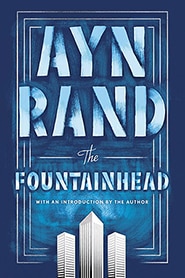


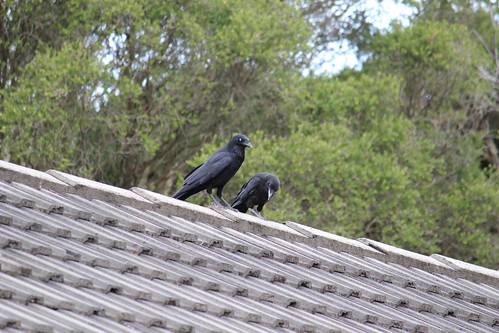
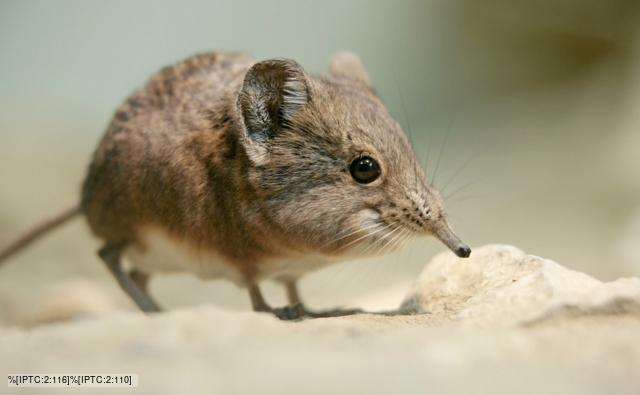

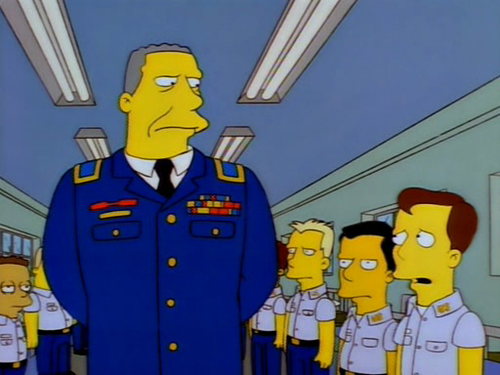
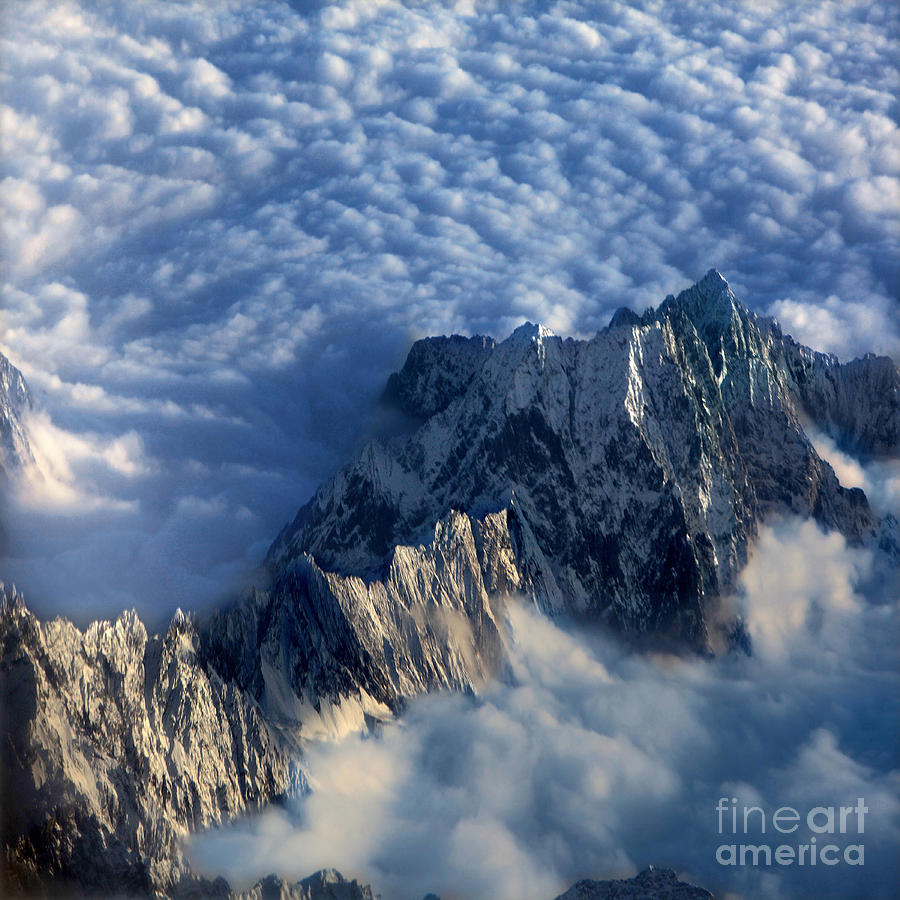
 Just Dusty