The Greatest Words

I just realized that I’ve never written about Dr. Martin Luther King, Jr.

This weekend seems the right time to fill that gap.

I haven’t written about the man for obvious reasons: I am not qualified to do it. I don’t know enough about his legacy or his impact on the US or on the fight for civil rights; I know what everybody else knows, and not much more. I don’t know enough of his philosophy or his writing to speak informatively and usefully about either; I know something, but not enough — and there are books out there about all of this, so I have not enough to add to that.

But there is one thing I can write about (and therefore should: because all that any of us can do is add our own unique perspectives on things to the conversation. Even if my insights are not the greatest insights, still they are mine; bringing them up can help inform or influence other people, or inform or influence the conversation, in positive ways. If we want people to stop talking about nonsense like which kind of stove we are allowed to use, then we need to make an effort to shift the conversation away from nonsense, and onto things that matter more.): and that is Dr. King’s rhetoric. (I should maybe make this a podcast episode. I don’t know if I’m ever going to continue my podcast, or if I should, but if I do, this would be a good subject.)

I don’t know that I studied his rhetoric very carefully in high school. I remember hearing the “I Have a Dream” speech. I remember that my high school choir sang what our director told us was Dr. King’s favorite spiritual, “Precious Lord.” (Can’t do it better than Mahalia Jackson.) I remember being shocked when I heard that the state where I currently live — which thought never not once crossed my mind, that I would eventually become a goddamn high school teacher in Arizona — was the only one in the country not to recognize Dr. King’s birthday as a national holiday. (Can’t do it better than Public Enemy.) I mean, who would refuse a Monday off? And who wouldn’t want to celebrate the life and work of Dr. King? But I don’t remember reading “Letter from Birmingham Jail.” Not until I got to Arizona, and found out it was part of the standard curriculum at my school, and also that an excerpt from it was in the packet on syntax as a rhetorical strategy which I got as part of my training to become an AP English teacher.

So now I’ve been teaching the Letter from Birmingham Jail as part of two of my classes, Sophomore English, when we study argument, and AP Language, when we study rhetoric — specifically, syntax, the arrangement of words into sentences and sentences into paragraphs, and how that arrangement affects meaning. And as with everything I teach, the more I teach it, the more I learn about it: and in the case of Dr. King’s essay, the more I grow to revere the man who was capable of writing it.

So let me explain why.

First: context. This is the information I give to my students when we study the piece. There is some historical information; then two pieces written by white clergymen in Birmingham in the 1960s: “An Appeal for Law and Order and Common Sense,” which I include because the open letter written by the eight clergymen references it — and because it is a fascinating piece — and then the Public Statement by Eight Alabama Clergymen, which was the precipitating event for Dr. King’s masterwork, as the background explains. Remember that, although the Public Statement doesn’t name Dr. King, he is the target of it: he is that “outside agitator” they mention.

BACKGROUND INFORMATION FOR “LETTER FROM BIRMINGHAM JAIL” BY THE REVEREND DR. MARTIN LUTHER KING, JR.
King’s Letter from Birmingham Jail, 50 Years Later

APR 16, 2013

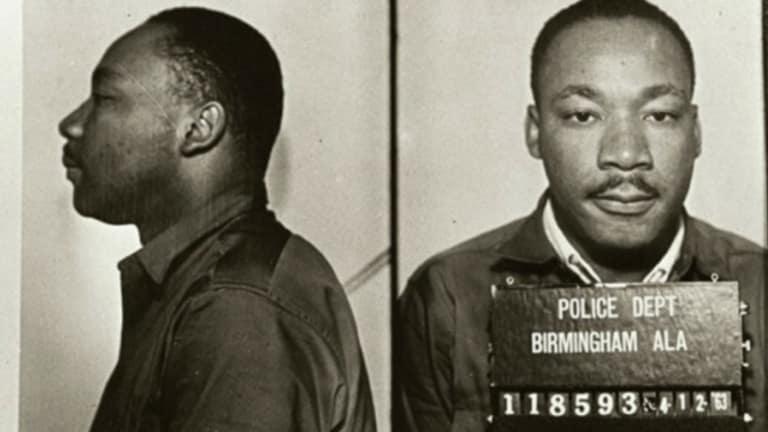
On its 50th anniversary, take a look back at a seminal text On April 12, King and nearly 50 other protestors and civil rights leaders (including Ralph Abernathy and Fred Shuttlesworth) had been arrested after leading a Good Friday demonstration as part of the Birmingham Campaign, designed to bring national attention to the brutal, racist treatment suffered by blacks in one of the most segregated cities in America—Birmingham, Alabama. For months, an organized boycott of the city’s white-owned-and-operated businesses had failed to achieve any substantive results, leaving King and others convinced they had no other options but more direct actions, ignoring a recently passed ordinance that prohibited public gathering without an official permit. For King, this arrest—his 13th—would become one of the most important of his career. Thrown into solitary confinement, King was initially denied access to his lawyers or allowed to contact his wife, until President John F. Kennedy was urged to intervene on his behalf. As previously agreed upon, King was not immediately bailed out of jail by his supporters, having instead agreed to a longer stay in jail to draw additional attention to the plight of black Americans.

Shortly after King’s arrest, a friend smuggled in a copy of an April 12 Birmingham newspaper which included an open letter, written by eight local Christian and Jewish religious leaders, which criticized both the demonstrations and King himself, whom they considered an outside agitator. Isolated in his cell, King began working on a response. Without notes or research materials, King drafted an impassioned defense of his use of nonviolent, but direct, actions. Over the course of the letter’s 7,000 words, he turned the criticism back upon both the nation’s religious leaders and more moderate-minded white Americans, castigating them for sitting passively on the sidelines while King and others risked everything agitating for change. King drew inspiration for his words from a long line of religious and political philosophers, quoting everyone from St. Augustine and Socrates to Thomas Jefferson and then-Chief Justice of the United States Earl Warren, who had overseen the Supreme Court’s landmark civil rights ruling in Brown v. Board of Education. For those, including the Birmingham religious leaders, who urged caution and remained convinced that time would solve the country’s racial issues, King reminded them of Warren’s own words on the need for desegregation, “justice too long delayed is justice denied.” And for those who thought the Atlanta-based King had no right to interfere with issues in Alabama, King argued, in one of his most famous phrases, that he could not sit “idly by in Atlanta” because “injustice anywhere is a threat to justice everywhere.” Without writing papers, King initially began by jotting down notes in the margin of the newspaper itself, before writing out portions of the work on scraps of paper he gave his attorneys, allowing a King ally, Wyatt Walker, to begin compiling the letter, which eventually ran to 21 double-spaced, typed pages. Curiously, King never sent a copy to any of the eight Birmingham clergy who he had “responded” to, leaving many to believe that he had intended it to have a much broader, national, audience all along.

King was finally released from jail on April 20, four days after penning the letter. Despite the harsh treatment he and his fellow protestors had received, King’s work in Birmingham continued. Just two weeks later, more than 1,000 schoolchildren took part in the famed “Children’s Crusade,” skipping school to march through the city streets advocating for integration and racial equality. Birmingham’s Commissioner of Public Safety Eugene “Bull” Connor, who King had repeatedly criticized in his letter for his harsh treatment, ordered fire hoses and police dogs be turned on the young protestors; more than 600 of them were jailed on the first day alone. The brutal and cruel police tactics on display in Alabama were broadcast on televisions around the world, horrifying many Americans. With Birmingham in chaos and businesses shuttered, local officials were forced to meet with King and agree to some, but not all, of his demands. On June 11, with the horrific events in Birmingham still seared on the American consciousness, and following Governor George Wallace’s refusal to integrate the University of Alabama until the arrival of the U.S. National Guard, President Kennedy addressed the nation, announcing his plans to present sweeping civil rights legislation to the U.S. Congress. Kennedy’s announcement, however, did little to quell the unrest in Birmingham and on September 15, 1963, a Ku Klux Klan bombing at the Sixteenth Street Baptist Church left four young African-American girls dead.

By this time, King’s Letter from Birmingham Jail had begun to appear in publications across the country. Months earlier, Harvey Shapiro, an editor at The New York Times, had urged King to use his frequent jailing as an opportunity to write a longer defense of his use of nonviolent tactics, and though King did so, The New York Times chose not to publish it. Others did, including the Atlantic Monthly and The Christian Century, one of the most prominent Protestant magazines in the nation. In the weeks leading up to the March on Washington, King’s Southern Christian Leadership Conference used the letter as part of its fundraising efforts, and King himself used it as a basis for a book, “Why We Can’t Wait,” which looked back upon the successes and failures of the Birmingham Campaign. The book was released in July 1964, the same month that the landmark Civil Rights Act was signed into law by President Lyndon Johnson.

Today, 50 years after it was written, King’s powerful message continues to resonate around the world–the letter is part of many American school curriculums, has been included in more than 50 published anthologies and has been translated into more than 40 languages. In April 2013, a group of Protestant clergy released an official—albeit considerably delayed—response to King’s letter. Published in The Christian Century, one of the first publications to carry King’s own words, the letter continues King’s call to religious leaders around the world to intervene in matters of racial, social and economic justice.

An Appeal for Law and Order and Common Sense

In these times of tremendous tensions, and change in cherished patterns of life in our beloved Southland, it is essential that men who occupy places of responsibility and leadership shall speak concerning their honest convictions.

We the undersigned clergymen have been chosen to carry heavy responsibility in our religious groups. We speak in a spirit of humility, and only for ourselves. We do not pretend to know all the answers, for the issues are not simple. Nevertheless, we believe our people expect and deserve leadership from us, and we speak with firm conviction for we do know the ultimate spirit in which all problems of human relations must be solved.

It is clear that a series of court decisions will soon bring about desegregation of certain schools and colleges in Alabama. Many sincere people oppose this change and are deeply troubled by it. As southerners, we understand this. We nevertheless feel that defiance is neither the right answer nor the solution. And we feel that inflammatory and rebellious statements can lead only to violence, discord, confusion, and disgrace for our beloved state.

We therefore affirm, and commend to our people:
1. That hatred and violence have no sanction in our religious and political traditions.
2. That there may be disagreement concerning laws and social change without advocating defiance, anarchy, and subversion.
3. That laws may be tested in courts or changed by legislatures, but not ignored by whims of individuals.
4. That constitutions may be amended or judges impeached by proper action, but our American way of life depends upon obedience to the decisions of courts of competent jurisdiction in the meantime.
5. That no person’s freedom is safe unless every person’s freedom is equally protected.
6. That freedom of speech must at all costs be preserved and exercised without fear of recrimination or harassment.
7. That every human being is created in the image of God and is entitled to respect as a fellow human being with all basic rights, privileges, and responsibilities which belong to humanity.

We respectfully urge those who strongly oppose desegregation to pursue their convictions in the courts, and in the meantime peacefully to abide by the decisions of those same courts. We recognize that our problems cannot be solved in our strength or on the basis of human wisdom alone. The situation that confronts us calls for earnest prayer, for clear thought, for understanding love, and For courageous action. Thus we call on all people of goodwill to join us in seeking divine guidance as we make our appeal for law and order and common sense.

PUBLIC STATEMENT BY EIGHT ALABAMA CLERGYMEN

April 12, 1963

We the undersigned clergymen are among those who, in January, issued “An Appeal for Law and Order and Common Sense,” in dealing with racial problems in Alabama. We expressed understanding that honest convictions in racial matters could properly be pursued in the courts, but urged that decisions of those courts should in the meantime be peacefully obeyed.

Since that time there had been some evidence of increased forbearance and a willingness to face facts. Responsible citizens have undertaken to work on various problems which cause racial friction and unrest. In Birmingham, recent public events have given indication that we all have opportunity for a new constructive and realistic approach to racial problems.

However, we are now confronted by a series of demonstrations by some of our Negro citizens, directed and led in part by outsiders. We recognize the natural impatience of people who feel that their hopes are slow in being realized. But we are convinced that these demonstrations are unwise and untimely.

We agree rather with certain local Negro leadership which has called for honest and open negotiation of racial issues in our area. And we believe this kind of facing of issues can best be accomplished by citizens of our own metropolitan area, white and Negro, meeting with their knowledge and experience of the local situation. All of us need to face that responsibility and find proper channels for its accomplishment.

Just as we formerly pointed out that “hatred and violence have no sanction in our religious and political traditions,” we also point out that such actions as incite to hatred and violence, however technically peaceful those actions may be, have not contributed to the resolution of our local problems. We do not believe that these days of new hope are days when extreme measures are justified in Birmingham.

We commend the community as a whole, and the local news media and law enforcement in particular, on the calm manner in which these demonstrations have been handled. We urge the public to continue to show restraint should the demonstrations continue, and the law enforcement official to remain calm and continue to protect our city from violence.

We further strongly urge our own Negro community to withdraw support from these demonstrations, and to unite locally in working peacefully for a better Birmingham. When rights are consistently denied, a cause should be pressed in the courts and in negotiations among local leaders, and not in the streets. We appeal to both our white and Negro citizenry to observe the principles of law and order and common sense.

C. C. J. Carpenter, D.D., LL.D. Bishop of Alabama

Joseph A. Durick, D.D., Auxiliary Bishop, Diocese of Mobile, Birmingham

Rabbi Hilton L. Grafman, Temple Emanu-El, Birmingham, Alabama

Bishop Paul Hardin, Bishop of the Alabama-West Florida Conference

Bishop Nolan B. Harmon, Bishop of the North Alabama Conference of the Methodist Church

George M. Murray, D.D., LL.D., Bishop Coadjutor, Episcopal Diocese of Alabama

Edward V. Ramage, Moderator, Synod of the Alabama Presbyterian Church in the United States

Earl Stallings, Pastor, First Baptist Church, Birmingham, Alabama

So that’s why Dr. King wrote the letter. And I appreciate the irritation that made him do it — even though, as was described above, he had been looking for an opportunity to explain his understanding of his actions more fully; still, the decision to do this while he was in jail was surely due to his irritation at this particular statement by these particular men, because this would have been much easier to do when he was at his home, in his office, where he was comfortable writing. (Though he was probably able to focus better while he was in jail; similar to Malcolm X, who was able to teach himself to read and write and think while in prison because he had nothing else to do — I think I’ve said before that boredom can be useful) The fact that he was capable of producing this incredible work while in a jail cell says, better than any words I could come up with, how amazing Dr. King was.

Let me show you.

(I’m not going through the whole letter: it’s almost 20 pages long. I struggle with the decision to read the whole thing in class; I know the students completely lose focus before the end of it, but it’s just so damn good, I hate to stop reading it before the finish. Generally I read the whole thing and then only teach to a certain point: I’ll cover the same section now. And put a link to the whole letter, if anyone wants to read that. It is all good.)

Letter From Birmingham Jail

Here’s how he starts:

My Dear Fellow Clergymen:
While confined here in the Birmingham city jail, I came across your recent statement calling my present activities “unwise and untimely.” Seldom do I pause to answer criticism of my work and ideas. If I sought to answer all the criticisms that cross my desk, my secretaries would have little time for anything other than such correspondence in the course of the day, and I would have no time for constructive work. But since I feel that you are men of genuine good will and that your criticisms are sincerely set forth, I want to try to answer your statement in what I hope will be patient and reasonable terms.

See why I say he was driven to write this because of irritation? Look at the subtle shade he throws here: starting with the matter-of-fact description of coming across the Public Statement while he happened to be in jail, which conflicts with the address to My Dear Fellow Clergymen, the contrast showing the difference between them, that though they are all clergymen, only one of them is in jail; then the not-very-subtle flex about how he seldom answers criticism: because of course he gets more criticism than these men could even dream of, and theirs is hardly the worst or the most significant of Dr. King’s critiques; he is a national figure, after all. And then the comment about his secretaries, plural, who would not have time to do constructive work — clearly putting this whole exchange into the realm of non-constructive work, along with showing how much more busy and important Dr. King is, with his large staff and his extensive constructive correspondence: all of which has come to a halt because he is currently confined in jail. So, hey, why not write back to these gentlemen? Who, he feels (but does not know, because it is not clear that they are, based on the two statements essentially in support of segregation and racism) are sincere men of goodwill? So he will try to show that he can be “patient and reasonable,” a direct reply to their criticism which he quoted, calling his actions “unwise and untimely.” And what follows is a perfectly crafted, 7,000-word shellacking of these jerks, their state, their government, their churches, their very souls, published only a week after their shallow little gripe.

So he begins:

I think I should indicate why I am here in Birmingham, since you have been influenced by the view which argues against “outsiders coming in.” I have the honor of serving as president of the Southern Christian Leadership Conference, an organization operating in every southern state, with headquarters in Atlanta, Georgia. We have some eighty five affiliated organizations across the South, and one of them is the Alabama Christian Movement for Human Rights. Frequently we share staff, educational and financial resources with our affiliates. Several months ago the affiliate here in Birmingham asked us to be on call to engage in a nonviolent direct action program if such were deemed necessary. We readily consented, and when the hour came we lived up to our promise. So I, along with several members of my staff, am here because I was invited here. I am here because I have organizational ties here.

Notice the polite way he pretends that their argument is not their thought, but only that they were influenced by others who held the view that he is an outsider. Notice also how he quotes that phrase, in order to refuse it legitimacy; these aren’t his words, these are the words that were thrown at him, and which these good men have unfortunately repeated. Why is here, in Birmingham? (And though he doesn’t say it, the corollary “Why am I in your jail?” echoes through this entire section, leaving them to answer that question themselves) Because he was invited here by members of his larger organization; the very same people they addressed in their own letter to the people of Birmingham, the “Negro community” and its leadership.

And that’s enough reason, of course. Hard to call someone an outsider when they were invited by insiders. And let’s note, as Dr. King points out, that his organization is headquartered in Atlanta, Georgia. Which is in the next state. It’s 147 miles away. Google Maps says the drive would take about two hours. Boston to NYC is 211 miles. San Francisco to LA (both in the same state) is 383.

But Dr. King doesn’t stop there: having made a reasonable response to the accusation — which is lame, anyway; calling Dr. King an outsider in order to delegitimize his argument is a logical fallacy called Poisoning the Well; the source of the argument is bad, so the argument must be bad, which of course doesn’t follow, because the dumbest person in the world can say the smartest thing — he makes a second rebuttal to the claim, one that is more directed at his specific opponents here:

But more basically, I am in Birmingham because injustice is here. Just as the prophets of the eighth century B.C. left their villages and carried their “thus saith the Lord” far beyond the boundaries of their home towns, and just as the Apostle Paul left his village of Tarsus and carried the gospel of Jesus Christ to the far corners of the Greco Roman world, so am I compelled to carry the gospel of freedom beyond my own home town. Like Paul, I must constantly respond to the Macedonian call for aid.

This is a more abstract argument, because the first is very plain and straightforward; this one uses a religious allusion to make an analogy. It’s a damn fine religious allusion — and actually, it’s two, because one of the eight clergymen who signed the Public Statement was a rabbi, so first he refers to the Jewish prophets of the Old Testament, and then he refers to the Apostle Paul, for the seven Christian ministers who signed the statement: but in both cases, he equates himself with the carriers of the Gospel, those spreading the word of God: which would make those who oppose him the Babylonians, or the Romans: basically the enemies of God. Neither is a good association for a clergyman to accept. But if you accept that there is injustice in Birmingham, then his intent to oppose the injustice has to be seen as a good thing, which obviously has to put him in line with the will of God. What clergyman could oppose the “gospel of freedom?”

This should be enough to shut them up — and it might have been; I don’t know how much the eight clergymen shrunk when they read Dr. King’s letter. (Imagine that, though. If a nationally recognized figure wrote directly to you. To tell you why you’re wrong. For almost 20 pages.) But he’s STILL not done. Think about that. Think about how hard it is to come up with one good response to an argument that somebody makes to you. Think how much we all struggle in forming actual, reasonable replies, particularly to unreasonable people, who do stupid things like call us carpetbaggers, which is the association the Birmingham clergymen were probably trying to make in calling Dr. King an “outside agitator.” Just one clapback is really all we can ask of ourselves. But Dr. King? He has three.

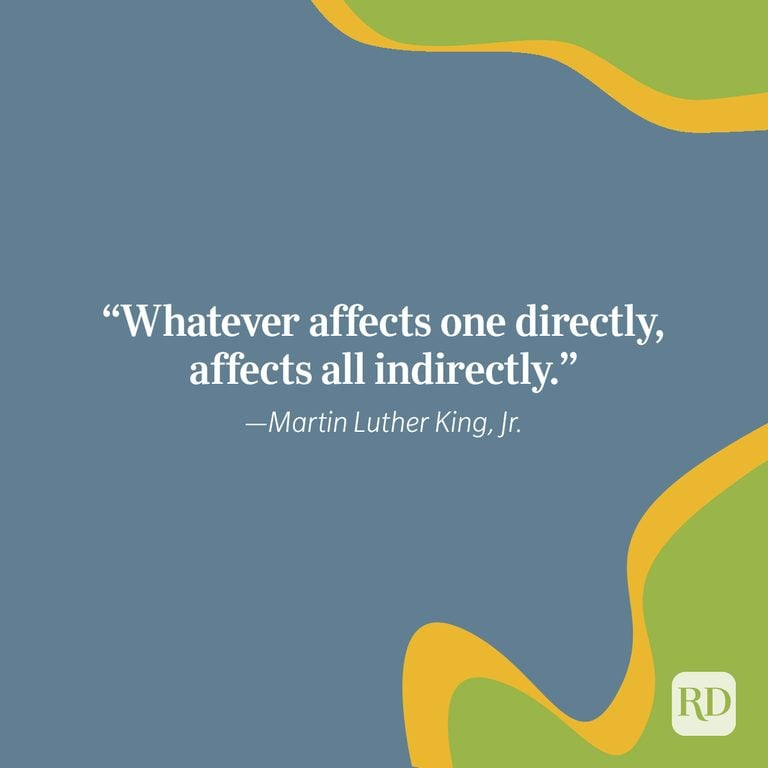
Moreover, I am cognizant of the interrelatedness of all communities and states. I cannot sit idly by in Atlanta and not be concerned about what happens in Birmingham. Injustice anywhere is a threat to justice everywhere. We are caught in an inescapable network of mutuality, tied in a single garment of destiny. Whatever affects one directly, affects all indirectly. Never again can we afford to live with the narrow, provincial “outside agitator” idea. Anyone who lives inside the United States can never be considered an outsider anywhere within its bounds.

I mean, “moreover” is just kinda mean. How do you argue with people who talk like that, and do it right? “I am cognizant” implies both that you are not, and that you should be. And then Dr. King shows that he was one of the greatest wordsmiths since Abraham Lincoln: he creates not one, not two, but three different phrases that became legendary: “Injustice anywhere is a threat to justice everywhere.” “We are caught in an inescapable network of mutuality, tied in a single garment of destiny.” “Whatever affects one directly, affects all indirectly.”

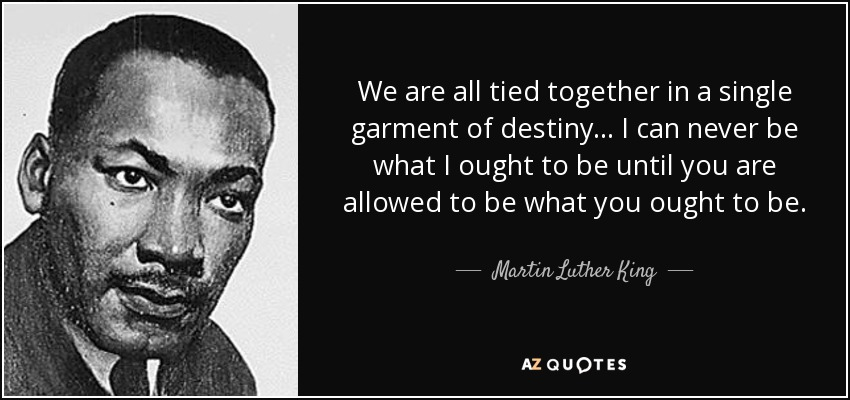
They’re all beautiful phrases: two of them perfect examples of parallel structure, putting similar phrases next to each other in order to create echoes and emphasis through repetition, combined with discernible differences made clearer by the juxtaposition; and in between a beautiful and powerful metaphor that makes clear an abstract but inspiring idea of humanity, a vast network of mutuality. It’s amazing writing. And while King’s opponents are reeling from that — again, imagine if a national figure, an international figure to be if he wasn’t yet (this was all prior to the March on Washington, but King was certainly already extremely well known; let me point out that the goddamn president of the United States intervened on King’s behalf to get him access to his attorneys while he was in jail) — he closes down the argument, by pointing out that we are all Americans, and the idea of an “outside agitator” from the same country is narrow, provincial thinking (read: stupid) that just doesn’t make any sense.

All right: having trashed the eight clergymen’s first claim, King moves on to his main argument: that his actions were neither “unwise” nor “untimely.” He introduces his argument here:

You deplore the demonstrations taking place in Birmingham. But your statement, I am sorry to say, fails to express a similar concern for the conditions that brought about the demonstrations. I am sure that none of you would want to rest content with the superficial kind of social analysis that deals merely with effects and does not grapple with underlying causes. It is unfortunate that demonstrations are taking place in Birmingham, but it is even more unfortunate that the city’s white power structure left the Negro community with no alternative.

Look at how polite he is: he is disappointed that they failed to recognize the real problem, which is the root cause of the demonstrations rather than the demonstrations themselves — but he doesn’t say he’s disappointed in the clergymen; it’s only their statement that “fails.” He is sure that none of those good, sincere men would be satisfied with “the superficial kind of social analysis” that doesn’t focus on root causes. He knows, as they know, as we all know, that they are indeed focused only on the superficial symptoms of the problem rather than the root causes; their entire argument is that everyone should calm down, not that anyone should try to solve the problem. And then he imitates their passive voice, their passive-aggressive tone, by stating “it is unfortunate” that bad things are happening — but it’s much worse (sorry, “even more unfortunate”) that the white people caused those bad things. Isn’t it?

Of course it is.

So then King gives the description of the four steps of a nonviolent campaign: “collection of the facts to determine whether injustices exist; negotiation; self purification; and direct action.” And then slowly, painstakingly, he goes through all of these steps in the letter. He refers to the city’s history of not only segregation but also violence — which his opponents have to stipulate, since that same violence was the root cause of their statements, and their first statement clearly asks the white people of Birmingham to stop causing problems and let the issues be worked out by the courts. (And please note that all of this exchange happened before the Children’s Crusade, which led to the famous and terrible footage of the Birmingham police using firehoses and police dogs to attack children peacefully protesting, and also before the KKK bombing of the Sixteenth Street Baptist Church which murdered four young girls. So yes, I think we can fucking well stipulate that Birmingham was a violent and racist place.) He then explains how the local community tried to negotiate, and the white people in Birmingham were the reason the negotiations failed. He talks about their attempts at self purification, and then he talks about their decision to move to direct action.

Then he talks about how the delayed their direct action. For the mayoral election. Which, one would think, would be a perfect opportunity for an agitator — perhaps a secret Communist, as King was absurdly accused of being several times — to cause as much disruption as possible, and have a large impact on the community. But they didn’t do that. And then when there was a runoff — even though one of the candidates in the runoff was Eugene “Bull” Connor, the Commissioner of Public Safety who would later order the firehoses turned on children — they delayed their protest march again.

What were those guys saying about “unwise and untimely?”

Right.

He ends this portion of the argument following the same pattern he established in the beginning, with the rebuttal of the “outside agitator” accusation: first a straightforward, concrete refutation based on facts (“I was invited here,” in that first instance), and then he expands the discussion into larger, more abstract, but also more important ideas. (“Injustice anywhere is a threat to justice everywhere.”) In this case he says this:

You may well ask: “Why direct action? Why sit ins, marches and so forth? Isn’t negotiation a better path?” You are quite right in calling for negotiation. Indeed, this is the very purpose of direct action. Nonviolent direct action seeks to create such a crisis and foster such a tension that a community which has constantly refused to negotiate is forced to confront the issue. It seeks so to dramatize the issue that it can no longer be ignored. My citing the creation of tension as part of the work of the nonviolent resister may sound rather shocking. But I must confess that I am not afraid of the word “tension.” I have earnestly opposed violent tension, but there is a type of constructive, nonviolent tension which is necessary for growth. Just as Socrates felt that it was necessary to create a tension in the mind so that individuals could rise from the bondage of myths and half truths to the unfettered realm of creative analysis and objective appraisal, so must we see the need for nonviolent gadflies to create the kind of tension in society that will help men rise from the dark depths of prejudice and racism to the majestic heights of understanding and brotherhood.

I love this because he points out the hypocrisy of the White community in Birmingham asking for peaceful negotiations, and thus turns the argument around on them. It’s like he’s saying, “Negotiation? We would love to negotiate! Let’s negotiate!” And by so doing he calls their bluff, because of course, it is not the Black community that refused to talk about these issues. And then he gives us this amazing, dry, sarcastic discussion of “tension,” which I love because I love knowing that Dr. Martin Luther King, Jr., was a smartass: “I confess that I am not afraid of the word ‘tension.'” The idea that he is confessing to something that should be plainly, easily, universally true: because what the hell is scary about the word “tension?” In fact, “tension” is necessary and important for change; and he then refers to Socrates, equating himself to the father of philosophy, the man famously convicted wrongly by his city’s establishment, and executed when he had committed no real crime other than creating “tension.” And his magnificent gift with words shows in the ultimate goal of that creation of tension: “the kind of tension in society that will help men rise from the dark depths of prejudice and racism to the majestic heights of understanding and brotherhood.” Beautiful. And, what, are you saying you would be against that? You wouldn’t want that? Because you’re afraid of tension?

Eye Loewe GIFs - Get the best GIF on GIPHY

Not satisfied with simply having shown that the protestors were not impatient or “untimely” in their marching, King takes this chance to explain to everyone everywhere why the civil rights movement isn’t willing to wait. And this is where my AP Lang class picks up this thread. First, King says this:

We know through painful experience that freedom is never voluntarily given by the oppressor; it must be demanded by the oppressed. Frankly, I have yet to engage in a direct action campaign that was “well timed” in the view of those who have not suffered unduly from the disease of segregation. For years now I have heard the word “Wait!” It rings in the ear of every Negro with piercing familiarity. This “Wait” has almost always meant “Never.” We must come to see, with one of our distinguished jurists, that “justice too long delayed is justice denied.”

Here King is not speaking to the clergymen. The language is too aggressive: oppressor and oppressed, while absolutely the accurate terms here, are not words that will appeal to the nice churchmen who want peace and quiet. Here King is speaking to everyone who has said the civil rights movement is pushing too hard, and going too fast; and the man is tired of talking about this. And again, he makes the same point successfully, several times, which just shows the pathetic weakness of the initial claim, that the civil rights movement is going too fast and should instead just wait for things to work out. His first statement makes an entirely valid point: oppressors do not give away power, they do not simply let people go. Which makes the claim ridiculous, because why wait for something that will never happen on its own? Then his second comment, starting with “Frankly,” in which you can hear his irritation with this whole discussion, points out that people who stand to lose power are not the ones who should get to decide when the oppressed should demand their freedom. Then he raises this to an eternal, universal experience that every oppressed African-American in the US has had to deal with, has been pierced by the ring of, this word “Wait.” And he refers to Supreme Court Chief Justice Earl Warren, writing in the Brown v. Board of Education decision, that “justice too long delayed is justice denied,” the Chief Justice’s own poetic truism.

That’s three reasons why “Wait” is a stupid argument to apply to the civil rights movement. But then, King does this:

We have waited for more than 340 years for our constitutional and God given rights. The nations of Asia and Africa are moving with jetlike speed toward gaining political independence, but we still creep at horse and buggy pace toward gaining a cup of coffee at a lunch counter. Perhaps it is easy for those who have never felt the stinging darts of segregation to say, “Wait.” But when you have seen vicious mobs lynch your mothers and fathers at will and drown your sisters and brothers at whim; when you have seen hate filled policemen curse, kick and even kill your black brothers and sisters; when you see the vast majority of your twenty million Negro brothers smothering in an airtight cage of poverty in the midst of an affluent society; when you suddenly find your tongue twisted and your speech stammering as you seek to explain to your six year old daughter why she can’t go to the public amusement park that has just been advertised on television, and see tears welling up in her eyes when she is told that Funtown is closed to colored children, and see ominous clouds of inferiority beginning to form in her little mental sky, and see her beginning to distort her personality by developing an unconscious bitterness toward white people; when you have to concoct an answer for a five year old son who is asking: “Daddy, why do white people treat colored people so mean?”; when you take a cross county drive and find it necessary to sleep night after night in the uncomfortable corners of your automobile because no motel will accept you; when you are humiliated day in and day out by nagging signs reading “white” and “colored”; when your first name becomes “nigger,” your middle name becomes “boy” (however old you are) and your last name becomes “John,” and your wife and mother are never given the respected title “Mrs.”; when you are harried by day and haunted by night by the fact that you are a Negro, living constantly at tiptoe stance, never quite knowing what to expect next, and are plagued with inner fears and outer resentments; when you are forever fighting a degenerating sense of “nobodiness”–then you will understand why we find it difficult to wait. There comes a time when the cup of endurance runs over, and men are no longer willing to be plunged into the abyss of despair. I hope, sirs, you can understand our legitimate and unavoidable impatience.

He puts a number on it, to show that people have waited long enough for justice: 340 years, which hearkens back to the founding of the European colonies at Jamestown and Plymouth: in other words, the very beginning of what the US claims as its history as a nation. It has always been like this here. He makes a comparison between countries the US considers both less developed, and less dedicated to the ideals of freedom and equality, the nations in the “Third World” that were at this time throwing off their colonizers and beginning to build new nations, with varying degrees of success — but all with a faster pace of change than the US, for all of our vaunted modern innovative, creative spirit and love of freedom, and he uses a fantastic metaphor to show how sad and simple this all is, that African-Americans have to fight this hard just to get a goddamn cup of goddamn coffee (Cusswords added for emphasis, because Dr. King was much too polite to say it himself).

And then Dr. King writes what may be the best sentence I’ve ever read.

Do you see that? It’s all one sentence, from after “Perhaps it is easy for those who have never felt the stinging darts of segregation to say, “Wait.” up until he says, “then you will understand why we find it difficult to wait.” He uses full sentences inside it, when he quotes his son asking why white people are so mean; but it’s still only one sentence. 316 words.

And it’s unbelievable: everything in it, from the way he describes the different experiences of African-Americans in the US, to the way he starts with the most active and deadliest threats, and then ends with the most personally and emotionally troubling and dehumanizing, going through all the different ways one is affected, in every single aspect of one’s life, through all of one’s identities, not only as a civil rights leader and a member of an oppressed people, but also as a husband, as a father, and as a man; everything he does in this sentence is amazing. The way he uses the second person “you” to include his — mostly White — audience, so that maybe the White people can understand some of what King and every other African-American understands, and uses “father,” “mother,” “brother,” “sister,” and every other family relationship to show that everyone, every human, are our brothers and sisters, our family. The way he names lynching and murder, and equates violent mobs with policemen, as both groups have savagely brutalized African-Americans in this country. The way he appeals to parents by including not one but two heartbreaking scenes with a father having to explain to his children why they must suffer in an oppressive and unjust society. The incredible metaphor he uses, about the people smothering in an airtight cage of poverty, in the midst of an affluent society: because the airtight cage is a paradox, a cage is only bars, so it should not be able to smother anyone; just as poverty should not be suffocating people in this society: and it in the midst of this society, because affluent people are all around those who are suffering and dying, are watching them die, and doing nothing about it. The cage itself makes this seem like a zoo: an exhibition put on for the amusement of the crowd. The poetic way he uses phrases like “your tongue twisted and your speech stammering,” and then throws the harsh, crude word “n*gger” at us as it has been thrown at him, casually, frequently, like it’s his first name.

The way this periodic sentence — a term for a sentence that has the main clause, the most important subject and verb, closer to the end than the beginning of the sentence — ends with the final statement, “then you will understand why we find it difficult to wait.” Making the audience wait, through 316 words, for that final statement of the sentence’s purpose. Ending with the word “wait,” that same word that set all of this off. With the incredible understatement of “we find it difficult to wait,” through lynching, through drowning, through beating, through suffocating, through the tears of children, through one’s own dehumanization: it would indeed be difficult. But it is cause and effect, if-then: when we have gone through what King and other African-Americans have gone through in this country, then we will understand. And the corollary, of course, that until we have gone through it, we cannot understand it: but at least now we have a description of it.

It’s the most amazing single sentence I know. It’s one of the best arguments I’ve ever read, in a piece that continues after this to build up his argument for another 30 paragraphs, point by point explaining why the actions of the protestors in Birmingham, and King’s movement’s actions more generally, are right and good, and should get the support that the White community denies them. I have never been capable of teaching it fully to my students: I can’t make them understand how remarkable King’s achievement is in this essay, because it’s so far beyond their usual argument that it’s like another language. I doubt I’ve done it justice here today; but I felt like I had to try.

Happy Birthday, sir. And thank you for all that you gave this society.
Home | Martin Luther King Jr: An extraordinary life

Justice

Once again, I found myself faced with an opportunity to write an essay in response to a student. One of my AP Language students argued against the death penalty. The assignment asks someone in the class to respond with a different perspective, generally but not necessarily in direct opposition to the original argument — so in this case, someone needed to argue for the death penalty, in some way. Now this should not have been a hard one to get: there is a ton of evidence and resources out there on this subject, many of my students are in favor of the death penalty, and as I have told them many times, you don’t have to believe in an argument to present a case for it. But this time, no one volunteered.

So I wrote it.

Here it is.

The death penalty? 

That’s all? Just death? Weak sauce. Pathetic. Unimaginative. I bet you want it to be painless, too. Or, well — apparently painless. Like lethal injection, right? Give them a sedative first, so they don’t show their suffering and you can pretend it’s not cruel or unusual. Right?

Wrong.

That’s not justice.

Justice is giving serial killers what they deserve. We (Because we are the best people) all know what the worst people – the worst people –  in all of human history deserve: they deserve the worst suffering we can impose. Every time I talk about this subject, people have to suggest the most awful punishments they have been able to dream up, often apparently trying for extra style points awarded both for savagery and for originality. This, then, is clearly what we think serial killers deserve: to be the canvas on which we paint our very best, most aesthetic, most barbaric cruelty. 

You know. Justice.

I have heard that we should bring back hanging. Or the guillotine. Or the rack. A very kind-hearted friend of mine said they should be put, naked, into a full suit of metal plate armor, and then sent out to wander in the desert. I’ve heard that we should abandon murderers on a desert island so they can turn cannibal. Or that we should bring back the Colosseum and gladiator combat, or even better, the Hunger Games. A fine idea, I say. Murderers deserve it. They deserve to be raped and murdered and then brought back to life and raped and murdered again. They deserve to be tortured by a specialized cadre of CIA waterboarding experts (I’m confident we have these people working for the US government. We should be proud of that. We should make use of them.), deranged sadists personally descended from Spanish Inquisitors, who also learned from the torturers in the deepest dungeons of every brutal dictatorship in history how to cause the most inconceivable pain. MURDERERS DESERVE TO BE SLOWLY DIPPED INTO BOILING OIL AND THEN BREADED AND CUT INTO PIECES OF KENTUCKY FRIED MURDERER SO WE CAN EAT THEM AND THEN PUKE THEM BACK UP AND THEN RECONSTITUTE THEM AND REBREAD THEM AND REFRY THEM INTO MURDERER NUGGETS SO WE CAN FEED THEM TO OTHER MURDERERS WHO WILL THEN BE EXECUTED BECAUSE YOU ARE WHAT YOU EAT AND THAT WAY THE FRIED NUGGET MURDERERS WILL BE EXECUTED AGAIN WHEN THE NUGGET-EATING MURDERERS ARE THEMSELVES DIPPED INTO BOILING OIL.

Because the goal of the justice system is justice. And we know what justice is: it’s vengeance. It’s blood. Rivers of blood pouring down our collective throats, and symphonies of screams, resounding in our collective ears. Slaking our thirst. Thrilling our nerves, raising goosebumps of rapture. We long to be filled with their suffering. We hunger for it. We need it: need to see them die, and to see them wracked with pain before they die, arching their backs until their spines snap, pulling with all their strength at their limbs, until they gnaw off their own hands and feet in a futile attempt to escape the pain that we inflict. We want them to feel it, and we want to see them feel it. And when we watch the spark fade from their eyes, we will laugh and laugh, for we will be righteous, and strong, and we will have won. We will have shown that we are better than them, because we are stronger, and so we don’t have to be afraid of them. They’ll be afraid of us.

That’s why it should be televised. Also performed live in front of a large audience. We should bring our children, and have picnics. That way, not only can we all shiver ecstatically as we watch the blood pour down – the red, red blood, so hot and sticky, so delicious – but also it can serve as a lesson to everyone else who would be a murderer, everyone else who wants to end a human life, everyone who wants to make someone suffer and die, that murder is wrong. The lesson will be clearest when we all cheer as their heads are at last lopped off and the blood inside them geysers out, heated by the boiling oil that they are immersed chest-deep in, a steaming blood fountain of vengeance and joy and savagery.

And justice, of course.

There are some people out there – weak people. Soft people. – who think that justice is “restoring balance.” Not imposing more suffering on a perpetrator in response to the suffering that perpetrator imposed on their victims: that moves us farther away from balance. These people actually think – if you can believe it – that the right thing to do is to reduce suffering: which, while it should definitely include some kind of reparation or restoration for the victims, including when society itself is the victim, will also most likely include some measure of restoration or reparation for the perpetrator: who is, most likely, also a victim of suffering, prior to their crime. Now, it is certainly clear to all of us that the first task of society is to ensure that the imbalance doesn’t continue and worsen, which means the perpetrator must be prevented from committing crimes again; which likely means something like incarceration: but if we consider the case of a drug addict, suffering from the disease of addiction and all of the terrible consequences of that disease, committing a crime, then while incarceration may prevent that addict from committing a crime in the short term, if the addiction is not addressed during that incarceration, then after the criminal’s release, they will almost certainly re-offend. Because the original source of the imbalance – the drug addiction – was not addressed. Address the source of the imbalance, and alleviate suffering on all sides, and not only will crime be actually reduced in the long term, but also, justice will be restored, because balance will be restored; and let’s also be clear that a former offender who has been made whole is very much the most likely to then feel remorse and to try to atone for their crimes, which may help to reduce the suffering and restore the balance for their former victims. 

There are people who think that is the best possible outcome of the criminal justice system, that a mindset of restoring balance and reducing suffering, reducing harm, will lead to a better outcome for all, and only requires a cool head not inflamed with ideas of payback and vengeance and just desserts examining the facts to arrive at this paradigm.

But that’s just ridiculous. That’s no way to show that we are tough on crime. Being tough on crime is the only way to prevent future crime. We know that because it’s always worked in the past. Back when the only penalty for pretty much any crime was death – back in the Middle Ages – there was no crime. It worked perfectly. QED.

Also, that “restoration of balance” stuff is hard. Payback is easy. It’s so much easier to think of someone “guilty” as “someone who deserves punishment.” Right? And there’s nothing wrong with us as regular, fallible, ignorant people deciding what someone deserves. Especially when we decide that someone deserves an irrevocable and terrible punishment. Surely we are qualified to decide that.

Because murderers definitely deserve it. Most murderers on death row are people who committed murder in combination with other crimes, like robbery, because that’s the most common “aggravating factor” to a murder, that it is committed in the process of committing another felony. In fact, 

Historically, the death penalty was widely used for rape, particularly against black defendants with white victims. When the death penalty was reinstated in 1976, the Supreme Court left open the possibility of imposing the death penalty for offenses other than murder, such as rape or even armed robbery…

Many states allow all those who participated in a felony in which a death occurred to be charged with murder and possibly face the death penalty, even though they may not have directly killed anyone. The case of unarmed accomplices in a bank robbery in which an employee is killed is a typical example of felony murder. Since the death penalty is supposed to be reserved for the “worst of the worst” cases, legislatures or the courts could restrict its use only to those who directly participated in killing the victim. Prisoners have also raised claims that the aggravating circumstances that make a crime eligible for the death penalty are too broad, with some state death-penalty laws encompassing nearly all murders, rather than reserving the death penalty for a small subset of murders.

(Death Penalty Information Center, https://deathpenaltyinfo.org/facts-and-research/crimes-punishable-by-death)

But we don’t talk about those cases: we talk about the famous ones. The most interesting ones, the ones whose crimes we make movies and books and TV shows and podcasts about, the ones we discuss endlessly, the ones who fascinate us: serial killers. Mass murderers. Psychopathic sexual sadists. There’s nothing we love more than examining their crimes in minute detail, looking at graphic photos, where you can see the blood, so you can imagine the screams…

Sorry, I got lost in my fantasies there. Oops — little drool. Excuse me. Where was I?

Anyway, surely the worst people imaginable in all of history – the ones who are portrayed by Zac Efron in Netflix movies (And definitely not cases like the Scottsboro Boys) – deserve to suffer as much as they made their victims suffer. It’s only fair, right? That’s sort of what justice is, isn’t it? Fairness? It sure feels like making the perpetrator suffer exactly what their victims suffered would be “fair.” And sure, the innocent victim of a serial killer experiences something unimaginable, something impossible to recreate (And maybe it’s true that the suffering caused by violent and terrible people should not ever be the model for our own behavior, that to do what they did requires us to be much too much like them); the victims of crime suffer fear and shock and regret, and a serial killer being bludgeoned to death by men wielding spiked clubs soaked in acid as part of a sentence imposed by the courts and carried out legally wouldn’t feel any of those same emotions, often because those serial killers are suffering from some form of psychopathy that limits or eliminates their ability to feel normal human emotions: but forget all that.  Emotions are hard. Hard to understand and hard to create. Pain, we can understand. We can see the pain on their faces. And we can see the blood. And the death. And we can understand the power inherent in watching another person die at our hands. We can experience that. We can enjoy it. We wants it. 

That’s how we get justice on serial killers: by becoming them. 

It’s totally different, of course. The victims of serial killers are innocent, and serial killers are guilty. Which is what makes it okay to make them suffer as much as possible: guilt. We are, of course, entirely confident in our determination of who is guilty and who is innocent. We know that people convicted of capital crimes are guilty. You just know, you know? You can just look at them, and you can see how guilty they are. Especially if there’s a documentary about their crimes. Sure, there have been hundreds of cases of people on Death Row who were innocent, and several executions in the modern era of people who were possibly innocent; and since the death penalty goes back for millennia, back to when humans were little more than animals clubbing each other to death so we could steal their food, there have been countless examples of innocent people killed by a judge and jury; but as long as we don’t talk about those, as long as we talk only about the most extreme, unusual outliers like serial killers, we won’t have to think about abstract ideas like “guilt” and “innocence” in “specific cases.” We can totally trust the justice system, which is in no way “prejudiced” nor “biased,” and never makes “mistakes.” We can just remember that someone who is on Death Row surely deserves the same punishment as the worst people in history: people who have been executed for crimes against the state. 

Like Jesus.

Hey, there’s a thought: crucifixion. 

But anyway, they deserve it because they are guilty. And we are righteous. Plus, this is how you prevent murder. You show everyone that you are the absolute worst murderer that will ever exist. Then you win. And that’s what justice means: winning. Killing them worse than they could ever kill any of us.

That’s what the death penalty is for. 

Justice.

No Pizza For You

One of the best things about being a teacher who is really a writer is this: my students and my school and my profession frequently inspire me to write. Usually essays. Usually angry.

This is one of those essays.

Some background on this one: my AP Language class studies argument, and the project that culminates that unit is a class display of dueling arguments. A student volunteers to write an argument, which is due the next day, on any topic they want (that is school appropriate, of course); I project it on the board, read it aloud, and then we critique the argument as a class. Then someone volunteers to argue back, taking a different side of the same topic, with their essay due the next day, and going through the same process. Then if someone wants to argue a third perspective on the same topic, they may; if not, someone volunteers to start a new pair of arguments the next day. Everyone who completes the essay gets a 100% grade; if anyone volunteers to write an essay, but doesn’t turn it in, then the whole class takes a test — that way the peer pressure will overcome the nerves, and I know I’ll get the essays: so long as I can get them to volunteer. If someone starts an argument on a bad topic and nobody wants to argue back, then the first student has to write the second essay, as well, taking a different perspective snd arguing against themself. If no one wants to argue and it’s a good topic, then usually I will argue back against them.

This year I have had some trouble with all this. Students are not interested in volunteering. I got the first four essays, two pairs, all from the students who generally speak up most in class discussions; then I had to struggle to get the next essay. Finally I got one student to volunteer to write about corporal punishment: but then he decided not to argue that. He didn’t want to sound weird, for arguing that kids should be spanked, and so on. This student generally has strong political opinions, so much so that other students roll their eyes when he starts in on them; but he didn’t write about politics, either. No, for this project, he chose to write about — pineapple pizza. He argued that pineapple is just fine on pizza. He wrote a good essay; he just picked a terrible topic, because he didn’t want to be too controversial or weird. Which then required someone else to argue that pineapple does not belong on pizza. Unsurprisingly, nobody did it, so he reluctantly argued back against himself.

That was the essay we got yesterday. it was much too short, because he’d already written a full essay so this one didn’t matter; but it was long enough to show that even with a bad topic, one can write a good essay, or at least an amusing one.

Then I asked for volunteers to write for the next day. I got nothing.

So I read them this.

“Speak what you think to-day in words as hard as cannon balls, and to-morrow speak what tomorrow thinks in hard words again, though it contradict every thing you said to-day.”

–Ralph Waldo Emerson

Okay, here’s the truth. Pineapple on pizza is amazing. If you’ve had it, and you have taste buds with even a minimum of function, then you know. If you’ve never had it, you’re missing out. But in either case, you should never get to have it again. 

Because you don’t deserve it. 

You don’t want pineapple on pizza? That’s fine, to each their own. You’re wrong, but you’re welcome to feel that way.

But you don’t deserve your preferred pizza, either. None of you are pizzaworthy.

Because you won’t fight for it. 

This doesn’t apply to some of you – though I am tempted to use this to label your entire generation, the No Pizza Generation, because Lord knows I have enough students in other classes to whom this does apply, in addition to most of you – because some of you are willing to fight. More specifically, you are willing to argue. You have the courage of your convictions, and sufficient passion to draw the words from within you. Believe me, I know how hard that is, especially now: I haven’t written a word worth reading in a month, and barely any real words this entire school year. But I think I’ve done enough in the past to give me the standing to write this to all of you who have not tried to put down your real feelings, to say what you really believe.

Until you stand up and speak, you’re a coward. A chicken. A lily-livered milquetoast. Heartless. Gutless.

And you don’t deserve pizza.

If you want good things in life, whether it is pineapple on pizza, good grades, the respect of your peers, or a country that isn’t a burning dumpster fire sinking slowly into the rising oceans, then you have to fight for it. And no, I’m not talking about fighting with guns and bombs and sticks and stones: I’m talking about real fighting, the kind that makes a difference, that changes things because it changes minds: fighting with words. Arguing. People talk about democracy, about the value of freedom and equality, of a state where everyone has a voice, where everyone can be heard – and rightfully so; history overflows with the stories of tyrants and megalomaniacs whose voices drowned out, and eventually smothered entirely, the voices of millions of people: people who had something to say, people whose words could have affected someone, people who could have won the argument. But they weren’t allowed to make it. They were not allowed to speak. And they died silent. And the world went on, a little bit worse for the loss of the person, a little bit worse for the loss of their ideas. Want to know how we got to this place, where everything is screwed up? Because too many people have not been permitted to say something that could have made the world a little bit better. We lost too many good ideas because people were not allowed to talk, to speak their truth. To argue. To fight.

But you all are not only allowed to speak your truth, you’re not only encouraged to speak your truth, you are required to speak your truth. But you won’t. It doesn’t even have to be your deepest truth, you are welcome to write about something ridiculous like pineapple on pizza; that was a pretty good argument we saw yesterday. 

But you won’t even do that. 

Democracy only works when people talk. When people argue. Argument is inevitable when people talk, because no two people see the world the same way. Ever. Hell, even one person doesn’t see the world the same way as themselves: sometimes I hate pineapple on pizza. Sometimes the taste of that sickly-sweet/sharply-acidic fruit is overwhelming, and I can’t taste the rest of the pizza, and that sucks. 

That’s what happens when one voice dominates the room. Even a sweet voice. Even my voice: when I’m the only one talking, the sense of my words, my voice, my understanding, my truth, overwhelms the senses of everyone else, the truths of everyone else. It ruins the flavor. It ruins the pizza. 

Most of the time, that doesn’t happen here: but also, most of the time, the other flavors that appear on this AP Lang pizza, the other voices that speak up in this room – they’re the same voices. Over and over again. The same ones who have already spoken, for the most part, on this assignment. I know some of you are working on your arguments, are preparing your truths to share, and good for you, please continue doing that. I’m not speaking to you: there’s nothing wrong with trying to take your time and do a good job, with trying to find the energy, at the end of this very long school year, to say what you really want to say in words that are worthy of your feelings. I have no problem with that: in fact, I appreciate it. I applaud it.

It’s the rest of you I’m speaking to. The ones who just keep saying “Nah. I don’t wanna.” 

The ones who can’t be bothered.

The ones who are too bored, who think that everything, everywhere, always, is too boring. Not because the world is boring: but because you don’t want to deal with it. Having an opinion means being willing to defend that opinion, and sometimes, that’s hard: so you’d rather just not do it. Even if it means you suffer through things you don’t like. You’re the ones I’m speaking to.

The ones who don’t like pineapple on pizza not because you don’t like pineapple, or because you don’t like how the taste overwhelms: but only because you don’t want to deal with it. Don’t want to speak up and say what you like on pizza. The ones whose vocabulary starts and ends with “I don’t know, whatever.” 

The ones who are hoping for a way out of this assignment, as you hope for a way out of everything challenging. Who will let opportunities pass you by simply because catching them is too much work, and you’re busy looking at your phone. Not looking at anything in particular, of course; just scrolling mindlessly, laughing at people being lame. Isn’t it nice? How there are so many losers on the internet? People who you can feel better than? It’s hard, sometimes, to feel good about yourself when you don’t do anything worth feeling good about, because you avoid all challenges, avoid all risks, when you can’t be bothered to care about anything. And because those people snoring loudly on TikTok are so ridiculous, so terribly pathetic, you don’t even have to do — anything. You just get to laugh at them. And do nothing. Or if not that, you can play video games endlessly: because there, you can win, without even trying. No challenge, no risk – just “winning.” It’s so easy to feel good about yourself when you don’t have to put out any effort, when you don’t have to take any risks, but you can still win. Isn’t it?

“What do you want for dinner?” “I don’t know, whatever.” 

“What do you want to do this weekend?” “I don’t know, whatever.” 

“Does anyone want to present the next argument for the class?”

“Does anyone have a topic they want to argue about?”

“Does anyone have any opinions?”

“Does anyone care about anything?”

That’s the last place where you hide: behind opinions. It feels magnanimous, it feels open-minded, to say that people can have their own opinions, and that’s fine. To say, “Well, you said how you feel, but I feel how I feel, so we’ll just agree to disagree.” To use that cliche in all situations: because that way, you can avoid argument. It feels smart to avoid the difficult subjects, to talk about how politics are boring, or how stupid it is that people get all upset about things; it doesn’t matter, you say, Who cares anyway, it’s not like anything’s going to change. I don’t know. Whatever.

That’s not magnanimous. That’s not smart. It’s cowardly. Chicken. Gutless.

That’s how we end up with two days of arguments about pineapple on pizza. It’s how we ended up with a half-dead stooge in the White House. It’s how we will act as we watch all of humanity slide slowly into a grave we are digging for ourselves. Without speaking up. Without arguing. Without fighting.

“It doesn’t matter, nobody ever wins arguments anyway.” 

Have you ever tried?

“Nobody can change anyone’s mind.”

Have you ever changed yours? Then why would you think that nobody’s mind can change? And if you’ve never seriously tried, how do you know you can’t?

Do you agree with everything other people – people in this classroom – with everything they do? With everything they think? Do you think everyone here is right, except you? If any of us are wrong about something: why aren’t you telling us? Why aren’t you calling us out on it?

It’s entirely possible that you all are burning with topics, absolutely bursting with words, that you have a thousand things you want to say, shout, scream at us, or at the world. All I know is that when I ask for volunteers, I get crickets. I get people avoiding eye contact. But why? Are you afraid that you’ll fail? Literally, with this assignment, that will only happen if you don’t try. Are you afraid that people will mock you? Maybe you didn’t notice (maybe you were too wrapped up in video games or TikTok), but we had an argument about pineapple on pizza: and yet no one made fun of that essay. Nobody said it was garbage. It helped that it was well-written, but still, it was about pineapple on pizza. And yet, nobody insulted the author. As far as I know, none of you thought less of him. And let me point out that you all mock and insult and criticize each other all the time: why is this any different? 

People asked the author why he didn’t talk about something he was passionate about, why he didn’t talk about politics. Maybe it was because all the rest of you not only fail to meet his enthusiasm about politics, but you mock him for it. Because it’s easier to mock someone else’s passion than it is to share your own. Isn’t it?

“I don’t know. Whatever.”

Maybe you’re afraid that you’ll do a bad job. I understand that. But I’ve read all of your writing. All of you, everyone in this class: you all write well. More important, you all think well. The only thing missing is the passion to say what you really think, and the single moment of courage to say “I’ll go.” 

That’s all it takes. Making a decision, having an opinion, being willing to fight.

If you aren’t going to take advantage of this opportunity, to argue about essentially anything you want, in this class where everyone is respectful and generous in their critiques: when will it be better? When will it be easier?

Never? 

Are you really never going to fight for anything? Even something small? Even something silly, but that matters to you?

Then it means that you will never get anything that matters to you. Because unless you fight for it, you’ll never get it.

Unless you fight, you don’t deserve pizza.

The Court of Public Opinion

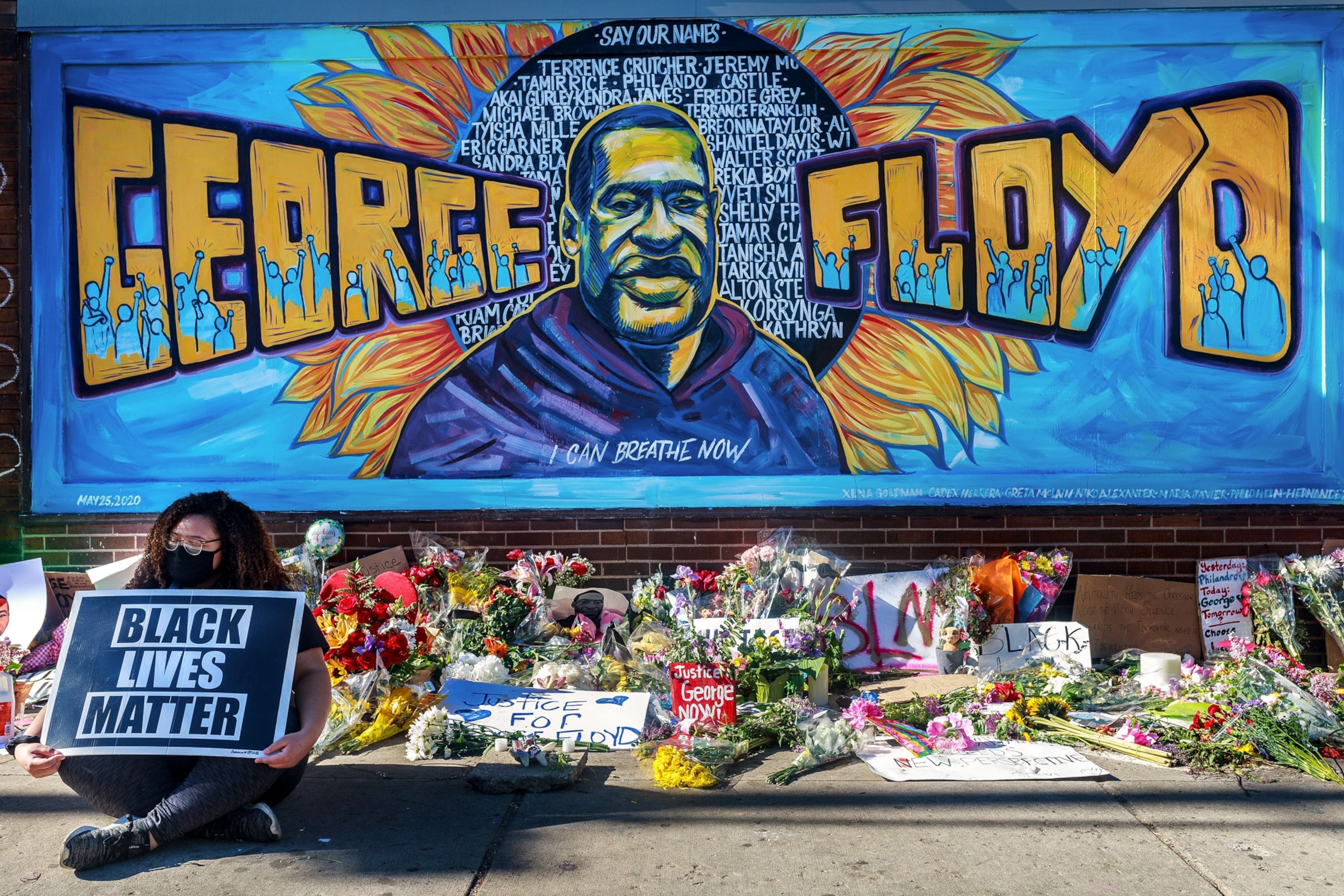
George Floyd's mother was not there, but he used her as a sacred invocation
I want to open with this because I don’t want to center the discussion on me or on my erstwhile opponent in this debate: the real focus here is on the police murder of George Floyd. Rest in peace, sir.

Let’s get this out of the way first: I don’t like Ben Shapiro.

It’s not hard to understand why: he is deeply conservative and I am liberal; I believe in the value of real argument and he’s the definition of a sophist; I strive to be honest and a rational intellectual (Meaning someone who uses reason and thought to discern and communicate truth; I’m not necessarily trying to be seen as super-smart and therefore an authority — though I admit I wouldn’t mind being seen as super-smart), and he’s a manipulative liar who hides behind the trappings of pseudo-intellectualism (meaning he is trying to be seen as super-smart and therefore an authority, regardless of the actual merits of his position — and I think he is intelligent enough to know what he’s doing and why, which implies that he is either deeply cynical or tragically self-deluded).

Basically, he’s a stinky poopoo head. Just know that going in.

As a brief aside, let me address the likely counterjab from any Shapiro fans who happen to be reading this: no, I don’t hate Shapiro because he’s a conservative; I have deep respect for many conservatives. No, I’m not simply jealous; I freely admit I would love to have Shapiro’s platform, his fame and money and success, but frankly, I could get it the same way he did, the same way Glenn Beck and Tucker Carlson and Rush Limbaugh and Steven Crowder did: I could loudly proclaim myself a prophet of outrage and amplify conservative grudges, and use my skills as a writer and a speaker to build a following. As to whether or not I dislike Ben Shapiro simply because he’s right and he proves my liberal ideas wrong, I’ll let this argument address that.

The argument I want to address specifically is this one:

I want to take this slowly: because one of Shapiro’s signature techniques is talking fast and overwhelming his opponents with words that have the appearance of sound, logical arguments. So, right from the beginning: his main claim here, as presented by the title of the video and the first 13 seconds, is that the real reason Derek Chauvin was convicted of murder in the killing of George Floyd was because he had already been convicted in the court of public opinion of being a racist. He expands this in the following 45 seconds by describing Chauvin as “emblematic of an American system of racism,” and uses as evidence the claim that if you asked Americans today if Derek Chauvin was a racist, Shapiro guarantees that a majority of Americans would say yes.

I don’t want to spend too much time exposing Shapiro’s logical failings; the fact that he is a poor debater who wins with sophistry is an issue I have with him and not the central problem with this argument. But it is necessary to identify the places where his argument shifts, because one of the most common manipulations of a discussion is changing the topic, or changing the focus, or changing the argument. We all know it: one of the classic cliches is that arguments between spouses start out with one problem, but then turn into an argument about whose turn it is to do the dishes.

Shapiro does this here. Whether or not Derek Chauvin is personally a racist has nothing at all to do with whether or not he is emblematic of an American system of racism. Whether he is a racist or an emblem of racism has nothing at all to do with whether the majority of Americans perceive him as a racist. And none of that has anything to do with whether or not he is guilty of the murder of George Floyd. Again, because Shapiro is a sophist, he doesn’t seem to argue here that Chauvin was innocent of murder; he argues that Chauvin was unfairly convicted of racism, and simply implies that this unfair conviction of Chauvin for the “crime” (Shapiro’s description) of racism was the “real” reason Chauvin was convicted of murder. He also says, between about 1:00 and 1:30, that America was convicted of being racist because of this one “data point,” Chauvin killing George Floyd; he seems to be implying that America has also been unfairly convicted of that crime of racism, because the conviction of the country was dependent on the conviction of Chauvin for racism, and that conviction was unfair, and also convicting the entire nation because of this one crime is also unfair. Not the conviction for the crime of murder, again, but Chauvin’s conviction for the crime of racism. Which was unfair because it was never brought up in court, never alleged, and never proven, as he says, strongly, several times in this video.

This is what I mean about shifting the argument, and why I call Shapiro a sophist. He’s saying that racism was the reason for Chauvin’s conviction, and in almost the same breath (I don’t know if it was the same breath because I’m not sure that Ben Shapiro breathes: it is genuinely impressive how many words he can get out in a minute, without ever seeming to pause. Sorry; off-topic.) he states that race was never brought up in the trial. How on Earth is the lack of evidence supposed to serve as evidence? It’s not: his evidence is that “we all know” that Chauvin’s conviction was for racism, not for murder. His evidence is that if you asked Americans if Chauvin is a racist, the majority would say that he is. Or at least, Shapiro says (in fact he guarantees) that the majority of Americans would say that Chauvin is a racist.

What Shapiro is really relying on here is the resentment in his audience — generally a white conservative audience — about being called a racist. His audience doesn’t like to be called racist when there is not crystal clear evidence of racist action and intention presented: evidence that would meet the standard in a court of law. That is, unless you can point to the Nazi tattoo on my forehead, and the sworn statement I signed that my Nazi tattoo represents my genuine conviction that the white race is supreme, AND my conviction in a court of law for a hate crime committed in pursuance of the achievement of those white supremacist views — then it is not fair to call me a racist. And since that is his audience’s definition of a racist, calling someone a racist who does not have all of that evidence of racism is deeply offensive. Of course it is: who would want to be accused of that kind of atrocity?

This is, by the way, one of the central conflicts in our society, and it is a subject I will keep coming back to again and again: we have never had a real national conversation about what the word “racism” means, about what it is to be racist. We have not had that conversation because too many people, like Ben Shapiro and also like a much greater number of people on the left, garner too much political power out of misusing accusations of racism, which is easier if they don’t carefully define their terms. It is also much easier to continue maintaining a racist society if the definition of racism is unclear.

Shapiro points out that the evidence of Chauvin’s racism is the death of George Floyd. He says (About 1:00) that is not evidence of racism, it is evidence of a bad cop, of bad police procedure, of recklessness; it is not evidence of racism. But what is his evidence of this claim? That racism was never brought up in the court during Chauvin’s trial. As I said, the charge of racism can only be proven with evidence presented in a court of law: not in the “court of public opinion.” And in another amazing piece of sophistry, starting about 1:45, he says “Let us be real about this,” and then goes on to describe how the presentation of evidence to the public would have shifted public opinion, and therefore the verdict. He says that if the bodycam footage had broken at the same time as the video captured by Darnella Frazier, and if all of the evidence had been presented, and there had not been “20 million people in the streets declaring that America was systemically racist and that this case was and that this case was a case of racism” then it is “highly doubtful” to Ben Shapiro that the jury would have convicted Chauvin of murder.

I honestly don’t know if Chauvin is guilty of murder. I watched the video, and I saw the bodycam footage. I recognize that Shapiro is arguing here that the bodycam footage starts earlier, and shows the struggle between Mr. Floyd and the police before the officers put Mr. Floyd on the ground and before Chauvin knelt on him, and therefore it shows justification (Shapiro is alleging) for the use of force because Mr. Floyd was resisting arrest and so on, whereas the video that helped make this case so famous just starts with Chauvin applying force without giving us the justification for that force, and therefore prejudiced people against Chauvin. I did not see the extended footage as justification. I thought it showed that the police, who probably should not have been called in the first place (I don’t think passing a counterfeit $20 is evidence of criminal action requiring a police response), should not have approached a man in his car, unaware that he had been reported for passing a counterfeit $20, from out of his line of sight, startling him, scaring him and provoking an agitated response, and then using that response to justify pointing a gun at him, scaring him further and provoking an even more agitated response, and then continuously escalating the interaction until it becomes an argument about how much force is required to restrain someone who is resisting being restrained. In fact, I think the extended footage implicated the three other officers in the murder. Not because I know in my liberal heart that Derek Chauvin is racist, but because I don’t presume that George Floyd was a threat, as the police clearly did, and I don’t think that violence is justified in ending a threat, and certainly, without a question, the use of force should end when the resistance ends. If Mr. Floyd was fighting or running away, force might have been called for — but as soon as he stopped fighting, the use of force should have ended. Period. Not gone on for nine and a half minutes. Did the police see Mr. Floyd as a threat because of his race? Was his race the reason why the store’s owner called the police on him for passing a counterfeit $20? I think the answer is definitely yes, but I can’t say for sure. What I can say is that the full footage does not clearly, undeniably sway public opinion towards vindicating Chauvin’s actions, because it doesn’t exonerate Chauvin for me. Though I recognize that other people disagree with me, and think his actions were justified. I see Shapiro’s point, that the full footage might have moved people differently than just the witness’s video did; the death of Ma’Khia Bryant seems to be showing that: but that is a question of how you can move (or manipulate) public opinion, not an argument for how you can find the truth in this case: which is why this extraordinary sophistry. Just watching the videos does not prove Chauvin’s guilt or innocence, which is why I say I can’t know for sure if he was guilty or not.

But this I can say for sure: the best evidence that I know, on either side, is that 12 American citizens, after hearing weeks of evidence and argument, found Chauvin guilty on three counts including second degree murder. Shapiro has not one single argument here that is better or more reliable than that verdict. Nor do I. So I will accept that verdict as the answer, over the doubts of one Ben Shapiro. I suspect that Shapiro, who is in fact incredibly intelligent and both educated and experienced, having graduated from Harvard Law and worked as an attorney before going full time into conservative punditry, also recognizes that he does not have one single argument that is better or more reliable than that verdict. But he doesn’t say that, because he is a sophist and a manipulative pseudo-intellectual who profits from stoking the flames of outrage and partisan division, and convincing his white conservative audience that Chauvin is not guilty of racism, and therefore neither are they, and that the accusation of racism is much worse than the actual murder of George Floyd by Derek Chauvin, because that false accusation of racism caused the wrongful conviction of Chauvin for murder, when at best he was just a bad cop following bad police procedure and acting recklessly. And why those three descriptors, Shapiro’s own, should not be sufficient to show that the killing was in fact murder is beyond me: clearly those reasons, which were presented in the trial and supported by video evidence and expert testimony, were sufficient to make the jury convict Derek Chauvin of murder.

Of course, because Ben Shapiro is a sophist and a manipulative pseudo-intellectual who profits from stoking the flames of outrage and partisan division, he builds from his claim (presented without evidence beyond his own opinion and “what we all know to be true,”) into greater assumptions and accusations, namely that this case has been entirely political, that it has been used by Democrats to build the narrative that America is racist. Again, not to get too deep into flaws in the argument and logical fallacies and such, because the focus here is simply that Ben Shapiro is wrong, but I have to revel in the towering house of cards he has built here: starting with (1) Derek Chauvin was innocent of murder; then (2) Chauvin was convicted because the public decided he was racist, along with (2B) The public would not have decided Chauvin was racist if they had seen George Floyd resisting arrest and being visibly agitated. Then you have (3) Because it was not proven in the court that Chauvin was racist, Chauvin was therefore not racist; (4) America was accused of racism because Chauvin was accused of racism, while simultaneously, (-4) Chauvin was accused of racism because America is and was and has been accused of racism; then (5) since Chauvin is not racist, America is not racist — and also (-5) since America is not racist, Chauvin is not racist — and then (6) the Democrats have taken up this issue because they use false accusations of racism for political gain. All assumptions, many of them contradictory and even absurd on their face, yet we’re just supposed to accept them as true (Because Shapiro’s audience does accept them as true, I would guess). As an example of this, Shapiro, starting at 3:28, begins talking about Philonise Floyd, George Floyd’s brother, who gave a statement about Chauvin’s conviction in which he compared his brother to Emmett Till. Shapiro gets very exercised about this, taking offense on behalf of Emmett Till’s family — and also revealing his (Shapiro’s) additional faulty reasoning for the justification of George Floyd’s death — but there are several problems with this. One is that he gets some of the details of Emmett Till’s murder wrong, but I don’t want to nitpick; I’m only pointing that out because if you want to get self-righteous about the truth, you should present the whole truth. The big problem is that he argues that the analogy is wrong because the circumstances surrounding the death of Till and the death of George Floyd were entirely different, and therefore it is a bad analogy intended to make the murder of George Floyd as tragic and abominably racist as was the murder of Emmett Till. And therefore, of course, the murder of George Floyd was not as tragic and abominably racist as the murder of Emmett Till.

But here’s the thing: that is not the analogy that is being made.

Frankly, I’m not going to speak for Philonise Floyd. His brother was killed, the murderer was convicted; Mr. Floyd is welcome to say whatever the hell he wants in the aftermath of that tragedy. He can say that his brother was the Second Coming, or the greatest American since Abraham Lincoln, or that he was cooler than Napoleon Dynamite: none of that is evidence of any of the accusations that Shapiro makes about the Democratic party using Floyd’s murder to make political hay. (I will say that Shapiro does not directly criticize Mr. Floyd: he rather goes after the more famous men standing in support of Mr. Floyd, namely Rev. Al Sharpton, Rev. Jesse Jackson, and Ben Crump — who, weirdly, I guess have to name as the head of George Floyd’s family’s legal team, which one would think could be the explanation for Mr. Crump’s presence at Philonice Floyd’s press conference, rather than the political agenda Shapiro seems to ascribe to him. Shapiro calls them all racebaiters, of course without any evidence whatsoever, allowing that ad hominem attack to support his house-of-cards assumptions about the political agenda being expressed here.)

But others have made the same connection between Emmett Till and George Floyd, so let me address that: the argument has not generally been that Floyd was murdered in the same way that Till was. Nobody has made that claim, other than Till’s cousin, Ollie Gordon, who did say that she felt the same way watching the video of Floyd’s murder as she did when her cousin was lynched. The point that has been made repeatedly is that Till’s murder, and even more importantly, his mother Mamie Till’s decision to publicize the horrifying details of her son’s murder, with an open casket funeral and published pictures of his wounds, galvanized the civil rights movement and helped bring about the changes the movement wrought over the ten years after the 14-year-old was killed; similarly, George Floyd’s murder, which was not unique but was certainly more publicized than most similar murders, galvanized the protests that happened in 2020, and may lead to some changes — potentially including the conviction of Derek Chauvin. And that is a reasonable analogy; but it does support the idea that the country is in fact racist, which is why Shapiro has to argue against it.

In the process of arguing against it, Shapiro does go after George Floyd: he describes Emmett Till with a list of negatives, all of which are points Shapiro wants to make about George Floyd. He says that Emmett Till was not someone passing counterfeit bills, that he was not a repeat drug offender, that he was not a repeat criminal who had done jail time, that Till did not hold up a pregnant woman at gun point and rob her house while her kid was in the house. And perhaps the most important point (though it is not the most emotionally manipulative point), Till did not resist arrest. Of course: none of these things matter in the slightest. George Floyd was not killed because he was a repeat drug offender, nor because he was high when the police detained him. He was not killed because he had a criminal record. He was not killed because he was passing counterfeit bills (There is no evidence, of course, that he even knew that he was passing counterfeit bills). He was, and this is the crucial point, not killed because he was resisting arrest.

George Floyd was killed because Derek Chauvin murdered him. As was proven in a court of law.

Now, I do have to point out again that Shapiro doesn’t actually say that Chauvin did not commit murder; he said that he doubted a jury would convict Chauvin of murder had it not been for the court of public opinion convicting Chauvin of racism. I don’t agree, clearly, but I will say there is some argument to be made that the jurors were swayed by the events of last summer, and by the protestors showing up in great numbers outside the courthouse throughout Chauvin’s trial. It may be that the jurors convicted because they were afraid that there would be riots if they acquitted Chauvin. That may be true, though of course it may not be; there is just as much reason to think that the jury, or at least some members of the jury, would acquit in defiance of that pressure, would even seek out the violence that may have followed an acquittal. It is extremely likely that some members of the jury would fear the consequences that might have come, that still might come, from the police because Derek Chauvin was convicted. In any case, it is not true that the jury convicted Chauvin only because of the accusation of racism. Since, as Shapiro states, race was never brought up in the trial, the only way the jury could have convicted based solely on the accusation of racism would be if they came in with that idea already in their heads, that they were prejudiced against Chauvin and no amount of evidence would ever sway them. But since 46% of Republicans and 25% of independents think it was the wrong verdict, based on the same public opinion evidence that Shapiro claims is the reason for the conviction, it’s far more likely that, if public opinion actually held such sway over the minds of the jurors, some of the jury would have voted to acquit. It’s practically impossible that the jury would be all Democrats (Also, 10% of Democrats think it was the wrong verdict, so at least one juror on an all-blue jury would have thought that, statistically speaking), and hard to believe that Republicans would overcome their prejudices while Democrats would not, based on the same evidence. One pro-police Republican voting to acquit would have led to a hung jury and a mistrial, and that has historically been exactly what happened in even the most egregious cases of police violence. Instead all twelve jurors, some of them likely sympathetic to pro-police ideas if not personally in support of them, all of them surely feeling pressure from conservative friends and neighbors as much as from liberal friends and neighbors, voted to convict. On all three counts.

Because Derek Chauvin murdered George Floyd. As was proven in a court of law. Without race being brought up once.

Now: is America racist? Was Derek Chauvin’s murder of George Floyd emblematic of that systemic racism? Might the video, the case, the public response both from 20 million people on the streets and from politicians and political pundits, all potentially have had, or will have in the future, an impact on the racism in this country?

The answer to those questions is the same as the answer to this one: Is Ben Shapiro a sophist and an annoying twerp?

Free to be Safe, Safe to be Free

A friend of mine posted this:

IMG_3831
And so, because this is what I do, I asked: why? Why is freedom more important than safety?

He couldn’t answer.

He replied that freedom was the very fabric that the U.S. was drawn on, which is a lovely statement of sentiment — but not an answer. That tells me why freedom might be so important to Americans, if we accept that freedom is indeed what the U.S. was drawn on; but it doesn’t say either why that is the foundational principle of this country, nor why that foundational principle (or this country) are especially important — nor does it answer my first question, about why freedom is more important than safety. (Heh — I just wrote “freedom is more important than slavery.” Not only pretty close to a tautology, but also a pretty good indicator that my subconscious is damned libertarian, if it equates safety with slavery. Actually, I was just listening to the 1619 Project podcast about the foundations of this country, and I have an argument against freedom being the fabric this nation was drawn on. But that’s another subject for another time.)

Understand that this is a good guy, a really good guy. A generous plenty of his posts are focused on telling his friends that he loves them, especially his male friends, explicitly using the word “love” and supporting them in every way he can; sharing his own struggles with depression and alienation; telling anyone and everyone that he is always willing to listen. Basically he is an antidote to toxic masculinity. He is masculine antitoxin. (Also hilarious. Also a frequent and fully self-aware shitposter. Also a boogaloo boi: his second response to my questioning was a citation of the Second Amendment as the only necessary source of safety. People are complex, aren’t they?) He wasn’t attacking me, calling me a coward or a libtard; he wasn’t even treating me as a troll commenter, which would be an understandable response to my asking philosophical questions on a meme. He was really trying to answer my question, and in so doing, revealing at least some of his ideals, if not his explicated arguments for his ideals.

And I don’t think they’re bad ideals. I think this country should be drawn on the fabric of freedom; and though I don’t agree with The Libertarian Cartoon Head (And I find it kind of hilarious and very telling that it is so very Nordic and square-jawed, with furrowed brow and shaped beard and curled ‘stache, blond hair and blue eyes), I also don’t agree with the woman with the sign. (I will give her slightly more credit in her argument because she put “freedom” in sarcastoquotes, which implies that the debate is set on false premises as these debates often are and maybe have to be by definition; but also, I have no idea where this picture is from or if it is even real, so I can’t say if she knows how to use sarcastoquotes or meant those for emphasis, or if she ever really held that sign in the image, or if it was Photoshopped. So.)

Let me tell you what I think: I think both safety and liberty are, quite simply, vital. They are necessary. Both. I’ll actually throw in the pursuit of happiness, too: all vital to our continued existence as thinking, feeling individuals. That’s why they are unalienable rights.

There’s a deeper and harder conversation about what rights are and where they come from, and what it means to have them, which I am not qualified to have; I have a lot more reading to do in the philosophy world before I can take that on. But for  this conversation, the layman’s understanding of rights should be just fine.

A right is what you have simply by virtue of being an individual, a specific human being: a person. Your rights are essentially a list of what is required for you to experience and explore that existence as a person, as an entity with reason and free will. You must have life, because if you’re dead, you can’t experience your existence as a person. You must have liberty, because liberty is essentially the opportunity to have your own thoughts and feelings, to express your own thoughts and feelings, and to act on your own decisions, which are based on your own thoughts and feelings. Without liberty of thought, of speech, and of action, you are not able to explore and experience your existence as a unique individual. It’s pointless to say you have reason if you are not allowed to think your own thoughts, and then express what you think (Because freedom that is only locked inside your head is not freedom: a human being is capable of expressing and communicating their thoughts, and that expression and communication of thoughts is a fundamental part of being a human; you cannot be a human if you can only think but never speak your truth.); it is untrue to say you have free will if you cannot act according to that will.

You must have life to be you, and so you have the right to life; you must have liberty to truly be you, and so you have the right to liberty. Either without the other is meaningless and empty. The pursuit of happiness, the third unalienable right listed in the Declaration of Independence, is the realization of these two rights extended forward in time: if I have life and liberty right now, I can be myself; and if I can be assured that I will still have life and liberty tomorrow, I can begin planning and acting with that understanding in mind, seeking most likely to achieve a greater happiness for myself according to my wishes. Also necessary, I would argue — although the argument for this one is a bit more fraught, not only because Thomas Jefferson, after cribbing these rights from John Locke, changed Locke’s third unalienable right into the pursuit of happiness; Locke said the third was the right to property, meaning the right to own the fruits of your own labor. That’s a different conversation. It’s also fraught because Jefferson was one of history’s greatest hypocrites, writing that all men are created equal while being attended by James Hemings, his wife’s half-brother — Jefferson’s own brother-in-law, who shared a father with Jefferson’s wife — whom Thomas Jefferson owned. Jefferson also, of course, owned James Hemings’s sister (And Martha Jefferson’s half-sister) Sally. And he owned his and Sally’s six children until his death. All men are created equal, eh?

Regardless of who wrote the words, though, the ideas are sound as written, if not as Jefferson embodied them and helped to codify them into the founding documents of this country. All people are created equal: each and every one of us is a unique individual, essentially capable of thinking and feeling, and in possession of free will. Therefore each and every one of us has the unalienable right to life and liberty, both.

Both.

That’s the trouble with this argument. It’s not that life (which I would argue is represented by safety; I’ll get to that in a second) is more important than liberty, nor that liberty is more important than life. It’s that you cannot separate the two.

Is safety the same as life, here? I don’t want to argue a red herring, to make a false equivalence between the safety in this argument and the right to life in the Declaration of Independence. But what do we mean by safety? Safety, I think, represents the assurance of continued life; like the pursuit of happiness, it is the right extended into the future. If I am safe, I not only know that I am alive right now, but I expect that I will continue to be alive in future, and so I am confident and comfortable in that expectation. In its essence, safety is about the preservation of life over time — and also the preservation of liberty, without which life is meaningless and so too is safety. I know that’s a circular argument, but really: if you were sure that tomorrow you’d be alive, but you’d be in jail, would you say that you felt safe?

And on the other side, if you were free to do as you wish, but you knew you would die tomorrow, would you really feel free?

I know the knee-jerk answer to that second question, from people who agree with the meme (probably my friend as well), would be a resounding HELL YEAH BROTHER! Because part of this argument is based on a quintessentially American/(toxically) masculine ideology that not only honors, but pursues and relishes, death, especially death by martyrdom on the altar of freedom. But while self-sacrifice is honorable and noble, and I am grateful for those who have sacrificed their lives for me  — those sacrifices did not ensure the continued existence of liberty. They (depending on the specific situation) may have helped to eliminate a present threat to liberty with their sacrifice — probably also a threat to life; while the Fascist regimes in WWII were certainly a threat to liberty, they were clearly a much more dire threat to the essential existence of millions if not billions of human beings — but that doesn’t ensure, cannot ensure, that liberty will continue into the future.

Only safety can do that.

Now: it is certainly true that some attempts to limit liberty are presented under the guise of promoting safety; those must be guarded against. But that is not, despite the fanaticism of some liberty-lovers, true of every single attempt to ensure safety, nor even every attempt to limit liberty — some are presented as morally correct, for instance, regardless of whether they create more safety; like certain White House occupants sending certain Federal troops to certain cities to, errr, safeguard statues. That is certainly an attempt to limit liberty, but there’s not really a way to claim that keeping Robert E. Lee atop his horse atop a marble pedestal will make us safer. (There is some attempt, in the name of law and order, to claim that those who would pull down statues are threatening to create — or actually creating — chaos and danger for Americans. But let’s not buy into the bullshit, yeah? The only safety really being promoted there is the safety of the monuments, and the comfortable white supremacy they generally represent.) It’s like the argument that every single gun law is an infringement on the right to bear arms: that’s not really true. The essence of the Second Amendment is to preserve the right of self-defense — which preserves both life and liberty — and so long as one is able to do that, the right is uninfringed. Slippery slopes are not an argument, they’re a rhetorical scare tactic.

It is also true that some attempts to create safety also bring an unacceptable limitation on liberty; I think that’s the argument against lockdowns as a measure against the pandemic. As I think this year has made clear, though, temporary limitations on liberty become more acceptable when they are more effective in preserving life; the way to avoid a restriction of liberty is to find a way to have your cake and eat it too, to ensure safety while also preserving liberty — which in this case would be: masks. Masks are a way to effectively preserve safety by stopping the spread of Covid-19 while also not infringing on liberty, because so long as everyone wears a mask, we can continue with almost all of our preferred activities.

Brief aside to squash this nonsense: Liberty does not mean an unlimited right to do whatever the hell you want, to say no just because someone else says yes, to insist that somehow you don’t need to wear a piece of cloth on your face just because you don’t wanna BECUZ THIS’S AMURRRRRRRICA. It means the ability to control your own actions based on your rational decisions, so long as those actions don’t harm anyone else’s ability to do the same. Anyone making a rational decision not to wear a mask — i.e., “I have claustrophobia and the masks cause panic attacks, so instead I MAINTAIN A STRICT SOCIAL DISTANCE AND MAYBE WEAR A CLEAR FACE SHIELD” or “I don’t enjoy wearing a mask SO I DON’T GO OUT IN PUBLIC” —  is fine; those are rational decisions, and I doubt anyone would have a real problem with those. That’s why exceptions for health reasons are written into every mask ordinance, and why no mask ordinance mandates people leave their homes.  Now, it is certainly true that, all else being equal, the individual should be the one to decide for themselves what is a “rational” basis for their own decisions; but in a pandemic, the actions of individuals have outsized impacts on the life and liberty of others, and therefore some limitation of an individual’s actions is reasonable. The outsized impact on others means that one cannot make a determination of a rational action depending only on one’s own individual will. It means a reduction of one’s ability to choose for one’s self.

To preserve safety. And liberty. Because that’s what it means to live in a society. People who want to be so fanatical about their liberty that they accept literally no restrictions on their liberty imposed by others can still make that choice: they just don’t get to be a part of our society. Society requires compromise. Them’s the breaks. Your right to swing your fist ends where my nose begins, so if you want to swing your fists without any boundaries, get the fuck away from my nose. And then go nuts. Feel free.

Benjamin Franklin gave us one of the more popular arguments about this issue. He said,

“Those who would give up essential Liberty, to purchase a little temporary Safety, deserve neither Liberty nor Safety.”

Now, this quote, like everything else from the Founding Fathers — and, well, everyone famous ever, in this age of disinformation inundation (™) — is pretty regularly misquoted. A Google search for this one gets me this meme, which changes the quote pretty appreciably:

Notable Quote - Benjamin Franklin - Granite Grok

(It also gets me this one, which is hilarious because there’s absolutely no way Benjamin Franklin said this — and not just because “guy” was not commonly used to mean “that fellow over there” until around 1850, 60 years after Franklin’s death BUT MOSTLY BECAUSE OF THAT:)

TOP 25 BENJAMIN FRANKLIN QUOTES ON LIBERTY | A-Z Quotes

(I also really want that not to be a portrait of Franklin, but it probably is. Oh, well.)

But case in point, the comments on the meme that my friend shared had this image in them:

Image may contain: 3 people, beard, text that says '12:23 Kacey Elise Wheeler Kacey Elise Wheeler Yesterday Extreme Liberty 10:55 This shirt our Scofflaw collection has been really popular lately! Get while it's hot! [Link below] ...See More Those would upliberty purchase alety are bitches. Beajamin Franklin (probablyi Like Comment Share Whoolor ខ'

Which really represents what happens when people stop thinking about this stuff. Nothing wrong with wearing a t-shirt, of course; but this is not an argument, any more. Now it’s silly. Now it’s a meme.

But the best and most important thing about Franklin’s actual statement is this: it doesn’t mean what we think it means.

WITTES: The exact quotation, which is from a letter that Franklin is believed to have written on behalf of the Pennsylvania General Assembly, reads, those who would give up essential liberty to purchase a little temporary safety deserve neither liberty nor safety. [emphasis added]

SIEGEL: And what was the context of this remark?

WITTES: He was writing about a tax dispute between the Pennsylvania General Assembly and the family of the Penns, the proprietary family of the Pennsylvania colony who ruled it from afar. And the legislature was trying to tax the Penn family lands to pay for frontier defense during the French and Indian War. And the Penn family kept instructing the governor to veto. Franklin felt that this was a great affront to the ability of the legislature to govern. And so he actually meant purchase a little temporary safety very literally. The Penn family was trying to give a lump sum of money in exchange for the General Assembly’s acknowledging that it did not have the authority to tax it.

SIEGEL: So far from being a pro-privacy quotation, if anything, it’s a pro-taxation and pro-defense spending quotation.

WITTES: It is a quotation that defends the authority of a legislature to govern in the interests of collective security. It means, in context, not quite the opposite of what it’s almost always quoted as saying but much closer to the opposite than to the thing that people think it means.

SIEGEL: Well, as you’ve said, it’s used often in the context of surveillance and technology. And it came up in my conversation with Mr. Anderson ’cause he’s part of what’s called the Ben Franklin Privacy Caucus in the Virginia legislature. What do you make of the use of this quotation as a motto for something that really wasn’t the sentiment Franklin had in mind?

WITTES: You know, there are all of these quotations. Think of kill all the lawyers – right? – from Shakespeare. Nobody really remembers what the characters in question were saying at that time. And maybe it doesn’t matter so much what Franklin was actually trying to say because the quotation means so much to us in terms of the tension between government power and individual liberties. But I do think it is worth remembering what he was actually trying to say because the actual context is much more sensitive to the problems of real governance than the flip quotation’s use is, often. And Franklin was dealing with a genuine security emergency. There were raids on these frontier towns. And he regarded the ability of a community to defend itself as the essential liberty that it would be contemptible to trade. So I don’t really have a problem with people misusing the quotation, but I also think it’s worth remembering what it was really about.

Source

In the end, the things we need to remember are these: safety is important. Preserving life is important. The reasonable assurance of future safety is also important  — I don’t want to get into Maslow’s hierarchy of needs, but liberty is waaaay up at the top of the pyramid, around “self-actualization,” and safety is at the base, the second level just above food — and, dependent on circumstances, justifies a limitation on individual liberty. The preservation of liberty is equally important — but because liberty is more abstract than life, it requires more careful thought to reasonably determine what is, and what is not, a threat to liberty.

The whole reason we have the right to liberty is that we have the ability to reason. If we want to protect that right, then we must use that same reason to know when it is actually under threat. We have to think.

And stop taking memes too seriously. You know: like I just did.

What are we fighting for?

HONK FER FREEDUM

Coronavirus: the US resistance to a continued lockdown

I want to understand the argument.

I don’t. And it’s vital that we understand the argument, even if we don’t agree with it; agreement is not necessary, compromise can be reached, solutions can be found even if we don’t agree.

But if we don’t understand? Then what do we do?

“We believe that the state governor has gone beyond his constitutional authority in shutting down businesses and ordering people to stay at home,” organiser Tyler Miller tells me from the grounds of the state capitol.

In mid-March Washington Governor Jay Inslee announced an emergency proclamation mirroring many issued around the world; closing restaurants and bars and banning large gatherings.

But protestors say that was unconstitutional.

“The state constitution says that the right of the people to peaceably assemble shall never be abridged. We believe that the (emergency coronavirus) proclamations that the governor here ordered violate that,” Mr Miller says.

Mr Miller said he was not protesting against the recommendations from the public health bodies and respected the need to ‘flatten the curve’.

“I even self-quarantined for 14 days back at the very beginning of this myself, when I had an illness that mirrored some of the symptoms,” he says.

“The fact I am protesting does not mean I think it is a good idea to have gatherings, I just believe that the government has no authority to prohibit them.”

Throughout the crisis, Mr Miller has also been able to continue his work as an engineering technician with the navy.

He says the thing that has angered him is what he feels it is an un-American overreach of power by the Democratic governor of Washington.

I don’t understand that argument.

There is a simpler argument, which is just that people are getting desperate: the country has been shut down in places for more than a month now, and people are facing another rent payment, another car payment, on May 1st, this coming Friday. I understand that desperation, that anxiety; I understand and (mainly) support the desire to let government officials know that you need and demand action. I think it’s a mistake to violate social distancing guidelines, and there are people in the article above and others I have seen who say things like “I have a strong immune system, I take care of myself,” who I think are somewhere between ignorant and idiotic: ignorant if they don’t know that Covid-19 has killed young and healthy people as well as older, sicker people; idiotic if they believe unfounded statements (Mostly from conservative “news” sources) that the novel coronavirus is no worse than the flu.

(This may be too harsh: this is an interesting article about how we are wired to be intuitive, and so underestimate the evidence that comes from outside our experience. I know I was telling my students in March that any shutdown of schools would only last a couple of weeks and would certainly not affect their graduation. On the other hand, I am not saying the same thing now, because I have learned better; I’m not sure why these people haven’t, but my two options above are certainly possibilities.

(Also, this ad popped up in that same article about people being too optimistic. Lol.

Screenshot (6)

(If you believe not only that a miracle stretch relieves years of back pain, but also that chiropractors are stunned by it, AND that chiropractors are the authority whose stunning represents a medical breakthrough, then you are unquestionably in this overly-optimistic bunch.)

But while I understand and sympathize with people who are desperate to get back to work and pay their bills, and I believe (and am infuriated) that the federal government has once again bailed out large corporations with deep political donation pockets and left average citizens to twist in the wind, I don’t understand the other argument. The freedom argument.

I don’t think it’s a reasonable argument.

Listen. I worry about government overreach. I won’t say I’m learned in history, but I know about the Japanese internment camps during World War II, and I know some things about the rise of the various authoritarian dictatorships that plagued the 20th century. I have hated the USA PATRIOT Act since it was imposed on us, during the paranoid jingoist nationalist fervor that swept the country after 9/11 and swept us into a neverending war. I know that it gets renewed every time it comes up because the government doesn’t like to give away power that it has seized. Because of that experience, I have been pointing out to my friends who argue against the lockdowns that the thing we need to worry about is the powers the government arrogates to itself after the crisis: the new regulations and limitations, and invasions of citizens’ rights, that follow a partial return to normalcy, and that are intended to prevent this kind of thing from ever happening again. We have to watch out for the permanent changes, or for the attempts, often subtle and underhanded, to make temporary changes permanent.

I don’t doubt those will happen. I think the first attempt will be by President Trump, when he decides to make his temporary limit on immigration permanent.

But see, I think that because Mr. Trump has a long history of a clearly established position to end immigration. I think that because I have read reports that Trump’s anti-immigration advisors have talked about this pause into something more long lasting. Because this article quotes DHS acting secretary, Chad Wolf, as saying to Fox News that

his agency will soon recommend a move to limit temporary work visas as well.

“That is something that the department has been looking at for the past several months, so we are well underway and look forward to presenting to the President those recommendations for additional steps,” said Wolf.

So there’s your government overreach, as part of an established pattern of behavior, aiming at known long-term targets. After the fact. Once the danger has passed. The current actions are not government overreach: they are government responding as government should to a crisis. The stay-at-home orders were issued during a crisis, and in line with scientific facts and the advice of experts. This is exactly when, and exactly why, people’s rights can and should be limited. We have the right to protest, but if you decided to walk into a burning building in order to protest the fire, people would stop you: and they would be right to. We have the right to freedom of speech, and of assembly, but you cannot gather with an army and plan the destruction of the United States: the right is to peaceably assemble, and free speech does not include sedition or criminal conspiracy. Individual rights are not limitless, not under any circumstances; even the most libertarian of us would state clearly that one person’s rights cannot be permitted to infringe on another’s, that your right to swing your fist stops where my nose begins. And of course individual rights are limited in an emergency, because the free exercise of one’s rights puts others into danger.

This is what government is for: to protect people from danger. Now, if you want to argue that the coronavirus is not that dangerous, then you’re in the wrong place. Start with this.

Then read this.

Then read this.

Then read this. 

(Especially that last one; it’s about the infectiousness of the coronavirus. And lest you think that the infectiousness of Covid-19 is lower than SARS or MERS, both of which caused fewer problems and killed fewer people, go back and read those other articles again, and then also pay attention to this quote from that last article:

“An R0 value of 1 means the average person who gets that disease will transmit it to one other person; in that case, the disease is spreading at a stable rate. An R0 of more than 1 means the disease spreads exponentially.”

And then read this essay about exponential growth.

Okay? Okay.

As I said, the government has the right and the responsibility to limit individual freedoms in response to a crisis, in order to protect the people from that crisis. (I’m aware that some people don’t agree with this: some because they don’t think the coronavirus is a crisis, and if you still think that, go back and read the above articles, but this time with your eyes open; and some because they think that nothing should ever limit individual rights under any circumstances: my above examples of protesting inside a burning building, or convening an army to overthrow the US government, are just fine, for them. I will be writing another blog about that. I’ll let you know when it’s done. The important thing is that, while I don’t agree with that argument, I understand it.) I think, though, that the basic argument behind the protests, the reason that President Trump tweeted support for people trying to “liberate” the states that have both lockdown orders and Democratic governors, is that the government is not trying to protect people from the crisis: the government is trying to control people. To take away their freedom. that’s the argument I don’t understand.

(I am also not going to write here about the elephant in the room, namely the upcoming election and the similarities — remarked on in the BBC article I linked first — between the anti-lockdown protests and Trump rallies. People who are going to the rallies just to support President Trump are certainly not reading this, and are not worth the time to put forward an argument. President Trump is probably trying to use the rallies as a way to hype his base up for the election, but he also said that he thinks Georgia Governor Brian Kemp is opening his state too soon, so I’m not going to jump on Trump today. We’ll see what happens tomorrow. Also: I understand this argument.)

But here’s the thing with tyranny: it makes sense. There is reason behind it.

That’s what’s missing from the freedom argument of the protests.

Break it down. Think it through. Okay, the government — pardon me, the govment (Read this article that I wish I wrote) — limits people’s rights to assemble and move freely, to run a business and participate in the free market economy. Because they want to establish tyrannical control over the free people of these United States.

Why?

I understand that the government has taken on, for most of the people who support these protests, the aura of Darth Sidious and the Sith: evil just for the sake of evil; power hungry just for the sake of power. But, see, that’s a character from a movie franchise, and it’s not a realistic one. I admit, if the Democratic governors were trying to raise a clone army from a mysterious source; or they were trying to corrupt a Jedi knight with incredible power but terrible self-control, then I would see the danger.

Why would the Democrats, or the government in general, want to lock people inside? I saw someone argue that the Democrats exaggerated the danger of Covid-19 in order to justify the lockdown expressly so they could destroy Trump’s economy, because that’s the only way they could beat him in the next election.

Come on.

(An argument I have seen but will not be rebutting is that Andrew Cuomo of New York exaggerated the need for ventilators so he could get…a huge excess of ventilators. Sure. As you do. He’s going to put them in one huge room and then go swimming in them like Scrooge McDuck. Swimming through the ventilators.)

First of all, there’s no way that an economy ruined by Democrats would be pinned on Trump. Trump is already positioning himself to argue that it was the Democrats who did the harm in this crisis. (Elephant in the room…) If this is provably true, if Covid-19 is really not that bad and the Democrats have exaggerated the danger, we’ll know it before November, and this Dem gambit will fail. Secondly, and more important, if they ruin the economy, they not only have no hope of winning the next election, but they lose access to the money. If  the Democrats, or the government in general, are corrupt,  they want money. Money does not come from enforcing a stay-at-home order. We are all losing money, including the government. I know they are flinging money around like it’s meaningless paper (…), but there is a limit to that because at some point the economy will actually collapse, and the more they spend now the closer that outcome gets: and why would anyone in power want that? To destroy the economy that underpins the entire system they are ostensibly seeking to control? Nonsense. There are people who want the government and the entire society to collapse, but they are not the ones in power: they are the ones without power. That’s why they want the system to collapse, because they don’t currently gain from it. The ones in the system, the Democrats in Washington and the state capitals, very much want this current system to survive, even if they are corrupt, because this system is how those corrupt people get what they want. The corrupt actions the Democrats take (And yes, many Democrats are corrupt; not all of them or only them, but yes they are.) are clearly intended to increase their wealth and their ability to stay in their current positions so they can continue increasing their wealth. That’s why we still don’t have term limits or meaningful campaign finance reform. Nobody wants to make the money go away, least of all corrupt Washington politicians.

So what’s the reasoning? Because the Democrats are secretly anti-American communists? Okay, let me try to address the idea of Dems seeking power for power’s sake; I still think that sounds like the Sith, but sure, let’s imagine that they are simply evil and that’s their reasoning. Communists, or anyone trying to overthrow the government, would be trying to seize the reins of power. They would be going after the sources of power, trying to control those so they could then get the next source of power, and so on; it’s like Risk. You conquer territory that lets you conquer more territory. You don’t just act arbitrarily, you seek the means of control. In this country, the means of control are (in no particular order): violence and force; the ballot; information; and money.

Which of those things are the Sith-Democrats gaining through the lockdown? Not money; I already talked about that. (Sure, the government is giving money to corporations, who paid the politicians. But those corporations make more money in an open economy. The same goes for people arguing that the government is trying to make people dependent on government handouts rather than their own paychecks: the money will run out if the economy doesn’t open. then the system collapses and the people in power lose.) Greater control over information? If there are secret things going on that we can’t see because we’re all staying home, then I take all of this back and apologize; let me know if the clone army executes order 66, or the Final Order fleet rises from Exegol. Otherwise the press has not seemed limited by the lockdown, and I don’t really see how it would be; limiting reporters’ physical movements seems a loser’s gamble in a world of the Internet and drones with cameras. The ballot? I mean, we’ll see when the election comes, but at the moment, the lockdown seems to play more into Republican hands because it limits voters’ access to the ballot box, which tends to favor conservative politicians.

Does the lockdown give the government more ability to commit violence, more ability to use force against the people? I honestly can’t see how. I mean, I guess they could be trying to force us to obey so we get more used to obeying, so that the next time they give us an irrational and arbitrary order, we’ll obey just because that’s what we do now. But if that were the case, they wouldn’t be using Covid-19 as their cover. Because that gives us a reason, and that means they’ll need to have another reason, as good as this one, to support their next attempt to tell us to stay home: that progression only works with weaker and weaker justifications. Using a global pandemic is not a weak justification; quite the opposite. (And notice that even this one isn’t working…)  Read 1984: O’Brien wants Winston to not only tell him he sees five fingers, he wants him to actually see five fingers; and that’s the only reason Winston gets for the months of torture he undergoes. He is very intentionally not given a reason to obey Big Brother: he just has to do it, or else he suffers. In this case, if we don’t obey, it’s not that we suffer the wrath of the government — it’s that we get sick. (And this is true.) If you want to create a totalitarian state, you need to create loyalty to the state without reason: loyalty to the state based on an emergency doesn’t cut it. Because the loyalty ends when the emergency does.

Now: if this lockdown turns out to continue past when the virus disappears. Or if the virus doesn’t disappear, either because the press is controlled and doesn’t report the true numbers of the disease (And I know people think that is happening, but I’m talking about the press saying there are thousands of cases when there are none, not the medical authorities miscounting the thousands of cases that are in existence; if anything we are undercounting the actual cases, and we all know it.), or because the government takes actions that continue the spread of the coronavirus (I mean, maybe tweeting support for protests that seem to be increasing the chances of the disease spreading would qualify as that?). Then I will agree that this is an attempt to establish tyranny. But you see what the actually despotic actions are there? Enforcing control over freedom of movement when there is no crisis. Controlling the press. Actually using biological warfare, directly or indirectly, against the people. Those are tyrannical actions.

Asking people to stay home is not tyranny. It’s concern. Even if you think it is unfounded concern, I don’t see any reasonable way to argue that it is anything other than concern.

But you know what really concerns me?

People are acting based on this argument. This argument that doesn’t seem to have any real rational basis. It honestly seems to be just “You can’t tell us what to do. Not even if it’s in my best interest.” Rebellion for rebellion’s sake. Cowboy shit. Cowboy shit that has no particular goal, no particular target; it’s just people wanting to act like cowboys. Rebels. March and wave flags. That doesn’t make any sense: but people are still doing it.

The fact that I can’t figure out the argument doesn’t concern me as much as the fact that people seem willing to act even though they don’t understand why they are acting. That’s irrational.

I don’t know how to argue with irrational people.

Even worse, I don’t know how to live in the same country with them.

People say this country is founded on the rule of law, or on the Constitution, or even on the will of God; none of that is true. It was founded on reason. The argument for the Constitution and the rule of law is reasonable, it is rational; it makes sense. The way the Constitution sets up our government is rational, every aspect of it. Hundreds of reasonable people argued — argued! Gave reasons and explanations! Appealing to the intellect of their opponents! — for years to write it. Some of the arguments were wrong, and some of the beliefs were wrong; the people making the Constitution were imperfect, and had some bad reasons, which should give way to better reasons over time — but that’s the system they set up, one in which better arguments, better reasons, will win out over worse ones. It’s all founded on reason.

The country can live through any danger, even the coronavirus. But it can’t live through the death of reason.

That’s what scares me. That’s why I want to understand, because if I can understand, I know that my opponents, even if they are wrong, are still listening to reason, and that means there’s hope.

I hope I can understand.

Mind the Gap

Last one. The student who suggested this was definitely on the side of “The wage gap is only because men work harder and have better jobs!” That is, not because of discrimination, but because men go into STEM fields more often, and are more aggressive in seeking promotion and wage increases. But then the question becomes, “Why do men go into STEM fields more often? Why are men more aggressive in seeking promotion and wage increases?”

Here’s my answer.


QUESTION:  Is there a gender wage gap? What explains the gender wage gap, if there is one?

There are simple answers to these questions, but there’s a problem: these questions come at the topic from the wrong side. 

Oh – the simple answers are, respectively: “Yes;” and, “Sexism.” 

But when we focus on questioning the existence of the gap, when we try to examine the truth value of a simple truth, the only way to have the argument is to keep breaking the wage gap down into smaller and smaller pieces, because that response values the position that the truth is not true: there must be a reason why my opponent questions the existence of the wage gap. Let’s consider his argument. Is there maybe a flaw in how we describe the wage gap? How we measure it? Is it only a rumor, or propaganda? 

So then we look for explanations that could cast doubt on the existence and extent of the wage gap: is the wage gap because women work fewer hours than men? Because women are less likely to go into high-paying careers? Because men have more education? Because women leave work to have children? Because women are less assertive in demanding more money or greater pay increases? Because men are smarter than women? 

Other than the last one (which, again, has a simple answer: #NOPE), each of these can be adjusted for when examining the data; if you look only at hourly wages, it removes the difference in hours worked and resulting total salary; if you look side-by-side at only specific careers, it removes the question about men going into more highly paid careers than women, and so on. 

Two things result from this: one, with each adjustment, the wage gap goes down; but two, the wage gap never disappears. Since it goes down, however, someone with a specific bias in this argument could extrapolate from the adjusted data and say there is no real gap, or it doesn’t matter; or someone could intentionally skew the data or make unfounded claims to support a different argument.

Here’s an example, from the Economic Policy Institute, a Washington thinktank which has a left-center bias, but is highly rated for its truthiness, according to mediabiasfactcheck.com (Source: https://mediabiasfactcheck.com/economic-policy-institute/). The EPI did a meta-study of several wage gap studies, and then adjusted for different factors, and reported this:


Models that control for a much larger set of variables—such as occupation, industry, or work hours—are sometimes used to isolate the role of discrimination in setting wages for specific jobs and workers. The notion is that if we can control for these factors, the wage gap will shrink, and what is left can be attributed to discrimination. Think of a man and woman with identical education and years of experience working side-by-side in cubicles but who are paid different wages because of discriminatory pay-setting practices. We also run a model with more of these controls, and find that the wage gap shrinks slightly from the unadjusted measure, from 17.9 percent to 13.5 percent.9 Researchers have used more extensive datasets to examine these differences. For instance, Blau and Kahn (2016) find an unadjusted penalty of 20.7 percent, a partially adjusted penalty of 17.9 percent, and a fully adjusted penalty of 8.4 percent.

Source: https://www.epi.org/publication/what-is-the-gender-pay-gap-and-is-it-real/


What matters is that second fact. The wage gap doesn’t disappear. It is always there. And just as an overall analysis of all workers will have some extraneous data and some uncontrolled influences and therefore exaggerate the problem (Regionalisms, for instance. Is it likely true that in some areas women are less educated than men because a strong religious influence makes it taboo to teach women, or because the teachers are traditionally men who do a better job of teaching young men than they do teaching young women, and therefore women have fewer high-paying jobs or are paid less because they have less education? Of course it is. So these factors may make the wage gap seem larger than it might be in some other locale, while not reflecting a “true” national wage gap. This is why statisticians have margins of error and confidence indices. But I don’t even understand the sentence I just wrote, so I just use lots of words and examples.), so too will generic adjustments remove some important data (Such as a part-time worker, who was told straight up by a supervisor, “I’m paying you less because you’re a woman, and for no other reason,” but the data vanishes because we only look at full-time workers. And so on.), so the adjusted rates aren’t any more objectively true than the unadjusted rates. All of it is skewed, all of it is complicated.

But what matters is that second fact. The wage gap doesn’t disappear. It would take some genuine statistical skullduggery to actually make it disappear. Which tells us that we shouldn’t be questioning the existence of the wage gap, we should be using it as evidence. The question that matters isn’t: Does the gender wage gap exist? The question that matters is: Is our society still sexist?

And the answer is yes. As proven by countless individual anecdotal experiences, and by a hundred objective facts. Among them: the wage gap. 

There is a thing my students do when I assign them difficult essays; in fact, it is such a common thing that it shows up on rubrics as a possible reason to lower a grade: they “substitute an easier task.” Rather than analyzing the plot, they summarize the plot. Rather than evaluate the characters, they describe first one character, and then another. This is what we have done in our society: we see that sexism still exists, we see that there is a gender wage gap; and rather than deal with sexism, we substitute the easier task, and pass laws that say women can’t be paid less than men for performing the same job. The first one was passed in this country in 1963: President John Kennedy signed the Equal Pay Act, which attempted to “prohibit discrimination on account of sex in the payment of wages by employers.” (Wikipedia.org) 

And that’s when the problem was solved. 

Yeah. Right. Because laws like that are the perfect way to eliminate sexism. 

It’s not that it’s a bad idea to make it illegal to discriminate on the basis of sex; there are those people who openly do it, and they shouldn’t be allowed to. But the real problem is sexism. Because even if the wage gap did disappear, even if we did find the perfect legal remedy for it, our society would still be sexist: and people would suffer in other ways. 

It’s time we dealt with the real problem, instead of substitute an easier task – and then fail to solve that one, too.

This Is Inappropriate

(Okay, the title’s a little clickbait-y. This is entirely appropriate. Promise.) This was a sample I wrote from a student’s suggestion of topic.


Why should the school care about what students wear? 

I’ve heard students argue about dress codes for as long as I’ve been a teacher. Honestly, they have terrible arguments: but not because they’re wrong. They have terrible arguments because they’re young and inexperienced with argument, and because their emotions often tend to overwhelm their reason – they get busted for wearing clothes they like, told the clothes they like and feel comfortable in are bad or inappropriate or in poor taste (And all too often, the arguments leveled against them by adults are direct insults – “Why would you wear that? Why would you think it was a good idea to wear that to school?”); of course they get upset, and of course that makes it hard to think clearly of logical reasons why the dress code is bad. That’s without even talking about the deeply troubling message of the dress code, especially when it is enforced against young women: your clothing is incorrect because it shows your body, and your body is inappropriate. Is unacceptable. Is wrong.

Enough is enough. I have been asked to take up this argument, and though I don’t necessarily have personal insight into the dress code – I myself was never busted for a dress code violation in school, even when I wore clothes with offensive messages on them, which I did for years; I have never been told as an adult that my clothing is inappropriate (other than when my friend laughed at me for wearing a white suit, saying I looked like Colonel Sanders. She wasn’t wrong, though.) – I do have logical reasons why the dress code is wrong. The first and most important is: because it upsets the students so much that they can’t think straight. 

Because it does that. That is not to say that students being upset is reason to let them break the rules, which I know is the immediate thought of those who believe in dress codes – probably including the words “snowflake” and “safe space” and maybe some aggressively angry references to people in the past being tougher and stronger and whatnot than kids today, and maybe even a muttered “Avocado toast!” – but it is something that should be considered: because this is a school, and these children are our students. The first (ostensible) reason for a dress code is to ensure that students can focus on their education; but if students are so upset by the dress code and the methods of its enforcement that they can’t, as I’ve said, think logically enough to argue against that dress code, can those students be expected to think clearly enough to learn? And if not, what exactly is the dress code supposed to accomplish? Are those reasons enough to ruin a child’s education, even for one day? Enough to harm that child’s self-image, to teach that child that she herself is inappropriate? 

First, let’s examine the idea that a dress code reduces distraction based on sexuality. That is, when girls wear revealing clothing to school, the boys are incapable of thinking about schoolwork, because all they will be capable of doing is ogling the girls in their revealing clothing. (To a far lesser extent the argument goes both ways: but dress codes are overwhelmingly focused, both in the specific restrictions and the enforcement, on female students post-puberty, because of the distraction of male students post-puberty. LGBTQ students are twice as likely to be the victims of sexual assault or harassment, but I don’t hear that in the arguments for the dress code.) I’ve heard the argument made that revealing clothing invites harassment from teenaged boys, as well, from which girls need to be protected. By disallowing the girls from wearing revealing clothing, thus keeping them safe from boys. (Which is why, currently, 58% of high school girls experience some form of sexual harassment [That number varies by study. A Harvard school of education study found that 87% of teenage girls suffer sexual harassment. Check the link.], and over 10% say they have been forced to have sex: because the dress code is working!)

The obvious answer to this problem – and it is so obvious that it has become a meme, an online trope – is to teach the boys not to harass the girls (Again, this goes both ways, as well, but people rarely focus on sexual harassment of male students. Assume I’m including that issue, as well. I am.), and to redirect the boys to their schoolwork, to train them to overcome their urges and focus on the task at hand. If school can’t even do that, what are we even doing? And if we can’t do that because it can’t be done, if teenaged boys are so inevitably focused on sexual thoughts that no power on this Earth could stop them from staring at girls and fantasizing, why would you ever think that a loose polo shirt and ill-fitting dress pants would do the trick? I’m not going to pretend that this argument is reasonable, because I refuse to accept the underlying claim that males cannot possibly overcome our urges, that we are all rapists at heart, barely held in check by terror of punishment; but the same clichés that give this argument its power contradict the idea of a dress code: if teenaged boys are so horny, thinking about sex every seven seconds, willing to do literally anything for the chance at sexual release, if, as movies describe it, “linoleum” or “a stiff breeze” are sufficient to put teenaged boys in the mood – what clothing choice could possibly stop that?

Is it possible that, instead, we should deal with the actual issue head on? Teach students, especially male students, about consent? About rape? About sexual harassment? Teach our students the truth about their pubescent hormones and their bodies?  Stop pretending that sexual urges are bad, but teach them that unwelcome sexual advances are bad, and are not excused by clothing choices? Is it possible that we should teach young people to control themselves, and to redirect their thoughts when they become problematic? Talk about it all honestly, so that we can address actual concerns, answer their questions, rather than try to shamefully cover up? As awkward as those conversations might be, I would have that conversation a thousand times before I would tell a female student to cover up because I can see her breasts.

Once we get past the question of sex-based distraction, the second most common argument for a dress code is even sillier: not because those who create and enforce dress codes have terrible goals, but entirely because the benefits are not worth the costs. The argument is that the dress code reflects a professional work environment; students will not be allowed to wear tank tops and miniskirts (or sagged jeans and wifebeaters) to work. Which I suppose is true (Except for my former student who wore a bikini to work, because she was Miss Teen California; and let’s not pretend that none of our students become models, or strippers, or dancers, or Hooters waitresses – or simply work at home, a trend that has grown enormously as telecommuting and gig work have become more popular; and working at home means you can wear literally nothing to work, every single day. Even if you have to teleconference, nobody sees if you’re not wearing any pants.) but here’s the thing: students aren’t at work. School is not work. You can tell because we don’t pay them. I am a firm believer in the idea that students work as hard at school as most people do at their jobs, and their compensation is the education and the opportunities they gain; but nonetheless, they are not professionals, and should not be held to professional standards. Simply because any professional can quit: and students cannot. Since we compel them to attend, they should be allowed more freedom than a professional would be – and letting them wear what they want seems a reasonable concession.

In terms of preparing them for their future: how much preparation does this habit actually require? Is it hard to figure out how to dress for a professional office? If it is, then kids are in trouble: because it’s not actually how they are required to dress for school. I’ve never been required to wear a uniform polo shirt – and I work in a high school. One with a uniform code: for students. But on the other hand, I never thought it would be okay to wear booty shorts and a mesh crop-top to work, so practice not wearing booty shorts and a mesh crop-top to school doesn’t seem necessary. If someone is confused about the appropriateness of their attire, then what is required is a conversation: not years and years at a school with a dress code. If we’re going to all this effort, and causing all of this discomfort to our students, in order to spare their future supervisors from having one potentially awkward conversation, we need to straighten out our priorities. Because school staff have years of awkward conversations, which can have serious effects on the students’ self-image, in order to spare one adult conversation. It’s simply not worth it. Thinking that it is, is silly.

We can ratchet the silliness up another notch with this next one: uniforms make the student body look and feel like they belong, like they are part of a unified team. It’s difficult to believe that actually works; I’ve worn the same outfit as another person before and somehow never thought of the close bond that was thus created. I’ve never hugged the other people wearing Doc Martens just because what they have on their feet resembles what I have on my feet. (If that worked, wouldn’t we all be bonding over the simple existence of socks? WOO! SOCKS! HUG IT OUT FOR SOCKS!) Maybe it’s because I never played a lot of sports, and it’s the sports uniform that makes a team come together; but I did play some sports, and I did have a team uniform: it didn’t make me feel like I belonged. Probably because the other kids on the team made fun of me. Even though we were all wearing the same uniform. Because I was bad at sports.

Which brings us to another potential reason for a dress code, or more specifically for a uniform code: if students wear uniforms, then none of them can make fun of other students for what they are wearing. There is, I admit, some truth to that; because students do mock each other for their dress, particularly along socioeconomic class lines. But I cannot imagine that identical uniforms will overcome those class distinctions: the rich kids will still have, and will notice and comment on, their better hair and skin and makeup and accessories; even if every kid had a bag over their head, kids would still know who was rich and who was poor, and there would still be conflict.

This is what is wrong with all of the arguments for a dress code, or for a uniform code: they all treat the symptoms, and not the actual problem. If students are being distracted by sexy thoughts about their peers, the issue is the distraction and the sexy thoughts; not what the peers are wearing. If students mock each other for their clothes, the answer is not to change their clothes; it is to change their attitudes and their behavior. If we want students to feel like they are part of a team, that they are in a place where they belong, then by God let us make them feel like they are a part of the school community: let us treat them as equals, not as underlings. If we want them to feel like they belong, then please, let us treat them as if they have a right to be on the school campus, as if this is a place that they can feel comfortable: let them wear whatever they want to wear. 

Then if one of them shows up in a Speedo, we can have that one awkward conversation. 

I was going to do it anyway…

Here we go: time for teaching argument again. I had my students write a sample essay, so I could see how well they argue already and what they need to learn; while they were writing, I was writing.

This one was my choice of topic.


Is there any value in teaching argument?

The cynical part of me says no, because my students either know how to argue or they don’t, and going through my class doesn’t seem a terribly good way to get them to understand what argument is or how to craft a good argument. I’ve taught argument for twenty years now, and still people make the same mistakes and have the same wrong conceptions of what argument is. They still yell at each other; they still try for insults, mockery, and Gotchas as a way to “win” an argument. They still think that everyone has the right to their opinion, no matter how absurd, unfounded, or even dangerous that opinion may be; and they don’t think that a person should have to support their opinion, because they don’t think people should question each others’ opinions. Mainly because they don’t want me or someone like me to question their opinion, because they can’t support their opinions: they can yell about them.

But if I judged what topics should be taught by how well my students absorb them, then honestly, I wouldn’t teach anything; because no matter what I teach, or how I teach it, some of my students don’t get it. I could give the same description, or a similar one, for any topic I present to my class, any skill I try to instill in them. Sometimes they go out knowing only as much as they knew coming in. 

But that’s not entirely true. First because the topics in English class (and probably every class, but this is the one I know) are not discrete and mutually exclusive; reading narratives and writing essays and analyzing setting and character and especially plot are all skills that will serve the students well if they ever decide to participate in a serious argument. Speaking and listening, and writing and reading, are generally useful skills, and they all encourage growth in each other; and while my students may not all master argument, they do all improve in some way in my class, and any area of improvement is at least somewhat valuable in every other area. (This is also why I don’t like standards based grading, but that’s a different argument.)

Secondly, it is impossible to say what effect I have on my students in the long term. I know for a fact, because I have been told this by former students, that my class, for any of a myriad reasons, had a significant impact on them, often in ways they did not expect and I could not predict, often years after they moved on to another teacher or another school. So do my students learn better argument from me even if they don’t show tangible improvement while we are working on the unit? I hope, and think, yes. 

So my answer would be: yes. There is value in teaching argument. The impacts may be invisible, they may be far in the future; they may even be tangential, as argument skills may be improved by some other part of the class, or other skills may be improved by the work on argument. The important factor is this: argument itself is important. People in our world need to know how to argue. They need to know how to clearly define their subject and their claim, they need to know how to find and build support for their opinions, they need to know how to listen to, analyze, question, and address alternative viewpoints. They need to know that opinions are not inherently equal in value, nor sacrosanct, just because an individual (who is equal in value to all other individuals) holds that opinion, and they need to know how to dislodge someone from a dangerous or wrong opinion, both for their own convenience and for the greater good. They need to know how to recognize when an argument is lost and should be given up. They need to know how to deal with being wrong, and having someone else prove it to you.

We need these skills in our society. I don’t know for sure that our country is falling apart, or rather being blasted apart, by partisan intransigence and rancor; but I know, for sure, that our inability to argue rationally is making everything in our democracy worse: less sure, more troubled, more irrational and therefore dangerous. And when democracy fails, then some form of tyranny is the inevitable result. And we don’t want that: not even if the tyrant is on our side.

Don’t believe me? Then let’s argue about it.


All Together Now: Split Up!

4C946FF5-5DA2-4750-A9F7-0FEC5E9E8926

World War III might be coming soon. (I mean, probably not, but who can say? Who’s to say what CheetoFace the Kleptocrat will do next?)

But the meme war has already begun.

I had a class ask about the war yesterday, and about the draft, and about everything they worry about or are confused by regarding the whole mess. I helped them as much as I could, which wasn’t enough — because I can’t stop the war. One of my students made a nice point, though: someone said that memes would be turned to propaganda for one side or the other, and another student said, “All propaganda is memes.”

That’s the truth. And the corollary is probably also true: all memes are propaganda.

I have a troubled relationship with memes. I think they’re funny a lot of the time, and I’m impressed by the creativity behind them; but I loathe when they are used as arguments. Memes are inherently reductive, and more often than not, flat out wrong. I used to make it a thing to argue with anyone who used a meme to establish a position, especially a political position, especially on a genuine controversial issue.

Like this bullshit:

Image result for gun control memes

Nothing on this meme is true. The U.S. isn’t third in murder rate; we are 77th. Washington isn’t even in the “top” 30 cities in the US with the highest murder rates, and the other three are not the cities with the highest murder rates; in 2018 the total number of homicides in the U.S. was 16,214, and if we take away the 765 murders in Chicago, the 174 in New Orleans, the 304 in Detroit, and the 160 in Washington D.C., (Admittedly, this is a hell of a lot of murders) the number drops to 14,811. My math gives us a murder rate of 4.49 per 100,000 residents; lower than the U.S. rate of 5.0 murders per 100,000 population, according to the FBI, but according to this chart, that would move us down — exactly nine spaces. To between Niger and Lithuania. I’m not even going to talk about whether those four cities do in fact have the “toughest” gun laws in the United States, though I will note that the states  with the most restrictive gun laws according to this article are Hawaii, Massachusetts, New Jersey, Connecticut, Maryland, California, Illinois, and New York. Soooo…. I guess Chicago might be in there. Right?

And is that woman really the Second Amendment? She seems too young.

Anyway, I’ve argued against a lot of memes over the years. It’s slowed down a bit: I stopped trying to argue with everyone and everything I disagree with, and the memes have increased exponentially in number, and increased (though not exponentially) in amusement.

But now we get to the current meme war.

Currently, the memes are showing up (from what I have seen, though my experience is certainly not comprehensive)  in two main forms: World War III is coming, and that’s fucked up and I’m scared, and therefore I’m going to use black humor to deflect from my fear. That looks like this:

Related image

I don’t have anything to say about those memes other than: I’m sorry. I’m sorry that my generation and the ones before mine sunk this country, and this world, into this nightmare of eternal war, and now the current generations have to pay for it. I’m sorry for all that my country has done to harm other countries. I do recognize that there have been some good outcomes of American military intervention; but those outcomes do not come anywhere close to making up for the damage we have done. Not even close.

But that’s not what I wanted to write about here. I’m a pacifist, I’m anti-war; my position on American wars is not surprising.

No: what I wanted to talk about is the other class of memes. Memes like this:

Image may contain: possible text that says 'Pay attention to who gets upset when a terrorist leader is killed. PAY CLOSE ATTENTION.'

And this:

Image may contain: 1 person, smiling

And this lil beauty:

No photo description available.

So look. People can be in favor of war with Iran. I don’t agree, but they have the right to believe that it is the right thing; there’s at least some kind of argument in support of that, so it’s not insane to think it. Iran certainly does and has done terrible things, and maybe war would stop that.

But first, we here in this country need to not act as though we have the moral high ground: we do not.

The truth is that Soleimani was not all that different from any of about five dozen current and former American politicians and bureaucrats — if anything, he was considerably more restrained about the use of force. Yes, he was involved in a lot of bloody wars — but so was every American president since 2000, and besides half the wars he fought in were started or fueled by the United States. It’s just another instance of America’s gigantic hypocrisy when it comes to war.

America is guilty of everything we accuse Iran of doing

Second, whether you are for war with Iran (or war in general) or not, your position does not in any way have any implications about your citizenship, your rights, or how you feel about this country. You can love America and hate the war; you can hate America and love the war; and everything else in between — and the one does not at all imply the other.

I’m not sure how to explain or argue for that idea other than just to state it. To state clearly that one of the foundations of this country is freedom of thought and opinion, and the freedom of speech that allows us to express those opinions in a public forum. There is not any requirement to support the government, the war effort, or even the troops; there are reasons not to support all of those institutions, and therefore someone could reasonably have that opinion, and still think the U.S. is a good country and want to be a part of it. And of course, an American can think that the U.S. is a terrible country, and hate every little thing about it — and still be an American citizen. No less of an American citizen than the most flag-kissin’, woo-hootin’, ‘Murrican-chaps-wearin’ yahoo out there. And if you don’t understand that, the problem is you, not the person who disagrees with the rising tensions in the Middle East. Not someone who sympathizes with Soleimani: because you can think a man is a bad man, and still not want him dead, or be sad that he died — and again, even if you think Iran is a fine country and Soleimani was an Iranian patriot hero, you will still be an American citizen. Because citizenship, moral or legal, is not predicated on one’s opinions. Ever. Actions can change one’s legal or moral right to citizenship; if you try to harm America, one can argue that you lose some right to call yourself an American (Though personally I would say you need to actively alter your legal status, intentionally [And thus President Obama’s killing of Anwar Al-Awlaki was murder and not an act of war] ; and to me, morality has nothing whatsoever to do with citizenship: good Americans and bad Americans are Americans alike.), but saying you want to harm America is only words, only an opinion. It would be far more harmful to America to try to strip someone’s citizenship for an opinion or a statement thereof, because that is a violation of that foundational freedom of opinion and of speech.

And refusing to support a war, a war that will most certainly harm America — and thus should be opposed by those who want to do what is right for this country — is in no way something that changes one’s right to be an American. Doesn’t even make you a bad American. Though I guess someone could have the right to flip me off for that opinion, so I shouldn’t put that last meme into my display of objectionable memes. (Though also, isn’t that desecration of the flag? Just sayin’.)

It’s bad enough that we have to deal with jingoist nationalists trying to murder people around the world. Please don’t also make me have to defend my right to inclusion in my own native country. Please understand the country you claim to love, at least as well as it’s understood by those you say don’t love it enough.

Try to understand the war as well as this guy: (The first Tweet makes the point, but go read the whole thread.)

I do love my country. I do. I hate war. And so I refuse to allow those two things to be seen as the same thing. Even by my countrymen: whose right to be wrong I will defend to my last breath. So please do the same for me.

Understand that we can disagree, but when we fight each other over our disagreements, when our different opinions make you consider me inhuman, or undeserving of inclusion in your group, then we become divided in a way that is incredibly difficult to put back together. And that division hurts us. Not the difference in our opinions: if I think stopping the war is best for America, and you think fighting the war is best for America, then we disagree, but we are not divided: we want the same thing. We stand on common ground. We can discuss it, because we can both start our arguments with, “I want what’s best for our country, just like you do, but…”

But if you think I am not deserving of the title “American” because I don’t share your opinion, then we can’t even talk: I say, “I want what’s best for America,” and you say, “No you don’t, you’re not even a real American.” Now we are arguing about me, not about our country and how to help it.

That is what benefits the enemies of this country, and what harms this country: if we cannot see each other as equals, who happen to disagree.

There’s been far too much of that lately. We should stop doing it. All of us. Right now. Especially as we consider going to war, again. Because if we have to fight each other, we can’t also fight our enemies — and please understand that, although I do not want war, and I do not want violence, I do want to fight my country’s enemies. Enemies like ignorance, and bigotry, and dehumanizing hatred. That is what I will fight. That is what I do my utmost to protect my country, and my countrymen, from.

Because I love my country, and I want what’s best for us all. All of us. That’s what matters to me.

Remember what matters most to you.

Remember: united we stand.

B7BE484E-2E55-4507-8C06-E8050CCFFFC1