I said I would still rant a little.

Let’s talk.

I know I just said last night that I was going to reduce the rants and move towards a simple journal about my experience trying to be a published writer. I also said I was terrible at arguing. Both of those things are true.

But also, I think that continuing the conversation is vital to our democracy. People frequently blame our president for his continuous denigration of the media, and you can see the results in how frequently that charge is echoed by his supporters; but the free press alone is not enough to protect our country and our liberties. We all need to think about it, and talk about it. The women’s marches, last year and this, are a wonderful example of citizens participating in the conversation, and the interview I heard this morning on NPR in which a woman criticized the marches for not having a clear message was, I think, missing the point. If you are determined that the answer must be clearly known and entirely solidified before you speak up, before you take action, then you’re assuming that the answer is simple, and therefore so is the problem.

We’re talking about our country. Our democracy. It is not simple. Especially not when you also include women’s rights in our society, women’s issues within our culture, gender politics, and the culture of sexual assault and harassment in the conversation. I recognize that the woman making the comment on the radio was trying to say that we should limit the conversation to a single talking point, but then it becomes easy to discard because that single talking point doesn’t affect everyone. Sometimes a single issue should be the exclusive focus, but sometimes it should be broader. Both types of conversation are necessary: a marriage can’t be considered healthy just because the two people have figured out who does the dishes, but no marriage can go on without figuring out who does the dishes.

So here’s a conversation I came across and that I would like to participate in. Not as an argument, just a conversation. It’s a couple of days old, now, but if Fox News will let me, I will link to this blog in the comments, and see if anyone gives me a response. I welcome responses of any kind.

It’s an op-ed called The Truth About Trump’s First Year, by Allen C. Guelzo, a professor of history at Gettysburg University. The first victory for the president, according to Professor Guelzo, is simply that he is still president:


But despite the Russia investigation by Special Counsel Robert Mueller, despite the unrelenting fury of the princes of the op-ed pages, despite President Trump’s hiring of staff he was forced to fire, and despite his much-criticized tweets, the president is still in charge at the White House. And he appears to be wearing down all but his severest critics.


The last sentence is the thesis of the essay (though Guelzo goes a bit further than that by the end of the piece), that the President is convincing all and sundry that, actually, he’s doing a better job than we have given him credit for. The slant of the piece is apparent in the list of “despites:” the Mueller investigation is not over, of course, and Professor Guelzo does not list the various elements of the investigation that have already called the president’s actions and associations into question; the “unrelenting fury of the princes of the op-ed pages” is a wonderfully loaded phrase, calling into question both the rationality and impartiality of the pundits, and also implying they are undemocratic, unlike the Man of the People in the White House (I will not point out that Mr. Guelzo is himself declaiming on the opinion page, as I’m doing the same; but I will include this picture of the Man of the People.);

Image result for trump private residence the tweets are “much-criticized” not because we’re all biased against the President, but because the man should not Tweet as he does – and nearly every interview I hear with a supporter of the President says the same. You think there’s broad bipartisan support for DACA? Run a poll on whether or not Twitter should close the President’s account. So I think that Professor Guelzo is already discounting things that should not be discounted, in any assessment of the President’s first year in office.

But let’s see how the President is wearing down his critics. The first issue raised is ISIS: Guelzo refers to a New York Times op-ed that discussed the collapse of the Islamic State this past year; the author, Ross Douthat, who describes himself in the piece as focusing primarily on finding fault with the President’s actions, grudgingly gives the President some of the credit for ISIS’s collapse:

So very provisionally, credit belongs where it’s due — to our soldiers and diplomats, yes, but to our president as well.

But Douthat’s argument isn’t terribly good, either:

I mean the war against the Islamic State, whose expansion was the defining foreign policy calamity of Barack Obama’s second term, whose executions of Americans made the U.S.A. look impotent and whose utopian experiment drew volunteers drunk on world-historical ambitions and metaphysical dreams. Its defeat was begun under Obama, and the hardest fighting has been done by Iraqis — but this was an American war too, and we succeeded without massive infusions of ground troops, without accidentally getting into a war with Russia, and without inspiring a huge wave of terrorism in the West.

Right, so as Douthat himself states, the war effort began under Mr. Obama, and was fought primarily by troops from the countries involved – Iraqis in the struggle to overthrow ISIS in their country, and Kurds and Arab soldiers in Syria; at least 160,000 fighting troops, and about 2,000 U.S. advisers, plus the American personnel carrying out airstrikes and artillery support – and so I immediately have to question how much of an American war this was. Yes, we were involved; but the President changed very little about that, he didn’t send more troops, didn’t appreciably change the strategy or the resources, didn’t bring new allies into the coalition. He gave the U.S. generals more freedom in deciding strategy, but how much influence did that really have? Were our generals behind the actual strategy as carried out by the fighting men? And then the success markers Douthat lists – we DIDN’T send in thousands of American troops, we DIDN’T get into a war with Russia, we DIDN’T inspire new terrorists (Well. Not yet. Right?) – I mean, that’s a low bar. I didn’t do any of those things, either. Can I have credit for the victory? (Snark aside, this article from the Guardian makes a compelling argument that the collapse of the actual Caliphate was inevitable, and that we have not yet seen what will come of ISIS as a stateless terrorist organization, which is what we have made of al Qaeda and the Taliban – both of which we are still fighting. I think this is not much of a victory at all, let alone a victory for the President. I will also say that the collapse of the Islamic State is a good thing, and that U.S. forces do deserve some credit.)

Next in Professor Guelzo’s argument is this:

Douthat’s observation was followed by never-Trumper and fellow columnist Bret Stephens’ insistence that, despite the collapse of ISIS and other achievements, President Trump must remain beyond the pale because he lacks “character.”

What Stephens didn’t say was that the Constitution does not list “character” as a prerequisite for the presidency, nor do voters necessarily reward it – or punish a perceived lack of character.

The issue of “character” certainly did nothing to affect Bill Clinton, or, for that matter, Lyndon Johnson and John F. Kennedy. Stephens’ attack was a pout, and when pundits turn to pouting, it means they have lost faith in their own argument.

This is, unsurprisingly, a poor rendition of Stephens’s argument. Stephens, who calls himself a conservative, discusses how the conservative viewpoint was once the one that touted character as the most important criterion for political office; he describes how the President’s particular personality has had harmful effects on his own administration. He makes a dozen points to support his contention, and to dismiss them all with “Well, character’s not in the Constitution!” is a pretty ridiculous red herring. Guelzo’s other point about character not affecting Clinton or Kennedy or Johnson is obviously false: Clinton was destroyed by the Lewinsky scandal, and Gore was sunk by the same torpedo; whether or not Kennedy would have been affected by character assassination was made moot by the other assassination. Professor’s Guelzo’s argument regarding this President seems to be that if one gets elected, and does not specifically violate the requirements in the Constitution, then that shows that one is satisfactorily performing the office.

I suppose we’re not going to talk about the emoluments clause. Did you know that Trump never even set up the blind trust (which wasn’t going to be that blind since his children are not exactly disconnected from him) for his company? I didn’t know that either.

Guelzo then refers to a third New York Times columnist, David Brooks, who wrote about how people meeting the President are surprised to find that he’s not actually a lunatic in person. I suppose that’s a victory. This is followed with these critiques of the left’s response to the President’s inauguration:

[A]s we turn the page on President Trump’s first year in office, the dirigible of anti-Trumpism is assuming an amusingly deflated look. It actually began deflating in the first few weeks of the Trump presidency, after Antifa thugs gave the “resistance” a self-inflicted black eye and a “Women’s March” made the wearing of funny hats its biggest accomplishment.

All right: so “Antifa thugs” that gave the resistance a black eye is only valid from a specific point of view, one that was looking for a black eye to give the left after the largest single protest movement in the history of humankind – which, apparently, only accomplished the wearing of funny hats. I think the only response to this is to reverse it: the white supremacists in Charlottesville gave the President’s party a black eye, which they tried to cover up with their MAGA hats. No, that’s not all the Republican party and the conservative movement accomplished in the last year, and the very worst elements affiliated with the right should not taint that entire half of the political spectrum. So too with the Women’s March or Antifa, which all by itself should not be tainted by its worst members – none of whom, I will say, drove their car into protestors.

What’s next, Professor Guelzo?

President Trump succeeded in getting Neil Gorsuch confirmed to fill the seat on the Supreme Court vacated by the death of Justice Antonin Scalia. In addition to Gorsuch, the Senate has confirmed 22 Trump nominees for federal appeals and district courts, with another 43 awaiting action.

What’s more, as Jonathan Adler of the Case Western Reserve University Law School has said: “The overall intellectual caliber of Trump’s nominees has been as high, if not higher, than any recent predecessor. That’s almost the opposite of what you might have expected.”

Okay, this is certainly an accomplishment; the appointment of Justice Gorsuch was one of the most pivotal issues that swung traditional conservatives to support the rather unconventional candidate picked by the GOP’s base. Turns out that this is actually an impressive number of judicial appointments:

Trump ranks sixth of 19 presidents filling the highest number of judgeships at the Supreme, appellate and District Court levels in their first year in office, while Obama ranked tenth, according to a Los Angeles Times analysis Friday.

The president has appointed 23 judges, including Supreme Court Justice Neil Gorsuch, a dozen appellate court judges and 10 District Court judges. Obama appointed 13 judges—Supreme Court Justice Sonia Sotomayor, three appellate court judges and nine District Court judges.

Source

Of course, context is everything. You know that, Professor: you’re a teacher. You teach history, for Pete’s sake. Why would you drain all the context out of this, if not to achieve a slanted partisan talking point?

Context:

Trump’s success comes in part from the fact that the GOP holds a slim majority in the Senate, which confirms Trump’s picks. In addition, Republican senators in Obama’s first five years blocked three dozen judicial nominations, Politifact found. Democrats used a simple majority to pass most judicial confirmation votes, not a super-majority of 60.

“Nominations pretty much came to a halt until the start of the Trump administration when the Senate started quickly confirming his nominees,” University of Georgia law professor Susan Brodie Haire told the LA Times.

Source


And as to Professor Guelzo’s comments about the intellectual prowess of Trump’s nominees, this is why he went with the opinion of a single pundit using a single subjective metric:

However, the American Bar Association’s Standing Committee on the Federal Judiciary has rated four of Trump’s nominees as “not qualified,” which is close to 14 percent of his picks and a higher percentage than recent presidents.

Of the 23 confirmed judges, only nine have previous judicial experience and most have backgrounds in litigation in either private practice or government. The association bases its ratings not on candidates’ politics, but their “integrity, professional competence and judicial temperament,” its guidelines state.

And while 23 confirmed appointments and 43 awaiting processing is impressive,

There are still more than 140 vacancies in the federal judiciary.

Source


Context, Professor.

At this point in the piece, however, Professor Guelzo does take on a more fair and balanced view of the President’s first year in office.

And despite an undeniable string of misfires with Congress (especially on the “repeal and replace” of ObamaCare), there are now more grins than grimaces among Trump loyalists from the increasing number of successes the president has scored over trade deals (withdrawal from the Trans-Pacific Partnership), the repair of the crucial diplomatic relationship with Israel, the decline in illegal border crossings, and the economy.

I mean, the withdrawal from TPP may have been a victory, but I have heard nothing but negatives about the renegotiation of NAFTA, the withdrawal from the Paris Accord, the attempted scuttling of the Iran nuclear deal. I suppose we have improved our relationship with Israel, though of course there are two sides in Israel and we have pleased the hardline conservative faction while upsetting the more liberal faction, so it’s more that the President shifted our relationship with Israel than that he repaired it; the President’s decision to move the U.S. embassy has also made our relationships with Arab nations much more difficult, especially Jordan, a nation whose population is 30% naturalized Palestinians, with another 2 million Palestinian refugees living in the country.

So what’s the clear victory here? Must be this:

“It’s the economy, stupid,” was once a Democratic battle cry; it may now become President Trump’s.

The Dow Jones industrial average has soared from 18,259 on the day President Trump was elected to over 26,000, in what one analyst called “the most doubted bull market of all time.” New jobs created topped 200,000 in December, driving the unemployment rate down to 4.1 percent – the lowest in 17 years.


I mean, how can I argue with this?

Luckily for me, I don’t have to. Professor Guelzo argued it for me.


Anti-Trump diehards will argue that these are not really Trump accomplishments at all, but the last successes of the Obama years. There is probably some truth in that. The reality is, though, that it’s irrelevant.

Every president takes the credit (or assumes the blame) for what occurs on his watch, and harvests the votes afterward.


Simply put, I don’t think the truth is irrelevant. I don’t think the ability to “harvest votes” (A strange phrase, when one thinks that every vote is a person) justifies all. He’s right, of course, that every president takes credit for things that aren’t his doing; but that sucks, and we shouldn’t accept it, let alone encourage it.

So let’s tell the truth. President Obama was not the greatest president in history. Nor was President Clinton. The Democratic Party has done some really bad work in the last two decades, including the catastrophe of the 2016 primaries that led to Hillary Clinton’s nomination. (Some specifics: President Obama never dealt with Guantanamo; the continued and in some ways intensified involvement in Middle East nation building – the longest war in our history, presided over by Obama longer than any other president including Bush – has had terrible consequences; Obamacare is a travesty of a gutted compromise when what we should have had was single-payer healthcare, or nothing. President Clinton ravaged the welfare system, took down the Glass-Steagall Act and thereby was the single most important precursor of the 2007 Wall Street collapse, and yeah, really did lack character in important ways, which have continued to resonate to this day. And the 2016 primaries? Superdelegates and collusion among the DNC leadership, anyone?) I also have argued and will continue to argue that the President should not be impeached until and unless he is proven to have committed high crimes and misdemeanors against this nation, just as I argued that President Clinton should not have been impeached just because he cheated on his wife; the idea that he lied about it and therefore perjured himself was too much of the snake eating its own tail. I think the Russia investigation is important to restore some faith and credibility to a democracy that got invaded by Russian hackers; but I doubt that it will bring down the President, and unless Mueller finds evidence of high crimes and misdemeanors committed by the President, evidence that has so far been nonexistent, it should not bring him down.

And on the other hand: it’s the economy, stupid. Our current President deserves little if any credit for the unemployment rate, which has been going down steadily since its height in 2008-2009. The arguments that conservatives have been using to knock that progress, that the official unemployment rate doesn’t include those who gave up looking for work, and that the current rate doesn’t reflect the number of people who are underemployed, are still true. The bull stock market only increases wealth disparity, as it concentrates more wealth in the hands of those who had the money to invest big in the market before it went up, an issue which the tax overhaul only intensified, and no amount of short-term tax cuts for the 99% can counteract. Income inequality is the number one place where our entire government, of millionaires for millionaires, fails to act to protect our country and our citizens; I hope I don’t need to actually argue that the election of a billionaire real estate developer has not brought progress on this issue. The deficit and national debt have been increased, as it always is by the majority party when they are in control, and despite past Republican claims that they would rein in spending, despite the President’s claims that he would drain the swamp and oppose the entrenched Washington interests. Did you see, by the way, that the President has now said that he will campaign for incumbents? Or at least that he’ll avoid primaries?

At the same time, the President has launched an all-out war against immigrants, which has had the effect of scaring millions of people, and therefore both reducing border crossings and increasing tension with other countries; I can’t see it as a good thing in the final summation – though it has not yet run its course, so we’ll have to wait and see before we can judge that. He has agitated our enemies (Iran, North Korea) and insulted our allies (Germany and the EU, the Arab nations, and all of those shitholes). He has, whether Professor Guelzo wants to admit it or not, so soiled the office of the Presidency that even his staunchest allies are forced to turn hypocrite or offer weak criticisms of his Tweeting while ignoring the bullying, the accusations of sexual assault and misconduct, and the clear racism. It’s true that poor character is not the exclusive province of the President; but it’s also true that he does exhibit it to an extent that Americans should decry, regardless of their positions on policy. It’s a tired trope, but I would get fired if I did half the shit that the President does, and I’m only responsible for a hundred or so students. That’s the truth.

Conservatives may be pleased by the reduction of regulations, by the dismantling of the EPA and the Department of Education; they should be pleased by the appointment of conservative judges, particularly Justice Gorsuch. I’m sure corporations are still whooping it up over the tax cuts, and those who are seeing direct benefits, such as the increased wages and the bonuses, should be happy too. The current administration has had victories, both symbolic and practical.

But that’s not the whole story. And the conversation should continue, and continue to be as honest as we can possibly make it.

A Letter to My Readers

Okay so here’s the thing.

I’ve been having something of a crisis of confidence. Maybe not a crisis, actually, because it’s been going on for quite a while; I’m still not out of it, in fact. But I’m realizing that it is probably more important than I’ve been giving it credit for being, and it almost certainly has to do with this blog, and what has happened to the kinds of things I post on here. I think this is the reason why I’ve reduced myself to posting only book reviews (Not that there’s anything wrong with that), and why all of my intentions to post frequently have fallen by the wayside, so that now I’m lucky if I get one post a week on here.

What happened is that I found out that I’m not actually very good at arguing. I think quickly, but I think shallowly; I tend not to do much research, I don’t argue about things that I have spent years learning; I jump in with both feet and start slinging opinions around everywhere. Then I get angry, and I start insulting my opponents – sometimes subtly, sometimes not so much – and when they insult me back, then I get huffy and leave the argument on my high horse. Though frequently, I say I’m leaving the argument but then I don’t; I just take a little longer to think up my next response, or I let other people talk for a while and then I wade back in. Basically, I’m really, really annoying, and the main reason why I always thought I was good at arguing was because I surrounded myself with people who agreed with me, and who therefore complimented me on my ability to take down my opponents. I don’t think I actually took them down very often; I just needled them into shutting up, or else I made wittier fun of them than they made of me, and so my audience applauded.

I don’t like this, but it’s true. It may be a little too harsh; I have had many arguments, and some have gone well, and sometimes I do know what I’m talking about. But ever since I found this out, I’ve noticed how often I talk without thinking, how often I ignore the need for facts to support my arguments, relying on words and, y’know, “logic.” Meaning explaining my thoughts and expecting other people to agree with my thoughts, which is mostly what we mean by logic. I have noticed how often I get angry and then say something shitty. And so I’ve started deleting those nasty comments, and more importantly, I’ve started avoiding arguments. Which I think is a good thing.
Along with that, however, I’ve stopped thinking that I should be ranting about the state of the world, and then sharing those rants with the world. I no longer see myself as a natural authority on truth, justice, and the American way, because my reason for thinking that was mostly that I could win arguments, which I thought made me right. It doesn’t. And if I’m not right, what exactly am I bringing to the table when I post about politics or the state of the world?

Not much, as it turns out. I don’t have a whole lot to offer society as a whole. So I’ve stopped wanting to offer it.

But there’s good news. I still think I write well. I think I have good stories that I’ve written, that I am writing. I think I do a decent book review, though there are certainly others who do more thorough assessments of their books, and who give more useful information; but I think mine are okay, so I’ve kept writing them. But that isn’t the exciting part. The exciting part is that I have kept writing fiction, and other than the fact that I have to spend much too much of my time working and also living my life, I have been writing fiction the whole time I have been pulling away from blogging and ranting and arguing. Which, yeah, that’s good news. Because I write well.

And then this last week sometime – the days all blend together, it seems – I had another realization. While I’m going through this fiction-writing adventure: why the hell am I not blogging about it? I mean, sure, it’s a change from what I’ve done in the past, but if that stuff was not very good, maybe this is a good change. Maybe I should stop ranting for a while, and instead keep this blog as, y’know, a blog, a weblog, an online journal detailing what I’m living through right now.

So to that end, I plan to start keeping a record, as often as I can manage, about this new thing I’m doing. I may still rant sometimes (I certainly will have some ranting to do about school and the world of education, I have no doubt) and I’ll keep up with the book reviews as much as I can; but otherwise, this will be the subject of this blog. Rather than trying to be Just Dusty, I’m going to make this – just Dusty.

Oh right. So what am I going through, you ask? Those of you who are still reading this, that is? Both of you?

I’m publishing my book.

I did this before, but I did it in such a terrible way that I don’t even count it. I wrote a book, completed it in 2006, and then when it wasn’t picked up by an agency or a publishing house after fifteen or twenty query letters (I think; I don’t even remember at this point how often I sent it out, though I do remember buying at least three Writer’s Markets to look for leads), I decided to self-publish it as an ebook. I joined Amazon.com’s Kindle publishing program, followed their instructions, and uploaded my book to the Kindle Store. I made an author profile, and – that’s about it. I didn’t really edit the book — still had more than a dozen simple typos, and I don’t know how many clunky passages, because I didn’t go through and smooth them out. It didn’t have a cover; I found a pattern image on my cheap-ass graphics program, slapped the title and my name on the front, and called it good. Here, this is it:


The Dreamer Wakes (The Dreamer's Tale Book 1) by [Humphrey, Theoden]

Yeesh.

My plan was actually to include a plug for my book in all of my Amazon reviews, because at the time, I had something like 100 book reviews on the site which had garnered some thousands of positive votes; seemed like a good opportunity to say, at the end of my long and detailed reviews, “Hey, maybe you should go check out my book, too.” But when I added a line at the end of my reviews, Amazon pulled them from the site. Because you can’t advertise for a book in the reviews of a different book. And of course I get that – but also, why the hell not? The whole page is designed to get customers to look at other books, other books by the author, other books that people bought after looking at this book, other books that Amazon thinks are related to the one you’re checking out. My review plug clearly wasn’t Amazon’s choice for readers, only mine, so I didn’t see why they got pissy about it. Anyway, I pulled the plugs out of the reviews, and then I did nothing at all to promote the book. It’s still there, still for sale, but in the two years – three years? – that I’ve had this particular blog, I don’t believe I’ve ever mentioned it before.

Turns out I’m not only bad at arguing, I’m also bad at advertising.

But it’s okay! I’m really not trying to denigrate myself. It’s still a good book. (Though the larger problem now is that it is actually the first book in an intended trilogy or tetralogy, and I’ve never written the other books. Which is vile and wrong of me, and considering how much crap I’ve talked about George R. R. Martin for never finishing the Song of Ice and Fire series of books before he turned into a TV mogul, it’s really pretty appalling that my only work available for sale is an unfinished series.) It’s just not the story I’ve been writing.

The story I’ve been writing, which I have brought back for its second go-round as a serial blog, is The Adventures of Damnation Kane. It’s the story of an Irish pirate from the 17th century who finds himself, with his ship and his crew, in 2011. I started this story in 2013, kept it as a serial blog for about a year, and then stopped. But I love this story, and I want to finish it all the way to the end; and this time, while I’m writing it, I also want to publish it. This time, I have a real plan. This time, I’m going to do it right.

And that includes trying to talk up the book wherever and whenever I can. I want people to be as excited about the book as I am.

Which means that I should be talking about it – here. Among other places, of course, but certainly, at the least, in this space, which is supposed to be a collection of my thoughts, of the things I believe are important. If I don’t put my own book into this space, what the heck am I doing? If my own work isn’t important to me, then what is?

So here’s the deal, you two people who stuck it out through all this navel-gazing: The Adventures of Damnation Kane are currently available, from the beginning, on my other blog. But only until I get the book published, and then the chapters will come down; I will keep up a couple of the first chapters so a new reader could get an idea of what it’s all about; and I will keep posting new chapters every Saturday as I’ve been doing for ten months, now. The first volume of the Adventures will be available in trade paperback form, and also as a series of four short ebooks; my readers on this blog who review books, I will be asking you all to write me a review, if you would be so kind. And in the meantime, while I am working on getting these books out into the world, I will be writing about the process and the experience of writing and publishing books.

I hope and believe that this time, I’m on the right path. Thanks for coming along with me this far.

Yours,

Dusty Humphrey

Book Review: The Bell Jar

Image result for the bell jar

The Bell Jar

by Sylvia Plath

This is one of those books that I don’t know why I’ve never read.

There are several of them, and there are several reasons why I haven’t read them. (For instance: never read most of the great Victorian novels, never read Jane Eyre or Middlemarch or anything by Dickens, though I read Oliver Twist a year or two ago and I have Hard Times on my TBR shelf; never read much of the work of Faulkner or Joyce; haven’t read much of the great Russians, never read War and Peace, never read Crime and Punishment; never read Madame Bovary nor Lolita, never read Moby Dick. I could go on. And the reasons? I skipped a year of high school English; I went to a non-traditional college to study literature, where I took a class in Hong Kong literature and another in the films of Howard Hawks, but didn’t read a single Shakespeare play as an undergrad; neither of my parents are readers of the classics, so with their encouragement I read lots and lots of fantasy and science fiction.) This one I didn’t really know anything about. I know Sylvia Plath, know her story, at least the bare bones of it; I have grown to enjoy her poetry since I’ve read it in the last couple of years. But I never read her novel.

Until now. Until a friend and colleague of mine, who told me she was going to be teaching it to her Pre-AP students (who will become my AP students next year), when I said I’d never read it, said, “Oh, you have to!” And I said, “Okay.” And I went to our local used book store and I got myself a copy, and I read it.

Now I need to read it again.

It’s a good book. I can see both why it is now considered a great book, and why it became such a sensational book. For those who do not know, the book is largely autobiographical, and describes a time in Sylvia Plath’s life when she, to use the cliché, descended into madness. She had a breakdown, she attempted suicide, she was given shock treatment (Hey, it was the 1950’s, after all), and then she was institutionalized. That’s as far as the book goes, and Plath’s life story doesn’t go much farther: she moved to England, met and married the poet Ted Hughes, had two children with him, wrote this novel and some extraordinary poetry, and then, at the age of 31, she killed herself. The Bell Jar hadn’t been on the shelves for more than a year, and since it tells of something so intimate, made so simultaneously chilling and vital by the death of the author, it was an immediate bestseller. And then there was controversy regarding its American publication (It was initially published in England, to mixed reviews), because her mother believed that Sylvia would not have wanted the book published in the U.S. because many of the characters are recognizable from Sylvia’s life, and the book is not a kind one. But it was eventually published here, and with its crystal-clear depiction of mental illness, and of mental health treatment, and of society in the 1950’s and particularly how society treated young women at the time, it became an enormous bestseller and a classic.

The book is about a young woman who goes on an internship in New York City during summer break, for a month. It’s a little strange to read about how college worked then, because college now is so solidified: you start when you’re 18, you finish after four years with a bachelor’s degree, or after six years with a Master’s, or never if you pursue a PhD; but Esther, the protagonist, is 19, has finished her first two years of college and is about to enter her senior year. But this is also a time when she is caught between her dreams, which vary widely over the course of the book – she wants to be a writer; she wants to be a professor; she wants to be a magazine editor – and the need to have something solid and steady, which means she should learn shorthand so she can be a secretary. It’s a time when young ladies take classes in deportment. When everyone is so obsessed with marriage and with chastity before marriage that the unavoidably human obsession with sex means that no social interaction has to do with anything else: the boy that Esther has developed a relationship with – though he’s a shmuck and their “relationship” consists of him inviting her up to Yale for proms and then treating her like an inconsequential decoration that also serves as an audience for his ego – is derided as a hypocrite because he’s had sex and yet insists that Esther remain a good girl if they are ever to marry (which her mother desperately wants her to do, of course), and every date she goes on, she considers as a potential husband, or else a potential sexual partner. I suppose that not much has changed on that front, but I’m sorry, this virginity shit is ridiculously stupid.

And beside the point, though it and the need to have an active social life and be seen as popular and dating quality people (like a Yale man! How exciting!) are important elements of the book and of Esther’s life. But then the point becomes something else. It isn’t clear what happens, as I think it wouldn’t be; there isn’t a single traumatic moment, though Esther has some bizarre experiences and some extraordinary pressures to deal with. It begins to come to a head when she goes on several dates and outings towards the end of her internship with another girl in the program, a young lady named Doreen; Doreen has been having a sexual relationship with a charming rock DJ, who appears to have no decent friends and therefore hooks Esther up with jackasses – the last of which assaults her. She finishes her internship without any definite plans for her next step, for her last year of school or for the career afterwards, or for her social or family life; she simply goes home. She leaves all of her clothes in New York, and she goes home in a borrowed outfit.

Once Esther is home, things get worse. Her mother pressures her to move on, to date, to marry, to succeed; and Esther is drawing inward, instead. She goes through a severe depression, which is when her mother takes her to a psychiatrist, a complete shithead who soon recommends electroshock therapy. Because, y’know, it makes you feel better. Except it isn’t done right, and Esther feels agonizing pain during it, and then feels no better. That’s when she begins to think about suicide. She makes several half-hearted attempts, to drown herself, to hang herself, to cut her wrists, and then finally, she finds a place to hide and she takes an entire bottle of sleeping pills which she got because she can’t sleep due to her depression. She survives, and goes to a mental hospital, where things go back and forth between getting better and getting worse. And though I won’t spoil the ending further, I’ll just say: that’s how it goes throughout the rest of the book. It is never entirely clear if it is getting better, or if it is getting worse; when things seem to be going better, Esther’s narrative voice is not any happier or more comfortable. It never gets happy or comfortable again, all the way to the end. Though really, I’m not sure how happy or comfortable it ever was: this is not a happy, comfortable book. I think Plath was not a happy or comfortable woman.

What she was, was entirely honest, with crystal-clear perception, even if the things she was perceiving were not real. Though this book clearly stretches the boundary of fiction: when an author fictionalizes her own life, and describes accurately sensations and experiences that are not real, hallucinations and disassociated thoughts and feelings – is that fiction? Did she make it up? The writing is occasionally beautiful, haunting, poetic; mostly, though, it is so clear and easy to read and understand that you feel very much what Esther feels. I do not myself have experience with depression or suicidal ideation, but I’ve been close to people who have, so I recognize the accuracy of this depiction; and I understand more now than I did before I read the book. As a writer, and a devoted lover of the works of many authors who have gone through what Plath depicted (Virginia Woolf and David Foster Wallace are two of my favorites, along with several others who drank or drugged themselves to death, Poe and Dylan Thomas and so on, so on.) And though I plan to re-read it and look more carefully at the writing (Because this is a book that would go very well with others that I teach, One Flew Over the Cuckoo’s Nest and Catcher in the Rye particularly), on the strength of one reading alone, I would highly recommend it.

Book Review: Ship Breaker by Paolo Bacigalupi

Image result for ship breaker

Ship Breaker

by Paolo Bacigalupi


I wish I’d written this book. And not just because I wish my last name were Bacigalupi – though I do wish that, too. This is the kind of book I wish I could write: it’s an outstanding idea, it’s a fast-paced thriller, and it has a wonderfully relatable hero that made it possible for me to feel like I was in the story, along with characters that hint of far greater depth to the world, which makes me want to read the “companion” book, The Drowned Cities. And I probably will.

On the other hand: because there are hints of depth to the world-building, and especially to the most interesting character, the half-man Tool, which are left entirely out of the story, I feel like this book was just gutted by editors who wanted to pick up the pace and cut down the word count so it would sell better. I know that if I had written this book, it would be at least twice as long, and so I’m kind of glad that I didn’t write this book because I would hate to have my book cut in half – and then have it be successful? Have it be a finalist for the National Book Award? That would drive me crazy. I realize, of course, that the success and the accolades that accrue to a book this short with this rapid pace tells me something about my own writing – it’s too wordy and slow to ever enjoy this kind of sales in the modern market – but I still hate the idea of taking out all the good stuff to pander to a readership that gets bored inside of fifteen seconds.

(There’s a lot of background to this, by the way. I’ve written four novels, all of which have been repeatedly rejected by agents and publishers; the two times I’ve gotten interest in short samples and sent in longer portions of the work, I’ve been rejected both times after a second reading because my writing is too wordy and too slow. Rather than cut out half of my stories to make a book like this one, I’m self-publishing my long works, because fuck ’em if they like their books short. Yes, I’m an idiot. But I also wish that prizes like the National Book Award didn’t go to the short fast books. Though this one is probably good enough to deserve to be a finalist even in its presumably truncated form. And maybe I’m wrong all the way, and Bacigalupi wrote it exactly like this. But I wouldn’t have, so there it is. I’m bitter, and he’s successful. Moving on.)

The story is set in this wonderfully real and timely dystopia: climate change has raised sea levels and created Category 6 “city killer” hurricanes, and corporate capitalism has so run amok that it seems to be the only basis of social organization; all else is might-makes-right anarchy. The story mainly takes place in a beach – uh, I guess it’s a “community” – in the Gulf of Mexico; the beach is strewn with the rusted remains of the old steel ships, cargo ships and oil tankers and the like. Oil has now become rare enough that it is no longer how cargo is moved: the modern cargo ships are sleek hydrofoils called “clipper ships,” and they sail with wind power – jet stream winds, that is, since they have huge sails that they launch, with cannons, several miles up into the stratosphere. And the people in the book make a living by ripping the old steel ships apart for salvage. Hence the title.

The main character, Nailer, is a teenaged boy who lives a hard and brutal life among the ship breakers. This is where the writing really shines, because Bacigalupi has created a society where environmental and economic devastation has made life a thousand times worse than it is in our world today – and yet, the problems on the human level are exactly the same. (I have no doubt, as well, that there are places in the world that are pretty much exactly like this place, and it’s only science fiction to me because I live in the sheltered part of the world. Like Lucky Girl in the book.) Nailer’s mother is dead and his father is a violent drug addict; Nailer has to work to earn his own food and possessions, and he is constantly having to prove himself or else someone else will take his job and he will starve – he can’t take time off when he gets hurt at work, for instance, or he will get replaced. Nailer lives in a dog-eat-dog world, where everyone fights everyone else for everything they have, all the time. Almost no one is willing to help anyone else, because it puts themselves at risk; we see this early in the book, when Nailer, whose job in ship breaking is to crawl through the duct work and collect copper cable, gets trapped in the depths of a derelict ship, and when he turns to another person for help, he is refused and left to die. His death would be more profitable to the other person than his life, and so that means – Nailer is left to die. (Spoiler: he doesn’t.) Because that is his world, the most important thing to him is loyalty, and the greatest virtue is – kindness. Generosity. It is the rarest quality, and so it is prized.

That leads Nailer into the main conflict, when a modern clipper ship is wrecked on their beach, and Nailer discovers it – and the survivor aboard, one of the people from the other side of the world, where wealth protects and shelters you from all of the terrible conditions that Nailer lives with on a daily basis. And again, despite everything else that is going on in the world and around them, the things that matter at that point are loyalty, and kindness. That’s the story of the book.

There’s more: but not enough more. The story ends with the resolution of the main conflict, but it ends right there; you don’t get to know what comes next, even though a number of things change, in very important ways, for the main characters. The half-man, Tool, is a great creation; the half-men are genetically altered mixtures of human and canine DNA, and they are fanatically loyal to their owners, even dying, samurai-like, when their master dies – except for Tool, who has no master but himself. He’s a remarkable character, and I desperately want to know his backstory, but I never get it; he also vanishes at a certain point in the book, and we never find out what happens to him, which also drove me batty, and is the reason I think the book got the crap cut out of it before publication. And I understand the need for a book to be fast-paced and exciting, especially when it’s YA fiction like this one; but dammit, I want to know Tool’s story. I want to know what comes next in Nailer’s story. I want more of this book!

Ah, well. This is a good book, a fast read that I enjoyed quite a lot. I definitely recommend it. Though I hope that people also look for and buy the books that go more in depth, that give a reader something to think about beyond the bare essentials, that give you a world and characters you can sink your teeth into. (Maybe buy my books, for instance. They will be available soon. Don’t worry: I won’t turn every review into a sales pitch. Just this one.)

Book Review: Essays by Virginia Woolf

A former student of mine, who graduated just this past June and is now halfway through his freshman year in college, came back to give me a gift. This was cool. It’s never happened quite this way before: he wanted to give me something to thank me for teaching him how to write. I’m not sure that I did, but I’m sure that I helped him get better at writing; I was his English teacher for three of his four years of high school at the tiny charter school where I work, so yeah, I suppose I deserve a fair amount of the credit and the blame for whatever he can do in terms of literary achievement in school. He said he did well in his English 101 class, and so he wanted to give me something. First Thank-you-for-teaching-me gift I’ve ever received. (I’ve gotten thanks, I’ve gotten several really glowing compliments, and I’ve gotten presents; never gotten one like this before.)

He got me this:

It’s a first edition of a collection of essays by Virginia Woolf. It’s awesome for a number of reasons: it’s a first edition, which is neato; it’s essays, which I love and always want to write and to read; it’s Virginia Woolf, who is one of my absolute favorite writers and strongest influences; and it’s called The Captain’s Death Bed, which has a nice pirate-y feel to it. Awesome.

So I read it, of course. It did take me two tries: not because it’s terribly complicated – Woolf is too good and too clear a writer to make her reading that hard to understand – but for two reasons: first, because this is the last of four volumes of her unpublished essays collected after her suicide in 1941, and so a number of the pieces in it are more obscure in subject; and second, because right when I started reading this book, I was finishing up my semester and grading about twenty thousand student essays, and then the day after the semester ended, I had a wisdom tooth removed, which included a half-day fast, my first 24-hour period without coffee in over 25 years, my first time under general anaesthesia, my first time taking Percocet, and of course, a whole lot of pain. So I read about a third of the way through the essays, and then stopped; and then picked it up again two days ago, when my head was a bit straighter on my neck and my brain was readier to read.

I’m glad I picked it back up. Turns out it was really the first several essays that were too obscure for me to enjoy: they are mostly responses to literature which Woolf read, and which I never have – never read Carlyle, never read Turgenev, and certainly never read the half-dozen diarists and memoirists she wrote about, mostly English pastors from the last 300 years. I also couldn’t relate at all to those kinds of books, as I am not a big reader of biography or published diaries; so the first several essays really didn’t speak to me.

But the rest of them did. Did they ever.

There’s a lot here. There’s a wonderful piece about being a good writer versus being a great writer; I don’t know that I agree with Woolf’s examples of a great writer (She includes Jane Austen, Dostoevsky, James Joyce, all of which I can take or leave – and Joyce I’d rather leave; she doesn’t include herself, who I would prefer over all of ’em. Though of course I understand not putting herself into the list of great writers in her own essay.), but her essential idea is this story she tells of getting into a train car and seeing the end of a conversation between two strangers. One of those strangers she calls Mrs. Brown, and describes her in some detail; it’s never clear if this is a real person or not, a real event or a created example. She says that the writers she considers good, who include H.G. Wells and a couple of Brits I’ve never read, would talk about everything in the world other than Mrs. Brown; they’d talk about the town where she lives, about the educational or economic system that created her, but not about her. The great writers would tell you about Mrs. Brown, and they’d do it poetically.

This gave me pause. I don’t know that I write about Mrs. Brown. I think I actually do. Though I am not and never will be a great writer, I like that I’m at least focused on the right subject: the characters. The people.

Then there’s a great piece about reviewing books, in which she ends with the conclusion that reviewers should shut the hell up except to give their honest, informed opinion to the author of the book they read. I don’t know what to do with that, either. This piece caused a conflict for me, because at the end of it, her husband and literary executor, Leonard Woolf, added a note in which he disagreed with her, and said that reviewers are necessary to give the reading public an idea of what books to buy and where to spend their time and money; I like that answer better, but I found it so incredibly distasteful that the guy would throw his two cents into the argument of HIS DEAD WIFE when she couldn’t respond back that I can’t agree with anything he said. So I’ll have to think about the way I write reviews.

Then there are the beautiful pieces: there’s one called The Sun and the Fish, one called Gas (about going under anaesthesia at the dentist; how perfect is that?), one called Reading, and my favorite, Flying over London, that are all nothing more or less than a lovely experience packed into a few pages. It’s magic, really.

I recommend reading Virginia Woolf. I haven’t read a lot of her fiction, but I’ve read a fair amount of her non-fiction, and it’s all fantastic. Especially if you’re a fan, as I am, of essayists – David Sedaris, George Orwell, Diane Ackerman, and especially David Foster Wallace, who wrote like Woolf (and died like her, too), then you should read her essays. I have no doubt there are dozens of collections of her work in various editions, and probably one that collects the good ones out of this book without the obscure ones; but it doesn’t matter, because any collection of her writing is going to be beautiful.

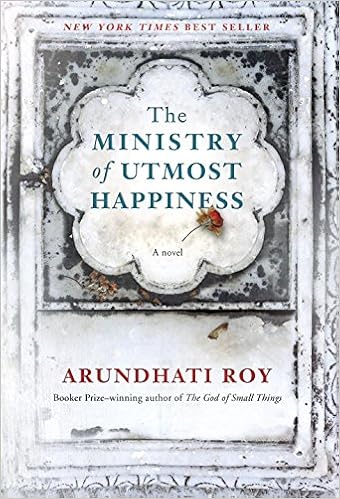
Book Review: The Ministry of Utmost Happiness by Arundhati Roy

Image result for the ministry of utmost happiness

The Ministry of Utmost Happiness

by Arundhati Roy


God damn Arundhati Roy.

God damn her and her beautiful books, which are so impossibly sad and so incredibly beautiful.

I have always thought, because I teach it to my AP students, that The God of Small Things ends with the most beautiful romantic scene I think I’ve ever read because Roy wanted to end the book on a happy note, that she wrote it intentionally out of chronological order specifically so that she could end it with hope, with the two lovers planning to meet again the next day, even though we know they won’t, or if they meet the next day, then they don’t meet the day after that, or ever again.

Now that I am reading The Ministry of Utmost Happiness (I am not finished with it, so I’ll need to stop writing this in a moment and go back to my sorrows), in which she has done nearly the same bloody thing, putting an exquisite lovely romantic scene near the end of a brutally heart-wrenching book, I think I may have to stop believing in the optimistic explanation of the incongruous, unchronological way Roy writes these books. I’m not sure yet, because this isn’t the very last chapter, so maybe other things will happen – and there actually is some hope in the novel that there will be some happiness, a fair number of good characters who could create a safe space to live and laugh in; but in God of Small Things two of the four good characters died and one ended up insane, leaving the fourth utterly alone, so… – but I am familiar enough with this feeling to know that Roy might have made the same play. This book is also out of chronological order, and since it is my first time reading it, that makes it difficult to follow, so there are parts I don’t remember well and maybe I should, to understand; which means maybe I don’t understand. I have to go read more.

But now I’m wondering: what if she put the happiest, most love-full part at the end of The God of Small Things because that makes it impossible to enjoy, since we’ve just been through 25 chapters of sorrows? What if she does it that way because she wants us to read the joyful part and think, “Well, this would be lovely, if my heart wasn’t already shattered into a million pieces by everything else I just read.”? And what if that is the point, because it makes the joyful part into a sad part, knowing that we can’t enjoy the joy because of the sorrows we’ve been through – which makes the sorrows even sadder?

Pardon me. Have to go finish the book. I just had to write down this theory when it hit me.

One hour and twenty minutes later –

All right. Okay. I was wrong: this book does actually have a happy ending. Of course it isn’t that simple, it isn’t all happy; there is death everywhere in the book, and it isn’t good death, not valuable, honorable, restful death. But the book is as much about those who live as it is about those who die, and the deaths make the life more precious, not the other way around.

So: to be clear. This book is about India and the war in Kashmir. At the end of the book, a character reads these words in a notebook: “How do you tell a shattered story? By slowly becoming everybody. No: by slowly becoming everything.”

That’s the book.

It has much of the same beauty that Roy put into The God of Small Things. The writing is, as always, brilliant: essentially beyond my capacity to even grasp, let alone describe. The book has a dense history of India, a complex exploration of the relationship between the present and the past, once again worked out through complicated family relationships and through appalling violence. The caste system is, as I suspect it always is, an indispensable element of the conflicts, though they are largely religious in nature: Muslim versus Hindu versus Sikh versus Christian. There is a terribly intricate narrative structure, with multiple interwoven plots and point of view characters, with no particular adherence to a timeline. There is another character that bears much resemblance to Roy herself, the child of a Syrian Christian woman from the state of Kerala, who studies architecture but does not become an architect, who is beautiful and strange and difficult. There is a beautiful romance, a number of broken romances, and an enormous, unbearable weight of violence and suffering and sorrow and alienation.

But there’s a lot in this book that wasn’t in the first book. The scope is wider: there are more characters, there are more conflicts, there are more settings. There is much more violence, and more villains who carry it out. And there is a lot more happiness at the end, a lot more peace, a lot more closure.

I don’t know if I recommend this book. I will need to read it again, and probably write a lot in the margins. But I feel much the same about this book as I felt about The God of Small Things after I had read it only once without writing anything in it, which was, I thought I should read it again; once I had, it became one of my all-time favorite works of literature. I suspect this one may follow the same path. So in the meantime, in-between time, this is a beautiful and difficult book, and if that’s your thing, I highly recommend it.

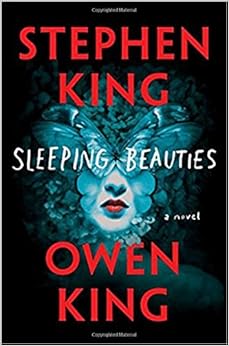
Book Review: Sleeping Beauties

Image result for sleeping beauties

Sleeping Beauties

by Stephen King and Owen King


To start with, I love Stephen King. I always have. I’ve read pretty much every one of his books, most of them more than once; I’ve been reading his work faithfully since I was 13, and my friend loaned me a copy of It to take with me to summer camp. (The Summer of Blood-Soaked Nightmares, I called that one. Subtitle, We all float down here. Sub-sub-title, Don’t ever use the bathroom in the middle of the night when you’re reading It.) I am a great admirer of his remarkable ability to create characters, to build suspense, and to squeeze a thousand details, all of which are both real and also unexpected, into the framework of a story.

So going into this one, I was already going to like it: there have only been two or three Stephen King books I haven’t liked – mostly the ones that have actual aliens invading, The Tommyknockers and Dreamcatcher. Didn’t like Hearts in Atlantis, either, which was too bad because I love the low men and the can toi from Desperation and The Regulators. Anyway, since the man has written like 75 books, the chances were good for Sleeping Beauties: something like 25 to 1.

And I liked it.

It wasn’t my favorite Stephen King book. It might be easy to chalk that up to the influence of his co-author, his son, Owen King; but to be perfectly frank, I couldn’t even tell that this was a collaboration: it just read exactly like a Stephen King book. You’ve got a supernatural being appearing within the very first few pages, and immediately diving into a bloodbath of murder and mayhem, without even the slightest explanation as to who or what they are, or why they are ripping people’s limbs off. You’ve got a large cast of characters, most of them good but flawed people; you’ve got a male lead with a troubled love life; it’s set in a dinky little town half in the wilderness and with one spectacularly creepy location – in this case a women’s prison – that plays into the story in some prominent way. You’ve got a character or two who act as a combination demogogue and Wormtongue, whispering in the ears of the populace, playing on their fears and hatreds to bring out their absolute worst traits; you’ve got a supernatural phenomenon growing more and more powerful, and more and more apparent, though never quite becoming easily explainable; and you’ve got some enormous fight scene at the end, in which at least a good third of the characters die. This one has all of that.

That is not to say Stephen King’s work is monotonous, nor that this book is just like any others of his. Neither statement is true. It’s just that he does have tendencies and preferences, and certain themes that he keeps coming back to: like the mob. Not the mafia mob, but the driven-crazy-by-fear, pitchfork-and-torch-carrying mob. Mr. King knows that mob well, and he recognizes that there is no better reflection of the evils of the 20th century and beyond – unless it is the slick-talking small-town salesman-and-politician which shows up in many of King’s works as well; though not this one.

But there are some real distinctions, as well, in all of King’s books, and in this one. The lead character, for instance, is an interesting man that King has never done before: he is a prison psychologist, married to the town sheriff – another new element for this book, because I can’t remember another woman cop; usually his cops are the bad guys, which is true of several of the cops in this book, but not the sheriff. But her husband, the prison psychologist – Clint Norcross – was a former foster kid with old anger issues from his youth, which was exceptionally violent. He was not the madman that Jack Torrance was in The Shining, and not the epic hero Everyman that, say, Stuart Redman is in The Stand, or Stuttering Bill Denbrough in It. Clint doesn’t save the day. Clint is a mostly good guy who does mostly good things. That’s all.

The real story here is not the Stephen King setting or the tropes; it is the question of sex. Gender. Men and women. Because the concept of this book, the supernatural event that throws everything into chaos, is this: all of the women in the world fall asleep, and they don’t wake up. The supernatural being who comes in and starts removing limbs in a shower of blood is a woman, perhaps Eve or Lilith or Wonder Woman or Pandora or all of the above – certainly Helen of Troy – and she represents a greater power that has decided to give women a chance at a better world, a world where they don’t have to be beaten or raped or killed by men. So whenever a woman falls asleep, she spins a mystical cocoon; and she remains in the cocoon until further notice, while her soul goes – somewhere else.

And meanwhile, without women to abuse and destroy, the men turn on each other.

That’s the basic story, and parts of it were tough to read: the stories of women suffering at the hands of men, fictionalized but by no means exaggerated by King, were often heartbreaking and enraging. I got a little frustrated with Clint Norcross, who reads sort of like the hero, but isn’t really the hero simply because he’s a man; I did like the main villain, who leads the mob into the final fight, because he was sort of the other side of the coin from Clint, which was interesting. But I certainly didn’t like the son of a bitch. One interesting thing, though: King has said that the quickest way for an author to get an  audience to dislike a character is to have the character hurt a dog. (A lesson King probably learned from Jack London). But the villain of this book? He is kind to dogs. Make of that what you will. In some ways, the hero is no specific person, and neither is the villain: the hero of this book is the better half of the human race. (Guess who the villain is.) And they’re not all perfect either, of course, because King doesn’t write perfect characters; but they’re a hell of a lot better than the men. It was a little tough reading 700 pages about why my gender sucks. But it certainly wasn’t news.

The suspense is great; the violence is savage and glorious, as always; the big fight at the end is wonderfully apocalyptic. I actually didn’t like the supernatural element as much, because I didn’t really like the resolution. Should have gone the other way. But I did like the fox. And the Tree.

This is a Stephen King book. It’s not for everybody, but if you like Stephen King, you’ll like this one. I did.

Scat!

Okay: so my job, teaching? It involves a lot of shit. I get a lot of shit from students, both bullshit (“I was sick when you assigned this essay. Can I get more time?”) and insulting shit (“You ever think that you shouldn’t have been a teacher? You’re not very good at it.”), I return quite a bit of shit to them (“Of course I like all of my classes equally. I don’t believe in playing favorites. Though if I did have favorites, it wouldn’t be you.”), and the administration and I have a shit-full relationship, though there the shit-flow is only of one type: they give me more shit to do, and I talk shit about them.

Okay, I’ll stop saying shit. Though there is a reason, and it isn’t just because I have to control my language during the school day.

This week there has been a plethora of poop. A cornucopia of crap. First and foremost, we had our accreditation visit. Accreditation, for those who don’t know, is how schools prove that they are in fact doing what they are supposed to do, namely educating students, rather than using them as sweatshop labor or housing them in cubicles like rental shoes at a bowling alley. It’s a fine idea, as education does not have a terrible lot of oversight, but it does have a terrible number of ways to abuse or neglect the system, which can limp along for quite a long time before it breaks down. That is to say: if a teacher is thoroughly incompetent, students will still be able to learn something from each other, from the textbook, from the extra resources that some usually have, like tutors and older siblings and the internet, and so it may not be clear right away, or at all, that the teacher is truly incompetent. Teachers get observed on some kind of regular basis, but the three districts in which I have worked have observed me twice a year, once every two years, and once every four years; and in every case, with every observation, the person doing the observing has never been an English teacher: so while they are certainly qualified to say that I am not blowing snot rockets on my students during class, they can’t really say that I’m doing a good job helping my students become better readers or writers. The problem gets better and worse according to the subject: mine is pretty straightforward and well-understood by most educated people, but my wife, who teaches art to high school students, has been told directly that the administrators observing her had no idea what she was talking about when she spoke to her students about perspective and value and the like. An advanced mathematics teacher I know never heard the open admission, but was perfectly aware that the administrators did not understand what he was teaching, and so could not rationally judge if he was doing a good job.

That is not to say that all administrators are incompetent to judge teachers, nor that they are all incapable of understanding what is being taught. But I couldn’t follow an advanced math lesson any more than my administrators could; the difference is that they are expected to do so, and I’m not. Their ability to understand what I do is most of the oversight that I work with, other than the possibility of student and parent complaints about me – which, so long as I make my students laugh and give them good grades, are minimal or nonexistent.  Even if I wasn’t funny or generous, the truth is that nobody knows what I do in my classroom other than a bunch of teenagers, and, twice a year (or once every two years, or once every four years) between one and three administrators, none of whom understand what I do. (No, that’s not true: three of the administrators I have worked with have been past LA teachers. But the rest of them go: PE, PE, social studies, religious studies, science, PE, kindergarten, biology, elementary school, science and PE, and nothing – meaning they never taught in a classroom. I’m missing a few, but that’s the trend. Also: schools have even more administrators than they do poop, and administrators usually come and go faster than poop does, too.) That’s not a lot of oversight.

So accreditation, in which a group of inspectors come and do an exhaustive review of how the school functions and how it doesn’t, is a really good idea. Except guess who makes up that group of inspectors?

Right. Administrators. Administrators from other schools, but that doesn’t make them any more competent than the ones from my school.

The larger problem than competence (Though really, that’s enough to sink the whole endeavor) is the obvious impetus for quid pro quo. The inspectors in a given area are from that area; the chances that a principal will inspect the school run by the same principal who inspected the first guy’s school are quite high. When I ask my students to critique and grade each other’s work, they pretty much all get A’s, pretty much all the time, even from students who don’t like each other: because no kid wants to be the one who gives out bad grades, for fear of retribution. Same problem here. There isn’t a profit motive, so the intensity of corruption isn’t the same as with lobbyists in Washington; but the system here is as flawed as how our government asks major industries to regulate themselves; or hires regulators straight from the ranks of industry executives, who go right back into the industry once they finish their stint as a check and balance against abuses in that industry. It’s okay: they’re on a break, so it doesn’t count. Right? Just like Ross and Rachel.

School administrators are taught and trained to look for certain things. They want maximum attendance, minimum disruption in the form of behavior referrals and suspensions, maximum test scores, and maximum awards and recognitions. They love checklists, especially ones with impossibly vague categories and subjective descriptions of the achievement levels in those categories. (The accreditation system we went through has these: student is tasked with activities and learning that are challenging but attainable and student is actively engaged in the learning activities. The marks are: Very Evident, Evident, Somewhat Evident, and Not Observed. Pop quiz, hotshot: you watch a calculus class for 20 minutes, with 20 students in it: if the kid in the second row is facing the board and blinking at an appropriate rate, is their active engagement Evident or Somewhat Evident?) Because our current public school system is so unbelievably diverse, and so varied in its methods and results, the largest and scariest bugaboo for administrators this decade is standardization. They want everyone to be on the same page: to know the same things, at the same time, in the same order, to the same degree. They want teachers to all do the same things in all classes, using the same materials, and hopefully achieving the same results. That way, no child gets left behind (Because they’re all in lockstep, like one of those one-guy-with-five-mannequins-attached-to-him-with-broomsticks Halloween costumes), and all teachers are disposable and replaceable, like any other machine-produced standardized cog in a well-tooled machine. Because they are taught and trained to look for these things, these things are all they look for. They do not look for – Teacher knows what the hell he is talking about, and can answer a student’s random question. Teacher knows how to write a good multiple choice question, and how to score a test fairly. Teacher knows when to let a student go to the bathroom and when to say, “Why don’t you wait a couple of minutes?” The things they see may be important – may – but they don’t see everything that’s important. They’re looking somewhere else, entirely.

Observations in classrooms are something of a joke for another reason that I didn’t mention, which is: we know about them in advance. Which means, of course, that the administrators don’t see us going about our regular routine; they see us trot out the dog-and-pony show. My current school, which is the one that has observations twice every year, has one scheduled observation, for which I choose the day and the class when they come to watch me; and one unscheduled observation – for which they give me a window of two weeks when they may come observe any class on any day. In which case I am left predicting their likely choice based on past choices, such as: they prefer older students; they prefer smaller classes. They like coming in the morning more than the afternoon. So far I’m two-for-four predicting which class they will randomly select. Like the TSA and random searches at airports: look for the dark-skinned passengers, and you know who will be “randomly” selected. Even when I don’t half-expect them, I have still been able to adjust my lesson plans on the spot in order to make them reflect what I know the administrators are looking for; I know they want to see me assess the students’ learning, so I have made up a quiz question for the lesson, projected it on my whiteboard, and had students write a response: boom, instant assessment. Go me. Never mind that I usually don’t have my students do that: the observation went great. This is nothing compared to what many teachers do for their scheduled observations: it is not merely an urban legend, that gag about teachers telling the class, “If you know the answer, raise your right hand; if you don’t, raise your left.” I mean, observations determine whether or not we keep our jobs, and in some cases, our performance bonuses. Wouldn’t you work the system?

So do schools when the accreditors come by.

So in this specific case, we knew a month ahead of time when the inspector would be coming, and we had the observation system he would be using, which tells us what he will be looking for. The teachers were coached by the administrators as to what we should present, if the inspector came into our classroom, and also what we should say if we were interviewed personally about the school’s workings and its culture. The students weren’t coached, but there is a certain select group of students who are somehow always chosen (“Randomly” selected — and yes, one of them is dark-skinned.) to be the spokespersons for visiting dignitaries; they always know what to say. We have trained them well. I mean, maybe not for their future careers or the next stage of their education – but they know what to say to make it seem as though we have trained them for those things. And that’s sort of the same thing, right?

Right?

In my case, even though I was asked to join the teachers’ group interview with the accreditor, I avoided it. I didn’t want to be asked what I thought of the school or the administrators. Because what I think of them is this:

The problems with this school are the same problems with public education across this country: it is designed in entirely the wrong way. We take kids too young, and we keep them too long; we don’t allow them enough freedom, and we don’t know how to work to their strengths, instead forcing them to play to ours, or fail. We try to standardize everything, for no good reason that anyone can name other than the absurd “That’s fair.” It’s not. It’s not fair, nor efficient, nor even sane, and yet that idea – that every student and every teacher and every person have the same outcome from the same set of experiences – is the driving force behind almost every aspect of education. Probably because: when everything is the same, it’s easier to talk about. Harder to understand, of course, but so what? Then, we politicize this thing that we don’t even understand, and then make changes to solve problems we don’t understand, with consequences we don’t understand and don’t even pay attention to – because taking the action in response to the apparent problem is good enough for the politicians. In fact, that’s how we treat everything in education: just do something. Anything. As long as you can show that you are doing something (Preferably the same thing that’s been done everywhere else – that’s what we call evidence-based solutions!), then that’s good enough. We don’t recognize the people who are actually doing the good work, because we don’t recognize the good work, and we don’t reward those people for doing good work; instead we reward those people – both educators and students – who create the most convincing façade of achievement. This school is, in fact, no better or worse than any other: some of the students are wonderful, and some of the teachers are wonderful, and one of the administrators is wonderful; and a lot of the rest are – well, I did say I wouldn’t say “shit” any more, didn’t I? Let’s say “Somewhat evident.”


That was Tuesday, when the accreditor came. On Wednesday, we had a staff meeting, in which it took us – a room full of professional educators, mind, several with advanced degrees – thirty minutes to complete a conversation about the differences between two grading systems we have used, last year’s and this year’s. (Here’s the difference: last year each specific score was weighted the same as every other score, based on the percentages; this year a specific score’s total number of possible points is factored in. So last year a 75% on a 10-point quiz and a 75% on a 20-point quiz were the same; this year the 75% on the 20-point quiz is counted twice as much as the 10-point quiz, and has twice the effect on the final grade. Thirty minutes to say that. With diagrams on the whiteboard.) We also talked about how well the accreditation visit had gone, and how impressed the accreditor was with our school spirit and the commonality of our vision (We were coached on our vision statement, since it is different from our mission statement, and both are important. I mean, not to the actual work of education; but they’re important to the administrators who write those things, and then inspect and accredit other schools.).

And then we talked about – poop. Specifically, about how one of our students, or more than one, had intentionally defecated and urinated outside of the toilets in the boys’ room. Somebody soaked a roll of toilet paper in the dispenser, and on another occasion, someone left a pile of feces on the floor. We talked about whether we should have a hygiene class to teach students that this is not acceptable. We talked about whether we should put this story on our school newscast. We talked about whether teachers should check the restrooms regularly, or whether we should hire a new security guard. (That one was easy: security guards cost money. Asking teachers to perform tasks that have nothing to do with teaching is free. Stopping my discussion of rhetoric and syntax in order to try to catch somebody crapping on the floor: priceless.)

If only the accreditor had stopped in to visit that bathroom on that day. I wonder where that . . . piece of evidence would fall on the rubric.

Though the real question is: would he even see the actual shit on the floor? Or would he be looking somewhere else, entirely?

Helma: Tros Book II

Image result for helma talbot mundy

Helma (Tros Book II)

by Talbot Mundy

**Spoilers for the first book here**

The sequel to the epic historical fantasy TROS! OF! SAMOTHRACE! (Emphasis added, but, I think, implied.) is a good book: except it has completely the wrong title.

One nice thing is that this one picks up directly after the first one leaves off; like only minutes have gone by since last we left Tros, sailing back to England from Gaul, having managed to get his father away from Caesar’s legions. He arrives back near Lunden (Don’t judge me, that’s how they spell it) with his men ferociously mutinous because several of them were killed by Romans, and yet they came away with no plunder at all, and therefore no glory, which is the only reason they went on the voyage in the first place. Now they arrive back home, and find that Norsemen have come to raid England, and they see their opportunity to fight for glory and plunder. Tros has a hell of a time trying to fight them and keep them in line; he is only moderately successful, and finally his ship joins the combat against the Viking raiders. Tros, being Tros – or, pardon me, I mean TROS! OF! SAMOTHRACE! – wins his battle, and in the process, wins possession of a troop of Viking warriors when he defeats their leader in single combat. He also takes one of their longships as his own new vessel, the tub he sailed to Gaul having given up the ghost in the fight.

Why am I telling you all of this? Because, you see, the sister of that Viking war leader is – Helma. Over time, the Vikings come to serve Tros willingly, and he puts them in charge of building his new ship, his dream ship; Helma, he marries.

I feel I can spoil this because – there’s no point to it. At all. The romance is awkward and barely present at all in this story; Helma is a decent character, but really she’s a means to an end: the Northmen can’t speak Tros’s language, and Helma is the go-between for Tros and her brother. I suppose we are to see her as the perfect loyal woman, but there’s a much better example in this story: Fflur.

The main plot of this one has little to do with Caesar, though he is the snake in the grass behind most of the intrigue, the prime mover of the betrayals and infighting that fill this book. Caesar has sent agents to corrupt and break apart the British tribesmen, and they are, sadly, very effective; this book made me dislike several of the British tribesmen I got to like in the first book, as well as Conops, Tros’s main lackey, who disapproves of Tros’s marriage to the blonde Valkyrie. The worst casualty here is Caswallon, the king of the British tribe that Tros is allied with; he is a hero in the first book, and nearly Tros’s equal in importance and coolness, but in this book, he’s just a pain in the ass. His wife, Fflur, still rocks, and that’s why I don’t think Helma was necessary; she doesn’t add anything to the story that Fflur hadn’t already brought, other than she is married to Tros, instead of Caswallon.

Overall, the action in this one was still great, but the intrigues and the plot and the character development weren’t as interesting. I really want Tros to finish his ship and just sail the hell away from Caesar and all of this; I know Caesar is going to conquer Britain (Because that’s what happened, and Mundy was trying to stick to history with the Romans), and so I want Tros to try to circumnavigate the world, the goal he expresses in this book. I didn’t see the point of Helma, really didn’t see why Mundy named the book for her; this makes me both eager to read the third book, and also leery – as it is named for another new female character. Well, we’ll have to see, won’t we?

Tros! Of! Samothrace!

Tros Of Samothrace

By Talbot Mundy


Bought this one (several years ago) for the title. And the author’s name. Of course I did.

I also bought it because it had this wonderful pulp adventure cover image (even though, as my artist wife has pointed out, the anatomy is off; nobody’s torso actually bends like that), and because the story seemed pretty pirate-y. The hero, the almighty Tros of Samothrace, is a sailor by nature and inclination; the story is partly about his pursuit of the perfect ship, which he speaks of building more than once; and it also tells the tale of Tros sailing with a British crew and thwarting the invasion of England by Julius Caesar himself, which I thought would be interesting.

It was. This is the second time I’ve read this, because after the first time (And I genuinely can’t remember if I reviewed this book then, but since I can’t find the review to confirm it, I figured I might as well give it a write-up) I went back to Powell’s City of Books (Just about the only thing I miss after moving away from Oregon) and bought all four sequels; I wanted to read them again now, and so I re-read Tros so I could remember the story and characters before I read Helma, the second book. Which I have now read, and enjoyed, and will review in a few days.

This book held up well to a re-reading; better than most pulp adventure books. Part of that is because the character really is delightful; Tros, apart from his epic name (which I absolutely love and can’t resist saying with maximum emphasis every chance I get — “Tros! Of! Samothrace!”), has a great blend of brooding violence and anger, mixed with a life-loving, laughing vitality; he goes straight from cursing at a storm to laughing at the wind as it blows rain into his face, and it makes it a hell of a lot of fun to read his story. Another part of the quality of this book is the historical aspect: Mundy wrote a book that very well could describe what it was really like to face off against Julius Caesar. The descriptions of the character – who does appear in the book, holding conversations with Tros as well as meeting him in battle on land and at sea – seem pretty well in line with what I know about the man himself; Mundy doesn’t change history or Caesar in inserting Tros into his story. Caesar is still the unbeatable general who has at this point conquered all of Gaul; Tros only manages to get the better of him by taking advantage of Caesar’s weak points, and he frequently has to work hard to evade getting steamrollered by Caesar at his strongest. Mundy does it very well. The historical setting, the Anglo-British tribesmen whom Tros allies with, and the druid/mystic religion that Tros shares with the people of Britain, are all quite interesting and well done.

But really, this is a pulp adventure novel like Conan or Allan Quatermain; Tros is a good pulp hero, Caesar makes a fantastic villain, and the adventure is mighty fun to read. Definitely recommend.