Whoa There Buddy

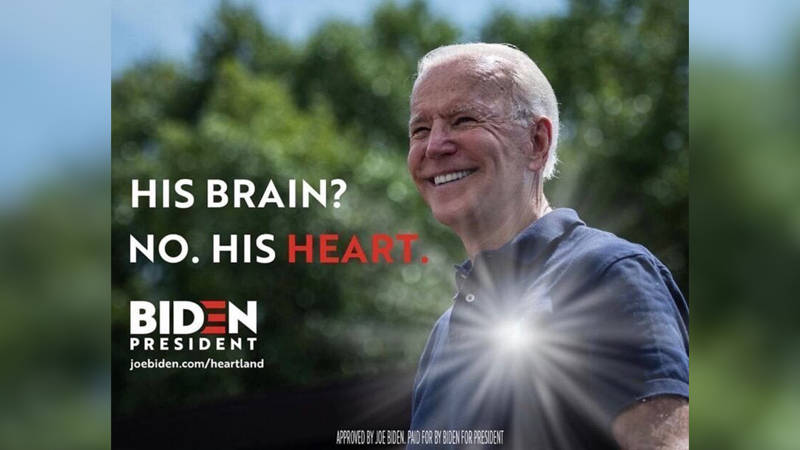
Confused by This Anti–Joe Biden Meme? The Creator Says You Just Don't Get  the Joke. – Mother Jones
I mean, leaning into the insults is one thing, but… really?

After my last post about my buddy Joe Biden, I was challenged. I was challenged from both sides: by a liberal friend who focused on my point that Biden was the lesser of two evils, and couldn’t get beyond that to my points about how, really, the election of Joe Biden is about preventing actual evil which would result from the election of Donald J. Trump, and that by comparison, Joey B. is not evil at all; and by a conservative friend who pointed out that I was far more forgiving of certain of Biden’s traits than I would be if Trump, who shares many of those traits, were to win the next election. (It is possible that both of these friends would object to my characterization of their objections [and the one for my use of the descriptors “conservative” and “friend”]; if so, I apologize now for what I am about to say regarding both of these positions as I have characterized them. Please feel free to challenge me again, and I may add a third post about this issue — or if you wish, feel free to post a comment directly on this post which expresses your objections to everyone who reads this.)

Regarding the idea that Biden is the lesser of two evils: granted. He is. Does it make any difference if I point out that every single election ever can be characterized as being between the lesser of two evils? That Abraham Lincoln was the lesser of two evils? That George Washington running unopposed was the lesser of two evils, because the other option was the collapse of this particular democratic nation, which would have been a much worse outcome than electing Washington — an appalling elitist snob and a lifelong slave owner who wore dentures made from the teeth of human beings he bought and sold?

What if I point out that every politician is evil in one way or another? That every human is evil? We all have our bad qualities. We all have our wrong-headed opinions. We all make mistakes, and even worse, we all do the wrong thing and do it proudly, and determine to repeat the same wrong action if we are given another chance to do it. All of us.

I understand the desire to have a candidate for president that matches what we really want, that has the right opinions and the right history and the right qualities and the right intentions. I understand the frustration and exhaustion that comes from a lifetime of never getting that candidate. I think it’s the same frustration that comes from never finding the right person to love, especially if one has several failed attempts at finding that person, or if one has the terrible experience of being with entirely the wrong person, and suffering because of it. And as someone who has actually found the right person for me to love for the whole of my life — and who found her early on, when I was only 20 — I can’t blame someone for wanting the same thing that I have. I suspect a lot of people who feel this way about the President are those who feel like they maybe had that person in the past; for a lot of people of a certain generation, it was John Kennedy, and when he was assassinated, Lee Harvey Oswald stole that perfect President from them.

But here’s the thing: John Kennedy wasn’t the perfect president. Neither was Ronald Reagan, or Jimmy Carter, or Barack Obama. Franklin Roosevelt interned hundreds of thousands of Japanese-American citizens. Abraham Lincoln wanted to repatriate the freed slaves to Africa. Bernie Sanders would not be the perfect president: he has a tendency to yell at people, which would not go over well in diplomatic circles. My love is not the perfect love: she is not always easy to live with, as she would be the first to tell you. I am also difficult to live with, as I will be the first to tell you. Nobody is perfect. Every relationship — romantic, Platonic, professional, political — is a compromise. Which means every relationship, always, can be characterized as the lesser of two evils.

Or it can be characterized as the best of all possible options.

There’s a saying which I am particularly fond of: Don’t let perfect be the enemy of good. The intent of the saying is to prevent a bad choice that a number of my students — especially my Honors students, my Gifted and Talented students — tend to make: they work on an assignment, create something they are not very proud of, that they don’t love, and they know they could do better — so they never turn it in. And they get a 0, rather than the less-than-perfect grade they could have gotten if they just turned in the thing they completed but didn’t love, because they would rather have nothing than accept something that is less than perfect: and so they suffer an even worse consequence. They lost the good, because they were only willing to accept the perfect, which then got in the way of the good. We all do this kind of thing all the time: knowing we can’t do something perfectly, we never share what we can do, so we never sing karaoke or bake a dessert treat for the holidays or share that poem or short story. Or that blog about politics: which I frequently stop myself from writing or sharing, because I’m not nearly as smart as the writers I read, as the pundits I pay attention to — so who the hell am I to post my opinions? I’m certainly not perfect, so often, I tell myself I shouldn’t write or post anything at all.

And it’s a mistake. We should do those things, because we can do a good job of them, even if not a perfect job. But the goal of any attempt is not perfection: it is a positive result. You don’t have to hit every note to sound good and entertain the people at the karaoke bar; you don’t have to have perfectly shaped latticework crust on your apple pie for people to enjoy it; you don’t have to have every word just right to be able to communicate your thoughts in a creative way. As I can attest to, and I hope many of you will agree with.

You don’t need to find the perfect person to find love. Just someone who is good for you.

Or, of course, accept that you don’t need someone to love at all, and just love yourself.

For the President, you don’t need to love him, or even like him. You just have to pick one who will do you good. And while Joe Biden could be a lot better than he is, and Bernie Sanders would be better than Biden could ever be, still Biden has done and will do good for this country. I think that’s what this argument against Biden boils down to: we can easily imagine the perfect candidate (though I suspect that when we do so, we are ignoring some aspects of the perfect person which would actually make them less perfect, more human; more evil.), and JRB sure as hell ain’t it. So we don’t want him, because he’s not perfect — some of us would rather have nobody. And I do fully recognize that nobody expects a politician to be perfect; people arguing this position just think Biden isn’t good enough to deserve a vote, no matter how bad they may agree that Trump is. Not that he’s imperfect: it’s that they think Biden sucks. If it isn’t clear, I don’t think that’s true, but if you do think that, then please, feel free not to vote for him; you can always choose to not accept any of the choices you don’t like.

Let me say it as clearly as I can: I am not saying that every individual reading this — including my friend who is sick of choosing the lesser of two evils in every election — needs to vote for Biden. You do not. I think voting third party is an excellent choice. I do think that Robert F. Kennedy Jr. is a vile candidate — much closer to the greatest of three evils than the least — but if that’s the way your vote needs to go, then do it. We should break the two-party duopoly, and voting for a third party candidate is an important step along the way to accomplishing that.

However. If you do choose not to vote for Biden because he is not someone you can support, but you recognize Trump is a serious problem, then I would like to make two requests of you. The first is that you do actually vote. Staying home out of frustration with the system is an emotionally appealing choice, but it does simply lump you into the great ignorant masses who don’t vote for no good reason. The parties, aware that you’re not voting, will consider you “Uninformed” or “Unmotivated,” rather than “Protesting the neverending stream of bullshit we call U.S. politics.” That means they will use their favorite strategy to reach you in the future: advertising. Lots and lots and lots of paid targeted advertising. If you choose not to vote, you are lining yourself up for even more ads in the future, I guarantee it: and that means even more politicians stumping for money, and compromising with the wealthy donors rather than trying to work with voters. Whereas if you show up and vote, and vote for a third party candidate, especially the one closer to the “traditional” party you might otherwise vote for (so if you’re a Democrat, vote for Cornel West or Dr. Jill Stein; if you’re a Republican, vote for the Libertarian or Constitution Party candidate; and if you’re an anti-vax conspiracy theorist who wants to use your family name to shill for corporate lobbyists, vote for RFK. Or actually no: if you’re in that last group, go ahead and skip voting.), you will be one of the voters that trouble them: and their strategic response might be to move closer to that third party in the future, to change their candidates or their policies to ones that you can support. I want that to happen, so if you do vote third party, thank you. Also don’t listen to people (including me in 2016, before I was corrected) who blame you for the outcome of the election. If Biden and the Democrats lose, it will be because of Biden and the Democrats, not because of the people who voted their conscience and picked third party.

What I want to do here is get people who want to vote for Biden to be excited about that vote. Because it is a good vote. For all the reasons I posted two weeks ago, with the main one being that Joe Biden has far and away the best chance of preventing a second Trump presidency: and that is something we very much need to prevent.

Which brings me to the second thing I would like to ask third party voters to do. Try to do something, other than casting your own vote for Joe Biden, which will help to defeat Donald Trump. If you are willing to vote for Democrats down ticket, do that, and try to help them get elected — because honestly, if Trump won the White House but the Democrats picked up majorities in the House and Senate, I’d almost enjoy watching TFG get stymied at every turn (Almost. Except for the Supreme Court, which will obviously back DJT even to the extent of slow-walking his criminal trial until after the election because they need to hear some absolute bullshit immunity argument. And that’s why I intend to vote for Biden, and encourage you to do the same. Even if he did fail to increase the Supreme Court to 13 members, or to work to impose term limits and ethics requirements on those corrupt assholes.). But if you want to vote third party for President and then vote for Democrats after that (And again, vote your conscience in local and state elections; third parties need to start with the grass roots, and that means getting elected to local school boards and county commissions and so on), that would be great. If you want to volunteer for the Democratic party, to help get other people out to vote for Democrats downticket — especially if you can swallow your ire and let those people vote for Biden, if they want to — then that would be wonderful. And if you can do something to impede Trump: if, for instance, you could find someone like you, too disgusted with the two-party system to vote for either of these shitheads, but who would lean towards voting for Trump because they hate Biden that much, and you could then convince that person to join you in voting third party? Well, you have just taken a vote away from Trump, and you have helped to stop a possible dictator from doing everything he can to tear down this democracy we live in and the rule of law that keeps us all whole and alive. So thank you for that, and for voting your conscience. Those are my two requests, if you can’t vote for Biden but you know that Trump is a danger.

And if you can join me in voting for Biden in November, thank you.

Okay. Now let’s turn to Objector #2, who pointed out, and maintained in the face of my rebuttals, that I had soft-pedalled certain objections to Biden’s qualifications for the presidency, which, he said, were reasonable objections that had been leveled reasonably against Trump as well; and he opined that, if Trump were to win this upcoming election, I would feel much too hypocritical because I would be making the argument that these qualities of Biden’s which I am ignoring or apologizing for now are disqualifying attributes of Donald Trump’s.

Specifically, the arguments that Joe Biden and Donald Trump are old white men who speak badly and suffer from some level of mental deterioration from age.

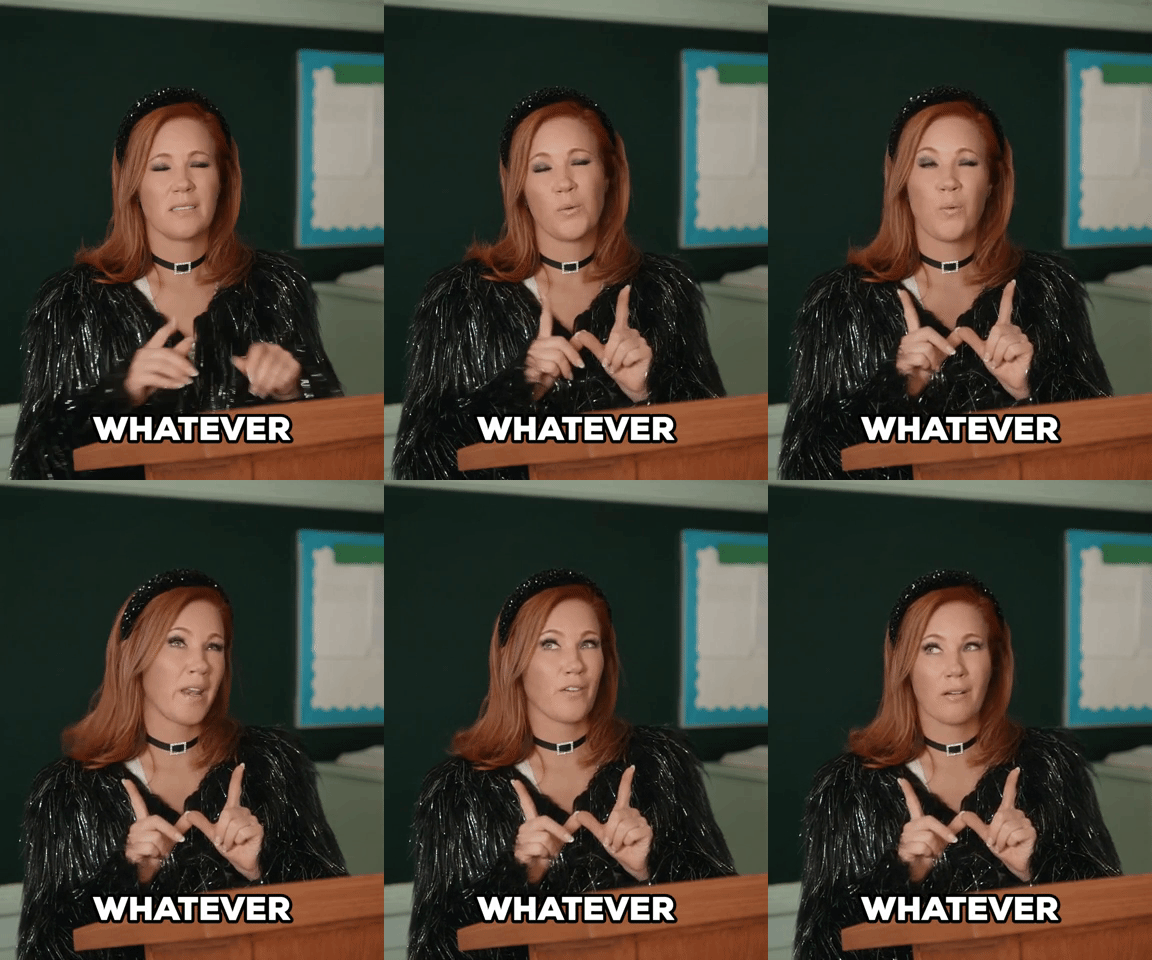
Whatever - GIPHY Clips

If I sound dismissive of these arguments, I sort of am. I did not claim that Trump was too old or too white or too bad a speaker or too far down the path of mental decline to be President; I maintain that he is a dangerous narcissistic conman who wants to profit from the destruction of this country as a modern democracy that obeys the rule of law, and who sees racist, sexist, xenophobic fascism as the best means to accomplish that and profit thereby. So I don’t agree that I will feel hypocritical if Trump wins, because I still won’t argue that he is too old and too white and too bad at speaking and too mentally incompetent to be President. I will certainly admit that I might level some insults at that shitbag, because I hate him and everything about him, and in among those insults might be comments about what a dumbass he is or how much of a fumble-mouthed fool he is; but that will be me being shitty to Trump because I hate him, not leveling the same arguments against him which I drew back from in regards to Biden. My criticism of his presidency, if he wins again, will be that he is a dangerous narcissistic conman who wants to profit from the destruction of the rule of law in this country, and sees fascism as a convenient way to achieve that destruction. If there was a young Black woman with a high IQ and a silver tongue running as a dangerous narcisstic conman who wanted to profit from the destruction of the rule of law through the implementation of fascism, I would not support them either. Honest.

Candace Owens Exits Daily Wire Amid Fights With Ben Shapiro Over Israel
In other words, she doesn’t get my vote, either.

But okay, let me address these specific claims. Because I did state that these things are unimportant for Biden, and that may seem inconsistent for me as I have argued in the past that we should have better, younger, and less white leaders, even if I didn’t make those arguments about Trump specifically. In 2020 my first choice was Elizabeth Warren, who I would still vote for if she ran right now; and part of the reason is because she is younger (though not enough younger) than Biden, and smarter and a better speaker, and a woman — though still too white. So how, if I argue that Warren would be better because of her speaking and her mental acuity, can I turn around and say that Biden is a good choice despite his failings in those areas?

For a couple of reasons. First of all, I do not personally believe in the power of identity in politics. For my own self, and what I see as important in a politician, I would happily say “I don’t give a shit who the person is, what race or gender or sexuality or age or any other subgroup they belong to, as long as they do a good job.” The reason I don’t say that is because I understand that the subgroup that someone belongs to is important to millions of people, and I don’t get to tell them how to feel, and because I understand the power of a symbol. Barack Obama did not serve better because of his race: but the fact of his race was important to millions and millions of my fellow citizens, and therefore the fact that he was our only non-white President is important. The thing is, our national politicians need to represent everyone in the country, and so no matter who they are, they need to look beyond their own identity; that includes politicians who are not old white men, because even they need to represent old white men with whom they do not personally identify. Biden won’t do a worse job just because he is an old white man, and if he weren’t an old white man, he wouldn’t do a better job simply because he wasn’t an old white man. Symbolically, he would be LEAGUES better as a candidate if he weren’t an old white man. But anyone who gets the job and does the job well will never get my criticism just for being an old white man.

Donald Trump, on the other hand, wants to make life better for old white men and worse for everyone who is not an old white man. (And actually, inasmuch as he is willing to let his asshole party eliminate Social Security and Medicare, he’s only serving rich white men and not old white men. Biden is largely doing the same because he is indebted to Wall Street and corporate donors. But that also has nothing to do with race and gender on Biden’s part, any more than it has to do with Trump’s identity.) He wants to do that by implementing fascism in order to break down the rule of law in this country, so that he can profit thereby. That is a much bigger problem.

So that’s the first reason: I don’t think identity in and of itself is salient in national politics. I do think socio-economic status is salient, because money insulates people from real life and that does make them less able to empathize with other people, in a way that being old or white or male does not necessarily do; and since Trump has always been insulated by wealth, and Biden has not always been insulated by wealth, I think that’s a mark in Biden’s favor. But he is certainly not in the right place policy-wise when it comes to economics. A good place, but not the right place.

The second reason I will argue that Biden’s qualities are not marks against him as a President is because I have realized, since this whole Trump debacle began, and since I have started learning more about politics and looking back on the Presidents in my lifetime, that a strong single Executive is not in the best interests of the country. The people elected to the post are not reliable. And more to the point, they change at least every eight years, and this country is now so evenly divided that half of the time, that election is likely to reverse the results of the last one — and hand that strong executive power right back over the bad guy. It’s like if Thor defeated the enemy — and then picked them up, handed them Mjolnir, and said, “Here, your turn.”

This is why I argued in my last post that Biden’s general weakness would actually be a benefit, as it would force him to surround himself with good people who would help him do a better job than he can do on his own; I think we are largely seeing that, and seeing the benefit of it compared to Trump’s administration. Trump tended to fire everyone who pissed him off, and then he was left with not enough people to do the work of government; this worked just fine for him because he wants to break government, which will then prove his case that government doesn’t work — a fine and long-established conservative strategy. Biden, however, not looking to do everything himself, but rather trying to show that government can do important work to help people, has done plenty to strengthen the federal bureaucracy, and the result has been a more efficient government that has managed to get more shit done to help people: and that’s a good thing — and it is a result of Biden being willing to delegate authority and work with other people, which Trump is not.

A simple example of this is student loan forgiveness. Biden tried to do it all on his own through executive order, and he was stopped by the Supreme Court. That pissed me off because student loans should be forgiven, and I would love to just see it done with the stroke of a pen; but also, because I do believe more in the rule of law than in student loan forgiveness, I can see the point that Biden’s argument for how he wanted to do it was flawed. I will also argue that the Supreme Court never should have heard the case because the determination of standing on behalf of the plaintiffs was fucking nonsense — “You shouldn’t get your student loans forgiven because I can’t get mine forgiven” is a neener-neener argument, not a real one — but I recognize, again, that some Court cases don’t come from good standing, because the Justices want to put their foot down for one reason or another. I can accept that. So I can accept Biden’s initial plan being struck down as part of the rule of law, and therefore a successful action by government, to stop Biden from taking too much executive power, even if he was in fact doing the right thing and we’d be better off if he had been able to do it.

But Biden then went ahead and started finding small ways, legal ways, acceptable ways, that he could forgive student loans. And it’s slower, and it’s not enough, and that leaves a lot of people out in the cold — but it’s progress.

And because I don’t want a dictator, I am more willing to accept slow progress through compromise within the rule of law than I am fast action by a strongman.

Did I always feel this way? Of course not. When I was a kid, I read Piers Anthony’s series Bio of a Space Tyrant, about a charismatic man who becomes the dictator of a planetary nation-state, and who imposes his will — all for the good of the people. He’s a benevolent dictator, and when I was young, I thought he was both cool and brilliant, and I thought his system was the right one. But see, then I grew up and stuff? And realized that democracy, while it is impossibly frustrating and also slow, and requires compromise with awful people, which then causes harm to good people — is also the best system of government possible, because it disseminates and dilutes power. And power corrupts. (I kinda want to go back and re-read the series now, because I wonder if Anthony’s intent was to show that power corrupts, and that his character was actually an anti-hero like Paul Atreides from Dune — or if Anthony was just playing out his personal fantasies of godlike power and authority, all for the good of the nation, of course. Since he named his character Hope Hubris, I think it was probably the former. But also, Hope gets laid a lot, like a lot a lot; so it might be the latter. Anyway.)

Also let me just say, out loud, that anarchy would be better than any government at all. But as long as we believe we need government, we do need it; and we should have a democratic government. You want to talk about actually eliminating government, I’m interested in chatting about it.

So okay. I realized that Barack Obama, for all of his charisma and intelligence, was an ineffective president — unless you happen to be a Wall Street banker/trader/mogul, in which case he did wonders for you. (It said a lot to me when I found out that Obama had trouble with Mitch McConnell because Obama wanted to argue and debate issues on the merits, and McConnell just wanted to cut a political deal. I hate that McConnell’s stance is more realistic, because I relate to Obama’s desire to convince the other side of his rightness with every ounce of my soul; but I get that McConnell’s stance is more realistic. This is also when I realized for sure that I would be an awful politician.) I realized that Biden, for all of his stupid-ass gaffes and his inability to give a good speech, has done more for the 99% in four years than Obama ever did in eight — and more than that charming amoral shitbag Clinton did in eight, too. I realized, as I’ve said, that a stronger executive, while it does potentially achieve more of my goals because it means someone can actually implement progressive ideas over the objections of Congress and the courts, is bad for democracy, even if those ideas are good — because I’ve watched Trump do shit that he shouldn’t have gotten away with, but he was able to because past Presidents created an atmosphere where he could do it. Like using executive orders to incarcerate migrants, for instance.

Which Barack Obama did as well.

And Joe Biden, too.

So: the fact that Biden is a weak leader? Not a terrible thing. It would be great if he was a better, stronger, smarter man — IF he also had the right ideas. And he doesn’t have enough of them, and that’s a problem; but since he doesn’t have all the right ideas, it makes it better that he’s not strong enough to implement all of his bad ideas over the objections of everyone else in the government.

The real problem in his weakness is how he deals with strongmen, which is — not well. He has been incapable of suppressing Putin or Xi Jinping, he has not been able to handle Iran, and he has given bombs to Bibi Netanyahu. I don’t know how many of those things could have been different if he had been stronger, but I do see his personal weakness as an issue with all of that.

But also? Trump would be actively worse in every single way, and we all know it.

Okay, my friend who raised this objection doesn’t seem to know it, as he said that he doesn’t see much difference between Biden’s foreign policy and Trump’s; but that’s whataboutism, and it’s nonsense –same as when he also tried to equate Biden lying about his past (Specifically this: “He lied about his attendance in a black church as an adolescent in Delaware, his work for desegregation, and his role in the civil rights movement? He has simultaneously claimed to have, and to not have marched.”) with Trump’s lies. Trump lied about winning the 2020 election, which he lost; and his continued attempts to maintain his lie about that election have severely damaged this nation in a way that Biden making himself look better than he actually is never, ever will. The two are not the same. Trump would, so far as we can tell, actively support Putin, and Netanyahu, and also obviously Viktor Orban, and Kim Jong Un, and probably several other authoritarians; because that’s who he wants to be. Because Trump is a narcisstic conman who wants to profit from the destruction of the rule of law through the implementation of fascism.

I don’t give a shit that he’s an old white man. If that means a younger, past version of me would be upset by my failure to maintain the party line regarding race and gender and age, sure, that’s fine. I’ll own that. And I would still like to see someone younger, less male, and less white running the country, because I believe in the power of symbols; I would even more like to see anyone at all in power actually doing everything that should be done to help people who are not white, not male, not old — and not wealthy, most of all.

Biden is doing more of that than Trump ever would.

So Joe Biden has my vote. And, I hope, yours too.

Why We Are Voting for Joe Biden And Kamala Harris | Features | Roger Ebert

Abidin’ Biden

Joe Biden: The President | The White House

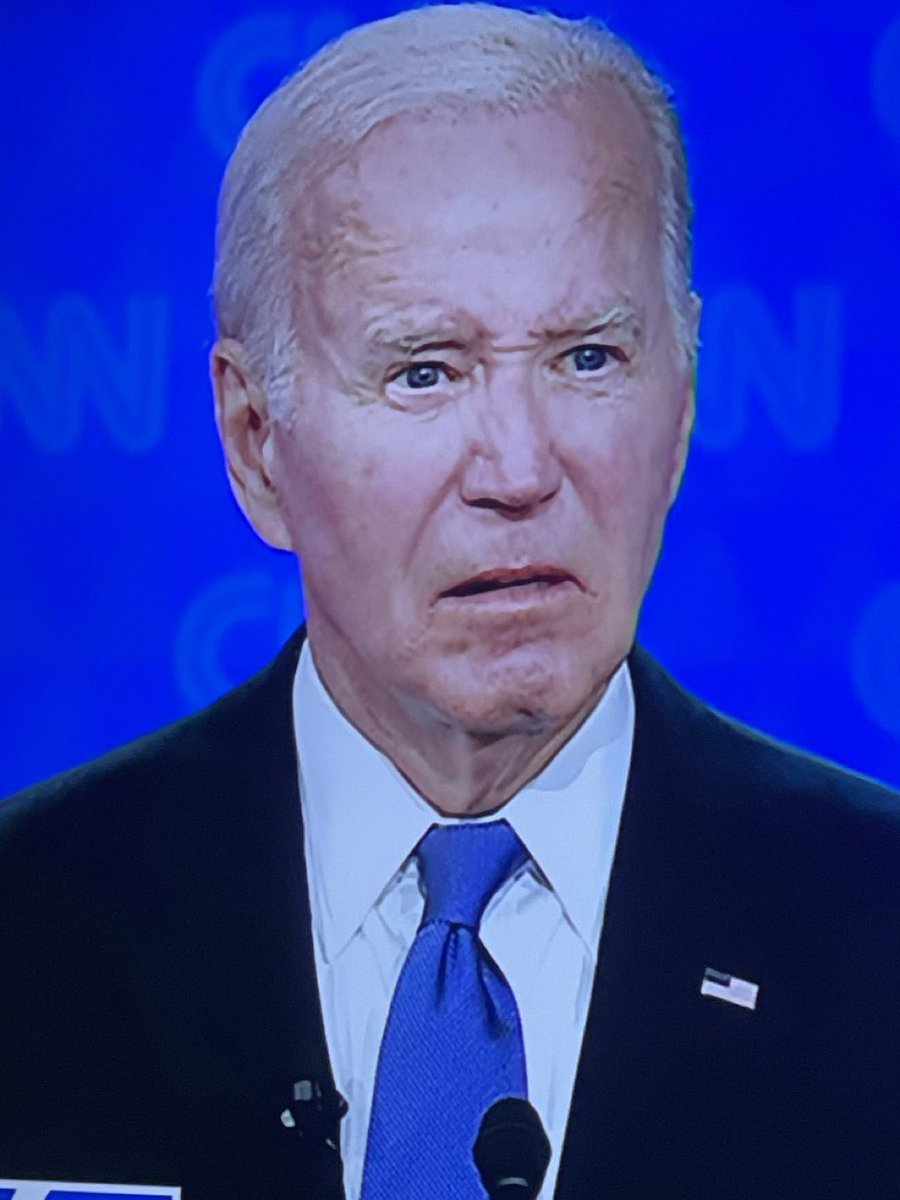
There’s my guy. My buddy Joe. Pretty regular fella — other than the fact that his 81-year-old face has fewer wrinkles than my 49-year-old one, which, sure, fine, lots of people use Botox and plastic surgery and all — but Joe is unquestionably at the stage where his face has been so thoroughly Zambonied that it looks more “plastic” than “young.” But other than a flat plastic face, overly-squinchy eyes, and those too-white-pearly-whites? Very normal man. Reminds me of my dad. Especially when he talks, since most of the time he sounds like he’s kind of running out of breath, unless he is particularly excited.

I have to admit, though, that for a normal man — a regular dude — he’s sure fond of supporting some pretty fucked up things. Like Israel’s genocide in Gaza. Hopefully we can all agree that the ones really responsible for the atrocities and the genocide are Hamas, and Benjamin Netanyahu’s war-loving government, both of whom benefit from increased conflict and greater frequency and intensity of atrocity, as it increases their support by radicalizing more of the population; and also creates enough confusion among the smoke and rubble for them to siphon off wealth. I do not for a second believe that my old buddy Joe could put his arm around Bibi’s shoulders, lean in real close, and whisper, “Hey, man, cut the shit, okay?” and get any kind of real result. Netanyahu is never going to stop the war, because when the war stops, so does his political career, as he is epically unpopular now — but when he leaves office, he’ll no longer be able to avoid prosecution for his corruption, which is pervasive and pretty concretely proven everywhere but in that court of law he is avoiding. (Sounds like a certain would-be Fascist dictator in this country, doesn’t it? No wonder they get along.) But on the other hand, even though Ol’ Joe can’t stop the genocide in Gaza, I would very much appreciate not having my country supply the weapons to Israel for their genocide.

And then there’s Joe’s past support for crime bills targeting African-Americans, and a lack of support for abortion access for women, and for clearing Clarence fucking Thomas for the Supreme Court, and his willingness to destroy people’s lives at the southern US border, which he backs partly because he wants to be able to blame the Grand Ol’ (Fascist) Party, the GO(F)P, for their failure to secure the border, undercutting their own main talking point; but also because he’s clearly pretty comfortable with adopting said Fascist party’s framing of the issue as a crisis at the southern border, and the problem being one of too many people trying to live out the American dream and the ideals we claim to stand for, and with the argument that punishing those people as brutally as we can is definitely the best way to handle it.

All of that is garbage. And all of it is Joe Biden.

Plus there’s the simple fact of the man’s titanic goddamn ego, which makes him look in the mirror every morning and say, in all sincerity, “The only man who can be President is you. The only man who can stop Trump is you. You have to run again, Joe. You gotta save the world! All by yourself! LET’S DO THIS!” That’s Joe Biden, too.

But you know what else is Joe Biden?

He’s the most progressive president we’ve had in 75 years — even though he failed to provide Medicare for All or a livable minimum wage or a permanent child tax credit or a Voting Rights Act or a balanced and reasonable Supreme Court.

But the focus on climate change spending, particularly in the Inflation Reduction Act, is brilliant. The Infrastructure bill was good though not enough — but it was good, no question. The change in tone and the reintegration of the US into the world’s leadership, particularly NATO, was necessary. And his administration has done a good job of making sure the US did not fall into the economic malaise that the rest of the world has fallen into. I don’t like everything about the way they did it, because like always, inflation was brought under control mainly by punishing working and middle class families by raising interest rates to levels high enough to make us stop buying houses, even though the rent is too god-fucking-damn high; and like always, the majority of the GDP gains went to the top 1% so the corporations and Wall Street mavens could keep making campaign contributions to Joe and the Democratic party; but still, unemployment is ridiculously low — and there have been some actual gains to wages set against inflation and the cost of living.

So. Considering all of that, I have a request for all of you.

Vote for him. Vote for my man Joe in November.

I mean, to be clear, the only other realistic option for someone who could actually win is the fucking Fascist. And you — yes you, person who is reading this right now, who has felt enough connection to me that you came here to read this piece that I wrote — you better not vote for the fucking Fascist.

But that’s not the issue here. Right? Millions of cultish fans, and millions of people freaking out over the scourge of Socialism, are going to vote for Trump; but he lost the popular vote in both of his elections, so I expect he will lose again. The issue is whether or not enough of the voters on the margins, the ones who maybe don’t want to vote, who don’t care enough to vote, or who are wavering between the two choices, will swing the battleground states to the right side to win the Electoral College. That’s what the issue is, and what I want to talk about: will the undecided voters decide to go the right way?

It should honestly be pretty simple for every Democrat and progressive: Joe Biden is no progressive — but the progressive movement has made major gains with this administration, and importantly, Smilin’ Joe’s worries about his legacy, and also his genuine and historic support for unions and the working class, mean that he would likely continue to move slightly to the left of center, and might be able to enact and solidify some of the gains made in this first term. Any other president, from the left or the right, would be likely to ignore Biden’s accomplishments and try to create their own: but Biden will try to make sure that Biden’s wins stay in place. And Barack Obama doing exactly that is why we still have the Affordable Care Act despite all the best attempts by the fascists and corporate interests to root it out and remove people’s health insurance. Compared to Medicare for All, the ACA is hot garbage; but it was and is progress. It was and is a good thing. The same goes for Biden’s wins. Even though we’d like to have more of them, it would be useful to make sure what we’ve got, we won’t lose; like any other leftist/progressive idea, once it is in place, people realize it’s probably a good thing — and then they don’t want to get rid of it. Just ask Trump and his Republican congress about the ACA.

So re-electing Biden would make sure that we don’t move backwards. And let me point out how important that is: both Trump and Biden did a whole lot of stuff through executive order; and because those come from one man’s pen, they can be (and were) undone by another man’s (or a woman’s) pen. That fact, and the stark contrast between Trump’s foreign policy (Which is basically this) and every sane President’s desire to remain involved with the world on some kind of good terms, are why so much of the rest of the world is now wary of relying on the US for anything. And while I definitely think it would be better for the US and the world not to have the US in any kind of leadership role, since we have fucked up almost every other country on the planet at one time or another for our own desires or aggrandizement or simple profit, I do think that inconsistency from our policies or our economy has severe negative long-term knock-on effects on the rest of the world. So keeping ourselves in check is the best possible thing for everyone: and for that, a second Biden term, with his focus on maintaining American value around the world and renewing and continuing old policies about connection and cooperation, are the best possible choice.

I understand and agree that just maintaining what we have is not enough. We need to have an actual progressive administration, and more importantly, a progressive congress to go with a progressive executive, so they can name progressive judges, and then we can do some of the things we really need to do. And the more often we are given this kind of bullshit either-or, Lesser-of-Two-Evils choice, the longer we have to delay an actual progressive movement and the accomplishment of simple but necessary things that will save lives, like a livable minimum wage and Medicare for All. But to accomplish that, we need to start at the grass roots: and that’s where progressives suck. Don’t we? Because we won’t fear monger the same way the establishment and especially the Fascists will, we can’t drive the same kind of brand loyalty that only comes with paralyzing fear of the other side. We have to educate. And the political education of the populace relies on one thing: actual policy wins. Actual things being done, by government, to help people. And you know what we need in order to achieve that? More progressives in office, which basically starts with more progressives in the world.

And you know what drives more progressives in office? Anger and frustration with Fascists and with the establishment Democrats who appease them. In the large historical sense, the longer we have to deal with these people in charge, the better our side will do in recruitment and inspiration and drive. You cannot stop the pendulum from swinging: the GO(F)P has done a fantastic job of slowing down the swings for a long time now; but there have been lots and lots of little swings — LGBTQ rights, for instance, even though we’re seeing the violent Fascist reaction to that swing — and the big swing? It’s coming. And it’s going to swing a long way.

And then it will swing back again.

Let me also point out that the reason the GO(F)P has done so well for the last twenty-five years is because they started at the grass roots FIFTY years ago, and built up slowly; and the best news I can say for the future of the progressive movement is that Trump and MAGA have completely torn down the Republican infrastructure that helped put Trump into office. So if we can stay focused, and pay attention and do the work, we can take the country back. For real. I’ll write more about that another time.

And if none of that convinces you? Let me just remind you: the guy on the other team is a fucking Fascist. And no, I won’t tone down that language or that accusation: it is appropriate, and accurate. I will express that in greater detail another time, but I hope everyone reading this is already close to accepting that, if you’re not already there.

So let me sum up.

Biden has done a genuinely good job. He should have done more, but he has done more good than harm — and that’s an important metric for any politician. The first line of the Hippocratic Oath is “Primum non nocere” — first, do no harm. Politicians should all swear the same thing. Actually, we all should. And Biden has done good, for the economy, for the country’s manufacturing and infrastructure, for climate change adaptation, and for the international rules-based world order.

The best criticisms against him are: he has failed to end support for the genocide in Gaza, which is an entirely fair criticism, and the reason why I voted against Biden in my state’s primary, as I want him to recognize that this is an issue; he has tried to meet the GO(F)P in the middle of the aisle, particularly on the border, which shows far too much acceptance of Fascism and, essentially, racism and sexism, which were already issues for Biden as they are for so very many white male Americans; and he has accepted the current framing of issues like the economy, where he has failed to support the real change that would actually achieve his “from the bottom up and the middle out” economic growth.

Oh right — and he’s old.

And he sounds kinda dumb when he talks sometimes.

Those criticisms are bullshit.

He’s old. Granted. So why does he need to be young? Because only young people understand the needs of young people? Are we really that wedded to identity politics, that we believe that nobody can understand the needs of a group to which he doesn’t belong? That nobody can be sympathetic to those needs, and supportive of them? How different are those needs, really? Do we actually think there’s that much of a gap between the basic human needs of someone who is 8 and someone who is 80, when both people are human beings? Both love their family, both want to be safe and healthy, both love cheese and naps; must we have an 8-year-old president in order for 8-year-olds to live good lives? And if not: why do we need a 40-year-old President? Or a 50, 60, 70-year-old President?

He doesn’t speak well. And? Why does he need to speak well when he can get other people to deliver complicated policy platform announcements, or to handle press conferences with the piranhas of the press corps? Do we really need Joe Biden to inspire us with his soaring rhetoric? Or could we maybe read a book, listen to a poem, watch a Rage Against the Machine concert video, and get our inspiration from those? If we have a President who needs the help of other people to run his administration, then maybe we get something more like, I dunno, a representative Republic serving democratically. Instead of a strongman who handles everything himself, and who can and might want to build a cult of personality.

Whatever else you say about Old Joe, he is not going to build a cult of personality. None of us can stand his personality. No: he will build a team of smart and capable and driven people, who will help to fill in the gaps where he doesn’t have the best strengths. One of the best things about Biden is that he realizes who he is and what he can do (Other than his enormous ego, but clearly that is a prerequisite for an American politician), and he looks to others for help. He stood behind Barack Obama completely. That says a lot. I am also, despite my criticisms of his past shitty positions, genuinely impressed with his ability to recognize when he might be wrong, and to listen to others with better ideas. The fact that he is not the same man with the same ideas he had fifty years ago? That’s a good thing.

Look. Seriously. The President doesn’t need to be young. The President doesn’t need to be strong. The President doesn’t need to be a good speaker. We like all those things in our politicians, as we like them in all of our celebrities: but the reality is that the President is a politician and a leader. And that doesn’t require strength in a physical, youthful sense. It requires determination and drive: and Biden has those. Even if he needs to take a nap every day (And don’t pretend we wouldn’t all support a President who mandated a daily nap), he gets up and still has the same absolute convictions about the right things: the goodness of America, the desire to help people, the opposition to cruelty and violence. Right? You can’t miss those things when you talk about Biden. That same ego I was mocking earlier actually shows his strength in this area: he believes he is right, and a lot of the time, in a lot of ways, he is.

Let me also note: if our President is strong-willed, so strong that nobody could stop him or oppose him or stand in his way — how do we not end up with a dictator? Hell, we almost got a dictator with the last guy, and he only thinks he is strong and commanding. Someone who actually is? There’s a real risk there. And there’s only a benefit in that if we think that this country is actually carried by one guy.

It is not. The strength of this country is not in the leadership. It is not in the White House. It is not in our politicians, at all: they are all — or almost all — weak people. Weak morals, weak wills, and a lot of weak minds, especially in the GO(F)P.

We are the strength of this country. We are smarter, stronger, braver, wiser, kinder, and better in every way than our political leaders. As we should be: because we are the ones who run this country. We are.

When we abdicate those roles and those responsibilities, when we elect politicians intending for them to carry the load for us, to do our thinking for us, to do everything for us so that we need to do nothing for ourselves — we get exactly what we want. We get controlled. We get exploited. We get screwed: because we put people in power over us, people who want to screw us, and we hand them the tools to do it.

Joe Biden, whatever else he is — old, weak, stumbling, mumbling, moderate, somewhat racist, somewhat sexist — he is not looking to screw us. He just wants to help.

So let him.

Vote for him.

My man.

Joe Biden 'not sure' he would seek re-election if Trump were not running

Vote No

Okay. Let’s talk about it.

I understand if you don’t want to discuss the election that will take place later this year. I sympathize, I absolutely do.

But I’m going to talk about it. And I’m going to ask you to listen, even if you don’t want to — or really, to read, even if you don’t want to. I’m going to ask that you take a deep breath, let it out, say out loud — as loudly as you can — “I don’t want to think about this” (and if you are so inclined, add “shit” at the end of that sentence).

And then read what I have to say. Because it’s important. Not because I’m saying it: I’m just a regular guy, smarter than some and not as smart as others; good with words but far from the best; aware and knowledgeable in some ways and deeply ignorant in others. Just a regular guy. But the topic is important, which is why I’m writing about it — even though I don’t really want to. I want to take a break from writing: I just finished editing my book. I want to take a break from politics: I’ve been much too closely involved in the subject for way too long now.

But this election, this November? It’s a big one. That’s not to say it is the only important election; all elections are important, to some people, for some reason. But this one is important to all of us. And I mean ALL of us: this one has literal global implications, pretty serious ones. It’s our responsibility as people to be decent to each other, to try not to harm each other, to try to help each other; and in this case, that means we need to talk about the election in November, and we need to think about it, and then we need to do the right thing. Or else we are not living up to our responsibilities as human beings. I don’t want to be that person, and I presume you don’t, either — or else you’ve already clicked away from this, and you’re not reading these words right now.

(By the way: if you clicked away, it doesn’t mean you’re not a decent person; but if you’re not a decent person, you’ve definitely clicked away. Because I’m gonna get all woke and try to shame you, and you don’t put up with that kind of shit. But getting all bunched up about being woke-shamed? That means you’re an asshole. Not to say that woke-shaming is good; I have people who try to woke-shame me, and it’s obnoxious; but I put up with it because I’m not an asshole. If you’re still here, you’re at least tolerant, and therefore not an asshole.)

I’m not actually going to woke-shame you, by the way. Because I don’t need to. You don’t need to be a woke liberal snowflake to recognize the right thing to do in this election. That’s the point of this post: I’m not even talking about my opinions about what is best for this country, or the best choice to make in November; I may talk about that some — I plan to get into the best choice in the next post. But for this one, it is simple, it is stark, it is clear: it is black and white.

Vote No on Donald J. Trump for President of the United States.

Now, I get it: I’m tired, too. I’m tired of the political game the two parties play, where you have to vote for OUR candidate because THEIR candidate is SO MUCH WORSE. We have to vote for the lesser of two evils, and it’s exhausting and depressing to never vote for anyone with some actual hope in our hearts. Honestly, that’s why the last two presidents — not the current one — got elected: because people felt hopeful about their candidacies. Obama was inspiring; Trump was energizing — for different sections of the society, of course. People who were inspired by Obama did not find Trump energizing. But in both cases, Obama and Trump offered something different from the usual kind of political candidate, and that newness had a lot to do with how they won. And I hate, I loathe, that the Democratic party, rather than taking an opportunity to back a candidate who had some new ideas, who had some integrity and consistency, and who inspired some of the same energy in their electorate — Bernie Sanders — went sprinting straight back to a 50-year Washington insider, an old white male politician who has literally never inspired anyone to do anything.

But we’ll talk about ol’ Sleepy Joe next time. This time we have to talk about the other old white male politician running for this election. The dangerous one.

This guy.

Trump will only be a dictator on Day One

No, no, I know he was kidding. Of course he was; he says that he has two intentions on day one, for which he claims he would use power dictatorially: to close the border, and to drill, drill, drill (for oil). “After that,” he says, “I’m not a dictator.” Totally harmless. I shouldn’t take things so seriously, especially not when Trump says them, right? He’s just kidding around. Just a lil funnin’.

But let’s be clear. First of all, in terms of the joke, Sean Hannity set that up as a serious question, saying “Under no circumstances, you are promising America tonight, you would never abuse power as retribution against anybody.” When Trump drops his joke, there is a clear moment of horror, because he didn’t say “Absolutely.” He didn’t say “Of course I would never do that.” He didn’t say “In America we believe in the rule of law and in democracy, so I would never act like a dictator in any way.” He said “Except on day one.” In a moment when he was asked for sincerity, for honesty, for a promise to the American people: he made a joke. A joke about being a dictator.

And considering it realistically, it seems perfectly reasonable to assume that he is sincere in his two intentions to use power dictatorially: to close the border, which would mean violating dozens of laws and international treaties and disrupting the lives of millions (because I assume by “close the border” he means stop allowing people to cross the border, including innocent legal travelers; or else he means send overwhelming military force to stop all illegal crossings at the southern border, while also defying due process in order to build some ridiculous wall covered in electrified barbed wire and anti-personnel mines filled with Sarin gas and anthrax: either way he would be breaking the law and disrupting the lives of millions.), and defying all science in order to destroy the environment while feeding money into the bottomless maw of the fossil fuel industry: also in violation of who knows how many laws and policies of our own government. Of course he is serious about that: those are two of the “policies” (To be clear, he has no policy positions or plans at all; he’s running purely on hate and lies) he is running on, which are both very popular: fuck everyone who isn’t already American (by which we all know he means “white”), and fuck the environment and everyone who cares about it.

I refuse to then believe, subsequent to misusing presidential power for these two issues, that he would not immediately misuse presidential power to do what he does not tell Sean Hannity, what he does not promise the American people, that he would never do: seek retribution against his perceived enemies. Because of course he would do that: it’s all he ever does. He did it while he was in office, he has tried to do it since; he ran on the promise that he would lock up Hillary Clinton, and he is running now on the promise that he will weaponize the DOJ and FBI and go after all of his enemies, while filling the government with people loyal to him.

You know all this, right? I mean, I know we’re all tired of listening to him speak, and we’re exhausted by the constant news cycle of the whatever is the most recent travesty he said aloud — a news cycle that has gone on uninterrupted for the last nine years, since Trump declared himself a candidate for the Presidency — but still, the information is everywhere, the facts are unavoidable.

So why is he leading in the polls?

I’ve been avoiding writing this post because I can’t think of anything new to say. Every time I think, “I need to write that post about why people should vote against Trump, why people should fight Trump’s reelection,” I then think, “But what will I say?”

What can I tell you that you don’t already know?

What insight can I offer into the threat that Trump poses that you’re not already aware of?

What point can I make that hasn’t already been made? Here, this piece from The New Republic literally says everything I want to say about why Trump is dangerous and why we need to stop him from getting reelected: read this, if by some chance you don’t already know everything it is going to say.

But if you know everything that I know about Trump, why the fuck is he leading in the polls???

Seriously, I cannot fathom this. It has been driving me nuts. I keep telling people my opinion: Trump hasn’t done anything to make himself more popular, so he can’t possibly be more successful in this election than he was in the last — which he lost, as I hope everyone reading this is painfully, exhaustively aware. But every time I say that, smart people around me say, “I dunno, man. He’s leading in the polls.” Every time I open a newsletter or listen to an episode of my favorite political podcast, Unfucking the Republic, the host is saying he expects Trump to win this next election. Trump. To win. Not cheat his way into the White House like he already did in 2016, not lead an insurrection to take control of the country like he tried to do in 2021, but win. The election. With votes. From Americans.

I know you have to sign in to watch this, but do it. For me. And for America.
This is about something else, but the lyrics are apropos. Plus it slaps.

I honestly don’t know how to deal with this. I know I’m not alone: listen to Jonathan Capeheart coming a hair’s breadth away from just losing his shit in this interview with Presidential historian Michael Beschloss, about 2:45:

(The Black, gay, liberal MSNBC host clearly has reason to lose his shit, as he expresses later in the clip.)

Okay, I understand some of the issue here. I get that if 44,000 votes, out of 150,000,000, had gone the other way, then Trump would have won reelection. And actually, I get that if he had, a number of people think things would have gone better, or at least not much worse, over the last three years; they’re wrong, but I can’t disprove a hypothetical any more than they can prove it, so I can accept that people believe it. It pisses me off that people mock the opposition to Trump by saying the only reason we don’t like him is because he was too mean on Twitter, like there aren’t a thousand reasons to despise Donald Trump and what happened during his administration (Top ten: insurrection; impeachment; second impeachment; The Big Lie; 6-3 Conservative SCOTUS; COVID non-response; tax cut for the rich and $8 TRILLION added to the deficit; “Very fine people on both sides” and also the trans ban for the military; pulling out of the JCPOA and Paris Treaty and shit-talking NATO and all other treaties; and it wasn’t part of his presidency, but I’m not going to ignore all of his sexual assaults) — but I understand that people believe lies about all of those things, or those things at least align with things they do believe. And I mock the other side for their stupidity, so I can accept that they mock me for what they perceive as mine.

I know that, in conjunction with what I’ve just been saying, the country is so divided along partisan lines that people would generally vote for a disease-carrying mosquito rather than cross party lines; and that means any GOP nominee can count on 200 or so electoral votes, just as any Democratic nominee can count on 200 or so different electoral votes, and while Trump has only gotten worse over the last four years, so has inflation, which people blame Biden for. They shouldn’t, but again, I don’t know how to prove that, either. If you don’t know that corporate profits and supply chain issues were responsible for the inflation of the last three years, then you’re not paying attention — or you’re paying attention to the wrong things. (Best line from the article at that last link: “It is unlikely that either the extent of corporate greed or even the power of corporations generally has increased during the past two years. Instead, the already-excessive power of corporations has been channeled into raising prices rather than the more traditional form it has taken in recent decades: suppressing wages.”) I know that our country is awash in lies about socialism and government takeovers. I know, also, that there are people who vehemently believe in Great Replacement theory, the conspiracy theory which claims Democrats (Or even better, the “global elite” led by Jewish people) are bringing dark-skinned people into this country to replace white people, because one of them yelled at me on Facebook not too long ago.

I know that people are not excited about voting for Biden. I hoped he wouldn’t run, too — but come on. Let’s not pretend that anyone who decides to be President doesn’t already have an ego that needs its own West Wing. You can’t be an ordinary person and believe that you would be the right individual, the only right individual, to lead this entire country. You have to think you are the greatest ever. That’s why we have term limits in the first place: because after FDR, who clearly believed himself to be the only person who could ever run this country, believed it strongly enough to run FOUR TIMES, we recognized that it was genuinely unlikely that a modern President would give up power. And look at how they all run for that second term. All of them. (Quick tip of the hat to LBJ for backing out of a second run because he thought the country was too divided over his war in Vietnam) So we all knew he would try for the nomination again — and if the DNC backed him over Bernie in 2020, why would they stop backing him now?

I want to talk more about voting for Biden, because he’s actually done an outstanding job as president; but that’s not the topic for today.

The topic for today is voting No on the question of whether Donald J. Trump should once again be President of the United States.

This is our duty. It is our responsibility, both for the sake of our country and our democracy, but also for the sake of the world. Everybody, literally, is counting on us to stop this asshole from fucking up everything in this country that he hasn’t already fucked up.

I know we don’t like voting for the lesser of two evils, so let me put it this way: I’m not asking you to vote for the lesser of two evils. I’m asking you to vote against evil.

I don’t actually care how you do that. I think the safest course is to vote for Biden, because in our winner-take-all electoral college system, voting third party is potentially dangerous; but if you want to vote for Jill Stein or Cornell West, please do so. I’d love to see the Green Party gain more national attention, and I think Dr. West is far and away the best candidate running right now. (Oh — don’t vote for Robert F. Kennedy, Jr. Libertarians are dangerous, particularly when they are also anti-vax. And he is the worst kind of anti-vax. Don’t give him a platform, please.) But what matters is taking away votes from Donald Trump, so if you were going to vote for the Democrat and you don’t want to vote for Biden, be aware that taking your vote away from Biden is not voting No on Trump. It is voting No on Biden. You are welcome to do that, as I said, especially if you live in a safely blue state like New York or California; but you first need to vote No on Trump.

Vote No on Trump by giving a political donation to the Democratic party. Vote No on Trump by volunteering to help the Democrats get voters out and registered and to the polls — which is still what I plan to do, now that MY BOOK IS FINISHED and now I have time to do that. Vote No on Trump by convincing a would-be Trump voter to change and vote for someone else (They can even vote for RFK, because if he pulls votes from the GOP he’ll never get conservative backing again, and that would be swell.). Vote No on Trumpism, as well, by supporting those who oppose him: vote Democratic or Green or Progressive or left-leaning Independent on all of the downticket races; pay for and consume media that does not support the Trumpiverse view of things.

Or vote No on Trump by voting for Biden, even if you don’t like or agree with him, because in our system, Joe Biden has far and away the best chance to stop Trump from becoming President again.

This isn’t a matter of picking between two identical puppets run by the same political machine. It’s certainly true that the moderates of both parties are frequently indistinguishable in their actual governance, even if their rhetoric has contrasts; but the Republican party has had to fall in line behind Trump — and they have done it. They are obedient acolytes, they are foot soldiers, drones, servants of their Beloved Leader. Trump knows it, and he pushes them around at will; he will, of course, continue doing it as President — because while he may be a lame duck president, he will continue to apply pressure to the members of his party; he will anoint the chosen and castigate the insufficiently loyal: and all of them, it seems, will dance to his tune. Biden may be a puppet of the powers-that-be, and that is dangerous; but he’s not the puppet master, and Trump is. (Even though Trump himself may be controlled by others, either autocrats like Putin and Netanyahu and Kim, whom he somehow needs to impress, or anyone with power enough to gain access, and brains enough to manipulate that goddamn idiot.) If we retain Biden and those who have influence over him, it won’t lead to the collapse of this country’s democracy. Trump’s election might. I won’t say he definitely will turn himself into a dictator and end American democracy entirely — but I also won’t definitely say he won’t do that. He is a danger to this country, and because we are the richest, most powerful, and also the most toxic country in the world, Trump is therefore a danger to everyone — look no further than Avdiivka for that.

We all know that all that is necessary for evil to triumph is for good men to do nothing. Donald Trump is evil. Whatever else you think of him or about him, his intentions, his corruption, and his ability to do harm through the office of the Presidency are far too great for any of us to ignore. So please: do something. \

Vote No on Donald J. Trump for President of the United States.

Suffer The Little Children

Fostering a Better Community for Children and Youth | City of Boulder

On Children

Kahlil Gibran

And a woman who held a babe against her bosom said, Speak to us of Children.
     And he said:
     Your children are not your children.
     They are the sons and daughters of Life’s longing for itself.
     They come through you but not from you,
     And though they are with you yet they belong not to you.

     You may give them your love but not your thoughts,
     For they have their own thoughts.
     You may house their bodies but not their souls,
     For their souls dwell in the house of tomorrow, which you cannot visit, not even in your dreams.
     You may strive to be like them, but seek not to make them like you.
     For life goes not backward nor tarries with yesterday.
     You are the bows from which your children as living arrows are sent forth.
     The archer sees the mark upon the path of the infinite, and He bends you with His might that His arrows may go swift and far.
     Let your bending in the archer’s hand be for gladness;
     For even as He loves the arrow that flies, so He loves also the bow that is stable.

https://poets.org/poem/children-1


[Content warning: because people accuse liberals/teachers/LGBTQ+ people of committing sexual assault against children, I talk about that issue and those accusations.]

They keep saying it’s for the children. That’s why.

That’s why they’re censoring books, and harassing librarians, and persecuting teachers, and trying to outlaw the teaching of specific ideas and topics.

Because they want to protect the children.

I can’t tell you how many times I’ve seen it on the dumpster fire that used to be called Twitter and is now (sort of) called X: some conservative putz of a commentator says something like “You know, I didn’t really care about [CRT or racial equity/LGBTQ people/sex education] UNTIL THEY STARTED COMING AFTER OUR CHILDREN. BUT THEN I HAD TO SAY ‘HELL NAW!’” See, that’s where we liberals crossed the line, they say: we went after their children.

And they want to protect the children. So they say. Over and over and over again, generally growing louder every time.

Now, I understand this. I want to protect children too: I want children to be free to exist as themselves without being hated or abused or ostracized. I want children to be happy. I want to help them create opportunities to achieve their goals in life, to be who they want to be; that’s most of the reason why I became a teacher and why I still do it, even after 23 years, even despite the ways that others (mostly conservatives) have tried to stop me from teaching. I want children to live: I won’t say that I would put my life on the line to save a child’s life, because I also want to live; but I would fight to save a child’s life. And I am a pacifist: I wouldn’t otherwise fight for anything. But I’d fight to protect a kid.

(Also I would fight to protect my wife or our pets. I’d lose, but I’d fight. Just sayin’.)

The truth is that liberals, along with schools, and Democrats, and LGBTQ+ people, are not “after” their children. Inasmuch as most of those groups of people want to help educate children, we are actually seeking to make children happier and stronger: not to take them, and not to harm them. Personally, I REALLY don’t want to take anyone’s children: I don’t want children. Not at my house.

But I’m being disingenuous here. They don’t think I’m after their children because I intend to kidnap them and take them home with me; that would be absurd. No: they think — at least they say, and yell, and scream — that I and everyone on the left, in schools, involved in LGBTQ+ issues, or even just someone in drag reading stories to their kids, are sexual predators. Pedophiles, who are grooming their children by exposing them to inappropriate material.

Let me be very, very clear here. Democrats and liberals and schools and LGBTQ+ people and those who fight for racial equity and all the rest are not in any way groomers or pedophiles. Of course there are pedophiles and abusers among every group, but there’s no particular reason to claim that they are more common on the left, and to say that any teacher who talks about gender or sex is grooming children in order to rape them means that I will punch you in the fucking face. Even though I’m a pacifist. Because fuck you if you think that, or you make that accusation. How fucking dare you? The one time I got a conservative to agree with me immediately was when, during a Twitter argument about something in education, some asshat called me a groomer and I blocked him; another conservative commenter asked, as conservatives are wont to do, why I had blocked him, saying something about how I was hiding from the argument; I said “No, I’ll argue with anyone all day about these issues — but if you break out that disgusting fucking pedophile/groomer slander about me, you can fuck right off forever.” He liked the comment and let the subject drop. Because fuck you if you actually think that. And I expect that rational people would see my point on this.

I recognize, of course, that all of you reading this are rational people who see my point on this. None of you reading this think that I or teachers in general are groomers; none of you reading this believe that, because I teach novels and short stories that relate to sexual activity or gender identity or anything along those lines, I am intending to make the students in my class easier to rape; but the whole disgusting fucking slander makes me just foam at the mouth with rage. I hope that’s understandable. That is, naturally, the goal; it’s hard to debate the issues when someone is accusing you of raping children, and it’s harder when their evidence is a gross and appalling and absurd misinterpretation — an intentional misinterpretation — of what you actually do. Because then I feel like I have to start justifying the things I do, like teaching a book that might have a sex scene in it or might talk about gender roles, to show unequivocally how wrong they are: as if there’s any justice in claiming, for instance, that To Kill a Mockingbird (which does have a “romantic” [actually it’s sexual assault] scene involving sexual touching, and also accusations of rape and hints of incestuous sexual abuse, and does question gender roles pretty extensively through the character of the ‘tomboy’ Scout) is actually intended as a way to make it easier to rape children; and it’s even harder to walk away and refuse to dignify their slander with a response, which is the right thing to do, but then that fucking asshole is back there still calling me a groomer and I have to ignore him rather than punching him in the fucking face.

But their goal is to make me lose the argument, or even better, walk away, leaving them alone on the soapbox, because I’m so pissed off about what they said to me that I can no longer address the argument they are making. And it’s effective: because here I am dignifying this bullshit with a response, and speaking to people who know better. But I can’t help it. It upsets me.

It’s upsetting to be someone who spends so much of my time and energy, so much of my life, trying to help and also protect children, and then to have people, generally for crass political gain, use my own dedication against me by claiming that my very desire to help children implies that I want to rape them. And for them to justify these attacks, these various attempts to take apart our democracy and our education system, along with that disgusting slander, by saying they are — protecting the children.

It’s been happening a lot. It’s very upsetting to me.

So I wanted to talk about it some. Because I don’t want to leave conservatives alone talking on the issues here because I’m too mad to speak.

(Another caveat: I do know that not all conservatives support these arguments, and certainly not all conservatives make those disgusting accusations. All I can say is: it sucks to be stereotyped, doesn’t it?)

But let’s focus for now on the actual arguments. 

So first, the argument that CRT and similar (intentionally misinterpreted) ideas are taught in schools and that this is damaging to children hearing about these ideas. We all know, I hope, that CRT, Critical Race Theory, which is a framework used to describe TO LAW STUDENTS IN GRAD SCHOOL how the historical institutions of racism in this country have made it harder for equitable outcomes to exist in the modern era, is not taught in any K-12 public school in this country. But that’s not the main point, just like arguing over whether the AR in AR-15 stands for “Assault Rifle” is not the main point in a gun control debate, is only in fact a red herring. (By the way, if you ever are arguing about gun control with someone who cares about this particular nonsense, it stands for Armalite Rifle. ArmaLite was the company that originally designed the weapon.)

The real objection is not to CRT, it is to teaching the idea that the US is a racist nation, and that historical racism has impacts on the world today. Conservatives don’t like hearing people say that this nation is a bad place, or that it has done bad things to people, or especially that it continues to do bad things to people. They think that we are united in our love for our country, and that’s how it should be. 

But the problem is, we’re not united in our love for our country, we are united in our love for the ideals our country represents for us. And we should all be appalled by the corruption of those ideals in our country’s actual actions and impact on the world. We are supposed to be a country that stands for liberty: and instead we promote the oppression of billions of people around the world, in various ways — from subsidizing economic slavery in every poor nation that makes our shoes and electronics, to allowing climate change to devastate people’s homes and livelihoods because we won’t fucking stop driving Ram 35000s, to directly overthrowing democratic governments because they stand in the way of our economic exploitation, or because they are, in our sordid little fanatic-minds, associated with the greatest enemy of the corruption of our actual ideals: Communism/Marxism/socialism.

Speaking of red herrings. This one is the reddest: and it has thrown us completely off the rails for coming up on a century now. We have, literally, assassinated political leaders, and overthrown governments, and blocked democratic elections, because we thought they would create a stable Communist/Marxist/socialist state, and for some goddamn reason, we can’t let that happen. We’re supposed to be about liberty? Us? We’re supposed to believe in free expression, and live and let live, and the free marketplace of ideas — and yet we have to stamp out Communism/Marxism/socialism wherever it exists, both in our “free” nation and in other nations? Somehow that became our most important ideal, around the world: the nation that supposedly stands for liberty actually stands for taking it away from anyone who uses that liberty to freely choose Communism/Marxism/socialism. And why? Because we don’t defend liberty: we defend capitalism. 

Sorry: I got off the topic of racial equality, and historical racism and institutional racism. So feel free to go back over everything I just said, and wherever I talked about Communism/Marxism/socialism, go ahead and replace those words with “racial equity,” and the word “capitalism” at the end with “institutional racism.” All still true. We have contributed to the oppression of free people, and overthrown governments, and blocked democratic elections, and assassinated leaders, because those situations and people promoted racial equity in some form; and this country defends institutional racism, and always has. Almost every evil and disgusting thing we have ever done as a nation also has a racist element to it. 

One of the more amazing examples I know of how appalling and unrepentant we are about our racist culture is the running argument in modern partisan bullshit about which political party is more racist: is it the Republicans, who support racist policies? Or the Democrats, who used to support even more overt racist policies? Or both parties, who participate in institutional racism even while either decrying it or claiming it doesn’t exist? 

You know what? FUCK WHO IS MORE RACIST, LET’S JUST STOP BEING RACIST! What do you say? How would that be? And you know who that would help?

The children. Who really shouldn’t have to grow up in a racist world, and who shouldn’t be taught to believe racist ideas. Like the idea that the United States, which is unequivocally guilty of countless racist acts including multiple genocides, is not actually a racist nation. Do we not see how pretending that this country is innocent of harm is one of the most harmful racist things we could do? That that pretense not only allows the harm to continue, but also states clearly that the past harms don’t matter? Which could only be true if the people who were harmed did not matter?

The problem with trying not to teach these ideas in school — that the US is a nation with racist institutions that came from a historically racist past and foundation — means we can’t teach the truth. And as Fox Mulder (not the Fox News Channel; Mulder is the reliable one) told us, the truth is out there: which means kids are going to learn it eventually. And that’s when they’ll realize that not only has this country been racist in the past, it still is now: because the people now tried to cover up that racist past.

Trust me. I had that experience. I grew up in Newton, a wealthy suburb of Boston; and not until college did I learn that Boston was where the last and worst riots — actual fucking riots, that is — [https://en.wikipedia.org/wiki/Boston_desegregation_busing_crisis] over desegregation of schools occurred in the 1970s. 40 riots. Carried out by white people, in the place where I grew up.

Gee, I wonder if they were as bad as the BLM riots of 2020. They certainly were not precipitated by the police murder of an innocent man like the BLM riots were. They were caused by a bunch of racist people who didn’t want people of other races in their kids’ schools.

Nobody in my schools told me that. Which is — let’s use the word “interesting,” because a lot of my teachers had been teaching, in Newton, for 20 or 30 or 40 years. I graduated in 1992, which means my teachers? They were there. Not all of them, of course, but some of them were. And nobody told me about it. So when I learned about the Boston bussing riots, how do you think I felt about my teachers?

I lost faith in them, a little. I realized that some of them were racists. 

Shall I mention here that nobody in my high school was LGBTQ+? 1600 students, and not a one of them was gay or bisexual. 

To be clear, literally hundreds of them were gay or bisexual or in some way queer; but none of them were out, none of them were open about it: because they would have had the shit beaten out of them, if they were not actually murdered. My hometown was not welcoming to LGBTQ+ people. I wasn’t, either: one of my most distasteful moments is when, in the middle of the hilarious and silly home movies my friends and I made in high school, we burst casually into multiple homophobic slurs and jokes. Just a stream of them, many coming directly from my mouth. I hate it. 

But that’s how I was raised: not thinking that any of these issues were real, that the people who lived them were real people; or at least that they didn’t involve ME or MY town or the people I knew. All of that was, y’know, somewhere else, and in the past, racism in the South before the 60s and homosexuality and so on in San Francisco. 

Never heard of Stonewall, either. Not until after college, even. And before I lived in Newton, I lived on Long Island. A suburb of New York City. Though of course, I wouldn’t have heard about the Stonewall riots then; I moved when I was in 3rd grade, and you can’t tell a 3rd grader about race riots.

You sure can tell him about war, though. The Shot Heard Round the World, and the Minutemen plugging away at the Redcoats. Cowboys shooting Indians. Allies fighting the Nazis. Cops fighting robbers. Pretty sure I heard about some of that before I was 8.

So the point is, when you conceal the truth, you open yourself up to the righteous and deserved accusation of — being someone who lies to hide the truth. And what reason could you have for hiding the truth other than — something nefarious that probably includes a continuation of the problem that led to the truth you concealed? Only racists would want to hide the truth about racism, because they want to minimize the reality in order to maintain it, or because they think the victims are not deserving of consideration — which is a racist idea. I never heard about the Japanese internment during World War II, either. 

I mean, maybe my high school education just kinda sucked. I admit I didn’t pay all that much attention.

But the point is that I did learn the truth later, and it made me lose faith. And rightfully so.

But on the other hand: my dad told me, when I was a kid, that his mother, my grandmother, had been an alcoholic, and it had caused my father a lot of pain and a lot of problems in his life. He told me that he was attending AlAnon meetings — actually they were mainly meetings of a group called Adult Children of Alcoholics, which was the heart of the issue; but he had also, at one point, gotten concerned about his own drinking, so he went to some AlAnon meetings, too. And he told me about it. Which gave me great and abiding faith in my father: in his honesty, in his courage, in his respect and concern for me, for our family, for himself. I was inspired by his willingness to tell me the truth of the problems that he faced, and by his willingness to try to address them. I still am. 

The same goes for issues not of race, but of sexuality: and here, as with race, let me point out that many children have an experience I did not have, which is recognizing that they themselves are the secret that is being concealed, that is being ignored. I learned that my nation’s history was concealed from me — or whitewashed; I graduated in the same year as the 500th anniversary of Columbus’s voyage, in a city that has strong Italian roots, and so as you may imagine, my understanding of Columbus was… incomplete — but I never had to recognize that the person telling me that racism wasn’t really an issue was ignoring my own lived experience of racism, or that the person telling me that men should only love women was denying my own right to exist and be myself. But the larger point is the same: if we pretend that LGBTQ+ people don’t exist, or that they are somehow less real than cis-het people (because queerness is contagious, is taught, is socially constructed and influenced; not like the “natural” and “normal” sexuality of the dominant paradigm [NB: I am writing bullshit to represent what other people think; that statement I just wrote is not true.]), then the LGBTQ+ people who are listening — anywhere between 3% and 10%, or up to 20% if you recognize the more different aspects of sexuality we have been recognizing and learning about for the last few decades, which means in my high school of 1600 people there were anywhere between 50 and 300+ people who were LGBTQ+, only in one year of the four I was there — will recognize that we are lying. And the only reason why we would lie is because we want to do LGBTQ+ people harm, or we deny their right to know the truth about themselves and their world. And both of those are, to be clear, very, very, bad. Telling people they don’t exist or don’t matter is not how you protect the children. Lying to children in order to convince them that LGBTQ+ people don’t exist: that’s where I’m not sure how we can even conceive that we are protecting them. What exactly is the danger to children in the existence of LGBTQ+ people?

And here, exactly right here, is where we get to that disgusting fucking slander: because they have to invent a danger in order to conceal the truth: that there is no danger to protect children from, it’s just that the people who don’t want children to learn about gender or sexuality are bigots and homophobes, and they want to continue and promote their hate. That’s all.

By the way: my school, 1600 students? I think about 20 of them were Black. They all rode a bus to Newton North from Boston. I never heard about why. I just remember thinking that they were being given an opportunity for a better education in the rich white school in the rich white suburb. A thought I never confronted or analyzed. Because my racist environment tried to put racist ideas into me. I am thankful that my parents were not racist, and so did not encourage the growth of those ideas in me, and that I was later educated in a more open-minded and free environment, where I did learn the truth. 

You know what’s another thought that bothers me, now? My parents unquestionably chose a town to live in because it had a good school district, and good property values, and a low crime rate, and all of the other proxies by which people in this country choose predominantly white-skinned, white-collar neighborhoods. And though I don’t for a moment think they thought about sticking with a white community, I don’t think they confronted or analyzed those thoughts, or the reasons why that town was the safest and richest and best educated. They just picked Newton, even though my dad’s job which brought us to Massachusetts from Long Island (Also an extremely white enclave on the edge of a more racially diverse city) was based in Cambridge. 

To be fair, Cambridge is pretty close to Newton. I’m just saying: they fitted us comfortably into a privileged environment, and that’s how I grew up. Oblivious to the truth. Sheltered. Safe. And, if I had not learned the truth, I suspect I would have ended up racist. I surely had enough bigoted ideas and behaviors when I lived in Newton. 

So. Keeping these issues, these truths, out of schools is not about protecting the children: it is about protecting racism. I’m not saying that people who try to protect children are aware of what they are doing to protect and promote racism, any more than my parents were aware of the consequences of putting me in such a sheltered white enclave; but the proof is in the pudding, so to speak: the result of these policies is bigotry, not safer children. As proven, I hope, by the fact that people have to invent slanderous attacks on teachers in order to justify their crusade. 

The same is true of all the other crusades that are ostensibly taken on to protect children: the attempt to eliminate gender-affirming health care, which helps save the lives of trans children, and the concurrent attempt to deny the existence of trans children by keeping them from playing games with other children (Because calling those games “sports” doesn’t make them not games. They are children’s games. And people in this country are trying as hard as they can to stop some children from playing the game. Because that’s how much we suck. And then we crow about being the land of the free? And the home of the brave? Where we’re afraid of a trans kid?), are not intended to protect children, and they do not protect children: they help to destroy children, their happiness and their complete understanding of themselves and their world, if not their actual lives. The attempt to keep children from getting free lunch, which isn’t even supposed to help children other than the vague “protect them from drowning in debt” while we continue to pay nearly a trillion dollars a year for the military that is not currently fighting any wars, and we cut taxes for billionaires and subsidize toxic industries, while we ignore climate change and don’t talk about how that will lead to the world’s children literally drowning in rising ocean waters, is not even deserving of refutation. The attempt to keep parents in absolute control of their children’s education is not actually protecting children either: it is protecting those parents from having children who might disagree with them, or who might ask questions the parents don’t want to answer. And it is creating the danger for those children of living in a country that is less safe and less open, because it would be less educated — since “school choice” is just the choice to choose worse schools. If you want to make schools better, then make schools better: don’t make it easier to leave them and go somewhere else. I work for a charter school. It isn’t better than a traditional public school. Trust me.

And then there’s the big one: the most important and dominant wedge issue, the one that has made people pick sides, and plot and plan and center their entire lives, political and otherwise, around this one single topic: abortion. Because conservatives want to ban abortion, in all cases, whatever compromise they may temporarily accept about the life of the mother or cases of rape or incest; whatever lies they tell about states’ rights and judicial activism while they try to impose federal , national, judicial injunctions on birth control and chemical abortifacients — and they say they are doing it to protect the children. The children who their mothers murder, they say. Innocent children. It’s all for the children.

Except it’s not.

Never mind the points that have been raised for fifty years, about how the same conservatives who argue for saving children’s lives by banning abortion, also argue against those children having free lunch at school, or even a school to have a free lunch at. Never mind the very clear truth that the best way — the only way — to lower abortion rates is to improve both sex education and access to birth control, both of which conservatives oppose because they think, somehow, by keeping children from a knowledge of sex, they will stop those kids from having sex. Which doesn’t work any better than protecting children by keeping them shielded from knowing the truth about history, or about sexuality and gender, and which does just as much harm as all such lies do. Personally I am grateful that my mother, saying clearly, “Well, I don’t want to tell you about that stuff, so I’m glad they will” while signing my permission form to get sex ed in my elementary school, understood that I needed to learn about sex, even though she didn’t want to talk to me about it; if she hadn’t done that, I might have been left with the knowledge of how sex worked which I gained from my friend Benjy when we were 9 — and suffice it to say, Benjy did not have the straight dope about how sex worked. I will also say, that several years later when I understood how sex worked physically but not the harm it could do emotionally, it was a story my mother shared about her past experiences that showed me why I shouldn’t have been doing what I was doing — so even though she was uncomfortable with it, my mother had the honesty and the honor to tell me the truth, and the courage, as well; and that gave me even greater respect for my mother. 

But never mind all of that. Here is how we know it is not about the children. Because when Judge James Ho wrote his opinion in the recent Fifth Circuit Court of Appeals decision regarding the limitation of mifepristone, he showed us that the abortion arguments of the right are not about the children. We always knew they were not about the women, not about the mothers, that the entire argument showed a callous and wanton disregard for the rights, the sovereignty, the simple human value of the women whom conservatives want to force to bear those precious children to term: but Judge Ho showed us that it’s really all about — the men.

Judge James Ho, who was sworn into office by Supreme Court Justice Clarence Thomas in his billionaire benefactor Harlan Crow’s library in 2018 (Texas Republican senator Ted Cruz was also there), wrote his own opinion in the case in order to expand on what he sees as “the historical pedigree of Plaintiffs’ conscience injury, and to explore how Plaintiffs suffer aesthetic injury as well.” 

Antiabortion doctors suffer a moral injury when they are forced to help patients who have complications from the use of mifepristone, Ho wrote, because they are forced to participate in an abortion against their principles. 

Those doctors also experience an aesthetic injury when patients choose abortion because, as one said, “When my patients have chemical abortions, I lose the opportunity…to care for the woman and child through pregnancy and bring about a successful delivery of new life.” Indeed, Ho wrote, “It’s well established that, if a plaintiff has ‘concrete plans’ to visit an animal’s habitat and view that animal, that plaintiff suffers aesthetic injury when an agency has approved a project that threatens the animal.”

In cases where the government “approved some action—such as developing land or using pesticides—that threatens to destroy…animal or plant life that plaintiffs wish to enjoy,” that injury “is redressable by a court order holding unlawful and setting aside the agency approval. And so too here. The FDA has approved the use of a drug that threatens to destroy the unborn children in whom Plaintiffs [that is, the antiabortion doctors] have an interest.” 

“Unborn babies are a source of profound joy for those who view them,” Ho wrote. “Expectant parents eagerly share ultrasound photos with loved ones. Friends and family cheer at the sight of an unborn child. Doctors delight in working with their unborn patients—and experience an aesthetic injury when they are aborted.” 

https://heathercoxrichardson.substack.com/p/august-16-2023

So. Now we know. Conservatives don’t want to protect the children. They want to protect their right to possess those children. To treat them as spectacles, as attractions; as something that exists for the adults to admire, to appreciate, to enjoy. To use. To own. 

That’s what all of this is about. Control: treating children as the property of their parents, of the conservative leaders. I’ve seen the point made, in regards to the abortion debate, that the unborn are the perfect special interest to fight for: because they have literally no demands, no requirements, no arguments of their own: they don’t even exist as separate human beings. Conservatives never have to confront them, never have to talk to them, never have to treat them as their own people who might disagree with the politicians who work so hard to “protect” them. Using children, conservatives can promote their own agenda, and always, always, claim the moral high ground — because they are protecting children. Closing down and militarizing the border isn’t because we are racist and want to deny entry to people who aren’t white; we’re protecting children from fentanyl. Shutting down schools isn’t because we recognize that educated people tend to lean liberal politically (almost as if the truth pushes people in that direction); it’s because we’re protecting the children. Destroying the lives of women isn’t because we are essentially misogynist and supremacist: it’s because we want to protect — okay, actually, that one really is all about us; it’s because we like seeing the little pink babies. We think they’re cute. And so we feel that women should be enslaved in order to produce more of them for us to make goo-goo noises at.

So say the conservatives. And again, I realize and admit that not all conservatives feel this way — but those who don’t agree with the policies and arguments I have described here, also don’t separate themselves from those policies and arguments. Do they?

And me?

I make my job much, much harder than it has to be because I honestly do not like telling children what to do. It might be different if I taught the younger children: but the children I teach are nearly adults. I know that they have minds of their own, and wills of their own, and desires and dreams of their own: because they tell me about those things, they show them to me, on a daily basis. And I cannot stand the thought that I would take away any of that, their dreams or their abilities or their thoughts or their wills, simply to replicate my own thoughts or my own desires through them. I hate that thought. Even when it would be a good idea, I hate it. 

Because they are not my children. They are themselves.

That is the message I want to give to conservatives, in the end. You do not own children. You can try to protect them — preferably from actual threats — but you cannot control them. They are not yours to do with as you will, not even when you want to guide and shape and mold them into people you think they should be. It is not up to you who they should be. It is up to them. If they cannot decide for themselves now, then you still do not have a right to decide for them: all you can and should do is help them get to the stage where they can decide for themselves. You cannot, and should not, keep the future decision hidden from them, even if you hold back all the details until they are ready for them.

And you know who decides when they are ready to hear all the details? They do. 

Your children are not your children. They are their own. 

Treat them with respect.

Looking Up

Still one of the best movie songs ever.

You know what?

Things are actually looking up.

No, really: I mean it. 

Tomorrow is the beginning of classes, which means I now have to deal with students — but as always, though teenagers are frustrating, they are the reason why my job exists, and the aspect of it I actually enjoy. Teaching is hard — but it’s better than inservice. And since classes start tomorrow, that means inservice is over. (My district tried to extend it, pushing a two-day training on how to teach ACT prep — actually there are somehow three two-day trainings for English, one in reading, one in writing, and one in…English… but when I said I didn’t want to go, my direct supervisor said I didn’t have to go, in contrast to his supervisor who said he “strongly recommended” that ACT prep teachers be SENT to this training. But my boss said I didn’t have to go. Which means that inservice is over. And also that my boss is on my side, which is — well, it’s lovely.) My students make me laugh as often as they make me grit my teeth in rage; and they sometimes tell me that I helped them, that I taught them, even that I inspired them. And I like that.

I am typing this on my brand-new MacBook Air, which I got for my birthday as a present from my brother. Which means not only that I have this sweet new machine (Which, admittedly, I am having trouble adjusting to, but that’s only because it doesn’t have a ten-key pad on the right side of the keyboard, and because the Command key I have to use to copy and paste and so on is in a different place than it has been on the last two laptops I’ve had, both Windows machines — and because I didn’t know that you ran two fingers together over the touchpad to make the screen scroll BUT IT TURNS OUT YOU DO THAT ON THE GODDAMN WINDOWS MACHINES TOO I JUST DIDN’T KNOW IT BECAUSE I MOSTLY USE A PLUG-IN MOUSE AND TRYING TO DEAL WITH THE WINDOW ON THIS LOVELY NEW MACHINE WITHOUT BEING ABLE TO SCROLL WAS A TRIAL, BELIEVE ME but then I figured this out, and now it’s easy. And now I know this new thing, so that means I’ll never have this struggle again.

That’s amazing, isn’t it? That there can be single pieces of knowledge that you don’t have, and without them things are hard or confusing or even frightening; but then you find out that one thing — and the problem is gone. Gone entirely. Never going to be a problem again. Things can actually get solved. Not everything, certainly, but there are situations that are like that: you find the answer, and then you have it. The answer. The solution.

But also, anyway, the other thing about getting this beautiful new (EXPENSIVE) computer as a gift from my brother is this: my brother gave it to me. He and I haven’t always gotten along, sometimes even emphatically not; but that, too, has gotten better. I don’t think the relationship has been solved by a single answer that suddenly came clear, because relationships aren’t really like that; but definitely things have gotten better, and they will stay that way as long as we keep working on them — and he got me this absolutely lovely and generous gift, which I think was a very nice thing for him to do.

Thank you, Marv. I love the laptop. Though I feel dumb about the touchpad scrolling thing. Also it just autocorrected your name to Marc, so. Something to think about. And I’ll make you a deal: if you go by Marc (Or Marcin, in full), I’ll go by Dussy. Which was recently given me as an interpretation of my name at my optometrist’s office. It’s a new one.

Though to be honest, I’m not sure how it would benefit you for me to go by Dussy. Or how it would help me if you went by Marc. Nah, forget the whole thing. I’m still grateful for the gift, and glad that we’re doing well with each other.

And speaking of family, I finally mailed away my spit, in the tube my wife bought for me, to ancestry.com (That was a Christmas present, if you weren’t aware of how bad I am at following through on some things in a timely manner), and so I found out a little bit more about my family: mostly German and Scottish and English and French, all of which I knew — but also, about 3% African. Which I did not know. 1% each from Ivory Coast and Ghana, Benin and Togo, and Cameroon, Congo, and Western Bantu peoples. Obviously it is not a significant amount of my heritage — but it is significant that it is there, that I am that much of a mutt, that I have a little bit of African DNA in me. I think that’s wonderful and fascinating. I can relate even more closely to my dogs now, as they are both mutts.Which are obviously the best kind of dog.

So thank you, Toni. It was a very cool gift, and I’m sorry it took me so long to use it. 

Oh — and speaking of white people with just a tiny bit of Africa in them, and also speaking of  things I would spit on: Elon Musk is now not only a goddamn idiot, but he’s a goddamn idiot that has shown himself to be a goddamn idiot, and therefore proof positive that there is no meritocracy in capitalism, that even complete dipshits like Musk — who, I’m sure, would prefer to be called Xxxx Xxxx, so that’s what I’m going to be calling him from now on. Or maybe just Muxx? (Or Marc?) — have too much money and absolutely do not deserve it, and do not deserve our respect for their ridiculous hoarding of wealth. Because their wealth does not show their brilliance.

So the guy buys Twitter, right, and it isn’t really clear why. It seems mostly like he wanted to prove to everyone that he could do it, because Xxxx obviously believes his own hype to a truly epic degree, like Trumpian level delusion here: and literally every choice he’s made in running this company has been a bad one: first he let all the extremists and slanderers and liars and shitbags back onto the platform, which made the platform not only actively worse for everyone but also genuinely dangerous for some; and then he destroyed the verification system, which reduced the value of being a name on Twitter and of following names on Twitter, which reduced the value of the site and of the company; then he introduced a bad subscription model, which is still a cheap gag for everyone on the site who doesn’t have a blue check; and then he expanded the length of the Tweets; and then he limited the number of Tweets that someone could see in a day; and somewhere in there he also threatened to remove (and did remove) a number of people and a number of tweets that he disliked or disagreed with, thus proving to everyone but his legion of sycophants (Also suffering from Trumpian levels of delusion) that he as not actually interested in protecting free speech like he pretended do be doing when he bought the site; and now the crowning glory, his most recent conversion of Twitter to — X. Twitter is a household name, with Tweet a known slang verb used across the internet; and he threw all of that away. Because he thinks X is cool. And X, in actuality, is a shit name for a company, and a shit name for an app, and he picked a shit logo, and the rollout has been absolutely terrible — mine just switched over today, and it still says Tweet and Twitter all over the site. I mean, even I could do a rebranding better than this, and not because of my business acumen or my marketing skills — but just because I’m not a goddamn idiot. I can tell you that I am already filled with a visceral loathing for the X app, and am really just hopeful that it will go ahead and finally die so I can stop looking at it. 

Just look at that garbage.

It’s possible that that’s what Musk wants, too. There is profit to be made in breaking a company up and selling off the pieces; but it doesn’t really seem like Musk is doing that, because everything he’s done, other than fire all the workers and refuse to pay bills (In the short term, dumping salary and holding onto cash would be profitable if you meant to destroy the company and sell the pieces — but he hasn’t done that yet.), everything has reduced the value of the company: which would seem to really reduce the potential profit he could be making as a vulture capitalist. On the other hand, if he planned on keeping the company and building something bigger out of it, which is what he has claimed to want to do, then firing half the staff and refusing to pay bills is a shit-stupid way to handle a company that does an incredibly difficult and complicated thing like maintain a free marketplace of ideas on the internet — let alone grow it into an all-inclusive financial network where people can handle literally all of their business interactions. I saw an article that said this:

Expanding the platform’s reach to include things like shopping and paid subscription content could actually help it flourish in the long term by creating several revenue streams and making it less reliant on large companies’ willingness to spend money, analysts said. 

In the short term, building out those capabilities would require a massive investment in staff and infrastructure. It’s far from clear if a company that slashed about three-quarters of its staff and is now embroiled in multiple lawsuits over unpaid bills can deliver that.  

“The investment is a lot in terms of cloud infrastructure — we’re talking about $40 billion, $50 billion in upfront investments,” Singh said. “Twitter as a standalone app doesn’t have the infrastructure to become an everything app.”

https://www.cbsnews.com/news/twitter-rebrand-x-name-change-elon-musk-what-it-means/

And also this:

But the name change suggests Musk is likely to keep control of the company for the near future, said Bloomberg Intelligence analyst Mandeep Singh. After Musk’s takeover in April of 2022, some observers believed the billionaire could make some changes to Twitter and quickly flip it to a different owner, Singh said.

“That option is off the table now given the name change — I don’t think there’s any other prospective buyer who will take it now,” he said.

So maybe Xxxx is shit-stupid.

I will note that his new sign got turned off because it was too bright.

There is also a profit to be made in being a corrupt oligarch who opposes and helps to suppress free speech and the free exchange of ideas; and one of the ways you could achieve that, as a corrupt oligarch, would be to buy the marketplace of ideas and just set the whole thing on fire. And it very well could be that this is really want Xxxx wants, and if so, on this front, he’s doing a bang-up job.

I will definitely say that that is a sad thing. Communication is one of the highest forms of human endeavor and accomplishment: our ability to share ideas and spark new ideas in each other is unmatched in the natural world, so far as we know. And the internet and social media have made that possible on a scale unheard of before now; Twitter was part of that. But now it’s not. Because now it’s X.

Speaking of corrupt oligarchs fucking up things that were once worthwhile: Trump is another example of something that actually seems to be going right. I don’t want to count my chickens before they’re hatched, because I, like most of us rational, thinking people, was deeply overconfident in 2016, and I just could not believe it when TFG won the election. But it does really seem like he is facing a whooooooole lot of serious legal trouble, and at least in the Mar a Lago documents case, he’s clearly as guilty as sin: and when you put that shithead in front of a jury (Not that he’ll show up for his own trial, if he can possibly avoid it), he’s not going to get a pass like he did in both impeachments under a corrupt senate. 

Oh right — and let me take a moment to wish Mitch McConnell ill. Forgive my schadenfreude, but that fucking no-neck piece of shit has ruined untold numbers of lives with his power mongering, so fuck him. I hope he did have a stroke, and I hope he suffers in his declining years.

Anyway, the court system is not as easily bought as Congress: so Trump will likely go to jail. And while that doesn’t mean he can’t run for president, it surely does mean that most Republicans will not vote for him, and his base still will, or they won’t vote at all; and that likely means a runaway victory for the Democratic Party — which, if Biden is the nominee (And I personally hope he will withdraw from the race and let someone younger take it over), and wins a second term, I will say that he has actually been doing a goddamn good job so far at restoring the American government to what it should be, and we could do a whole lot worse than the guy who has re-established NATO even while supporting Ukraine in the war, and who is establishing new alliances across Asia, and who has passed the Inflation Reduction Act and the Build Back Better Infrastructure Act, and who has therefore done more for American manufacturing and industry and for fighting climate change than literally any other American president. We could do a whole lot worse.

So let me just say that, too: this time we all have to try to do our part to make sure we don’t do a whole lot worse. Joe Biden is old, yes. I do not want an octogenarian President. But he’s actually doing a good job. And if Trump goes to jail, the democrats might just win both houses of Congress — and then maybe we can name a couple of new Supreme Court justices, too. But if we’re too overconfident going in, we might get another TFG presidency, and that might just turn all of this back around, and send us all spiraling down until we crash. Let’s try to make sure it doesn’t go that way. Let’s keep our eyes on the prize, and keep things looking up, okay?

So okay, this wasn’t exactly the most cheerful blog, because things have been pretty bad for a while. But hey. School starts tomorrow.

Let’s make this a good year.

Actually just found this. The band is donating proceeds to the ACLU. Plus a player piano!

More Like POO-Preme Court, Amirite?

Ha! POO-Preme.

Neener-neener-neener GIFs - Get the best GIF on GIPHY

I will definitely change that title.

But there’s nothing I can do to change the Supreme Court.

Let me start with the reasons why the Supreme Court should be changed.

First and foremost, it has been captured by one political party, in defiance of all of the ideas they claim to hold dear: in defiance of democracy, in defiance of the ideals in the Constitution and the will of the Founders, in defiance of our nation’s proud traditions.

Should I use the word “captured?” Yes: if it wouldn’t be better to use the word “corrupted.”

Captured because Mitch “Fucking Turtle-Necked Chinless Redneck Powerhungry Asshole” McConnell (Am I the only one who uses that nickname for him? I shouldn’t be.) delayed a Supreme Court nomination for a damn year, after Antonin Scalia died in 2015, with some absolute bullshit about how it wasn’t appropriate to name a new Justice during an election year — and then he turned right around and named a new Justice during an election year, only a month before the Presidential election, when Ruth Bader Ginsburg died in 2020. What McConnell did wasn’t illegal, which is why those two Justices he stole for the GOP — or to be fair, one or the other of them was stolen: if we want to accept that Justices shouldn’t be named in an election year, then Neil Gorsuch’s nomination was legit and Amy Coney-Barrett’s was not; if we think the Justices should be named whenever the seat is empty, then Barrett is legit and Gorsuch is not — are both still Justices on the Court, making bullshit decisions according to their political ideology; but it’s clear that what McConnell and the GOP did was in defiance of all honor and decency, and intended only to swing the nation’s highest court over to their side so they could achieve their ideological goals. He did the same thing with the lower courts, holding up nominations through Obama’s second term in hopes of getting a Republican President to go with his Senate majority: which of course he did, and that’s why hundreds of federal judges were named by Trump instead of Obama. Which is bullshit — but it’s bullshit as usual. The Supreme Court nominations were not. That was blowing through precedent and decency for political gain. That, along with a hundred other examples of same, are why I will never accept criticism from the Republicans about Democrats playing politics. You don’t get to criticize when you do worse shit with more terrible consequences.

But hey, let’s pretend that all is fair in politics. (It’s not, as all is not fair in love nor war, whatever the old cliches say.) Because I certainly won’t pretend that the GOP’s justification for all of their shenanigans — that they are protecting the country from Marxism — has any merit at all, whatsoever. But sure, let’s pretend that as long as it’s legal to pull BS, you can go ahead and pull it. So then the 6-3 Conservative majority is permissible, even if it’s shitty.

So now let’s talk about corruption.

Let’s talk about Clarence Thomas accepting hundreds of thousands of dollars in gifts from a Republican mega-donor with interest in cases before the Court, from which Thomas never recused himself. Nor did he report the gifts on his disclosure forms. Also never disclosed that Crow paid his great-nephew’s tuition in expensive private schools. Or that Crow bought Thomas’s mother’s house. (My favorite counter-example, by the way, is that Justice Elena Kagan turned down a gift basket of bagels and lox from old high school friends because she wasn’t certain how it would look in terms of the ethics of accepting gifts.)

Let’s talk about Samuel Alito doing the same thing — accepting lavish vacation “gifts” from a conservative billionaire with cases before the Court.

Let’s talk about Neil Gorsuch selling a house to a law firm that has had several cases decided by the Supreme Court, from which Gorsuch never recused himself.

Let’s talk about Chief Justice John Roberts’s wife, who recruits lawyers for high-end firms that are frequently before the Supreme Court, making $10 million in commissions, which Justice Roberts described as “salary” on his disclosure forms. Also never recused himself.

Makes Kavanaugh and Coney-Barrett seem almost righteous.

I mean, unless you believe Christine Blasey Ford. Which of course I do. So that makes four conservative justices guilty of some questionable connections to wealthy Republicans with business before the court — and one credibly accused of sexual assault.

Wait, no, sorry — two. Because I fucking well believe Anita Hill, too.

And while we’re at it, let’s give that crapstack Thomas the trifecta, and include his wife, Ginni Thomas, who has frequently been closely connected to cases before the Court, from which her arrogant asshole of a husband has never recused himself. Not to mention her involvement in the Insurrection of January 6, 2021.

That’s the majority on the Court. To be fair, all of the Justices, including the liberal ones, accept travel as gifts from donors; mostly it is for appearances and speeches and so on, but sometimes it is for vacations. It’s just that they declare those vacations.

So yes: I consider the Court to be captured. To be corrupted. And that’s without even talking about the questionable decisions they have made over the last decade — going back to the Citizens United and Shelby County decisions, whose implications are still affecting us and our election processes, most intensely.

So let’s talk about those decisions.

First of all, as background, we should discuss the doctrine of originalism, which is a crock of fewmets to begin with. Created most actively by Robert Bork (80s kids will remember) as a reaction to the Warren court, which ended segregation, to the chagrin and outrage of every White supremacist then and since, originalism is the doctrine that the Constitution should be interpreted according to the original intent of the Framers who wrote it, and not adapted to meet the changing needs of the society they tried to shape into a democracy — pardon me, a Constitutionally limited Republic; Lord knows I don’t want to be accused of using the wrong term to describe this country, and therefore not knowing what the hell I’m talking about.

(Also, “AR” in “AR-15” doesn’t stand for “Assault Rifle.” It stands for “Armalite Rifle.” Don’t let anybody mock you for that one, which is quite literally the stupidest argument in the history of the gun control debate.)

There are several problems with originalism. For one, it’s impossible to know for sure what the Framers intended. We have their language in the actual Constitution, and we have in some cases writings they left behind explaining their intent. But — and please, take it from me, since this is literally all I do — all writing requires interpretation. And no author’s intent is purely apparent from their writing. Please see my last post for more on this.

Now, it’s fine to interpret the wording of the Constitution; that’s what the Supreme Court is for. The problem with originalism is they claim there is only one legitimate way to interpret that wording, and it’s their way. Why does one interpretive model always win when another must always be wrong? Go ahead, you try and justify it; I can’t. The objection against the more liberal decisions of the Supreme Court is that they interpreted the Constitution instead of following what it says; but since everybody interprets the Constitution, as everybody interprets all language and communication, it’s simply absurd to claim that THE OTHER GUYS are interpreting, and you’re going straight to the true essence. It’s bullshit.

The second problem with originalism is that, even when you get it right, the Framers were a bunch of racist sexist elitist shitheads. Sure, they had some incredible progressive ideas, especially for their time; and they had incredible intellects and great powers of reasoning, remarkable political acumen and voluminous knowledge of history and philosophy and so on, and, yes, wonderful rhetorical skill: but they still thought that only White men of means should be in control of this “free” nation they were creating. So it seems to me like their intent is not always the best guiding light for this modern nation descended from theirs. It is also ridiculous, by the way, to claim that this nation’s success is itself proof that the Framers had everything exactly right: that would require that everything in this nation’s history happened exactly as the Framers intended, and surely that whole Civil-War-Emancipation thing, not to mention women’s suffrage, was definitely not their intent.

Third problem with originalism: just like the Framers’ intent, the application of originalist doctrine is — malleable. It’s reasonable to interpret the Framers’ intent with firearms; while the form and function of firearms has changed in several ways, the essential concept of guns then and now is the same: it is a force multiplier that gives one person the ability to kill another from a distance with minimal risk to the shooter. So if we think that all of the Framers’ thoughts on guns were the best ever (and they probably weren’t — but actually, I think the problem is that we misinterpret the Second Amendment, not that the Second Amendment is a terrible piece of law), we can maybe apply those thoughts to modern gun control laws. Probably not a good idea still, but not absurd. But to say that “free speech” and “free press” and “free assembly” actually define the internet is to misunderstand the internet entirely. There is not any way you could print a thing, in any sense of “print,” that could reach 5 billion people around the world in mere seconds; but the internet can do that, in theory. There is no speech that could ever reach 5 billion people, period; but one YouTube video can. There is no sense of assembly that includes the ability to link FIVE BILLION PEOPLE in real time, but in different locations — but the internet can do that. The internet is a new thing. It is not a thing the Framers could have predicted, and therefore it is not a thing for which we can find the Framers’ intent. We have to make that shit up. Which means that, according to originalist doctrine, there should be no regulation of the internet at the federal level at all, because the Tenth Amendment reserves that power to the states. The same as the bullshit justification for the Dobbs decision overturning Roe v. Wade. Yet, strangely, the originalists do not claim that all internet regulation in any form should be done at the state level. Why? Because originalism is not a solid doctrine, it is all and only interpretation — opinion. It just has a particularly convincing, albeit specious, justification for why this opinion is better than other opinions.

The fourth problem with originalism (What, did you think three was enough? You thought I was done? AU CONTRAIRE, MON FRERE.) is, following the same logic, we should examine the intent of the original framers of the doctrine of originalism, Robert Bork being the main one. Robert Bork was an asshole. He was also one of the most influential people behind movement conservatism and trickle-down economics, which means we can also blame this crapstack for income inequality and our current plutocracy. It makes perfect sense that Bork would create originalism, and look to the 18th century Framers for guidance: he, like them, was a sexist, racist, elitist shithead. Which means that his doctrine should also not be a guiding light for a modern enlightened society.

The fifth and final problem with originalism? There are five originalist justices on the Supreme Court. Want to guess which five? Well, the easier way is to guess the one who isn’t: it’s Roberts, who strongly believes in stare decisis and respect for precedent. Roberts was the one who agreed with the Dobbs decision in favor of the state of Mississippi’s specific statute limiting abortion access; Roberts did not agree that Roe should be overturned. Because Roberts, while a conservative, is not an originalist. Alito, Barrett, Gorsuch, Kavanaugh, and Thomas are, and those five votes overturned 50 years of precedent, and removed a Constitutionally protected right from American citizens.

And then, when they struck down affirmative action, and the right for LGBTQ people to receive equal treatment in the free marketplace, they did it again — overturning 50 years of precedent in the affirmative action case, and removing Constitutional protections of the rights of Americans in the 303 Creative case, the decision that gave a Colorado web designer the right to refuse her services to (hypothetical) gay clients, as it would somehow violate her First Amendment rights. This time with Roberts joining in. Because he’s still a prick.

Okay: I was going to go through the decisions that I think the Court has decided wrongly, but I think this thing has gotten too long already; turns out I have a lot of beefs with the current Supreme Court. This is a good list from Truthdig of the bad decisions of the Roberts court; it doesn’t include the most recent ones.

YARN | I got a lot of problems with you people... | Seinfeld (1993) -  S09E10 The Strike | Video clips by quotes | 0f8e26b9 | 紗

Okay. So we all agree the current Supreme Court sucks. (MY title, by the way, was inspired by a Tweet I saw that called it the SUCK-preme Court. And mine’s better than that. But I will change it before I post this, I promise.) What do we do about it?

No, we can’t expand the court. Sure, it’s tempting, and there are both precedents and logical reasons for doing it — the best I’ve heard is that there are 13 Appeals Courts (12 districts and the Federal Appellate Court) and so there should be one Supreme Court justice per Appellate court, which would allow Biden and the current Democratic Senate to name four new justices and win a 7-6 majority going forward — but that only starts a game of back and forth: if the conservatives get a majority after liberals expand the court and add four seats, then the Republicans would add at least another two seats and take the majority back. And so on.

By the same token, we can’t impeach all the Justices. They haven’t committed high crimes and misdemeanors. (Thomas probably has.) They did say under oath that they would hold to established law in regards to abortion rights, but it’s not perjury if you changed your mind after you answered the question; and who could prove that the Justices were lying when they said something that wasn’t true? The free gifts from Republican donors, and the money taken in by Roberts’s wife, did not provably change a decision made by the Court; the law firm that bought Gorsuch’s house, for instance, received his vote eight times, but he voted against them four times — and honestly, it’s a pretty good bet that Gorsuch would agree with a conservative law firm two times out of three without anyone buying a log cabin. As we all learned with that other corrupt piece of shit Trump, it’s about the quid pro quo.

Though I learned it from Hannibal Lector.

Quid Pro Quo Qpq GIF - Quid Pro Quo Qpq Hannibal Lecter - Discover & Share  GIFs

No, the truth is, there isn’t anything we can do about this current court, except suffer.

But there is something we can do about the situation in this country, which the Supreme Court is making worse.

We can pass laws.

We can elect Democrats who can win a majority in both houses of Congress, and win the White House. It wouldn’t even be that hard, honestly, because so much of the country is blue; I know we’re fighting GOP gerrymandering and election tampering, but surprisingly, those were two of the decisions the Court made that went the right way, so neener neener.

neener Neener* GIF | Gfycat

But really: the Court can only toss out legal protections if they are not enshrined in law. They can toss Biden’s student debt relief plan (EVEN THOUGH THE PLAINTIFF HAD NO STANDING, GODDAMMIT), but they can’t tell Congress not to cancel student debt.

And the better we do at electing Democrats, the better off we will be in terms of election maps and rules going forward: and that will snowball in the future — until we can properly nominate new Justices to replace these assholes.

This court’s biggest mistake is in overturning precedent in order to appease their personal biases. We should not make the same mistake, and so compound the problem, by expanding the court or by impeaching Justices for being assholes. Not to be morbid or anything, but Clarence Thomas is 75 and Samuel Alito is 73; I think we can expect to name two new Justices in the next ten years — and so if the Democrats can maintain control of the White House and the Senate, or at least one or the other, then those can be liberal nominees, and that will swing the Court back to a better balance.

And then the liberal justices can just overturn all of the fucked up decisions that this court is making. Which is what happens when you throw out precedent: the next guy also gets to throw out your precedent, and reverse all of your decisions.

You know who pointed that out to me? My dad.

And that’s how we come full circle and start this blog off the right way.

Much better than that awful title.

I promise I’ll change that.

Okay, no I won’t.

I Thought It Was Funny GIFs | Tenor

Happy 4th of July, everyone.

It’s Not Soup, It’s a Sandwich.

With many layers. Like an onion. (I’d say “Or an ogre,” but I love Shrek and I won’t bring him down to this level. [Spoiler: I am absolutely going to bring Shrek down to my level. And then sit on him.] But here’s the clip anyway:)

Because everybody likes parfait.

I love Shrek because I relate to everything about him, from his introversion, to his grudging love of humanity, to his deep love for his wife, to his lack of self-esteem combined with an awareness of his strengths and abilities. I appreciate Shrek because he’s a Republican. Honestly. At least, he’s what Republicans should be. (And I don’t mean to ruin Shrek for anyone with this comment, but also, if more Republicans were like Shrek, we wouldn’t have the partisan problems we have now. But noooo, we get the other, uglier, eviler ogre. Ah, well. This isn’t the point.) Shrek is definitely a conservative: he dislikes and distrusts big government, he doesn’t like change, and he wants to be left alone. He’s the NIMBY in all of us. Though that should be NIMS, No’ In Ma Swamp, of course; and I mean that for all cases and circumstances (Though again, the other ogre has sort of ruined the rhetorical use of “swamp.” What an ass. He’s like the anti-Shrek. He doesn’t even have any layers.), because if I ever go to a city council meeting to object to them building a prison in my neighborhood, I’m definitely going to channel Shrek defending his swamp.

I also have to note that Shrek takes action when his home is invaded by refugees: but he doesn’t go after the refugees, he goes after the evil people who took their homes and drove them to his swamp, namely Lord Farquaad. See what I mean? Anti-Shrek.

But if anything is likely to turn me from a progressive into a Shrekian conservative (Definitely not going to become a Republican right now: the party is just too toxic. But also, if Shrek ran for office, I’d vote for him over most mainstream Democrats I know of.), it’s the layers in the sandwich of modern education. The layers in the onion.

Definitely not a parfait.

See, here’s the thing. I’m a teacher, right? We all know this by now; I talk about little else on this blog but books and teaching. But what does that mean, being a teacher? I’ve fulminated and pontificated over this many a time, because if there’s one thing that is clear about teaching, it is that it isn’t clear what teaching is; but the basic concept is pretty simple: it’s right there in the name. I teach stuff. I stand in front of a bunch of people who don’t know some stuff, and I help them learn that stuff. In my case, the stuff is literature, which is another complicated, amorphous concept that isn’t easy to define; but once more, the basic idea is really quite simple: written stuff, words and stuff. So basically, I help people who don’t know word stuff to learn more about word stuff.

Gonna need that on a business card, please.

(I bitch about it a lot, but right now? I thank all the gods there ever were for the internet. Because check this out. I made this on an instant business card generator on the internet, and I love it.)

Eighty or a hundred years ago, this could basically have been my card. It wouldn’t have had Shrek, so it would have been much less awesome, and the font would be much more calligraphic; but basically, it could have said this, and everyone would have nodded and doffed their bowler hats respectfully.

But then in the last fifty or sixty years, things started changing.

Obviously I am taking too broad a view of the history of pedagogy and education to be able to clearly identify causes and effects; there have been far too many influences and impacts on the education system in that time for any one to stand out. But I’m still speaking simply, broadly, in fundamental ways: and sometime over the last two to three generations, educators realized something: education wasn’t working for everyone. And also, that that was a problem.

So they tried to fix the problem.

It makes perfect sense: prior to about the WWII era, the problem was that not everyone had access to education; so the major push in the country was to build schools and hire teachers and buy books and such. But in the war years and the post-war boom, most of that got accomplished; and so the focus changed, from spreading education, to improving education.1954 saw the Brown v. Board of Education of Topeka, Kansas decision from the Supreme Court, and that threw into stark relief the clear truth that not all schools were equal, and also that people who did not have access to an equal education were in trouble. Title IX in 1972, and the Education for All Handicapped Children Act of 1975, which then became the Individuals with Disabilities Education Act, along with the Americans with Disabilities Act, in 1990, helped to show that race was not the only reason why some people were denied equal access to education. And somewhere in there, we reached a point where everyone had access to school (Though obviously as this is still not true, particularly in rural areas and especially affecting indigenous and Native American children, I’m not covering the whole story: but I’m not covering the whole story.), and so at that point, where broadening inclusion into education became less of a concern, people started looking more at the quality of education that everyone in this country now had some sort of access to — part of that fight being the specific issues I have named, making sure that people of all races, genders, and abilities had equal access to education. Because once everyone gets something, which is always the first fight, then you try to make that thing better for everyone. Hence, reform.

In 1955, Rudolf Flesch published Why Johnny Can’t Read — and What You Can Do About It.

It was a bestseller for — no kidding — 37 weeks. In my own shallow understanding of the history of education in the U.S., I’m going to identify this as one of several flashpoints, points when people started looking seriously at the deficiencies in the education system, and started trying to plug the holes, fill the gaps, bandage the wounds. If you look at that image, you see one example of what I’m talking about: the top banner text there calls this “The classic book on phonics.” There: that’s one thing, one example of what I’m talking about. Not the first, I’m sure; if this isn’t the right era and the right flashpoint to identify, I should probably go back to John Dewey, who singlehandedly broke down and then rebuilt American education in the first half of the 20th century. But I think for quite a long time after that, people were still just — helping people who didn’t know word stuff to learn more word stuff. I don’t think they were doing as much to discover the gaps in some people’s learning of word stuff, and trying to figure out how to fill those gaps, or at least stop the wound from bleeding any more.

I’m using the wound metaphor because there’s a metaphor that I and all of my fellow teachers use all the time for this kind of stuff: bandaids. Which is actually where I came up with the metaphor that started this whole mess, this idea of layers, of a sandwich, or an onion. Or an ogre. (Sorry, Shrek.)

Not a parfait.

You see, the issue is, once someone identifies a problem, and then tries to diagnose it, and then proposes a solution to the problem, that leads to — repetition of the same process. Partly, I think, because most solutions proposed for most problems in education are bandaids only: they are a failure to understand the real underlying problem, along with two things: a refusal to admit that the underlying problem can’t be solved — and a refusal to throw up one’s hands and do nothing, since the problem has been identified. That last part is particularly insidious in education: because teachers, who are the ones most likely to become reformers, are used to attacking problems when we see them: and we’re also used to being right. (Look at me, spouting all this “history” without any source or evidence that my account is right. Forget about it: I know I’m right. Because I’m a teacher. So my idea for solving all of this is the right one. Now sit down and start taking notes.) So when we become aware of a problem, we immediately have a solution: and we are immediately going to put it into practice, even if we are running entirely on assumptions. I think that urge, to take action always, and that (generally misplaced — certainly true in my case) overconfidence in our abilities and ideas, means that education gets waaaaayyy more bandaids than other aspects of society that need fixing. Medicine, for instance (since I’m using the bandaid metaphor) is much more likely to investigate and analyze, using the scientific method to find real solutions, and to make change happen slowly, but effectively; schools are just like “That didn’t work? Oh well — here, I have another idea. No no, this is a good one!”

Flesch, an education theorist, had a pretty reasonable proposal here about reading instruction: having recognized that Dick and Jane books were a crap way to learn word stuff, he suggested an expansion of the use of phonics for reading instruction, rather than the “Look-Say” method that had been in common use prior to the publication of his book (Look at the word; now Say the word. “See Dick run. Run, Dick, run!”). Now, I haven’t read the book, but I’m confident that Flesch noted that there was a problem with literacy in this country, that too many people didn’t know how to read, or didn’t know how to read well enough. He identified that problem, and then after examining the education system, he diagnosed a cause for the problem, and suggested a solution. Phonics instead of Dick and Jane. Awesome.

And I bet it worked. Pretty well. In some cases. Maybe even a lot of cases. Which is wonderful, because it meant more students learned more word stuff, and of course that’s always good. Of course, it meant that teachers who had been teaching Dick and Jane for generations had to change: they had to learn better how to use phonics, how to teach phonics, how to explain to confused parents why their kids weren’t learning from Dick and Jane the way the parents had; but I bet it worked.

For a while.

But then they realized that people still didn’t know how to read. Not enough of them, or not well enough. Because then Flesch published this:

Why Johnny Still Can't Read by Rudolf Flesch | Goodreads

That one came out in 1981: because the problem persisted. And why did the problem persist, despite the gains that might have been made — that probably were made — in the area of child literacy, at least partly because of Flesch’s promotion of phonics, which is in truth a pretty good way to learn reading?

Because the problem wasn’t simply a lack of phonics training. It wasn’t just a problem with Dick and Jane. That was surely part of it — which I know because Dick and Jane are gone now, and have been gone for a long time; I don’t specifically recall learning to read with phonics, but I know I never read a Dick and Jane book when I was a child. And I was in 2nd grade in 1981; I could have been that kid on the cover of the sequel, with its “new look at the SCANDAL in our schools.”

I haven’t read this book, either, but I bet I know what the scandal was: it was that some people still couldn’t read, or couldn’t read well enough. And I bet this book has a new proposal for helping those people learn more and better word stuff; whole language instruction, maybe, which was one example of a backlash against phonics teaching. Flesch might have still been flogging phonics in this second book, but plenty of educational theorists have completely reversed their field and gone back on their own pedagogical theories when faced with new evidence that says their old theories were garbage. And that’s good, because you should be willing to change your ideas in the face of new contradictory evidence: but if you just make the same errors in trying to understand and address the problem, rushing ahead with your new idea (“No no, this one’s a good one! Seriously!”) you’re still not going to actually solve the problem, no matter how innovative the idea is you end up on: it’s just going to be a much more innovative bandaid, slapped on top of the other bandaid. And as bandaids are wont to do, it might slow the bleeding for a while: at least for as long as it takes for the blood to soak through the new bandaid just like it soaked through the last one.

But education gaps, and problems that real people face in trying to learn, are not like bleeding wounds, because problems in education don’t clot. They don’t have mechanisms to solve themselves. They do eventually disappear, but that’s because the people who have trouble learning leave school, and don’t show up on our graphs and charts any more. They are replaced by other people who have the same sorts of issues, often because of the same underlying problems.

But the people trying to fix education, trying to fill gaps and stop the bleeding — and also heal the wounds — never recognize the actual underlying cause of the gap, of the bleeding; or they recognize it, but can’t or won’t face the truth and try to at least name the problem, if not address it: which they avoid because they can’t address the problem. Teachers hate when we can’t fix the problem: and what we generally do is address the symptoms, just so we can do something. Like if students come to school hungry, rather than deal with whatever the home life issue is that leaves kids coming to school hungry — lots of teachers just buy and distribute snacks. So when education reformers, largely teachers and ex-teachers, can’t deal with the real issues, instead they find something else they can point to, and some other new bandaid program they can slap on top of the issue, to make it look like it’s going away.

Like this:

Writing in a Nation of Testing: Why Johnny Can't Write

I mean, my first theory is that Johnny can’t write because Johnny can’t read.

And please notice that we’re still not really talking about why Johnny can’t read, beyond the idea of More Phonics Training: which is only trying to address one symptom, and ignoring entirely the underlying cause of the gaps in literacy in this country.

Then that leads to this:

Why Johnny Can't Sit Still: Straight Talk about Attention  Deficit/Hyperactivity Disorder: Amazon.com: Books

Oof. That’s a big one. We still deal with this today. Still not well: I have many students with ADD or ADHD; many of them have had their issues addressed in a dozen different ways. But you know what?

They still have problems.

Because we’re not addressing the underlying issue. Just slapping on bandaids.

And that leads to this:

Why Johnny Can't Tell Right from Wrong | Book by William Kilpatrick |  Official Publisher Page | Simon & Schuster

And eventually, to this.

Thomas Sowell quote: The problem isn't that Johnny can't read. The problem  isn't...

And here we are, today. With conservative assholes like Sowell (Who, I must say, is clearly a brilliant man and an influential thinker and writer and teacher; but his mentor, when he studied economics at the University of Chicago, was Milton Friedman. The Fountainhead [In the Howard Roark sense] of assholes. And this quote here is an asshole quote.) making asshole pronouncements about what’s wrong with kids these days. And still not looking at the real, underlying problems. Just trying to find another way to slap a bandaid on the problem, and hope that it isn’t visible for a little while: long enough for the person who put forward the bandaid to get paid, or to win an award, or to get a cherry position in one thinktank or institution or another.

Okay: but I’ve strung this along too long without actually making my point. (There’s a reason for that.) So let me make the point, and then I’ll explain why I have done it this way — and also why I mentioned soup in the title of this post. (No, I haven’t forgotten that. It’s okay if you did. I know I am frequently confusing, and you kind people who read my nonsense are willing to put up with me, God bless you all.)

Again, I’m not versed enough on the history of education and education reform to have a strong argument about where this process I’m describing came from, how it got started, and how it came to dominate my profession. I just know what the actual answer is, which nobody ever seems willing to address: and because of that, for the last 23 years that I’ve been a teacher, I have had to deal with unending nonsense, while knowing it was nonsense. It is for this reason that I hate inservice: because I have to spend days being told how we are going to address the problems in education, and every single time, they don’t address the actual problem which is the cause of every difficulty in schools.

Here it is. Ready?

The actual answer is this: the problem is with school itself. And more broadly, with the human race.

You want to know why some people struggle in school? Because school is incapable of addressing everyone’s needs. The whole idea of it is to increase the efficiency of learning, through the use of specialization: that is, since I know a lot about word stuff, I can provide word stuff-centered learning to a large number of children, thereby sparing their parents or extended family members from having to teach their kids word stuff. In the past, those parents or family members did just fine, and better than me in a lot of cases, at teaching kids to read and write; but it’s more efficient if they can send their kids to school, and I can teach 100 or them at a time how to do word stuff. Or 200 at a time, at my last school. Those parents and family members of my 100-200 students can now spend their time and energy doing other things — in this country, mostly struggling to make ends meet while also providing a lavish lifestyle to the parasitic capitalist class who extract wealth from their labor. (I know a fair amount about Marxist stuff, too. I learned it in a class on word stuff in college. But since it was a word stuff class and not an economics stuff class, I can only give a basic overview of the economics stuff. You should find an expert in economics stuff to learn from instead of me. Specialization.)

Is this a better way to learn word stuff, in a classroom with several other students being taught by a word stuff expert? In some cases, yes. In some cases, no. Two of the best students I’ve ever taught were homeschooled up until 9th grade. But the advantage that public school has over homeschooling in whatever form is efficiency: parents can only teach their own kids, and that only at the cost of much of their time and energy. But I can teach a hundred kids all at once. See? Efficiency.

But the only way I can efficiently teach a whole bunch of people word stuff is if those people all learn word stuff in basically the same way, and all of them can learn it from me and the way I teach word stuff.

And of course they can’t.

Some of my students have obstacles to learning reading and writing, such as language disabilities, or simply language barriers because their first language isn’t English, which is the only language I teach word stuff in. I am an auditory learner, and an auditory teacher; and some of my students — many of my students, in fact — struggle with learning that way. But honestly, there isn’t a whole lot that can be done to help a kinesthetic learner, that is one who learns by moving and doing things, to learn word stuff, which is inherently a non-moving and non-doing kind of system. These days, the biggest obstacle to learning word stuff for my students? They don’t care about reading. They like watching videos and playing games. They like livestreams and YouTube and TikTok. They don’t see the point in reading and writing, which means they don’t want to learn word stuff.

What do I do with that?

Nothing, is the answer. It’s just going to get in the way of my students learning my specific subject. Which may not, of course, have any serious negative impact on their lives (Though I will always maintain that a person who cannot read well enough to enjoy reading is always going to be a disadvantage: doubly because they may never realize what they are missing); but it certainly creates a gap in their learning progress according to the measurements we use in this country, which focus on math and English. My students’ test scores will be lower than in past years, because these kids don’t really care. (Also, they don’t care about testing. Or grades, really. Or, well — education.) Also, because I have taught Fahrenheit 451 for decades, I have to restate the thesis of that book, which is: a society that doesn’t read is a society that doesn’t have empathy, and is therefore a dying society. There is truth there. Want to talk about the empathy crisis in this country? (I will write a whole post about this, I think. It will be depressing.)

Which leads me to the other half of the problem, as I stated above, that isn’t caused by the inherent nature of the school system: the human race in general. Not all of us want to learn. Not all of us can learn. That’s just the way we are: we are different, we have different capacities and interests, different wants and needs. When we, as educators ALWAYS do, act as though one size fits all, that one set of goals will work for every single individual and one system of achieving those goals is the best path for every single individual (Specifically, the one that I choose, as I am the expert here. Now sit down and take notes.), our measurements are always going to show gaps and holes and flaws and even bleeding wounds: because not everyone can learn. Not everyone wants to learn. Not everyone can learn or — here’s the big one — wants to learn from me, or from my fellow teachers, in a school setting.

And then there are the other problems that get in the way of people who can learn and want to learn, but can’t do it at a particular time in a particular set of circumstances, and so also show up on our measurements as an issue to be solved, a wound to be bandaged: problems like poverty. Hunger. Illness. Trauma. Abuse. A lack of physical safety or security. Institutional racism or other forms of discrimination. And on, and on.

All of which get in the way of someone’s learning. None of which can be addressed by increasing my use of phonics.

You can see, maybe, why people don’t want to talk about the real problems, or the real solutions to those problems: because often, the real problems don’t have solutions. At least not ones we can implement.

There are people we can’t help. There are people who don’t want help.

That is not to say we shouldn’t try to help. We should always try. If for no other reason, then simply to show people who need help that someone cares enough to try. To show people who don’t want help that, if their wants or their needs change, someone will care enough to try, and help might be available someday which will do some good.

But we have to accept that we can’t fix every problem, and especially not in education. There will always be disparities. There will always be gaps, and failures. It’s inevitable. That’s the truth.

75 Inspiring and Eye-Opening Truth Quotes | Reader's Digest

So what’s the soup?

It’s the alphabet soup. Though as my title states, it’s not soup: it’s a sandwich. It’s not soup because the old layers don’t go away: we just slap a new layer on top of it. If it were soup, all the layers would mix together in one thick broth, and that’s not how it goes: the individual layers tend to have enough cohesion to avoid mixing with other layers. So, a sandwich. Or an onion. Or an ogre.

Not a parfait.

Though that is the reason I put that title above, and held off on explaining it until here and now: because now you have been through the layers. And maybe, if you have been confused by my wandering through half a dozen layers that touch on entirely different perspectives and different paradigms and different strategies about different aspects, maybe you will understand what it is like, as a teacher, to try to work through all of these layers — to try to master and implement all of these layers — when I just want to teach word stuff, man. That’s all I want. But they have all these layers stuck on top of that word stuff I want to teach. Layer on top of layer.

Those layers are often called “alphabet soup” because the snake oil salesmen who put them forward in an attempt to enrich themselves by treating symptoms instead of addressing the real underlying conditions are inordinately, eternally fond of acronyms. Everybody in education loves a good acronym: nobody more than the people who imagine they have created a brand-new system whereby schools can solve the problems in education.

See, that’s why I’m not just a teacher who helps people learn word stuff. Because snake oil salesmen are very good at convincing one particularly vulnerable group, who themselves don’t ever want to address the insoluble underlying conditions (Which, to be fair, are so large and so insoluble that it would be like a doctor saying, “Well, the problem is that you’re mortal, and so you’re going to die. Here’s your bill.” On some level it’s worth looking at treating the symptoms. But that’s not what the layers are about. That’s what teachers and other adults in schools trying to help is about. I don’t think it’s a bad idea for teachers to buy snacks and give them to hungry students. I do it, too.), that this new program that the snake oilers have cooked up is the best way to address the problems in education.

Those vulnerable people? Adminstrators.

It’s not their fault; they don’t know any better. They are simple people. They don’t understand. They just want to make a difference and fix things (And also improve their own reputation as people who get results), and when they hear about this new program, with its new acronym, which will treat these symptoms with these provable results as presented in this bar graph? Well hell, sign us up! they say. And here, take this large sum of money, which of course is not the administrators’ money; it’s taxpayer money. It’s so easy to spend taxpayers’ money. After all, we’re just trying to address these learning gaps, these holes in our data, and the blood that just keeps flowing out of them. (Like I said, if anything would ever drive me to become a conservative, it’s this. Bureaucrats spending taxpayer money for no good purpose, with no real understanding of what they’re doing or why: that’s enough to make any liberal go crazy. And here we go.)

So: I’m not just a teacher. I’m also an expert in PLCs (That’s Professional Learning Communities.). And in AVID (Advancement Via Individual Determination — I’m going to a conference this summer to learn more about it!). And in PBIS (Positive Behavior Interventions and Supports — I was on the schoolwide committee for implementing that one.), which I insist on pronouncing “Peebis,” which makes everyone uncomfortable while it makes me laugh. And in SEL (Social-Emotional Learning). And in RTI, Response to Intervention. Naturally I’m an expert in ELA (English Language Arts) and in ELD (English Language Development — what used to be called ESL and then ESOL [English as a Second or Other Language]) and in SPED, which is now becoming ESS as SPecial EDucation becomes Exceptional Student Services (Which some places call ESE, Exceptional Student Education, but I wouldn’t be able to stop myself from saying “Orale, ese!” every time I thought about it. So it’s good my school uses ESS.). I won’t say I’m an expert in ADD and ADHD and ASD and ED (That’s Emotional Disturbance, not Erectile Dysfunction — these are kids, after all) and ODD (Oppositional Defiance Disorder — and while I’m not a Boomer bitching about how we used to walk to school through three miles of driving snow every day, I will say that when I was a kid, ODD was just called “Being an asshole.”), but I’ve been in enough IEPs and 504s and dealt with enough SLDs that I know as much about all of those as most, and more than many. Naturally I can’t get more specific, because I’ve been well trained in FERPA.

This is the result of all of this: I have been given so many additional duties, so many new processes to learn and programs to implement, that I don’t have enough time and energy left any longer to just — help people learn more word stuff. My specialization — the whole reason for a public school system — has been smothered under layers of new generalized knowledge that I have had to master and implement. Because people keep identifying problems, and then prescribing solutions that aren’t really solutions, but maybe have enough of an impact, or at least are convincing enough to make an administrator think the program will have an impact that they spend money on it and implement — which means telling me I have to become an expert in this, and I have to be trained in it and then implement it, and then follow up by collecting data to show how effective this new program is, in order to justify the administrator’s decision to implement it, and the money they spent on licensing it and hiring a trainer to teach me how to do it and a data processing firm to confirm how well it works: provided I can implement it with fidelity and then collect the data on implementation to show how effective that program is. And guess who gets blamed if I can’t do all that on my end: not the snake oil salesman who got my administrator to buy the program, and not the administrator who bought the program — and not the students who spend my whole class scrolling through TikTok.

And if I do manage to do all of that successfully, the snake oil salesman who sold it to my school will then use my example as proof of their program’s efficacy, and go on to sell it to a hundred more schools. And the administrator will either squat in their job for decades, buying new programs EVERY GODDAMN YEAR but never taking away the old ones, because it worked so well that one time and that success ensured the administrator’s retention in their position (Meanwhile my retention depends on my ability to keep up with each new year’s new layer on the onion…), or else the administrator will move up the ranks, and be replaced by a new administrator who will have to buy all new programs so they can make their own individual impact on the problems in school (Also, since most administrators are ex-teachers, they also believe they have diagnosed exactly what the problem is and how to solve it, with this new acronym they bought with taxpayer money).

And my students, and the students at all those other schools, will learn a little bit less word stuff. And other stuff. Which will just convince the students that school isn’t really useful, after all; they’d be better off learning how to make their own Twitch livestream and making a living off of that. Which means they won’t try as hard to succeed in school.

And there will be new learning gaps.

Fortunately, I just heard about this new program to address it.

It’s called GET OUT OF MA SWAMP.

The Rest of the Words

I keep not doing this: but I need to do this. Now, because there are always other things which I can write about, which I want to write about; this week I got into an incredibly stupid argument on Twitter, which is crying out for me to write a full-length takedown of my opponent; also, we had parent conferences, which opens up a couple of good discussions about students in general; also, I agreed to go to an AVID conference this summer, which means I can talk about AVID and conferences and so on; also, we had to pay money in taxes this year AND IT’S MY SCHOOL’S FAULT —

So there’s a lot I could write about.

But I need to write about this.

I already wrote about the beginning of Dr. Martin Luther King Jr.’s “Letter from Birmingham Jail,” but I didn’t write about the whole piece. Intentionally, because my essay was already too long, and the place where I stopped is important enough and valuable enough to receive the final emphasis of closing that piece with it; but now we need to talk about the rest of the piece, not least because it is still brilliant, nor only because it is still relevant to our society today, and the discourses we have around race and prejudice and equality and so on. Also because I said I would do this: and I need to keep my word.

So here we go again.

(One quick note: I have put some jokes in here, particularly in a couple of the links; I hope that doesn’t come across as too irreverent. Dr. King is and will always be one of my most idolized heroes. I just think that a little humor helps to get through an essay this long, with this much heavy subject matter. But I do apologize if any of the jokes hit a sour note.)

The First Essay

So the section I covered there goes to the end of the second page; I wonder how much of that length is intentional in that it seems like a piece that long and no longer could easily be reprinted in newspapers, but I don’t know. It also builds beautifully as an argument, leading to that conclusion. In any case, the next paragraph opens a new line of argument — though it is related, of course. This link shows another iteration of the letter, this one with a clear transition at this point, which I like.

YOU express a great deal of anxiety over our willingness to break laws. This is certainly a legitimate concern. Since we so diligently urge people to obey the Supreme Court’s decision of 1954 outlawing segregation in the public schools, it is rather strange and paradoxical to find us consciously breaking laws. One may well ask, “How can you advocate breaking some laws and obeying others?” The answer is found in the fact that there are two types of laws: there are just laws, and there are unjust laws. I would agree with St. Augustine that “An unjust law is no law at all.”

Notice that Dr. King continues the same tone and structure of argument, even after he has had this incredible cri de coeur about the African-American experience in the U.S.: he states their objection, and then turns it around on them. Willingness to break laws is a concern, you say? By gum, you’re right! You all should obey the Supreme Court’s decision to desegregate schools, shouldn’t you? But again, he offers this point about their hypocrisy in the politest possible way: by saying that it might be strange to see the civil rights activists doing the same apparently hypocritical thing, defending the law while breaking the law. But then he explains why the civil rights activists are not, in fact, doing anything hypocritical — and note that he uses “paradoxical” rather than the term “hypocritical:” because a paradox is only seemingly contradictory, generally from one perspective; there is another perspective by which it makes perfect sense (For instance, the paradox “To preserve peace, you must prepare for war.” It only seems like a contradiction; it actually makes perfect sense in a world where not everyone shares a desire for peace.): because there are two types of laws. King separates here the concept of “legal” from the concept of “just” — a distinction we point out again and again in our society.

Marian Wright Edelman Quote: “Never let us confuse what is legal with what  is right. Everything Hitler did in Nazi Germany was legal, but it was not  r...”
By the way: Mrs. Edelman was referring to Dr. King’s Letter when she said this. It’s on p. 8 of this speech, for one example.

And where does Dr. King get the justification for his distinction? Why from Saint Augustine: one of the most important and influential of all Christian thinkers. How you like them apples, Clergymen?

Continuing his explanation of the distinction between law and justice, Dr. King refers to the other most influential and important Christian thinker, St. Thomas Aquinas:

Now, what is the difference between the two? How does one determine when a law is just or unjust? A just law is a man-made code that squares with the moral law, or the law of God. An unjust law is a code that is out of harmony with the moral law. To put it in the terms of St. Thomas Aquinas, an unjust law is a human law that is not rooted in eternal and natural law. Any law that uplifts human personality is just. Any law that degrades human personality is unjust. All segregation statutes are unjust because segregation distorts the soul and damages the personality. It gives the segregator a false sense of superiority and the segregated a false sense of inferiority. To use the words of Martin Buber, the great Jewish philosopher, segregation substitutes an “I – it” relationship for the “I – thou” relationship and ends up relegating persons to the status of things. So segregation is not only politically, economically, and sociologically unsound, but it is morally wrong and sinful. Paul Tillich has said that sin is separation. Isn’t segregation an existential expression of man’s tragic separation, an expression of his awful estrangement, his terrible sinfulness? So I can urge men to obey the 1954 decision of the Supreme Court because it is morally right, and I can urge them to disobey segregation ordinances because they are morally wrong.

And yes: he also referred to Paul Tillich, one of the most influential Christian philosophers of the 20th century; and to Martin Buber, “the great Jewish philosopher.” (How you like them apples, Rabbi?) Let me emphasize here, if I didn’t do it enough before, that Dr. King wrote this letter in jail: without reference materials. He just knew all this stuff. (I mean, he did have a doctorate in systematic theology; and his dissertation was partly about Tillich’s work, so.) The only way to improve an ethos argument this strong, with references to authorities this relevant to both your point and your audience, is to show that you yourself are an authority to be reckoned with.

The argument itself is remarkable. He provides three different definitions of his distinction between just and unjust laws: first, a religious one — just laws square with the law of God (and note he includes non-religious people by also calling it “the moral law”, and then brings it back to religion and Aquinas by referring to the idea of laws “not rooted in eternal and natural law”); second, a psychological definition, saying that just laws uplift human personality and unjust laws degrade it; and third, Buber’s philosophical concept of the “I-it” relationship replacing the “I-thou” relationship, turning people into objects. Into things. And look at the use of parallelism here: three reasons why segregation is unsound, followed by another way that it is wrong (and adding the idea that segregation is sinful”; three different ways that segregation is an expression of man’s evil; and a juxtaposition of two antithetical examples that match King’s categories: one just law, and one unjust law.

Then, if that isn’t enough ways to help his audience understand this concept , King gives us this next paragraph:

Let us turn to a more concrete example of just and unjust laws. An unjust law is a code that a majority inflicts on a minority that is not binding on itself. This is difference made legal. On the other hand, a just law is a code that a majority compels a minority to follow, and that it is willing to follow itself. This is sameness made legal.

That’s right, a more concrete definition, with another simple summative way to understand it: difference made legal, and sameness made legal. He’s right: this is more concrete, and has none of the religious overtones of the last paragraph — but it makes just as much sense, and is just as sound. Have we got enough ways to understand this now? Of course we do.

And then he adds another one:

Let me give another explanation. An unjust law is a code inflicted upon a minority which that minority had no part in enacting or creating because it did not have the unhampered right to vote. Who can say that the legislature of Alabama which set up the segregation laws was democratically elected? Throughout the state of Alabama all types of conniving methods are used to prevent Negroes from becoming registered voters, and there are some counties without a single Negro registered to vote, despite the fact that the Negroes constitute a majority of the population. Can any law set up in such a state be considered democratically structured?

Here Dr. King brings in another issue: voting rights. How can a law be democratic when the people were not capable of opposing nor supporting its passage, because of the suppression of their rights and their franchise? The argument is so plain and irrefutable that he doesn’t even bother to answer his rhetorical question. Instead, perhaps feeling understandably bitter as he sits in a jail cell writing about justice and injustice, Dr. King moves to one other complexity in the distinction between legal and just: when the application of a law makes it unjust. And I say he might have been bitter because his example is once again his own, talking about the city of Birmingham’s use of a parade permit ordinance to remove the civil rights activists’ First Amendment rights.

These are just a few examples of unjust and just laws. There are some instances when a law is just on its face and unjust in its application. For instance, I was arrested Friday on a charge of parading without a permit. Now, there is nothing wrong with an ordinance which requires a permit for a parade, but when the ordinance is used to preserve segregation and to deny citizens the First Amendment privilege of peaceful assembly and peaceful protest, then it becomes unjust.

Then he goes on to compare Birmingham first to three villains from history, and himself and his allies to the heroes who were suppressed by the villains — and then Dr. King confirms Godwin’s Law (Within a different context), while breaking the corollary to Godwin’s Law. Because Dr. King brings up Adolf Hitler. And THEN he throws in Stalin and Communism: it’s like the perfect American argument, here. Note that the three villains and heroes he mentions before going to the Nazis are both religious and political: Nebuchadnezzar, the Babylonian king who tried to kill the three Jewish prophets Shadrach, Meshach, and Abednego (I’M SORRY DR. KING I HAVE TO) in the Old Testament; the Romans, who tried to suppress Christianity with various atrocities; and the elite of Athens, who executed Socrates for teaching the truth. Note also that all three villains lost these fights.

Which side is Dr. King’s? Which side would you rather be on?

Of course, there is nothing new about this kind of civil disobedience. It was seen sublimely in the refusal of Shadrach, Meshach, and Abednego to obey the laws of Nebuchadnezzar because a higher moral law was involved. It was practiced superbly by the early Christians, who were willing to face hungry lions and the excruciating pain of chopping blocks before submitting to certain unjust laws of the Roman Empire. To a degree, academic freedom is a reality today because Socrates practiced civil disobedience.


We can never forget that everything Hitler did in Germany was “legal” and everything the Hungarian freedom fighters did in Hungary was “illegal.” It was “illegal” to aid and comfort a Jew in Hitler’s Germany. But I am sure that if I had lived in Germany during that time, I would have aided and comforted my Jewish brothers even though it was illegal. If I lived in a Communist country today where certain principles dear to the Christian faith are suppressed, I believe I would openly advocate disobeying these anti-religious laws.

Once again, Dr. King has made an argument so strong, so irrefutable at this point, after he has given so many different ways to understand it, and so many different reasons to accept it, that I really can’t fathom why people still don’t agree with this argument. Except for those who haven’t read it, of course.

The next part of King’s letter brings up the element that my brother, when I mentioned that I had written an essay about Dr. King, used to identify the Letter from Birmingham Jail as distinct from Dr. King’s other masterworks: “Ohhh,” he said to me on the phone when I was trying to tell him which piece I had analyzed, “is that the one with the white moderates?”

Yes it is.

I MUST make two honest confessions to you, my Christian and Jewish brothers. First, I must confess that over the last few years I have been gravely disappointed with the white moderate. I have almost reached the regrettable conclusion that the Negro’s great stumbling block in the stride toward freedom is not the White Citizens Councillor or the Ku Klux Klanner but the white moderate who is more devoted to order than to justice; who prefers a negative peace which is the absence of tension to a positive peace which is the presence of justice; who constantly says, “I agree with you in the goal you seek, but I can’t agree with your methods of direct action”; who paternalistically feels that he can set the timetable for another man’s freedom; who lives by the myth of time; and who constantly advises the Negro to wait until a “more convenient season.” Shallow understanding from people of good will is more frustrating than absolute misunderstanding from people of ill will. Lukewarm acceptance is much more bewildering than outright rejection.

He confesses: and then he destroys us with his disappointment. This part of the essay I have trouble reading and teaching; not because it’s too complicated, or too upsetting in its language and images (as some of my students find the Perfect Sentence I wrote about in the first post) — but because it’s true, and it’s me. I am a White moderate. I mean, I’m pretty goddamn liberal — but also, I don’t act in order to achieve a more just society; I simply support the cause. It’s not entirely me, because I don’t object to the methods used by those who are more active in pursuing our common goal; but it’s me because I don’t participate in those methods.

King here juxtaposes this critique of people who support the cause but not enough, with those who oppose the cause though they claim to be understanding of it: the Clergymen. No White moderates, those Alabamians; they seem like pretty rock-ribbed conservatives, fitting perfectly into the mold of paternalistic White leaders whom King refers to above, as they compliment “their” [“our”] Negro community for keeping the peace, which is exactly what King is taking issue with. But he does it in such an incredible way:

In your statement you asserted that our actions, even though peaceful, must be condemned because they precipitate violence. But can this assertion be logically made? Isn’t this like condemning the robbed man because his possession of money precipitated the evil act of robbery? Isn’t this like condemning Socrates because his unswerving commitment to truth and his philosophical delvings precipitated the misguided popular mind to make him drink the hemlock? Isn’t this like condemning Jesus because His unique God-consciousness and never-ceasing devotion to His will precipitated the evil act of crucifixion? We must come to see, as federal courts have consistently affirmed, that it is immoral to urge an individual to withdraw his efforts to gain his basic constitutional rights because the quest precipitates violence. Society must protect the robbed and punish the robber.

That’s right: not only does King compare himself, for the third time, to Socrates — now he actually compares himself to Jesus. And, of course, he’s right: blaming the victims of oppression for inciting the violence of the oppressors is precisely like blaming Jesus for making the Romans crucify him. And who does that in the story of the Passion?

Why, this guy, of course.

(I know, this is probably the wrong thing to use for this reference. But I love rock opera. Please ignore the ridiculous whiteness of the Jews in the crowd, and especially of Jesus — but DON’T ignore the AMAZING homoeroticism of the flogging performed by what appears to be The Village People, while a sunburned Disco hedonist looks on and cackles.)

In the next paragraph, King jumps back to the White moderates, connecting the two not only with their half-hearted support or opposition to King’s cause, but with a parallel to the teachings and goals of the Church:

I had also hoped that the white moderate would reject the myth of time. I received a letter this morning from a white brother in Texas which said, “All Christians know that the colored people will receive equal rights eventually, but is it possible that you are in too great of a religious hurry? It has taken Christianity almost 2000 years to accomplish what it has. The teachings of Christ take time to come to earth.” All that is said here grows out of a tragic misconception of time. It is the strangely irrational notion that there is something in the very flow of time that will inevitably cure all ills. Actually, time is neutral. It can be used either destructively or constructively. I am coming to feel that the people of ill will have used time much more effectively than the people of good will. We will have to repent in this generation not merely for the vitriolic words and actions of the bad people but for the appalling silence of the good people. We must come to see that human progress never rolls in on wheels of inevitability. It comes through the tireless efforts and persistent work of men willing to be coworkers with God, and without this hard work time itself becomes an ally of the forces of social stagnation.

By putting these two groups, White moderates who say they support civil rights but oppose the methods used by the activists, and the Alabama clergymen who say they understand the desires of African-Americans for freedom but show they really would rather maintain the status quo of segregation and oppression, in such close parallel, switching back and forth with what almost seems a complete lack of connecting transitions between subjects, King achieves his goal: he shows that these groups are essentially the same. There is what they say, and then there is what they do: and their actions speak louder than their words. He is thus chastising both groups, by comparison to each other: the clergymen are no better than Northern White moderates, synonymous in the South with lying hypocrisy; and the White moderates are no better than White Southerners: synonymous with racist oppressors. Neither group is willing to be coworkers with God: they are the forces of social stagnation which the coworkers with God oppose.

(Okay, I don’t think that’s me any more. Though I still worry that I would disappoint Dr. King.)

Dr. King’s next argument has to do with “extremism.”

YOU spoke of our activity in Birmingham as extreme. At first I was rather disappointed that fellow clergymen would see my nonviolent efforts as those of an extremist. I started thinking about the fact that I stand in the middle of two opposing forces in the Negro community. One is a force of complacency made up of Negroes who, as a result of long years of oppression, have been so completely drained of self-respect and a sense of “somebodyness” that they have adjusted to segregation, and, on the other hand, of a few Negroes in the middle class who, because of a degree of academic and economic security and because at points they profit by segregation, have unconsciously become insensitive to the problems of the masses. The other force is one of bitterness and hatred and comes perilously close to advocating violence. It is expressed in the various black nationalist groups that are springing up over the nation, the largest and best known being Elijah Muhammad’s Muslim movement. This movement is nourished by the contemporary frustration over the continued existence of racial discrimination. It is made up of people who have lost faith in America, who have absolutely repudiated Christianity, and who have concluded that the white man is an incurable devil. I have tried to stand between these two forces, saying that we need not follow the do-nothingism of the complacent or the hatred and despair of the black nationalist. There is a more excellent way, of love and nonviolent protest. I’m grateful to God that, through the Negro church, the dimension of nonviolence entered our struggle. If this philosophy had not emerged, I am convinced that by now many streets of the South would be flowing with floods of blood. And I am further convinced that if our white brothers dismiss as “rabble-rousers” and “outside agitators” those of us who are working through the channels of nonviolent direct action and refuse to support our nonviolent efforts, millions of Negroes, out of frustration and despair, will seek solace and security in black nationalist ideologies, a development that will lead inevitably to a frightening racial nightmare.

Specifically, King is replying to this sentence in the Statement: “We do not believe that these days of new hope are days when extreme measures are justified in Birmingham.” (Blogger’s Note: Since I did that to them, I’m going to do this to Dr. King’s words: “We must come to see that human progress never rolls in on wheels of inevitability.“) This line clearly pissed King off: but more important, it’s an idea that he can’t allow to shape the narrative. So as he does with so many other parts of the Statement’s argument, he smashes this again, and again, and again. He shows the two extremes in the African-American community: one extreme is those African-Americans who have been worn down by the oppression that has defined their lives; and the other is — Malcolm X. King doesn’t name the other man, with whom he was so often presented in juxtaposition as two opposites, the moderate and the extremist; but he doesn’t have to. Elijah Muhammad (Himself no moderate) and his Nation of Islam are synonymous with Malcolm X, and though King and X were a hell of a lot closer in a lot of ways than most people thought or said, it is exactly these kinds of people, these southern Clergymen, who would have used King as an example of a better leader, a more reasonable leader, than X, because King used non-violence while Malcolm X talked about violence. I suspect this comparison and the implication that King was softer and more accommodating to the oppressors’ status quo, made the man angry: and so the description at the end of this paragraph — a fine example of Dr. King showing that he did not believe that non-violence was the only way to achieve freedom: just that it was the best way, as it would not lead to “floods of blood.” If the warning is not clear, he reiterates it in the next paragraph:

Oppressed people cannot remain oppressed forever. The urge for freedom will eventually come. This is what has happened to the American Negro. Something within has reminded him of his birthright of freedom; something without has reminded him that he can gain it. Consciously and unconsciously, he has been swept in by what the Germans call the Zeitgeist, and with his black brothers of Africa and his brown and yellow brothers of Asia, South America, and the Caribbean, he is moving with a sense of cosmic urgency toward the promised land of racial justice. Recognizing this vital urge that has engulfed the Negro community, one should readily understand public demonstrations. The Negro has many pent-up resentments and latent frustrations. He has to get them out. So let him march sometime; let him have his prayer pilgrimages to the city hall; understand why he must have sit-ins and freedom rides. If his repressed emotions do not come out in these nonviolent ways, they will come out in ominous expressions of violence. This is not a threat; it is a fact of history. So I have not said to my people, “Get rid of your discontent.” But I have tried to say that this normal and healthy discontent can be channeled through the creative outlet of nonviolent direct action. Now this approach is being dismissed as extremist. I must admit that I was initially disappointed in being so categorized.

But as I continued to think about the matter, I gradually gained a bit of satisfaction from being considered an extremist. Was not Jesus an extremist in love? — “Love your enemies, bless them that curse you, pray for them that despitefully use you.” Was not Amos an extremist for justice? — “Let justice roll down like waters and righteousness like a mighty stream.” Was not Paul an extremist for the gospel of Jesus Christ? — “I bear in my body the marks of the Lord Jesus.” Was not Martin Luther an extremist?– “Here I stand; I can do no other so help me God.” Was not John Bunyan an extremist? — “I will stay in jail to the end of my days before I make a mockery of my conscience.” Was not Abraham Lincoln an extremist? — “This nation cannot survive half slave and half free.” Was not Thomas Jefferson an extremist? — “We hold these truths to be self-evident, that all men are created equal.” So the question is not whether we will be extremist, but what kind of extremists we will be. Will we be extremists for hate, or will we be extremists for love? Will we be extremists for the preservation of injustice, or will we be extremists for the cause of justice?

(Note on the text: the iteration of the Letter I have been pulling from separates this into two paragraphs. This one doesn’t. I think it should be one paragraph.)

This is another of my favorite arguments, and not least because King again compares himself to Jesus Christ — and also to Abraham Lincoln and Thomas Jefferson, along with the Jewish and Christian luminaries Amos, St. Paul, Martin Luther, and John Bunyan. (Also I love that he drops his namesake in there without even batting an eye — and don’t forget that the vast majority of Southern White Christian racists were of Protestant denominations). I also love the rapid-fire call-and-response of rhetorical questions with direct quotations that serve both as answers and as proof, while making use of all of the poetry in these various wonderful statements, and also showing off, again, King’s own erudition and understanding of the power of the right word at the right time for the right reason. And then those final rhetorical questions, with the explicit use of “we” inviting the audience — the White moderate, the White Southern clergyman, and every single person who ever reads this letter, including me and including you — to come up with our own perfect words, our own response to this call. What will we do? What kind of extremist will we be?

After this King closes his criticism of White moderates with the most terrible form of the guilt-imposing “I’m not mad, I’m just disappointed” position that he is using here: the “Maybe I expected too much of you.”

I had hoped that the white moderate would see this. Maybe I was too optimistic. Maybe I expected too much. I guess I should have realized that few members of a race that has oppressed another race can understand or appreciate the deep groans and passionate yearnings of those that have been oppressed, and still fewer have the vision to see that injustice must be rooted out by strong, persistent, and determined action.

Look at that. Look at it! “I guess I should have realized?” GodDAMN, sir. I would like to personally apologize for everyone and everything, ever. He does lighten the load slightly by naming a number of White activists, primarily reporters who had given fair or even favorable coverage to the Civil Rights movement, and thanking them for their contribution. Which makes me feel a tiny bit better because I’m writing this. But I’m still sorry, sir. I have eaten the plums that were in the icebox, the ones you were saving.

This next part, though? I got nothing but smiles for this. Because then he goes after the church.

Honestly, I’m going to skip over this, because this is not my area. I have not attended church since around about 1986, and my personal animus for religion would color my analysis of this too much. I want to pick out every single detail where King tells his fellow clergymen that the White church has let him down, and highlight every one, like some kind of manic hybrid of a mother-in-law and Vanna White, finding every single possible fault and holding it up for the audience to observe, while I smile from ear to ear. But I won’t do that. I will just point out that he specifically mentions one of the Eight Clergymen, Reverend Earl Stallings, for his action in allowing Black worshippers into his church without segregating them; this seems to me like a direct response and even challenge to the passive aggressive way the Clergymen never name Dr. King, even though EVERYBODY FUCKING KNOWS THAT’S WHO THEY MEANT. “Outside agitators,” my ass. I still recommend reading the entire letter, including this section; but here I’m just going to post his conclusion, because it’s so damn beautiful.

I hope the church as a whole will meet the challenge of this decisive hour. But even if the church does not come to the aid of justice, I have no despair about the future. I have no fear about the outcome of our struggle in Birmingham, even if our motives are presently misunderstood. We will reach the goal of freedom in Birmingham and all over the nation, because the goal of America is freedom. Abused and scorned though we may be, our destiny is tied up with the destiny of America. Before the Pilgrims landed at Plymouth, we were here. Before the pen of Jefferson scratched across the pages of history the majestic word of the Declaration of Independence, we were here. For more than two centuries our foreparents labored here without wages; they made cotton king; and they built the homes of their masters in the midst of brutal injustice and shameful humiliation — and yet out of a bottomless vitality our people continue to thrive and develop. If the inexpressible cruelties of slavery could not stop us, the opposition we now face will surely fail. We will win our freedom because the sacred heritage of our nation and the eternal will of God are embodied in our echoing demands.

“We were here.” I love that. “Our destiny is tied up with the destiny of America.” Just incredible.

At this point, having made all of his arguments, he’s almost — no, wait, he’s not done. He has one more thing to say.

I must close now. But before closing I am impelled to mention one other point in your statement that troubled me profoundly. You warmly commended the Birmingham police force for keeping “order” and “preventing violence.” I don’t believe you would have so warmly commended the police force if you had seen its angry violent dogs literally biting six unarmed, nonviolent Negroes. I don’t believe you would so quickly commend the policemen if you would observe their ugly and inhuman treatment of Negroes here in the city jail; if you would watch them push and curse old Negro women and young Negro girls; if you would see them slap and kick old Negro men and young boys, if you would observe them, as they did on two occasions, refusing to give us food because we wanted to sing our grace together. I’m sorry that I can’t join you in your praise for the police department. It is true that they have been rather disciplined in their public handling of the demonstrators. In this sense they have been publicly “nonviolent.” But for what purpose? To preserve the evil system of segregation. Over the last few years I have consistently preached that nonviolence demands that the means we use must be as pure as the ends we seek. So I have tried to make it clear that it is wrong to use immoral means to attain moral ends. But now I must affirm that it is just as wrong, or even more, to use moral means to preserve immoral ends.


I wish you had commended the Negro demonstrators of Birmingham for their sublime courage, their willingness to suffer, and their amazing discipline in the midst of the most inhuman provocation. One day the South will recognize its real heroes. They will be the James Merediths, courageously and with a majestic sense of purpose facing jeering and hostile mobs and the agonizing loneliness that characterizes the life of the pioneer. They will be old, oppressed, battered Negro women, symbolized in a seventy-two-year-old woman of Montgomery, Alabama, who rose up with a sense of dignity and with her people decided not to ride the segregated buses, and responded to one who inquired about her tiredness with ungrammatical profundity, “My feets is tired, but my soul is rested.” They will be young high school and college students, young ministers of the gospel and a host of their elders courageously and nonviolently sitting in at lunch counters and willingly going to jail for conscience’s sake. One day the South will know that when these disinherited children of God sat down at lunch counters they were in reality standing up for the best in the American dream and the most sacred values in our Judeo-Christian heritage.

He leaves this until the end. He knows that this is the one part of this letter most likely to anger his readers, because he is here criticizing the police — and even now, 60 years later (And please note that this April will be the 60th anniversary of this whole ordeal), I think we all know what happens to people who criticize the police. But he can’t not say this. He doesn’t have proof, not that the Clergymen or the White readership at large will accept — it is only the word of the arrested activists; nobody was there with a cell phone to record this scene — and you can see his bitter acknowledgement of the superficial truth of what the Clergymen said, that the police have been “rather disciplined in their public handling of the demonstrators.” Though even there, look at the use of the phrase “rather disciplined,” instead of the words “calm” and “restraint” which the Clergymen used. Notice the emphasis on “public,” immediately contradicted by the word “handling,” with its implication of manhandling, echoed in the word “disciplined,” with its sense of harsh control and even physical punishment. But of course, because he is Dr. Martin Luther King, he immediately shows how this example is the precise opposite of the “nonviolent” label the police might claim: because they are pursuing immoral ends. And they are contrasted against the truly nonviolent protestors and pioneers, who use genuine nonviolence to promote moral ends of justice — “the best in the American dream and the most sacred values in our Judeo-Christian heritage.” And since this comes here, at the very end, it has extra weight — I do think the overall length of this letter does make this seem more like a postscript than a strong conclusion; I think the passage I quoted above, at the end of the section about the church, is the real conclusion — but this is one final blow that is impossible to ignore. But of course, the police do not get the last word: that goes to the real heroes of the South, James Meredith, and Rosa Parks, and all of the people who fought alongside Dr. King for freedom. I, for one, would like to thank them all for their courage and their honor and their sacrifice.

Speaking of postscripts — and of too-lengthy writings, which need to finally be brought to a close — let me just end with the saltiest “Yours truly” in the history of letters:

If I have said anything in this letter that is an understatement of the truth and is indicative of an unreasonable impatience, I beg you to forgive me. If I have said anything in this letter that is an overstatement of the truth and is indicative of my having a patience that makes me patient with anything less than brotherhood, I beg God to forgive me.

Because in the end, even though the accusation that the civil rights movement and Dr. King were “impatient,” were “unwise and untimely,” was entirely false and absurd — it would be much, much worse if Dr. King were too patient.

And now, Dr. King’s actual “Yours truly,” which I would humbly like to echo myself, to everyone who reads this.

Yours for the cause of Peace and Brotherhood

Wallingford prepares for MLK Day ceremony

Imperfect Persistence


One of my flaws as a teacher is my insistence on persistence. I like finishing things: I don’t like leaving them incomplete. It’s a problem for my classroom because it means that I don’t always adapt quickly to how my students are taking in the material, how much they are learning from it; I have, more times than I can count, stubbornly kept on reading the same piece, the same essay, the same story, the same book, even though my students have completely lost interest, simply because WE’RE NOT DONE YET. Maybe even worse, I have gotten irritated about reading excerpts, and have gone ahead and given my students the entire piece to read, just so we can do the whole thing; then, when they get tired of it — or, honestly, if the author gets out of their golden zone and drops down into less stellar writing — and nobody is paying any attention to what I am reading, I keep reading it anyway. Why? BECAUSE WE’RE NOT DONE YET. Again, this is because I was unsatisfied with an excerpt, and insisted on reading the whole thing. (This example, by the way, comes from my experience with Ralph Waldo Emerson’s “On Self-Reliance,” which is a lyrically beautiful piece of writing, with amazing ideas in it — aaaaaand it’s also over 10,000 words long, which is about 19 pages of 19th century transcendentalist sermon. Most textbooks that cover the era or the genre have excerpts from it. I gave a class the whole thing and tried to read it to them. The excerpts were better.)

To be somewhat more fair to me, I love literature and words and writing and reading more than I can clearly explain; so for me, all of Emerson’s essay is beautiful, and essentially all of it can be inspiring. I also feel a sense of — duty, I suppose, in that I find it disrespectful to take only excerpts from a longer piece. If all Emerson had to say was the thing about trusting yourself, that’s all he would have said; obviously, he thought there was more that was worth saying, and since Emerson was an incredible genius with words and ideas, and one of my heroes and inspirations, I want to honor the man and his work by taking it in, and giving it to my students, in the form Emerson intended: all 19 pages of it. So I gave my students the whole thing to read because I thought, and I think, that it’s worth reading the whole thing, that reading the whole piece is the right thing to do.

It turned out they disagreed with me, and as always, the students win those arguments by the simple expedient of shutting down, no matter how passionately I read, or how carefully I point out the valuable material in the rest of the essay after you get past the “Trust thyself: every heart vibrates to that iron string.” Maybe there’s a way I could have maintained their interest as Emerson goes on and on and on — no, there’s definitely a way; I just don’t know that it’s worth it when there are other good things to read in the world, and limited time to do that reading. At some point even my desire to finish things caves in the face of continued passive resistance, and I do (I did with Emerson) give up and discard the piece in favor of something newer and more interesting for the class to work on.

Though if I think their resistance to the learning was because they were being lame, rather than me being lame in my choice of material or pedagogy, I will often re-inflict the same sort of thing on them. I mean, what if we move on from Emerson — and go straight to Thoreau? CheckMATE, teenagers! Transcendentalism IN YO FACE!

On the other hand, one of my flaws as a political activist is a distinct lack of persistence. Or maybe it’s a lack of focus: I don’t have a single cause that I fight for; inasmuch as I have a political side and a set of causes to fight for, I don’t push myself very far into that fight. I give up very easily. I will argue until the cows come home — and then I will argue with the cows — but I won’t go out and do things, won’t collect signatures or donations, won’t canvass or march, won’t join political action committees or grass roots organizations. It goes straight back to the same point I made with what I teach in my class: because as much as I love literature, I do not love being around people. I guess I won’t say I hate it, because there are certain people I like being around as much as possible; but I hate going out among strangers. It’s one of the things that makes teaching an acceptable career for me, as an introvert; because I get to know my students, in some cases quite well, and that makes me more comfortable being around them. I hate the beginning of the year, and I hate getting new students and losing old students I like; because new students in new classes are strangers, and I don’t want to be around them until I get to know them better. (I don’t have to like them, actually, but I still feel more comfortable and get along better with students I know and dislike, than with students I can’t even recognize or attach a name to.) But that same discomfort with new, strange people keeps me out of political activity: because a march is thousands of people I don’t know, and all other grass roots political activity is focused entirely on meeting new people and getting them into the fight on my side. And I don’t want to do that.

But the result is, I don’t do much to make the world a better place, even though I want to, even though, knowing my abilities, and ignoring my personality and preferences and comfort level and anxieties and everything else apart from my abilities, I always tell myself that I would be good at politics. And I would: I think well, I listen well, I speak well; I’m very good with people. But also, there’s simply no way that I could be happy and comfortable being surrounded by strangers all the time, which is essentially the life of most political activists. Certainly the life of politicians, which I have also thought (And continue to think, in my less self-aware moments) that I could be successfully. I could give a speech. I could draft a law, and argue for it. Of course, I wouldn’t be able to make and maintain the friendships and alliances that would be absolutely necessary to get anything at all done in politics; I’d always want to just go back to my office, sit by myself, maybe read something; but that doesn’t matter, right?

Thinking this way has always had me considering whether or not I should start running for political office. (Also my students frequently tell me that I would be a good candidate and they would vote for me. It would mean a whole lot more if they voted. Or knew anything about political candidates beyond the most superficial information. Hey, they’re kids; what do you expect? It’s nice to hear, which is actually their point anyway.) I could start small, maybe a local school board; then something like a state representative, and then who knows? Congressman Humphrey? Why not? I wouldn’t want to go much farther than that, since greater power requires greater compromise, and I wouldn’t want to sell out; but I hear about congresspeople like Earl Blumenauer of Oregon, who do the work of the Congress, who do the research and write the bills and all the behind-the-scenes grinding that is required to get stuff done. I could do that, I think. It would be useful if I did that. And I would give a good speech, and I would be awesome in a debate. Which makes me think I could get some useful things done, if I could go that far.

It struck me hard in this strange, idle ambition of mine when I heard that Mitch McConnell, whom I loathe more than most politically opposed people in this country, but who is unquestionably one of the most effective politicians of the last half-century if not more, absolutely hated working with Barack Obama: because Obama wanted to explain the ideas behind his political goals and actions, wanted to get into the philosophy and convince McConnell to work with him on the merits of the thoughts and his ability to communicate them; and McConnell just wanted to do a fucking deal. Because that would 1000% be me, trying to get into the underlying morality and the cause and effect of any legislation or policy I wanted to pursue; and the other politicians, the deal makers and negotiators, all those goddamn extroverts, would just roll their eyes and say they had another appointment.

So no. I should not go into politics. I should not run for office. If I could just jump straight into the role for which I am suited, I would be a real asset to the country or the state or whoever I worked for — I would make a hell of a speechwriter, I think — but that’s sort of like the ambition I had when I was a kid, to work my way into the NBA by becoming a 100% never-fail flawless free-throw shooter, who they could substitute in whenever a foul was called, and then I could calmly hit all the free throws and help win the game, despite being 5’10” and essentially unathletic. The problem being, of course, that the game doesn’t work that way. To become a speechwriter for a political campaign or organization, I would have to work in the field, and especially network in the field, for years; and I would have to do all the things I don’t want to do in order to do the one thing I want to do.

This same persistence makes me a good author, because I can keep working on one story until it is a whole book. And the same lack of persistence makes me an unpublished author with five — almost seven — genuinely good novels sitting on my computer, and not on bookstore shelves. The contrast, and what seems to me to be fairly extreme opposite traits, is difficult to wrap my head around sometimes: because how can I give up so easily on some things, and fight so goddamn hard and so goddamn long on others? If I’m willing to put in so very much time and effort to write a novel, to the extent that it takes over my life at times, and becomes one of my defining attributes, that I am a writer, that I am a novelist: why on Earth won’t I fight to get my books published? Do I just want to write, but not have other people read what I write? Why would I want that? And yet, that seems to be exactly the life choice that I have made: I’ve been writing novels for almost 20 years now, and have not published a single one, other than through self-publishing. (I know, I know — hang on, I’ll come back to it.) But you see, I know, with a bone-deep conviction of total understanding, that writing is communication, and therefore requires an audience for the writing to be anything real. I want people to read what I write. I am happy that people came and read my blog two weeks ago, when I posted the chapter from my novel Brute, and I am disappointed that fewer people read the one from last week, about Martin Luther King’s Letter from Birmingham Jail. (That combination has contributed significantly to this topic, by the way. I’ll come back to that, too.) I do want readers. I want my work to be published.

So why do I give up?

And the larger problem is, how do I get myself to change? If I can’t understand my motivations, the causes of my actions, I can’t address them, can’t change them; self-awareness is the most important factor in self-change. How do I tell myself to keep fighting for the things I give up on, when there’s no simple explanation for why I give up on those things and not on others? I’m neither 100% stubborn, nor 100% (Hey, what’s the opposite of stubborn? Wishy-washy? Flimsy? Weak-willed? Maybe adaptable.) adaptable, so I can’t just point at my nature and say “That’s just who I am, I never/always give up.” At the same time, if I’m willing to give up on things because of inherent or essential aspects of my personality — I am not going to stop being an introvert, which means I’m never going to be a good political operative — why do I keep persisting in the areas that are just going to keep hitting this wall? If I’m never going to be a good political operative, why do I keep trying to get involved in politics? If I’m never going to push myself to publish a novel, why the fuck do I keep writing them?

This is where I come back to self-publishing, then. Because honestly? It’s the perfect compromise. I have printed and sold somewhere in the hundreds of copies of my three published novels. (One has never been printed because it’s only available as an ebook. But there are a fair number of people who have read it electronically.) That means I have an audience: I have readers. The feedback I have gotten from my readers about my novels has been almost entirely positive. (Some people think I’m too wordy. No, sorry: EVERYBODY, including me, thinks I’m too wordy; some people think that’s a problem with my books. Mostly agents and publishers.) It also means I don’t have to do all the shitty things I would have to do if I were to become a professionally, traditionally published author, namely: I don’t have to compromise. I don’t have to edit my books to someone else’s standard, which standard would be almost entirely derived from what the market research said would be most profitable. Why didn’t my first novel sell? Because it was too long: it’s a young adult fantasy novel, based almost to the point of plagiarism, on Harry Potter, and it’s 600 pages long. And sure, the last HP books topped 600 pages — but the first two did not. After those first two became the most popular YA fantasy novels of all time, Rowling was able to write whatever the fuck she wanted and sell it to anyone, which is how we got The Cursed Child. (By the way, I liked parts of that. But not enough of it. And there’s no reason on Earth why it is a very short play, rather than what would likely have been a very good novel, other than Rowling decided she wanted to write a play, and was arrogant enough to think she had to be right because she’s JK Rowling. Which is also how we got this neverending TERF bullshit that has tainted the entire franchise. Sometimes persistence is not a virtue.) So once again, I want to skip all the difficult stuff and just go right to doing whatever the fuck I want to do, namely writing the very long books I enjoy writing.

However: let me also point out that the book is so long because it’s actually two and almost three books combined into one: the character has a life in the “real world,” a second life in the world of dreams which is the main fantasy aspect — and a third life in a role-playing game he runs, which I narrated as a real story, lending the book an element of swords-and-sorcery fantasy which I think is a real strength. Telling three stories means a lot of pages. Also a lot of work. But even writing this paragraph out here is making me excited about the concept all over again; maybe it’s time to go back and write the sequels I never wrote. Because I gave up on that series when it didn’t sell, even though I loved it and loved where I planned to have it go.

So maybe I do give up on writing sometimes. Well, like I said, I did eventually stop reading “On Self-Reliance” at my students. I don’t like doing things that don’t work. I don’t like wasting time. I have too much other stuff to do. More productive stuff.

More productive stuff like publishing my own books. Another accomplishment I am very proud of. And even though I don’t like being around strangers, I have, twice now, been very successful at selling my novels to strangers at a booth at the Tucson Festival of Books. Which I’m going to do again this year. And that’s an area where I actually like interacting with people: because they are book people, and I get to talk to them about pirates and stuff. And then they give me money, and they take my book away with them, and hopefully read it and enjoy it. A couple of them have told me they did read it and enjoy it, so I think I can assume that other people did, too. (I know for sure that several of my friends have read and enjoyed my books, and I’m grateful for that, and for them. I’m just saying that of the strangers who bought my books, most of them probably read the books, and some number of them enjoyed the books. A couple of those strangers have told me so.)

So then, why, if I’m happy self-publishing, if I get an audience and also a sense of accomplishment, and freedom as a writer — why do I still want to publish with a traditional legacy publishing house?

Because my other dreams and aspirations persist, too. I don’t just want to write: I want to get rich from writing. I want to be famous because of my writing. I want to be invited to speak on a panel at a convention, where I can see people dressed as my characters. I want people to write essays about my books like I have written essays about the authors whose works I admire.

It’s the same thing with politics: I don’t want to be around strangers and I don’t want to compromise; but I do want to make a difference. I do want to make the world a better place, to make people’s lives happier and more fulfilling. And sure, I’d like to be famous as a politician, too. As someone who made a difference. (Also, if I was a politician then I could get my damn books published.)

I meant for this topic to be just a brief introduction, a lil hook, to my intended goal with this post: to finish talking about Dr. King’s Letter from Birmingham Jail. There’s a whole second half, more than half, of that essay which I left off, last week. I talked to my brother, who told me the interesting truth that Martin Luther King Jr. Day is his favorite holiday: that the ideas and values represented by the holiday, associated with Dr. King, are closest to him, most important to him, compared to those associated with other holidays. And I told him that I had just written about Dr. King that weekend, about the Letter, and he asked which piece by Dr. King that was: was it the one about the long, slow arc of justice that bends towards freedom? No, I said, it was the one where he said “Injustice anywhere is a threat to justice everywhere.”

“Oh,” my brother said, “the one about white moderates, about how he was disappointed by the white moderates.”

“That’s the one,” I confirmed: and immediately felt guilty. Because I left that part out. I stopped before that section of the Letter, which goes on for many more pages, covering many more ideas — and continuing to be brilliant.

I should have kept going, I thought. I didn’t finish the piece, and I left out important parts of it.

But then again, my wife, after reading the post last week, said it was good — but also that it was long. And my WordPress stats counter told me that not very many people read it. (Actually, my most popular posts continue to be my old book reviews, a couple of them in particular, and some of my essays about novels — especially the one about The Lord of the Rings and Gollum, and The Metamorphosis and Gregor Samsa.)

Regardless, though, I thought this week, I would finish analyzing the rest of the Letter. For Dr. King, another of my ideological and wordsmithing heroes; and for my brother, and for the sake of getting to the powerful statements the Letter makes in the last two-thirds, particularly about just laws and unjust laws, and about white moderates. Because, first, I want to finish the piece; and second, I worry that I am one of those white moderates who would have disappointed Dr. King. Because I don’t keep fighting for justice, don’t maintain my persistent participation in the political struggles that affect people in this country and in this world.

And thinking about that got me to here. On a subject about which, apparently, I have a lot to say. (I think I will probably finish analyzing the Letter next week. But we’ll see.)

I don’t want to be one of the white moderates who disappointed Dr. King. I don’t want to be wishy-washy, and tell myself that I’m being adaptable, when the thing I am adapting to and accepting is failure to do what is right, what should be done. If I should get my books published, I don’t want to be a coward who gave up and failed simply because I didn’t have the strength of will, the persistence, to keep fighting. If I have a role to play in achieving a more just world, I do not want to be the person who backed away from the fight simply because I don’t feel comfortable around strangers.

But the answer to this is not what I am implying there — what I frequently catch myself saying to myself, as a criticism, until I remember that it should not be a criticism, not even of myself. The answer is not to never give up, ever, for any reason under any circumstances ever ever ever. The answer is not to become a zealot who never compromises, to become an extremist. (Though Dr. King makes a wonderful point about extremists in the Letter, calling himself an extremist for love, and for freedom, and for justice. I could be that kind of extremist, I think.) Dr. King himself was a moderate: he wanted change to come without violence, without tearing down the systems and institutions that were tainted with intolerance and injustice. He wanted this country to be better: but he still wanted it to be this country.

I’m reading a book, currently — Shock Doctrine, by Naomi Klein — that is about extremists who were willing to do anything to achieve their ideological goals: they recognized that the only way to really achieve the change they wanted was to create a crisis, a shock, that would set a people back on their heels, and while the people were all reeling, the changes could be implemented because people wouldn’t be able to resist. And those people? They’re evil. Not only because their ideas were wrong and bad for humanity (The specific group Klein is focusing on is the neoliberal economists of the University of Chicago, under their prophet Milton Friedman — and fuck that guy), but because they refused to accept anything less than everything. They were not moderates. Their economic theory requires absolute purity, not a single element of compromise; and so they are zealots. And because Friedman was himself a zealot, who spent his long life fighting for this one cause, for this one idea, for the supremacy of his theories and the absolute elimination of all else, he did incalculable harm to this world. And it stuns me, and I’ve commented to myself in my annotations in the book (Of course I annotate books I read. Don’t you?), that Friedman and his colleagues and disciples could have such complete courage in their convictions, such unwavering confidence in themselves and their rightness, and their righteousness. Such complete, perfect, persistence. The ideology and Friedman’s example both lend strength to that tendency; but I think that’s a sign of zealotry in all cases, that absolute unquestioning confidence. And zealotry, in all cases, is bad.

I don’t want to be a zealot. Not even for a good cause. But I also don’t want to be weak, don’t want to give up when a fight is worth fighting.

So the answer?

Compromise.

Self-publishing my novels is the right thing for me to do. It’s where my focus and my energy should go. I may send away queries to agents, sure, and I may even hit the lottery and get published; but otherwise, I should compromise between what I want, and what the reality of my strengths and weaknesses dictate. There’s no point in wishing I could network with the publishing industry and get published that way; it’s not who I am. Sure, self-publishing means I am unlikely to ever get rich and famous from my writing; but that’s the idea of compromise: you don’t get all of what you want. But you focus on the main goals, and you work hard to get those, even if you have to give up something else.

My main goal has always been to be a writer. To create worlds. Part of that means I need to have people read and participate in my writing. That’s the main goal. That’s what’s important. And if I have to give up fame and money in order to achieve that? Fine. Probably better for me, even if it doesn’t feel like that.

Another of my main goals has always been to help people. This one, like the goal of becoming a writer, is essential to who I am, and who I want to be. If I want to make a difference, it doesn’t have to be a difference that affects the whole world, or even the whole country or the whole state: making a difference for one person is making a difference in the world. And I do that: for my family and friends, for my readers, and for my students. And since I’ve had thousands of students, I can actually say that I’ve had a pretty strong impact on the world around me, because I have had an effect on a pretty big number of people.

And I did it by staying true to who I am, and knowing what I can do and do well, and then doing that, exactly that. Not by wishing I could do something else, or be someone I am not. I do wish, sometimes, that I could do or be more than I am — I wish I was more tech-savvy as a teacher, and more organized, and better about using different styles of teaching and learning; and I wish I could be more of an extrovert when it would be useful to interact more with other people — but I have my strongest effect, and make my greatest progress, by doing what I do well, and persisting in that. Knowing what is actually important and what is actually good — and knowing, on the other hand, what would be nice, but isn’t necessary. And also, in contrast to Milton Friedman and his Chicago Boys (And if you want to know why I will continue to say #FUCKMILTONFRIEDMAN, read Shock Doctrine, or listen to Unfucking the Republic.), being open to the idea that what you think is the most important thing, and what you think is true, may not be — and being willing to learn what is true. That is also part of knowing what is really important, what is really good. I believe that reading is vital for everyone, that to be able to have a full and valuable life you must be literate: but I am coming to accept the idea that people don’t need to read. It’s still good and always will be, and for me personally it is vital; but not everyone needs to read. I can accept that. Because I’m not a zealot. And I’m not an asshole.

I’m not saying you shouldn’t have some confidence, some persistence in believing that what you think is actually true: you need some. I have to believe my writing is good enough to publish, or I would never put it in front of any audience, and then I would not be a writer. It’s important to believe in yourself and your decisions, to trust your decisions about what is important, which means you need to trust yourself; but the best way to do that, in my experience, is to trust your process whereby you came to the decision, and to base it on good processes: gather information, verify the information, draw conclusions from what you know; be open to newer or better information, even if it contradicts what you used to believe. As long as you are willing to abide by new information (also, good information), then what you decide based on what you currently know is the best you can do: and that should be good enough. Trust yourself — but verify your information. Friedman never questioned himself, not even when other facts interfered with his conclusions; he had an explanation for everything that showed how his theories weren’t flawed, it was the world that was wrong. That’s too much self-confidence. That’s arrogance and zealotry. But also, when I ask why I never got published, part of me wants to think it is because I’m not a good writer: and I know that isn’t true. I am a good writer.

What I am, is someone who has read Emerson’s “On Self-Reliance,” the whole thing. I understand what he meant when he said “Trust thyself.” And I know that his point rests on an older commandment, which is even more important: Know thyself. Know what you can do. Know what you should do. And when those two streams converge, when the two strings vibrate in harmony: keep going, keep fighting, and never give up.

Another Bad Week

No photo description available.
This was a gift I just got, and I love it — and if you listen to UNFTR, you will understand why. Thanks, Jasmine!

I did it again: had a full and difficult weekend, mainly because this week is the end of the semester and grades are due; but still found a way to put up a meaningful post for the blog — and then failed to actually do it until two days too late.

So once again, my apologies. Though as I say to my students when they apologize, again, for talking while I’m teaching or for not turning in work, again: “I don’t want you to be sorry, I want you to be better.” I will be better. For one thing, the semester is almost over, and I’ll have time and space to breathe, and think, and write.

This week, however, I’m deep in the weeds. So here: my favorite podcast, the brilliant and engaging Unfucking the Republic, has just finished a three-part series on education in America. As you might expect, the series is ambitious, but doesn’t come close to covering everything there is to talk about in education: but hey, that’s what this blog is for. What this series does do is give an amazing, detailed picture of the history of education and education policy in this country (Do you know why education is not a fundamental, Constitutional right? You’re about to.), and dissect some of the most serious issues in education, particularly the inequality across racial lines, and the current push to privatize the whole shebang — in order to shut it down. UNFTR is unparalleled in their ability to distill enormous amounts of carefully researched information into about 45 minutes per episode (Each episode also has Show Notes at the end, which are more casual; anything over about 45 minutes is that. Nice, but not required listening.), and in addition, the website has sources and links, and also the full script in essay form, if you like reading more than listening.

So give this a listen, and if you like it, listen to the other two episodes. And then keep coming back here in future weeks: and I’ll fill in the rest of the picture, over time.

Here, for simplicity’s sake, are Parts II and III — though I really do recommend going to the website. There’s a lot to see.

See you next week.

I promise.