Responding to Comments

When I started up this blog, I decided that I was going to try to reply to every comment I get (I’m waiting for the spam to start. I hope I get good spam.). It hasn’t been too onerous, of course, as only a few folks are reading as of yet (Thank you, by the way, to those out there included in that number.) — but this week, there’s a certain someone who replied to my last post who deserves and needs a response.

Mr. Ted Cruz of Texas.

SIOUX CITY, Iowa – Sen. Ted Cruz (R-Texas) reiterated his support for Indiana’s controversial religious freedom law Wednesday, despite a fresh push by that state’s governor to “fix” the measure.

Speaking in a stuffy, cramped auditorium at Morningside College here, Cruz said that religious liberty is not a “fringe view.” Cruz staked his claim to the right of Indiana Gov. Mike Pence, who signed the law but said he wanted to see “a fix” to the law that makes clear it does not give businesses license to deny services to customers on the basis of sexual orientation, and Arkansas Gov. Asa Hutchinson (R ) who asked lawmakers Wednesday to recall or amend a religious freedom bill.

“We’re seeing in the news right now a lot of noise because the state of Indiana bravely stood up and passed a law defending religious liberty. I’ll say this: I will commend the state of Indiana for doing the right thing,” Cruz said.

When asked by Tyler Brock, 41, what he would have done if he were in Pence’s shoes during the past week, Cruz refused to bite, saying that he doesn’t want to second-guess the Indiana governor.

“I admire him for standing up and signing the legislation,” Cruz said, not mentioning Pence’s request for a modification.

Before I address Mr. Cruz’s argument, let me say this: I appreciate the irony in commending the state for “doing the right thing,” while simultaneously backing away from denouncing the governor’s next action, which would, according to the statement of a second ago, be the wrong thing. Does that mean, Mr. Cruz, that you can hate the sin but love the sinner? Why does Mr. Pence get that much consideration, that you won’t throw him under the bus despite disagreeing, vocally, with his altered stance — but anyone whom your faith teaches to be wrong can become the platform on which you hope to become President?

Let me also appreciate the irony in this sentence: ‘Speaking in a stuffy, cramped auditorium at Morningside College here, Cruz said that religious liberty is not a “fringe view.”‘ Right: the crowd you gathered in that “cramped” auditorium at a college I’ve never heard of is clearly the majority view.

Now let’s get to Mr. Cruz’s comments.

Cruz’s comments on the Indiana law and his denouncement of same-sex marriage was well-received by the audience, which interrupted him with applause when he spoke about religious freedom.

The Texas Republican said that, unlike many other Republicans, he was unafraid to take on same-sex marriage and the religious freedom bill.

“A whole lot of Republican politicians are terrified of the issue,” he said. Cruz also castigated Fortune 500 companies for condemning Indiana’s passage of the bill, telling the crowd that they are “running shamelessly to endorse the radical gay marriage agenda over religious liberty.”

Cruz pined for a time when there was bipartisan consensus where people “defend the civil liberties of Americans. Even those we disagree with.” Now, he argued, the Democratic Party elevated partisanship over the issue of gay marriage.

“This is all part and parcel over the fight over gay marriage. And because of their partisan desire to mandate gay marriage everywhere in this country they also want to persecute anyone who has a good faith religious belief that marriage is a holy sacrament, the union of one man and one woman as ordained as a covenant by God,” Cruz said, to loud applause.

All right: in the bigger picture, this is actually helpful to my intention to try to understand the conservative stance. Because I want to mock the claim that the desire to mandate gay marriage is partisan (though I will mock that particular phrase: because I don’t know anyone who wants to require gay marriage; the idea is to insist on legal protection for the civil rights of citizens, not to “mandate” anything). And I want to do it by saying that what he is arguing for is actually the partisan thing; calling the fight to legalize gay marriage a partisan fight is arguing that, first, there are no Republicans who would support gay marriage, and second, that there are no Democrats who would oppose it, and that’s ridiculous.

But if there are people in both parties who are on opposite sides of the issue (and of course there are), then I shouldn’t call his argument a partisan argument, either. I can’t assume there are reasonable Republicans and then castigate the Republican party for being unreasonable. Hell, the GOP in Indiana backed away from this whole argument. So this should probably be seen, at least on the local level, as an attempt by the Indiana legislature to represent the desires of their constituents. Because if they held this view themselves, strongly enough to write and pass the law solely because they believed it as Cruz claims to, they wouldn’t back away from it. And even though serving the fickle masses is one of the things that today’s politicians do wrong, it is also part of their job: they are elected representatives of the will of the people. It seems that they wrote the law because they thought people wanted it, and then changed it to disallow discrimination because it turned out that people wanted that. Wishy-washy? Sure, but also representative of the will of the people. So I won’t castigate the Indiana legislature for doing the wrong thing, since they followed it up with the right thing, regardless of why. Forgive and forget, right?

So back to Ted Cruz.

The Texas Republican said that, unlike many other Republicans, he was unafraid to take on same-sex marriage and the religious freedom bill.

“A whole lot of Republican politicians are terrified of the issue,” he said. Cruz also castigated Fortune 500 companies for condemning Indiana’s passage of the bill, telling the crowd that they are “running shamelessly to endorse the radical gay marriage agenda over religious liberty.”

I love that you turn this into a matter of courage, sir. Because what a handy way to cover up the fact that your stance is stupid: doing a stupid thing, especially when you know it is stupid, is indeed seen as a courageous act in this country. Just ask my students about Truth or Dare. They have a thousand stories about the ridiculously foolish things they do, which they tell with pride. Of course a lot of Republican politicians are terrified of this issue; look what happened to the small(ish) and generally unobtrusive state of Indiana when they took up this issue. They got the crap knocked out of them by the public. Who all disagree with them. And why is it, may I ask, that Fortune 500 companies should be defending religious liberty? Shouldn’t they be, I don’t know, conducting business and making profits and such? How is it you think that companies should feel shame about not supporting religious political positions?

Oh, right. Because corporations are people.

Hey: if corporations are people, doesn’t that mean that a merger is like a marriage?

Do you think that two companies in the same business — like, say, Comcast and Time-Warner — would be essentially the same gender?

Does that mean that corporations are carrying out legalized gay marriage right under our noses?

“And because of their partisan desire to mandate gay marriage everywhere in this country they also want to persecute anyone who has a good faith religious belief that marriage is a holy sacrament, the union of one man and one woman as ordained as a covenant by God,” Cruz said, to loud applause.

As I said in the last post, people do not have the right to have their opinions defended by the government. By the same token, enacting laws (or in this case, opposing laws) that go against your opinion is not actually persecution. You are free to continue believing in your definition of marriage; you simply have to accept that this country has a legal definition of marriage that does not match your religious one. But since the country is not a theocracy, that’s exactly as it should be. May I also point out that in no way should it affect a devout Christian’s beliefs about marriage to sell a wedding cake to someone with a different belief. Your product, despite the marketing world’s views of branding, does not represent your ideas: selling your product does not represent an approval of the buyer. It represents a profit.

But again, I suppose that doesn’t gel with the view that corporations are people, and that their products and customers (and the specifics of employee health benefits — right, Hobby Lobby?) actually do somehow represent an adherence to the religious beliefs of those corporate persons; who you sell your products to is a function of your loyalty to your faith. In that world, your products are in fact your children, and if you hand your children over to the gays, you are allowing them to be corrupted.

My question here is: what does that say about a company that makes food, that makes wedding cakes? Are they selling their children to be eaten every time they have a customer? Is their entire continued existence as a corporate person predicated on the creation of children solely to be devoured? Jonathan Swift, move over.

“Religious liberty is not some cockamamie new theory that the Indiana legislature just figured out yesterday. It was literally among the founding principles of our nation, and we have to be able to explain that cheerfully and with a smile,” he said.

I just wonder about this one. Why do we have to be able to explain this cheerfully and with a smile? Who are “we” and who are “we” going to be explaining this to? And just as I question how the rights of another person somehow infringe on religious liberty, especially when the interaction between those people is the exchange of money for goods and services, I question how the lack of this law somehow makes it harder to explain, in this strange, hypothetical conversation, the First Amendment. How does Cruz see this conversation going?

“We have a legal protection here for people’s religious beliefs.”

“Why, are those threatened?”

“Historically, they have been, when a government uses religion to help control the masses, as in Henry VIII’s England or Catholic Spain; there is also a potential threat when a government uses religion as an identifier when persecuting a group of people, as has happened to Jews around the world.”

“What kind of legal protection do you have?”

“Our most fundamental laws include the statement ‘Congress shall make no law respecting an establishment of religion, or restricting the free exercise thereof.’ The first part is how we are protected from the creation of an American church which would impose a specific belief, and the second part is protecting us from the intentional persecution of any specific belief.”

“But what if it offends you that people you disagree with want to give you money? WHAT ABOUT THAT?!?”

“. . .”

That would, indeed, be hard to explain with a smile.


As a writer, I know that I should stop here. I’m at 2000 words or so, which means I’ve used up my readers’ attention for this topic; I have thoroughly addressed the Senator’s comments, and I found a good way to wrap it up with a joke. But the thing is, you see, when I was looking for an article to reference with this “rebuttal,” (The one I used is here, by the way) I found this other one, about an interview Mr. Cruz gave this week on this same issue. And — I just can’t let it go. So if you’ve had enough, thank you for reading, go on and have a lovely day. Come back again sometime.

If you are up for more, hold on to your butts.


Here’s the headline:

Ted Cruz: Banning Anti-Gay Discrimination In Public Services Like Forcing A Rabbi To Eat Pork

(source)

In an interview with Dana Loesch on Tuesday, Sen. Ted Cruz praised Indiana’s new “religious liberty” law, which goes even further than similar measures in other states to allow businesses to discriminate against customers in providing services.

Deliberately obfuscating the history of the bipartisan federal Religious Freedom Restoration Act, which was skewed by the Supreme Court in its Hobby Lobby decision, Cruz claimed that Democrats have recently “decided that religious liberty is disposable, that it is unnecessary” and “accordingly, we have a vilification of people who are engaging in acting out their faith.”

Cruz declared that a “partisan leftist group” is now “demonizing the state of Indiana for acting to protect religious liberty there.”

Here’s the audio from the interview:


Now, it’s the same argument. He uses the same phrase about the bipartisan support enjoyed by religious freedom “not too long ago,” which still makes me wonder what he’s talking about, because I don’t recall a time when religious liberty was genuinely under threat in Congress. Somehow he sees refusing to provide a service to a specific customer for a specifically religion-based bigoted reason as just people “engaging in acting out their faith.” Which I don’t understand: I’d understand if he was claiming that stoning adulterers is acting out faith, and defending that act; but I don’t believe anything in the Bible states that a company should not sell wedding cakes to heathens, nor that a company (since he talks about Hobby Lobby and that convent [And I love how he tries to spark outrage by talking about how that big mean Obama is going after nuns. NUNS. Clearly Mr. Cruz has never seen The Blues Brothers.] who also wouldn’t provide birth control to employees) should not pay for hormonal birth control for their female employees. Once again, I think the law is trying to protect people’s opinions, not their rights, and Cruz is all for that.

Here’s the good stuff.

Laws preventing businesses from discriminating against LGBT people in public services or requiring them to offer full health care coverage for female employees, he implied, are as much as an infringement on religious liberty as forcing a rabbi to eat pork.

“Nobody in their right mind would force a Catholic priest to perform a Protestant wedding. Likewise, nobody in their right mind would force a Jewish rabbi to perform a Christian wedding or, for that matter, to violate kosher and go consume pork,” he said. “We have long had a tradition from the beginning of this country of respecting religious liberty and accommodating and respecting the good-faith religious views of our citizens.”

“And it is only the intolerance of the current day of the far-left that views with which they disagree — the far-left is such a radical proponent of gay marriage that anyone whose faith teaches to the contrary, anyone whose faith teaches that marriage is a sacrament of one man and one woman, a holy union before God, the far-left views that religious view as unacceptable and they’re trying to use the machinery of the law to crush those religious views. And I think it is wrong, I think it is intolerant, and I think it is entirely inconsistent with who we are as a people,” he added.

– See more at: http://www.rightwingwatch.org/content/ted-cruz-banning-anti-gay-discrimination-public-services-forcing-rabbi-eat-pork#sthash.qfdOBEJU.dpuf

Audio:


This is a slippery slope argument. The argument here, based on this comment that “the far-left views that religious view as unacceptable and they’re trying to use the machinery of the law to crush those religious views,” is that the opposition to a law allowing people to discriminate based on religious beliefs is only the first step (along with this war on the Catholic Church which he keeps talking about, which I suppose can only be the fight to keep abortion legal; though he might be including everything that Catholics historically haven’t liked, like divorce and contraception and evolution and Halloween and Friday night meatloaf. And Jews.), and that next the “far-left” will start banning religious holidays, and then closing down churches, and then putting Christians into concentration camps. Because apparently refusing to allow legalized discrimination is an attempt to crush religious views.

I can’t argue with that (Not that it’s right, I just can’t argue with it). There is no logic here, so pointing out the numerous flaws in the logic means nothing. This is an argument based on fear-mongering, the promotion of a paranoia that allows people to be bigoted and irrational because they believe they are defending something that is in danger, namely their faith and their right to practice it. Somehow, refusing to allow people to be intolerant is now intolerant. (“You won’t tolerate my intolerance! You toleranceist!” [There goes the meaning of THAT group of letters.]) The goalposts have been moved out from religious freedom and into the freedom to persecute others because of a religious belief, and now if we don’t allow that, we are persecuting them. Just as if we forced a rabbi to eat pork.

It is not in any way like forcing a rabbi to eat pork. Forcing a religious person to act against the specific tenets of their religion would be forcing a Catholic to have an abortion, or forcing an evangelical Christian to have homosexual sex. I don’t believe discrimination is one of the tenets of the Christian faith, therefore forcing someone not to discriminate is not forcing a rabbi to eat pork. And if discrimination is one of the tenets of the Christian faith, if in fact selling a cake to a heathen is actually banned in the Bible, then there is still a flaw in the argument: because this is a business we are talking about, and this is a customer. So the government would have to be forcing the baker to make the cake, for it to be similar to forcing a rabbi to eat pork. It’s not. It’s saying that if you offer to make someone a cake, by opening a cake-making business, you can’t turn them down when they ask you to do exactly what you said you would do, simply because you don’t like their sexual preference (or something else similarly none of your damn business.). That’s not forcing a Catholic priest to perform a Protestant wedding, or even a gay wedding; it’s asking a Catholic priest to perform a Catholic wedding. It’s asking someone for the service they specifically, intentionally, voluntarily offered. Don’t want to make cakes for certain people’s weddings? Don’t open a business providing wedding cakes to the public. Do the wedding cakes as a favor, out of your home — or maybe through your church — and sell cupcakes to anyone who walks in the door. If a customer comes asking to pay you for the service you offer, and the government doesn’t allow you to say No because of your bigoted, discriminatory opinions, that’s not forcing a rabbi to eat pork. That’s offering him a sandwich with bacon on it  — when he asks for a bite of the bacon sandwich. He can turn it down (or not ask, rather). You can refuse to provide wedding cakes if this is a problem for you. You just have to refuse to provide them for every customer. And if the government came into your bakery and required you to make wedding cakes against your will, or tried to strap you down and force you to eat bacon sandwiches, I would oppose them. Me and Ted Cruz.

Free To Be . . . You And Me

So I was trying to figure out what to write about tonight. My dog, Sammy? Who is adorable, sweet, quirky, and entirely mystifying in terms of his breed? How about the sulcata tortoise we got recently, whom we named Neo? Or I could continue with the book reviews, as I also recently read “Stiff,” by Mary Roach, which is about what happens to the bodies of people who donate themselves to science?

I could write about school, of course. About the observation I recently had. Or the news stories I’ve been seeing about the problems with teachers and with schools. I had an idea for an essay analyzing King Lear (I’ve been grading those recently), and blaming Cordelia instead of the usual  villains, Goneril and Regan or Lear himself: after all, why the hell couldn’t she just tell her aged, semi-demented father what he wanted to hear? Is it so wrong that he wanted her to say how much she loved him, and lie a little?  Who doesn’t lie to their parents? Who doesn’t pretend to feel more affection for family members than they actually feel? How the hell is it virtuous to enrage your 80-year-old father in order to — what, protect your honor?

I could write about Trevor Noah taking over for Jon Stewart. Maybe about the breakup of One Direction. Or about the infuriating way that Cox refuses to put the new episodes of The Amazing Race on demand in any kind of rational way. I could talk about everything that’s wrong with The Voice, which should be an excellent show, and instead is just okay.

So many possibilities. But see, I have been wanting to follow the 2016 Presidential campaign, especially the Republicans. I want to understand the conservative stance. I want it to be rational. My wife, who is perfect in all ways, tends to see Republicans as dangerously stupid lunatics whenever she and I discuss politics, which we do pretty regularly. And hey — considering that the GOP is represented by people like George Bush and Dick Cheney, and Rush Limbaugh and Glenn Beck, and Mitt Romney and John Boehner — and people in our own new state like Jan Brewer and Doug Ducey, and the people who tried to mandate that everyone join a church or tried to gag teachers and school officials who disagree with them — Toni has a valid point.

And in the interests of pursuing this conservative campaign project, I really should write about Ted Cruz. The first Republican to officially declare his intention to run for President, despite being grossly unqualified, grossly unsuited, and basically just gross. I’m sorry: I don’t mean to rip on Republicans just because they’re Republicans, or conservatives; I’m serious about wanting to understand why people believe what they do and why they vote the way they do. But this guy? This guy?? THIS GUY?!?

How am I to take this man seriously?

I will try. I promise. But while I was looking through Ted Cruz’s website tonight, looking for information and an angle I can take on him, I checked out the Cruz News! link. And found this:

CRUZ: I’m proud to stand with Gov. Mike Pence, and I urge Americans to do the same

03/30/15

Issues Statement on Religious Freedom Restoration Act

HOUSTON, Texas — U.S. Sen. Ted Cruz, R-Texas, issued the following statement today in support of Governor Mike Pence’s effort to defend religious liberty and protect against the government forcing individuals to violate their deeply held beliefs:

“I want to commend Governor Mike Pence for his support of religious freedom, especially in the face of fierce opposition. There was a time, not too long ago, when defending religious liberty enjoyed strong bipartisan support. Alas, today we are facing a concerted assault on the First Amendment, on the right of every American to seek out and worship God according to the dictates of his or her conscience. Governor Pence is holding the line to protect religious liberty in the Hoosier State. Indiana is giving voice to millions of courageous conservatives across this country who are deeply concerned about the ongoing attacks upon our personal liberties. I’m proud to stand with Mike, and I urge Americans to do the same.”

source

There we go. Something at least for tonight’s blog.

Let’s start with Indiana and the “Religious Freedom Restoration Act.” First, you can’t restore a religious freedom that didn’t exist in  the first place. And while religious folk do have the right to think what they want about anyone they wish, and the right to say whatever they want that isn’t directly defamatory or libelous (the same right we all have, with the same restrictions), they do not have the right to treat people differently because of a religious disagreement. That’s called discrimination, and it is a violation of civil liberties. In other words, my right to freely patronize your restaurant overrides your right to throw me out of it, barring dangerous or harmful actions on my part — a category which does not, unfortunately for religious bigots, include thinking sexy thoughts about Charlie Hunnam.

(Sorry if  the reference is obscure — we’ve been watching Sons of Anarchy. Allow me just to say this: Mmhm.

)

The moment a business — or a church –opens its doors to the public, it grants the public the right to come through those doors. The minute you offer a service to that public — including sermons and ceremonies — the public has a right to make use of those services, if their use falls within the same guidelines offered to other people. So if you let a Christian man use your bathroom, you have to let a Muslim man use your bathroom. Or a gay one.

Them’s the breaks. That’s the way America works. I do understand the objection, honestly: there are students that I would much rather throw right the hell out of my classroom, and sometimes it has been because I disagree so strongly with their views — particularly, in my case, religious ones. (Especially some of the self-righteous holier-than-thou pro-life zealots I have been sorry to come across in the last fifteen years of teaching persuasive essays) But I don’t have that right, and I wouldn’t even if I weren’t a public school teacher. You know what I do with those people? I argue with them, when I can; I hate them on the inside — and I treat them like my other students, and I grade them fairly. I gave an A to the guy who argued that white people really were better than blacks or Latinos. Because he wrote a decent essay. No — I think I gave him a B. He didn’t cite sufficient evidence. Probably because he was full of crap.  But it really was a pretty good piece of (disgusting, appalling, and downright distasteful) writing.

Patronizing a place of business is not, in any way, by any stretch of the imagination, an imposition on the proprietor. You are offering money in exchange for goods or services; this is not asking something unreasonable, and it is not an infringement on private space: the business owner invited the public in. But refusing services, for a reason that is based on a personal opinion, most definitely is an imposition, especially if this must be done publicly, by asking the person to leave or refusing to serve them. Someone being gay in your vicinity is not a harmful act, and therefore you have no reason to throw them out of the restaurant.

Therefore, this act is not protecting the freedom of the business owners. It is protecting their opinions. I do not think anyone has the right to have the government protect their opinions, other than keeping someone from wrongfully stealing and profiting from those opinions, through plagiarism or copyright infringement. And I do not believe that a lot of people are going to steal “We don’t serve homos” from some deep-fried pork rind joint in Indianapolis and put it on a T-shirt. The government should protect the right to express those opinions, and any business owner who wants to write a letter to the editor saying that they don’t like homosexuals is welcome to do so. They deserve what they get.

They just don’t get to tell people they can’t buy a cup of coffee.

On a final note, let me address this specific piece of the Senator’s statement:

There was a time, not too long ago, when defending religious liberty enjoyed strong bipartisan support. Alas, today we are facing a concerted assault on the First Amendment, on the right of every American to seek out and worship God according to the dictates of his or her conscience.

When, Mr. Cruz? When did defending religious liberty enjoy strong bipartisan support? When has religious liberty ever been threatened — genuinely threatened — in this country? As for the “concerted assault” on the First Amendment, what the hell are you talking about? Concerted by whom? Who is calling the shots, coordinating the efforts, to — what? Force bigots to look homosexuals in the eye and say “You want fries with that?” Allow me to point out that the freedom to “seek out and worship God” is in no way threatened by insisting that people treat others fairly, and with dignity. Not unless you belong to the church of Don’t Sell Gel-Sole Shoe Inserts To Homosexuals.

Which, in this genuinely wonderful country of ours, is totally a church you could found yourself. And you can even become a reverend through the Universal Life Church, and gain tax-exempt status for yourself. No shit.


Cold Days

Cold Days by Jim Butcher

I wish I could write like that. I don’t know how he does it, but I wish I could write like that.

I can’t, though. I can’t weave together a mix of humor, and moral philosophy, and myth exploration, and — this phrase, though trite, is in this case quite literally true — non-stop action, and somehow make it all come out right, together. I can’t make a story that satisfying, have that many moments when the reader is nodding his head, grinning madly, even fist-pumping while saying, “YES!” Dozens of them. Dozens of moments like that: from the pitch-perfect reference; to the beautifully lucid description of how it feels to love, to hate, to fear, to howl, to weep, to suffer; to the heart-thumping adrenaline-pumping cheer as the righteous defeat the vile, again and again.

If it isn’t clear yet, I love these books. Love them. I love this book. The Dresden series has never let me down, but the remarkable thing is that — even through fifteen books, now, counting the short story collection Changes — it just keeps getting better. I don’t know how Jim Butcher does it, but I hope he never stops. I’ve read this one before, when it came out, but I didn’t remember much of it; none of the denouement. And so it had me, rapt and wild-eyed, as everything came together at the end, with just the right mix of pure victory with surprising defeat to make it seem — perfect. I read this 500-page novel in two days, just as excited about the next chapter as I was the first time I read it; that I remember.

I can’t write like this. But at least I can read like this. And I plan to keep on doing it: Skin Game was published just a couple of weeks ago, and it’s sitting on my shelf right now. I’ll bet you anything it will be even better than Cold Days, as Cold Days was better than Ghost Story. I’ll let you know as soon as I finish it.

Probably be a couple more days, though. I have to go to work tomorrow.


If you liked this book, I would recommend — reading the whole series over again.

And, I suppose, Neverwhere by Neil Gaiman, the Nightside books by Simon R. Green, and the first few Rachel Morgan books by Kim Harrison.

Written In My Own Heart’s Blood. So That’s Why It Took So Long.

Written in My Own Heart’s Blood by Diana Gabaldon

First of all, if you haven’t read these books, stop reading this review: go now and find a copy of Outlander. Seriously. Do it now.

After you’ve read Outlander, fallen in love with this author and these characters and this absolutely lovely series of books, go ahead and read all of the rest of the series, and then come back when you reach the 8th book, which this is. (And while you’re at it, be grateful you’re coming into the series now, rather than doing what my wife did, and discovering Gabaldon when Outlander was first published — 25 years ago. It’s been a long time, waiting for this series to get this close to the end. A very long time. But she still loves it: every book, every chapter. Worth the wait.)

So for those who are caught up, this is a great book. A great one. This one gets back on track, in some ways; there are more moments of joy than heartbreak, which has not felt true of the last few books, but is one of the reasons why I love the series so: because they are lovely, and loving. It’s a true romance, rather than a heartbreaker for the sake of poignancy. And because love is good and great and sublime, there is more joy than sorrow — and though I don’t want to spoil, I will say that there is much more love in this book than just Jamie and Claire.

Of course there are heartbreaking moments. There is more than one death that just tore me up inside. There are frustrating times — particularly with William. Those damned stubborn Frasers. You understand. There is more than one terrifying moment, particularly those associated with more than one life-threatening injury. But this book does the right things, and goes the right places, and I loved it. I would say I can’t wait for the next one — but I have to wait, don’t I?

If I had one complaint, it was this: I always enjoy the historical elements, and the accuracy and detail are remarkable; it’s why I’m willing to wait patiently (Well, somewhat patiently) for the next installment, unlike George R.R. Martin, on whom I gave up years ago. But I don’t think all of the historicity actually serves the story. Gabaldon went to great lengths to make a few real Revolutionary personages true to their historical selves, even quoting their personal papers for their dialogue. Why? To please the seven people in the world who would recognize a genuine Nathanael Greene quote from a false one? I appreciate the realism of the British retreat from Philadelphia, and the influence that has on the lives of our heroes; but do we need every single aspect of the Battle of Monmouth to be on the record? I’m really not reading a history book, here. I do understand that every instance when Gabaldon varies from the truth earns her a dozen irate letters from fanatics; but I personally vote she lets that go, and does more things like name Fergus’s paper The Onion. Which I just got, by the way. These books are not historically accurate: you can tell by the 20th century doctor in the middle of the Revolution. Verisimilitude is wonderful, and I appreciate all the work that goes into making the books feel and sound real; but they don’t actually need to BE real. I’ll love them anyway.
If you like the Outlander series, I would also recommend:
The Bloody Jack series by the wondrous L.A. Meyer
The Fever series by Karen Marie Moning
The Temeraire series by Naomi Novik (Who is not afraid of changing history to include dragons)
Everything by Jeffery Farnol, my favorite historical romance novelist. Check out the pirate books, especially.

Divine Misfortune Review

Divine Misfortune by A. Lee Martinez

I liked this book right from the start. From the very first chapter, when the main human character, Phil, goes looking online — on a divine version of Match.com which is one of the funniest things I’ve read in a while — for a god to worship, I knew this was the kind of thing I love to read. Funny and irreverent, but with just enough social criticism to give it some bite, and something to ground the silliness. Oh yeah: this is definitely a book about a slacker luck god who looks like a raccoon in sunglasses and a Hawaiian shirt, who crashes in your house and orders pizza with anchovies and invites his god buddies over for a party; but it’s also a book about the callous and self-serving way that people treat faith and religion. It’s a book about the way that religion exploits its own worshipers, as represented by my favorite character, Quetzalcoatl — “Just call me Quick.” It’s a book about how having the right credentials, which often includes religion, can make or break your career. And it says some interesting things about all of those topics, which alone would make it worth reading — because the writing is good, the characters are both fun and genuine, and it’s never too heavy nor too light. But when you include the fact that Martinez makes great use of the concept of a luck god, imagining all of the possible benefits of having luck on your side — you find enough spare change to buy a new microwave; should anyone (Say, the bloodthirsty cultists who worship THAT OTHER god) come by to try to shoot you, their guns will jam and then blow up in their hands; that kind of thing — as well as the ups (and downs) of serving a hideous lord of chaos, and the fact that the book includes a goodly amount of smiting, then this book becomes something not only worth reading, but worth telling other people that they should read, too.

You should read this book. It’s a lot of fun. I haven’t even mentioned most of the things that make it amusing and enjoyable: you should check them out yourself.

Are there flaws in the book? Sure. I don’t think the human characters are developed enough; they’re just “regular folks,” there to give the gods somebody to play with or fight over. The final battle was something of an anti-climax, though it does fit the plot perfectly. And as amusing as the pagan gods are walking around in modern America, I think it’s been done better, by Christopher Moore, Kevin Hearne, Neil Gaiman, probably others.

But this book was, for me, a lucky find. I’d recommend it.
If you liked this book, I would also recommend:
Good Omens by Neil Gaiman and Terry Pratchett
The Iron Druid series by Kevin Hearne
Coyote Blue, Dirty Job, Practical Demonkeeping and others by Christopher Moore

Respect my authority!

Okay: that title actually takes me into a different topic than I meant to talk about. So let’s see if I can tapdance my way into a confluence of ideas.

Here’s where I was going to go with this: This story about the drunken Secret Service agents who crashed into a White House barrier. Now, I’m tempted to bash law enforcement in general about this — and I think there’s grounds, because the worst part of this story, for me, is that a senior Secret Service agent overruled local law enforcement that wanted to drunk test and detain the two agents. Somebody actually told some cops to stand down and let the drunken agents drive away — and then they promptly crashed their car right into CNN (Not literally. Though that would have added a nice zest to the story. It’d be even better if they ran over Rush Limbaugh. But then they’d be heroes.). This shows the way our unquestioned “respect” for policemen has damaged our objective judgement, and therefore corrupted the police, who seem to believe they have carte blanche simply because they are police — and in Ferguson and Coney Island, indeed, they seem to have just that.

So I could go there. But I was thinking that the problem I wanted to speak to here is the lack of respect for the office of the President. Barack Obama is a President that has been called a liar, during a State of the Union address, by a U.S. Congressman. This is a President that had to grin and snark his way through another mocking round of applause when he said he had no more campaigns left to run, during his most recent State of the Union. Applause from people who wouldn’t applaud all of the good things the man has accomplished, simply because they don’t like the man. Think about that: they dislike the man so much they are unhappy when he helps the country. This is a President who has had to “work with” a Senate minority, now majority, led by a man who stated, plainly and unequivocally, that his party’s only goal in 2009 was to make sure that Barack Obama was a one-term president.

This is a level of disrespect that nobody, no dedicated professional in any field, should have to put up with. (Well — maybe Rush Limbaugh.) Let alone the President of the United States. Think about that: the man is the pinnacle of achievement, here. Out of 330 million Americans, he has done the best of us all (Except for the other four guys still living who did the same thing. No disrespect meant to Presidents Carter, Clinton, Bush, and Bush. Seriously. I think George W. Bush was terrible for our country, but the man was still the President. He managed to accomplish more than any of the rest of us. And so if he came into the room, I would stand up, and I would salute, and I would be honored to shake his hand. And I wouldn’t say to his face all the mean things I think about him. I sure as hell wouldn’t shout “LIAR!” during his speech to the entire nation.). This is what we tell kids they can do when we mean to say “You can do anything: you can do the greatest thing you could ever dream of.” And what do we say to exemplify that belief? We say You could grow up to be an astronaut, or the President of the United States.

Barack Obama did it. You didn’t. Show some goddamn respect.

Maybe it’s a stretch to say that the recent spate of absurd Secret Service screw-ups is also related to this same lack of respect, but I don’t think so. I think that’s exactly what the issue is. These drunken idiots did not think, “If I get busted for this, it will reflect badly on my office, my country, and my President.” But they should have. The Secret Service is directly linked to the President. That’s why they get respect — even respect from cowed but genuine police officers, who let drunken dipsticks go when they know better (I am presuming about the details of the law enforcement override, but the point remains regardless), and they should be glad the drunks didn’t kill anyone, and they should remember that even though the President deserves respect and consideration, and so too do his people, we are a nation of laws: and the law against driving drunk is one of those that can’t really be debated, unless you want to make it tougher.

Any road: the agents should have been cognizant of how their actions would affect their President. They should be cognizant of that every second of every day. That, as much as protection, is their job. And I think it is a lack of respect that leads to the slackening of personal standards of behavior, in this case. What else? Maybe that LEO carte blanche I was speaking of, and maybe it’s the simple rise of idiocy — but I doubt it. Drunk driving is not quite the same thing as “protecting the citizens,” which the cops in Ferguson, and Coney Island, and LA’s Skid Row, could tell themselves they were doing; and though every generation seems dumber than the last, these were senior agents, so not young enough to really claim “Electrolytes are what plants crave.”

No: I think the point is that they don’t take their job seriously enough. And the reason they don’t is because the entire country has apparently given up on the idea that our President is, for the time that he is in office, the very best this nation has to offer. He is our leader. He is the one out in front, for all of us.

Show some respect.


And then there’s this: as soon as I typed that title (My first thought was to use the line “Show Dick some respect!” which is from one of my all-time favorite movies, but it doesn’t work here, since I’m serious, and nobody in this situation is named Dick. More’s the pity.), I was reminded of the fact that today I had to deal with a class that has been disrespecting me as a teacher. This is not a new thing, but it also isn’t that common for me, compared to many of my colleagues: my students like me, and so it is easier to command, and retain, their ostensible respect (Ostensible because they’re teenagers. They don’t respect anyone. Just ask them.) for me than it is for people who work hard and teach well, but maybe aren’t as popular as I am. But still, all it really takes is a class where the good kids are quieter — in this case, the best students are all girls, who are, because this is America, generally quieter and far less confrontational in a classroom than are boys — and some combination of indifference, perversity, or circumstances. And in this class, I have a student who has absolutely no respect for the educational process, who thinks of school as a series of boring hoops that must be jumped through in order to make money, and who is entirely up front about this opinion; and I have a group of students who are computer/math folk, and don’t care much about English; and I have a student who flirts with anything female, during class, before class, after class, and who survives by dimples alone. And the class is the last of the day. It’s enough to make them push a little more than usual to do nothing, every day — which to me, even though I know it is only teenaged laziness, still shows how little they respect what I do, or the effort I put into teaching them — and to try to get me to break rules for them, to let them go early, or let them out of class, or just — watch movies and stuff. Which shows their lack of respect for literature, and for rules. There’s more, too, but that’s enough to make the point.

The point? This shouldn’t be an issue. I shouldn’t have students talking when I talk. I shouldn’t have students packing their stuff up and trying to move towards the door while I’m still talking. I shouldn’t have students groaning when I say it’s time to work, and yelling out, “Can’t we just do nothing instead?” (Okay, maybe that last one is universal. But it’s still annoying. And disrespectful.) This stuff shouldn’t happen. But it does: and the reason is the same. They may like me personally, they may think (Most of them do) that there is value in education, and that teachers deserve consideration for our efforts; but there is a pervasive lack of respect for the entire endeavor of public education in this country, and especially in this state, and the kids pick up on it, and act accordingly.They may know that they shouldn’t talk while I talk — but they don’t really understand why, and so when push comes to shove, when they have something to say while I happen to be trying to teach, then they go ahead and say what they wanted to say.

Those Secret Service agents may have known that they really shouldn’t drink and drive — but they didn’t know why, or else they wouldn’t have done it. (They may have known, but ignored the reason. But that’s not better.) They should have known that their actions not only show respect, but help to create an atmosphere of respect. It’s a positive feedback loop: show respect, and you make respect more common.

My problem, in the end, is this: I have absolutely no idea how to fix this. When that class came in today, I said nothing at all to them. Because what could I say?

How do I teach them to respect me? How do I get them to listen to me when they’re too busy thinking of ways they can get out of my class?

And where the hell is this all going to end?

The Right Idea

I had an idea.

I received an essay from a student arguing that the drinking age should be lowered to 18. I have seen this argument before, and believe me, this was not the cleverest attempt; this student failed to offer even the traditional outrage over the idea that one could join the military and fight and die for one’s country, but not even buy a beer! I mean, come on!

I’ve been looking for the just-right response to that particular “argument” for years. I’m trying to choose between, “If you cut off your left hand, you can’t cut off your right. Is that fair?” or “You’re right. And you know what else? Boko Haram lets their soldiers drink.” or “I heard you can make a lovely Cosmopolitan out of the blood of a slain enemy and just a little wasabi. I bet the Army lets them drink THAT.”

Although I did not have the opportunity to appreciate, again, the absurdity of being allowed to shoot people and not be drunk while doing it, I did get to enjoy my very favorite class of argument: the “Everyone on Earth thinks like a perverse, obnoxious adolescent” argument. In this instance, it goes something like this: People think drinking is cool because it is against the law, and teenagers want to be rebellious. Teenagers do things for no other reason than because people tell them not to do those things. Therefore, if the drinking age were lowered and kids had access to alcohol, it wouldn’t seem so tempting and dangerous, and therefore fun and cool and stick-it-to-the-man-y, and so they wouldn’t do it as much.

Ah, yes. Many times I have thought, “You know what would be cool? Building an addition without a permit. That would really impress my biker buddies.” Whenever I need street cred — and I can’t count the times I have needed to cash in on my street cred — I just fail to report an accident, or I make a fake 911 call. Because I’m a thug, and thug life means jaywalking, yo. I’ve always been a rebel: I remember back in high school, one morning I told my bathroom mirror, “I’m going to falsify legal documents. Yeah: then the head cheerleader will notice me!”

It worked, too.

But while I was reading this particular essay, and trying to think of the best way to point out how absurd is the argument that laws against certain behaviors actually make those behaviors more attractive and therefore more common (I usually ask if the student thinks that murder would become less common if the laws against it were eliminated. Just picture all those murderers thinking, “Yeah, sure, I could go out and kill someone tonight. But where’s the spice, without running from the cops? Unless I’m risking jail time, there just doesn’t seem any reason to kill people. Sigh. I miss the good ol’ days.”), I got to the conclusion, which argued that things would be a whole lot better for everyone if drinking were considered an individual right, not a fascinating vice.

That’s when it hit me.

That student was absolutely right.

The key is not making things legal: the key is making something a right. That’s how you get people to walk away from it.

Just think: our forefathers fought for the right to build a government based on the rule of law and the basic principle of democracy, a government of the people, by the people, and for the people. And they won that right, too. Then it only took us 200 years or so to tear the whole thing down and replace it with Citizens United, and the repeal of the Glass-Steagall Act, and the Wall Street bailout, and the Keystone Pipeline: a government that represents money and power, and nothing else. A government of the rich (or at least only interested in the rich), by their puppets, for the profit margin.

Know why they do that? Because we’ve been told for years that greed and corruption are wrong. That makes them cool. (I can’t tell you how tempted I am right now to turn this whole thing against God and the Ten Commandments. But the problem with that is the Bible actually supports the claim that I’m currently mocking: after all, God told Adam and Eve not to eat the apple, and they did exactly that, and lost Paradise for us all.

Come to think of it, this bullshit really is the Bible’s fault.)

Then for decades, people fought against slavery, fought for the freedom not to be treated as a commodity. They won that, too, after struggle and war and destruction. And now we happily enslave ourselves: we work harder and for less reward than any other people of any other civilized nation. We do whatever the boss says, whenever the boss says it — you’ll never see a better example of this than teachers. “Why are we giving up the things we know are right for our students, like actual literature and field trips and creative endeavors? Because the boss says we have to raise test scores. Well, then, I guess we have to do it. Somebody pass me that stack of Scantrons.” We all happily give up our free will, duck our heads, bow and scrape, and do what we are told. Some of us even become Ditto-heads, and Moonies, and Beliebers; we “Let go, and let God.”

We have the right to vote: we don’t do it. We have the right to speak freely: we are silent. We have the right to a free press: we stopped reading the ones that spoke the truth, and now we have Fox News and CNN. We have the right to peaceably assemble, and we stay at home and tag each other on Facebook. We have the right to petition the government for redress of grievances, and instead we simply grieve.

It’s true: make something a right, and we can’t run away from it fast enough.

Therefore, I am advocating for the right to murder, the right to hate, and the right to celebrate and enforce ignorance. I believe all Americans should have the right to exploit each other, the right to feel no compassion for any other living thing, and the right to pervert and corrupt every goodness on Earth for the sake of instant gratification and petty, spiteful vengeance. Screw that life, liberty, and the pursuit of happiness stuff; we need to have those rights taken away. Life and liberty — and happiness — should be outlawed. Then they’ll be cool.

Then we’ll want them. Like everything else we can’t have.

So I hereby stand corrected in my basic intent as a blogger: we do not need to fight for the natural rights of man, we do not need to fight for justice, nor peace, nor love.

We need to fight for the right to treat each other, and ourselves, like dirt. The right to drink beer. And bacon: definitely the right to bacon.

The Last of Bloody Jack

Bloody Jack

Wild Rover No More: Being the Last Recorded Account of the Life and Times of Jacky Faber
by L.A. Meyer

This was the book I wanted to read, and I loved it.

I’ve been an avid Bloody Jack fan for several years, now, along with my wife, who discovered the first book while searching for pirate-themed books for me (I have a bit of a thing for the pirate life and the yo-ho-ho.) and found that she loved these as much as I do. There are not many characters in the world like Jacky Faber: so human, so likeable, and so very, very frustrating. I have for years now felt just like Amy Trevelyne and Ezra Pickering, and I have nothing but the deepest admiration for Mr. John Higgins, the unflappable, dependable, and eternally reliable friend to our dear girl.

Jacky Faber makes me wish I had done one-hundredth of the things she has done — and at the same time, she makes me very glad that I have never suffered one-hundredth of the things she has suffered. That’s why I love these books: I love the adventures, love the chances Jacky takes (even while I keep saying to myself, “No, Jacky, no — for the love of God, why do you keep doing this?”), and I love the way reality comes crashing down on her, again and again — and yet she never gives up. And in this book, here she goes again: within the first fifty pages, she is on the run from the law (Not an uncommon occurrence) and she hides out, meeting yet another historical figure — in this case, one of my personal favorites, even though Meyer had to fudge the history a bit to make it happen. But it is subtly done, this time, possibly because of that; and I can’t blame him for taking this opportunity, because if I could write that person into my story, I’d do it in a heartbeat. (I don’t want to spoil who it is because it is subtly done, and the moment when the hints build up to the epiphany was fun for me, and I want it to be fun for everyone who hasn’t read it yet.)

Jacky also joins the circus, in this book. Because Jacky does that: Jacky takes the opportunities that the rest of us would shy away from, and she lives out the dreams that all of us cherish, up to and including running away with the circus and being, at the same time, a Russian princess. Hell, it almost made me want to be a Russian princess in the circus — though I don’t think I should do the fan dance.

And the end of this one — hoo boy, the end. It is the end, the last book, and it is the finish of Jacky’s adventures. I won’t spoil this one either. I genuinely didn’t know until the final moments which way it was going to go: Meyer managed to do it perfectly, with as much suspense as any novel I think I have read. It made it hard to put it down.

And I am truly sorry that I now have to put these down. The saddest part of this book is not within its pages: it is on the dust jacket, because now the biography of the wonderful L.A. Meyer says “was.” You are a loss to the world, sir, both the world of letters and the world of imagination. Your books were a gift to us all, and I am deeply grateful for them. I may have put them down for now, but rest assured: I will pick them up again and again. Thank you for that. Rest in peace. You and Miss Mary Jacky Faber.

I Don’t Like the Drugs.

(Yeah, okay.)

I’m teaching argument right now, to my AP Language and Composition students. And as I always do when I teach persuasion and argument, I have them write an essay about any controversial issue they like, and I help them generate a list of possible issues. It allows me to encourage those who pay attention to the things going on around them — students who are aware, for instance, that the dipstick new governor of Arizona has proposed a budget that cuts education spending rather than increasing it; this in a state that currently scores 48th in the nation in education achievement, and one in which the legislature refused to follow their own laws and increase education spending to match inflation. The state currently owes Arizona public schools $317 million for one year, and might owe over $1.3 billion. It also allows me to push them towards topics that are genuinely controversial — gun control, for instance, rather than “Pollution is bad.”

Yes, I’ve had students write about that.

And whenever I ask teenagers to come up with topics they would like to argue about, they always — ALWAYS — bring up legalization. They usually go for marijuana, though I am fond of hijacking their topic suggestion and making it legalization of ALL drugs; because it is essentially the same argument for heroin, methamphetamine, and LSD as for marijuana. In all cases, there is a legitimate medical use — LSD seems effective in treating addiction (Like alcoholism. Ain’t that a trip?), heroin is essentially a form of morphine, and methamphetamine is an effective upper/energy pill/weight loss drug — and in all cases, crime rates would plummet, saving our jails and police and court systems, not to mention a large proportion of poor and minority people in this country, particularly urban men; and regulation of the quality and supply of the drug would drop overdose cases to almost nothing, thereby saving lives, money, and misery.

My students shy away from the “Legalize EVERYTHING!” argument, but they love arguing for legalized pot. And the reduction or elimination of the drinking age — they love that one, too. And at some point in these conversations, someone is sure to ask me my opinion of the issue; and as a corollary, they are sure to ask me my opinion of the substances.

My opinion of the issue of legalization is what I explained above. I am opposed to the war on drugs, a feeling that grows more intense with the militarization of American police forces and the concurrent breakdowns of our courts — leaving me wondering Quis custodiet ipsos custodes? — and the privatization of prisons. I do believe that regulation and taxation of vice would better serve our country, by far. I think that we need to, at long last, get over out Puritan roots, and the belief that fun is sin, that recreation is bad, that pleasure is not a valid reason to do something. And I think that the hypocrisy that allows alcohol to be sold at the rate of $162.2 BILLION per year while imprisoning a woman for twelve years for selling $31 worth of pot (Story’s right here. #2, Patricia Spottedcrow.) is one of the more appalling facts about us as a nation and a culture.

But how do I feel about the drugs?

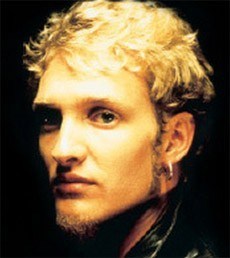
I admit it, I’ve tried them. They’re fun. But when I think about drugs, I can’t help but think about Layne Staley. I mean, look at him. Listen to him. Just for four and a half minutes.

While you’re at it, you can look at Mike Starr, playing the bass in that same video. Because he used to do heroin with Layne. And now he’s dead, too. With Layne. Who, if I may say, was not only one of the most talented and innovative heavy metal singers, but — damn, that was a pretty man. Just look at him.

layne_staley

Dead. Heroin overdose.

I think of Brad Nowell. Who couldn’t even appear in this video, because by the time this song hit, he was already dead, also of a heroin overdose. Though that is his dog there, looking even sadder than his former bandmates, trying to act like they have the heart to do any of this bullshit after their frontman and songwriter died.

Hell, I think of Elvis Presley. I mean, sure, it was a whole lot of hard living that did him in — but I think we know what the primary cause was. It wasn’t those fried sandwiches. And my God, what a voice that man had.

I think of Heath Ledger. Who I loved from when I saw him in Roar, and who just — I mean, come on. What can I say?

He even makes Christian Bale act well. (Unnecessary dig. Bale’s not bad. But Batman in the movies is boring without the villains — and this is the best one. Bar none. Better than Nicholson in the same role. Nicholson has three Oscars. Ledger’s dead. Because of drugs. )

I believe that the purpose of humanity as a race — as compared to our purpose as individuals, which is most simply put as “Make yourself happy,” a commandment that pushes us to do the things we think are right, as well as prioritizing our limited time and focusing our scattered attention on what really matters, while allowing us to be the free individuals we must always be — our purpose as a race is to do the things that other species cannot do, and that is, in my opinion, to find truth and to create beauty. Artists, along with others, do that. And the sheer number of absolutely wonderful and unique and gifted and visionary — in the best sense of the word: human — artists that have been destroyed by drugs makes me weep.

And I’m not even counting alcohol. Because I’m a writer, and if I start that list, we’ll be here forever.

And so I end up in a terrible position. A paradoxical and ultimately frustrating position, one that I don’t ever want to defend, but have no choice. Drugs should not exist. They should never be taken to excess, they should never be relied upon; they should be avoided. There is too much goodness in life to need an illusion of it. What we should do is support one another, and love one another, so that people don’t need drugs — and then let them use drugs recreationally all they want to.

What I tell my students is this: drugs make you stupid, and then they make you dead. That’s a question of increased usage, not inevitability, but increased usage is common. I do think — in a painfully simplified sense — that it is the lack of support that forces people into that fatal spiral, a lack of human treatment at the hands of our fellow men; when it is not simply bad luck, or fate, or whatever name you want to give to Dame Fortune and her spinning wheel.

And I think that what drugs have taken from us is just heartbreaking.

Book Review: The King of Messy Potatoes by John Dashney

Messy Taters

The King of Messy Potatoes
John Dashney

You know what? I’m just happy I found this book.

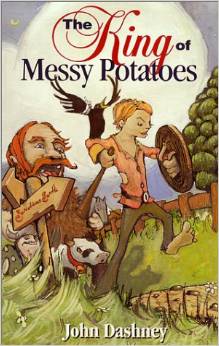
I picked it up at a library book sale. I bought it because the cover image is both sweet and, for me, evocative: a boy marching with stick in hand and shield on arm, with a line of friends and companions by his side: a cow, a giant, a viking, a crow. This is what I imagined as a child. I read Tolkien and Alexander, Lewis and Anthony, and in every case, the story really revolved around the journey: the journey, and the companions. As a fairly solitary child, that was what I wanted. So I had to get this book. Plus: how could you ignore that title? I love potatoes more than I love epic fantasy. If given the option, I would certainly pour gravy on this book and eat it. Who wouldn’t?

For even more fun, the author has written several young adult adventure books, is self-published and small-press published, and this book is signed. It’s perfect.

Now as for what was inside: that was good. I won’t say it was perfect, but it was good — far better than most small-press, self-published authors I have encountered. This book hits a beautiful balance between fantasy and reality, using a frame story about a boy and his grandfather, an aged Episcopal priest and scholar who is writing a history based on Biblical times, a book about the kings of Mesopotamia. Which the boy hears as — Messy Potatoes. (I am proud to say I actually made that connection before I started reading, when I picked up the book and considered reading it next. I am impressed that Mr. Dashney actually had this idea and saw the beauty of it.). The boy asks about it, and though the grandfather laughs, he agrees to make up a story about the King of Messy Potatoes for his grandson.

Then we get the story of Spud. Spud lives on a very special farm, though he doesn’t know it. He doesn’t know much of anything, other than how to grow good potatoes, and that his older brothers are dimwits and the local nobleman is a jerk. But then Spud meets a new friend: a crow, who, if he bites someone and tastes their blood, can speak that person’s language for a full day. This crow tells Spud the truth, and helps Spud to begin his adventures, and pursue his destiny — as the King of Messy Potatoes.

Both of these stories are successful. The frame story of the boy and his grandfather is sweet and heartfelt, and rings very true — especially to me, with my staggeringly erudite and somewhat distant (because eminently dignified) grandmother, who nevertheless loved me dearly. The story of Spud is exciting and amusing and fun to read, and you want to hear both sides of this as you go through it.

It isn’t perfect. There are parts of Spud’s story that are a bit too short, and feel like they’re there just to fill space without really adding anything; the Viking part, for one. The villain is a great idea, but isn’t really pursued completely — understandable, as this is a young book, but still: kids understand evil, and hearing about evil that is vanquished is a good story for any age. Spud is given a dialect that just doesn’t fit and doesn’t make sense, neither for the character nor for the “author,” the Episcopal scholar grandfather. And at the end, I want to hear more of the story of the King of Messy Potatoes, but I never will. Which is too bad.
But overall? I was very lucky to find this book. It made me happy.