I Did It My Why

when admin says remember your why - Tony Stark Eye Roll Meme Generator

It’s inservice season!

Of course that should be the time of year, as the old joke goes, when we all get to hunt inservices, but it just means that this is the time of year when teachers go back to work in order to pre-game before the students arrive. (Yes, if you’re wondering, we’ll be drinking – but not enough. Never enough.)

If you are wondering – or, if you are one of my fellow teachers, which means your mouth is hanging open and you are cussing foully at the very thought of this – yes, this is absurdly early. In fact I am writing this at the end of the first half-week of inservice: this year I went back to school on July 16th. I kept seeing memes from teacher meme accounts that joked about our general outrage over Back to School sales happening now, with some kind of How-dare-you caption or comment that included the phrase, “It is JULY!” And though I share that outrage, every time I saw it I had to just sigh. Because not only am I back to work in the middle of July, but I will actually have students in July: classes this year start on Tuesday, July 29th. Thereby spelling the doom of that last vestige of the past advantages of being a teacher: it used to be a steady job, that was respected and appreciated, and which offered good benefits and a lovely, long summer vacation; now none of that is true, at least outside of the wealthier blue states.

But at least we’re still badly paid. So that tradition goes on.

Whenever I think about inservice – which I try not to do whenever I am not in the middle of it, but when I am in the middle of it, I always find myself stuck in uncomfortable chairs in rooms full of people who will look askance at me if they do not actually accuse me of disrespectful misbehavior should I have the audacity to distract myself from the pointless and condescending lecture being presented as helpful instruction, and so I end up spending quite a bit of inservice time pondering in silence the meaning of various available abstractions like this one – I wonder: What is inservice? (Also Why am I here? And Is there value in suffering?) It’s a strange word, after all: is it intended to differentiate this process from some other system called outservice? Which, frankly, if the only difference between inservice and outservice is that outservice is carried out in some place other than the school building, I’ll still take that one every time. And whether the service is in or it is out: who is being serviced? Am I and my fellow teachers the recipients of said service, like cars out of tune? Or are we the ones servicing something or someone else? If it is the teachers performing the service, what (who?) are we servicing, and why?

The ostensible answer is that inservice is meant to provide teachers with time and training to help us prepare for the upcoming school year; so essentially, it is the first one: we teachers are rolling into the garage like smoke-belching, backfiring, broken-down jalopies (Not entirely inaccurate), and the mechanics tune us up to get us ready for the race about to begin. I’m not sure what that makes the students, who are not the drivers and not quite passengers – maybe the cargo? Maybe the road we are driving on? – but I think that’s taking the metaphor too far. This lens does bring into clarity a number of obnoxious things that happen during inservice, not the least of which is: remembering my why.

There are themes that run throughout inservice everywhere, always, and which return every year, like a repeating motif in a Beethoven symphony, or like a recurring nightmare; one of these is the certainty that someone, almost certainly someone who does not teach, will ask the teachers to remember their why.

Why do we teach? Why do we take on this difficult and underappreciated job? Why do we come back to it year after year? Is it like returning to an abusive relationship? Is it like trauma that hides behind a memory block, as is supposed to happen with women who go through natural childbirth and then have to forget how incredibly painful the experience is or they would never have any more children?

As I have never given birth, nor been in an abusive relationship other than working in education, I cannot say. I will say that I remember, every year, how awful the previous year was – and also how wonderful it was, at times.

Which brings me to this year, and the current inservice season, and the direction – which was indeed delivered last week, by a presenter who is not a teacher – to remember my why.

Last year was bad. It wasn’t my worst year – that will always be 2011-2012, when I was working through a recession and a state investigation and a union contract negotiation in which I was the lead negotiator (And it says something that 2012 was the year I won Teacher of the Year for my school district in St. Helens, Oregon) – but it was bad. I spent a fair amount of time last year thinking about, and looking for, jobs that were not teaching jobs. That’s how bad it was: it changed my why into a What the hell am I doing here?, a question that is much less conducive to being a good teacher, and so not one that will be recognized at most inservice training sessions, even though surely many teachers at those sessions are asking that question, repeatedly, sometimes out loud, though under our breaths, so we don’t get dirty looks.

But here I am, one more time – my 26th – starting a new school year, about to teach high school English to a new (Well, partly new; partly familiar, which is at least part of the problem) cohort of students. And I found myself this past week thinking, genuinely wondering, Why?

Why am I teaching? Still? Why am I doing this to myself?

I don’t have an answer, not an immediate one. On some level, I don’t want to be here any more, don’t want to be teaching, don’t want to be teaching at the school where I have been teaching for the last 11 years. But that, too, is not the whole answer, and the whole answer is not immediately obvious in that context, either.

So let’s talk about it.

Why am I here? Why am I teaching?

First of all, most clearly and fundamentally, I’m here because I need a job. If I lived in a different kind of society – one that I think would be better in countless ways – that did not define a person’s value by their economic activity, then I would not be a teacher, at least not a classroom teacher. I have often thought I would like to teach the way Socrates did: at dinner parties, in conversations with interested parties, or out on the streets with random passersby; obviously I couldn’t do that for money, but I think I’d be pretty good at it. But I don’t live in that society, I live in this individualistic capitalist one, and so I must work for money so I can have a house and food and air conditioning, all the vital necessities of life. It’s possible I could survive without a job, but my level of misery would go up exponentially, even over what I went through, what I go through, as a teacher. So I work, rather than become homeless and starve on the street.

But does it need to be this job? At the moment, that answer is close to a definite yes, because my wife, who was also a teacher last year, and who had a far worse year than I did, lost her job to budget cuts at the end of last year; as she is working to build her entrepreneurial endeavors, it falls to me to provide a steady income and health insurance; because teachers are generally more valuable as we gain experience, our pay goes up every year and then drops precipitously if we change schools or school districts – I have done this twice, the first time losing about 20% of my annual pay and the second time 40% — so that means I need to stay in this job, rather than get another teaching position. That wasn’t an easy or a simple decision: I applied for, and could have gotten, a job teaching in a different school that would have earned me about 30% less than I make now; but I just couldn’t afford the drop in pay. So here I am. (It does help that I have many dear friends at this school, and that some of my students are lovely people. But it only helps, it doesn’t make the decision easy. It’s not the why.)

It is possible I could change jobs entirely, even change industries; but because most jobs pay more with experience, like teaching does, I would have to start at the bottom of the scale, and that is generally also less than I make as a teacher, even if the upper end of pay would be more. I am also painfully aware that the current political power structure puts continuing health insurance across changes in employers at serious risk of ending, which makes me doubly unwilling to leave my current job for a new one. Any job that would pay as much as or more than I make teaching would require additional training and/or certification, which makes them possibilities for the future, but not for now. (Also, I am 51, so starting a whole new career at the bottom and working my way up is both less attractive and also less likely than it would have been 20 years ago. Plus ça changeplus c’est la même chose.)

But of course, I could do those things. I could get a job in marketing, or in public relations, or in corporate training. (I could become one of the people who provide inservice to teachers, but I would really have to hate myself to do that.) Especially if I and my family moved states, to one that had a generally higher payscale for professional jobs, I could find something that provided the same approximate income. Yet here I am, back teaching again. So there’s more reason for my returning to teaching than just necessity, more than just money. I will also point out that, if I just wanted to receive my paycheck and cared about nothing else, it would be fairly easy for me to keep my job despite becoming a terrible teacher, because it is in fact quite hard to fire bad teachers. So long as I didn’t hit or harass one of my students, I could treat my job very differently from how I treat it now, how I have always treated it, so that even though it was the same job, it would be a very different experience.

Let me be a little specific. I teach English to high school students, and I do it well. I make literature both understandable and interesting to my students – or at least I create an opportunity for them to find literature both understandable and interesting. I make the class as valuable and entertaining an experience as I can, as much of the time as I can – and that’s a good amount of the time (though of course the experience of my class is subjective and I don’t doubt that some students think I do a terrible job of teaching, and/or that my class is boring as hell. But mostly, they don’t think that, not if they pay attention and try.). I work very hard to achieve that: I spend hours and hours thinking about what I am going to teach and how, hours and hours preparing materials and assignments and activities, and then when it is time to go and teach those things, I show up, every day, as ready as I can be to teach the material to the students I have. I ignore the inconveniences and frustrations of my daily work, of my classes and my situation, and do my best to treat every class period as an opportunity for both progress and also fun. I try to learn as much as I can about my individual students, both so that I can teach them better and so I can show them the respect they are due as human beings who are as wonderful and valuable as every other human being, despite being adolescents (That’s not a dig, not really; adolescence is miserable, and all of us react to that misery by inflicting misery on others. I did it too. I don’t blame them for it: but it can be very hard to deal with them while they work their way through it.). I try to be as honest and vulnerable and trusting with them with my own genuine self as I can be, again so that I can teach them better and so I can show them the respect of being real with them, so they can trust me, so they can work with me.

The fact that I do that, that I have done that every year, is part of the reason why I had a bad year last year, and part of why I don’t want to do this any more: because my students last year did not generally return my respect and my openness. They did not listen or value my honesty and vulnerability, and they did not show me the respect I deserve as a fellow human being, let alone as a teacher who has some ability to affect their lives, possibly for the better. They mostly didn’t disrespect me maliciously, just being teenagers in this modern world; but it was hard to remember that and to keep caring about them and keep trying to be the kind of teacher I want to be with them while they treated me with callous indifference. There were many times, for instance, when I would ask my students about something, and they would ask me what I thought or what my experience was in regards to that idea or situation, and while I was answering the question they asked me, they would not listen: they would turn away and have side conversations, or look at their phones or Chromebooks, or leave the room, because they were bored. Not because they hated me and wanted to insult me, but just because they didn’t care, and they didn’t feel like they needed to show me the respect of their attention, even as I answered the question or gave the explanation they asked for. So as I said, not malicious, but nonetheless hurtful, and hard to deal with. And this year, I will have many of those same students back again. Will they treat me more respectfully? Will they listen to me when I talk, either as their teacher or as a fellow human being?

Probably not. But I am willing to try.

I don’t have to: I could assign them readings, and questions, and maybe videos or audio files of literature – particularly non-fiction, which is what my administrators want me to focus on anyway, as it is the heart of the testing that produces the data that is the obsession of all administrators everywhere –  and I could sit at my desk and monitor their online activity to ensure they were on task. To my school, that would be considered teaching, to a degree sufficient for me to keep my job and my current pay, which is not really related to my success or failure in actually teaching my students. If I produced data that was better than what I currently engender with my involved, honest, human, active, interactive teaching, then I would be even more secure in my job. I might even get a little bonus money if their test scores went up. And it would be so easy. Especially if I just had AI design my “lessons” for me. And grade their assignments.

I choose not to do that. I choose to take the much more difficult path, which does not necessarily make my job more secure, and which definitely does not produce the best test scores. And why do I choose that, you might ask?

That’s the Why worth thinking about.

I teach the way I do because I don’t just teach for money, and I don’t ever teach for test scores. I think that my teaching methods help students to get better at understanding literature and at explaining their understanding in writing, and so higher test scores should be the result of my methods; but those test scores are not my why. If anything I sometimes, perversely and against my own best interests, want those scores to go down while my students’ knowledge and abilities improve, for the data to become less reflective of my students’ actual learning and abilities. Because I want my students – and also my school and my community and my society – to care less about test scores and measurable progress data. Ideally they would not care about it at all, ever; and my hope is that when students grow and learn in my class, and know that they grow and learn in my class, and everyone around them knows that they grow and learn in my class, and then those test scores don’t improve, or even go down, then it shows the truth: that test scores do not measure what matters in education. Test scores and measurable progress data are the wrong focus for educators, because they put the focus on the wrong thing, especially in my subject: English as a subject of study is not about measurable progress in discrete skills. There is no “mastery” in English. It is about growing: growing as a person, as a thoughtful person, as a person who thinks about the world and our place in it, who is curious about the world, who is appreciative of the world, and who cares about the humans who live in it with them.

I want my students to be that. It will make them better people, with better lives, in a better world. I want to make that happen. So I am willing to work for it. Even though it’s hard. I’ve worked for it, worked hard, every day and every week and every month and every year, for coming up on three decades.

Last year, and to a lesser extent the few years before that, it didn’t work as well as I thought it should. My students did not grow as much as I wanted them to. Partly because they did not pay attention enough and did not try enough to actually improve in the subject, to actually work and learn in the class; because they did not pay me the respect I deserve as their teacher and as a fellow human being with some ability to improve their lives and the world they live in, who is working hard to do that, who shows up every day and who is as honest and vulnerable and genuine and compassionate as I can be with them, as often as I can be, and regardless of how they treat me and the work I do and the subject I love. Part of what made last year bad, I think, was that I was not able to keep being patient with my students when they disrespected me and my class: it made me lash out in frustration, or it made me shut down, which then confirmed for them that this was not a class and I was not a person they needed to listen to or be respectful of. We spiraled, because of that, both my students and myself, more than once; it took extra effort to drag us out of those spirals – and very little of that effort came from my students. If anything the majority of them encouraged that spiral, because they know that if I give up, and they give up, then they can stop trying, and they can just do nothing for as long as I have given up, as long as I stop trying and do nothing. For many of my students, for much of the time, their goal is to do absolutely nothing, to put forth no effort, to achieve no ambitions – to have no ambitions – and to not care about anything at all. Because of that they put all of the requirement for effort and motivation on me: often consciously and intentionally, again so that they can give up by making me give up.

But I did not give up, not in the long run (though I did, too often, in specific moments with specific classes), no matter how annoying some of my students were to work with, to be honest and vulnerable with, no matter how disrespectful they were in not listening, in not trying to think or empathize with me or to connect to the material. And the reasons why I didn’t give up are another part of my why, and more of what brought me back to teaching again this year.

The first one, the simpler one, is that I love English. I love literature, I love poetry and plays and novels and stories and essays and screeds and letters and songs and – all of it. I love reading and writing, and I love talking about those things, and learning about them, and teaching about them. All of it is fascinating and beautiful and magical to me, as well as incredibly important, both practically and esoterically, concretely and abstractly. It would wound me, deeply, if I were to treat my subject as something not worthy of real attention and focus and thought and energy, if I were to reduce it to excerpts and handouts and multiple choice questions and AI-generated content. It would dishonor this area of knowledge, this way of living in and interacting with the world, that has meant so much to me, that has consumed so much of my time and effort, that has brought me so much joy and also so much power. And I won’t do that, not even though my students do it every minute of every day, in every class, to one extent or another. Part of my why, part of my reason for teaching, is to fight back against that apathy and indifference and cynicism, that belief, endemic among my students and my society and growing worse every year, that reading is boring and pointless unless it is reading the captions on a TikTok or the comments on a YouTube video or a SubReddit, that writing is something best done with a prompt to ChatGPT. Preferably one entered with talk-to-text. I don’t think I can change that attitude in all of my students; certainly not in the ones who never even try to get better in my class, the ones who prefer to do nothing, at least in this context, and to be nothing as a consequence, at least in this context; but I can help change it for some of them, at least. And because I have read and taught and thought about Ray Bradbury’s novel Fahrenheit 451 for so many years, I know that winning some people over to the side of the angels, to the side of the readers and the writers and the thinkers, the poets and the storytellers and the wordsmiths, is enough to save the soul of humanity and society – at least until we blow it up.

But then we will rebuild. If there are people who have not given up. The character Granger says it at the end of the book, after their world has, at least a little, blown up:

“There was a silly damn bird called a Phoenix back before Christ: every few hundred years he built a pyre and burned himself up. He must have been first cousin to Man. But every time he burnt himself up he sprang out of the ashes, he got himself born all over again. And it looks like we’re doing the same thing, over and over, but we’ve got one damn thing the Phoenix never had. We know the damn silly thing we just did. We know all the damn silly things we’ve done for a thousand years, and as long as we know that and always have it around where we can see it, some day we’ll stop making the goddam funeral pyres and jumping into the middle of them. We pick up a few more people that remember, every generation.”

That’s the other reason why I keep teaching, and again it is fairly abstract and idealistic, and again it is generally ineffective with the majority of my students: I want to make my society a better place. I want my students to understand the damn silly things we do, and that burn us up, so that they can help get us closer to that day when we stop jumping in the middle of our own goddamn funeral pyres. I want some of them to remember. To never give up.

I can’t fix all of it, of course, and so that makes it harder to keep coming back and trying again; just this year, I have had to sit through a conversation among teachers, who should all know better, about how AI is both inevitable and a valuable tool, and so we should not only accept it, but take part in it, contribute to its growth, tumor-like, on the collective mind of humanity; hearing that from my fellow teachers felt like being stabbed in the gut, and it makes me want to throw up my hands and cry out “A plague on both your houses!” I have for years chosen not to fight my students on their use of electronics, preferring to ask them to come along with me into the world of literature I make available and interesting and useful in my class; but I have watched as more and more and more of them have refused my kind invitation, my well-meaning passivity, and have failed to gain anything from me as a consequence. So now I will have to fight to make my classes available to my own students, and I don’t know how well that will work – and I don’t want to do it. I have no choice, so I will; but I don’t want to. That’s a why on both sides: I want to teach so I can fight for the souls of my students, and I want to let them do what they want, even if it destroys them.

But as I have learned from literature and from being a part of humanity and thinking about humanity, when some people are allowed to destroy themselves, they bring the rest of us down with them. I don’t want to allow that, not for a reason as stupid and worthless as laziness or fear of failure which creates failure, which are the main reasons why students don’t pay attention in class. Again, I don’t think I can save all of them – I don’t think I can save any of them, really, but I think I can help make a change in the paths for some of them, which will allow them to save themselves – but if I can save some, that will be enough. Not enough to make me happy, or to make my job easy; but enough to keep society moving mostly forward, and to allow humanity to continue to get better. If I can help them to empathize with others, as they might learn from To Kill a Mockingbird, or to think about the consequences of lies and self-serving fingerpointing, as they might start doing after reading The Crucible, or if I can just make them curious about the real value and power of reading, as they might learn from Fahrenheit 451, then I will accomplish that goal. I’ve done it before: and I hope to do it again. And again. Until I can’t do it any more.

That’s why.
Late to Work, Work Too Late

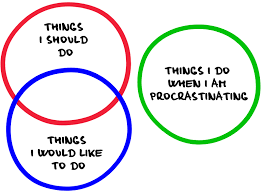
I have a confession to make: I procrastinate my work.

Specifically, I procrastinate my grading. I procrastinate my paperwork, too; if I’m not the last one every year to get my self-evaluation done, I’m the runner-up. It’s almost a point of pride for me to refuse to turn in my Intent to Return paperwork until it is appallingly late; I dress it up as a sort of protest, because I hate the system — my school requires teachers in February to sign a letter of intent that says we do mean to return for the next school year, and listing the classes we would like to teach (There is also an option on there for “I would like to work for the school district, but I am willing to transfer schools” which I have never and will never check, because if anyone puts me into a middle school, I’m quitting on the spot and becoming a meter maid. Or maybe one of those guys who spin signs for tax preparers.), but then they don’t actually offer us a job, or tell us what we will be teaching, until JULY. I hate that we are supposed to commit to the school MONTHS before they have to commit to us — and in some cases, they don’t tell us the classes we are teaching until the school year starts: in 2021 I was teaching a full set of online classes, but I did not know until an administrator emailed me and asked “Hey, how do these students I have registered for your class sign into the Zoom?” ON THE FIRST DAY OF CLASSES. So yeah, the system pisses me off: but also, I do intend to return, and the people who need my signed letter — specifically my principal — are not the people who set up this obnoxious unbalanced system. So there’s no particular reason why I procrastinate signing the letter; I just do. Like with all of my paperwork. And all of my grading.

I don’t like admitting it, because I’m a teacher, and I’m supposed to set a good example for my students; I’m supposed to not only teach them that, in the real world, deadlines matter, and organization and a work ethic are important; but I’m supposed to enforce that learning by requiring them to hold to deadlines, to be organized, to develop a work ethic, so that they will be prepared for the real world. If I don’t prepare them for the real world, I’ve been told, then not only will I be setting them up for a rude awakening when they get fired from their jobs, but also I am tearing apart the foundations of our society by eliminating personal responsibility, which means that everything in this country will fall apart when this current generation gets out of school and goes into the real world.

Where have I been told this? On Twitter, of course. Where I was this morning when I should have been working.

Step 1: head on Twitter Step 2: regret your life decisions | Twitter | Know  Your Meme

Please don’t get me wrong: I have a strong work ethic. I take personal responsibility for the tasks that are required of me. If anything, I take too much responsibility, and work too hard; where I could just shrug cynically and say “Hey, if those rotten little punks don’t want to read the book, then they’ll fail and they’ll deserve it,” instead I say, “Maybe I should read it to them in class, so I can explain it and make it more interesting, and they can at least understand what’s in the book and what it means, even if they aren’t reading it on their own.” Does that require more of me? It does. Not only do I have to work harder in class, then, but also it means I can’t assign quiet independent work in class, and get my grading done while my students are working; that means I have to do my grading outside of class, which inevitably means I have to do it on the weekends.

Which causes a secondary problem: because I put so much effort into my daily classes, trying to run every lesson, keep every kid involved, cover every topic with them and make the information interesting, so I can be (at least somewhat) sure that they understand and are learning, I have little energy or motivation at the end of the week to do grading. And frankly, at the end of the week of work, I think I deserve a break: and I’m right. I do deserve a break. Teaching is a hard job, and I work very hard at it. It’s important to me: I recognize the value of education, and the value of an educated populace; I think of it as my most valuable contribution to a world that has been very generous to me in my life — and also, I’m good at it. And my students need to learn, and they need to have good teachers and good adults in their lives, and I am all of those things. So while I am at school, and after school, and during my lunch breaks, and so on, I work as hard as I can to do as much as I can for my students.

The result, then, is that on many weekends, I don’t do any grading. Even though I haven’t done it over the week at school, either. Because I’m tired, and because I deserve a break, and weekends are what I get.

The result is that it takes me too long to grade.

It’s a problem. It’s a problem for a lot of reasons: first because it’s bad teaching practice. Feedback should come quickly: students (like anyone) forget in short order what they did on an assignment or how they did it; if they get the assignment back with feedback within a few days, then they can take the feedback as constructive suggestions on how to improve. But if they get the work back two weeks later, or three weeks later, or four, five, six, seven, even eight weeks later — and yes, I have done that — then it’s useless. They don’t even remember doing the assignment. I have frequently handed back a paper to a class, and had them say “What is this? Oh man — I forgot all about this.” I cringe every time. And tell myself I’ll do better: I’ll spend more time grading, less time doing nothing at school or doing other things at home. The job is important, after all.

But then when the weekend comes, I can’t bring myself to do it. And there are all of the other things that I also need to do: I need to spend time with my wife, who is my whole world; and as important as my students are, and as important as teaching is, she is more important. Much more important. Orders of magnitude more important. Plus, spending time with her makes me happy: which does have the added benefit of helping me recover from the work week, which then gives me more energy to teach as well as I can in the next week. Which is also important: and maybe more important than getting those grades done. The same goes for spending time with my pets, and also working on my house, or going to the gym. All of them are important — the gym helps reduce my stress, and will keep me healthy, which will help me live longer (certainly something that teaching will not do for me…); working on my house makes me more comfortable, and also helps increase the value of the house, which means I will be more financially secure in the future — which not only reduces my stress, it also helps to ensure that I will be able to keep this important job in this underfunded, underpaying state of Arizona.

And so on. There are always reasons to do things other than grade: and I don’t mean bullshit reasons like “I just don’t really feel like it right now,” but valid reasons, genuine excuses: other important priorities that should come first. So I put them first. And so I don’t grade.

Grading Memes 20+ Funny Images Only Teachers Will Understand

And then there are the feedback loops.

You see, because I know that I take too long to grade, and I give myself all the excuses I could ever want to keep allowing myself to do that, I can’t bear to make my students stick to hard grading deadlines. Even though it would be easier, because that way there would be less for me to grade. Even though it would be “teaching them about the real world and taking personal responsibility.” Even though it would make the work more meaningful when they did it, because when they come back weeks or months after an assignment was to be turned in and they complete it then, the chance that they are still able to learn from the lesson is almost nil. But I can’t do it. If I don’t stick to hard deadlines, how can I make them?

I mean, of course I could. We have unequal power in the class. I get to set their deadlines, and the consequences for missing those deadlines; and I get to decide when I complete my own work. I have the power to make these determinations.

But I can’t justify it. I can’t justify the time I take to do the grading, so I can’t justify holding my students to a short, hard deadline, and then taking weeks and weeks to give them back the grade on the assignment they turned in on time.

So I don’t hold them to deadlines. Which is how I contribute to the imminent collapse of our society, according to those Twitter pundits who told me that holding students to deadlines is critical for preparing them for the real world.

It’s also, I know, how I leave an opening for students to put themselves into a real bind. Because I don’t hold them to deadlines, and I don’t get mad and yell and get them in trouble and ruin their GPAs if they don’t get the work done for my class, I make it that much easier for them to procrastinate the work for my class. And, see, they have so many classes, and so much homework for all of them, and their math and science and history teachers all keep hard deadlines, and chew them out and shame them when they miss deadlines, and refuse to let them turn work in late, and therefore ruin their grades if they don’t get the work done — that they always choose to do the work on time for their math and science and history classes. They know they can take a little more time for Humphrey’s work. So they take it: because after a long day of sitting in classes and trying desperately to learn — and they are trying — even when it is boring, even when the teacher doesn’t communicate well, even when other things in their lives or in the classroom are distracting them, they are tired. And understandably so: it’s hard work trying to learn. Especially trying to learn complicated advanced concepts like how to write an essay. But that’s okay, they can put off Humphrey’s work; he doesn’t care.

Let me just set the record straight on that one, because it makes me mad every single time they say it.

Are you listening, kids? (Of course not.) Here it is anyway.

I care.

I care about how you act in my class. I care about whether or not you are paying attention to me. I care about whether you are looking at your phone or if you are reading. I care about whether or not you turn in the work on time. I care about your grades. I care about your test scores. I care about everything. All of it. Always. I care.

I just don’t have the energy to apply pressure on all of you, all the time. I can’t do it. I can’t make the lesson interesting and useful to all of you, while also fighting to make you listen to the lesson I have already put effort into to make it interesting and useful. I can’t stand to have to fight to make you listen to my interesting and useful lesson: you should just fucking listen. Okay? You want to talk about not caring? How about all of you little punks not caring about how much you annoy me when you don’t listen to me no matter what I do or say? Even after you say you like me and like my class? You still don’t listen, and you don’t care how much that hurts, and how frustrating that is. You make me fight you, make me make you follow the rules you know you have to follow already, and then when I ask you to follow the rules, you argue, and you fuss. So I have to fight harder.

Think of this: for every action there is an equal and opposite reaction, right? So if it takes a certain amount of time and effort to overcome your resistance to doing work in class any given day, and I have to be the one to overcome that resistance for you, then that means the effort put into my action to create the reaction in you that allows you to learn is just as hard for me as it is for you. So if you struggle to make yourself pay attention and try, I struggle just as hard to make you pay attention and try. The difference is, I have to struggle with 20 of you, every single period, every single day. And then once I have managed the struggle, and gotten you all to pay attention and try — then I have to teach you. And make it interesting and useful for you, so you can keep paying attention. And that takes effort, too.

So much of the time, even most of the time, I just can’t do it. I can’t put out that much effort in every class, every day, with every student. So I blow it off. I procrastinate. I just start teaching the lesson, knowing that not everyone is paying attention; hoping that somehow they will listen to me as I try to make it interesting and useful, and they will do the work themselves, and then I will be able to help them learn.

It never happens. Not with the whole class. Not with a whole unit.

So I have to let it go. And since I let it go, I can’t demand that they put out more effort than I’m willing to put out. To be clear, again: I could do that. Lots of teachers do that. The fact that I don’t do that is one of the reasons they like me. But because they like me, they feel more casual about my class, and it’s easier to blow off work for a class that is more casual, especially when the teacher is cool and doesn’t care about deadlines. (I. CARE.)

Matrix Morpheus Meme - Imgflip

So the students blow off deadlines, and that creates more work for me. Because I need to try to track them down to get the work completed so I can grade it; or by the time they get around to it, they don’t remember how to do it, and I have to take some time to remind them of what the assignment was. Or they blow off some assignments, which lowers their grade, and then they need to make sure other assignments are perfect so they can bring their grades back up — and that means they need to check with me about what the expectations are, and what they need to do, and if the work they have so far is good enough or how they can change it to make it better and get a better grade. Which is freaking awesome: because it means they’re learning, and they want to learn, and they want me to help them get better, and that is the whole point of all of this —

And it takes more time and energy. Which I am happy to expend on students who ask for help, especially the ones who have been struggling and have low grades because they haven’t turned anything in, which always makes me worry that they don’t understand the assignment or the content at all; when they ask for help, and I help them, and they get it, then I feel like I won. And they turn the work in, very very late, and I grade it immediately because I’m so pleased they got it done, and then I am complimentary in their feedback because I want to encourage them to keep turning in work and showing improvement.

Which, of course, just encourages them to keep turning work in late, and getting extra individual attention, and getting nice feedback and so on.

But then I’m even more tired, and so I get even less done for the class as a whole. Which makes me feel bad, like a slacker, like a bad teacher. Sometimes I get so depressed I can’t stand to work at all. But of course, I keep doing it. Because I have to. Because the students need me. Even if they never act like it.

Meme Creator - Funny You can come back to work now We miss you (& need you)  Meme Generator at MemeCreator.org!

That’s what procrastination is.

I don’t know how or when or why we all forgot that, all got confused about it. Who told us that procrastination was being lazy? Nonsense: blowing off work entirely, never getting it done at all; sometimes that is due to laziness. (Rarely, I would argue. But sometimes.) Procrastinators do the work, we just do it late, or at the last minute, while also applying enormous pressure to ourselves mostly in the form of anxiety. So if you do the work a little at a time from Monday through Thursday, and I cram it all in on Thursday night, and we both turn the work in on Friday — or if I do all the work on Sunday and then turn the work in late on Monday — which of us has done more work? Nobody, of course, unless, as I said, you want to count the extra effort I expended on anxiety and guilt. (And maybe the extra effort you spent on organizing and managing your time and the project — but you loved doing that, and we all know it.) We all do the work. It is certainly true that waiting until the last minute frequently limits the amount of time we have to put into the work: but in my experience it does not at all limit the effort put into it. That is a separate decision, which lots of people make — and sometimes it is due to laziness, I agree. But procrastination is not lazy.

It’s prioritizing.

As I said, when I decide on Friday night that I would rather spend an evening with my wife than grade papers, that is a choice I am making based on what I think is most important: not what requires less effort. Okay, spending time with my wife does require less effort: but considering how much time I spend away from her doing work, it should be clear that I don’t always pick the easier path because it’s the easier path. I usually don’t. When I do choose to spend time with her, it is partly because I have spent all of the effort I can possibly spend, and now I need to do something that puts something good back into me: and an evening with the woman I love will do that. (Also I choose to spend time with her because she is the best and most important person in my world, and she deserves to have my time more than any of my students do.) The time I spend writing is time I could spend grading, and believe me, this is not any easier in terms of intellectual effort. I think it is more important, at least once a week, for my self-understanding and my identity. So I prioritize: I make a choice. And that choice means I have less effort and time to spend on the other tasks. I will still spend as much time and effort on them as I can: but sometimes — frequently — constantly — that effort is not my full effort. It just can’t be.

Because I have too much shit to do.

Want me to get all my work done? Reduce my student and class load, without reducing my pay (Because if I get paid less, I’ll need to go find a second job to cover my expenses, and I will not have more time.). Or even better, make all of my students do their part by having them pay attention to my lesson, to my whole lesson, every day, so I don’t have to fight to make them stay on task and learn the content. Though, to do that, you’ll need to lighten their load as well: because believe me, after being told all their lives that they need to learn everything and get good grades OR ELSE THEY WILL BE DOOMED TO A LIFE OF MISERY AND WASTE BECAUSE THEY DON’T HAVE ANY WORK ETHIC OR RESPONSIBILITY AND THEY WILL HAVE DISAPPOINTED EVERYONE AROUND THEM, they are also trying just as hard as they can: and it isn’t their fault they can’t do everything we demand of them any more than it is my fault.

We are simply demanding too much. And then calling it procrastination when everything doesn’t get done.

This is the point I want to make, and I want to make it twice. Because people on Twitter (Assuming they are people, and not malicious semi-sentient globs of slime) have repeatedly and vociferously claimed that teachers are lazy. We are not. We work as hard as any and harder than most. Of course there are lazy teachers, as there are lazy people in every group; but teaching as a profession takes all that we have, and demands even more. Students, like all children, are a bottomless hole of need: they always need something, and then they always need more. It’s fine; they are children, they’re not supposed to be self-sufficient. But there is never an end to their need. So we who provide care to children, of any kind, we have the full range of tasks required of us professionally — and then we have all those children. And all of their needs. It’s too much: and so I, like all of my colleagues, prioritize. Some of us choose to prioritize work over family, or over ourselves; some of us choose one aspect of work over others — I have colleagues who spend enormous amounts of time and energy making sure that their students are happy, even if the curriculum maybe doesn’t all get covered; I have others who make sure that the students are understanding all the work, even if that means they maybe don’t have the most fun and exciting classes; I try to make sure that my students find some interest in and affection for my subject, because I want, more than anything else, to get them to be readers: and thus lifelong learners, who will grow far beyond what I could ever impart to them. But the issue is, we all try to do all of those things, all at the same time, along with doing all the rest of our work; and it is too much to get done. So we do what we can, and procrastinate the rest, and when we finally run out of time — we say to ourselves that we’ll work on that next year.

And now let me make the same point twice: students need help. They need support. Not all of them need the same help in the same way, but all of them need something. All of them. Partly because they are children: and partly because everybody needs help; everybody, young or old, needs something. What students need more than anything else is grace. They need kindness. They need us to try to understand what each of them individually needs, and to try to provide that to them, as much as we can. We need to know where our boundaries are, when we run out of energy and the ability to give; because they can’t be expected to know how much is too much, and they will always need more than we can give. It’s fine: they are children. Children need support. And there are fortunate children who get most of what they need provided for them by their families and friends; those children don’t need much from their teachers and other caretakers. But they still need something: even if it’s only praise for a job well done, and a suggestion about where they could go next.

The other reason why students all need help and grace is because we demand too much from them. We give them limited time, limited resources, and the limited energy and support of their teachers, and expect them to accomplish — everything. Not only to learn all of the subjects which their teachers have spent our professional lives mastering, but also to learn everything else they need for adult life. And apparently — according to Twitter, at least — they need to learn it all NOW, before they get into the “real world” and discover that they are unprepared for the harsh realities of life. They need to learn to do their work, and do their best, all the time, no matter what they may have going on in their lives outside of school; because in the REAL WORLD, you don’t get to give excuses: you just get fired if you show up late or miss a day of work or miss a deadline or break the rules in any way.

Never mind that I have frequently been late turning in my work. Never mind that I have had colleagues and coworkers who show up late, or miss work, all the time. (I tend not to miss work, and I’m obsessive about being on time. But also, I let my classes get off topic at the drop of a hat, and waste all kinds of time arguing with students over silly subjects instead of pursuing curriculum. We all do the things our bosses don’t want us to do.) Never mind that I and several of my colleagues constantly disobey the dress code, or don’t clock in or out properly, or cuss in front of students, or spend time on our phones looking at social media when we’re supposed to be working. Or show up hungover to work. (I’ve never done that one, either. But I did get suspended because of things I posted online about my students. So I guess I never learned that “If you don’t have anything nice to say then don’t say anything at all” lesson in high school, huh? Must have missed that day. Probably hungover.)

No: we tell these children, who don’t know any different, don’t know any better, because they have only been in school, because we won’t let them leave, that they have no chance in life if they don’t learn everything we have to teach them RIGHT NOW NOW NOW NOW NOW NOW NOW. And then we give them far too much to learn, all at once. And tell them they not only have to learn all of it, but they have to get high grades, or else they are doomed, and we will be disappointed.

And then we are surprised when they procrastinate? When they blow work off sometimes? When they try to take a little bit of time and space for themselves, to do something they enjoy, after hours and days and weeks of doing work, for no tangible reward? We’re shocked when they sleep until noon on the weekends — and then we call them lazy?

How dare we?

No. Students are not lazy. They are doing their utmost to live up to our impossible standards, to our impossible expectations, even with their limited resources and their nonexistent experience, which means they have not mastered the same coping strategies that we have. They don’t know what to do other than — maybe not do some work. And then we get mad at them for not doing their work, and they feel bad, and they fear the consequences we give them right now so they can learn to avoid consequences later; and all of that adds pressure, which wears them down — and they need to take more time off, to escape from even more work. Just so they can survive.

Just like us.

The answer is: they need to work less. We all need to work less. And if we can’t, then the very least we can do for each other is, when we have the power and the opportunity — be nice. Be kind. Give someone a little grace. And take a little for yourself. Even if it looks to others like you’re procrastinating. It’s better to turn in the work too late, than to work until it is too late.

We’re all doing our best.

This Morning

This morning I am happy. My senior students graduated yesterday; I was the MC for the ceremony, which meant I was nervous and uncomfortable all day leading up to it — because regardless of how much time I spend in front of a classroom full of students, it doesn’t take away my stage fright or my introversion. And also, a classroom full of students is quite different from a gymnasium filled with probably 500 people, including parents and grandparents and all of my fellow teachers and my administrators and my wife. Much more nerve-wracking.

But it went well, my speech was well-received, I made my former students cry. Here, for the sake of those who did hear it and want to remember, is my speech; it won’t mean a whole lot to people who don’t know these kids, but these kids aren’t the only ones who suit these words, so feel free to substitute your own children or students for the ones I was talking to and about.

Ladies and gentlemen, friends and family, students, teachers, administrators – and, of course, graduates.

Welcome to the Graduation Ceremony for the Class of 2019!

(to the grads) I bet some of you thought you wouldn’t make it here today. But you did it. All of you: you did it.

You had help – parents, siblings, relatives; teachers, and friends – and all your online friends, YouTube, Khan Academy, Quizlet, Yahoo answers, Wikipedia, Sparknotes, Slader, 123HelpMe.com.

But the point is: you did the real work. You spent the late nights, and the all-nights; the early mornings, the lunchtimes and the passing periods, cramming and studying and reviewing and furiously finishing assignments. You’ve gone through thousands of sheets of paper, hundreds of pencils and pens, gallons of energy drinks, an average of fourteen Hydroflasks each, and a literal ton of hot Cheetos. You sweated through the tests, the essays, the labs, the presentations. You fought through the despair, and stress, anxiety and depression, fear and anger and sadness and happiness – because honestly, nothing makes it harder to sit down to a test than when you’re having a really good day.

You did all of that. All of it. Make no mistake: if anyone tries to minimize this accomplishment, to tell you that this was easy, that it is not impressive – don’t listen. This is impressive. You are impressive. You made it. High school – all school – is rough. And you’ve made it.

And I only have one thing to say to you: don’t let the door hit you in the butt on the way out.

Seriously – and I say it with love – get out. Go away and don’t come back. We’re all as tired of you as you are of us, and we’re all going to breathe a huge sigh of relief when you all have left. This is one of the most – let’s say “challenging” – classes I think this school has ever seen.

Want to know why?

You’re one of the smartest classes this school has ever seen.

You’re so smart, all of you, that it has been impossible to keep up with you. Impossible to consistently challenge you. Impossible to control you. Speaking from my experience, trying to run a discussion with all of you was insane: too many of you had things to say, and if you didn’t get to say them to the class, you would say them to each other, all at once. It was chaos.

You all burn so brightly that you draw all the air from the room – and because this school, these rooms, are so small, there wasn’t that much air to begin with. I honestly think that’s why you fought so much with each other: too many lions in too small a cage. It was a daily struggle to be on top, to stand out, to show how good you are individually, among all these other amazing people.

So. Now’s your chance.

You’ve been held in this small space, like a flower in a too-small pot, for too. Long. Now – you are free. Free to grow as tall and as grand and as glorious as you can. You will overshadow this place. You will tower over us, spread far beyond us.

I cannot wait to see what you all become.

So get out.

There was a keynote speaker, of course, a NASA scientist and actor who happens to be related to one of our newest alumni. I thought he did a great job with his speech — but I couldn’t help noticing that he leaned pretty heavily on clichés. He was actually quite up front about it: part of his theme was using Google (or technology in general) to find what you need, which was fine since he was talking to a STEM school; but the Commencement Speeches he Googled were apparently pretty generic. It was good and useful advice, but — generic.

So I thought I would write some of my own advice. Here, then, is something like what I would say if I were to be the keynote speaker at a graduation. This is what I would tell a group of students who were about to leave high school and embark on the adult part of their lives — also known as “the good part.”


Speeches like this are always full of clichés. Now, I don’t dislike clichés; I think most of them are true, and have genuinely useful things to say. Clever sayings don’t become clichés if they aren’t true, and truth isn’t talked about unless it is cleverly worded; so pay attention to clichés. At the same time, though, be aware of when the overuse of clichés clouds the message: because it’s a rarely known biological fact that people’s ears go deaf while that person is rolling their eyes. Think of them like memes: they are great, they make you laugh and make you think; then you get tired of them; then they’re dead. Clichés are like your favorite food: you can fall back on them when you have nothing new that sounds good; but you can also get tired of even your very favorite food, and that is a sad day.

I think one of the best things we can do is examine clichés, and reimagine them. Deconstruct them. Critique them. Because then we’re actually thinking about things we normally just swallow whole, without any consideration’ and that is no way to live, nor any good way to eat. You’ve got to chew your food: and your clichés, as well.

Ready? Here we go.

“All you need is love.” One of my favorite songs, and one of my favorite cliches. Also true — kinda. It’s not true that love is ALL you need; but it is true that love is one of the most important things you can have.

Image result for love is all you need meme

The first piece of advice I want to give you is this: find love. True love, if you can; genuine and lasting love, at the least. I did, and there is not a day that goes by that I am not shaken to my core by gratitude and happiness because of it. And though I think I am extraordinarily lucky in love, I am entirely sure that all of you can find love, too. Make it a priority: make time for it, time for the looking and then time for the love once you find it. It doesn’t have to be romantic love, if that’s not what you’re after; it can certainly be love for family, for a parent, for a sibling, for a child; it can definitely be love for your best friend, or for a beloved pet — although, as much as I love my pets, I would recommend finding a human person to love. Because human persons talk back to you, and because pet persons die too soon. But it doesn’t have to be a spouse-type person, and it doesn’t have to be only one person. But in all the years I have spent with my wife, nothing has mattered to me as much as going home to her, as having her support and her companionship, as loving her and being loved by her. Don’t settle for something less than that: keep looking until you find it, because a half-measure of happiness will keep you from the full measure, and it isn’t worth it. If you think you’ve found it, and then you turn out to be wrong, don’t stay: divorce that person, leave that person, kill that person and stuff them in a sack.

Okay, don’t do that last one. But definitely leave the relationship and look for something better. Don’t give up on love. Not ever. And if you lose love, unless the memories of that love are enough for you, go out and find more love, find new love. Always. Life is better with love than without: and I truly believe everyone can find someone to love.

Next: “Never give up on your dreams. Shoot for the moon. Even if you miss, you’ll land among the stars.”

Image result for if you aim for the stars and miss meme

Okay, once again, there’s truth to this. You should have some kind of ambition in life, and it is better if it is grand; but if it is grand, it will also be, for the vast majority of us, unachievable. Which means you will have two options: give up, or keep working for something you may never accomplish. (Whatever you do, don’t look at the affirmational quotations for this one. As someone who has tried for twenty years to be a published author, and who is still a high school teacher, it both amuses and disturbs me to hear celebrities who caught their lucky break telling people to never give up. Sure, if I had been handed my dreams when I was 17, I’d believe that anyone could accomplish anything they wanted to do — if I was arrogant enough to think that luck came to me because of my talent. I’m not bitter.)

Personally, I would recommend not giving up. Not because of this landing among the stars nonsense; that’s neither true nor meaningful — I mean, if my “moon shot” is to be a published author, what does it mean to land among the stars? I can certainly imagine a second-level success — say, I sell some pleasing number of books which I self-publish, or I get to a pleasing number of followers on this blog, both of which are secondary goals I’m working towards and would be happy to achieve — but how does that fit the metaphor? The moon is infinitesimal compared to the stars, which are infinitely farther away; so what does that mean? Nothing, that’s what. But that’s okay: the point is really that working towards your dreams is a good thing to do regardless of whether or not you achieve the original dream. I really prefer this quote to the cliché, because I think this captures my experience and a lot of other people’s, as well. (Makes sense that it came from an actress whose best-known role came when she was 36.)

“As long as you keep going, you’ll keep getting better. And as you get better, you gain more confidence. That alone is success.” –Tamara Taylor

That’s why I say it is worthwhile to have a grand ambition, even if it is one you will never achieve.

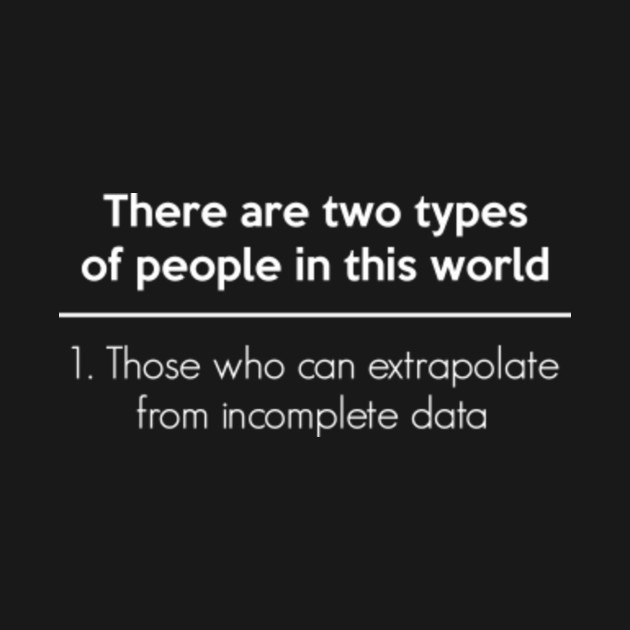
But that takes me, in a roundabout way, to what may be the most important advice I have to give you; though it is also probably the most vague. It is this: there are two kinds of people in this world, and two kinds of experiences.

(There are a bunch of these memes…


Image result for there are two types of people


Image result for there are two types of people

Image result for there are two types of people

Image result for there are two types of people

But this one’s my favorite:)

Image result for there are two types of people


Here are my two kinds: One is the kind of person, and the kind of experience, that limits your future choices, your freedom, your ability to control your life; the other is the kind that expands those choices, that freedom, that ability to make up your own mind and to control your own life. Look always for the second kind of person, the second kind of experience. There will be many choices you will make in life, and many of them will limit your future freedom: and those are the choices you have to be most careful of. You have to make them at the right time, and for the right reason. Choices like what to study in college — after you decide whether or not to go to college. Like what job to take. Where to live. When, and if, you will marry; when, and if, you will have children. These are the defining choices in life, and if you are not yet ready to be defined, don’t make them.

More importantly, don’t EVER let someone else make those choices for you. Don’t let someone pick you for marriage unless you pick them, too. Don’t let someone pick your time to have children, or with whom. Don’t let anyone push you into a career path, and don’t push yourself into one unless you want that career to define you. Until you are ready to make that choice, and lose the freedom to choose again later. (Though here’s a secret, and another cliché I won’t deconstruct: it is never too late to change your mind. Though it does get harder as time passes and you get more settled in your place in the world.)

Let me say one more thing about work: this one?

Image result for do what you love and you'll never work a day in your life

Complete bullshit. (You can tell by the background. What the hell kind of job does this image represent? Forest ranger? Have fun chasing poachers and meth cooks all over those mountains, in between rescuing dumbass dayhikers who thought they could just take a jaunt through those woods without equipment because they were in the Brownies. Also have fun getting furloughed when the government shuts down the next time.) Jobs are work. There is always work, or else nobody pays you for it; and the aspects that are work are not going to be fun. Jobs are always difficult, even if you love them, because you can’t possibly love every aspect of them (unless you’re on a whooooooole lotta drugs, and that has its own drawbacks.). I love some things about teaching, I really do — but I HATE the paperwork, and the grades, and indifferent students and overbearing parents, and a few other things as well. I love writing — but I HATE promoting myself. Even if I achieve my dreams of being a professional published author, I will need to write to very strict deadlines, and I will have to worry about my next book being a failure and sending me into the oblivion of Used-To-Be’s. I will have to travel, and speak publically, and participate in conventions and panel discussions and incessant insipid interviews, and I’ll have to be positive ALL THE TIME. I will hate that.

Honestly, I think the best way to view a job is to refuse to let it define you, unless you choose to define yourself that way. Back to the idea of limiting or expanding your freedom: if somebody wants to tell you that you are a teacher, and therefore you can’t be, say, a stripper on the weekends, don’t listen to them; you can be a stripper who teaches during the week. If you don’t care what you do for money because your passion is elsewhere, is in your avocation or your craft or your art or your family, then good: somebody asks what you do, you tell them that you make kayaks in your garage. They don’t need to know — they probably don’t really care — that you deliver pizzas for money; the kayak-building is FAR more interesting and important. So the point is, define yourself by your passion, not by your job; don’t expect your job to BE your passion, though it is certainly nice when they coincide. As much as I hate parts of teaching, I love, so much, that I get to spend all day every day with words, with literature, with reading and writing.


There are some other, smaller pieces of advice I would like to give, but they don’t come from clichés and they don’t have their own memes (Advice from a writer and a teacher: stick with a theme only as long as it makes sense; when it’s not working any more, drop it.). One is to take advantage of opportunities when they come up. Saving things for a later day is too often saving them for never; freedom to choose in life hits an early peak and then steadily decreases — until the very end, when you gain the freedom that comes with loss. That is, once you have a house and pets and a family and a career you want to keep, it becomes much harder to travel the world — until you lose all of those things. So if you have the chance to travel, do it.

Another is to pay attention: look around you. Take your time: you actually have quite a lot of it, and it will feel like more if you pay attention. I recommend walking, often, with your eyes and ears open to your surroundings.

Another is to read, and to keep learning. Doesn’t matter what you read, doesn’t matter what you learn; if you read the conspiracy theory websites that show how the Rothschilds are behind the measles outbreak, at least you’ll learn how crazy people are — and if you believe what you read, then the rest of us can learn to avoid talking to you, which is really for the best.

An important habit related to both of those is to always question. Question yourself, question your world, question your assumptions. You have to be careful not to take this to the point of permanent uncertainty and anxiety, but that has more to do with knowing when to trust the answers you get or the answers you make, and to move on to a different question; you can always come back to this question later. (Example: should I have written this blog? Is this too long? Is it a terrible topic, that everyone will find boring? Do I seem too arrogant, giving everyone advice? Well, I’ve written this much, and I don’t have a better idea, so — here it is. If I lose readers because of it, so be it. I’ll write something short and pleasant tomorrow. Also, I’ll hopefully get some feedback on this, which will help me know if it was the right thing to do. Also, please comment and Like content you enjoy, always. One of the best things to happen to me in the last few months was when someone read my book and sent me a comment telling me how much they liked it. I’m still floating from that one.)

Actually, that’s a real piece of advice: speak up. Do it in writing, do it anonymously if you are uncomfortable with direct conversation and confrontation; I certainly do, and I do almost all of my talking through a computer keyboard. I even write letters to my students when I want to chew them out, and you know what? INCREDIBLY effective. Feels much more formal and serious when I tell them in a letter that I’m sick of their bad behavior. Highly recommend it. But: speak. Up. Always. Positive and negative. When you are grateful that someone did something nice, say it — not just “Thank you,” but “I appreciate the way you gave me that/helped out with that/did that nice thing.” Tell your loved ones not only that you love them, but also what you love about them. As often as you think of it, say it. When someone angers you or upsets you, say something. When someone makes you uncomfortable, say something. Don’t suffer in silence: say it. Always. The worst case scenario is that you’ll be a pathetic whiny sniveler, and this way, the rest of us will know that and avoid you: so then everyone wins.

Well, except you.

But that’s what you get for being a whiny sniveler.

Last thing, and it’s not cheerful, but it’s true, and it’s important: people love telling younger people that life gets harder, that high school is nothing compared to college, and that college is nothing compared to the real world. I heard that all through school — “When you get to high school, it’s going to be MUCH harder . . . When you get to college, that’s when school/professors/assignments/grades get REALLY hard . . . When you get out into “the real world,” you’ll see how much better you had it while you were still a student!” — and I’m sure you’ve heard it too.

Well, here’s your last truth from me: it’s all bullshit.

Every stage of life is hard. And every stage of life has rewards that make it bearable. College is harder than high school academically; but the freedom you gain, the agency and control over your own life, makes it worthwhile. Also, you get to meet much better people. That same combined difficulty and reward comes with moving out of school and into the world of jobs and such — whether you make that transition after high school or after college doesn’t matter, it’s always the same — you gain more responsibilities, but also more power. The power gives you more freedom and more agency — you earn your own money and you can spend it how you want, for instance — but the responsibilities reduce that freedom, as well.

It’s always like that. When you are older you will probably have more financial security, but your health will probably be worse, and you’ll be aware of your dwindling years to enjoy your life. When you are young, you have all the time in the world — and too much of it has to be spent struggling.

I’m not saying this to depress you, just to let you know: it doesn’t get worse. In most ways, it gets better, because even though there are troubles to weigh down your joys, there is something else that happens as you go through life: you get stronger. Whatever does not kill you, right? It’s true: you get stronger every single day you are alive. It doesn’t make the troubles you face less — but it means you have an easier time handling them. And as long as you keep your eyes open, and take the time to recognize what you have, your happinesses will seem greater. I am happier now than I have been at any time in my past. Last year I would have said the same thing. Ten years ago I would have said the same thing. (Not nine years ago, though. That was a shitty year. But you can’t avoid those, so don’t worry about them. Try to get through them, that’s the best you can do.)

I’m going to end this with my attempt to make my own cliché — but because I thought of it, I actually find it much too annoying to just say; so I’m going to say it with memes. (Another piece of writer’s and teacher’s advice: know your audience.)

They tell us to never give up — but sometimes, giving up means you can walk away, and go find something better to try. So the best way to look at this is:

Image result for picard make it so

or

Image result for let it go frozen


Thank you for coming to my TED talk.

This Morning

This morning I am thinking about work.

Not just my work, which, frankly, I wish I wasn’t thinking about; there is only one day left of regular classes, followed by three days of finals — except I’ve already given all of my finals, so that’s three days of nothing — and then the school year is over. My students stopped thinking about school weeks ago if not earlier; I wish I could follow their example. Ah, well, I’m sure after this coming week I will stop waking up at 4am and thinking about school.

Until the next school year starts, that is.

This morning, though I am also thinking about work in general: why we do it, why we consider it a person’s defining characteristic, and why we hallow it. And why my students have such a love-hate relationship with it.

So why do we work? To some extent, of course, work is necessary for survival; life is a struggle, with too much life vying for not enough resources; there’s not another way that life works on this particular planet, that is just, as they say, how it be. When we were primates in trees, and actual predators and prey, we had to work to get food and to avoid becoming food. When we became  hunter-gatherers, it was the same; and we added work required to build a society, starting with a family or a pack and building up to a tribe, a clan, and then, with the discovery of agriculture and animal husbandry, a village and a town and a country. Now there’s all that added work to prepare the area for habitation, and then to protect it from those who are still working in the predator-prey field. And, basically, we still do that: we work to survive, and we work to maintain and protect what we have.

The question is, what we have, and what the threat to it is, and whether it really needs this much work to keep it.

We work for more than mere survival. We work to get more than the minimum: we work for personal gain. I don’t just want enough food to keep from starving, I want enough food to be satisfied, to be fat and happy; and I want the right kinds of food. Not just all the squirrels I can catch: I want donuts. And Cheez-Its. And good coffee. And also, I don’t want to eat squirrels. But now  we enter into the realm of abundance: because frankly, if there are limited resources and we are competing for them, and there are people working to survive while I am working merely for Cheez-Its and good coffee, then the survival workers are likely to win, because they want it more and they will work harder. Of course, there are people working to survive in this world while I work for Cheez-Its (And I feel like an absolute heel saying that, but it’s true, so thank you for reading the work of a heel), but we have localized abundance, and localized limited resources; and we have lots of people working hard to make sure that the people with limited resources can’t take my Cheez-Its.

So now we have working for survival, and working for personal gain and abundance. (We also have people working to protect my abundance, but they generally do that work for the same reason I do mine: they just have a different job. Inasmuch as they work to promote and preserve a culture, I’ll get to them in a sec.) I’m struggling to find a way that my working for Cheez-Its is positive, in the face of the fact that people are starving and working for food. I mean, I can’t fix the famine in Yemen, not even if I give up Cheez-Its (I’m not trying to be flip here, but if I changed to something less shallow than Cheez-Its as my example, it wouldn’t change the fact that I am working for abundance while Yemenis starve to death.); but in the grand scheme of things, there can’t be a moral good in working for abundance in a world with people who lack what they need to survive.

But there are still other reasons why we work. Take the one I just left alone: working to protect and promote a culture. People who do that often work without a tangible reward, which means they aren’t working for survival nor for personal gain. Why do they do it, then?

Take the attempts to reshape the national culture. Fundamentalist Christians are trying to re-brand America as a Christian nation. But we are not a Christian nation, not explicitly nor implicitly, not historically nor ideally; so this means, essentially, that Christians are trying to take the nation we have and turn it into their nation. Why? What would they gain from it?  Clearly not survival and not abundance; there is no money in protesting abortion. (There’s plenty in being a politician or a PAC that promotes abortion restrictions, but I’m not talking about them; I’m talking about the people who march with signs, and yell at people outside Planned Parenthood, and write opinion letters and online arguments about abortion and gay marriage.) Do they work to gain a place in Heaven? No, that’s guaranteed to them based on their own good life and good faith. The salvation of other American souls? That also is based on Americans accepting the Christian faith, and unless you think banning abortion and gay marriage will make people see the light of God in church every Sunday, then the attempts to achieve those political goals doesn’t make sense for their faith.

“Because it’s the right thing to do” seems to be the answer that makes the most sense (Unless we accept the notion that socially conservative movements are aimed at the eventual goal of subjugation of the masses for the elevation of conservative Christians. Then it’s more taking of something that isn’t theirs: power. And there’s a different idea of why we work.). Not that I think banning abortion and gay marriage are the right thing to do, but lots and lots of religious people, particularly devout Christians, do think so, and they’re the ones putting in the work to take these institutions (Is that the word for pregnant women in the aggregate? Marriage is an institution; is pregnancy? Motherhood? Womanhood?) under their control. So here’s another reason why we do work: not for survival, and not for personal gain: for morality. And maybe for control, for power.

Working for power doesn’t make sense. Power is, essentially, the ability to gain something without having to work for it. If I have power over my slaves, say, then I can order them to make me a cup of coffee, and I get the coffee without having to make it myself; presumably I also force my slaves to do work that will bring in enough money to buy the coffee. I’m buying myself a life of leisure, a work-free existence. So if I have to work to gain that power, so that I can use the power to stop working, then it’s a wash. The only thing that makes it make any sense is if I can gain power disproportionate to the work I put in, so I work less hard to keep my slaves subjugated than my slaves work to keep me in coffee and Cheez-its. It would make sense if I put in work at the outset in order to stop working after I gain the power I seek; but that requires a kind of power that remains even when I stop working to maintain it, and there aren’t a lot of powers like that. Most power leaves as soon as you stop working to keep it.

So then the people who work for power aren’t looking only for power: they want to wield that power to some other purpose. It makes  sense if this comes back to morality. People who work to gain power over others, so they can force those others to act the way the powerful one wants them to act, because the powerful one thinks that’s the right thing to do: okay. That’s just working for morality at one remove. You could also work for power in order to use that power to gain greater abundance and personal wealth; though at some point the abundance becomes more than you could ever need — Bill Gates, the Waltons, especially Warren Buffett (who is 88 years old), will never be able to spend all of their money. That becomes a circle: work for power, to gain wealth, to gain more power, to — ? Presumably work for moral goals, as the Koch brothers have, as Sheldon Adelson and George Soros do.

Have I missed anything? Is there any other reason we work? Oh, wait, of course: we work for the benefit of other people. I work so I can give my wife food, so I can buy chewtoys for my dogs, so I can afford a house with a fenced yard for my tortoise to live in. (I give my wife more than food, and I do also give food to my pets. Just so we’re clear.) On some level I do these things for selfish reasons, for survival or my own luxury, because I like when my wife takes care of me and when my dogs treat me like a wonderful person — often immediately after I feed them; but I also do work for other people who do not benefit me directly. (I know that many people who fight to end abortion feel they are doing the same thing. Allow me to disagree. I do not think that anyone arguing against gay marriage is sincerely doing that for the sake of other people: it is a moral conviction they hold, and nothing more.)

And here’s where we come to my students. I work hard for them. Not for my survival; believe me when I say I could do a tenth of the work that I currently do and keep my current position, and therefore keep my salary; actually, if I arranged it well, and focused my minimal efforts on prepping my students for tests, I could potentially make more than I do now, because my school has merit pay for test scores, which I consistently ignore in favor of working hard to teach my students. I don’t work hard for personal gain: I don’t get anything tangible from students except the occasional gift of coffee or baked goods. I got a $25 gift card for Starbucks yesterday, but I make $25 an hour or so, and I’ve spend far more than an hour on the student who gave me the gift. (Please know, especially if it’s you who gave me the card reading this, that your gift was much appreciated: far more than my salary.) It’s the same problem as working for power: if I work so I can get gifts that save me work, it’s a wash. In my case, considering the amount of work and the value of my gifts, it’s worse than a wash, it’s a waste.

To some extent I work hard as a teacher for a moral purpose: I believe that education is valuable, and that literature and reading and writing are both valuable and wonderful, and I want to promote those ideas; my efforts contribute to that, I think. But not enough: because for all of my effort and all of my passion, my students do not generally become readers. Maybe they gain some respect for literature and for reading and writing, but they aren’t converted to my beliefs. The other reason I work hard is for their benefit: my students often don’t read well, and rarely write well; I think their lives — not my life, and not necessarily the country or the world as a whole — would be better if they could read and write more clearly, more purposefully, more powerfully. So I try to help them. For their sakes.

The biggest hurdle I face in that effort is, naturally, my students themselves (Also the educational establishment, which would really prefer it if I taught to the test and the skills and standards they have determined to be more important than literature; but that’s their moral purpose for work, not mine, and I haven’t been converted to their views. So, no.). Because the only way my students improve is if they work.

And why would my students want to work?

Not for survival; I hate to think that any of them would be denied food or water or shelter because they didn’t do well in school. I’m sure it happens sometimes, but I would turn that parent in for abuse and neglect, not praise them for motivating their child to learn. Not for luxury or personal gain, not exactly; some of them get money or presents with good grades, but that’s rare at the high school level, and only has influence around grade time: when it’s September and they feel like sleeping in, the awareness that they’ll get paid for every A come January does not get them out of bed to study for that test. The same for the overarching motivation we try to use on them in this country: work hard in school, then go to college (Where you’ll work harder, and buy yourself a mountain of debt which means you’ll have to work EVEN HARDER when you’re out of school) so that you can get a high-paying job. THEN you can work for abundance and personal gain.

You know what? That’s too much work, for not enough reward. The reward is much too distant, and too fraught; because  we all have stories about people who work hard and are miserable, and we share those stories with students. Students see their parents working too hard to earn money, and they are capable of recognizing that their parents may love the work they do, but that doesn’t make it worth the hard effort they put into it. I myself am not a good example to become a teacher: they all know how hard I work for them, and how little reward I get for it. Why would they work hard now, to work harder in college, to work harder as a teacher?

Even my students aren’t that dumb.

Maybe we should rethink this system.

This Morning

This morning I’m thinking about deadlines.

I’m a little afraid I’m going to miss this one, because I woke up this morning without a definite idea of what I was going to write about, and then in trying to think about a topic in the shower (one of my most productive thinking times), I thought of too many topics, and I couldn’t focus on one and follow a line of thought to a conclusion. That’s okay, I often don’t know where these written thoughts will end up when I start them; that is, I know what my opinion is when I start — I’m against deadlines — but I don’t know exactly what I’m going to say about them. Will I end up affirming my opinion? Will I find some compromise? Who knows?

This comes up most often at school, of course. I try not to use deadlines. I don’t quite believe in standards-based grading — which means that the only grade a student should really get is whether or not they have met the standard, and it’s a large topic that I will write about another time (Note to self: SBG.) — but I do agree with a component idea of it, which is that grades should be based on the work a student does, not on a student’s behavior. I think schools have taken on too much of the responsibility for raising our students, and I don’t think it’s good, and personally I don’t want to do it; therefore I don’t want to use the school’s (theoretical) focus, education and achievement, to bully students into doing what they’re told. Giving students a deadline, and then imposing grade penalties when they miss that deadline, is not educating them in a subject; it is an effort to instill a work habit. It’s a good work habit, but that’s more akin to character building than it is to education, and therefore I’m pretty much against it.

Now: I am not against being a model, as a teacher, of good work habits. Good any habits, really; I think it’s important that I be visibly and clearly respectful of others and their opinions, that I be kind and generous, that I explicitly oppose sexism and racism and intolerance and injustice. Without doubt. I think that everyone should do those things all the time with everyone they know: I think I should model good behavior with my wife as well as with my students, though for an entirely different reason: I don’t need to show my wife what good behavior looks like, I need to show her that I know what good behavior looks like so she knows I’m not an asshole. And if that sounds, by the way, like a lot of work, if it sounds like I always have to be performing and therefore I always have to be focused on doing certain things and not others, that’s true, but it also assumes that my relaxed, default state is being an asshole, and it takes extra effort to resist being one when I’m at home; I don’t think that’s true, and if it is, I don’t want it to be.

So I am in favor of meeting deadlines as a teacher. I try. I try to get their work back to them before grades come due. I try to have materials ready in time to use them. I try to have lessons planned well enough in advance that I’m not giving them what they keep asking for, a “work day” or a “free day.”  I do miss all of those deadlines sometimes, especially the grading ones; the most common response I get from my students when I give work back is, “Oh, I forgot about this!” And I give them work days, and I have had to change lesson plans in the moment because I don’t have handouts ready or I couldn’t get the reading done myself the night before.

But that’s the point: things come up. Things don’t work out. I get insomnia, or I have to deal with a sick dog, or my car gets a flat tire. The copy machine breaks, or is full of multi-page math jobs. A student stops me to ask for help, or even worse, comes to me in tears in a crisis. Things happen, and stuff doesn’t get done on time. We all know it: we all live with it constantly. I hate being late for appointments, but sometimes there’s traffic. And sometimes I get to the doctor or the dentist or the hair salon and they’re running late, and they ask me to wait for a little while before they can get to me. I complain all the time about the thousand little tasks that are incessantly assigned to me as a teacher (A colleague of mine refers to this as “death by a thousand cuts.”), and what bothers me most is that they are given artificial and unreasonable deadlines, often without sufficient notice: this year we were asked to contribute to our own evaluations (which is its own travesty — note to self; personal evaluations) and were told we needed to collect “artifacts” (which does have a nice Indiana Jones feel to it, which I like; I kind of want to burst into my principal’s office, sweaty and covered with cobwebs and maybe a couple of blowdarts, and drop a golden idol on his desk and say, “I GOT THE ARTIFACT!”) as evidence of our expertise; but we weren’t told of this in advance, simply given a deadline about a month out, during our busiest time of year. I am not ashamed to say I didn’t make that deadline.

So when I impose deadlines on my students, what am I teaching them? That they are held to a higher standard than me. That I have the power to boss them around, but they can’t return the favor — after all, they never get to tell me when I need to have something graded by, and if they even try, I bristle and get self-righteous about it. On some level, I tell them that their behavior, adhering to a deadline, is more important than their work, because if a student writes an A paper and turns it in late, they don’t get the A; the quality of the work never overrides the lateness of it.

So what priorities am I modeling? When they see their parents missing appointments, running late to work, turning in their taxes on April 16th, and not really suffering very serious penalties, if any; and then I cut their grade in half if they’re a day late, or even a few hours? What does that say?

You know perfectly well what that says. It says the thing we pretty much all said when we were in high school: it’s a joke. It doesn’t prepare us for the real world, because the system in high school is exclusive to high school. It is self-contained. It mimics the real world in a number of ways, but there are a number of things we do in high school because we have traditionally told ourselves that they are preparation for the real world: and then we just do them, without really thinking about them. At some point they become self-sustaining, because we keep trying to think of better ways to make this artificial system work for us; until we stop thinking about why we do it in the first place.

I take it back: that is preparation for the real world. It’s just preparation for the very worst parts of it.


Wow, that was longer than I thought it was going to be. But most important: DID I GET IT DONE ON TIME???

This Morning

This morning, I hope I’m not getting boring. (I know I’m already pretty boring.) In order to prevent that from getting worse, I’m going to try to wrap up this school idea and get back to the business of ranting.

The last major distinction for this school is: hours. Or OURS. I haven’t thought of a clever acronym yet, but I want to call it that anyway. This is where the students are going to take ownership of their school, by doing the necessary work to keep it running — hopefully under the tutelage of the teachers, if they are willing to take on the extra task, and if not, then with experts who are brought in from the community.

So the bell schedule I envision is five periods a day, each an hour long. Between first and second period is an Activity Break: this will, for students, take the place of PE. They will be required to participate in some form of physical activity: anything from walking around the block to lifting weights to playing a pickup game of whatever sport they wish, for 30 minutes. More strenuous exercise would need time to change before and shower after, but 20 minutes of lifting weights is a decent thing to do, and 30 minutes of kickball is more than enough — and would also burn off some of that demonic energy that small children have, so they could focus on their next class. Then periods 2 and 3 are back to back, with a 5-minute passing period  in between; I envision some classes, some units, requiring a block schedule, and this is where that block would be. Then lunch, for 55 minutes to include plenty of time to digest or do homework and for teachers to relax; then 4th and 5th periods after lunch with another 30-minute activity period in between.

Teachers will teach either five periods, and have the activity periods and lunch off as their prep, or they will teach four periods and also run some physical activity during the 30-minute periods. (Teachers have all kinds of useful knowledge, including of sports, of exercise, of all kinds of interesting things like dance, or yoga, or zumba. What the hell do we need a PE teacher for? And even as non-jock as I am, I’m pretty sure I could teach kids to play kickball.) And of course, teachers will only work four days a week.

So what about that extra period? The one day a week that teachers don’t work, but students are in school? That’s when the students do OURS. So the idea is that basic maintenance, cleaning, landscaping, small repairs like paint and new hinges on doors and the like, could easily be performed by students with adult supervision. I suspect students could also be used to do office filing, make copies, and cook food for lunch. I would hope to be able to use teacher expertise for most of that: there would be a full-time supervising janitor, of course, but then a teacher could take a group of students out to mop floors, or wash windows, or mow the grass with non-dangerous tools. (I’m not sure my school would have grass, but it would depend where it was; if there’s grass, the students could mow it with hand trimmers or push mowers.) I’m sure that teachers could show students how to paint a wall, or maybe install a new pencil sharpener. None of the serious mechanical stuff, but all the tedious day-to-day things could be handled by students. This way, students get experience with the basic tasks of life, and they also learn to take pride in those simple tasks and the clean, well-functioning school they would be able to produce and maintain. I’d hope it would at least keep them from sticking gum on the desks, after they’d spent a few OURS cleaning the gum off. That’s also why I’d like teachers to run the work groups, even if it’s only sweeping the halls; that way the teachers can get to know the students, which would help ease the multiple transitions between two-week units.

I imagine a kitchen expert in charge of the food, with students to do the grunt work of chopping and mixing and washing and such, and maybe teachers could bring in and supervise recipes. After lunch there would be dishes to wash.

I imagine the younger kids participating in some of the cleaning chores, and maybe weeding and watering plants, raking rock gardens, things like that. I also imagine them emptying garbage cans and picking up recycling and litter. They could run messages back and forth from the office, so we could minimize THE GODDAMN P.A. SYSTEM COMING ON DURING CLASS AND DISRUPTING THE WHOLE SCHOOL TO CALL FOR ONE FREAKING STUDENT. And then maybe some beautification projects, some arts and crafts to decorate the school; why should teachers spend time making interesting bulletin boards when students could be forced to do it? Another activity that could be supervised by older students, of course.

I imagine this, as well, would serve as the basic discipline system for the school. When a student is disruptive in class, a teacher could send that student out of class to OURS for the remainder of the period. I suspect that class clownery would be reduced when it led to cleaning toilets for the last half of class.

If there’s not work (and I have no doubt that the amount of work available in maintaining a school is limitless) enough for the students, then OURS could be spent doing homework or studying; the advantage there would be that older, more proficient students could tutor younger ones, also improving community feeling. Teachers could also agree to supervise these work sessions on their days off for extra money.

I’d also think that older students could find ways to improve the school: like writing grants. Running work projects. Bake sales and fund raisers. Advertising campaigns to bring new students into the school. Teenagers are  smart, and when there is a reason to be, motivated as well. They could do quite a lot to make our schools better if we’d just let them. I propose to let them.


I think that’s everything. Thank you for letting me dream of a school that will never, ever exist.

This Morning

This morning I am thinking about procrastinating.

Not for myself — though I’m not entirely against procrastinating — but because my students were assigned an essay about challenges they’ve faced, problems they’ve solved, and several of them wrote about their struggle with procrastination. My seniors are far worse about it: they take pride in their refusal to get anything done in any kind of timely manner. “Senioritis!” they cry.

Bullshit, I say.

Sure, seniors suddenly get several notches lazier in the second semester. They’ve gotten into college, they know they won’t fail their classes — they’re not that lazy — and so they will definitely graduate and go on to the next stage of their lives. That being the case, it’s hard to see the need to complete vocabulary assignments just like the ones they’ve been doing for years, now, and which, in a few months, they’ll never have to do again. (Not that they like thinking about graduating in a few months and being done with high school forever. It’s a tempting prospect, but also terrifying, because that, they know, is when they get sent out into the Real World, which they have been taught to fear throughout their time in high school.) And sure, I get that. But “senioritis” implies first that it is something out of their control, an inevitability, a condition that afflicts people in their situation; and second that they haven’t been pulling the same crap for years now.

There are exceptions, of course. A few students get all their work done on time regardless of the relative value of the work; in fact, they take pride in completing both the large difficult assignments and the measly, mindless ones, because that way they show that their work ethic knows no bounds, that no grade is too big, and no grade is too small. There are students who were slackers, but who pick it up in their senior year, though even they tend to fall back into old habits as graduation day approaches. There are, of course, seniors who really do get lazy only at this final stage of their high school career, who go from diligent to dilettante once February rolls around.

But for the most part, it’s not senioritis, it’s studentitis. And it’s not that: it’s just procrastination. But here’s the thing: procrastination doesn’t have to be bad. It usually isn’t. It can be, of course, but for the most part, it’s simply — prioritizing. A student has an assignment due on Friday, and that student knows they can get it done in two hours; there’s no particular reason to do it Wednesday night instead of Thursday night. They may get a surprise assignment on Thursday and have to do two things Thursday night, but usually not, and if they do, they simply give up some sleep, which they don’t mind at all. (Students are divided into two groups: those who do nothing but sleep — the sloths — and those who only sleep a few hours a night — the squirrels. Sloths mind giving up sleep, but they make up for it by sleeping 18 hours the next day; squirrels are already awake until two or three in the morning every night.) The assignment that isn’t due tomorrow is a low priority, so it doesn’t get done until it is a high priority; it’s not lazy, not irrational, it’s nothing more than what we all do all the time. This last Sunday I had time for one chore, and I had to pick between cleaning out the birdcage or vacuuming the floors; I cleaned the birdcage because the floors weren’t that dirty. Because unlike the bird, we don’t crap on the floor. Priorities.

It’s more troubling when the work is daunting, and they have time to do it, but they put it off anyway because they’d rather not do it. Not managing their time, perhaps short-sightedly but reasonably; this procrastination just keeps going, past when they have a reasonable chance of doing the work, sometimes past the due date entirely. This is the kind of procrastination my students wrote about in their essays, as a problem to be overcome, a challenge they have to face. Because now the procrastination causes stress, and makes them miss out on things they don’t want to miss out on, things they care about more than sleep. This procrastination is especially troubling because often, the activity they choose over completing their work is — nothing. Watching Netflix or YouTube. Laying on their bed and staring at the wall. Saying to themselves, “Wow, I really should do that thing I have to do.” And then not doing it. Over and over.

But even this, I would argue, is prioritizing: something in that lack of activity, that laying on the bed, that video watching, is more important than getting their work done at that moment when they make that choice. I think the two best possibilities for their reasons are, one, that they are so completely stressed and anxious that they are desperate for anything that can help them calm down — more common among today’s youth than you would like to think, but if you knew how many of my students are in therapy and on mood-altering drugs to handle their anxiety, you would know this is not an unlikely reason for procrastination — and two, the work is so unimportant that they refuse to do it, because doing it feels almost demeaning, almost insulting.

This is how I felt about high school when I was in it. It was beneath me. It was a waste of my time. I thought the teachers, who weren’t any smarter than me, were giving me homework just to push me around, and by God, I wasn’t going to let them get away with that. I would show them: I wouldn’t do the work! I’d take that F! That’s right, teacher, I’ve called your bluff: what are you going to do now? Huh?

Nothing. That’s what I thought.

Exactly what I do when my students don’t do the work. Because I don’t actually assign work to push my students around. And if they don’t want to do the work I assign, that’s their choice. Hell, if they don’t do it, that’s one less paper for me to grade. Win-win.

In either of those cases, crippling anxiety or petulant rebellion, procrastination is not laziness. It’s prioritizing. They may not be doing a good job of making those decisions, but they are making decisions, not just blowing things off for no reason. Because of that, I think that a student who procrastinates should be allowed to make that choice, and then face the consequences of that choice, of their own free will, which is why I don’t hound them, asking if they finished their work yet. They’ll finish it eventually, or they won’t; either way is their choice.

Just so long as they don’t call it senioritis.

This Morning

This morning I am thinking about the work of art.

I have often questioned whether or not I’m an artist, a writer. And whether or not I should be an artist. I think that I don’t take it seriously enough, because art doesn’t always come first for me; I do all sorts of things other than art. The most obvious is work: as a teacher, I put in fifty or so hours a week on my job, and since I’m an English teacher, a lot of that time is spent reading and writing and talking about reading and writing. I took the job because I thought it would be both fun and beneficial for me to be surrounded by language and literature,  and to some extent it has been both; but I don’t understand why I didn’t think about how much effort it would take to do the job well. I question all the time whether I should have stayed a janitor, some kind of nice, essentially mindless work that would allow me to go home at the end of the day and write, for hours on end. I ask myself: are you really an artist if you spend all of this time and energy on your job? Shouldn’t all of that effort go into writing? Shouldn’t you quit your job and find a mindless one? Or at the least do your job poorly, with the minimum expenditure of effort?

Maybe so.

I also took this job because of summers off, and the several week(s)-long vacations; I figured I could use that time to write more seriously. And I have; summer has always been my primary writing time, along with spring break and winter break, and fall break, now that I have that. But even in those times, I only spend a couple of hours a day, at most, on actual writing. I’ve read about authors who work for eight hours a day, or who lock themselves away for a month, two months, six months at a time, and do nothing but write, all day every day. And here I am with two or three months off, and I write for — an hour a day? Clearly I can’t be much of a writer if that’s all I can stand to do.

But that’s not fair. Because the truth is that writing is fucking hard. It takes an enormous effort to focus on every single word, every single punctuation mark, every sentence, every paragraph, and make exactly the right choices in exactly the right places; and to do that at the same time that I am trying to keep a larger story in mind? Especially when the story is a novel, and so I have both the complete scene I am writing and the overall story to keep in mind while I am selecting each and every word? Jesus Christ, it’s amazing I can do this at all, if you don’t mind my bragging a little. Of course I don’t make all of the right choices, I probably make wrong choices most of the time; but I’m good enough at this that even my wrong choices are generally not terrible, not unforgivable. And just as a doctor’s first rule is “Do no harm,” meaning make sure you don’t do the wrong thing even before you try to do the right thing, I think my first rule as a writer is, “Don’t write shit. Or at least if you write shit, don’t let anybody else see it.”

But even that is hard, because shit is enormously easy to write. Just ask James Patterson. BOOM! No, I’m kidding, he’s not a bad writer. He’s a whore who made a name for himself and then let his publisher pimp that name out in “collaborations” that Patterson likely has almost no hand in, but his name is prominent on the front cover in order to boost sales — but he’s not a bad writer. I don’t want to actually name any bad writers; I’m not going to throw any writers under the bus quite that hard, because all of us struggle with this. All of us have to put in this colossal effort, and then take this terrible soul-searing step of letting other people read what we write.

It’s brutal. It is laborious and effortful and wearing and taxing and just hard.

And I keep doing it. And I keep doing it well enough that I am pleased with what I produce. And I do it sincerely enough that I feel better emotionally after I’ve done it, after I’ve written honestly and as well as I can; even though I’m generally mentally exhausted after I do it. I will also say that I don’t write much more than an hour most days, but I can always put in that hour: these morning blogs have been quite good for that, it turns out; I’ve also worked on my book every day for the last few days, and I’ll do it today, too. I am also capable of some serious marathon sessions of writing: I wrote the final chapter of my most recent book over one weekend, two days of solid writing for more than eight hours each day; I produced something like fifty pages.

Huh. Maybe that’s why I haven’t written that much in the months since.

But even when I hit these dry patches, I still come back to it. Even though it’s hard — and it is hard, though I sometimes fool even myself into thinking that it’s easy because sometimes the words just come and are perfect; but that is the end result of a whoooooooooole lot of hours spent slogging, and writing and rewriting and discarding the whole thing and then starting over again. Still I put in the time. I put in the work. Because I love it, and I believe in it, and I like myself better when I do it than when I don’t.

I guess I am an artist, after all.

This Morning

This morning I am thinking about work.

It’s an interesting word, one that we use in many different ways: it is simple effort (“That looks like a lot of work!”), it is our profession (“I have to go to work. Please kill me.”), it means to stretch (“You have to work the joint”) or to exercise (“I have to go work out. Please kill me.”). It means to move or to move into place (“Her mouth worked furiously as she worked the Q-tip into her ear”), it means to control or manipulate or stress the emotions (“He worked himself into a tizzy, and then he went out on stage and worked the crowd like a pro.”). It means to maximize reward or response through confidence and panache (“Work it, girl!”) and it is the final product and achievement (“This is a work of art.”).

It is, for an artist, the goal. The purpose. We do this for the sake of the work. And not just the final product, because you can’t know going into it that what you will end up with will be a masterwork, will be your magnum opus (Magnum means great. Want to guess what opus means? Other than the most adorable cartoon penguin in history, that is?); we do what we do for the sake of doing it, for what doing it makes us feel, and what it makes us not feel; for who we are when we are doing the work and who we become after we do it and after we decide to keep doing it.

Sorry if that was too abstract. Let me be more clear. (Let me also give a modicum of credit to Steven Pressfield, because while he’s a toxic-masculine doofus who wrote a bad motivational book, he does talk about the value of artists simply doing the work, putting in the time and the effort, and so he has inspired me despite his doofery.) I write because writing brings me joy, and it gives me solace. When I am upset about something, particularly when the thing upsetting me is confusing or complex, my first urge is always to get out a journal of some form and write about it. When I have an idea, I always want to write it down; and then once I start writing about it, I want to keep writing about it until I have explored all of the possibilities. I am always happiest communicating through writing (Though I’m still, always, a little nervous when someone is reading what I have written.). This relationship with the page, the pen, the written word, along with my lifelong passion for reading, has led me to become a writer. That is how I define myself, how I view myself. It’s where the monogram that makes up my banner on this site came from (Also note: my brilliant wife, who is an artist and illustrator because everything I say about writing, she would say the same about drawing, made that banner for me.) My most important work, the thing that I was born to do, is write. Thus, when I write, both while I am in the act of writing and when I have done enough writing to have produced something worth reading, I feel most myself. I like myself best at those times. I like my life best at those times. That’s why I write: not for reward, not for applause or respect; but because of who I am when I write.

One of my favorite poems, We Are Many by Pablo Neruda, includes these lines:

While I am writing, I am far away;
and when I come back, I have already left.

I’ve taught this poem several times, and students always struggle to understand it (Not just because of these lines: the whole thing is about multiple selves, particularly perceived self vs. actual self, and it’s fantastically bizarre to read — “and so I never know just WHO I AM,/ nor how many I am, nor WHO WE WILL BE BEING.”). but I understand this part perfectly, and I think other artists would, as well, if they change the verb “am writing” to something appropriate to them, am dancing, am painting, am carving, am composing, am playing. Am working. While I am writing, I do not feel connected to the world; I am in my mind, sifting through words and phrases, images and metaphors, like the child I once was at the beach, when I would grab up handfuls of sand and pour them onto the ground, onto my legs, from one hand onto another, just to see how the sand piled up and how it fell, how it felt running through my fingers and sliding across my skin. I would thrust my hand, palm down, into the dry whispers of sand, and then I would lift my hand straight up to watch myself emerge from the Earth, and to see the way the sand would remain in skeletal ridges on the backs of my fingers; then I would drop my wrist and watch the sand blow away in a swirl of motes.

Just now, I forgot that I am sitting on my couch next to my dog, with a blanket around my shoulders and my laptop perched atop my crossed legs. I was remembering being on the beach and playing, and I was trying to dig for the right words to capture that moment. I was far away.  And now that I’ve come back, I’ve already left — which line I think has two meanings, both that the self that Neruda most clearly takes as his own, his writing self, the part of his mind that rises to find the words and put them in place, is only present while he is actually writing; and also that once he has written down what he was thinking, and he returns to awareness of the world and sees the words as a completed thought on the page, his writing mind is already off on another voyage through the clouds, soaring far above or below where he sits, suddenly aware that his ankles ache. It makes me want to just keep writing, to recapture that feeling of weightlessness, of timelessness, of pure and simple being; the fact that I can do it, and the fact that when I do it, I have this evidence, this product, this work that is my words, pleases me enormously. So much so that the potential rewards of that work, while I want them for the sake of my non-writing self, don’t matter so much as this: I did the work, and the work now exists because of me. It is both humbling in that I don’t matter nearly so much as the words do, and also flattering in that I am capable of making those words do what they do.

I am proud of my work.  I hope my work is proud of me.


I do have to note that this was not where I intended this entry to go; I was going to talk about the effort required to make art, and how it has to be done regularly, constantly, no matter how onerous it feels — and it does feel onerous sometimes; but I think I’ll save that for tomorrow. I am happy with this work.

On the Twelfth Day of Blogging, Just Dusty Blogged for Me . . .

… A blog about love and epiphanyyyyyy!


If you’ve read this blog before, you’ll know that I – like most people – don’t particularly like my job. In some ways, on some days, it’s fine; but all in all, it’s not where I’d prefer to spend my time. I’ll never get a bumper sticker that says “I’d rather be working.” As I tell my students, “If I win the lottery tonight, I won’t be here tomorrow.” I tell people that I’m a teacher, but I don’t actually define myself that way; I consider myself a writer, and a reader, and a nerd, and a family man. Teaching is my source of income, not my identity.

But since a source of income is a necessity, and teaching is a pretty decent one, I thought I’d share some tips for making work a little more manageable – that is, if you can’t get your boss to change your work hours so he/she will stop torturing you. (There’s a scientist who says we should start work around 10am.)

First, figure out when you can say No. I know it’s true for teaching, and I’ll bet it’s true for a whole lot of jobs, that your employer will keep asking you for more for as long as you keep giving what they ask. They’ll ask you to do extra duties, to join committees, to come in early, to stay late, to take work home, to give up your weekends, your evenings, and your vacations. In my case, they ask me to come to meetings, to go to seminars, to agree to be a mentor or a coach or a tutor. They are constantly after my lunchtime, and they’d love it if I could fill in for the various staff members they’ve laid off or cut back – at my school this includes the security guard and the staff psychologist. They want me to train myself, and then train others. And of course, they want me to give every ounce of energy and every minute of time to the doing of my actual job: they want me to grade eight hours a day, prepare new lessons and new curriculum eight hours a day, and spend at least eight hours a day with students, preferably one-on-one. And for all of this, they want me to do it the way they want it done, whether or not I like that way of doing things or think it is the right way: it is their way, and therefore they want it to be my way.

But with teaching, and I’ll bet with a lot of jobs, there is a specific thing or things I’m supposed to be doing. In my case it is two things: first, I need to be a responsible babysitter, meaning that students cannot be hurt under my watch, particularly not by me; and second, my students need to learn. The first is easy to measure: students getting hurt, or students complaining about how I hurt them, are no-nos. The second is more difficult to measure, but figuring out how the bosses measure it was the key to knowing when and why I can say no. For me, it is two things, one positive and one negative. The positive measure is test scores. My students’ test scores can’t be terrible. They don’t have to be perfect, but they can’t be terrible. The – I guess it’s an advantage? – for me is that I have students measured by multiple tests, and as long as they’re doing well on one, then the other is less critical; so in my case, since I teach AP classes, as long as my AP test scores are sufficient, then the school wants to keep me around and keep me happy, even if my state testing scores are less wonderful. They’re not terrible, but they’re not as good as the school wants them to be; but my AP scores are. That gives me more ability to say No. It gives me No-power.

The negative measure of students learning is even better, for me: there can’t be any students or parents complaining about me. As long as none of my students go to the administration and say that the class is unfair, that the grade was too low, that the test was too hard and that the students weren’t prepared for it, then the school feels confident that I am doing my job. And that gives me even more No-power.

It’s not that simple, of course; there is more to it. I do need the credentials that I have, a degree in my subject and years of teaching experience and so on; I get observed twice a year and I have to look like I know what I’m doing; there are meetings I have to attend and duties I have to perform. I have to go to staff meetings, I have to meet with parents on the scheduled days or when parents request it, I have to be available for extra help if students need it. But those are the main things: babysitting, test scores, no complaints.

How did I figure this out? I listened to what people said about the people who used to have my job. The person who had it the year before me actually had a doctorate and college-level teaching experience; but the students thought she didn’t teach them enough. They thought she spent too long on one unit, they thought she didn’t explain things well, and they thought she couldn’t manage a class well enough to get them to listen. I heard the same things about her from other teachers, too. The person before her was a bad babysitter: she left the students locked out in the hallway after the bell rang; she left early and left the students alone in the classroom; she cussed at them when she was mad. So when one of my students told me that I taught him more in five minutes than my predecessor had taught him all year, I knew I was pretty well set. (I already knew I couldn’t lock my students out of the room, nor leave them alone in it. But that’s kind of a gimme, isn’t it? I mean, really.) The other key was watching the person at the top: the best teacher at the school, the one that everybody listens to and looks up to, the one who seems like they can get away with anything. How does that person get to be that powerful? In my school’s case, it’s basically the same answer, though our top teacher is more of a teacher and less of a babysitter – which tells me that there’s leeway in the babysitting aspect, as long as the test scores are good enough, and as long as the students think they learn. In this teacher’s case, it is more than the negative measure, more than a lack of students and parents complaining: our top teacher earns praise from students and parents. He is the one they thank at graduation for having taught them so much. And that gives him all the no-power he could ever need: he openly defies administrative decrees in certain areas, and nothing happens to him. Because the students think he is their best teacher. Even though he calls them deadbeats and degenerates, and threatens to hide their corpses under the soccer field.

So that’s the most important thing: figuring out what is necessary to gain the power to say No, and then deciding where to spend that power – because nobody, not even the best employee, has limitless power to say No. You do still have to show up (too early) and do your job. You can’t spit in your boss’s face. But you probably can skip out of some meetings, or refuse to serve on certain committees, and you can certainly say you aren’t going to that three-day seminar out of town (unless it’s in a good place and they’re paying expenses). That’s the key to keeping your sanity at work. The first one, at least.

The second key is to keep doing your work. Don’t let it pile up. Because it will pile up, and then it will collapse and smother you in an avalanche of catch-up. In my case it’s grading, which I did in fact pile up this last semester’s end, and it did almost smother me. It wasn’t the first time, either; and if I ever leave teaching behind before I win the lottery, that will be why: because I let work pile up and collapse on me once too often.

In the past I have let the work pile up because I’ve avoided doing it: I’ve collected essays and then looked at them and said, “Not today,” over and over and over again. Sometimes for as long as two months, though I was doing other grading in that span. That’s one of the nice things about teaching, even though it doesn’t always feel that way; I doubt there are a lot of jobs that allow that much slacking for that long. But since I didn’t get students filing complaints with the administration, it didn’t get me fired. I did have some pretty serious grumbling by the end of it, and I now have a (well-deserved) reputation for taking too long to grade things; I have made a conscious effort in the last few years to keep that from happening again. This last semester, the work piled up for a different reason: because I didn’t plan well enough, and I had too many major things due all at the end of the semester. It was a sudden deluge instead of a slow build-up; but it still almost took me down. So now I have two things to be aware of: not letting things pile up, and not creating a huge pile that will all fall on me at once. I’m sure someday I’ll learn those habits. And then I’ll probably win the lottery.

But all of that, though I hope it will be useful for some people to know, is not actually the thing I wanted to talk about. There is something else, something that I think is actually unusual, something that I know that most people don’t. This is my epiphany, if you will. And it is this: if you have the chance, then work alongside of the person you love.

I’ve done it a few times, now. When I was a janitor in college, my wife (then unwedded soulmate) worked in the same facility, selling tickets and concessions for the box office while I cleaned the place. When I became a teacher, she spent two summers teaching summer school with me, once in the same room. We met because we were sort of working side by side: she worked in the college bookstore, and I sold student IDs in the same building; I used to get change from her, and she used to pass my table on her way to get coffee or a bottle of water. And now, by a fortuitous set of circumstances, she is the art teacher in the classroom right next to my English class. And it is the best thing about my job.

Now, it is better for me than it is for her. Teaching unquestionably gets easier with experience; this is her first year of full-time teaching, and it’s my seventeenth. I’ve been at the school for two and a half years now, so I have a better idea of how things work and who I can get help from and who I can’t; she is figuring all of that out. She also got screwed over by her predecessor, who cleaned the room out of any useful materials or curriculum, and left the art supplies in a hellish mess; I came to a classroom with class sets of novels and textbooks, and filing cabinets full of quizzes and worksheets and materials I could use. I have a department with three other English teachers who give me help and advice and share good stuff with me; she’s the only art teacher at the school, and one of two in the district – and the other is also brand-new. She’s starting completely from scratch, and it makes the job twice as hard. And it’s pretty goddamn hard to start with. Add to that the fact that she doesn’t particularly like teaching, either; that it isn’t how she defines herself or any part of her identity, and it’s easy to see that it’s been a tough year for her.

But she does have this advantage: I’m right next door. That means that she, like me, always has someone to cover for her if she needs to run to the bathroom. I always have someone to eat lunch with, and to sit with in meetings. When I’ve had a tough class or an annoying meeting, I can go to her and bitch about it. I can complain – no, scratch that; I never complain about my students, the little angel-babies.

No, sorry, can’t say that with a straight face. When I want to complain about my irritating, obnoxious, tiresome students, I can go straight to her and say whatever I really think, without any fear that she will judge me, or get me in trouble for it. I can get advice from her – and regardless of her inexperience with the profession or in the school, I do, because she is naturally brilliant, and because she knows quite a lot about working in general, having dealt with office politics in an actual office, where they are more pervasive and pernicious than they are in a school, where most people work behind closed doors all day. She’s also, it turns out (No surprise to me), a genuinely good teacher, though without the mixed blessing of test scores, it is sometimes harder for her to see it. And because she is a more dedicated artist than I am, being a good teacher means less to her than it does to me; she cares about being a good artist.

She’s that, too.

But it is a lovely thing to have another person there with you, in that place where you have to spend so many hours, and for such pragmatic, uninspiring reasons. (“I just worked a full day! That means I can pay my heating bill! And maybe the electric, too! WOO!”) We keep our behavior appropriate, of course; but I still get hugs, and even a kiss or two. The main thing is just that I get someone to talk to. We go to the water cooler together, and to the lounge to use the microwave. I walk up to the office with her when she has to drop something off, and I’ve helped her learn the eccentricities of our Xerox machine. She is already friendlier with the rest of the staff than I am, and we like and dislike the same people (But never the students! We love every one of them! Angel-babies, they are!). We drive to work together, and leave together, which makes it much easier to run errands after work and to arrange our morning schedules. It’s really been fantastic, having the woman I love with me all day, at work and at home. I know some people would get tired of that much time together; and we are in separate classrooms for most of the workday, which probably helps – but I have had nothing but joy from this arrangement. I recommend it highly.

And the best part is this: I have never, not once in the last four months, had to say goodbye.