2025 Wrapped

It’s been a year.

I want to write “It’s been a hell of a year,” but I hear that in a positive sense – “WOO, that was one hell of a ride! Let’s go again!” or, in a more personal and more specific reference, Spike telling Buffy, “You’re a hell of a woman” with that remarkable sincerity that James Marsters can summon despite playing a bleach-blonde British Victorian romantic poet/Sex Pistols punk vampire with a soul, a chip, AND a trigger (If you’ve watched BTVS, then you know; if you haven’t, don’t ask – but also, here it is) – and this has not been a positive year. You can tell because Toni and I finished re-watching the Buffy and Angel series (Serieses? What is the plural of “series?”), which we only do when the television shows we prefer, which tends to be mostly serious dramas like Breaking Bad and You and Dexter and Stranger Things, are too dark and depressing to deal with. Though we did finish the whole Walking Dead series this year; and then moved straight into watching The Great British Baking Show. Which we will probably rewatch, along with our beloved old episodes of Naked and Afraid and Chopped. And the neverending stream of Househunters, which we are now going to intersperse with old Simpsons episodes.

Maybe that’s the right descriptor: this has been a year to watch and rewatch old favorite shows. It has been a year to hide our heads in the sands of nostalgia, and in the moments when I have to look up and move around and do things, to wish that I was still stuck head-down neck-deep in the silt. And since I just read Long Live the Pumpkin Queen, in which Sally, after marrying Jack Skellington and becoming the Queen of Halloween, deals with the Sandman, I think this metaphor is even more appropriate. Except, of course, the Sandman makes me think of Neil Gaiman, and I guess I can’t be a fan of his any more. And I say “I guess” only because the accusations against him are currently unproven; but they are multifarious and choral, and therefore likely true; and in his Sandman series there is one of the most disturbing stories I’ve ever read, about an author who holds an immortal Muse from ancient Greece captive, and gains inspiration for his art by raping her: a story I always admired because it so beautifully captured the corruption of ambition; but now I think it was based on the author’s actual thoughts and feelings, and so I hate that. I so hate that.

I can’t think back over this year without getting depressed: maybe that’s the best way to say it. That makes me want to hide, to disappear, to sleep and not think about everything. That is, by the way, why I haven’t been writing; and I hate that I’m far enough out of practice that my typing now sucks. Which is just another thing for me to be mad at myself about, along with the times I have lost my temper, and the habits I have built and the ones I have let lapse. And maybe the best way to see this sand-concealing metaphor, this desire to sleep and escape, is just to recognize that I have spent the year getting less and less sleep, as I lie awake in insomnia and think about things I didn’t think about during my waking hours. So it’s been a year of emotional assault and subsequent exhaustion. Like I’m being beaten with sandbags.

I don’t intend this to be just an emotional dumping of everything on my mind; but my guess is that I’m not alone in feeling this way. (Spoiler: I already know that I’m not alone in feeling this way.) I don’t need to enumerate all of my reasons: you have your own. Mine are similar enough for us to lock gazes and nod in mutual recognition. Game recognizes game: except the game we’re playing is not in any way a game – so maybe it is despair recognizes despair.

I don’t want it to be that. I used to be optimistic, and my wife sometimes bemoans the fact that I have lost that cheerfulness – not in any accusatory way, the emotional equivalent of “You really let yourself go!” It’s that she is concerned for me, saddened that my joy seems to have been rasped away. It hasn’t all been: I am sitting here in my new gaming chair in my office, and within arm’s reach are: my new dog-shaped Bluetooth speaker (called, of course, the SubWoofer); my foam Minecraft sword, propped up against my dragon clock and currently adorned with the Christmas ornament that my friend gave me a few years ago that says “You are my People, you’ll always be my people” and then has our names on it (Lisa, Dusty, and Danielle); the mini-blackboard that has “You are AMAZING” written on it in my wife’s handwriting; on the wall hangs the original Fahrenheit 451-inspired painting that one of my former students just gave me, and outside the window I can see the Christmas lights still hanging on our house – and all of those things make me happy. As does the music I’m listening to, the remarkable band Soul Coughing, which I have recently discovered even though they were alternative in the 90s and I have no idea how I managed to miss these guys because they are amazing: in fact, my Spotify Wrapped this past year was almost nothing but Soul Coughing – all five top songs were theirs, and I was in the top 0.3% of their fans worldwide – and almost every time I listen to them, it brings me joy. The same with listening to my other favorite music, watching my favorite movies and shows, playing my favorite video games, and especially, every time I see my wife or my pets. I have a lot of joy in my life.

It’s just that the joy doesn’t last.

Because the world outside of my life is not filled with joy.

The world is filled with war: in Gaza, in Ukraine, in Sudan; and then of course there are the wars that Trump has claimed he has stopped (And I’ll give him credit for helping end the fighting between Armenia and Azerbaijan, and the tensions between Serbia and Kosovo … though that one was in 2020 … but Rwanda and the DRC are still fighting, as are Israel and Hamas, and tensions remain high between Cambodia and Thailand, and India and Pakistan; and Iran and Israel are hardly at peace, even apart from the fact that you can’t get credit for ending a conflict you participated in by bombing one side — and Egypt and Ethiopia were hardly at war, but the source of the conflict remains intact): and those should certainly be balanced by the wars Trump has tried to start, in Canada and Greenland (And the Canada thing is just a war of words, maybe even just a joke before he started in with the tariffs, sure, but Greenland? Not so much.), and with the wars he is trying to start, in Venezuela and now in Nigeria, apparently.

And here at home, where we apparently put America first, the government is being broken into pieces by greedy kleptocrats who want there to be no education, no medicine, and no social safety net: nothing but corporations and billionaires extracting more and ever more wealth from the working class, while telling us that affordability is a Democrat hoax. I don’t even have the energy to find links to the stories supporting all of that: as I doubt any of you would have the energy to click on the links and read the articles. It’s okay, that’s not a dig: it’s the sand, the sleep sand blown in our eyes, the piles of sand we want to bury our heads in, the sandblown wastes that will be all that remains after climate change devastates human civilization…

Yeah. Hard to hold onto joy.

It’s all hard. It’s hard to accept that this was only the first year of four of this administration. I am at least a little hopeful that the Democrats will take back the House and maybe even the Senate (though I’m pretty confident that they will find some way to snatch defeat from the jaws of victory with the “upper” chamber, if there is even any hope with the Republican advantage in the Senate and the gerrymandering of red states), but even if they do, it won’t do anything to change the makeup of the Supreme Court, which is waging their own war against this country and everything we are supposed to stand for. That’s hard to even follow or understand; I’ve been listening to the brilliant podcast Strict Scrutiny, which I highly recommend; but I made the mistake of going back to the beginning when I started listening to it, which took me all the way back to 2018, and I’ve been listening to these intelligent, erudite, well-spoken experts talk about what they foresee coming, and I just keep saying, “Just wait. It’s going to get worse,” from my perspective on the other side of the COVID pandemic, and the death of Ruth Bader Ginsburg, and the installation of the 6-3 conservative supermajority, and the overturning of Roe, and the new Presidential immunity doctrine which these thieves and liars have inflicted on us, which has led to Trump stealing THREE BILLION dollars in just one year.

But you know what? I’m actually going to take that as a positive: because if Trump just robs us, if he just uses his position to gain money, instead of using it to install himself as a permanent dictator and destroy our entire country, I’m fine with that. He can have the fucking money. He won’t have long to enjoy it, even if he does live out the term: and if stealing all of that can also satisfy his troglodytic children, so that they don’t continue to infect our politics in Daddy Donald’s name for the next four or five decades, I will consider that a win.

But yeah. Hard to stay positive. And I haven’t even gotten to my personal life — which I am not going to detail, as it is not only my life. Suffice it to say that work has been very difficult, and home has been wonderful but also difficult, and sleep has been difficult, and I just spend so much time and energy worrying about everything and everyone I care about (including myself) that I don’t have anything left to fight against fascism, or the devastation of our country’s economy — and then I feel terrible about that. Which doesn’t help.

But. It’s December 30th. Tomorrow is New Year’s Eve, and the day after that is 2026. Which is bizarre, of course, because I’m not really fully out of the 2010s mentally; but the important thing is that this year is ending. It will be over. 2025 will be done. I don’t really like thinking that way, because I don’t like the idea of being happy to watch time go by, being happy to get through something: every year that goes by is one fewer I have left, is — not necessarily a missed opportunity to accomplish things, because I have accomplished things in this year, just not everything I wanted to accomplish. But celebrating the passage of time is not appreciating the present moment, nor feeling hope for the future, and those are much more how I want to live my life. I want to enjoy it. I want to look forward to it: not long for it to pass.

But (And this is four paragraphs in a row I have started with that contradictory conjunction, which maybe shows something about the conflict I am living through, as we all are — nothing but a series of buts. Or butts, maybe.) whether I like thinking this way or not, it is the truth. 2025 is almost over. 2026 has not happened yet. That is an opportunity. It is another chance, a new one; and though we humans are terrible at understanding probability, the truth is this: it is a good chance. It is a fresh chance. It is not doomed by the last year, or even the last few years.

I want to take this chance to do more that will make me happy. I can’t control the things that are making me unhappy, but I can turn away from them and look to things that will actually make me happy. I did that this last year, and I’m actually quite happy with those choices as I made them; the one thing I do regret is that too many of my choices were for only short-term happiness and not long-term. That felt like the easier thing to do, most of the time, but now I’m regretting that: and so I want to try to do better in this coming year. I want to end it with less regret. I want to live it with more joy. I truly think this is how we fight back most effectively against all of the forces arrayed against us: with joy. Finding it, breathing it in, and then sharing it: because if I can find a way to share some joy with those around me, that spares them from having to work to find it themselves; and maybe they will have just that much more energy to do something more active, more intentional, more directed towards the fight for a better world, a better future. The most important thing we have to know and believe and remember is that: it is we. We are not alone, we are not isolated, we are not the only ones fighting this fight. Not even my small, personal fights, which are shared in my case always by my wife, and nearly always by my family and friends.

We the People. In order to form a more perfect union. Establish justice. Insure domestic tranquility. Provide for the common defense. Promote the general welfare. Secure the blessings of liberty to ourselves and our posterity.

Do.

(Soul Coughing may be my newest favorite: but this will always be one of my longest lasting musical loves. And this song always brings me joy.)

We are spirit bound to this flesh
We go round one foot nailed down
But bound to reach out and beyond this flesh
Become Pneuma

We are will and wonder
Bound to recall, remember
We are born of one breath, one word
We are all one spark, sun becoming

Child, wake up
Child, release the light
Wake up now
Child, wake up
Child, release the light
Wake up now, child
(Spirit)
(Spirit)
(Spirit)
(Spirit)
Bound to this flesh
This guise, this mask
This dream

Wake up remember
We are born of one breath, one word
We are all one spark, sun becoming

Pneuma
Reach out and beyond
Wake up remember
We are born of one breath, one word
We are all one spark, eyes full of wonder
Bi(Partisan) Curious

Donald Trump is going to turn me into a conservative.

That’s probably not true. But it does feel like I have grown a bit more in tune with conservatives as I understand them – certainly how I idealize them, which I know is about as far away from the truth as are the demonizations of the left that are so popular on the right, that we are babykillers or pedophiles or corrupt Fascist socialists who sell American secrets to China so we can feed that money to Hamas to promote anti-Semitism. But one obvious thing keeps coming up: I have grown much more suspicious of government, and much more frustrated with government inefficiency; and both of those feel conservative-leaning.

I mean, maybe it’s not Trump: maybe it’s because I’m getting older, which supposedly swings people to the right; though to be frank, I’m not getting richer, which I think is the actual reason why people become more conservative as they age. It’s always easy to demand higher taxes on the rich when you aren’t one of them – though it is also true that liberals, masters of NIMBYist virtue signaling, are also fond of raising taxes on other people and not on ourselves. I suspect as well that growing anxiety and paranoia contributes to the stereotypical political changes that come with age; as my own anxiety and paranoia are focused almost exclusively on government and authority, it’s basically driving me closer to socialism – or anarchism, even – rather than the increased fear of crime and of marginalized people which I’ve seen in older people around me.

But I’ll tell you what, I do think there needs to be a rebirth and resurgence of the conservatism that I grew up with (Now THAT makes me sound like an old man), at least the conservatism I think I grew up with; though it would be swell if people would first figure out that trickle-down economics is a lie intended to consolidate wealth and power in the hands of those who already have it and who then espouse trickle-down economics. The economic side is coming along, I think, as Americans may actually be figuring out that the Republicans we elected last year have done somewhere between fuck-all and fuck-you in terms of helping make life more affordable, while they fire thousands of people, reduce useful and vital government services, and cut taxes for the rich, as personified by Elon Musk. (I tell you what, if Musk turns out to be a double-agent for progressives, I will yell “AHA!” Because not a lot of genuine conservatives could have managed to throw as much shit on the GOP as Musk has done. I mean, he’s no Trump, but it still seems too much for it to be coincidence.) But I think the rest of what I imagine as idealized conservative values, like small government, local government, a clear focus on maintaining the rule of law and of the Constitution: that is what I think we actually need. And then, inasmuch as conservatism ever represented the values of independence and personal integrity, “family values,” patriotism and Christianity both in a humble, individual sense, I think people turning back to that would be an incredibly good thing.

Though honestly, it would be best if that happened to the people who are actually supposed to be conservative, namely Republicans, rather than if it happened to me. But I will confess a certain imaginary scenario in which someone like me, and maybe actually me, steps into the void left in the GOP after Donald Trump dies or becomes politically insignificant (and God willing let that happen soon), and helps people to remember that there is nothing particularly wrong with conservatism, that progressive ideas need to be tempered in rational ways, that there is benefit in a marketplace of ideas and a political process that features opposition and negotiation, that a single-minded government is dangerous no matter how right-minded (or left-minded) that government is. That the problem with the current GOP is, first, Donald J. Trump, and second, everything that Trump represents: authoritarianism, white supremacy, anti-intellectualism, hypocrisy and narcissism. Not the essential values of conservatives, which, while I generally don’t agree with them, I don’t think they are at all bad. I think the Republican party returning to those values – maybe a little more modernized than the 1950’s Eisenhower Republicans I’m probably imagining – would be the best thing for our country, barring an actual leftist revolution that swept the entire nation along with it, and I keep looking for someone to carry it out.

Can’t find them. Not in Trump’s GOP.

Can you imagine that, though? If someone charismatic enough to actually get Republicans to listen reminded them of what the party of Lincoln should truly be about? I can’t imagine a change in the politics of this country that would have a more immediate positive impact. Not even the hard pendulum swing to the left which I suspect is coming after this particular round of violent greed is over, because as long as progressives and liberals and Democrats in government are opposed by people who will lie with every breath, spread rumors and character assassination with every press interaction, start pretty literal fistfights over every disagreement, and ignore all political norms (Which, to be clear, are the ESSENCE of conservative sensibility, and there is not a much better indication that the Trump movement is not authentically conservative – other than the obvious abandonment of respect for law and order and police authority, in favor of supporting a multiple felon and the complete discarding of all due process) in order to exploit any opportunity to harm their opponents and increase their own power, government will continue to be too dysfunctional to inspire any long-term support for progressive ideas and movements.

Think of it: if the Democrats as they are currently constituted, headed by people like AOC and Cory Booker, Jamie Raskin and Adam Schiff, and Pete Buttigieg and Gavin Newsom, rather than Joe Biden and Nancy Pelosi and Chuck Schumer, trying to actually enact Medicare for All, over the objections of Senators Donald Trump Jr. and Marjorie Taylor Greene-Trump (Dunno if she’ll marry one of the Trump boys or get Trump himself to adopt her, but I promise that she’ll be part of the family in the next decade. I am going to put my money on her taking up with The Nazi Cheeto himself after Melania finally divorces him.), who holds a filibuster on the floor of the Senate to accuse every one of the Democrats of supporting Chinese Triads in smuggling Fentanyl into Gaza to make Palestinian super-soldiers who will be unleashed across the southern US border to rape white women in order to bring about a wave of abortions which will then be used to distill that baby brain juice which keeps the Clintons alive.

What are the chances that any progressive/liberal alliance would be able to survive through that kind of inferno of flaming horseshit?

As long as Trumpian MAGA fanatics remain popular, they will ruin all attempts at a functional government. Because that is the larger Trumpian project: the undercutting of a functional federal government and a social power structure that serves the public interest and the general welfare promised in the Constitution, in service of the two main goals of the movement, namely a more lawless society where wealthy people and the white supremacist power structure can have free rein, and a right-wing-media-fed zeitgeist of apocalyptic terror that allows Daddy Trump to claim that only he has the strength and intelligence to save us all from the dangers and threats that surround us.

I do think that there is real value in conservative ideas and values – at least in real conservative values. It would have been wonderful if the last twenty years had included more genuine attempts to balance the federal budget and reduce the deficit and the debt, particularly in the times of economic growth, so long as it had been done the right way, by raising taxes on the wealthy. You know, the way Eisenhower did it: because asking the wealthy to contribute their fair share would show a respect for individual responsibility, and patriotism in the humble sense that asks everyone to contribute to the betterment of this nation and the people who make it up. (Also, while I’m no expert, I swear that taxing the rich seems pretty dang Christian…) Which value, when taken to a Trumpian extreme, is turned into that your-own-bootstraps nonsense which then justifies – or rather pretends to excuse – cutting Medicaid and food stamps and all of the social safety net, while allowing billionaires to extract all the wealth they could ever want without any return on our investments which made the wealth possible in the first place. I think the progressive desire to create programs that produce positive change is wonderful, but when combined with the liberal/Democratic desire to protect everyone and everything that needs protecting, it leads to levels of red tape and bureaucracy that undercuts the progressive program entirely; and, at least in theory, real conservatives would be useful in tempering or preventing that excess. Take, for example, this: https://open.spotify.com/episode/0uxWGBxJWf2oAB9uyDMoOB?si=407ef6fb2213428a

This episode of Jon Stewart’s wonderful podcast features Ezra Klein, the progressive former MSNBC host, who discusses a program intended to build rural broadband access under President Biden’s infrastructure bill. The program had a fourteen-stage process before a region – state or county or city – could receive grant money, which process produced so much red tape that out of 56 regions that applied for grants to build broadband infrastructure, only 3 had finished that process in the three years between the law being signed in 2021 and the end of infrastructure spending in 2024. And none of those three had actually managed to get the money and build the broadband. Klein goes into agonizing detail – he wrote about this in his most recent book – and shows how all of the delays and all of the red tape are well-meaning, but basically none of it is necessary, and taken as a whole, it was destructive: because no rural broadband was built. Multiply that by every other program Biden’s administration passed, and you can see why the Democrats lost the election: because even their important and genuine accomplishments never actually came to pass in the real world. Klein talks about how Biden planned everything on a six- to ten-year timeline – when elections happen every two or four years.

The best line in the podcast was this: “We are stuck between a party that wants to destroy government, and one that can’t make government work.”

I would argue that conservatives arguing for real conservative values could have counteracted the problems that come with a too-singleminded focus on liberal and progressive values. To be fully transparent, I do think that much of the problem is in the liberal influence on progressive movements, because I think it is liberals and Democrats who insist on political correctness and purity tests and virtue signaling, where progressives are focused on functional efforts to improve people’s lives. Klein talks about that, too, that part of the issue was things like a requirement that the subcontractors hired for the broadband installation represent women and non-white minority-run businesses, which is a great intention to have and a wonderful thing to try to do – but it’s not the point. The point was to build rural broadband (Which, coincidentally, would do a hell of a lot to help a large number of marginalized people; remember that women in rural areas are the ones who can’t find meaningful work opportunities, and also remember that the rural areas of the South are largely not white. Or maybe that’s not so coincidental, but it does show why liberals given total control can sometimes step on their own feet.). It’s this desire, not to achieve real progress, but to be liked, to be good, while working through the process, which makes the left twist itself into knots and get nothing done – though what I am ignoring is the fact that progressive goals and projects are frequently unpopular, because they are expensive and difficult and do not tend to aggrandize benefits in the hands of those who already have privilege, and it requires a spoonful of liberal/Democratic people-pleasing to help the progressive medicine go down… if there’s not going to be an actual leftist revolution, that is.

I don’t really know, at this point, if conservatives really do have that no-nonsense gruff exterior that we think of as people just getting shit done; but that’s what I’m imagining. I just picture a 60-year-old white man (Hey, I’m not stupid enough to think that the GOP will suddenly become multicultural; let’s not go too far into the fantasy) in a committee meeting, who just keeps responding to every liberal feel-good virtue-signaling suggestion with a steady beat of “The goal here is to build rural broadband.” Basically, I think we need people in government who just want to get shit done: not necessarily make sure that everything gets done in exactly the “right” way.

There is an important point to be recognized in the conservative drive to demand people work hard: because while government is necessary to make changes for large groups of people, particularly changes that are not profitable for any other group currently with privilege and power, what it comes down to, always, is people working hard. People in government work hard to make it possible for everybody else to work hard, by trying to ensure that everyone has an opportunity to actually benefit from their hard work. That’s the truth. Take it from me, a government employee who works hard to make other people work hard, so they can benefit from their own hard work. That’s what school is. And I don’t know that liberalism actually pushes people to work hard; within my example of myself and schools, liberals are the ones who get 504 accommodations and IEPs enacted and followed, and who make sure that the curriculum includes social-emotional learning and multicultural perspectives: conservatives are the ones who teach math and science and history. (English teachers are all liberals. With very few exceptions, who are mostly psychopaths.)

In the most simple sense (And I know I’m oversimplifying and basing this on stereotypes; doesn’t make me wrong, though), the recognition in liberal politics of the burdens of social marginalization and intersectional oppression, of mental health struggles and of the value of self-care, promotes a deeply valuable drive for people to take it easy, to relax and take care of themselves. But conservatism does value and push individual hard work, personal responsibility, self-reliance. Not Trumpian pseudo-conservatism, of course, which pushes people to hate everyone who doesn’t have dirt under their fingernails (Daddy Trump, as in all things, excluded, of course) unless the skin of those hands is brown, in which case they should be hated anyway no matter what is under their fingernails; but conservatism tells us that people need to do things themselves, and be responsible for the consequences of their decisions: which allows people to actually make those decisions themselves, without approval by a dozen committees, and then (in theory) holds them responsible for those decisions.

Liberalism is necessary to make sure that conservatives don’t treat people like shit in the name of promoting personal responsibility. (Also to make sure that conservatives in this country don’t go full white supremacist; which would naturally occur, as conservatism by definition is trying to retain and preserve a past system, which in this country means an oppressive racist and sexist system.) Progressives are the ones trying to make the world a better place, rather than trying to retain the status quo. I do not imagine that a United States run by conservatives of any stripe would be the best version of this country. But my God, watching the Democratic party fuck up every single opportunity that we vote for them has worn me the fuck out. The 2024 election broke me. The Republicans are going to lose in the midterms next year, and I am looking forward to that: but I cannot stand to watch Democrats win control of Congress in the coming reaction to Trump, and then do every fucking thing wrong again, so that 2028 swings back to the goddamn Republicans.

But right now, there is another reason. The main reason, the real reason, why I find myself wishing for a renewal of a conservative movement that probably never really existed. It’s not policies, not red tape and bureaucracy, not tax breaks, not cuts to the social safety net. It’s not the next election, not the future of how we see government. It’s none of those things.

I want to find a way to ensure that this country will still exist.

I’m trying not to overreact. I’m trying to see this as just more bullshit from Trump. But, I mean — he fucking sent in troops. Thousands of troops. To LA, to California, under his command, his and that fucking idiot Hegseth. He sent them not because they were needed, not because they were asked for, not because their presence will help: just because he wants to start a fight with the left, with California, with Gavin Newsom personally, who has been criticizing Trump for years, and who is willing to fight him back. Because MAGA wants to have the fight with the left — by which I mean the majority of the population of this country, the ones who don’t want a dictator, who don’t want tyranny, who actually want this to remain a Constitutional Republic, a country under the rule of law. They want to fight all the rest of us. They want to hurt us because they think we have stolen their country and filled it with illegal immigrants and trans people and abortions and fentanyl. They want us to pay for that: and Trump wants to help them do it. Not because he gives a shit about this country or what is happening to it; just because he wants to point his finger and see people die at his command. He wants the full might of the U.S. military to obey him, and destroy those he wants destroyed.

This is not about left and right, liberal and conservative. It’s about this asshole sending fucking troops to LA. It’s really just about life and death: life and death of immigrants and marginalized groups in general, life and death of this country and its self-image, life and death of the rule of law and the experiment in democracy that seems, at last, to have failed.

Our President sent troops to LA. Not to enforce the law: to enforce his will. To set off a fight — a fight that people are giving him — so he can escalate the tension until people finally snap, and fight, for real, fight for life and death.

Because Trump wants a war.

If Conservatives, real Conservatives, would help prevent that, then – yeah, I’ll be one.

I am a middle-aged white man, after all.

And whatever else I think of this country, I don’t want America to fall. Not like this.

Whatever it takes.

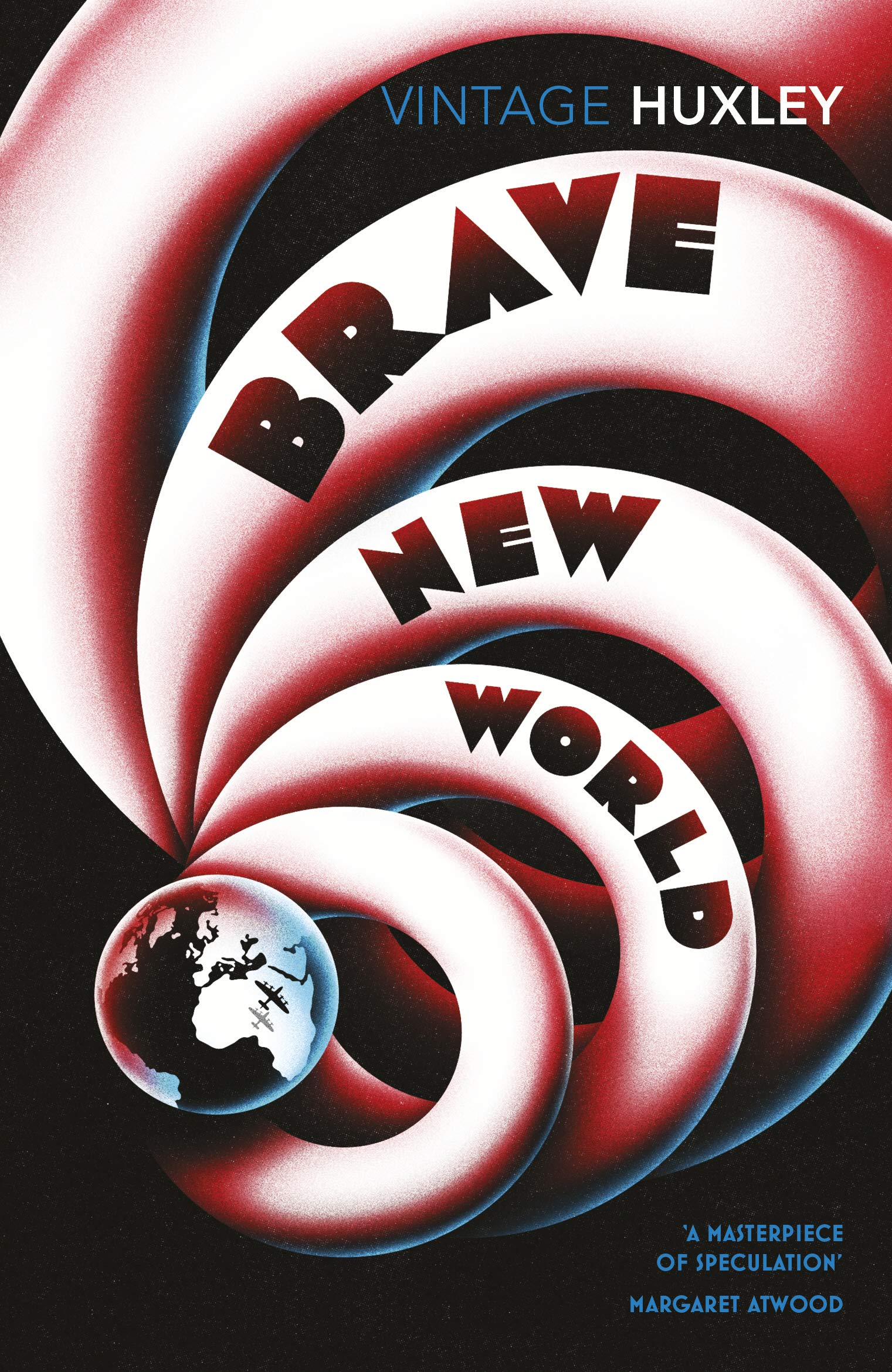
Brave New World Aftermath: Can’t we all just get along?

Image result for brave new world

Aldous Huxley’s Brave New World  is a classic dystopian novel.

In which everyone is happy.

It’s quite wonderfully insidious; usually a dystopian novel shows us a world where no one is happy, and challenges us to find a way to imagine happiness in it: in 1984, everyone suffers all the time, until Winston Smith tries to find a way to, well, live, laugh, and love; the jackboots of Big Brother and the Thought Police stomp that dream out of him. In Fahrenheit 451, the people are committing suicide and killing each other, while screaming at their television sets and cringing away from their devilish firemen; but when Clarisse McClellan tries to think for herself, she is vanished (and probably killed), and when Guy Montag wants to read books instead of burning them, he is arrested and forced to murder his former friend and then run for his life. In The Handmaid’s Tale, happiness is not the thing; purity is. Nobody gives a shit about happiness, and so that’s exactly what they get: shit happiness.

But in Brave New World, when John the Savage wants to be different from the people of the Brave New World, he demands the right to be sad and miserable and angry. And then he is chased out of society, because everyone there is happy, and no one has the freedom to frown, so to speak. Really, no one has the freedom to be alone, which is probably the more disturbing part; that is a common thread in all four books, and I think in all dystopias; everyone is watched, all the time, and it’s horrifying.

I should point out here that we are also watched all the time, and it’s no less horrifying for being real; but there is still some difference for us: the government has the ability to watch us all the time, but they don’t actually care about what 99% of us do.  And while our friends and neighbors are in our business every day, it’s usually because we put our business on social media, or on the grapevine. We still, generally speaking, have the option of privacy. Corporations building data profiles of us are involved in every second of our day that they can be, and that’s probably the most ominous; but really, they just want to sell us shit, so while it’s creepy that the Facebook ads reflect what we were just thinking or talking about, it’s nothing more than something to scroll past. At some point the corporations will realize that they can create markets for their products by screwing with us; that’s when it will get bad. It’s also incredibly dangerous that the data collected on each of us could very easily be turned over to the government (I was going to write “seized by,” but really, what corporation would ever say no to Uncle Sam come looking for intel? They can still sell things to people under NSA surveillance, after all. Maybe rotate some ads for firearms or “Don’t Tread On Me” flags into their feeds.), because the government is certainly willing to screw with us; but as of this moment, to quote the Doors, “They got the guns, but we got the numbers,” and so these tools are not yet  effective. Certainly something to watch out for.

But in the Brave New World, the people don’t have to watch out, they don’t have to suspect their government: they are happy. All of them. All the time. The Big Speech — another common thread through all these books, and perhaps in some form in all dystopian novels, as every dystopian novel has a message to give, and an important one, so the authors don’t want to take a chance on us missing it — given by World Controller Mustapha Mond (Huxley was a brilliant writer, but really, his names are lame. The use of Communist/Socialist names — Marx, “Lenina,” Trotsky — is annoyingly on the nose, and while it’s kinda clever that Mustapha in Arabic means “chosen” or “selected,” the fact that “Mond” means “world” and Mond controls the world… well.) at the end of the novel explains why the society of Brave New World chose happiness and stability over freedom and progress: because there was a terrible war, and afterwards, people wanted to be safe. So they chose to create a stable, safe society, and the only way to do that was to make everyone happy, all the time — or rather, maybe the goal was to achieve happiness for everyone, and the only way to do that was to make sure society was stable, was safe, was static. Every aspect controlled, nothing left to chance.

The result? A society where everyone is designed to be happy. Where the people are cloned, genetically and chemically modified, conditioned and trained from birth to have specific needs and specific wants and specific fears and specific aversions, all of that intended simply to make them happy with their life exactly as it is. They are built to do specific tasks in society, to enjoy simple things like sex, sports, and soma, the wonder euphoria drug that eliminates all chance negative emotions, and never to want to do or be anything other than exactly what they are.

And I read this, and I think: are they right?

Isn’t a happy, stable society better than one that has misery and suffering? Even if, as John the Savage (The one person in the society born to be a part of society, but not raised in it, so not controlled by it) argues — rightly, I think — that sorrow is necessary for tragedy, which is necessary for great art and great genius? Do we really need art and genius? It seems like a reasonable argument to say that most people would prefer to be happy, rather than great, and that happiness — contentment — seems much more likely to make us productive and useful members of society, and to ensure the continuation of the species. Aren’t those the goals?

Even if they aren’t, isn’t the loss of freedom worth the great benefit that the society actively seeks in the novel: the elimination of war? There is not a doubt in my mind that war is the greatest evil, the most abhorrent atrocity, that humanity has ever created or faced; what price should we be willing to pay to free us of it?

After reading this book — though it did genuinely give me pause and make me think twice, and then a couple more times after that — I think the answer is No. No, the price of safety and stability is not worth it. No, the goal is not simply happiness and contentment for all people at all times. Even, I think at least half of the time, if we achieved the end of war.

Because what makes war such an abomination is that it degrades our humanity. In addition to creating or multiplying every other horror we face — death, famine, pestilence, cruelty, greed, deception, hysteria, you name it and war is where you will find it more often and to a greater degree than anywhere else — war takes away everything that ennobles us. In the midst of famine, we can find unmatched ingenuity, and inconceivable endurance, and breathtaking altruism and generosity and self-sacrifice; in the midst of plague, we find kindness and grace and dignity in the midst of and because of the suffering; and so on, through all of it.

But war does quite the opposite. War makes kind people cruel, and healthy people sick, and civilized people into savages. War is the triumph of inhumanity over humanity.

But so is the Brave New World. Because whatever those people are, they are not human. Humans are not designed, and humans are not crafted and shaped like pottery on a wheel, and humans are not set into a groove out of which they will never skip. Humans cannot be perfectly ordered: we are chaos, we create chaos. It’s one of the reasons we are so good at war, because we are so very, very good at destroying things. Especially ourselves. We’re good at building — or else there wouldn’t be any targets for war to aim at — but we’re even better at burning it all down.

And that’s necessary. Because without destroying what is there now, you would never be able to build anything new. Creation implies destruction, but it is valuable  when destruction is for the purpose of creation, when it is part of a continuing cycle: whereas if we end destruction, and end creation too (The people in the book are not created as humans are, through the act of love and the processes of nature; they are built like machines, which is origination, but not, I would argue, creation — and I’m not even touching on the religious argument, which would be a much more poetic way to say the same thing), what we achieve is — stasis. The end of movement.

Death. And not a death that continues the circle of life, giving rise to something new to replace what is lost; here nothing is lost, and so nothing can replace it. Everything is just — still. Stopped. Perfectly motionless, without growth, without progress, without change. Which is no less dead than death itself. And while I will often argue that progress for the sake of progress is cancerous and absurd and deadly, I certainly wouldn’t prefer the final end of all progress.

Not even if it made me happy.


I do not think that this means we need to accept war. I still believe it is the extreme end, the Ultima Thule, of human malignancy; which means we can draw back from it, lessen it, even essentially eliminate it; though it is probably also true that some shadow, some residue, will always remain to harm and torment us. It is in our nature: not that we are made to war, but that we are made to try and reach and explore and find new ways to do things, and one of the ways to do things is to go to war; so even if we forgot it, we would rediscover it again, and again. Curiosity killed the cat, and we are forever curious. But just as more freedom and individuality is better than less, even if it is an imperfect freedom and individuality (which is what we have now), less war and more peace is better than the reverse. So I think there is a goal, and a way to achieve it, without also losing everything that we are.

I also recognize that there are events and actions that might be labeled war, but are not the horrors I’ve been describing; there are times when people have taken up arms to put an end to the horrors, when military intervention is the only way to save people. I don’t want to use the phrase “police action,” because Vietnam was a lie and the police as saviors is a fraught idea anyway; but there are times when force is both necessary and humanely applied. Someone who uses force to defend themselves or another from an attacking force has done nothing wrong. I don’t mean to either denigrate that, nor argue that even that should be (or could be) eliminated; that is the shadow and the residue of war that probably should remain — though ideally, since that sort of violence is triggered by the inhumane violence of dictatorship and oppression and vast chaotic upheavals, if we could end those, we wouldn’t need to send the Marines to intervene. But I’m not sure we could end those, either, because I think having the good and valuable tool of a defensive force can very quickly be turned to evil purposes (Which is why the Founding Fathers of this country pushed for a militia and abhorred the idea of a standing army — COUGH COUGH LOOKING AT YOU, MILITARY INDUSTRIAL COMPLEX), and then the solution becomes the problem. So it goes. We can’t close Pandora’s box.

So no. I don’t think we can live like the Brave New World. (And let me point out that, we discover, neither can they, not entirely, because there are people who don’t fit their molds, and who cause problems, and who are eventually exiled; Mustapha Mond is grateful that there are so many islands in the world to send misfit toys to — but that’s not a  solution, it’s just pretense.) I don’t think we can all just get along.

But I think we can get by. And get to be ourselves. And that’s probably better. Because that way we get to have art and beauty and truth — and that, I think, is really the point.

Shakespeare, as usual, (and as Huxley himself recognized) probably said it best:

O, wonder!
How many goodly creatures are there here!
How beauteous mankind is! O brave new world,
That has such people in’t!

The Brave New World, for us, is wondrous because of the people in it; it is brave because it faces turmoil and tribulation and suffering; it is new because it moves through the cycle of destruction and creation. It lives, and it changes, and it grows. Like us.

In the book, the quote is used ironically. We have to make it true.

All Together Now: Split Up!

4C946FF5-5DA2-4750-A9F7-0FEC5E9E8926

World War III might be coming soon. (I mean, probably not, but who can say? Who’s to say what CheetoFace the Kleptocrat will do next?)

But the meme war has already begun.

I had a class ask about the war yesterday, and about the draft, and about everything they worry about or are confused by regarding the whole mess. I helped them as much as I could, which wasn’t enough — because I can’t stop the war. One of my students made a nice point, though: someone said that memes would be turned to propaganda for one side or the other, and another student said, “All propaganda is memes.”

That’s the truth. And the corollary is probably also true: all memes are propaganda.

I have a troubled relationship with memes. I think they’re funny a lot of the time, and I’m impressed by the creativity behind them; but I loathe when they are used as arguments. Memes are inherently reductive, and more often than not, flat out wrong. I used to make it a thing to argue with anyone who used a meme to establish a position, especially a political position, especially on a genuine controversial issue.

Like this bullshit:

Image result for gun control memes

Nothing on this meme is true. The U.S. isn’t third in murder rate; we are 77th. Washington isn’t even in the “top” 30 cities in the US with the highest murder rates, and the other three are not the cities with the highest murder rates; in 2018 the total number of homicides in the U.S. was 16,214, and if we take away the 765 murders in Chicago, the 174 in New Orleans, the 304 in Detroit, and the 160 in Washington D.C., (Admittedly, this is a hell of a lot of murders) the number drops to 14,811. My math gives us a murder rate of 4.49 per 100,000 residents; lower than the U.S. rate of 5.0 murders per 100,000 population, according to the FBI, but according to this chart, that would move us down — exactly nine spaces. To between Niger and Lithuania. I’m not even going to talk about whether those four cities do in fact have the “toughest” gun laws in the United States, though I will note that the states  with the most restrictive gun laws according to this article are Hawaii, Massachusetts, New Jersey, Connecticut, Maryland, California, Illinois, and New York. Soooo…. I guess Chicago might be in there. Right?

And is that woman really the Second Amendment? She seems too young.

Anyway, I’ve argued against a lot of memes over the years. It’s slowed down a bit: I stopped trying to argue with everyone and everything I disagree with, and the memes have increased exponentially in number, and increased (though not exponentially) in amusement.

But now we get to the current meme war.

Currently, the memes are showing up (from what I have seen, though my experience is certainly not comprehensive)  in two main forms: World War III is coming, and that’s fucked up and I’m scared, and therefore I’m going to use black humor to deflect from my fear. That looks like this:

Related image

I don’t have anything to say about those memes other than: I’m sorry. I’m sorry that my generation and the ones before mine sunk this country, and this world, into this nightmare of eternal war, and now the current generations have to pay for it. I’m sorry for all that my country has done to harm other countries. I do recognize that there have been some good outcomes of American military intervention; but those outcomes do not come anywhere close to making up for the damage we have done. Not even close.

But that’s not what I wanted to write about here. I’m a pacifist, I’m anti-war; my position on American wars is not surprising.

No: what I wanted to talk about is the other class of memes. Memes like this:

Image may contain: possible text that says 'Pay attention to who gets upset when a terrorist leader is killed. PAY CLOSE ATTENTION.'

And this:

Image may contain: 1 person, smiling

And this lil beauty:

No photo description available.

So look. People can be in favor of war with Iran. I don’t agree, but they have the right to believe that it is the right thing; there’s at least some kind of argument in support of that, so it’s not insane to think it. Iran certainly does and has done terrible things, and maybe war would stop that.

But first, we here in this country need to not act as though we have the moral high ground: we do not.

The truth is that Soleimani was not all that different from any of about five dozen current and former American politicians and bureaucrats — if anything, he was considerably more restrained about the use of force. Yes, he was involved in a lot of bloody wars — but so was every American president since 2000, and besides half the wars he fought in were started or fueled by the United States. It’s just another instance of America’s gigantic hypocrisy when it comes to war.

America is guilty of everything we accuse Iran of doing

Second, whether you are for war with Iran (or war in general) or not, your position does not in any way have any implications about your citizenship, your rights, or how you feel about this country. You can love America and hate the war; you can hate America and love the war; and everything else in between — and the one does not at all imply the other.

I’m not sure how to explain or argue for that idea other than just to state it. To state clearly that one of the foundations of this country is freedom of thought and opinion, and the freedom of speech that allows us to express those opinions in a public forum. There is not any requirement to support the government, the war effort, or even the troops; there are reasons not to support all of those institutions, and therefore someone could reasonably have that opinion, and still think the U.S. is a good country and want to be a part of it. And of course, an American can think that the U.S. is a terrible country, and hate every little thing about it — and still be an American citizen. No less of an American citizen than the most flag-kissin’, woo-hootin’, ‘Murrican-chaps-wearin’ yahoo out there. And if you don’t understand that, the problem is you, not the person who disagrees with the rising tensions in the Middle East. Not someone who sympathizes with Soleimani: because you can think a man is a bad man, and still not want him dead, or be sad that he died — and again, even if you think Iran is a fine country and Soleimani was an Iranian patriot hero, you will still be an American citizen. Because citizenship, moral or legal, is not predicated on one’s opinions. Ever. Actions can change one’s legal or moral right to citizenship; if you try to harm America, one can argue that you lose some right to call yourself an American (Though personally I would say you need to actively alter your legal status, intentionally [And thus President Obama’s killing of Anwar Al-Awlaki was murder and not an act of war] ; and to me, morality has nothing whatsoever to do with citizenship: good Americans and bad Americans are Americans alike.), but saying you want to harm America is only words, only an opinion. It would be far more harmful to America to try to strip someone’s citizenship for an opinion or a statement thereof, because that is a violation of that foundational freedom of opinion and of speech.

And refusing to support a war, a war that will most certainly harm America — and thus should be opposed by those who want to do what is right for this country — is in no way something that changes one’s right to be an American. Doesn’t even make you a bad American. Though I guess someone could have the right to flip me off for that opinion, so I shouldn’t put that last meme into my display of objectionable memes. (Though also, isn’t that desecration of the flag? Just sayin’.)

It’s bad enough that we have to deal with jingoist nationalists trying to murder people around the world. Please don’t also make me have to defend my right to inclusion in my own native country. Please understand the country you claim to love, at least as well as it’s understood by those you say don’t love it enough.

Try to understand the war as well as this guy: (The first Tweet makes the point, but go read the whole thread.)

I do love my country. I do. I hate war. And so I refuse to allow those two things to be seen as the same thing. Even by my countrymen: whose right to be wrong I will defend to my last breath. So please do the same for me.

Understand that we can disagree, but when we fight each other over our disagreements, when our different opinions make you consider me inhuman, or undeserving of inclusion in your group, then we become divided in a way that is incredibly difficult to put back together. And that division hurts us. Not the difference in our opinions: if I think stopping the war is best for America, and you think fighting the war is best for America, then we disagree, but we are not divided: we want the same thing. We stand on common ground. We can discuss it, because we can both start our arguments with, “I want what’s best for our country, just like you do, but…”

But if you think I am not deserving of the title “American” because I don’t share your opinion, then we can’t even talk: I say, “I want what’s best for America,” and you say, “No you don’t, you’re not even a real American.” Now we are arguing about me, not about our country and how to help it.

That is what benefits the enemies of this country, and what harms this country: if we cannot see each other as equals, who happen to disagree.

There’s been far too much of that lately. We should stop doing it. All of us. Right now. Especially as we consider going to war, again. Because if we have to fight each other, we can’t also fight our enemies — and please understand that, although I do not want war, and I do not want violence, I do want to fight my country’s enemies. Enemies like ignorance, and bigotry, and dehumanizing hatred. That is what I will fight. That is what I do my utmost to protect my country, and my countrymen, from.

Because I love my country, and I want what’s best for us all. All of us. That’s what matters to me.

Remember what matters most to you.

Remember: united we stand.

B7BE484E-2E55-4507-8C06-E8050CCFFFC1

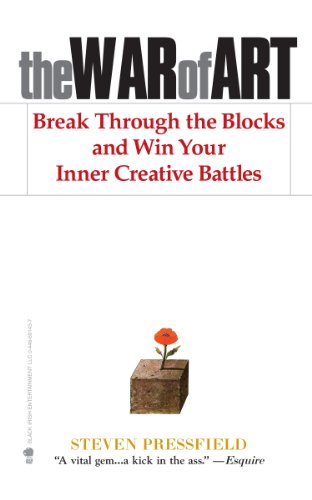
Book Review: The War of Art

Image result for the war of art

The War of Art

by Steven Pressfield

In retrospect, I should have known from the foreword that this was the wrong book for me: Robert McKee talks about art like it’s a war that Pressfield will help me to win; and while I think art is a struggle, I really don’t think it’s a war; indeed, as I am a pacifist, couching things in warrior’s terms is just going to push me away. He also references golf as evidence that Pressfield is a consummate professional (Pressfield wrote The Legend of Bagger Vance, which I have neither read nor seen; I guess it’s about golf? I guess Pressfield likes the game? But he writes anyway instead of playing, which – I guess is impressive?), and there’s the second best way to alienate me. He talks about tearing up over the Spartans’ death at Thermopylae, which was the subject of Pressfield’s other big book, Gates of Fire, which I did read, and did like quite a lot – but it didn’t make me weepy, and I don’t know what it has to do with inspiration to make art. So I’m really having trouble relating to this foreword author – and then he ends his intro with this:

“When inspiration touches talent, she gives birth to truth and beauty. And when Steven Pressfield was writing The War of Art, she had her hands all over him.”

Creepy sexual metaphors, especially about things that are not remotely sexual – like the act of putting words on a page – that is the number one way to make me say “Nope.” So I should have known.

Let me say this, though: this is a book intended to inspire artists, to help people break through creative blocks and create art they can be proud of. I can’t think of many more noble things to try to do, and I appreciate Pressfield’s earnest and genuine attempt to give people tools to do what they should be doing. So: if you do appreciate sports metaphors, and war metaphors, and you like a good, strong pep talk – or as the cover blurb calls it “A vital gem… a kick in the ass,” (which also should have been a warning sign for me) – then please ignore this review, and go get this book. I hope it helps.

It didn’t help me.

There are moments when I agree with Pressfield. He talks about questioning his writing, and feeling hopeless, and the strength and stamina it requires to push through all that and just keep working. He calls it work, and talks about how important it is to just keep putting in the hours, to keep trying, to keep seeking to hone your craft and do the best you can – but first and foremost, to just put the goddamn letters on the goddamn page, and to never give up. And I agree with that entirely. He talks about how he was in his 40’s before he found success, and how it came from an entirely unlikely source, which was, logical or not, simply the book he had to write at the time; and as a 44-year-old writer who is working on his second novel about a time-traveling Irish pirate, I appreciate everything about that.

But then there are the places where he talks about being a Marine, and how other servicemen in other branches are weaker than Marines because Marines love being miserable (This is a metaphor for how artists should be: willing to suffer and be miserable. I kind of see that. This whole Marines-have-bigger-dicks-than-other-soldiers? Nah.) and the other services are soft. Where he talks about writing and art like it is a war to be fought and won; or an animal to be hunted and then eaten; or a football game where you have to “leave everything on the field.” And I hate all of that. He talks about the urges and habits that get in the way of art as Resistance, and that’s pretty good, but he also talks about how like not cleaning your room is a way to lose to Resistance, and – what? And how golf is an art, and Tiger Woods is the greatest artist of all because he can be interrupted mid-swing, stop his swing, and then refocus and hit a golf ball really hard and – I fail to see the art in that. And he says that mental illness, depression and anxiety, are not real, but only a failure to combat resistance, which can be overcome by determination and the earnest pursuit of one’s true calling, and hey, fuck you, Pressfield.

He’s got a strange (And contradictory) section where he tries to talk about thinking territorially instead of hierarchically, and basically he means you should do what you think is right rather than worry about what other people think is right, and okay, sure – but first, he says elsewhere in the book that he knows he’s written well when his family is pleased and proud of him, which is hierarchical thinking by his own definition and explanation, so either he’s a REALLY bad editor who missed that continuity break, or he’s full of crap in one of these places; and second, his example of someone thinking territorially is Arnold Schwarzenegger going to the gym. Which is both weird and not at all artistically inspiring. It gets really weird in the third section, where the devout Christian Pressfield (Though he also admires the ancient Greeks so damn much that he seems to kinda want to worship Zeus and Apollo. I can’t really disagree with that, though I wouldn’t pick the same gods.) talks about angels who help inspire artists to work, because God wants us to create beautiful things for Him to admire, and how everything an artist is comes from God and we should understand that we contribute nothing, that we are only the vessel through which the divine will is worked. I mean, when we’re not being hardcore fucking Marines. Or hitting 310 yards off the tee. Otherwise, though, we should be all humble before God. It is not quite this Christian – he really does admire and know a lot about the Greeks – but it does read that way, as a repudiation of human accomplishment and a glorification of the eternal Whatever. And as an atheist and a part-time humanist, I am not at all down with that.

This thing reads exactly like what it is: a privileged Baby Boomer looking down on everyone else who doesn’t have all of his privileges; and by the way, he says some interesting and intelligent things that show me he really is an artist like me. Just way more of a shmuck. Hoo rah.

This Morning

This morning I am thinking about pride. Where pride comes from, what makes it valuable and what makes it problematic. My central thought is this:

The price of pride is pain.

Christianity says that pride is a sin; I don’t agree, though I certainly recognize that pride can lead to sin —  arrogant dismissal of others’ value, nationalism, racial divides and conflicts, a hundred other ways that pride “goeth before a fall,” as they say. I also see where pride is strength: pride in my accomplishments, as a writer, as a teacher, as a human being, is often what keeps me going in the face of continued struggle and defeat. Pride lifts up the downtrodden and helps  them to fight back against oppression, often in the face of overwhelming odds. There is value in pride. It also may be that pride is essentially inevitable, that in a culture that constantly appraises the value of everything as good or bad, better or worse than everything else, there is no way a rational person could not see which of their traits are on the approved list, and feel a bump, or a jump, in their worth.

But like everything else that has value, pride has a cost. I think that pride has to be earned. I say it is pain, but I include painstaking effort in that; anyone who has fought hard for a skill or an ability or to overcome a prodigious obstacle knows that pain is not only limited to sharp injuries. There’s a great scene in To Kill a Mockingbird when Scout and Jem are trying to find anything in their father Atticus Finch to be proud of, and then they find that he is a crack shot with a rifle; when they ask their neighbor Miss Maudie why Atticus never bragged or showed off his ability, she says that Atticus knows better than to take pride in something that is a gift from God. His ability, the steady eye and steady hand that lets him hit everything he aims at, was not earned: it was inborn. (There’s an argument to be made that practice and training made him better, but this is both a simplification and a speculation on Maudie’s part. The point remains.) I am an American, but I did not work for that: it was an accident of my birth. I take no pride in accidents. I do take pride in the actions I have taken, the burdens I have carried, for the sake of my society, and which have made that society better; I vote, I pay taxes, I participate in the cultural and political conversations, and probably most importantly, I teach. I think that those who serve, both in civil society and in the military and public safety, have earned and deserve their pride in themselves and the country they helped to build and maintain. They (we, if I may be bold) have paid for it in effort and sacrifice, and often (they, not me) in suffering and loss.

I want to say that those who do not earn their pride before they hold it, flaunt it, and press eagerly forward to show it, chins out and hands balled into fists, will pay for their pride in suffering afterwards: that the fall will come, that they will be humbled and humiliated. But of course that doesn’t always happen. The universe is not just. There is an easy way that people with unearned pride can avoid the pain themselves, and that is simply to move the suffering off of themselves and onto others, and thus you have the Ku Klux Klan, and domestic abuse, and bullies. And Donald Trump.

But for those who are not that, who are not victimizers and warmongers, the point I want to make is that pride must be earned.

And the price of pride is pain.

E-Book Review: Blood Calls by Charles D. Shell

Image result for blood calls charles shell

Blood Calls

by Charles D. Shell

(Please note: I was given a free copy of this e-book in return for my honest review. This is it.)


Now that was a fun book.

I haven’t read a ton of independently published e-books; but of the ones I have read, this was without a doubt the best.

It’s the story of two outcasts, a man and a dragon, both the victims of deep-seated and vicious prejudice, who find friendship and solace with each other; until they are finally forced to leave the land of their birth. The man, Corbin, who is a nobleman of his home country of Denza despite being an unwanted bastard with a mother from a despised minority, is given a minor diplomatic post in neighboring Sunal, thanks to the influence of his influential uncle. Corbin and his only friend, the dragon Blood, travel to Sunal, where, if everything goes according to plan, Corbin should be able to sink into relative obscurity, pursuing his twin passions of drinking and womanizing, and perhaps occasionally dipping his toes into diplomacy.

But world events, and Corbin’s heart, have other plans. Corbin finds that the prejudice that he has suffered under for all of his life is nonexistent in Sunal, where the Skuranese, his mother’s people, are accepted. Corbin is able to find friendships (with other men, for once) and even to pursue a woman for more than a roll in the hay. This would be enough changes in Corbin’s life: but there’s more. War is coming to Sunal. War that could threaten everything that Corbin has found there, as well as his homeland, his life and the life of his dragon, and perhaps everyone on the continent. Unless Corbin and Blood can do something about it.

The world-building in this book is top notch. The relationships between the various nations and their people are interesting, and enough historical backstory is given to make it all seem quite realistic. The magic system is done well, with different spellcasters making use of summoned spirits and creatures, or simple control of the four elements, or Frankenstein/steampunk creations made of living creatures mixed with machines. There are some unusual elements in the magic system that were very intriguing – like sonomancy, the use of sound for magic and also as a weapon; Shell was also able to reflect that form of magic in the society that makes use of it, which was a thoughtful and effective choice. The military aspects of the war – which is told not only through Corbin’s experiences, but also from the point of view of an officer of the aggressor nation of Gurein, which is trying to conquer and consolidate an empire, no matter what the cost – are as good as any military fiction I’ve read. I did wish there was a map, a visual aid that I have always found both interesting and useful in books like this; hopefully the author, with his arts background, will be able to provide one in future books.

The book isn’t perfect. I thought the romance was a bit haphazard: Corbin has never been anything but a womanizer, and though it makes sense that he’s never had an opportunity to be anything more, he jumps from that habit to a pursuit of true love a little too easily; he also settles on the object of his affection without much more inspiration than Romeo and Juliet, and though I love the Shakespeare play, I don’t really believe in love at first sight, especially not when it is turned into a chivalrous courtship, as this one basically is (though not entirely, I hasten to add). The dialogue and banter between the characters is often amusing, but much too close to our own society, using slang and colloquialisms that don’t make a lot of sense in world that isn’t ours; hearing a man from Denza call his telepathic dragon a “smart-ass” sort of took me out of the fantasy. (Also, maybe it’s me, but I want fantasy books to have fantasy names; though most of the main characters do, there are side characters with names like Jerry or Terri, which again kind of burst the bubble.) I didn’t like the character of Dante Firetongue, who is a newspaperman straight out of modern comics – he even refers to a good story as a “scoop” – and who never really settles on a personality, leaving us guessing whether he’s a shallow, selfish bastard or a good guy with a high defensive wall around his heart. I also thought Blood, the dragon, who is a good guy with a high defensive wall around his heart, was just too much of a jerk sometimes, when I wanted him to be lovable even when he was being sharp-tongued.

However, none of these things are the heart of the book. The heart of the book is the characters learning how to live together, accept each other, and protect what is truly worth protecting. That, the book does extremely well. There is good action, good suspense, and good humor throughout; and I enjoyed the ending as much as I enjoyed the beginning, which is the sign of a good novel. I’d recommend this book for fantasy fans, and I plan to see what else Mr. Shell has to offer.

Not Another War

You know what? I just don’t want a war.

It saddens me – no; it horrifies me that my students who are 14 and 15 and 16 years old have never lived in a United States that wasn’t at war. It’s a good swath of my adult life that this country has been at war; but almost all the years before that – I was born right around the end of the Vietnam War – I have known a country that has been relatively peaceful. We had the Cold War throughout my youth, of course – the Russians were the bad guys in pretty much every movie I saw until I was in college – and we sent troops to Panama and Grenada, Africa and Serbia; and there have been troops stationed all around the globe throughout my life; but we hadn’t invaded a country and torn down its government until I was a teacher. Until after 9/11.

I remember it well. One of my strongest memories is of hearing that we had invaded Iraq, two years later, on a pretense that I didn’t begin to understand, let alone believe; when we did, I remember writing angrily in my journal that I was afraid we would colonize the country, that Bush the Younger had brought us back because Bush the Elder hadn’t finished the job, and now we would never leave. I was almost right: we left, eventually, but because we did so, now we will never do that again. Because as soon as we left Iraq, ISIS rose, and became the new villain in every movie from now until – well, probably forever.

That’s why I don’t want a war. Because mark my words: any country we invade, from now until the end of this country’s reign as the world’s most violent nation, will become a permanent victim of this nation’s military colonialism. Because we need to “stay until the job is done.” Because we need to “ensure stability.” Because we need to “prevent the rise of terrorism.” You know: all the reasons why we still have troops in Afghanistan after seventeen goddamn years of occupation. Because something has to justify the continued expenditure of trillions of dollars to feed the military-industrial complex.

The same reason why the military wants to keep our forces in Syria. To ensure stability in the areas not controlled by Bashar al-Assad. To prevent the resurgence of ISIS.

And may I just say: god damn that group for giving our military the only justification it will ever need, forever. But I also have to say that I understand their motives. After all, we are invaders. We are colonizers. We attack governments that are not our enemies, under the thinnest of pretexts, devastating every inch of infrastructure in the country, and then we occupy and act exactly like the tyrants we are supposedly removing from power: we paint the nation black with corruption and graft, we put our cronies into positions of power regardless of their suitability for the role, we act with complete impunity while arresting hundreds if not thousands of “insurgents” and “terrorists,” many of whom are surely innocent, and plenty of whom are thrown into dark holes from which they never escape, where they are brutalized and often tortured. You know where ISIS started, right? Right: in American-run prisons.

Some country did that to my homeland, I’d fucking be a terrorist, too. Well: I wouldn’t. I’m a pacifist. But I’d probably get arrested by the CIA for the things I’d write, and the things I’d teach my students. I might even end up in Guantanamo Bay.

They’re still there, you know. 45 prisoners, some of them detained since 2002. Sixteen years in prison thousands of miles from home, many if not all of them victims of torture; none of them given due process according to our own nation’s laws, let alone the laws of their various home countries. Because we call them terrorists, and prisoners of war. A war older than my students.

I do not want another war.

It’s hard for me to say that, because the two impending wars (assuming John Bolton and Mike Pompeo don’t get their way and lead us into a war in Iran), in Syria and North Korea, would both, in some ways, be “good” wars. Both those regimes are guilty of unspeakable crimes. The North Korean dictatorship has killed millions of people, mostly through starvation, over the last seven decades; 500,000 Syrians have been killed and 100,000 more are missing under the Syrian regime and the civil war that has ravaged the country since 2011, when a dozen young men were arrested, imprisoned, tortured, and executed for painting anti-government graffiti on a wall in Damascus. Syria especially frightens me, because the steps leading to the current atrocities have all been ones that I could see our government taking in this country: it began with people talking about overthrowing the government, which led to arrests; the arrests led to protests, which led to a police and military crackdown; and then the revolution started. After that, the arrests turned to a machine: tens of thousands were detained, imprisoned in terrible conditions, beaten regularly, hung from manacles, starved and mistreated, and then executed. I have trouble thinking that American soldiers would emulate Nazis, with cattle cars and death camps and gas chambers and ovens; but I can certainly see them beating people, holding them without trial, even executing them; all of those things have happened in CIA and military prisons over the last seventeen years of this current war. Could they happen in this country, to our people, if those people were deemed enemies of the state?

I’d say yes.

That scares the hell out of me. Particularly when I listen to stories about Bashar al-Assad responding to accusations of war crimes with, essentially, “Fake news!” When he dons a suit and carries his briefcase to work the day after the U.S. targets his chemical weapons facilities, because bluster and bluff are how he has managed to hold onto power – along with his backing from Russia.

It just keeps getting scarier, doesn’t it? You know Assad’s been reelected twice? Sure. He wins around 98% of the vote, every time. Biggest electoral victory in history. And the biggest crowds at his inauguration. Huge crowds. Beautiful inauguration. The best. Believe me.

I don’t want us to go to war in Syria because if we do, we’ll never leave. We’ll keep troops there forever, the same way we’re keeping them in Afghanistan, because we somehow think that our troops are maintaining stability: even though, as a foreign invasive force, I have no doubt we are creating the same instability, the same violent resentment of our presence, that we have to stay in the country in order to suppress. See how perfect that is? As long as our troops stay there, there will always be a need for our troops to stay; and as long as our troops stay there, there will always be attacks that stoke up the dogs of war back home, so they keep supporting those troops, supporting those troops. Look at how the Republican party, the party of fiscal responsibility and small government, was happy to sign away the biggest budget and one of the biggest deficits in history, a budget which expands government in every possible way – because that same budget increased military spending. That’s it, that’s all they got: more money for the military. And did you listen to them talk about it? “We have to make sure we handle our readiness issues,” I kept hearing. Because apparently the largest and best-equipped army in the world is not quite ready enough to do violence, should they be called upon to do so. We have to be ready just in case. To protect our freedom.

I don’t want to go to war in Syria because doing so will cause some further instability somewhere else in the region: the Syrian civil war was at least partly caused by the rise of ISIS, which wanted to conquer Syria for its caliphate; and ISIS was partly created by our invasion of Iraq and Afghanistan, which broke al Qaeda and then created a power vacuum to give the remnants of al Qaeda room to grow into ISIS. Of course, al Qaeda was partly created by our support of the Mujaheddin in Afghanistan, because they resisted the Russian invasion; and also by our support of Iraq in the 80’s because Iraq opposed Iran – which was our enemy because the Ayatollah Khomeini blamed us for installing the Shah, after we overthrew the Iranian government in the 50’s. Because that government opposed our support for Israel. It never stops: it’s an unbroken chain of broken countries, broken governments, broken people turned into refugees, and then into terrorists and extremists, by us and our allies, simply because we won’t. Fucking. Leave.

I don’t want a war in Syria because if we are in another ground war when 2020 rolls around, then President Trump will get reelected just like Bush did in 2004, because Trump’s not any less popular than Bush was in 2004 (And I heard today that Joe Biden is thinking of running for the Democratic nomination, and all I could think of was John Kerry in 2004, and Al Gore in 2000, and to a lesser extent Hillary Clinton in 2016: because when we run these same kinds of Democrats, we get – Bush and Trump. And even if he won, well, Biden certainly supports the military, doesn’t he? Sure.), and because Trump will pull the same bullshit that Bush did: you can’t change commanders in the middle of a fight, and those Democrats don’t support our troops and aren’t willing to bankrupt the entire nation in order to ensure our troops are entirely, eternally, apocalyptically ready for any battle at any time in any place, including every battle at once. Just in case North Korea gets uppity while we’re suppressing Syria and Iran. Even though clearly the Democrats are just fine with bankrupting the nation in order to feed money to the military-industrial complex, because they signed that budget, too.

I can’t stand it any more. My former idealism, believing in the essential goodness of the government, especially the American government, is gone now, shattered by the eagerness with which all of our elected officials beat the war drums and spend, spend, spend, to send Americans into danger and to kill thousands upon thousands of innocent civilians in other nations, in drone strikes, in air strikes, in strikes designed to degrade the enemies’ capability to cause damage. My love for my country is gone, because what kind of country is this to love? The only nation to use nuclear weapons – also on a civilian populace. The only nation to prefer carpet bombing to putting “boots on the ground,” because we’d rather cause collateral damage (read: dead innocents) than put our precious soldiers at risk. Don’t get me wrong, our soldiers are precious – but so are the innocent people we bomb. So are the soldiers we kill, even if they aren’t innocent; they aren’t our enemies. When was the last time we fought a nation that was actually, actively, the enemy of this country? 1945, wasn’t it? Al Qaeda was an enemy and a threat, and I suppose ISIS is, as well; but the nations where they live are not. Nor was Vietnam. Nor was Korea. And look how well those worked out. And while we’re talking about Southeast Asia and incessant airstrikes: you realize our years of carpet bombing Cambodia in the 1970’s helped give rise to the Khmer Rouge? Killed 1.5 millions Cambodians, that group did.

That’s my nation. It has always been my nation, because right now I live in a city that used to be a thriving metropolis for the indigenous people of the Southwest, the Hopi and the Navajo and the Pueblo peoples. We killed them, too. And then used their desperate attempts to resist our invasion and slaughter of innocents to justify increasing the size and aggression of our military, so that we could keep our people safe while our people were stealing the lives and the land of other people.

And then people say that the military protects our freedom. Holy crap. Tell me: what threat to our freedom existed in Afghanistan in 2001? Sure, there was an existential threat to some number of our people, no doubt; but we have lost more soldiers in the war than people who died on 9/11. Afghanistan has lost – well, everything, really. And maybe that’s al Qaeda’s fault. But we were the ones who invaded. In order to protect our freedom. It amazes me that people can even say that with a straight face. I suppose now our freedom is somewhere in Aleppo, and sometime (before the election in 2020), we’ll have to put boots on the ground in order to protect it. We really should stop letting that freedom roam around like that. Especially in the Middle East.

I don’t want a war in Syria even though Bashar al-Assad is guilty of war crimes, even though he has used chemical weapons – because I can’t for the life of me understand why the chemicals sarin and chlorine are absolutely forbidden, but when the chemicals are gunpowder and lead, and TNT or phosphorus or napalm or any of the thousand other incendiaries and explosives that burn down entire nations, are no problem whatsoever. Assad has killed thousands with chemicals, and hundreds of thousands with guns and bombs and starvation; and we attack him for using the chemical weapons? It makes no sense. But even though his atrocities demand justice, I do not want a war. Because there is no possibility, none at all, that a war can create justice. It has never happened and will never happen. The “best” war I know of, World War II, which stopped the Nazi death machine, still did not create justice, because there can be no justice for 6 million victims of the Holocaust, and because the war against the Nazis gave them the cover to hide their actions for years, and because we were the ones who firebombed Dresden and used atomic weapons in Hiroshima and Nagasaki, and because our alliance with Stalin allowed him to retain power and kill 10 million of his own people, which also helped give rise to Mao and the Cultural Revolution that killed millions more. That’s not justice. That’s not a better outcome. I can’t say we shouldn’t have fought the war, because I can’t say anything other than the Nazis had to be stopped: but I can’t say that and not also say that the genocides in Rwanda and Darfur, and Cambodia, and North Korea, and China, should not also have been stopped. We didn’t fight those wars. So have we really saved people with our wars?

I don’t think we can. I don’t think that anything good can come of war. I think that we don’t really grasp the quintessential truth of the phrase “War is hell.” Especially not because we never think what that makes us, every time – every time – we start a war. We make hell. Every time.

And we call ourselves saviors. But we’re not: we’re the devils.

I don’t want another war. Not ever again. Not for any reason. Not even a good one.

Book Review: The Ministry of Utmost Happiness by Arundhati Roy

Image result for the ministry of utmost happiness

The Ministry of Utmost Happiness

by Arundhati Roy


God damn Arundhati Roy.

God damn her and her beautiful books, which are so impossibly sad and so incredibly beautiful.

I have always thought, because I teach it to my AP students, that The God of Small Things ends with the most beautiful romantic scene I think I’ve ever read because Roy wanted to end the book on a happy note, that she wrote it intentionally out of chronological order specifically so that she could end it with hope, with the two lovers planning to meet again the next day, even though we know they won’t, or if they meet the next day, then they don’t meet the day after that, or ever again.

Now that I am reading The Ministry of Utmost Happiness (I am not finished with it, so I’ll need to stop writing this in a moment and go back to my sorrows), in which she has done nearly the same bloody thing, putting an exquisite lovely romantic scene near the end of a brutally heart-wrenching book, I think I may have to stop believing in the optimistic explanation of the incongruous, unchronological way Roy writes these books. I’m not sure yet, because this isn’t the very last chapter, so maybe other things will happen – and there actually is some hope in the novel that there will be some happiness, a fair number of good characters who could create a safe space to live and laugh in; but in God of Small Things two of the four good characters died and one ended up insane, leaving the fourth utterly alone, so… – but I am familiar enough with this feeling to know that Roy might have made the same play. This book is also out of chronological order, and since it is my first time reading it, that makes it difficult to follow, so there are parts I don’t remember well and maybe I should, to understand; which means maybe I don’t understand. I have to go read more.

But now I’m wondering: what if she put the happiest, most love-full part at the end of The God of Small Things because that makes it impossible to enjoy, since we’ve just been through 25 chapters of sorrows? What if she does it that way because she wants us to read the joyful part and think, “Well, this would be lovely, if my heart wasn’t already shattered into a million pieces by everything else I just read.”? And what if that is the point, because it makes the joyful part into a sad part, knowing that we can’t enjoy the joy because of the sorrows we’ve been through – which makes the sorrows even sadder?

Pardon me. Have to go finish the book. I just had to write down this theory when it hit me.

One hour and twenty minutes later –

All right. Okay. I was wrong: this book does actually have a happy ending. Of course it isn’t that simple, it isn’t all happy; there is death everywhere in the book, and it isn’t good death, not valuable, honorable, restful death. But the book is as much about those who live as it is about those who die, and the deaths make the life more precious, not the other way around.

So: to be clear. This book is about India and the war in Kashmir. At the end of the book, a character reads these words in a notebook: “How do you tell a shattered story? By slowly becoming everybody. No: by slowly becoming everything.”

That’s the book.

It has much of the same beauty that Roy put into The God of Small Things. The writing is, as always, brilliant: essentially beyond my capacity to even grasp, let alone describe. The book has a dense history of India, a complex exploration of the relationship between the present and the past, once again worked out through complicated family relationships and through appalling violence. The caste system is, as I suspect it always is, an indispensable element of the conflicts, though they are largely religious in nature: Muslim versus Hindu versus Sikh versus Christian. There is a terribly intricate narrative structure, with multiple interwoven plots and point of view characters, with no particular adherence to a timeline. There is another character that bears much resemblance to Roy herself, the child of a Syrian Christian woman from the state of Kerala, who studies architecture but does not become an architect, who is beautiful and strange and difficult. There is a beautiful romance, a number of broken romances, and an enormous, unbearable weight of violence and suffering and sorrow and alienation.

But there’s a lot in this book that wasn’t in the first book. The scope is wider: there are more characters, there are more conflicts, there are more settings. There is much more violence, and more villains who carry it out. And there is a lot more happiness at the end, a lot more peace, a lot more closure.

I don’t know if I recommend this book. I will need to read it again, and probably write a lot in the margins. But I feel much the same about this book as I felt about The God of Small Things after I had read it only once without writing anything in it, which was, I thought I should read it again; once I had, it became one of my all-time favorite works of literature. I suspect this one may follow the same path. So in the meantime, in-between time, this is a beautiful and difficult book, and if that’s your thing, I highly recommend it.

Book Review: Homage to Catalonia

Image result for homage to catalonia

Homage to Catalonia

By George Orwell


In 1937, when he was in his mid-30’s, George Orwell decided he needed to take an active role in the fight against fascism. Orwell was already a published author and fairly well-known critic and journalist; he was even better known as a socialist. His first book, Down and Out in Paris and London, had been published by a leftist publisher, and in early 1937, he published The Road to Wigan Pier, a book about the living conditions of coal miners in the north of England. Both books describe the terrible conditions faced by the poor and working class, and both are strong indictments of the capitalist system. Orwell, deeply concerned by the rise of Hitler and Mussolini, watched closely as the Spanish civil war began and intensified; when General Franco’s fascist forces, backed by Germany and Italy, began to rise to power, Orwell went to Spain to join the other side. He had trouble finding a place that suited him; he was already growing disillusioned with the corruption of Communism in Soviet Russia by Stalin, and the weak way that European socialists knuckled under to Stalin’s will – The Road to Wigan Pier is as much a criticism of English socialists as it is of the mine owners, and the publisher added a disclaimer to the book, hoping to prevent a backlash from the left. Orwell tried to join the English Communist Party – but was refused because he wouldn’t do what he was told. He eventually connected with John Macnair, who was a member of the Independent Labour Party, and who got Orwell a spot in the militia of the Workers’ Party of Marxist Unification, the POUM in Spanish.

This is where Homage to Catalonia, the book that Orwell wrote about his experiences, begins: when he goes to boot camp as a new member of the POUM militia. It covers the next eight or ten months, which was all the time that Orwell spent in the war and in Spain before returning to England, eventually to write Animal Farm and 1984, two of the most effective criticisms of Soviet Communism ever created. This time, these experiences in this war, contributed to his disillusionment with Communism under Stalin’s influence.

Those two themes, the experience of actual warfare and the criticism of European leftists, especially the Communists, are the meat of the book. Orwell turns all of his remarkable ability as a journalist, his ability to describe and explain a scene, and his gift for clear and sharply-drawn imagery, bring the war to life: for half of the book, you could very well be in the trenches with him, or in Barcelona, where he was on leave from the front lines when fighting broke out in the streets between different factions of the Republican forces who opposed Franco’s fascists. Orwell talks about inadequate supplies, the freezing and filthy conditions, and, interestingly enough, the generally plentiful food and wine, and the overly abundant lice, which he experienced as a member of the militia. He was involved in several battles, most of them inconclusive, though he managed to escape the battle that eventually ended the POUM’s militia, a battle for the town of Huesca that killed thousands of militiamen and won nothing at all; Orwell was seriously wounded before that when he was shot through the throat by a sniper while standing in a Republican trench — targeted probably because he was quite a bit taller than most of the Spaniards in the trench with him. The bullet missed his carotid artery by a slim margin and left him unable to speak and in considerable pain.

When he is not describing life at the front, Orwell explains the convoluted situation on the leftist side of the war: Spanish Republicans included labor unions, Communists, socialists of all kinds; they had rebelled against the monarchy when Franco’s coup began, but had also led the successful resistance against the fascist general’s military forces. When Orwell was still in England, and then when he first arrived to join the militia, Spain was apparently the first successful people’s revolution: the bourgeois had fled or been eliminated, the Catholic church had been broken, churches looted and the clergy all but vanished. The POUM had attempted to create a classless militia, where the officers and the enlisted men received the same pay and lived in the same conditions, sharing tents and food and equipment regardless of rank. Members of the militia did not salute their superiors, and orders did not have to be followed if the men did not understand or agree with them; officers could not force compliance, but had to rely on persuasion, explaining to the men why the orders should be followed. (In a rather strange coincidence, the book I read two days after finishing this one, Joe Haldeman’s The Forever War, talks explicitly about this phenomenon, the POUM militia in the Spanish Civil War, where the men could refuse their superiors’ orders. I wonder if Haldeman read Homage to Catalonia.) But the POUM was a small piece of the Republican forces: much larger and more influential were the Communist Party, a different Spanish socialist party, and the two largest labor unions. And all of these groups soon took their lead from Stalin’s Russia, essentially because the Soviets supplied them with weapons and materiel for continuing their fight.

This does not sit well with Orwell. Several chapters break down the conflicts between the leftist parties, showing clearly which side Orwell himself was on; he meticulously tears apart the reporting of the war by the European Communist papers, particularly the fighting in Barcelona while he was on leave: it was begun when the police tried to take over the telephone exchange which was held by the labor unions, and led to several days of nasty fighting in the streets which eventually left something like 400 dead and over 1000 wounded (Though the numbers are reported by Orwell’s enemies and so seen as basically unreliable). After it was over, however, every major Communist and socialist media outlet blamed – the POUM. At the end of the war, after he is recovered from his wound, the Communists and socialists cracked down on the POUM, jailing hundreds of their leaders, usually without trial or even an accusation of a crime. Orwell, assuming that he would also be on the list for arrest, has to flee the country with his wife, leaving behind his friends and compatriots to die in dank prison cells, or to be shot by police and thrown into mass graves.

This war, these crimes, are what eventually create Napoleon of Animal Farm and O’Brien of Room 101 in 1984. Having read those books – several times – it was fascinating to read this book and see the seeds of what would come, a decade later. There is even a moment when Orwell expresses his visceral hatred of rats; and all I could think was, That’s why O’Brien uses them on Winston Smith.

As a description of a war experience, the book is vivid and interesting. As a political commentary, it is largely obsolete, but still fascinating if one is interested in Orwell’s fiction. This is the truth that is almost – but not quite – stranger than it. And the writing, of course, is brilliant. After all, it’s Orwell.