Opening The Window

…Maybe Shouting Out of It

I have been thinking about writing. I do that a lot: mostly because I haven’t been writing a lot. But I just don’t know what to write.

Then I saw this:

@therapyjeff

You’ve got, like, 1 to 3 business days before hypernormalization drags you back under. #mentalhealth #therapy

♬ original sound – TherapyJeff

It hit me.

It’s hard to predict what will hit you, what will have an impact; that’s part of why I haven’t been writing as much — I don’t know what to say to have an impact on my audience (if I even have any audience left), and I can’t predict what will have an impact on me. And the hypernormalization that he talks about is definitely real, and strongly controlling of my day-to-day interactions with the world and the world of current events. I will also say that my role as a teacher is partly to encourage some of that hypernormalization, because my students freak out, often because they enjoy freaking out and more often because they are young people in a terrifying and confusing world; and whether they are freaking out for the sake of their shattered nerves, or for the sake of the meme (or freaking out for the meme as a way to disassociate from their shattered nerves) , the answer is always to remain calm and to try to pour water on the flames they are fanning. So I spend part of pretty much every working day trying to calm the tempestuous waters of teenaged souls. Then I come home, and sometimes my wife is freaking out — in that case it is never for the meme, it is only because of her shattered nerves or because the world really is a dumpster fire and sometimes we are caught in the flames (which is NOT FINE) — and then sometimes, again, my job is to make awful things seem normal and manageable and not a big deal. Sometimes my job is to freak out with her, which, sadly, I am bad at, because my freaking out usually looks like me getting really mad, and that doesn’t always make people around me feel peachy; but I do my level best anyway, Partly because my nerves are shattered, too.

But this is counterproductive for my writing, because I don’t want to write about how things are normal, how they are just fine. I want to write about how they are fucked up. I don’t want to freak out, because nobody wants to read pages and pages of AAAAAAAAAAAAAAAAAAAAAAAAAAAAAAAAAAAAAAAAAAAAAAAAAAAAAAAAAAAAAAAAAAAAAAAAAAAAAAAAAAAAAAAAAAAAAAAAAAAAAAAAAAAAAAAAAAAAAAAAAAAAAAAAAAAAAAAAAAAAAAAAAAAAAAAAAAAAAAAAAAAAAAAAAAAAAAAAAAAAAAAAAAAAAAAAAAAAAAAAAAAAAAAAAAAAAAAAAAAAAAfuckfuckfuckfuckfuckfuckfuckfuckfuckfuckfuckfuckfuckfuckfuyckfukfuyckfuckfuckfukfuckfuckfuck Hey that’s pretty fun when you get the rhythm going!

But it’s hard to write, calmly and rationally, about how things are fucked up when you are yourself freaking out. Which is, of course, what the powers that be want: they want us to draw into our individual isolated shells and hide from the horrors they have put into the world, because that makes us easier to control, and easier to eliminate; and that’s why this very nice therapist made this TikTok, in which he tells us to take a step, even a small step, towards interacting and connecting with others during this particular moment of jarring insanity; because, as he says at the close of that video, even that small step of having a conversation or connecting with a group of potentially like-minded people, is much bigger than sinking back into the hypernormalization without having done anything other than twitch bonelessly for the 1-3 business days of this moment when we can break loose.

So let’s break loose. Rationally. Without freaking out, but also without rationalizing everything into normality. Because this is not normal: a man shot Charlie Kirk in the throat. Charlie Kirk is dead — apparently assassinated, though one thing I will say is that we absolutely must stop speculating about shit we know nothing about, until we actually know what is going on. We don’t know that the murderer was an assassin in the sense that we know for sure that the killing was politically motivated, and that Kirk was murdered because he was a prominent political voice; he was a prominent political voice, so in the case that we see any such death as an assassination, then it was, but I think it is important to distinguish between John Hinckley’s attempted killing of Ronald Reagan and Lee Harvey Oswald’s successful killing of John F. Kennedy: Oswald intended to kill the US President because he disagreed with Kennedy’s political stances and actions, and maybe what Kennedy represented; Hinckley thought Jodie Foster would notice him if he shot the President. That second one is not, to me, an (attempted) assassination. If we assume that this one was an assassination, which is a reasonable assumption but not a certainty because the killer carved fucking memes into his bullet casings — “If you read this you are gay LMAO” is not a political statement — it is also not clear if it was done because Kirk was too right wing, or if he was not right wing enough, which means we may be able to label it as an assassination, but not then go on to say anything meaningful about that fact other than it was a terrible, horrible thing, like every murder, especially unnecessary ones. (Yes, there are necessary murders. Not many, and they are still terrible, but there are. Not this one, so that is not our topic.) We do not know, and I will disagree with the people saying all over the internet and TV, that Kirk was killed for his political views, or his ideological beliefs, or his past statements which the killer may have found too offensive or not offensive enough; when all of that becomes clear, then we can discuss it — though we are unlikely to come to any useful consensus about it. And that’s partly because of Charlie Kirk.

I don’t want it to be because of me, too. I like to think it never could be, because I, of course, am rational and reasonable — and also correct, which, as I like to tell my students (quoting the late great Bill Hicks), gives my argument that extra oomph — but of course we all think that about ourselves. I do certainly write divisive things, both because my arguments are aggressive and confident, sometimes even spoken in words as hard as cannonballs (to quote Ralph Waldo Emerson), and because my language and my personal statements about my opponents and enemies are frequently deeply offensive. If people who disagree with me read these posts, they probably get pretty mad at me, and at them. Though they may deny it, because of course online debaters must never admit that they are upset, that they are emotional and out of control.

I am quite emotional. I am often somewhat out of control, usually, as I said, because I have a temper, and because my nerves are shattered. Anybody who doesn’t feel the same, at least that last part, is either lying or a sociopath.

Because stuff is fucked up. Deeply, multifariously, evilly fucked up. A man was murdered, and we all flipped our shit about it: and on the same day, two children were wounded by a third, who shot them at their school and then killed himself. I don’t even know how many other people have died in the days since Kirk was killed, but if we keep up this year with last year’s average it would have been about 47 per day. The right accused the left of causing Kirk’s murder with our political rhetoric; the left accused the right of causing Kirk’s murder with their violent fascism; people posted about how saddened they were by the death, especially because his wife and children were there and saw it happen; other people posted about how they were glad Kirk had been killed because of the awful things he had said and the positions he had espoused in the past, including racism and sexism and homophobia and transphobia.

It’s all fucked up. And even the virtuoso guitar playing of Stevie Ray Vaughan (Who was only five years older than Kirk — 36 to Kirk’s 31 — when SRV died in a helicopter crash) can’t make it better, can’t make me feel calmer and more in control at this moment.

So I had a thought. A step to take, in this window (which may have closed already, because it’s been four days since he died; but I’m going to try to do this anyway because I don’t think I’ve sunk back into the hypernormalization yet) of opportunity. Not to argue for gun control, though I am doing that on social media; not to argue against hyperpartisanship because arguing against people arguing badly is a losing endeavor, no matter how you slice it; not to lament the loss of free speech in this country, because Malcolm X was assassinated sixty years ago — also in front of his wife and children — and the Alien Enemies Act signed into law by President John Adams in 1798 was used by President Donald Trump in 2025 as a legal justification for deporting both citizens and non-citizens without due process, so I would argue that we have never had fully free speech in this country.

I want to try to reverse the polarity of this moment. I want to try to speak positively. Not about Kirk’s murder, which is nothing but horrendous; I just want to use this moment to try to imagine a world in which Kirk would not have been murdered. A world that certainly could have existed, if we had made different choices as a nation and a people, and one that we can certainly bring into existence if we try. Maybe if I try to normalize hope, then we can have some when we sink back into our absurd routines.

Let’s start with a beautiful image. This one came from here, and is advertised as using no AI.

I don’t see why not. Hope is not any harder than despair: hope takes work, but we have to work to keep our despair gurgling inside of us, just as much. We have to spend time looking for more reasons to feel despair, have to keep thinking negatively about what is in our world or in ourselves — or what is not there — have to keep all of that front of mind, or else we might spot a video of a cute puppy and not be sad any more. If you’ve ever felt sorrow or despair, then you know the struggle to keep it that I am talking about. (Depression, now: depression does not require any work to maintain; that’s why it is depression. But I’m not talking about mental health, other than to say that hope and positivity in a non-toxic way might help with depression, as well. Not going to oversimplify the facts of depression, but still. Here’s that puppy.)

Your Puppy: What to Expect at 13 to 16 weeks - Vetstreet | Vetstreet
This is my favorite ear configuration: one up, one down. And nobody does it better than Corgis. This image is from here.

I’m not trying to slap some pretty pictures up over the horrors: that kind of forced, hollow veneer just makes things feel worse because we know how thin it is. I’m just using the images to counteract the — let’s call it the acidity of the first part of this post, the corrosiveness of horror and violence and conflict. But for the hope, I want to speak genuinely. Because I think the hope is real.

First, what am I hoping for? I’m hoping for a society that recognizes the value of all of its members, and takes all stakeholders seriously when considering what to do collectively. I’m hoping for a world where people are able to find and create joy, consistently, throughout their lives. A country where we try to find our common ground, and respect our common humanity, before we disagree about what our country should look like. A life where people recognize the liars and conmen, the gaslighters and manipulators, and see the corruption for what it is, and don’t tolerate it because it smells just like our own. A world of integrity and trust.

No. It isn’t impossible. I’m certainly speaking in broad generalities, because no, I don’t expect any world to reach a point where problems are eliminated, where there is no conflict, where liars are vanished and corruption is prevented before it taints everything. But I do know that our world, our society, our ethos, used to be different, in at least some ways and to some degree; and that means that change is possible. We talk about the pendulum swinging, and it does, and it will — though I suspect that the pendulum, like most other political machinery in this ever-so-exploitable country, has been manipulated in some way to ensure that the people in power don’t lose that power when the pendulum swings; but the power of the pendulum metaphor is that the swings are inevitable, and reactive: you can hold back the pendulum, you can even push it farther away from plumb; it’s just going to swing harder and faster when it finally goes, and swing farther in the other direction when it does. It can’t be stopped. And it can’t be stopped because people are essentially good, despite what our cynical profiteers would have us all believe — because they want us all hiding in our individual isolated shells, hiding from the horrors, easily controlled and easily exploited. No: people are essentially good. We are just — we’re really, really scared. That’s what we have to overcome.

Here’s a nice picture of individual shells:

🔥 Cuban snails ( Also said to be the most beautiful land snails ) :  r/NatureIsFuckingLit
These are Cuban snails. Image from the subReddit NatureIsFuckingLit. Hell yeah.

And it begins with trust.

That’s the message I want to share today. Hope is possible, and achieving what we hope for is possible, especially if we all hope for (essentially) the same things. It begins with trust: we need to trust each other, to believe that we all will cooperate, so far as we can, to achieve those things we hope for.

I know this because I am a high school English teacher. And I have watched my classes struggle more, in some ways, every year, as their attentions spans wane, as their interest in reading disintegrates, as they become less and less literate. I have certainly lost hope at times; I have certainly lost trust in my students, have believed that they do not want to learn what I have to teach, that they do not want to read, that they do not want to do anything other than play video games, watch TikToks, and be annoying. I have believed all of those things because there are days when they act like that. Some of my students act that way all the time, and some of those even say that they have no interest in learning to read better, no interest in ever reading as long as they live. It’s hard to keep trusting kids who say that to me, especially the ones who know the impact on me of what they are saying.

But those are only some days. And those kids? They are only kids. They don’t want to read because they don’t have any hope. They are not incapable of reading, and they are not incapable of hope. On my worst days, I don’t believe that; but on my best days, I inspire hope in them. I know it: I’ve seen it, and I’ve been told about it, both in the moment and years afterwards. I was having a rough day this last Friday: and then one of my students — now former student, because they have departed my school for online schooling — came back to thank me for being their teacher. They gave me a lovely hardback copy of To Kill a Mockingbird, the book I taught them. Because they saw it and they thought of me, and they wanted me to have it. They saw a book: and they recognized the value of that book, because I taught them that book had value. And, I mean, I’m a good teacher: but I’m no miracle worker. This was just an ordinary interaction, a regular unmotivated and difficult student, who I happened to connect with enough that they trusted me when I said that TKAM was worth reading: and then I proved it. And for the rest of their life, they will know at least one book that has value, that is something worth giving to another person as a thank-you gift.

That’s hope.

And it starts with trust.

I’m going to keep going with this idea, because I like it, and I think there is value in it. Hopefully I can get some of you (if there are any of you — but I trust that there are) to trust me enough to start hoping, as well. And if we can agree on what we should be hoping for, then we can make it happen. We’ll turn that goddamn pendulum into a wrecking ball — one made of candy.

That’s how we’ll change it.

This Morning

This morning, I am thinking about teenaged boys. I am thinking about why teenaged boys suck.

Why do I say they suck? Because teenaged boys are, almost without exception, annoying, obnoxious, lazy, cruel, abusive, self-centered, vicious, snide, concupiscent fools (Sorry, but I love that word and never get to use it;  means “horny.”) who would be better off locked in a box for about ten years and only let out when they stop being bastards.

Who am I to say these terrible things  about teenaged boys? Easy. I was one. And I was as much a bastard as any of them, and worse than most, because in addition to being a savage amoral wastrel, I was smart, and so my cruelty was particularly biting, and my foolishness was particularly poignant, because I could have been so much better than I was.

Fortunately, I survived it; too many teenaged boys don’t, because they team up with other spear-wielding thugs to kill the pig,  and end up being the pig. Once I got out of being a teenager, and realized just how terrible I had been for all that time, I mellowed: I got better. Most of us do. But I don’t think that all of us gain much from our experience other than regret; I’d like to use my knowledge of teenaged boys — knowledge that has since been reinforced by observation in my years working with teenaged boys — to try to make the situation better. See, I don’t think teenaged boys have to be this way. I think they are put into a position where being this way seems the best option, if not the only one. Left to their own devices, teenaged boys would still be obnoxious — all teenagers are — but not a tenth as bad as they are now.

First let me deal with that last dig at all teenagers. No, actually, first let me say that I genuinely like most of my students. There are a few who are really pretty rotten, but even those grow out of it in time. Most of them I get along with quite well. But that’s because I am a teacher, and I can get them in trouble; they are on their best behavior with me. But then I watch them interact with each other, and I remember how nasty we all are at that age. It’s that contrast, between how they treat me respectfully and kindly, and how they treat each other, with the basest and most flippant brutality, that makes me want to try to make them better, all the time, particularly to each other. Okay? This blog, regardless of the apparent bitter hyperbole (Bitter, it is; hyperbolic, it ain’t. If you think it is, watch a group of teenaged boys going to lunch together. Watch them pick out the weakest of the pack, and pick on him, relentlessly, mercilessly. Even if — especially if– all of them are friends. Friends make the best victims. I can attest to that.) is not born out of hate. I don’t hate teenaged boys, and I don’t hate my students. I know how much better they could be, and I am maddened and saddened that they aren’t like that.

Next thing: why do I say that all teenagers are obnoxious? Two reasons: one, because the teenaged years are hell internally, with the ravages of adolescence and the psychic pummeling of hormones. Everything sucks when you’re a teenager, and so you suck, too, because when in Rome… The second reason why all teenagers suck is because they are all in this impossible position where we start expecting them to act like adults, but we give them literally none of the pleasures and privileges that make adulting worth the effort it takes. Seriously: what makes it worthwhile for me to act like a grownup? I get respect; I get independence; I get freedom. I can have my own family, my own job, my own property. I can be in charge of my own life. And teenagers get none of that. The closest they come is being able to choose romantic partners — but often those choices get  refused by parents, or mocked by peers, or rejected by the would-be romantic partners themselves — and cars. Teenagers get cars. In exchange for having to drive everywhere their parents don’t want to, which at this point is everywhere. (Don’t even talk to me about how they don’t have to work and pay bills: many of them do work, and that work is in addition to their actual full-time job, which is being a student, and as one of the people who make that job hard because I make them do work, believe me when I say BEING A HIGH SCHOOL STUDENT IS NOT EASIER THAN HAVING A JOB.) And while we put all the responsibility we can onto teenagers, we don’t ever talk about that weight, that stress they have to carry; instead we talk about how lucky they are that they don’t have to deal with all the terrible things that adults  deal with. How is that supposed to make teenagers feel? They’re already suffering, and we run them this, “Just wait until you’re older, when things will REALLY suck!” Wow, thanks, Dad, now I’m motivated to try even harder and suffer more now. Because then I’ll get to keep on suffering my way through the rest of my life. Super!

But this isn’t about all teenagers; this is about the boys and the special ways that they suck. And the special reason for the extra suckitude of male adolescent humans is this: it’s competition. That’s right: I’m still on the same topic, just homing in on one particular aspect now. The rise of toxic masculinity. Also known as: Boys Will Be Boys.

We very carefully and meticulously teach all boys that competition is the only way they are allowed to find happiness. Sports, video games, playing Army with their friends; it doesn’t matter what era, what environment a boy grows up in: he is taught to fight, and to revel in victory. Even me, as non-competitive and anti-sports as I was, I was taught to take great pride in the fact that I was smarter than most other people. I was pulled out of class for advanced reading and advanced math; I remember in first grade I wasn’t even pulled out, I was just given access to the more interesting books to read, sitting in the classroom with all of my peers who were struggling with the Dick and Jane style readers while I got to read on my own; and my math workbook had some kind of banner on it reading “ADVANCED” in some large font that could be read all the way across the room, by the kids in the remedial section of the class. Spelling bees, gold stars, student of the month, honor roll; all of these things separate us into winners and losers as readily as do sports. And where girls are taught, at least some of the time, to play cooperatively, using their imagination,  playing dress-up and baking cookies for each other, boys are sent outside to wrestle and break stuff, especially each other.

(*Note: I recognize I’m being grossly stereotypical in this depiction of children’s upbringing, and of course there are exceptions; I had massive quantities of stuffed animals and was encouraged to use my imagination. Lots of girls play sports and are as competitive as any boy could ever be. I’m speaking in generalities. Bear with me.)

Breaking stuff, then, is really all we know how to do. So we get very good at it. We find each other’s vulnerabilities, and we stab at them, again and again. And the rest of society? They laugh, or at most, they say, “Take it outside,” with a strong intimation of “Come back with your shield or on it.” I was taught that story, that ethic, when I was a child. What the hell was I supposed to do with Spartan battle training when I was in elementary school? How was I supposed to think about it? How was I supposed to deal with that moral fable about the Spartan boy stealing food, keeping an animal concealed under his tunic while he is being interrogated by the farmer he is stealing from, until the boy drops dead because the animal has disemboweled him under his tunic, and the Spartan boy showed no sign of the pain. What the hell do I do with that? Do I admire it? Do I try to emulate  it? I do: because my friends will, and so will my enemies, and if I say, “Jesus Christ, that’s insane, that kid should have given up and admitted the thing was under his shirt,” my only reward for that honesty would be a contemptuous sniff and the old standby insult, “Pussy.”  Or something along those lines. I was taught that Spartan story in elementary school, while we were learning about the ancient Greeks. I did not learn how they admired close male bonds, both Platonic and romantic: I learned how Achilles savaged Hector, not that he did it as revenge, because Achilles was maddened with grief over the loss of his lover and companion Patroclus at Hector’s hands. No no, I can’t hear about that love; that’s gay, bro. Tell me more about how Achilles dragged Hector’s body around Troy through the dust of the battlefield. That’s manly as fuck. That’s the guy I want to be.

Did you know that in the Odyssey, Odysseus meets Achilles in Hades? And Achilles says that he regrets his famous choice, to die young and be remembered gloriously? The greatest of all Greek warrior-heroes, and he wishes he had lived a quiet life as a farmer, surrounded by loved ones.

Yeah, they didn’t teach you that story, did they? Or if they did, it wasn’t when you were young and impressionable? Or they didn’t emphasize that story, focusing instead on the slaughter of the Trojans by the Greeks in the wooden horse? Or the slaughter of the suitors when Odysseus finally returns home after twenty years away –and his first act is not to embrace his son or his wife, but rather to kill and kill and kill?

That’s what we teach boys. We teach them to fight and to win. No wonder that they act like everyone is their enemy, and they have to hurt them all, as much as possible: that’s what we want them to do. Teenaged boys suck because we do, and we pass that torch straight into their eager hands. Burning end first.

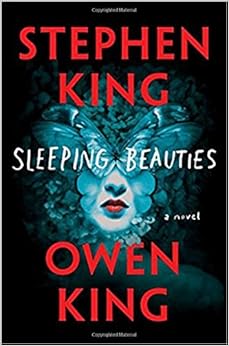
Book Review: Sleeping Beauties

Image result for sleeping beauties

Sleeping Beauties

by Stephen King and Owen King


To start with, I love Stephen King. I always have. I’ve read pretty much every one of his books, most of them more than once; I’ve been reading his work faithfully since I was 13, and my friend loaned me a copy of It to take with me to summer camp. (The Summer of Blood-Soaked Nightmares, I called that one. Subtitle, We all float down here. Sub-sub-title, Don’t ever use the bathroom in the middle of the night when you’re reading It.) I am a great admirer of his remarkable ability to create characters, to build suspense, and to squeeze a thousand details, all of which are both real and also unexpected, into the framework of a story.

So going into this one, I was already going to like it: there have only been two or three Stephen King books I haven’t liked – mostly the ones that have actual aliens invading, The Tommyknockers and Dreamcatcher. Didn’t like Hearts in Atlantis, either, which was too bad because I love the low men and the can toi from Desperation and The Regulators. Anyway, since the man has written like 75 books, the chances were good for Sleeping Beauties: something like 25 to 1.

And I liked it.

It wasn’t my favorite Stephen King book. It might be easy to chalk that up to the influence of his co-author, his son, Owen King; but to be perfectly frank, I couldn’t even tell that this was a collaboration: it just read exactly like a Stephen King book. You’ve got a supernatural being appearing within the very first few pages, and immediately diving into a bloodbath of murder and mayhem, without even the slightest explanation as to who or what they are, or why they are ripping people’s limbs off. You’ve got a large cast of characters, most of them good but flawed people; you’ve got a male lead with a troubled love life; it’s set in a dinky little town half in the wilderness and with one spectacularly creepy location – in this case a women’s prison – that plays into the story in some prominent way. You’ve got a character or two who act as a combination demogogue and Wormtongue, whispering in the ears of the populace, playing on their fears and hatreds to bring out their absolute worst traits; you’ve got a supernatural phenomenon growing more and more powerful, and more and more apparent, though never quite becoming easily explainable; and you’ve got some enormous fight scene at the end, in which at least a good third of the characters die. This one has all of that.

That is not to say Stephen King’s work is monotonous, nor that this book is just like any others of his. Neither statement is true. It’s just that he does have tendencies and preferences, and certain themes that he keeps coming back to: like the mob. Not the mafia mob, but the driven-crazy-by-fear, pitchfork-and-torch-carrying mob. Mr. King knows that mob well, and he recognizes that there is no better reflection of the evils of the 20th century and beyond – unless it is the slick-talking small-town salesman-and-politician which shows up in many of King’s works as well; though not this one.

But there are some real distinctions, as well, in all of King’s books, and in this one. The lead character, for instance, is an interesting man that King has never done before: he is a prison psychologist, married to the town sheriff – another new element for this book, because I can’t remember another woman cop; usually his cops are the bad guys, which is true of several of the cops in this book, but not the sheriff. But her husband, the prison psychologist – Clint Norcross – was a former foster kid with old anger issues from his youth, which was exceptionally violent. He was not the madman that Jack Torrance was in The Shining, and not the epic hero Everyman that, say, Stuart Redman is in The Stand, or Stuttering Bill Denbrough in It. Clint doesn’t save the day. Clint is a mostly good guy who does mostly good things. That’s all.

The real story here is not the Stephen King setting or the tropes; it is the question of sex. Gender. Men and women. Because the concept of this book, the supernatural event that throws everything into chaos, is this: all of the women in the world fall asleep, and they don’t wake up. The supernatural being who comes in and starts removing limbs in a shower of blood is a woman, perhaps Eve or Lilith or Wonder Woman or Pandora or all of the above – certainly Helen of Troy – and she represents a greater power that has decided to give women a chance at a better world, a world where they don’t have to be beaten or raped or killed by men. So whenever a woman falls asleep, she spins a mystical cocoon; and she remains in the cocoon until further notice, while her soul goes – somewhere else.

And meanwhile, without women to abuse and destroy, the men turn on each other.

That’s the basic story, and parts of it were tough to read: the stories of women suffering at the hands of men, fictionalized but by no means exaggerated by King, were often heartbreaking and enraging. I got a little frustrated with Clint Norcross, who reads sort of like the hero, but isn’t really the hero simply because he’s a man; I did like the main villain, who leads the mob into the final fight, because he was sort of the other side of the coin from Clint, which was interesting. But I certainly didn’t like the son of a bitch. One interesting thing, though: King has said that the quickest way for an author to get an  audience to dislike a character is to have the character hurt a dog. (A lesson King probably learned from Jack London). But the villain of this book? He is kind to dogs. Make of that what you will. In some ways, the hero is no specific person, and neither is the villain: the hero of this book is the better half of the human race. (Guess who the villain is.) And they’re not all perfect either, of course, because King doesn’t write perfect characters; but they’re a hell of a lot better than the men. It was a little tough reading 700 pages about why my gender sucks. But it certainly wasn’t news.

The suspense is great; the violence is savage and glorious, as always; the big fight at the end is wonderfully apocalyptic. I actually didn’t like the supernatural element as much, because I didn’t really like the resolution. Should have gone the other way. But I did like the fox. And the Tree.

This is a Stephen King book. It’s not for everybody, but if you like Stephen King, you’ll like this one. I did.

Contempt and Hate

I don’t think most of us understand hate.

I know I don’t. I don’t think I’ve ever actually felt it.

We use the word often; I use it all the time. I hate voluntary ignorance; I hate violence and war; I hate BBQ potato chips. But we also say “love” more than, I think, we mean it: I love my dog and I love my wife, but I also say I love Ren and Stimpy (Ren more than Stimpy – though I still love Stimpy, the big goof!), and I love Cheez-Its. Obviously, the feelings aren’t the same, aren’t even similar, and I have written before about the absurdity of this language, with its incredible vocabulary and the multiple nuances and shades of meaning available in the specific words and the specific uses we can put them to, having only one or two words for a positive feeling – I “like” this, and I “love” that. Now, that actually isn’t true, we have a ton of words to describe good feelings; and it would make me ecstatic if we could start saying adore and cherish and esteem – I am fond of funny T-shirts! I hold napping in high regard! – but that’s probably not going to happen.

Considering, however, all of the talk that has been flying about regarding hate “lately,” with Charlottesville, and with the alt-right administration currently abandoning the White House like lice fleeing the comb, I think this particular word requires some serious attention. I fear we are misusing it, and therefore making a mistake in how we handle the people, the groups, and the actions to whom we apply it.

Now, as I am unsure that I’ve ever genuinely experienced the feeling of hate (which doubt makes me think that I can actually be sure that I have not, because I think if I had, I would know it), it would seem that I could not write about it; but I can speak from observation, and also from the similar emotions I have felt, as hate is on one end of a spectrum, and all of us have been somewhere on that spectrum. I also have expert testimony to draw from: because I talked to my wife about this subject, and I asked her, “Do you think you’ve ever experienced real hate?” She said “Yes” before I could even finish the question. Without hesitation, without equivocation. I don’t intend to air her dirty laundry here, but suffice to say that one of her parents is one of the best people I’ve ever known, and the other one is very much the opposite of that. (For those reading this who may actually know my wife and her family, be aware that you have never met the shitty parent; you know her step-parent, who is a fine person as well.)

Here is how she describes what she feels for that parent. Every time she thinks of this person, it makes her angry. Angry enough to do harm: to punch, to kick, to attack. Every single time. It follows her around, she said, this anger; it is a part of her, and it never goes away. This is partly due to the fact that the object of her hatred, as one of her biological parents, is also a part of her; she knows this, and she hates that it is so. Everything that she hates about this person, reflects in some way on her, either because of their connection, or because of how it makes her feel. Which just makes her angrier.

That is hate. Hate is anger that lasts, and that never goes away. Violent, intense anger, anger that taints everything around it, including one’s own self: to have something or someone in your life that you hate would make you upset with yourself for feeling this way, particularly in this culture that teaches forgiveness and resolution and closure. My wife cannot force this to heal, cannot close this wound; and so it festers and aches and weeps. This, of course, intensifies her negative feelings, because then she feels saddened that she has to continue dealing with this, that she can’t find a way to get over it or get past it; and then she naturally blames the source of that hate for bringing these other terrible feelings on her, as well, for being so hate-worthy that now she has to carry all the rest of it along with the hate.

(A final note: she is right. That parent is worthy of hate. It’s the closest that I feel to hate, as well, because of what my wife has had to suffer, and continues to suffer. The cultural trope that my wife should forgive and forget is nothing but nonsense. That person does not deserve forgiveness. Those of you who may feel the urge to say that she should turn the other cheek, that her feelings are only hurting her and will go away if she forgives: shut up. You don’t know what you’re talking about.)

I have felt anger that made me want to do violence. I have felt it several times for a single person or event, so I think I have felt some level of hate; but my hate, my anger, has always faded, and I’ve always been able to feel better afterwards. That fact has enabled me to call myself a pacifist, to say that I oppose violence in all forms at all times. Because I have always been able to escape my desire to do violence, so I have the luxury of thinking that people can always do that, can always turn the other cheek and just – calm down. (Also, I have never had to fight for my safety or my life, and so I can think that people never really need to do that.) This has made me incapable of understanding people who are members of what we blithely call hate groups: why, I think, can’t they just calm down?

There’s two answers, there, because I think there is more than one type of member in a hate group. Probably there is a spectrum as broad as the number of people in the group, but there are two categories at least we can put them into, and should. One is the group that is actually, genuinely filled with hate: every time they encounter the object of their hatred – let’s say, every time a Neo-Nazi encounters a Jewish person, or every time a Klansman meets an African-American – they are filled with a rage that brings them to violence. That rage never fades; they carry it with them, everywhere, always. It is a part of them. It is possible that they are upset with themselves, and saddened, as my wife is, that they cannot simply let that rage go; I would wager that if they lose loved ones, family members or friends that turn a cold shoulder because of the Klansman’s/Neo-Nazi’s hate, that they wish that they could just let the hate go. But they can’t: and every negative feeling that gets piled on someone who hates, gets added to the list of reasons to hate. The object of the hate receives the full blame for all of the consequences of hate. The Klansman thinks, “If those [African-Americans] wouldn’t be so awful, then my life wouldn’t be so terrible. I hate them even more for making me hate them, and for screwing up my life with that hate.”

This kind of conflict cannot be reasoned with. It cannot be cajoled away. I don’t know that it always lasts for everyone who feels it; surely some people change. But I don’t think there is a pattern to that, not a process that can be prescribed to end real, violent, hate. I think the only thing that can be done about it is my wife’s solution: separation. She never sees the person she hates, and never intends to. It doesn’t make her feel better, it doesn’t make the hate go away; but it keeps her from becoming violent. It minimizes the occasions when she has to think about it. (And I have to say: as important as I think this topic is, I feel terrible that writing this is going to drag my wife back down into everything she feels about her family. I really am sorry. She will of course read this before it is published and so it is possible, if she wishes it, that no one else will ever read it.) That’s the best we can do with the people who feel genuine hatred.

But for the rest of them – probably, I think, the majority of them – what they feel is not hatred. For them, it’s more like me saying I hate when my students ask me the same question three times in a row (“When is this due?” “Friday. It says it on the board.” “Wait – when is it due?” “Friday.” “What’s due on Friday?” “I hate you.”). That does drive me crazy; but it doesn’t make me feel violent, and it doesn’t make me feel sad. I don’t even know that it makes me angry, as such.

I think the word for what I feel at those times is: contempt. Maybe disgust, but I think disgust has a visceral, nauseous element; disgust turns one’s stomach. Students not paying attention doesn’t turn my stomach. What it does do is make me smirk at them, and think mean things about how dumb they are – after all, why can’t they read the due date on the board, right over there? Why weren’t they listening when I explained this to them not thirty seconds ago? They must be idiots. They’re not, not really: I’ve been a teacher for 17 years, and I don’t think I’ve ever had a student that I would call an actual idiot; every single one of them was either capable of doing what I asked, or had a reason (such as autism or developmental disabilities) why they couldn’t do it. The majority of them have not done the majority of what I have asked, but not because they were idiots. When I think that, it is a dismissal, a belittling, created from my contempt.

That, I think, is what most members of hate groups actually feel for the object of their “hate.” Contempt. I think their ideas are about as valid as my contempt for my students when they don’t listen, and I’d guess that every instance of contempt is similarly unfounded; it may be that their contempt is, like mine, largely projected: I get mad at my students for not listening at least in part because I know full well that I never really listened to my teachers when I was in high school. My irritation with them is certainly some irritation with my past teenaged self, seen reflected in their slack jaws and dull eyes, so like my own. It’s also true that they are most distracted when my class is most boring, and I know that when it is boring, it is mostly my fault, not theirs (though I will note that often the boring things I teach are unavoidable: somebody has to explain commas and apostrophes and the passive voice); when I taught John Knowles’s terrible novel A Separate Peace, boredom was the appropriate response. Maybe even contempt.

But I’m not all that interested in trying to understand why Neo-Nazis feel what they feel, whether it is contempt or it is hatred; I don’t really care. There isn’t a way to feel hatred for an entire race that is justified the way my wife’s hatred is justified, because an entire race of people cannot be guilty of heinous acts towards a single person. Contempt for an entire race is also moronic, as my contempt for my students would be if it lasted more than a few seconds; but after they all know what the due date is, we go back to discussion of George Orwell, and they have intelligent and interesting things to say, and I realize they’re not at all idiots, and I was being a jerk when I thought they were. I don’t understand why Neo-Nazis and Klansmen don’t have that same realization. I kinda think they’re idiots. That is the biggest difference: my contempt is only momentary, and never very serious; a Neo-Nazi feels a long-term, maybe even a permanent contempt for the contemptuous object. Enough to make him willing to join the swastika crowd. The Neo-Nazis that aren’t idiots – and of course there are some such – either feel hate, or they are those who can be turned away from their hate groups, those people who make a friend of a different race and realize they maybe shouldn’t be marching in the hate parade.

Here’s what matters. Contempt can frequently be dismissed as unimportant, because it does not incite violence. Nobody wants to hit someone they feel contempt for; the object of contempt is too pathetic, too insignificant, to go through all that trouble. You might shove them out of your way, but you would never pursue them and beat them; you would never run them down with your car, or hang them from the nearest tree. Those are acts of hate. Hate, obviously, should not be dismissed as harmless. That is not to say that everyone who hates is violent or murderous; but the emotion creates the chance of violence, where contempt does not.

I think a lot of our treatment of Neo-Nazis and Klansmen and other white supremacists is contemptuous. We make fun of them, we belittle them, we dismiss them. We feel contempt for them, because we think that all they feel for their victims is also contempt, so we don’t really worry about them doing harm. (Also: they’re idiots. I think.) By contrast, our treatment of terrorists is fearful: because we know that they feel hate, and therefore are they very dangerous. People who would set off a bomb in a crowded place are full of hate. People who would drive a car, or a plane, into innocents, are full of hate. And if and when we see white supremacists marching, at night, carrying torches, chanting “BLOOD AND SOIL!” we recognize that as more than contempt: that is hate. You watch video of police officers setting attack dogs on civil rights protesters, it is clear: that is hate. Hate, genuine hate, must be treated as something dangerous, because it is. Treating a person filled with hate as if they only felt contempt would make us vulnerable; we can turn our backs on people who feel contempt. We can get up in their faces during a rally, we can yell at them, we can follow them playing “Ride of the Valkyries” on a tuba. We can laugh at people who feel contempt. It is dangerous to treat those who hate as if they only feel contempt. That is the first mistake we have made in the past, and hopefully, the events of Charlottesville will remind us that ignoring, dismissing, belittling those who actually hate is never going to make them go away. For them, we must make them go away: we must enforce separation. Which probably means law enforcement.

But here’s the thing. When we treat those who only feel contempt as if they actually feel hate, that is ineffective, too. Because it isn’t justified: a guy who makes racist jokes doesn’t need to be on an FBI terror watch list. Some putz who hangs a Nazi flag on his house, or a Confederate flag on his truck, doesn’t need to be treated as if he is about to explode into violence. And if you confront that person and say, “You’re full of hate!” in whatever way you say that, they will say, “No, I’m not. I don’t hate anybody. I just think racist jokes are funny, and the Confederacy fought for Southern pride and state’s rights.” They may say, “I have plenty of [black/Jewish/female] friends.” And maybe they do, though I think it is hard to be friendly with someone for whom you also feel contempt. But regardless, they do not feel hate. They can reasonably deny any label that they are members of a hate group, or that they are a violent threat to a civil society. If you try to force that label on them, they can turn it around and call you intolerant, and a bigot; they can call you Communist or antifa or the alt-left. They can claim that you are limiting their freedom of speech by keeping them from speaking on your college campus. They can take the moral high ground. Then they can argue for greater freedom for their groups and their causes – and then that means greater freedom for the members of those groups and causes who actually feel hate, who are genuinely dangerous.

Then you get Charlottesville.

So the issue is, we have to make a distinction between those who feel contempt, and those who feel hate. And we have to treat them differently. The hateful must be watched, and prevented from doing harm; the contemptuous we should ignore.

Unfortunately, that’s as far as I’ve gotten in my plans for how to fix all of this. I do not know how to discern hate from contempt; they probably blend together for the observer, they may both be present in the same person. No reason why a Neo-Nazi couldn’t feel contemptuous of Jews and hate African-Americans, for instance. Or feel contempt for African-Americans and hate black policemen, specifically. A contemptuous person may get angry and sound just like someone full of hate, even if that feeling fades quickly, where it wouldn’t in someone who genuinely hates. But I do think that we will make more progress, and have better results, if we treat the two categories differently when it is clear which is which. That crying Nazi who got banned from OKCupid, for instance? That dude is not full of hate. A man who hated non-whites would hate them more after they got him banned from Tinder. He might lie about it, of course; but I think he probably would not cry.

Though maybe that thought is coming from my own contempt.

I hate that.

Lie For a Mockingbird

So I have this essay I wrote yesterday. It’s an example for two of my classes: my AP Literature students and my Honors Freshman English — the latter we enjoy calling HELA 9, while the former insists on “It’s Liiiiiiiiiitt.” I was going to write two essays, one for each class; but both are writing literary analysis, just on different works and using different prompts: HELA 9 is writing about To Kill a Mockingbird, using simple essay questions I came up with; the AP class  is writing about Macbeth, using old AP test prompts. I wrote this one about TKAM, using an AP prompt; I figured that way I could use it for both classes, without stealing anyone’s topic idea.

I don’t know if people want to read these essays I write for school; but right now, this is pretty much all I’m writing. And, as my wife pointed out when I talked to her about posting this, this is part of me, my life and who I am. And God, I love this book. Just reading the last scene to find the quotes I wanted actually made me choke up a little.

So, here you go. Enjoy. I’ll post another essay in a couple of days, and a book review as soon as I can get to it. You can always pop over and read my time-traveling pirate serial, Damnation Kane.


(2016) Many works of literature contain a character who intentionally deceives others. The character’s dishonesty may be intended either to help or to hurt. Such a character, for example, may choose to mislead others for personal safety, to spare someone’s feelings, or to carry out a crime.

Choose a novel or play in which a character deceives others. Then, in a well-written essay, analyze the motives for that character’s deception and discuss how the deception contributes to the meaning of the work as a whole.

There’s a lot to argue about in literature: was it the Lady or the Tiger, was Shakespeare one man or many (or a woman?), is it Gatsby’s fault or Daisy’s? But one thing we cannot argue about – for it is true beyond contestation – is that Atticus Finch is the best human being ever to exist. Best father, best lawyer, best person. Bar none. No question.

It says something, then, that at the end of Harper Lee’s classic, Atticus, the pillar of moral rectitude, the antithesis of all hypocrites and liars, the man who is the same on the public street as he is in his home – that man chooses to lie. And not only to lie, but to convince his young daughter, Scout – the second best person in all of literature – to lie, as well. It says that sometimes, in certain extraordinary cases, it is not only acceptable, but even good, to lie. Because sometimes, telling the truth would be like killing a mockingbird: harming someone who never did anything bad to anybody. And that, of course, is a sin.

Not all liars are good liars. Two other characters in To Kill a Mockingbird, Bob and Mayella Ewell, lie extensively, and perniciously. The court case the Ewells precipitate serves as the major conflict for the novel’s larger scope; the story is both about the children growing up, and also about this case, and how the Ewells attempt to take advantage of the prejudice of the time even as Atticus tries – unsuccessfully – to fight against it. The case is built entirely on lies, and Atticus shows the jury the truth – against their will, at least in part, because so many things would be so much easier if they could just believe that the Ewells are telling the truth. But they can’t believe that, because the Ewells are not telling the truth. Atticus shows the jury the truth, both about the specific case and also about the Ewells; and because he does, he becomes a target of Bob Ewell’s violent tendencies, his savage and furtive need for revenge; this then creates the need for Atticus’s own lie, and Scout’s as well.

Mayella, the victim of a series of family secrets, including her father’s alcoholism, his physical and mental abuse, and even his sexual abuse of his eldest daughter, tells a number of lies in the name of finding some small token of real affection – because what her daddy do to her don’t count, as we hear from her own victim. When Mayella, a 19-year-old white woman in the town of Maycomb, Alabama, in the 1930’s, decides she wants to kiss a man who is not her father, she seeks out a man she can manipulate and control: a black man. We can understand this, as Mayella has no control over her own life, which is spent taking care of her drunk father and her seven younger siblings; but Mayella wants something more than a life of filth and degradation, as we can see from the geraniums she grows and tends in the junkyard where her family lives in squalor. We appreciate this. Mayella is harmed, repeatedly, by those who are stronger and more violent than she; so when she looks for romance, she tries to protect herself from harm in this vulnerable moment – perfectly understandable. And, as far as it goes, this gives us a reason to at least forgive her various lies: she sends her siblings to town for ice cream, so that she can be alone with her would-be lover; she tells the man as he passes by that she needs help with a repair job inside the house,  so that he will come inside with her, which he would normally never do, knowing how impolite it would be considered for a black man to be alone with a white woman – and also, how dangerous. Then, when Tom Robinson, this kind-hearted man – chosen also because he is, as Scout sees, a fine figure of a man (or would be, if he were whole and not lacking the use of his left arm – and there can be little doubt of the symbolic value of that handicap for Mayella, who is frequently and savagely beaten by a left-handed man: Tom must be a man she does not need to fear), and chosen despite the fact that he is married with three young children – comes into the house, Mayella lies again to get him into her actual grasp, telling him to get her down something from on top of a tall bureau, and then grabbing him around the legs in an awkward and almost precious embrace.

All those lies for Mayella would be forgivable (Though the fact that she attempts to ensnare, through deception, a married man, makes all this much less sweet – a mood that is portrayed perfectly when Mayella tells Tom, “Kiss me back, nigger!” Ah, l’amour.) except for the most important lie, the lie that Mayella tells herself: that she can get away with this. It’s really quite absurd: we don’t know how long it would take the Ewell children to go to town and get ice cream, but neither does Mayella, and since Tom doesn’t see the children at all, they’re already on their way when Tom walks by after work. How much time does Mayella have, in the best case, for her tryst? Not even that long, of course, because her drunken abusive father returns home even sooner than the children – another circumstance she should have been able to foresee, but must have told herself was safely impossible – and catches her kissing Tom. In that moment, we see the truth of Bob’s twisted psyche: he does not rage against Tom, despite the obvious “sin” he has committed, the unforgivable sin of embracing a white woman; no, Bob yells, “You goddamn whore, I’ll kill ya!” at his daughter. Bob knows who is behind this, and we know a truth then about Bob. This truth, of his hatred of his daughter and his attraction to her, as well, leads him to beat her black and blue, even while Tom runs away.

But Tom doesn’t escape, as Mayella must have known he wouldn’t; she then turns him into her scapegoat, aided and abetted – perhaps provoked – by her father. It is not immediately clear to the reader why the Ewells do this, or even who is really behind it. Does Mayella insist that Bob help her create this fiction, in order to protect her virtue? Does Mayella see this as one small show of love she can actually garner from her father? Or does Bob run for the sheriff in order to teach Mayella a lesson? Maybe he does it to show Tom that he can’t get away with trying to put the moves on a white girl? Does Bob lie to himself about that? Do they seek only to gain the temporary approval of the white people of Maycomb, who are glad for a chance to put the blacks in their place, and might be a little grateful to the Ewells for creating that opportunity? That may be: Bob gets away with several small offenses against the elites of the town, including Atticus; he even, for a little while, gets a job, before turning back into the welfare-cheating drunkard he’s  always  been. But we don’t see any reward for Mayella. All she gets is a beating. Presumably more than one.

When Atticus argues this case in the Maycomb County Court, he describes Mayella’s act as something like what a child does when she breaks something: she puts the evidence of her crime as far away from herself as possible. Mayella, Atticus says, is putting Tom Robinson as far away from her as possible, in order to cover up her crime of lusting after a black man. Perhaps the childishness of that metaphor gives us our clue about Mayella’s role in this: perhaps she seeks only self-preservation. But I don’t think so: because it is Mayella, far more than the foolish and untrustworthy Bob, who seals Tom’s fate. After Atticus shows how much of her story is a fabrication, Mayella makes one last statement. She talks about another fiction of the time and place, Alabama in the 1930’s; a commonly accepted one. By calling up this fiction, she forces the men of the jury into a role that at least one of them (who argues for acquittal) does not want, but cannot escape. Mayella says,

“I got somethin‘ to say an’ then I ain’t gonna say no more. That nigger yonder took advantage of me an‘ if you fine fancy gentlemen don’t wanta do nothin’ about it then you’re all yellow stinkin‘ cowards, stinkin’ cowards, the lot of you. Your fancy airs don’t come to nothin‘—your ma’amin’ and Miss Mayellerin‘ don’t come to nothin’, Mr. Finch –“

In the next line of the book, Scout observes that “she burst into real tears.” Real tears, because Mayella is indeed distraught, as who wouldn’t be; but real, also, in contrast to the falsehood she just spoke. The men in the courtroom – and mostly, she is speaking to the jury, as Atticus and Judge Taylor and Sheriff Tate are unlikely to come to her defense – are not cowards, or at least not in this instance. But by insisting that she is the victim of a sexual crime, committed on her white self by a black man, those fine fancy gentlemen have no alternative but to act as Southern gentlemen would have acted at the time: they must kill the black man who defiled the innocent white girl. They cannot take the word of a black man over the word of two white people, not even when that word is the truth. And indeed, in the face of that universally accepted lie, Atticus’s fancy airs don’t come to nothin’. The jury convicts; Tom goes to jail; he is there shot and killed, supposedly while trying to escape – but that is another lie, as he is shot seventeen times, a number of wounds impossible to credit were he actually in the process of climbing the fence of the football-field-sized exercise yard. Tom was, of course, executed by the white prison guards, probably as revenge for his “crime.”

That’s a sin.

Bob Ewell tries to commit another sin, equally heinous; unable to directly harm his perceived enemies, Judge Taylor and Atticus, Bob goes after two other people who did him no harm: Atticus’s two children, Jem and Scout. Bob tries to kill them both as they walk home in the dark on Halloween. But Bob unwittingly chooses the worst possible place to make his attempt on the children’s lives: he attacks them near the Radley house, where lives the most dangerous man in the entire town: the mad boogeyman, Boo Radley. Boo Radley’s reputation is another lie, because the genuinely kind-hearted shut-in hears the struggle, and at great risk to himself, charges out of his hermit’s cave and saves the children by killing Bob Ewell with a kitchen knife. Sheriff Heck Tate investigates the scene once the children are brought home safe – by Boo, who may actually get to compete with Scout and Atticus for the title of Best Person in Literature (He’s certainly the dark horse candidate) – and then the sheriff goes to talk to Atticus about what he found. Atticus is trying to think clearly through his haze of terror about the near-murder of his children (At least partly his fault, both for opposing Bob Ewell and then underestimating the brutal drunkard’s willingness to cause harm), and trying to figure out how much red tape Jem will have to go through for having killed Bob in defending his sister, which is the story that Scout told them both. Not a lie, that one; she wasn’t able to see what really happened, and she’s guessing; Atticus takes her at her word.

But Sheriff Tate knows better: Sheriff Tate knows that Boo Radley brought out a knife from his kitchen and stabbed Bob Ewell with that knife. Tate knows this because he found Bob Ewell’s knife, a switchblade, at the scene, possibly in Ewell’s hand – he says he took the knife off of a drunk man. Tate pockets that knife, and then tells the Finches a lie: he says that Bob fell on his own knife, the kitchen knife, which Tate says Bob must have found in the dump. “Honed it down and bided his time… just bided his time.” Atticus thinks that Tate is trying to save Jem from having to go through the legal system, but that isn’t it. Tate is trying to save Boo. Because Boo is a shut-in, a deep recluse who is nervous just being in a room with other people; and if the truth comes out, then Boo will suffer.

“I never heard tell that it’s against the law for a citizen to do his utmost to prevent a crime from being committed, which is exactly what he did, but maybe you’ll say it’s my duty to tell the town all about it and not hush it up. Know what’d happen then? All the ladies in Maycomb includin‘ my wife’d be knocking on his door bringing angel food cakes. To my way of thinkin’, Mr. Finch, taking the one man who’s done you and this town a great service an‘ draggin’ him with his shy ways into the limelight—to me, that’s a sin. It’s a sin and I’m not about to have it on my head. If it was any other man, it’d be different. But not this man, Mr. Finch.”

Mr. Tate was trying to dig a hole in the floor with the toe of his boot. He pulled his nose, then he massaged his left arm. “I may not be much, Mr. Finch, but I’m still sheriff of Maycomb County and Bob Ewell fell on his knife. Good night, sir.”

And Atticus, finally understanding Tate’s point, makes the decision. He turns to Scout and says, “Scout, Mr. Ewell fell on his knife. Can you possibly understand?”

Atticus looked like he needed cheering up. I ran to him and hugged him and kissed him with all my might. “Yes sir, I understand,” I reassured him. “Mr. Tate was right.”

Atticus disengaged himself and looked at me. “What do you mean?”

“Well, it’d be sort of like shootin‘ a mockingbird, wouldn’t it?”

Atticus Finch – and Heck Tate, who is also a genuinely good man – decide to tell a lie in order to save Boo Radley from attention, which to him is equivalent to harm. The decision is surely made easier for them by the fact that Boo has not, in truth, done anything wrong; by the laws of our society, his act was justified, and no murder. But these men do not lie easily or willingly; throughout the book, Atticus has refused to contemplate saying something or doing something other than what he believes to be right. He won’t even tell little white lies: when his brother Jack explains to the very young Scout what a whore-lady is simply by putting her off with a distraction, Atticus says, “Jack! When a child asks you something, answer him, for goodness’ sake. But don’t make a production of it. Children are children, but they can spot an evasion quicker than adults, and evasion simply muddles ‘em.” And then when Scout asks Atticus what rape is, he responds by saying it is “carnal knowledge of a female by force and without consent.” Where most people would hem and haw, where even the otherwise bold and straightforward Calpurnia told Scout to ask her father what it meant, Atticus simply gives a clear and uncensored definition. He tells Scout the truth.

But in this case, in this one case, Atticus is willing to lie. He is willing to tell his daughter to lie, as well. Because Atticus knows that what makes an act a sin is not truth, or falsehood: it is harm. Because they do nothing bad to us, it is a sin to kill a mockingbird. It is not a sin to lie for one.