
I’m excited about this.
I’m nervous about it, too: and also somewhat conflicted. But mainly, I’m excited.
I’m going to publish a new book.
Part of the conflict in me is that it isn’t the book I intended to publish. I regret to inform those who are waiting, patiently or impatiently, that I am not going to be publishing the final volume of The Adventures of Damnation Kane this spring. I won’t have the book finished in time for the Tucson Festival of Books, which was the immediate deadline I was trying to hit; I worked on it all through the end of 2022, but I realized that I wasn’t going to be able to get it done AND make it good in time for the Festival. I’m not going to bring out a book that isn’t good: but I very much wanted to bring out a book for the Festival. I spent a bunch of money on a booth, and I didn’t want to be there with only the same two books I had last time.
So instead, I am going to publish a different book.
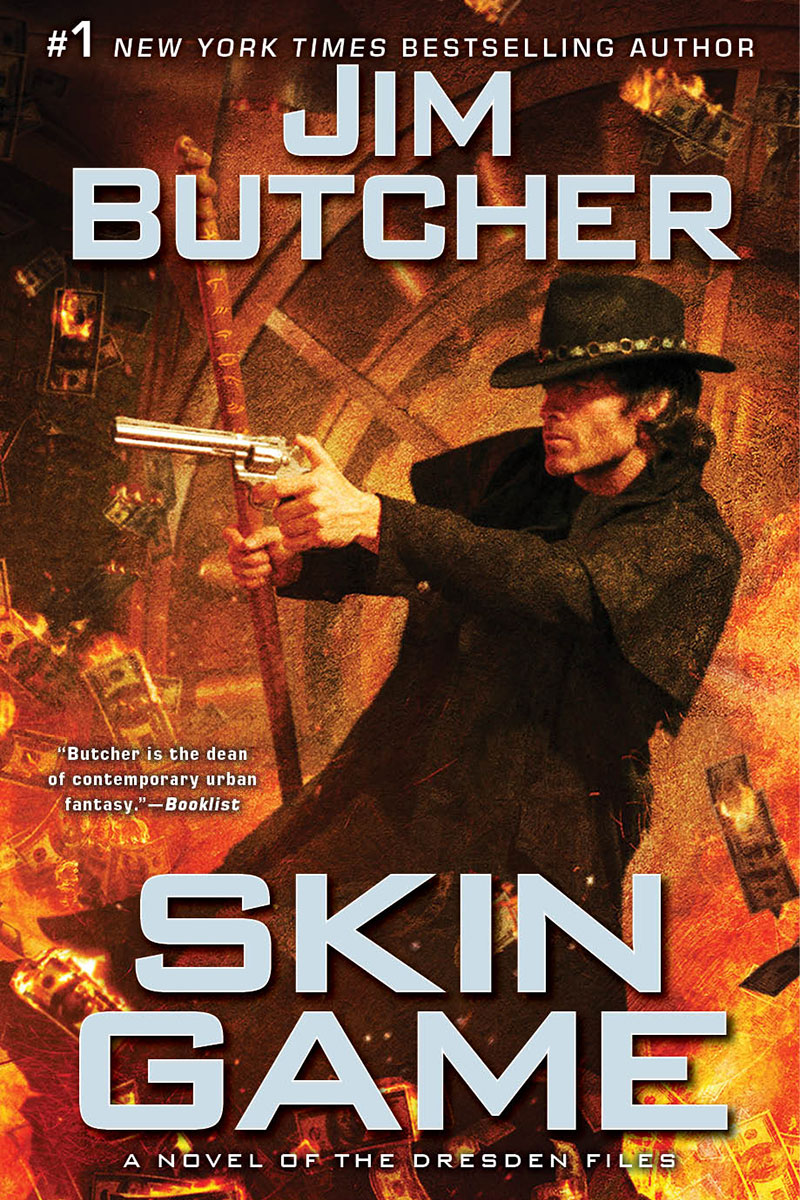
It’s a book I wrote some time ago, and I think it’s one of my best pieces of work — honestly, better than Damnation Kane, though there are lots of things about my pirate story that I love unreservedly. But there are limitations in the Damnation books, and this one really captures the kind of writing I want to do, the kind of writer I want to be. It’s an urban fantasy novel, dark almost to the point of horror, with a total smartass for a main character; I think it captures the same tone that one of my fantasy writer heroes, Jim Butcher, has mastered with the Harry Dresden books, which I think is one of the best series and one of the best characters since Tolkien.
And that’s the other conflict for me in publishing it. See, this book got closer than anything else I’ve written and submitted to actually getting picked up by an agent, and then (presumably) by a publisher. Jim Butcher’s agent read the first chapter, and then asked to see the first 50 pages of the novel — the only time in fifteen years of writing and trying that I have not simply been rejected by an agent. She then turned it down, but still: I thought this was my best shot at getting an agent, and getting published by a traditional publishing house. And I’ve been holding the book back, refusing to self-publish it, because I still dream of finding representation and a legacy publisher to produce my work. That, along with winning awards and worldwide fame and wealth, is the last ambition I have as a writer. I’ve already done the main things, the big things: I’ve written books, good books, and had people buy them, read them, and tell me they are good books. That, for me, is success. I am enormously proud of my accomplishments as a writer.
But there was still that one remaining ambition: and this was the book I meant to use to achieve it. (There’s another book I’ve never published, but that’s because I don’t think I can publish it under my name unless I quit teaching first. That’s a whole other thing.)
But I realized: first of all, though I think this is a good book, I don’t think it’s the best book I’ll ever write. I wasn’t one of those flash-in-the-pan literary prodigies who created my one good work before I was 25; I think I’ve gotten better with every book. I’m hopeful that the last Damnation Kane book will be even better than this book, and the one I write after that will be even better than both of them. I think my last book will be my best book, and I’m a long, long way from my last book. And secondly. just because I publish these books myself doesn’t mean they can’t be picked up by agents or legacy publishers; at this point, honestly, my publication of my books is also my best advertising for them, so making this book available is the best way for me to get it noticed.
And finally, you know what? Even more than I want to use this book to get published, I want to share it with people. I want people to read it. I want you all to like it. Maybe even love it. That’s really why I write, after all: because it’s fun, and inspiring, and meaningful; and I want other people to find the same fun and inspiration and meaning that I find in the words.
So to that end, I’m going to post the first chapter of the book, which captures the spirit of it, and which gives a good idea of what the book is about. Sometime soon I will be able to post the cover of the book, and sometime soon after that I will be able to make copies available for purchase: and I hope that you all will be willing to buy it, and read it, and — I hope — enjoy it.
Let’s start with this.
The novel is called BRUTE.
(Content trigger warning: this scene includes violent death and, well, nasty stuff.)
BRUTE
Prologue
I see him, though he doesn’t know it. I see him watching. Watching me.
He leans against the wall, shadows draped across one side of his face, the other side glowing in the harsh light from the halogens above. There’s a bored expression on his face as he sips Coke through a thin red straw, like blood through a tiny vein. His head turns from far left across to far right, then down to grab the straw with lips and tongue and drink another sip.
He is too young to be here in this club, so I doubt there is rum in the glass, but I am too far away to smell it and know for sure in this air, crowded with the scents of too many. He looks soft and well-fed, his clothes wrinkled, torn, savagely black; but they are soft, too, and nothing to do with work. His soft hair is dyed black, as well. To me, he looks wealthy. Spoiled. Probably the neglected child of a powerful parent. I bet he got into the club with a last name instead of an ID.
He went straight to that wall when he arrived, and his eyes immediately began roving, searching for someone cool. But since he saw me, his gaze has hurried over the rest of the club so it can linger on me, concealed by his lashes as he sips his drink.
He wants to be nonchalant, so he keeps his distance. That all-important distance. Nothing can be allowed to break that shell of cultivated boredom, the complete alienation which separates him from the unwashed masses, who can’t possibly understand his pain. Maybe – maybe – I can.
I might be what he wants me to be. What he hopes I am, the thing he has hoped to find. But I also might be a freak, a loser; and if I am, he can’t be seen showing any interest in me. I am wearing a dark fedora forty years out of style, and a dark overcoat, dark leather gloves, and heavy sunglasses – at night, in a bar, on a warm spring night in San Francisco. I sit alone in the bar and sip my drink, and nobody talks to me and nobody looks at me. These things have intrigued him. So he watches.
Of course, he might simply be gay. I do look pretty damn hot in this hat. Either way, I don’t want him to approach me in here. I am curious about the pickup lines he might use: maybe something like, “Pardon me, but you look like someone who understands the cosmic loneliness that envelops us all in a cloud of neverending night. Can I buy you a drink to drown our sorrows in as we wait for the inevitable curtain to fall?”
Actually, that’s not bad.
I take a deep breath, enjoying the harsh antiseptic smell of my gin and tonic, and then I down the last swallow in the glass, tasting nothing. I drop money on the table, enough to cover the tab and a generous tip for the waitress, a pale, pretty redhead who had served my drink without trying to see what was behind the sunglasses. If she had tried, and succeeded, then she would have gotten much more than money for her gratuity. She would not have wanted it.
I walk out past the bouncers, through the short maze of corridors that once connected the office spaces to the open central area, back in the 70’s when this was a warehouse. A sweatshop, actually: three hundred and fifty Vietnamese women stuffed behind ancient sewing machines dangerous with exposed gears and needles that punched through fingers as easily as cloth. They spent sixteen hours a day in here, making those tiny American flags – the ones that people would wave on Memorial Day to honor the men who died in Vietnam.
Sometimes the world paints the irony with a heavy hand.
The sweatshop had been closed down thirty years ago amid headlines and indictments, and the warehouse had sat empty for fifteen years before it had been bought and converted. But very little had changed. The doors were scarred steel on rollers, the walls were ugly exposed brick, the lights were harsh and unpleasant. The lights were not supposed to make you relax, they were supposed to make you feel watched. Seen.
The corridors, once intended to slow down any government officials who happened to come in the front so the workers (or at least the owners) could slip out the back, now served as a sound baffle, dulling the edge of the industrial music that rattled the club during drinking hours. Not that the people in this neighborhood would complain about the noise. The warehouse was the last stop on the way out of a depressed and crumbling industrial zone and into the dead and rotting tenements that had once housed the workers, who were now dead and rotting themselves. The tenements now held nothing but the fear and pain and desperation the people had left behind, smeared on the walls like soot, blowing in the wind like cold, greasy ashes. That wilderness of old pain is what draws us here to this club, both me and that kid – who watches my every step as I leave – though we come for different reasons. He and others like him come here because the surroundings confirm what he always suspected about the uselessness of it all.
My reason’s easier. I love the night life. I love to boogie.
I grin as I walk out into the night and take a deep breath of the clammy air. I can smell the Bay, of course, because that’s what you do when you breathe in San Francisco, but I can also smell the heat and the sweat oozing out of the club. I can smell the musky scent of those who come here to hunt, and the quivering eagerness of those who know they are prey and come here because they wish to be hunted, to be taken, and devoured, and freed. I smell beating hearts and moist palms, clenched stomachs and lungs shivering like a new butterfly’s wings. A line of slaver runs down my chin and I wipe it away with one gloved hand. My grin widens into a smile I couldn’t wipe away if I wanted to.
Quickly now: into the darkness. He’ll know where I’ve gone. It will make him follow all the faster.
But before I make it to the corner and turn into the deep shadows there, I am impressed. He steps out from an alley that runs between the warehouse and the moldering brick building beside it. He is in front of me. He used a back door and made a good guess about which way I would turn – a good guess if I am not predictable. I hope I am not predictable. He plants himself boldly in my path and he smiles.
His eyes widen when he sees my teeth, which are now grown too large and numerous to cover with my inadequate lips. They are not a human being’s teeth. But they are also not the teeth he expected.
He falters back, just a little, and I quicken my step. I shove past him, hard. I hate being surprised. I do not like to be seen, like this. As I shoulder past him, I can smell – everything: he is afraid, and both excited and angered by his fear; his cologne is good, understated and expensive; his clothes smell rich, clean; his fingers smell of tobacco, his wrists and chin of the filet mignon he had for dinner; his lips and tongue smell of Coke and dark rum – he is older than I thought, or else he snuck a bottle past the bouncers.
The hunger wakes up and roars inside of me, making my head spin as it drives iron spikes into my spine. But that doesn’t matter. He has seen. I’ll kill him for that. But later; not tonight. I wasn’t ready for him to see me, and that makes it all wrong, ruins the whole deal. I’ll find a wino, an alley crawler as usual. I quicken my step, lean away from him into the night.
“Master, wait!”
Around the corner and into the dark, I pause. He stumbles after me, stuttering to a halt ten feet behind my back. I close my eyes. I don’t want this. Fear is good, fear is fine, but horror and disgust are not. I have learned this. But then his scent trickles into my nose, and brings the truth, for scents cannot lie. He is not disgusted. He is – eager. And still afraid. He smells of sweat and adrenaline, and dry eyes opened wide.
“Master. Please.” He takes a hesitant step toward me and holds out his hand, the thread of tobacco and tender meat rising in the tapestry of his scent. The spikes drive deeper, into my neck and the base of my skull and the hinges of my jaw.
Very well. I cannot fight it. I have nothing left to fight it with. I have learned this, too.
I take off my sunglasses, slowly, though I do not turn to face him. “Who dares to speak to me?” I ask. I growl to hide the slight lisp from my teeth. My part doesn’t call for a lisp.
I know this role, this scene, quite well. I have read the same books he has, I have seen the same movies. I know why he was hanging in the darkest, most depressing nightclub in town, and I know why he picked me out and followed me away from there, to this place, which is even worse. He has convinced himself that what he saw of my teeth, what he saw when my human mask slipped, is false. A trick of the light, no more. Surely I have only two oversized teeth, instead of a mouthful. And now that I have spoken, in a dark voice full of menace and arrogance, now he is sure he is right. He is sure that I am a Childe of Darkness, One Who Walks With The Night, a godlike immortal who drinks the precious nectar of life, the blood of the innocent.
A vampire.
He takes another step toward me. “I am nothing compared to you, my lord – uhhh, Master.” He pauses, probably mortified that he stumbled over the proper honorific. Does Miss Manners prescribe a form of address for someone who is about to kill and eat you? He goes on. “I am one who seeks to serve you. Who wishes to become like you. Who wishes to receive the gift of immortality.”
I almost ruin the scene again, by laughing. That’s the second biggest lie in the books and the movies: that you can “earn” the gift, that it is given for love or as a reward for services. If you catch their attention and impress them enough, we are told, you will be made one of them. What a crock.
The biggest lie, of course, is that it is any kind of a gift at all.
I haven’t responded, haven’t moved an inch, but he starts smelling encouraged. Probably because I haven’t laughed at him. He expects to be laughed at.
“Why would you serve?” I ask in a low voice, just a murmur.
He takes another step, and now I can hear his heartbeat, the racing blood that stains his pale cheeks red and brings the heady scent of warm flesh closer, closer. “Because. Because I want to show them. I’m going to show everybody.” He sniffs, and I can smell just a trace of tears, tears and anger. “I’m going to show them why they shouldn’t laugh.”
I understand, though I wish I didn’t. It would be easier for me if I didn’t understand. Or if, like my masters, I understood but simply didn’t care. If I didn’t understand I could walk away, despite the pounding steel hunger. If I didn’t care I wouldn’t want to walk away. But then, if I didn’t care, I would be something I don’t want to be, something I have not yet become.
Not yet.
He takes another step. “Master, please. Take me. Take me with you.”
The smell of eagerness rises, like an electric current running through musk. The smell of his adrenaline, coursing, rings through me like a bell in my ear. The hunger drives all else out of my mind.
He is three steps, then two steps behind me now, close enough to hear me as I whisper. “Do you know what you ask? Are you sure you want what I offer?”
One step. “Yes, Master.”
I give him what he wants.
When he is dead, I sling him over one shoulder and start running. His weight is nothing to me. I wish I could fly. They can fly. That’s one thing the movies got right. But thinking of them reminds me of what else I’d have to do if I could fly, if I was like them, and then I don’t want to fly any more. Running is fine. I never really get tired, after all – just hungry. Like now.
I get him away from the streets, down by the edge of the water, and then I throw him down. His head flops on his broken neck, and his eyes look up at me, glazed in death but still somehow accusing. He expected me to embrace him, to plunge my fangs into his throat – not to kill him quickly, simply, with a single twist of my hands. His face is the face of thousands just like him, thousands who haunt the dark places, who dream of dark things. If he had been less desperate or less determined, if he had let me leave without seizing the moment and chasing after me, then he might have lived out his life as the rest of them do: never catching more than a passing glance at the things that live in the dark places. Things like me.
I take a deep breath to make sure nobody is nearby. I smell only death: the dead fish in the Bay, the body someone buried over there several months ago – smells like a wino, curdled and rotten before he even died – and, of course, the dead man at my feet. My stomach rumbles then, and it takes a lot of willpower to resist it. But I like this coat. I close my eyes as I strip off my clothes, and again I inhale deeply, filtering out all the scents but his: again I smell the meat and the liquor on his tongue, and the fear and the pain that are ripe on his flesh. And I hate that he smells that way, because I love it.
And when I am naked and ready, I dive in. I tear his clothes from him because they would stick in my teeth, and then I feed. It is not the beautiful moment he expected, that essentially erotic coupling that is the vampire’s kiss. I am a predator, and he is prey. That is all.
I eat his tongue first. Fear makes the flesh salty, and pain makes it bitter, and both are good. But it is only when I eat their tongues that I can taste what I really want, what I haven’t had for thirty years now: the taste of food. Cooked food, the food a man would eat, instead of this dog’s dinner that I get now, the raw flesh and cooling blood of the kill. I tear the meat apart with my teeth: the jagged, cutting teeth of a shark, rather than the graceful fangs he expected. He wanted them to be fangs, he wanted me to use them to take his blood, just as he wanted me to make him my slave. He had that part wrong, too. I’m the slave. I’m not the master, because I’m not a vampire. He wasn’t the beloved vessel that holds the stuff of life which the vampire craves; the red blood, the passion, the warmth of life, the caress of the soul that runs through it.
He’s nothing but meat for a ghoul.


 Just Dusty