This is a test. It is only a test.

(How perfectly ironic is it that the above clip was preceded by an advertisement by HP that runs on the tagline “Every student learns differently.” Now let me talk about standardized testing of those different-learning individuals, shall I?)


It’s testing season again.

If only that meant we could shoot them.

I have been reluctant to write about testing from a teacher’s perspective, because it feels so obvious: of course we hate tests. Of course we do. Everybody knows it, right?

But in the last week I’ve been asked by two different people – one a current high school student, not one of mine but one who presumably knew I’d be good for a rant; the other an auditor for the state of Oregon, who sent me (and presumably thousands of others – but wouldn’t it be funny if it was just me? If some random number generator landed on my Roulette-wheel slot, and my answers were the only ones that mattered?) a link to a survey looking for feedback – about standardized testing. And I’ve had to give standardized tests to my students, and I am working to prepare my AP students for standardized tests that are coming up soon and that are freaking them out; and in my discussions of those tests with those students, I have been sending mixed messages. And presumably thousands of other teachers have done exactly the same.

So there is a reason to write about this. Because maybe it’s not so obvious that teachers hate standardized tests.

But it should be.

I know I’ve written about standardized tests before in terms of grades and evaluation, and that criticism holds true: we put too much weight on test scores only because they are easy to understand. We feel like knowing that someone scored a 1500 on their SATs, and a 142 on their IQ test, tells us something about that person’s capacity and ability and potential. But think of it this way: if I tell you that I scored a 92 on my driver’s test, does that tell you how well I drive? Of course not: it tells you how well I drive when there’s a DMV employee with a clipboard in the car watching my every move. The situation is artificial, and therefore the results are not representative of my genuine abilities or normal performance. And the testing people would say yes: we create a situation of artificial intensity in order to put someone to the test; that’s what a test is, a crucible that melts away the impurities and discovers someone’s purest essence, so to speak. My driving abilities under pressure should represent my best driving abilities, right?

But they’re not, are they? As I drive around town, I will not be driving the same way I did when I drove for the clipboard-man. I will not be as alert, and I will not be as cautious, and I will not be as scrupulous in following the rules. And because of that, I will not drive as well. I will not be using my full driving capacity because I won’t feel the pressure. And so which is my purest essence: the things I can do in an artificial high-pressure situation, or the things I do on a daily basis? Which is my verbal language ability: the 720 I scored on my SATs, or the successes and failures in my day-to-day reading and writing, my failure to comprehend reading material that I didn’t pay much attention to, my failure to make someone else understand my point in an email or a letter or a memo? Wouldn’t it be the latter? Will Durant wrote, “We are what we repeatedly do.” (Often attributed to Aristotle, because Durant was writing about and paraphrasing Aristotle when he wrote it. But Durant was the one who actually said that.) So I would argue that it is our daily practice that shows our actual skill level, not the level we can force ourselves to when put on the spot: that reveals much more about our ability to handle pressure. Even that is flawed: because test pressure is different from actual crisis pressure, because tests are expected and planned, and we can prepare for them, study hard, psych ourselves up, have a good breakfast, bring extra #2 pencils; whereas crises happen without foreknowledge and with infinitely more chaos. What does my ability to handle clipboard-man pressure reveal about my ability to drive in a haboob?

(Note to non-Arizonans: a haboob is a sudden and intense sandstorm or duststorm. It is one of the hazards that Arizona drivers face. But I only included that because I wanted to write “haboob.”)

Nothing at all. And that’s what tests give us in terms of useful information: nothing at all. The nice thing, I suppose, is that now the test companies aren’t even pretending to give useful information; because teachers don’t get to see the test questions.

That’s right. Standardized tests are, like all tests, supposed to tell us how well a student is doing, right? To show us where the student is struggling, so we can focus our instruction on that area and help the student improve? Right: except standardized tests don’t do that any more, because they don’t reveal their questions, nor do they show a student’s right and wrong answers. The scores on standardized tests are also becoming more obtuse: test companies wish to preserve their market, and so they make their score reports esoteric, in order to ensure that people require the company’s services to interpret the test scores. Students don’t get a 70%, a 95%, or an A; they get a number without any context at all. Either a percentile rank, which tells you how well you did in comparison with other students, or you get a raw score that means essentially nothing. When I taught in Oregon and pushed my students through the proprietary Oregon reading test, the OAKS (Oregon Assessment of Knowledge and Skills, isn’t that clever; if test companies and others who sell education materials excel at anything, it is generating semi-clever acronyms.), they got their score automatically at the end of the 54-question multiple choice test. The highest score I ever saw was a 274. The lowest score I ever saw was a 206. So you tell me what that means. Sure, 274 is higher than 206. But does the 206 mean that the student got nothing right? Did the 274 student get everything right? Does that mean the 274 needs no further instruction in reading? Does the 206 kid go back to elementary school? Who knows: the range of scores is wider than the number of questions on the test. It’s not even a matter of multiple points, or partial credit; it’s a multiple choice test. And even if I could know how many questions a student got right or wrong, I don’t get to see the questions, because of fears about test security, because the testing company doesn’t want to have to create entirely new tests every year because that’s expensive. So all I as the teacher know is: the student got a low score on the reading test. Tell me how I plan instruction to help that student improve.

Which brings us, I suppose, to the real problem with standardized tests: students don’t care. It was extremely rare for the students who got the lowest scores to be the ones who actually have the most trouble with reading. Those students, aware of their troubles with the subject, tried harder than anyone else, because they wanted to do well, they wanted to improve, they wanted to succeed. In almost every case, the lowest scores came from those who simply didn’t try on the test, who clicked through the screens guessing randomly rather than paying attention to the (hideously boring) reading passages, because they didn’t think the tests mattered. And they were right: even when I attached a grade in my class to the test scores, it was only one grade, and it didn’t ever change much in the grand scheme of things. Besides, how many of my students really cared about their grades? Cared so much, that is, that they would take two hours to complete a test they could zip through in about twelve minutes? The students who did well were those who wanted to do well on the test; the students who scored the highest generally weren’t my very best students in terms of language ability, but rather my very best students in terms of diligence. What a shock: standardized tests reveal the best standardized students, the ones who respond best to the usual motivators, the ones who can put forth the most consistent effort on the most tedious tasks. The ones who can work without passion and never feel the lack. Essentially, the ones who are the best at not caring: because they can not care, and still complete the task.

Tests do not find the smartest people; they find the best cubicle monkeys, the best worker drones. And perhaps that’s what schools are for: we have surrendered the idea that education builds a meritocracy, that the cream rises to the top, that the very best students at the very best schools are the ones who should be in charge or our companies or our country; no, we’d rather have the guy who swills beer and watches football, the guy who goes to church, the regular Joe as our president, and we’d rather have the guy who shows results in charge of the company – tangible results. Increased profits. Higher test scores.

This is the real value of standardized tests. They allow people who profit thereby to manipulate the system. The new politician, the new superintendent, the new principal, they come in, they point to the low test scores; because no matter how successful a school is, there will be low test scores. Especially when test scores are reported as percentile ranks; because that means there has to be a bottom rank as well as a top rank – even if everyone who took the test scored 95% and above, percentile ranks simply compare those students to each other, so the ones who scored the 95% now get placed in the bottom rank of students, because other students scored 96% and above. So the new hired gun points at the low test score and says, “This is unacceptable. I will change this.” Then they do a few obvious things: maybe they dedicate more computer labs to the tests, or longer testing periods. Maybe they offer prizes, like pizza parties, to the students if they do well. Maybe they force the teachers to provide free after-school tutoring to students who are struggling. Maybe they buy a test-prep program – conveniently provided by the same company who runs the testing, because why wouldn’t you use them? They make the tests, of course they can tell you how to pass the tests! And then the scores go up. The new principal or superintendent or politician points to that raised score, they claim success, they collect huzzahs; then they parlay that result into a better position, moving higher up the ladder, lifted skyward by their new reputation as an Education Reformer.

Tests are very good at that. They are also very good at making profits for the companies that make the tests – mostly the College Board, which runs the SATs and the AP and ACT tests, and Pearson Testing, which makes pretty much every state assessment for public schools – who make billions off of their purported ability to reveal important information about a student’s learning, and about a school’s success in teaching, when they actually reveal nothing of the kind. At least the College Board releases their test questions after the fact. But they take a three-hour test, following a year’s intensive study, and boil it down to a number between 1 and 5. Then they return their test scores attached to advertisements for products, books and seminars and training and websites, that will absolutely no question guaranteed raise those 1’s to 3’s, and those 3’s to 5’s.

Teach those students more? Help them to learn? Pssh. Why would we do that? We can raise their scores. What else matters?

This matters: every minute, every consultant, every dollar dedicated to test prep is time and money and effort and people taken away from actual education. When students are learning how to succeed on tests, they are not learning how to read and write and think and calculate and plan and analyze and evaluate and hypothesize and create. They’re not even learning how to play dodgeball.

I’d rather they spent the same amount of time playing dodgeball. At least they’d have some fun and get some exercise. And when it’s a question of my tax dollars going to buy tests, or going to buy those big red rubber balls, I’d rather subsidize Wham-o than Pearson any day.

It’s just like health care, and the military. We spend more money on education than most other countries, and yet we don’t get good results.

In 2011, the United States spent $11,841 per full-time-equivalent (FTE) student on elementary and secondary education, an amount 35 percent higher than the OECD average of $8,789. At the postsecondary level, U.S. expenditures per FTE student were $26,021, almost twice as high as the OECD average of $13,619. Source

Why? Because this is capitalism. Our money funds profit. It funds profit for the companies that make the tests, and for the administrators and politicians who come in, raise scores, and then move on, without having actually improved anything, without having had any effect on education itself. I have no doubt there are teachers who do the same thing: who swoop in to low-performing schools, teach their students a good trick or two, bribe them with donuts on test day, and then reap benefits in the form of a reputation as a reformer, and maybe even merit pay bonuses. I myself have profited from my predecessor’s low test scores, because the fact that mine (and when I say “mine,” I mean “The scores earned by students I’ve taught”) are higher helps to ensure my job security. But the difference is, I actually teach. And I’ve never earned merit pay.

But I have helped to create this problem. I have told my students, in all sincerity, taking advantage of my reputation as a trustworthy authority figure with their best interests in mind, that tests are important and they should try their hardest. I have attached grades in my class to test scores that I can’t predict, that I can’t really improve, and that I can’t even see, in some cases; I have given students grades in my class based on their effort on the state tests, based largely on how long they took to complete it while I watched. I have shook my head and gotten annoyed, and I have even lectured my students, when they blow off the tests as unimportant. Right now I have students who are paying almost $100 apiece and who knows how much in stress and anxiety to take the AP test simply because I have decided that those who take the AP test get an automatic 100% on the final exam in my class – and some of them have told me straight out that they’re doing it to buy the grade from me. I have taken money to fix grades, and I haven’t even gotten the profit myself. I should ask College Board for a bonus.

I have told parents that test scores matter. I have offered ways for students to improve their test scores. I have even given out those atrocious, terrible test prep books from Princeton Review and Kaplan and the like, and told people they can use them for practice in order to master the tests. Not the material: the tests. I have sat through meetings about test scores and discussed the reasons why they’re low, and ways to raise them. So has every other teacher I know, and presumably every teacher across this country.

When put to the test, the real test of understanding and caring about education, I and my fellow teachers have failed.

In his Letter From Birmingham Jail, Martin Luther King, Jr., said this:

“[T]here are two types of laws: just and unjust. I would be the first to advocate obeying just laws. One has not only a legal but a moral responsibility to obey just laws. Conversely, one has a moral responsibility to disobey unjust laws.”

“Now, what is the difference between the two? […] Any law that uplifts human personality is just. Any law that degrades human personality is unjust. All segregation statutes are unjust because segregation distorts the soul and damages the personality. It gives the segregator a false sense of superiority and the segregated a false sense of inferiority.”

Is there any better description of how test scores make us feel? A false sense of superiority and inferiority? A segregation between the haves and the have-nots?

“Let us consider a more concrete example of just and unjust laws. An unjust law is a code that a numerical or power majority group compels a minority group to obey but does not make binding on itself. This is difference made legal. By the same token, a just law is a code that a majority compels a minority to follow and that it is willing to follow itself. This is sameness made legal. Let me give another explanation. A law is unjust if it is inflicted on a minority that, as a result of being denied the right to vote, had no part in enacting or devising the law.”

So: students. Who, when it comes to having any real say in their own education, have been left behind.


I agree with Dr. King’s argument. I think he’s right, that we have a moral obligation to disobey unjust laws – and unjust policies – when we know them for what they are. And so I would like to call on my fellow educators to join me in finding ways to resist, non-violently, of course, the invasion of standardized testing in American schools. Let me quote Dr. King again:

“I hope you are able to see the distinction I am trying to point out. In no sense do I advocate evading or defying the law, as would the rabid segregationist. That would lead to anarchy. One who breaks an unjust law must do so openly, lovingly, and with a willingness to accept the penalty. I submit that an individual who breaks a law that conscience tells him is unjust, and who willingly accepts the penalty of imprisonment in order to arouse the conscience of the community over its injustice, is in reality expressing the highest respect for law.”

Or, in this case, the highest respect for actual education. I believe that we must defend education against the tests: we should begin simply, by telling the truth, by calling the tests what they are: a sham and a fraud. Useless. A waste of time and money and resources. A drain on students and teachers and schools and the entire country, perpetuated only for the profit of a select few. Say it. Say it in public, say it to your students, say it to their parents, say it to administrators, say it to your fellow teachers, and help them to start saying it, too.

We are teachers: we must be the leaders in this fight. We won’t have to risk jail, not for refusing to pretend the tests have value. We may risk our jobs, but there are ways to counter that, particularly if we are good enough teachers to help students learn and therefore improve, with or without test scores.

If I may end by quoting a less august source, but one no less poetic and no less accurate than Dr. King:

It has to start somewhere.

It has to start sometime.

What better place than here?

What better time than now?

All Hell can’t stop us now.


The Truth About Beauty

“[V]erse is ‘made.’ But the word ‘make’ is unsufficient for a true poem. ‘Create’ is unsufficient. All words are insufficient. Because of this. The poem exists before it is written.”

That, I didn’t get. “Where?”

“T.S. Eliot expresses it so – the poem is a raid on the inarticulate. I, Eva van Outryve de Crommelynck, agree with him. Poems who are not written yet, or not written ever, exists here. The realm of the inarticulate. Art” – she put another cigarette in her mouth, and this time I was ready with her dragon lighter – “fabricated of the inarticulate is beauty. Even if its themes is ugly. Silver moons, thundering seas, clichés of cheese, poison beauty. The amateur thinks his words, his paints, his notes, makes the beauty. But the master knows his words is just the vehicle in who beauty sits. The master knows he does not know what beauty is. Test this. Attempt a definition now. What is beauty?”

(From Black Swan Green, by David Mitchell)

I read this to my class the other day. And then I stopped and challenged them as Madame Crommelynck, the aged Belgian artiste, challenges her protegé Jason, the 13-year-old would-be poet: define beauty.

Here’s how I picture Madame.

My students couldn’t do it either. They did try, and they were annoyed with me when I disagreed with their assertions, but their answers didn’t work, not entirely. One said, “Every thing is beautiful,” because someone, somewhere, perceives it as such. I asked her if murder could be beautiful, and she said it could, to someone. But I beg to differ: I think anyone who considers murder “beautiful” is also murdering the word “beauty,” making it entirely meaningless. The same goes for any other extreme example: if we broaden the meaning of the word so much that it includes everything, then it means nothing. One argued that beauty is the “absorption of enjoyment.” I took that, like the previous attempt, to be too broad, too all-inclusive; I said, “Have you ever REALLY had to pee? When you finally get to go, isn’t that experience enjoyable?” He nodded. “But it isn’t beautiful,” I argued, though he continued to defend his definition, using enjoyable now as a synonym.

There’s nothing beautiful about that.

He was smart: he used a turkey sandwich as his example, saying that eating a turkey sandwich when you were craving one is a beautiful experience; in the right moment – around 1:00 in the afternoon on the Saturday after Thanksgiving when you have leftover turkey and some good bread – I would indeed take that as proof, and have my answer. But I don’t believe enjoyable is the same thing as beautiful. Enjoyment is too simple to include all of beauty; it’s like saying that life is breathing. Sure, that’s part of it, and an important part; but it is unsufficient.

turkey-sandwich

I give you the ‘Murrican turkey sandwich.


Several of my students gave some permutation of Beauty is in the eye of the beholder, arguing that there is no intrinsic quality of beauty, but only what we construct through our individual subjective perceptions. I agree with that, but it is also true that there are certain sights, certain experiences, that are considered beautiful by many people, even people that have otherwise nothing at all in common: the night sky, a lullaby, love. There is such a thing as beauty, and we respond to it not as individuals with unique subjective perceptions, but as human beings with a shared consciousness and universal experiences: because we are all alive in the same sense, with the same five senses in the same universe. Madame Crommelynck agrees:

“When beauty is present, you know. Winter sunrise in dirty Toronto, one’s new lover in an old cafe, sinister magpies on a roof. But is the beauty of these made? No. Beauty is here, that is all. Beauty is.”

Beautiful?

But Madame and I differ on this: she also tells Jason that beauty is immune to definition. I disagree. She gets into Platonic forms, saying that the potter that has made a beautiful vase has made the vase where beauty resides, but not the beauty itself; that’s true, but unfair, because the beautiful object has captured beauty, it reflects and contains beauty, and that is as much as human creation can ever do. It’s not our fault that the universe existed before us, and so too did whatever ideal that we call beauty. When we make a piece of beauty, something that echoes in its limited physical or experiential form the immortal beauty that resides in the inarticulate – the beauty that is – then our efforts, too, echo the first creation of existence, the coming into being of beauty as a potential quality. It is fair to say that we have made beauty if it is fair to say we make anything.

Our disagreement on this is easy to explain, though: she is speaking to a student. Teachers have to lie to students. When my math teacher told me that you can’t take a big number away from a small number, she was lying, because it wasn’t time for us to study negative numbers yet. When teachers tell students they cannot use the word “I” in a formal essay, it isn’t actually because one cannot use the word “I” in a formal essay, it is because there are various bad habits that writers have (The tendency to rely too much on subjective opinion rather than on evidence, for example; something that I do all the time. But it’s much harder to say “This is true because I think it is” when one cannot say “I;” the line “This is true because one thinks it is” or “Some people believe this is true” doesn’t have nearly the same pizzazz. Not nearly the same beauty.) that can frequently be eliminated by this rule; and if teachers set the rule like the word from on high, carved in stone by a burning bush, then they don’t have to get into the explanations about the bad habits. It’s simpler and keeps the teacher from losing too much time arguing with the students. Madame Crommelynck wants Jason to stop trying so hard to make his poems beautiful; she tells him, “A touch of beauty enhances a dish, but you throw a hill of it into the pot! No, the palate becomes nauseous.” And then, more beautifully put, “You belief a poem must be beautiful, or it can have no excellence. […] Beauty is not excellence. Beauty is distraction, beauty is cosmetics, beauty is ultimately fatigue.” She doesn’t want to explain precisely what beauty is, how we can identify it, what it means; she just wants him to stop thinking about it. So she tells him an absolute rule: beauty cannot be defined.

Well, Madame, I don’t believe in absolute rules (Except when I do.). I tell my students they can use “I” in an essay, and they can start sentences with “and” and “but” and “because,” and they can take big numbers away from small numbers, dammit!

And we can define beauty. Even if the words may be unsufficient.

Here we go.

Let’s start with basic principles. Beauty is abstract, but like love and unlike cliche, it can be experienced concretely: it is detected by the senses, most frequently but not exclusively sight for we humans. This means there is a biological, physical element to it. Just as love is, on some level, a chemical reaction in the brain that offers a survival advantage, so is beauty, at least when applied to another of one’s own species. A beautiful shrew, to another shrew, is one that represents a survival advantage; it is an advantage for the survival of one’s genes, not one’s own precious self, but the instincts are all about that DNA.

Now that’s a beautiful shrew.

So beauty in a Darwinian sense is a list of physical attributes (physical because concrete, detectable by senses) that represent a good breeding partner: symmetry of form and features, traits that connote health, traits that represent child-rearing strengths. Marilyn Monroe was beautiful because she was symmetrical, had healthy skin and hair and teeth and eyes, and had curves that showed good baby-making potential.

Plus, if I may quote Christopher Moore’s A Dirty Job: “I mean, [she] got the badonkadonk out back and some fine bajoopbadangs up front, know what I’m sayin’, dog? Buss a rock wid a playa?” Word, Mr. Moore. Word.

See? Look how symmetrical.

Beauty is more than that, though. Because sunsets and symphonies and the smell of rain have nothing to do with child-rearing.

I’m going to take this as the point where humans and animals diverge. Not because I can say with any surety that animals don’t enjoy the sunset for the sake of the colors and the patterns in the sky, but because without language, I can’t be sure that they do, nor why they do. My dog loves to chase the innumerable tiny lizards that scatter across the desert where we live, but is he appreciating their coloration, the quickness and grace of their movements? Or is he thinking about how good they’d taste on a cracker?

And if he is, is that not beauty? The turkey sandwich argument speaks to this: deliciousness is a form of beauty detected by taste rather than sight, isn’t it? So there must be some element of beauty in a turkey sandwich, in a delicious lizard-on-Ritz hors d’oeuvre?

I would say so, but again, I think that it is the simple, animal form of beauty, the survival beauty, in most cases. I’ve eaten a lot of turkey sandwiches, and generally speaking, they are more often satisfying than beautiful. The potential for beauty-beyond-survival is there, certainly, but in the sense I want to explore now, it usually is not.

The abstraction of beauty is, so far as we can know, an exclusively human concept. It is difficult, because we are merely bald apes, to mark clearly the line between humans and animals, but one of the best lines is abstraction. Animals tend not to imagine things separate from their immediate circumstances (though some of them do, it seems) and humans do. The reasons why we do can be simple survival strategies; because imagination makes humans better hunters and gatherers than other animals, thereby justifying our oversized noggins and the weak, ungainly bodies attached to them. But to create abstract ideas, for abstract reasons? That, so far as we can know, is uniquely human.

For years now, I have associated this activity of abstraction for the sake of abstraction with two names: truth and beauty. Humans, I have said, are the only living things that seek truth and beauty for their own sake. We wish to discover new truths, not because they offer a practical survival advantage, but simply because we wish to know truth; we create beautiful things, and seek beautiful experiences, simply for the desire to experience them. I think of this as art, because I am an artist married to an artist, though others may call it science or faith or love or whatever entirely human abstraction you wish; there are many other ways to name the pursuit of abstraction. Regardless, I would argue – I have argued – they all come back to truth and beauty. Those are our defining ideals, we humans.

But now I think that these two ideals are really one and the same. “‘Beauty is truth, truth beauty,’ – that is all / Ye know on earth, and all ye need to know,” as Keats said to his Grecian urn. (And now I have to include the Simpsons reference: when the family goes to visit the military academy where they will be sending Bart for disciplinary reasons, Lisa observes a cadet in a class reciting that line as if responding to a drill sergeant – “BEAUTY IS TRUTH, AND TRUTH BEAUTY, SIR!” She gasps in joy at the thought of actually discussing poetry, something that never happens back at ol’ Springfield Elementary; but then the instructor, sounding and looking just like a drill sergeant, shouts in the cadet’s face, “But sometimes the truth can be harsh and disturbing! How can THAT be beautiful?!?” After which Marge comments, “Well, he sucked the life right out of that.”)

“Gentlemen, welcome to flavor country.”

The two ideas, truth and beauty, have always been closely linked. In science and math, a good solution, a true theorem, must have elegance to be considered worthwhile; in art, a beautiful piece must have some reflection of truth, of reality, of genuine human experience. This is because they are, I would argue, one and the same experience; two sides of the same coin, with the only distinction being how they are taken into the soul.

Ralph Waldo Emerson, in his “On Self-Reliance,” described the experience of truth as “that gleam of light which flashes across his mind from within.” He described a sensation of instant awareness of genuine truth, the vibrating of a heart to an iron string. He was talking about epiphany, the moment of clarity, what teachers (rather unfortunately) call the “Aha! moment.” There is a sense of rightness about truth that marks it as such, because a truth is echoed and repeated in everyone’s human experience, and all the truth does is give a name to what we already know. Home is where the heart is. The love of money is the root of all evil. Haters gonna hate. These truths don’t need to come with examples, because every single one of us can supply them from our own memories. That is the ring of truth, the gleam of light that Emerson talks about: when we make a connection between the statement of truth and our own personal subjective knowledge, and recognize both that the thoughts and experiences of others are actually relevant to our own lives, despite the appearance of perfect isolation that comes with being a human soul trapped inside a cage of flesh and bone, and also that our lives make sense, have reason and symmetry to them: that we are as true to life as others are to us. There is a greater world, and we are part of it; that is the truth, and what we recognize when we come across actual truth, and know it for what it is.

But here’s the thing: that’s what beauty is, too. That same ring, that same jolt, that moment of clarity and recognition, that awe: that is the experience of beauty. Think of what you felt when you first looked out of an airplane window and saw a mountain wreathed in clouds.

Think of what you felt when you first heard Pachelbel’s Canon.

When you smelled your favorite perfume, or let fine chocolate melt down your tongue. Think of a time when you genuinely hugged or kissed someone you love. This is what beauty feels like: when you feel your connection to the greater world, to all of the people before you who felt what you feel right now. You feel as big as the sky, as ancient as the stars: you can feel your heart expand to contain all of the other hearts that have felt what you feel, that are feeling what you feel, across all of time and space. You know that what you are feeling is right, and that it makes sense: you know that this feeling is true.

I would put it like this: truth is an intellectual recognition of one’s place in the order of existence; beauty is the emotional recognition of the same. Beauty is the truth of the heart.

I Don’t Like the Drugs.

(Yeah, okay.)

I’m teaching argument right now, to my AP Language and Composition students. And as I always do when I teach persuasion and argument, I have them write an essay about any controversial issue they like, and I help them generate a list of possible issues. It allows me to encourage those who pay attention to the things going on around them — students who are aware, for instance, that the dipstick new governor of Arizona has proposed a budget that cuts education spending rather than increasing it; this in a state that currently scores 48th in the nation in education achievement, and one in which the legislature refused to follow their own laws and increase education spending to match inflation. The state currently owes Arizona public schools $317 million for one year, and might owe over $1.3 billion. It also allows me to push them towards topics that are genuinely controversial — gun control, for instance, rather than “Pollution is bad.”

Yes, I’ve had students write about that.

And whenever I ask teenagers to come up with topics they would like to argue about, they always — ALWAYS — bring up legalization. They usually go for marijuana, though I am fond of hijacking their topic suggestion and making it legalization of ALL drugs; because it is essentially the same argument for heroin, methamphetamine, and LSD as for marijuana. In all cases, there is a legitimate medical use — LSD seems effective in treating addiction (Like alcoholism. Ain’t that a trip?), heroin is essentially a form of morphine, and methamphetamine is an effective upper/energy pill/weight loss drug — and in all cases, crime rates would plummet, saving our jails and police and court systems, not to mention a large proportion of poor and minority people in this country, particularly urban men; and regulation of the quality and supply of the drug would drop overdose cases to almost nothing, thereby saving lives, money, and misery.

My students shy away from the “Legalize EVERYTHING!” argument, but they love arguing for legalized pot. And the reduction or elimination of the drinking age — they love that one, too. And at some point in these conversations, someone is sure to ask me my opinion of the issue; and as a corollary, they are sure to ask me my opinion of the substances.

My opinion of the issue of legalization is what I explained above. I am opposed to the war on drugs, a feeling that grows more intense with the militarization of American police forces and the concurrent breakdowns of our courts — leaving me wondering Quis custodiet ipsos custodes? — and the privatization of prisons. I do believe that regulation and taxation of vice would better serve our country, by far. I think that we need to, at long last, get over out Puritan roots, and the belief that fun is sin, that recreation is bad, that pleasure is not a valid reason to do something. And I think that the hypocrisy that allows alcohol to be sold at the rate of $162.2 BILLION per year while imprisoning a woman for twelve years for selling $31 worth of pot (Story’s right here. #2, Patricia Spottedcrow.) is one of the more appalling facts about us as a nation and a culture.

But how do I feel about the drugs?

I admit it, I’ve tried them. They’re fun. But when I think about drugs, I can’t help but think about Layne Staley. I mean, look at him. Listen to him. Just for four and a half minutes.

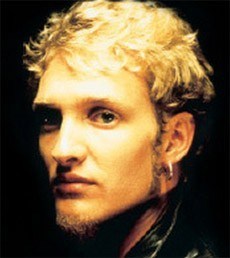
While you’re at it, you can look at Mike Starr, playing the bass in that same video. Because he used to do heroin with Layne. And now he’s dead, too. With Layne. Who, if I may say, was not only one of the most talented and innovative heavy metal singers, but — damn, that was a pretty man. Just look at him.

layne_staley

Dead. Heroin overdose.

I think of Brad Nowell. Who couldn’t even appear in this video, because by the time this song hit, he was already dead, also of a heroin overdose. Though that is his dog there, looking even sadder than his former bandmates, trying to act like they have the heart to do any of this bullshit after their frontman and songwriter died.

Hell, I think of Elvis Presley. I mean, sure, it was a whole lot of hard living that did him in — but I think we know what the primary cause was. It wasn’t those fried sandwiches. And my God, what a voice that man had.

I think of Heath Ledger. Who I loved from when I saw him in Roar, and who just — I mean, come on. What can I say?

He even makes Christian Bale act well. (Unnecessary dig. Bale’s not bad. But Batman in the movies is boring without the villains — and this is the best one. Bar none. Better than Nicholson in the same role. Nicholson has three Oscars. Ledger’s dead. Because of drugs. )

I believe that the purpose of humanity as a race — as compared to our purpose as individuals, which is most simply put as “Make yourself happy,” a commandment that pushes us to do the things we think are right, as well as prioritizing our limited time and focusing our scattered attention on what really matters, while allowing us to be the free individuals we must always be — our purpose as a race is to do the things that other species cannot do, and that is, in my opinion, to find truth and to create beauty. Artists, along with others, do that. And the sheer number of absolutely wonderful and unique and gifted and visionary — in the best sense of the word: human — artists that have been destroyed by drugs makes me weep.

And I’m not even counting alcohol. Because I’m a writer, and if I start that list, we’ll be here forever.

And so I end up in a terrible position. A paradoxical and ultimately frustrating position, one that I don’t ever want to defend, but have no choice. Drugs should not exist. They should never be taken to excess, they should never be relied upon; they should be avoided. There is too much goodness in life to need an illusion of it. What we should do is support one another, and love one another, so that people don’t need drugs — and then let them use drugs recreationally all they want to.

What I tell my students is this: drugs make you stupid, and then they make you dead. That’s a question of increased usage, not inevitability, but increased usage is common. I do think — in a painfully simplified sense — that it is the lack of support that forces people into that fatal spiral, a lack of human treatment at the hands of our fellow men; when it is not simply bad luck, or fate, or whatever name you want to give to Dame Fortune and her spinning wheel.

And I think that what drugs have taken from us is just heartbreaking.