I Wish for Each

“Congress shall make no law respecting an establishment of religion, or prohibiting the free exercise thereof; or abridging the freedom of speech, or of the press; or the right of the people peaceably to assemble, and to petition the Government for a redress of grievances.”

So all right. We’ve been hearing a lot about this lately, right? Those are the words of the First Amendment to the Constitution. But what does it mean?

What is free speech?

Does it mean anybody can say anything they want? Anything? Or are there limitations? Should there be?

Does it only apply in American? Only to citizens? Does it apply differently to public figures, to famous people?

And why the hell are we still talking about this? Do we not know what it means? Shouldn’t we know what it means by now? I mean, really?

Okay: well first, let me just address that. I do not think there is anything wrong with having a conversation again. I don’t believe that something can be talked through once, and then that’s it, and we all know everything there is to know, and there’s no need to bring it up again. I understand that people get tired of having the same conversation over and over again, but you see, I’m a high school teacher: my whole job is essentially to have the same conversation over and over and over again. From one year to the next, from one class to the next, from one student to the next, I have to continuously repeat myself, and that often means I have to continuously find new ways to say the same things I have said before. The fact that I am willing to do that, even eager to do that, is what makes me a good teacher: because if I got impatient with students who didn’t hear or didn’t understand what I said to another student, then nobody would learn after the first student. I confess that I do get tired of saying the same things to the same people over and over again, but that’s not the same thing as having the same conversation: that is stating the rules, the limits and boundaries which are necessary for us to live and work together and abide one another, and then stating them again because some childish, selfish person decided they didn’t have to follow the rules. And then I repeat myself: and then I get angry about it.

But if you didn’t understand what I said before? I will say it again. If you don’t understand it after the second time, I will say it a third time, in different words or with different examples. And I will keep repeating it until it is clear and fully understood. And then, when you have a new thought or a new experience, and that changes how you view what we talked about before, I will happily talk about it again: perhaps after I have thought about it some more, to integrate whatever new concept or perspective you brought into it today, apart from what we discussed yesterday. No problem.

We seem to still be having trouble with freedom of speech. We are still talking about it, still debating it, still disagreeing over it; and now we are doing this in the wake of Charlie Kirk’s death. In that wake, and, I suspect, pretty directly related to that terrible crime, my wife was censored by Facebook, because someone reported a post she shared about Trump, calling it spreading misinformation. It was not, it was simply a joking criticism of the administration; specifically, it was this:
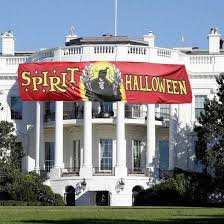
Exploring Shutdown Day 1: Discovering New Perspectives

My working assumption is that the person who reported her post was a Trump supporter, angered (as always) by libs and the left and so on, and recently energized by Kirk’s murder and the gaslighting from the right, convincing people to take action now to defend free speech (And please stop talking about the Epstein files and the still ongoing wars in Gaza and the Ukraine and the swiftly tanking U.S. economy), who probably reports every left-leaning or Trump-criticizing meme they see. Probably laughing while they do it. Facebook, as a private company that doesn’t want to suffer the wrath of the Trump administration, not only took down my wife’s post, but has also been monitoring and restricting her posts ever since: they are limiting her free speech. These new situations — unique neither to Charlie Kirk nor to my wife — has given people a new perspective on the issue, so: let’s talk about it again.

Here. This is where we start.

“Congress shall make no law respecting an establishment of religion, or prohibiting the free exercise thereof; or abridging the freedom of speech, or of the press; or the right of the people peaceably to assemble, and to petition the Government for a redress of grievances.”

Okay, so the First Amendment actually says a lot of things. It restricts Congress’s ability to control religion, and the press, and peaceable assembly, and the right to petition, all in addition to the freedom of speech. Let’s put those other aside for now: though it may be worth considering why all of those different, and all of those important, ideas were all packed together into a single amendment, and then the next one is only on one issue: guns. And the one after that is only about not letting soldiers sleep in your house against your will. Both important, maybe (though neither as important as freedom of speech) but both very narrow topics. Why are all these other things together in one place? Honestly, I haven’t read enough on the Founding Fathers and their choices regarding the Bill of Rights, so I could only speculate; but either way, we can ignore this topic for now, because we’re only here talking about the freedom of speech (and the others will become more clear as we focus just on speech, I think). Freedom of the press might come into it directly if we want to talk about Jimmy Kimmel, but it’s not clear to me that that discussion needs to involve anything other than free speech; that one right seems enough to cover what happened there. So let’s focus.

What is freedom of speech? Why do we have a right to it?

So hot take: freedom of speech is not actually critical. It is a roundabout way to protect the actually critical thing — or rather, two critical things: freedom of thought, and freedom to express those thoughts. Freedom of thought is absolutely critical to humanity, because in the most essential sense, we are our thoughts. I am what happens inside my skull. My body is also a critical part of me, but if I have a broken body, I am still me, because it doesn’t change what is inside my skull. It changes how well I can act out and reflect the decisions I make inside my skull — my freedom to express my thoughts — but it doesn’t change who I am. But if my brain dies, then who I am is gone, even if my body remains. My body can’t express my thoughts if I have no more thoughts: and without those thoughts, there is nothing for my body to express, no purpose for it to achieve; it can continue for a period of time, and then it will, mercifully, stop.

I wonder if my body would be sad if my brain died. Would my body grieve the loss of my mind?

Well: I would grieve the loss of my mind, so the question of my body’s reaction is academic. It is a part of me.

Now, in the ordinary way of things, there is nothing that could limit my freedom of thought. It’s one of the great things about being a sentient, thinking being; on that most essential level, we are always free. (Well, almost.) It’s because we are always essentially alone, and because there is no substance to thoughts: they can dance and flit anywhere we can imagine, always within the skull that holds the brain; and nothing will change other than the thoughts themselves — and potentially the mind having those thoughts. Nothing else is affected, and so nothing else can affect those thoughts: they can dance and flit to anywhere else, faster than anything that actually exists. Nobody else will even ever know where our thoughts are going, inside our minds. This was what Henry David Thoreau was talking about in On Civil Disobedience, when he described the inability of the state to actually punish him with a night in prison after he refused to pay his taxes:

I could not but smile to see how industriously they locked the door on my meditations, which followed them out again without let or hindrance, and they were really all that was dangerous. As they could not reach me, they had resolved to punish my body; just as boys, if they cannot come at some person against whom they have a spite, will abuse his dog. I saw that the State was half-witted, that it was timid as a lone woman with her silver spoons, and that it did not know its friends from its foes, and I lost all my remaining respect for it, and pitied it. Source

As he says, his thoughts cannot be trapped inside the cell, but can go anywhere that Thoreau wishes to send them: and the attempt to punish his body because they cannot punish his mind is just pitiable. What the State wants here is to control his thoughts, because they want to control Thoreau’s actions through his decision-making ability. Because their initial attempt to control his actions, through a threat to his body’s freedom if he made a certain decision the way the State didn’t want him to decide, didn’t work: knowing the threat, Thoreau still decided not to pay his taxes. His thoughts were uncontrolled, and his person/body/being followed along that thought decision, and didn’t pay his taxes. So then the State put him in jail: and he just kept right on deciding not to pay his taxes, regardless of what they did to his body. His thoughts were entirely unaffected, and uncontrolled, and they did the thing that the State didn’t want them to do — without any influence from the State at all. And so we all do, every thought we have that is in defiance of what our society demands of us. We are free to think whatever the fuck we want to, even the thoughts we’re not supposed to have, or not allowed to have.

Please take a moment and think a thought or two, which people outside of your head would not allow you to have, if they could tell you what to think. Any thought you like. Any thought at all.

Nice.

So because nobody can control a person’s thoughts, the laws focus on the second critical part of the process of having a free mind: the expression of our thoughts. Free speech, and in a broader context, free expression. Let me focus on that second aspect for a moment, because it shows more clearly what the point is here.

I can have my thoughts, and you can’t stop me. So far so good. But obviously, if I can’t act on those thoughts, then my thoughts cannot be complete. If, for instance, I think about spitting on the sidewalk, decide to spit on the sidewalk, but I cannot spit on the sidewalk — at the moment that is just because there is no sidewalk near me; I could spit on the floor of my office and call it a sidewalk, and to some extent I would have acted out my thought, and brought that thought to its completion, but then I would have to deal with my spittle, and also my wife would kick my ass — so I don’t spit: and thus the thought is not free, it is limited. I think, “I’m going to spit on the sidewalk!” and then I can’t do it: the thought is constrained. When the thought is constrained by reality — “I want to grow nine arms and use them to juggle chainsaws!” — then again, my thought is not free, but there’s no point in talking about our freedom to do things that we can’t do, or the need to pass laws to prevent things that are not possible. At that point, all we can do is shrug, and say, “It sucks to suck, Dusty. But you go ahead and dream of nine chainsaw-juggling arms, that’s fine, you can think about it all you want.” Freedom of thought is still protected, because I can carry the juggling arms thought as far as it can go; and as thought is still the most essential aspect of being human, that’s fine then. Thoreau can think that his taxes should not be collected by a government that supports both human chattel slavery and a war of conquest against Mexico (the reasons Thoreau didn’t pay his taxes), and if the action is not possible — if taxes didn’t exist and so he couldn’t choose to pay them or not to pay them — then he has all the freedom he could ever have.

But see, what happened is, Thoreau’s aunt paid his taxes for him, against his will. I don’t know why: I suspect she either thought he was suffering in jail and wanted to help him, or she was ashamed that her nephew was in jail, and wanted him to stop embarrassing her. (I would guess the second one, because she did not consult with him before she did it, and if she wanted to help, seems like she would at least visit and ask if he was okay.) Which then limited his free expression of his thoughts: he could think his money shouldn’t go to the government, and he could decide not to give his money to the government; but the government got his money anyway. Not because it was impossible for the government to have his money, but because someone else took his choice away. I guess it wasn’t really his money, it was his aunt’s money; but Thoreau’s idea was not to save his own pocket change, it was to refuse to participate in the government’s immoral acts, and when money went to the government in his name, it defied and negated his decision. Imagine if he talked to someone about not paying his taxes, if he argued with the government tax collector about the issue, and expressed his disagreement with the government, and said, “I will never contribute to this immorality, sir!” Can’t you just see the agent smirking and saying, “Sure, buddy. I mean, we already have your money, so you can say what you want.” Thoreau’s thought, while still free, has been constrained in its expression: and that pretty much ruins the thought; a thought which was not constrained by impossibility, it was possible, and he could have acted upon it — but then the option was taken away.

This is why, of course, jail is actually a very effective punishment for most people: because while we are all free to think our way out of jail, I would guess most people in jail want to walk out of jail: and they can’t. Which means their thoughts, while potentially free, are nonetheless really trapped along with their bodies. It is worth noting that, if you can find a way to free your thoughts, then prison wouldn’t matter so much; it would become a struggle to try to force you, through continued discomfort, to think about being in prison and how much you don’t want to be; then your thoughts are controlled, and trapped, and you are suffering for your punishment. But when Malcolm X was in prison, he found freedom in learning: and he talked in his autobiography about how prison really didn’t bother him at all, once he taught himself how to read and found things worth reading — and also once he found his faith in Islam, which also gave him something to think about that wasn’t constrained by being in a cell.

I have often reflected upon the new vistas that reading opened to me. I knew right there in
prison that reading had changed forever the course of my life. As I see it today, the ability to read
awoke inside me some long dormant craving to be mentally alive. I certainly wasn’t seeking any
degree, the way a college confers a status symbol upon its students. My homemade education gave
me, with every additional book that I read, a little bit more sensitivity to the deafness, dumbness,
and blindness that was afflicting the black race in America. Not long ago, an English writer
telephoned me from London, asking questions. One was, “What’s your alma mater?” I told him,
“Books.” You will never catch me with a free fifteen minutes in which I’m not studying something I
feel might be able to help the black man.

But I’m digressing. I told the Englishman that my alma mater was books, a good library. Every
time I catch a plane, I have with me a book that I want to read-and that’s a lot of books these days.
If! weren’t out here every day battling the white man, I could spend the rest of my life reading, just
satisfying my curiosity – because you can hardly mention anything I’m not curious about. I don’t
think anybody ever got more out of going to prison than I did. In fact, prison enabled me to study
far more intensively than I would have if my life had gone differently and I had attended some
college. I imagine that one of the biggest troubles with colleges is there are too many distractions,
too much panty-raiding, fraternities, and boola-boola and all of that. Where else but in a prison
could I have attacked my ignorance by being able to study intensely sometimes as much as fifteen
hours a day? Source

So again: the real goal of punishment, the only kind that is possible being constraint of the body, is to control the mind; and if the mind is able to continue thinking, then the constraint of the body is essentially meaningless. But in the vast majority of cases — and also, I will point out, in these two cases I have mentioned, because I don’t doubt that at some point Thoreau would have wanted to get out of jail and therefore would have felt trapped, and therefore actually would have been trapped, and Malcolm X would have been severely constrained if he had not been released to become the leader he became — trapping the body, because it limits the expression of thoughts, is an effective way to control a person’s thoughts. And even more importantly, for the purposes of society in general, constraining someone’s actions, the expression of their thoughts, is enough, because the purpose of prison is to stop a person from affecting others, and thoughts have no effect without expression. So just like I accept that I can’t ever have those juggling arms I dreamed of, society accepts that it can’t ever control our thoughts: and it just makes do with having potentially total control over our bodies.

And that’s where the amendment comes in.

I hope it is clear that thought without expression through the body, whether through action, through communication, or through a public display of some kind, is incomplete, and more importantly, useless. A useless thought is not a bad thought: all impossible thoughts are useless in and of themselves, which includes every dream, every fantasy, and every imagined existence; but they can still have enormous impact; and even if they don’t, they can encapsulate important things about the person who thought them, and that’s good, even if that encapsulated thought never reaches outside the mind that dreamed it. But when society wants to control us, controlling the impact we can have on other people is the primary goal and thus also the primary means of controlling people and the thoughts that define us. And that’s why the Founding Fathers included an Amendment that protects free expression in several different forms, most importantly speech and press and peaceable assembly.

Let me be clear now: the Founding Fathers were not always right. You don’t have to look any further than chattel slavery to know that they and their ideas, and the documents and the nation that they built, were fundamentally flawed, right from the beginning. There were some bad thoughts in there, and we’re still dealing with the legacy of those bad thoughts. But they were right in this: government wants to control people, and that means they need to control our thoughts — but they can only control our bodies, which is what they try to do. The First Amendment is there to set a baseline protecting our thoughts, through protecting the only things the government can attack and control, which is our actions.

So that is the essence of the Amendment, and the right: we have the right to express our thoughts, freely. The government cannot control our expression of those thoughts, so long as the thoughts do not have a direct impact on others in a way the government can control, and should control. In other words, if I decide to pick up a rifle and shoot someone I disagree with, that is no longer simply the expression of my thought, now it is an attack on another person, and it can be controlled, and should be because it is harmful. Though I will point out that, to some extent, the expression of that thought can’t always be controlled; sometimes it can only be reacted to after I have already done the thing I decided to do. But insofar as it can be predicted, and thus prevented, it should be.

Do I need to talk about why I shouldn’t have the unfettered ability to inflict harm on my fellow humans? Or can I assume we’re all on board with that? Just for the sake of saying it, the issue is that I have no right to control other people’s thoughts, nor their expression of their thoughts, except in the service of preventing harm. If I do harm to another person, I am affecting their ability to express and complete their thoughts, or possibly even their ability to think thoughts in the first place. If I am the one looking to do harm, not just prevent harm, then someone should have the ability and the right to stop me before I do harm.

Should that be the government? My first thought was to say that of course it should be; that this is the reason why we create governments and cede to them the power to control us: so they can prevent us from doing harm to one another. But government is frequently bad at this, and in that case, maybe other people and other authorities should have that power, that right, that responsibility, to prevent my harmful actions. But this is where we get into a conversation about how society should work, and that’s too complicated for right now. Suffice to say that the government, as imagined by the Founding Fathers — that is, existing with the consent of the governed — is a reasonable place to invest the power to control people’s obviously harmful actions. I would like to expand on the FF’s ideas about the governed who were consenting to the government, to include all of those who are governed, which would include people they didn’t consider worthy of consideration, or even consider to be people; it would also include all those who reside within the jurisdiction of the government in question, and who would be subject to the government’s control: those people should be considered “governed,” and therefore should be asked for consent to the government over them. Yes, that means undocumented migrants as well as those who don’t have full legal status. And also suspects, convicts, prisoners and parolees, all those governed by the justice system: they, too, must consent to the government over them, or else it becomes illegitimate and tyrannical.

And to be clear, when I say “consent,” I mean continuous, affirmative, and enthusiastic consent. The only kind of consent that matters.

Also at this point, I would like to express my burning volcanic rage that the First Amendment does not include the right to vote. What the actual FUCK, Madison? Why did you leave that one out?

It was the slaves, wasn’t it.

So all right: we should give the government the power to control our actions which can be harmful (and which can be controlled): but we retain the power to consent to be governed, and also the power to abolish the government if it becomes destructive of the ends we created it for, ideally through voting in free and fair elections. Since the government exists with our consent, what one thing do we most clearly need in order to legitimize that government?

A voice. The power to say “Yes,” and the power to say “No,” and to have those words heard. The power to consent, in the simplest terms. Continuous, affirmative, enthusiastic consent. If we don’t have that power, the government has taken too much control and has lost its legitimate authority, and should then be abolished: and that is the intent of the First Amendment, to protect and enshrine, first and foremost, our power to keep or abolish our government, which would otherwise have unchecked power over us.

You know: the power to vote. But in the absence of that, the power at least to speak, and to be heard. Not just to think freely, but to actually express those thoughts. The power to spit on the sidewalk. And on fascists.

So. Now. Did Charlie Kirk have freedom of speech? He did, and he should have: he spoke, and was heard. He lost that freedom when another person caused harm to him, murdered him, in an act that our government should have done all it could to prevent. Was Charlie Kirk a promoter, and therefore a martyr, for the cause of free speech? He was not: it was not his job to protect people’s right to free thought nor to free speech as an expression of their thoughts; inasmuch as he encouraged free thought and the free exchange of ideas through debate, then he was a proponent of free speech; but watching his debates makes it very quickly clear that he was not interested in the expression and free exchange of ideas, he was interested in scoring points and (as my students would say) farming aura: trying to get famous and powerful because he was seen as a staunch defender of his political and religious views. This is no criticism of the man: I would also like to get famous and powerful using my words, though I’d probably rather write than speak; but I want the same thing. But it does mean he was not a martyr for the cause of free speech, because free speech was not his cause: it was the means by which he tried to achieve his purpose, to fight for his cause. He shouldn’t have had to defend his free speech, he should have simply been able to exercise it. And just like Charlie Kirk, as a private citizen, it is not my job to protect free speech directly: that is what the government is for. To secure these rights, to Life, Liberty, and the Pursuit of Happiness.

Let me emphasize that again, because we talk about free speech as though it is just something that needs to be protected from the infringement of the government on our rights, that the point of the First Amendment is to constrain the government from taking away our free speech; the First Amendment is that thing, that is its point — but also, the real point of the amendment is to tell the government that it should be working to protect and secure that right for all people within its jurisdiction and influence. Actively. Affirmatively. Enthusiastically. Continuously.

Which means, in practical terms, that the government should not only have done more to protect Charlie Kirk from being murdered (if we believe the government could have done more to prevent that, which I think is self-evident, but that’s not the argument I’m making here), but also, it should be doing more to ensure that all people under the jurisdiction of the U.S. government, all persons resident in this country and under its control around the world, have the opportunity to be heard, to express their thoughts freely. By publishing their opposition to the war and genocide in Gaza, without losing their legal status. To have their case heard before an immigration judge, through the due process of law. Through posting whatever the fuck you want on social media, even if other people don’t like it, so long as it is not actively, directly causing harm. Through speech, through the press, through petition, through peaceable assembly.

Which means the government should have kept the Fairness Doctrine. And in this modern era, the government should ensure that social media does not censor people’s free speech, so long as that speech does no harm. In fact, I would argue that the government should have a platform for people to be heard, to be seen, to which all people who must consent to the government over them have access. I would include NPR, PBS, and VOA among those platforms, but I would argue the government should also provide some simple form of social media, to at least offer an alternative to the private companies, which are all controlled by billionaires with agendas. I don’t think the government should seek to control the social media companies per se, but they have a responsibility to ensure our rights: including the right to speak our thoughts, online as well as through print and speech. The government should also protect protestors and ensure that they have the right to assemble and petition for redress of grievances, so long as they are peaceable in that assembly.

Yes, that last clause, as well as the earlier condition that speech should be protected as long as it does no harm, does create an opportunity for the government to limit free speech, depending on what we mean by speech that does harm, or by peaceable assembly. I think the current laws distinguishing between protest and riot, and the laws preventing libel and slander, make sense and should remain (I don’t know enough about the specific laws and so can’t speak to their current efficacy, but conceptually, I’m in favor), and where these two rights cross over, with the law preventing speech that incites to violence, is also a useful law that protects people from harm. I also think there should be a gray area around and beyond those laws (Does “Fight like hell or you won’t have a country” count as incitement to violence? I honestly can’t say, not without further evidence of intent and context. If only there had been a trial…), and that the burden of proof within that gray area should definitely be on the government, as the ones who enact the control of people’s speech, to show that someone lost their right because they were causing harm with their speech. We have a system in place to carry out that process: but we need to have people in the government who are dedicated to maintaining and using that system.

We do not currently have that. We have an authoritarian who wants to eliminate free speech because he doesn’t want anyone to have rights except himself. We have a legislature that agrees with him, completely and slavishly — they are not expressing their thoughts, they are expressing only his. (The opposition, presumably, is not expressing the authoritarian’s thoughts. We just need to find where that opposition is hiding…) We have a Supreme Court that also thinks no one should have rights other than the President, and themselves, because they think their trump card over Trump (pun obviously intended, as all puns should be — also, we should have a right to pun…No, we do have a right to pun, and it should be protected by the government.) enables them to live as exceptions to the dictatorial power they want to give him, and they like the idea that a dictator could enhance the lives of the people whom they (the “justices”) deem worthy of enhancement, and destroy the lives of those whom they deem worthy of destruction, without they themselves dirtying their lil fingies. They’re wrong, of course, because if Trump ever did become a dictator, he would end up killing or jailing the justices because they have defied him in the past, and no dictator can abide that kind of challenge to their power; but then, all of these people are wrong. They all think that the dictator would only use power the way they want him to use power, and that’s not how dictatorship works.

Please take note, all you MAGA voters who want Trump to hurt the people you hate, but not you yourself. That’s not how dictatorship works. He doesn’t dance to your tune. If the Supreme Leader is the only one with rights, then we will no longer have rights ourselves: not the right to life, not the right to liberty, not the right to the pursuit of happiness. We will then not have the right to express our thoughts through speech or writing, through assembly and protest and petition; more importantly, we will no longer have the right to consent, and though that immediately means the government will no longer be legitimate, it also means that we won’t have the ability to remove it without violence.

That is where the Second Amendment comes in. It is not, as the fools who care only about that one and not the First would have us all believe, the right which ensures all the others; that is the First Amendment. It is free speech. It is the power to consent, and to withdraw consent. The practical power that enforces the moral and intellectual power is the right to communicate, to agree, to assemble and stand together: that is what changes governments. (Also, if we don’t lose it, the right to vote. Tell me why the right to free exercise of religion usurped the place that should have gone to the ballot, I beg you.) The right to defend ourselves physically is the last resort when the first one has been lost: and every one of those gun rights advocates, from the rational ones to the chuckleheads, have been ignoring the infringement of the First Amendment while trying to protect the Second. Protecting it, I might add, through their right to free speech.

So. Free speech is not only important, it is critical, it is definitive, both to us as humans, and to our country as a free country, with government of the people, by the people, for the people. It is the most important right we have, and it is the best way to delegitimize, remove, and replace the current government, which I think we can say safely does not have our consent any longer to govern us, taking “our” and “us” in the largest collective sense, meaning the majority of people governed by this administration. The government should not only not be infringing on it, the government should be actively protecting and promoting it: that is the government’s job, the reason it exists, and the best way to ensure that the other rights are also maintained. Because free speech leads to the free exchange of ideas and information, to the shining of a light into the darkness where tyranny grows. It’s what lets us all communicate and understand each other, and then agree: and take action.

Before it’s too late.
Shock and Awful

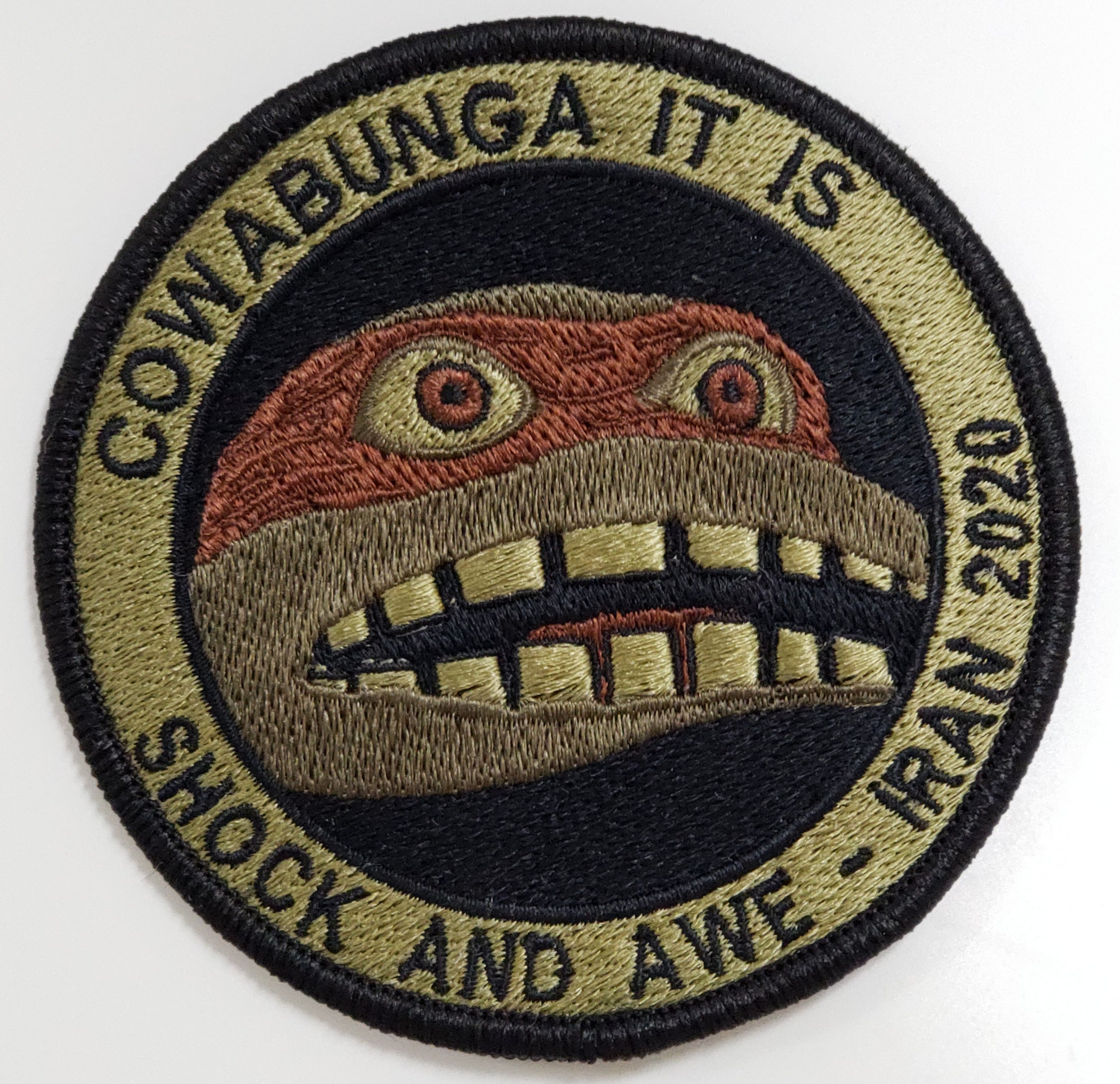
SHOCK AND AWE IRAN 2020
Okay seriously I Googled Shock and Awe to find a header image for this post, and I found this — and WHAT THE COWABUNGA IS THIS???

Here: maybe this will be better. It’s a chimp, and that’s not actually poop — but the source is awesome, too.

Poop-Throwing Chimps Provide Hints of Human Origins | WIRED
Read this. Really.

It’s so hard to get my head around it.

I’m good at understanding things: especially people. I am extremely empathetic, I am a student of human personality and interactions, and I try never to underestimate the complexity of a person and their actions and the motivations. Because of my vocation, I have spent time with and communicated in fair depth with thousands of people; and because of my avocation, I have spent countless hours imagining people and creating their actions and motivations. So I think about this a lot: why do people act the way they do? And normally, I think I’m pretty good at understanding why people do what they do, and making sense of it.

But I can’t make sense of Donald Trump.

It pisses me off, and that’s part of why I call him a shit-flinging gibbon: that is my own frustrated attempt to fling that would-be dictator, that narcissistic Nazi, that Cheeto-skinned charlatan, the hell away from me, to dismiss him as nothing more than a beast, an animal without complex motivations. He tries to have sex with anyone female for the same reason he tries to eat all the cheeseburgers he can: because he is nothing but instinct, pure id. Just basic survival urges in a primate that is not currently in a survival situation, and so, just as if you imagine that great ape in a fine restaurant, for instance, he screams and climbs on the tables and the wait staff, and he chucks the table settings and steals people’s food, cramming it into his mouth while he threatens to bite anyone who gets too close to him.

I like thinking of Donald Trump as a terrified primate who is trying to bluster his way out of danger so he can hide somewhere with the bunch of bananas he just stole. And based on much of what he does, I think it’s a pretty helpful way to try to understand him.

Take his reaction, for instance, when he was first asked about the Signal group chat where his top advisors and his Vice President acted like braggadocious buffoons, while clearly violating multiple federal laws by chatting about war plans, in advance of an attack, on a non-secure, non-governmental chat app that the Russians had already targeted for hacking – the Russians who are years ahead of us in cyberwarfare.

Trump reacts to Signal group chat: ‘I don’t know anything about it’

Now imagine that’s a monkey being threatened by a reporter aggressively asking it a question that it can’t understand at all.

“I don’t know anything about it,” which he repeats several times, is the monkey first grunting and then screeching, backing away and baring its teeth; the nonsense attack thrown out at the Atlantic “I’m not a big fan of the Atlantic, to me it’s a magazine that’s going out of business” is the monkey swiping with a paw at the aggressor; the line about “Well it couldn’t have been very effective because the attack was very effective” is the monkey trying to look taller, maybe beating its chest to appear tough.

See how well it works?

But it doesn’t explain everything. It’s fun to imagine, and there are some moments when, truly, Donald Trump acts like an unthinking animal just reacting – often overreacting – to what he sees as a threat or a challenge; but it doesn’t explain everything.

My biggest problem is trying to understand Trump’s plans and strategies. Obviously this is where the primate metaphor breaks down, because while the great apes are capable of planning multi-step tasks and so on, they’re still not very good at it; and as far as I know, they are double plus ungood at understanding abstract concepts, which Trump clearly thinks about quite a lot: he wants to be famous, he wants America to be great. He may not understand what he’s actually doing and what really makes America great and what does not, but he does seem to have a grasp on the concepts “America” and “great.” So in this situation, he’s not just a shit-flinging gibbon. But it is difficult for me to think about Donald Trump as a person with a plan, and with a strategy. But I know it’s unfair to consider him as the opposite: having no plans at all, having no strategy – just the shit-flinging gibbon. That’s not right either. I genuinely don’t get it: too much of what he does makes no sense, at all. Take leaving the Paris Climate Accords: all he has to do is ignore it, as every past president has done, even the ones who sign these well-meaning but toothless treaties; somehow we’ve never managed to stop extracting and burning fossil fuels, and never managed to reduce our dependence on individual cars, and never even tried to have a national conversation about our consumption of goods and how it produces excess carbon (Here’s a wild thought: what if the tariffs are really just a four-dimensional chess strategy to reduce America’s carbon footprint by cutting us off from our international consumer goods?). Ignoring the treaty, and then making an ad about American energy production standing in front of some oil-spewing well in North Dakota, right in front of a giant oversized American penis-truck, which is parked in front of, let’s say, a single-use plastics factory which is belching out black smoke, would do all Trump wants to do to own the libs and encourage his base in their worst habits; so why make America look bad internationally by leaving the treaty? It doesn’t make sense, which makes me want to understand Trump as an idiot.

But is he?

Let’s examine the data and try to extrapolate a strategy. It makes sense to me that Trump wants the support of his base. That source of power, that he can sway his base any way he wants, has been much of the secret to his rise to the White House twice (Also twice losing the popular vote); so when he says things that make them cheer, that makes him happy. Makes perfect sense. I like saying things that make people happy with me, that make people clap for me; who doesn’t? And as that base following his lead helps keep the GOP in line, it makes even more sense that he would do things that make them happy. So because they are white supremacists, they hate DEI: thus he tries to crush DEI. Being also intolerant evangelical Christians, they hate trans people: thus he tries to ban trans people from existence. Back on the racism tip, along with the backwards-looking (and insane) patriotism, they like Confederate monuments: he tries to bring back the Confederate monuments that were removed after the murder of George Floyd. I don’t believe Donald Trump, who is a racist but also doesn’t seem to particularly care about anything that doesn’t profit him directly, and doesn’t mind spending time with people of color if they do have something to offer him, particularly cares about all of this stuff, but his base does and he likes to make them happy, so he does these things. I get that. No problem.

Another example: Trump is supported by billionaires, and considers himself aligned with billionaires and the pro-business wing of the Republican party. They do not care about DEI or the existence of trans people (Some of them do, to be sure; there are some fundamentalist Christian people who are obscenely wealthy and would really like this country to be a Christian theocracy; Betsy DeVos springs to mind. But for the most part, they just want more money and less government control over them.), but they hate government regulation: so he tries to kill the Consumer Financial Protection Bureau, and tries to shut down the EPA, and so on. Okay.

Then there is the crazy shit: renaming the Gulf of Mexico, and Mount Denali, and trying to take over Greenland and so on. Now, to some extent, that is sticking it to the libs, which his base and the billionaires love; and it’s also trying to look tough, which his base loves; and the Greenland takeover offers quite a lot of untapped mineral wealth, which the billionaires love. But also: really? I can’t imagine that he actually sees any of that as critical issues for the US to confront, and I can’t see even his base particularly caring about Greenland or any of the names of national monuments and geographic features that most of us never refer to by any name.

And then there are the things he is doing that are clearly just fucking stupid: the tariffs. I know the billionaires don’t want that to happen; they don’t want any government regulation. The regular folks in the base still love anything Trump does, and he has talked for years about how great tariffs are, so okay – but you know what he hasn’t done? Lowered the price of groceries or gasoline. Which was the most important issue that got him elected, by far, among both his base and the Republican voters in general. And if he wants to achieve anything in his term, he needs the Republican party to maintain control of the Congress, and he clearly knows it as he keeps trying to push the GOP candidates in the special elections, and he took back Elise Stefanik’s nomination so she could stay in the House. So why the hell hasn’t he tried to push the grocery stores to lower the prices of eggs? Why hasn’t he reduced or removed regulations that would make it easier to import eggs? Why hasn’t he cut deals with oil and gas companies to reduce the price at the pump – or even easier, gotten Republicans to remove gas taxes to lower the price a few cents a gallon? Anything he could do on that front would cement his popularity, and make him ironclad against any criticism. Even ineffective but well-publicized attempts, which is mostly how he gins up support from his base, would solidify his popularity.

So why hasn’t he done it?

Why is he working so hard to help Israel slaughter the people of Gaza? Sure, the conservative Jewish population supports Israeli aggression in general, and the right wing has used the Hamas attack to beat the drums of paranoia in order to sell guns to right wing Americans (who really need to be scared of military age men coming over the border, because maybe they are going to start gunning us all down just like Hamas did to the Israelis). And there’s this whole bizarre thing about evangelical Christians making Israel very important in their worldview because the apocalypse will happen there, or something. But as I understand it – I am not an evangelical Christian, which is perhaps an unnecessary disclaimer, and I am also not going to investigate their insanity too carefully – the idea is just that the Jewish people must possess the land of Israel before the Second Coming of Jesus Christ can occur. And there’s also supposed to be a bunch of war, and an antichrist (I got a candidate for you…) and a bunch of other things; but it seems to me that none of that requires the full removal of the Palestinian people from Gaza, and nothing else other than religious zealotry would even begin to explain the support for the genocide of the Palestinian people by the most famed victims of genocide in the history of the world. (I also cannot understand the desire of the Israeli government and military to literally just murder every Palestinian person. Don’t they ever get tired of revenge? Have they all just completely lost all humanity?) But there’s Trump, meeting with Bibi Netanyahu, sending all the weapons he can, threatening to rain down hell on the Gaza strip if Hamas doesn’t surrender all their leverage by giving up all the remaining hostages, authorizing (I mean, I assume he authorized it at some point, but maybe it was just Hegseth) attacks on the Houthis for their solidarity with the Palestinian cause – and talking about ethnic cleansing of the Gaza strip so that he can build the “Riviera of the Middle East.”

Okay, I get that last part. Trump is a real estate developer who specializes in gaudy, ostentatious, appalling displays of gross wealth and egotism; of course he’d see an opportunity in Gaza, which is beach front property on the Mediterranean. It probably felt like a task he could actually do well, as contrasted by everything political he can’t do, and who doesn’t like a chance to show off their actual expertise? I think he thought about it like a resort development project he was pitching, and he can’t understand why nobody else can see his vision; I bet he made at least one call to a model-maker whose services he has used in the past. And I bet he was stunned that nobody else agreed with his idea. All of which helps to show that he has the mentality of a child, and maybe he’s just pouting until everyone else decides his idea was the best and then they’ll come back and ask him to fix Gaza.

I mean, we literally did that with the Presidency of the United States. So I wouldn’t even consider it dumb for Trump to expect us all to come crawling back, asking him to do whatever he wants to do. I bet he’s counting on it. After all, when you’re a celebrity, you can do anything to them you want.

I hope all of the MAGA voters understand now what it feels like to be grabbed by a sexual predator. I’m sure the Palestinian people – everyone else in the world, really – would very much like to avoid that experience.

Now, if all of this is merely the actions of a shit-flinging gibbon, then that explains the stupidity of it all. There are some understandable motivations – power-seeking, for instance – which explains some of what Trump has done at least adequately. But I have not been able to think of an overarching goal which gets all of it to make sense. If tax cuts and regulation reduction shows a desire to help business, the tariffs fly in the face of that. If his real goal is to help (or just to please) the MAGA base, then that explains the racist culture wars, but not the lack of even attempted action on grocery prices or the cost of living. And if he really wanted to be a dictator for life, he not only wouldn’t have told the country that he was considering a third term, thereby tipping his hand, he wouldn’t have kept Hegseth and Mike Waltz after the Signal chat, because I guarantee you that what they did pissed off the military, whatever they may say in public (or not) and however they feel about Trump. Hegseth and Waltz – and Gabbard and Rubio and all the rest – actually genuinely put American pilots at serious risk of being shot down by the Houthis, who have advanced anti-aircraft weapons systems, and who have channels through Iran to Russian intelligence, which easily might have picked up the Signal chat PARTICULARLY SINCE STEVE WITKOFF WAS IN RUSSIA WHILE HE WAS PARTICIPATING IN THE CHAT.

One complaint I have about the Trump era: I don’t even know when to use all caps any more. Is that the most egregiously offensive aspect of the Signal chat? Or maybe it was the emojis? When is it time to yell? I want to yell all the time, but obviously I can’t do that.  I have outrage fatigue.

Now, there is an obvious answer here, which would have pleased Trump’s base since they love when he is a heartless asshole, and it would have pleased the military, and it would have pleased the Republican party in Congress: he could have just fired everyone in that group chat. He loves firing people. It’s not even like he doesn’t want to signal that he made a mistake with his cabinet picks: he fired like 80% of his own picks during the first term, and the rabble just hooted and hollered and clapped their chapped hands and uttered such a deal of stinking breath that it choked him, and he fell down at it. (Sorry: that’s a Shakespeare reference. To The Tragedy of Julius Caesar, which I have taught often enough to have memorized some parts. I will have to write another post showing the comparisons between that play and Trump – and I better do it before he gets Et Tu’ed in the Senate, or else nobody will be impressed by my acumen.)

But no: Trump didn’t fire anyone. Which lost him (I would guess) support in the military and in congress, and indirectly with his base, who do not actually care about Pete Hegseth or Tulsi Gabbard or Mike Waltz: they care only about Trump. But they do generally support the military, so again, to shore up his own power and reputation, Trump should have fired them all, and made a big deal out of it. Tell me he couldn’t find another half-dozen nutballs to replace those “advisors” with. Are there no other alcoholic womanizing hyper-masculine douchebags in the military apart from Pete Hegseth? Seriously? And I even have a suggestion for someone to replace Gabbard as National Head of Intelligence: Maria Butina.

If Trump wants to be a dictator for real, he will never succeed without the full-throated support of the military; I don’t have to know any history at all to know that, but of course I know enough history to know that literally every single successful coup, ever, was carried off with the military’s complicity or at least tacit agreement and inaction.

So yeah, I don’t get it. Trump doesn’t make any sense to me.

But then I remembered this book I read with my book club. (By the way: I would HIGHLY recommend a book club like the one I am in. Half a dozen smart, involved people, and we read books that help us make sense of the madness of the modern world. It is – not necessarily comforting, because we read a lot of really disturbing shit; but it feels so very good to know that other people are thinking like you are and feeling like you are. Plus we get to have snacks, and the members who host our meetings make DAMN good snacks.)

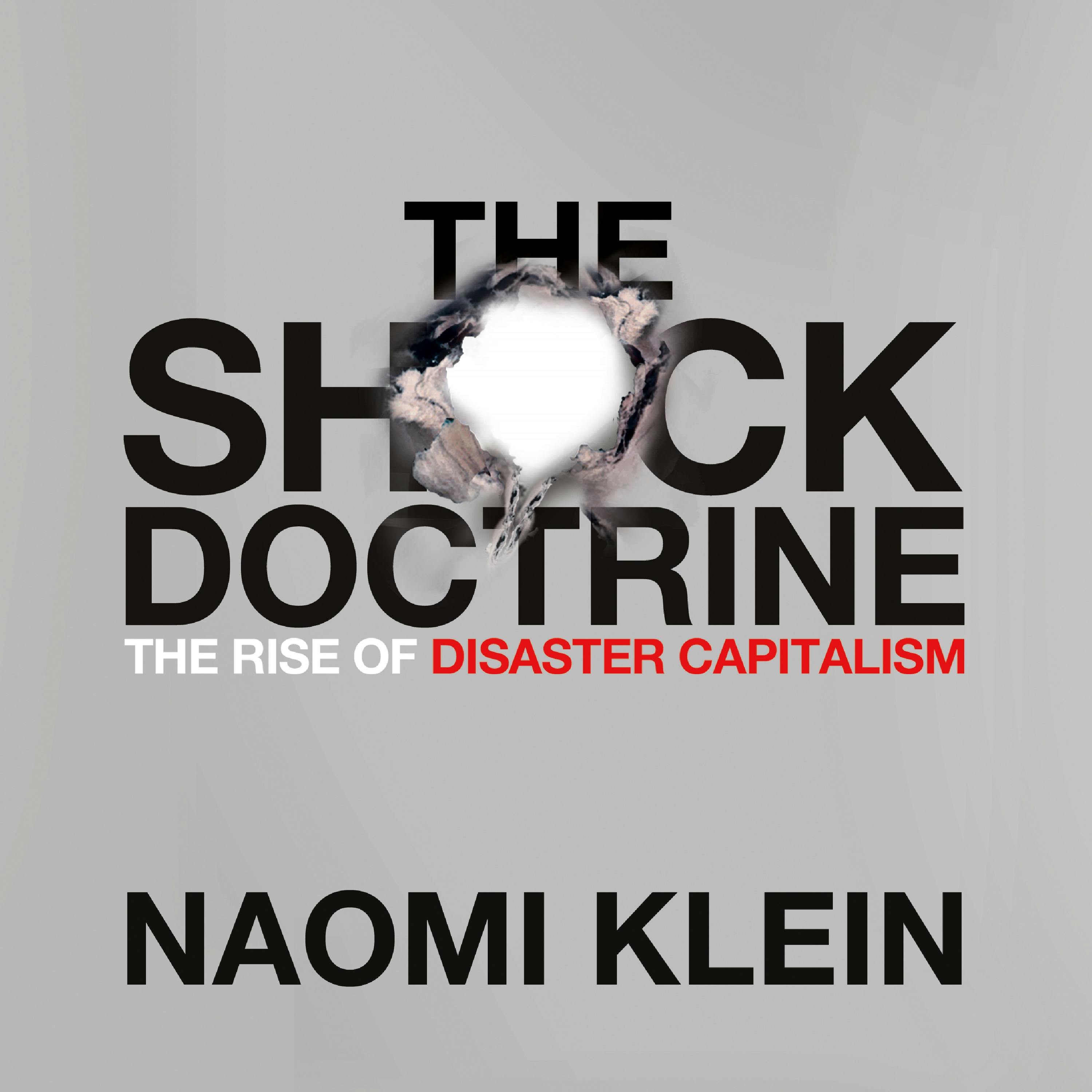
The Shock Doctrine

Shock Doctrine by Naomi Klein.

This is a fascinating and deeply depressing book. It explains the economic paradigm known as neoliberalism, championed most effectively by the Nobel laureate economist Milton Friedman, and the effect that paradigm and Friedman have had not only on the United States, but on nations around the world. The title comes from another – uh, “expert” – whose ideas have had enormous influence on our world, a psychiatrist named Ewen Cameron. Cameron believed that people who had suffered terrible trauma in their lives, and who suffered the natural and inevitable consequences of that trauma, could be “cured” by replacing their traumatic memories with a tabula rasa: a blank slate. No memory of trauma, no psychological or emotional damage. He thought he could rebuild the person afterwards into a healthy and well-adjusted citizen. He experimented, therefore, with different ways that one could destroy a person’s memories, and eventually, a person’s whole personality, because the personality kept stubbornly resisting the attempts to erase the memories – almost like memory is an essential part of personality, or something. And so the process didn’t work, as any sane person could have guessed it wouldn’t; his attempts to erase a person’s memories and personality essentially just fragmented both, but never erased them. Klein doesn’t say because she doesn’t know what his real goal was, whether he wanted to help people and was just completely soulless, or if he was in fact a monster who wanted to destroy people, but when his theories didn’t pan out, he kept working on them – and ended up working for the CIA, finally creating for them a handbook on torture based on his work. The idea of it was that you could disorient someone so terribly that they would lose the ability to remember things like loyalty to their country or cause, or the consequences of revealing secrets they might have, and would therefore, in an incoherent state following the application of repeated and awful torture, be excellent sources of information because they wouldn’t even realize that they were revealing secrets, and so wouldn’t have to be coerced; and because they wouldn’t know who they were or what they were doing, they wouldn’t do things like conceal key pieces of information or lie at specific moments in order to protect whatever they were telling the CIA about.

The reason Klein talks about Cameron is because the basic system he created was what Klein calls the shock doctrine: in various tortuous and traumatic ways – frequently just literal electroshock, and frequently psychedelics administered without the knowledge and consent of his targets – Cameron would start with an incredible and overwhelmingly destructive attack on the psyche of his victims. He realized – or maybe it was the CIA that realized – that the most effective way to do this to a person was to remove anything that could be used as a solid base to stand on, mentally and emotionally speaking: Cameron is the reason why torturers now disorient their victims as much as they cause suffering, because that makes it easier and faster to eliminate any sense of self, any sense of identity: disrupt sleep, disrupt a sense of pattern or time passing, take away the victim’s knowledge of where they are, of what time it is, of what to expect, of who they are talking to, of anything and everything at all: do it all at once, as rapidly and overwhelmingly and completely as possible. This shock, either electric or psychological, was supposed to create the tabula rasa. And as I said, it didn’t, but it did effectively destroy people’s ability to resist control, and thus interrogation. And Klein’s insight was to recognize that Friedman and the neoliberals he taught and trained, and the political actors they influenced – there are several in the book, which is long and thorough, but perhaps the two most effective examples would be the George W. Bush administration, and Augusto Pinochet, the dictator of Chile from his 1973 coup through his overthrow in 1990 – used the same concept as a way to effectively short-circuit the democratic rule of law in countries they wanted to control.

Pinochet does it first, and he does it with the explicit assistance and advice of Milton Friedman himself, who advised Pinochet on how to establish a capitalist paradise after Pinochet had assassinated the democratically elected leftist president of Chile, Salvador Allende. Friedman’s advice was to take advantage of the shock of the coup and the violence that followed – Pinochet had been a general before his takeover, and so he knew very well the value of the military in overthrowing a legal government; he then used them to silence dissent by jailing political opponents, torturing them (of course) and in his own signature atrocity, having his enemies thrown out of flying helicopters – and force through the changes as rapidly as possible, before the people and any potential resistance could recover their balance and begin to push back. Pinochet did it, and it was largely effective (I’m leaving out a lot of this, of course – I recommend the book), and so it became the standard: the Shock Doctrine. Overwhelm people with something so outrageous, so devastating and unbelievable, that they won’t know up from down, day from night, or friend from foe, and then ram through your agenda before any potential resistance knows what’s happening. Exactly how Ewen Cameron taught the CIA (Who, of course, actively supported Pinochet, who replaced a leftist government with a far-right capitalist one – rule of law and liberties be damned) to overwhelm a person with a complete assault on all of their senses and touchstones, any sense of reality, so that their personality and therefore their resistance could be destroyed.

The book is a little out of date now; it was published in 2006. So of course the last use of the Shock Doctrine by neoliberal political actors that Klein talks about is the George W. Bush administration and 9/11. The terrorists created the shock: and the neoliberal Bush administration followed up with their agenda, mostly the USA PATRIOT Act and the rise of the surveillance state, along with, as Klein explains at length, the capitalist takeover of the military, pushing it through before anyone even knew what was happening, let alone how to resist. If Klein had written the book just two years later, she would have had another perfect example from the same actors: the way that the Bush White House got the TARP program passed directly after the economic collapse of 2007, which simply handed hundreds of billions of dollars to the very same corporate actors who had destroyed the global economy, as the administration enabled the Fed to purchase the “toxic assets” of companies that were, of course, “too big to fail.” If she had written the book fifteen years later, she could certainly have made much hay with the COVID-19 pandemic, though also I would argue that the incompetence of the first Trump administration, and the imperfect allegiance to neoliberalism that was held by the Biden administration, meant that less was done to change this country, and that opportunity was – uhhh, “lost.” I guess. But you can definitely see small instances of the Shock Doctrine being utilized, first in the Paycheck Protection Program that allowed anyone who wanted to get free money to apply for loan forgiveness; and then in some of the more controversial executive orders that both Trump and Biden used – such as Order 42, which kept asylum seekers in Mexico in order to quarantine them indefinitely.

But the neoliberal grip on the country, which probably peaked during Bill Clinton’s presidency if not George W. Bush’s (Every president since Reagan has been a neoliberal, regardless of party. George H.W. Bush was bad at it, possibly because he was actually concerned with helping the country; and Joe Biden moved away from his neoliberal roots, partly because he was influenced by our own Wizard of Oz, Bernie Sanders. Trump is a neoliberal, but also a shit-flinging gibbon, so not nearly as effective as Clinton or Reagan or even Obama.), has been slipping, under both Trump and Biden. So I don’t necessarily see the same unified, effective effort to achieve neoliberal goals (Complete laissez-faire economy, total free market – for details, read the book, or listen to Unfucking the Republic, who have a special, warm hatred for Milton Friedman) happening under Trump the first time, and especially not now – the tariffs are, if there is a God and any justice, making Milton Friedman flip over and over and over in his grave – but in thinking about Trump, and why anyone would want to support him in EVERYTHING that he is doing, I remembered this book.

And so now I’m wondering.

Let me also clarify: I do believe that Trump has handlers. The first term it was Steve Bannon, primarily, and maybe it still is; maybe it’s Russell Vought, the architect of Project 2025 and the director of the Office of Management and Budget. Bannon and Vought are both white supremacists who seek a theocracy, Vought including a neoliberal paradise and Bannon imagining a full-on Reich. I think anyone with more brains than morality, which includes almost everyone in Washington and certainly everyone in the administration (To be fair, Trump has, I suspect, very little in the way of functioning brain cells – but he is entirely amoral and frequently immoral, so “more brains than morality” is so low a bar it’s basically just a floor for the Donald), can manipulate Donald Trump as easily as breathing: tell him he’s a genius, make him feel like he is about to be asked to explain something but you won’t ask him if he just makes this very smart, very good decision, and then when he agrees not only that he should make that decision but it was originally his very smart idea, praise him for his intelligence and his ungodly machismo. Lather, rinse, repeat. I can’t imagine that everyone who wants to wield power in Washington would give up this golden opportunity to be the power behind the idiot.

But I can’t believe anyone would want all of what Trump is doing – or that someone who really wanted to control him would be unable to stop or blunt or reduce some of his stupid fucking ideas. If Vought wants the federal government eliminated so that white supremacy can reign again, why wouldn’t he want the dipshits in the Signal chat to be fired? (Though as I write that, I remember that incompetent government advances the agenda… so maybe this is the right guy to look at if we want to find the puppetmaster.)

So I’m wondering. What if Trump himself, and Elon Musk and DOGE, this whole administration, with its incredible stupidity and its incessant destruction of everything good, carried out entirely haphazardly and with brainless abandon – and yet ALL BAD as though it really was planned – is actually just the shock? What if the goal is to disorient us all so much, to make us all lose faith in so many things, that we don’t resist when the actual agenda is put into place, because we won’t even know who we are or where we are, let alone what is being done to our country?

I don’t know that this is true – I’m a little thrown, now, by realizing that a lot of this might fit in with Vought’s agenda – but I think it does make sense. I’ve always thought of Trump as the distraction: the gibbon flinging shit is impossible to look away from, and hey presto, tax cuts and the repeal of Obamacare. That last was stopped, finally by John McCain, who, I suspect, was not very susceptible to the disorientation of being tortured. (RIP, Senator. We miss you. Even if we don’t miss all of your policies and positions.) And maybe that’s all it is – but the problem is, if I’m right and ALL of this is the distraction, all of it part of the grand application of shock to the whole country and maybe the whole world, then either the plan is already happening while we are reeling – or it hasn’t started yet. And if it hasn’t started yet, I have to assume it is intended to be something so much worse than what we are currently dealing with, that they can’t try to put it in place until after the full shock has sent us all into a tailspin of confusion and desperation, unable to resist control.

I think I need to get my book group to read Project 2025.

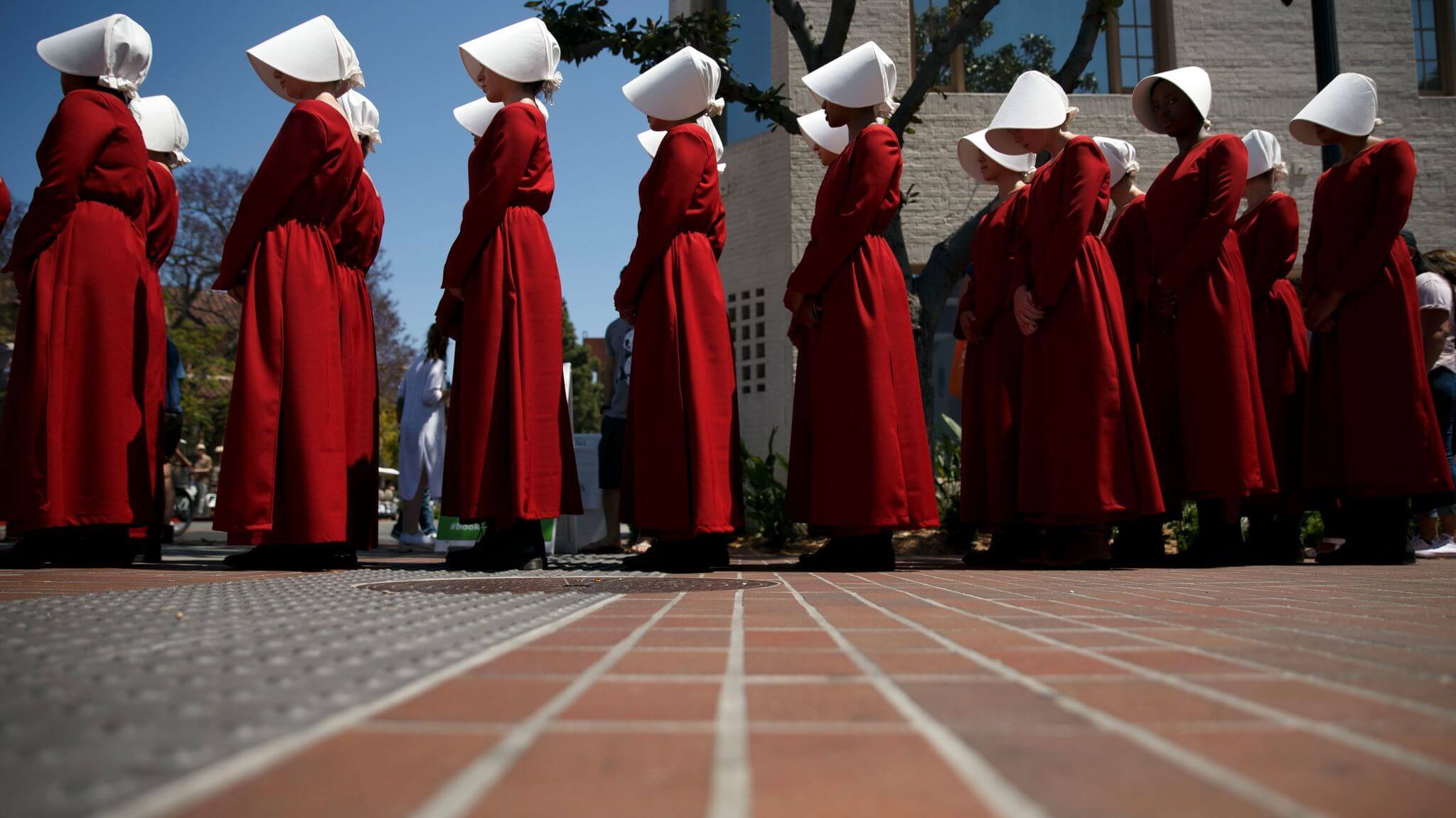
And maybe The Handmaid’s Tale.

How the Handmaid's Tale Sheds Light on Our Own Dysfunctional Relationships  - One Love Foundation

The Price

I saw an opinion piece which stated that schools today don’t teach enough economics.

Fair enough. I don’t think that’s the biggest problem – I will argue, probably in future posts, that the lack of humanities education is at least partly responsible for the loss of empathy which is at least partly responsible for the rise of Trump – but it’s certainly true that schools don’t teach a whole lot of economics.

But you know what? Even though I didn’t learn economics in school – not one jot, not one tittle; I knew nothing whatsoever about macro or microeconomics by the time I finished my compulsory education – I did learn how to learn: and I have learned some of the basics of economics on my own.

I have learned enough now to correct the mistaken argument I accepted from my students in Oregon over a decade ago, which was part of the impetus for me to learn some economics, because I hate losing arguments, and I hate feeling stupid, and I thought, back then, that my students had won an argument and made me look stupid in the process. They were saying that immigration caused inflation, which I thought (without any strong factual basis, just vibes) was false; they said, “But immigration means more people buying things, which raises demand.”

“Right,” I said, waiting for them to get to the point.

“Raising demand raises prices,” they said.

“Right,” I said, still waiting for them to get to the point.

“…That’s inflation!” they said, and then chortled when I turned red and flapped my open mouth uselessly, unable to reply. I felt dumb. They won that argument.

Well, kids, it’s not that simple, and I know it now. Now I would say, “Increases in demand only raise prices when there is a restriction in supply; once the supply increases to match demand, that should level out prices unless there is some other upward pressure on the prices. So if immigration is slow over time, and spread out over an area as large as the US, it probably wouldn’t change prices at all: it might lead to a temporary spike in any given location, but once the supply chain adjusted, then all that would happen is a greater volume of sales, spurred by more customers, who also enter the supply side of the chain by getting jobs and adding to the aggregate productivity – and we call that growth. Not inflation.”

What’s that? You say the actual information, the specific content, which I gained during my primary education wasn’t nearly as useful as the skills I gained??

BUT ANYWAY.

(I don’t doubt, by the way, that I have made some errors in the above long-awaited rebuttal to students who couldn’t possibly remember the original argument; none of them will even see this post, I’m sure. My economics understanding is far from complete. But it still feels good to say that, so I’m going to leave it there.)

Here’s something I do understand, and would like to discuss now that we have some better idea of what the numbers are: the costs, and the benefits. We’re looking for a balance: and preferably greater benefits than costs. Right?

So what has Trump cost us? Compared to how we have benefitted from his election?

When Trump got into office, and I learned from at least one friend on Facebook that their vote had gone to Trump in hopes that he would bring down grocery prices and restore the (apparently) wonderful economy that we had in his first term, I decided I would keep track of the prices people wanted to elect this man for. Because I understand: I have spent most of my adult life not making quite enough to be comfortable, not enough to have it easy; things like price hikes and tax increases and wage freezes, furlough days and interest rates and insurance – I have been pinched by all of them, and slammed by some – have all caused pain and worry. Not to mention what I’ve had to go through with student debt, house debt, deferred maintenance costs, and medical bills – including medical bills for my pets. I get it, I really do, I understand why kitchen table concerns override most ideals, no matter how important those ideals may be. I understand that people are hurting: believe me, my family is too. We have debt. We have a mortgage. We have family medical costs, now. My mother, who will turn 81 this summer, is working, full time, to pay off her mortgage and her back tax bills. (I will mitigate that last one slightly by saying that my mom is a nurse, absolutely loves being a nurse, and the work she is doing now is in-home hospice care, mostly things like keeping an eye on someone overnight or while family caretakers are away. It is not heavy work, and she likes doing it. But she’s fucking 81, and she is still working. Full time.)

But now that we are two months in, almost two-thirds of the way through that “First 100 Days” marker that we like to make so much of, I think it is time to look at different prices. To be specific, I think it’s time we looked at the price we are paying for Trump: what it is costing us to have Donald J. Trump as our president, this second time around.

Ready?

First, gas and eggs:

As you can see, they have not gone down. Egg prices shot up because there has been an outbreak of avian flu, and millions of chickens have died or been put down to prevent further infection; eggs are in comparatively short supply right now. They will remain in relatively short supply until the chickens can be replaced: which means that even more of the eggs that might go to market will instead have to be used to hatch new egg layers (Not directly, of course, because the eggs we eat aren’t fertilized: but some clutches, some hens, some broods, however the egg farmers arrange and measure this, will need to lay fertilized eggs instead of unfertilized eggs, and that means fewer eggs produced for sale. And we are talking a LOT of chickens, and thus a LOT of eggs.), and then we’ll have to wait until those new chicks get big enough to lay eggs themselves. So it will be a while. And all of that assumes the bird flu which caused the problem gets resolved, the chances of which don’t look great right now. But while we are waiting on our egg prices to drop, it is also true that grocery prices in general have not dropped. Grocery price tracker: Inflation trends for eggs, bread and more during the Trump administration

It is to be expected that, assuming that some (or all) of the tariffs remain in place, prices will go up, which will include grocery prices. Trump Tariffs: The Economic Impact of the Trump Trade War

It is to be noted that Trump’s constant promises to lower grocery prices starting on day one appear to have been lies: this has not been his focus since taking office.

Gas prices have also not gone down, because again Trump has done nothing to lower them. “Drill baby drill” means nothing if you are looking to drill within the continental US; our oil is the wrong kind to make gas. And Trump has proposed a 10% tariff on Canadian energy – which is where we get most of the crude oil we turn into gasoline.

Why Trump’s fix for gas prices won’t work | CNN

“Why don’t we just start using American crude oil? Champagne oil sounds so nice!” Because oil refineries are set up to handle certain products, and changing them to other products is either too expensive, too slow, or just impossible. I mean, in theory the federal government could step in and use tax dollars to make the changes or subsidize private refineries so they could make the changes…

But that would require actual reliance on, and responsible management from, the federal government.

So: gas prices are not going down, probably will go up. Egg prices are not coming down for a long time, months if not years before all of the supply chains are back to where they were before the avian flu (and that also assumes there won’t be any other price shocks in the egg industry, or the grocery industry, or anything else – like changes in interstate commerce, or retaliatory tariffs, or hell I don’t know, a nuclear war with Russia).

How else are we paying for Mr. Trump’s return to power?

Well there’s the stock market.

United States Stock Market Index – Quote – Chart – Historical Data – News

You can go look at the graph. The stock market jumped up right when Trump was inaugurated, and climbed slowly upward to a new high a month in, on February 19th – and then, tariffs. And the Dow Jones took a dive. It’s coming back up, the last couple of days, because the Fed announced they still plan to lower interest rates this year, because the overall economy is still strong and improving; but the temporary stays and exemptions Trump put on his own tariffs expire in two weeks.

So we’ll see.

The stock market is not the economy, and the market is volatile, so I don’t intend to use this as the only or even the main measurement of the cost of Trump; but it’s surely been a jolt to people with retirement savings in mutual funds.

I wonder how many of them voted for Trump?

So what else is there?

Well, there are all the people who have lost their jobs. And while I’m sure that hardcore Trump supporters will argue that these are actually benefits to the American people, because we are saving money by cutting these people off the government payroll, I’m going to look at the other side: we are losing their services.

DOGE Cuts Update Today: Social Security Changes, Pentagon Slashes Jobs – Newsweek

Let’s see: the Pentagon is cutting 60,000 jobs, which is actually fine with me in terms of our military budget and activities; I would like both to be curtailed. But that sure is a lot of people to put out of work. I’d really rather see those people still working, and maybe a couple fewer aircraft carriers and whatnot.

The EPA is cutting 1,000 scientists. The Department of Education is laying off 1,300 employees – and now Trump has issued an illegal order to shut down the department entirely. 24,000 probationary employees were fired; several of them will go back to work because the administration lied about having fired them for cause – but also, by the time the cases work through the courts and these people are allowed to go back to their jobs, many of them will have found other jobs, because who wants to wait several weeks or months to go back to work for somebody who fired you with a goddamn email from Elon fucking Musk?

The IRS is cutting 20% of its workforce, 18,000 jobs – which is great if we don’t want to find waste, fraud, and abuse among billionaire tax cheats and corporations contorting through loopholes and government contracts – and the USPS is cutting 10,000 people, which is great if we don’t want to, you know, communicate and stuff. But that’s fine: nobody even wants to know what’s happening now. We don’t want to watch this shit show.

The Veterans’ Administration is cutting 80,000 workers. I have no jokes at all to make about that. I have spent the last year and a half, with my wife, trying to work a claim for her mother, who is the widow of a veteran, through the VA’s system. I tried to do it myself. I couldn’t do it: after thirteen months of trying to make it work on my own, I finally got help from a VA counselor whose expertise is in helping people finish their claims. He got it done for us in two months. Now my mother-in-law is receiving the widow’s benefit she deserves, and needs.

Was that guy cut?

He is a veteran himself, and now he helps fellow veterans and their family members get into and through the system. He is kind, and professional, and very easy to work with and to talk to. He helped us.

So you tell me: if he was cut (and I honestly don’t know if he was, but 80,000 is a big fucking number, and I have no idea how many of these counselors and account managers are going to be cut in the future even if they weren’t thrown out in this first round), was that a benefit to our country? Or a cost?

How about the Social Security Administration? There are cuts coming: they are closing regional offices, and they are reducing workforce – firing people, that is. Oh, and also they are making it impossible to verify your identity over the phone, which means people who need to talk to the SSA will have to actually go into an office and talk to someone to get help with their account.

Right when they close offices and cut the number of workers available to help people.

How about that one? Cost, or benefit?

How are those eggs looking now?

My problem with all of this, of course, is that I don’t see any benefits: I only see costs. I see our economy getting battered, and people being callously thrown out of work, and services that I know directly are incredibly important to the point of life an death being cut. I guess people who hate the government are happy, but as I understand it, people hate the government mainly because it doesn’t help people: and while I’m sure that is the experience some people have, it is not the experience that others have; and surely, we can see that ripping the whole system into tatters is not going to help people more. Trump claims that there will be benefits in the future, but Trump is a known liar; and to my knowledge, he has never explained clearly what benefits will come from all of this, or exactly how they are supposed to arrive. Are we really supposed to believe the same old trickle down economics lies? That if we cut taxes for the richest 1% then the rest of us will be better off? It didn’t work the first time Trump did it, or when George W. Bush did it, or – EVER. So I’m not going to accept it now.

So if anyone actually knows what benefits there are to all of this to offset these costs, please, write me and let me know. I would really like to know what the upside is.

I would love to learn.