Teaching Hard

I’m tired.

I hate the end of the school year.

But let me tell you why.

Teaching requires an inordinate amount of energy. It’s why there is such a prejudice towards younger, newer teachers, and against older, wiser teachers: we all know that both age and inevitable cynicism detract from available verve (By the way, if I ever need a stage name, I’m going to use Available Verve.), and we know (Some of us know) just how much pep is required in this profession.

It’s a lot. Because we have to fight children all day.

I’m just going to leave that image to simmer for a minute.

Aaaaaand now I’ll explain.

Elementary school teachers have to fight to first contain, and then direct, a classroom full of sugar-hyped attention-deficient kidnadoes. Think about what it takes to force a child to eat when it doesn’t want to, to sleep when it doesn’t want to, to take a bath when it doesn’t want to; now think about making them do math. Elementary teachers have to be an unbreachable wall standing against a stampede, an immovable object against 25 — or 30 — or 35 — irresistible forces.

High school teachers have the opposite problem: our classrooms are carpeted with anthropomorphic phlegm-globs, like the spittoon of a frost giant with a head cold, that would rather sleep than breathe (And who would be ecstatic if they could sleep without breathing. Or circulating blood. Except you wouldn’t recognize the ecstasy, as expressing it would, like breathing, be too tiring.), and somehow we need to motivate them to read poetry and study history and solve mathematical equations. We must be an irresistible force for a room full of immovable objects.

In either case, it’s bloody exhausting.

Add in the requirements of pleasing supervisors (who want pre- and post-observation conferences, and PLC meeting minutes, and professional development buy-in) and calming frazzled parents (The most-common phrase a teacher hears from adults is probably “I just don’t know what to do with him/her.” It has always amazed me that I, who am and will ever remain childless, can somehow give out parenting advice without getting a face full of “Excuse me? Who the hell do you think you are?” It’s not because my advice is good, though — it’s because I care enough to give it, because I take the time to try. But this, too, is exhausting, because I am handing over just a little bit more of my time and my energy.) and the endless paperwork and the endless guilt, and you might be able to imagine how tiring this profession is.

But that’s not the hard part.

The hard part is that teachers, more than any profession other than the medical fields, emergency services, and ground-level social work, get emotionally invested in the work. My clientele, if we can call them that, are people. They are children (Though in my case they have beards, breasts, and body odor [Not all three at the same time (Well, not often [See, I can’t even make this joke without feeling bad for mocking them in such a personal way. But as an English nerd, I am very pleased by this:].).].), children that are unhappy most of the time. They are confused: confused by difficult school subjects, confused by awkward romance and even more awkward bodies, confused by changing social alliances and the tidal forces of unstable families. They are bereft of childhood, and lament that lost innocence; they are terrified by a future both uncertain and looming, and avoid everything that reminds them of it. And they are angry, and sad, about all of those things.

In “Dover Beach,” Matthew Arnold described our modern world this way:

…For the world, which seems
To lie before us like a land of dreams,
So various, so beautiful, so new,
Hath really neither joy, nor love, nor light,
Nor certitude, nor peace, nor help for pain;
And we are here as on a darkling plain
Swept with confused alarms of struggle and flight,
Where ignorant armies clash by night.


Arnold was describing a world without faith. That’s adolescence. That’s my students.

I sympathize with them. I remember it. I remember how my world got so very much harder when I became drenched in hormones around 8th grade (though not, sadly, drenched in sex appeal and confidence to match), and then exponentially harder again when I got to high school and, for the first time, had to work hard to succeed academically. I remember my hopes and dreams feeling shattered by reality. How everything seemed so dark, and so hopeless, and so insane. All of my writing at the time was about madness, loss, betrayal, destruction, murder. About fear and anger. That’s all I was for several years, a ball of fear and anger. With pimples. And an erection.

So when I talk to my students, I feel for them, and I want to help. Helping generally means listening to their problems, really listening and then trying to give some sort of useful response. A lot of the time — too much, really — I can’t help, and I know it; but that’s not any easier, especially when it’s because I know they wouldn’t listen to what I have to say, or that I shouldn’t say it because they should figure it out for themselves. Holding the words in is as hard as speaking them. Sometimes it’s harder. When one of my nerdy students — and as a lifelong nerd and a former awkward loner (Perhaps I flatter myself with that “former,” but my wife tells me I’m handsome and cool and funny, so shut up.), I feel the nerds’ pain more intensely — when one of them tells an awkward joke, or says the wrong thing at the wrong time, or laughs like a dork or fails to control their body odor, I want to say, “This is why girls don’t talk to you. This — and your hair.” But I can’t say it. It wouldn’t help. And it wouldn’t be right for me to do.

It’s hard to remember that. It takes effort to remind myself that I don’t have all the answers, that what worked for me won’t work for all of my students, that often they cannot hear me or believe me because of who I am. The key is to remember that they are in the same situation: no one can hear or believe them, either, because of who they are. But even when I remember that nothing I say will help, I still want to help. So I do what I can: I help them with schoolwork.

I try not to give my students busywork, because I want to show that I value their time. So my assignments tend to be lengthier, and more thoughtful. To help them both be successful and feel confident, I try to read everything they write, and give the best feedback I can; I am known for writing more on some essays than the students themselves. I respond to their thoughts more than the form of them, the grammar and syntax and vocabulary, because the ideas are the important part and also, much of the time, their strength.

But all of that takes time and energy. If I just gave them worksheets all day, I could grade everything in five minutes — or even give them to a T.A. to grade. Or my wife, who loves grading. She likes the power of the red pen. But because I give them extended questions and thought-provoking assignments, and because I want to respond to their thoughts, it means I have to grade everything myself, and I have to read everything, and I have to pay attention while I’m doing it.

And then I have to try to fix their problems. But it’s just like fixing their life problems: sometimes I can’t, and sometimes I shouldn’t; and even when I can and should, it takes time and effort. At least when they come to me with their life problems, they want an answer; but when the issue is that they don’t know when to use a semi-colon or what the point of The Odyssey is, they don’t generally want to deal with fixing that problem; they just want it to go away so they can sleep.

This is probably the worst thing: that when I try to help them, by making their assignments more meaningful and effective, they want me to give them work that is easier. They want worksheets. Because they are tired and stressed, and they don’t want to think, and if I’m trying to be helpful, why can’t I just give them easy stuff to do, or even better, no work at all? Why do I have to make them think all the time?

That’s why they turn into a sticky layer of marshmallow fluff melting over a desk. And then it’s up to me to motivate them, to scrape them up, mold them back into a vaguely humanoid shape, and crack open their brains so I can pour in the knowledge.

Except that’s not actually the way it works. I have to get them to think. Which means I have to get them to want to think.

Which is hard. And it makes me tired.

So then the end of the school year comes slouching towards us. They’re tired and sick of school, and thus that much harder to motivate. I am exhausted myself, and so now I need to do two motivatings: I have to perk myself up to perk them up. God forbid I have seniors, because then the inertia of the Senior Slump becomes quite simply insurmountable. And, though I don’t want to set myself up as being different from other teachers, I do have a couple of added difficulties that I don’t know if they share: first, I didn’t and don’t like school (though I love education), and so the glamor of the end of the school year, the proms and the yearbook signings and the graduation ceremonies, all fail to cheer me; and second, I don’t want to use grades as a means of motivating my students.

I don’t believe in it. Too much emphasis is placed on grades already for this very reason, so that they might be a more effective stick and carrot for tempting and prodding the phlegmatics. (That’s the name of my new band, by the way. The Phlegmatics. Available Verve and the Phlegmatics.) But grades are deceptive: they are an inaccurate measure. If a kid gets an A in my class, was it because of hard work? Natural ability which made effort unnecessary? Is the kid a successful cheat? Was it because my class was too easy? Because this kid had the advantage of a stable home life, with enough money for food and clothing so that this kid didn’t have to work 20-30 hours a week after school? Was it because this kid has learning disabilities and consequent accommodations?

Grades do not help students learn. Grades teach students to game the system. My students focus on large assignments rather than small ones, because small ones don’t change grades as much. But without the practice that comes from doing small assignments, and the steady incremental improvement gained thereby, they don’t do very well on the large assignments. So they ask for extra help. They ask if they can do work over again for a higher grade (Meaning I have to grade it a second time, after reading it a second time), or ask if I can look over work before they turn it in (so I can look it over again) and tell them what grade it would get (Before I grade it again, officially). They hunt, like pigs after truffles, for extra credit. And, of course, they cheat. Not because they’re lazy or stupid, most of the time, but because they don’t think they can do the assignment well enough to get the grade they want. And much of the time, they’re right — again because of the lack of steady incremental progress. That’s what grades do: they focus only on the ends, and thus destroy the means. They harm education. They replace education.

And then because we use grades as carrot and as stick, they cause stress, for students, for parents, for teachers, for schools. And that makes everything worse: my students are more miserable, and more exhausted, and so am I, both from their stress and from my own. Which is always worst at the end of the year, when the grade becomes THE GRADE.

I don’t want to add to their stress and misery. I don’t want to scare them. So I don’t hold their grades over their heads. They’re up there anyway, that sword of Damocles called THE TRANSCRIPT and THE PERMANENT RECORD, but I don’t point to it and put on my angry face. (Full disclosure: my own transcript, which was pretty ugly, hurt me exactly — none. Affected me not at all. Which is part of the reason I don’t try to use grades as a stick, because they meant zip to me personally back when I was a rage-horn-ball. But again: does that apply to all other people? Probably not.)

Unfortunately, that means I have to find some other way to motivate them. And the best one — the only one — requires of me a higher output of energy. I have to make the class, and the work, interesting. To teenagers. I have to make it useful, and also fun. I have to treat my students like the unique feeling individuals they are, and I need to show them that what matters is the thinking and the learning — not the grades.

I have to do that five times a day, every day, for ten months. And the farther we get into the year, and the closer we get to summer, the harder it gets.

I hate the end of the school year.

I’m tired.
Respect my authority!

Okay: that title actually takes me into a different topic than I meant to talk about. So let’s see if I can tapdance my way into a confluence of ideas.

Here’s where I was going to go with this: This story about the drunken Secret Service agents who crashed into a White House barrier. Now, I’m tempted to bash law enforcement in general about this — and I think there’s grounds, because the worst part of this story, for me, is that a senior Secret Service agent overruled local law enforcement that wanted to drunk test and detain the two agents. Somebody actually told some cops to stand down and let the drunken agents drive away — and then they promptly crashed their car right into CNN (Not literally. Though that would have added a nice zest to the story. It’d be even better if they ran over Rush Limbaugh. But then they’d be heroes.). This shows the way our unquestioned “respect” for policemen has damaged our objective judgement, and therefore corrupted the police, who seem to believe they have carte blanche simply because they are police — and in Ferguson and Coney Island, indeed, they seem to have just that.

So I could go there. But I was thinking that the problem I wanted to speak to here is the lack of respect for the office of the President. Barack Obama is a President that has been called a liar, during a State of the Union address, by a U.S. Congressman. This is a President that had to grin and snark his way through another mocking round of applause when he said he had no more campaigns left to run, during his most recent State of the Union. Applause from people who wouldn’t applaud all of the good things the man has accomplished, simply because they don’t like the man. Think about that: they dislike the man so much they are unhappy when he helps the country. This is a President who has had to “work with” a Senate minority, now majority, led by a man who stated, plainly and unequivocally, that his party’s only goal in 2009 was to make sure that Barack Obama was a one-term president.

This is a level of disrespect that nobody, no dedicated professional in any field, should have to put up with. (Well — maybe Rush Limbaugh.) Let alone the President of the United States. Think about that: the man is the pinnacle of achievement, here. Out of 330 million Americans, he has done the best of us all (Except for the other four guys still living who did the same thing. No disrespect meant to Presidents Carter, Clinton, Bush, and Bush. Seriously. I think George W. Bush was terrible for our country, but the man was still the President. He managed to accomplish more than any of the rest of us. And so if he came into the room, I would stand up, and I would salute, and I would be honored to shake his hand. And I wouldn’t say to his face all the mean things I think about him. I sure as hell wouldn’t shout “LIAR!” during his speech to the entire nation.). This is what we tell kids they can do when we mean to say “You can do anything: you can do the greatest thing you could ever dream of.” And what do we say to exemplify that belief? We say You could grow up to be an astronaut, or the President of the United States.

Barack Obama did it. You didn’t. Show some goddamn respect.

Maybe it’s a stretch to say that the recent spate of absurd Secret Service screw-ups is also related to this same lack of respect, but I don’t think so. I think that’s exactly what the issue is. These drunken idiots did not think, “If I get busted for this, it will reflect badly on my office, my country, and my President.” But they should have. The Secret Service is directly linked to the President. That’s why they get respect — even respect from cowed but genuine police officers, who let drunken dipsticks go when they know better (I am presuming about the details of the law enforcement override, but the point remains regardless), and they should be glad the drunks didn’t kill anyone, and they should remember that even though the President deserves respect and consideration, and so too do his people, we are a nation of laws: and the law against driving drunk is one of those that can’t really be debated, unless you want to make it tougher.

Any road: the agents should have been cognizant of how their actions would affect their President. They should be cognizant of that every second of every day. That, as much as protection, is their job. And I think it is a lack of respect that leads to the slackening of personal standards of behavior, in this case. What else? Maybe that LEO carte blanche I was speaking of, and maybe it’s the simple rise of idiocy — but I doubt it. Drunk driving is not quite the same thing as “protecting the citizens,” which the cops in Ferguson, and Coney Island, and LA’s Skid Row, could tell themselves they were doing; and though every generation seems dumber than the last, these were senior agents, so not young enough to really claim “Electrolytes are what plants crave.

No: I think the point is that they don’t take their job seriously enough. And the reason they don’t is because the entire country has apparently given up on the idea that our President is, for the time that he is in office, the very best this nation has to offer. He is our leader. He is the one out in front, for all of us.

Show some respect.


And then there’s this: as soon as I typed that title (My first thought was to use the line “Show Dick some respect!” which is from one of my all-time favorite movies, but it doesn’t work here, since I’m serious, and nobody in this situation is named Dick. More’s the pity.), I was reminded of the fact that today I had to deal with a class that has been disrespecting me as a teacher. This is not a new thing, but it also isn’t that common for me, compared to many of my colleagues: my students like me, and so it is easier to command, and retain, their ostensible respect (Ostensible because they’re teenagers. They don’t respect anyone. Just ask them.) for me than it is for people who work hard and teach well, but maybe aren’t as popular as I am. But still, all it really takes is a class where the good kids are quieter — in this case, the best students are all girls, who are, because this is America, generally quieter and far less confrontational in a classroom than are boys — and some combination of indifference, perversity, or circumstances. And in this class, I have a student who has absolutely no respect for the educational process, who thinks of school as a series of boring hoops that must be jumped through in order to make money, and who is entirely up front about this opinion; and I have a group of students who are computer/math folk, and don’t care much about English; and I have a student who flirts with anything female, during class, before class, after class, and who survives by dimples alone. And the class is the last of the day. It’s enough to make them push a little more than usual to do nothing, every day — which to me, even though I know it is only teenaged laziness, still shows how little they respect what I do, or the effort I put into teaching them — and to try to get me to break rules for them, to let them go early, or let them out of class, or just — watch movies and stuff. Which shows their lack of respect for literature, and for rules. There’s more, too, but that’s enough to make the point.

The point? This shouldn’t be an issue. I shouldn’t have students talking when I talk. I shouldn’t have students packing their stuff up and trying to move towards the door while I’m still talking. I shouldn’t have students groaning when I say it’s time to work, and yelling out, “Can’t we just do nothing instead?” (Okay, maybe that last one is universal. But it’s still annoying. And disrespectful.) This stuff shouldn’t happen. But it does: and the reason is the same. They may like me personally, they may think (Most of them do) that there is value in education, and that teachers deserve consideration for our efforts; but there is a pervasive lack of respect for the entire endeavor of public education in this country, and especially in this state, and the kids pick up on it, and act accordingly.They may know that they shouldn’t talk while I talk — but they don’t really understand why, and so when push comes to shove, when they have something to say while I happen to be trying to teach, then they go ahead and say what they wanted to say.

Those Secret Service agents may have known that they really shouldn’t drink and drive — but they didn’t know why, or else they wouldn’t have done it. (They may have known, but ignored the reason. But that’s not better.) They should have known that their actions not only show respect, but help to create an atmosphere of respect. It’s a positive feedback loop: show respect, and you make respect more common.

My problem, in the end, is this: I have absolutely no idea how to fix this. When that class came in today, I said nothing at all to them. Because what could I say?

How do I teach them to respect me? How do I get them to listen to me when they’re too busy thinking of ways they can get out of my class?

And where the hell is this all going to end?

I Don’t Like the Drugs.

(Yeah, okay.)

I’m teaching argument right now, to my AP Language and Composition students. And as I always do when I teach persuasion and argument, I have them write an essay about any controversial issue they like, and I help them generate a list of possible issues. It allows me to encourage those who pay attention to the things going on around them — students who are aware, for instance, that the dipstick new governor of Arizona has proposed a budget that cuts education spending rather than increasing it; this in a state that currently scores 48th in the nation in education achievement, and one in which the legislature refused to follow their own laws and increase education spending to match inflation. The state currently owes Arizona public schools $317 million for one year, and might owe over $1.3 billion. It also allows me to push them towards topics that are genuinely controversial — gun control, for instance, rather than “Pollution is bad.”

Yes, I’ve had students write about that.

And whenever I ask teenagers to come up with topics they would like to argue about, they always — ALWAYS — bring up legalization. They usually go for marijuana, though I am fond of hijacking their topic suggestion and making it legalization of ALL drugs; because it is essentially the same argument for heroin, methamphetamine, and LSD as for marijuana. In all cases, there is a legitimate medical use — LSD seems effective in treating addiction (Like alcoholism. Ain’t that a trip?), heroin is essentially a form of morphine, and methamphetamine is an effective upper/energy pill/weight loss drug — and in all cases, crime rates would plummet, saving our jails and police and court systems, not to mention a large proportion of poor and minority people in this country, particularly urban men; and regulation of the quality and supply of the drug would drop overdose cases to almost nothing, thereby saving lives, money, and misery.

My students shy away from the “Legalize EVERYTHING!” argument, but they love arguing for legalized pot. And the reduction or elimination of the drinking age — they love that one, too. And at some point in these conversations, someone is sure to ask me my opinion of the issue; and as a corollary, they are sure to ask me my opinion of the substances.

My opinion of the issue of legalization is what I explained above. I am opposed to the war on drugs, a feeling that grows more intense with the militarization of American police forces and the concurrent breakdowns of our courts — leaving me wondering Quis custodiet ipsos custodes? — and the privatization of prisons. I do believe that regulation and taxation of vice would better serve our country, by far. I think that we need to, at long last, get over out Puritan roots, and the belief that fun is sin, that recreation is bad, that pleasure is not a valid reason to do something. And I think that the hypocrisy that allows alcohol to be sold at the rate of $162.2 BILLION per year while imprisoning a woman for twelve years for selling $31 worth of pot (Story’s right here. #2, Patricia Spottedcrow.) is one of the more appalling facts about us as a nation and a culture.

But how do I feel about the drugs?

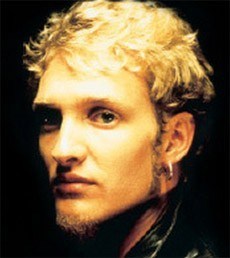
I admit it, I’ve tried them. They’re fun. But when I think about drugs, I can’t help but think about Layne Staley. I mean, look at him. Listen to him. Just for four and a half minutes.

While you’re at it, you can look at Mike Starr, playing the bass in that same video. Because he used to do heroin with Layne. And now he’s dead, too. With Layne. Who, if I may say, was not only one of the most talented and innovative heavy metal singers, but — damn, that was a pretty man. Just look at him.

layne_staley

Dead. Heroin overdose.

I think of Brad Nowell. Who couldn’t even appear in this video, because by the time this song hit, he was already dead, also of a heroin overdose. Though that is his dog there, looking even sadder than his former bandmates, trying to act like they have the heart to do any of this bullshit after their frontman and songwriter died.

Hell, I think of Elvis Presley. I mean, sure, it was a whole lot of hard living that did him in — but I think we know what the primary cause was. It wasn’t those fried sandwiches. And my God, what a voice that man had.

I think of Heath Ledger. Who I loved from when I saw him in Roar, and who just — I mean, come on. What can I say?

He even makes Christian Bale act well. (Unnecessary dig. Bale’s not bad. But Batman in the movies is boring without the villains — and this is the best one. Bar none. Better than Nicholson in the same role. Nicholson has three Oscars. Ledger’s dead. Because of drugs. )

I believe that the purpose of humanity as a race — as compared to our purpose as individuals, which is most simply put as “Make yourself happy,” a commandment that pushes us to do the things we think are right, as well as prioritizing our limited time and focusing our scattered attention on what really matters, while allowing us to be the free individuals we must always be — our purpose as a race is to do the things that other species cannot do, and that is, in my opinion, to find truth and to create beauty. Artists, along with others, do that. And the sheer number of absolutely wonderful and unique and gifted and visionary — in the best sense of the word: human — artists that have been destroyed by drugs makes me weep.

And I’m not even counting alcohol. Because I’m a writer, and if I start that list, we’ll be here forever.

And so I end up in a terrible position. A paradoxical and ultimately frustrating position, one that I don’t ever want to defend, but have no choice. Drugs should not exist. They should never be taken to excess, they should never be relied upon; they should be avoided. There is too much goodness in life to need an illusion of it. What we should do is support one another, and love one another, so that people don’t need drugs — and then let them use drugs recreationally all they want to.

What I tell my students is this: drugs make you stupid, and then they make you dead. That’s a question of increased usage, not inevitability, but increased usage is common. I do think — in a painfully simplified sense — that it is the lack of support that forces people into that fatal spiral, a lack of human treatment at the hands of our fellow men; when it is not simply bad luck, or fate, or whatever name you want to give to Dame Fortune and her spinning wheel.

And I think that what drugs have taken from us is just heartbreaking.