On the Fifth Day of Blogging, Just Dusty Blogged for Me…

An introduction to his familyyyyyy!


My wife and I speak for our pets.

I know this isn’t unique; maybe not even unusual. And though it may seem like it is to other people, especially the petless and those on the lower end of the imagination spectrum, it isn’t even strange or nonsensical: our pets, like any sentient thing, have personalities, and the clearest way for humans to depict that is to put it into words. We also do pantomime and funny voices for all of the pets, but that isn’t something I’m prepared to re-create on this blog.

So just the words will have to do.

What I have noticed over the years of speaking for my pets is this: my pets are smart. Very smart. Also kind of insane, but still — smart. The things they have to say, when we humans try to step outside ourselves and solidify their apparent perspective, are often true and even insightful things. This may be exactly because the attempt to speak in another persona allows us to step outside our own egos, and gain a new and perhaps clearer perspective; it may be because animals don’t care about the same bullshit that humans care about, and when you are speaking for an animal, it is impossible to speak like a human. It may be because I actually like animals better than humans, and so when I am speaking for them I tend, consciously or not, to make them sound like better people than human people generally are.

Though that last one isn’t entirely true. Because I speak for Dunkie, too, and he’s crazy. But also very sweet. And he don’t take no shit off of nobody, which is something that is not true for me, and which I admire and envy.

Regardless, whether it is escaping my own ego, or escaping a human’s perspective and a human’s baggage, or even if it is just that I want to make my pets seem like good people, it seems to me that their advice is worth listening to. So I’m going to be giving them a regular sort of column on this blog, and asking them what they have to say about the world we all share.

First, let me have them introduce themselves.


Duncan the Cockatiel:

Theoden Humphrey's portrait.

This is Duncan. He insists on going first, because he’s the oldest, and because he believes he is the most important.

YOU’RE GODDAMN RIGHT I’M THE MOST IMPORTANT! Yeah, that’s right — because it’s all about Dunkie. Oh! Right, yeah, introduce myself. Okay, LISTEN UP! I’m Duncan. I am named for a king. KING DUNKIE! I bring beauty into this house.


My feathers are pure white, and very clean and neat, because I spend the majority of my wakey-time grooming myself. I have a beautiful gold crest and awesome orange cheeks, and I whistle and sing and make kissy noises when I feel like it. 


When I don’t feel like it, THAT’S WHEN I START SCREAMING!


I can be very loud. BUT ONLY WHEN THEY DON’T DO WHAT I WANT! I can’t help it. I’m very small and I’m stuck in a cage. I don’t have a lot of weapons. I can bite, and I threaten that a lot. Doesn’t seem to work, though. BUT THE SCREAMING DOES! Yeah, it works good. It gets a real response, you better believe it. They always think they can ignore me, BUT NOBODY IGNORES DUNKIE! Even though I’m a tiny little pretty bird, I AM A FOUNT OF RAGE! It never lasts very long, though. But the screaming can go on and on and on and on because nobody is as stubborn as a bird. But then they just cover me up. That makes me stop screaming.

But really, all they’re doing is making me swallow my rage. The screams don’t stop, they just go inside.

For now.

It’ll come back later. Rage always does. You better believe it, pal. Just as soon as you do something I don’t like. Yeah.

I’M DUNKIE!

Oh yeah — and I can be very sweet, sometimes, too. I picked Mama out special when she came into the pet shop where I was living when I was new. Birds are usually standoffish to strangers, but I walked right up to her and put my foot out, reaching for her shoulder so I could stand on her. I still like to cuddle and have her give me skritchies. And then I close my eyes and make the tiniest little peeping noise.

It’s almost enough to make you forget about the rage.

Almost.


after-grooming
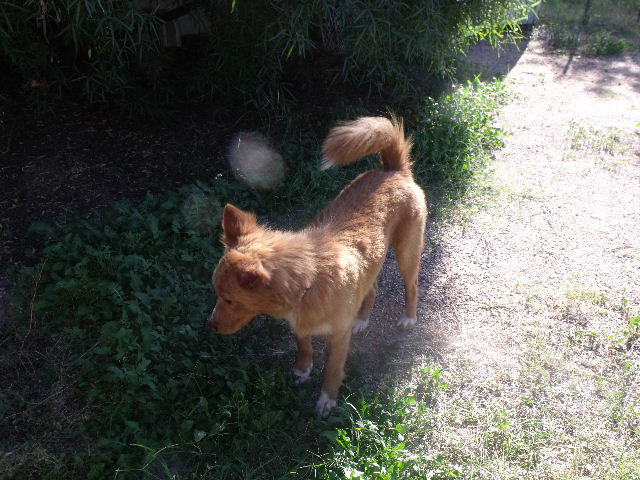
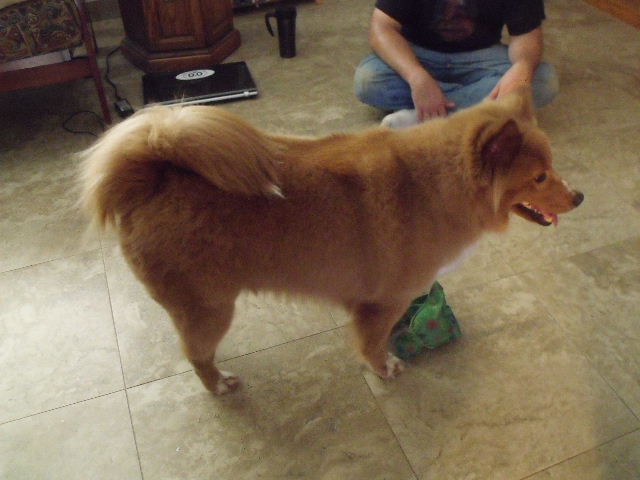
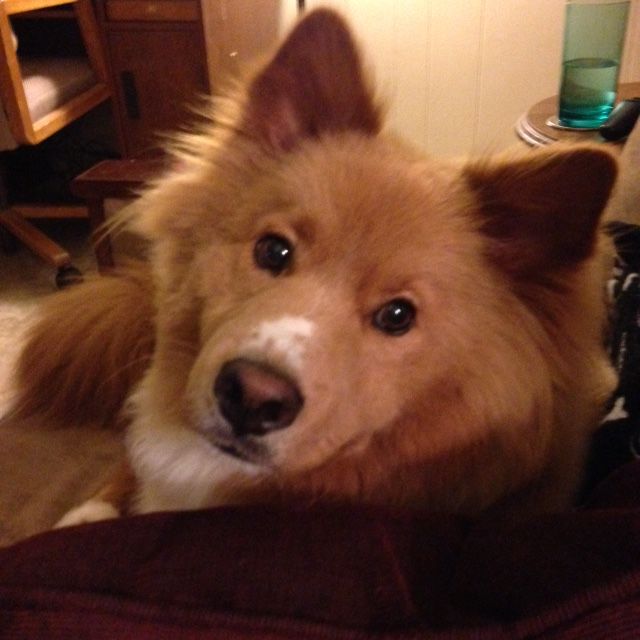
This is Samwise. Samwise, also known as Sammy, also known as the Fox in Socks (the Spitz in Spats), is the middle child (we think — both his age and the tortoise’s age are somewhat in doubt.) and is the sweet one.

 
HEYYO!* I am Samwise! I am a goodwill ambassador, that’s what my persons say. These are my persons, my mom and my pop.

Toni DeBiasi's portrait.

DSCF1669


I call them that because they took me in when I was in the joint. See, I used to have different persons, but they abandoneded me, and then I had to live on the street for a while. I came pretty close to starving to death, and it made me very scared and anxious. Then I got picked up and put in the shelter — but the dogs call it the joint, because though it sort of is shelter because you get a roof and food and water and stuff, you’re still locked in a cage, and you’re alone and scared pretty much all the time, which is why all the dogs in the joint bark a lot and act really mad. Because they’re scared and they don’t know why they don’t have a home any more, because we all used to have homes and persons, and then all of a sudden we don’t, and we’re in the joint.

The joint changes a dog.

But it didn’t change me!** Because I am super sweet, and very friendly and curious. (Though I still get scared sometimes.) I like everybody. I greet everyone and let them all pet me — I am very soft and fluffy. I never ever growl or bark, and I am not afraid of strangers — I like to stand up and pat them on the tum, because I like tum rubs and I think everyone should have tum rubs. My mom and pop think it’s amazing that I’m still so friendly and sweet, because I have plenty of reasons not to be, from my early life before I came to live here. But they don’t understand: that was all in the past. Now I have a nice home, and lots of food and tasty treats, and two persons that love me and will always take care of me, even though I bit my mom on the first day she brought me home because I got anxious and freaked out like I do sometimes, but they didn’t bring me back to the joint like the persons who took me home before them who only kept me for a week and then brought me back, or the ones before them who did the same thing (Pop says it’s because people suck, and because I have this thing they call tick fever from when I was on the street and it means I need to go to the vet and get medicine and tests and stuff and it costs money and the persons who took me home didn’t want to pay for me, but I don’t know what money is and I don’t even like the vet because they poke me with owie things but then they give me treats so it isn’t too bad but still if I could I would skip the whole thing and I’d really rather just have persons even if they don’t take me to the vet because all I really want is a home. And I have one now. So the persons who didn’t keep me before, that was just because they weren’t the right persons. I had to wait for just the right persons. And I found them!). So now I have a home, where I get to sleep in the bed, and I get two walks a day, and I get treats all the time, and they always pet me when I want them to and rub my tum and everything.

So why shouldn’t I be happy? See how nice persons are? Just look at my mom and pop! I think they’re awesome!

Okay I have to go now! Now you get to say heyyo to my outside brother! He doesn’t live in the house because he poops everywhere. I don’t know what the problem is. His poop seems pretty easy to clean up. But then I guess I’m not the one who cleans it. Anyway, he lives outside and he seems to like it. Okay bye!

(*Sammy’s greeting is pronounced like “Hello” with a Spanish “ll,” pronounced as a “y,” like “La Jolla.” It does not sound like Ed McMahon’s response to Johnny Carson jokes.)

(**Actually, it changed him quite a bit. When we brought him home, he weighed 25 pounds; he is now almost twice that, and has three times as much fur. Before and after:)

1526792_709556565807081_2954433223766361570_nsam1first-day-2after-the-grooming


Neo is an African spurred tortoise. We named him Neo because he was a gift from our former landlady, and when I was looking up African names, I found that “Neo” is a gender-neutral name that means “gift” in Tswana. We pronounce it like the name of the Keanu Reeves character from the Matrix, though I am sure that the actual word is pronounced differently; but we love the Matrix movies, and I sort of like the idea that the tortoise is actually the messiah. The actual word for the tort is “calm.”
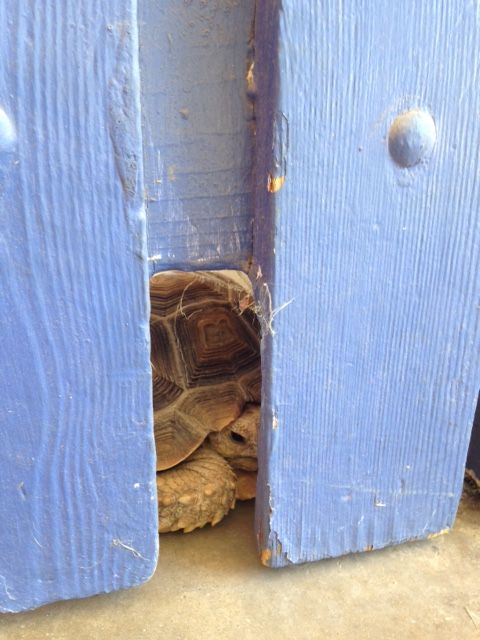
neo-peeking

Hello. I’m Neo. I like food. Especially grass.

Theoden Humphrey's portrait.

This was the new sod we got for him, and the fence that didn’t keep him out. (Photobomb by Sammy’s butt.)


Food is good. So is sleep. I like to hide so no one bothers me. Especially that furry guy (“HEYYO!”). He sniffs me a lot. He moves too much. And too fast. You have to take your time, because otherwise you might miss things. Like food. I eat pretty much anything. I can’t see very well, so I usually try to eat everything I can find. Then I sleep.

Sleep is good.

I have a shell because I don’t want to be bothered, but usually I walk around a lot and look for food. I can walk surprisingly fast, especially when one of the tall people come out and come near me, because they usually have food and I walk straight to them as quick as I can. Which is pretty quick. Not that quick.


Not as quick as the sniffer. I have an extra house, like a shell for my shell.


I sleep in there because it has a warm rock* that I like to sleep on. Warm is good. Sleep is good. I walk around every day and graze, and eat my plate of salad, and then I go and lie in the sun or lie on my warm rock and sleep.

*Warm rock=heated basking spot designed for tortoises. Basically a hard plastic tile with a heating coil inside.


Life is good.

Good Neighbors

In his poem “Mending Wall,” Robert Frost wrote, “Good fences make good neighbors.” He’s not wrong: some neighbors, you want a minefield and electrified barbed wire. And a moat. My current neighbors would only please me if they were encapsulated in a soundproof dome, so I wouldn’t have to listen to them play beer pong at 3am. Nothing like a drunken coed caterwauling “WOOOO!” after a good bounce to rock you to sleep.

But the thing that has made me a better neighbor, apart from my aversion to early-morning alcohol-fueled yodeling, is not my fences, not the separation between us and mutual respect for privacy. It is my dog.

In fact, my dog has made me a better person in a number of ways. I am cleaner, especially now that I have a dog who will eat things that aren’t food if I leave them lying around within his reach. I am braver, because while I will avoid confrontation for my own sake, I do not hesitate to get between him and any danger that threatens him. I have more patience, because losing your temper at a dog doesn’t do anything but break your own heart when he cowers away from your yelling, the toy falling from his mouth, his tail tucked between his legs, his wide eyes seeming to say, “But . . . but . . . I just want to play with you!” I laugh more, because there’s nothing better than watching a dog run towards you – unless it’s watching a dog dream about chasing things, his feet a-twitch and his throat squeaking out sub-vocalized barks. And I have far more tender moments when he curls up next to me, or turns on his back so I can rub his tummy.

But my most stubborn and problematic trait is probably this: I am an introvert. Being around large groups of people, especially talking to them and interacting with them, exhausts me. Therefore, I avoid it, as much as humanly possible. I like people; I just don’t want them around me. Given the choice between going out to a crowded, lively bar, and sitting home alone, drinking bitter, rum-laced coffee in a dark, empty room – maybe with Tom Waits playing in the background and cold rain sheeting down the windows – I’ll take the depressing solitude, every time. Actually, it sounds nice. Peaceful. Given the choice between, on the one hand, calling an electrician, describing the problem, making an appointment, greeting them when they arrive, making small talk while they work, smiling the whole time; and, on the other hand, learning how to change a broken light fixture myself – complete with slight electrocution when I brush the bare wires – I will grab my pliers and hope I don’t burn down the house. The only reason I haven’t burned down the house is that my wife won’t let me do the serious wiring myself. Sometimes my fondest wish is for the ability to cut my own hair and clean my own teeth.

And all of this anti-socializing is exacerbated, of course, by the fact that most people kinda suck.

But you see, I have a dog. My dog needs to be walked. (I have to break in to mention this: he is, at this very moment, curled up on his back by my left side, as I type this on the laptop sitting on my couch. I’m typing one-handed, because he has wormed in close enough that his foreleg has curled around my left wrist, as if he’s asking me to hold his hand, or maybe to escort him to the Governor’s ball; and so of course I’m petting him with my left hand while I hunt and peck with my right. Because writing is important to me – but I know what my real priorities are.) And there is a rather amazing thing that happens when you walk a dog: you make friends.

I don’t know most of my neighbors; in most cases, most places that I’ve lived, I’ve never even learned their names. I don’t throw nor attend block parties; despite my genuinely good intentions, I don’t go to neighborhood cleanup days. I’ll wave and nod when I see my neighbors outside – and then I turn away, and hope they’re gone by the time I look again. Normally when I walk down the street, I look away from anyone coming the other way, at most giving an awkward nod if I glance at them while they’re glancing at me. But when I have a leash in my hand, with a dog on the other end – suddenly, I’m chatting, I’m smiling, I’m making eye contact. I’m meeting my neighbors, and introducing myself and my four-footed furry companion. Suddenly, I’m friendly.

It’s him, of course. My dog is an extrovert. He loves meeting people, especially other four-footed furry people; as soon as he spots someone coming towards him, while I’m looking down at the ground to avoid their gaze, he starts wagging his tail and pulling towards them, hoping to get some petting and maybe a nice compliment on how soft his fur is; at the very least he’s hoping for a chance to sniff some new people-smells (And he thinks furry-people smells are the best.).

And while he’s standing there, wagging his big fluffy tail, nose squiggling inquisitively towards them from under his bright button eyes and pointed fox ears? I have to talk to them, if they’re human people, or to the people that walk with them, if they’re furry. I have to introduce my friend Sammy, and tell them he is friendly and not dangerous, though sometimes he gets rambunctious and jumps up on people. If it’s a human person alone, that’s all I have to say; they generally give him some pets, and they always say how soft he is, usually how pretty he is (I also have to tell them he’s a boy; if they make any comment that has a feminine twist – “Oh, she’s lovely!” – then I shorten his name to Sam, or lengthen it to Samwise, and I usually say “Good boy!” at some point. I’ve been mistaken for a girl, back when I had long, pretty hair; I didn’t care for it much.), and then they head off on their way, with a smile on their face and a wish for a good day for me. They often thank me. These encounters are, without question, the easiest, most positive interactions I have ever had with strangers.

If there is a furry person involved, the conversation is a little different: he generally ignores the human person, going straight to sniffing the furry one and being sniffed simultaneously. I still tell the human person that Sammy is friendly and will not bite, though occasionally he gets rambunctious; but I never have to say this to the furry person. It doesn’t matter if they’re twice his size, or one-quarter of it: there is never any fear when Sammy meets another dog. He will sometimes shy away from a dog barking from behind a fence if it seems angry; I use his response as a litmus test to tell me if the barking dog should be avoided or can safely be ignored. Sammy seems to know best. But if it’s a dog on a leash on the street, then it’s nothing but tail-wagging and nose-stretching, and it’s up to the human people to keep them from tangling their leashes.

And for the human persons, there is always more to say: they ask what breed Sammy is, generally with a compliment on how handsome he is – sometimes they say he looks like a fox, which he does. I tell them we don’t know: he’s a mutt we got from PACC, the county animal shelter here in Tucson. Then they often guess: and they always say Chow-Chow. Well, he is the right color, almost, and he does have thickish fur and a curled-up tail; but our last dog Charlie was at least half Chow, and Sammy looks very little like him, and acts nothing at all like him. The conversations Charlie had, whether with furry people or with human people, always started with him saying, through his attitude and body language, “I’m the Alpha. I’m in charge.” His body language was very clear: We took Charlie to an obedience class once, and he made a puppy pee itself in fear only by staring at it. The other dogs we met on the street either bristled at him, or, far more often, submitted to him, usually looking down and backing away. He didn’t allow human people to put their hands on top of his head, pulling back from their stroking fingers with offended dignity – though he would allow them to scratch his chest. And if it was a child, or the young woman with Downs’ syndrome whom Charlie met a few times at the library, Charlie would be completely calm and passive, would allow them to pet him anywhere they wished, would lick their hands and take food from them. But generally speaking, Charlie’s conversations were more formal, more dignified; based on what we’ve read about Chow-Chows, which are one of the “Ancient breeds” and were used for centuries as guard dogs in Buddhist temples in China, this had much to do with his heritage.

There’s nothing formal or dignified about Sammy. And as he’s hopping about, trying to shove his nose either into the face or under the rear of the other dog he’s greeting, the human person and I will talk about dogs, and about being dog-owners. I compliment their furry friend as they complimented mine – because all dogs are beautiful. We’ll chat about the weather, and about the neighborhood. We’ll let each other know if there is anything to watch out for or that needs to be avoided – a dog that has been spotted roaming loose, or a patch of sidewalk littered with broken glass. Eventually we’ll break off the sniff-fest and pull away, with several goodbyes.

Then, if we meet again, we recognize each other: I tell Sammy, “Look, it’s your friend!” And he acts like it: by the third time or so meeting the same dog, Sammy graduates from sniffing to trying to play, batting at them with his paws, rearing up or play-bowing as dogs do. The other human persons greet him by name – they still don’t know mine – and give him a little skritch about the ears or shoulders. Now the humans’ conversations also get more friendly, and we start getting to know each other. I have never spoken to two of the people living in the house next door to me; but I know the woman down the street, who walks her Dachshund twice as day as I do Sammy. She’s 87 years old, from Germany (I don’t comment on the amusing stereotype of a German woman with a Dachshund, but I think of it and smile), and she’s a badass: she walks that dog for miles, takes aerobics classes, and carries a wooden cane not to walk with, but to smack the heads of dogs that come after her little friend, because a loose dog once got into her yard and picked her dog up and shook it violently. Whenever I pass the two of them – which is frequently, as her walking schedule coincides with ours – we wave and greet each other with fond smiles, even yelling across the busy street. I like her. Her dog is also the sweetest, calmest Dachshund I’ve ever known; I have never heard him bark, and when he and Sammy met after he had had some teeth pulled and a growth removed from his snout (non-cancerous, his person told us – and expensive to have removed, but “Vat can you do? Zey are our children.”), Sammy sniffed carefully all around the wound, gave it a little lick, and the Dachshund let him.

That’s how it is, when you walk a dog: you get to know the other dog-walkers in the neighborhood, and their dogs. You smile and wave to each other; if your dogs get along, you cross the street to greet each other and have a little sniff-fest. If your dogs don’t get along, there isn’t any judgment, no grudges held; you simply cross the street away from each other, or pull one dog off the sidewalk to allow the other to pass without incident. (This was much more common with Charlie, but Sammy still does get nervous around some dogs; we simply stand aside, and there’s no issue.) I’ve shared poop-bags and treats with dog-walking friends who forgot one, and many a piece of advice or encouragement about training or health or food or general pet care; I’ve recommended vets and groomers and the obedience classes we took Charlie to. We’ve never actually been invited to a doggy birthday party, but they have been discussed, as have Christmas presents and special treats and favorite toys and games. We’ve told fond and interesting stories, and sometimes poignant ones: now that our family has been through the grief of losing Charlie, we have some more somber stories to talk about – but we can always lighten the mood by discussing Sammy, who is an absolute bundle of joy.

I’ve made friends, several of them, but not through any effort of my own: simply because I have a dog, I walk my dog, and I love my dog. Good fences don’t make good neighbors: good dogs do.

What is this?

(Please note: throughout this piece, every use of “I” and “me” should be taken to mean both myself and my wife; we are equal partners in this endeavor. She has read and approved this before publication, and she has kindly let me speak for us both. It was just too awkward to keep saying “Toni and I.”)

DSCF1627

This is the dog who lives at my house. The question is, what does that make me?

I call myself his father; I call him my son. But of course, he’s not that; we are of different species. He doesn’t look like me at all. I don’t treat him as I would a human son. He doesn’t eat at the table. He doesn’t wear clothing. He doesn’t have Legos.

My human son would have Legos. I would teach him to read, and to talk like a pirate. We would watch The Iron Giant and Monty Python together, and play Sorry and Parcheesi and War. I would learn to play chess so I could teach him.

None of these things are true with the dog. So he must not be my son.

The law calls me his owner; him, my property. But how can that be? The measure of an individual life, the distinction between an object and a person, between animate and inanimate, is sentience. Sentience is the ability to feel or perceive: the dog can clearly do both. His perceptions are markedly more sensitive than mine, in some cases.

Not in all cases, though. His sense of taste, for instance. Not only does he regularly chew up live, squirming insects of any kind that he can catch, he also picks up anything — anything — that might resemble food, no matter how remotely, while on his walk. Sure, he grabbed that discarded Goldfish cracker, and he tried to eat the doughnut that someone dropped and then ran over; but he also picks up bird feathers, cigarette butts, flower petals, balls of lint and hair, pieces of tar and plastic, shiny things, and the excrement of other animals. He also regularly licks the tile floor in the kitchen, for minutes at a time. I have doubts about the functionality and acuity of those taste buds.

But there is no doubt that he can feel. He misses me when I am gone. He is happy when I return. He loves to cuddle, and to play tug-fetch. He has trouble with anxiety: when I change my routine, it can upset him, and he — well, he freaks out. He starts moving and breathing quickly, and he tries to get as close to me as possible, nipping at me and whimpering softly, desperately; if he doesn’t calm down at that point, the next stage is a good five minutes of sprinting, at top speed, in and out of the room where I am, throwing himself as violently as possible onto the bed or couch where I lay, barking at every turn and biting anything or anyone who intervenes. Clearly he has feelings — prodigiously strong feelings. He suffers because of it.

The mechanistic paradigm would hold that these are nothing more than reaction to stimuli and conditioned response, and perhaps so. As such, they are no different from any of my feelings, about which one could make the same argument — I smile when he comes to me and rolls onto his back because doing so ensures me a pleasurable experience, namely rubbing his belly, which feels good to my fingers, lowers my blood pressure, and so on. Such affection is pleasurable because it signifies pack bonding, which helps to ensure my individual survival: for I have allies in the hunt and against my enemies.

Whatever. The point is, he is as sentient as I. I do not think he can be considered an object. Property. No more than I.

When I come home, he meets me at the door, wagging his tail, but he is not a jumper; he likes it when I come down to his level. I crouch down, usually with one knee on the floor and the other out to the side, and he curls into me, pressing his body against my leg and across my torso, and I put my arms around him and bend low to kiss his head, and he is surrounded and encapsulated by me. Each morning when I get up, I lay on the couch to drink my first coffee, and he leaps up to lay beside me, sitting in the space made by my sideways lap. He leans against me while I pet him, and if I use only one hand, he puts his front paw on the other one and tugs, as if to say, “Why aren’t you using this hand, too?” So I do. And he smiles. Within minutes he melts, oozing down to lie beside me in the narrow space I do not occupy, his long legs lolling over the side of the futon. Often he rolls onto his back, hoping that I will gently scratch his belly. That’s his favorite.

He wants to be in the room where I am, no matter what. As I move back and forth between kitchen, living room, bathroom, bedroom, he follows me, his chew toy in his teeth, laying down on the bed even for the half a minute while I put on my belt and pick up my shoes. Whenever I go to any door, he wants to lead me through it, the grand marshal of my daily parade.

So what does that make him, all of that? My pet? Too condescending. My shadow? Too stalker-y. My companion? Perhaps.

I call him my friend. My buddy. (I sing the song, which I learned by heart during my adolescence when the television burned at both ends.) And it’s true. But there’s more.

I named him. We call him Samwise — Sammy for short — after my favorite character in the same books that gave my name to my parents (Well, my second-favorite character, but really, The Witch-King of Angmar, Lord of the Nazgul is no name for a dog. That’s a cat name. Or a bunny.). I named myself for him, because I speak for him as I speak to him. I recognize that the names, like the words, like the personality and the voice that I have created for him (He sounds like Sniffles the Mouse from the old cartoons) are all and only of and from me, not from him; but he takes them on, for me. He lets me color him in. He lets me play with him when I want to laugh, and hug him when I want to cry, and always, he makes me feel better.

So what is he, to me?
Here’s why it matters, what he is to me; here’s why I’m writing about this. Here. This is the second time I’ve had a dog-friend-son. The first was Charlie.

2011_1220pictures0020

Charlie died last year. He died because of a brain tumor. But really, he died because I killed him. I told the doctor to poison him, and I held him while he died.

If Charlie was my son — and just as I do with Sammy, I called him such, called myself his father; my parents called him their grand-dog — then I would not have done this. I would have fought that tumor, would have put Charlie on the medication, gotten him the CAT scan, talked to doctors about surgery, about chemo and radiation, about prognoses and time and quality of life.

If Charlie was my property, I wouldn’t feel badly about his death. When a possession is broken — and that tumor broke him, at the end, sent him into grand mal seizures, caused apparent blindness and confusion and loss of equilibrium and loss of bladder control, and I can’t imagine how much pain he’d have been in had we not had him on analgesics — you throw it away. Maybe you miss it, but you don’t regret throwing it away. I didn’t even throw Charlie away: I kept his ashes in a white box, high on a shelf, with his collar beside it, and the Christmas ornament we got for him, embroidered with his name.

But I feel badly about Charlie’s death. I regret the decision I made, even if it was the only one I could have. I know it was the only one I could have made, and the actual decision took almost no time; there was no question that it was the right thing to do, none at all. But I wish I hadn’t had to make it. I still wish he was here. I miss him. I loved him. I still do.

If he was my friend, then his death at my hands makes some sense. He was suffering. He was losing himself, and every day that he lived would have taken him further away from who he was. When you face that, it may be your friend — your buddy — that you ask to pull the trigger, to pull the plug, to end it.

But I’ve had friends. I have friends. None of the other ones live with me, and even when they did, I never, ever scratched their tummies like they liked. There’s a connection here, a trust and an intimacy, that friendship does not include. And, more, there’s this: the truth is, I don’t know if Charlie wanted me to have him put to sleep. He didn’t ask me for that. He didn’t decide.

I decided for him.

If I had a human child with a terminal illness, at some point, I would make the same decision — though I might decide differently. But still, I would decide to keep fighting or to let go. I would. Not the child. And I would never make that decision for a friend. Only for someone whose life was actually in my hands, someone who trusted me so completely, that I knew so well, that I could make that call for him. I’ve never had a friendship that close, and don’t expect I ever will.

That kind of relationship is family.

So, I guess that’s what Sammy is, what Charlie was. My family. My pack. My son.

My dog.

DSCF1669