Free to be Safe, Safe to be Free

A friend of mine posted this:
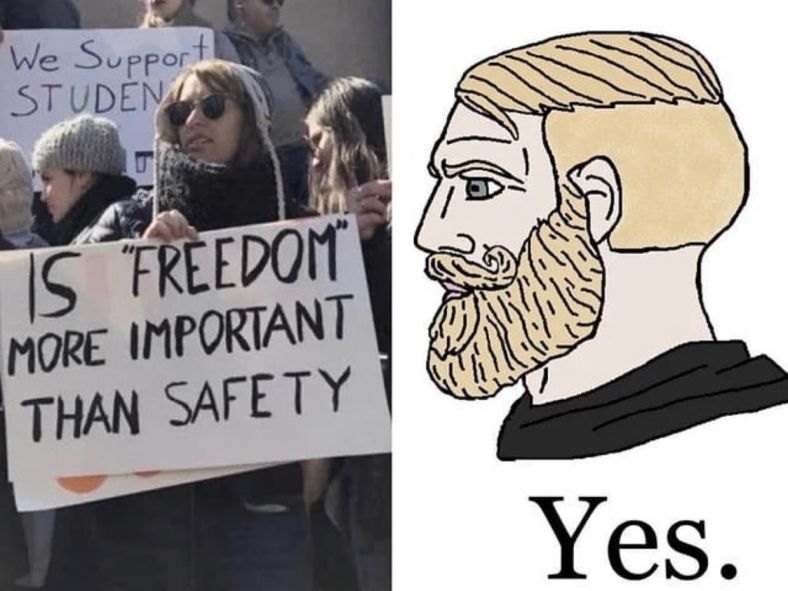
IMG_3831
And so, because this is what I do, I asked: why? Why is freedom more important than safety?

He couldn’t answer.

He replied that freedom was the very fabric that the U.S. was drawn on, which is a lovely statement of sentiment — but not an answer. That tells me why freedom might be so important to Americans, if we accept that freedom is indeed what the U.S. was drawn on; but it doesn’t say either why that is the foundational principle of this country, nor why that foundational principle (or this country) are especially important — nor does it answer my first question, about why freedom is more important than safety. (Heh — I just wrote “freedom is more important than slavery.” Not only pretty close to a tautology, but also a pretty good indicator that my subconscious is damned libertarian, if it equates safety with slavery. Actually, I was just listening to the 1619 Project podcast about the foundations of this country, and I have an argument against freedom being the fabric this nation was drawn on. But that’s another subject for another time.)

Understand that this is a good guy, a really good guy. A generous plenty of his posts are focused on telling his friends that he loves them, especially his male friends, explicitly using the word “love” and supporting them in every way he can; sharing his own struggles with depression and alienation; telling anyone and everyone that he is always willing to listen. Basically he is an antidote to toxic masculinity. He is masculine antitoxin. (Also hilarious. Also a frequent and fully self-aware shitposter. Also a boogaloo boi: his second response to my questioning was a citation of the Second Amendment as the only necessary source of safety. People are complex, aren’t they?) He wasn’t attacking me, calling me a coward or a libtard; he wasn’t even treating me as a troll commenter, which would be an understandable response to my asking philosophical questions on a meme. He was really trying to answer my question, and in so doing, revealing at least some of his ideals, if not his explicated arguments for his ideals.

And I don’t think they’re bad ideals. I think this country should be drawn on the fabric of freedom; and though I don’t agree with The Libertarian Cartoon Head (And I find it kind of hilarious and very telling that it is so very Nordic and square-jawed, with furrowed brow and shaped beard and curled ‘stache, blond hair and blue eyes), I also don’t agree with the woman with the sign. (I will give her slightly more credit in her argument because she put “freedom” in sarcastoquotes, which implies that the debate is set on false premises as these debates often are and maybe have to be by definition; but also, I have no idea where this picture is from or if it is even real, so I can’t say if she knows how to use sarcastoquotes or meant those for emphasis, or if she ever really held that sign in the image, or if it was Photoshopped. So.)

Let me tell you what I think: I think both safety and liberty are, quite simply, vital. They are necessary. Both. I’ll actually throw in the pursuit of happiness, too: all vital to our continued existence as thinking, feeling individuals. That’s why they are unalienable rights.

There’s a deeper and harder conversation about what rights are and where they come from, and what it means to have them, which I am not qualified to have; I have a lot more reading to do in the philosophy world before I can take that on. But for  this conversation, the layman’s understanding of rights should be just fine.

A right is what you have simply by virtue of being an individual, a specific human being: a person. Your rights are essentially a list of what is required for you to experience and explore that existence as a person, as an entity with reason and free will. You must have life, because if you’re dead, you can’t experience your existence as a person. You must have liberty, because liberty is essentially the opportunity to have your own thoughts and feelings, to express your own thoughts and feelings, and to act on your own decisions, which are based on your own thoughts and feelings. Without liberty of thought, of speech, and of action, you are not able to explore and experience your existence as a unique individual. It’s pointless to say you have reason if you are not allowed to think your own thoughts, and then express what you think (Because freedom that is only locked inside your head is not freedom: a human being is capable of expressing and communicating their thoughts, and that expression and communication of thoughts is a fundamental part of being a human; you cannot be a human if you can only think but never speak your truth.); it is untrue to say you have free will if you cannot act according to that will.

You must have life to be you, and so you have the right to life; you must have liberty to truly be you, and so you have the right to liberty. Either without the other is meaningless and empty. The pursuit of happiness, the third unalienable right listed in the Declaration of Independence, is the realization of these two rights extended forward in time: if I have life and liberty right now, I can be myself; and if I can be assured that I will still have life and liberty tomorrow, I can begin planning and acting with that understanding in mind, seeking most likely to achieve a greater happiness for myself according to my wishes. Also necessary, I would argue — although the argument for this one is a bit more fraught, not only because Thomas Jefferson, after cribbing these rights from John Locke, changed Locke’s third unalienable right into the pursuit of happiness; Locke said the third was the right to property, meaning the right to own the fruits of your own labor. That’s a different conversation. It’s also fraught because Jefferson was one of history’s greatest hypocrites, writing that all men are created equal while being attended by James Hemings, his wife’s half-brother — Jefferson’s own brother-in-law, who shared a father with Jefferson’s wife — whom Thomas Jefferson owned. Jefferson also, of course, owned James Hemings’s sister (And Martha Jefferson’s half-sister) Sally. And he owned his and Sally’s six children until his death. All men are created equal, eh?

Regardless of who wrote the words, though, the ideas are sound as written, if not as Jefferson embodied them and helped to codify them into the founding documents of this country. All people are created equal: each and every one of us is a unique individual, essentially capable of thinking and feeling, and in possession of free will. Therefore each and every one of us has the unalienable right to life and liberty, both.

Both.

That’s the trouble with this argument. It’s not that life (which I would argue is represented by safety; I’ll get to that in a second) is more important than liberty, nor that liberty is more important than life. It’s that you cannot separate the two.

Is safety the same as life, here? I don’t want to argue a red herring, to make a false equivalence between the safety in this argument and the right to life in the Declaration of Independence. But what do we mean by safety? Safety, I think, represents the assurance of continued life; like the pursuit of happiness, it is the right extended into the future. If I am safe, I not only know that I am alive right now, but I expect that I will continue to be alive in future, and so I am confident and comfortable in that expectation. In its essence, safety is about the preservation of life over time — and also the preservation of liberty, without which life is meaningless and so too is safety. I know that’s a circular argument, but really: if you were sure that tomorrow you’d be alive, but you’d be in jail, would you say that you felt safe?

And on the other side, if you were free to do as you wish, but you knew you would die tomorrow, would you really feel free?

I know the knee-jerk answer to that second question, from people who agree with the meme (probably my friend as well), would be a resounding HELL YEAH BROTHER! Because part of this argument is based on a quintessentially American/(toxically) masculine ideology that not only honors, but pursues and relishes, death, especially death by martyrdom on the altar of freedom. But while self-sacrifice is honorable and noble, and I am grateful for those who have sacrificed their lives for me  — those sacrifices did not ensure the continued existence of liberty. They (depending on the specific situation) may have helped to eliminate a present threat to liberty with their sacrifice — probably also a threat to life; while the Fascist regimes in WWII were certainly a threat to liberty, they were clearly a much more dire threat to the essential existence of millions if not billions of human beings — but that doesn’t ensure, cannot ensure, that liberty will continue into the future.

Only safety can do that.

Now: it is certainly true that some attempts to limit liberty are presented under the guise of promoting safety; those must be guarded against. But that is not, despite the fanaticism of some liberty-lovers, true of every single attempt to ensure safety, nor even every attempt to limit liberty — some are presented as morally correct, for instance, regardless of whether they create more safety; like certain White House occupants sending certain Federal troops to certain cities to, errr, safeguard statues. That is certainly an attempt to limit liberty, but there’s not really a way to claim that keeping Robert E. Lee atop his horse atop a marble pedestal will make us safer. (There is some attempt, in the name of law and order, to claim that those who would pull down statues are threatening to create — or actually creating — chaos and danger for Americans. But let’s not buy into the bullshit, yeah? The only safety really being promoted there is the safety of the monuments, and the comfortable white supremacy they generally represent.) It’s like the argument that every single gun law is an infringement on the right to bear arms: that’s not really true. The essence of the Second Amendment is to preserve the right of self-defense — which preserves both life and liberty — and so long as one is able to do that, the right is uninfringed. Slippery slopes are not an argument, they’re a rhetorical scare tactic.

It is also true that some attempts to create safety also bring an unacceptable limitation on liberty; I think that’s the argument against lockdowns as a measure against the pandemic. As I think this year has made clear, though, temporary limitations on liberty become more acceptable when they are more effective in preserving life; the way to avoid a restriction of liberty is to find a way to have your cake and eat it too, to ensure safety while also preserving liberty — which in this case would be: masks. Masks are a way to effectively preserve safety by stopping the spread of Covid-19 while also not infringing on liberty, because so long as everyone wears a mask, we can continue with almost all of our preferred activities.

Brief aside to squash this nonsense: Liberty does not mean an unlimited right to do whatever the hell you want, to say no just because someone else says yes, to insist that somehow you don’t need to wear a piece of cloth on your face just because you don’t wanna BECUZ THIS’S AMURRRRRRRICA. It means the ability to control your own actions based on your rational decisions, so long as those actions don’t harm anyone else’s ability to do the same. Anyone making a rational decision not to wear a mask — i.e., “I have claustrophobia and the masks cause panic attacks, so instead I MAINTAIN A STRICT SOCIAL DISTANCE AND MAYBE WEAR A CLEAR FACE SHIELD” or “I don’t enjoy wearing a mask SO I DON’T GO OUT IN PUBLIC” —  is fine; those are rational decisions, and I doubt anyone would have a real problem with those. That’s why exceptions for health reasons are written into every mask ordinance, and why no mask ordinance mandates people leave their homes.  Now, it is certainly true that, all else being equal, the individual should be the one to decide for themselves what is a “rational” basis for their own decisions; but in a pandemic, the actions of individuals have outsized impacts on the life and liberty of others, and therefore some limitation of an individual’s actions is reasonable. The outsized impact on others means that one cannot make a determination of a rational action depending only on one’s own individual will. It means a reduction of one’s ability to choose for one’s self.

To preserve safety. And liberty. Because that’s what it means to live in a society. People who want to be so fanatical about their liberty that they accept literally no restrictions on their liberty imposed by others can still make that choice: they just don’t get to be a part of our society. Society requires compromise. Them’s the breaks. Your right to swing your fist ends where my nose begins, so if you want to swing your fists without any boundaries, get the fuck away from my nose. And then go nuts. Feel free.

Benjamin Franklin gave us one of the more popular arguments about this issue. He said,

“Those who would give up essential Liberty, to purchase a little temporary Safety, deserve neither Liberty nor Safety.”

Now, this quote, like everything else from the Founding Fathers — and, well, everyone famous ever, in this age of disinformation inundation (™) — is pretty regularly misquoted. A Google search for this one gets me this meme, which changes the quote pretty appreciably:

Notable Quote - Benjamin Franklin - Granite Grok

(It also gets me this one, which is hilarious because there’s absolutely no way Benjamin Franklin said this — and not just because “guy” was not commonly used to mean “that fellow over there” until around 1850, 60 years after Franklin’s death BUT MOSTLY BECAUSE OF THAT:)
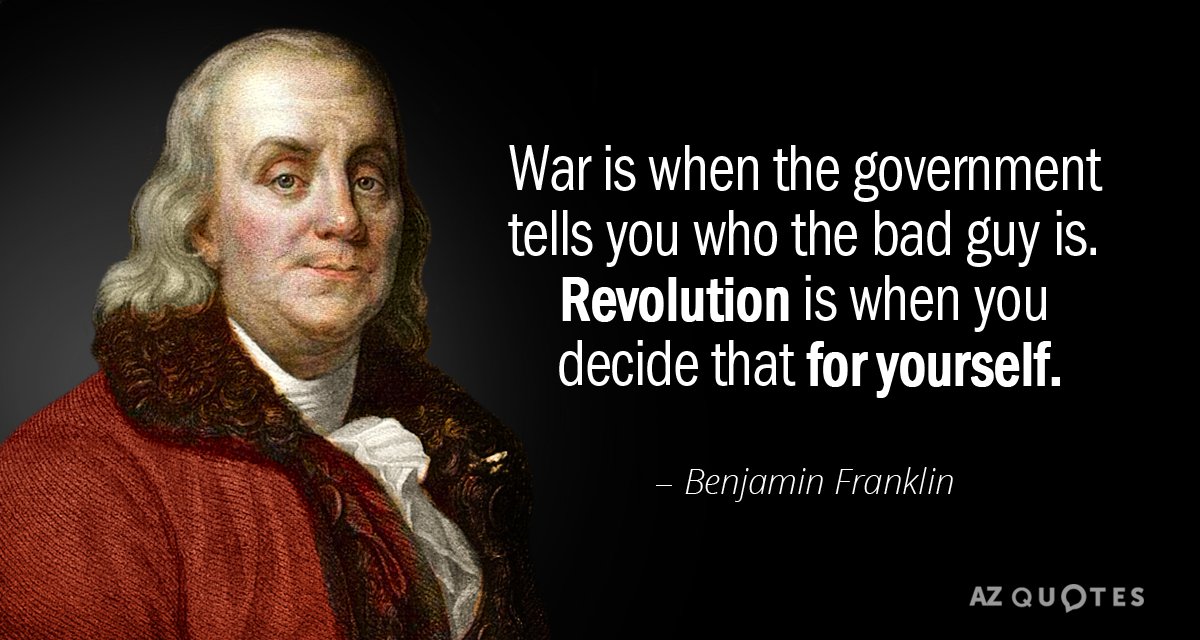
TOP 25 BENJAMIN FRANKLIN QUOTES ON LIBERTY | A-Z Quotes

(I also really want that not to be a portrait of Franklin, but it probably is. Oh, well.)

But case in point, the comments on the meme that my friend shared had this image in them:

Image may contain: 3 people, beard, text that says '12:23 Kacey Elise Wheeler Kacey Elise Wheeler Yesterday Extreme Liberty 10:55 This shirt our Scofflaw collection has been really popular lately! Get while it's hot! [Link below] ...See More Those would upliberty purchase alety are bitches. Beajamin Franklin (probablyi Like Comment Share Whoolor ខ'

Which really represents what happens when people stop thinking about this stuff. Nothing wrong with wearing a t-shirt, of course; but this is not an argument, any more. Now it’s silly. Now it’s a meme.

But the best and most important thing about Franklin’s actual statement is this: it doesn’t mean what we think it means.

WITTES: The exact quotation, which is from a letter that Franklin is believed to have written on behalf of the Pennsylvania General Assembly, reads, those who would give up essential liberty to purchase a little temporary safety deserve neither liberty nor safety. [emphasis added]

SIEGEL: And what was the context of this remark?

WITTES: He was writing about a tax dispute between the Pennsylvania General Assembly and the family of the Penns, the proprietary family of the Pennsylvania colony who ruled it from afar. And the legislature was trying to tax the Penn family lands to pay for frontier defense during the French and Indian War. And the Penn family kept instructing the governor to veto. Franklin felt that this was a great affront to the ability of the legislature to govern. And so he actually meant purchase a little temporary safety very literally. The Penn family was trying to give a lump sum of money in exchange for the General Assembly’s acknowledging that it did not have the authority to tax it.

SIEGEL: So far from being a pro-privacy quotation, if anything, it’s a pro-taxation and pro-defense spending quotation.

WITTES: It is a quotation that defends the authority of a legislature to govern in the interests of collective security. It means, in context, not quite the opposite of what it’s almost always quoted as saying but much closer to the opposite than to the thing that people think it means.

SIEGEL: Well, as you’ve said, it’s used often in the context of surveillance and technology. And it came up in my conversation with Mr. Anderson ’cause he’s part of what’s called the Ben Franklin Privacy Caucus in the Virginia legislature. What do you make of the use of this quotation as a motto for something that really wasn’t the sentiment Franklin had in mind?

WITTES: You know, there are all of these quotations. Think of kill all the lawyers – right? – from Shakespeare. Nobody really remembers what the characters in question were saying at that time. And maybe it doesn’t matter so much what Franklin was actually trying to say because the quotation means so much to us in terms of the tension between government power and individual liberties. But I do think it is worth remembering what he was actually trying to say because the actual context is much more sensitive to the problems of real governance than the flip quotation’s use is, often. And Franklin was dealing with a genuine security emergency. There were raids on these frontier towns. And he regarded the ability of a community to defend itself as the essential liberty that it would be contemptible to trade. So I don’t really have a problem with people misusing the quotation, but I also think it’s worth remembering what it was really about.

Source

In the end, the things we need to remember are these: safety is important. Preserving life is important. The reasonable assurance of future safety is also important  — I don’t want to get into Maslow’s hierarchy of needs, but liberty is waaaay up at the top of the pyramid, around “self-actualization,” and safety is at the base, the second level just above food — and, dependent on circumstances, justifies a limitation on individual liberty. The preservation of liberty is equally important — but because liberty is more abstract than life, it requires more careful thought to reasonably determine what is, and what is not, a threat to liberty.

The whole reason we have the right to liberty is that we have the ability to reason. If we want to protect that right, then we must use that same reason to know when it is actually under threat. We have to think.

And stop taking memes too seriously. You know: like I just did.
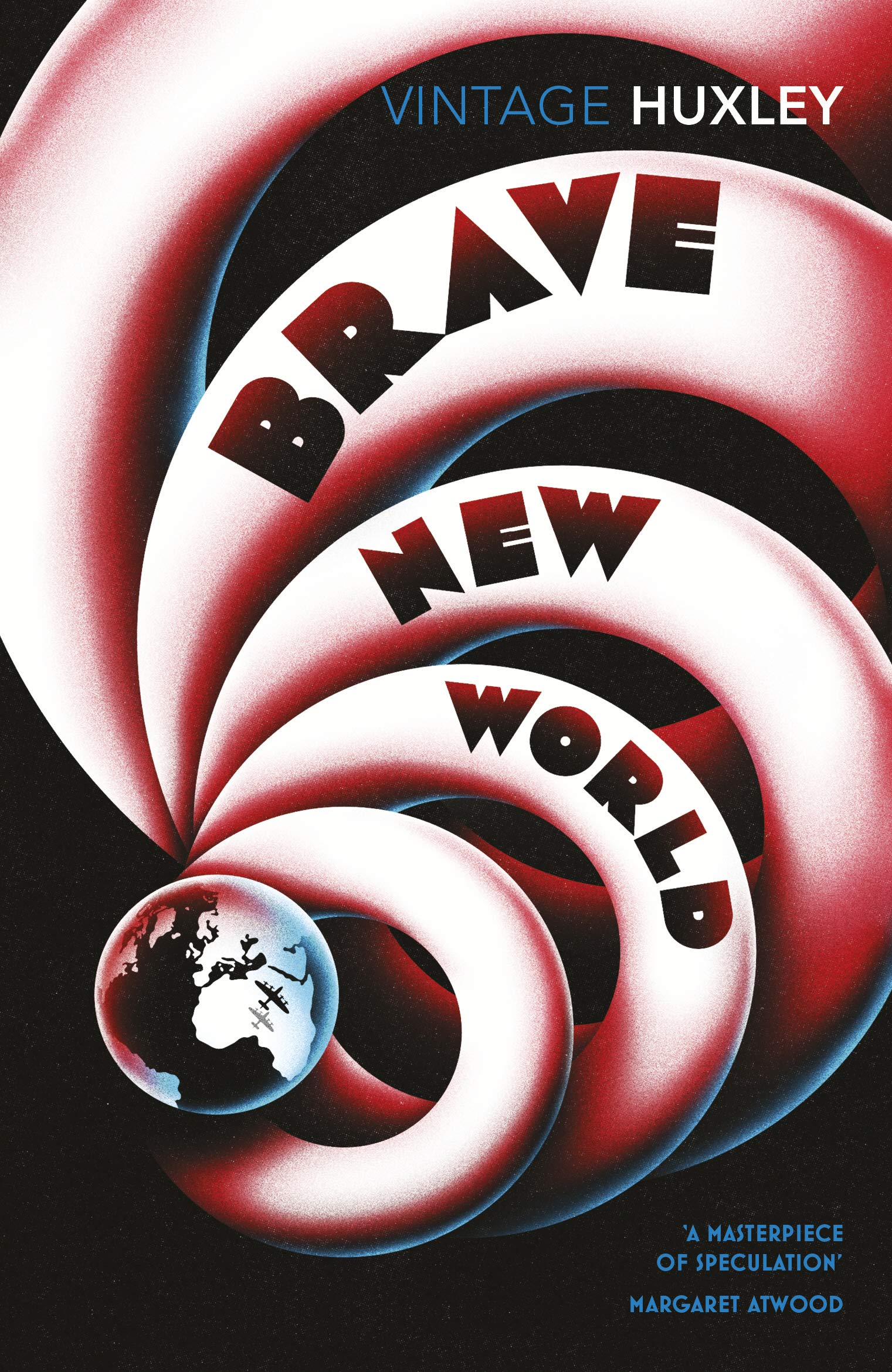
Brave New World Aftermath: Can’t we all just get along?

Image result for brave new world

Aldous Huxley’s Brave New World  is a classic dystopian novel.

In which everyone is happy.

It’s quite wonderfully insidious; usually a dystopian novel shows us a world where no one is happy, and challenges us to find a way to imagine happiness in it: in 1984, everyone suffers all the time, until Winston Smith tries to find a way to, well, live, laugh, and love; the jackboots of Big Brother and the Thought Police stomp that dream out of him. In Fahrenheit 451, the people are committing suicide and killing each other, while screaming at their television sets and cringing away from their devilish firemen; but when Clarisse McClellan tries to think for herself, she is vanished (and probably killed), and when Guy Montag wants to read books instead of burning them, he is arrested and forced to murder his former friend and then run for his life. In The Handmaid’s Tale, happiness is not the thing; purity is. Nobody gives a shit about happiness, and so that’s exactly what they get: shit happiness.

But in Brave New World, when John the Savage wants to be different from the people of the Brave New World, he demands the right to be sad and miserable and angry. And then he is chased out of society, because everyone there is happy, and no one has the freedom to frown, so to speak. Really, no one has the freedom to be alone, which is probably the more disturbing part; that is a common thread in all four books, and I think in all dystopias; everyone is watched, all the time, and it’s horrifying.

I should point out here that we are also watched all the time, and it’s no less horrifying for being real; but there is still some difference for us: the government has the ability to watch us all the time, but they don’t actually care about what 99% of us do.  And while our friends and neighbors are in our business every day, it’s usually because we put our business on social media, or on the grapevine. We still, generally speaking, have the option of privacy. Corporations building data profiles of us are involved in every second of our day that they can be, and that’s probably the most ominous; but really, they just want to sell us shit, so while it’s creepy that the Facebook ads reflect what we were just thinking or talking about, it’s nothing more than something to scroll past. At some point the corporations will realize that they can create markets for their products by screwing with us; that’s when it will get bad. It’s also incredibly dangerous that the data collected on each of us could very easily be turned over to the government (I was going to write “seized by,” but really, what corporation would ever say no to Uncle Sam come looking for intel? They can still sell things to people under NSA surveillance, after all. Maybe rotate some ads for firearms or “Don’t Tread On Me” flags into their feeds.), because the government is certainly willing to screw with us; but as of this moment, to quote the Doors, “They got the guns, but we got the numbers,” and so these tools are not yet  effective. Certainly something to watch out for.

But in the Brave New World, the people don’t have to watch out, they don’t have to suspect their government: they are happy. All of them. All the time. The Big Speech — another common thread through all these books, and perhaps in some form in all dystopian novels, as every dystopian novel has a message to give, and an important one, so the authors don’t want to take a chance on us missing it — given by World Controller Mustapha Mond (Huxley was a brilliant writer, but really, his names are lame. The use of Communist/Socialist names — Marx, “Lenina,” Trotsky — is annoyingly on the nose, and while it’s kinda clever that Mustapha in Arabic means “chosen” or “selected,” the fact that “Mond” means “world” and Mond controls the world… well.) at the end of the novel explains why the society of Brave New World chose happiness and stability over freedom and progress: because there was a terrible war, and afterwards, people wanted to be safe. So they chose to create a stable, safe society, and the only way to do that was to make everyone happy, all the time — or rather, maybe the goal was to achieve happiness for everyone, and the only way to do that was to make sure society was stable, was safe, was static. Every aspect controlled, nothing left to chance.

The result? A society where everyone is designed to be happy. Where the people are cloned, genetically and chemically modified, conditioned and trained from birth to have specific needs and specific wants and specific fears and specific aversions, all of that intended simply to make them happy with their life exactly as it is. They are built to do specific tasks in society, to enjoy simple things like sex, sports, and soma, the wonder euphoria drug that eliminates all chance negative emotions, and never to want to do or be anything other than exactly what they are.

And I read this, and I think: are they right?

Isn’t a happy, stable society better than one that has misery and suffering? Even if, as John the Savage (The one person in the society born to be a part of society, but not raised in it, so not controlled by it) argues — rightly, I think — that sorrow is necessary for tragedy, which is necessary for great art and great genius? Do we really need art and genius? It seems like a reasonable argument to say that most people would prefer to be happy, rather than great, and that happiness — contentment — seems much more likely to make us productive and useful members of society, and to ensure the continuation of the species. Aren’t those the goals?

Even if they aren’t, isn’t the loss of freedom worth the great benefit that the society actively seeks in the novel: the elimination of war? There is not a doubt in my mind that war is the greatest evil, the most abhorrent atrocity, that humanity has ever created or faced; what price should we be willing to pay to free us of it?

After reading this book — though it did genuinely give me pause and make me think twice, and then a couple more times after that — I think the answer is No. No, the price of safety and stability is not worth it. No, the goal is not simply happiness and contentment for all people at all times. Even, I think at least half of the time, if we achieved the end of war.

Because what makes war such an abomination is that it degrades our humanity. In addition to creating or multiplying every other horror we face — death, famine, pestilence, cruelty, greed, deception, hysteria, you name it and war is where you will find it more often and to a greater degree than anywhere else — war takes away everything that ennobles us. In the midst of famine, we can find unmatched ingenuity, and inconceivable endurance, and breathtaking altruism and generosity and self-sacrifice; in the midst of plague, we find kindness and grace and dignity in the midst of and because of the suffering; and so on, through all of it.

But war does quite the opposite. War makes kind people cruel, and healthy people sick, and civilized people into savages. War is the triumph of inhumanity over humanity.

But so is the Brave New World. Because whatever those people are, they are not human. Humans are not designed, and humans are not crafted and shaped like pottery on a wheel, and humans are not set into a groove out of which they will never skip. Humans cannot be perfectly ordered: we are chaos, we create chaos. It’s one of the reasons we are so good at war, because we are so very, very good at destroying things. Especially ourselves. We’re good at building — or else there wouldn’t be any targets for war to aim at — but we’re even better at burning it all down.

And that’s necessary. Because without destroying what is there now, you would never be able to build anything new. Creation implies destruction, but it is valuable  when destruction is for the purpose of creation, when it is part of a continuing cycle: whereas if we end destruction, and end creation too (The people in the book are not created as humans are, through the act of love and the processes of nature; they are built like machines, which is origination, but not, I would argue, creation — and I’m not even touching on the religious argument, which would be a much more poetic way to say the same thing), what we achieve is — stasis. The end of movement.

Death. And not a death that continues the circle of life, giving rise to something new to replace what is lost; here nothing is lost, and so nothing can replace it. Everything is just — still. Stopped. Perfectly motionless, without growth, without progress, without change. Which is no less dead than death itself. And while I will often argue that progress for the sake of progress is cancerous and absurd and deadly, I certainly wouldn’t prefer the final end of all progress.

Not even if it made me happy.


I do not think that this means we need to accept war. I still believe it is the extreme end, the Ultima Thule, of human malignancy; which means we can draw back from it, lessen it, even essentially eliminate it; though it is probably also true that some shadow, some residue, will always remain to harm and torment us. It is in our nature: not that we are made to war, but that we are made to try and reach and explore and find new ways to do things, and one of the ways to do things is to go to war; so even if we forgot it, we would rediscover it again, and again. Curiosity killed the cat, and we are forever curious. But just as more freedom and individuality is better than less, even if it is an imperfect freedom and individuality (which is what we have now), less war and more peace is better than the reverse. So I think there is a goal, and a way to achieve it, without also losing everything that we are.

I also recognize that there are events and actions that might be labeled war, but are not the horrors I’ve been describing; there are times when people have taken up arms to put an end to the horrors, when military intervention is the only way to save people. I don’t want to use the phrase “police action,” because Vietnam was a lie and the police as saviors is a fraught idea anyway; but there are times when force is both necessary and humanely applied. Someone who uses force to defend themselves or another from an attacking force has done nothing wrong. I don’t mean to either denigrate that, nor argue that even that should be (or could be) eliminated; that is the shadow and the residue of war that probably should remain — though ideally, since that sort of violence is triggered by the inhumane violence of dictatorship and oppression and vast chaotic upheavals, if we could end those, we wouldn’t need to send the Marines to intervene. But I’m not sure we could end those, either, because I think having the good and valuable tool of a defensive force can very quickly be turned to evil purposes (Which is why the Founding Fathers of this country pushed for a militia and abhorred the idea of a standing army — COUGH COUGH LOOKING AT YOU, MILITARY INDUSTRIAL COMPLEX), and then the solution becomes the problem. So it goes. We can’t close Pandora’s box.

So no. I don’t think we can live like the Brave New World. (And let me point out that, we discover, neither can they, not entirely, because there are people who don’t fit their molds, and who cause problems, and who are eventually exiled; Mustapha Mond is grateful that there are so many islands in the world to send misfit toys to — but that’s not a  solution, it’s just pretense.) I don’t think we can all just get along.

But I think we can get by. And get to be ourselves. And that’s probably better. Because that way we get to have art and beauty and truth — and that, I think, is really the point.

Shakespeare, as usual, (and as Huxley himself recognized) probably said it best:

O, wonder!
How many goodly creatures are there here!
How beauteous mankind is! O brave new world,
That has such people in’t!

The Brave New World, for us, is wondrous because of the people in it; it is brave because it faces turmoil and tribulation and suffering; it is new because it moves through the cycle of destruction and creation. It lives, and it changes, and it grows. Like us.

In the book, the quote is used ironically. We have to make it true.

This Morning

This morning I am thinking about my coffeepot at school. My coffeepot is unsafe. 

This isn’t the first time I’ve heard this: at my last school, coffee pots were unsafe unless they were industrial or restaurant grade, which basically means they have better safety features, automatic shutoff in case of a power surge or a short circuit, and whatnot. Don’t want my coffeepot starting a fire. Sure, whatever — but they overlooked those ancient overhead projectors, which, if you’ve ever stood in front of one, you know heat up to at least 836.9 degrees Fahrenheit, so. Maybe the coffee wasn’t the biggest risk.

Anyway, I heard that my coffeepot was unsafe a few months ago when the health inspector said I couldn’t sell coffee to students, which I had been doing as a fundraiser for the English department so I could buy extra copies of books and such. I don’t have a food handler’s license, so I cannot prepare and serve foodstuffs to the public. Don’t want to get any salmonella in their coffee. I also heard that coffeepots needed to be secured so that the students couldn’t spill hot coffee on themselves as they walked by, nor pick up the glass carafe and smash it over their own heads in a fit of teenage pique.

So I stopped selling coffee to students (Some of whom are still heartbroken, and still ask wistfully if I will sell them coffee) and moved my coffeepot behind my desk, where students never go. For two months, it’s been sitting on the floor, where, presumably, nobody will spill the hot coffee on themselves, nor easily fall onto the carafe and get glass shards embedded in their innards.

Yesterday I got an email informing me that my coffeepot was unsafe on the floor, that it needed to be on a desk to minimize the risk of hot spills and “electrical” risks. Apparently the chances that coffee will pool under the machine and work its way into the insulated power cord are greater when it’s on the floor. (By the way: it sits on a carpet. I suppose that increases the risk of toxic mold.) I just wish they had told me that when it was on the desk.

Actually, I wish they would just come and tell me, “You can’t have a coffeepot in your room.” They wouldn’t really have to explain; the health inspector didn’t explain, he just said, “You can’t do that.” The fire marshal at my last school who informed us that coffeepots in the classrooms had to be industrial grade didn’t explain; he just told the school that that was the law, and the school told the staff, since there were four or five of us who had personal coffeepots. Actually, they wouldn’t even have to speak to me directly: I’m an introvert, I’m a writer, I prefer email. Love it. It’s the best thing to happen to teaching since tenure.

But they didn’t do that. The email I got informing me yesterday? It was actually a general warning to all the staff that they can’t have coffeepots on the floor. For all of us who are making that same mistake, so that we know this is not an acceptable situation, because of hot spill hazards and electrical hazards.

Want to guess how many teachers in the school have coffeepots on the floor? Scratch that: want to guess how many teachers have coffeepots?

Yup. Me. Just me. Worst part is that I walked into the room while the two administrators who did the safety inspection were walking out, and I asked if they were looking for me, if they needed me for any reason, and they said, “No, just doing a safety inspection.” Two weeks later, general email about floor coffee.

So this morning I am annoyed. I am extremely careful with my coffeepot, simply because it is precious to me: it makes the coffee. That’s the only thing that keeps me going. The coffeepot in the teacher’s lounge is a Keurig, which means I can’t make a pot and then run down there between classes and fill up my cup; I have to make a fresh cup, and with four minute passing periods and a hall full of students to navigate, I just don’t have time. It also means huge amounts of waste, and the genuine risk of toxic mold and just disgusting nastiness inside the machine, which is impossible to clean out properly. I am honestly not sure now what the answer is, what will make my school happy other than me simply getting rid of the coffeepot, which is clearly what they would prefer.

But I’m not going to do it. Not until they come speak to me directly and tell me to do that.

If they do, I will offer them a nice cup of coffee. And then smash the carafe over my own head.**


**Because I once nearly got in serious hot water (HA! Get it???) for making the apparent threat that I would “shove a desk down a student’s earhole,” I would like to make clear that this comment about the carafe-smashing is no more than a poetic way to end the post. I do not in any way intend to commit violence against myself or any other person, or my coffeepot. Though I will absolutely be putting salmonella in the coffee from now on.


**!! UPDATE TO ADD: There was a new email this morning.

“Hi All

Sorry, a correction from district from my previous message:
There are to be no coffee pots in any rooms at all. Any liquid that is in a room that has electricity must have a GFCI (Ground fault circut interrupter) plug.”
Good thing they let ALL of the teachers know about this.

Tied Down at the Edge of a Cliff

We say we have to get me out of teaching. We say it often, laying in bed at night before we turn the lights off, when we usually turn to face each other, heads on pillows, and sort of put a punctuation mark on the day – sometimes an exclamation point, sometimes a question mark; but usually just a comma or a semi-colon, because the end of the day is almost never an ending, almost always a brief pause for breath before we go on with the next clause, the next day, separate from the last but still connected – always connected.

My life is a run-on sentence. And I don’t know how to stop it.

No: I know how to stop it. (And I’m going to leave this metaphor behind now, this navel-gazing grammatical pun. Jesus, Dusty. Get a life.) I could change my life quickly if I leave everything behind, including my wife and my pets, a sentence that took me several tries to actually write. I could change everything if I left everything. I do what I do so I can earn what I earn so we can live how we live: as we. But our bed, where we lay at night together, is actually the ground at the top of a cliff. Everywhere I go, I am at the top of this cliff. At night we lay together, our heads heavy on the pillows, and we look into each other’s eyes and I tell her how much I love her and she smiles at me and I love her more, and then we kiss goodnight, and roll over – and I stare off the edge of the cliff.

The cliff is the edge of my world. I don’t mean the end of life; I’m not talking about dying. I’m talking about where the place I am, the place I live, where it ends, abruptly, startlingly, dangerously. Honestly I have pretty much always stayed near that cliff’s edge, in various ways. But never too near: because I am a coward, I think. And though every night I look out into the open air beyond that cliff, to actually jump off that cliff and land somewhere entirely different – or perhaps instead of landing, take flight and sail across the sky, which is how I imagine it would feel to be a writer – I would have to leave behind everything I am now, everything that is this place where I live, this life where I live, where I sleep with my head heavy on my pillow and my eyes straining to look out farther but tired, so very tired, with the looking; but behind me (or no: before me, between me and the cliff, not to protect me but because she is even closer to the edge of that empty space that might hold a new life) is the best woman in the world, and at our feet lies the sweetest dog I’ve ever known, and nearby are a bird and a tortoise who need me, who are tied to me, who are weighing me down. And none of them – not even the bird, sadly – can fly.

Let me be clear: it is not my wife’s fault. She never asked me to get this job, never demanded a larger home, a larger paycheck, health insurance, stability, all the tethers of the modern world that tie me down at the top of the cliff, safe and immobile, able to turn my head and look out to eternity, growing and throbbing out there beyond the fall to the bottom. She doesn’t demand them of me now, never tells me when I talk of leaving teaching that I can’t do that because the family relies on my stable income and health insurance. She has never said that once. She never would. She lies with her head on her pillow, holds my hand, her fingers exploring mine as she imagines drawing my hands (as she imagines drawing everything), and says, with her eyes sad, “We have to get you out of teaching.” Now that she has tethered herself down right next to me – but closer to the edge of the cliff than I am – she says “We have to get ourselves out of this.”

Then we talk about how we can be free, mobile, able to pick and choose what we do with our lives, if we just buckle down and teach for three years and pay off all of our debts. Maybe four years. Maybe five. Tethered down right at the edge of this cliff, looking out into space, lying with our heads heavy on the pillow, holding hands.

I’ve never jumped off a cliff. I jumped off a swing into a river, once, but I landed flat on my back when I tried an ill-advised backflip; it hurt. I don’t remember if I went back on the swing again after that, but probably not; I’m a coward, and I always have been, and that’s why I’m still at the top of this cliff, near the edge but not on the edge. I’m looking out on this vista, this panorama, of wide open space, and I’m – I don’t know, shouting over the edge? Maybe whispering, blowing words like soap bubbles, glittering and evanescent as they drift pointlessly free? But I’m still here, on solid ground, holding on for dear life even though I am nowhere close to falling.

I should be falling. If I was a writer, I’d be falling; if I was falling, I’d be a writer.

Instead I am – yes, I know it. A spider. Remember the tiny ones at the end of Charlotte’s Web, how they spin out a single thread of silk and throw it up into the wind, letting the air lift and carry them away? That’s how I want to go out over the edge of the cliff; not free fall, not dropping down and just hoping that something will catch me, though I’m not sure now if that’s because I’m a coward or just because I don’t care for the thrill, never have, never liked adrenaline, never wanted to feel alive because I almost died. I hate stories that rest on that idea: that life is either risk or boredom, that everything that is lovely or pleasant or simple becomes blasé, because I feel like if I could live forever, I would just read all of the books that I won’t have time to read, and play all the video games, and walk over every inch of the Earth, and why would that get boring? I don’t believe that it would. And so I want to drift over the edge of the cliff, not plummet. So here I lay, throwing out single threads of silk, gossamer words, hoping that one of them will catch the wind and lift me free and sail me away through the sky – and my wife and our family with me.

I’m growing roots. I have been for years, though I frequently pull them out of the ground and let them wither and die. I don’t need the roots, though I don’t hate them; that’s probably why I let them grow, and maybe that’s why I haven’t gone over the cliff, because I don’t mind the slow growth, don’t mind drifting down into the earth instead of up into the sky. Maybe if there was a way to sink below the surface, grow a taproot large enough and deep enough and then pour myself down instead of drawing nutrients up, follow my own growth into the deeps, and then tunnel down through the cliff from behind its face, back behind the bones, down and down and down until I came to the bottom and then slid out from between the teeth, out with the breath of the earth back into the open air. Then I’d be in a new place, and not at the edge of a cliff looking out; then I would have changed, would have moved.

But I would have never flown. Never left the ground. Is that, could that be, what it would mean for me to be a writer? To move through the earth to new ground? Does that metaphor make sense?

Is this the thread that will lift me? Or the one that I can crawl down, like Dante down the leg of Lucifer, crawling down until suddenly he was crawling up, out of the depths of Hell to the mountain of Purgatory? But see, he was carried on that final voyage out. He was on a mission from God. All he had to do was hold on and wait.

I don’t think I can just hold on and wait. I think I need to move. I don’t know if I can fly and take my family with me – and I won’t leave them behind. There is nothing that would be better without them. I don’t even know why I say it, other than I know that most people who jump off the cliff, who make themselves suddenly into writers (or into flattened, shattered remains), go it alone. I don’t want that. I don’t think I ever have, but I know I don’t now. So the question is: do I keep throwing strands of silk into the air? Do I stitch them together into a single sail, and just wait for a wind great enough to lift me, and my wife, and our heavy heads from off of our pillows, and we can grab the bird and the dog and the tortoise in passing and carry them with us? Could there be a wind great enough to lift a sail large enough to carry us all aloft?

Or do I try to find a new way, this magic that will turn the earth beneath me malleable, let me alter the flow and the path of all things so that I grow in the wrong direction, turning the wrong into right? Honestly, I don’t even know what this metaphor means: would I write for the local scene, find local websites, write for the Tucson newspaper? Is that what it means to go down your own taproot, to go deeper into the earth, to become a writer by digging down? I don’t know. I want it to be magical, somehow, to be an alteration of the paradigm, a new path, a new alchemy that turns stone into water, just for me, so that I could swim through something that can’t be swum through – but though I can imagine that, I don’t understand it, I don’t know how I could do that, if it could be done. I don’t know if I’m creative enough to do it, if I have the wizardry to break the laws of nature. But since it took me four tries to actually type the word “wizardry,” I’m going to say the omens are bad.

Maybe I should try to climb down the cliff. Grind it out, slow and steady, keep working, keep writing, keep moving; no magic, just constant effort, every moment testing my strength to the limits, every moment hyperalert, looking for that next ledge, that next handhold.

I don’t know. I’m 42, and I haven’t started climbing yet. I might already be too tired just from lying at the top of the cliff. Lifting my head off that pillow every goddamn morning. Looking out at the expanse of sky and thinking about how wonderful it would be to sail away. Spinning my silken threads, my tenuous sails – watching them break and fall, or vanish off into the ether without me. And here I lie.

I don’t know how to fly.

Update.

Toni read this. We talked about it. And having talked to her about it, the answer is clear: we will be alchemists. We will swim through the Earth, and see where we end up.

I consider the metaphor of flight to represent getting published by a traditional brick-and-mortar company, selling books out of Barnes and Noble, the whole Best-Selling Author bit. I’d still like to fly. I’m going to keep sending up streamers of spidersilk, hoping that one will catch just the right breeze and lift me up into the sky. I would like that. For Toni, the same metaphor probably applies to suddenly hitting it big in the art world: becoming a name, being sold in galleries, getting commissions for public art, all of that. And that would be swell, too.

But that’s not the goal. Neither is the goal a safe and sure and trying descent.

No: the goal is to try something new. We plan to write and illustrate and sell graphic novels, and illustrated novels. I plan to go back to publishing a serial novel, which will be available as enriched and expanded e-books, featuring extra stories, back stories, side characters, and so on. Maybe we’ll run a book store. I will publish my novels, and she will sell her art – and we will see what we are capable of and where we can go. What new places can we discover, and explore? What exactly is down there, underneath us? Could it be even more intriguing, even more wondrous, than the sky above?

We will never jump off the cliff. And we will never leave each other behind. (Nor the pets.)

We choose – magic.