Stop Apologizing For Hurting.

Hi me, this is yourself. You want to talk to me about something.

You weren’t going to talk to me about this today, or tomorrow, though you thought about it last week, when I posted yet another self-denigrating comment attached to a pair of links.

Listen, me. I don’t suck. I am sad.

I am sad for a number of reasons: the school year is ending, and my students don’t want to learn anything. There are a number of stressful things happening in my life, mostly around the end of the school year and graduation, but also with my writing, and with the summer, and with my house, and with family. People around me are hurting, and I want to help, and I usually can’t. All those things make me sad, and you know it.

But I also know that being sad when hard things and sad things are going on is not a failing. It is not a weakness, it is not a mistake: it is a reasonable response to a situation that I can’t control.

It is also bothering me that I can’t control the situation. I really, really want to. You do too. But I can’t. Not even the things I want to control.

I can’t control how my students feel about school. They don’t want to learn at the end of the year. This is neither new nor surprising, students kinda never want to learn anything (though they always want to learn interesting and useful things, and that should say something about the curriculum we teach in our schools, which they do not want to learn most of the time), especially not in the last month or so of school. I’ve always fought that, you know, because I hate wasting time, and I want the students to gain as much as possible from their opportunity to learn, particularly a love and appreciation of learning, and also a love and appreciation of literature and language. But I’ve always, always failed. No, that’s not true; I have instilled something of a love of learning and of literature into some of my students, and I have encouraged the love that was already there in a number of others. I have helped students get through difficult times, and made their lives easier and better. But I’ve never been able to do those good things with all of my students. Maybe that shouldn’t matter to me, but when I keep hearing about how children fall through the cracks and get forgotten, how every student is precious and none of them should get left behind — it makes me feel bad that I fail to reach all of my students.

And then I tell my friends and fellow teachers not to take it to heart when they can’t reach all of their students, when some of their students have issues and opinions that no teacher will ever be able to touch, or solve. Especially now: because the pandemic had long lasting effects on students, and they, like us, are sad. They are dealing with a whole lot of shit, and it’s hard, and they’re not good at it. It doesn’t help that the adults in their lives are dealing with our own shit, so have less time and energy to help deal with theirs: but we can’t be sorry for that. There’s only so much of our shit we can push aside in order to deal with someone else’s shit, before we just pile up too much shit of our own, and we can’t handle it any more. I think I’ve been doing that a lot for the last few years, and I don’t think I can do it any more. And I’m not sorry about that.

If I should be sorry for anything, it is not taking my own advice to heart. Because I really, really suck at that. But that doesn’t make me suck: it just makes me like everyone else. Which also makes me a little sad, because if I can’t even solve my own stupid issues, then how can there be any hope for humanity? My issues are stupid: I am smart. I should be able to solve those stupid issues, I tell myself all the time. And yet, here I am, feeling bad for feeling bad. Partly — but not entirely — because if I could simply solve all my issues, then I would have so much more capacity for helping those around me deal with their issues, which I really want to do. It’d be awful nice if I could do that. But I can’t. And I feel bad about that. For still feeling bad.

I was just talking to a student that struggles with depression, and I was telling them that they are not allowed to feel bad for feeling bad. Depression is a real thing, and feelings are not logical and cannot be reasoned with; we have essentially no control over them, and therefore should not feel bad about having them, because you shouldn’t feel bad for things that weren’t your choice, which you can’t control. And there I was, telling them they shouldn’t feel guilty for feeling bad, which they do because they are empathetic and intelligent enough to recognize that their sadness makes people around them sad, as well; but feeling guilty is useless, and trying to remove or reduce feelings because you don’t like them has not ever worked and will not ever work.

And only at the end of that conversation did I realize that I was telling them to stop being illogical with their feelings, that the feeling of guilt wasn’t reasonable and therefore they should be able to eliminate it, by reasoning with their feelings and taking control of them to eliminate them. Like the feeling of guilt is any different in essence from the feeling of depression.

And only this morning did I realize that I am doing exactly the same thing to myself.

I shouldn’t be sad. I have a good life: I am a respected and even beloved teacher, with complete job security and a sufficient if not entirely satisfactory income. I have my health: I have never been seriously injured or seriously ill, and I can pretty much do everything now that I could when I was 25. I am proud of my past accomplishments, and of the person I am. I am married to my soulmate, and I love our family of pets. I do not suffer from clinical depression, nor from past trauma. I should be fine. Sure, my country is currently mired in a political shitshow and an economic train crash, and the globe is filled with political unrest and violence, with hatred and suffering, with climate change that will make all of us and our feelings moot…

Sorry, I was going to say that none of those things should make me sad: but of course they should make me sad. They are sad and terrible things, and I am an intelligent and empathetic person, and I recognize the state of the world around me, and how it could and should be so much better than it is.

Also, my feelings aren’t reasonable, and don’t respond to logical argument. I can’t even say that the desperate state of the world is the reason for my sadness: it’s not clear to me that my sadness has a reason. It might, of course; I started this post off with a list of reasons why I am sad, and any or all of those might be the cause of my emotions. It also might in that there are things around me that create stress in me, and that stress, unresolved as it is, is more likely to bring my mood down, even if the thing itself isn’t necessarily sad; for instance, graduation stresses me out, because I have to be the MC for it (I don’t have to, but it’s expected of me and I agreed to do it, so that’s stressful), but I’ve been the MC for graduation for the last five years, and it’s always gone fine; and also, graduation is a happy day; and also, it’s not about me, so I could screw it up in a dozen different ways and nobody would care at all, because they’re focused on the graduates, not me. But I’m still stressed about that. And about renewing my credential. And about finishing my grades. And about all the other tasks I have to do in the next month or so. All of that might be what’s making me sad.

But it’s also entirely possible that I’m just sad. For no reason.

And the important thing is this: it doesn’t really matter what the reason is, because emotions are not logical. They do not necessarily come to me because of reasons. To be more clear, there may be reasons, in that there may be triggers, situations and thoughts and experiences that create despair or sorrow or grief or anxiety, which then transforms into sadness and depression; but it’s essentially impossible to know the single cause of my sadness and to therefore address the single cause of my sadness — and therefore remove the sadness. I can find the potential trigger, and I can address it; but that’s not necessarily going to remove the sadness. Because sometimes I’m sad for multiple reasons, and solving one might even highlight the others which I can’t solve. And sometimes, I’m just sad for no reason.

I just had to go through that last paragraph and change the pronouns: because I had written it, as I often do in these posts, using “we” and “one,” as in “We can find the potential trigger, and we can address it; but that’s not necessarily going to remove one’s sadness.” I started this post talking to myself so I could face the truth head on: I am sad. It’s affecting me. I can’t simply control it and remove it. That is the truth. I want to face that, and say it to myself, so I hear it, from me. (I’m just dragging you along into my internal dialogue for the hell of it.)

And, as I realized both from talking to my student and in reflecting on it with regards to myself, I can’t control the feelings of guilt and inadequacy that happen in me because (If these feelings are caused by anything?) of that sadness. See, I don’t think I should be sad. I try to talk myself out of being sad by telling myself there isn’t any good reason to be sad, that on the contrary I have many reasons to be happy. And I frequently am happy: though not as frequently of late. Too much sad time. But that sad time is getting in the way of the things I want and need to do: I should be writing blogs — I was supposed to write a book review of the excellent book Shock Doctrine by Naomi Klein, which I just finished reading and discussing with my book club — and I should be working on my novel and I should be working on my house and I should be grading my students’ work; and all of those things just sitting out there unfinished is stressful, and that’s not helping me.

And yet when I came in here, to my office, to write the book review, instead I spent half an hour scrolling idly through Facebook. I don’t even like Facebook that much any more. But I still look at it. Same thing with Twitter: I almost hate Twitter nowadays. But I still look at it. I tell other people that social media is probably not good for their mood; I tell myself that I should avoid getting into arguments online and reading negative and hateful things; but I still do both.

Because I’m sad. And I don’t have the energy or will to do the things I know I should be doing. Which, of course, makes me (Does it make me?) feel guilty and also pretty useless; and then I feel bad about myself, and that makes me (?) sad.

Or maybe I’m just sad in the first place, and these are reasons I’m applying to that feeling in some attempt to take control of my feelings, and change them through logic and reason and force of will.

Which, of course, doesn’t work.

My student told me that they have had other conversations about being depressed, and people have asked them why they were sad: and they can’t come up with a reason. They’re just sad. And then they felt stupid because they couldn’t explain reasonably why they were sad. I immediately responded that there doesn’t have to be a reason for sadness, sometimes sadness just is, and they should never feel bad about their feelings. (See how good I am at telling other people about their problems? This is why I needed to talk to myself about this.)

But I still asked why they were feeling sad, when they told me they were. Because even though I know that emotions don’t necessarily have reasons or reasonable causes, I still act like they should, and we should be able to deal with our emotions through considering those causes and then addressing them.

The problem, of course, is that sometimes it works. Sometimes talking about why we feel a certain way makes us recognize apparent causes for our emotions; and sometimes — more rarely, but still, sometimes — we can then address those apparent causes, and feel better. (Sometimes — often, even — simply talking about them makes us feel better.) Like, I worry a bit about my health. I am 48, and I am a bit overweight; not too much, but I have a pretty sizeable amount of body fat around my middle. Which is unhealthy for someone my age, as it puts stress on my cardiovascular system. I also eat WAY too much salt, drink WAY too much caffeine, and I have high blood pressure — for those reasons, and also because of stress from my job (and everything else) and also because I don’t sleep well. Because of stress and so on, and my tendency towards insomnia, which I inherited from my father. And also probably (definitely) because of the caffeine that I drink. So, okay, I should address these things before they become too serious — before they become risks to my health, before I have a heart attack or a stroke. (When I think about this, I think of my grandfather, whom I never met because he died of a massive stroke before I was born. But I try not to think about it too much. It might make [?] me sad.) So I started meditating, about two years ago. And I started going to the gym, which I have done off and on for years now, but I’ve been good about it for the last four months or so. I have also cut down my caffeine intake, though it hasn’t yet paid off in good, solid, consistent sleep.

But I have seen results. I have lost a little weight. I have gotten stronger, and I have more stamina. My sleep has improved, and the meditation has maybe had an effect on my temper, which I don’t lose as often or as intensely as I used to (Though that also may be because I am sad, and particularly because I am tired. But it may be the meditation.). My blood pressure hasn’t gone down and stayed down — but also, my measurements for that are from when I donate plasma at the Red Cross, and there are other likely reasons for my blood pressure to be high when I go to get stabbed with a needle and then drained of my precious bodily fluids. So the worry about my health has brought to mind issues that may contribute to my anxiety, and to my sadness, and I have acted to address the problem, and I have seen some results.

But then I look at the images of myself recorded by our video doorbell, and I think, “Jesus, I’m fat. When did I turn into a potato?” And then I’m sad.

And notice that my reason for feeling sad is nothing to do with the other reasons I mentioned for why I worry about my weight.

And realize, also, that my video doorbell is not a fair camera: because it is a fish-eye lens, intended to capture a wide field of view, and not intended to take flattering pictures of me as I water the plants. Reasonably speaking, I shouldn’t feel bad about either my health or the way I look.

Hey, maybe I don’t. Maybe I’m sad because my father is grieving, because he lost his wife of thirty years this past February, and though I can talk to him and support him, and he says often that talking to me makes him feel better, I can’t make him not be sad, which makes me sad. Also thinking about my health makes me think that I need to make sure I am as healthy as possible because I don’t want to die and put my wife through what my father is going through. Also I don’t want to die. Maybe thinking about that is making me sad.

Maybe I’m sad because I can’t go visit my mother this summer, because I have to do too many other things and my school shortened my vacation, and I have too many things I want to do.

Maybe I’m sad because I have too many things I want to do and not enough time, and that stresses me out, particularly when one of those things is write: because I need to define myself as a writer, or else I will only be a teacher, and that would make me sad because I can’t make all of my students learn all the time, and therefore that makes me feel like a bad teacher. Also teachers don’t get paid enough, and I don’t want to think of myself as undervalued. Not that I get paid as a writer, of course, or at least not much. I don’t sell that many books.

And maybe I’m sad because I don’t sell many books, and so it doesn’t matter if I write the next book or not, because even if — WHEN — I finish it, it won’t sell, and that’s because I’m not that good a writer, and I should just go ahead and accept being a teacher. Even if that means everyone who disparages me and my fellow teachers online will have a better case for criticizing me, and I may have more trouble ignoring their criticisms by telling myself I’m really a writer as well as a teacher.

Maybe I should stop arguing online with people who disparage teachers. Though I do feel like I should take action when I can to make our world, and especially our society, a better place, and that means standing up to people who say nasty things, and correcting and teaching people who don’t know the truth or don’t know the whole story — and that means arguing. Even though it frustrates me and makes me despair, sometimes, because people just don’t listen or don’t change their ideas or their feelings, and no matter what I say or how I fight, I can’t control their feelings.

Maybe I’m sad because I can’t change people’s feelings: not my dad’s, not my students’, not my friends’. Not mine. I want to help all of us: but I don’t have control over that, over any of it, because emotions aren’t something you can control with willpower and rational thoughts.

Maybe I’m just fucking sad.

But here’s the thing: and this is the point I’m trying to make, and the reason why I decided to write this instead of the book review (Which I will write — it’s a good book and one worth reading, even though it’s depressing [Hey, maybe that’s why I’m sad…]): because while we can’t control our feelings with our thoughts, and we can’t even really control our thoughts (Also, that’s why I’m bad at meditation, which is a stupid thing to think, and one that the teachers on the meditation app I use keep telling me not to think, but the truth is that I can’t focus my attention solely on my breathing: the thoughts keep coming, and I keep focusing on them, even after two years of practice. I feel pretty dumb about it, and also kind of desperate because of it, because if I can’t keep myself calm through meditating, then what can I do to control my blood pressure or my anger? [Hey, maybe that’s why I’m sad…]), what we can control is our behavior.

I don’t like that I’m sad. I have shit to do, shit that I know will make me happier, but I have trouble making myself do it — because I’m sad. I don’t think I deserve to be sad, which makes me think both that I’m not really sad, and also that I’m just being self-indulgent, having a little pity party, when actually my problems aren’t that bad and I shouldn’t be upset about them. People around me are much sadder than me, for much better reasons; I should be supporting them, not making their situation worse by being sad all over the place. (Also, I shouldn’t be talking about it on this blog. This is going to make people sad, and that’s a terrible thing for me to do. But I’m doing it. [Hey…])

But rather than telling myself that I shouldn’t be sad, or that I’m really not sad, what I should do is: give myself room to be sad. Maybe don’t worry about the weekends where I can’t bring myself to write a blog. But if I do worry about that and feel bad about it — because I can’t actually control my feelings — I can still do something: I can not apologize, or be mean to myself. I don’t deserve to be mean. I don’t deserve to suffer my meanness. Nobody who reads these blogs needs or wants an apology from me on the weeks when I can’t bring myself to post. If I don’t feel like writing a particular post, rather than trying to force myself, or getting mad at myself for it, maybe I can post something else, like good links. Or maybe I can write something else, like an overly personal babble about my feelings, instead of an insightful book review. Will those things make me feel better?

As of this very moment: yes.

Though maybe I feel better because I also just took a break, took my dogs outside, cleaned up the yard a bit and watered the grass so the tortoise will have something to graze. And stood out in the sunshine, which was warm but not too hot.

I don’t know why I feel a little better now. My feelings aren’t rational, and the causes aren’t clear. But the fact is, I do feel better, and so it’s reasonable to think that maybe I can do these same things again and feel better again. Maybe when I am sad, I can write about being sad, instead of trying to ignore it. Maybe when I can’t face doing a large task from my home improvement list, I can do a small one. Maybe when I think about the problems I am having, I can also remind myself of the things I’m doing to make them better — how I’m supporting my dad, even if I can’t “fix” him. How I told my student that they can always be sad, and can talk to me about it if they want to, even if I can’t rationalize their feelings and therefore eliminate the bad ones; and that made them feel better. How even if I haven’t lost all the weight I want to yet, I’ve still gone to the gym twice a week every week for four months now, and I can see and feel the results. How even if I can’t empty my mind like a Buddhist monk, it’s still good for me to sit quietly and breathe deeply for fifteen minutes or so a day.

And maybe I can stop looking at myself in the videos from that goddamn doorbell.

And what I can do, for sure, is to stop apologizing for my feelings. Because I didn’t choose them and I can’t simply control them: so they are not my fault. And while I can try to work around the limitations that my feelings put on me, the first thing I have to do is recognize both the feelings and the limitations, and accept them. Because by doing that, I accept myself — whereas apologizing for myself and my feelings tells me that I am wrong, that I have done something wrong, and that I should fix it.

That act sucks. But I don’t.

Thank you for reading this. Thank me for writing it. Let’s try being better to ourselves, first. We’re worth it.

Losing Spoons

Sorry I haven’t been posting regularly. See, writing a blog, even a short one about happy things, costs me some number of productivity spoons; and I find that I have fewer productivity spoons left to me these days.

(By the way: if you’re not aware of spoon theory, here’s a visual. Read more here.)

This has been a shift for me, because I don’t normally run out of spoons. Well, I do, but I have a lot to spend, most days. I spend a lot of them at work, but I can still usually do a few things in the evening; I can go to the gym; I can go to the grocery store and make dinner; I can sometimes do a task for school, like set up a lesson for the next day. I can almost always get something written even on a school night, if it’s not one of the times in the school year when I’m burnt and exhausted and hate everything. And on the weekends, I can usually spend the entire time working, on grading, or chores, or my writing.

Life’s a lot easier when you don’t have a chronic disease or the weight of mental health concerns.

But my usual easy productivity has not been with me for the last month. Now I have to count my spoons.

It’s remarkable, and I wasn’t prepared for it. I really thought I would be able to do extra things: I thought I would be able to get extra writing done, since I don’t have to spend as much time at work; I thought I would be able to provide extra emotional support to my friends and family — and my students. The first week or two I was throwing around offers to help in any way I could; I suppose I’m lucky that nobody really took me up on it, because if I had had to spend my energy doing extra tasks for others, I’m not sure what I would have had to drop. I was angry with myself for the first couple of weeks: why was I so tired? And if I was so tired, why wasn’t I sleeping? Why wasn’t I getting more things done?

It didn’t really dawn on me at first that the answers were in some of the questions, and all I had to do was put the pieces together: I am tired because I’m not sleeping, and because everything I do — everything — is harder. I’m not sleeping for the same reason that everything is harder: because I am constantly afraid, constantly anxious, constantly trying to find something to do to solve the problem — and constantly aware that I cannot solve this problem. And of course, the more I worry, the less I sleep, and then I have less energy to do things, including worry, but worrying is never the thing I let go of in order to do other stuff: I worry first, and then whatever energy I have left over goes to my job and my daily tasks. I spend more energy getting mad at myself for not getting more done during the day, and because I’m tired and on edge, and I struggle with my temper, I am constantly getting mad at anything and everything around me. And then I feel bad because my family has to walk on eggshells around me so that I don’t snap at them. And there’s some more energy spent, and even less accomplished.

I get it now, I understand; I’m still not dealing with it well, though. I still get angry with myself for not doing more. It’s weird: somehow I still feel pressure to use this extra free time before it runs out, like I find myself thinking that I should do more writing or record more podcasts before the quarantine is over and I have to start going out and doing things more. Like this is a vacation.

But that’s not what this is. This is a natural disaster.

I’ve been through a few of those: a hurricane and more than one blizzard in Massachusetts; a wildfire in California; a flood in Oregon. None of them on the scale of Hurricane Katrina or Maria, or the Loma Prieta or Northridge earthquakes. But they were bad enough to show me what a natural disaster feels like: you watch things fall apart that you had always counted on; you watch danger arise from a direction and in a way that you never expected; you watch that danger come for you, or for those you love: and there’s nothing you can do. Except realize what you are about to lose. And realize you have no idea what to do if and when you lose it, how you will get it back, how you will live without it.

That’s what this is. Covid-19 has taken away things we never expected to lose, and we are in danger of losing even more, if we haven’t already lost everything. And I am aware of how lucky I am to be able to say that I have not lost everything. I see people on social media who have, and I can’t — no, I was going to say I can’t imagine what that would feel like; but I can imagine. That’s a lot of what I do during the day. I imagine what I could lose, and how it would feel, and what I would do about it. And every time I think about, what if I lose someone I love, or what if I lose my job and my home, I realize: there’s nothing I could do about it. I assume I’d adapt and survive, I assume I’d be able to ask for and receive some help; but I don’t know. I just don’t know. I know I couldn’t fix the problem, couldn’t recover the loss. I know I’d be devastated. I don’t know how I’d deal with it. Maybe I wouldn’t be able to. I worry about all of it.

That’s why I can’t get much writing done. Not even happy little blogs: because it turns out that I need to feel happy before I can post happy things; or at least, I need to be close enough to happy to recognize what would be a good happy thing to post. I can write things that  I’m not actually feeling in the moment, but when I try to think up a good topic, or when I try to pick a good link to share, if I’m feeling down or exhausted or angry or afraid, nothing seems like a good idea. Which I also get mad at myself for, by the way. So that’s fun.

This is what it feels like to have to count your spoons. To have a chronic illness, or a mental health condition like anxiety or depression. It feels like nothing works right. And I suspect that you always feel like it’s your fault, like if you could only deal with it better, be smarter, more thoughtful and aware and organized, then everything would be better. Though maybe people who deal with this all the time are smarter about it than I am, maybe they know that they can’t blame themselves for something that’s outside of their control. All I know is that that thought doesn’t help me. Knowing that I can’t do anything about it doesn’t keep me from worrying about it. About anything. Knowing that it’s not my fault doesn’t keep me from getting angry at myself.

I even have that little annoying thing that clearly isn’t the main issue, but keeps popping up and irritating me, because it’s kind of a pain and it’s clearly connected to the larger problems, so when the little irritation pops into my consciousness, it makes me think of the bigger issues, which sets me on edge; at the same time, I can’t believe I also have to deal with that little fucking thing that just won’t go away. I have eczema, you see. On my hands. They itch. And then the skin dries out, and splits, and hurts. And itches more. It’s made worse by repeated hand washing, and by stress, so. Fucking annoying. I feel bad bitching about it, because people are dealing with things that are a thousand times worse, but that only makes it more irritating, because goddammit, my hands itch, and maybe I should be Zen enough to rise above it, but I can’t, and I feel lame and I wish I could just make it stop but I can’t control anything but I can still worry about it.

And around and around we go. Using up our spoons. And getting nothing done.

This wasn’t even the blog I was going to write; I was going to write about my students. And part of me thinks I should add that right here, right now, make the point I was actually going to make; but you know what? I don’t want to spend the spoons. I need to call my dad, and I want to maybe record a chapter of the book I’m reading to my students for their distance learning English class. So I think I will stop here, and write about my students tomorrow. Or maybe the next day.

I’m grateful, honestly, that I’ve had this experience, because I think I get it now, what it is like to have to count your spoons. I’ve been able to sympathize with the people I know who have to do it, but I could never empathize. Now I think I can. But I also realize: if this disaster, and the weight of the worry that I’ve been carrying around for a month now, have reduced my formerly unlimited number of spoons to some number I have to count: what has it done to people who had to count their spoons in the first place?

And the scariest thing of all is: what if this doesn’t stop? I mean, that’s what it’s like to have a chronic illness: you have to recognize that the situation will, or at least may, be permanent. You’ll always have to count your spoons, forever. I  won’t have to face that, at least not with the current pandemic; it may take a year for things to get back to normal-ish, but there will be a vaccine, and things will improve; I don’t know how long the economic damage will last, but I know it won’t be forever. But for some people, the changes  wrought by this disaster will be permanent. And maybe they will be for me, too. Or if that doesn’t happen with this disaster, maybe it will happen with a future one. At some point, I will have to face and deal with a permanent loss, a reduction in my capacities and abilities, a change in my life, that will never get better. And then another one, and then another one.

I think, between now and then, and using what I have learned and what I am going through now, I have to learn to accept that loss, that reduction, that change, and keep going forward with what I have left to me. I’m sure I can do it; I know everybody does. We deal with loss for as long as we live. I hope I am learning how. I hope the learning helps.

This Morning

This morning I’m thinking about sadness.

I woke up feeling blue. Not too sad, really; it’s Saturday, which is lovely, and though I had a long and difficult week, there were some excellent moments with friends, with writing, with my wife and our pets. But I was down; melancholy. I slogged around the house for a half an hour while the coffee cooked, and then I took my dogs for a long, slow walk. (Though they wanted to go for a long, fast walk, with many sudden stops for sniffies. I wouldn’t let ’em. Misery loves company. [Actually, I let  them have their sniffies. We just didn’t walk that fast. They didn’t seem to mind too much.])

While I was walking, I was thinking. Why do we get sad? I’m an atheist, so anything to do with metaphysics or God’s will or sin isn’t a good enough answer for me. I know the Buddhist answer is that suffering is a consequence of desire; I get that for anger, or grief, and certainly envy or jealousy; but melancholy? I don’t think I was desiring anything this morning other than not being sad — and being sad because I wish I wasn’t sad seems like much too cruel a cosmic Catch-22 to be reasonable. I suppose there could be an argument that the particular melancholy this morning was the result of an unfocused desire, that I wish my life was different in some ways and so when I woke up into the same life, as a steadily aging public school teacher who still hasn’t achieved success as a writer, it made me sad. Maybe so, but I wasn’t really thinking about any of those things; I was just — blue.

What about modern science and pyschology? As far as I know (And that bummed me out, too, because I realized that even though I don’t know what role sadness plays in our psyche or our evolution, somebody out there does; so this whole chain  of thought isn’t because I’m deep, it’s because I’m ignorant. I feel like that is pretty much always true: that any question I have, someone out there knows the answer, and if I just took the time to look, I’d learn the truth. Sometimes that makes me hopeful, and sometimes it makes me hopeless.) the model of emotions is that they are nothing but chemical reactions, hormones released in the brain and limbic system in response to stimuli. I think as well that the idea is that all aspects of human existence evolved as the result of some kind of survival pressure, because in some way it gives us an advantage. Anger makes us strong and aggressive; love helps us pair-bond for mutual cooperation and procreation; fear is a warning of danger. Even when those emotions are not targeted in an evolutionarily advantageous way, like when we get angry at video games, or fall in love with our cars, or when we’re afraid of moths (Don’t look at me like that: they are Satan’s butterflies.)

Image result for moth

Know what that is? That’s a moth DRINKING TEARS FROM A BIRD’S EYE. Fucking tell me they’re harmless. Bullshit.

But what evolutionary advantage does sadness give us? How does being blue help me to find food or evade predators on the savannah?

It’s possible that sadness is a misdirected emotional cue. Like modern food and eating habits make us fat because our bodies are geared towards craving sugar, salt, and fat, as all three of those have definite survival advantages if you’re living out on the savannah: sugar gives you quick energy to run away from lions, fat contains vitamins and gives long term energy storage, salt helps us BECAUSE ELECTROLYTES ARE WHAT A BODY CRAVES. It’s just that food today can be manufactured with so much fat, salt, and sugar, where foragers or hunter-gatherers on the savannah had a much harder time collecting them, that our reward system, geared  to give strong rewards for tiny amounts gained after strenuous work, overrewards us for just sitting around and horking down Cheez-Its. It’s a misdirected survival mechanism, because we didn’t evolve with 2019 in mind.

But sadness, I would argue, doesn’t always have a trigger. (As I’m writing this, though, I’m getting more and more tired, and curling up with a blanket and going back to sleep sounds absolutely wonderful, so suddenly I’m wondering if melancholy is simply a signal to slow down and have a snooze. Maybe so. I’m still going to finish my point.) Even when it does, when you see someone hurt, or hear about suffering and despair in the world, how does it help me to deal with that if I feel depressed because of it? What possible adaptive value could being in a funk present?

So there I am, walking my dogs, dragging my feet and hanging my head, and thinking about the value of sadness, and what it could possibly be good for. What could sadness do for us. What power does sadness have. Power. And then I thought: imagine if someone gained power from being sad. Like Samson and his hair, but with angst. Imagine if the Hulk  got stronger when he was sad, instead of when he was angry. Imagine if someone had to make themselves sad in order to be strong, and the sadder they got, the stronger they were. Imagine if someone was a sorceror, say, and instead of sacrificing a virgin to Baal, they had to break their favorite childhood toy, or watch a hurt animal try to walk.

Hmmm. Just imagine.

And just like that, I came up with an idea for a book  I’d like to try to write. I still need to flesh it out, work on the characters and build the world, and come up with a plot and all; but I really love the concept. Which  I came up with because I was feeling down.

So that, I think, is the value of sadness. It does help us to slow down and take it easy, too, because when we’re sad I think we don’t want to do anything but curl up and sleep, and particularly in our overworked overstressed world, that is very important and very, very good for us. But mainly, I think that sadness, by the simple fact that we generally don’t like it, makes us want to do something to change the way we feel. This is the same argument I make with my students about learning: they need to feel uncomfortable, they need to feel like they’re missing something, in order for them to learn; if they are perfectly content, then their brains don’t seek out a solution to the problem, because there’s no problem. So the brain just closes its eyes and takes a nap, so to speak, if the person is too comfortable. It’s when we are uncomfortable that the brain seeks out a new equilibrium, by observing and processing what is around ; that is how we learn best.

Maybe sadness does the same. Maybe sadness is an inspiration, a impetus, to get off our butts and do something to take the sadness away.

Or else it’s my brain and body telling me I really need to nap. I’m going to go lie down, now. And maybe think about my new idea.

“Comic” Books: Two Reviews In One

Books With Pictures:

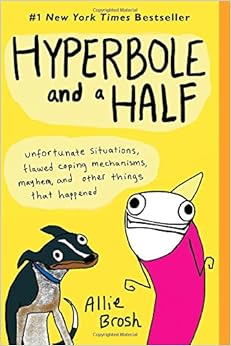
Hyperbole and a Half by Allie Brosh

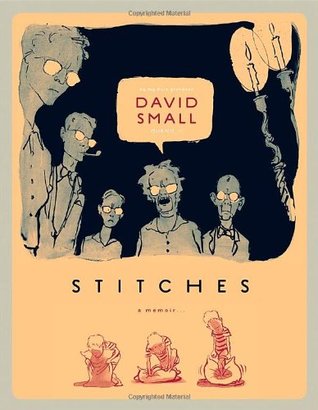
Stitches by David Small


So I’m a word guy, right? I love books, love reading; I enjoy movies and TV, but not the same way. I teach Fahrenheit 451 pretty much every year; in fact, I’m teaching it now. We’re at the point when Captain Beatty is explaining why the firemen are a good thing, because books, he claims, are a bad thing. He says, along with a mess of other interesting statements, that things started changing when photography came into its own, followed by motion pictures, radio, and TV – and, though Ray Bradbury didn’t predict it, the internet, YouTube, memes, GIFs, et cetera. Beatty says that things got simpler because they had mass: because a picture of a face is more solid than the face that one might imagine given a description. Guy Montag, the hero of the novel, is described as 30 years old, having a thin face, black hair, heavy eyebrows, and a “blue steel shaved-but-unshaved look.” So which is more solid, the face you’re imagining after reading those words, or this:


(By the way: took me twenty minutes looking through Google image search to come up with that. Searching for the description got me page after page after page of male models with swirly/spiky hair on top that was shaved on the sides. I mean, this dude

is not Guy Montag.

(Also by the way: I had to go back and re-do this search because my GODDAMN MS-WORD CLONE CAN’T SAVE PICTURES AND THEN UPLOAD THEM TO MY BLOG AND WHENEVER I TRY IT CRASHES THE THING AND THEN THE WHOLE POST IS BLANK AAARRRRRGGGGH Okay, I’m fine now. This is also why I like words more than pictures.)

Now, Beatty is the bad guy in the book, and if he is for it, I’m pretty much against it, including replacing books with visual mediums like film and television and the interwebs. But as Professor Faber (he is the Yoda to Montag’s Luke Skywalker) explains later, it is possible for books and movies and TV to all accomplish the same good things – the same things that music, and art, and conversations with good friends can all accomplish.

I think these two books, even though they are as visual and pictorial as they are literary – as many pictures as words, and the pictures essentially communicate as much as the words do – do the right things in the right way. That’s why I’m putting them together in this review. That, and the fact that both, despite the largely light-hearted genres they ostensibly belong to (Stitches is a graphic novel and Hyperbole and a Half a web comic), are actually quite somber and poignant and sad.

Hyperbole and a Half is a web comic that I discovered, as I think a lot of people did, because the author, Allie Brosh, wrote about the Alot. I hate that word; I love that comic. So I got the book that Brosh published, and read it. It’s a collection of her comics, which are about herself and her life: and though they are frequently stunningly funny, they are also profoundly sad and poignant to read. Brosh lives with fairly severe depression, according to what she depicts here, and she pulls absolutely no punches in describing what that life is like, and also allowing that condition, those feelings, to bleed into her other comics, as it no doubt bleeds into all parts of her life. Realizing how much she struggles with this turns even the more conventionally funny and wacky comics a bit more serious; because the strangeness that at first was just amusing now seems another piece of Brosh’s lifelong alienation.

But as hard as that is at times to read, it is also, simply, brilliant. I have rarely read something so honest and perceptive and brave, something that so perfectly shows a unique mind both in turmoil and in triumph.

Oh hey – know when else I read something that showed the same sort of genius and pain at once? Why, it was when I read Stitches, by David Small.

This one is a more traditional graphic novel; as such, it is in a more familiar storyboard format, and the art looks more like comic art; Small is an excellent illustrator, where Brosh’s art is intentionally simple and childish (Though still effective, and amusing as hell where it isn’t heartbreaking.). This is also a single story, told in words and images, rather than a series of shorts and vignettes like Hyperbole and a Half. It is the story of David Small’s family, particularly his violently abusive mother. The title comes from Small’s experience with cancer as a child: he had an undiagnosed tumor in his throat, which eventually led to the removal of one of his vocal chords, leaving him essentially mute, and also with a Frankensteinian line of stitches across his neck. This one is an even more terrible story. It’s maybe a little easier to live with, because it has villains and therefore heroes; Small should be considered heroic simply for surviving and growing up and getting his freedom, and then finding the strength to write this book – but the fact of his heroism makes the villains that much more terrible, and the story that much harder to get through.

But like Hyperbole and a Half, it is worth getting through. And in both of these cases – despite what Captain Beatty might think – the images don’t make the story easier to read, though I do think they give the stories mass. Almost too much of it, in fact.

I hope I haven’t made these books seem too dark or painful to read; they are both hard to read, but both are wonderfully realized, and really more moving than anything else. They are both genuine and honest memoirs written by intelligent and creative people, and I recommend them both.

Just – don’t read them one after the other. Put something more cheerful in the middle, there.

(Here: try this. I think it’s funny.)

On The First Day of Christmas, Dusty Blogged For Me . . .

Merry Christmas!

(I really like this one, too: )

No, really: Merry Christmas. And Happy Hanukkah. And Heri za Kwanzaa. And a joyous Milad un Nabi. And a blessed Solstice. Happy Holidays to everyone, for whatever reason you have to celebrate. (A special happy birthday to people born around the holiday season, since you normally get left in the cold. You rule the Yule.)

I’m saying this because I had trouble finding a reason to celebrate this year. No, that’s not true: I have a dozen reasons to celebrate; but none of them are related to Christmas. (My reasons: my wife, my dog, my bird, my tortoise; my family and friends; my house, my books, my favorite things; my health and the continued existence of this reality and this planet and this country; art and words and truth and beauty. Oh – and coffee. Always coffee.) So I had trouble getting into the holiday spirit this year. I didn’t want to sing along with the Christmas carols; I didn’t help decorate the tree; I didn’t wrap presents until Christmas Eve. I wore my holiday stuff and I put up lights on the outside of the house, but it didn’t really excite me. I wasn’t feeling it.

A little bit of that is that Christmas is not a particularly beloved holiday for my wife Toni, and so walking around belting out “Walking in a Winter Wonderland” is not the joyeaux occasion around here that it might be in other homes. But even if she was Santa’s favorite elf (Back off, Kringle – she’s mine), I wouldn’t have felt much like doing that.

Because it’s 2016. And John Glenn just died. And Trump will be president in less than a month. And civilians are being killed in Aleppo.

And for me personally, it’s been hard because I had school up until the 22nd, and was still fiercely grading and doing schoolwork on the 23rd, when grades were due. It’s hard to feel Christmas-y when you’re reading bad essays. It’s not much easier when you’re reading good essays, when you have to grade those essays.

Here’s my Christmas wish: I wish that I was permitted to write, on the papers of students who clearly didn’t read Fahrenheit 451 with the class but still write on the test that Bradbury’s dystopia won’t come to pass because people in our society still read, “You stink of lies.” Or maybe, “It’ll be your fault when it happens.”

See? Feelings like that have no place in Christmas.

But you know what I realized? They kinda do.

I’m not a religious man. I don’t actually care about the birth of Christ. Oh, I have no problem with it: Jesus was a good dude, as I understand it; he’s in a couple of my favorite books (Lamb and Kevin Hearne’s Iron Druid series – though his big one is not one of my favorites. Never read that. I hate it when they number paragraphs. Feels like a reading comprehension test.), and I like what I know about what he had to say. But it doesn’t put rum in my eggnog, if you follow me. Nor does the birth of the Prophet Mohammed matter to me, nor the miracle of the lamp, nor the longest night and the shortest day of the year. Though that last one is pretty cool. And I do like the idea behind Kwanzaa, namely community and cultural celebrations. But it’s pretty generic for me, not being African-American: my culture has never been threatened, other than by our own cynicism and sarcasm. And our exceptionalism and arrogance. And by – but we’re not talking about America here, we’re talking about the holidays. The holidays – including New Year’s, by the by, which annoys me much more than it pleases me – are not terribly meaningful occasions for me.

So the only thing the holidays really mean to me is: there is stuff in there that I like. More than anything, I like my vacation. So very, very much. I actually finished a book yesterday, for the first time in more than a month. Me. I haven’t been reading books. What does that say about my job? My time management? My choices in life?

No: we’re not talking about that crap, either. We’re talking about things I like about the holidays. I like singing along with the songs. I like knowing all the words. I like decorating my house, especially with lights. My neighborhood is very dark – no streetlights – and the Christmas lights really shine. I actually really like having a tree inside. I love giving presents, and I like sending greeting cards, though I’d rather be more selective and intentional with it (And I’m annoyed that all of my relatives sent my Christmas cards to the wrong address.), because sending a card with a canned comment about the holidays doesn’t make me happy; I’d rather send cards that I know people will like, with thoughts inside about that person, just because that person will like the card and I might have been thinking about them; whether it’s actually a holiday card or not is pretty irrelevant. I would like it more if it wasn’t, actually; if the person and the card were the only occasion necessary for the sending. I like wearing goofy holiday-themed clothes, though I kind of always wear goofy themed clothes, because I don’t really own any t-shirts that aren’t printed with either a pop culture reference, a bad pun, or something about books and reading and imagination.

Do you see what I see?

Here it is.

It doesn’t matter that it’s Christmas. I mean, Merry Christmas, especially if that is a day of great meaning and symbolism for you; but you know what? Happy December 26th, too. And March 9th: my very best wishes for that day. Oh – and the eleventh of June. That’s a good date. The 21st, too; of every month. It doesn’t matter that today is Christmas because it doesn’t matter what day it is. What matters is that this is a time of year when we stop our usual grind and do things that make us happy. People who love seeing their families make time to do it around now. We give presents, and cards, and wish people well. We actually use the mail, and get excited about things arriving in the box. We decorate, especially with bright colors and lights. We take vacations: we take time off from work and do things that we like to do, like bake, and sing, and watch favorite movies.

My God, we need those things more in our lives. Especially because it’s still 2016, and Carrie Fisher had a heart attack, and there’s a typhoon hitting the Philippines. And Trump’s going to be president in less than a month.

There’s an important thing that I have to say. Are you listening? Okay, here it is: I wish people happiness because happiness is good. But sadness is good, too. (I know this because I paid attention when I read Fahrenheit 451. You bunch of tools. My students are the tools, not people who are reading this. If you’re reading this, then you rock. You really are the reason we will hopefully avoid Bradbury’s dystopia, where the books are banned and the people don’t care.) Sadness is important. And not just because you need to feel sadness in order to understand happiness; I suppose that’s true, but I can’t say that I have any experience with being happy without being sad, so who knows? No: sadness is important because sadness is a genuine human emotion. When you are feeling sad, then that’s you, and that’s you feeling. Those are important. You have to be yourself. You have to feel. You have to experience all of your feelings, even the dark ones.

Christmas is a time of sadness. First just because it’s winter, and it’s cold, and it’s dark. Sometimes because we can’t do the things we want to do, because of job or money or circumstance. Sometimes because it reminds us of people who are gone. That last is a genuine feeling, and an important one. Don’t belittle grief just because everyone around you is wearing a light-up tie. It may be difficult to live with sorrow in the face of so much ostentatious cheer, but it’s better to do it than try to ignore what you feel or block it out. And your sorrow is not wrong, nor is it less important than someone else’s joy.

Here’s another reason why Christmas makes people sad: because of Christmas traditions. Because traditions become obligations, and then when we don’t keep them, we feel like we have failed. That’s why people risk their lives to drive through blizzards to be in a specific place on a specific day; because that’s their tradition. People put themselves deep into debt, and then spend the rest of the year fretting about it; because that’s their tradition. People whose traditions include things that are gone, and people that are gone, get to both grieve and feel like failures.

Bullshit. Traditions should only be maintained if it pleases you to do so. If it doesn’t, make up new traditions. Or screw tradition: do whatever the hell you want. That’s what the holiday spirit should be about: do whatever the hell you want, just because it makes you genuinely happy. Start with being nice to people. Every year, we all see the news stories about someone getting robbed, or mugged, or assaulted, and we all say, “You shouldn’t do that to someone during Christmas.” And then we all think, and maybe say, “Well, really, you shouldn’t do that to someone any time.” That’s right. The holiday season should be a time when we think about, and act with, kindness and generosity, more than any particular religious observance; and every day should be the same.

Because it doesn’t matter that it’s Christmas. A day for giving and for cherishing those that you love can be – should be – any day. Every day. And if today is a day when you feel sad, do that. Feel it. Go through it. And then make some cookies, and read a book, or call someone you haven’t talked to in a while. Feel better for having felt bad.

Have a happy today, everyone. I wish you all the very best.

And the same again, tomorrow.