Wrong.

Youre Wrong GIFs | Tenor

This isn’t about Trump. (That GIF aside.)

There’s going to be a lot about Trump, for the next four years (and then, with any luck at all, there will be NOTHING about Trump, ever again; I mean, I don’t care if he goes around the country on a Fuck The Libs Resentment-Palooza tour until the day he dies, but I very much want him to be irrelevant politically after this second term in office) and I’m certainly not going to apologize for that; I have been accused before of having Trump Derangement Syndrome, and I will be so accused again, but every accusation of TDS rests on the mistaken supposition that Trump is not, in fact, the biggest single influence on American politics and culture right now, and the speaker allegedly with TDS is making an issue about Trump when it’s not about Trump. But he is the biggest single influence on politics and culture right now: not only do half of this country’s elected officials kneel to kiss the ring in all decisions, but somewhere between a third and a half of the voting populace base their identity on him, in part or in total. If I keep bringing up Trump, and blaming Trump for things that go wrong for the next four years, it’s not because I’m obsessed with Trump: it’s because there has never been anyone more successful at taking over this country, mind and soul, in the past. Ever.

God, that’s depressing. The most successful and popular public figure in American history is that fucking stooge.

So when Trump comes up, and we complain about Trump and his actions, that’s not TDS; that’s reality. It is all about Trump. We on the left would really much rather that not be true, believe me. We really don’t want this country to revolve around that asshole. It just does. And so, therefore, does our conversation.

But this? This post, this argument? This isn’t about Trump. Honestly. And I’ll prove it, as soon as I get into the specific argument I want to make.

To show that I’m not simply targeting conservatives (I know, nobody who reads my blogs would think that – except wait…), and not even because Trump is not a conservative (But he’s not) and does not represent conservative thought or values (as he does not), but to show that I’m not simply targeting Trump or his supporters, I’m going to start with myself. I’m going to start with a confession, and then I’m going to proudly declare my innocence of wrongdoing, because that’s apparently what shows that I’m not only innocent, but above reproach.

Okay, that last one was about Trump. More about his supporters. But that’s not the subject.

The subject is wrongdoing.

I did wrong, recently. A couple of times. I have done wrong in the past: not often, because I generally get caught, and then I get in trouble, and I have an almost pathological need to avoid disappointing people – but when I was a kid, I stole, I vandalized, I trespassed; I consumed illegal substances; I threw a big ol’ keg party while my mom was out of town and my “guests” wrecked the house and drove the neighbors to call the cops. I’ve lied, though not a lot and never officially; I’ve certainly been nasty to people in various ways, insulting them or ignoring them or taking advantage of them.

That last one is the kind of wrongdoing I have done recently. On this most recent Election Night, I posted on Facebook, out of a sense of rage and outrage that my countrymen would re-elect the worst president, and the most dangerous man, to hold the office in better than a century (I’m going back to Andrew Johnson for the closest rival to Trump for that title of Most Dangerous, though Warren G. Harding may take the taco for “worst.” Still a century ago.), and I made – something like a threat, I suppose. It wasn’t a threat, but I worded it like a threat: imagine if I said, “If you say that about my mom, I’m going to fluff your pillow until you can’t lie down flat!” See? Sounds like a threat, and in context with the rest of the sentence it might be taken as a threat, because clearly I’m mad about what you’re doing, even though I’m just saying I would fluff your pillow. It isn’t important exactly what I said on Facebook and I don’t want to repeat it, because when I posted it the first time, someone complained to my employer, saying that I was giving the school a bad name, posting political statements and “threats” online. My boss called me in for a meeting to take the post down, which I had already done before the meeting; that resolved the problem because it is clear to anyone who knows me that I do not make genuine threats and I do not cause harm to people, not even over politics, so the only problem was the post.

But the post might, conceivably, have been bad for my employer, because people might have taken it the wrong way, and that might have done harm to my employer’s reputation and so on. So okay: I did wrong. I did the wrong thing in putting other people at risk for the sake of my online statement of my opinion in a less-than-friendly way. I got consequences, then, for my wrongdoing: I got called in by my boss for it, and asked to remove it. Not a serious consequence, but about what the act deserved. My boss was very cautious in that meeting, partly because he and I were friendly and he didn’t want to upset me, but more because I could have raised a big ol’ stink about my freedom of speech and censorship and so on; but I didn’t do that. I accepted that my act was wrong, if not very wrong, and a natural consequence of that was that I should eat my words – or delete them, rather. So be it. Deleted.

Then I got in more trouble for something else I did. That one I don’t want to talk about, because I dispute part of what I was accused of, but not the other part; and again, I don’t want to put my employer or my employment at risk by talking publicly about what happened. It was not that severe, please believe me; my violations fifteen years ago (Wow! Is that really how long ago it was?! Yeah, 2010. Wild. Back when Trump was just a shmuck in New York with a bad reality show, rather than the guy who turned our entire country into a bad reality show.) were much worse, and I’ve written about those in detail before. All I want to say is, I got written up for that recent one, a warning placed in my employee file, and I acknowledge that I shouldn’t have done what I did. My actions – my words, to be a little more specific – were wrong.

When I violated the rules in Oregon fifteen years ago, I acknowledged that, too. What I did was this: I posted angry, insulting things about my students during class, from my school computer, which I should not have done; I named three of my former students and insulted them in a second post a month later. After four years of wrangling, I was found to have committed gross neglect of my duty as a teacher and an employee of the St. Helens School District, and I served a 30-day suspension without pay for it. I accepted that punishment, even though I still think it was undeserved. I mean, sure, I shouldn’t have used class time to write angry things about my students; but how many times have people called friends and bitched about work while at work? How many private messages and emails, and letters and diary entries, have been written by people on the clock, complaining about the people who own the clock? I always thought the violations in Oregon should have been handled the same way these more recent (less serious) violations were: I should have been called in for an uncomfortable meeting; my violation should have been put into my employee file so my future employers can know what I have done in the past; I should have been asked to remove the offensive posts – which I also did, in that case fifteen years ago. Give me a warning, get me in trouble, so I won’t do the same thing again.

It’s funny, though: I thought, when I got called in for that meeting in Oregon about my online activity, that I was going to hear about a complaint filed against me by a local political figure whom I had lambasted a couple of times on my blog, and who I figured would absolutely go to my employer about his ire over my words; I was ready and willing to defend my First Amendment rights, that time. It went further than that because my superintendent was advised by the district lawyers to report me to the state, mainly to cover her and the district’s asses; and, my union lawyer told me, the state wanted to make an example of me because it was 2010 and they wanted to establish a precedent regarding teachers on social media: and my case connected to both a blog and Facebook. (That was another parallel: I had posted something – certainly more insulting, but also ENTIRELY unrelated to the blogs – on Facebook, something which got reported to my district by an irate homeschool parent who had a bone to pick with public school teachers. The district Googled me and found my much-more-offensive blogs. Guess I haven’t learned to keep my mouth shut, huh?) So essentially, mine was a political prosecution: it was a savvy political move for my district, and then an aggressive political move for the state agency. They went after me to serve their own agenda, not because my actions deserved that punishment, not because there was any real risk of me being in front of a class. I spent the entire four years between my offense and my punishment teaching, successfully, without any further incidents. I did nothing else wrong. As I said, nobody who knows me would believe that I would actually do harm to a student, nor to my employer.

But whether my actions were justifiable, or whether the punishment was deserved, or whether I was thrown under the bus for political reasons, or not, the fact is that I broke the rules, and I got punished for it. And I accept that: I accept my punishment as what should have happened to me in response to my wrongdoing. I accept it because there are worse people, doing worse things, and they should also get punished for their wrongdoing, because they actually do harm, which I maintain that I did not do (Mainly because nobody, certainly not the students in question, ever read those blogs.), but if I get away with doing wrong by breaking rules, then it makes it easier for them to get away with doing wrong by doing harm. It is not lost on me that, at the very same time my district was throwing me under the bus for saying mean things on a blog, there was another teacher at the school who was receiving multiple complaints for acting inappropriately with students, but the school ignored those complaints and did not punish that teacher at all; ten years later, I had moved out of the state, and that other guy was in prison for sexual abuse of a student.

And I got called morally reprehensible. (To be fair, I don’t know what they called that other guy. It was probably worse.)

That irony, though, that discrepancy between my crime and punishment and the abuser’s crime and punishment – that injustice – does not mean that I should have gotten away with what I did: it means that both the other teacher and I should have been punished for our actions, preferably in an appropriate way. I should have been written up; he should have been at least fired and banned from being around children, and maybe arrested (I do not know if he had actually broken the law and harmed a student when the complaints were made. Neither does the district: no investigation was carried out.). He did harm. I broke the rules. We both should have consequences.

We live in a society of laws. I actually could have stopped at “We live in a society,” because society does not exist without rules of some kind; and the important ones that restrict the misbehavior of everyone in the society should be called laws. Without laws, there is no society. (I invite any anarchists to explain to me where I’m wrong on that, but not here and not now.) That is not to say that I think that humans are inherently evil and will always do the wrong thing without a threat from the state to keep us in line; but I think we all do wrong things, often without realizing what we are doing. I honestly didn’t even remember doing the thing I got written up for recently, just as I didn’t remember the blogs I had written in violation of the rules in Oregon when I first got called in for a meeting with the superintendent. But now that I have gotten in trouble for doing those things, I can guaran-fucking-TEE you that those things will not happen again: because I do not want to get in more trouble, and now I know clearly what actions of mine will get me in trouble. It’s not just that I don’t want the trouble, either: I don’t want the other consequences of committing those acts again. I do not want to have the reputation of someone who would break the rules like that. I do not want to lose my job, my career. And I recognize, and regret, whatever harm I have done, both actual and theoretical: because I can see that someone who read what I wrote in Oregon could have been genuinely hurt by it, even though I don’t think anyone did. It could have happened, which is why I shouldn’t have written what I wrote and posted it.

Okay. That kind of sucked, honestly; I don’t like talking about the things I’ve done that are wrong: I want to justify all of them, to explain or excuse everything that I have done, so that nobody thinks I am less than a good person. I want to be a good person, and be known as such. It’s important to me. I would hope it would be important to all of us, even if there weren’t direct consequences for misbehavior. But it’s not, not for all of us. Which is why the rules have to apply to everyone, both people who will not do wrong again, and people who will, but who might not want to have consequences again after they have them the first time.

Now let’s talk about Trump.

Donald J. Trump is a felon. He was charged with 34 felony counts of falsifying business records, tried, and convicted by a jury of his peers. He is still appealing the decision, under the argument that some of the evidence in his trial should have been inadmissible because the Supreme Court decided that the President of the United States – specifically Donald J. Trump – is above the law (HA I wrote “against the law.” Thank you for that, subconscious. But it is not what I meant. More’s the pity: we’d be a lot better off if Donald J. Trump was against the law.), and that appeal may bear fruit, because every other judge in this country does what the Supreme Court majority has failed to do: actually follow precedent and respect the rule of law and the role of the courts. So if that appeal does bear fruit, then Trump’s conviction will be overturned. And then the breaking of our society will be complete: because then Trump will actually be entirely above the law, untouchable and unrestrainable.

Please understand me. I am not talking about what Trump will do as President; part of me – the cynical, angry, irony-loving part – is looking forward to that, because I want everyone who voted for cheaper eggs to see what they actually brought down on all of us; and more importantly, I want the actual villains, the bastards who want to tear down the government so they can abuse all of us for profit, and who installed Donald Trump (because he was able to bring together all of the disparate parts of his base to vote for him and because he distracts everyone who opposes those profit-driven bastards) to regret the achievement of their actual goals: because they will make the world a worse place, and no matter what they think their money will insulate them from, they still live in the world they are fucking up. There will be consequences for their actions, and I want those billionaire corporate overlords to suffer those consequences along with the rest of us. (I’m tempted to just drop a picture of Luigi Mangione here, but I don’t want anyone to take this as a threat. I don’t think what Mangione did was right, he is a murderer; but it is an example of the consequences you risk when you make the world a worse place, and then live in that same world. I will also note that Mangione is facing the consequences for his actions.) The people that support Trump and who use Trump to achieve their own agenda want him to get away with anything he wants to do because they want him to keep doing what he does: mainly flinging shit everywhere he can, because that’s what distracts the rest of us from the agenda going on behind Trump. I mean, come on: the Gulf of America? Conquering Greenland? He’s just a gibbon flinging shit, and we can’t tear our eyes away.

But when the specific way that Trump is enabled is to take away the consequences for his actions, the damage done is so much more serious than Trump making a fool of us all on the international stage. So much more serious than Trump increasing oil drilling in this country, even though that does nothing good and creates irreparable harm. Trump’s backers only did it, I don’t doubt, so that Trump could keep flinging shit (That’s why the Supreme Court left themselves as the arbiters of what should be considered an official act, and therefore immune to prosecution, so that if a president whose name is NOT “Trump” pulls any shenanigans, the Court can send them up the river), but what they have done is create a situation where there is no consequence for breaking the rules, and more important, no consequence for doing harm.

To be entirely clear: the case where Trump was actually convicted was a rule-breaking case. He didn’t do any immediate harm with that one. But the rules he broke were about election finance, and transparency, and to allow those rules to be broken without consequence allows other people to do the same: and that does unimaginable potential harm in the future, because it allows even worse people than Trump to hide where they got their money, and how they spent it, in pursuit of power. That’s the scary part. And the MUCH WORSE part is that the other cases, the ones that have been dropped or dismissed, those were even closer to doing actual harm: and the January 6th case was entirely about Trump doing actual harm. People were hurt on January 6th. People died. Our country, our democracy, was endangered. Trump was partly responsible for that harm. And Trump got away with it. Without any consequence, at all. The Senate refused to impeach because he would face criminal charges – and then he didn’t face any criminal charges because the Senate didn’t impeach, which allowed him to run for the White House again. And he won because Americans wanted cheaper eggs, and forgot about everything Trump did wrong: because there were no consequences, so there was no clear line drawn as to what is allowed and what is not. If what Trump did was allowed, then he did no wrong: and if he wasn’t punished, then it was allowed. That’s the situation that was created. That’s the damage.

And it was done for Trump, but the problem going forward is not only Trump: it’s everyone else who might now do the same things, or much, much worse, and get away with it because Trump got away with it. I am definitely not saying that Trump should have been singled out for his actions, or that Trump should have suffered extra undue consequences; I don’t think the courts or his conviction should have stopped Trump from running for office, for example. I said, well over a year ago, that I didn’t want Trump to lose the election by going to jail: I wanted us not to vote for him.

I guess the rest of the country doesn’t have my hangup about disappointing people. Or at least 75 million or so of you.

I do think Trump should have been impeached. But when he wasn’t, I was willing to accept that, because I was sure he would be tried and convicted for his crimes; even when the trials got delayed and delayed and delayed, I wasn’t worried, because I was sure he wouldn’t be elected again. Surely people wouldn’t support that guy, the one who did all those wrong things. But since so many of you all did, I don’t want the courts to take away the choice, the votes, the will of the people. As a result of the last election, I now want Trump to be president, and I’m not saying otherwise in this argument.

No: I am saying one thing. Trump was accused of crimes. Credibly accused of crimes, because in all four criminal prosecutions, he went through a grand jury process and was indicted: for falsifying business records in New York, for conspiring to suborn elected officials and steal the election in Georgia, for taking and keeping and mishandling classified government documents in Florida, and for conspiring to overthrow the government in Washington, D.C. Those accusations should have all gone to trial, unless there was a reason in advance to discard the accusation without trial (And the dismissal in the Mar-a-Lago documents case was not, in my opinion, valid, because the judge, an inexperienced political appointee with loyalty to Trump, based her dismissal of all charges on the idea that the special prosecutor does not have authority to investigate and bring charges: and that’s horseshit. But I’ll tell you what, I would be willing to accept the court’s ruling on the appeal that Jack Smith brought to overturn that dismissal and reinstate the charges, because I trust that other judges are willing to do what Aileen Cannon is not, and follow precedent and respect the rule of law and of the courts. I’d even be willing to accept it if our corrupt Supreme Court did their bullshit again and upheld Trump’s invulnerability, because that would be another dagger that might help to get rid of those particular destroyers of our society, which should absolutely be the consequences for the Supreme Court majority’s wrong actions – and the three other prosecutions would have gone forward. I would accept that BECAUSE I ACCEPT THE RULE OF LAW.). The trials should have offered Trump a chance to face his accusers, to see all those who testified against him, and to be competently defended. The proceedings should have been ruled over by an impartial and competent judge, in every case. Trump should have been convicted – or acquitted – by unanimous vote of a jury of his peers, randomly selected and vetted by both Trump’s accusers and his attorneys. And he should then have the right to appeal, to object to any injustice in the procedures: as he has been doing all along, and as has borne him fruit, quite spectacularly.

And then, if any of those convictions happened and held through appeal, Trump should have been punished.

His punishment should be appropriate to his crime. In the case of his sole criminal conviction, I think the punishment given to any first-time felon would be acceptable in this case; I’d expect it to be a fine, maybe some community service, maybe some probation. Maybe an auditor, of some kind, to watch over his business records and make sure he doesn’t do the same thing again. And he should have, and bear, the label “Felon.” The reputational damage, and the consequent damage to his career. I mean, 75 million people decided that Trump was above the law and that he should be put back into the White House to get us cheaper eggs and destroy the lives of as many people as possible, and that’s – well, it’s not “fine.” But it is part of our system: being a convicted felon is no bar to running for, winning, or serving in the Presidency, and I accept that.

Because I accept the rule of law.

This is the part that drives me nuts, the worst part of all of this. I hate Trump and what he stands for, and I hate what he has done to my country, and I dread what he will do to my country in the next four years. But the thing that makes me start yelling cuss words, out loud, even when I’m just listening to podcasts and walking my dogs, is hearing about how Trump has taken such an enormous shit on our justice system: and how it has broken under the weight of Trump’s feces. Forgive my continued scatological metaphors, but they show both the contempt, and the filth, that Trump has dropped onto the fundamental structure of our society, by breaking the law, and getting away with it, with the help of his supporters and backers. Gotten away with doing wrong, without consequences. Of any kind.

Have other people done it before him? Of course: in our capitalist society, there have always been two tiers of justice, justice for the poor and justice for the rich; and Trump already enjoyed all of the protections of wealth – it’s how he was able to delay three of his four trials until after the election, and how he has been able to delay or avoid actually paying all of the money in his two civil cases (He has posted a bond that will pay E. Jean Carroll if he loses his final appeals to her two successful lawsuits, and the other case for falsifying business records, which ended in a $454 million fine, was reduced to $175 million, which he paid. Why did he only have to pay a third of the original fine? Because he’s rich, that’s why.). But now there are three tiers of justice: one for the poor, one for the rich, and one for Donald J. Trump. Maybe for future Republican presidents (Forgive my cynical assumption that our current Supreme Court would be much more willing to find that a Republican president’s criminal acts are immune than a Democratic president’s acts, but – come on. We all know who and what we’re dealing with, now.), but for now, Trump is the only one who gets to get away with everything.

For now.

Again: I don’t want him removed from office for his crimes. (Other than the January 6th case. That crime was sedition, and someone guilty of sedition should not be in elected office of this country. He should have been impeached for it. He wasn’t because of partisan politics, not because he wasn’t guilty or didn’t commit a wrong act. But since the actual charges were conspiracy and obstruction, I am still willing to accept that a conviction of those crimes would not equate to sedition, and would not bar him from running for office. Though in that case I’d be yelling a lot more.) I am not opposing Trump here on political terms. Let him run the country: let him fuck it up and show all of you who supported him what you have done. And hey, if he manages to do some things right, as he did some things right in his first term, I will applaud him for those things. Go ahead and reform prisons more. Release money to the general public to help us endure a crisis, like a good Socialist would. Love it. Thank you for that, Donald. Do it more.

And I am in no way singling Trump out for any of this. You want to put Biden and Obama on trial for having documents in their homes? Do it. If they committed wrong acts, then they also should suffer the consequences for what they did. (Just bringing documents home is not a wrong act. No one is saying that is all Trump did, other than Trump. And he’s lying.) Any Democrat who claimed that Trump’s win in 2016 was illegitimate, who argued that the government should in some way block his election because he received assistance from Russia, and who the right has since accused of obstructing or conspiring to overthrow a legal election – put them on trial, too. Or rather, go through the process: have an investigation, put the facts to a grand jury, and have anyone who is then indicted put on trial, with attorneys, with the full protections of the law.

Right after Trump goes to trial for taking and mishandling classified documents, and for conspiring to overthrow Joe Biden’s legitimate election win in 2020. Because his trials were already in motion. He had already been indicted by four grand juries. He already had attorneys defending him, and judges overseeing the cases – three of them impartial. I’d like to see him go to trial for sedition, too, since he’s guilty of that; but I’m willing to accept the process, and the DOJ’s determination that Trump should be prosecuted for conspiring to obstruct and overthrow the election, and I want him to go to trial for that.

Because I accept the rule of law.

More than that, in fact: I cherish it. I believe in it. I know that society needs it. And whatever may occur with a president who makes bad political decisions, who cuts taxes to raise the deficit and concentrate wealth in the top 1%, who destroys environmental regulations and makes climate change even worse, who flouts international diplomacy and all norms of politics and decent behavior, I will accept all of that. All of it. Because the law in my country says that Donald Trump was twice elected President, and that means he gets to fling shit everywhere he wants to, and we all just have to clean it up. Or live in the stink.

But I will not accept that Trump has gotten away with committing crimes, and suffered no penalty for it. (He is innocent until proven guilty, so even though I’m PRETTY GODDAMN SURE he would have been found guilty in the Georgia case [where he was on tape committing the act] and the Mar-a-Lago documents case [where the crime was photographed sitting in his goddamn bathroom, and he is also on tape committing the crime], I will accept that he has not yet been found guilty of those crimes: but he sure was found guilty of 34 felony counts of falsifying business records, and he should have had a punishment for that. First time offender or not. 34 fucking FELONIES. So I get to say that he has committed crimes. And the fact that the judge in that case had to forgo any punishment because it would interfere with Trump performing the office of the Presidency is horseshit: and it’s why I get to say he got away with committing crimes without punishment.) The fact that he has done so undermines the basis of our entire society. Trump has broken the rule of law, and without law, we do not have a society. Everything the most rabid conservative, who thinks every Democrat is a Marxist Socialist unAmerican Commie, accuses the left of doing, the right has done in uplifting Trump while he committed crimes and avoided paying for other crimes. The outrage over the tearing down of the DOJ and the FBI, the way the Supreme Court just fucking spit on both the Constitution and the separation of powers in deciding that Trump should be immune to prosecution for all of his acts while President, should have been deafening, and it should have come from the right: from those who (loudly) support law and order, who cherish the traditions of our country, who defend the Constitution against all threats, foreign and domestic. I can’t accept that law enforcement watches this guy commit every crime possible, and cheers when he gets away with it. I can’t accept that military members, in large numbers, watch him destroy this country’s entire system, and still salute him. And vote for him. It is insane. It is deranged. It shows how damaged our country is, by all of this, how broken our society is, now.

75 million people voted for Trump, and even more supported him, even though he committed crimes, simply because people want him to be in office, because they think he will be good for the economy, or hard on immigration, or a strong defender of this country. (All political reasons. Political reasons to oppose the due process of law.) But no matter how much he fights for what he calls America, Trump is destroying it, he is destroying us, because he is destroying the rule of law.

I won’t accept that.

And neither should you. Whether you voted for Trump, whether you support him politically, or not.

No one should be above the law. Not me, and not Trump. Or else there is no law. And no America. At least no America worth defending. And nobody is worth that. Not even Donald J. Trump.
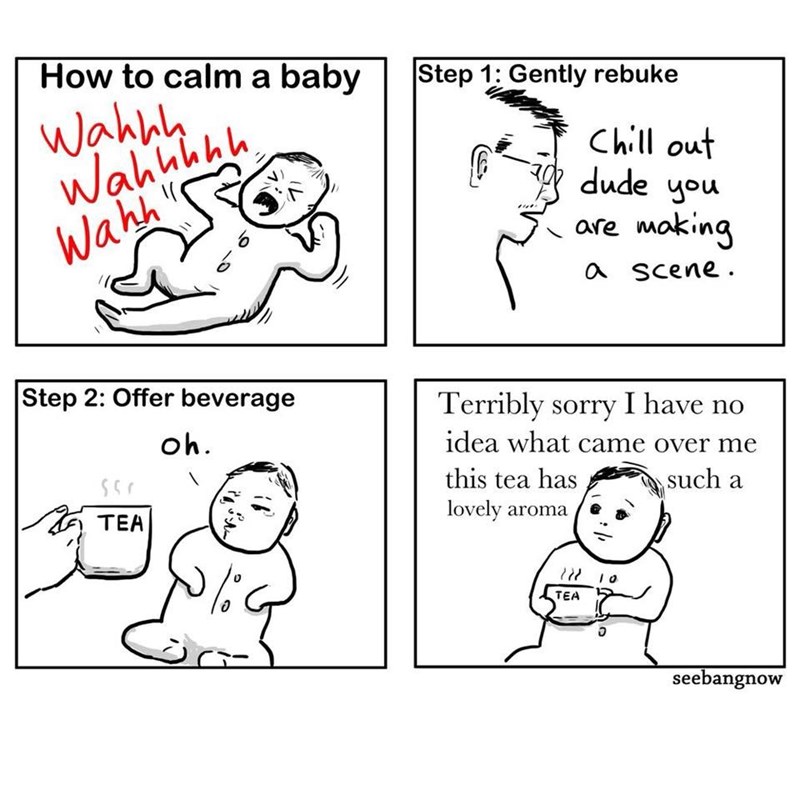
Deep Breath — Now Hold It… Hold It… Keep Holding…

I bet this would work.

***

Wow. It’s been so long since I’ve written a post that I got logged out of my own website.

I would apologize, but first, you all are sick of hearing me apologize; as I say to my students when they offer an apology for their behavior, “I don’t need you to apologize, I need you to do better.” And I can’t promise that I will do better: because the reason I haven’t been posting is that I’m too busy drowning in work and responsibilities. I haven’t caught up on the work, and the responsibilities aren’t going away; so I won’t be writing much any time soon. Though I do have a break a week from now, so I may be able to find some time there to post some more; I do have several ideas for things I want to write.

But this one has to come first. Because, you see, a large part of my problem with keeping up this school year is that I am extra exhausted: and a large part of that problem is that my students are extra exhausting. I’m back teaching 9th grade English, for the first time in 8 years; and the last time, it was an Honors class. I don’t have my lovely fantasy/sci-fi elective this year; not enough students signed up for it — though I can’t imagine who wouldn’t want to take a class in which you get to read “The Fortress Unvanquishable Save for Sacnoth.” (And I BEG you, if you like swords and sorcery and epicness beyond the known realms of epic, click on that link and go read the story. It’s lengthy, but it’s SO good.) The class was fun, and therefore easier to teach; the classes I have now are mostly not fun, and mostly not easy. And though I don’t want to sound like an old man shaking his fist at a cloud, I have to say that part of the problem really is my students, their attitude about school, and the way they treat me and my class.

But another factor — a more difficult one — is how my administration directs me to deal with those students.

For the sake of this post, which I want to keep shorter and more to the point than my usual logorrhea, I’m just going to share the text of a … friendly lil email I got from my administration. Let me preface this by saying that I actually like my administrators very much, first on a personal level and then second (and somewhat less than the personal) on a professional level. They work very hard, even harder than I do; and they, like me, like everyone in education, have enormous and ridiculous demands on their time and energy. One of the demands on my administration is for them to implement the systems that the higher-up administrators want them to implement; and at my school, as at many schools, one of those systems is PBIS.

I have written before about PBIS. But there is nothing I could say about it that would communicate the full level of insipid uselessness that it imposes on teachers. The basic idea of it is that we need to praise students for the things they do right, more often than we need to criticize them for the things they do wrong; and that’s fine — but the idea of it being a system that we need to impose on teachers? Processes that require training? The idea that it will produce data which we will then analyze and use to form data-driven decisions that will surely improve school for everyone? My god, the pile of steaming bullshit in that is larger than Mount Olympus. I already praise my students when they do things right. I do it because I am a kind person, and I care about both my students and the work we are involved in, this pursuit of their best selves. So it already happens. Any system, any process, any practice that teachers are trained in, is inevitably going to be artificial, and therefore undermine the actual relationships that teachers form with students, and which are far and away the best chance we have of changing the way they act, changing their attitudes and reducing their misbehaviors. Relationships, guys. Not PBIS.

When my students are being resistant, or obstructive — or just little freaking jerks — they don’t really need me to be nice to them and find something in their behavior to praise. They need me to tell them to shut the hell up, and make it stick: they need me to have a relationship with them that means they will listen to me when I tell them they need to shut the hell up. That is 99% of the problem with student behavior. For the sake of contradicting the image of me as old man shaking my fist at a cloud, let me say this: students today aren’t worse than they were ten years ago, or twenty, or thirty, when I was a student (Okay, thirty-five…): but they aren’t any better. They are sometimes, some of them, intentionally cruel; that is a separate and more serious issue that has to be dealt with individually and more emphatically. They are frequently distracted and detached, and that sometimes has to be dealt with, though I still generally believe the best way to handle that is to let them not learn anything for a time, and point out to them that they have not been learning anything, and maybe they should do something about that. But really, the problem that comes up in every class, every single day, and which requires a reaction from me, a reaction I am VERY tired of giving, is: they make too much goddamned noise. They just need to shut the hell up. That’s it. Otherwise they are basically fine, and usually good.

Or, as my administration put it in an email I recently received:

As we continue working together to create a positive and productive learning environment for all of our students,

Off to a great start. Also, I thought I was teaching them English?

But please, go on.

I want to emphasize the importance of using Positive Behavior Interventions and Supports (PBIS) when addressing behaviors around our SSA campus. One key aspect that often impacts the success of these interventions is the tone we use when interacting with students. At times, incidents can escalate unnecessarily due to an improper or harsh tone. I encourage each of us to be mindful of how we address behaviors, focusing on de-escalation rather than confrontation. A calm, respectful approach can go a long way in turning potentially challenging moments into opportunities for growth and learning. It’s also crucial to remember that our students deserve the same level of respect we expect from them. When we address students with kindness and respect, we not only model the behavior we want to see, but we also build stronger relationships that can lead to more positive outcomes inside and outside the classroom. I’ve included some behavior interventions that can be helpful when dealing with defiant or disrespectful students.

Oof. Okay. First, I hope we all know that the least effective sentence in the English language is “Calm down.” It never, EVER, makes anyone calm. It is much more likely to piss the person off and add that to whatever agitation they are currently going through.

Second, I have to point out that I strongly suspect a particular interaction between one of my fellow teachers and one of our high school students, which happened the day before this email was sent out, was a large part of the impetus that led to this particular email: because that interaction was not positive, and was not de-escalated by the two people involved. So there was cause for some means of addressing that issue.

But — and this is third, but it should be first, last, and every number in between, when discussing how my administration works with their teachers in ways they should not — any particular issue with any particular teacher SHOULD BE HANDLED SPECIFICALLY WITH THAT TEACHER. Don’t talk to me about being calm; I am too calm. I need to lose my temper more often. Know how I know that? My students tell me that. Talk to me about not confronting my students when they misbehave: that is something I have trouble with. Don’t say that to my colleagues, several of whom are extremely good at addressing issues when they rise, and most of whom do it calmly.

Last, and best, don’t do what the email went on to do, and which it does in this first part as well: don’t tell us to be positive and respectful and several other handy pieces of trite advice, while doing none of those things in the email telling us to do them. Pedagogy experts are legendarily bad about this: almost every teacher training I have had in 25 years in this business has been largely about how to keep students connected to n involved with the learning, presented by people who fail to connect us to or involve us with the learning in any way. The most famous example is the trainers who teach teachers by showing us PowerPoint presentations with blocks of text on every slide, which the trainers then read to us verbatim while we are looking at the slides. Every teacher I know who assigns PowerPoint presentations would fail every one of those presenters. I myself just think about how much better it would sound if I read it for them.

So. Here are the specific pieces of advice this email then offered us. Ready? Here is How To Deal With Students Misbehaving 101. With notes by me, illustrating how I would put these nuggets of wisdom into practice. (If I ever put these into practice. [Not bloody likely. Not as they are worded here.])

Here is your hypothetical situation requiring my intervention: one of my students is talking too much, too loudly. That student needs to shut the hell up. Here is how I would say it, adopting my administration’s guidance. [Said guidance will be quoted preceding each example.]

– Stay Calm and Maintain Neutrality
Responding with a calm demeanor can prevent the situation from escalating. Take a deep breath before addressing the behavior to ensure you remain composed.

*Takes a deep breath, then, composedly,* “Shut the hell up.”

– Give Clear and Specific Directions
Sometimes students react negatively due to confusion or misunderstanding. Make sure your instructions are clear, direct, and specific.

“[Student name]: shut the hell up. Shut your mouth, with the words inside. Lock your throat into silent mode. Do not make the speaky-speaky noises. Am I being clear? Shut the hell up if you understand me.”

– Use Positive Reinforcement
Acknowledge and praise positive behavior when you see it. Often, recognizing what students are doing right can prevent future defiance.

“Good job shutting the hell up. Keep it up.”

– Provide Choices
Offering choices allows students to feel they have some control over the situation. For example, “You can either take a break for five minutes or finish your task quietly.”

“You can choose to shut the hell up, or you can accept that you have no control over this situation, and shut the hell up because I told you to. Your call.”

– Restate Expectations Respectfully
Respectfully but firmly restate your expectations, reminding students of classroom rules while remaining respectful and kind.

“I expect you to shut the hell up. Respectfully.”

– Active Listening
Take time to listen to the student’s perspective. Sometimes defiance comes from frustration or a lack of feeling heard. A few moments of active listening can de-escalate the situation.

“I am now prepared to listen to you shutting the hell up. I am actively listening for absolute silence.”

– Have a Private Conversation
Address the behavior in private whenever possible to avoid embarrassment or defensiveness. This can help maintain the student’s dignity and prevent power struggles in front of peers.

*Takes student out into the hall.* “Stay out here. Shut the hell up. Learn to have some dignity, and some respect for your fellow students, and for me.” *Returns to class where silence prevails. Teaches respectfully. Student’s embarrassment, standing alone in the hall while other students walk by and snicker, helps to enforce that their behavior was unacceptable. Student learns.*

– Teach Problem-Solving Skills
Help students reflect on their behavior and guide them in developing solutions for similar situations in the future.

“The problem with your behavior is that you are not shutting the hell up. Can you offer any potential solutions to this problem? Here’s a hint: it rhymes with ‘Butt the shell pup.'”

– Offer a Reset
Give the student an opportunity to reset their behavior without consequence by offering a short break or a moment to collect themselves.

“Let’s reset your volume to zero by shutting the hell up. Feel free to take a short break from talking. Collect your lips together into a single, unbroken unit.”

Look. At least some of this is valuable advice. For teachers who don’t know how to handle student misbehavior. Which is not all of us. More to the point, if all you had to do to teach somebody something they don’t know, and get them to adopt it as part of their pattern of behavior going forward, was show them a bulleted list, then *Takes a deep breath as advised* I WOULD HAVE GIVEN MY STUDENTS A LIST OF STATEMENTS THAT READ “SHUT THE HELL UP” AND WE WOULDN’T HAVE ANY MORE PROBLEMS. Also, I would give them a list of ways to write essays and read books, and how not to waste their lives and potentials and their very minds and souls on screens and social media, and a whole lot of things would be a lot better. (I have another list for Donald Trump. I’d really like for him to read my list, and absorb everything it says.)

And if you think I’m exaggerating about the prominence of the doesn’t-shut-the-hell-up problem, let me just say that the confrontation that might have led to this email was started by the student making loud noises in the hallway during class time. So.

I will end this by including the last paragraph of the email in question, which is almost everything I would want our administrators, or any colleague, to do when talking to their peers and coworkers. The only other thing I’d like to see with this is a statement that the administration will be working on these problems with both individual teachers, and all the students, who also clearly need to learn these steps in how to de-escalate a situation and treat people with the respect they expect to receive from those people. And for this whole email to never have happened at all.

Let’s continue to create an environment where respect and kindness are the foundation of all our interactions, and where every student feels valued and understood. Thank you for all you do for our school and our students. I appreciate all of you! 

“I appreciate you shutting the hell up.”

There Are No Rules

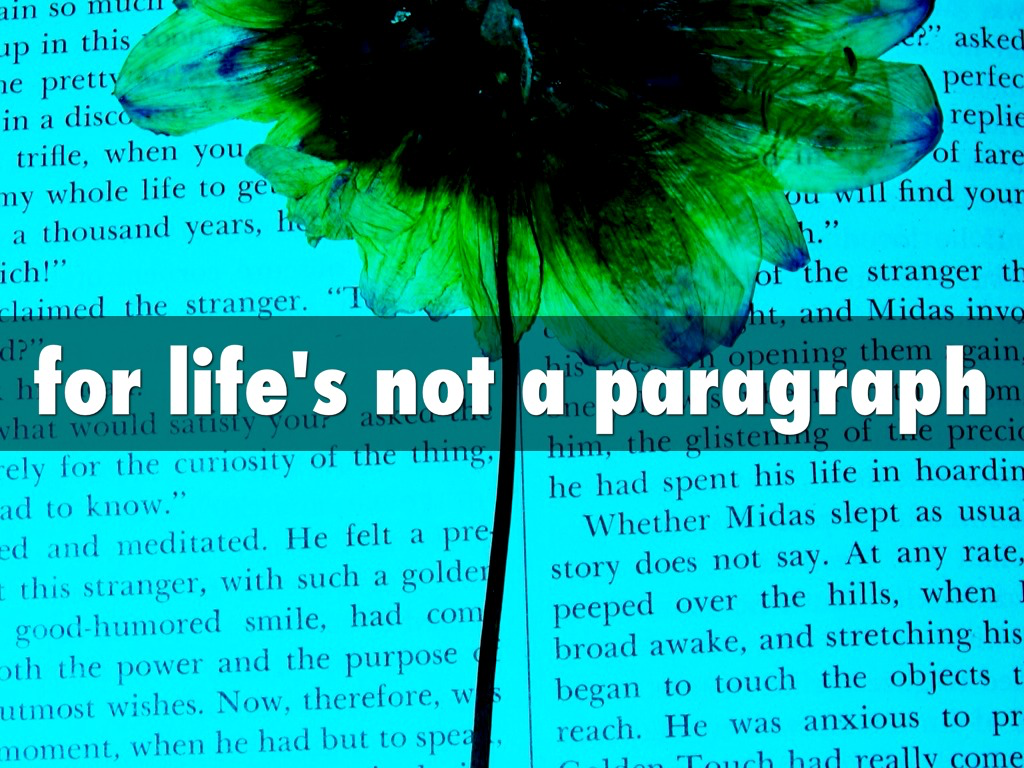
for life’s not a paragraph

And death i think is no parenthesis

One of the difficult things about teaching English is the number of bad ideas that students have about the rules of writing. 

And one of the things I find most upsetting about teaching English is the number of bad ideas that students have about the rules of writing which they learned from past English teachers. For instance: one should never start a sentence with “and” or “but.” One should never use the pronoun “I” in a formal essay, one should only refer obliquely to one’s self, preferably in the third person. One should use transitions for every paragraph in an essay, because they help the flow; and one cannot go wrong with the transitions “First,” “Second,” “Third,” and “In conclusion.” And, of course, every essay should be five paragraphs, and every paragraph should consist of at least five sentences, and every sentence should be at least — but actually, I don’t know what the drones tell students the proper minimum length for a sentence is; I would guess about 10 words. Also one should never use fragments or run-ons.

Ridiculous. All of it.

There are no rules.

One of my favorite days as an AP teacher is when I mention to my new students that they can now ignore these rules, for the rest of their writing lives, and that, in fact, if they should never use “In conclusion” again, nor limit themselves to five paragraphs as a structure for an essay, they will make me very happy. The relief is palpable — and sad. We constrain young writers so much: and it helps to crush their creativity and desire to use words, and that is an awful thing to do both to young people and to this language. 

There are, I think, two reasons why teachers present these rules to their students as rules; and one of them is understandable, if not valid. The bad reason, the invalid one that is not understandable, is that teachers were taught these things themselves as rules, and they were never allowed to deviate from them, and so now these things are unbreakable rules: sacred cows, taboos never to be questioned, just like the prohibition on the use of the word “Fuck” (And all I really have to say about that is this). I was taught at least some of those things, too — though to be honest, I don’t remember learning them, so either I had genuinely good English teachers, or I spaced out at just the right time and never heard or cared about these rules — but come on. We grow up. We learn to think for ourselves. We see countless sentences that begin with “and” or “but.” We read countless pieces by authors who use “I” in even the most formal of essays. We stop counting words and sentences and paragraphs, and just — read. (I confess I still count pages. This, too, is a bad habit; but if we’re at the page-counting stage, at least the work is long enough that word counts and sentence counts and paragraph counts become moot.) WE FUCKING USE THE WORD “FUCK” WHEN IT IS APPROPRIATE: and we recognize that there are, in fact, many times, many times, when it is appropriate. 

So why don’t teachers teach their students that all of these things are bad rules? For one (And damn me, I first wrote this sentence starting with “Well,” and I HATE when my students do that, answer their own rhetorical question starting with “Well.” I caught it, though. Also, that’s not a rule.), teachers do not always question authority. Teachers come from all groups and kinds and flavors of people, but the majority are those who loved school, who were the top students, and who want to pass those wonderful learning experiences on to other people; those people never challenged a teacher in their lives, they were the ones who argued back against the students who did challenge the teacher, the ones who said “Shut up, he’s the teacher, don’t argue with him!” in class when someone else said “That doesn’t seem like the best way to do that.” And then they become teachers, and they don’t want to be questioned by students — who, to be fair, are completely freaking annoying when they argue, because they are used to having their points of view denied, their arguments summarily contradicted, usually by adults who say “Because I said so, that’s why,” or some permutation of that (Like “Because I’m the teacher, so don’t argue with me.”), and so all they have left is making one irritating point and getting a reaction from the authorities who squash them into molds, every single day. But this all means that when an English teacher says that a paragraph has to have a minimum of five sentences, and a student asks, “Why five?” The teacher wants to respond with “BECAUSE I TOLD YOU SO AND I’M THE TEACHER AND MY TEACHER TOLD ME SO WHICH MEANS IT IS A TEACHER’S RULE SQUARED!

I am not one of those teachers. I did not like school. I questioned authority as a teenager (and I was annoying about it) and I continue to do so now, three full decades out of my teens. So I expect my authority to be questioned; in fact, I invite it. I never say “Because I’m the teacher, that’s why.” (Though I do jokingly argue with students who question my spelling, “How dare you question your English teacher on spelling?!?”) So when I tell students that an essay needs to be longer, or that a sentence is incomplete, and they question me, I tell them why. But then, I’m weird; I like arguing. I like explaining. I like helping people understand why something needs to be changed, why it is incorrect. I think doing that makes the world more comprehensible, and therefore more manageable. I think making the world more manageable for my students is my job, a lot more than making them write five-paragraph essays. 

The more understandable reason why teachers don’t tell students that these foolish rules for writing are not ironclad is more to do with arguments. Students like asking “Why?” Not always because they want an answer, either; but because they want to catch the teacher looking foolish, and they love to waste time and thereby avoid work. Sometimes, then, when they get the real answer, they’re not ready for it; so they don’t understand it, because they weren’t really listening — they asked the question only to make the teacher talk instead of assigning work, so when a teacher answers their question, the only response is “Huh?” So when you present one of these writing rules as they should be presented, as something that is entirely dependent on context and writing intention; that, for instance, the use of the word “fuck” in a formal essay, though not entirely forbidden (If you are quoting a character in a Martin Scorsese film, for instance, you have probably a 90% chance that any given quote will include “fuck,” and any form of censoring the word has a poor effect on the serious treatment of the film because it makes you seem too prudish to deal seriously with a movie that has profanity in it) does tend to contradict the tone of a serious essay, and is therefore jarring for the audience to come across in a context that doesn’t require the word be used; then you are going to get argument. Or stupid questions. Mostly stupid questions. (“Can we say it in class? Can I say it right now? Can I change my name to Fuckface McGee, and then you have to call me Fuckface all the time? Would you still say “fuck” if the principal was in the room?”)

So teachers, who deal with enough stupid questions as it is (And yes, by the way, there are stupid questions — see above), will often state an ambiguity as though it were in fact ironclad, just so they don’t have to argue with students. And since the argument won’t bear weight for the thing it is, we have to rely on even more annoying arguments which do have the advantage of shutting down debate: namely, “Because I’m the teacher and I said so.”

This is why, when I was in 3rd grade, the teacher told me that you could not take a larger number away from a smaller number, that 3-7=x didn’t make sense. Not because that was true, but because the teacher didn’t want to explain negative numbers to me right then. The same reason my mother, when I was 4 or so, told me, when I asked where babies came from and where specifically I had come from, that half of me was in my father and half of me was in her. And I assumed that meant that the bottom half of my body was inside one of them and the top half was in the other and they sort of stuck me together like a Gumby figurine (Don’t get that reference, kid? Look it up.), but also, the answer shut me up at the time, which was my mother’s goal.

I understand how annoying students are, so I understand teachers giving guidelines for good writing (It is a good idea to avoid saying “I” in formal essays for two reasons: first because talking about yourself personally is a way to connect emotionally with your audience, which is informal communication, not formal; and secondly because most of our desire as writers to use “I” is in phrases like “I think” and “I believe,” which we are tempted to use in arguments and statements of truth so that we don’t seem too arrogant, and so that we don’t seem dumb if we should be wrong. It’s safer to say “I think Martin Scorsese’s films say ‘fuck’ too often,” than it is to say, boldly, “Martin Scorsese’s films say ‘fuck’ too often.”) as if they were ironclad rules. It’s just that teaching these things as rules takes away all the nuance, all the flavor, from writing; it makes writing boring, which makes students not want to do it. It’s better to tell the truth, and deal with the consequences: there are no rules in writing that cannot be broken, it’s just a matter of what is the best use of language in a specific context.

And no, Jimmy, that doesn’t mean you can say “fuck” in your essay about Sacagawea.

So this went on much longer than I meant it to: this was meant only as an illustrative example, not as the heart of the essay. I really just wanted to talk about how we try to apply rules when there aren’t any rules, and shouldn’t be any rules, and that that is a problem. My main point wasn’t even about English: it was about life. Where there also aren’t any ironclad rules. That’s why I quoted the poem to start:

since feeling is first

by ee cummings

since feeling is first
who pays any attention 
to the syntax of things
will never wholly kiss you;

wholly to be a fool
while Spring is in the world

my blood approves,
and kisses are a better fate 
than wisdom
lady i swear by all flowers. Don’t cry
—the best gesture of my brain is less than
your eyelids’ flutter which says

we are for each other: then
laugh, leaning back in my arms
for life’s not a paragraph

And death i think is no parenthesis

I love that poem. I did a podcast episode on it if you are interested in the whole breakdown of what it’s about and what cummings meant to say in this; but for now, I just want to focus on his first stanza and his last two lines — sort of his introduction and conclusion, one might say. (Though please note he does not use transitions between his — err — paragraphs. Especially not “in conclusion” before the last one.)

So the first stanza: since feeling is first, he starts with, which means either that feelings occur first, before thoughts or actions or understanding or anything else, or else that feelings are more important than anything else, probably with both thoughts connected; but clearly, feeling is better: because he who pays attention to the syntax of things will never wholly kiss you. I love that, because “syntax” is such a nerdy English writing/grammar thing to talk about; it means the way things are organized to create meaning (words, specifically, but you can have a syntax of almost anything that is organized to create meaning), so word order in sentences and sentence order in paragraphs, and aspects like word length and the use ofpunctuation and so on; all of that is syntax. For the lines about the syntax of things and kissing, I think specifically of this scene from the movie Hitch, where Will Smith’s character tries to teach Kevin James’s character how to kiss: but in this scene, it’s not only about the syntax of kissing and of relationships, but it’s about math: and so though Smith tries to get James to think about the passion of the moment, he focuses so hard on the proper methodology that he does not show any passion at all — and then he loses control and flubs it. 

The point is, there are not rules to kissing, and there is not math. And the more you think about rules and math and methodology for kissing, the less you are focusing on what you are feeling for the person you are kissing: and that means you are not kissing wholly. Because feeling is first. 

So with that in mind, let’s talk about the last two lines, and what I originally set down to write about today. 

for life’s not a paragraph

And death i think is no parenthesis

I love this because it can mean a bunch of different things, and that’s what I like best about poetry: in order to distill the language down to its absolute minimum, just the essence, poets take out much of what is usually there to provide meaning to the audience; this leaves the audience having to fill in gaps, make guesses — bring their own understanding to the conversation. Because of that, poetry does a better job, in my mind, of presenting what literature is supposed to be: a conversation, not a monologue. An author is talking about things they have observed or experienced or imagined, and the audience is listening and then agreeing or disagreeing — and adding to what the author says. A poet leaves more silence for the audience to speak, so though the poet may say the same thing in every conversation, the audience always has something new and different to say — and so one monologue can turn into almost infinite dialogues. I love that.

(And because I am pedantic and wordy, I don’t write poetry, I write novels. Heh.)

But because these last two lines use the names of two syntactical structures — paragraph and parenthesis — these two lines connect to the opening stanza: it is telling us that there is no clear structure to a life, and there is not a simple punctuation mark at the end of life that tells us exactly how a life is to be thought of — and maybe my favorite idea present here when I read this is the idea that death makes life silent, makes it unimportant, like a parenthesis makes the words that it contains, turning them from a main thought into supplemental but unnecessary additions. We treat death too often like it is the most important factor in a person’s life. It is not. The life that precedes it is far more important than death. 

But in either case, life is not a paragraph: it does not have a definite way that it is supposed to go, with a topic sentence to start (After a transition, of course), and then an illustration of the topic, and then two (or more) pieces of evidence or commentary on that topic, followed by a concluding sentence that shows the meaning or importance of this topic in the broader theme.

And then a parenthesis.

We think this way about life far too often. What actually set this whole discussion in motion for me was a conversation I had with my wife, in which she was railing against people who made decisions about how old other people should be to act certain ways, and how people should act based on what is appropriate for their age. 

I am certain you have all had these conversations. Most if not all of you have also made these prescriptions for other people, and probably for yourselves as well. Right? I mean, we all know it: we know that 8-year-olds are too young for R-rated movies with sexual content, and we know that 11-year-olds are too young to drive — and teenagers are mostly too old for dolls and stuffed animals. 

We know that 17 is too young to get married and have children, and that 50 is too old for those things. We know that 18 is old enough to make decisions for yourself, and 25 is when everything starts to go downhill. 40 is too old to buy a new sports car, because then it’s nothing but a midlife crisis; and the same with a second marriage to a younger person. And while we’re on that: 5 years is too much of an age difference when you are under 20, and 10 years is too much of an age difference when you are under 40, and two months is too much of an age difference when one of you is under 18 and the other is over 18 BECAUSE THEN THAT OLDER ONE IS A SEXUAL PREDATOR AND A PEDO AND SHOULD BE CASTRATED AND THEN FED TO WOLVES.

That last one is challenging: because I don’t mean to disagree that people under the age of consent should not have relationships with people who are older and may be taking advantage of them. But I do want to point out that the idea that the second someone hits 18 they are capable of taking care of themselves, and the second before that they are not, is absurd. 

This goes for all of this. There are certainly stages of life and development, and some of them are appropriate for some things and some are not; I do not think that teenagers should be running the country. I know lots of teenagers. They would not be good at the job. But also, the idea that octogenarians are exactly the right people to be running the country is not more reasonable, based on my experience of octogenarians. Especially those running the country right now (and the septuagenarians who want to run the country right now. Not better.) But at the same time, almost every stereotype and bias we have based on age is belied by not just one exception, but by a whole slew of them. Ten years is a big age difference for a romantic relationship, especially in one’s 20s — except my wife and I met when I was 20 and she was just about to turn 30, and we’ve been together now for the same 29 years that she had lived before she met me. I think it’s worked out pretty well. My father and his wife had a ten-year age difference, but since they met when he was 50 and she was 40 (or thereabouts), and since the man was the older one, nobody thought anything of it. And then, although everyone assumed that she would take care of my father at the end of his life, that went exactly the other way, and he was her caretaker until she passed this last February.

Now my dad is 82, and alone. Should he find someone else to love? Or at least have a partnership with, if not a romantic connection? Or is there not enough time left for him to enjoy a relationship? Would it be too much of a burden for him to put on somebody else, to love him for only the few years he has left? Would it be inappropriate for him to date? To date someone younger? Someone older? How much older? How much younger? How much life left is enough to fall in love?

It this is too much of a dark theme, let me ask a few others ones: should my dad have a sports car? Should he have a fun car, like a bright orange VW bug? Should he get a pet, if he wants one? Should he wear a bathing suit in public? Should he dye his hair, if he wants to? Get a tattoo, or a piercing? Or is he too old for that now?

It struck me in thinking about this that we make exactly the same decisions about the very young and the very old: just as most people would see my dad, at 82, as being too old for a fast car or a fast woman, or a new career or a new hobby or a style change that included something hip and modern, so people would think the same about, say, a ten-year-old: that a ten-year-old should not be in a romantic relationship (I agree with that one) and should not have a car (Less certain on that one) and should not have a career path picked out (Don’t agree with that one: if a kid knows that young what they want to do, then mazel tov: my wife knew she wanted to be an artist before she was ten) and should not get their hair dyed or their body pierced (Other than the earlobes, which apparently are fine for stabbing — hey, does that mean a child could get their earlobes tattooed? Or is that shocking and inappropriate?) or wear makeup, or wear clothing that is hip and modern and stylish. 

The way we bracket our lives, with the greatest constraints on the young and the old, turn those two stages of life, the beginning and the end, into — parentheses. We freeze both those times in our lives into immovable requirements: just like kids can’t wear makeup, and can’t possibly make decisions about their sexuality or their gender identity, women must get their hair cut short when they are older, and men have to start playing golf, and men and women both have to retire and may not begin a new job. Kids have to be cheerful and energetic, and old people have to be slow-moving and cranky. And anyone who doesn’t follow these rules, these iron-clad, unquestionable sacred cows, these taboos that are never allowed to change without disapproving frowns and pearl-clutching gasps, is deemed not only unusual or eccentric: but wrong. The butt of jokes, the target of angry stares and social ostracism. Because those are the rules: don’t question society, just do what you’re told. 

But no. Because there are no rules. Look at ee cummings’s poem: there are no rules. None that he follows. And yet: it makes sense, even more sense than what most of us write, even though we may follow the rules in order to make our words make sense. The fact that some people are better off following the supposed rules doesn’t mean those rules have to make sense in that way for everyone. Like I said, there are certainly stages of life and development, and children should not be romantic and should not be required to be responsible and adult before they are ready to be; but beyond the most obvious age distinctions around puberty and adolescence, there is no rule that actually encompasses everyone. And there shouldn’t be. Some kids can handle driving a car. Some could write books or create musical masterpieces. Some can know just what they want to do with their lives. Some can wear makeup and have pierced ears, and make it look stylish and cool. And just the same, while older folk are physically more frail and should take that into consideration when picking new extreme sport hobbies (And let me note: kids should be careful about extreme sports, too — because they are also frail, or at least small and fragile.), there too, there are no rules that encompass everyone. If Tony Hawk gets on a skateboard when he’s 80 (if he lives that long — and let’s hope so, because he’s one of those people who is awesome on the Betty White end of the scale) then I’ll watch him drop into the halfpipe, and cheer when he pulls off a trick. Because he could: and even if he can’t, I’d be happy to let him try, if that’s what he wants to do. It’s his choice. It’s all of our individual choices, and none of society’s business as long as other people aren’t getting hurt. Sure, Tony Hawk at 80 would be in danger of hurting himself on the skateboard: but do you know how often he has hurt himself on a skateboard while he has been young? And then adult? And then middle aged? Right. We let him do it. Because it’s his choice. People should be allowed to do what they want, without the weight of social disapprobation because of their calendar age. It’s stupid. 

Feeling is first. Life is not a paragraph.

Death is not a parenthesis. 

This Morning

This morning I am thinking about rules. And breaking them.

I don’t have any particular plans to break rules today, apart from  the ones I always break (I am insufficiently formal with my students! I don’t take their cellphones away! I DON’T ENFORCE THE DRESS CODE!!!); since I have become a teacher, I am generally on the side of rules enforcement (Not the dress code. Dress codes are a poor system. I’ll write about that some other morning.), because I recognize that most rules are intended to uphold the One Rule: Primum non nocere. First, do no harm. In my classroom that is the first rule and the only rule that gets regularly and consistently enforced. But other corollary rules are reasonable when they help maintain that one rule: the tardy policy is acceptable because students who come in late miss class, which is harmful to their education; they disrupt the classroom, which is harmful to everyone else’s. It is a minor harm in both cases, and so the punishment for tardiness should be a stern look, maybe a talking to (Especially in the case of schoolchildren, who are rarely tardy on their own behalf; I was late to homeroom for essentially my entire freshman year because my older brother drove me to school, and he didn’t have to be in homeroom, ergo late.), but there is harm, and the rule makes sense.

The more interesting situation is when someone — like me — decides that some rules should be enforced and not others. Because then it becomes a matter of reason and authority; argument, in other words. I have decided that the no-cellphones policy at the school where I teach will not be enforced in my classroom with the sole exception of tests. I confiscate their phones during tests; otherwise I let the students use them during class. Conversely, I insist that essays and projects be on school appropriate subjects. I can justify the enforcement of one rule and not the other, but am I the one who gets to decide that? My supervisors would say No. My students, who like my laxity, say Yes. I do what I want, ‘cause a pirate is free, and I am a pirate.

But then there are the rules, and particularly the uneven enforcement of rules, that I believe are problematic. My administration insists that the students do not talk during fire drills, that the entire school remain in absolute silence. They instruct the teachers, during every drill, to send the students who talk to the administration to be disciplined. They do not have a reasonable argument for this. The district insists, as a precaution against school shootings, that all classroom doors be closed and locked during the entire school day, with the sole exception (Other than when people are coming in and out of the doors, of course — though I have been frequently tempted to slam the door closed and yell, “IT’S A SAFETY PRECAUTION!” when people are trying to come into my classroom. Particularly when it’s administrators.) being when there is a teacher alone in the room with a single student; then the potential lawsuits override the risk of being shot, and so the classroom door must remain blocked open. They do not have a reasonable argument for this. My administration is constantly walking by my classroom and closing my door, which I habitually leave open because I have an open-door bathroom policy, and also because it helps keep the room a comfortable temperature.

Those rules, despite being irrational, are enforced consistently and vigorously. But other rules, such as suspension and expulsion for serious offenses — rules which do have a rational basis — are consistently bent or broken, generally for the same fear of lawsuits that governs our door closings. There are students at the school who should probably not be at the school, because their actions pose a genuine threat to themselves and the other students. But those students are generally allowed to remain, and even allowed to make up work missed during suspensions. I am not one to insist on expulsion; other solutions to the issue could certainly be tried — but those things don’t happen, either.

Let’s imagine, as an example, that a student was running around whipping people with goat skin in order to increase their fertility. (What? That’s where Valentine’s Day comes from.) A student who did that should be suspended, and certainly, if the student was naked as the Romans were when they did that, that student should be expelled and probably arrested. I could understand if, instead, the student was required to attend counseling, GoatWhippers Anonymous and the like; but my school, and the school where I taught before this, frequently did nothing post-suspension. The goat-whipper comes right back, sits in class, makes up work and gets their credits. And frequently, re-offends. With the same result.

I broke the rules almost ten years ago. I wrote angry blogs about my students, while I was in class, using a school computer; I also named former students and insulted them. I’m honestly not sure that my particular actions caused direct harm (largely because none of the students I talked about knew about or read the blog), but certainly the rules that I violated are intended to prevent harm: teachers should not insult their students, we should not post on social media or the internet during class; we should not name our students and violate their privacy. I should not have broken those rules. I was punished for them, and I still pay for it; and that’s as it should be. Especially because I still write this blog, I have to remain aware of where the line is, and not cross it. I suppose you could argue that I do cross it, that I shouldn’t write, that I shouldn’t write about my school or the administration or similar topics; but rules that prevent harm should not cause harm. And censorship is harm. My punishment taught me to be more responsible, and therefore I, who am closest to the potential damage, have become a means of preventing further harm. This is exactly what rules and punishments are supposed to accomplish: reform and prevention. For the offender far more than others who observe, but the idea of a deterrent is not absurd.

There are other instances where, rather than a poor policy or an unfairly enforced rule, specific individuals are allowed to skirt the rules — or simply to break them with impunity. Where, say, family members are allowed to have freedoms and privileges that they should not have, in violation of rules. This is, quite simply, corruption; not only does it allow harm to happen to all involved, but it creates harm directly. It allows others to be corrupt themselves, and therefore the harm spreads. And it begins at the top.

Looking at you, Mr. Trump. And your children.

When  the people who are given the authority to make the rules and enforce the rules do a poor job of choosing which rules are vigorously enforced — generally, rules that allow them to maintain and increase power and control over subordinates, but which do not tangibly prevent harm — and which are laxly enforced or not enforced at all, then the system is broken; then, unfortunately, it falls to those not in the position of authority to make decisions regarding which rules to enforce and which not. That’s where I come into this. If my students were not consistently and adamantly protected, by their parents and de facto by the school in that they do not enforce a schoolwide ban, in their right to have a cellphone with maximal functionality, I would enforce a ban in my classroom. If my administration acted in all ways with the safety and benefit of the students foremost in mind, then I would enforce their reasonable rules vigorously. As none of those things are true, I am forced to pick and choose.

I hope I choose well. I will take responsibility for the choices I make.

I learned that from my punishments.

This Morning

This morning I’m tired.

I’m tired of incompetence, malfeasance, and foolishness. I’m tired of administrators who are so afraid of lawsuits that they make bad decisions and do harm to the very school they are supposedly trying to protect. I’m tired of those same administrators being so slavishly devoted to conformity and universality of results that they take away everything that is good about teaching and learning, and about school. I’m tired of students who are more willing to fail than try to learn, who take every opportunity to ask for a free day, who say, “Why don’t we just do nothing today?” Who say “I don’t know how to do that” when they do, just because if they don’t know how then they won’t be asked to try, and they can sit and stew in their own torpor, staring at anything even vaguely stimulating. I watched four students watch one student spin a quarter on the desk for half a period. Just watching him. None of them doing the work they were supposed to be doing. I mean, I was a lazy student, sure, but — seriously?

I’m tired of parents who expect teachers to parent their children, and of teachers who are willing to do it. I’m tired of parents, and teachers, who focus on the signs and symbols of learning rather than on the actual thing itself. I’m tired of telling students that they’ll need this in the future, and that their boss won’t put up with the same crap that I put up with, as if everything I do is designed only to train students to be good employees.

I’m tired of doing things designed only to train students to be good employees.

I’m tired of being a good employee. I’m tired of teachers who obey inane rules rather than rock the boat, and I’m very tired of being one of those teachers. I’m tired of being cautious, and tired of being afraid, when I should be respected  and proud. I’m tired of wasting my time on things that don’t really need to happen, and of falling behind on the things that really do need to happen. I’m tired of trying to find time for myself in between the time I spend on others.

I’m tired of making the same old complaints and accusations.

I’m tired of being tired.

Boy, thank God it’s Friday, right?