I Wish for Each

“Congress shall make no law respecting an establishment of religion, or prohibiting the free exercise thereof; or abridging the freedom of speech, or of the press; or the right of the people peaceably to assemble, and to petition the Government for a redress of grievances.”

So all right. We’ve been hearing a lot about this lately, right? Those are the words of the First Amendment to the Constitution. But what does it mean?

What is free speech?

Does it mean anybody can say anything they want? Anything? Or are there limitations? Should there be?

Does it only apply in American? Only to citizens? Does it apply differently to public figures, to famous people?

And why the hell are we still talking about this? Do we not know what it means? Shouldn’t we know what it means by now? I mean, really?

Okay: well first, let me just address that. I do not think there is anything wrong with having a conversation again. I don’t believe that something can be talked through once, and then that’s it, and we all know everything there is to know, and there’s no need to bring it up again. I understand that people get tired of having the same conversation over and over again, but you see, I’m a high school teacher: my whole job is essentially to have the same conversation over and over and over again. From one year to the next, from one class to the next, from one student to the next, I have to continuously repeat myself, and that often means I have to continuously find new ways to say the same things I have said before. The fact that I am willing to do that, even eager to do that, is what makes me a good teacher: because if I got impatient with students who didn’t hear or didn’t understand what I said to another student, then nobody would learn after the first student. I confess that I do get tired of saying the same things to the same people over and over again, but that’s not the same thing as having the same conversation: that is stating the rules, the limits and boundaries which are necessary for us to live and work together and abide one another, and then stating them again because some childish, selfish person decided they didn’t have to follow the rules. And then I repeat myself: and then I get angry about it.

But if you didn’t understand what I said before? I will say it again. If you don’t understand it after the second time, I will say it a third time, in different words or with different examples. And I will keep repeating it until it is clear and fully understood. And then, when you have a new thought or a new experience, and that changes how you view what we talked about before, I will happily talk about it again: perhaps after I have thought about it some more, to integrate whatever new concept or perspective you brought into it today, apart from what we discussed yesterday. No problem.

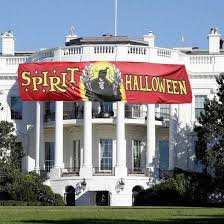
We seem to still be having trouble with freedom of speech. We are still talking about it, still debating it, still disagreeing over it; and now we are doing this in the wake of Charlie Kirk’s death. In that wake, and, I suspect, pretty directly related to that terrible crime, my wife was censored by Facebook, because someone reported a post she shared about Trump, calling it spreading misinformation. It was not, it was simply a joking criticism of the administration; specifically, it was this:
Exploring Shutdown Day 1: Discovering New Perspectives

My working assumption is that the person who reported her post was a Trump supporter, angered (as always) by libs and the left and so on, and recently energized by Kirk’s murder and the gaslighting from the right, convincing people to take action now to defend free speech (And please stop talking about the Epstein files and the still ongoing wars in Gaza and the Ukraine and the swiftly tanking U.S. economy), who probably reports every left-leaning or Trump-criticizing meme they see. Probably laughing while they do it. Facebook, as a private company that doesn’t want to suffer the wrath of the Trump administration, not only took down my wife’s post, but has also been monitoring and restricting her posts ever since: they are limiting her free speech. These new situations — unique neither to Charlie Kirk nor to my wife — has given people a new perspective on the issue, so: let’s talk about it again.

Here. This is where we start.

“Congress shall make no law respecting an establishment of religion, or prohibiting the free exercise thereof; or abridging the freedom of speech, or of the press; or the right of the people peaceably to assemble, and to petition the Government for a redress of grievances.”

Okay, so the First Amendment actually says a lot of things. It restricts Congress’s ability to control religion, and the press, and peaceable assembly, and the right to petition, all in addition to the freedom of speech. Let’s put those other aside for now: though it may be worth considering why all of those different, and all of those important, ideas were all packed together into a single amendment, and then the next one is only on one issue: guns. And the one after that is only about not letting soldiers sleep in your house against your will. Both important, maybe (though neither as important as freedom of speech) but both very narrow topics. Why are all these other things together in one place? Honestly, I haven’t read enough on the Founding Fathers and their choices regarding the Bill of Rights, so I could only speculate; but either way, we can ignore this topic for now, because we’re only here talking about the freedom of speech (and the others will become more clear as we focus just on speech, I think). Freedom of the press might come into it directly if we want to talk about Jimmy Kimmel, but it’s not clear to me that that discussion needs to involve anything other than free speech; that one right seems enough to cover what happened there. So let’s focus.

What is freedom of speech? Why do we have a right to it?

So hot take: freedom of speech is not actually critical. It is a roundabout way to protect the actually critical thing — or rather, two critical things: freedom of thought, and freedom to express those thoughts. Freedom of thought is absolutely critical to humanity, because in the most essential sense, we are our thoughts. I am what happens inside my skull. My body is also a critical part of me, but if I have a broken body, I am still me, because it doesn’t change what is inside my skull. It changes how well I can act out and reflect the decisions I make inside my skull — my freedom to express my thoughts — but it doesn’t change who I am. But if my brain dies, then who I am is gone, even if my body remains. My body can’t express my thoughts if I have no more thoughts: and without those thoughts, there is nothing for my body to express, no purpose for it to achieve; it can continue for a period of time, and then it will, mercifully, stop.

I wonder if my body would be sad if my brain died. Would my body grieve the loss of my mind?

Well: I would grieve the loss of my mind, so the question of my body’s reaction is academic. It is a part of me.

Now, in the ordinary way of things, there is nothing that could limit my freedom of thought. It’s one of the great things about being a sentient, thinking being; on that most essential level, we are always free. (Well, almost.) It’s because we are always essentially alone, and because there is no substance to thoughts: they can dance and flit anywhere we can imagine, always within the skull that holds the brain; and nothing will change other than the thoughts themselves — and potentially the mind having those thoughts. Nothing else is affected, and so nothing else can affect those thoughts: they can dance and flit to anywhere else, faster than anything that actually exists. Nobody else will even ever know where our thoughts are going, inside our minds. This was what Henry David Thoreau was talking about in On Civil Disobedience, when he described the inability of the state to actually punish him with a night in prison after he refused to pay his taxes:

I could not but smile to see how industriously they locked the door on my meditations, which followed them out again without let or hindrance, and they were really all that was dangerous. As they could not reach me, they had resolved to punish my body; just as boys, if they cannot come at some person against whom they have a spite, will abuse his dog. I saw that the State was half-witted, that it was timid as a lone woman with her silver spoons, and that it did not know its friends from its foes, and I lost all my remaining respect for it, and pitied it. Source

As he says, his thoughts cannot be trapped inside the cell, but can go anywhere that Thoreau wishes to send them: and the attempt to punish his body because they cannot punish his mind is just pitiable. What the State wants here is to control his thoughts, because they want to control Thoreau’s actions through his decision-making ability. Because their initial attempt to control his actions, through a threat to his body’s freedom if he made a certain decision the way the State didn’t want him to decide, didn’t work: knowing the threat, Thoreau still decided not to pay his taxes. His thoughts were uncontrolled, and his person/body/being followed along that thought decision, and didn’t pay his taxes. So then the State put him in jail: and he just kept right on deciding not to pay his taxes, regardless of what they did to his body. His thoughts were entirely unaffected, and uncontrolled, and they did the thing that the State didn’t want them to do — without any influence from the State at all. And so we all do, every thought we have that is in defiance of what our society demands of us. We are free to think whatever the fuck we want to, even the thoughts we’re not supposed to have, or not allowed to have.

Please take a moment and think a thought or two, which people outside of your head would not allow you to have, if they could tell you what to think. Any thought you like. Any thought at all.

Nice.

So because nobody can control a person’s thoughts, the laws focus on the second critical part of the process of having a free mind: the expression of our thoughts. Free speech, and in a broader context, free expression. Let me focus on that second aspect for a moment, because it shows more clearly what the point is here.

I can have my thoughts, and you can’t stop me. So far so good. But obviously, if I can’t act on those thoughts, then my thoughts cannot be complete. If, for instance, I think about spitting on the sidewalk, decide to spit on the sidewalk, but I cannot spit on the sidewalk — at the moment that is just because there is no sidewalk near me; I could spit on the floor of my office and call it a sidewalk, and to some extent I would have acted out my thought, and brought that thought to its completion, but then I would have to deal with my spittle, and also my wife would kick my ass — so I don’t spit: and thus the thought is not free, it is limited. I think, “I’m going to spit on the sidewalk!” and then I can’t do it: the thought is constrained. When the thought is constrained by reality — “I want to grow nine arms and use them to juggle chainsaws!” — then again, my thought is not free, but there’s no point in talking about our freedom to do things that we can’t do, or the need to pass laws to prevent things that are not possible. At that point, all we can do is shrug, and say, “It sucks to suck, Dusty. But you go ahead and dream of nine chainsaw-juggling arms, that’s fine, you can think about it all you want.” Freedom of thought is still protected, because I can carry the juggling arms thought as far as it can go; and as thought is still the most essential aspect of being human, that’s fine then. Thoreau can think that his taxes should not be collected by a government that supports both human chattel slavery and a war of conquest against Mexico (the reasons Thoreau didn’t pay his taxes), and if the action is not possible — if taxes didn’t exist and so he couldn’t choose to pay them or not to pay them — then he has all the freedom he could ever have.

But see, what happened is, Thoreau’s aunt paid his taxes for him, against his will. I don’t know why: I suspect she either thought he was suffering in jail and wanted to help him, or she was ashamed that her nephew was in jail, and wanted him to stop embarrassing her. (I would guess the second one, because she did not consult with him before she did it, and if she wanted to help, seems like she would at least visit and ask if he was okay.) Which then limited his free expression of his thoughts: he could think his money shouldn’t go to the government, and he could decide not to give his money to the government; but the government got his money anyway. Not because it was impossible for the government to have his money, but because someone else took his choice away. I guess it wasn’t really his money, it was his aunt’s money; but Thoreau’s idea was not to save his own pocket change, it was to refuse to participate in the government’s immoral acts, and when money went to the government in his name, it defied and negated his decision. Imagine if he talked to someone about not paying his taxes, if he argued with the government tax collector about the issue, and expressed his disagreement with the government, and said, “I will never contribute to this immorality, sir!” Can’t you just see the agent smirking and saying, “Sure, buddy. I mean, we already have your money, so you can say what you want.” Thoreau’s thought, while still free, has been constrained in its expression: and that pretty much ruins the thought; a thought which was not constrained by impossibility, it was possible, and he could have acted upon it — but then the option was taken away.

This is why, of course, jail is actually a very effective punishment for most people: because while we are all free to think our way out of jail, I would guess most people in jail want to walk out of jail: and they can’t. Which means their thoughts, while potentially free, are nonetheless really trapped along with their bodies. It is worth noting that, if you can find a way to free your thoughts, then prison wouldn’t matter so much; it would become a struggle to try to force you, through continued discomfort, to think about being in prison and how much you don’t want to be; then your thoughts are controlled, and trapped, and you are suffering for your punishment. But when Malcolm X was in prison, he found freedom in learning: and he talked in his autobiography about how prison really didn’t bother him at all, once he taught himself how to read and found things worth reading — and also once he found his faith in Islam, which also gave him something to think about that wasn’t constrained by being in a cell.

I have often reflected upon the new vistas that reading opened to me. I knew right there in
prison that reading had changed forever the course of my life. As I see it today, the ability to read
awoke inside me some long dormant craving to be mentally alive. I certainly wasn’t seeking any
degree, the way a college confers a status symbol upon its students. My homemade education gave
me, with every additional book that I read, a little bit more sensitivity to the deafness, dumbness,
and blindness that was afflicting the black race in America. Not long ago, an English writer
telephoned me from London, asking questions. One was, “What’s your alma mater?” I told him,
“Books.” You will never catch me with a free fifteen minutes in which I’m not studying something I
feel might be able to help the black man.

But I’m digressing. I told the Englishman that my alma mater was books, a good library. Every
time I catch a plane, I have with me a book that I want to read-and that’s a lot of books these days.
If! weren’t out here every day battling the white man, I could spend the rest of my life reading, just
satisfying my curiosity – because you can hardly mention anything I’m not curious about. I don’t
think anybody ever got more out of going to prison than I did. In fact, prison enabled me to study
far more intensively than I would have if my life had gone differently and I had attended some
college. I imagine that one of the biggest troubles with colleges is there are too many distractions,
too much panty-raiding, fraternities, and boola-boola and all of that. Where else but in a prison
could I have attacked my ignorance by being able to study intensely sometimes as much as fifteen
hours a day? Source

So again: the real goal of punishment, the only kind that is possible being constraint of the body, is to control the mind; and if the mind is able to continue thinking, then the constraint of the body is essentially meaningless. But in the vast majority of cases — and also, I will point out, in these two cases I have mentioned, because I don’t doubt that at some point Thoreau would have wanted to get out of jail and therefore would have felt trapped, and therefore actually would have been trapped, and Malcolm X would have been severely constrained if he had not been released to become the leader he became — trapping the body, because it limits the expression of thoughts, is an effective way to control a person’s thoughts. And even more importantly, for the purposes of society in general, constraining someone’s actions, the expression of their thoughts, is enough, because the purpose of prison is to stop a person from affecting others, and thoughts have no effect without expression. So just like I accept that I can’t ever have those juggling arms I dreamed of, society accepts that it can’t ever control our thoughts: and it just makes do with having potentially total control over our bodies.

And that’s where the amendment comes in.

I hope it is clear that thought without expression through the body, whether through action, through communication, or through a public display of some kind, is incomplete, and more importantly, useless. A useless thought is not a bad thought: all impossible thoughts are useless in and of themselves, which includes every dream, every fantasy, and every imagined existence; but they can still have enormous impact; and even if they don’t, they can encapsulate important things about the person who thought them, and that’s good, even if that encapsulated thought never reaches outside the mind that dreamed it. But when society wants to control us, controlling the impact we can have on other people is the primary goal and thus also the primary means of controlling people and the thoughts that define us. And that’s why the Founding Fathers included an Amendment that protects free expression in several different forms, most importantly speech and press and peaceable assembly.

Let me be clear now: the Founding Fathers were not always right. You don’t have to look any further than chattel slavery to know that they and their ideas, and the documents and the nation that they built, were fundamentally flawed, right from the beginning. There were some bad thoughts in there, and we’re still dealing with the legacy of those bad thoughts. But they were right in this: government wants to control people, and that means they need to control our thoughts — but they can only control our bodies, which is what they try to do. The First Amendment is there to set a baseline protecting our thoughts, through protecting the only things the government can attack and control, which is our actions.

So that is the essence of the Amendment, and the right: we have the right to express our thoughts, freely. The government cannot control our expression of those thoughts, so long as the thoughts do not have a direct impact on others in a way the government can control, and should control. In other words, if I decide to pick up a rifle and shoot someone I disagree with, that is no longer simply the expression of my thought, now it is an attack on another person, and it can be controlled, and should be because it is harmful. Though I will point out that, to some extent, the expression of that thought can’t always be controlled; sometimes it can only be reacted to after I have already done the thing I decided to do. But insofar as it can be predicted, and thus prevented, it should be.

Do I need to talk about why I shouldn’t have the unfettered ability to inflict harm on my fellow humans? Or can I assume we’re all on board with that? Just for the sake of saying it, the issue is that I have no right to control other people’s thoughts, nor their expression of their thoughts, except in the service of preventing harm. If I do harm to another person, I am affecting their ability to express and complete their thoughts, or possibly even their ability to think thoughts in the first place. If I am the one looking to do harm, not just prevent harm, then someone should have the ability and the right to stop me before I do harm.

Should that be the government? My first thought was to say that of course it should be; that this is the reason why we create governments and cede to them the power to control us: so they can prevent us from doing harm to one another. But government is frequently bad at this, and in that case, maybe other people and other authorities should have that power, that right, that responsibility, to prevent my harmful actions. But this is where we get into a conversation about how society should work, and that’s too complicated for right now. Suffice to say that the government, as imagined by the Founding Fathers — that is, existing with the consent of the governed — is a reasonable place to invest the power to control people’s obviously harmful actions. I would like to expand on the FF’s ideas about the governed who were consenting to the government, to include all of those who are governed, which would include people they didn’t consider worthy of consideration, or even consider to be people; it would also include all those who reside within the jurisdiction of the government in question, and who would be subject to the government’s control: those people should be considered “governed,” and therefore should be asked for consent to the government over them. Yes, that means undocumented migrants as well as those who don’t have full legal status. And also suspects, convicts, prisoners and parolees, all those governed by the justice system: they, too, must consent to the government over them, or else it becomes illegitimate and tyrannical.

And to be clear, when I say “consent,” I mean continuous, affirmative, and enthusiastic consent. The only kind of consent that matters.

Also at this point, I would like to express my burning volcanic rage that the First Amendment does not include the right to vote. What the actual FUCK, Madison? Why did you leave that one out?

It was the slaves, wasn’t it.

So all right: we should give the government the power to control our actions which can be harmful (and which can be controlled): but we retain the power to consent to be governed, and also the power to abolish the government if it becomes destructive of the ends we created it for, ideally through voting in free and fair elections. Since the government exists with our consent, what one thing do we most clearly need in order to legitimize that government?

A voice. The power to say “Yes,” and the power to say “No,” and to have those words heard. The power to consent, in the simplest terms. Continuous, affirmative, enthusiastic consent. If we don’t have that power, the government has taken too much control and has lost its legitimate authority, and should then be abolished: and that is the intent of the First Amendment, to protect and enshrine, first and foremost, our power to keep or abolish our government, which would otherwise have unchecked power over us.

You know: the power to vote. But in the absence of that, the power at least to speak, and to be heard. Not just to think freely, but to actually express those thoughts. The power to spit on the sidewalk. And on fascists.

So. Now. Did Charlie Kirk have freedom of speech? He did, and he should have: he spoke, and was heard. He lost that freedom when another person caused harm to him, murdered him, in an act that our government should have done all it could to prevent. Was Charlie Kirk a promoter, and therefore a martyr, for the cause of free speech? He was not: it was not his job to protect people’s right to free thought nor to free speech as an expression of their thoughts; inasmuch as he encouraged free thought and the free exchange of ideas through debate, then he was a proponent of free speech; but watching his debates makes it very quickly clear that he was not interested in the expression and free exchange of ideas, he was interested in scoring points and (as my students would say) farming aura: trying to get famous and powerful because he was seen as a staunch defender of his political and religious views. This is no criticism of the man: I would also like to get famous and powerful using my words, though I’d probably rather write than speak; but I want the same thing. But it does mean he was not a martyr for the cause of free speech, because free speech was not his cause: it was the means by which he tried to achieve his purpose, to fight for his cause. He shouldn’t have had to defend his free speech, he should have simply been able to exercise it. And just like Charlie Kirk, as a private citizen, it is not my job to protect free speech directly: that is what the government is for. To secure these rights, to Life, Liberty, and the Pursuit of Happiness.

Let me emphasize that again, because we talk about free speech as though it is just something that needs to be protected from the infringement of the government on our rights, that the point of the First Amendment is to constrain the government from taking away our free speech; the First Amendment is that thing, that is its point — but also, the real point of the amendment is to tell the government that it should be working to protect and secure that right for all people within its jurisdiction and influence. Actively. Affirmatively. Enthusiastically. Continuously.

Which means, in practical terms, that the government should not only have done more to protect Charlie Kirk from being murdered (if we believe the government could have done more to prevent that, which I think is self-evident, but that’s not the argument I’m making here), but also, it should be doing more to ensure that all people under the jurisdiction of the U.S. government, all persons resident in this country and under its control around the world, have the opportunity to be heard, to express their thoughts freely. By publishing their opposition to the war and genocide in Gaza, without losing their legal status. To have their case heard before an immigration judge, through the due process of law. Through posting whatever the fuck you want on social media, even if other people don’t like it, so long as it is not actively, directly causing harm. Through speech, through the press, through petition, through peaceable assembly.

Which means the government should have kept the Fairness Doctrine. And in this modern era, the government should ensure that social media does not censor people’s free speech, so long as that speech does no harm. In fact, I would argue that the government should have a platform for people to be heard, to be seen, to which all people who must consent to the government over them have access. I would include NPR, PBS, and VOA among those platforms, but I would argue the government should also provide some simple form of social media, to at least offer an alternative to the private companies, which are all controlled by billionaires with agendas. I don’t think the government should seek to control the social media companies per se, but they have a responsibility to ensure our rights: including the right to speak our thoughts, online as well as through print and speech. The government should also protect protestors and ensure that they have the right to assemble and petition for redress of grievances, so long as they are peaceable in that assembly.

Yes, that last clause, as well as the earlier condition that speech should be protected as long as it does no harm, does create an opportunity for the government to limit free speech, depending on what we mean by speech that does harm, or by peaceable assembly. I think the current laws distinguishing between protest and riot, and the laws preventing libel and slander, make sense and should remain (I don’t know enough about the specific laws and so can’t speak to their current efficacy, but conceptually, I’m in favor), and where these two rights cross over, with the law preventing speech that incites to violence, is also a useful law that protects people from harm. I also think there should be a gray area around and beyond those laws (Does “Fight like hell or you won’t have a country” count as incitement to violence? I honestly can’t say, not without further evidence of intent and context. If only there had been a trial…), and that the burden of proof within that gray area should definitely be on the government, as the ones who enact the control of people’s speech, to show that someone lost their right because they were causing harm with their speech. We have a system in place to carry out that process: but we need to have people in the government who are dedicated to maintaining and using that system.

We do not currently have that. We have an authoritarian who wants to eliminate free speech because he doesn’t want anyone to have rights except himself. We have a legislature that agrees with him, completely and slavishly — they are not expressing their thoughts, they are expressing only his. (The opposition, presumably, is not expressing the authoritarian’s thoughts. We just need to find where that opposition is hiding…) We have a Supreme Court that also thinks no one should have rights other than the President, and themselves, because they think their trump card over Trump (pun obviously intended, as all puns should be — also, we should have a right to pun…No, we do have a right to pun, and it should be protected by the government.) enables them to live as exceptions to the dictatorial power they want to give him, and they like the idea that a dictator could enhance the lives of the people whom they (the “justices”) deem worthy of enhancement, and destroy the lives of those whom they deem worthy of destruction, without they themselves dirtying their lil fingies. They’re wrong, of course, because if Trump ever did become a dictator, he would end up killing or jailing the justices because they have defied him in the past, and no dictator can abide that kind of challenge to their power; but then, all of these people are wrong. They all think that the dictator would only use power the way they want him to use power, and that’s not how dictatorship works.

Please take note, all you MAGA voters who want Trump to hurt the people you hate, but not you yourself. That’s not how dictatorship works. He doesn’t dance to your tune. If the Supreme Leader is the only one with rights, then we will no longer have rights ourselves: not the right to life, not the right to liberty, not the right to the pursuit of happiness. We will then not have the right to express our thoughts through speech or writing, through assembly and protest and petition; more importantly, we will no longer have the right to consent, and though that immediately means the government will no longer be legitimate, it also means that we won’t have the ability to remove it without violence.

That is where the Second Amendment comes in. It is not, as the fools who care only about that one and not the First would have us all believe, the right which ensures all the others; that is the First Amendment. It is free speech. It is the power to consent, and to withdraw consent. The practical power that enforces the moral and intellectual power is the right to communicate, to agree, to assemble and stand together: that is what changes governments. (Also, if we don’t lose it, the right to vote. Tell me why the right to free exercise of religion usurped the place that should have gone to the ballot, I beg you.) The right to defend ourselves physically is the last resort when the first one has been lost: and every one of those gun rights advocates, from the rational ones to the chuckleheads, have been ignoring the infringement of the First Amendment while trying to protect the Second. Protecting it, I might add, through their right to free speech.

So. Free speech is not only important, it is critical, it is definitive, both to us as humans, and to our country as a free country, with government of the people, by the people, for the people. It is the most important right we have, and it is the best way to delegitimize, remove, and replace the current government, which I think we can say safely does not have our consent any longer to govern us, taking “our” and “us” in the largest collective sense, meaning the majority of people governed by this administration. The government should not only not be infringing on it, the government should be actively protecting and promoting it: that is the government’s job, the reason it exists, and the best way to ensure that the other rights are also maintained. Because free speech leads to the free exchange of ideas and information, to the shining of a light into the darkness where tyranny grows. It’s what lets us all communicate and understand each other, and then agree: and take action.

Before it’s too late.
Just Imagine

I want you to do something for me.

Imagine you were born with only one arm.

Doesn’t matter which one, left or right; for simplicity’s sake, imagine you have your dominant arm, whichever hand you write with. That one is still there, exactly as it is right now, and has always been there. But the other one — in my case, my left arm — was never there. You didn’t lose it in an accident, or to cancer or anything like that; you were just born without it. No stump, just a perfectly smooth shoulder.

Imagine that for a second.

Now, if you were born that way, with only one arm, it wouldn’t be that big a deal. Really: there are some things that would be difficult to do, because they require two hands working simultaneously; it would be a bit harder to drive, for instance (though you certainly could do it), and there are a lot of musical instruments you just couldn’t play, like guitar and piano (But if Rick Allen of Def Leppard is any example, you can play drums with one arm all the way to the Rock and Roll Hall of Fame); and sports would be challenging, especially baseball and basketball and hockey. You could play football, if that were your preference, though not all the positions; and soccer, of course, it wouldn’t even be a disadvantage, really. Other than that? You couldn’t play pattycake, and jumprope would be tough (unless you jumped double-dutch), but you could play tag, or hide-and-seek; and you could play with dolls and Legos. Some video games would be impossible or close to it: but you could play Wii, and handle most driving games; and of course with any strategy or puzzle based games, your one-armedness would mean nothing at all. Most parts of life, in fact, having one arm would mean nothing at all: you could still read and write and do math and science, you could use a computer or a smartphone, you could ride a bike, you could dance in the rain. You could date and fall in love (There might be some people who would reject you for only having one arm, but come on, how ridiculous and messed up is that?), you could marry and have children. You could be a lawyer, a doctor, a car salesperson, a carpenter, a sculptor, a farmer, an engineer, a rocket scientist, a dogwalker. You could live a full and healthy and rich life.

It would be difficult to find clothes that fit you well. People would probably stare. Little kids would make jokes, and tease you. For a lot of people, it would be the first thing they would ask you: it would be a thing that defined your identity, even though to you, it would mean next to nothing. You never had the arm. You don’t miss it. You may sometimes wish you had two arms so you could throw a flowerpot on a pottery wheel, or shoot a longbow; but it would be more comfortable for you to sleep on that side, because you’d never have to figure out where the hell to put your arm so your hand didn’t fall asleep. Mostly, it just wouldn’t matter.

Can you picture that? Try going through your day, in your mind, with only one arm. Some things might be a little tougher — mostly it would just take more time — but really, not that big a deal.

Okay: now imagine, having lived your life with only one arm, you came home today, took a lil nap because it’s Monday and we all deserve a lil nap on Monday; and when you woke up — you had two arms.

Picture that. Not how wonderful it would be to suddenly be able to juggle three chainsaws: but how incredibly brain-meltingly shocking and horrifying it would be to suddenly have a whole other limb where one hadn’t been before. Step out of this whole thought experiment for a second and imagine how it would feel to wake up from your lil nap to find you have three arms, one new one growing out of the middle of your chest. Would you think “Hell yeah, now I can juggle FOUR chainsaws!” or would you think “AAAAAAAAHHHH WHAT THE FUCK IS THAT THING GROWING OUT OF MY CHEST JESUS CHRIST GET IT OFF GET IT OFF!!!!”

I know what I would think. And so I know, for the person who had one arm their whole life, suddenly getting that second arm would be absolutely appalling. Your body would suddenly be different. Your balance would be off. All of your clothes, bought and maybe adjusted or even tailored to fit your one-armed self, would suddenly be different. Everyone who ever knew you would talk about nothing else, pretty much forever, especially if you didn’t have an easy explanation for what happened. If you have any fundamentalist Christian friends, they might decide it was a miracle, a gift of God, and they might try to make an example out of you; conversely, they might think it was the work of the Devil, and shun you, or try to exorcise the demon in your new arm.

Your whole idea of yourself would change. You wouldn’t recognize your body in the mirror. Imagine how weird it would be to keep seeing a hand, fingers moving and gesturing, in the wrong place, attached to the wrong side of your body. Everything you had ever thought, ever said, ever come to a difficult recognition of, about what it is like to be a one-armed person in a generally two-armed world — all of that would go out the window. You’d have to be — normal. But at the same time, not at all yourself. Everybody would think you were normal now, and they would probably congratulate you, and be super happy for you: but the whole time, you would, most likely, feel wrong. Just wrong. Not yourself. Not at home and not comfortable in your own body. You wouldn’t know how to sleep, because you’d have spent your whole life sleeping on the side where there was no arm, and being perfectly, totally comfortable that way: now there’s a fucking arm there, and the whole thing is different. Is wrong.

So here’s the question. If you felt that way, if you felt uncomfortable and strange and weird, all the time, would you grow to hate your new arm? You might. I might. I might not: I might adapt, might adjust; but I might not adapt, either. I might resent my new arm. I might miss being one-armed. And if there were people around me, if I had joined a group of one-armed people, say, and I had to see them sleeping comfortably with their single arms, I might really hate what had happened to me: and I might even grow to hate myself.

If that happened — and I know we’re getting pretty out there, but hold on, we’re close to the end — what if I came to a decision, and went to a doctor, and told that doctor to remove my left arm? To give me back my self-image the way I thought it should be, to make me into the person I knew I really was, no matter how I might look to others who thought I should be happy to have two arms like they do?

Would that be wrong of me to do? Would it be insane, to remove a healthy limb? Would it be butchery, for the doctor to agree?

What if I had really descended into depression and self-loathing? What if I were suicidal, because I had too many limbs, and I couldn’t stand it any more? Then would it be wrong of me to ask, and would it be wrong of the doctor to remove my unwanted body part?

I think it would not. I think it would be my choice, and I think there is nothing at all wrong with being one-armed. I think if someone chooses to be one-armed, then they have every right to make that decision, and to be that person if that’s what they want — particularly if being that person would help them to live a happy life, to have a good self-image and self-esteem, and to keep from harming themselves.

And that’s why I support trans rights.

Now: this may seem offensive. And if this were the actual analogy I were making, it would be; because there actually is a disadvantage in only having one arm, and there is literally no disadvantage, at all, in being transgender, other than how people treat transgender people. There is nothing “wrong” or “missing” in a transgender person, at all. But this is not the analogy I’m making: this is just the warm-up, just the practice round. (Okay, I’m kind of making this analogy: because there are a number of parallels. But it is an imperfect analogy. And it is not the main one I want to make.) Now it’s time to move to the actual topic of conversation here.

You see, there’s a trend I’ve seen in arguing with conservatives (And with assholes, let me point out, because I do my arguing these days on Twitter, which is now like the black hole of assholes [WON’T… MAKE… THAT… JOKE… WORSE… THAN… IT… ALREADY… IS!], pulling them all in until they have more mass than anything else in the solar system), and it has to do with the issue of transgender people getting gender-affirming health care, in two specific areas: one, young trans people getting puberty blockers and then hormone therapy during their adolescence, before they complete puberty; and two, trans people of any age getting surgery.

The trend is this: these folks, both the “compassionate” conservatives (And some of them probably are genuinely compassionate, but not a one of them tries to understand or empathize with what trans people experience, so their compassion is more performative than genuine) and the transphobic assholes, say that they don’t mind people being trans or living how they want: but they don’t agree with people changing their bodies to match their gender identity. They do what conservatives, and compassionate people, and assholes the world over have always done, which is claim to have the right to decide what other people should do, in this case because they are arguing only for young trans people: for children, they will tell you, children who are not mature enough to make decisions about themselves or their lives or their identities.

“What about a young person making decisions in collaboration with their parents, and with loving and competent medical care providers?” I ask these people, over and over again. I get either a simple refusal to accept anyone making a decision these people disagree with — or silence. It speaks volumes, either way. It shows that they are lying when they claim only to be watching out for children, only protecting those too young to protect themselves.

And at some point, I realized why.

They object to surgery, most specifically and frequently, because, they say, nobody should “cut off healthy body parts.” That’s crazy, they say. And for them, maybe it would be — though I would disagree with calling it “crazy,” because our bodies do not define us, we define our bodies: starting with tattoos and piercings and circumcision (Not that I’m getting into THAT conversation, because while I will fight all day with transphobes, intactivists scare the bejeebers out of me) and all kinds of voluntary surgery like cosmetic surgery and permanent birth control like vasectomies and tubal ligations; so honestly, if somebody decided their life would be better with only one foot, then I say mazel tov: go for it. Save all that money on shoes; now every sale is BOGO (though you’d need a friend who only had the other foot, in the same size. [Business idea: ShoeMates, for people who only need one shoe, to share with another person who only needs the other shoe. Call the Tinder people. Whole new meaning for swiping “left” or “right.”]). Make all kinds of jokes about “The shoe’s on the other foot now!” or waiting forever for the other shoe to drop. Joke — or lament — about how you will never again have to do the Hokey Pokey. But okay, let’s say that to someone who likes having two feet, removing a healthy foot would be crazy. Or to stop stigmatizing mental health, let’s just say it would be something they would never, ever do. To them, it would make no sense, and they’d never, ever do it. Just like most of us would never voluntarily choose to remove an arm, particularly not one that we’ve had our whole lives, particularly not a healthy one.

But what they are not considering is how one’s body feels if one is trans.

DISCLAIMER: I am not trans. I have never been trans, and I do not for one second think that I can speak for trans people or try to explain how they feel or how they experience the world or their bodies. I, unlike the conservatives and assholes I’ve been arguing with, would much rather leave ALL people, trans, cis, and everyone else, to make up their own damn minds about who they are and how they feel, and what their bodies should look like, with absolutely no unsolicited input from me at all, ever. But what I want to do, what I think I can do, is try to get some of the people who actually can be compassionate to understand what is wrong with this argument that I’ve been facing. This argument that it is wrong for someone to remove a “healthy” body part just because of how it makes them feel, particularly when they are young (though again, conservatives are not actually protecting young people, as can clearly be shown BECAUSE TRANS PEOPLE ARE AT PARTICULAR RISK OF SUICIDE AND SELF-HARM AND GENDER-AFFIRMING CARE IS PROVEN TO HELP WITH BOTH ISSUES AND IS THEREFORE THE BEST WAY TO PROTECT CHILDREN BUT I GUESS I FUCKING DIGRESS), and therefore, gender-affirming health care should be banned for those under 18 (or under 21, when the mask starts to slip and they reveal that it isn’t about children, it’s about control), particularly hormone therapy, puberty blockers, and surgery.

“Butchery.” They keep fucking calling it “butchery.” They insist on it. As if we weren’t talking about medical procedures carried out by fully trained and licensed physicians in a modern hospital with all the proper precautions and care and science around it.

It’s because they’re not trying to understand how the trans person feels, what made them decide to pursue hormone therapy or puberty blockers or surgery.

The people arguing against GAHC (Gender Affirming Health Care, and yes I hate the acronym, but it’s a pain to type out over and over and I don’t want to change the name from what it actually is because words matter and my opponents intentionally use the wrong terms) are thinking about what it would be like if they went to the doctor and removed their body parts. Their healthy body parts. Their wanted body parts.

That’s not it.

Here’s the real thought experiment. Ready?

So instead of picturing yourself with one arm, and then suddenly waking up with two, picture yourself as you are now: and then you take your lil Monday nap — and you wake up with the wrong genitalia.

If you are a woman, imagine waking up with no breasts. Not that they have been removed, which would be traumatic enough: they’re just not there. Flat chest, completely. And imagine in between your legs, you suddenly have a penis and testicles. If you are a man, imagine waking up without your penis and testicles. And you have breasts. And — forgive me for this, but it helps make the point — they’re big. That penis and testicles, those breasts, they’re HUGE. Just slapping around, there. Every time you move — and when you move, it’s awkward, because you never had them before so you do it wrong, and it hurts more than a little — they shift, they flop, they smack into something else, into your legs or arms, into your belly, into everything. They are there, and they are unavoidable.

And they are WRONG.

Joking aside: can you picture that? Can you imagine how awful it would be to wake up with the wrong body parts in the wrong places?

Now imagine you go running out and go to your loved ones, and say “WHAT THE HELL IS HAPPENING TO ME!?!?”

And imagine if they acted like it was normal. And like you were strange for thinking those body parts were wrong. Maybe they would even be offended.

If I woke up with different body parts, with large lumps where before there had been no large lumps, I would immediately think it was cancer. Or like some kind of horrible infestation or infection, like the aliens had laid eggs in me. It would terrify me. It would be awful.

But to everybody else who wasn’t me, those lumps would be — healthy. Normal. Not only normal, but positive, important, defining.

Think back to when you went through puberty. When your body started changing. Did you have someone — a loved one, or maybe, like me, one of those terrible cheesy sex ed movies from the 70s — tell you that you were perfectly normal? That your body was supposed to change, that it was supposed to look like that? That you were becoming a man, or a woman?

What if you were becoming the wrong one?

Can you imagine how that would feel?

If I had woken up as a young woman, with breasts, with feminine hips (And imagine if I burst into tears, and immediately thought that I was crying like a little girl), my mother would have been ecstatic. I said before, she always wanted a daughter: it would be affirming for her if I had been her little girl. She could have taught me everything she knows about being a woman, as she understands it — and my mom knows a lot. She cooks. She knits. She sews. She is a nurse. She worked for decades with post-partum mothers and children with complications, so she can handle ANYTHING to do with babies. And my mom is a very feminine woman, in the classic stereotypical sense: she sings, she dances, she wears bright colors and pretty dresses. She would have LOVED to take me under her wing and show me how to dress and how to act with my feminine body. How to sing with my high feminine voice. How to live with my menstruation, and what it all meant for my future as a mother.

But if I was me — and in my mind I have always been male — all of that would be horrifying. Particularly because I would know that refusing to be the girl my mom wanted me to be would break her heart. But I’ll tell you right now: even apart from the horror of finding my body was not the body I wanted or expected it to be, the very thought of pregnancy and childbirth is the most horrifying thing I can imagine. It has always given me the heebie-jeebies in a way and to an extent that I can’t explain. I’m terrified of all of it.

And if I were, in my mother’s eyes, a girl, and she started talking about how lucky I was that I would get to look pretty in dresses, and eventually get married to a man (Ew) and have babies?

Aw, HELL no.

This is not how it feels to be trans. Puberty does not happen overnight, and doesn’t change a familiar, known, comfortable body into an entirely different body. But puberty does feel sudden, because you don’t notice the changes until you do: and then suddenly it feels like everything has changed. And for someone who is trans, that change might feel — wrong. And every day it continues unchecked, it gets worse: it gets wronger. But if you go to someone for comfort, for understanding, they will most likely not sympathize with your feeling: they will most likely tell you that your feelings are wrong, that your understanding of yourself is wrong, that your body is right, and you should just try to accept it. They might even get offended: and insist that the body, and the identity that they associate with it, is a good thing, a thing you should be happy about and proud of.

Picture that: you, as a man, wake up with breasts, and your loved ones say “But you’re such a pretty girl!” You, as a woman, wake up with a penis and testicles, and your loved ones say, “Come on, stop crying, BE A MAN! Show some BALLS!” But you are not a man. You do not want balls.

That’s the point. Don’t imagine GAHC as removing your body parts, healthy, wanted body parts: imagine if you had body parts you DID NOT want. Body parts that DID NOT belong on your body. They might look healthy to everyone else, but to you, they are more like tumors. More like infections, or infestations. They are wrong. They do not belong there. And worst of all, those body parts redefine you, in everyone else’s eyes, as something you are not. As something you do not want to be.

Wouldn’t you want them removed?

Wouldn’t you want to have the right body, the body you know, the body that you belong in?

What wouldn’t you do to get that body back?

That’s how we should think of GAHC. It’s not changing someone from what they should be into what they should not be: it is AFFIRMING a person’s body, making it look like what that person knows it should look like, what it should feel like. Making it into the right body. And, not least important, changing the way everyone else responds to that person and their body, so that they can live the way they know they should live.

I know that I have done this badly. I apologize for that. I know I’ve said this in a terrible cringey way, and I’ve probably been insulting. I do not mean to be. I just want people who think that GAHC, particularly gender affirming surgery, is removing “healthy” body parts, to understand that it is not what conservatives and assholes say it is. It isn’t about taking your body, that you belong in, and making it different; it is about taking a body that is already wrong — and making it right.

That’s the point. I hope, if I have said everything here crudely and stupidly, that I have at least helped make it more clear that most cis people think of GAHC in entirely the wrong way: we think about it like ourselves. But we never think about it as it is for trans people.

We should stop that.

Hey, you know what we should do?

Listen to the people in question tell us, themselves, what they need, what they want, what is right for them. And then we should support them so they can have that, the same way of life that most of us enjoy without ever recognizing how easy it is for us to live as ourselves.

Imagine that.

But wut ’bout mah RAHTS??

Got this image from this blog, which says the same things I’m saying, but nicer, and almost a year ago.

All right. I have something to say.

I have several things to say, actually. And I suspect that once I start saying them, even more will bubble up to the surface, like noxious gases from the bottom of the primordial swamp (Or hey, maybe like the scintillant bubbles in effervescing champagne; I probably should shift out of the habit of being maximally dark and depressing. See, there’s another thing I should write about, breaking free of the morass and floating to the surface and freedom, blpblpblpblppPOP!), and soon enough I will have once again exhausted either my readership or my store of ideas. But right now, those things are stacking up, taller and taller, and the ones at the bottom are being squished. Time to Jenga them out of the pile and set them up in their own little spaces.

It’s time to blog.

The first thing I have to say is actually something I’ve said several times already, in various arguments around social media; another reason for me to get back into writing these things. (Yet another reason is that I just said “thing” three times in one sentence: I’ve let my edge get dull, methinks.) You see, I’ve been arguing a lot. It hasn’t gone well. I’ve already destroyed one acquaintanceship (Terrible word. There needs to be another word for the relationship you have with people online who are on your Friends list on Facebook. This guy was not my friend, but I knew him, and we had common interests and values in some areas. So what is that? Normally I’d say acquaintance, or something more specific like coworker or neighbor or my local witch doctor; but what is that when it’s someone on social media? “Mutuals” is a term I appreciate from Twitter and Instagram, meaning someone you follow who follows you; but that doesn’t apply to Facebook. Oop – lost the thread. See? I really do have too much to say. I’m picturing these parentheses as the thin curved walls of the bubbles as they rise up from the depths of my poor swampy head.) and pissed off I don’t know how many people; and so far as I can tell, I have changed zero minds. I know it’s because of the way I’ve been debating these things. Not things, sorry: these issues. The details of it should wait for another post, because I’m too far along the tangent now, but the point is, I realized some time ago that, rather than engage in acrimonious debates with individuals on social media, I should take their topics, and write about them here, where I can make the points I want. The arguments just make people mad. Really, I don’t have them to change minds; I have them because I want to speak my piece, to say what I think – and this is the right place to do that.

I know that the people I have been arguing with, the people who are, in a word, wrong, will not come and read these blogs; but the point is that I haven’t been convincing my opponents anyway, so the arguments have been a waste of time and energy and have produced little more than anger and bitterness, and probably only solidified people in their (wrong) opinions. But maybe if I write a post about the issue, and present my ideas here, people who are interested will read the piece, and maybe spread it in conversation or on social media, and hopefully people will be able to gain some information? Or some inspiration? Or some alleviation of their own turmoil? And maybe that will make a difference.

Enough of my borborygmus. (Hell yes, it’s a word.) Let’s get to the topic.

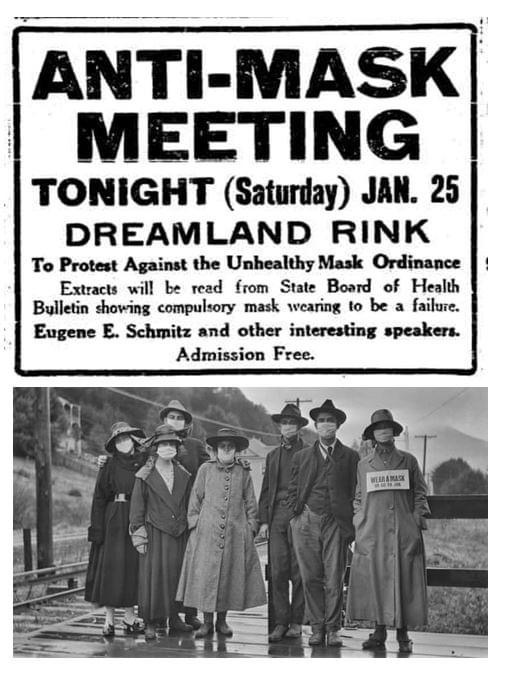
The question for today is this: do I have a right to not wear a mask?

I know, it probably seems like a dumb question. Because really: who cares if I have a right to not wear a mask? It’s the reasonable and decent thing to do; why would anyone want to not wear a mask during a pandemic? Heck, there are people who love the masks, who have decided to continue wearing them even after the pandemic is over, and bless those people.

But there are millions of people, several of them on my Facebook feed, who hate the masks, hate the restrictions, and REALLY hate the vaccine (I hate to say this, but I’m going to need to write, again, about why vaccines are good and anti-vaxxers are bad. I apologize in advance. But that’s not this post, so let’s let that one sit down in the swamp for a little longer. Down in the toxic murk, where anti-vaxxers come from and where they belong.), and if you talk to them about all of this, at some point they will say “The government shouldn’t get to tell me what to do, where to go, whether or not I should wear a mask or put chemicals in my body. What about my rights?!?!”

That’s what I want to address first. What about my rights? Do I, in fact, have the right to not wear a mask? Do I have the right to keep my business open, which means the government does not have the right to shut me down for purposes of quarantine? Do I have the right to refuse a vaccine?

First, let me say that rights are slippery buggers. I don’t fully understand them, and I won’t pretend to. There is a long and complicated – and fascinating, and important – debate about what a right is and why we have them and which ones we have. So while I have an opinion about this issue of the right to not wear a mask, I freely admit that there may be and probably are factors that I have not considered; I may be wrong. If I am wrong, I invite correction. But here we go with my opinion.

The simple answer is no. I do not have the right to not wear a mask. Not a natural right, nor a moral right. Not an inalienable right, and not a legal right. The Constitution, the Universal Declaration of Human Rights, the Magna Carta, the Bible – none of them say anything about your right to a bare bottom half of your face. A law or regulation requiring you to wear a mask is not a violation of your rights.

Because what would be the basis for it? Again, rights are complicated things and nobody has an incontestable definition of what they are and where they come from, but essentially, the three main sources of rights are: our identity as individual rational human beings; the laws of society and the social contract; and God. God, so far as I know, has not decreed that humans don’t need to wear masks (Indeed, the Abrahamic God seems to be more in favor of covered faces than not). The laws of society are exactly the ones that people are arguing about, because they mostly mandate masks, and the social contract is the main focus of the rest of this writing – and it also probably mandates masks. Our identity as individual rational human beings is the source, according to John Locke among others, of our right to life, liberty, and property; most of the Constitutionally-enumerated rights derive from this. We have the right to speech because we have individual thoughts and opinions, and the free expression of those is a recognition of the value of our individual thoughts and opinions. We have the right to bear arms essentially as a means of self-defense and protection of our continued existence – because I can only exist as an individual rational human being if I’m alive, and my ability to defend myself is a protection of and a recognition of that essential right to exist. My ability to choose my own destiny implies the right to do so, and that’s why I can’t be wrongfully imprisoned. And so on.

But there’s no right to not put cloth on my face. It is not a necessary condition of my individuality. It is not a reflection of a defining characteristic of my reasoning mind. It is not even an inherent preference: in cold weather, most people prefer to cover up their faces as much as they can get away with. When I was a kid in Massachusetts, my favorite piece of winter clothing was a ski mask. And not because I liked robbing banks: because it kept me warm.

There are exceptions, of course, which we all know about (mostly because smug twerps have used them as the basis for false claims to avoid following the guidelines and restrictions) – someone with a phobia or a health condition that might prevent them from safely wearing a mask has a right to refuse to wear a mask, because there is a right to life and to the prevention of bodily harm; nobody has the right to hurt me, nor to force me to hurt myself, in a preventable way. But masks are generally harmless, so we’re going to stipulate those (rare!) occasions where people can’t wear masks with the general statement that people who can’t wear masks are obligated to try to find an alternative that does work for them, that achieves the same purpose as a mask but does not cause harm. And regardless of whether or not someone can wear a mask, the essential obligation of mask-wearing remains.

So let’s get to that. Because while I don’t have a specific right to refuse to wear a mask, that doesn’t mean I should be forced to wear a mask for no reason: the presumption for any question of rights and obligations should be that the individual has every right unless there is a reason to restrict it; that is, all things being equal, I have the right to wear a mask, to not wear a mask, to wear 25 masks stacked on top of one another, to wear a Michael Myers mask while I drive around – I should be free to do whatever the heck I want provided it does not harm anyone else or infringe on any other rights. (The Michael Myers thing is probably an infringement on people’s general well-being. But I think it gets the Humor Exception. Different topic.) What I said above generally holds true: my ability to choose my destiny implies a right to actually do that, to make my own choices and live as I wish to. Every action or inaction should be presumed to fall under my general right to liberty and personal sovereignty – unless it is shown to have an impact on others. If it has an impact on others, then it becomes a question.

The question here is does my not wearing a mask affect other people? And the answer is yes. My breathing, my talking, my sneezing and coughing, without a mask on, has direct and tangible impacts on other people: I can spread a virus to them. It’s provable, it’s known – it’s common sense, really; we’ve all been spat on by close talkers, all been sneezed or coughed on by people who didn’t cover their mouths, all been asphyxiated by the bad breath or our fellow human beings. We all know that a bare mouth and nose in a public space has an impact on other people. As soon as we learned the germ theory of disease, and the properties of viruses, this impact became more clear. Honestly, it’s not clear to me that any of us should ever go without masks: even without Covid-19 as the main reason, we still give each other colds and flus and a dozen other infections simply through bare breathing; maybe face coverings should be universal.

The question then becomes one of burden. Is it reasonable to ask me to wear a mask to protect other people from my spit-propelled infectoids? Is it more reasonable to ask other people to avoid those infectoids? Is the means of prevention a greater burden than the risk of said infectoids getting on with their infecting of other people? If they do get infectionalized (Sorry – like I said, it’s been too long since I wrote, and it’s like a peat bog inside this brain of mine.), does the potential harm they might suffer outweigh the burden on me of prevention? Because again, while there is no enumerated, defined right to not wear a mask, the presumption should be that someone who doesn’t want to wear a mask doesn’t have to wear a mask; individual liberty should be first and foremost in our minds, all the time.

I’m actually going to leave those questions alone for now. Because they are determined by specific circumstances. Basically, the answer is that wearing a cloth mask when I am out in public, in enclosed spaces, within six feet or so of other people, is a lesser burden than the risk of infecting someone with Covid-19. So I should wear a mask during this pandemic. I don’t know if it’s a lesser burden than the risk of infecting someone with the flu; it may be. It is interesting to realize that a generation or so from now, mask-wearing may not even feel like a burden; it may just be the norm, and this whole debate will just be silly. But my topic here is a right: do I have a right to not wear a mask? I do not.

The same argument applies to social distancing, to handwashing, to avoiding handshakes and hugs and so on. It applies to weddings and funerals, to in-person classes and live sporting events. It applies to keeping your business open and serving customers during a pandemic. All of it comes down to the same thing: you are presumed to have the right to do whatever the heck you want with your time and your property; you have control over your own destiny – unless and until it impacts others. All of those activities and preferences, for in-person church, for birthday parties, for holiday gatherings with family, for traveling in planes, trains, and automobiles: all of them create a risk of spreading Covid-19 to others. None of them are necessary for an individual’s continued existence. None of them are rights. I do not have a right to have a wedding or a birthday party or a funeral in the manner and at the time and place of my choosing. All things being equal, I should be presumed to have the liberty to choose my wedding and my funeral arrangements; but not all things are equal during a pandemic. I can still be an individual rational human being without seeing other people in large groups in enclosed spaces without masks and closer than six feet.

There is some question of work: the right to work and to derive an income from work is a right we have, as it is both an expression of our rational selves and a necessity for the continuation of life; there has to be some negotiating around that conflict. If, for instance, society can provide me with an income sufficient to keep me alive and essentially free, then that would compensate for the loss of my ability to work as a waiter or a bartender, for instance. Or if my work can move online, as my job teaching high school English did, then that means I can continue the necessary parts of my human existence, without imposing a risk on other humans that might prevent them from continuing their existence. I do not have a right to make my income however I want. I do not have a right to do my job only in the way I want to do it. I do not, unfortunately, have the right to keep open the business I worked my entire life to create. It breaks my heart to say it, but it’s true: my entrepreneurship, my blood sweat and tears, my lifelong dream – I don’t have a right to any of those. I have a right to exist, and to work to continue my existence. I don’t have a right to thrive: and if my thriving puts other people at risk, as it might during a pandemic, then I don’t get to thrive while putting an undue burden of risk on other people.

Put it this way: if I had a right to keep open my beloved mom-and-pop store, what would that mean if my business failed? If another mom-and-pop store opened right next door to mine, which had lower prices and a better product? Would I have the right to take some of their money? Would I have a right to force customers to come to my store? Would I have a right to demand taxpayer money from the government? Or what if my store caught on fire? What if there was a hurricane, or an earthquake? If I had insurance, then I would get the coverage I paid for – but you don’t need insurance to get your rights, you just get those. And there is, sadly, no right to have my dreams come true, or to keep them from being taken away by a pandemic.

All I have is a right not to have my life taken away because somebody doesn’t feel like wearing a mask.

The last thing I’ll say about this is that anyone who claims to have a right to not wear a mask, or to get a vaccine: you do have that right. You can choose to say no to masks and vaccines. It just means you can’t be around people. At all. If you are willing to quarantine yourself in such a way that you have no risk of spreading the virus to anyone, then you have the freedom to do whatever you wish in terms of refusing masks and vaccines: because your choices will not have any impact on other people, and so your individual freedom prevails. But if you want to live in society, then you have to help society live. That free choice, to be a part of society or to leave society, is the final protector of your individual rights. Again, it is a complicated choice, because not everyone can survive separate from society, and a choice that leads inevitably to my death is no choice at all; society has some responsibility to provide for my continued existence if I can’t have that existence outside of society; that’s why society has a responsibility to provide a minimum income, basic needs, to all members of the society who cannot provide it for themselves. And our particular society does not do a very good job of that. But that’s a topic for another day.

For today, wear your mask. And if you can, get the vaccine.

Do what’s right.

Free to be Safe, Safe to be Free

A friend of mine posted this:

IMG_3831
And so, because this is what I do, I asked: why? Why is freedom more important than safety?

He couldn’t answer.

He replied that freedom was the very fabric that the U.S. was drawn on, which is a lovely statement of sentiment — but not an answer. That tells me why freedom might be so important to Americans, if we accept that freedom is indeed what the U.S. was drawn on; but it doesn’t say either why that is the foundational principle of this country, nor why that foundational principle (or this country) are especially important — nor does it answer my first question, about why freedom is more important than safety. (Heh — I just wrote “freedom is more important than slavery.” Not only pretty close to a tautology, but also a pretty good indicator that my subconscious is damned libertarian, if it equates safety with slavery. Actually, I was just listening to the 1619 Project podcast about the foundations of this country, and I have an argument against freedom being the fabric this nation was drawn on. But that’s another subject for another time.)

Understand that this is a good guy, a really good guy. A generous plenty of his posts are focused on telling his friends that he loves them, especially his male friends, explicitly using the word “love” and supporting them in every way he can; sharing his own struggles with depression and alienation; telling anyone and everyone that he is always willing to listen. Basically he is an antidote to toxic masculinity. He is masculine antitoxin. (Also hilarious. Also a frequent and fully self-aware shitposter. Also a boogaloo boi: his second response to my questioning was a citation of the Second Amendment as the only necessary source of safety. People are complex, aren’t they?) He wasn’t attacking me, calling me a coward or a libtard; he wasn’t even treating me as a troll commenter, which would be an understandable response to my asking philosophical questions on a meme. He was really trying to answer my question, and in so doing, revealing at least some of his ideals, if not his explicated arguments for his ideals.

And I don’t think they’re bad ideals. I think this country should be drawn on the fabric of freedom; and though I don’t agree with The Libertarian Cartoon Head (And I find it kind of hilarious and very telling that it is so very Nordic and square-jawed, with furrowed brow and shaped beard and curled ‘stache, blond hair and blue eyes), I also don’t agree with the woman with the sign. (I will give her slightly more credit in her argument because she put “freedom” in sarcastoquotes, which implies that the debate is set on false premises as these debates often are and maybe have to be by definition; but also, I have no idea where this picture is from or if it is even real, so I can’t say if she knows how to use sarcastoquotes or meant those for emphasis, or if she ever really held that sign in the image, or if it was Photoshopped. So.)

Let me tell you what I think: I think both safety and liberty are, quite simply, vital. They are necessary. Both. I’ll actually throw in the pursuit of happiness, too: all vital to our continued existence as thinking, feeling individuals. That’s why they are unalienable rights.

There’s a deeper and harder conversation about what rights are and where they come from, and what it means to have them, which I am not qualified to have; I have a lot more reading to do in the philosophy world before I can take that on. But for  this conversation, the layman’s understanding of rights should be just fine.

A right is what you have simply by virtue of being an individual, a specific human being: a person. Your rights are essentially a list of what is required for you to experience and explore that existence as a person, as an entity with reason and free will. You must have life, because if you’re dead, you can’t experience your existence as a person. You must have liberty, because liberty is essentially the opportunity to have your own thoughts and feelings, to express your own thoughts and feelings, and to act on your own decisions, which are based on your own thoughts and feelings. Without liberty of thought, of speech, and of action, you are not able to explore and experience your existence as a unique individual. It’s pointless to say you have reason if you are not allowed to think your own thoughts, and then express what you think (Because freedom that is only locked inside your head is not freedom: a human being is capable of expressing and communicating their thoughts, and that expression and communication of thoughts is a fundamental part of being a human; you cannot be a human if you can only think but never speak your truth.); it is untrue to say you have free will if you cannot act according to that will.

You must have life to be you, and so you have the right to life; you must have liberty to truly be you, and so you have the right to liberty. Either without the other is meaningless and empty. The pursuit of happiness, the third unalienable right listed in the Declaration of Independence, is the realization of these two rights extended forward in time: if I have life and liberty right now, I can be myself; and if I can be assured that I will still have life and liberty tomorrow, I can begin planning and acting with that understanding in mind, seeking most likely to achieve a greater happiness for myself according to my wishes. Also necessary, I would argue — although the argument for this one is a bit more fraught, not only because Thomas Jefferson, after cribbing these rights from John Locke, changed Locke’s third unalienable right into the pursuit of happiness; Locke said the third was the right to property, meaning the right to own the fruits of your own labor. That’s a different conversation. It’s also fraught because Jefferson was one of history’s greatest hypocrites, writing that all men are created equal while being attended by James Hemings, his wife’s half-brother — Jefferson’s own brother-in-law, who shared a father with Jefferson’s wife — whom Thomas Jefferson owned. Jefferson also, of course, owned James Hemings’s sister (And Martha Jefferson’s half-sister) Sally. And he owned his and Sally’s six children until his death. All men are created equal, eh?

Regardless of who wrote the words, though, the ideas are sound as written, if not as Jefferson embodied them and helped to codify them into the founding documents of this country. All people are created equal: each and every one of us is a unique individual, essentially capable of thinking and feeling, and in possession of free will. Therefore each and every one of us has the unalienable right to life and liberty, both.

Both.

That’s the trouble with this argument. It’s not that life (which I would argue is represented by safety; I’ll get to that in a second) is more important than liberty, nor that liberty is more important than life. It’s that you cannot separate the two.

Is safety the same as life, here? I don’t want to argue a red herring, to make a false equivalence between the safety in this argument and the right to life in the Declaration of Independence. But what do we mean by safety? Safety, I think, represents the assurance of continued life; like the pursuit of happiness, it is the right extended into the future. If I am safe, I not only know that I am alive right now, but I expect that I will continue to be alive in future, and so I am confident and comfortable in that expectation. In its essence, safety is about the preservation of life over time — and also the preservation of liberty, without which life is meaningless and so too is safety. I know that’s a circular argument, but really: if you were sure that tomorrow you’d be alive, but you’d be in jail, would you say that you felt safe?

And on the other side, if you were free to do as you wish, but you knew you would die tomorrow, would you really feel free?

I know the knee-jerk answer to that second question, from people who agree with the meme (probably my friend as well), would be a resounding HELL YEAH BROTHER! Because part of this argument is based on a quintessentially American/(toxically) masculine ideology that not only honors, but pursues and relishes, death, especially death by martyrdom on the altar of freedom. But while self-sacrifice is honorable and noble, and I am grateful for those who have sacrificed their lives for me  — those sacrifices did not ensure the continued existence of liberty. They (depending on the specific situation) may have helped to eliminate a present threat to liberty with their sacrifice — probably also a threat to life; while the Fascist regimes in WWII were certainly a threat to liberty, they were clearly a much more dire threat to the essential existence of millions if not billions of human beings — but that doesn’t ensure, cannot ensure, that liberty will continue into the future.

Only safety can do that.

Now: it is certainly true that some attempts to limit liberty are presented under the guise of promoting safety; those must be guarded against. But that is not, despite the fanaticism of some liberty-lovers, true of every single attempt to ensure safety, nor even every attempt to limit liberty — some are presented as morally correct, for instance, regardless of whether they create more safety; like certain White House occupants sending certain Federal troops to certain cities to, errr, safeguard statues. That is certainly an attempt to limit liberty, but there’s not really a way to claim that keeping Robert E. Lee atop his horse atop a marble pedestal will make us safer. (There is some attempt, in the name of law and order, to claim that those who would pull down statues are threatening to create — or actually creating — chaos and danger for Americans. But let’s not buy into the bullshit, yeah? The only safety really being promoted there is the safety of the monuments, and the comfortable white supremacy they generally represent.) It’s like the argument that every single gun law is an infringement on the right to bear arms: that’s not really true. The essence of the Second Amendment is to preserve the right of self-defense — which preserves both life and liberty — and so long as one is able to do that, the right is uninfringed. Slippery slopes are not an argument, they’re a rhetorical scare tactic.

It is also true that some attempts to create safety also bring an unacceptable limitation on liberty; I think that’s the argument against lockdowns as a measure against the pandemic. As I think this year has made clear, though, temporary limitations on liberty become more acceptable when they are more effective in preserving life; the way to avoid a restriction of liberty is to find a way to have your cake and eat it too, to ensure safety while also preserving liberty — which in this case would be: masks. Masks are a way to effectively preserve safety by stopping the spread of Covid-19 while also not infringing on liberty, because so long as everyone wears a mask, we can continue with almost all of our preferred activities.

Brief aside to squash this nonsense: Liberty does not mean an unlimited right to do whatever the hell you want, to say no just because someone else says yes, to insist that somehow you don’t need to wear a piece of cloth on your face just because you don’t wanna BECUZ THIS’S AMURRRRRRRICA. It means the ability to control your own actions based on your rational decisions, so long as those actions don’t harm anyone else’s ability to do the same. Anyone making a rational decision not to wear a mask — i.e., “I have claustrophobia and the masks cause panic attacks, so instead I MAINTAIN A STRICT SOCIAL DISTANCE AND MAYBE WEAR A CLEAR FACE SHIELD” or “I don’t enjoy wearing a mask SO I DON’T GO OUT IN PUBLIC” —  is fine; those are rational decisions, and I doubt anyone would have a real problem with those. That’s why exceptions for health reasons are written into every mask ordinance, and why no mask ordinance mandates people leave their homes.  Now, it is certainly true that, all else being equal, the individual should be the one to decide for themselves what is a “rational” basis for their own decisions; but in a pandemic, the actions of individuals have outsized impacts on the life and liberty of others, and therefore some limitation of an individual’s actions is reasonable. The outsized impact on others means that one cannot make a determination of a rational action depending only on one’s own individual will. It means a reduction of one’s ability to choose for one’s self.

To preserve safety. And liberty. Because that’s what it means to live in a society. People who want to be so fanatical about their liberty that they accept literally no restrictions on their liberty imposed by others can still make that choice: they just don’t get to be a part of our society. Society requires compromise. Them’s the breaks. Your right to swing your fist ends where my nose begins, so if you want to swing your fists without any boundaries, get the fuck away from my nose. And then go nuts. Feel free.

Benjamin Franklin gave us one of the more popular arguments about this issue. He said,

“Those who would give up essential Liberty, to purchase a little temporary Safety, deserve neither Liberty nor Safety.”

Now, this quote, like everything else from the Founding Fathers — and, well, everyone famous ever, in this age of disinformation inundation (™) — is pretty regularly misquoted. A Google search for this one gets me this meme, which changes the quote pretty appreciably:

Notable Quote - Benjamin Franklin - Granite Grok

(It also gets me this one, which is hilarious because there’s absolutely no way Benjamin Franklin said this — and not just because “guy” was not commonly used to mean “that fellow over there” until around 1850, 60 years after Franklin’s death BUT MOSTLY BECAUSE OF THAT:)

TOP 25 BENJAMIN FRANKLIN QUOTES ON LIBERTY | A-Z Quotes

(I also really want that not to be a portrait of Franklin, but it probably is. Oh, well.)

But case in point, the comments on the meme that my friend shared had this image in them:

Image may contain: 3 people, beard, text that says '12:23 Kacey Elise Wheeler Kacey Elise Wheeler Yesterday Extreme Liberty 10:55 This shirt our Scofflaw collection has been really popular lately! Get while it's hot! [Link below] ...See More Those would upliberty purchase alety are bitches. Beajamin Franklin (probablyi Like Comment Share Whoolor ខ'

Which really represents what happens when people stop thinking about this stuff. Nothing wrong with wearing a t-shirt, of course; but this is not an argument, any more. Now it’s silly. Now it’s a meme.

But the best and most important thing about Franklin’s actual statement is this: it doesn’t mean what we think it means.

WITTES: The exact quotation, which is from a letter that Franklin is believed to have written on behalf of the Pennsylvania General Assembly, reads, those who would give up essential liberty to purchase a little temporary safety deserve neither liberty nor safety. [emphasis added]

SIEGEL: And what was the context of this remark?

WITTES: He was writing about a tax dispute between the Pennsylvania General Assembly and the family of the Penns, the proprietary family of the Pennsylvania colony who ruled it from afar. And the legislature was trying to tax the Penn family lands to pay for frontier defense during the French and Indian War. And the Penn family kept instructing the governor to veto. Franklin felt that this was a great affront to the ability of the legislature to govern. And so he actually meant purchase a little temporary safety very literally. The Penn family was trying to give a lump sum of money in exchange for the General Assembly’s acknowledging that it did not have the authority to tax it.

SIEGEL: So far from being a pro-privacy quotation, if anything, it’s a pro-taxation and pro-defense spending quotation.

WITTES: It is a quotation that defends the authority of a legislature to govern in the interests of collective security. It means, in context, not quite the opposite of what it’s almost always quoted as saying but much closer to the opposite than to the thing that people think it means.

SIEGEL: Well, as you’ve said, it’s used often in the context of surveillance and technology. And it came up in my conversation with Mr. Anderson ’cause he’s part of what’s called the Ben Franklin Privacy Caucus in the Virginia legislature. What do you make of the use of this quotation as a motto for something that really wasn’t the sentiment Franklin had in mind?

WITTES: You know, there are all of these quotations. Think of kill all the lawyers – right? – from Shakespeare. Nobody really remembers what the characters in question were saying at that time. And maybe it doesn’t matter so much what Franklin was actually trying to say because the quotation means so much to us in terms of the tension between government power and individual liberties. But I do think it is worth remembering what he was actually trying to say because the actual context is much more sensitive to the problems of real governance than the flip quotation’s use is, often. And Franklin was dealing with a genuine security emergency. There were raids on these frontier towns. And he regarded the ability of a community to defend itself as the essential liberty that it would be contemptible to trade. So I don’t really have a problem with people misusing the quotation, but I also think it’s worth remembering what it was really about.

Source

In the end, the things we need to remember are these: safety is important. Preserving life is important. The reasonable assurance of future safety is also important  — I don’t want to get into Maslow’s hierarchy of needs, but liberty is waaaay up at the top of the pyramid, around “self-actualization,” and safety is at the base, the second level just above food — and, dependent on circumstances, justifies a limitation on individual liberty. The preservation of liberty is equally important — but because liberty is more abstract than life, it requires more careful thought to reasonably determine what is, and what is not, a threat to liberty.

The whole reason we have the right to liberty is that we have the ability to reason. If we want to protect that right, then we must use that same reason to know when it is actually under threat. We have to think.

And stop taking memes too seriously. You know: like I just did.

What are we fighting for?

HONK FER FREEDUM

Coronavirus: the US resistance to a continued lockdown

I want to understand the argument.

I don’t. And it’s vital that we understand the argument, even if we don’t agree with it; agreement is not necessary, compromise can be reached, solutions can be found even if we don’t agree.

But if we don’t understand? Then what do we do?

“We believe that the state governor has gone beyond his constitutional authority in shutting down businesses and ordering people to stay at home,” organiser Tyler Miller tells me from the grounds of the state capitol.

In mid-March Washington Governor Jay Inslee announced an emergency proclamation mirroring many issued around the world; closing restaurants and bars and banning large gatherings.

But protestors say that was unconstitutional.

“The state constitution says that the right of the people to peaceably assemble shall never be abridged. We believe that the (emergency coronavirus) proclamations that the governor here ordered violate that,” Mr Miller says.

Mr Miller said he was not protesting against the recommendations from the public health bodies and respected the need to ‘flatten the curve’.

“I even self-quarantined for 14 days back at the very beginning of this myself, when I had an illness that mirrored some of the symptoms,” he says.

“The fact I am protesting does not mean I think it is a good idea to have gatherings, I just believe that the government has no authority to prohibit them.”

Throughout the crisis, Mr Miller has also been able to continue his work as an engineering technician with the navy.

He says the thing that has angered him is what he feels it is an un-American overreach of power by the Democratic governor of Washington.

I don’t understand that argument.

There is a simpler argument, which is just that people are getting desperate: the country has been shut down in places for more than a month now, and people are facing another rent payment, another car payment, on May 1st, this coming Friday. I understand that desperation, that anxiety; I understand and (mainly) support the desire to let government officials know that you need and demand action. I think it’s a mistake to violate social distancing guidelines, and there are people in the article above and others I have seen who say things like “I have a strong immune system, I take care of myself,” who I think are somewhere between ignorant and idiotic: ignorant if they don’t know that Covid-19 has killed young and healthy people as well as older, sicker people; idiotic if they believe unfounded statements (Mostly from conservative “news” sources) that the novel coronavirus is no worse than the flu.

(This may be too harsh: this is an interesting article about how we are wired to be intuitive, and so underestimate the evidence that comes from outside our experience. I know I was telling my students in March that any shutdown of schools would only last a couple of weeks and would certainly not affect their graduation. On the other hand, I am not saying the same thing now, because I have learned better; I’m not sure why these people haven’t, but my two options above are certainly possibilities.

(Also, this ad popped up in that same article about people being too optimistic. Lol.

Screenshot (6)

(If you believe not only that a miracle stretch relieves years of back pain, but also that chiropractors are stunned by it, AND that chiropractors are the authority whose stunning represents a medical breakthrough, then you are unquestionably in this overly-optimistic bunch.)

But while I understand and sympathize with people who are desperate to get back to work and pay their bills, and I believe (and am infuriated) that the federal government has once again bailed out large corporations with deep political donation pockets and left average citizens to twist in the wind, I don’t understand the other argument. The freedom argument.

I don’t think it’s a reasonable argument.

Listen. I worry about government overreach. I won’t say I’m learned in history, but I know about the Japanese internment camps during World War II, and I know some things about the rise of the various authoritarian dictatorships that plagued the 20th century. I have hated the USA PATRIOT Act since it was imposed on us, during the paranoid jingoist nationalist fervor that swept the country after 9/11 and swept us into a neverending war. I know that it gets renewed every time it comes up because the government doesn’t like to give away power that it has seized. Because of that experience, I have been pointing out to my friends who argue against the lockdowns that the thing we need to worry about is the powers the government arrogates to itself after the crisis: the new regulations and limitations, and invasions of citizens’ rights, that follow a partial return to normalcy, and that are intended to prevent this kind of thing from ever happening again. We have to watch out for the permanent changes, or for the attempts, often subtle and underhanded, to make temporary changes permanent.

I don’t doubt those will happen. I think the first attempt will be by President Trump, when he decides to make his temporary limit on immigration permanent.

But see, I think that because Mr. Trump has a long history of a clearly established position to end immigration. I think that because I have read reports that Trump’s anti-immigration advisors have talked about this pause into something more long lasting. Because this article quotes DHS acting secretary, Chad Wolf, as saying to Fox News that

his agency will soon recommend a move to limit temporary work visas as well.

“That is something that the department has been looking at for the past several months, so we are well underway and look forward to presenting to the President those recommendations for additional steps,” said Wolf.

So there’s your government overreach, as part of an established pattern of behavior, aiming at known long-term targets. After the fact. Once the danger has passed. The current actions are not government overreach: they are government responding as government should to a crisis. The stay-at-home orders were issued during a crisis, and in line with scientific facts and the advice of experts. This is exactly when, and exactly why, people’s rights can and should be limited. We have the right to protest, but if you decided to walk into a burning building in order to protest the fire, people would stop you: and they would be right to. We have the right to freedom of speech, and of assembly, but you cannot gather with an army and plan the destruction of the United States: the right is to peaceably assemble, and free speech does not include sedition or criminal conspiracy. Individual rights are not limitless, not under any circumstances; even the most libertarian of us would state clearly that one person’s rights cannot be permitted to infringe on another’s, that your right to swing your fist stops where my nose begins. And of course individual rights are limited in an emergency, because the free exercise of one’s rights puts others into danger.

This is what government is for: to protect people from danger. Now, if you want to argue that the coronavirus is not that dangerous, then you’re in the wrong place. Start with this.

Then read this.

Then read this.

Then read this. 

(Especially that last one; it’s about the infectiousness of the coronavirus. And lest you think that the infectiousness of Covid-19 is lower than SARS or MERS, both of which caused fewer problems and killed fewer people, go back and read those other articles again, and then also pay attention to this quote from that last article:

“An R0 value of 1 means the average person who gets that disease will transmit it to one other person; in that case, the disease is spreading at a stable rate. An R0 of more than 1 means the disease spreads exponentially.”

And then read this essay about exponential growth.

Okay? Okay.

As I said, the government has the right and the responsibility to limit individual freedoms in response to a crisis, in order to protect the people from that crisis. (I’m aware that some people don’t agree with this: some because they don’t think the coronavirus is a crisis, and if you still think that, go back and read the above articles, but this time with your eyes open; and some because they think that nothing should ever limit individual rights under any circumstances: my above examples of protesting inside a burning building, or convening an army to overthrow the US government, are just fine, for them. I will be writing another blog about that. I’ll let you know when it’s done. The important thing is that, while I don’t agree with that argument, I understand it.) I think, though, that the basic argument behind the protests, the reason that President Trump tweeted support for people trying to “liberate” the states that have both lockdown orders and Democratic governors, is that the government is not trying to protect people from the crisis: the government is trying to control people. To take away their freedom. that’s the argument I don’t understand.

(I am also not going to write here about the elephant in the room, namely the upcoming election and the similarities — remarked on in the BBC article I linked first — between the anti-lockdown protests and Trump rallies. People who are going to the rallies just to support President Trump are certainly not reading this, and are not worth the time to put forward an argument. President Trump is probably trying to use the rallies as a way to hype his base up for the election, but he also said that he thinks Georgia Governor Brian Kemp is opening his state too soon, so I’m not going to jump on Trump today. We’ll see what happens tomorrow. Also: I understand this argument.)

But here’s the thing with tyranny: it makes sense. There is reason behind it.

That’s what’s missing from the freedom argument of the protests.

Break it down. Think it through. Okay, the government — pardon me, the govment (Read this article that I wish I wrote) — limits people’s rights to assemble and move freely, to run a business and participate in the free market economy. Because they want to establish tyrannical control over the free people of these United States.

Why?

I understand that the government has taken on, for most of the people who support these protests, the aura of Darth Sidious and the Sith: evil just for the sake of evil; power hungry just for the sake of power. But, see, that’s a character from a movie franchise, and it’s not a realistic one. I admit, if the Democratic governors were trying to raise a clone army from a mysterious source; or they were trying to corrupt a Jedi knight with incredible power but terrible self-control, then I would see the danger.

Why would the Democrats, or the government in general, want to lock people inside? I saw someone argue that the Democrats exaggerated the danger of Covid-19 in order to justify the lockdown expressly so they could destroy Trump’s economy, because that’s the only way they could beat him in the next election.

Come on.

(An argument I have seen but will not be rebutting is that Andrew Cuomo of New York exaggerated the need for ventilators so he could get…a huge excess of ventilators. Sure. As you do. He’s going to put them in one huge room and then go swimming in them like Scrooge McDuck. Swimming through the ventilators.)

First of all, there’s no way that an economy ruined by Democrats would be pinned on Trump. Trump is already positioning himself to argue that it was the Democrats who did the harm in this crisis. (Elephant in the room…) If this is provably true, if Covid-19 is really not that bad and the Democrats have exaggerated the danger, we’ll know it before November, and this Dem gambit will fail. Secondly, and more important, if they ruin the economy, they not only have no hope of winning the next election, but they lose access to the money. If  the Democrats, or the government in general, are corrupt,  they want money. Money does not come from enforcing a stay-at-home order. We are all losing money, including the government. I know they are flinging money around like it’s meaningless paper (…), but there is a limit to that because at some point the economy will actually collapse, and the more they spend now the closer that outcome gets: and why would anyone in power want that? To destroy the economy that underpins the entire system they are ostensibly seeking to control? Nonsense. There are people who want the government and the entire society to collapse, but they are not the ones in power: they are the ones without power. That’s why they want the system to collapse, because they don’t currently gain from it. The ones in the system, the Democrats in Washington and the state capitals, very much want this current system to survive, even if they are corrupt, because this system is how those corrupt people get what they want. The corrupt actions the Democrats take (And yes, many Democrats are corrupt; not all of them or only them, but yes they are.) are clearly intended to increase their wealth and their ability to stay in their current positions so they can continue increasing their wealth. That’s why we still don’t have term limits or meaningful campaign finance reform. Nobody wants to make the money go away, least of all corrupt Washington politicians.

So what’s the reasoning? Because the Democrats are secretly anti-American communists? Okay, let me try to address the idea of Dems seeking power for power’s sake; I still think that sounds like the Sith, but sure, let’s imagine that they are simply evil and that’s their reasoning. Communists, or anyone trying to overthrow the government, would be trying to seize the reins of power. They would be going after the sources of power, trying to control those so they could then get the next source of power, and so on; it’s like Risk. You conquer territory that lets you conquer more territory. You don’t just act arbitrarily, you seek the means of control. In this country, the means of control are (in no particular order): violence and force; the ballot; information; and money.

Which of those things are the Sith-Democrats gaining through the lockdown? Not money; I already talked about that. (Sure, the government is giving money to corporations, who paid the politicians. But those corporations make more money in an open economy. The same goes for people arguing that the government is trying to make people dependent on government handouts rather than their own paychecks: the money will run out if the economy doesn’t open. then the system collapses and the people in power lose.) Greater control over information? If there are secret things going on that we can’t see because we’re all staying home, then I take all of this back and apologize; let me know if the clone army executes order 66, or the Final Order fleet rises from Exegol. Otherwise the press has not seemed limited by the lockdown, and I don’t really see how it would be; limiting reporters’ physical movements seems a loser’s gamble in a world of the Internet and drones with cameras. The ballot? I mean, we’ll see when the election comes, but at the moment, the lockdown seems to play more into Republican hands because it limits voters’ access to the ballot box, which tends to favor conservative politicians.

Does the lockdown give the government more ability to commit violence, more ability to use force against the people? I honestly can’t see how. I mean, I guess they could be trying to force us to obey so we get more used to obeying, so that the next time they give us an irrational and arbitrary order, we’ll obey just because that’s what we do now. But if that were the case, they wouldn’t be using Covid-19 as their cover. Because that gives us a reason, and that means they’ll need to have another reason, as good as this one, to support their next attempt to tell us to stay home: that progression only works with weaker and weaker justifications. Using a global pandemic is not a weak justification; quite the opposite. (And notice that even this one isn’t working…)  Read 1984: O’Brien wants Winston to not only tell him he sees five fingers, he wants him to actually see five fingers; and that’s the only reason Winston gets for the months of torture he undergoes. He is very intentionally not given a reason to obey Big Brother: he just has to do it, or else he suffers. In this case, if we don’t obey, it’s not that we suffer the wrath of the government — it’s that we get sick. (And this is true.) If you want to create a totalitarian state, you need to create loyalty to the state without reason: loyalty to the state based on an emergency doesn’t cut it. Because the loyalty ends when the emergency does.

Now: if this lockdown turns out to continue past when the virus disappears. Or if the virus doesn’t disappear, either because the press is controlled and doesn’t report the true numbers of the disease (And I know people think that is happening, but I’m talking about the press saying there are thousands of cases when there are none, not the medical authorities miscounting the thousands of cases that are in existence; if anything we are undercounting the actual cases, and we all know it.), or because the government takes actions that continue the spread of the coronavirus (I mean, maybe tweeting support for protests that seem to be increasing the chances of the disease spreading would qualify as that?). Then I will agree that this is an attempt to establish tyranny. But you see what the actually despotic actions are there? Enforcing control over freedom of movement when there is no crisis. Controlling the press. Actually using biological warfare, directly or indirectly, against the people. Those are tyrannical actions.

Asking people to stay home is not tyranny. It’s concern. Even if you think it is unfounded concern, I don’t see any reasonable way to argue that it is anything other than concern.

But you know what really concerns me?

People are acting based on this argument. This argument that doesn’t seem to have any real rational basis. It honestly seems to be just “You can’t tell us what to do. Not even if it’s in my best interest.” Rebellion for rebellion’s sake. Cowboy shit. Cowboy shit that has no particular goal, no particular target; it’s just people wanting to act like cowboys. Rebels. March and wave flags. That doesn’t make any sense: but people are still doing it.

The fact that I can’t figure out the argument doesn’t concern me as much as the fact that people seem willing to act even though they don’t understand why they are acting. That’s irrational.

I don’t know how to argue with irrational people.

Even worse, I don’t know how to live in the same country with them.

People say this country is founded on the rule of law, or on the Constitution, or even on the will of God; none of that is true. It was founded on reason. The argument for the Constitution and the rule of law is reasonable, it is rational; it makes sense. The way the Constitution sets up our government is rational, every aspect of it. Hundreds of reasonable people argued — argued! Gave reasons and explanations! Appealing to the intellect of their opponents! — for years to write it. Some of the arguments were wrong, and some of the beliefs were wrong; the people making the Constitution were imperfect, and had some bad reasons, which should give way to better reasons over time — but that’s the system they set up, one in which better arguments, better reasons, will win out over worse ones. It’s all founded on reason.

The country can live through any danger, even the coronavirus. But it can’t live through the death of reason.

That’s what scares me. That’s why I want to understand, because if I can understand, I know that my opponents, even if they are wrong, are still listening to reason, and that means there’s hope.

I hope I can understand.

All Together Now: Split Up!

4C946FF5-5DA2-4750-A9F7-0FEC5E9E8926

World War III might be coming soon. (I mean, probably not, but who can say? Who’s to say what CheetoFace the Kleptocrat will do next?)

But the meme war has already begun.

I had a class ask about the war yesterday, and about the draft, and about everything they worry about or are confused by regarding the whole mess. I helped them as much as I could, which wasn’t enough — because I can’t stop the war. One of my students made a nice point, though: someone said that memes would be turned to propaganda for one side or the other, and another student said, “All propaganda is memes.”

That’s the truth. And the corollary is probably also true: all memes are propaganda.

I have a troubled relationship with memes. I think they’re funny a lot of the time, and I’m impressed by the creativity behind them; but I loathe when they are used as arguments. Memes are inherently reductive, and more often than not, flat out wrong. I used to make it a thing to argue with anyone who used a meme to establish a position, especially a political position, especially on a genuine controversial issue.

Like this bullshit:

Image result for gun control memes

Nothing on this meme is true. The U.S. isn’t third in murder rate; we are 77th. Washington isn’t even in the “top” 30 cities in the US with the highest murder rates, and the other three are not the cities with the highest murder rates; in 2018 the total number of homicides in the U.S. was 16,214, and if we take away the 765 murders in Chicago, the 174 in New Orleans, the 304 in Detroit, and the 160 in Washington D.C., (Admittedly, this is a hell of a lot of murders) the number drops to 14,811. My math gives us a murder rate of 4.49 per 100,000 residents; lower than the U.S. rate of 5.0 murders per 100,000 population, according to the FBI, but according to this chart, that would move us down — exactly nine spaces. To between Niger and Lithuania. I’m not even going to talk about whether those four cities do in fact have the “toughest” gun laws in the United States, though I will note that the states  with the most restrictive gun laws according to this article are Hawaii, Massachusetts, New Jersey, Connecticut, Maryland, California, Illinois, and New York. Soooo…. I guess Chicago might be in there. Right?

And is that woman really the Second Amendment? She seems too young.

Anyway, I’ve argued against a lot of memes over the years. It’s slowed down a bit: I stopped trying to argue with everyone and everything I disagree with, and the memes have increased exponentially in number, and increased (though not exponentially) in amusement.

But now we get to the current meme war.

Currently, the memes are showing up (from what I have seen, though my experience is certainly not comprehensive)  in two main forms: World War III is coming, and that’s fucked up and I’m scared, and therefore I’m going to use black humor to deflect from my fear. That looks like this:

Related image

I don’t have anything to say about those memes other than: I’m sorry. I’m sorry that my generation and the ones before mine sunk this country, and this world, into this nightmare of eternal war, and now the current generations have to pay for it. I’m sorry for all that my country has done to harm other countries. I do recognize that there have been some good outcomes of American military intervention; but those outcomes do not come anywhere close to making up for the damage we have done. Not even close.

But that’s not what I wanted to write about here. I’m a pacifist, I’m anti-war; my position on American wars is not surprising.

No: what I wanted to talk about is the other class of memes. Memes like this:

Image may contain: possible text that says 'Pay attention to who gets upset when a terrorist leader is killed. PAY CLOSE ATTENTION.'

And this:

Image may contain: 1 person, smiling

And this lil beauty:

No photo description available.

So look. People can be in favor of war with Iran. I don’t agree, but they have the right to believe that it is the right thing; there’s at least some kind of argument in support of that, so it’s not insane to think it. Iran certainly does and has done terrible things, and maybe war would stop that.

But first, we here in this country need to not act as though we have the moral high ground: we do not.

The truth is that Soleimani was not all that different from any of about five dozen current and former American politicians and bureaucrats — if anything, he was considerably more restrained about the use of force. Yes, he was involved in a lot of bloody wars — but so was every American president since 2000, and besides half the wars he fought in were started or fueled by the United States. It’s just another instance of America’s gigantic hypocrisy when it comes to war.

America is guilty of everything we accuse Iran of doing

Second, whether you are for war with Iran (or war in general) or not, your position does not in any way have any implications about your citizenship, your rights, or how you feel about this country. You can love America and hate the war; you can hate America and love the war; and everything else in between — and the one does not at all imply the other.

I’m not sure how to explain or argue for that idea other than just to state it. To state clearly that one of the foundations of this country is freedom of thought and opinion, and the freedom of speech that allows us to express those opinions in a public forum. There is not any requirement to support the government, the war effort, or even the troops; there are reasons not to support all of those institutions, and therefore someone could reasonably have that opinion, and still think the U.S. is a good country and want to be a part of it. And of course, an American can think that the U.S. is a terrible country, and hate every little thing about it — and still be an American citizen. No less of an American citizen than the most flag-kissin’, woo-hootin’, ‘Murrican-chaps-wearin’ yahoo out there. And if you don’t understand that, the problem is you, not the person who disagrees with the rising tensions in the Middle East. Not someone who sympathizes with Soleimani: because you can think a man is a bad man, and still not want him dead, or be sad that he died — and again, even if you think Iran is a fine country and Soleimani was an Iranian patriot hero, you will still be an American citizen. Because citizenship, moral or legal, is not predicated on one’s opinions. Ever. Actions can change one’s legal or moral right to citizenship; if you try to harm America, one can argue that you lose some right to call yourself an American (Though personally I would say you need to actively alter your legal status, intentionally [And thus President Obama’s killing of Anwar Al-Awlaki was murder and not an act of war] ; and to me, morality has nothing whatsoever to do with citizenship: good Americans and bad Americans are Americans alike.), but saying you want to harm America is only words, only an opinion. It would be far more harmful to America to try to strip someone’s citizenship for an opinion or a statement thereof, because that is a violation of that foundational freedom of opinion and of speech.

And refusing to support a war, a war that will most certainly harm America — and thus should be opposed by those who want to do what is right for this country — is in no way something that changes one’s right to be an American. Doesn’t even make you a bad American. Though I guess someone could have the right to flip me off for that opinion, so I shouldn’t put that last meme into my display of objectionable memes. (Though also, isn’t that desecration of the flag? Just sayin’.)

It’s bad enough that we have to deal with jingoist nationalists trying to murder people around the world. Please don’t also make me have to defend my right to inclusion in my own native country. Please understand the country you claim to love, at least as well as it’s understood by those you say don’t love it enough.

Try to understand the war as well as this guy: (The first Tweet makes the point, but go read the whole thread.)

I do love my country. I do. I hate war. And so I refuse to allow those two things to be seen as the same thing. Even by my countrymen: whose right to be wrong I will defend to my last breath. So please do the same for me.

Understand that we can disagree, but when we fight each other over our disagreements, when our different opinions make you consider me inhuman, or undeserving of inclusion in your group, then we become divided in a way that is incredibly difficult to put back together. And that division hurts us. Not the difference in our opinions: if I think stopping the war is best for America, and you think fighting the war is best for America, then we disagree, but we are not divided: we want the same thing. We stand on common ground. We can discuss it, because we can both start our arguments with, “I want what’s best for our country, just like you do, but…”

But if you think I am not deserving of the title “American” because I don’t share your opinion, then we can’t even talk: I say, “I want what’s best for America,” and you say, “No you don’t, you’re not even a real American.” Now we are arguing about me, not about our country and how to help it.

That is what benefits the enemies of this country, and what harms this country: if we cannot see each other as equals, who happen to disagree.

There’s been far too much of that lately. We should stop doing it. All of us. Right now. Especially as we consider going to war, again. Because if we have to fight each other, we can’t also fight our enemies — and please understand that, although I do not want war, and I do not want violence, I do want to fight my country’s enemies. Enemies like ignorance, and bigotry, and dehumanizing hatred. That is what I will fight. That is what I do my utmost to protect my country, and my countrymen, from.

Because I love my country, and I want what’s best for us all. All of us. That’s what matters to me.

Remember what matters most to you.

Remember: united we stand.

B7BE484E-2E55-4507-8C06-E8050CCFFFC1

The Right Idea

I had an idea.

I received an essay from a student arguing that the drinking age should be lowered to 18. I have seen this argument before, and believe me, this was not the cleverest attempt; this student failed to offer even the traditional outrage over the idea that one could join the military and fight and die for one’s country, but not even buy a beer! I mean, come on!

I’ve been looking for the just-right response to that particular “argument” for years. I’m trying to choose between, “If you cut off your left hand, you can’t cut off your right. Is that fair?” or “You’re right. And you know what else? Boko Haram lets their soldiers drink.” or “I heard you can make a lovely Cosmopolitan out of the blood of a slain enemy and just a little wasabi. I bet the Army lets them drink THAT.”

Although I did not have the opportunity to appreciate, again, the absurdity of being allowed to shoot people and not be drunk while doing it, I did get to enjoy my very favorite class of argument: the “Everyone on Earth thinks like a perverse, obnoxious adolescent” argument. In this instance, it goes something like this: People think drinking is cool because it is against the law, and teenagers want to be rebellious. Teenagers do things for no other reason than because people tell them not to do those things. Therefore, if the drinking age were lowered and kids had access to alcohol, it wouldn’t seem so tempting and dangerous, and therefore fun and cool and stick-it-to-the-man-y, and so they wouldn’t do it as much.

Ah, yes. Many times I have thought, “You know what would be cool? Building an addition without a permit. That would really impress my biker buddies.” Whenever I need street cred — and I can’t count the times I have needed to cash in on my street cred — I just fail to report an accident, or I make a fake 911 call. Because I’m a thug, and thug life means jaywalking, yo. I’ve always been a rebel: I remember back in high school, one morning I told my bathroom mirror, “I’m going to falsify legal documents. Yeah: then the head cheerleader will notice me!”

It worked, too.

But while I was reading this particular essay, and trying to think of the best way to point out how absurd is the argument that laws against certain behaviors actually make those behaviors more attractive and therefore more common (I usually ask if the student thinks that murder would become less common if the laws against it were eliminated. Just picture all those murderers thinking, “Yeah, sure, I could go out and kill someone tonight. But where’s the spice, without running from the cops? Unless I’m risking jail time, there just doesn’t seem any reason to kill people. Sigh. I miss the good ol’ days.”), I got to the conclusion, which argued that things would be a whole lot better for everyone if drinking were considered an individual right, not a fascinating vice.

That’s when it hit me.

That student was absolutely right.

The key is not making things legal: the key is making something a right. That’s how you get people to walk away from it.

Just think: our forefathers fought for the right to build a government based on the rule of law and the basic principle of democracy, a government of the people, by the people, and for the people. And they won that right, too. Then it only took us 200 years or so to tear the whole thing down and replace it with Citizens United, and the repeal of the Glass-Steagall Act, and the Wall Street bailout, and the Keystone Pipeline: a government that represents money and power, and nothing else. A government of the rich (or at least only interested in the rich), by their puppets, for the profit margin.

Know why they do that? Because we’ve been told for years that greed and corruption are wrong. That makes them cool. (I can’t tell you how tempted I am right now to turn this whole thing against God and the Ten Commandments. But the problem with that is the Bible actually supports the claim that I’m currently mocking: after all, God told Adam and Eve not to eat the apple, and they did exactly that, and lost Paradise for us all.

Come to think of it, this bullshit really is the Bible’s fault.)

Then for decades, people fought against slavery, fought for the freedom not to be treated as a commodity. They won that, too, after struggle and war and destruction. And now we happily enslave ourselves: we work harder and for less reward than any other people of any other civilized nation. We do whatever the boss says, whenever the boss says it — you’ll never see a better example of this than teachers. “Why are we giving up the things we know are right for our students, like actual literature and field trips and creative endeavors? Because the boss says we have to raise test scores. Well, then, I guess we have to do it. Somebody pass me that stack of Scantrons.” We all happily give up our free will, duck our heads, bow and scrape, and do what we are told. Some of us even become Ditto-heads, and Moonies, and Beliebers; we “Let go, and let God.”

We have the right to vote: we don’t do it. We have the right to speak freely: we are silent. We have the right to a free press: we stopped reading the ones that spoke the truth, and now we have Fox News and CNN. We have the right to peaceably assemble, and we stay at home and tag each other on Facebook. We have the right to petition the government for redress of grievances, and instead we simply grieve.

It’s true: make something a right, and we can’t run away from it fast enough.

Therefore, I am advocating for the right to murder, the right to hate, and the right to celebrate and enforce ignorance. I believe all Americans should have the right to exploit each other, the right to feel no compassion for any other living thing, and the right to pervert and corrupt every goodness on Earth for the sake of instant gratification and petty, spiteful vengeance. Screw that life, liberty, and the pursuit of happiness stuff; we need to have those rights taken away. Life and liberty — and happiness — should be outlawed. Then they’ll be cool.

Then we’ll want them. Like everything else we can’t have.

So I hereby stand corrected in my basic intent as a blogger: we do not need to fight for the natural rights of man, we do not need to fight for justice, nor peace, nor love.

We need to fight for the right to treat each other, and ourselves, like dirt. The right to drink beer. And bacon: definitely the right to bacon.