The Truth

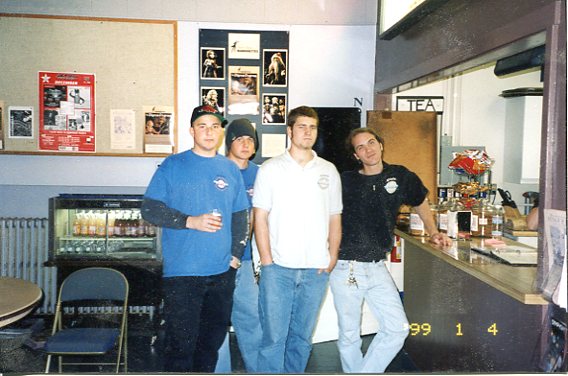
Me (far right) as a janitor
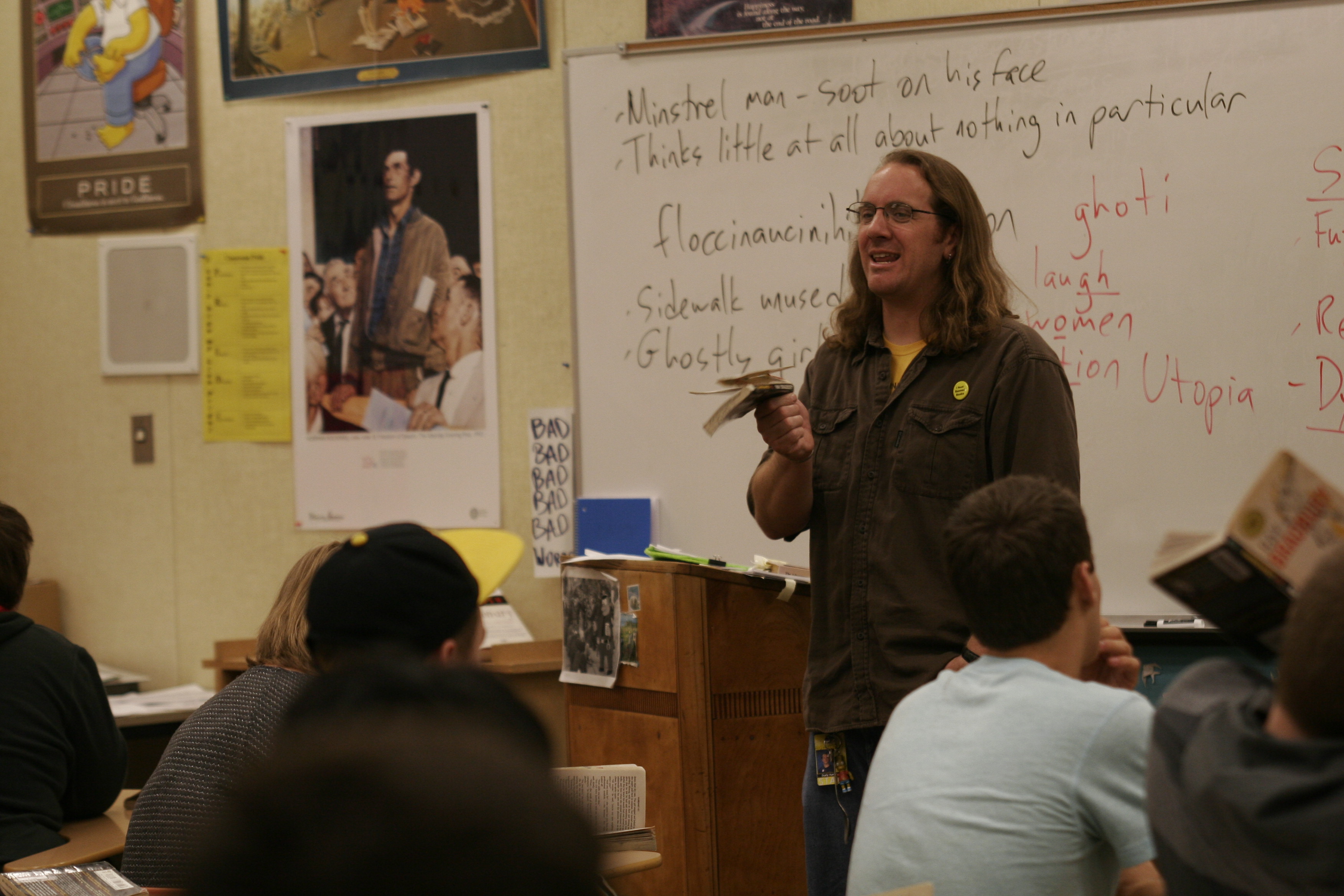
Me as a high school English teacher. Which one looks happier?

I have been a high school teacher for a very long time. Too long, in some ways, because I have watched education change enough in that time to make me very nearly obsolete, and if you stay in a job until your job doesn’t exist any more, that’s too long. I fear that the day is coming when English teachers will not exist: and possibly the day when teachers will not exist.

I’m here today to try to forestall that day. Not for myself – if I reach a point where I cannot teach, I will move into janitorial work, and be quite happy; probably happier than I have been as a teacher. After 25 years of cleaning up student writing, I would rather clean up public restrooms. It’s less work.

But it’s also less important work. Not unimportant work, it’s incredibly important because janitors keep our world working, and keep it livable – but for me, as someone who works in education, that work is more important. I’m just saying custodial work is a good backup for me. I worked in maintenance for five years before I became a teacher, and I liked it. In some ways more than teaching.

So if I liked being a janitor more, you may be thinking, why am I a teacher? And why do I still like and sometimes love being a teacher, despite the issues in education that I deal with every day?

It’s because I love humanity. I think we are incredible. I believe we have infinite potential for goodness, and infinite capacity for wonder. What we have achieved as a race is miraculous – and also sometimes terrible – and despite our almost limitless ability to dream and imagine, we can’t imagine how many more miracles we can achieve. And, hopefully, how many terrors we can avoid, or even eliminate, in the future.

And the key to that, the key to unlocking our potential and achieving progress and positive growth, and to actually making miracles real, is education.

That’s why I’m a teacher. Because my faith, my zeal, my heartfelt belief, is this: the best thing about all of us is that we are human, and the most important thing one can do is help us all become better humans. That’s what I try to do as a teacher. And that’s why I’m here today, speaking to all of you about school. Because I want to help you all to learn something about which you have been deceived – or at least misled. I don’t think any of you really understand what school is or should be – and what you think it is, what you have been told the purpose of school is? That’s a lie.

The lie is that school is about money. All of you students have been told that the purpose of school, the reason you are here and the reason you should try hard and do all of your work, is because that way you can get into a good college, get a good job, and make good money. You’ve been told that all along – though in elementary school it may not have been stated explicitly; but back then you were certainly told, with absolute sincerity, that the purpose of your schooling was to prepare you for the next step, which would be harder, and would matter more: 2nd grade is meant to get you ready for the rigors of 3rd grade, 3rd grade gets you ready for 4th; all of elementary school is preparation for middle school, which is preparation for high school. And all the way along, more often the farther you get in your thirteen years of compulsory schooling, you have been told that the goal of high school is to get you ready to go to college. So that you can get a degree, so you can get a good job, so you can make good money. And since schools also tell you that the next stage is always more important than the current one – “When you get to high school, things get serious, that’s when grades really matter” – the clear implication is that the final goal is the one that really, really matters: college, degree, money. Did you absorb the message in 2nd grade that everything then was intended to prepare you for college and a job and good money? Maybe not, but the cumulative effect of all of this is the same: the goal of school is – money.

Teachers, and especially administrators, you have said this. You have said it to all of your students, probably with certainty, certainly with absolute sincerity. All of you have lied. All of you have misled all of your students. Don’t feel bad: it’s what you were taught, what you were told, what the whole apparatus and engine of the educational system forced on you. So you didn’t know, you couldn’t even think, that it might be a lie. This is some of the power of education: it can influence our beliefs, and therefore our behavior, in pernicious ways as well as positive ones. As always, the pernicious influence is easier. The idea that school is intended to help students make more money is a pernicious lie, and I need to convince you to stop saying it, to stop thinking it.

Don’t take this as a personal attack, either, teachers: I’ve said this too. With certainty. With absolute sincerity. Because it’s what I thought, and it’s what I was taught. But luckily for me, I had an extra advantage that most teachers don’t have, something that helped me realize the truth: I’m an artist. And I’m married to an artist.

My wife and I both went to college to study art. And though I ended up studying education – one of the more useless endeavors of my life – I earned my degree in art, specifically in literature. My wife, who is stronger and braver and smarter and better than I am, stayed with art all the way through. And she had one of the most difficult undergraduate programs I’ve ever heard of; harder than any pre-law or pre-med program, I would be willing to wager, and with far less prestige.

And here’s the thing, the magic secret: she didn’t do it for the money. Neither did I – though I did sell out and become a teacher. Actually, it’s not the becoming a teacher that was selling out; I still reflect and promote the ideas of my art in my teaching, and I am proud of the career I have had, because it is a noble vocation, when it is done right. But I should have kept studying art while I was in school. I hate to think of the potential I lost, the opportunities I walked away from by switching from literature to education. And it’s funny: just as my time in public school didn’t prepare me successfully for college, my college education didn’t prepare me successfully for my career in public school education. The time I spent studying art was far more useful to my teaching than my training in how to be a teacher.

It was in teacher training that I was first trained in the Big Lie, though of course I heard it in some form or other all the way through my own K-12 schooling: the idea that the purpose of school is to get students higher incomes than they would get without it. I was shown the statistics, the data, the graphs, that argue that college graduates make more money, on the average, than non-college graduates. I was shown this, and told to use it on my students, because it’s one of the most effective ways to get students to take school seriously, to work hard and therefore (incidentally) to learn. I assume that’s why all trained educators in this country have been shown the same data: because scaring children with threats about their future is effective. It’s cruel, essentially abusive, and it has some quite severe secondary and unintended consequences, as we are now discovering; but it’s effective. It makes those lazy little punks – that’s you, students – work harder and try more. At least some of them. At least some of the time.

Look: you can’t blame us. Teaching is hard. Everything about it is hard. Organizing curriculum is hard, planning lessons is hard, finding and adapting materials is hard. It’s hard to stand in front of a room and command attention, let alone respect. It’s hard to manage a room full of individual people and get them all to focus, together, on one thing. It’s hard to communicate clearly, and hard to understand children who haven’t yet learned to communicate clearly.

(Let me just say one thing to all the students here: speak up. I’m old; I’ve lost some of my hearing. I cannot understand you when you whisper, when you mumble. Whatever you have to say to me: speak up, please.

(And I’ll try to talk slower.)

And then, after completing all of those difficult tasks, teachers run into the biggest difficulty of all, the one that feels insurmountable: getting the students to do the work. We create this curriculum, design these lessons to deliver it, gather the materials, summon all of our strength, invent positive energy from somewhere, and teach our hearts out: and then all of you students, just – don’t do it. There are many individual reasons why you don’t do it, but in a large number of instances, maybe more common than any other, the reason you don’t do the work is just because you don’t want to. You don’t feel like it. You don’t see the point. You don’t think it matters. You don’t care.

Confronted with that, over and over in student after student, day after week after month after year, teachers have reacted understandably: we try to MAKE you care, dammit! Sometimes we do it angrily, resentfully, with hurt feelings; because we care. And when you care, it hurts to try so hard and have somebody just say, “Nah.” That’s why teachers then try to scare students, that’s why we threaten.

“Your boss won’t accept this kind of work when you have a job.”

“Your college professor won’t care about you, so they won’t make exceptions for you: they won’t even know your name.”

“You think you can act like that out in the real world? Think again!”

Hurt people lash out. We may tell ourselves we’re doing it to be helpful, but we’re doing it because we’re hurt. It makes it easier for us to tell the lie, because the lie is hurtful, where the truth is just difficult – and we’re lashing out at those who hurt us. We shouldn’t do that, but also, maybe all you students should stop hurting your teachers. When a student comes to my class and says something like “This is boring. Can we do something fun instead?” to my face, every day, I definitely want to snap at them about how their attitude won’t be acceptable in the future. Because it’s just not right to insult someone’s passion the way students insult mine.

So it makes sense that teachers have done this, that we’ve told this lie. It makes sense that we’ve structured school, and thought about how we can teach our subjects, and explained this whole endeavor to students, on the basis of this fundamental assumption, this base falsehood, that the purpose of school is to prepare students for the real world, specifically for college, so they can get good jobs and make good money. It makes sense – though, teachers, I won’t take us off the hook entirely, because we really should have recognized the falsehood in this, and seen the hypocrites we make of ourselves, when we tell our students they should study hard specifically so they can make more money: because we are all so very well-educated, and worked so hard to become so, and we are so poorly paid for that effort and education. Did you all go to school, do all that work, and then take this very hard job, for the money?

Neither did I. (Though also, I expect and deserve and demand that I get paid what I am worth. So should we all.)

I do need to point out that we make this claim about the purpose of school in more ways than just talking about money. We do also talk about getting a “good” job, by which we mean a job you like and find fulfilling, a job that you feel has value, to yourself or to society or both. Teaching is all of those things for me, as it is for many of my colleagues; and the money has been generally sufficient, if not actually good, or representative of what I’m worth. We do also talk about getting our students prepared, with skills and knowledge, for the real world, beyond and apart from college. I think we do that, a little. Not enough, though also, here we run into a question of how much someone can be prepared, in school, for the world outside of school, and also how much someone should be prepared in advance of actually living. But regardless: our efforts to prepare students for the real world, as we call it, are founded on the same principle: we try to get them ready for their jobs. We want them to have work skills, and know how to find a job, apply for and interview for a job, succeed in a job. When we talk about our students’ future – other than some basic insincere lip service to the worn cliches “You can be anything you want to be!” and “You can do anything you want to do,” – it’s always the same basic idea. It’s all about the money.

Okay. So those are the lies. Now: are you ready for the truth?

Deep breath.

The truth is, you can not be anything you want to be. You can only be yourself.

The truth is, you cannot do anything you want to do: there are limitations on all of us, some internal, most external.

The truth is school does not prepare you for college or for work. Only you can do that, and no matter how well you do manage to prepare yourself, you will still be surprised, and sometimes unprepared and overwhelmed; and to some greater or lesser extent, you will fail.

The truth is, school is not preparing you for the real world: you are already in the real world, and you always have been. And no, it doesn’t get better. It doesn’t get easier.

The truth – the big truth, the last truth – is that the purpose of education is not, cannot be, and should not be stated as, helping students to get a good job or to make more money.

The purpose of education is to create more life.

***

Okay, that was a lot of truth. Take another deep breath, and then I’ll soften it up some, make it easier to swallow and to digest.

By the way: we absolutely should teach our students how to breathe. There’s nothing more important. Literally.

Okay: now for the softer side of the truth.

While it is true that you can only be yourself, that is also the very best thing you could ever be. Because every single one of you, of us, is as good and valuable and worthy as every one else; and there is also no other person you could be as successfully as you can be yourself. It’s also true that figuring out who exactly you are is incredibly difficult and complex, and the work we do on that project in schools is good work. You get to explore your self and your society and your skills and interests, even while we are barking at you that you need to master proper MLA format for your resume.

While it is true that there are limitations on all of us, which keep us from doing anything we want to do, limitations can be overcome. Muggsy Bogues played a full career in the NBA despite being only 5’3” tall. Also – and this may be even more important – a lot of things we think we want to do are actually really bad ideas. When I was 6, I wanted to be a stage actor, a fireman, and an astronaut. All bad careers for me, for the person I became – especially all at the same time.

The truth is that school does not prepare you completely for college or work: but the truth also is, it helps. We will, as I said, always fail, in college and career and life; but no failure needs to be total, or permanent. Failure always precedes growth. And – heh – school can prepare you for failure.

Unfortunately, the truth – and I cannot soften it – is still that school does not prepare you for the real world. But that’s because you’re in the real world, right now, while you are in school, and there’s no preparing for it, for any of us. There is only living it. Experiencing it. Learning from it. That’s all we ever do, whether in school or not. I do think it’s important that we teachers stop telling students there is some distinction between school and the real world, especially with the implication that the real world is somehow worse, harsher or harder, colder or crueller. People who really think that do not remember what it was like to be in middle school or high school. Or they do not understand the situations that many students, many children, live through. As I said: it doesn’t get better and it doesn’t get easier; but you will get better. And then, if you can, you will make your life better. And that process will continue for as long as you keep trying to learn and improve: always in the real world.

Last one – and, because I know my persuasive rhetoric, this is the important one. This is the point. This is what education is for.

Our world has, I believe, an objective reality. It’s not just in my mind, or in the Matrix. The world would – will – still be here when I am not here to perceive it; it will still be the same world when all of us are gone from it. Although it will be quieter, and less messy. No matter how I imagine the world to be, whether I think the Earth is round or flat, 6,000 years old or 4.5 billion, floating in space or resting on four elephants who are standing on a turtle – there is a truth, a real situation that I don’t change through my perception of it.

However: my perception of the world shapes my world, changes how I experience it, more fundamentally than I think we realize – certainly more than we think about very often. How we see determines what we see. We cannot perceive things that we cannot imagine existing; sometimes we cannot perceive them intentionally, consciously. Take the flat Earth example. If I believe, absolutely, that the world is flat, then there are things I will not do, places I will not go, because of my belief, because of my perception. I will not get on a plane that I think would fly off the edge of the world. I will not go to the world’s edge, let alone beyond it – so I will never see that there is no edge. So even though the world is in fact round, I will never perceive the world as round, because I will avoid – or more simply, deny – anything that would prove to me that the world is round. So for me, functionally, the world would be flat. And I will miss out on any experience associated with the round Earth. My world, shaped by my perception, would be less full: only two-dimensional.

Let’s take a more realistic and more common example. If I were a racist, and hated, let’s say, plaid people, then I would avoid, or dismiss as unworthy of my time, any and all plaid people. They would essentially not exist in my world except as an amorphous abstraction for me to hate and fear and blame. I would never get to know, never get to appreciate, never get to love, anyone who is plaid. And therefore my world, my life, would be smaller.

Because plaid people are some of the finest people there are.

And if you don’t know any plaid people – or, even more shocking, you somehow think that they don’t exist – I think you need to open your eyes and pay more attention. America’s no place for plaid-deniers.

But in all seriousness, this fact, that perception shapes reality, is true in all ways: things that we can’t understand, we avoid; things that we can’t conceive of, we don’t even perceive. And in contrast, when we have heightened understanding, we have heightened perception: my wife’s experience of an art museum is much richer, much fuller, than mine, because her knowledge of art, and her experience with creating art and the deep understanding of the artist’s craft she has thereby, lets her see the works on display in more ways than I can, who makes art only with words. My experience of literature is similarly fuller than most people’s. My dog’s experience of the world of smells is many thousands of times more complex and interesting than my experience of smells: which is why he chooses to sniff cat poop, which I simply avoid. Because he finds it interesting, and I just think it smells gross. But I have to assume that if I could smell what he can smell, I would interact with cat poop the same way he does: my nose would be riveted to every turd. Think how much more enjoyable it would be to live with cats, then. Having the litter box in the house would be a benefit. Maybe we’d put the box on the coffee table. Make it a conversation piece.

I know that sounds bizarre and insane. It sounds that way to me, too. But understand: it only sounds that way because of how we perceive cat poop. Or rather, how we don’t perceive it. How our experience of the world is limited by our range of perception.

Education can change that (Maybe not with cat poop.), because education can introduce us to things, and show us how to perceive them. I wasn’t born reading literature the way I do; I learned that. Because I learned it, my experience of reading is better than most people’s. My world of books is larger, more vibrant, more diverse, more entertaining, more inspiring, more challenging, than most people’s book world. Not because I’m better than other people, not because I’m just built different: because I have been educated. Because I learned. Because I learned how to read and understand what I read to an unusually high degree, I have a larger world to live in. It means I can find greater pleasure and fulfillment in the world of books. I will never get tired of reading books. I will never be bored, not as long as I can get my hands and my eyes on books. I can still perceive all the non-book things as well as all the rest of you can – though some people perceive individual pieces of non-book-reality better than I can, because I don’t know much about cars or sports or calculus, or about being a parent, or about traveling to other places or into other cultures – but in the areas where I learned well, my world is larger than the world of people who didn’t learn as well. In all the areas where I am not ignorant, my life is larger than the world of ignorant people. I live a larger life, in a larger world, than someone with less education with me.

That’s why I’m a teacher. Because I love humanity. Because I want to help people to live larger, fuller, richer lives. To have more chances to be human, to be more human. To make miracles. What else could I possibly do that would be as valuable, as important?

But, you see, my work has, of late, become less valuable. Less effective, and therefore less important.
Because my students are less willing to work with me, to listen to me. They are less willing to learn.

But that’s our fault, teachers, parents, adults in general: because we’ve been lying to them. And they have caught on. These are the unintended consequences of our choice to use the threat of future poverty and failure to scare our students into obedience. Rather than explain the real value of education, even though the idea is complicated, even though it is hard to accept, we have chosen to use the simple lie that the entire point of education is to prepare students for future work. We still tell them, as we have for years, that going to college is the best way, even the only way, to get a good job and make good money, and the point of compulsory public education is to prepare them for college and for jobs – and that’s it. It’s not all we think education is for, but when we are frustrated with difficult and disobedient students, we don’t usually talk about the wonderful benefits of education: we just threaten them. “If you drop out, or get expelled, how will you get a good job? You’ll be flipping burgers for your whole life!”

But, see, we have now gone through a pandemic, and more than one recession; today’s students are in the world of social media, which gives them access to people’s lives and internal thoughts. So they’ve seen behind the curtain, they’ve torn down the veil. They know that there are countless people who have good jobs without ever having finished college, and countless people with lots of education who have miserable jobs. And now college is so absurdly expensive that even those who would want a college-level job – for whom a job that required a college degree would be a “good” job – are not willing to accrue the debt to get that job, and so they’re looking for different jobs, ones that are easier to get, that have fewer requirements. Or, more often than I think we educators realize, they have come to the conclusion that life is not, and should not be, defined by a job: and so what job they end up with simply doesn’t matter to them, as long as they make enough to survive and do what they want to do. What they want to think about and plan for is all the non-job parts of life.

So here you are, students. You’ve been hearing for years, again and again, that school is necessary for getting into college and getting a good job. And you don’t want that. And you know that we are lying to you, that you don’t need college for many good jobs. You also know that life shouldn’t be only about a job.

What, then, is the value of this education we offer and demand, for a student who doesn’t want what we have claimed is the main and even the only goal of that education?

There isn’t any. So you don’t want it. Of course not.

And the more we try to threaten, and cajole, and cozen you into doing the difficult work of education anyway, the more you resist. Of course: you don’t like being lied to, and you don’t like having your time wasted. Wasting time is wasting life, and we all want all the life we can get.

So you ignore and evade and escape education that is nothing for you but life-draining, time-wasting oppression.

And therefore you remain more ignorant than you could be. Not totally ignorant, of course, because you learn on your own. But school could teach you so much more than you can easily learn on your own; and without putting effort into school, you will absolutely know less than you would if you could really do this the way it should be done.

And since you will know less, therefore you will have less life.

***

It has to stop. We need to stop telling students that school equals college equals job equals money. We need to stop focusing on money. I don’t teach literature because it makes money, either for me or for the students – or even for the authors, who I do think deserve money for their work; but that’s not why I want the book, and it’s not why I want to teach the book. I do it because literature expands and improves my experience of being human: and I want that larger life. And I want other people to have what I have. Especially now: because the world kinda sucks. And especially the kids I teach: because being in middle school and high school kinda sucks.

Teachers: we need to tell our students the truth: school sucks, but education will make your life suck less. It will give you more life, and a better life, because it will let you understand more, and therefore do more, and perceive more. And we need to believe this when we say it, and we need to want that for our students.

Otherwise we should all just give up and become janitors.

At least then the world would be cleaner.

What’s In a Name?

I want to write about the AP exam I scored. But those scores haven’t been released yet, and neither have the examples and so on, which show how the scores were earned; and I don’t want to get in trouble for posting confidential material.

So, without going into too much detail about the exam or the prompt or how a student earned a specific score, I’m going to talk about one general aspect of the exam which I noticed this year more than most: terminology.

In keeping with the theme I seem to have established of talking about my dad, and also of using quotations to center and introduce my thoughts, here is one of my dad’s all-time favorite quotes:

“The map is not the territory, the word is not the thing itself.”

This is from the science fiction novel, The World of Null-A, by A.E. van Vogt. It hasn’t been turned into a meme on the internet — so I’m going to put the cover of the novel here, because it’s awesome.

A.E. van Vogt – The World of Null-A (1948) Review | A Sky of Books and  Movies
Wouldn’t you love to live in Purple World? Arches and spires everywhere? STAIRCASES TO NOWHERE?!?

The quote is slightly adapted from a statement originally from Alfred Korzybski, a Polish-American philosopher and engineer, and while van Vogt’s words have not been memed, Korzybski’s have been.

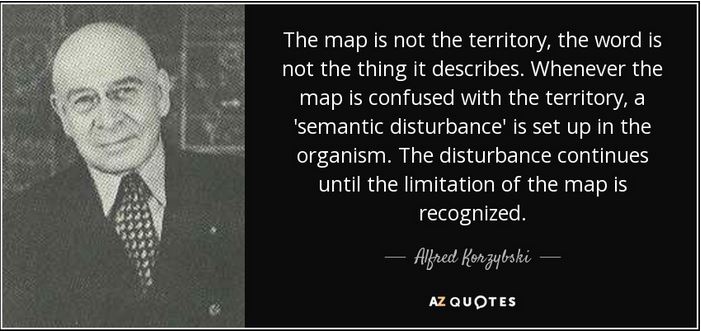
Map And Territory - We Confuse The Map With The Territory

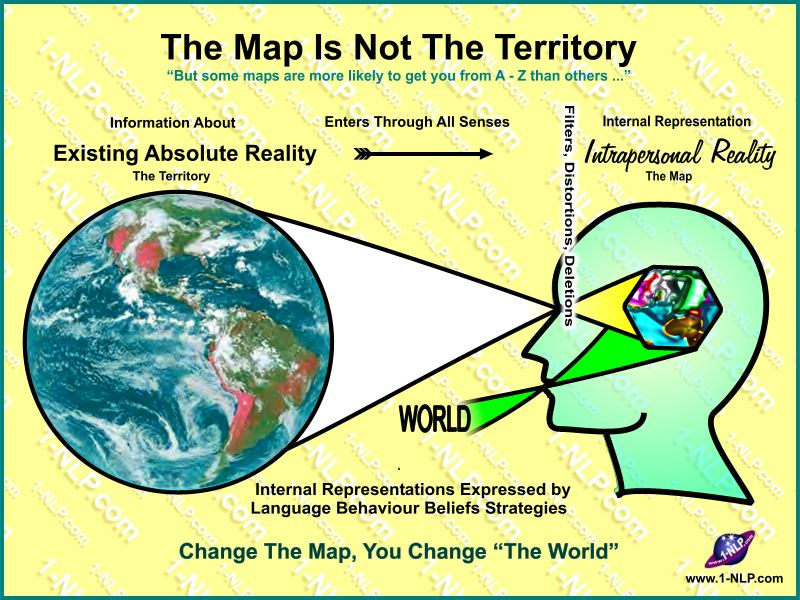
That’s the full quote, and you can see how quickly it makes one’s eyes cross. Here it is made even more confusing by the visuals:

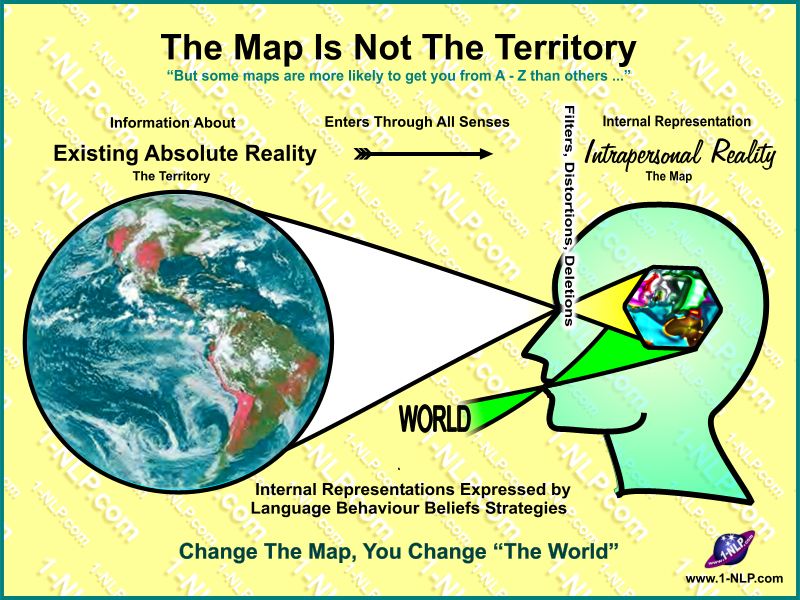
The Map is Not The Territory – Explained in Simple Terms – Welcome to Club  Street Post
This was made by someone who does not understand how to explain things.

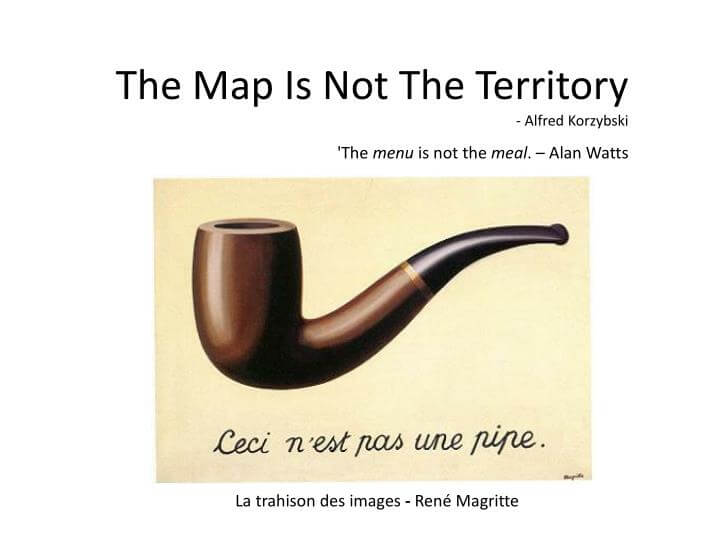
But that’s okay, here’s the simpler version, complete with standardized background image:

The more observant among you will notice the resemblance to a meme I used in yesterday’s post here.

But really, I prefer this last version, because I also like Watts’s iteration of this — and I love Rene Magritte.

The map is not the territory - Tom McCallum

So the point of this, then, is to recognize the limitations of representation and image — and of language itself. The map is probably the best example, because a map always sacrifices detail for coverage, showing a greater area while not showing everything about that area. If a map showed every detail of the area it depicted, it would be a photograph, not a map — and its value would be limited.

(Though it might be funny sometimes.)

On some level, this shows the difference between “book knowledge” and “world knowledge” — which my students still, still, call “street smarts,” a perfect example of a name that has lasted despite its limitations, which makes it a perfect example of the second half of this statement. If you know the name of a thing, that is analogous to “book knowledge;” and if you understand the thing (which is where I think the quote is going here, to a point about understanding, because certainly with a concrete object there is no doubt that the word could be the thing itself: I’m not sitting in the word “chair” right now.), that is equivalent to the experiential and deeper understanding implied by “street smarts.” Knowing the name for something does not mean you understand that thing, because the word is not the thing itself; again like the map, words reduce specific details in order to gain another value — generally universality, and economy, meaning I can communicate a fair amount of information, to a lot of people, without too many words. If I say I own a black SUV, then you don’t have much detail about my car — but (if you speak English) you have a general understanding of the category of vehicle to which my car belongs, and a general idea of its size and shape and appearance and so on, because we understand what aspects are included in the category “SUV,” and we know the color “black.” Also, as my wife has pointed out many times, with steadily growing annoyance as each year passes, all SUVs look the same — and a large proportion of them are black. But that means, while you can get a general idea of many, many cars with just two words, you can’t really identify those specific cars very well. And you definitely don’t know the things that make my car special, that make my car into my car. Not terribly important to understand the special things about my car, of course; but if you want to understand a person, you need to know much more than their name.

This comes into focus with the AP exam because I teach my students that they don’t really need to know the name of what they are talking about: but they need to understand the thing. This is, clearly, not how all AP teachers instruct their students, because I had MANY essays that used vocabulary the student did not really understand: and it showed. They named things they didn’t really have, because they didn’t understand the thing named. So that I don’t do that, to explain the details lacking in the term “AP exam,” so that you have more understanding of this thing instead of just knowing the name, the essay I scored last month was for the AP Language and Composition exam, which focuses on non-fiction writing, and examines primarily rhetoric. “Rhetoric” is another good example of a word which people know and use without really understanding it, because the connotations of the word have changed; now it mostly comes in a phrase like “empty rhetoric,” and is used to describe someone — usually a politician — who is speaking insincerely, just paying lip service to some idea or audience, without saying anything of substance; or in more extreme cases, using words to lie and manipulate their audience for a nefarious purpose. My preferred definition of rhetoric, the one I teach my students, is: “Using language to achieve a purpose.” What I am doing now in this blog is rhetorical: I am choosing words and using examples that I think will achieve my purpose — in this case to explain my idea, and to a lesser extent, to convince my audience that I am correct in my argument: that knowing the name of a thing is less important than understanding the actual thing.

So in the AP exam on Language and Composition, which focuses on rhetoric — or understanding and explaining how a speaker or writer uses language to achieve their purpose, as when a politician tries to convince an audience to vote for him or her — there are 50 or so multiple choice questions, and three essay questions. This year I scored the second essay question, which is the Rhetorical Analysis question; for this year’s exam (This is not privileged information, by the way; the questions were released right after the exam in May. It’s the answers that are still secret.) they used a commencement speech given at the University of Virginia at Charlottesville by former U.S. poet laureate Rita Dove. The goal of the essay was to “Write an essay that analyzes the rhetorical choices Dove makes to deliver her message about what she wishes for her audience of graduating students.”

Interestingly enough, the AP exam writers have given hints to the students in this instruction, which I’ve taken from the exam. They generally give important context in their instructions, quite intentionally; it’s easier to analyze rhetoric if you understand the context in which the speech or writing was delivered, so knowing that this speech was given at a commencement, at a university, in 2016, gives you a better idea of what is going to be said in the speech — you get the general shape of what is included in the thing named “commencement address.” One of the key aspects of this speech by Dove is both the expectation of what is included in a commencement address, and how she subverts that expectation: and that centers around the term “wish.” That’s the hint in the instruction there, along with the buzzwords “message” and “audience,” which are commonly part of a study of rhetoric and of rhetorical analysis.

Okay, that wasn’t interesting. I’ve lost you here, I realize. Let me use fewer words and just give you the general gist of my point: when students were analyzing Dove’s rhetoric, they did much better if they explained what she was doing and why, but didn’t know the proper name for her strategy; some of them knew the name of the strategy — or of a strategy — but couldn’t really explain it. They had the name, but not the thing itself.

Partly that’s because the study of rhetoric is very old, and thus has an enormous amount of terminology attached to it: much of it based on Latin and Greek roots, which makes the words sound really smart to modern speakers and readers of American English. It’s cool to use the words “antithesis” and “juxtaposition” and “zeugma,” so students remember the words and use them for that reason. I think it is also partly because a number of AP classes focus on remembering the word for something, rather than knowing the thing itself, because lists of words are easier to teach and easier to memorize and easier to test. Partly it’s because students under pressure try to impress teachers with the things they can do, to dazzle us and make us not notice the things they can’t do — like actually explain the thing they named.

Again, I don’t want to get into too many specifics on this particular essay because it hasn’t been released yet and I don’t want to get in trouble, so let me just give general examples.

There’s a rhetorical device called “polysyndeton.” (Cool name, isn’t it? Little annoying that the two y‘s are pronounced differently…) It means the use of more conjunctions than would be strictly necessary for grammar. If I listed all of my favorite activities and I said, “I love reading and writing and music and games and spending time with my pets and eating delicious food and taking walks with my wife,” that would be an example of polysyndeton. And if you were writing an essay about my rhetoric (Please don’t), you could certainly say that I used polysyndeton, and quote that sentence as an example. And if you used that sentence, it would be a correct example, and the person scoring your essay would recognize that you know what polysyndeton is, and you correctly defined and identified it, which is surely worth some points. Right?

But what does polysyndeton do? What did I do when I wrote the sentence that way, instead of, for instance, “I love reading, writing, music, games, spending time with my pets, eating delicious food, and taking walks with my wife.”? The ability to understand that, and to explain that — and, most importantly for the AP exam and for rhetorical analysis, the ability to explain how the effect I achieved through the use of polysyndeton helps to deliver my message, to achieve my purpose — that’s what matters. Not knowing the name.

(It’s a bad example here, by the way, because I made up the sentence just to show what the word meant, so it isn’t really part of my larger purpose; the purpose of using polysyndeton there was just to show what the hell polysyndeton is. And sure, I guess it was effective for that.)

The worst offenders here, on this year’s exam as in most, are the terms logos, pathos, and ethos, which are words used to describe certain kinds of argument, and also certain aspects of rhetoric. The words are Greek, and were chosen and defined by Aristotle; most rhetoric teachers at least mention them, usually, I imagine, as a way to show that there are many different ways to win an argument and to persuade an audience. That’s why I mention them in my class. But while a lot of students know the words, they don’t understand the thing itself, and so they find items in a passage they’re analyzing that looks like it belongs in one of those categories. Like statistics, which they identify as logos arguments, meaning arguments that appeal to reason and logic, which is indeed one way that statistics can be used. Dove uses a statistic in her speech, and a raft of student writers identified that as an instance of logos. The problem is that it isn’t logos, partly because it’s not a real statistic — she uses the phrase “150% effort,” and at one point lowers that to “75% effort” and “50% effort;” but at no time is she trying to present a reasoned and logical argument through the use of those numbers, which of course don’t come from any study or anything like that — and even more, because she’s not really trying to persuade her audience.

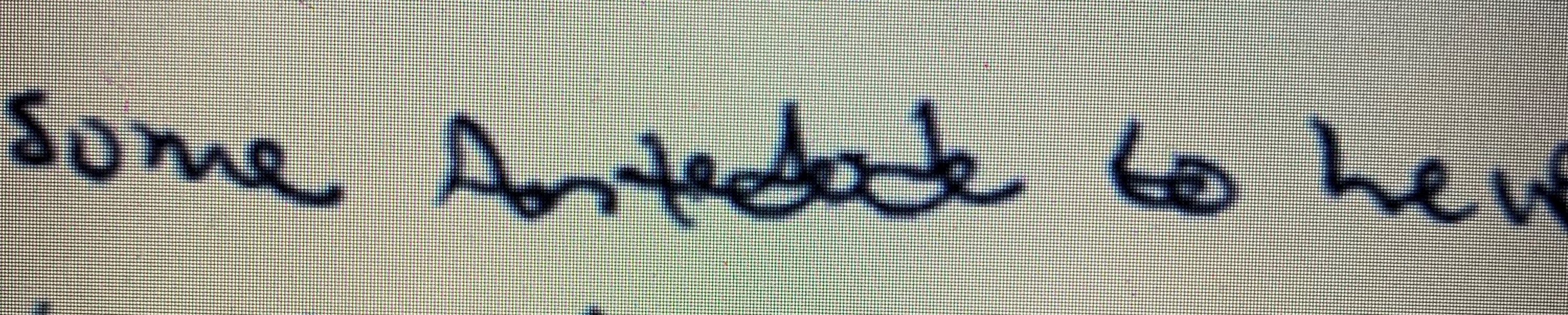
She was telling her audience an anecdote. And that’s where I ran into a stumbling block, over and over again in reading and scoring these essays: just because students know the name for something doesn’t mean they understand the thing: and just because students remember the name for something doesn’t mean they remember how to spell it.

Let me note, here and now, that these students are brilliant and courageous for even trying to do this damn test, for even trying to write three college-level essays in two hours AFTER answering 45 difficult multiple-choice questions in one hour. Also, because this was written under pressure in a short time frame, and with almost certainly only one draft, mistakes are inevitable and should be entirely ignored when they don’t get in the way of understanding. I knew what every one of these students were trying to say, so I ignored their spelling, in terms of scoring the essay. I also ignored their generally atrocious handwriting, not least because mine is as bad as any of theirs and usually worse.

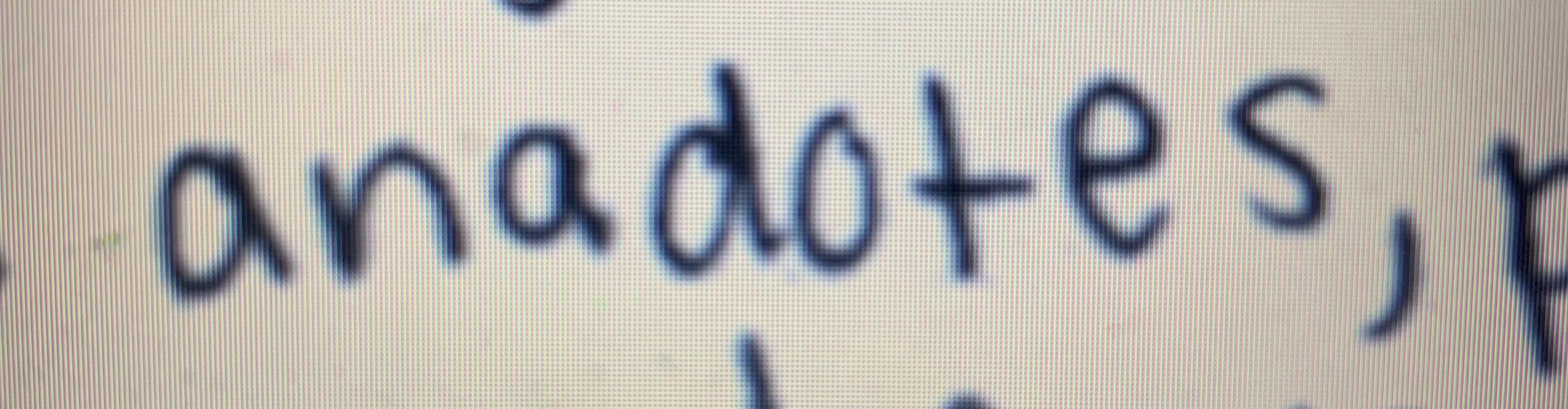
I just thought this was a fine example of knowing a term but not really knowing it. Ya know?

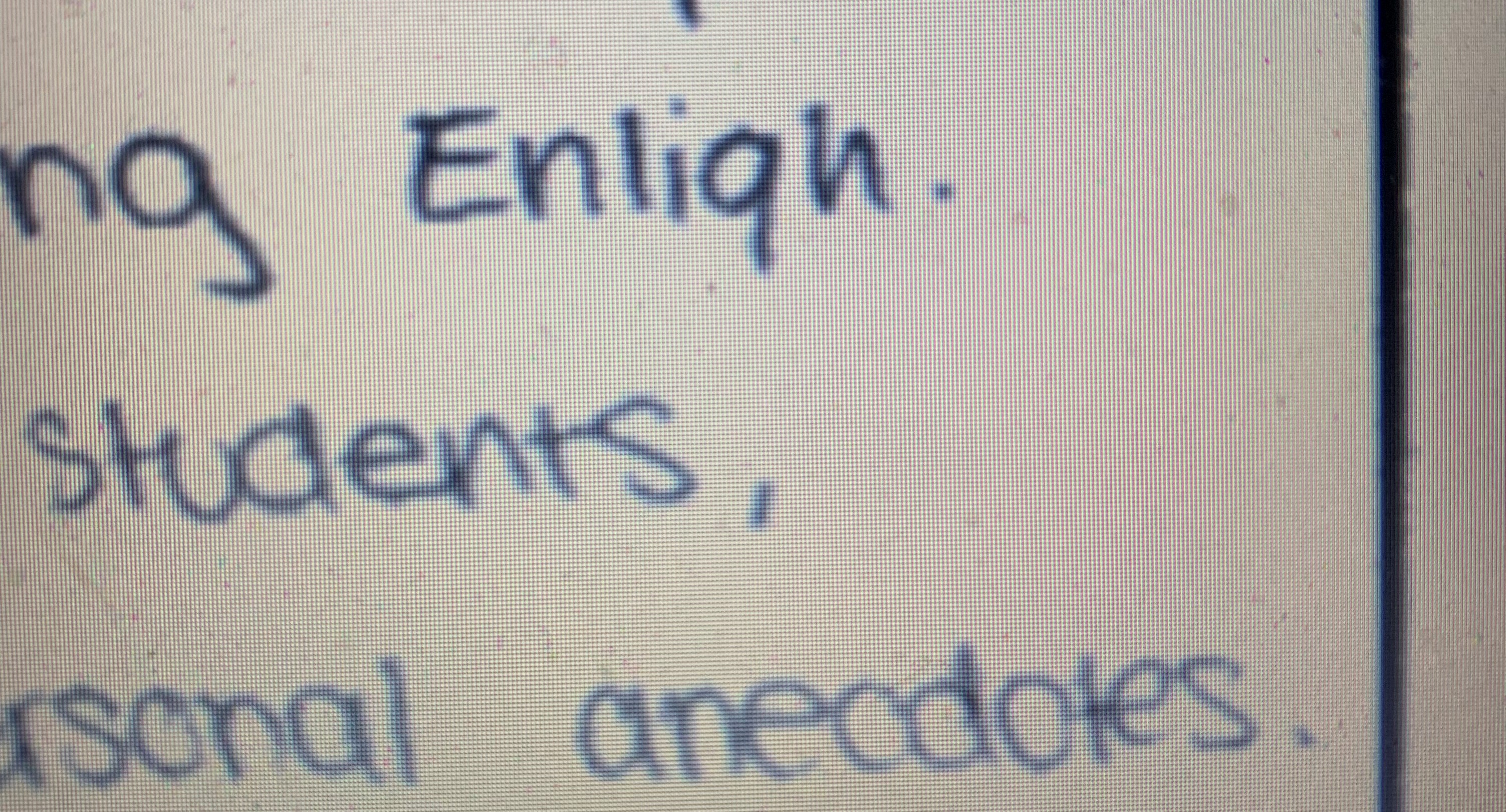
(Also I apologize for the image quality. Just trying to make a point. And the picture is not the point.)

The first one gets it right. Another one gets it right — but spells “English” as “Enligh.” Also please note the spelling of “repetition” which students repeatedly struggled with.

Fun, huh? I scored 695 essays this year. Last year it was over a thousand. And that exam passage also used anecdotes.

I’m really not trying to mock the students; just using this fact to show that knowing a term doesn’t mean you understand the term, because the word is not the thing itself. By the same token, knowing the spelling doesn’t mean you know the term, or that you understand the thing itself; which is why we ignore misspellings in scoring these essays. I think understanding the thing is much more important than knowing the word — and I’m a word guy. I love words. (Flibbertigibbet! Stooge! Cyclops! Wheeeee!) But I’m a word guy because I think this world is magnificent and incredible, and I want to understand as much of it as possible; words help me to do that, and to share my understanding of the world we live in. That complicated image I used above to show how some people can’t explain things well? Here, I’ll bring it down here so you don’t have to be confused which one I’m talking about.

This one.

This makes a few important points, even if it makes them badly. I do like how it goes from an image of the Earth, to a jumbled collage of colors inside the head, to the one word “world.” I think that, once you can follow it, makes this point well, how much translation and simplification happens between observed reality and the words we use to represent them. Though it should also lead to another head, of a listener, and show how that one word activates their own jumbled collage of colors in their head represented by the word “world.” (Far be it from me to suggest making this more complicated, though.) Because communication happens between two minds, and both minds contribute to the communication: which is why language works despite this simplifying process.

I do also like the statement at the bottom of the image: “Change the map, you change the world.” (Even though I hate how they capitalized and punctuated it.) Because that’s the last point here: while words are not the things they represent, they are incredibly important to our understanding of the world and our reality. Because we think and communicate in words. Not exclusively: my wife, for one, is deeply eloquent in communicating with images; my dogs can communicate with a look; musicians communicate with sounds that are not words. And so on. But language is our best and most effective form of interpersonal communication: and also one of the main ways we catalogue and recall our knowledge inside our heads. So getting the names of things right is incredibly important to our ability to use the information we know, and to communicate it to others. And what is the most important factor in getting the names of things right? Understanding the things we are talking about.

Because a rose by any other name would smell as sweet — but if you want people to know you are talking about one of these, you better call it a rose.

How to Say Rose in Different Languages | 1800Flowers Petal Talk

And for my sake, please spell it right.

Truth

It seems to me there are three ways to come at this essay about the different kinds of truth. The first and most obvious – to me, at least – is to quote the diabolical Sideshow Bob from The Simpsons, who, when on the witness stand and told that the court wants the truth, scoffs, “You want the truth? You can’t handle the truth! No truth-handler you! Bah, I deride your truth-handling abilities!”

The second (and only slightly less amusing) is to make reference to the classic Dwight Schrute meme where Dwight points out the problem with a statement – here, if I may indulge in a visual, is one of my favorites:

Image result for dwight schrute false meme

But I believe I will select the introductory quote about truth that is nearest to my own heart: Dan Rather, the former anchor for the CBS Evening News, said, “The dream begins with a teacher who believes in you, who tugs and pushes and leads you to the next plateau, sometimes poking you with a sharp stick called ‘truth.’”

I would like to poke you with a sharp stick called ‘Truth.’

This would seem, at first, a fruitless enterprise. After all, truth is truth; how can there be kinds of truth? But in fact there are, simply because we are flawed creatures, we humans; we cannot know everything, and so we cannot know absolutes: there may be circumstances and conditions under which anything we think to be true may in fact not be. Therefore there are at least two levels of truth: truth we can know, and truth we cannot because it is absolute and thus requires omniscience. Or more simply, truth we can know and truth we cannot know, but which is nonetheless truth. The key here is to accept that knowing truth changes its truth-value, which is the concept I hope to prove in this essay; the upper limit is truth which requires omniscience to know, but there are degrees leading up to that limit, and recognizable categories, which I will attempt to explicate.

By the way: because I wrote out that Sideshow Bob quote, now my word processor wants to autocomplete “truth” into “truth-hand” every time I write it. This is both wonderful and annoying.

Like truth.

Let us begin with a basic understanding of truth. Truth is perhaps best defined through defining its opposite, falsehood; I would argue that there are essentially two kinds of falsehood, which are one, untruths, and two, lies. Untruths are things – ideas, statements, assumptions – that are not truth because when one attempts to verify them objectively, one finds reality does not match the untruth. If I were to believe it is raining outside because I am in a room with no windows, I can look out through the door and discover whether my belief is true, or untrue: if it is raining then the belief is true, and if it is not raining, then the belief is untrue. This is the first point in arguing that knowing truth changes the truth-value: because the belief that “It is raining outside” is objectively true somewhere, presumably at every possible instant that one could believe it – especially if one broadens the concept of “rain” to include liquid precipitation on other planets and celestial bodies. So sure, it is always raining SOMEWHERE – but unless it is raining where I personally can verify it through my senses, then it doesn’t really matter to the truth-value of my belief; if I were to step outside into a sunny afternoon and say “It’s raining,” someone’s response would likely be

Image result for dwight schrute false

The second kind of falsehood is a lie: this is when the truth, objectively verifiable through the senses, is known, and an idea is put forward that is known to be counter to that truth. This is when I am in a room with windows, looking out at the sun, and I say, “It is raining.” The advantage for our purpose here is that it doesn’t matter which kind of falsehood it is, the truth is always the same: objectively verifiable through the senses.

But there is a difficulty there. Because there are truths that we have discovered, truths that we know, that are not verifiable through the senses, that are not objective. A strict prescriptivist of truth would argue that these truths are therefore not true, because only objectively verifiable facts can be true. To those people I say: talk to Heisenberg. (And this is funny, because it’s mostly science-y people who would say that, and Heisenberg is about as science-y as you can get. Take that, science!) The Heisenberg Uncertainty Principle tells us that when a particle has two complementary properties, such as position and momentum, we cannot know both properties at the same time. If we know precisely where the particle is at a given moment, then we have frozen that particle in time, which means at that instant, to us, it has no momentum: picture it as a snapshot of the particle, showing us where it is, but in that snapshot, it is not moving. Alternatively, we could know the particle’s momentum, its velocity and direction; but we can only measure that by tracking its movement – which means that, over the time period when we re tracking its movement, we cannot say precisely where it was: only give a range, somewhere between Point A and Point B.

The real point is, that particle has both momentum and position, and both of those properties have objective truth, both are definite, verifiable facts – but we can only know one at a time. Knowing one makes it impossible to know the other, but it doesn’t change its truthiness.

Therefore we must add a word to our definition of truth: truth is an idea that is potentially objectively verifiable through the senses. If we had world enough and time, we could verify it; therefore it is true. But I hope we can all see that a truth that is objectively verifiable through the senses has more impact, more weight – more gravity, let us say – than a truth that is only potentially verifiable. If I suspect that the rain falling outside my room is in fact acidic, but I don’t have the instruments to test, then I may want to respond as if it were acidic, and act to protect my plants, let us say; but in the process I will undeniably encounter the verifiable truth of the rain itself: I will get wet. I am more likely to respond to the fact of wetness than to the theory of acid; that truth, then, has more weight, more potential to change my thoughts and actions. That truth has more gravity.

As I was saying, then, the lowest level of truth is one that is only potentially verifiable, but cannot be objectively verified. In fact there is one level of truth lower than that, based on knowledge – or rather, on ignorance; because if knowing a fact gives it more weight, then not knowing gives less. So the lowest kind of truth is truth we don’t know. It’s true, but for us, it is meaningless; because of our ignorance, this is equivalent to the absolute truths we can’t know. In either case, we can’t act on it, or change our thought process or paradigm because of it; it has no impact on us. For us, it might as well not be true, and so it has only the barest sliver of truth. That bottom level is the fact of rain outside a room with no windows and no doors. Or whether or not the worm currently crawling through the earth beneath me is depressed. I don’t know, and so cannot act on it. That’s the lowest kind of truth—and I apologize for using an underground worm’s depression as an example; I really didn’t think about the pun there.

As for truth that could be verifiable but can’t be objectively verified, let’s use as an example the infinite nature of the universe. Is the universe infinite? No idea. We’ll never know. In theory one could find a mathematical proof of it, if we could find the existence of the multiverse and the mechanism whereby new universes are created, but we can’t ever know it for sure. The only thing this kind of truth can do for us is give us a headache: it feels like we could know, but we can’t actually know. This kind of truth is a tease. At best a Zen koan.

Just above that level is an idea that I think is true, but I don’t know why I think it’s true. This kind of truth has the potential of being objectively verifiable, but I as the knower don’t know how to do that, and therefore could never verify it. This is where most racist ideas live. Why do racists think white skin is better than brown skin? They don’t know, but they think it’s true. There are quite a number of outright lies at this level, because people might be able to figure out how to verify their beliefs, but they don’t want to, because the truth will likely be the opposite of what they believe it is. That, in my opinion, is a lie: when I say it’s raining outside, but I refuse to open the door and look because I think it is probably sunny – but I won’t admit that.

The next level up is something that I am sure is true, and that I have evidence for, but which is not clearly objectively verifiable based on my evidence. This is where superstitions are found: Michael Jordan believed that his lucky shorts were one of the reasons for his success, and he wore them for every game he played. He won six NBA championships and three MVP awards wearing those shorts; so there is some evidence that the shorts were lucky. Just not verifiable evidence, because “luck” can’t be tested for – but just like (Okay, not just like) the uncertainty principle, if we were to create a laboratory experiment to confirm that the shorts were not lucky, the element of luck in the form of blind chance or influences on the experiment that we could not control would ruin the results: if we had Michael Jordan play half the time with his lucky shorts and half the time with “control shorts” (Which makes him sound like he has bladder control issues, which is just sad), that doesn’t mean we can make his teammates play the same in both games, or his opponents play the same, or even control all the other factors that go into Michael Jordan playing well or poorly. We can’t prove the shorts are or are not lucky, but there’s objective evidence in the form of success that says they are. And that’s why luck still exists as a concept, and why Jordan wore the same pair of shorts every game for almost fifteen years.

Oh – he did wash them, by the way. After every game.

The next level is one I don’t want to include, but I have to because of the parameters I have set forth. If someone knowing a thing makes it more true than something that nobody knows, then if a lot of people know a thing, it has to be more true than if only one person knows it. Because a known fact has more weight, more gravity, and that is an element of the fact’s truth-value. So the next level up is a thing that is known, with evidence but without objective verification (but still potentially objectively verifiable – have I broken your brains yet?), by a lot of people. I hate this because I don’t want to say that the popularity of an idea has any bearing on its truth, but in fact, if we want to include a truth’s potential to change someone’s mind or behavior – and I do, because otherwise there is no point to speaking about truth at all – then I have to make this a separate and higher level, because something that a lot of people believe to be true has a much greater chance of changing their behavior. This is something like this statement: Hillary Clinton’s use of a private email server makes her a poorer candidate for president (Meaning she would have been a worse president than someone otherwise identical but who didn’t use a private email server; the statement that the private email server made her less likely to win is objectively verifiable truth, because: well, look.). A lot of people believed that Clinton’s private email server made her less trustworthy, and therefore a bad candidate for the Presidency. And because a lot of people believed it, with evidence (Because that’s an untrustworthy act) but not objectively verified (Because she never became president and so we can’t see how untrustworthy she would have been in the Oval Office), it had more weight: it had more impact. It changed enough votes that it, along with other factors, changed the outcome of the election. That truth had more value, more gravity, because more people thought it was true.

Are we having fun yet?

The next level is something that is true not because it is objectively verified but because it cannot be disproven. This is sort of an offshoot from the last level, because there isn’t objective verification, but there is somewhat more weight to these ideas because there is an argument to be made for them, that nobody can disprove the idea, that makes it more likely that people will accept it as truth, which increases the truth-value or gravity of the idea. (Don’t worry: we’re almost at the top. Almost at simple truth. But not quite.) This is the level where God lives. The existence of an omnipotent, omniscient, non-material personal deity is impossible to disprove: there is no observation I can make that would prove that God doesn’t exist. According to science, this makes the god-hypothesis false, because it is unfalsifiable; but I’m not talking about science, I’m talking about impact on humans through the intersection of objective reality and knowledge. There are quite a few people who know God’s existence is real, and since God cannot be disproven, that gives the idea more weight than Michael Jordan’s lucky shorts. (You have to be an atheist to make that statement with a straight face. Okay, I was smiling a little when I wrote it.) It moves the truth of religion to a higher level, how’s that? Not objectively proven, but not objectively disproven, either.

But now, at last, after ignorance and belief and faith and falsifiability and religion and – Lord help us – even sports, we come to the simplest level, and nearly the top. This is where we find: the truth. Simple truth. Facts, with known evidence, which are objectively verifiable: I can look out my door and see that it is or is not raining, and I can actually test it to make sure that it is rain. I can step outside, and I will get wet. Truth. Simple truth.

Of course, even this level isn’t that simple, because the evidence of our senses is, sadly, not necessarily reflective of objective reality; all my senses could verify that it is in fact raining, but I could be mad, or in the Matrix. But that moves us over into the question of absolute truth, and since I can’t know absolute truth, it doesn’t matter to me: absolute truth is actually down at that bottom level, truth I don’t know. (There’s no way out of Descartes’ labyrinth here, by the way. In the Matrix, it is possible to know that the Matrix is not real – but then, the second movie shows us that there is another level of truth, that Neo is the sixth version of the One, and the other characters did not know that truth; and then past that there is another level – because the character Neo, like the character of the Architect who makes him, who made the Matrix, don’t know that they’re actually in a fictional movie. The only truth we can ever know is what our senses tell us. Period. Cogito ergo sum.) We take our reality as just that, as reality, and that is all we know, and all we need to know. That is truth.

One level left: that is the important truth. The weighty truth, the truth that is both objectively verified and also able to change thoughts and actions of humans; the kind of truth that makes a paradigm shift, that combines both science and popularity, and therefore moves mountains and changes continents. Proven facts that also have gravity. This is, for example, the truth that every living thing dies.

The truth that love conquers all.

The truth that money makes the world go ’round.

The truth that man’s inhumanity to man makes countless thousands mourn.

The truth that art is humanity’s highest calling.

The truth that beauty is in the eye of the beholder.

The truth that evolution through natural selection is sufficient to explain all complexity in the biosphere.

The truth that we’ll never know how many angels can dance on the head of a pin.

My last truth is this: we can handle the truth. We can. We do.

Just not enough.