
Let’s get this out of the way first: I don’t like Ben Shapiro.
It’s not hard to understand why: he is deeply conservative and I am liberal; I believe in the value of real argument and he’s the definition of a sophist; I strive to be honest and a rational intellectual (Meaning someone who uses reason and thought to discern and communicate truth; I’m not necessarily trying to be seen as super-smart and therefore an authority — though I admit I wouldn’t mind being seen as super-smart), and he’s a manipulative liar who hides behind the trappings of pseudo-intellectualism (meaning he is trying to be seen as super-smart and therefore an authority, regardless of the actual merits of his position — and I think he is intelligent enough to know what he’s doing and why, which implies that he is either deeply cynical or tragically self-deluded).
Basically, he’s a stinky poopoo head. Just know that going in.
As a brief aside, let me address the likely counterjab from any Shapiro fans who happen to be reading this: no, I don’t hate Shapiro because he’s a conservative; I have deep respect for many conservatives. No, I’m not simply jealous; I freely admit I would love to have Shapiro’s platform, his fame and money and success, but frankly, I could get it the same way he did, the same way Glenn Beck and Tucker Carlson and Rush Limbaugh and Steven Crowder did: I could loudly proclaim myself a prophet of outrage and amplify conservative grudges, and use my skills as a writer and a speaker to build a following. As to whether or not I dislike Ben Shapiro simply because he’s right and he proves my liberal ideas wrong, I’ll let this argument address that.
The argument I want to address specifically is this one:
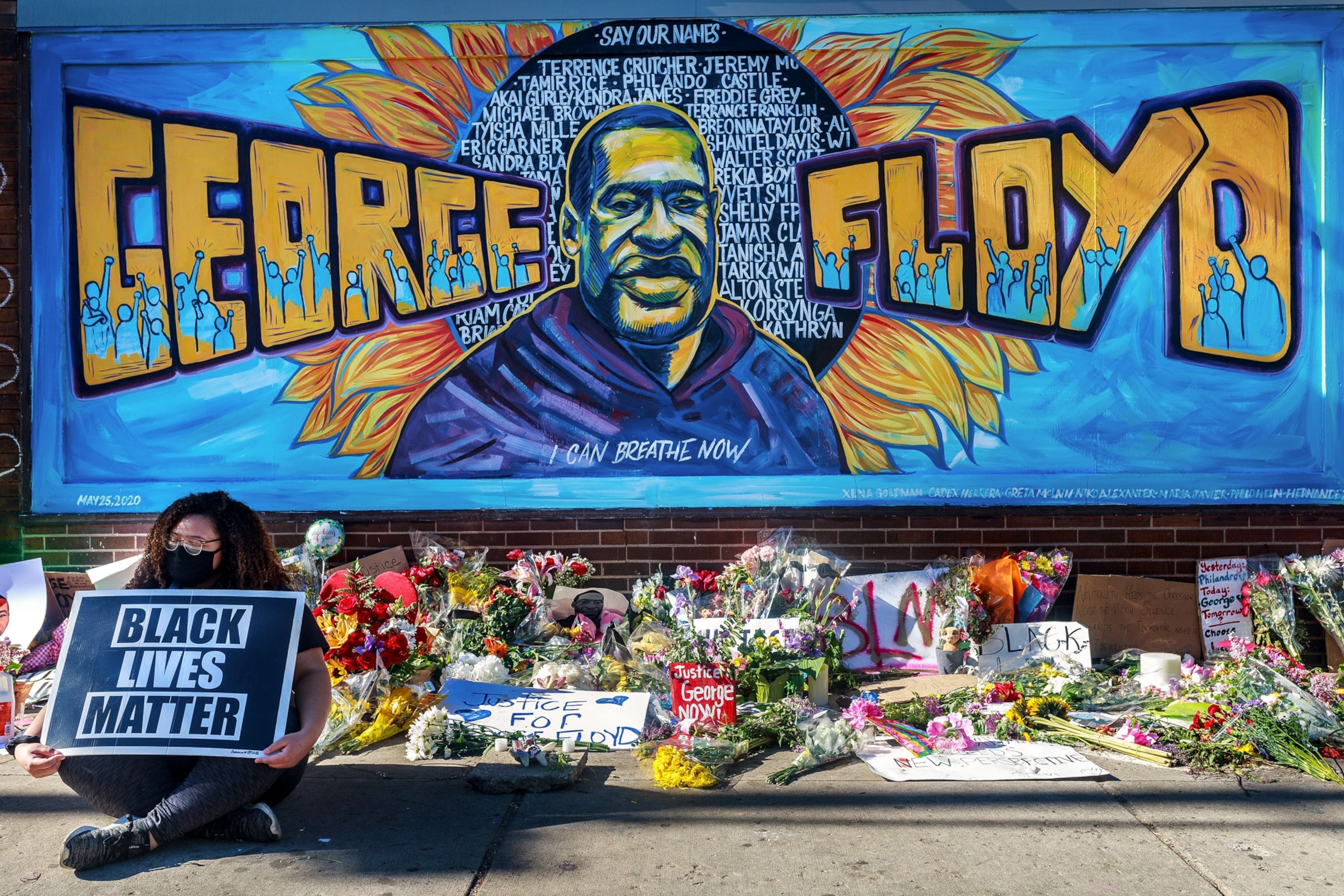
I want to take this slowly: because one of Shapiro’s signature techniques is talking fast and overwhelming his opponents with words that have the appearance of sound, logical arguments. So, right from the beginning: his main claim here, as presented by the title of the video and the first 13 seconds, is that the real reason Derek Chauvin was convicted of murder in the killing of George Floyd was because he had already been convicted in the court of public opinion of being a racist. He expands this in the following 45 seconds by describing Chauvin as “emblematic of an American system of racism,” and uses as evidence the claim that if you asked Americans today if Derek Chauvin was a racist, Shapiro guarantees that a majority of Americans would say yes.
I don’t want to spend too much time exposing Shapiro’s logical failings; the fact that he is a poor debater who wins with sophistry is an issue I have with him and not the central problem with this argument. But it is necessary to identify the places where his argument shifts, because one of the most common manipulations of a discussion is changing the topic, or changing the focus, or changing the argument. We all know it: one of the classic cliches is that arguments between spouses start out with one problem, but then turn into an argument about whose turn it is to do the dishes.
Shapiro does this here. Whether or not Derek Chauvin is personally a racist has nothing at all to do with whether or not he is emblematic of an American system of racism. Whether he is a racist or an emblem of racism has nothing at all to do with whether the majority of Americans perceive him as a racist. And none of that has anything to do with whether or not he is guilty of the murder of George Floyd. Again, because Shapiro is a sophist, he doesn’t seem to argue here that Chauvin was innocent of murder; he argues that Chauvin was unfairly convicted of racism, and simply implies that this unfair conviction of Chauvin for the “crime” (Shapiro’s description) of racism was the “real” reason Chauvin was convicted of murder. He also says, between about 1:00 and 1:30, that America was convicted of being racist because of this one “data point,” Chauvin killing George Floyd; he seems to be implying that America has also been unfairly convicted of that crime of racism, because the conviction of the country was dependent on the conviction of Chauvin for racism, and that conviction was unfair, and also convicting the entire nation because of this one crime is also unfair. Not the conviction for the crime of murder, again, but Chauvin’s conviction for the crime of racism. Which was unfair because it was never brought up in court, never alleged, and never proven, as he says, strongly, several times in this video.
This is what I mean about shifting the argument, and why I call Shapiro a sophist. He’s saying that racism was the reason for Chauvin’s conviction, and in almost the same breath (I don’t know if it was the same breath because I’m not sure that Ben Shapiro breathes: it is genuinely impressive how many words he can get out in a minute, without ever seeming to pause. Sorry; off-topic.) he states that race was never brought up in the trial. How on Earth is the lack of evidence supposed to serve as evidence? It’s not: his evidence is that “we all know” that Chauvin’s conviction was for racism, not for murder. His evidence is that if you asked Americans if Chauvin is a racist, the majority would say that he is. Or at least, Shapiro says (in fact he guarantees) that the majority of Americans would say that Chauvin is a racist.
What Shapiro is really relying on here is the resentment in his audience — generally a white conservative audience — about being called a racist. His audience doesn’t like to be called racist when there is not crystal clear evidence of racist action and intention presented: evidence that would meet the standard in a court of law. That is, unless you can point to the Nazi tattoo on my forehead, and the sworn statement I signed that my Nazi tattoo represents my genuine conviction that the white race is supreme, AND my conviction in a court of law for a hate crime committed in pursuance of the achievement of those white supremacist views — then it is not fair to call me a racist. And since that is his audience’s definition of a racist, calling someone a racist who does not have all of that evidence of racism is deeply offensive. Of course it is: who would want to be accused of that kind of atrocity?
This is, by the way, one of the central conflicts in our society, and it is a subject I will keep coming back to again and again: we have never had a real national conversation about what the word “racism” means, about what it is to be racist. We have not had that conversation because too many people, like Ben Shapiro and also like a much greater number of people on the left, garner too much political power out of misusing accusations of racism, which is easier if they don’t carefully define their terms. It is also much easier to continue maintaining a racist society if the definition of racism is unclear.
Shapiro points out that the evidence of Chauvin’s racism is the death of George Floyd. He says (About 1:00) that is not evidence of racism, it is evidence of a bad cop, of bad police procedure, of recklessness; it is not evidence of racism. But what is his evidence of this claim? That racism was never brought up in the court during Chauvin’s trial. As I said, the charge of racism can only be proven with evidence presented in a court of law: not in the “court of public opinion.” And in another amazing piece of sophistry, starting about 1:45, he says “Let us be real about this,” and then goes on to describe how the presentation of evidence to the public would have shifted public opinion, and therefore the verdict. He says that if the bodycam footage had broken at the same time as the video captured by Darnella Frazier, and if all of the evidence had been presented, and there had not been “20 million people in the streets declaring that America was systemically racist and that this case was and that this case was a case of racism” then it is “highly doubtful” to Ben Shapiro that the jury would have convicted Chauvin of murder.
I honestly don’t know if Chauvin is guilty of murder. I watched the video, and I saw the bodycam footage. I recognize that Shapiro is arguing here that the bodycam footage starts earlier, and shows the struggle between Mr. Floyd and the police before the officers put Mr. Floyd on the ground and before Chauvin knelt on him, and therefore it shows justification (Shapiro is alleging) for the use of force because Mr. Floyd was resisting arrest and so on, whereas the video that helped make this case so famous just starts with Chauvin applying force without giving us the justification for that force, and therefore prejudiced people against Chauvin. I did not see the extended footage as justification. I thought it showed that the police, who probably should not have been called in the first place (I don’t think passing a counterfeit $20 is evidence of criminal action requiring a police response), should not have approached a man in his car, unaware that he had been reported for passing a counterfeit $20, from out of his line of sight, startling him, scaring him and provoking an agitated response, and then using that response to justify pointing a gun at him, scaring him further and provoking an even more agitated response, and then continuously escalating the interaction until it becomes an argument about how much force is required to restrain someone who is resisting being restrained. In fact, I think the extended footage implicated the three other officers in the murder. Not because I know in my liberal heart that Derek Chauvin is racist, but because I don’t presume that George Floyd was a threat, as the police clearly did, and I don’t think that violence is justified in ending a threat, and certainly, without a question, the use of force should end when the resistance ends. If Mr. Floyd was fighting or running away, force might have been called for — but as soon as he stopped fighting, the use of force should have ended. Period. Not gone on for nine and a half minutes. Did the police see Mr. Floyd as a threat because of his race? Was his race the reason why the store’s owner called the police on him for passing a counterfeit $20? I think the answer is definitely yes, but I can’t say for sure. What I can say is that the full footage does not clearly, undeniably sway public opinion towards vindicating Chauvin’s actions, because it doesn’t exonerate Chauvin for me. Though I recognize that other people disagree with me, and think his actions were justified. I see Shapiro’s point, that the full footage might have moved people differently than just the witness’s video did; the death of Ma’Khia Bryant seems to be showing that: but that is a question of how you can move (or manipulate) public opinion, not an argument for how you can find the truth in this case: which is why this extraordinary sophistry. Just watching the videos does not prove Chauvin’s guilt or innocence, which is why I say I can’t know for sure if he was guilty or not.
But this I can say for sure: the best evidence that I know, on either side, is that 12 American citizens, after hearing weeks of evidence and argument, found Chauvin guilty on three counts including second degree murder. Shapiro has not one single argument here that is better or more reliable than that verdict. Nor do I. So I will accept that verdict as the answer, over the doubts of one Ben Shapiro. I suspect that Shapiro, who is in fact incredibly intelligent and both educated and experienced, having graduated from Harvard Law and worked as an attorney before going full time into conservative punditry, also recognizes that he does not have one single argument that is better or more reliable than that verdict. But he doesn’t say that, because he is a sophist and a manipulative pseudo-intellectual who profits from stoking the flames of outrage and partisan division, and convincing his white conservative audience that Chauvin is not guilty of racism, and therefore neither are they, and that the accusation of racism is much worse than the actual murder of George Floyd by Derek Chauvin, because that false accusation of racism caused the wrongful conviction of Chauvin for murder, when at best he was just a bad cop following bad police procedure and acting recklessly. And why those three descriptors, Shapiro’s own, should not be sufficient to show that the killing was in fact murder is beyond me: clearly those reasons, which were presented in the trial and supported by video evidence and expert testimony, were sufficient to make the jury convict Derek Chauvin of murder.
Of course, because Ben Shapiro is a sophist and a manipulative pseudo-intellectual who profits from stoking the flames of outrage and partisan division, he builds from his claim (presented without evidence beyond his own opinion and “what we all know to be true,”) into greater assumptions and accusations, namely that this case has been entirely political, that it has been used by Democrats to build the narrative that America is racist. Again, not to get too deep into flaws in the argument and logical fallacies and such, because the focus here is simply that Ben Shapiro is wrong, but I have to revel in the towering house of cards he has built here: starting with (1) Derek Chauvin was innocent of murder; then (2) Chauvin was convicted because the public decided he was racist, along with (2B) The public would not have decided Chauvin was racist if they had seen George Floyd resisting arrest and being visibly agitated. Then you have (3) Because it was not proven in the court that Chauvin was racist, Chauvin was therefore not racist; (4) America was accused of racism because Chauvin was accused of racism, while simultaneously, (-4) Chauvin was accused of racism because America is and was and has been accused of racism; then (5) since Chauvin is not racist, America is not racist — and also (-5) since America is not racist, Chauvin is not racist — and then (6) the Democrats have taken up this issue because they use false accusations of racism for political gain. All assumptions, many of them contradictory and even absurd on their face, yet we’re just supposed to accept them as true (Because Shapiro’s audience does accept them as true, I would guess). As an example of this, Shapiro, starting at 3:28, begins talking about Philonise Floyd, George Floyd’s brother, who gave a statement about Chauvin’s conviction in which he compared his brother to Emmett Till. Shapiro gets very exercised about this, taking offense on behalf of Emmett Till’s family — and also revealing his (Shapiro’s) additional faulty reasoning for the justification of George Floyd’s death — but there are several problems with this. One is that he gets some of the details of Emmett Till’s murder wrong, but I don’t want to nitpick; I’m only pointing that out because if you want to get self-righteous about the truth, you should present the whole truth. The big problem is that he argues that the analogy is wrong because the circumstances surrounding the death of Till and the death of George Floyd were entirely different, and therefore it is a bad analogy intended to make the murder of George Floyd as tragic and abominably racist as was the murder of Emmett Till. And therefore, of course, the murder of George Floyd was not as tragic and abominably racist as the murder of Emmett Till.
But here’s the thing: that is not the analogy that is being made.
Frankly, I’m not going to speak for Philonise Floyd. His brother was killed, the murderer was convicted; Mr. Floyd is welcome to say whatever the hell he wants in the aftermath of that tragedy. He can say that his brother was the Second Coming, or the greatest American since Abraham Lincoln, or that he was cooler than Napoleon Dynamite: none of that is evidence of any of the accusations that Shapiro makes about the Democratic party using Floyd’s murder to make political hay. (I will say that Shapiro does not directly criticize Mr. Floyd: he rather goes after the more famous men standing in support of Mr. Floyd, namely Rev. Al Sharpton, Rev. Jesse Jackson, and Ben Crump — who, weirdly, I guess have to name as the head of George Floyd’s family’s legal team, which one would think could be the explanation for Mr. Crump’s presence at Philonice Floyd’s press conference, rather than the political agenda Shapiro seems to ascribe to him. Shapiro calls them all racebaiters, of course without any evidence whatsoever, allowing that ad hominem attack to support his house-of-cards assumptions about the political agenda being expressed here.)
But others have made the same connection between Emmett Till and George Floyd, so let me address that: the argument has not generally been that Floyd was murdered in the same way that Till was. Nobody has made that claim, other than Till’s cousin, Ollie Gordon, who did say that she felt the same way watching the video of Floyd’s murder as she did when her cousin was lynched. The point that has been made repeatedly is that Till’s murder, and even more importantly, his mother Mamie Till’s decision to publicize the horrifying details of her son’s murder, with an open casket funeral and published pictures of his wounds, galvanized the civil rights movement and helped bring about the changes the movement wrought over the ten years after the 14-year-old was killed; similarly, George Floyd’s murder, which was not unique but was certainly more publicized than most similar murders, galvanized the protests that happened in 2020, and may lead to some changes — potentially including the conviction of Derek Chauvin. And that is a reasonable analogy; but it does support the idea that the country is in fact racist, which is why Shapiro has to argue against it.
In the process of arguing against it, Shapiro does go after George Floyd: he describes Emmett Till with a list of negatives, all of which are points Shapiro wants to make about George Floyd. He says that Emmett Till was not someone passing counterfeit bills, that he was not a repeat drug offender, that he was not a repeat criminal who had done jail time, that Till did not hold up a pregnant woman at gun point and rob her house while her kid was in the house. And perhaps the most important point (though it is not the most emotionally manipulative point), Till did not resist arrest. Of course: none of these things matter in the slightest. George Floyd was not killed because he was a repeat drug offender, nor because he was high when the police detained him. He was not killed because he had a criminal record. He was not killed because he was passing counterfeit bills (There is no evidence, of course, that he even knew that he was passing counterfeit bills). He was, and this is the crucial point, not killed because he was resisting arrest.
George Floyd was killed because Derek Chauvin murdered him. As was proven in a court of law.
Now, I do have to point out again that Shapiro doesn’t actually say that Chauvin did not commit murder; he said that he doubted a jury would convict Chauvin of murder had it not been for the court of public opinion convicting Chauvin of racism. I don’t agree, clearly, but I will say there is some argument to be made that the jurors were swayed by the events of last summer, and by the protestors showing up in great numbers outside the courthouse throughout Chauvin’s trial. It may be that the jurors convicted because they were afraid that there would be riots if they acquitted Chauvin. That may be true, though of course it may not be; there is just as much reason to think that the jury, or at least some members of the jury, would acquit in defiance of that pressure, would even seek out the violence that may have followed an acquittal. It is extremely likely that some members of the jury would fear the consequences that might have come, that still might come, from the police because Derek Chauvin was convicted. In any case, it is not true that the jury convicted Chauvin only because of the accusation of racism. Since, as Shapiro states, race was never brought up in the trial, the only way the jury could have convicted based solely on the accusation of racism would be if they came in with that idea already in their heads, that they were prejudiced against Chauvin and no amount of evidence would ever sway them. But since 46% of Republicans and 25% of independents think it was the wrong verdict, based on the same public opinion evidence that Shapiro claims is the reason for the conviction, it’s far more likely that, if public opinion actually held such sway over the minds of the jurors, some of the jury would have voted to acquit. It’s practically impossible that the jury would be all Democrats (Also, 10% of Democrats think it was the wrong verdict, so at least one juror on an all-blue jury would have thought that, statistically speaking), and hard to believe that Republicans would overcome their prejudices while Democrats would not, based on the same evidence. One pro-police Republican voting to acquit would have led to a hung jury and a mistrial, and that has historically been exactly what happened in even the most egregious cases of police violence. Instead all twelve jurors, some of them likely sympathetic to pro-police ideas if not personally in support of them, all of them surely feeling pressure from conservative friends and neighbors as much as from liberal friends and neighbors, voted to convict. On all three counts.
Because Derek Chauvin murdered George Floyd. As was proven in a court of law. Without race being brought up once.
Now: is America racist? Was Derek Chauvin’s murder of George Floyd emblematic of that systemic racism? Might the video, the case, the public response both from 20 million people on the streets and from politicians and political pundits, all potentially have had, or will have in the future, an impact on the racism in this country?
The answer to those questions is the same as the answer to this one: Is Ben Shapiro a sophist and an annoying twerp?
 Just Dusty