Time For My Annual Tradition

It’s Inservice Time again!

That means it is back to work for me.

It is Icebreaker time.

It is time to travel to Phoenix, 120 miles away and approximately 120° Fahrenheit, because my school district wants to pretend that we are all one community — even one family.

It’s time for gratitude ponchos.

This is the time of year when a professional pedagogist who makes ten, twenty times my annual salary (sometimes for each appearance) comes to my school, and tells me why everything I’ve ever even thought about doing in a classroom is wrong, and therefore, if I don’t want my students to fail utterly at everything in life, and if I want to even dream about maybe keeping my job, I will need to change every single thing that I do: because all of it is wrong.

Essentially, this is the time of year when I get mad. Frequently. Vociferously.

And my wife is now tired of listening to me rant about this issue.

So now, Dear Reader, it is your turn.

So this year, when we drove from Tucson to Phoenix to spend time with our beloved school family (Which, if that were the case, seems like icebreakers wouldn’t really be necessary? You have icebreakers at family reunions? Or Thanksgiving?), after we had the icebreaker, we listened to a motivational-speaker-sort-of-pedagogist who wanted us to think of teaching in a new way.

She said that our minds are wired to consider certain weighty moments in our lives as what she called “temporal markers” (Or was it milestones? I didn’t listen too closely.), and said we take these moments — milestone birthdays, the start of a new year, the anniversary of some important occasion — as signals to move away from the past and orient towards the future. She said we give ourselves a chance, at these times, to start over with a blank slate: and that our minds actually promote this, by taking a new perspective, examining what has gone before, and then considering new aspirations. We see ourselves as having closed a chapter, and started a new one; and this gives us new energy, it clears away old thoughts and feelings and gives us room for new ones. She talked about this like it was a very positive thing.

She asked us, as pegagogists and motivational speakers are wont to do, to share with our table partners (Oh — we were assigned tables with random teachers from the other schools, so that nobody was sitting with anyone they knew well, because Lord knows the last thing teachers need to be at an inservice is “comfortable.”) how we marked these moments of change, from past to future, in our classes, in our daily lives. And I thought about it, and I realized: I don’t really do this. I mean, okay, sure, when I had my birthday three weeks ago, I thought, “I’d like to spend today doing the things I want to do for this whole year, so I can start a trend or a habit right now and continue it all the way until my next birthday.” But I didn’t follow through with it. I don’t make New Year’s resolutions — I quit smoking on December 28th, as I recall, five months after I turned 35. I started going to the gym more regularly last May, and stopped around November, and picked it up again in February. I don’t celebrate things happening in multiples of 5 and 10; in fact, the two numbers I think I notice most (Other than 420 and 69, which I always have to notice because I am a high school teacher and I know those are going to get a response) are 42, because of Hitchhiker’s Guide to the Galaxy, and 37, because that’s how old Dennis is.

There’s some lovely filth down here…

And in terms of my teaching, I don’t have any kind of clean breaks: when one class ends, I almost always have students who stay after the bell to talk to me for a couple of minutes, which leads directly to students in the next class coming in a couple of minutes early to talk to me. They stay into lunch, they stay after school; some of them contact me outside of school hours. I frequently give extra time for tests, letting them run into the next day’s class; I have been known, even, to continue reading a novel even after the end of the semester when we started reading it.

I don’t tend to break my time up: I tend to blend it together.

This also represents my teaching style: because I think my primary purpose, as a higher-level literature teacher, is to connect things: I want to connect my students to other people, and to the feelings of other people as well as their own. I want them to recognize that historical events and epochs are connected to the lives of people, and also connected to the present, and to our own lives. I want them to see the web of relationships that spans all of our world, and all of our history. I want them to connect art to life, and life to art, themselves to the greatest authors of all time, who were, after all, only human, and were once themselves depressed and horny teenagers.

Nobody more so than William Shakespeare.

So then, when the motivational pedagogist told us that we should create this sort of temporal mind marker with EVERY SINGLE CLASS, so that EVERY SINGLE CLASS was an opportunity for a fresh start, for a clean slate, for a new beginning with new hope and new energy, a chance to CHANGE THE WORLD, I felt — well, a little sad. Obviously I was doing this wrong. Here I am, thinking of every class as connected to every other class, and wanting to get deeper into longer learning experiences, that bleed from day into day, from week into week, from month into month. I like that I have students for multiple years — though I also think they should get a chance to have different teachers, too; I did actually teach one student for all four years of high school, so that essentially everything that young person gained from high school ELA instruction was all from me, but I think that is definitely not the ideal. But I like connecting year to year, idea to idea. I think that’s much of what is missing in our culture and society — connection — and I want to promote it.

But that’s wrong, I guess.

I should be starting every new class fresh, completely discarding what happened in the past and looking only to the future. I guess.

I also thought: My god, how much energy do you have to have to infuse that much new optimism into EVERY SINGLE CLASS?? I work hard enough trying to keep my bad moods from bleeding into the next class, and to change from one specific topic into a new one for the new class; I’m not sure I can close my eyes, ball my fists, and think, “Okay, Dusty: here we go READY TO CHANGE THE WORLD AGAIN!”

But I should be doing that, I guess. Just like I should be at the door greeting every new student who comes into my room with their own special signature handshake, so they know that they are special and individual to me. (Though, for someone to be special to you, doesn’t that mean you have to build a relationship? And remember it, from one day to the next? Would it be better to discard the past every day and treat every day as a new chance to succeed?) I guess.
Who Are You Again GIFs | Tenor
Also, who is that person you’re sitting next to?

So then, after a brief break for a brain wake-up call (We played Rock-Paper-Scissors! With our non-dominant hand! Which was way better than just sitting quietly by myself for a few minutes!), the motivational pedagogist moved on to her next topic: direction. And destination.

Where before the center of the analogy had been milestone birthdays — her husband had just turned 50, and I bet you’ll NEVER GUESS what he did for his 50th birthday! (And if you guessed this, you were right!) — this time the metaphor was flying airplanes. And she talked about compass headings, and how if you were off even one degree, out of 360 degrees on the compass, it would, over time, take you quite far away from your destination — in fact, her example was of an airplane that was two degrees off on their heading, and they CRASHED INTO A MOUNTAIN.

SO OKAY.

THAT’S COMFORTABLE.

I’M FEELING GREAT RIGHT NOW.

And how did she analogize this back to teaching and education? Well you see, if you — or rather I, since I was the target here — I focus in my planning and curriculum design too much on what I am teaching, rather than on what students are learning — that’s a bad compass heading. It may be close, it may only be off by a couple of degrees — but over time, those few degrees’ worth of difference will — well, you know.
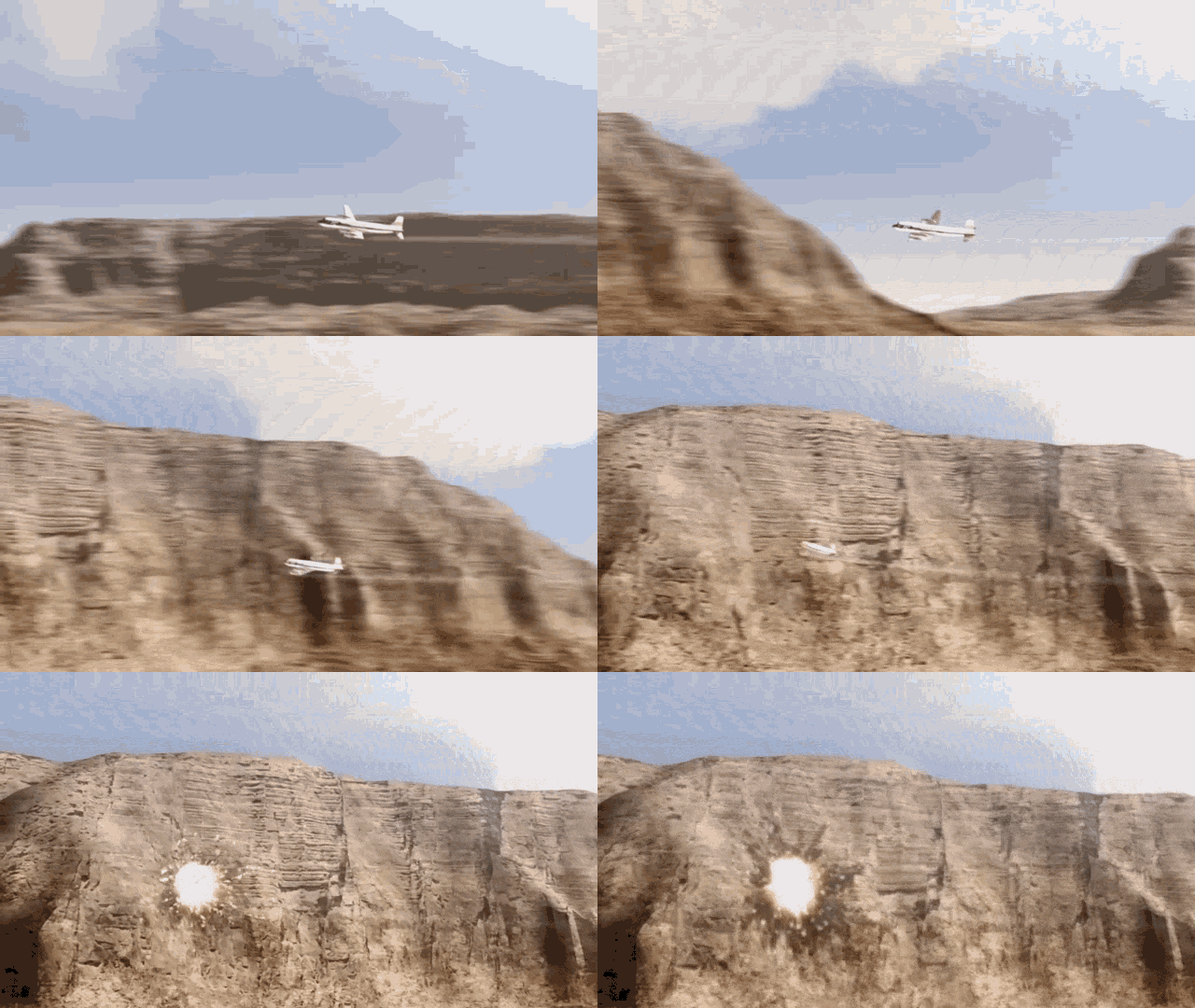
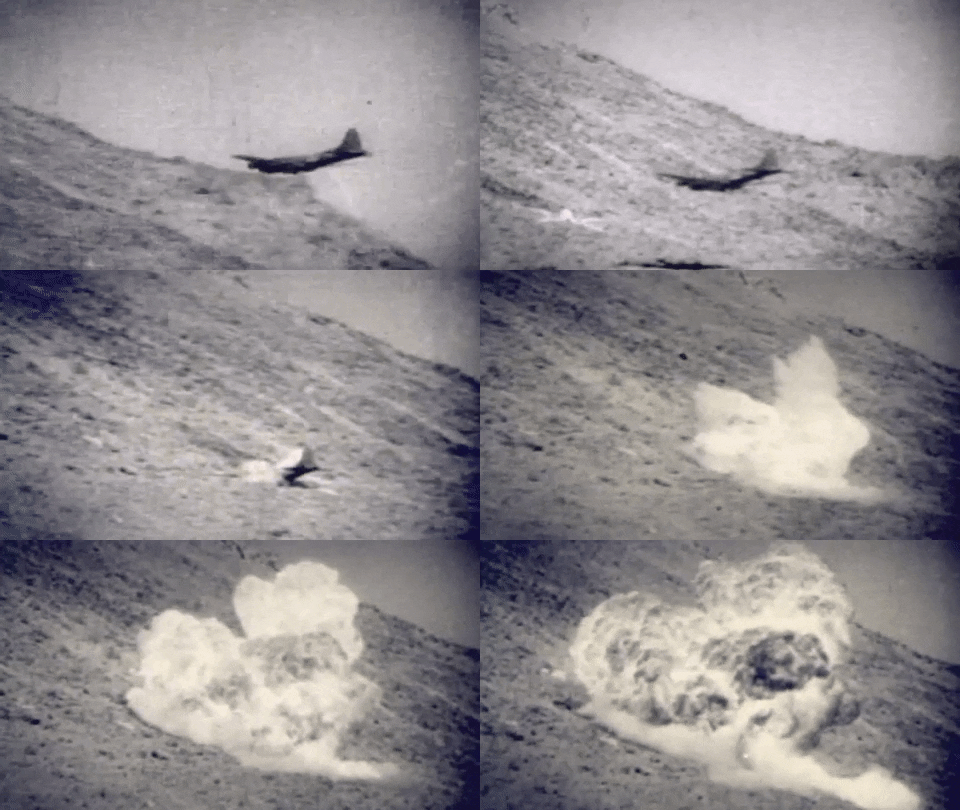
Plane Crash GIFs | Tenor
Crashed-airplane GIFs - Get the best GIF on GIPHY
Burning Plane Crash GIF by South Park - Find & Share on GIPHY

Okay: so now, not only am I failing my students because I am not treating every single class like it’s New Year’s Eve and I only get one wish AND IT’S FOR YOU KIDS TO LEARN THIS SONNET!, but also, I am failing because, it’s true, I do often think first, “Okay, what am I doing next class/tomorrow/next week?” I do often think about what I am teaching, rather than what my students are learning.

And my failure? It’s right here:

Plane Crash Plane Crashing GIF - Plane Crash Plane Crashing Crashing Plane  - Discover & Share GIFs

But here’s the thing.

I don’t buy this.

Not only do I not believe that starting fresh every single period is the best relationship to have with students, or the best perspective to have of school, or the best way to CHANGE THE WORLD; but I also don’t believe that student learning has to be the center — the course heading — for every single lesson I teach. I don’t believe, at all, that there is a single destination in education that can only be reached by adhering to a specific course heading. Partly that’s because I think of my lesson objectives in a similar way to how I think of classes ending and starting: I like to make connections. Or more precisely, I like the students to make connections. So there is never a single destination for me, it is always connected to other destinations — and since I want the students to do that part of the thinking, rather than having me prescribe exactly what connection they should make and what it should mean to them, I don’t think my lessons have only one possible (connected) destination.

For instance:

I teach this poem sometimes. Mostly as a joke, but also, because it has a useful point in it that I can make about poetry.

Candy is dandy, but liquor is quicker.

This is actually a poem titled “Reflections on Icebreaking,” by the comedic poet Ogden Nash, one of my favorite poets. When I teach this, most of my students connect it to Willy Wonka (Johnny Depp says it, too, in the remake), and they chortle and chuckle over the scandalous idea of their English teacher promoting drinking! Alcohol! The very idea!

We’ll leave out the facts about how steeped our society is in alcohol, and the fact that I teach high school students who have very little innocence left and certainly none about the existence of intoxicating beverages: and just look at the poem. It’s very short, obviously; Nash’s original only has four lines (Candy/Is Dandy/But liquor/Is quicker), but in those four lines, there are two rhymes, and one of them — liquor/quicker — is really quite clever.

But beyond that, between the title, which in this case provides vital information about the message of the poem, and the specific word choice that Nash gives us, there actually is an interesting point to be made by this poem. First, while my students always think the point is that liquor will get you wasted faster than candy will, I only have to challenge them once on whether or not they think of candy as a way to get wasted before they realize that probably isn’t what the poem is about. Then I focus them on the title, ask what ice breaking is (Most of them don’t really know, those sweet, sweet summer children), and get them to recognize that these are two ways to “break the ice,” to loosen up awkward social occasions. I ask them how candy can do this, and when it is used; they always think of Halloween parties and such, where candy is put out in dishes — but nobody thinks of the doctor’s office, where the child is given a lollipop to ameliorate the pain of the injection; or smokers who chew gum to alleviate their cravings for nicotine. There are countless places where candy is offered, or consumed, in order to help people relax: but Nash has, most likely, a specific social situation in mind, which we can tell because of the second ice breaker he names: liquor. Now, liquor is used to ease awkwardness and uncomfortable politeness in many situations, as well (Though hopefully not the doctor’s office); when I met my new boss this past summer, I made sure to go out with him for tacos and margaritas, even though I didn’t feel like being social, because I wanted him to get to know me better, because he’s my new boss. But there is only one social situation, traditionally, where both candy and liquor are frequently used to reduce awkwardness: it’s dating. For breaking the ice on a first date, a gift of candy is dandy — but liquor is quicker.

And that’s when I make what I think is the real point here: Nash does not say that liquor is better. He simply says it breaks the ice quicker. And it does: it lowers inhibitions, which obviously would reduce awkward tension. But because it does this fast, probably too fast, it can also lead to regret: which might be why your better choice would be candy. Which is dandy. Everybody likes candy.

So okay, that’s a lesson I teach. I think it shows the importance of specific word choice, and of important phrases like titles, and that every poem can have something genuine to say, even if it isn’t anything terribly deep.

So am I off target here?

Have I got the wrong compass heading? Will I miss my destination?

Am I headed for the mountainside?

Crash-into-plane GIFs - Get the best GIF on GIPHY

See, I don’t think so. I think there are, in truth, many possible destinations. If I can get a student to understand that poems have messages, that’s a victory — that’s a destination I want to reach, and which is worth reaching. If I can get a student to appreciate that poetry uses specific words to create specific meanings, that’s a destination worth reaching. If I can get a student to recognize that references in movies and TV shows can have much more depth and meaning than you would think, that’s a destination worth reaching. And if I can get a student to laugh, and enjoy either English class or poetry or both, just a little more, that’s the best destination of all.

So which course heading is that?

If I’m off by one or two degrees – will I miss my destination?

Do I need, as the pedagogical motivationist went on to say, a sharp focus on every tiny detail of the lesson, always keeping the destination in mind, because a mistake of only one degree would mean that I miss the destination and crash into the mountainside?

No. No to all of it. It’s not true, and in fact it is dangerous and damaging to what education should be.

The purpose of the metaphor, and of the pedavational motigogist in general, was to get us to focus on standards. On learning objectives. On SMART goals – Specific, Measurable, Achievable, Relevant, and Time-Bound – because that’s how you aim at a specific target, and hit it every time: when the target is tiny, and close by, and simple to recognize, to name, to teach, and to assess whether or not it was hit. And when education focuses, as education so often does, on students reaching the standards, and nothing else, then sure, the only way to teach is to focus exclusively on those tiny little learning targets. And I guess taking your eyes off the next inch you need to crawl might make it harder to reach that target in a timely manner. 

But honestly: if you are flying a plane, shouldn’t you look a little higher up, a little farther out, than the next inch? You may want to keep the compass heading locked on specifically – but don’t you also want to watch the horizon? Don’t you want to keep an eye out for, I dunno, MOUNTAINS YOU MIGHT NOT WANT TO CRASH INTO???

Wouldn’t it be a better metaphor to think of teaching and learning as flying a plane, and looking around, observing the situation around you, considering what might be a good place to land – gauging, judging, using experience to guide your assessment of the circumstances based on observations – and then bringing the plane in safely? Or flying wherever the hell you want to go, following your dreams to anywhere in the world they might lead you? Wouldn’t those be good ways to think of the school-plane we’re flying?

I think so. Though I guess it wouldn’t be proper pedamotive gogyvation.
Sebastian Maniscalco Maniscalco GIF - Sebastian Maniscalco Maniscalco Wth -  Discover & Share GIFs

So here’s my new plan. I’ve thought for a long time that I would be an excellent inservice presenter. I’m good in front of a group of people, I speak well, I have a good sense of humor; and I think I know a fair amount about teaching, and could have some useful things to say to help make people improve as teachers and educators. 

But I would never get hired. Because no administration would want to buy my inservice program of “Let The Teachers Teach Whatever The Hell They Want To Because They Know Better Than You.” That system is not guaranteed to raise test scores, which is really the only reason why administrators bring in inservice presenters.

So this is what I’m going to do. I’m going to make the slickest presentation imaginable, about how I’m going to strip teachers of every shred they are clinging to of self-esteem or confidence, so that they will only do what they are told, and will never, ever, argue with their administrators ever again, no matter how inane or nonsensical are the programs and innovations those administrators come up with. And when I get hired to train a staff, I will get the administrators to leave me alone with the teachers – and then I will do nothing but praise those teachers, and honor them for the work they do and the dedication they put into it. I will thank them for everything they sacrifice to try to help their students. I will point out – because I think it’s important to remember – that students are the ones actually doing the work of learning, and that it is goddamn hard work; they deserve praise and honor as well, for every one of their victories large or small. I will help my audience of teachers see that the job of a teacher is to help students find the strength and the courage to keep working, even though the potential rewards of all of their very hard work are very far away and very abstract – and not always guaranteed, or even likely. I would encourage those teachers to talk to each other, and to their students, before they talk to any administrator, or any damn pedagogical expert, when looking for inspiration and guidance about how to create a new and better lesson for helping students get what they need. I would try to give the teachers the self-confidence to try new things, and to experiment, and to be honest with themselves and their students when they don’t know what the right answer is, or if the new thing they’re trying is the best thing: but they should try it anyway, and let students see them trying it, and thus encourage innovation and creativity and problem solving, along with honest reflection and assessment of one’s success. And I will tell those teachers to ignore every single test result, and every administrator who focuses on test results; and I will say that, if they do use standards, to remember that standards are only one small piece of a whole system of education, and they cannot ever be the most important one: because standards are not people. And education is people. Really, it is nothing but people.

And then, I will ask all of those teachers to go on Yelp or Google Reviews or whatever is the Google Pedagogy website (PedaGooglogy? We’ll workshop it.), and give me a five-star review, and lie and say that I helped them realize that they need to focus on nothing but standards in order to raise test scores, and they’ve never been so excited to do just that. 

And then I’ll use those reviews, and my slick sales pitch of a presentation, to go to another school, and do the same thing over again. 

Until I crash into the mountainside.

In Memoriam

Tis Better to have Loved and Lost #Inspiration #Tennyson – Poems for  Warriors

I am now always suspicious of quotations that I find on the internet. Too many of them get misquoted and misattributed; particularly when they are turned into lovely images with flowers and weathered wood in the background, as this one is.

Like this, for instance.

Be not afraid of going slowly, be afraid only of standing still. – FS News  Online

There are many iterations of this one, which does in fact seem to be a Chinese proverb. Though the other images don’t have a baby sea turtle in them, so, y’know — lame. But definitely a Chinese proverb, at least according to the majority of the Google results.

Or wait: maybe it’s from a fantasy series by an author named Jeff Wheeler. Who created a culture named Dawanjir. (To be fair, the series is strongly influenced by Chinese culture, according to Goodreads. But still. This meme just says it is a Dawanjir proverb, and then slaps the author’s name under it.)

Jeff Wheeler Quote: “Be not afraid of growing slowly, be afraid only of standing  still. – Dawanjir
Also, where’s the turtle?

Or maybe it was this Joshua Muax guy?

I'm not afraid of growing slowly,as long as i'm not standing: OwnQuotes.com
I love that this website is called “Ownquotes.”

No, wait, I’m wrong — it was Benjamin Franklin who said it.

Benjamin Franklin quote: By improving yourself, the world is made better.  Be not...

(Benjamin Franklin is probably the one person most frequently given internet credit for stuff he never said.)

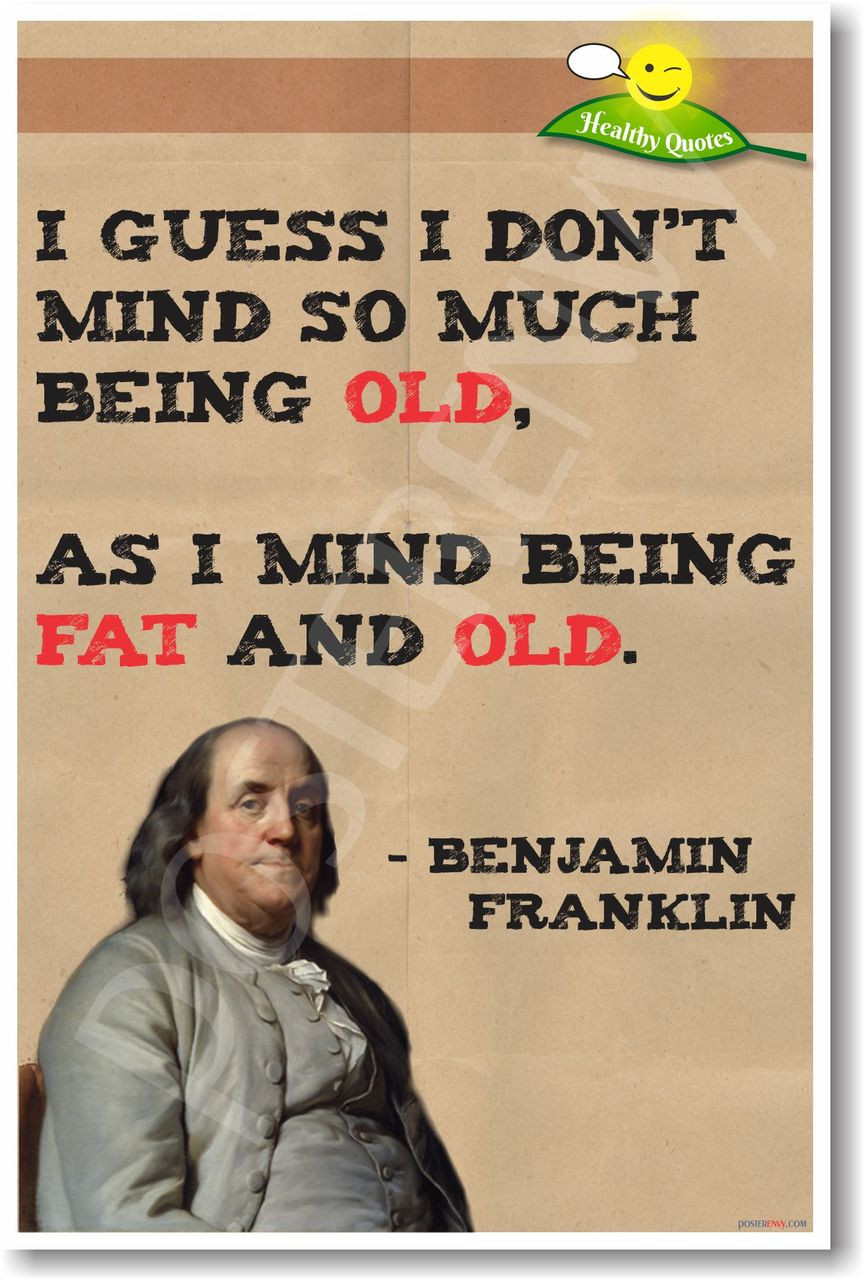
PosterEnvy - Ben Franklin Healthy Quote - NEW Humorous Nutrition Poster  (he039)
This one’s just mean.

But it turns out that, in fact, my first meme has it right:

Alfred Lord Tennyson - 'Tis better to have loved and lost...

That is the actual quote, and it was originally written by Alfred, Lord Tennyson, in a poem (a VERY LONG poem) he wrote after a good friend, Arthur Henry Hallum, died young. The poem is called “In Memoriam A.H.H.” And I would quote it here, but — seriously, it’s over 180 pages long. It’s here, if you’d like to read it.

All of this is a very roundabout way to come to my question: is this true? Is it better to have loved and lost, than never to have loved at all?

I started thinking about this last week, when I went to visit my father and help out with the memorial for his wife. My dad’s wife Linda (who was, of course, my stepmother, but I never ever called her that or thought of her that way) passed away in February, from complications from paraplegia, which she had lived with for about two and a half years. She and my father had been together at that point for thirty years, give or take; they had been married for almost twenty-five years.

No photo description available.

Linda’s passing was hard. The two and a half years before that had been extremely hard, on both Linda and my father. The four months after her death were very difficult for Dad, as well. And so at the end of all of that, I certainly found myself wondering: was it worth it?

I won’t presume to even try to answer this for my father; I only bring up his love and loss to explain why my thoughts turned down such a cynical and morbid path. When I was thinking about this, I was thinking about myself and my wife: we also have been together for almost thirty years, and married for nearly twenty. I hope and expect to be with her until one of us passes: and that thought was the one that started me on this track.

Let’s be clear: the answer is yes. Without a doubt, it is better to have loved and lost than never to have loved at all. I would never give up my wife, or my life with my wife, no matter how difficult the end of our lives together may be. And I have some idea, now, just how difficult it may be, for one or both of us — but that doesn’t matter, because suffering would never wash out all the incredible happiness and the years – decades — of simple contentment which my marriage has brought me. I do not undervalue contentment, as I hope you don’t, either — as many people do when they think about love, and how love changes from fiery passion to simple human affection and connection. The novel The Awakening, by Kate Chopin, with which I have tormented several years’ worth of AP Literature classes (The book is good, but it’s written in Victorian English, which is not my students’ cup of tea; and the main character is intentionally obnoxious in some ways, which makes it hard to sympathize with her. Actually, all the characters are obnoxious, which generally makes students want to give up on the book.), features a protagonist who believes that life should be mad passion, extreme highs and lows, especially in love; this leads her to unfortunate decisions and a bad ending. My romance has stayed more passionate than many, I think (Mainly because my wife is SUPER hot); but even if it fades to simple companionship, I think that would be a wonderful thing to have in my twilight years.

More to the point, there are people who avoid romance and particularly commitment because they believe that the fire fades, that the passion diminishes; and that is somehow sad — and therefore they avoid love because they don’t want to suffer that diminishment. For them, tis better to have never loved at all, than to have loved and then lost that love, at least the passionate part of that love. And those people are clearly wrong.

But here’s the thing: I don’t know if they are. They don’t know if they’re right. Tennyson didn’t know if he was right: because there’s no way to compare the two states of being. If you have loved and lost, then you can’t have never loved; if you’ve never loved, then you can’t have loved and lost.

I’m not trying to logic my way into a clever Gotcha! to disprove Lord Tennyson; even I’m not that annoying, I hope. It’s not that we can’t live two lives in order to compare them: it’s that we can’t possibly know what our lives would be like if things went differently. I think about this a fair amount, not least because I’m a fantasy writer who reads and teaches science fiction as well, and so I have spent more than my fair share of hours thinking about time travel and alternate history. I’ve read (and taught) about the butterfly effect, and about the multiverse; I wrote two books about a time-traveling Irish pirate (They’re right here, and I swear to you that Book III will be out by spring of next year), for Pete’s sake. And in my own life, I have thought extensively about the slow accrual of causal events, themselves too insignificant to recognize, which add up to something significant, in terms of my life with my love: because if I had not been a screwup in high school, and therefore lacked the GPA to get into a four-year school; if my father had not lived and worked in California and had a friend who taught physics at UCSC, who mentioned to my father that UCSC had a creative writing program; if I had not gone to the community college after high school in order to transfer to UCSC to study writing; if my counselor there had gotten my transfer credits right and I had finished at community college in two years instead of three; and if I had not been wearing a button that said “A dragon on the roof keeps burglars away” and thus gotten into a conversation with a fellow gamer nerd who became my friend and eventually helped me get a job distributing student IDs at the school — I would never have met my wife. All those ridiculous coincidences had to happen in just that way for me to find the love of my life. And also, let me say, there are just as many on her side: just as many ways that her path could have taken her far away from me. Which would have changed both of our lives.

For the better? For the worse?

Who knows? Who can possibly say?

One way it could have gone differently would have been if I had been able to succeed as a student in high school. I got my first Ds and Fs in my freshman and sophomore years, mainly because I did not have study habits. But I developed those study habits, quickly, when I went to community college; so certainly I could have had them in high school. If I had stayed in my honors tracks and earned good grades, I might have followed most of my friends, who went to Ivy League or similar top-tier schools. I might have ended up a lawyer, as many of my friends in high school did. I love argument and I write and read well, so it would make sense. My oldest friend did that, and he started his own law firm; could I have joined him in that? Could it be McGuire, Humphrey and Associates, LLC? (No question Josh would get first billing, by the way.)

Would I be happier that way? Ignoring for the moment the obvious other possibility that goes along with that alternate track, which is that I would have met and fallen in love and presumably married someone else; and though she would not be as perfect and wonderful as my wife is — because there is no one as perfect and wonderful as my wife — I had fallen in love before I met my wife, and so I could probably fall in love with someone else. But forget that: the question is, would I be happy if I never fell in love, or at least never married?

My brother Marvin is three years older than me, so he’ll be 52 this month. And though I don’t know all the details of his romantic life (and don’t want to pry), I know that he has never lived with a woman and never married a woman. (Also I know that he is not gay, which wouldn’t matter to me in the slightest either way, but one of my favorite stories is from when Marvin had dinner with our dad and Linda, and after a prolonged silence at one point, Dad and Linda burst out with, “You know, it’s okay if you’re gay.” To which Marvin responded, in some way, “Thank you? But I’m not?” Which is a scene that still cracks me up. But Dad and Linda thought they should say that because Marvin had not brought home any women to meet them, and so they made a reasonable assumption.) Marvin is exceptionally accomplished: his degree is in music composition, and after he graduated he became a digital editor in a recording studio, teaching himself how to handle the equipment and the tasks involved; and then after that, he became a self-taught software engineer and web designer, which he now does professionally — all the while keeping up his music; he sings and plays several instruments, in addition to writing and arranging in several different genres. (Also, he can ride a unicycle off-road.) And the question has to be asked: would he have been able to do all that if he had gotten into a long-term romantic relationship? Would he have wanted to do the same things? Or would he have made entirely different choices?

To the point: my brother is essentially a happy man. I am also essentially a happy man. Though our father has not been all that happy for the last few years, for a very long time before that, he was an extremely happy man — and, now that he has moved through the most immediate grief, and reached the closure of a memorial service, I think he can be happy again. Our mother, by the way, has been single since she and Dad divorced in the early 90s; and she is also a happy woman, most of the time. She had one proposal, some years ago, from a man she had been dating; she turned him down. And went happily on her way.

So is it better to have loved and lost than never to have loved at all? Frankly, I don’t think it’s possible to decide.

What is definitely true is this: once one has found love, real love, love that brings joy and contentment, love that lasts as long as life does and then even beyond that: there is nothing that would persuade one to give that love up. Not even the knowledge that some people might be happier living without that kind of commitment, that kind of potential turmoil, and without the devastating grief that waits at the end for all of us who love another person. I love my wife, and I always will; and that is who I am. Would I be happier if I had never met her? No: because that would not be me. That would be some other dude. Maybe a happy dude, but not me. My life became mine when that gorgeous woman came up to me in the cafeteria at Cabrillo Community College and said, “Hey — do you like gum?”

In truth, I love it. And her. Forever.

No photo description available.

The Skinny Poem

My apologies; I have had a hell of a few days, and though I wrote this on Saturday (Partly: part of it I wrote a week ago), I completely forgot to post it both Sunday and Monday.

So here it is, my Tuesday post: this is an analysis of the poem “I Was a Skinny Tomboy Kid” by Alma Luz Villanueva. I wrote this because my wife told me that I needed to do a better job of using my essays as models for my class; that when I wrote an essay for them, rather than my usual self-conscious method of reading it fast and then moving on, I needed to actually go through it, explain what I did, and get feedback from the students about what worked and what didn’t, and why. So I did that. My AP class had to write an analysis of this poem, and most of them didn’t do it, so I gave them this to show what it should look like. I think it helped.

I hope it gives you something worth reading. If nothing else, the poem is amazing; read that, and then go about your day, and you won’t have lost anything.

I Was a Skinny Tomboy Kid

[My apologies for the link; the poem is written a specific way on the page, and I can’t capture it in this post format. YOU MUST GO AND LOOK AT THE POEM THE WAY IT IS MEANT TO BE READ.]

Literary Analysis of Alma Luz Villanueva’s “I Was a Skinny Tomboy Kid”


When do we grow up? What makes it happen? When we say someone grew up too young, or too fast – what does that mean? Is it possible to grow up before you grow up? If that happens, is it bad? And then, once someone has grown up – is that it? Is childhood gone? Is innocence gone? Can we never be childlike, if not actually be a child, ever again?

In Alma Luz Villanueva’s narrative poem, “I Was a Skinny Tomboy Kid,” the speaker seems to grow up over the course of the piece; and it seems to be positive that she does so, not least because she realizes the truth about some important things in her life. But then at the end, she seems simultaneously to regress and progress, and so the overall message is unclear. But perhaps that is intentional: after all, how many of us know the actual clear, definitive answers to any of these questions about life?

The poem starts with the title line: since the word “tomboy” clearly associates with a female child – because who would call a boy a tomboy? Boys are just boys – and since the author is female, it’s tempting to assume that the piece is autobiographical and accurate. But whether the speaker is the author or not, she is fierce in that opening: her “fists [are] clenched into tight balls.” So she is angry, and defensive – maybe even offensive, maybe even looking for a fight. But at the same time, while she is a tomboy, which connotes overtly stereotypical masculine traits like aggression and risk-taking, she is also, in the title and the first lines, a skinny kid. Which connotes weakness, and fragility, and youth and innocence, because “skinny” seems to say a child who hasn’t grown a lot yet, who hasn’t yet reached her potential. This makes her fists seem much less intimidating: as does the use of the phrase “tight balls,” which don’t make her fists sound terribly frightening. And since she is a skinny kid, they’re probably not very frightening at all.

From that first image, we go into a different view of being a tomboy kid: because she isn’t fighting, she is avoiding people. “I knew all the roofs/And backyard fences,” we are told: places where other people would not be, would not see her. She goes on:

I liked traveling that way

            sometimes

      not touching

the sidewalks

            for blocks and blocks

it made

      me feel

victorious

somehow

over the streets.

So she is avoiding. She is hiding, trying not to be seen, trying not to touch the places where other people are. Only sometimes. And only, we are told, because she liked traveling that way: but the desire to feel victorious over the streets is telling. It implies that the streets are not something she could normally be victorious over, so she has to seek this way of doing it. And as another author pointed out, that pause between “feel” and “victorious somehow” pretty clearly shows some doubt or some question in that wording, doubt created both by the pause and by the uncertainty in “somehow.” So “victorious” maybe isn’t the right word, here. Maybe the streets aren’t her enemy? Maybe the streets can’t be conquered? What does it even mean to conquer the streets? Based on her description of achieving victory here, it seems to mean escaping them, rising above them – becoming more, grander. Learning to fly. Gaining freedom.

I liked to fly

         from roof

  to roof

      the gravel

falling

away

beneath my feet,

      I liked

          the edge

        of almost

not making it.

And the freedom

of riding

                  my bike

  to the ocean

and smelling it

    long before

I could see it,

We can see here one of Villanueva’s stylistic choices, in the line breaks and the formatting of the poem, with some lines jutting out beyond the others – particularly appropriate when describing the edges the speaker jumps off of, the edge of almost not making it. The gravel falling away, the words almost sliding across the page under our eyes as the gravel slid away under her feet. So here we see the risk-taking, which may be what the speaker does to be considered a tomboy – also climbing up on buildings and jumping across alleys is not a traditional “female” activity (Though it should be, because women usually have better balance than men): but now, separate from the issue of tomboyhood and so on, we have to ask the question: why does she do this? Why is she jumping from rooftop to rooftop? On some level she enjoys the freedom of flying, as she calls it; but then she clearly wants the risk, she liked the edge of almost not making it. Gravel falling away beneath her feet, which scares me just thinking about it. 

Why would someone want that? 

But the thought cuts off there, almost as if she shies away from it, changing the subject to something less shocking, less disturbing: she likes riding her bike to the ocean! How lovely! She likes smelling the ocean before she could see it – which may have some small meaning about the usual smells around her, the smells of city streets, which are generally awful and that’s why she revels first in smelling the ocean; this is emphasized by the fact that she can jump from roof to roof, and along or over backyard fences, for “blocks and blocks:” which shows the size of the urban area and how densely crowded the houses and buildings are there. But enough of the streets this speaker wants to defeat: now we’re going to the ocean.

Disguised as a boy, she thought. In an old army jacket. 

Why does she want to be disguised as a boy? Why did she think wearing an old army jacket would disguise her as a boy? Because women aren’t in the army? Don’t wear army jackets? She does continue the thought in the same stanza:

and I traveled disguised

as a boy

      (I thought)

          in an old army jacket

  carrying my

fishing tackle

    to the piers, and

        bumming bait

        and a couple of cokes

Fishing, bumming bait and a couple of cokes: these are all boy things, right? Sure, I don’t really understand why myself; I grew up as a boy and never carried fishing tackle down to the piers, never bummed bait or a couple of cokes – or caught crabs, as she goes on to say in the next stanza. But because the speaker says “I thought,” this is no longer about actual gender roles or expectations: this is about her perception of them. She thought wearing an old army jacket, carrying fishing tackle and so on, disguised her as a boy. So the more interesting question is not whether that disguise would work, what society would think of what she is wearing; it’s why she wanted to wear it. Why she thought it would work. 

The next stanza – though it isn’t clear that it is a new stanza; there is a large line break between “and a couple of cokes” and the next line, “and catching crabs,” but that is clearly continuing the same action, the same thought, and the new stanza doesn’t start with a capital as the last one doesn’t end with a period – goes on with this fishing expedition, with no particularly interesting images or ideas – until all of a sudden, after a dash, but without changing sentence or stanza, the speaker shifts from apparently fond memories of the seashore to this:

I didn’t like fish

       I just liked to fish—

and I vowed

                     to never

    grow up

    to be a woman

      and be helpless

  like my mother,

but then I didn’t realize

         the kind of guts

it often took

              for her to just keep

       standing 

where she was.

I’m sorry, what? How did we get from talking about fishing to talking about the speaker’s mother, and the speaker’s apparent contempt for her?

The answer is that we have been talking about this all along: it was just disguised in an old army jacket, with fishing tackle, jumping from roof to roof and almost falling. 

The speaker wants to not be female. “To never grow up to be a woman and be helpless like my mother.” That’s a sharp intrusion, a sudden juxtaposition, and a hard one to take in. The associations: growing up, being a woman, being helpless, like my mother; three of them are all neutral if not positive – but all changed entirely by the idea of helplessness. To this girl, her mother is helpless. Women are helpless. Perhaps adults are helpless, though it seems likely that her mother’s womanhood is the real culprit, not her maturity (On the other hand, the speaker is apparently not helpless yet, and the thing she wants to avoid is growing up, along with being a woman like her mother. So maybe it is age.). What kind of terrible situation makes this girl connect these ideas this way? To think that her mother’s helplessness – a word that describes both total vulnerability, and also complete isolation, because she is in need of help and has none – is inherent in womanhood? Is inevitable for her mother? 

My first thought is that her mother is abused. The victim of domestic violence. If this is what the poem implies, then I also suspect that this is a common situation in this girl’s world, because while she uses her mother as the example, she does associate this helplessness with womanhood, so perhaps she’s seen other women, perhaps all other women she has ever seen, in the same situation. But it is also possible that the trouble here is that her mother is trapped: perhaps by responsibility – perhaps by the girl herself, as the trap for the mother might be the fact of her motherhood – and can’t escape. Maybe that’s why the speaker escapes into freedom, and feels victorious by doing so. The rest of the stanza, while it changes the girl’s perception of her mother, doesn’t resolve this for us: it simply tells us that the girl later recognizes the kind of guts, the kind of strength and courage, that it took for her mother to “just keep standing where she was.” The courage to remain, standing and static, “where she was” might imply the mother is trapped; but the “just keep standing,” and the “kind of guts it took,” might imply the violence.  Either way, it makes us pity this poor woman, and understand, if not necessarily empathize, with the girl’s desire to escape – empathy being potentially held back because: why doesn’t she help her mother? Although the fact that she doesn’t, that she sees this situation as inherent in womanhood, and the fact that the poem opens (and closes) with the speaker’s fists, all maybe implies that the mother is the victim of violence, and there is simply nothing the daughter can do about it, being just a skinny kid. Other than to escape it, and spend quite a long time outside of her home, pretending to be a boy.

The last quarter of the poem brings in some new ideas. Partly because this depiction of the speaker’s mother shows her transition from childhood to adulthood:

I grew like a thin, stubborn weed

watering myself whatever way I could

believing in my own myth

transforming my reality

and creating a

legendary/self

She grew: she became an adult. She stayed skinny, though – though now it turns into “thin,” with a connection to “stubborn” and “weed,” which for me implies a certain strength, though it feels like a somewhat desperate strength; but I think that fits. It takes strength to be one’s own support, to water one’s self and produce one’s own growth; it takes resourcefulness for the kid to find “whatever way I could” to provide for herself. It also shows trauma: because it shows neglect, and the “whatever way I could” implies that the ways she did find were insufficient, or problematic. I have to wonder if something happened to this growing kid’s mother, that prevented her from watering the weed-kid, forcing the child to take care of herself: to grow up too fast. The last part of this section of lines (Not the end of the stanza, which goes on without a line break) shows the more positive view of that experience: the child grows up too fast, abandoned or neglected in some way – but that makes her powerful, in some ways. “Believing in my own myth” is a beautiful way to depict this: the idea of a child finding her own strength and her own way to support herself has a real pull-yourself-up-by-your-own-bootstraps  paradoxical impossibility to it; and believing in one’s own myth has the same. Myths are false, of course, but they do provide something useful to people, in that they create a story, an explanation that makes sense of the universe and of the human condition, which is then useful to help us to move forward and not get stuck in existential despair. Faith creates strength and confidence, even if the faith is in nothing tangible or even real. It’s a house built on sand: but sometimes it can be enough for someone to grow strong and move on to a more solid foundation. As this kid did: she transformed her reality, and created a legendary/self. 

I’m not sure what to make of that slash; my first thought is that it creates two equal alternatives, like using “he/she” as a pronoun, meaning either option is equally likely and valid. Which means that this kid’s adult self is legendary, and I can’t see that as anything but positive. But that’s not right, because I can see it as something other than positive: legends also, like myths, are not real – though in my understanding, they are based on real life. There was a King Arthur, after all; he just didn’t pull the sword from the stone or preside over chivalrous knights seated at a round table. He united Angles and Saxons in the vacuum created by the departure of the Romans; and then his kingdom crumbled after his death, and was turned into something much more idyllic by romantic authors writing five or more centuries after him. So a legendary self might be a false self, an illusion: still just that myth, even if she believes it herself.

Reading on, I think that may be the answer: that the self she creates is legendary, both in that the facade she creates for herself is amazing and strong and capable, and also in that it is false. Because the next section of the poem says this:

every once in a while

late at night

      in the deep

       darkness of my sleep

  I wake

        with a tenseness

in my arms

       and I follow

it from my elbow to

      my wrist

and realize

       my fists are tightly clenched

and the streets come grinning

and I forget who I’m protecting

This is a clear and effective description, for me, of childhood trauma coming back to haunt the former skinny kid. The return to the clenched fists and the streets from the beginning of the poem show me the echo from her childhood; the fact that it comes at night, when she relaxes her control, and that it is associated with darkness, with tenseness, all makes me think she has never entirely recovered from what she went through as a child. But then: none of us really do, ever, “recover.” We assimilate the pain and the sadness, we perhaps find a way to accept it; but it never heals. It never goes away. This shows the hollowness, in a way, of the myth, the legend, of the adult who was once the skinny kid: I think she created a new self, which for me sounds like a victory; but I think inside that newly created skin, there is still that same little kid, trying to escape and unable to, trying to win and really just running away. There is a detachment in the description of her waking, feeling tension in her arms, and following it to the clenched fists: she doesn’t immediately realize that her fists are clenched, she has to discover them after following the feeling; that numbness and alienation from the actual fists seems like they are still her child’s fists, still representing the same anger and fear that she tried to fight in the past – and still, even now, small and ineffective, unintimidating: because look, the streets come grinning. They don’t fear her. They laugh at her attempt to fight back. Perhaps at her attempt to escape, because they come back, even now, even when she is presumably far away from where she grew up; they still come back, and when they do, she forgets where and who she is now (Now because these last lines are in the present tense for the first time in the poem).

I don’t know what to make of the last line in this section. “I forget who I’m protecting.” Who is she protecting, and why does she forget? If she is protecting herself, which seems likely – how could anyone forget that? And if not herself, who? Her child self? How does a present adult self protect a former child self? Is she protecting someone else entirely? Who, then, is she protecting them from? 

The last hints come in the final four lines of the poem; though to interpret those hints, we have to look back at the rest of the poem. The last lines are:

and I coil up

          in a self-mothering fashion

and tell myself

it’s o.k.

These have several possible meanings. This is intentional, of course, because there’s no doubt that part of the author’s purpose here is to create doubt, or rather to show the speaker’s doubt. One thing that is lost in the absence of strong, present parental figures is surety and confidence: it takes someone telling you that you are right before you can start believing you are right, and the first one whose word we take as gospel is always our parent. It’s a trope, sometimes even a joke – Milhouse, the nerdy best friend of Bart Simpson, confidently tells us that “My mom says I’m the handsomest guy at the school.” What a dork: but also, what a good mom. The doubt throughout this poem, and particularly at the end, is certainly representing the absence of that early guiding light, which leaves our speaker without any real way to know what is right and what is wrong, except to figure it out for herself: which in the case of something as abstract as morality, means she has to believe her own myth, find her own truth and believe it just because.

One way to read these final lines is positive: the kid has grown up, and in the absence of a mother figure, she has become her own mother figure, and now she can offer herself comfort. It’s another possible depiction of real strength and a successful adaptation; the same as in the legendary/self that transformed her own reality. And this isn’t wrong: the last words of the poem are “it’s o.k.” She is self-mothering as she is a legendary/self: she has become what she herself didn’t have, and that is both impressive and comforting, that in the absence of something we truly need, we can be enough for ourselves. 

But also, the idea that “it’s o.k.” is enough to dispel night terrors – and maybe it’s just me, but that line “the streets come grinning” is genuinely terrifying; the streets are, we all know, a place and source of danger, and grinning danger is the worst kind, both supremely confident that we can’t protect ourselves from it, and happy about what harm it is about to do to us – that’s not right. If the streets are coming for me in the deep darkness, I don’t want someone to tell me it’s o.k., I want someone to tell me they will protect me, and they have a shotgun. “It’s o.k.” is a weak sort of comfort. And the fact that the speaker has to be self-mothering, while it could be a sign of great strength, is also paradoxical: one cannot be one’s own mother, and so self-mothering seems as impossible as a weed watering itself, as a myth becoming real by believing in itself. That impossibility creates doubt as to the truth of this description. Is she mothering herself? Or is she just pretending? I think the phrase “I coil up” also shows this, because it sounds tense: not relaxed, not sweet and comforting, but desperate; and that makes that final statement sound like a lie. I also note she doesn’t simply state a truth that it is o.k.; she tells herself that, and then it is up to her to believe it. And it’s minor, but – “o.k.” is lower case. Unimportant. A whisper, not a confident shout. Put it all together, and it seems like this woman is not any better off than she was when she was a kid, and she was trying to escape but could not. She’s still the same kid: maybe a little taller – but still skinny.

However: all of this leaves out one unresolved question. Who is she protecting? Who did she forget she was protecting, when her past terrors resurface during her deep darknesses?

I don’t believe it is herself. The reaction when threatened, especially when threatened by a terrifying figure from one’s childhood, is to draw inward, to become more selfish, to protect one’s self instead of someone else. It’s a shameful response, maybe, but a wholly human one. I can’t see how she could forget to protect herself – in order to protect herself. I’ve tried to wrap my head around the idea that she was protecting her child self, but that doesn’t make sense either: what does it mean to protect one’s child self, once one has grown up? To preserve an illusory memory, to refuse to accept the ugly truth? It doesn’t fit. The only other person talked about in this is her mother: and if she was protecting her mother, and the streets came grinning and then she forgot and tried to defend herself – that doesn’t fit with the first part of the poem, when she leaves her mother behind while she runs off to be free. Now, maybe, there is some memory here of a time she did protect her mother, and stood up to a threat (maybe one from the streets) and the memory of that dangerous situation comes out in her dreams, and she forgets that she fought to defend her mother, and in her night terror, only thinks of herself. That’s not terrible.

Except “I forget who I’m protecting” is in the present tense. She’s protecting someone now, not in the past. 

And now this talking about her mother, and protecting, and the past to the present brings up another question: how did she finally learn that her mother was actually strong? The implication is that she has learned it in the years since her childhood, because the lines say 

but then I didn’t realize

         the kind of guts

it often took

              for her to just keep

       standing 

where she was.

Then she didn’t realize means now she does. So what is different about now? Is it just that she is an adult? A woman?

Or is it that she is a mother?

What if she realized her mother’s strength when she had to use the same strength herself? What if that’s when she realized that her mother needed to be strong for her, her mother’s child – and maybe her mother couldn’t do it, couldn’t provide the structure and the safety and the support that her child needed, leaving our speaker to grow as she could, on her own: but maybe the mother had to use all her strength just to shield the skinny kid from the danger the mother dealt with every day. Maybe the reason the skinny kid could be a tomboy was because her mother had the guts to keep standing where she was: between the skinny kid and the danger – maybe, again, the danger from the streets. And maybe the kid thought she was helpless, but really she was standing, strong, as a shield, sacrificing herself to defend her child. 

And maybe now the skinny kid, no longer a tomboy or a kid, is herself standing and trying to be strong for her own child: protecting her own child. And now, when she has to find her strength to be a mother, to be strong for her child, in nothing more than believing her own myth, because she never got the support from her mother that would have let her grow up with the strength to be strong when she became a mother, maybe now she understands that her mother had to do the same, find strength somewhere within herself, because her mother also didn’t strength from the generation before. Maybe the tomboy’s mother also swore not to grow up to be a woman and be helpless – until she became a mother to a skinny tomboy kid. And then somehow found the strength to protect her kid, who grew up, if not confident, at least safer; and then maybe that kid, grown up into a legendary/self, could find the strength to give her child both safety and confidence.

Even if sometimes, in the deep darkness of sleep, she wakes up scared – a relic left from her difficult childhood, which wasn’t all bad, really, since she got to ride her bike to the ocean and go fishing, got to fly from roof to roof for blocks, thanks to the freedom her mother won for her, even if she had enough pain and fear to not understand what a gift that freedom was – and she has to stand in for mother, now gone, and for a moment, mother herself.

Until she can get up and mother her child. 

this morning

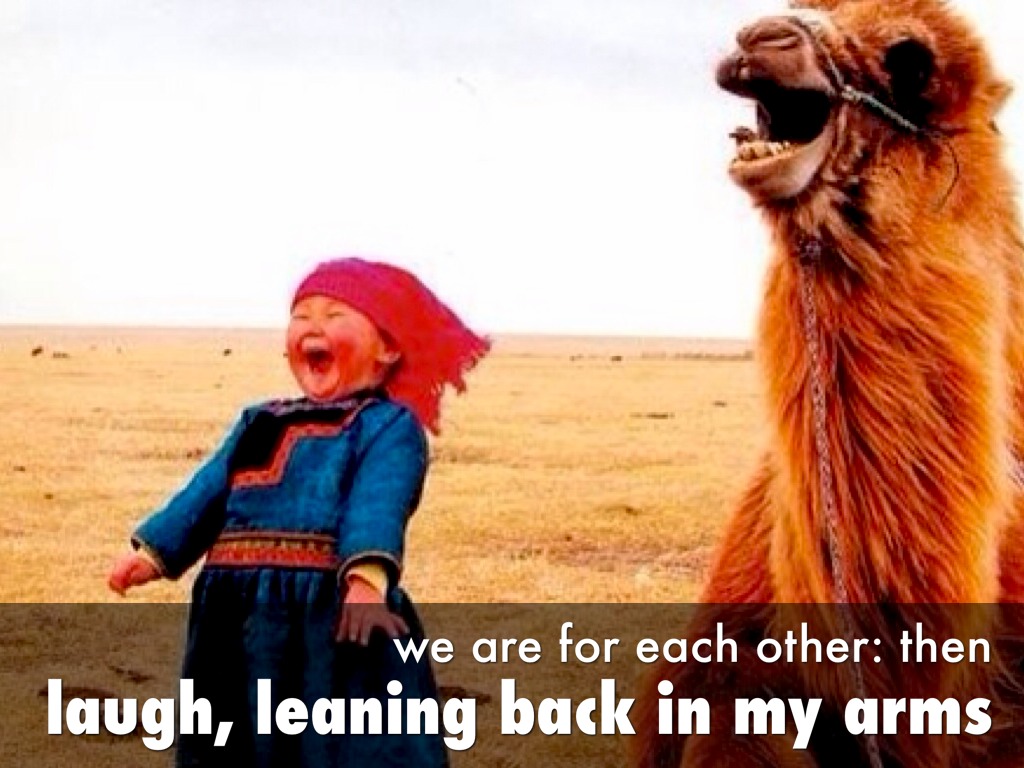
Image result for leaning back in my arms


In honor of yesterday’s post, which was more stream of consciousness than is usual for me, and therefore also less coherent, I give you by way of explanation my very favorite poet: ee cummings.


since feeling is first
who pays any attention
to the syntax of things
will never wholly kiss you;

wholly to be a fool
while Spring is in the world

my blood approves,
and kisses are a better fate
than wisdom
lady I swear by all flowers. Don’t cry
-the best gesture of my brain is less than
your eyelids’ flutter which says

we are for each other: then
laugh, leaning back in my arms
for life’s not a paragraph

And death i think is no parenthesis

And look what I found.


(Seriously, go look. It’s beautiful.)

Book Review: 19 Varieties of Gazelle

(In honor of the sad fact that I start teaching next week, here is a book I got from school. Fortunately, it’s a lovely book.)

Image result for 19 varieties of gazelle

19 Varieties of Gazelle: Poems of the Middle East

by Naomi Shihab Nye

I don’t read enough poetry; most of what I do, I encounter at school, while teaching literature to my high school students. That’s where I’ve read Naomi Shihab Nye’s poetry before, as she is often collected in literature textbooks (Particularly in the last twenty years, as the call has gone out for diversity among authors, seeking more women and people of color to break up the Great Wall of Dead White Dudes), and it’s where I got this book. Teachers, take note: the teacher who was in your classroom before you probably had some neat stuff, especially books. Check your shelves and cabinets and desk drawers. Trust me.

I’m very glad I found this, and very glad I read it. It’s a beautiful book. Nye has the gift of using few words to say many things, and to create strong and tangible, poignant moods. I feel like I know her father from her poem about him and his fig tree, and what’s more, I feel like I know more about figs, and also about her because she grew up with that father and those figs. She has captured a clear and powerful picture of the Middle East, particularly Lebanon and Israel and the life of Palestinians, as the book’s poems are largely from the 90’s and early 2000’s. She has also shown what it’s like to be Arab-American, and to feel both connected and separated from life in the Middle East: she has this remarkable view, like an outsider with just enough of a connection through culture and heritage and language to see inside more clearly than an outsider normally can; just clearly enough for it to hurt, mostly, though she is also in awe of the people she feels she can almost, but not quite, understand. And then her ability to write poetry allows me to feel the same thing about her, and about her subjects at that additional remove; I feel for her feeling for them.

It’s an experience. These are beautiful words, and a good book. And, as always, it’s timely, even fifteen years later, because it seems the Middle East never changes.

I Hear You.

Hear Me Now: This is What I've Always Wanted to Say Poetry by [Watson, Lisa]

Hear Me Now: This Is What I’ve Always Wanted to Say Poetry

by L.S. Watson


I’ve always been amazed by poetry. (Well, once I started understanding it, that is.) I have no ability to write it, at all. For me, words come in sentences and paragraphs, not lines and stanzas; and what’s worse, they come in enormous torrents: I never use just one word when twenty or fifty will do the same job.

So when I find a poet, like L.S. Watson, who has a remarkable ability to use one word to say many things, I have to just stop and admire. And in that momentary pause, I hear what she says.

I do wish there were more words in one way: this little book, Hear Me Now, is too short. I enjoyed it and I wanted it to keep going. It hooked me right from the start; the first two poems, “Ashes” and “Dancing with Raindrops,” are on facing pages, and show two opposite sides: “Ashes” is about the ugliest side of humanity, our penchant for mindless destruction; and “Dancing with Raindrops” is about the indescribable beauty of short, sudden moments, like bursts of wonder, that come at us sometimes when we’re not expecting them and we need to pay attention, or we miss them. Putting these two against each other heightens the impact of each, as the beauty of nature makes it sadder that men destroy it – but that just means we have to look even harder for the beauty.

The book is like that: I have read it twice, and I expect to read it more, particularly “To Whom It May Concern,” “A Thought,” “The Fight,” and “America, the Free.” There are also several poems about heartbreak that I could not relate to quite as closely, and three that showed me the impact of loss on the poet, “Freddie,” “Mother and Father” and my favorite of these, “Share a Memory.” But my favorite poem in the book is “Imperfections.” I love the message and I love the last two lines especially.

The ending lines are frequently used to maximum impact. Watson’s poems are fairly short, usually one stanza, though that stanza often fills the page and runs over onto the next; the lines are short, often just one or two words. She uses rhyme frequently – which, if there is anything that I didn’t love about this book, it was that; I am less fond of rhyming couplets than Watson – and the short lines and the rhyme force maximum attention onto the specific words used, particularly at the end of the poem, which sometimes – as in “Share a Memory” – falls like a hammer, like a thunderbolt. Or like a dancing raindrop.

Suffice it to say, this is a good book of poems; short, like the poems, but strong, like the poems. I recommend it.

Counting Syllables is Fun! Really!

Zombie Haiku
by Ryan Mecum

I’ve read many books.
Often zombie-related.
But never like this.

Zombie Haiku. Yeah.
I thought it would be silly,
and it was. But wait:

Hey, this is clever!
A man keeping a journal
all haikus; until —

Things start to get weird.
The zombie apocalypse
has begun. He runs:

Still writing haikus,
because writers write, always,
But now they’re — not nice.

“Strangers lunge for me
as the gas station explodes.
Maybe I’m dreaming.

“They surround the car
and are all moaning something.
Is that the word ‘trains?'”

Nope: they’re saying “brains.”
And though he runs, he gets trapped,
then he gets bitten.

He becomes zombie.
But somehow he keeps writing
Haikus about it.

“One thing on my mind,
only one thing on my mind.
I’m going to eat you.”

“I can remember
good food that Mom used to make
I bet Mom tastes good.”

It’s sad, because
The haiku journal was meant
As a gift for Mom.

But now that he’s dead,
it tells the chronicle of
zombification.

And it’s excellent.
His haikus better than mine;
written the right way:

Not just syllables,
5/7/5, but snapshots
of the world around

Each one a small slice
(Maybe I should say “a bite”)
of life. Or, well, death.

They capture the feel
Of slow death and becoming
the hungry undead.

He eats people’s brains
Then hunts for more, always more,
Growing less human

And more zombified
Less coherent, and yet still
Writing haikus. Like:

“Blood is really warm
It’s like drinking hot chocolate
But with more screaming.”

That’s my favorite.
But there are many good ones
The book’s short, but great.

I won’t spoil the end,
just say: Though this book is gross,
I recommend it.

No Art, No Peace

I am generally opposed to the standardization of education (which puts me, amusingly, in line with much of the GOP), but here’s a wish: if schools had all used the same curriculum when I started teaching that they use now, then Toni and I might have known better than to move to Oregon.

We’ve talked about this before, about whether moving there was a mistake. Because Oregon was bad for us. There were some good things: we made some friends; we bought a house and learned some of the treats and tricks of homeownership; it was a good home for our dog, Charlie; and we found our beloved mutant cockatiel Duncan there. But for the most part: the school where I worked for ten years was badly run and badly funded; the community was largely an ignorant backwoods that offered rednecks and mudding as its entertainments, Wal-Mart and Fred Meyers as its shopping; the weather was – I need something beyond “bad” here. Because the issue with the weather wasn’t that it was wet, or that it rained a lot; I grew up in Massachusetts, where it rains and snows and sleets a lot, and Toni is from the rainy section of California, so rain is not the issue. Bad weather is not the issue. But the weather in Oregon is not just bad; it is tortuous. The clouds descend, and seem to wrap around the world, from horizon to horizon; and then they do not leave for the better part of a year. There is nothing at that time in Oregon – not people, places, nor things – that is not coated and permeated with mud or mold. Everything is cold, everything is miserable; the natural world seems to want to curl up and disappear into itself, and you want to go too.

We spent ten largely unhappy years there, and came out no better than we went in, having gained nothing but – character. I’ll say that; Oregon builds character. Oh – and I won teacher of the year. And almost had my teaching license stripped from me in a four-year bureaucratic ordeal worthy of Kafka or Orwell, that earned me the new title of “morally reprehensible.”

We don’t regret moving to Oregon, because there were good parts, and because every place has bad parts. But it would be a good world if we had never moved there. And that world might have existed if I had taught William Carlos Williams’s poem “Raleigh Was Right” back in Escondido, California, in 2003.

The poem is the third in a series, which forms a conversation between three (Actually several; but three are directly connected to this) poets separated by about 350 years and an ocean – and by death. The conversation started with Christopher Marlowe’s poem “The Passionate Shepherd to his Love,” a poem in which a starry-eyed (actually sheepy-eyed) shepherd asks a nameless woman to come live with him and be his love. As an inducement he offers her a variety of gifts, all drawn from the natural world – beds of roses, a cap of flowers, a kirtle embroidered with myrtle. He also says they will sit on rocks and watch the shepherds feed their flocks, which tells you something about this guy’s standard of entertainment. The poem is a quintessential example of the pastoral tradition, mythologizing the Good Old Days Back in the Countryside, when everything was simple and everyone was happy sleeping on beds of roses and watching sheep eat. Marlowe got ripped for his youthful idealism (and his writing style, but that’s neither here nor there) by the older, jaded explorer/pirate/courtier/poet, Sir Walter Raleigh, who wrote “The Nymph’s Reply to the Shepherd.” Raleigh’s poem has that nameless woman rejecting the shepherd’s advances because she can’t take the naivete represented in an offer of love that comes with a cap made of flowers and the chance to sit on rocks; she also tells him that she thinks he’s full of crap (“If all the world and love were young/And truth on every shepherd’s tongue/These pretty pleasures might me move/To live with thee and by thy love.” The key word is “if.”) and she wouldn’t take his offer if he were the last man on Earth. Raleigh won the argument, mainly because both poems were published several years after Marlowe’s death (Which, I have to say, pretty much means that Raleigh loses the moral argument. Because arguing with a dead man is pretty low. But I won’t stoop to repeat his mistake. I’ll let Dr. Williams do it for me.), but that wasn’t the end of it; poets from John Donne to Robert Herrick to Ogden Nash have piled on to poor dead Kit Marlowe, mocking his poem and his theme. William Carlos Williams seems to have been the exclamation point, the last one to stick his nose in and say, “Yeah, what he said!”

But the aspect of the poem I am thinking of is not the whole nymph/shepherd/Marlowe/Raleigh thing. It’s the reasons Williams gives for siding with Raleigh’s nymph against Marlowe’s idealistic shepherd. These are good reasons.

Williams starts his poem with:

We cannot go to the country
for the country will bring us
no peace

This is why the nymph won’t go with the passionate shepherd and be his love: not because he’s an idiot, or because the gifts he offers will eventually fade and die (Which is the main reason why the Nymph says no in the Raleigh poem); but because he’s wrong: the countryside is not a wonderful place full of roses and dancing shepherds’ boys. It is a place that will bring us no peace.

Williams goes on:

Though you praise us
and call to mind the poets
who sung of our loveliness
it was long ago!
long ago! when country people
would plow and sow with
flowering minds and pockets
at ease –
if ever this were true.

The image of the countryside as a place where people can live simply, but also well, and be happy and also satisfied with their lot in life, is archaic, and probably apocryphal. “Flowering minds and pockets at ease,” the image of Thoreau at Walden, with his educated intellectual philosophizing and his life of rich simplicity – except Thoreau lived on Ralph Waldo Emerson’s property, close to his family and their resources, so never had to worry about paying rent, or taxes, or coming up with money for repairmen, or doctors, or all of the other things that mean people who work for a living – like farmers and shepherds – don’t get to “Simplify, simplify, simplify.” Believe me, when we lived in Oregon and needed to find a way to pay for a new roof for our house, we would have loved the chance to simplify; but that wouldn’t have kept the rain from reducing us to a chilly pile of rotting mildew. We needed $7000 for that. And it wasn’t simple.

The last stanza is the one that stands out to me, because recently Toni and I, because we are still dealing with money issues, since we are still somehow not wealthy – I don’t know why my teacher’s union dropped the ball on getting me my cushy overinflated salary, but I have never managed to get my chance to suck on the public teat – talked about living like an artist on an artist’s income (This is akin to feeding one’s self from a garden grown in a 10-gallon fishtank), and these were the lines that came to mind, and brought this blog into existence.

Not now. Love itself a flower
with roots in a parched ground.
Empty pockets make empty heads.
Cure it if you can but
do not believe that we can live
today in the country
for the country will bring us
no peace.

If ever there was a time when two people could live on a teacher’s salary, or even worse, two artists’ income, it is not now. (The lines about love don’t apply to me – that really is Williams picking on Marlowe, and also on his own era, World War II, and saying there ain’t enough love in the world to make a shepherd and his love happy in the countryside. Toni and I don’t have much, but we do have love.) It was not 2000 in southern California, and it really wasn’t in 2004 in St. Helens. Because in that tiny town out in the boondocks, especially after the economy collapsed in 2007 and shot out all of the equity we might have been able to save in the house we had bought in 2005, there was utterly no economic opportunity, particularly not for artists. We couldn’t sell art, we couldn’t sell our expertise; there was no chance to do anything but try to get by on a teacher’s pay. While the whole country was looking to cut teachers’ pay. And that made everything worse.

Here’s the reason: empty pockets make empty heads.

No matter how thoughtful, philosophical, and intellectual you are; no matter how deep your inspiration flows, no matter how energetic is your muse: when you have to worry about money, about paying the bills and buying food and finding $7000 you don’t have so you can pay for a new roof – you will not be able to think very much about art. We moved to Oregon partly so that we could focus on our art; it didn’t happen in the way we wanted it to, we couldn’t be as productive as we wished to be, and this is why. Because empty pockets make empty heads.

I hope that now, here in a place with a lower cost of living, that we will be able to cure this problem. But what I know now, beyond the shadow of a doubt, is this: do not believe that we can live today in the country. For the country will bring us no peace.

The Truth About Beauty

[V]erse is ‘made.’ But the word ‘make’ is unsufficient for a true poem. ‘Create’ is unsufficient. All words are insufficient. Because of this. The poem exists before it is written.

That, I didn’t get. “Where?”

T.S. Eliot expresses it so – the poem is a raid on the inarticulate. I, Eva van Outryve de Crommelynck, agree with him. Poems who are not written yet, or not written ever, exists here. The realm of the inarticulate. Art” – she put another cigarette in her mouth, and this time I was ready with her dragon lighter – “fabricated of the inarticulate is beauty. Even if its themes is ugly. Silver moons, thundering seas, clichés of cheese, poison beauty. The amateur thinks his words, his paints, his notes, makes the beauty. But the master knows his words is just the vehicle in who beauty sits. The master knows he does not know what beauty is. Test this. Attempt a definition now. What is beauty?”

(From Black Swan Green, by David Mitchell)

I read this to my class the other day. And then I stopped and challenged them as Madame Crommelynck, the aged Belgian artiste, challenges her protegé Jason, the 13-year-old would-be poet: define beauty.

Here’s how I picture Madame.

My students couldn’t do it either. They did try, and they were annoyed with me when I disagreed with their assertions, but their answers didn’t work, not entirely. One said, “Every thing is beautiful,” because someone, somewhere, perceives it as such. I asked her if murder could be beautiful, and she said it could, to someone. But I beg to differ: I think anyone who considers murder “beautiful” is also murdering the word “beauty,” making it entirely meaningless. The same goes for any other extreme example: if we broaden the meaning of the word so much that it includes everything, then it means nothing. One argued that beauty is the “absorption of enjoyment.” I took that, like the previous attempt, to be too broad, too all-inclusive; I said, “Have you ever REALLY had to pee? When you finally get to go, isn’t that experience enjoyable?” He nodded. “But it isn’t beautiful,” I argued, though he continued to defend his definition, using enjoyable now as a synonym.

There’s nothing beautiful about that.

He was smart: he used a turkey sandwich as his example, saying that eating a turkey sandwich when you were craving one is a beautiful experience; in the right moment – around 1:00 in the afternoon on the Saturday after Thanksgiving when you have leftover turkey and some good bread – I would indeed take that as proof, and have my answer. But I don’t believe enjoyable is the same thing as beautiful. Enjoyment is too simple to include all of beauty; it’s like saying that life is breathing. Sure, that’s part of it, and an important part; but it is unsufficient.

turkey-sandwich

I give you the ‘Murrican turkey sandwich.


Several of my students gave some permutation of Beauty is in the eye of the beholder, arguing that there is no intrinsic quality of beauty, but only what we construct through our individual subjective perceptions. I agree with that, but it is also true that there are certain sights, certain experiences, that are considered beautiful by many people, even people that have otherwise nothing at all in common: the night sky, a lullaby, love. There is such a thing as beauty, and we respond to it not as individuals with unique subjective perceptions, but as human beings with a shared consciousness and universal experiences: because we are all alive in the same sense, with the same five senses in the same universe. Madame Crommelynck agrees:

When beauty is present, you know. Winter sunrise in dirty Toronto, one’s new lover in an old cafe, sinister magpies on a roof. But is the beauty of these made? No. Beauty is here, that is all. Beauty is.”

Beautiful?

But Madame and I differ on this: she also tells Jason that beauty is immune to definition. I disagree. She gets into Platonic forms, saying that the potter that has made a beautiful vase has made the vase where beauty resides, but not the beauty itself; that’s true, but unfair, because the beautiful object has captured beauty, it reflects and contains beauty, and that is as much as human creation can ever do. It’s not our fault that the universe existed before us, and so too did whatever ideal that we call beauty. When we make a piece of beauty, something that echoes in its limited physical or experiential form the immortal beauty that resides in the inarticulate – the beauty that is – then our efforts, too, echo the first creation of existence, the coming into being of beauty as a potential quality. It is fair to say that we have made beauty if it is fair to say we make anything.

Our disagreement on this is easy to explain, though: she is speaking to a student. Teachers have to lie to students. When my math teacher told me that you can’t take a big number away from a small number, she was lying, because it wasn’t time for us to study negative numbers yet. When teachers tell students they cannot use the word “I” in a formal essay, it isn’t actually because one cannot use the word “I” in a formal essay, it is because there are various bad habits that writers have (The tendency to rely too much on subjective opinion rather than on evidence, for example; something that I do all the time. But it’s much harder to say “This is true because I think it is” when one cannot say “I;” the line “This is true because one thinks it is” or “Some people believe this is true” doesn’t have nearly the same pizzazz. Not nearly the same beauty.) that can frequently be eliminated by this rule; and if teachers set the rule like the word from on high, carved in stone by a burning bush, then they don’t have to get into the explanations about the bad habits. It’s simpler and keeps the teacher from losing too much time arguing with the students. Madame Crommelynck wants Jason to stop trying so hard to make his poems beautiful; she tells him, “A touch of beauty enhances a dish, but you throw a hill of it into the pot! No, the palate becomes nauseous.” And then, more beautifully put, “You belief a poem must be beautiful, or it can have no excellence. […] Beauty is not excellence. Beauty is distraction, beauty is cosmetics, beauty is ultimately fatigue.” She doesn’t want to explain precisely what beauty is, how we can identify it, what it means; she just wants him to stop thinking about it. So she tells him an absolute rule: beauty cannot be defined.

Well, Madame, I don’t believe in absolute rules (Except when I do.). I tell my students they can use “I” in an essay, and they can start sentences with “and” and “but” and “because,” and they can take big numbers away from small numbers, dammit!

And we can define beauty. Even if the words may be unsufficient.

Here we go.

Let’s start with basic principles. Beauty is abstract, but like love and unlike cliche, it can be experienced concretely: it is detected by the senses, most frequently but not exclusively sight for we humans. This means there is a biological, physical element to it. Just as love is, on some level, a chemical reaction in the brain that offers a survival advantage, so is beauty, at least when applied to another of one’s own species. A beautiful shrew, to another shrew, is one that represents a survival advantage; it is an advantage for the survival of one’s genes, not one’s own precious self, but the instincts are all about that DNA.

Now that’s a beautiful shrew.

So beauty in a Darwinian sense is a list of physical attributes (physical because concrete, detectable by senses) that represent a good breeding partner: symmetry of form and features, traits that connote health, traits that represent child-rearing strengths. Marilyn Monroe was beautiful because she was symmetrical, had healthy skin and hair and teeth and eyes, and had curves that showed good baby-making potential.

Plus, if I may quote Christopher Moore’s A Dirty Job: “I mean, [she] got the badonkadonk out back and some fine bajoopbadangs up front, know what I’m sayin’, dog? Buss a rock wid a playa?” Word, Mr. Moore. Word.

See? Look how symmetrical.

Beauty is more than that, though. Because sunsets and symphonies and the smell of rain have nothing to do with child-rearing.

I’m going to take this as the point where humans and animals diverge. Not because I can say with any surety that animals don’t enjoy the sunset for the sake of the colors and the patterns in the sky, but because without language, I can’t be sure that they do, nor why they do. My dog loves to chase the innumerable tiny lizards that scatter across the desert where we live, but is he appreciating their coloration, the quickness and grace of their movements? Or is he thinking about how good they’d taste on a cracker?

And if he is, is that not beauty? The turkey sandwich argument speaks to this: deliciousness is a form of beauty detected by taste rather than sight, isn’t it? So there must be some element of beauty in a turkey sandwich, in a delicious lizard-on-Ritz hors d’oeuvre?

I would say so, but again, I think that it is the simple, animal form of beauty, the survival beauty, in most cases. I’ve eaten a lot of turkey sandwiches, and generally speaking, they are more often satisfying than beautiful. The potential for beauty-beyond-survival is there, certainly, but in the sense I want to explore now, it usually is not.

The abstraction of beauty is, so far as we can know, an exclusively human concept. It is difficult, because we are merely bald apes, to mark clearly the line between humans and animals, but one of the best lines is abstraction. Animals tend not to imagine things separate from their immediate circumstances (though some of them do, it seems) and humans do. The reasons why we do can be simple survival strategies; because imagination makes humans better hunters and gatherers than other animals, thereby justifying our oversized noggins and the weak, ungainly bodies attached to them. But to create abstract ideas, for abstract reasons? That, so far as we can know, is uniquely human.

For years now, I have associated this activity of abstraction for the sake of abstraction with two names: truth and beauty. Humans, I have said, are the only living things that seek truth and beauty for their own sake. We wish to discover new truths, not because they offer a practical survival advantage, but simply because we wish to know truth; we create beautiful things, and seek beautiful experiences, simply for the desire to experience them. I think of this as art, because I am an artist married to an artist, though others may call it science or faith or love or whatever entirely human abstraction you wish; there are many other ways to name the pursuit of abstraction. Regardless, I would argue – I have argued – they all come back to truth and beauty. Those are our defining ideals, we humans.

But now I think that these two ideals are really one and the same. “‘Beauty is truth, truth beauty,’ – that is all / Ye know on earth, and all ye need to know,” as Keats said to his Grecian urn. (And now I have to include the Simpsons reference: when the family goes to visit the military academy where they will be sending Bart for disciplinary reasons, Lisa observes a cadet in a class reciting that line as if responding to a drill sergeant – “BEAUTY IS TRUTH, AND TRUTH BEAUTY, SIR!” She gasps in joy at the thought of actually discussing poetry, something that never happens back at ol’ Springfield Elementary; but then the instructor, sounding and looking just like a drill sergeant, shouts in the cadet’s face, “But sometimes the truth can be harsh and disturbing! How can THAT be beautiful?!?” After which Marge comments, “Well, he sucked the life right out of that.”)

“Gentlemen, welcome to flavor country.”

The two ideas, truth and beauty, have always been closely linked. In science and math, a good solution, a true theorem, must have elegance to be considered worthwhile; in art, a beautiful piece must have some reflection of truth, of reality, of genuine human experience. This is because they are, I would argue, one and the same experience; two sides of the same coin, with the only distinction being how they are taken into the soul.

Ralph Waldo Emerson, in his “On Self-Reliance,” described the experience of truth as “that gleam of light which flashes across his mind from within.” He described a sensation of instant awareness of genuine truth, the vibrating of a heart to an iron string. He was talking about epiphany, the moment of clarity, what teachers (rather unfortunately) call the “Aha! moment.” There is a sense of rightness about truth that marks it as such, because a truth is echoed and repeated in everyone’s human experience, and all the truth does is give a name to what we already know. Home is where the heart is. The love of money is the root of all evil. Haters gonna hate. These truths don’t need to come with examples, because every single one of us can supply them from our own memories. That is the ring of truth, the gleam of light that Emerson talks about: when we make a connection between the statement of truth and our own personal subjective knowledge, and recognize both that the thoughts and experiences of others are actually relevant to our own lives, despite the appearance of perfect isolation that comes with being a human soul trapped inside a cage of flesh and bone, and also that our lives make sense, have reason and symmetry to them: that we are as true to life as others are to us. There is a greater world, and we are part of it; that is the truth, and what we recognize when we come across actual truth, and know it for what it is.

But here’s the thing: that’s what beauty is, too. That same ring, that same jolt, that moment of clarity and recognition, that awe: that is the experience of beauty. Think of what you felt when you first looked out of an airplane window and saw a mountain wreathed in clouds.

Think of what you felt when you first heard Pachelbel’s Canon.

When you smelled your favorite perfume, or let fine chocolate melt down your tongue. Think of a time when you genuinely hugged or kissed someone you love. This is what beauty feels like: when you feel your connection to the greater world, to all of the people before you who felt what you feel right now. You feel as big as the sky, as ancient as the stars: you can feel your heart expand to contain all of the other hearts that have felt what you feel, that are feeling what you feel, across all of time and space. You know that what you are feeling is right, and that it makes sense: you know that this feeling is true.

I would put it like this: truth is an intellectual recognition of one’s place in the order of existence; beauty is the emotional recognition of the same. Beauty is the truth of the heart.

Serving the Battle-God

There’s a poem that I have taught for years, a piece by the American author, journalist, and poet Stephen Crane. I’m reminded of it every time Memorial Day or Veterans’ Day rolls around; every time my Facebook feed is filled with “God Bless the Military” statements and sentiments. Here it is.

“Do not weep, maiden, for war is kind”

Do not weep, maiden, for war is kind.
Because your lover threw wild hands toward the sky
And the affrighted steed ran on alone,
Do not weep.
War is kind.

Hoarse, booming drums of the regiment,
Little souls who thirst for fight,
These men were born to drill and die.
The unexplained glory flies above them,
Great is the battle-god, great, and his kingdom—
A field where a thousand corpses lie.

Do not weep, babe, for war is kind.
Because your father tumbled in the yellow trenches,
Raged at his breast, gulped and died,
Do not weep.
War is kind.

Swift, blazing flag of the regiment,
Eagle with crest of red and gold,
These men were born to drill and die.
Point for them the virtue of slaughter,
Make plain to them the excellence of killing
And a field where a thousand corpses lie.

Mother whose heart hung humble as a button
On the bright splendid shroud of your son,
Do not weep.
War is kind.

I love this poem. Not only has it helped to clarify my own feelings about the military, but it has served as an incredibly useful teaching tool over the years. It’s become one of my favorite lessons, the one I look forward to and plan around. Even though it is probably the saddest thing I teach, both for subject matter, and because, no matter how well I teach it, whether my students understand it as I do or not — it doesn’t change the U.S. military. I can’t kill the Battle-God.

I lead my students through this first as though it were sincere: we skip the second and fourth stanzas, and I gloss over the specifics of the imagery; we focus on the apparent speaker, and who that person might be. It seems, based on the speaker’s attempts to comfort the surviving relatives — first sweetheart, then child, then mother — of soldiers killed in battle, that the speaker would be a military spokesman, the guy who writes the letter home or delivers the telegram that says “We regret to inform you . . .” I get my students to make a list of the kinds of things this familiar figure would say: Your loved one was very brave. He was a patriot, he was a hero. He died for a greater good, fighting for his country. He didn’t suffer. On the surface, it all seems to fit, and they get it quickly.

Then we go back and look more carefully at the images. In the first stanza, the lover throws wild hands toward the sky, and the affrighted steed runs on alone. So the man was shot while riding a horse into battle. But for me, the steed running on is a telling detail: I would think the horse, terrified by the sights and sounds and smells of the battle, and by the sudden violent loss of his rider, would run away from the fighting. But if the steed runs on — that implies it was already going that way. So perhaps this man was shot in the back while fleeing, perhaps even by his own side, killed as a deserter. I ask the students: doesn’t it seem strange that a military man would describe this scene so specifically to that dead man’s sweetheart — and then afterwards tell her not to cry, because war, which killed her terrified (and cowardly) lover, is kind?

Maybe I’m reading too much into that one. But look at the third stanza. Look at the details in the description of the father dying — see how painful and pathetic it is? And realize that this is, apparently, being described to that dead man’s child. His young child, because it is a “babe.” (I often think of the scene with Christopher Walken and the gold watch in Pulp Fiction, one of the most horrifyingly amusing scenes I know of in any movie.) I mime this for my students: I crouch down with my hands on my knees, and bounce as I say, in that cheerful sing-song we use to ask little kids if they want to see Santa Claus or ride the pony: “Okay, little boy, let me tell you about your daddy: he was shot in the chest, fell on his face in the mud, and died choking on his own blood!” Then I stand up and say, in an aggressively sarcastic tone, “Oh — and don’t cry. Because war is kind.” It’s effective.

After I take them through the fifth stanza, which I think of as ironically juxtaposing the humble, unimportant mother (whose heart is but a button) with the bright, splendid shroud of the son (I like connecting this to the American flag we drape over soldiers’ coffins, though Crane probably just meant the actual white winding sheet. There’s another one, too: the yellow trenches the dying man chokes in in the third stanza really should be a reference to the use of mustard gas in World War I — but Stephen Crane died in 1900, so, nope. Possibly a reference to yellow fever, since he did cover the Spanish-American War, where more soldiers died of disease than from bullets and bombs.) — a pair of images that lionizes the dead man and devalues the living, sorrowing mother — I have them look at the second and fourth stanzas, where the speaker changes and the tone changes. These stanzas, with their references to drums and glory and swift, blazing regimental flags, seem much more like the words of a pro-military warmonger, at first. I point out for them the irony in the comparison between the little souls, pointless (“The unexplained glory flies above them,” either the American flag, or the idea of gloriously dying in war, or both), valueless (“These men were born to drill and die,” and nothing else), and the line “Great is the Battle-God.” I ask them who the Battle-God is; though I have to get them past the idea that it is Ares — there is always at least one who is very proud to know this fact — since that is more symbolic than I need it to be. I ask them who is made great by battle — and who, in truth, is made greater when the losses in that battle are greater. Who rules over a kingdom of a thousand corpses? The answer I want is: the generals. The presidents. The ones who send the little souls to die, and are made famous by their ability to order men killed. I ask them how on Earth it can be said that slaughter is virtuous and killing excellent — and I help them recognize that there is really only one place in our world where it is possible to be an excellent killer, and it is a virtue to wipe out swaths of people as if they were lambs being slaughtered; that one place is, of course, war.

Yup. War is kind.

This poem, all in all, strikes me as a criticism of the military: not the soldiers, though they are certainly seen as fools or children who die for no good reason; and not the officers who would bring the sad news home to the survivors, if they are sincere in their desire to comfort — that’s the point of the list of common statements these people would use: there is no way that anyone would actually talk to a family member the way the speaker in this poem does, as he says quite the opposite of what we would expect: your lover is a coward; your father died in incredible pain; your son only matters because he died, and you don’t matter at all. But if those people, those officers, are knowingly lying about the experiences of those who died in war, there can only be one reason: they want that child, that babe, to grow up and — follow in his father’s footsteps. They want the family members to believe that those who die in war were heroes, every one of them, even though the officer telling them of this heroism knows the truth: these soldiers died for nothing, in great pain and fear, because the only thing that matters is that they die: their corpses make the Battle-God great. Those liars serve the Battle-Gods, and they make a new generation of little souls thirst for fight; they ensure that their destiny, which could otherwise be grand and great, as any human’s could be, is — to drill and die. This poem criticizes two groups: those who profit from the deaths of soldiers — the Battle-Gods — and those who lie to people in order to get men to agree to be soldiers, and to die for the aggrandizement of the Battle-Gods. The recruiters.

And that’s why I think of it every Memorial Day. Because that’s exactly how I feel about the military.

Those men and women who volunteer to fight because they want to protect innocent lives, because they believe in the cause, or in their country, I have great respect for, in some ways. There is no question to me that the willingness to die for the safety and well-being of another person is one of the most honorable qualities a person can have. I think it less honorable, but still virtuous, to be willing to fight and kill for the same cause — for the sake of other people. This is why I have great respect, too, for police and firefighters and other people who put themselves into harm’s way in order to protect the rest of us. They are brave, they are strong, they are noble and good.

That’s the good stuff. Now here’s the bad.

Our military is not always used to serve the greater good. It is sometimes, because the Army Corps of Engineers builds things, and because the military has been used for rescue missions, for relief missions, and, sometimes, for peacekeeping; I think the National Guard has been used more frequently and reasonably in this way, simply because it is the National Guard, and the U.S. hasn’t been invaded in two hundred years. The National Guard, and the Coast Guard, then become large bodies of well-equipped, well-trained people serving to keep people safe and happy. This is what the military should do, and the only branches that should still exist, in my opinion. Yes, some wars — World War II and the American Civil War, from the Union’s perspective — are actually fought for the greater good; but even those wars do not require a standing military like the Army, Navy, Air Force, and Marines. We could send our National Guard to fight, if necessity required it; even better, maybe we could offer some genuine support, troops and materiel, to the United Nations. Imagine what they could do with the military might of the U.S. Then ask yourself why the U.N. doesn’t have that already.

Because our military is, and has always been, used to do harm. They are sent to foreign lands to kill and destroy, not to help people, but to serve the “national interest.” Not to keep us safe, but to achieve policy goals. Not to die so that others may live — but to make the Battle-God great with their corpses. And this is a crime, and a tragedy, without exception. I refuse to accept, for instance, that the millions who died in Vietnam served any greater purpose, for the United States. For the Vietnamese, one could argue that they died protecting their country from a terrible foe, a foreign aggressor who dropped millions of tons of high explosives, incendiaries, and poison on their country; perhaps that was worth all the murder, all the destruction, all the death. But for us? For the U.S.? What was that war but evil? The same for the war in Iraq, and the extended war in Afghanistan. Perhaps you could argue that Osama bin Laden needed to die for 9/11, but the argument is troubled by the fact that we made bin Laden, training him to fight the Soviets in the ’80’s, and by the fact that we invaded and destroyed Afghanistan but retain strong ties with Saudi Arabia, and with Israel, and with Turkey, and with dozens of other countries with histories of terrible human rights abuses.

Not to mention our own record in that area. How any nation that manned Abu Ghraib, that STILL maintains Guantanamo Bay, can claim to be protecting people or freedom or human rights, is beyond me.

Now it becomes a question of, not the greater good, but the greater evil. It is bad enough to attack a sovereign nation for your own political purposes, bad enough to kill for your ideals; but to use good people as your weapons to do that? Because those people who join the military for noble reasons, the ones who are willing to die for others, are the best of people, those who are willing to send those good people to their deaths, must be the worst of people. They are even more vile when they do it for selfish reasons, which is why Dick Cheney (Who knowingly lied us into war) is a worse man than George W. Bush (Who, for the most part, stupidly believed what he was told, and was otherwise knowingly selfish and arrogant), who is a worse man than Barack Obama. But all of them sent good people to die unnecessarily, and thus are they all villains.

But are even those people the worst?

I think it — let’s say naive — to join the U.S. military for honorable and noble reasons, in the modern era. Perhaps it made sense in the nation’s first century, though I personally consider the American Revolution a political war, not a war for the greater good (Yeah, we won our freedom from the British. So did Canada. How many people died for that one?), and the Mexican-American War and the Indian Wars were nothing but bad. But today, a thinking person cannot believe that joining the military will be all noble or all good. Because in this country, which does still have free speech and a free press, I think it impossible to believe the military only does good things, unless one possesses great skill in the most Orwellian of doublethink, or the deepest ethnocentric prejudices (“Everything we do is good, because ‘Merica!”).

Unless, of course, one is actively, aggressively, and successfully lied to, exactly when one is most vulnerable.

That’s why the worst people in the world, in relation to the U.S. military — if it is not the Battle-Gods themselves, that is — are recruiters.

That’s who Stephen Crane was criticizing in his poem: those who would lie to the family members, who would try to make war seem glorious and good when it is nothing but evil and suffering; those who knowingly manipulate and deceive, in order to bring fresh meat to the grinder, in order to aggrandize the Battle-Gods, to make their kingdoms — not a thousand corpses, but tens of thousands, a million. More.

The people who show up at high schools, particularly high schools with low graduation rates, with terrible college attendance rates, where the local community is economically depressed (Because I never once saw a recruiter in my own upper-class public high school, and I have not seen a single recruiter in the school where I teach now, which has a near-100% college attendance rate — but they were there every damn week in St. Helens, Oregon, which is everything I just described.), and stand there in clean, well-pressed uniforms, challenging children to perform feats of strength — as though it matters in the military how many goddamn pull-ups you can do, over how many people you can kill or how slowly you can die — and handing out prizes to those who “win,” and telling children who don’t know any better that: the U.S. Military is honorable, and glorious, and good; that it protects our freedoms and it makes the world safe for democracy; that joining up will make them better people, give them a better future, and offer them adventure and a wonderful life.

I would excuse those people if I believed that they actually thought what they said was true. And inasmuch as the military uses new recruits to bring in other recruits — which they do, in one of the more callous and appalling pyramid schemes I know of, as they actually offer promotions to those who can lure in larger numbers of fellow victims — I don’t blame the actual people who try to tell their friend that they should join up, too. They are naive children, who have been manipulated and lied to themselves. But that isn’t who mans the recruiting offices, or the tables at high school lunchtimes. Those are the older soldiers. The ones who know better, and who do it anyway. They are the ones who make the military seem good, so that good people will join, so that they can then be used, by evil men, to do evil.

Perhaps the most insidious and harmful part of this process now is the tendency of the military, since World War II and the G.I. Bill, to glorify the military as something other than a military: they make the military sound like a job, rather than an institution that creates death. With this, you have people signing up to serve in the military who don’t have noble reasons, nor evil ones; they just don’t know what else to do with themselves. This is perhaps the worst, because it is the easiest: for these people, you don’t even have to lie that much. The GI Bill is a real thing; the military does offer benefits to veterans; you can indeed learn skills that will serve you later in life. All those things are true. To talk about this, as a recruiter, you just have to ignore two things: one, the vast majority of soldiers do not do skilled work, and so will gain nothing of practical use — particularly not those who may after service have access to money for college, but have not one of the academic skills necessary to succeed in college, possibly because they blew off high school knowing they would just be going into the military at 18 — and two, you have to ignore that the reason the military exists is to kill, and the first job of any soldier is to die. If you can ignore those things as a recruiter, you can make the military sound just fabulous; if you can ignore those things as a recruit, you can look forward to your service. You can also see the military as a way to cure your ills, your laziness, your juvenile delinquency, your chemical addictions, your weight problem; all of these are put forward as valid reasons to sign up, and all of them have brought in new corpses for the kingdom. Hell: we even see military service as a way to get laid, because you get in shape and get a cool uniform and you get to be a badass — and women loooooove a badass in uniform with six-pack abs. Just watch Top Gun. That’ll prove it.

So that’s what I think about, when I see memes honoring soldiers. I think: Did you really sign up to protect freedoms? Or was it just that you couldn’t get a job? If you did sign up to protect freedom, did you think of fighting the Taliban in the hills of Afghanistan, quite literally on the other side of the world, and so removed from anything even remotely good for America that nobody even tries to justify the war any more beyond “You broke it, you bought it?” If you believed fighting in Afghanistan would be noble, who lied to you? And how hard did they have to work to convince you?

It all makes it very hard to look at a serviceman and say “Thank you.” I know it’s not their fault, and I know that many of them do have genuinely noble intentions in joining the military; some of them have noble intentions despite going into it with eyes wide open; and to those people, for their intent, I am indeed grateful, and I will salute them, and I will thank them. The same for those veterans who fought in the past, and those who died, for actual noble causes.

But most of the time, I just feel sorry for them, these little souls who thirst for fight, these men who were born to drill and die — or at least that is what they are told, by the Battle-Gods and their vile minions. All they are is more corpses for the kingdom.
Let me close with another poem, this one by a soldier who died, for his country, soon after writing this.

Dulce Et Decorum Est
by Wilfred Owen

Bent double, like old beggars under sacks,
Knock-kneed, coughing like hags, we cursed through sludge,
Till on the haunting flares we turned our backs
And towards our distant rest began to trudge.
Men marched asleep. Many had lost their boots
But limped on, blood-shod. All went lame; all blind;
Drunk with fatigue; deaf even to the hoots
Of disappointed shells that dropped behind.

GAS! Gas! Quick, boys!– An ecstasy of fumbling,
Fitting the clumsy helmets just in time;
But someone still was yelling out and stumbling
And floundering like a man in fire or lime.–
Dim, through the misty panes and thick green light
As under a green sea, I saw him drowning.

In all my dreams, before my helpless sight,
He plunges at me, guttering, choking, drowning.

If in some smothering dreams you too could pace
Behind the wagon that we flung him in,
And watch the white eyes writhing in his face,
His hanging face, like a devil’s sick of sin;
If you could hear, at every jolt, the blood
Come gargling from the froth-corrupted lungs,
Obscene as cancer, bitter as the cud
Of vile, incurable sores on innocent tongues,–
My friend, you would not tell with such high zest
To children ardent for some desperate glory,
The old Lie: Dulce et decorum est
Pro patria mori.