I Wish for Each

“Congress shall make no law respecting an establishment of religion, or prohibiting the free exercise thereof; or abridging the freedom of speech, or of the press; or the right of the people peaceably to assemble, and to petition the Government for a redress of grievances.”

So all right. We’ve been hearing a lot about this lately, right? Those are the words of the First Amendment to the Constitution. But what does it mean?

What is free speech?

Does it mean anybody can say anything they want? Anything? Or are there limitations? Should there be?

Does it only apply in American? Only to citizens? Does it apply differently to public figures, to famous people?

And why the hell are we still talking about this? Do we not know what it means? Shouldn’t we know what it means by now? I mean, really?

Okay: well first, let me just address that. I do not think there is anything wrong with having a conversation again. I don’t believe that something can be talked through once, and then that’s it, and we all know everything there is to know, and there’s no need to bring it up again. I understand that people get tired of having the same conversation over and over again, but you see, I’m a high school teacher: my whole job is essentially to have the same conversation over and over and over again. From one year to the next, from one class to the next, from one student to the next, I have to continuously repeat myself, and that often means I have to continuously find new ways to say the same things I have said before. The fact that I am willing to do that, even eager to do that, is what makes me a good teacher: because if I got impatient with students who didn’t hear or didn’t understand what I said to another student, then nobody would learn after the first student. I confess that I do get tired of saying the same things to the same people over and over again, but that’s not the same thing as having the same conversation: that is stating the rules, the limits and boundaries which are necessary for us to live and work together and abide one another, and then stating them again because some childish, selfish person decided they didn’t have to follow the rules. And then I repeat myself: and then I get angry about it.

But if you didn’t understand what I said before? I will say it again. If you don’t understand it after the second time, I will say it a third time, in different words or with different examples. And I will keep repeating it until it is clear and fully understood. And then, when you have a new thought or a new experience, and that changes how you view what we talked about before, I will happily talk about it again: perhaps after I have thought about it some more, to integrate whatever new concept or perspective you brought into it today, apart from what we discussed yesterday. No problem.

We seem to still be having trouble with freedom of speech. We are still talking about it, still debating it, still disagreeing over it; and now we are doing this in the wake of Charlie Kirk’s death. In that wake, and, I suspect, pretty directly related to that terrible crime, my wife was censored by Facebook, because someone reported a post she shared about Trump, calling it spreading misinformation. It was not, it was simply a joking criticism of the administration; specifically, it was this:
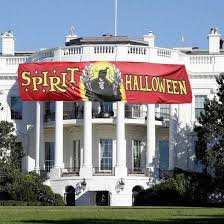
Exploring Shutdown Day 1: Discovering New Perspectives

My working assumption is that the person who reported her post was a Trump supporter, angered (as always) by libs and the left and so on, and recently energized by Kirk’s murder and the gaslighting from the right, convincing people to take action now to defend free speech (And please stop talking about the Epstein files and the still ongoing wars in Gaza and the Ukraine and the swiftly tanking U.S. economy), who probably reports every left-leaning or Trump-criticizing meme they see. Probably laughing while they do it. Facebook, as a private company that doesn’t want to suffer the wrath of the Trump administration, not only took down my wife’s post, but has also been monitoring and restricting her posts ever since: they are limiting her free speech. These new situations — unique neither to Charlie Kirk nor to my wife — has given people a new perspective on the issue, so: let’s talk about it again.

Here. This is where we start.

“Congress shall make no law respecting an establishment of religion, or prohibiting the free exercise thereof; or abridging the freedom of speech, or of the press; or the right of the people peaceably to assemble, and to petition the Government for a redress of grievances.”

Okay, so the First Amendment actually says a lot of things. It restricts Congress’s ability to control religion, and the press, and peaceable assembly, and the right to petition, all in addition to the freedom of speech. Let’s put those other aside for now: though it may be worth considering why all of those different, and all of those important, ideas were all packed together into a single amendment, and then the next one is only on one issue: guns. And the one after that is only about not letting soldiers sleep in your house against your will. Both important, maybe (though neither as important as freedom of speech) but both very narrow topics. Why are all these other things together in one place? Honestly, I haven’t read enough on the Founding Fathers and their choices regarding the Bill of Rights, so I could only speculate; but either way, we can ignore this topic for now, because we’re only here talking about the freedom of speech (and the others will become more clear as we focus just on speech, I think). Freedom of the press might come into it directly if we want to talk about Jimmy Kimmel, but it’s not clear to me that that discussion needs to involve anything other than free speech; that one right seems enough to cover what happened there. So let’s focus.

What is freedom of speech? Why do we have a right to it?

So hot take: freedom of speech is not actually critical. It is a roundabout way to protect the actually critical thing — or rather, two critical things: freedom of thought, and freedom to express those thoughts. Freedom of thought is absolutely critical to humanity, because in the most essential sense, we are our thoughts. I am what happens inside my skull. My body is also a critical part of me, but if I have a broken body, I am still me, because it doesn’t change what is inside my skull. It changes how well I can act out and reflect the decisions I make inside my skull — my freedom to express my thoughts — but it doesn’t change who I am. But if my brain dies, then who I am is gone, even if my body remains. My body can’t express my thoughts if I have no more thoughts: and without those thoughts, there is nothing for my body to express, no purpose for it to achieve; it can continue for a period of time, and then it will, mercifully, stop.

I wonder if my body would be sad if my brain died. Would my body grieve the loss of my mind?

Well: I would grieve the loss of my mind, so the question of my body’s reaction is academic. It is a part of me.

Now, in the ordinary way of things, there is nothing that could limit my freedom of thought. It’s one of the great things about being a sentient, thinking being; on that most essential level, we are always free. (Well, almost.) It’s because we are always essentially alone, and because there is no substance to thoughts: they can dance and flit anywhere we can imagine, always within the skull that holds the brain; and nothing will change other than the thoughts themselves — and potentially the mind having those thoughts. Nothing else is affected, and so nothing else can affect those thoughts: they can dance and flit to anywhere else, faster than anything that actually exists. Nobody else will even ever know where our thoughts are going, inside our minds. This was what Henry David Thoreau was talking about in On Civil Disobedience, when he described the inability of the state to actually punish him with a night in prison after he refused to pay his taxes:

I could not but smile to see how industriously they locked the door on my meditations, which followed them out again without let or hindrance, and they were really all that was dangerous. As they could not reach me, they had resolved to punish my body; just as boys, if they cannot come at some person against whom they have a spite, will abuse his dog. I saw that the State was half-witted, that it was timid as a lone woman with her silver spoons, and that it did not know its friends from its foes, and I lost all my remaining respect for it, and pitied it. Source

As he says, his thoughts cannot be trapped inside the cell, but can go anywhere that Thoreau wishes to send them: and the attempt to punish his body because they cannot punish his mind is just pitiable. What the State wants here is to control his thoughts, because they want to control Thoreau’s actions through his decision-making ability. Because their initial attempt to control his actions, through a threat to his body’s freedom if he made a certain decision the way the State didn’t want him to decide, didn’t work: knowing the threat, Thoreau still decided not to pay his taxes. His thoughts were uncontrolled, and his person/body/being followed along that thought decision, and didn’t pay his taxes. So then the State put him in jail: and he just kept right on deciding not to pay his taxes, regardless of what they did to his body. His thoughts were entirely unaffected, and uncontrolled, and they did the thing that the State didn’t want them to do — without any influence from the State at all. And so we all do, every thought we have that is in defiance of what our society demands of us. We are free to think whatever the fuck we want to, even the thoughts we’re not supposed to have, or not allowed to have.

Please take a moment and think a thought or two, which people outside of your head would not allow you to have, if they could tell you what to think. Any thought you like. Any thought at all.

Nice.

So because nobody can control a person’s thoughts, the laws focus on the second critical part of the process of having a free mind: the expression of our thoughts. Free speech, and in a broader context, free expression. Let me focus on that second aspect for a moment, because it shows more clearly what the point is here.

I can have my thoughts, and you can’t stop me. So far so good. But obviously, if I can’t act on those thoughts, then my thoughts cannot be complete. If, for instance, I think about spitting on the sidewalk, decide to spit on the sidewalk, but I cannot spit on the sidewalk — at the moment that is just because there is no sidewalk near me; I could spit on the floor of my office and call it a sidewalk, and to some extent I would have acted out my thought, and brought that thought to its completion, but then I would have to deal with my spittle, and also my wife would kick my ass — so I don’t spit: and thus the thought is not free, it is limited. I think, “I’m going to spit on the sidewalk!” and then I can’t do it: the thought is constrained. When the thought is constrained by reality — “I want to grow nine arms and use them to juggle chainsaws!” — then again, my thought is not free, but there’s no point in talking about our freedom to do things that we can’t do, or the need to pass laws to prevent things that are not possible. At that point, all we can do is shrug, and say, “It sucks to suck, Dusty. But you go ahead and dream of nine chainsaw-juggling arms, that’s fine, you can think about it all you want.” Freedom of thought is still protected, because I can carry the juggling arms thought as far as it can go; and as thought is still the most essential aspect of being human, that’s fine then. Thoreau can think that his taxes should not be collected by a government that supports both human chattel slavery and a war of conquest against Mexico (the reasons Thoreau didn’t pay his taxes), and if the action is not possible — if taxes didn’t exist and so he couldn’t choose to pay them or not to pay them — then he has all the freedom he could ever have.

But see, what happened is, Thoreau’s aunt paid his taxes for him, against his will. I don’t know why: I suspect she either thought he was suffering in jail and wanted to help him, or she was ashamed that her nephew was in jail, and wanted him to stop embarrassing her. (I would guess the second one, because she did not consult with him before she did it, and if she wanted to help, seems like she would at least visit and ask if he was okay.) Which then limited his free expression of his thoughts: he could think his money shouldn’t go to the government, and he could decide not to give his money to the government; but the government got his money anyway. Not because it was impossible for the government to have his money, but because someone else took his choice away. I guess it wasn’t really his money, it was his aunt’s money; but Thoreau’s idea was not to save his own pocket change, it was to refuse to participate in the government’s immoral acts, and when money went to the government in his name, it defied and negated his decision. Imagine if he talked to someone about not paying his taxes, if he argued with the government tax collector about the issue, and expressed his disagreement with the government, and said, “I will never contribute to this immorality, sir!” Can’t you just see the agent smirking and saying, “Sure, buddy. I mean, we already have your money, so you can say what you want.” Thoreau’s thought, while still free, has been constrained in its expression: and that pretty much ruins the thought; a thought which was not constrained by impossibility, it was possible, and he could have acted upon it — but then the option was taken away.

This is why, of course, jail is actually a very effective punishment for most people: because while we are all free to think our way out of jail, I would guess most people in jail want to walk out of jail: and they can’t. Which means their thoughts, while potentially free, are nonetheless really trapped along with their bodies. It is worth noting that, if you can find a way to free your thoughts, then prison wouldn’t matter so much; it would become a struggle to try to force you, through continued discomfort, to think about being in prison and how much you don’t want to be; then your thoughts are controlled, and trapped, and you are suffering for your punishment. But when Malcolm X was in prison, he found freedom in learning: and he talked in his autobiography about how prison really didn’t bother him at all, once he taught himself how to read and found things worth reading — and also once he found his faith in Islam, which also gave him something to think about that wasn’t constrained by being in a cell.

I have often reflected upon the new vistas that reading opened to me. I knew right there in
prison that reading had changed forever the course of my life. As I see it today, the ability to read
awoke inside me some long dormant craving to be mentally alive. I certainly wasn’t seeking any
degree, the way a college confers a status symbol upon its students. My homemade education gave
me, with every additional book that I read, a little bit more sensitivity to the deafness, dumbness,
and blindness that was afflicting the black race in America. Not long ago, an English writer
telephoned me from London, asking questions. One was, “What’s your alma mater?” I told him,
“Books.” You will never catch me with a free fifteen minutes in which I’m not studying something I
feel might be able to help the black man.

But I’m digressing. I told the Englishman that my alma mater was books, a good library. Every
time I catch a plane, I have with me a book that I want to read-and that’s a lot of books these days.
If! weren’t out here every day battling the white man, I could spend the rest of my life reading, just
satisfying my curiosity – because you can hardly mention anything I’m not curious about. I don’t
think anybody ever got more out of going to prison than I did. In fact, prison enabled me to study
far more intensively than I would have if my life had gone differently and I had attended some
college. I imagine that one of the biggest troubles with colleges is there are too many distractions,
too much panty-raiding, fraternities, and boola-boola and all of that. Where else but in a prison
could I have attacked my ignorance by being able to study intensely sometimes as much as fifteen
hours a day? Source

So again: the real goal of punishment, the only kind that is possible being constraint of the body, is to control the mind; and if the mind is able to continue thinking, then the constraint of the body is essentially meaningless. But in the vast majority of cases — and also, I will point out, in these two cases I have mentioned, because I don’t doubt that at some point Thoreau would have wanted to get out of jail and therefore would have felt trapped, and therefore actually would have been trapped, and Malcolm X would have been severely constrained if he had not been released to become the leader he became — trapping the body, because it limits the expression of thoughts, is an effective way to control a person’s thoughts. And even more importantly, for the purposes of society in general, constraining someone’s actions, the expression of their thoughts, is enough, because the purpose of prison is to stop a person from affecting others, and thoughts have no effect without expression. So just like I accept that I can’t ever have those juggling arms I dreamed of, society accepts that it can’t ever control our thoughts: and it just makes do with having potentially total control over our bodies.

And that’s where the amendment comes in.

I hope it is clear that thought without expression through the body, whether through action, through communication, or through a public display of some kind, is incomplete, and more importantly, useless. A useless thought is not a bad thought: all impossible thoughts are useless in and of themselves, which includes every dream, every fantasy, and every imagined existence; but they can still have enormous impact; and even if they don’t, they can encapsulate important things about the person who thought them, and that’s good, even if that encapsulated thought never reaches outside the mind that dreamed it. But when society wants to control us, controlling the impact we can have on other people is the primary goal and thus also the primary means of controlling people and the thoughts that define us. And that’s why the Founding Fathers included an Amendment that protects free expression in several different forms, most importantly speech and press and peaceable assembly.

Let me be clear now: the Founding Fathers were not always right. You don’t have to look any further than chattel slavery to know that they and their ideas, and the documents and the nation that they built, were fundamentally flawed, right from the beginning. There were some bad thoughts in there, and we’re still dealing with the legacy of those bad thoughts. But they were right in this: government wants to control people, and that means they need to control our thoughts — but they can only control our bodies, which is what they try to do. The First Amendment is there to set a baseline protecting our thoughts, through protecting the only things the government can attack and control, which is our actions.

So that is the essence of the Amendment, and the right: we have the right to express our thoughts, freely. The government cannot control our expression of those thoughts, so long as the thoughts do not have a direct impact on others in a way the government can control, and should control. In other words, if I decide to pick up a rifle and shoot someone I disagree with, that is no longer simply the expression of my thought, now it is an attack on another person, and it can be controlled, and should be because it is harmful. Though I will point out that, to some extent, the expression of that thought can’t always be controlled; sometimes it can only be reacted to after I have already done the thing I decided to do. But insofar as it can be predicted, and thus prevented, it should be.

Do I need to talk about why I shouldn’t have the unfettered ability to inflict harm on my fellow humans? Or can I assume we’re all on board with that? Just for the sake of saying it, the issue is that I have no right to control other people’s thoughts, nor their expression of their thoughts, except in the service of preventing harm. If I do harm to another person, I am affecting their ability to express and complete their thoughts, or possibly even their ability to think thoughts in the first place. If I am the one looking to do harm, not just prevent harm, then someone should have the ability and the right to stop me before I do harm.

Should that be the government? My first thought was to say that of course it should be; that this is the reason why we create governments and cede to them the power to control us: so they can prevent us from doing harm to one another. But government is frequently bad at this, and in that case, maybe other people and other authorities should have that power, that right, that responsibility, to prevent my harmful actions. But this is where we get into a conversation about how society should work, and that’s too complicated for right now. Suffice to say that the government, as imagined by the Founding Fathers — that is, existing with the consent of the governed — is a reasonable place to invest the power to control people’s obviously harmful actions. I would like to expand on the FF’s ideas about the governed who were consenting to the government, to include all of those who are governed, which would include people they didn’t consider worthy of consideration, or even consider to be people; it would also include all those who reside within the jurisdiction of the government in question, and who would be subject to the government’s control: those people should be considered “governed,” and therefore should be asked for consent to the government over them. Yes, that means undocumented migrants as well as those who don’t have full legal status. And also suspects, convicts, prisoners and parolees, all those governed by the justice system: they, too, must consent to the government over them, or else it becomes illegitimate and tyrannical.

And to be clear, when I say “consent,” I mean continuous, affirmative, and enthusiastic consent. The only kind of consent that matters.

Also at this point, I would like to express my burning volcanic rage that the First Amendment does not include the right to vote. What the actual FUCK, Madison? Why did you leave that one out?

It was the slaves, wasn’t it.

So all right: we should give the government the power to control our actions which can be harmful (and which can be controlled): but we retain the power to consent to be governed, and also the power to abolish the government if it becomes destructive of the ends we created it for, ideally through voting in free and fair elections. Since the government exists with our consent, what one thing do we most clearly need in order to legitimize that government?

A voice. The power to say “Yes,” and the power to say “No,” and to have those words heard. The power to consent, in the simplest terms. Continuous, affirmative, enthusiastic consent. If we don’t have that power, the government has taken too much control and has lost its legitimate authority, and should then be abolished: and that is the intent of the First Amendment, to protect and enshrine, first and foremost, our power to keep or abolish our government, which would otherwise have unchecked power over us.

You know: the power to vote. But in the absence of that, the power at least to speak, and to be heard. Not just to think freely, but to actually express those thoughts. The power to spit on the sidewalk. And on fascists.

So. Now. Did Charlie Kirk have freedom of speech? He did, and he should have: he spoke, and was heard. He lost that freedom when another person caused harm to him, murdered him, in an act that our government should have done all it could to prevent. Was Charlie Kirk a promoter, and therefore a martyr, for the cause of free speech? He was not: it was not his job to protect people’s right to free thought nor to free speech as an expression of their thoughts; inasmuch as he encouraged free thought and the free exchange of ideas through debate, then he was a proponent of free speech; but watching his debates makes it very quickly clear that he was not interested in the expression and free exchange of ideas, he was interested in scoring points and (as my students would say) farming aura: trying to get famous and powerful because he was seen as a staunch defender of his political and religious views. This is no criticism of the man: I would also like to get famous and powerful using my words, though I’d probably rather write than speak; but I want the same thing. But it does mean he was not a martyr for the cause of free speech, because free speech was not his cause: it was the means by which he tried to achieve his purpose, to fight for his cause. He shouldn’t have had to defend his free speech, he should have simply been able to exercise it. And just like Charlie Kirk, as a private citizen, it is not my job to protect free speech directly: that is what the government is for. To secure these rights, to Life, Liberty, and the Pursuit of Happiness.

Let me emphasize that again, because we talk about free speech as though it is just something that needs to be protected from the infringement of the government on our rights, that the point of the First Amendment is to constrain the government from taking away our free speech; the First Amendment is that thing, that is its point — but also, the real point of the amendment is to tell the government that it should be working to protect and secure that right for all people within its jurisdiction and influence. Actively. Affirmatively. Enthusiastically. Continuously.

Which means, in practical terms, that the government should not only have done more to protect Charlie Kirk from being murdered (if we believe the government could have done more to prevent that, which I think is self-evident, but that’s not the argument I’m making here), but also, it should be doing more to ensure that all people under the jurisdiction of the U.S. government, all persons resident in this country and under its control around the world, have the opportunity to be heard, to express their thoughts freely. By publishing their opposition to the war and genocide in Gaza, without losing their legal status. To have their case heard before an immigration judge, through the due process of law. Through posting whatever the fuck you want on social media, even if other people don’t like it, so long as it is not actively, directly causing harm. Through speech, through the press, through petition, through peaceable assembly.

Which means the government should have kept the Fairness Doctrine. And in this modern era, the government should ensure that social media does not censor people’s free speech, so long as that speech does no harm. In fact, I would argue that the government should have a platform for people to be heard, to be seen, to which all people who must consent to the government over them have access. I would include NPR, PBS, and VOA among those platforms, but I would argue the government should also provide some simple form of social media, to at least offer an alternative to the private companies, which are all controlled by billionaires with agendas. I don’t think the government should seek to control the social media companies per se, but they have a responsibility to ensure our rights: including the right to speak our thoughts, online as well as through print and speech. The government should also protect protestors and ensure that they have the right to assemble and petition for redress of grievances, so long as they are peaceable in that assembly.

Yes, that last clause, as well as the earlier condition that speech should be protected as long as it does no harm, does create an opportunity for the government to limit free speech, depending on what we mean by speech that does harm, or by peaceable assembly. I think the current laws distinguishing between protest and riot, and the laws preventing libel and slander, make sense and should remain (I don’t know enough about the specific laws and so can’t speak to their current efficacy, but conceptually, I’m in favor), and where these two rights cross over, with the law preventing speech that incites to violence, is also a useful law that protects people from harm. I also think there should be a gray area around and beyond those laws (Does “Fight like hell or you won’t have a country” count as incitement to violence? I honestly can’t say, not without further evidence of intent and context. If only there had been a trial…), and that the burden of proof within that gray area should definitely be on the government, as the ones who enact the control of people’s speech, to show that someone lost their right because they were causing harm with their speech. We have a system in place to carry out that process: but we need to have people in the government who are dedicated to maintaining and using that system.

We do not currently have that. We have an authoritarian who wants to eliminate free speech because he doesn’t want anyone to have rights except himself. We have a legislature that agrees with him, completely and slavishly — they are not expressing their thoughts, they are expressing only his. (The opposition, presumably, is not expressing the authoritarian’s thoughts. We just need to find where that opposition is hiding…) We have a Supreme Court that also thinks no one should have rights other than the President, and themselves, because they think their trump card over Trump (pun obviously intended, as all puns should be — also, we should have a right to pun…No, we do have a right to pun, and it should be protected by the government.) enables them to live as exceptions to the dictatorial power they want to give him, and they like the idea that a dictator could enhance the lives of the people whom they (the “justices”) deem worthy of enhancement, and destroy the lives of those whom they deem worthy of destruction, without they themselves dirtying their lil fingies. They’re wrong, of course, because if Trump ever did become a dictator, he would end up killing or jailing the justices because they have defied him in the past, and no dictator can abide that kind of challenge to their power; but then, all of these people are wrong. They all think that the dictator would only use power the way they want him to use power, and that’s not how dictatorship works.

Please take note, all you MAGA voters who want Trump to hurt the people you hate, but not you yourself. That’s not how dictatorship works. He doesn’t dance to your tune. If the Supreme Leader is the only one with rights, then we will no longer have rights ourselves: not the right to life, not the right to liberty, not the right to the pursuit of happiness. We will then not have the right to express our thoughts through speech or writing, through assembly and protest and petition; more importantly, we will no longer have the right to consent, and though that immediately means the government will no longer be legitimate, it also means that we won’t have the ability to remove it without violence.

That is where the Second Amendment comes in. It is not, as the fools who care only about that one and not the First would have us all believe, the right which ensures all the others; that is the First Amendment. It is free speech. It is the power to consent, and to withdraw consent. The practical power that enforces the moral and intellectual power is the right to communicate, to agree, to assemble and stand together: that is what changes governments. (Also, if we don’t lose it, the right to vote. Tell me why the right to free exercise of religion usurped the place that should have gone to the ballot, I beg you.) The right to defend ourselves physically is the last resort when the first one has been lost: and every one of those gun rights advocates, from the rational ones to the chuckleheads, have been ignoring the infringement of the First Amendment while trying to protect the Second. Protecting it, I might add, through their right to free speech.

So. Free speech is not only important, it is critical, it is definitive, both to us as humans, and to our country as a free country, with government of the people, by the people, for the people. It is the most important right we have, and it is the best way to delegitimize, remove, and replace the current government, which I think we can say safely does not have our consent any longer to govern us, taking “our” and “us” in the largest collective sense, meaning the majority of people governed by this administration. The government should not only not be infringing on it, the government should be actively protecting and promoting it: that is the government’s job, the reason it exists, and the best way to ensure that the other rights are also maintained. Because free speech leads to the free exchange of ideas and information, to the shining of a light into the darkness where tyranny grows. It’s what lets us all communicate and understand each other, and then agree: and take action.

Before it’s too late.

Bi(Partisan) Curious

Donald Trump is going to turn me into a conservative.

That’s probably not true. But it does feel like I have grown a bit more in tune with conservatives as I understand them – certainly how I idealize them, which I know is about as far away from the truth as are the demonizations of the left that are so popular on the right, that we are babykillers or pedophiles or corrupt Fascist socialists who sell American secrets to China so we can feed that money to Hamas to promote anti-Semitism. But one obvious thing keeps coming up: I have grown much more suspicious of government, and much more frustrated with government inefficiency; and both of those feel conservative-leaning.

I mean, maybe it’s not Trump: maybe it’s because I’m getting older, which supposedly swings people to the right; though to be frank, I’m not getting richer, which I think is the actual reason why people become more conservative as they age. It’s always easy to demand higher taxes on the rich when you aren’t one of them – though it is also true that liberals, masters of NIMBYist virtue signaling, are also fond of raising taxes on other people and not on ourselves. I suspect as well that growing anxiety and paranoia contributes to the stereotypical political changes that come with age; as my own anxiety and paranoia are focused almost exclusively on government and authority, it’s basically driving me closer to socialism – or anarchism, even – rather than the increased fear of crime and of marginalized people which I’ve seen in older people around me.

But I’ll tell you what, I do think there needs to be a rebirth and resurgence of the conservatism that I grew up with (Now THAT makes me sound like an old man), at least the conservatism I think I grew up with; though it would be swell if people would first figure out that trickle-down economics is a lie intended to consolidate wealth and power in the hands of those who already have it and who then espouse trickle-down economics. The economic side is coming along, I think, as Americans may actually be figuring out that the Republicans we elected last year have done somewhere between fuck-all and fuck-you in terms of helping make life more affordable, while they fire thousands of people, reduce useful and vital government services, and cut taxes for the rich, as personified by Elon Musk. (I tell you what, if Musk turns out to be a double-agent for progressives, I will yell “AHA!” Because not a lot of genuine conservatives could have managed to throw as much shit on the GOP as Musk has done. I mean, he’s no Trump, but it still seems too much for it to be coincidence.) But I think the rest of what I imagine as idealized conservative values, like small government, local government, a clear focus on maintaining the rule of law and of the Constitution: that is what I think we actually need. And then, inasmuch as conservatism ever represented the values of independence and personal integrity, “family values,” patriotism and Christianity both in a humble, individual sense, I think people turning back to that would be an incredibly good thing.

Though honestly, it would be best if that happened to the people who are actually supposed to be conservative, namely Republicans, rather than if it happened to me. But I will confess a certain imaginary scenario in which someone like me, and maybe actually me, steps into the void left in the GOP after Donald Trump dies or becomes politically insignificant (and God willing let that happen soon), and helps people to remember that there is nothing particularly wrong with conservatism, that progressive ideas need to be tempered in rational ways, that there is benefit in a marketplace of ideas and a political process that features opposition and negotiation, that a single-minded government is dangerous no matter how right-minded (or left-minded) that government is. That the problem with the current GOP is, first, Donald J. Trump, and second, everything that Trump represents: authoritarianism, white supremacy, anti-intellectualism, hypocrisy and narcissism. Not the essential values of conservatives, which, while I generally don’t agree with them, I don’t think they are at all bad. I think the Republican party returning to those values – maybe a little more modernized than the 1950’s Eisenhower Republicans I’m probably imagining – would be the best thing for our country, barring an actual leftist revolution that swept the entire nation along with it, and I keep looking for someone to carry it out.

Can’t find them. Not in Trump’s GOP.

Can you imagine that, though? If someone charismatic enough to actually get Republicans to listen reminded them of what the party of Lincoln should truly be about? I can’t imagine a change in the politics of this country that would have a more immediate positive impact. Not even the hard pendulum swing to the left which I suspect is coming after this particular round of violent greed is over, because as long as progressives and liberals and Democrats in government are opposed by people who will lie with every breath, spread rumors and character assassination with every press interaction, start pretty literal fistfights over every disagreement, and ignore all political norms (Which, to be clear, are the ESSENCE of conservative sensibility, and there is not a much better indication that the Trump movement is not authentically conservative – other than the obvious abandonment of respect for law and order and police authority, in favor of supporting a multiple felon and the complete discarding of all due process) in order to exploit any opportunity to harm their opponents and increase their own power, government will continue to be too dysfunctional to inspire any long-term support for progressive ideas and movements.

Think of it: if the Democrats as they are currently constituted, headed by people like AOC and Cory Booker, Jamie Raskin and Adam Schiff, and Pete Buttigieg and Gavin Newsom, rather than Joe Biden and Nancy Pelosi and Chuck Schumer, trying to actually enact Medicare for All, over the objections of Senators Donald Trump Jr. and Marjorie Taylor Greene-Trump (Dunno if she’ll marry one of the Trump boys or get Trump himself to adopt her, but I promise that she’ll be part of the family in the next decade. I am going to put my money on her taking up with The Nazi Cheeto himself after Melania finally divorces him.), who holds a filibuster on the floor of the Senate to accuse every one of the Democrats of supporting Chinese Triads in smuggling Fentanyl into Gaza to make Palestinian super-soldiers who will be unleashed across the southern US border to rape white women in order to bring about a wave of abortions which will then be used to distill that baby brain juice which keeps the Clintons alive.

What are the chances that any progressive/liberal alliance would be able to survive through that kind of inferno of flaming horseshit?

As long as Trumpian MAGA fanatics remain popular, they will ruin all attempts at a functional government. Because that is the larger Trumpian project: the undercutting of a functional federal government and a social power structure that serves the public interest and the general welfare promised in the Constitution, in service of the two main goals of the movement, namely a more lawless society where wealthy people and the white supremacist power structure can have free rein, and a right-wing-media-fed zeitgeist of apocalyptic terror that allows Daddy Trump to claim that only he has the strength and intelligence to save us all from the dangers and threats that surround us.

I do think that there is real value in conservative ideas and values – at least in real conservative values. It would have been wonderful if the last twenty years had included more genuine attempts to balance the federal budget and reduce the deficit and the debt, particularly in the times of economic growth, so long as it had been done the right way, by raising taxes on the wealthy. You know, the way Eisenhower did it: because asking the wealthy to contribute their fair share would show a respect for individual responsibility, and patriotism in the humble sense that asks everyone to contribute to the betterment of this nation and the people who make it up. (Also, while I’m no expert, I swear that taxing the rich seems pretty dang Christian…) Which value, when taken to a Trumpian extreme, is turned into that your-own-bootstraps nonsense which then justifies – or rather pretends to excuse – cutting Medicaid and food stamps and all of the social safety net, while allowing billionaires to extract all the wealth they could ever want without any return on our investments which made the wealth possible in the first place. I think the progressive desire to create programs that produce positive change is wonderful, but when combined with the liberal/Democratic desire to protect everyone and everything that needs protecting, it leads to levels of red tape and bureaucracy that undercuts the progressive program entirely; and, at least in theory, real conservatives would be useful in tempering or preventing that excess. Take, for example, this: https://open.spotify.com/episode/0uxWGBxJWf2oAB9uyDMoOB?si=407ef6fb2213428a

This episode of Jon Stewart’s wonderful podcast features Ezra Klein, the progressive former MSNBC host, who discusses a program intended to build rural broadband access under President Biden’s infrastructure bill. The program had a fourteen-stage process before a region – state or county or city – could receive grant money, which process produced so much red tape that out of 56 regions that applied for grants to build broadband infrastructure, only 3 had finished that process in the three years between the law being signed in 2021 and the end of infrastructure spending in 2024. And none of those three had actually managed to get the money and build the broadband. Klein goes into agonizing detail – he wrote about this in his most recent book – and shows how all of the delays and all of the red tape are well-meaning, but basically none of it is necessary, and taken as a whole, it was destructive: because no rural broadband was built. Multiply that by every other program Biden’s administration passed, and you can see why the Democrats lost the election: because even their important and genuine accomplishments never actually came to pass in the real world. Klein talks about how Biden planned everything on a six- to ten-year timeline – when elections happen every two or four years.

The best line in the podcast was this: “We are stuck between a party that wants to destroy government, and one that can’t make government work.”

I would argue that conservatives arguing for real conservative values could have counteracted the problems that come with a too-singleminded focus on liberal and progressive values. To be fully transparent, I do think that much of the problem is in the liberal influence on progressive movements, because I think it is liberals and Democrats who insist on political correctness and purity tests and virtue signaling, where progressives are focused on functional efforts to improve people’s lives. Klein talks about that, too, that part of the issue was things like a requirement that the subcontractors hired for the broadband installation represent women and non-white minority-run businesses, which is a great intention to have and a wonderful thing to try to do – but it’s not the point. The point was to build rural broadband (Which, coincidentally, would do a hell of a lot to help a large number of marginalized people; remember that women in rural areas are the ones who can’t find meaningful work opportunities, and also remember that the rural areas of the South are largely not white. Or maybe that’s not so coincidental, but it does show why liberals given total control can sometimes step on their own feet.). It’s this desire, not to achieve real progress, but to be liked, to be good, while working through the process, which makes the left twist itself into knots and get nothing done – though what I am ignoring is the fact that progressive goals and projects are frequently unpopular, because they are expensive and difficult and do not tend to aggrandize benefits in the hands of those who already have privilege, and it requires a spoonful of liberal/Democratic people-pleasing to help the progressive medicine go down… if there’s not going to be an actual leftist revolution, that is.

I don’t really know, at this point, if conservatives really do have that no-nonsense gruff exterior that we think of as people just getting shit done; but that’s what I’m imagining. I just picture a 60-year-old white man (Hey, I’m not stupid enough to think that the GOP will suddenly become multicultural; let’s not go too far into the fantasy) in a committee meeting, who just keeps responding to every liberal feel-good virtue-signaling suggestion with a steady beat of “The goal here is to build rural broadband.” Basically, I think we need people in government who just want to get shit done: not necessarily make sure that everything gets done in exactly the “right” way.

There is an important point to be recognized in the conservative drive to demand people work hard: because while government is necessary to make changes for large groups of people, particularly changes that are not profitable for any other group currently with privilege and power, what it comes down to, always, is people working hard. People in government work hard to make it possible for everybody else to work hard, by trying to ensure that everyone has an opportunity to actually benefit from their hard work. That’s the truth. Take it from me, a government employee who works hard to make other people work hard, so they can benefit from their own hard work. That’s what school is. And I don’t know that liberalism actually pushes people to work hard; within my example of myself and schools, liberals are the ones who get 504 accommodations and IEPs enacted and followed, and who make sure that the curriculum includes social-emotional learning and multicultural perspectives: conservatives are the ones who teach math and science and history. (English teachers are all liberals. With very few exceptions, who are mostly psychopaths.)

In the most simple sense (And I know I’m oversimplifying and basing this on stereotypes; doesn’t make me wrong, though), the recognition in liberal politics of the burdens of social marginalization and intersectional oppression, of mental health struggles and of the value of self-care, promotes a deeply valuable drive for people to take it easy, to relax and take care of themselves. But conservatism does value and push individual hard work, personal responsibility, self-reliance. Not Trumpian pseudo-conservatism, of course, which pushes people to hate everyone who doesn’t have dirt under their fingernails (Daddy Trump, as in all things, excluded, of course) unless the skin of those hands is brown, in which case they should be hated anyway no matter what is under their fingernails; but conservatism tells us that people need to do things themselves, and be responsible for the consequences of their decisions: which allows people to actually make those decisions themselves, without approval by a dozen committees, and then (in theory) holds them responsible for those decisions.

Liberalism is necessary to make sure that conservatives don’t treat people like shit in the name of promoting personal responsibility. (Also to make sure that conservatives in this country don’t go full white supremacist; which would naturally occur, as conservatism by definition is trying to retain and preserve a past system, which in this country means an oppressive racist and sexist system.) Progressives are the ones trying to make the world a better place, rather than trying to retain the status quo. I do not imagine that a United States run by conservatives of any stripe would be the best version of this country. But my God, watching the Democratic party fuck up every single opportunity that we vote for them has worn me the fuck out. The 2024 election broke me. The Republicans are going to lose in the midterms next year, and I am looking forward to that: but I cannot stand to watch Democrats win control of Congress in the coming reaction to Trump, and then do every fucking thing wrong again, so that 2028 swings back to the goddamn Republicans.

But right now, there is another reason. The main reason, the real reason, why I find myself wishing for a renewal of a conservative movement that probably never really existed. It’s not policies, not red tape and bureaucracy, not tax breaks, not cuts to the social safety net. It’s not the next election, not the future of how we see government. It’s none of those things.

I want to find a way to ensure that this country will still exist.

I’m trying not to overreact. I’m trying to see this as just more bullshit from Trump. But, I mean — he fucking sent in troops. Thousands of troops. To LA, to California, under his command, his and that fucking idiot Hegseth. He sent them not because they were needed, not because they were asked for, not because their presence will help: just because he wants to start a fight with the left, with California, with Gavin Newsom personally, who has been criticizing Trump for years, and who is willing to fight him back. Because MAGA wants to have the fight with the left — by which I mean the majority of the population of this country, the ones who don’t want a dictator, who don’t want tyranny, who actually want this to remain a Constitutional Republic, a country under the rule of law. They want to fight all the rest of us. They want to hurt us because they think we have stolen their country and filled it with illegal immigrants and trans people and abortions and fentanyl. They want us to pay for that: and Trump wants to help them do it. Not because he gives a shit about this country or what is happening to it; just because he wants to point his finger and see people die at his command. He wants the full might of the U.S. military to obey him, and destroy those he wants destroyed.

This is not about left and right, liberal and conservative. It’s about this asshole sending fucking troops to LA. It’s really just about life and death: life and death of immigrants and marginalized groups in general, life and death of this country and its self-image, life and death of the rule of law and the experiment in democracy that seems, at last, to have failed.

Our President sent troops to LA. Not to enforce the law: to enforce his will. To set off a fight — a fight that people are giving him — so he can escalate the tension until people finally snap, and fight, for real, fight for life and death.

Because Trump wants a war.

If Conservatives, real Conservatives, would help prevent that, then – yeah, I’ll be one.

I am a middle-aged white man, after all.

And whatever else I think of this country, I don’t want America to fall. Not like this.

Whatever it takes.

What A Piece Of Work

Meeting Alien Astronaut On Mysterious Planet Stock Illustration 1796849164  | Shutterstock

So every year, I teach a class called College Readiness. It is intended, among other things, to help students apply to college and win admission; since I am an English teacher, that means helping them write application essays. I generally use the Common App prompts — which I recommend, if you’re looking for college admission essay topics — and they write several drafts over the year, with revisions and feedback about how to make their essays more interesting and more effective.

And then, for their last essay draft of the year, I have them pick one of the topics from the University of Chicago’s list of topics. They have two essay questions for their applicants: the first is a very standard, straightforward essay, about why you want to attend UChicago and what you are looking for there; and then the second — well.

They asked prior students and graduates for ideas for essay topics. And those students and alumni delivered.

You should go take a look at them — but here are some highlights.

Essay Option 1

Exponents and square roots, pencils and erasers, beta decay and electron capture. Name two things that undo each other and explain why both are necessary.
– Inspired by Emmett Cho, Class of 2027

Essay Option 2

“Where have all the flowers gone?” – Pete Seeger. Pick a question from a song title or lyric and give it your best answer.
– Inspired by Ryan Murphy, AB’21

Essay Option 3

“Vlog,” “Labradoodle,” and “Fauxmage.” Language is filled with portmanteaus. Create a new portmanteau and explain why those two things are a “patch” (perfect match).
– Inspired by Garrett Chalfin, Class of 2027

Essay Option 4

A jellyfish is not a fish. Cat burglars don’t burgle cats. Rhode Island is not an island. Write an essay about some other misnomer, and either come up with and defend a new name for it or explain why its inaccurate name should be kept.
– Inspired by Sonia Chang, Class of 2025, and Mirabella Blair, Class of 2027

Essay Option 5

Despite their origins in the Gupta Empire of India or Ancient Egypt, games like chess or bowling remain widely enjoyed today. What modern game do you believe will withstand the test of time, and why?
– Inspired by Adam Heiba, Class of 2027

Essay Option 6

There are unwritten rules that everyone follows or has heard at least once in their life. But of course, some rules should be broken or updated. What is an unwritten rule that you wish didn’t exist? (Our custom is to have five new prompts each year, but this year we decided to break with tradition. Enjoy!)
– Inspired by Maryam Abdella, Class of 2026

Essay Option 7

And, as always… the classic choose your own adventure option! In the spirit of adventurous inquiry, choose one of our past prompts (or create a question of your own). Be original, creative, thought provoking. Draw on your best qualities as a writer, thinker, visionary, social critic, sage, citizen of the world, or future citizen of the University of Chicago; take a little risk, and have fun!

So I require my students to choose one of the topics — there are over 40 others after these six — and write an essay on it. And I ask them if there is one topic they would like me to write an essay about.

This was their choice for this year:

You are on an expedition to found a colony on Mars, when from a nearby crater, a group of Martians suddenly emerges. They seem eager to communicate, but they’re the impatient kind and demand you represent the human race in one song, image, memory, proof, or other idea. What do you share with them to show that humanity is worth their time?

And here is my response.

Okay look. There are a bunch of assumptions in this question. First it assumes that I want to communicate with the Martians, when in reality I might just want to atomize them with my Blastotron 5,000,0000X Destructothunderation Disintegratorianator. And that does seem like a poor assumption since I am an American, after all. When have we ever talked first and slaughtered after? Then it assumes – even more strangely – that the Martians have the same senses we do, and would be able to appreciate something I could present to them at all, let alone having the same aesthetic senses or interest in what I would have to present. It assumes that I would have this thing on me at the moment I met them, or access to it (which probably shows an assumption based on the existence and ubiquity of smartphones, which is fine, I would no doubt have my phone with me on the Martian surface – but also, I bet the wifi signal there sucks.), and that I wouldn’t just be limited to what I would normally be able to produce on the spot – which now relies on my performance skills. (Which are, I grant, stellar. Out of this world, even. Especially my punnery.)

And worst of all: the question assumes I believe humanity is worth the Martians’ time. 

So, considering all these considerations, I have several answers, the specific choice between being reliant on the specific situation. 

First, I would not immediately blast the Martians, because of course it would be better to lull them into complacency and then carry out a sneak attack later, preferably on their home territory; that’s the proper American way.

Second, we’ll take it as a given that the Martians would have at least similar senses to mine – though I will say, if they do have a different set of senses, I would absolutely play to that, because a society focused on smell would be far more impressed by our greatest olfactory achievements than any symphony or art work or whatever I could present. (And in that case, the smell would be a Thanksgiving feast: the scents of turkey and gravy, fresh bread, and apple pie, with a delicate touch of the smell of candle wax burning, hickory wood burning in the fireplace, and a whiff of my wife’s perfume.) But for the sake of argument, we’ll accept that they would use primarily sight and sound to interact with their environment, otherwise they wouldn’t be able to communicate their intentions to me, and if they just came at me waving their tentacles or whatever, it’s Blastotron time. On sight.

So what would I show them to prove that humanity is worthwhile – or, in a more moralistic sense, that we are good? See, now we get into questions of aesthetics, for art, or into questions of values in general, and it becomes almost impossible to answer. I recognize that the goal of the prompt is to examine my aesthetics, my values, to find out what I think is the highest achievement of humanity; but since my area of interest and expertise is actually rhetoric, and that means I choose my communication with my audience in mind, I know better than to decide something like this only using my own criteria and nothing else. If you seriously just want me to pick the best thing in the world according to me with no other considerations at all, I’m going to go with the poetry of ee cummings, particularly “anyone lived in a pretty how town.” But see, much of the beauty in that poem comes from understanding both human society and the history of human poetry, and it wouldn’t translate quickly enough to the Martians; so that can’t be my answer.

If we imagine that the Martians have been watching us through Martioscopes for centuries – and why wouldn’t they? Don’t we watch fail videos constantly on YouTube? And what is human history if not one giant fail video? – then the background knowledge necessary to understand the context could actually be assumed; and in that case, I might go with something like cummings’s poetry. Or for visual art, I would probably select Michelangelo’s Pieta, or the Sistine Chapel ceiling. Or, for the sake of including multiple senses in my appeal for the value of humanity, I might go with a performance of an opera or a musical, because that can include singing, dancing, music and literature, all at once. In that case I would pick Hamilton, which I think is utterly brilliant  dramatically, musically, and poetically — though that thought process does lead me to consider movies as a way to include visual and auditory art, and to include many different kinds of aesthetic appeal: and in that case I would choose either Pleasantville, partly because it includes quite a bit of very beautiful art; or Fantasia, because it includes so much beautiful music.

But this all assumes that art is the highest achievement of humanity. I think there is an argument for that, because what is important for humanity, specifically, has to be the things that are unique to humanity; and the only things I believe are unique to humanity are the search for truth, and the creation of beauty, both for no reason apart from the intrinsic value of truth, and of beauty. Other creatures seek and discover truth – the best way to pull termites out of a mound, for instance – but they do it in pursuit of survival, not for the joy of discovery and the goal of understanding. Not that survival is less valuable than art for art’s sake and truth for understanding’s sake; but survival for survival’s sake is less human. So I do think that beauty is one of the crowning achievements of humanity: but I would have a much more difficult time arguing that it is the only, or the best, achievement of humanity, rather than truth.

So I have to also consider: what is our greatest truth?

Is it science? Perhaps; but the creation of the scientific method as a formula is pretty well associated with only one man – and I have a hard time accepting that a dude who died trying to freeze chicken is literally the one best person in the history of humanity. Especially when his name was Francis Bacon. But then, if it’s not science, what is it? What is the one greatest truth that humanity has ever known, which I could then speak to an alien race and show them what we have accomplished?

I can’t think of one. (Take it as a given that it is not math.) Mainly because so much of our truth-seeking has to do with ourselves: and we still don’t know jack about ourselves, not really. I could go with “The only thing that I know is that I know nothing,” from Socrates, or “Existence is suffering, and suffering is caused by desire” from the Buddha; but honestly, I think “All you need is love” by Sir Paul McCartney is just about as profound and valuable as either of those. 

That’s why I turn to art. But that’s not fair: because I’m biased. So my biased answer suits the intent of the essay prompt, as my choice says something about me; but it wouldn’t actually present the pinnacle of human achievement unless I assume that I am qualified to judge that – which implies that I am the pinnacle of human judgment. And I’m not: I ate Peeps dipped in salsa. That was not sound judgment on my part. This, of course, also implies that I should not be choosing the pinnacle of human artistic achievement (though I sure did that without hesitation, didn’t I?), as that too requires judgment.

So I think the best answer is this: I would not choose.

Because I know nothing, because I have great respect for humanity (And much respect for myself, don’t get me wrong; but more for humanity), and because I don’t actually accept the premise of this question, I think that what I would choose to present to show the worth of humanity is – humanity. 

All of it. All of us. Because part of the glory of humanity is how incredibly different we all are, how various, how multifarious; and yet at the same time, how similar: because my mom is nothing like your mom, and yet somehow, the way my mother used to kiss my head when she tucked me in is exactly how your mother kissed you when she tucked you in. Or maybe how your father did, or your grandparent. The way I look up into warm raindrops and smile is exactly the same way you do it, when we are dancing in the rain. The incredible pride I feel when I finish the project I’ve been working on – whether it’s a novel about vampires or pirates, or a bookshelf I built, or the successful sale of my mother-in-law’s house after her husband died – is the same as the incredible pride you feel when you finish what you’ve been working on, whether that is a sales presentation, a complete re-watch of every episode of Supernatural, or helping your child master their dance for the Christmas recital. And yet how much does your child’s dance recital routine resemble my pirate novel?

It depends: does your kid dance the hornpipe?

If I want to show humanity’s greatest achievement, I think I have to show humanity’s greatest strength: our diversity, our individuality, and our unique and personal ability to take almost anything and turn it into a work of art, a magnificent accomplishment, just because one human being – and often, no one else on the whole damn planet – saw that activity, that pursuit, that project, that idea, as worth all of one human being’s time and energy and focus: and thus that one human being accomplished something incredible.

Now, this would likely encounter some resistance from the Martians. Because, as the prompt says, these beings are impatient: they are the ones who asked me for one single piece of work to present to them to represent all of humanity.

But really? That’s just a request for a sales pitch. They’re asking me to convince them that one thing is the best thing in all of human history. (I would prove this by asking them to show me, first, the one thing that represents all of Martian culture. And by the way, if they could do so, then I would have an excellent idea of what their aesthetics or values are, and I could think of one wonderful example to show them in return. But I bet I’m right: because this seems like an absurd request with any race. I mean, show me the best cat of all time. The best horse. The greatest star. You see? There are too many criteria, too many options, in almost any collection of items as large as everything accomplished in an entire race’s history.) So I would first show them this:

And then express that here we have an example of nearly perfect writing, combined with – I wouldn’t necessarily call it nearly perfect acting, because I don’t want to judge; but it’s not only one artist, you see? The words have to be brought to life by the actor, and the end result – is that the accomplishment of one human? Or two? Or many, since directors and acting coaches and everyone else who contributed to these performances also participated in the creation of this moment. And since there are so many interpretations and versions of this particular speech written by William Shakespeare, it’s hard to say if this one is the best version of it – or maybe this one.

Or this one.

Or no. It’s this one.

(Actually, I can’t find a clip of my favorite version of this speech, which was my first encounter with it: when Nick Nolte gives the monologue in the movie Down and Out in Beverly Hills. Other than that one, I think I actually like Cumberbatch the best out of these.)

But the point is, I would argue, that because of the individual ability of humans to interpret reality, and to translate it, inculcating our own ideas and feelings into what we take in, blending what we learn with what we are – to understand one great accomplishment of one human, one also has to appreciate the other versions of the same idea, the same art, the same achievement. When I was young, I was deeply impressed by Thomas Edison – and then when I learned about Nikola Tesla, I was even more impressed by him, because of what I had felt about Edison; and then, honestly, I was once again impressed by Edison (Though I know that isn’t the popular interpretation, as the memes nowadays would have us believe that Tesla was all of the genius and Edison only stole it: but no, Edison was more than that. But this isn’t the argument I want to have with these Martians.).

If I got them listening with my versions of this speech as presented by different actors, I would then point out that every one of Shakespeare’s plays was based on a story written by someone else. That the Bard himself, whom I still consider the greatest wordsmith in the history of the English language, wrote adapted rather than original screenplays – and who knows, maybe the Boccaccio version was better. 

(Okay, that pun might be the greatest accomplishment of humanity. But probably not.)

So then, once I had them on the hook with this idea that different humans can create different versions of the same masterpiece and make it into entirely new and different masterpieces – then I would show them all of humanity that they could ever want to see.

I would show them the internet.

I would hand over my phone, and starting with the items that I have mentioned here – the poetry of ee cummings, and the art of Michelangelo, and the work of Shakespeare and of Lin-Manuel Miranda, and of Pleasantville and Fantasia, and also Mozart’s Requiem and the album In the Court of the Crimson King and Tolkien’s The Lord of the Rings and Arundhati Roy’s The God of Small Things and everything else that is perfect – I would show them everything that can be found on the internet that shows what humanity is and what humanity can do.

Including the wars. And the genocides. The atrocities and the errors and the destructions. The atomic bombs. The Holocaust. The history of holy wars around the world. Because those, the perfect masterpieces of evil that we have created: those are humanity too.

And the Martians should have some warning, at least.

And then, once they were all completely riveted by what they saw on the screen?

Blastotron.

Why?

The one question I ask more than any other is: Why?

I’ve done this to my students so much they get sick of me. “Why do you think that? Why do you think the author thinks that? Why does that evidence show what you think it does? Why do you think this is important?” I can keep going for an entire class period, really. And one of my favorite responses is when they try to turn it around on me, and start asking me “Why” over and over again: partly because I can usually answer the question for as long as they want to keep asking it (Well, almost: when they’re doing it to be perverse and mess with me, they ask “Why” without listening to the answers, and they’ll just keep asking it, and snickering, for as long as I let them, so I’ll cut it off after four or five repetitions. But if they’re actually listening, I’ll keep talking. Actually, that’s true all the time, and not just in my classroom.), which pleases the obnoxious competitive side of me, and partly because when they ask me “Why,” and I tell them my reasons — I often have the answer already in hand, especially if they’re questioning something like “Why are we reading this”; and when I don’t have the answer in hand, I can usually think quick enough, and speak confusingly enough (I just came across the word “obscurantist” to describe someone who intentionally obfuscates the meaning of things, and I aspire to it), to answer the question several times in a row — it helps me to figure out my reasons. I think best when I am putting thoughts into words; if I just try to think, without speaking or writing what I am thinking, I am too easily distracted by too many thoughts: what I’m doing right then, or seeing or hearing or feeling;  what I have to do, what I should be doing instead of whatever I’m doing, and so on.

I ask this question so much, and appreciate the answers no matter where or who they come from, because I like thinking about why. I think reasons are mysterious, and mystifying. I think we have them for almost everything we do, but we hardly ever know what our own reasons are. Think about that: it’s not that our actions are meaningless or purposeless; it’s that we have some fundamental disconnect between the determination of those meanings and purposes, and the actions themselves. Why is there this disconnect? Maybe because the same is true of the world around us: there are reasons and purposes for everything. There are reasons why trees exist, why the sky is blue, why scratching your back is satisfying; and purposes for electric fans and floors and nose hair. Sometimes one, either a reason or a purpose, exists without the other; sometimes they are one and the same: the reason something exists is to achieve a purpose. But  — and this is the important point — we don’t usually know what those reasons and purposes are. I mean, I sort of know why trees exist, but what about the tree outside my window? Was that one planted when my neighborhood was built? Or was it here before, and they chose not to tear it down when they built these houses? If it happened naturally, why did that tree thrive when other seedlings perished? If it was planned by the developer, why was that species of tree chosen? If it was planted as a seedling, why was that particular seedling picked out of all the others?

These reasons exist; but we don’t, and usually can’t (and maybe shouldn’t) know them. It’s maybe different with purposes, because we can deduce them pretty specifically based on evidence and logic: the tree across the way, if it was planted by a person with a purpose, is placed  to cast shade on a house, and it is an evergreen so it doesn’t drop leaves that need to be raked; I don’t know much about trees, but if we say it’s a pine, or a spruce, then maybe that would tell us if it was picked because it was cheap, or because it would grow fast, or because it would thrive in the Tucson heat. And so on. We mostly know what people want, and what they need, so we can sort of reverse engineer a lot of their choices, figure out the purpose of things that said humans have built or manipulated.

I’ve maybe made a distinction (and maybe lost it already) that doesn’t work well, in talking about reasons and purposes as if they are different things. I’m thinking of a reason as an explanation of how something came to be, the cause and effect that describes its origins; a purpose is here the justifications for a thing that exists, the goals behind the choices that led to its creation. A purpose, of course, requires a will and consciousness to make choices and have goals, and then the ability to cause something to be created. The reason for something can be just that purpose, especially if we think about things that exist as including simple actions: I made coffee this morning because I wanted to drink it. Then we can get into the reasons why coffee exists and why it came to be the thing I wanted to drink. And then, maybe I have larger purposes for wanting to drink coffee, things like wanting energy and focus, wanting to get things done that may require caffeine; if it’s something simple like “I like coffee and how it makes me feel” then I would argue there’s not a purpose for that coffee, but there is a reason.

I would also like to point out that my reasons for drinking coffee, my purposes if I have those, are probably not very interesting. Honestly, it’s a trio of reasons, only one of them purposeful: one, I don’t sleep well and am usually tired in the mornings, but I have to get up early because I have to walk my dogs before it gets hot, so I need caffeine to counteract my tiredness (Also I’m addicted to it, so I need coffee to keep myself from going through withdrawal, and to satisfy my psychological craving); two, I like the taste of coffee and am pleased by my reputation as a coffee drinker; three, I want to use my morning time to accomplish things, and coffee helps me do that. None of those are terribly interesting — though also, even those mundane things, when we get into the honest reasons and purposes, can lead to interesting conversations: why do I like my reputation as a coffee drinker? What does that mean to me? Why don’t I sleep well, and why do I use caffeine to deal with that, instead of solving the issues that ruin my rest?

See what can come of asking Why?

With human beings, I would argue that there are reasons why we exist, both as a species and as individuals, but not necessarily purpose. (I will note that people who believe in a God who created us think that there is a purpose for our existence — though again, we may not know that purpose. I’m not going to argue either way on that one. Not now, at least.)  What’s fascinating and unique about us as a species, because we are the only animal that can reason, is that we can find or create our own purpose, and thus redefine ourselves and our very existence. That’s amazing: that we can change who and what we are, by changing our Why. By turning reasons into purposes. And then past that, taking up something that was created for one purpose, or even no purpose, and finding a new purpose for it, one that serves our own goals regardless of whether or not that thing still serves its original purpose. What’s even more amazing is that we can take bad and terrible and evil things, and turn them into good things, or at least the causes of good things, by finding a positive purpose even in our suffering. As a minor example, I read constantly and ravenously when I was a child, because I was shy and awkward and therefore lonely and bored; books saved me from all of that. But now that I am a writer and an English teacher, that childhood spent reading has been turned to a valuable purpose. Two, really, because I have different purposes in those two pursuits, my vocation and my avocation. Though sometimes they serve the same purpose: because of course our purposes change, especially with those actions which we do continuously, repeatedly, and also always affirmatively: every day I go to work, I choose to continue teaching, and I have to choose, over and over again, how I will teach. As with my writing.

I have found that knowing why I teach, why I write, makes those choices easier. And that’s why I want to ask that question, and why I want to discuss it with my students and with my readers: so that they — you — can make choices as well, and achieve your purposes while helping me achieve mine. I forget my reasons sometimes, and lose them sometimes, and that makes it harder to keep choosing to do the same things. I wanted to be a successful novelist by the time I was 25; didn’t even come close. I realized that was actually a pretty dumb purpose for writing, because of the essentially randomly chosen age deadline, so moving past that reason wasn’t too hard. But twenty years later, I’m still not a famous novelist; (Notice how I changed that term, from “successful” to “famous?” I didn’t, not when I wrote these sentences; but I decided to add something, and looked back to see where the best place was to add it, and I realized what I did. This is also, I think, how we get confused about our purposes –or maybe it represents that confusion, that I haven’t defined well what “success” means, that I didn’t do that when I was 25. And maybe that’s why it didn’t happen, or at least why it didn’t hurt me much when it didn’t happen.)  and I’ve also realized, in learning more about what life is like for people who are successful and famous novelists, that maybe I don’t want to be that.

That’s fine. But then, why do I write? Why should I write?

On some level I have a reason now: I am a word guy, as I said; I think best when I put thoughts into words and sentences. And there are plenty of explanations for why I am this way, some interesting, some not. But I think we are not defined by our reasons. We are defined by our purposes. (Unless we don’t have a purpose, in which case we are defined by our reasons.)

So what’s my purpose? Why do I do what I do?

This piece actually started as  some kind of explanation for a thing I’ve started doing: I’ve started reading philosophy. Well, I guess I didn’t start; I’ve been reading philosophy for a very long time. Starting, I guess, with Jonathan Livingston Seagull, which I read in high school; I took a couple of philosophy classes in college, and I’ve been reading Bertrand Russell for quite a while, mostly because Ray Bradbury mentioned him in Fahrenheit 451, which I’ve read so many times that I got curious about who this Russell guy was — and then when my wife and I lived in Oregon, we made regular trips to Portland to go to Powell’s City of Books, I used to go wander through the FIVE FLOORS THAT COVER A FULL CITY BLOCK in search of things to buy and read, and Russell’s books of essays were short, and cheap. And interesting.

But I haven’t ever read philosophy purposefully: it’s interesting, and sometimes useful, but mostly I have had reasons but no definite goal with it. A couple of years ago, I started reading philosophy for a purpose, but I didn’t like the purpose, so I didn’t keep it up; the purpose was reinvigorated once or twice more, but never sustained the pursuit, so I kept dropping it.

I guess I’m looking for a sustainable purpose now. I’ve found another tool to help me with reading philosophy, because unlike Bertrand Russell, who was an amazing wordsmith, most philosophers are actually crappy writers. Well, I don’t know if it’s “most,” but it definitely seems a trend. I got a general philosophy book from my local Tucson used book store (Bookman’s, and they’re great — but they’re no Powell’s. I miss Powell’s.) and the writing is awful. But I found a podcast that explains the basics of philosophy, and it is both extremely easy to follow and understand, and also interesting–and, I’ve found, thought-provoking. So that makes me want to keep reading philosophy, and even read more; every episode I listen to makes me want to read more philosophy, because the show (It’s Philosophize This, with Stephen West) covers a new philosopher every episode, and so I keep adding to the list of books I want to read.

It’s a big list now. And, I’m afraid, it will be a hard list to get through. Hard to get through even one of those books, probably.

So is it worth doing? It’s a lot of time and energy I’m looking to dedicate to this. At this point, my reason for doing this is mostly — curiosity. And that’s probably not enough of a reason.

I tried  to explain my reasons to my wife the other day, and she pointed out that the reason I was giving, which I mostly made up on the spot, really just trying to figure out why I was doing it by putting it into words — it was a bad reason. I came to my blog here intending to work out a better reason why I want to do this difficult thing, why I want to spend my time on it; instead I have now been talking about why I want to ask why, for better than 2000 words.

(I hated those commercials, by the way. Even when they were first on, before I had read any philosophy or ever really thought about Why in any serious way. Why ask why? You just fucking asked it in the question, goddammit. Stupid Bud Dry. What the hell kind of product is that, anyway. Stupid name. Stupid beer.)

But you know what? I think that is the answer. I think that’s the reason, and the purpose, for reading philosophy. Because I love to ask why. Because I want to know why. And maybe the best way to figure out why, all my whys is — philosophy.

I’ll let you know what I figure out.

This Morning

This morning I am thinking of a strange question. It is: how right do I have to be?

My thinking of it now comes from an ill-advised dip back into a particular cesspit of an argument from my past. I didn’t win the argument, because I threw up my hands and walked away. I think I did the right thing for my sanity, but I’ve never been happy with failing to win the argument. I want to be entirely right. I am still somewhat haunted by the idea that I may not be right at all, because if I’m not right in an argument that I feel strongly about, but can’t muster the intellectual chops to actually win on the battleground, as it were — what does that mean for my other ideas that seem right, that feel right? Does it mean that nothing I think is right, at least not right enough to win an argument over it?

Does that matter?

Hence my question. How right do I have to be?

Let me give an example, and see if I can illustrate the conundrum here. I have found myself, as a high school teacher of English and therefore of persuasive essays, rhetoric, and argumentation, discussing the legalization of drugs in the U.S. time and time again over the last twenty years. It  is always a topic that comes  up, and now that I’m doing argument with three of my classes, it has come up again.

My opinion on the issue is complex, and not worth hashing out again now; I’ve written about it too many times. (Here’s one. And here’s another. Second one has a better soundtrack.) For this example, all I want to say is this: I waver on whether or not it would be a good idea to legalize all of the drugs. I see arguments for both sides. I don’t know which side has the better points, the truer final argument; I’m not sure which to choose. That’s why my opinion is complex, and why I keep coming back to it, never fully comfortable with my decisions about what policy to support, not sure how to come to a final conclusion.

The question is, should I keep doing this? Should I keep coming back and thinking about it again and again? On some level that is valuable, as it keeps making me revisit my own past opinions and decisions, and I think the changed perspective through time gives good insight. I also think it’s valuable not to get too dogmatic about things — though I confess I enjoy appearing dogmatic, and I often act as if I have not a scintilla of doubt in my mind about various opinions; but mostly that’s for show. There are few things that I’m 100% sure about — mostly it’s that my wife is the best wife in the whole world, education is entirely good  as a concept, if not as an institution, and reading is the greatest thing in the world, except maybe for the satisfaction of basic needs like food and sleep and hugs.

So it may not be bad that I can’t come to a final determination. On the other hand, if there is a 100% right answer and I can know it, then that is the thing I should be working towards and supporting and arguing for, right? Shouldn’t I do the right thing? If I can know the right thing, then I can do the right thing; and that means I should figure out how to know the right thing and go from there. Because  if I’m not doing the right thing, then I’m doing or on some level participating in the wrong thing, and I don’t want that.

How much do I have to know to know the right thing? Beyond a reasonable doubt? 110% entirely completely sure, with evidence and logic to back me up? If it’s the second one, then I have to be very careful about what arguments I take up, as settling them with absolute clarity and certainty would take a crap-ton of time and effort, and I can’t do that with every argument; so I need to be selective.

How do I know which arguments are worth taking up and finding out the definite answer to? Is there a 100% true answer as to which arguments I should be arguing? Is that what I should spend my time on  first, deciding what to know?

If it doesn’t have to be 100% certainty before I can know the right thing, then what else do I use as the basis of my decisions? They feel right? They seem right, based on my upbringing and my culture and my morality? Why would I assume those things are right, especially in the face of obvious arguments to the contrary, things about this culture that strongly imply that this culture is wrong? I am and have been wrong countless times; why would I ever trust my gut on anything of import?

But if I don’t trust my gut, who or what do I trust?

This comes up in my writing, too. I have to decide what the right story is to tell. Writers’ advice tells me to tell the story I feel I have to tell, and satisfy my own inner critic first; but what if I have several stories I feel I have to tell? Which one comes first? And what if my inner critic is an idiot? How can I know?

Do I actually need to trace out the entire epistemology and philosophical basis for all knowledge, so I can be sure of my knowledge,  so I can be sure of my decisions? How long will that take? How many aspects of life will it apply to — and how many will I lose because I’m focusing on this one endeavor, seeking purity of knowledge and purpose? And if  I go out and read all the books that underpin Western reason, how sure can I be that those authors followed the same rigorous standard for confidence in their ideas? What if they went with their guts, rather than establishing a sound logical basis for everything they say?

Does that mean they were wrong?

Does that mean I can’t actually trace perfect knowledge and understanding and thus make a 100% perfect decision?

Yeah, I don’t think I can do that last one, either. So if there can’t be a 100% perfect decision, is there at least a sound basis, a bedrock to build knowledge on? Or is it just turtles all the way down?

Image result for turtles all the way down

Image taken from here. And it’s for sale, and you can vote for it.

So that’s the question, then: how right do I have to be before I make a decision about what side to choose, who to support, how to argue? How right is right enough? How aware is aware enough? And is it even so bad to be wrong, or to change my mind?

I don’t know this answer. I’m genuinely not sure I should know — but regardless, I want to.

I suppose I can only start  by asking the question.

If anyone has an answer, I’d surely like to hear it. And if I have confused you entirely, I apologize; I feel the same way, believe me.

And I don’t know what to do about it.

Book Review: The Metaphysical Club

Image result for the metaphysical club

The Metaphysical Club

by Louis Menand

I’m not smart enough for this book.

But I want to be, and I think that means I have to keep trying to read books like this, and think about what they say while I’m reading them.

So this book traces the influence of four American intellectuals on the general mindset of the United States. The four are Oliver Wendell Holmes, Jr., the Supreme Court Justice; William James, philosopher and psychologist (And older brother of the writer Henry James); Charles S. Peirce, whom nobody has heard of but was an influential thinker and writer; and John Dewey, the philosopher who had more influence on American education than anyone else. The wonderful thing about the book is that the sheer volume of information is staggering, and yet it is told in a generally simple and straightforward narrative style, well-written, and with a deft human touch; Menand delves into the men’s youth, their childhoods and upbringings, their parents, particularly their fathers, and the influence those men had on these four men, and builds a fuller picture than I have seen in most histories – and he does it for all four of them, while also pursuing a history of a set of ideas. So for instance, we read about Charles S. Peirce, whose father, Benjamin Peirce, was a mathematician, author, and Harvard professor; we see how the elder Peirce’s ideas reflected and interwove with the dominant ideas of the time – since the book focuses on men who came of age in America in the second half of the 19th century, the most important event was the Civil War and the most important idea Darwin’s theory of evolution through natural selection – and how his father’s ideas influenced Charles’s thinking, and how Charles’s thinking was affected by Darwin and by the Civil War; and then lastly, how Charles’s thought influenced and was influenced by the thought of the other three men. Along with the philosophy of Emerson and Kant and Hegel and umpteen other pieces that go into an exploration of a whole set of ideas.

It’s a complicated web. That’s why I’m not smart enough: because I knew none of this, knew nothing about these men – had never heard of two of them, and could never remember whether Holmes Jr. or Sr. was the jurist – I could not keep all of the facts and names and such straight. By the end of the book I was having to look back to the beginning of the book to remember who people were; this was made easier by the extensive index in the back, but still, that’s not my favorite way to read. And while I enjoyed the book, it was hard enough to get through that I don’t want to read it again, which is obviously the best way to handle this much information.

But: while the book is a history of four important men (The details of whose lives, while interesting, are not things I really need to retain), it is more an exploration of a set of ideas. And those, I found fascinating, and do want to spend more time thinking about. The basic ideas that stuck with me, after this first reading and without doing more research and thought (I just finished the book fifteen minutes ago), are: truth is socially constructed. We don’t know if what we know corresponds in any way to an external reality, but we can know if it corresponds with what other people know – which, unless we are born with certain ideas already implanted in our brains and our DNA, is the only way we can learn anything. Identity also may be socially constructed, meaning that we only learn who we are in relation to who other people are, and thus who we are not. Conflict is always and only the result of a misunderstanding, which, depending on how optimistic one is, may naturally get worked out on the way to a common understanding. There are no rules that can be formulated that can trump the specific context of an individual case (though I’m probably misstating or overstating that one), meaning that the historicity and specific application of an idea are necessary parts of understanding it.

That’s where this book really shines. Because Menand gives context. To everything. Everything he talks about is grounded in the specific events of the day and of these men’s lives. He has a wonderful habit, too, of giving brief synopses of the end of the story; Charles Peirce divorced his first wife as part of a large scandal in the late 1800’s that cost him his academic career, and before this book is over, we know not only what happened to Charles afterwards, but also what happened to both his first wife and the woman he left her for. It’s great. Even somewhat minor characters, people that move quickly in and out of the lives of the four main subjects, get parenthetical descriptions, like, “Joe Smith (who would go on to international fame as the Ambassador-at-large for chickens), had an encounter that struck our hero in an interesting way.” That was my favorite part of the book as history.

My favorite part of the book as philosophy and thought-provocation? I’ll let you know when I’m done thinking about it.

Book Review: Atlas Shrugged

Atlas Shrugged

by Ayn Rand


My god.

Now: I’m a word guy, a writer and a literature teacher, so I read quickly. I enjoy it, so I dedicate a lot of my free time to it. I’m a high school teacher and it’s summertime, so I have a lot of free time. I’ve been averaging about a book a day since school ended.

Until I hit this one.

1070 pages of some of the smallest print I’ve seen outside of User Agreements. 562,000 words, according to the Indefeasible blog. For scale, that is 25,000 words less than War and Peace by Tolstoy, and 400,000 words more than The Grapes of Wrath, the longest book I’ve ever tried to teach. It is equivalent to 12.186 Fahrenheit 451s.

This took me eight days to read. I spend at least 3-4 hours a day reading, too. It was a tough slog, too; because it is a philosophical treatise as much as it is a novel, I had to concentrate on the ideas harder than I would on, say, a book from The Wheel of Time or Harry Potter. I did it because the book was recommended as an important first step in understanding a former colleague and debate opponent’s worldview, which he describes as Aristotelian and bears a lot of resemblance to Rand’s philosophy, which she called Objectivism. I wanted to understand his worldview because his ideas are different from mine, and he is very, very sure of his positions and opinions; so I wanted to know from whence came his surety, and if I could and should be thinking along the same lines. So I read the book.

It made me think lots of interesting things. It really did: it made me realize that there are some things that I have done (like mock and castigate industrialists – in my case my favorite target was Bill Gates) that I shouldn’t have done, some things that I do that I shouldn’t do (like use words ambiguously, or symbolically, with little concern for their actual meaning), and some things that I haven’t done that I should do (like think about what my purpose in life really is, and why). There are some parts of the philosophy espoused and exemplified that I find interesting, and that I plan to investigate further and perhaps even adopt, if I can verify that they work for me.

However: reading this book was not worth it. Even with my personal interest in knowing what it has to say, I got so bloody tired of reading it that for the last three days, I had to work twice as hard to pay attention – and since I had to work twice as hard as normal to pay attention in the first place, this has been a mentally draining task. I did it, though, and now I’m here to tell you: don’t do it.

Rand was not a good writer. I’ve read three of her books now, and while this one was leagues better than Anthem, that’s like saying that shaving with a chipped-flint spearhead is better than shaving with sandpaper: you still wouldn’t want to do it. I read The Fountainhead in high school, so I don’t remember it well; once I’ve recovered sufficiently from this one, I may read that one. I dunno, though. It’s only 311,000 words, but that’s still two Grapes of Wrath.

That’s the biggest problem. She used too many words. And I say that as a wordy writer, which I am; my first book was 200,000 words. But she repeats things too many times, unnecessarily, as though using five words to describe something makes up for the fact that she is telling and not showing; and when she explains them, she uses too many synonyms and appositives. As a random sample from a page I just flipped to:

The scream of an alarm siren shattered the space beyond the window and shot like a rocket in a long, thin line to the sky. It held for an instant, then fell, then went on in rising, falling spirals of sound, as if fighting for breath against terror to scream louder. It was the shriek of agony, the call for help, the voice of the mills as of a wounded body crying to hold its soul.

So there was an alarm, then. You know, just the word “alarm” implies that it was bad, and “scream” implies fear; you could basically say this same paragraph in three words:

An alarm screamed.

Now of course repetition creates emphasis, which is presumably the point of the extended description; but there doesn’t seem to be anything in this book that Rand doesn’t want to emphasize – which means, of course, that nothing is really emphasized, because all of it seems almost like – well, like a screaming alarm siren fighting for breath, crying to hold its soul. By the end of this book I was very tired of being yelled at. I can’t imagine how fatiguing a conversation with this woman must have been.

In addition, the level of rage leveled at people like me – political liberals, that is, which means Rand saw me as a looter, a moocher, a liar, a coward, a fool, a murderer, a thug, and the destruction of humanity – was just as exhausting. I knew going in that there was a critical speech at the end, when John Galt speaks (No spoilers – that’s the name of the chapter, “This is John Galt speaking.”), which explained the whole worldview being dramatized in this book; but the problem was that most of what Galt says had already been said by the narrator or one of the other characters. I probably could have just read Galt’s speech and skipped the rest of the book. I would have been happier, too, because Galt carries the deepest anger, the most righteous condemnation of anyone who would support, you know, taxes and welfare and stuff. So I had to read that after reading another 900 pages of pretty much the same stuff, just not quite as angry as when Galt says it. I got really tired of being insulted so many times, and with such bile.

I will also say that, while the story itself is interesting (though much too long) and, I think, disturbingly realistic, the characters are not. Not that I think Rand’s idealized hero-industrialists are absurd; I mean, they are, but they are absurd the same way that Tom Brady or Michael Jordan is absurd, or William Shakespeare, or Isaac Newton, or Michelangelo or Mozart: nobody should be that good at what they do. But as all those names (Just the first few to come to mind. Of course there are many more examples.) show, people really are that good at what they do. It is possible. No, these characters are unrealistic in the way they read each others’ expressions. Like this:

The suggestion of a smile on Mrs. Hastings’ face held sadness, but the face had no imprint of tragedy, only a grave look of firmness, acceptance and quiet serenity.

Picture that face, that smile, in your mind. Okay, that’s good, just the suggestion of a smile . . . No! No imprint of tragedy. That’s better – but it needs a little more firmness in that look of quiet serenity. Got it, now? Or this:

There was the faintest coating of mockery spread, like shellac, over the smooth notes of her voice.

I mean, I like that, it’s a nice phrase – but what the hell does that sound like? And how would someone pick up on it?

These aren’t the best examples, the best examples are when someone heroic looks into the face of one of the villains and sees what they intend to show, along with what they’re hiding, and also what they are unaware they are really feeling; but I didn’t want to spend the time looking through the book to find one. It took me long enough to find these examples.

There are thoughts worth thinking in this book. I intend to spend more time thinking about those ideas. But good grief: I have already spent enough time reading this book. No more.

Book Review: The Last Werewolf

The Last Werewolf

by Glen Duncan


This is the third Glen Duncan book I’ve read, and probably the one I’ve liked the most. I enjoyed I, Lucifer, and I thought Death of an Ordinary Man was just too damn depressing; but I thought the concept of this one suited Duncan perfectly. In every case, I’ve been struck by the poetry of the man’s writing, and this one was no exception; but Duncan seems to be best with switching between sacred and profane, going from lyrical descriptions and philosophic ponderings to filth and dirt and blood-sex-death. And what could be better for that than a book about werewolves?

I admit I was a bit less enamored of the basic plot of this book, at least in the beginning. The idea (no spoilers – at least no big ones) is that the hero, Jake Marlowe, is the last living werewolf. It has been more than a century since a person was turned by being bitten; the theory is that a virus of some kind has arisen that makes the transformation impossible. Jake is still alive because once turned, werewolves can survive for centuries; unless they are killed by fire or silver.

Unfortunately for Jake, there is a group of humans who have been hunting down werewolves. With fire and silver. That’s why he is now the last: this group has killed every other surviving werewolf. And now they’re coming for him.

But they want to make it interesting. For the lead Hunter, Jake’s death is personal, and he wants to take him out, mano a – I guess lupo? But there’s a snag with this plan: Jake is ready to die.

That’s the part that makes this book depressing; which also seems to be a Glen Duncan specialty, because both of the others I read were equally dark and melancholy, Death of an Ordinary Man even more so. This one spends a fair amount of time going through Jake’s malaise and the reasons for it. I will say that I understand why he feels that way, which made it a little easier to take. There’s something else, though: even when he’s in the depths of it (I’ll spoil the book this much: this blue funk of Jake’s does not last. I won’t spoil it by telling you why it ends.), it feels insincere. It’s like he’s trying to force himself to believe there is no point in going on; wracked by guilt, Jake feels as though there shouldn’t be any hope for him, and so he convinces himself there’s not.

But that doesn’t work for the Hunters. And so they try to force Jake to rise to the occasion, to give them some kind of grand final fight. And that’s the story of the book: the Hunters trying to provoke Jake, and Jake responding to their provocation. And throughout, Duncan does a masterful job of blending the two sides of Jake’s personality, and matching them with his prose: there is the man who has been alive for 200 years, who has learned everything there is to know (at least everything he wants to know) and who understands far too much about the apparent futility of existence; and then there’s the Wolf, who wants to run, and hunt, and mate, and kill; kind of all at the same time.

So the book has a lot of sex (a LOT of sex), and a lot of violence and blood and death; pretty gruesome stuff, too – the violence, not the sex. Lots of foul language, too. The sex is largely unloving, mostly lusty and sometimes dirty; but it suits the character and the feel of the book. There’s good action, along with that, though much of it is brought a little low by Jake’s indifference to his own life: he doesn’t really fight very hard for a lot of it, and that makes the action, well, anticlimactic. Honestly, I didn’t much like the Hunter organization; I suppose it’s possible that such a thing could exist, in a supernatural world, and even be fairly effective – but they’re the biggest kids on the block, and in a world that has werewolves and vampires, I have some trouble accepting that. Seems like the superpowered immortal things would be able to do some real harm to a human organization. But any road, the story takes a great turn, and the second half of the book is far more interesting – and the first half is pretty damn interesting. Jake is a good character, and Duncan is a hell of a writer, even when he’s being depressing and angsty.

The ending is sad. Again, maybe a Duncan standard: the three books I’ve read all end sadly. But this one is largely redeemed by the circumstances of that sad ending, which may be why I liked this one best. It was very good. I recommend it.


And holy crap: I just found out that this is actually the first book in a trilogy. Okay, now that makes the ending even less sad, because it isn’t actually the ending! Now I have to go read the others!

Take Your Time

If I could pick the time I would live in, I would go back a hundred years, and live then. I would be born in 1874, and would now be in 1916. That would be my time.

I decided this a while ago, when I realized that all of my professional aspirations would have served me just as well in the early 20th century, if not better than now. As a schoolteacher then, I wouldn’t have been paid much better than now; but I would have gotten more respect, I think. And I could have paddled my students when they made me mad. More importantly, being a professional writer was, I think, easier then, as there were more people who read, and thus more room for people who wrote. I would be happy continuing on with teaching if I could also have my work published and purchased and read, and I think that would have been simpler back then. There’s also nothing that would have stopped me from owning a shop that sold books and coffee in 1916.

But there are other factors that keep adding to this. I’m healthy, so I don’t care much about the loss of modern medicine; I hate driving fast and I’m not a fan of flying – but I love trains and I would love to take a ship to Europe or the Caribbean. I actually like wearing suits, especially with vests, and hats; though I admit the nonexistence of air conditioning would be tough. I don’t use the telephone very much; I prefer letters. I’ve actually tried to get people to join a written correspondence with me, but nobody keeps it up.

Nobody has time.

I would like to have time.

That’s the main thing, actually. I mean, sure, I like writing on a computer. I like video games. I enjoy having reliable electric power, and recorded music, and broadcast television, and things made out of plastic. Knowing what I know about politics and history, I would not want to live through the World Wars or the Great Depression or the epidemics of influenza and typhoid and smallpox. Though I do wish that the wackiest political candidate now was Teddy Roosevelt, with all his crazy ideas about national parks and the value of exercise. I could not imagine my life without my wife, and if I were alive a century ago, she would not be; if she were, her life would be far more miserable, as a woman without equal rights, or the opportunity to get into art school and do what she loves (though knowing my wife, she would have found a way even back then to be an artist). And of course, she probably would have died in childbirth, as most women did, and I would give anything up to be sure that didn’t happen, including living today in this loud, fast, illiterate world.

But if we can step away from that reality – and since we are talking about traveling in time, we’d better – and just talk about the general shape of life, then yes, an argument could be made for the late 19th/ early 20th century over the 20th/21th. (A note: my word processing program didn’t recognize “21st” as a designation requiring the letters be turned into superscript; but “21th” was no problem. Technology.) And it’s largely because of time and speed. Here – I’ll try to keep it short, so it doesn’t take too much of your time.

I like to take my time. I like moving slowly, and being thorough. Even in the video games I enjoy, I prefer the ability to wander around and explore, the opportunity to re-do a task until I get it right, the power to decide when I go on to the next challenge; I prefer long strategy games and life simulation games because of that. I love puzzles. I like reading books more than short stories, though I enjoy reading an entire newspaper or magazine. I prefer walking or riding my bike over driving. I like the opportunity to think while I am doing other things, and so I like activities that I can pause to consider. It’s the biggest problem my students have with me as a teacher: we take forever to get through a piece of literature, because I’m constantly stopping them to talk about what we just read. They want to get through stuff, and I want to understand every little bit of it.

But that’s also what makes me a good teacher. And it’s what makes me a good writer, and a good reader/reviewer: I take my time. I think about things as I go. I don’t write a lot of drafts for most of my work, but it’s because I think about everything I’m going to say before I say it, and then while I’m writing it. I’ve been thinking about the general shape of this piece for a couple of weeks now, though it has morphed from a screed about Harambe memes, to a rant about Twitter, to this. Which I have started, stopped, and restarted once already.

I can go fast. And I can see the appeal of it. I’ve mowed a lawn using both a push mower and a motorized one, and the push mower is far more annoying; I was only able to do it because I could have music piped directly into my ears through an MP3 player or a radio with headphones. I love being able to write these pieces and then put them instantly in front of a potentially world-wide audience. I do like microwaves and hot water heaters and instant coffee machines.

But generally speaking, the appeal of going fast is to have more time for other things; and if those things are made to go fast as well, then life becomes one frantic screaming headlong tumbling rush. We turn into Alice falling down the rabbit hole: out of control, no idea which way is up or how much time is actually passing, and we never touch the sides, nor reach bottom. We get lost in the chaos, without anything to hold onto. There has to be something that we take slowly, something that we enjoy spending as much time as possible doing; then there is a reason to get through the rest of the day quickly, in order to spend more time doing that one slow thing. The problem with our modern world is that we seem to not have that slow thing, most of us: most of my students, children of their time, simply spend many many hours doing quick things: they scroll through Facebook and Twitter and Instagram; they text and chat and IM constantly; they play videogames all day long, frequently hopping between two or three different games at the same time, playing simultaneously on the computer and on the phone; they spend hours watching videos, everything from full-length movies to six-second Vines. While they are scrolling and chatting and playing games. They spend so much time doing things quickly that everything feels rushed, everything feels late, everything is done at the last minute and under high pressure. They don’t even take the time to sleep.

I would rather sleep. I would rather wait for things – give me a book, or a piece of paper and a pen, and I can wait forever. And in terms of doing things quickly to get to other things, I’d rather not do those things at all. My goal in life is not to accomplish everything when I am young so that I may have a long quiet time at the end of my life; my goal is to avoid or eliminate all of the things I don’t want to do, so I can spend all of my life doing things I want. I haven’t been able to do that yet. But I’m still working on it. I think I’m making progress. Slowly.

I’m not very good at going fast. So I do have a Twitter account, and I do Twit (If it was Tweeter, then the verb would be Tweet; but it’s Twitter. Hence.), and I enjoy it; but not enough. I only Twit once a day or so, most days, and so I don’t get a lot of followers. The same goes for this blog: I can’t find a subject worth talking about at length every day, and I don’t like posting short quick things, and so I don’t get a lot of followers. But that’s okay: because I would rather have readers. I would rather post something at length once a week or so, that a dozen or so people actually read, than post a new sentence every hour and have ten thousand people scroll past it and smile when they do. I’d rather have comments than likes. I’d rather have people come back to read more of my writing than have a post of mine go viral. Don’t get me wrong, I like the likes, and I’m grateful that there are people who think me interesting enough to actually follow on this blog or on Twitter; but if I could trade all of that for some published work, or a weekly column, even if it was in a small newspaper or magazine, I would do it in a heartbeat.

There: that’s something I would do quickly.

I had an interesting week on Twitter, which was part of the impetus for this blog. I live-Twitted several cracks about the debate between Clinton and Trump on Monday night, and that was fun. I do have some followers, mostly my students, and they get a huge kick out of me being on Twitter – which is an ego boost, I will readily admit. Though it sort of freaks me out that the response can sometimes be instantaneous: I have one student that, when she likes or retwits my twits, she does it within a minute of my posting it. It makes me nervous: because sometimes the speed of something like Twitter leads to bad judgment, or truly terrible typos and Freudian slips and malapropisms that may never be lived down. As we learned from the 3am version of Mr. Trump this past week, as well. I’ve been badly burned by my rapid writing, because the posts that nearly got me stripped of my license to teach in Oregon were done without much forethought, in the heat of the moment, and that ended up badly; too, the actual report that led to my blogs being discovered came from a Facebook post. So social media makes me nervous. I like the ability to write what I want to say, and then step back and think about whether it is a good idea to say it or not; there’s a blog post about Hillary Clinton sitting on my computer, where it will stay, because writing it got me too annoyed and I turned much too insulting. But there are no drafts for Twitter. I post things, and I have deleted things after I posted them; but if they already got retwitted, then it’s too late.

Then on Wednesday, one of my favorite authors, Christopher Moore, twitted a Trump joke: “Yo daddy so orange, they push his face in the dough to make jack-o-lantern cookies.” And I quickly twitted back “Yo daddy so orange they use his dandruff to make Tang.” I was ecstatic when I saw Mr. Moore liked and retwitted my post. For a moment I thought it might go viral, or that I’d get a whole swath of new followers; but really, the excitement was that Christopher Moore, whose writing and especially whose humor I have tremendous respect for, liked my joke. That was nice. So on Friday, when I saw one of my favorite comedians, Patton Oswalt, twitting back and forth with several other people about the Alt-Right version of Star Wars – jokes about the Sand People being illegal immigrants and Han Solo not being a real hero because he was captured, and so on – I thought of a good one, and I twitted it to Mr. Oswalt. Hoping for the same response.

But I didn’t get it, because, it turns out, someone else had twitted the same joke (Darth Vader: “You know, if Leia wasn’t my daughter, I’d probably date her”) ten minutes before I did. That person got hundreds of likes and retwits; I got none.

That’s too fast. In ten minutes, my joke went from funny and appreciated, to derivative and ignored. In other words, to make that joke and be successful at it, I would have had to be ten minutes faster – most easily accomplished by obsessively following Twitter feeds and looking at trends and hashtags. But that is not something I want to do. I don’t want to spend hours jumping from thought to thought to thought, cudgeling my brain into coming up with something funny or interesting, in less than 140 characters (Because you have to leave room for the hashtag!), faster than other people can come up with it. If I was already famous then I would have an instant audience and I could twit things at my leisure that they might appreciate; but then I run the risk of twitting idiocy and having all of my followers instantly know about it and spread it all over the twitterverse. Like Mr. Trump. Or Jaden Smith.

I would rather take my time. I would rather think of something original to say, or create a new perspective on an old problem, than follow trends. Particularly because: had I been the one who came up with the joke ten minutes earlier, and gotten the likes and retwits, I would have been forgotten ten minutes later, when the next person thought of the next funny joke. I don’t want to be that fast, and I don’t want to be forgotten that soon.

I think that’s the impetus behind the Harambe memes. Now, to be clear: while some memes are funny, I generally can’t stand them. They represent the lowest common denominator, which is why they spread so widely and catch on so quickly. Sometimes they’re genuinely funny – like some twits in the twitterverse – and frequently they are cute, because cute is one of the lowest common denominators; but they are always the worst form of the argument, when they are about serious topics, and they are always reductive and simplistic and generally obnoxious to one group or another. My favorite use of memes is in messing with my students: because they don’t expect me, their middle-aged English teacher, to use memes, so when I do, there’s a disconnect that I find more amusing than the meme. But for most meme-people, the humor is unpredictable: it’s impossible to say which meme will catch on and which will not. There are people whose lives online revolve around making memes; some of them are good at following and capitalizing on trends; some are good at making trends; all of them are stuck in an endless cycle of rapidity, catching onto jokes that rise and fall in instants, and the fame that comes with originating the joke following the same arc. A year or two ago it was a frog on a unicycle with the tagline, “Here comes dat boi – Oh shit waddup!”

Then it was another frog – no reason in the meme world – named Pepe, with a depressed look in his half-lidded eyes and his downward curving lips (He has had a recent resurgence when it came to light that Pepe is now popular with those who make vile racist memes, because they dress Pepe up as the minority they wish to denigrate. Yup. Funny stuff.).

 We have also gone through a caveman Spongebob, several images from a video of Shia Lebeouf, far too much of the wrestler John Cena, and recently a strange obsession with Rick Harrison, the star of Pawn Stars.

At one point it was Harambe. The gorilla in the Cleveland zoo who grabbed and held a child who got into his enclosure, and was shot and killed by zookeepers trying to protect the boy. It was a sad story that rapidly caught the attention of the country, particularly online, because it hit so many buttons: children’s safety and violence and the treatment of animals.

Harambe memes caught on partly because the biggest audience for memes is teenagers, and teenagers revel in mocking other people who take things too seriously, which is how the outcry over Harambe was seen – people weren’t concerned with the Syrian refugee crisis, or about the murders of African-Americans committed by police officers, they were concerned with the death of one gorilla – and partly because one meme-creator had an idea: a stupid and crude and absurd idea; and so of course, that’s the one that caught on. The idea? Men flashing their genitals as a tribute to the gorilla. The tagline was “Dicks Out For Harambe.”

Yeah: it’s kind of funny. Put in the right absurd context – a job interview, a political appearance, a Christmas special – the absurd notion is amusing. Because it touches on a taboo that people often find absurd anyway, the issue of public nudity, and also touches on the absurd obsession that most men have with their own genitalia, it got even more traction. And it had its usual run as the most popular meme of the moment. I’m sure whatever meme-maker came up with the line had a sharp uptick in followers or likes or reposts, and I’m sure he or she (Probably he) was gratified and possibly enriched by the increase in ad revenue. The popularity has ended now – thankfully – and I rarely see “dicks out” jokes any more. There was a brief resurgence when another great ape, the gorilla Bantu, died owing to a mistake in a medical procedure, but the slogan “Balls Out for Bantu” was apparently too derivative even for meme-fans, and it never caught on the same way. One of my former students twitted a picture to me, of a poster that some (probably apocryphal) English teacher had on a classroom wall that showed a gorilla’s face and the slogan “Books out for Harambe,” which he said I should put on my wall, but when I told him that there wasn’t enough No in the world (A dick joke AND a meme joke? Oh, sign me up!), another of my students took my side: evidence that the meme is largely dead. When even teenagers don’t think you’re funny any more, there’s no place left for you in the meme world.

But I still see Harambe memes. Now they have changed. Now they are about the gorilla being remembered; now the absurdity is in someone crying over the idea that Harambe’s death will be forgotten. Again, mocking people for taking things too seriously, or at least the wrong things too seriously – but now it is without the lowest common denominator. No dicks in this joke. So this one is less absurd, which makes me question why it is so popular.

So I wonder: how much do people who make memes, who spread memes, worry about the thought of being forgotten? How much of this latest spurt of temporary fame is about this genuine fear? In a world where the attention span covers approximately six seconds or so, where this week’s star is the “Damn, Daniel” guy and next week’s star is Rick Harrison and the “Damn, Daniel” guy is gone from people’s memories forever – what is the point of trying to reach the top? The second you do, you fall right back off, and you probably never make it back up again.

That’s exactly what I’m talking about. (And I realize now that I have gone on longer than I intended; I would apologize, but I’m never actually sorry for using a lot of words) When life is about going as fast as possible, then life, too, goes as fast as possible – which is really damn fast. And that may be exciting, but it also gets us to the end before we know it. And whatever that end is, whether it is obscurity or nothingness or even eternal paradise: it won’t be exciting, and it won’t be fast.

I would rather write than trend. I would rather be read than laughed at. I would rather read and consider than get through things. I would like to take my time.

I’m that cow.

Toni and I drive past a herd of cattle every morning when she takes me to work. We like to discuss what the cows are up to, and what they’re thinking. Toni is always amazed that they haven’t figured out body heat: because in the brutal summer heat, they all go stand under the shade trees on the edge of their pasture — but they all pack together, side by side, in the shade; we have no doubt that their shade is not in any way cooler than the sunshine. Nonetheless, every hot day: “Come on, everybody! Crowd in. Room for a few more if we squeeze. Man, is it hot! Well, at least we have shade!”

Toni and I like to make our own fun.

So this morning’s conversation went like this.

Dusty: I bet the cows discuss philosophical things while they’re grazing. I know if I was a cow, I’d do that all the time. I’d be like, “Hey, you guys ever wonder where the grass comes from?”

Toni: (Speaking for the other cows): “It grows out of the ground.”

Dusty (Speaking for the Wondering Cow): “Yeah, but where was it before that?”

Toni: I bet they’d avoid you. “Oh, no — here he comes again. Everybody turn the other way.”

Dusty The Wondering Cow: “Hey! You guys! You guys! You know what I was just wondering?”

Toni: You’d annoy them all, thinking too many weird things and asking too many questions. “Why? Why? Why?” You’d bug the crap out of the other cows.

Dusty: (After a lengthy pause) I’m like that now.

And then, silence.

I’m that cow.