“Adventures” with My “Pets”

I enjoy frequenting thrift stores — as who doesn’t? — and one of my favorite things to do is peruse the books, especially the older ones. This is not my wife’s favorite thing for me to do, so usually while I am geeking out over some 100-year-old grammar textbook (I swear one of these days I’m going to teach my class out of one of those and then WATCH OUT), she comes up behind me and says, “Are you ready?”

I am not. I am never ready to leave the books. I always want to spend more time looking at them. It’s a little frustrating because I don’t always want to spend as much time READING them, so they tend to pile up. (Another reason why my wife interrupts me, and she’s right to do it.) But my wife is right to interrupt me, so I say I am ready, and I leave. Usually without any books. Which is probably good, as they are often more curiosities than books I want to actually read and own.

But sometimes, when I am quick and lucky, I get to find something genuinely awesome. I have a collection of hundred-year-old romances by my favorite pirate author, Jeffery Farnol, some acquired at thrift stores and library book sales, which I am very proud of and love reading.

And a few months ago, at the local Human Society thrift store here in Tucson, I found — this.
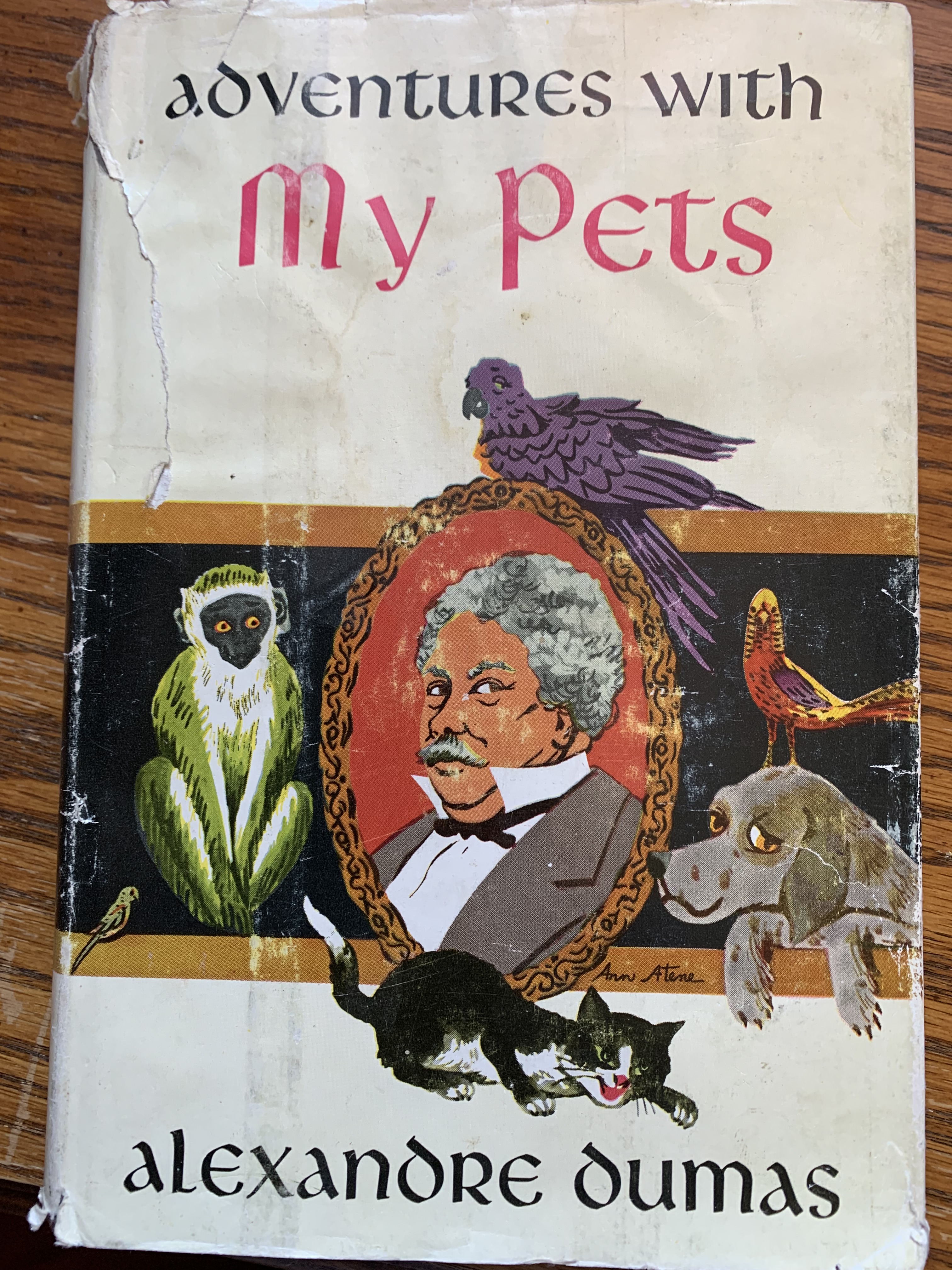
Doesn’t the picture of Dumas look a little like this cat? Or maybe this picture is the one that looks like the cat…

This is a memoir written by the author of The Three Musketeers and The Count of Monte Cristo. Now, Dumas was a badass, particularly as a writer. I’ve read Monte Cristo, and it’s bloody brilliant; and pets are absolutely my thing — so I had to get this. Plus it was only $5.

Unfortunately, as Dumas lived in the 19th century, the times they have been a-changin’: and Dumas did not think of pets the same way that I do — and neither, honestly, did he think of adventures in the same way I do. I was hoping for, I dunno, hiking in beautiful mountains with dogs, who run off the trail and then make friends with an elk and bring it back to get a scratch behind the ear and take a treat from Dumas’s hand; that would be an adventure! With a pet!

Instead I got a whoooooooole lot of hunting. Dumas surely did like to shoot him some animals. Particularly rabbits and birds. The title, you see, comes from the fact that one of the main characters in the memoir is Dumas’s hunting dog, his English pointer Pritchard. And if you count all the times Dumas blasted a bunch of small helpless creatures with a shotgun while Pritchard pointed at them, then you betcha, there were plenty of adventures with his pets. But as you can probably tell, it was not my cup of tea.

It was interesting. Dumas was still a hell of a writer, and he does manage to make a lot of the little anecdotes come to life. Some of them were even fun: the man had a lot of pets, some of which he treated well; while many of Pritchard’s stories are about hunting, there is also one about how Pritchard often brought home many other dogs from the neighborhood to share in his lunch, because Dumas spoiled his animals and therefore Pritchard’s friends wanted the same good food he provided his dog. There are many conversations between people, often but not always about the animals, which were interesting and amusing. There’s a great secondary character, Michel, who was Dumas’s groundskeeper/animal expert, and he is interesting and amusing; Dumas presents a bunch of ridiculous folklore legends as coming from this guy, and clearly we’re supposed to laugh at them (there’s a chapter where Michel asserts that frogs act as midwives to other pregnant frogs, and so either frogs must have taught this to OBGYNs, or OBGYNs must have taught this to frogs — and as a fan of frogs, I’m good either way), but Dumas never makes Michel seem like a fool or a doofus, which I enjoyed. I appreciate that Dumas was, as he was described in one chapter, one of the most arrogant and self-centered of men (Which, not to be stereotypical, but I feel like saying that about a Frenchman is saying something) — but also one of the most generous and compassionate. He is completely ridiculous about handing out money left and right, usually, in this book, to acquire more animals, and I like that. I love the chapter where Dumas is described: because he reprinted a letter from a friend of his who defended him in Parisian social circles, with a letter to the local newspaper, which is fantastic; the letter basically says, Yes, he is arrogant, but also generous — and the real difference is, he’s arrogant because he actually is the greatest author in France, and that makes him a better person than all the rest of us.

I loved that.

But I did not enjoy all the killing of animals. I liked the cat Mysouff, but not when Mysouff killed all the pet birds. I liked the dog Mouton, but not when Dumas kicked Mouton in the rear, as hard as he could, for digging up his garden, and Mouton bit the crap out of Dumas’s hand — and the point of the story was that Dumas therefore had trouble writing for a while, because it was his right hand. I liked Pritchard, but not when Pritchard went hunting, or just killing and eating animals for fun — and especially not when Pritchard gets hurt and Dumas plays it basically for laughs: the dog gets shot by a hunter friend of Dumas’s, and the joke is that the pellets hit Pritchard in the testicles — but not to worry, one of the testicles is still functional! So all is well! And I was just like, “MOTHERFUCKER, SOMEONE SHOT YOUR FUCKING DOG, GO KILL HIS ASS!”

Plus: the dog dies in the end. And not of old age, surrounded by the family that loves him.

So nope: this was definitely not the book I was hoping for, and I would generally not recommend it. If you are a huge fan of Dumas, then you might enjoy it; it gives more insight into him and his lifestyle than it does into his pets or his attitudes towards his pets — but if you, like me, are a pet person, give this one a pass.

PETS!

Here are all the videos I couldn’t share before.

This is Roxie wagging her tail. Unfortunately, her snoot gets in the way.

Here’s Toni giving Neo his watermelon:

This is Neo yawning (With a cameo by Samwise)

This is Samwise having puppy dreams:

Duncan getting a nice skritchy — and then biting me a little.

Is it weird that this actually makes me want a strawberry? And a napkin for the tortoise?

Finally, here’s Roxie again, snoozing away.


This Morning

This morning I’m thinking about how much I wish I was still asleep.

I woke up at 4am again, and tossed and turned for an hour before trying first to write in my journal, and then deciding to go ahead and write this on my Web-log here (I hate that word, actually. I like the word “blog,” have been using that even though I’m sure it’s now passe, that it has been yeeted along with every other “world wide web” term by the new generation who talk more about wifi than internet; but I’ve always hated “weblog” because it looks like “we blog.” And we do, oh yes we do blog, precious; but that’s now how the word is said, it’s said “web log” because it’s a log kept on the web — but there’s no way to indicate that without adding a space or a capital letter or a hyphen, all of which ruin the visual indication that this is where the word “blog” comes from, a shortening of “web log.”) what thoughts are running around in my head and keeping me from going back to sleep.

This. This is what I think about when I wake up at 4am. Along with the thoughts, “God, I’m tired” and “I should really get more sleep” and “Today’s going to suck.” See why I said yesterday that my brain, like everyone else’s brain, is unwell and disordered and just — stupid? Because I really do need sleep, and my brain knows it, but yet somehow it can’t stop thinking “Man, I’m really tired. I should be sleeping now. I’m not though. This day’s going to be awful.”

I would like to apologize in advance to everyone today for my crankiness and slowness, for my confusion and my general inability to remember anything or to think clearly. I blame my idiot 4am brain.

No, the main thing that’s waking me up, and has been all week, is this: we need to move. We’re downsizing to save money, and our lease is up, and we need to find a new house. We want one that is cheap but decent, and that has a good yard with a solid fence for our dogs and our tortoise, who lives in the yard.

That right there is the first problem we’ve been having: most places don’t have a fenced yard, or don’t allow dogs, or don’t allow TWO dogs, or don’t allow anything but small dogs. And if you’re not a dog person, okay, fine, sure, you don’t want hair in the place and you don’t want poop in the yard and you’re scared that they’ll bark or dig. But if you’re willing to allow me to have a dog, what is the problem with me having two dogs? You think two dogs will bark more than one? Are you afraid they’ll fight? Is there some calculation in your head that says the place is too small for that much canine mass? I mean– can’t you let me handle those problems? If you don’t want dogs, fine; but if you allow dogs, what’s with the weight limit? If it’s an apartment without a yard, again, that’s fine, I understand; I wouldn’t move my dogs into a place that didn’t have a yard for them, but lots of people do that, and I think it’s wrong, too; but with tiny lap-dogs it’s much more manageable, so in that case, you can say that you don’t mind tiny yappy puppers. But if you have a yard, why couldn’t I have as many large dogs in there as I can cram in? Why does the landlord care how many dogs I have? Is there a fear that too much will create a canine supernova, which will then collapse into a doggo-black hole?

At any rate, once we find a place, we’re going to have to downsize and get rid of stuff, and we’re going to have to move.

And that’s it. That’s the thought. That’s what keeps me up at night, why I can’t sleep, why I am currently seeing double because my eyes won’t focus well, and having trouble typing because my fingers are not hitting the right keys in the right sequence. Because I’m going to have to get rid of stuff, and then move the remaining stuff from one house to another, and put it all away.

I don’t know why I’m having trouble with this. Sure, there is anxiety about the house hunting: will we find a place that we like? Will we still like it once we move into it with all of our possessions and our pets? What about our neighbors, will they drive us crazy? Will we hate living there after six or eight months? All of that is one thing; but this morning I was thinking about stuff. I was trying to picture how we could cram our current possessions into the condo we looked at yesterday — which was a dump, by the way, as per our expectations; it was in a good neighborhood and it was dirt cheap, but that was because of all the dirt.

Now: why? Why was I trying to make decisions about what to keep and what to get rid of? Why was I worrying that we wouldn’t have room in the garbage can for the junk I’ll want to throw away, junk that has accumulated in our back yard simply because we have room for it, and I haven’t bothered getting rid of it before now? Garbage? 4am, I’m exhausted, and I’m literally worrying about garbage.

Garbage.

I think I need to clear my brain out, too.

That also, I have to say, represents most of the stuff that we’ll need to downsize and get rid of: things we just haven’t bothered to remove because we had room for it. The house we’re in now is quite large, four bedrooms for the two of us and our pets; the bird has his own bedroom. So we have the chair that isn’t as comfortable as it used to be, but we kept because our Boxer mix likes curling up in it. We have a bookshelf full of CDs that only I listen to any more, and that rarely because most of them are either uninteresting to me, or are already ripped onto our iTunes. If I just consolidated my tools, and cleaned out the half-empty plastic bags of hardware that has been left over after assemblies and repairs and installations over the last few years, I’d be able to put all of my home-repair stuff into one medium box.

I just haven’t done it. Because we’ve had room to store everything, so why worry about it?

And now, it seems, it’s time to worry about it. Except there’s nothing to worry about. Not even the move itself: it’s now May, and school will end in three weeks (And THANK GOD FOR THAT), and then we’ll have nothing to do but move; while we’ll need one day with a U-Haul truck and friends to help us move the big furniture, the rest we can do in small trips with our car. We’ve done this many times before, and it’s never been hard, and it won’t be hard now. It’ll be good for us, in fact, because we really should get rid of all of our clutter; it’s not sparking any joy for us.

Now someone, please, I beg of you: explain that to my 4am brain. Because the one thing that will make this move hard is if I can’t get enough sleep.

Tied Down at the Edge of a Cliff

We say we have to get me out of teaching. We say it often, laying in bed at night before we turn the lights off, when we usually turn to face each other, heads on pillows, and sort of put a punctuation mark on the day – sometimes an exclamation point, sometimes a question mark; but usually just a comma or a semi-colon, because the end of the day is almost never an ending, almost always a brief pause for breath before we go on with the next clause, the next day, separate from the last but still connected – always connected.

My life is a run-on sentence. And I don’t know how to stop it.

No: I know how to stop it. (And I’m going to leave this metaphor behind now, this navel-gazing grammatical pun. Jesus, Dusty. Get a life.) I could change my life quickly if I leave everything behind, including my wife and my pets, a sentence that took me several tries to actually write. I could change everything if I left everything. I do what I do so I can earn what I earn so we can live how we live: as we. But our bed, where we lay at night together, is actually the ground at the top of a cliff. Everywhere I go, I am at the top of this cliff. At night we lay together, our heads heavy on the pillows, and we look into each other’s eyes and I tell her how much I love her and she smiles at me and I love her more, and then we kiss goodnight, and roll over – and I stare off the edge of the cliff.

The cliff is the edge of my world. I don’t mean the end of life; I’m not talking about dying. I’m talking about where the place I am, the place I live, where it ends, abruptly, startlingly, dangerously. Honestly I have pretty much always stayed near that cliff’s edge, in various ways. But never too near: because I am a coward, I think. And though every night I look out into the open air beyond that cliff, to actually jump off that cliff and land somewhere entirely different – or perhaps instead of landing, take flight and sail across the sky, which is how I imagine it would feel to be a writer – I would have to leave behind everything I am now, everything that is this place where I live, this life where I live, where I sleep with my head heavy on my pillow and my eyes straining to look out farther but tired, so very tired, with the looking; but behind me (or no: before me, between me and the cliff, not to protect me but because she is even closer to the edge of that empty space that might hold a new life) is the best woman in the world, and at our feet lies the sweetest dog I’ve ever known, and nearby are a bird and a tortoise who need me, who are tied to me, who are weighing me down. And none of them – not even the bird, sadly – can fly.

Let me be clear: it is not my wife’s fault. She never asked me to get this job, never demanded a larger home, a larger paycheck, health insurance, stability, all the tethers of the modern world that tie me down at the top of the cliff, safe and immobile, able to turn my head and look out to eternity, growing and throbbing out there beyond the fall to the bottom. She doesn’t demand them of me now, never tells me when I talk of leaving teaching that I can’t do that because the family relies on my stable income and health insurance. She has never said that once. She never would. She lies with her head on her pillow, holds my hand, her fingers exploring mine as she imagines drawing my hands (as she imagines drawing everything), and says, with her eyes sad, “We have to get you out of teaching.” Now that she has tethered herself down right next to me – but closer to the edge of the cliff than I am – she says “We have to get ourselves out of this.”

Then we talk about how we can be free, mobile, able to pick and choose what we do with our lives, if we just buckle down and teach for three years and pay off all of our debts. Maybe four years. Maybe five. Tethered down right at the edge of this cliff, looking out into space, lying with our heads heavy on the pillow, holding hands.

I’ve never jumped off a cliff. I jumped off a swing into a river, once, but I landed flat on my back when I tried an ill-advised backflip; it hurt. I don’t remember if I went back on the swing again after that, but probably not; I’m a coward, and I always have been, and that’s why I’m still at the top of this cliff, near the edge but not on the edge. I’m looking out on this vista, this panorama, of wide open space, and I’m – I don’t know, shouting over the edge? Maybe whispering, blowing words like soap bubbles, glittering and evanescent as they drift pointlessly free? But I’m still here, on solid ground, holding on for dear life even though I am nowhere close to falling.

I should be falling. If I was a writer, I’d be falling; if I was falling, I’d be a writer.

Instead I am – yes, I know it. A spider. Remember the tiny ones at the end of Charlotte’s Web, how they spin out a single thread of silk and throw it up into the wind, letting the air lift and carry them away? That’s how I want to go out over the edge of the cliff; not free fall, not dropping down and just hoping that something will catch me, though I’m not sure now if that’s because I’m a coward or just because I don’t care for the thrill, never have, never liked adrenaline, never wanted to feel alive because I almost died. I hate stories that rest on that idea: that life is either risk or boredom, that everything that is lovely or pleasant or simple becomes blasé, because I feel like if I could live forever, I would just read all of the books that I won’t have time to read, and play all the video games, and walk over every inch of the Earth, and why would that get boring? I don’t believe that it would. And so I want to drift over the edge of the cliff, not plummet. So here I lay, throwing out single threads of silk, gossamer words, hoping that one of them will catch the wind and lift me free and sail me away through the sky – and my wife and our family with me.

I’m growing roots. I have been for years, though I frequently pull them out of the ground and let them wither and die. I don’t need the roots, though I don’t hate them; that’s probably why I let them grow, and maybe that’s why I haven’t gone over the cliff, because I don’t mind the slow growth, don’t mind drifting down into the earth instead of up into the sky. Maybe if there was a way to sink below the surface, grow a taproot large enough and deep enough and then pour myself down instead of drawing nutrients up, follow my own growth into the deeps, and then tunnel down through the cliff from behind its face, back behind the bones, down and down and down until I came to the bottom and then slid out from between the teeth, out with the breath of the earth back into the open air. Then I’d be in a new place, and not at the edge of a cliff looking out; then I would have changed, would have moved.

But I would have never flown. Never left the ground. Is that, could that be, what it would mean for me to be a writer? To move through the earth to new ground? Does that metaphor make sense?

Is this the thread that will lift me? Or the one that I can crawl down, like Dante down the leg of Lucifer, crawling down until suddenly he was crawling up, out of the depths of Hell to the mountain of Purgatory? But see, he was carried on that final voyage out. He was on a mission from God. All he had to do was hold on and wait.

I don’t think I can just hold on and wait. I think I need to move. I don’t know if I can fly and take my family with me – and I won’t leave them behind. There is nothing that would be better without them. I don’t even know why I say it, other than I know that most people who jump off the cliff, who make themselves suddenly into writers (or into flattened, shattered remains), go it alone. I don’t want that. I don’t think I ever have, but I know I don’t now. So the question is: do I keep throwing strands of silk into the air? Do I stitch them together into a single sail, and just wait for a wind great enough to lift me, and my wife, and our heavy heads from off of our pillows, and we can grab the bird and the dog and the tortoise in passing and carry them with us? Could there be a wind great enough to lift a sail large enough to carry us all aloft?

Or do I try to find a new way, this magic that will turn the earth beneath me malleable, let me alter the flow and the path of all things so that I grow in the wrong direction, turning the wrong into right? Honestly, I don’t even know what this metaphor means: would I write for the local scene, find local websites, write for the Tucson newspaper? Is that what it means to go down your own taproot, to go deeper into the earth, to become a writer by digging down? I don’t know. I want it to be magical, somehow, to be an alteration of the paradigm, a new path, a new alchemy that turns stone into water, just for me, so that I could swim through something that can’t be swum through – but though I can imagine that, I don’t understand it, I don’t know how I could do that, if it could be done. I don’t know if I’m creative enough to do it, if I have the wizardry to break the laws of nature. But since it took me four tries to actually type the word “wizardry,” I’m going to say the omens are bad.

Maybe I should try to climb down the cliff. Grind it out, slow and steady, keep working, keep writing, keep moving; no magic, just constant effort, every moment testing my strength to the limits, every moment hyperalert, looking for that next ledge, that next handhold.

I don’t know. I’m 42, and I haven’t started climbing yet. I might already be too tired just from lying at the top of the cliff. Lifting my head off that pillow every goddamn morning. Looking out at the expanse of sky and thinking about how wonderful it would be to sail away. Spinning my silken threads, my tenuous sails – watching them break and fall, or vanish off into the ether without me. And here I lie.

I don’t know how to fly.

Update.

Toni read this. We talked about it. And having talked to her about it, the answer is clear: we will be alchemists. We will swim through the Earth, and see where we end up.

I consider the metaphor of flight to represent getting published by a traditional brick-and-mortar company, selling books out of Barnes and Noble, the whole Best-Selling Author bit. I’d still like to fly. I’m going to keep sending up streamers of spidersilk, hoping that one will catch just the right breeze and lift me up into the sky. I would like that. For Toni, the same metaphor probably applies to suddenly hitting it big in the art world: becoming a name, being sold in galleries, getting commissions for public art, all of that. And that would be swell, too.

But that’s not the goal. Neither is the goal a safe and sure and trying descent.

No: the goal is to try something new. We plan to write and illustrate and sell graphic novels, and illustrated novels. I plan to go back to publishing a serial novel, which will be available as enriched and expanded e-books, featuring extra stories, back stories, side characters, and so on. Maybe we’ll run a book store. I will publish my novels, and she will sell her art – and we will see what we are capable of and where we can go. What new places can we discover, and explore? What exactly is down there, underneath us? Could it be even more intriguing, even more wondrous, than the sky above?

We will never jump off the cliff. And we will never leave each other behind. (Nor the pets.)

We choose – magic.

On the Fifth Day of Blogging, Just Dusty Blogged for Me…

An introduction to his familyyyyyy!


My wife and I speak for our pets.

I know this isn’t unique; maybe not even unusual. And though it may seem like it is to other people, especially the petless and those on the lower end of the imagination spectrum, it isn’t even strange or nonsensical: our pets, like any sentient thing, have personalities, and the clearest way for humans to depict that is to put it into words. We also do pantomime and funny voices for all of the pets, but that isn’t something I’m prepared to re-create on this blog.

So just the words will have to do.

What I have noticed over the years of speaking for my pets is this: my pets are smart. Very smart. Also kind of insane, but still — smart. The things they have to say, when we humans try to step outside ourselves and solidify their apparent perspective, are often true and even insightful things. This may be exactly because the attempt to speak in another persona allows us to step outside our own egos, and gain a new and perhaps clearer perspective; it may be because animals don’t care about the same bullshit that humans care about, and when you are speaking for an animal, it is impossible to speak like a human. It may be because I actually like animals better than humans, and so when I am speaking for them I tend, consciously or not, to make them sound like better people than human people generally are.

Though that last one isn’t entirely true. Because I speak for Dunkie, too, and he’s crazy. But also very sweet. And he don’t take no shit off of nobody, which is something that is not true for me, and which I admire and envy.

Regardless, whether it is escaping my own ego, or escaping a human’s perspective and a human’s baggage, or even if it is just that I want to make my pets seem like good people, it seems to me that their advice is worth listening to. So I’m going to be giving them a regular sort of column on this blog, and asking them what they have to say about the world we all share.

First, let me have them introduce themselves.


Duncan the Cockatiel:

Theoden Humphrey's portrait.

This is Duncan. He insists on going first, because he’s the oldest, and because he believes he is the most important.

YOU’RE GODDAMN RIGHT I’M THE MOST IMPORTANT! Yeah, that’s right — because it’s all about Dunkie. Oh! Right, yeah, introduce myself. Okay, LISTEN UP! I’m Duncan. I am named for a king. KING DUNKIE! I bring beauty into this house.


My feathers are pure white, and very clean and neat, because I spend the majority of my wakey-time grooming myself. I have a beautiful gold crest and awesome orange cheeks, and I whistle and sing and make kissy noises when I feel like it. 


When I don’t feel like it, THAT’S WHEN I START SCREAMING!


I can be very loud. BUT ONLY WHEN THEY DON’T DO WHAT I WANT! I can’t help it. I’m very small and I’m stuck in a cage. I don’t have a lot of weapons. I can bite, and I threaten that a lot. Doesn’t seem to work, though. BUT THE SCREAMING DOES! Yeah, it works good. It gets a real response, you better believe it. They always think they can ignore me, BUT NOBODY IGNORES DUNKIE! Even though I’m a tiny little pretty bird, I AM A FOUNT OF RAGE! It never lasts very long, though. But the screaming can go on and on and on and on because nobody is as stubborn as a bird. But then they just cover me up. That makes me stop screaming.

But really, all they’re doing is making me swallow my rage. The screams don’t stop, they just go inside.

For now.

It’ll come back later. Rage always does. You better believe it, pal. Just as soon as you do something I don’t like. Yeah.

I’M DUNKIE!

Oh yeah — and I can be very sweet, sometimes, too. I picked Mama out special when she came into the pet shop where I was living when I was new. Birds are usually standoffish to strangers, but I walked right up to her and put my foot out, reaching for her shoulder so I could stand on her. I still like to cuddle and have her give me skritchies. And then I close my eyes and make the tiniest little peeping noise.

It’s almost enough to make you forget about the rage.

Almost.


after-grooming
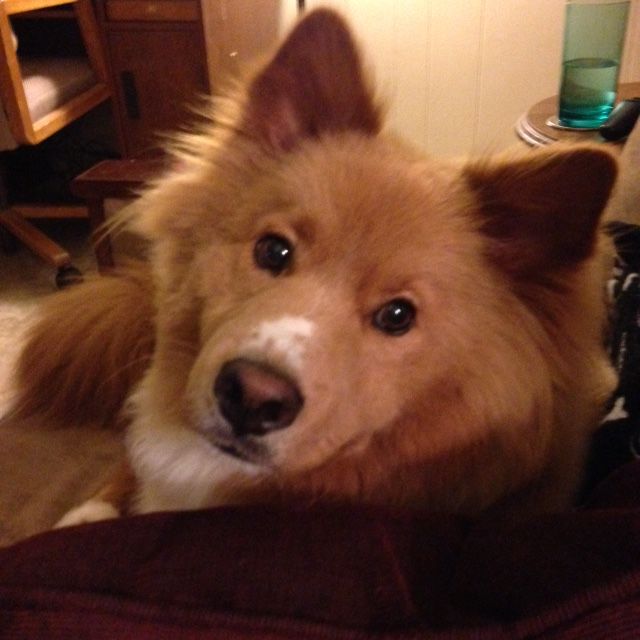
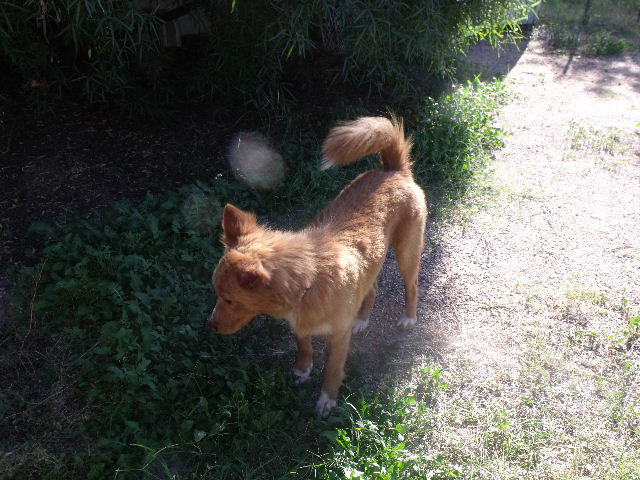
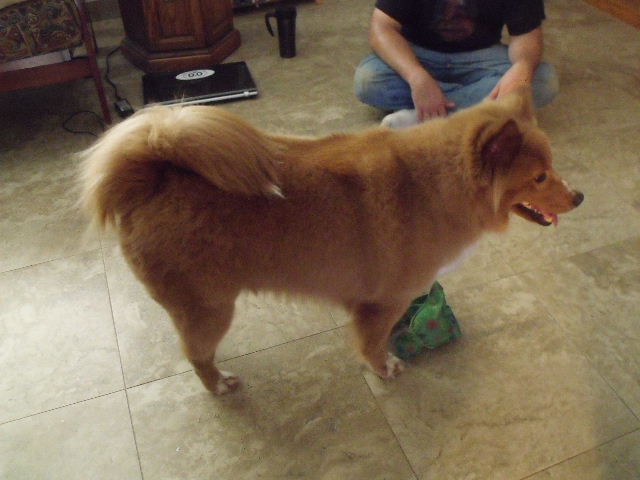
This is Samwise. Samwise, also known as Sammy, also known as the Fox in Socks (the Spitz in Spats), is the middle child (we think — both his age and the tortoise’s age are somewhat in doubt.) and is the sweet one.

 
HEYYO!* I am Samwise! I am a goodwill ambassador, that’s what my persons say. These are my persons, my mom and my pop.

Toni DeBiasi's portrait.

DSCF1669


I call them that because they took me in when I was in the joint. See, I used to have different persons, but they abandoneded me, and then I had to live on the street for a while. I came pretty close to starving to death, and it made me very scared and anxious. Then I got picked up and put in the shelter — but the dogs call it the joint, because though it sort of is shelter because you get a roof and food and water and stuff, you’re still locked in a cage, and you’re alone and scared pretty much all the time, which is why all the dogs in the joint bark a lot and act really mad. Because they’re scared and they don’t know why they don’t have a home any more, because we all used to have homes and persons, and then all of a sudden we don’t, and we’re in the joint.

The joint changes a dog.

But it didn’t change me!** Because I am super sweet, and very friendly and curious. (Though I still get scared sometimes.) I like everybody. I greet everyone and let them all pet me — I am very soft and fluffy. I never ever growl or bark, and I am not afraid of strangers — I like to stand up and pat them on the tum, because I like tum rubs and I think everyone should have tum rubs. My mom and pop think it’s amazing that I’m still so friendly and sweet, because I have plenty of reasons not to be, from my early life before I came to live here. But they don’t understand: that was all in the past. Now I have a nice home, and lots of food and tasty treats, and two persons that love me and will always take care of me, even though I bit my mom on the first day she brought me home because I got anxious and freaked out like I do sometimes, but they didn’t bring me back to the joint like the persons who took me home before them who only kept me for a week and then brought me back, or the ones before them who did the same thing (Pop says it’s because people suck, and because I have this thing they call tick fever from when I was on the street and it means I need to go to the vet and get medicine and tests and stuff and it costs money and the persons who took me home didn’t want to pay for me, but I don’t know what money is and I don’t even like the vet because they poke me with owie things but then they give me treats so it isn’t too bad but still if I could I would skip the whole thing and I’d really rather just have persons even if they don’t take me to the vet because all I really want is a home. And I have one now. So the persons who didn’t keep me before, that was just because they weren’t the right persons. I had to wait for just the right persons. And I found them!). So now I have a home, where I get to sleep in the bed, and I get two walks a day, and I get treats all the time, and they always pet me when I want them to and rub my tum and everything.

So why shouldn’t I be happy? See how nice persons are? Just look at my mom and pop! I think they’re awesome!

Okay I have to go now! Now you get to say heyyo to my outside brother! He doesn’t live in the house because he poops everywhere. I don’t know what the problem is. His poop seems pretty easy to clean up. But then I guess I’m not the one who cleans it. Anyway, he lives outside and he seems to like it. Okay bye!

(*Sammy’s greeting is pronounced like “Hello” with a Spanish “ll,” pronounced as a “y,” like “La Jolla.” It does not sound like Ed McMahon’s response to Johnny Carson jokes.)

(**Actually, it changed him quite a bit. When we brought him home, he weighed 25 pounds; he is now almost twice that, and has three times as much fur. Before and after:)

1526792_709556565807081_2954433223766361570_nsam1first-day-2after-the-grooming


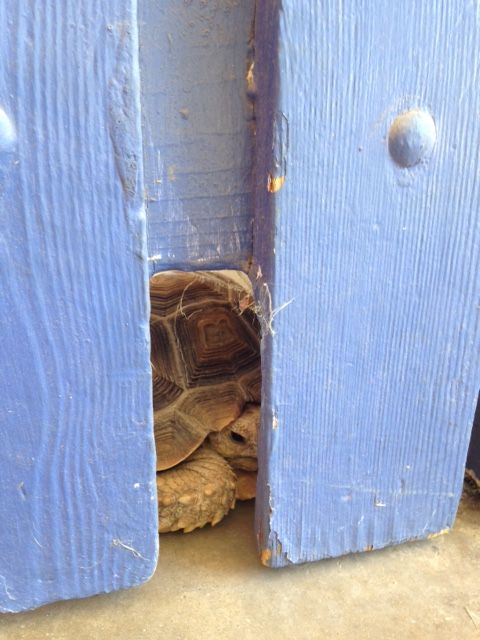
Neo is an African spurred tortoise. We named him Neo because he was a gift from our former landlady, and when I was looking up African names, I found that “Neo” is a gender-neutral name that means “gift” in Tswana. We pronounce it like the name of the Keanu Reeves character from the Matrix, though I am sure that the actual word is pronounced differently; but we love the Matrix movies, and I sort of like the idea that the tortoise is actually the messiah. The actual word for the tort is “calm.”

neo-peeking

Hello. I’m Neo. I like food. Especially grass.

Theoden Humphrey's portrait.

This was the new sod we got for him, and the fence that didn’t keep him out. (Photobomb by Sammy’s butt.)


Food is good. So is sleep. I like to hide so no one bothers me. Especially that furry guy (“HEYYO!”). He sniffs me a lot. He moves too much. And too fast. You have to take your time, because otherwise you might miss things. Like food. I eat pretty much anything. I can’t see very well, so I usually try to eat everything I can find. Then I sleep.

Sleep is good.

I have a shell because I don’t want to be bothered, but usually I walk around a lot and look for food. I can walk surprisingly fast, especially when one of the tall people come out and come near me, because they usually have food and I walk straight to them as quick as I can. Which is pretty quick. Not that quick.


Not as quick as the sniffer. I have an extra house, like a shell for my shell.


I sleep in there because it has a warm rock* that I like to sleep on. Warm is good. Sleep is good. I walk around every day and graze, and eat my plate of salad, and then I go and lie in the sun or lie on my warm rock and sleep.

*Warm rock=heated basking spot designed for tortoises. Basically a hard plastic tile with a heating coil inside.


Life is good.

Good Neighbors

In his poem “Mending Wall,” Robert Frost wrote, “Good fences make good neighbors.” He’s not wrong: some neighbors, you want a minefield and electrified barbed wire. And a moat. My current neighbors would only please me if they were encapsulated in a soundproof dome, so I wouldn’t have to listen to them play beer pong at 3am. Nothing like a drunken coed caterwauling “WOOOO!” after a good bounce to rock you to sleep.

But the thing that has made me a better neighbor, apart from my aversion to early-morning alcohol-fueled yodeling, is not my fences, not the separation between us and mutual respect for privacy. It is my dog.

In fact, my dog has made me a better person in a number of ways. I am cleaner, especially now that I have a dog who will eat things that aren’t food if I leave them lying around within his reach. I am braver, because while I will avoid confrontation for my own sake, I do not hesitate to get between him and any danger that threatens him. I have more patience, because losing your temper at a dog doesn’t do anything but break your own heart when he cowers away from your yelling, the toy falling from his mouth, his tail tucked between his legs, his wide eyes seeming to say, “But . . . but . . . I just want to play with you!” I laugh more, because there’s nothing better than watching a dog run towards you – unless it’s watching a dog dream about chasing things, his feet a-twitch and his throat squeaking out sub-vocalized barks. And I have far more tender moments when he curls up next to me, or turns on his back so I can rub his tummy.

But my most stubborn and problematic trait is probably this: I am an introvert. Being around large groups of people, especially talking to them and interacting with them, exhausts me. Therefore, I avoid it, as much as humanly possible. I like people; I just don’t want them around me. Given the choice between going out to a crowded, lively bar, and sitting home alone, drinking bitter, rum-laced coffee in a dark, empty room – maybe with Tom Waits playing in the background and cold rain sheeting down the windows – I’ll take the depressing solitude, every time. Actually, it sounds nice. Peaceful. Given the choice between, on the one hand, calling an electrician, describing the problem, making an appointment, greeting them when they arrive, making small talk while they work, smiling the whole time; and, on the other hand, learning how to change a broken light fixture myself – complete with slight electrocution when I brush the bare wires – I will grab my pliers and hope I don’t burn down the house. The only reason I haven’t burned down the house is that my wife won’t let me do the serious wiring myself. Sometimes my fondest wish is for the ability to cut my own hair and clean my own teeth.

And all of this anti-socializing is exacerbated, of course, by the fact that most people kinda suck.

But you see, I have a dog. My dog needs to be walked. (I have to break in to mention this: he is, at this very moment, curled up on his back by my left side, as I type this on the laptop sitting on my couch. I’m typing one-handed, because he has wormed in close enough that his foreleg has curled around my left wrist, as if he’s asking me to hold his hand, or maybe to escort him to the Governor’s ball; and so of course I’m petting him with my left hand while I hunt and peck with my right. Because writing is important to me – but I know what my real priorities are.) And there is a rather amazing thing that happens when you walk a dog: you make friends.

I don’t know most of my neighbors; in most cases, most places that I’ve lived, I’ve never even learned their names. I don’t throw nor attend block parties; despite my genuinely good intentions, I don’t go to neighborhood cleanup days. I’ll wave and nod when I see my neighbors outside – and then I turn away, and hope they’re gone by the time I look again. Normally when I walk down the street, I look away from anyone coming the other way, at most giving an awkward nod if I glance at them while they’re glancing at me. But when I have a leash in my hand, with a dog on the other end – suddenly, I’m chatting, I’m smiling, I’m making eye contact. I’m meeting my neighbors, and introducing myself and my four-footed furry companion. Suddenly, I’m friendly.

It’s him, of course. My dog is an extrovert. He loves meeting people, especially other four-footed furry people; as soon as he spots someone coming towards him, while I’m looking down at the ground to avoid their gaze, he starts wagging his tail and pulling towards them, hoping to get some petting and maybe a nice compliment on how soft his fur is; at the very least he’s hoping for a chance to sniff some new people-smells (And he thinks furry-people smells are the best.).

And while he’s standing there, wagging his big fluffy tail, nose squiggling inquisitively towards them from under his bright button eyes and pointed fox ears? I have to talk to them, if they’re human people, or to the people that walk with them, if they’re furry. I have to introduce my friend Sammy, and tell them he is friendly and not dangerous, though sometimes he gets rambunctious and jumps up on people. If it’s a human person alone, that’s all I have to say; they generally give him some pets, and they always say how soft he is, usually how pretty he is (I also have to tell them he’s a boy; if they make any comment that has a feminine twist – “Oh, she’s lovely!” – then I shorten his name to Sam, or lengthen it to Samwise, and I usually say “Good boy!” at some point. I’ve been mistaken for a girl, back when I had long, pretty hair; I didn’t care for it much.), and then they head off on their way, with a smile on their face and a wish for a good day for me. They often thank me. These encounters are, without question, the easiest, most positive interactions I have ever had with strangers.

If there is a furry person involved, the conversation is a little different: he generally ignores the human person, going straight to sniffing the furry one and being sniffed simultaneously. I still tell the human person that Sammy is friendly and will not bite, though occasionally he gets rambunctious; but I never have to say this to the furry person. It doesn’t matter if they’re twice his size, or one-quarter of it: there is never any fear when Sammy meets another dog. He will sometimes shy away from a dog barking from behind a fence if it seems angry; I use his response as a litmus test to tell me if the barking dog should be avoided or can safely be ignored. Sammy seems to know best. But if it’s a dog on a leash on the street, then it’s nothing but tail-wagging and nose-stretching, and it’s up to the human people to keep them from tangling their leashes.

And for the human persons, there is always more to say: they ask what breed Sammy is, generally with a compliment on how handsome he is – sometimes they say he looks like a fox, which he does. I tell them we don’t know: he’s a mutt we got from PACC, the county animal shelter here in Tucson. Then they often guess: and they always say Chow-Chow. Well, he is the right color, almost, and he does have thickish fur and a curled-up tail; but our last dog Charlie was at least half Chow, and Sammy looks very little like him, and acts nothing at all like him. The conversations Charlie had, whether with furry people or with human people, always started with him saying, through his attitude and body language, “I’m the Alpha. I’m in charge.” His body language was very clear: We took Charlie to an obedience class once, and he made a puppy pee itself in fear only by staring at it. The other dogs we met on the street either bristled at him, or, far more often, submitted to him, usually looking down and backing away. He didn’t allow human people to put their hands on top of his head, pulling back from their stroking fingers with offended dignity – though he would allow them to scratch his chest. And if it was a child, or the young woman with Downs’ syndrome whom Charlie met a few times at the library, Charlie would be completely calm and passive, would allow them to pet him anywhere they wished, would lick their hands and take food from them. But generally speaking, Charlie’s conversations were more formal, more dignified; based on what we’ve read about Chow-Chows, which are one of the “Ancient breeds” and were used for centuries as guard dogs in Buddhist temples in China, this had much to do with his heritage.

There’s nothing formal or dignified about Sammy. And as he’s hopping about, trying to shove his nose either into the face or under the rear of the other dog he’s greeting, the human person and I will talk about dogs, and about being dog-owners. I compliment their furry friend as they complimented mine – because all dogs are beautiful. We’ll chat about the weather, and about the neighborhood. We’ll let each other know if there is anything to watch out for or that needs to be avoided – a dog that has been spotted roaming loose, or a patch of sidewalk littered with broken glass. Eventually we’ll break off the sniff-fest and pull away, with several goodbyes.

Then, if we meet again, we recognize each other: I tell Sammy, “Look, it’s your friend!” And he acts like it: by the third time or so meeting the same dog, Sammy graduates from sniffing to trying to play, batting at them with his paws, rearing up or play-bowing as dogs do. The other human persons greet him by name – they still don’t know mine – and give him a little skritch about the ears or shoulders. Now the humans’ conversations also get more friendly, and we start getting to know each other. I have never spoken to two of the people living in the house next door to me; but I know the woman down the street, who walks her Dachshund twice as day as I do Sammy. She’s 87 years old, from Germany (I don’t comment on the amusing stereotype of a German woman with a Dachshund, but I think of it and smile), and she’s a badass: she walks that dog for miles, takes aerobics classes, and carries a wooden cane not to walk with, but to smack the heads of dogs that come after her little friend, because a loose dog once got into her yard and picked her dog up and shook it violently. Whenever I pass the two of them – which is frequently, as her walking schedule coincides with ours – we wave and greet each other with fond smiles, even yelling across the busy street. I like her. Her dog is also the sweetest, calmest Dachshund I’ve ever known; I have never heard him bark, and when he and Sammy met after he had had some teeth pulled and a growth removed from his snout (non-cancerous, his person told us – and expensive to have removed, but “Vat can you do? Zey are our children.”), Sammy sniffed carefully all around the wound, gave it a little lick, and the Dachshund let him.

That’s how it is, when you walk a dog: you get to know the other dog-walkers in the neighborhood, and their dogs. You smile and wave to each other; if your dogs get along, you cross the street to greet each other and have a little sniff-fest. If your dogs don’t get along, there isn’t any judgment, no grudges held; you simply cross the street away from each other, or pull one dog off the sidewalk to allow the other to pass without incident. (This was much more common with Charlie, but Sammy still does get nervous around some dogs; we simply stand aside, and there’s no issue.) I’ve shared poop-bags and treats with dog-walking friends who forgot one, and many a piece of advice or encouragement about training or health or food or general pet care; I’ve recommended vets and groomers and the obedience classes we took Charlie to. We’ve never actually been invited to a doggy birthday party, but they have been discussed, as have Christmas presents and special treats and favorite toys and games. We’ve told fond and interesting stories, and sometimes poignant ones: now that our family has been through the grief of losing Charlie, we have some more somber stories to talk about – but we can always lighten the mood by discussing Sammy, who is an absolute bundle of joy.

I’ve made friends, several of them, but not through any effort of my own: simply because I have a dog, I walk my dog, and I love my dog. Good fences don’t make good neighbors: good dogs do.

Mama!

(This was a Facebook quiz that caught my attention. It was a little tough explaining all of the questions to our children, but this is what they came up with.)

WITHOUT ANY prompting, ask your child these questions and write down EXACTLY what they say. It is a great way to find out what they really think. When you re-post put your Child’s age.
These are the answers for all of my kids:

Dunkie the Cockatiel (5),Duncan VS Origami Whale


Neo the Tortoise (2),

Neo

and Sammy the Dog (1.5)

Sammy 3

(That’s his Wubba there, in his paws.)


1. What is something mom always says to you?
Dunkie: Stop that!
Neo: Where are you?
Sammy: I love you.

2. What makes mom happy?
D: Dunkie! And drawing lines on paper. WHICH SHE WON’T LET ME CHEW UP!
N: Peace and harmony.
S: Cuddles and when I kiss her nose.

3. What makes mom sad?
D: Dunkie. And when she can’t draw lines on paper. Or when I chew them up.
N: The suffering in the world.
S: I don’t know, but when she’s sad I bring her my Wubba-toy and we play and she laughs and then she’s not sad any more.

4. How does your mom make you laugh?
D: She snorts when she laughs.
N: She smiles when she sees me, and I smile with her.
S: When she plays with me and Wubba.

5. What was your mom like as a child?
D: Dunkie-less. So, sad.
N: The child is echoed in the adult. She is kind, and she is beautiful. She is present in the moment.
S: Mama was a child?

6. How old is your mom?
D: She has gray headfeathers.
N: Old enough to be wise.
S: Mama-old.

7. How tall is your mom?
D: Tall enough to perch on and be really high!
N: She fills the sky.
S: Mama-tall.

8. What is her favorite thing to do?
D: Whistle with Dunkie!
N: Be at peace with her family.
S: Cuddle. And play Wubba.

9. What does your mom do when you’re not around?
D: Draw lines on paper.
N: If a tree falls and no one is there to hear it, does it make a sound?
S: Oh, I’m always around.

10. If your mom becomes famous, what will it be for?
D: Dunkie! Or drawing lines on paper.
N: She is loved. It is enough.
S: Best Mama ever.

11. What is your mom really good at?
D: Skritching under my headfeathers like I like.
N: Worrying.
S: Tum rubs. And she makes Daddy laugh a lot.

12. What is your mom not very good at?
D: DOING WHAT I WANT, WHEN I WANT HER TO DO IT! Goddamnit . . .
N: Not worrying.
S: Mama’s good at everything.

13. What does your mom do for a job?
D: Draws lines on paper.
N: Takes care of others.
S: What’s a job?

14.What is your mom’s favorite food?
D: Bread. And green stuff. She doesn’t like my nibbles.
N: What she grows.
S: The stuff she shares with me. Usually cheese.

15.What makes you proud of your mom?
D: WHEN SHE DOES WHAT I WANT, WHEN I WANT IT!
N: That she has a kind soul.
S: She’s Mama.

16. If your mom were a character, who would she be?
D: A beautiful bird. LIKE DUNKIE!
N: If you imagine how another imagines you, who is then created?
S: Ummm . . . Mama.

17. What do you and your mom do together?
D: Whistle!
N: Enjoy the world around us.
S: Wubba.

18. How are you and your mom the same?
D: We both snort when we laugh.
N: We are living souls. We are more alike than we are different.
S: We love to nap and play Wubba. And eat cheese. And go walkies.

19. How are you and your mom different?
D: She doesn’t do what I want, and I don’t do what she — oh wait. That’s the same.
N: I have a shell. She needs a shell.
S: She likes baths.

20. How do you know your mom loves you?
D: WHEN SHE DOES WHAT I WANT! And when she whistles my song. And skritches under my headfeathers like I like.
N: She loves all things. It is her burden and her gift.
S: She brought me home from dog-jail, and she doesn’t make me live on the street like my last person did. She takes care of me.

21. What does your mom like most about your dad?
D: He does what she wants.
N: He is her other half.
S: He’s Daddy! He plays Wubba good. And he likes cheese. And naps. And cuddles.

22. Where is your mom’s favorite place to go?
D: I don’t know. Somewhere I CAN’T SEE HER!
N: Out into the world, and then back into herself.
S: Walkies!

23. How old was your Mom when you were born?
D: I DON’T CARE! GIVE ME SKRITCHY! AND NIBBLES! DO IT NOW!
N: What did your face look like before your grandparents were born?
S: I don’t know. Was Mama around then? I didn’t see her until she came to the dog-jail to get me. OH I KNOW! She was Mama-old minus me. Right, Daddy?