Sneak Preview! Dusty Wrote A Vampire Book!

It’s getting close, now.

The Tucson Festival of Books is one month from now. Four weeks.

This week I ordered my copies of the two Damnation Kane books, 30 of Volume I and 20 of Volume II; I should have waited, but I got worried that I might not have anything to sell at the Festival, and I hated that idea, so now I can at least be sure that I will have 50 copies of books about pirates. So I just have to hope that everyone who comes by is new, and hasn’t already bought both of those books. (Since I brought and sold the same number last year, there are at least ten people who bought the first book and not the second; so hopefully if they come back, they’ll want Volume II.)

But once I had that set, I turned to the new book.

Which was a pain in the butt.

I hadn’t put a book together at Lulu.com, which does my printing and online sales for me, for, what, three years? I forgot the difficulties in making the text look the way it’s supposed to look for the paper book. I edited the whole thing — 128,000 words, it is — and then I thought I’d be able to just drop it into the template I downloaded from Lulu. So I Control-A, Control-C, and Control-V — and the template disappears, and the text is formatted like the original document, set up for 8.5×11 pages instead of the 6×9 trade paperback format. I tried it again, same thing. Downloaded a new template, tried it again — same thing.

So I had to drop the text into Notepad: which erases all formatting.

Which included all of the italics. In 128,000 words.

But at least the margins were right.

So I’ve been going through the text and putting all the italics back. It’s been good, actually: I caught a couple more mistakes, made a few changes I like; I think the book is a little stronger for the effort I’ve put in this week.

And then when I put this chapter into this post, I realized I missed an incongruity: I changed the timeline of the book a few years, for the sake of believability for a later important chapter (where characters needed to be a leeetle bit younger), and missed one of the references I made. So now I need to double check all the time references to make sure I didn’t miss any others.

Sigh.

It’s fine. The book may not be out in time for the Festival, but even if it isn’t, I will publish it — and anyone who is interested in purchasing a copy can get it directly from me. Signed, sealed, and even delivered, if you live in the Tucson area and don’t mind me dropping by your house, or you want to come to my school.

So in order to keep you all as excited about this new book as I am, here’s another sneak preview: this is the first chapter, which comes right after the Prologue I posted before. I hope you like it!

Chapter 1

            I don’t remember dying.

            You’d think I would, wouldn’t you? The narrowing of vision as everything faded to black, the tunnel of light, the sight of loved ones there waiting for me: Gramps, and Uncle Bill, and Oscar, my first dog. If my buddies in the Army counted as loved ones, there’s be a whole parade of faces at the end of that tunnel. Though they might not be so happy to see me. I’m sure a psychologist would call it survivor’s guilt, the idea that my friends who died would hate me for living, but what the hell does a shrink know? If it’d been me who’d gotten nailed, I would have been royally pissed at everyone who made it out, who made it back to the world. Hell, I am pissed at all of you. That’s why I eat you.

            But I don’t remember any of it. The lack of memory might be because of the way of my dying: it could have been the booze, it might have been the smack, but whatever it was, whether it was cirrhosis or a heart attack or a stroke brought on by the abuse I put my body through in those last few years, I’m sure that at the time I was so wasted I didn’t feel a thing. I probably slept through my own death, which, I know, sounds peaceful and all – but I wish I could remember. I might even have been murdered, lying unconscious in an alley somewhere; I have scars I can’t account for, can’t remember where they came from – though there are plenty of ways I could have gotten those. I lived through my tour in ‘Nam, but I doubt that anyone came out of that without scars.

            I remember ‘Nam. I remember the fear, and I remember the disgust; and I remember the anger that came out of them, and made it possible to pull that trigger. More than anything I remember being tired: just wanting to sleep, sleep for years. I remember other things, too, but I don’t look at those memories. They were what pushed me into the haze of alcohol and drugs that carried me like a sleeping baby into the darkness at the end.

            I remember a few things from before the war: Mom and Dad, my sister Anne, my little brother Franklin, the farm in rural Iowa. I remember some things from after: San Francisco and the Haight, the few moments of lucidity in between stupors that could have lasted for weeks, months, or even years. I do remember a girl, kisses and whispers and silky movement under the moonlight, and for that memory, I’m grateful.

            For the most part, though, those days blended together into a thick gray fog, without beginning or end, for so long that I lost track. I wouldn’t have any idea how old I was when I died, except that I know what year it is now, and I know how long it has been since I shuffled off this mortal coil, and awoke again to see that face looming over me, awash in the haze of red light that has tinted everything I have seen from that day to this. A little subtraction tells me the answer: I was 27 when I died 29 years ago. I’d be 56 now, if I was still alive.

            But I’m not alive now, walking and talking notwithstanding. Those don’t count. You’re not alive if you don’t age: your years on this earth are nothing if there’s to be no end to them. The two absolutes are that everything must be born and everything must die; if one of those (or both) does not apply to you, then you are – nothing. My body may function, my eyes may still see, my ears hear; I may still think and feel, a little; but I’m dead. I killed myself in 1978, another delayed casualty of a war that nobody won.

            I was not reborn on that night when the vampire brought me back. I was remade. No longer human, not quite a machine, but a combination of both living thing and automaton. I am a slave, and I may very well remain a slave until the sun goes out. Who knows? Even that may not be the end. My master is a creature of the night, after all; perhaps the perfect blackness of space would be his idea of Heaven.

            Christ knows if there is a heaven like the one in the Bible, then he ain’t getting in. But then, neither am I.

            I walked into the apartment and threw my keys on the table by the door.  I was stripping off my clothes before the door even swung shut, dropping them on the floor in a line headed toward the shower. I had had to take a dip in the Bay, after, to wash all the blood off; I used the kid’s clothes to dry myself before getting dressed again. But then I had to bury him, along with his clothes, and that was a dirty business. Besides, you think the Bay smells bad to you? Try my nose on for size. Between the stink of sewage and rotting fish, the iron-scent of blood that lingered underneath, and the smells from his clothing, his sweat and soap and cologne, I felt like I would gag every time I caught a whiff of myself. The thought made me laugh. I could devour a human being with relish and pleasure, commit heinous and depraved acts at the whim of my master without batting an eye – but the smell of polluted water and body odor made me sick.

            When I didn’t stink any more, I got out, toweled off, and walked out of the bathroom. I spotted my clothes lying where I had left them like scraps of scraped-off onion skin, and went to pick them up. I went to the kitchen and pulled a large plastic garbage bag off the roll on the counter, shoved the suit into it and tied the bag closed. I dumped it outside the door, in the hallway. My laundry was picked up and dropped off each day. If they were going to clean it anyway, what did wrinkles matter, right? Besides, I had a dozen more suits just like that one – my livery, so to speak.

            I walked out into the main room of the apartment and looked around. The only furniture was the overstuffed, oversized armchair in front of the windows, the catch-all table by the door, and the stereo system that sat on the floor by one wall. I don’t have anything else because there’s nothing else I really need – not now.

            I haven’t turned the stereo on more than half a dozen times in the last two years. I used to listen to it every waking moment. The apartment used to be filled with books, and there used to be art on the walls, and even, as God is my witness, a potted plant on the windowsill. But that was before. I realized that nothing I could put in this apartment would make it anything but a cage, a kennel for the dog. So I took everything out, threw it all away because I didn’t know anyone I could give it to and I couldn’t see myself holding a garage sale. I kept the stereo because – I don’t know why. I’ll get rid of it, too. Soon.

             Suddenly I couldn’t stay in here any longer. I couldn’t smell the Bay, or the blood and sweat and the stink of humanity – but I could smell myself. Nothing in here but the stale smell of me, the hours – the years – I had spent sitting in that chair, watching the sun rise because it was the only rebellion I allowed myself, to look at what my master could not. I could smell every one of the days and weeks I had spent in this apartment, in some pathetic mockery of life; I could see it smeared on the walls and dripping from the ceiling. I had to get outside.

            I went to my closet, donned a pair of pants and a dark shirt, shoved my feet into loafers without socks, and left, throwing on my overcoat as an afterthought on the way out the door. I left the door unlocked. Any thief could have whatever he could find in there. It was all trash.

***

            I went downstairs and out onto the sidewalk, and I started walking. All I could think about with every step was how many times I had walked this way: how many times I had come up this street, gone through that door; how many times I had walked up the five flights of stairs to my apartment – no, that wasn’t right. Not my apartment: the apartment where they kept me. How many times I had washed blood from my skin and left a bag of stinking clothing in the hallway.

            Almost thirty years. And I barely remembered the first ten.

            Oh, they picked a good one when they found me, all right. Not that they knew my personality, of course, or the particular shape of the demons that drove their needles into my brain and dragged me down Skid Row to the morgue. They knew that I was young, that I had been in the military and thus had combat training, that I was big – a corn-fed Iowa farmboy – and that I had no family, proven by the fact that I died a derelict junkie on the streets of San Francisco, and my body then lay unclaimed in the morgue for a week. They might not even have cared about that last when they picked me out of the morgue drawer and laid me out for the ritual. I died young and left a good-looking corpse, and that was all they needed.

            No. That’s not true, and I knew it. They did not want a zombie: they wanted a monster. That’s why they picked me. They knew exactly what my demons were: knew that I suffered from a severe case of post-traumatic stress disorder, knew that I drank and drugged myself to death to escape the memories of what I had done. This made me even more attractive to them: it showed that I take orders well, that I would do what my superiors commanded even if I personally found it so horrifying that I would rather be dead than remember it. After all, I killed myself so that I could forget – but I did the things I wanted to forget in the first place, didn’t I? I was already a monster before I died. I was already a slave. The vampires just gave me sharper teeth.

            But dying had done what I had wanted it to do: it had given me oblivion. At least for a while. For a long while, actually; for ten years, I hadn’t had a coherent, rational thought. I don’t know why that changed, not exactly. But it had: I had woken up, and my mind woke up with me; and once I started thinking again, I couldn’t stop. So I had tried to find a different way to live with what I was. That was when I decided that hedonism would make up for the fact that I was an undead monster.

            It still makes sense, in a way. It seems to me that we all have to pay for what we’ve got. If you have a good life, you owe, and you have to pay. A debit for a credit – balance the books. If I have been given this eternal life – eternal barring a violent death, of course – then I have to do something to earn it, to be worthy of what I have.

            And what makes us worthy of life? Living to our purpose. If, say, we are here to spread the word of God, then that’s what we need to do, and the happier and more enjoyable our lives are, the harder we have to work to earn that by spreading His word that much farther.

Of course, being an undead man-eating ghoul who hurts people for a crime syndicate run by a soulless monster pretty much eliminates “spreading the word of God” as my purpose, don’t you think? Yeah. Me too.

            No, when I started thinking again for the first time in ten years, I decided that my purpose was more earthy, something simple and concrete. I figured that a creature as unnatural as me has to work as hard as possible to make life as natural as possible, and to enjoy the natural parts of life as much as I can. Thoreau would have sent me to Walden and told me to grow crops, but to me, the natural parts of life are all the things that make humans human. That set humans apart from animals. Good music. Art. Literature and philosophy and science, wisdom and knowledge and imagination.

            After all those years living without thinking, I started spending all of my time doing just that: thinking. Learning. Reading, listening, seeing. I swam in a sea of beauty and truth, truth and beauty – and splashed as well through ugliness and lies and bloody, pointless deaths that put the cap on tawdry, shallow little lives. They were the twin currents that spun me, like a leaf in a stream, for almost twenty years. When I had a job to do for my master, or when I got hungry, I threw myself into the blood, into the pain and fear and death, and tried to revel in the animalistic slaughter. I tried to feel like the predator my rebirth had made me. When I didn’t have a job, when it was just me, then I read every book I could, I listened to as much music as I could, I saw every piece of art on display in San Francisco and as many other places as I could get to within my limitations.

            And for most of that time, for most of eighteen years, it was fine – I was fine. I actually enjoyed it, enjoyed the passionate lives I glimpsed in the jazz clubs and the galleries, in the books and on the streets, sweating and loving and bleeding and crying and laughing and dying. I loved it, loved them. Loved life.

            But the more I learned to love life, the worse it made me feel when I ended it for others. Every time I did it, every time I killed, I reduced a human being from the height of divine creation and earthly evolution to a mere bag of flesh and blood and bone. The more I learned to respect and cherish those lives and all that they were capable of, the more I hated myself for ending them, just so I could go on enjoying what they had made.

            And so, when I couldn’t stand it any more, I stopped. Stopped learning, stopped living life to its fullest, because it wasn’t my life that I was living. I already threw away my life, with a little help from Uncle Sam and Jack Daniels. Enjoying my stolen life as much as possible didn’t make it any less stolen: it made it more so.

            For the past two years, then, I have been trying to live like I did the first ten years after I was remade: without thought, without any connection to the world or events around me. Maybe I’m trying to atone for my life by not enjoying it now; I don’t know. I’m trying not to think that hard about why I do what I do, why I am what I am.

            But it isn’t working. I can spend my time brooding instead of reading, hating myself and the world instead of enjoying it, but I can’t get rid of the sick feeling in my gut. I can’t seem to wash off the stink. I can’t go back to ignorance. I can’t go back to being dead.

            I wish I could.

            I looked up then and saw that I had walked quite a ways, from my apartment near Fisherman’s Wharf to Dogpatch, at the base of Potrero Hill. I realized my hands were in the pockets of my coat, and I felt my sunglasses; startled to find that I wasn’t wearing them, I hurriedly put them on. It made me notice the light in the air, that the sun would be rising soon. I needed to head back. I got my bearings, turned around – and stopped.

            I knew that Hummer.

            I dug around in my overcoat, and found what I needed in the inside pocket: a small notebook, one of those things you can pick up for a buck at any drugstore – one of those things that makes an old Iowa boy like me think, “Back in my day, we could buy that for a nickel!” I flipped through the pages, scanning the entries, glancing up now and again to check the license plate on the forest green Hummer that was parked with two wheels up on the sidewalk to accommodate the thing’s wide wheel base. And there it was: almost two months ago now, the note “tree grn Hum. 3AHN619. 2x hit.” And then, underlined twice: “FAT.”

            I believe in karma. Maybe not the karma that a Hindu or a Buddhist would know; I believe in my own version of karma. It’s back to that balancing act I think we all have to do: something good to make up for something bad. There may be a power in the universe that takes care of that for us, but I don’t have enough patience to wait for it. I like to help out. It makes me feel useful. So I keep this little notebook, and when I see somebody do something that requires punishment, I write it down – and when I get a chance, sometime down the road a bit, I carry out that punishment. This notebook is my karma to-do list.

            Here in San Francisco, I try to focus on the most common, most frustrating, and least punished offenders: bad parkers.

            If you’ve never been to San Francisco, understand this: while every city has parking problems, good ol’ Frisco has the added bonus of being built on steep hills, with narrow, twisting streets, often one-way, often with a stop sign right at the peak. So not only is parking hard to find, but actually getting into a spot can be next to impossible. Naturally, not everyone handles this challenge well; naturally, when someone does it badly – or worse, rudely – it makes an already difficult situation into a melting pot of imminent murder.

            My job, then, as the karma assistant, is to teach bad parkers a lesson, in the hopes that they will change their ways, and make every driver’s life a little easier.

            This particular twit had, my note said, smashed into two cars while I watched – front and back – while trying to pull out of a space, and then driven off without even leaving a note. And because he drove a Hummer, his damage had been minimal, and all to the bottom of his massive black bumpers; but he had torn huge gashes in the hoods of both other cars. I had been hoping that I would have a chance at this one, and here it was. Just when I needed it most.

            I glanced around quickly to see if anyone was watching; it wasn’t yet dawn, though it was close, and the streetlights were just flickering off. People would be moving around soon, but right now, they were still hitting the Snooze button or getting into the shower. I had a few minutes.

            I moved around to the street side, the driver’s side, and lay down on my left side next to the mighty green beast. I reached under and took hold of the front axle, just behind the wheel, with both hands, and then I squeezed and twisted. Slowly and carefully, because I wanted to get it just right. Another little twist, and – there! The body of the car settled, just a little bit, but it held when I let go. I rolled over to my other side and turned around, and then did the same to the rear axle, crumpling the metal just enough to make the chassis sag maybe an inch, but no more. Then I slipped around to the sidewalk side and did the last two wheels.

            My goal here was simple: I had observed that the driver of this Hummer was, shall we say, built proportionally to his grossly oversized vehicle – hence the subtle notation “FAT” in my notebook. If I did this right with the wheels, then he wouldn’t notice anything wrong with his car until he sat in it – when the axles would fail and the wheels would all fold, and the whole thing would come crashing down. He wouldn’t even be able to get the thing towed, not without on-the-spot repairs of some kind, or else a crane. Which served him right. Really: how hard is it to leave a note? You can afford a Hummer, but not the insurance bill? How about two new axles, pal: can you afford those?

            I finished, and slid out from under the metal behemoth (which now rested on dainty girlish ankles, so to speak). I nearly queered the whole deal when I nudged it with my shoulder as I twisted my torso to get my hands under me; the metal groaned slightly and quivered, and I went absolutely still, holding my breath and waiting. It didn’t fall. I scooted a foot away and then came to my feet quickly, dusting myself off and checking for witnesses. None. I was clear.

            I just hoped the owner moved quickly, too, and jumped in before he discovered what I had done to the Hummer. But even if he didn’t get to sit down harder than he expected, I still got to cross this one off my karma to-do list, and there’s nothing better than completing a to-do list. Maybe I should make myself a complete self-improvement list – you know, things like “Adjust to new lifestyle” and “Learn to accept adversity with a zen-like serenity.” Maybe even “Free self from magically enforced servitude.”  But at any rate, I felt better now than I had when I left the apartment. My head felt clearer.

            I headed back. Home.

Thrill Time

I’m excited about this.

I’m nervous about it, too: and also somewhat conflicted. But mainly, I’m excited.

I’m going to publish a new book.

Part of the conflict in me is that it isn’t the book I intended to publish. I regret to inform those who are waiting, patiently or impatiently, that I am not going to be publishing the final volume of The Adventures of Damnation Kane this spring. I won’t have the book finished in time for the Tucson Festival of Books, which was the immediate deadline I was trying to hit; I worked on it all through the end of 2022, but I realized that I wasn’t going to be able to get it done AND make it good in time for the Festival. I’m not going to bring out a book that isn’t good: but I very much wanted to bring out a book for the Festival. I spent a bunch of money on a booth, and I didn’t want to be there with only the same two books I had last time.

So instead, I am going to publish a different book.

It’s a book I wrote some time ago, and I think it’s one of my best pieces of work — honestly, better than Damnation Kane, though there are lots of things about my pirate story that I love unreservedly. But there are limitations in the Damnation books, and this one really captures the kind of writing I want to do, the kind of writer I want to be. It’s an urban fantasy novel, dark almost to the point of horror, with a total smartass for a main character; I think it captures the same tone that one of my fantasy writer heroes, Jim Butcher, has mastered with the Harry Dresden books, which I think is one of the best series and one of the best characters since Tolkien.

And that’s the other conflict for me in publishing it. See, this book got closer than anything else I’ve written and submitted to actually getting picked up by an agent, and then (presumably) by a publisher. Jim Butcher’s agent read the first chapter, and then asked to see the first 50 pages of the novel — the only time in fifteen years of writing and trying that I have not simply been rejected by an agent. She then turned it down, but still: I thought this was my best shot at getting an agent, and getting published by a traditional publishing house. And I’ve been holding the book back, refusing to self-publish it, because I still dream of finding representation and a legacy publisher to produce my work. That, along with winning awards and worldwide fame and wealth, is the last ambition I have as a writer. I’ve already done the main things, the big things: I’ve written books, good books, and had people buy them, read them, and tell me they are good books. That, for me, is success. I am enormously proud of my accomplishments as a writer.

But there was still that one remaining ambition: and this was the book I meant to use to achieve it. (There’s another book I’ve never published, but that’s because I don’t think I can publish it under my name unless I quit teaching first. That’s a whole other thing.)

But I realized: first of all, though I think this is a good book, I don’t think it’s the best book I’ll ever write. I wasn’t one of those flash-in-the-pan literary prodigies who created my one good work before I was 25; I think I’ve gotten better with every book. I’m hopeful that the last Damnation Kane book will be even better than this book, and the one I write after that will be even better than both of them. I think my last book will be my best book, and I’m a long, long way from my last book. And secondly. just because I publish these books myself doesn’t mean they can’t be picked up by agents or legacy publishers; at this point, honestly, my publication of my books is also my best advertising for them, so making this book available is the best way for me to get it noticed.

And finally, you know what? Even more than I want to use this book to get published, I want to share it with people. I want people to read it. I want you all to like it. Maybe even love it. That’s really why I write, after all: because it’s fun, and inspiring, and meaningful; and I want other people to find the same fun and inspiration and meaning that I find in the words.

So to that end, I’m going to post the first chapter of the book, which captures the spirit of it, and which gives a good idea of what the book is about. Sometime soon I will be able to post the cover of the book, and sometime soon after that I will be able to make copies available for purchase: and I hope that you all will be willing to buy it, and read it, and — I hope — enjoy it.

Let’s start with this.

The novel is called BRUTE.

(Content trigger warning: this scene includes violent death and, well, nasty stuff.)

BRUTE

Prologue

I see him, though he doesn’t know it. I see him watching. Watching me.

            He leans against the wall, shadows draped across one side of his face, the other side glowing in the harsh light from the halogens above. There’s a bored expression on his face as he sips Coke through a thin red straw, like blood through a tiny vein. His head turns from far left across to far right, then down to grab the straw with lips and tongue and drink another sip.

            He is too young to be here in this club, so I doubt there is rum in the glass, but I am too far away to smell it and know for sure in this air, crowded with the scents of too many. He looks soft and well-fed, his clothes wrinkled, torn, savagely black; but they are soft, too, and nothing to do with work. His soft hair is dyed black, as well. To me, he looks wealthy. Spoiled. Probably the neglected child of a powerful parent. I bet he got into the club with a last name instead of an ID.

            He went straight to that wall when he arrived, and his eyes immediately began roving, searching for someone cool. But since he saw me, his gaze has hurried over the rest of the club so it can linger on me, concealed by his lashes as he sips his drink.

            He wants to be nonchalant, so he keeps his distance. That all-important distance. Nothing can be allowed to break that shell of cultivated boredom, the complete alienation which separates him from the unwashed masses, who can’t possibly understand his pain. Maybe – maybe – I can.

            I might be what he wants me to be. What he hopes I am, the thing he has hoped to find. But I also might be a freak, a loser; and if I am, he can’t be seen showing any interest in me. I am wearing a dark fedora forty years out of style, and a dark overcoat, dark leather gloves, and heavy sunglasses – at night, in a bar, on a warm spring night in San Francisco. I sit alone in the bar and sip my drink, and nobody talks to me and nobody looks at me. These things have intrigued him. So he watches.

            Of course, he might simply be gay. I do look pretty damn hot in this hat. Either way, I don’t want him to approach me in here. I am curious about the pickup lines he might use: maybe something like, “Pardon me, but you look like someone who understands the cosmic loneliness that envelops us all in a cloud of neverending night. Can I buy you a drink to drown our sorrows in as we wait for the inevitable curtain to fall?”

            Actually, that’s not bad.

            I take a deep breath, enjoying the harsh antiseptic smell of my gin and tonic, and then I down the last swallow in the glass, tasting nothing. I drop money on the table, enough to cover the tab and a generous tip for the waitress, a pale, pretty redhead who had served my drink without trying to see what was behind the sunglasses. If she had tried, and succeeded, then she would have gotten much more than money for her gratuity. She would not have wanted it.

            I walk out past the bouncers, through the short maze of corridors that once connected the office spaces to the open central area, back in the 70’s when this was a warehouse. A sweatshop, actually: three hundred and fifty Vietnamese women stuffed behind ancient sewing machines dangerous with exposed gears and needles that punched through fingers as easily as cloth. They spent sixteen hours a day in here, making those tiny American flags – the ones that people would wave on Memorial Day to honor the men who died in Vietnam.

Sometimes the world paints the irony with a heavy hand.

            The sweatshop had been closed down thirty years ago amid headlines and indictments, and the warehouse had sat empty for fifteen years before it had been bought and converted. But very little had changed. The doors were scarred steel on rollers, the walls were ugly exposed brick, the lights were harsh and unpleasant. The lights were not supposed to make you relax, they were supposed to make you feel watched. Seen.

            The corridors, once intended to slow down any government officials who happened to come in the front so the workers (or at least the owners) could slip out the back, now served as a sound baffle, dulling the edge of the industrial music that rattled the club during drinking hours. Not that the people in this neighborhood would complain about the noise. The warehouse was the last stop on the way out of a depressed and crumbling industrial zone and into the dead and rotting tenements that had once housed the workers, who were now dead and rotting themselves. The tenements now held nothing but the fear and pain and desperation the people had left behind, smeared on the walls like soot, blowing in the wind like cold, greasy ashes. That wilderness of old pain is what draws us here to this club, both me and that kid – who watches my every step as I leave – though we come for different reasons. He and others like him come here because the surroundings confirm what he always suspected about the uselessness of it all.

            My reason’s easier. I love the night life. I love to boogie.

            I grin as I walk out into the night and take a deep breath of the clammy air. I can smell the Bay, of course, because that’s what you do when you breathe in San Francisco, but I can also smell the heat and the sweat oozing out of the club. I can smell the musky scent of those who come here to hunt, and the quivering eagerness of those who know they are prey and come here because they wish to be hunted, to be taken, and devoured, and freed. I smell beating hearts and moist palms, clenched stomachs and lungs shivering like a new butterfly’s wings. A line of slaver runs down my chin and I wipe it away with one gloved hand. My grin widens into a smile I couldn’t wipe away if I wanted to.

            Quickly now: into the darkness. He’ll know where I’ve gone. It will make him follow all the faster.

            But before I make it to the corner and turn into the deep shadows there, I am impressed. He steps out from an alley that runs between the warehouse and the moldering brick building beside it. He is in front of me. He used a back door and made a good guess about which way I would turn – a good guess if I am not predictable. I hope I am not predictable. He plants himself boldly in my path and he smiles.

            His eyes widen when he sees my teeth, which are now grown too large and numerous to cover with my inadequate lips. They are not a human being’s teeth. But they are also not the teeth he expected.

            He falters back, just a little, and I quicken my step. I shove past him, hard. I hate being surprised. I do not like to be seen, like this. As I shoulder past him, I can smell – everything: he is afraid, and both excited and angered by his fear; his cologne is good, understated and expensive; his clothes smell rich, clean; his fingers smell of tobacco, his wrists and chin of the filet mignon he had for dinner; his lips and tongue smell of Coke and dark rum – he is older than I thought, or else he snuck a bottle past the bouncers.

            The hunger wakes up and roars inside of me, making my head spin as it drives iron spikes into my spine. But that doesn’t matter. He has seen. I’ll kill him for that. But later; not tonight. I wasn’t ready for him to see me, and that makes it all wrong, ruins the whole deal. I’ll find a wino, an alley crawler as usual. I quicken my step, lean away from him into the night.

            “Master, wait!”

            Around the corner and into the dark, I pause. He stumbles after me, stuttering to a halt ten feet behind my back. I close my eyes. I don’t want this. Fear is good, fear is fine, but horror and disgust are not. I have learned this. But then his scent trickles into my nose, and brings the truth, for scents cannot lie. He is not disgusted. He is – eager. And still afraid. He smells of sweat and adrenaline, and dry eyes opened wide.

            “Master. Please.” He takes a hesitant step toward me and holds out his hand, the thread of tobacco and tender meat rising in the tapestry of his scent. The spikes drive deeper, into my neck and the base of my skull and the hinges of my jaw.

            Very well. I cannot fight it. I have nothing left to fight it with. I have learned this, too.

            I take off my sunglasses, slowly, though I do not turn to face him. “Who dares to speak to me?” I ask. I growl to hide the slight lisp from my teeth. My part doesn’t call for a lisp.

            I know this role, this scene, quite well. I have read the same books he has, I have seen the same movies. I know why he was hanging in the darkest, most depressing nightclub in town, and I know why he picked me out and followed me away from there, to this place, which is even worse. He has convinced himself that what he saw of my teeth, what he saw when my human mask slipped, is false. A trick of the light, no more. Surely I have only two oversized teeth, instead of a mouthful. And now that I have spoken, in a dark voice full of menace and arrogance, now he is sure he is right. He is sure that I am a Childe of Darkness, One Who Walks With The Night, a godlike immortal who drinks the precious nectar of life, the blood of the innocent.

A vampire.

            He takes another step toward me. “I am nothing compared to you, my lord – uhhh, Master.” He pauses, probably mortified that he stumbled over the proper honorific. Does Miss Manners prescribe a form of address for someone who is about to kill and eat you? He goes on. “I am one who seeks to serve you. Who wishes to become like you. Who wishes to receive the gift of immortality.”
            I almost ruin the scene again, by laughing. That’s the second biggest lie in the books and the movies: that you can “earn” the gift, that it is given for love or as a reward for services. If you catch their attention and impress them enough, we are told, you will be made one of them. What a crock.

            The biggest lie, of course, is that it is any kind of a gift at all.

            I haven’t responded, haven’t moved an inch, but he starts smelling encouraged. Probably because I haven’t laughed at him. He expects to be laughed at.

            “Why would you serve?” I ask in a low voice, just a murmur.

            He takes another step, and now I can hear his heartbeat, the racing blood that stains his pale cheeks red and brings the heady scent of warm flesh closer, closer. “Because. Because I want to show them. I’m going to show everybody.” He sniffs, and I can smell just a trace of tears, tears and anger. “I’m going to show them why they shouldn’t laugh.”
            I understand, though I wish I didn’t. It would be easier for me if I didn’t understand. Or if, like my masters, I understood but simply didn’t care. If I didn’t understand I could walk away, despite the pounding steel hunger. If I didn’t care I wouldn’t want to walk away. But then, if I didn’t care, I would be something I don’t want to be, something I have not yet become.

            Not yet.

            He takes another step. “Master, please. Take me. Take me with you.”

            The smell of eagerness rises, like an electric current running through musk. The smell of his adrenaline, coursing, rings through me like a bell in my ear. The hunger drives all else out of my mind.

            He is three steps, then two steps behind me now, close enough to hear me as I whisper. “Do you know what you ask? Are you sure you want what I offer?”

            One step. “Yes, Master.”

            I give him what he wants.

            When he is dead, I sling him over one shoulder and start running. His weight is nothing to me. I wish I could fly. They can fly. That’s one thing the movies got right. But thinking of them reminds me of what else I’d have to do if I could fly, if I was like them, and then I don’t want to fly any more. Running is fine. I never really get tired, after all – just hungry. Like now.

            I get him away from the streets, down by the edge of the water, and then I throw him down. His head flops on his broken neck, and his eyes look up at me, glazed in death but still somehow accusing. He expected me to embrace him, to plunge my fangs into his throat – not to kill him quickly, simply, with a single twist of my hands. His face is the face of thousands just like him, thousands who haunt the dark places, who dream of dark things. If he had been less desperate or less determined, if he had let me leave without seizing the moment and chasing after me, then he might have lived out his life as the rest of them do: never catching more than a passing glance at the things that live in the dark places. Things like me.

            I take a deep breath to make sure nobody is nearby. I smell only death: the dead fish in the Bay, the body someone buried over there several months ago – smells like a wino, curdled and rotten before he even died – and, of course, the dead man at my feet. My stomach rumbles then, and it takes a lot of willpower to resist it. But I like this coat. I close my eyes as I strip off my clothes, and again I inhale deeply, filtering out all the scents but his: again I smell the meat and the liquor on his tongue, and the fear and the pain that are ripe on his flesh. And I hate that he smells that way, because I love it.

            And when I am naked and ready, I dive in. I tear his clothes from him because they would stick in my teeth, and then I feed. It is not the beautiful moment he expected, that essentially erotic coupling that is the vampire’s kiss. I am a predator, and he is prey. That is all.

            I eat his tongue first. Fear makes the flesh salty, and pain makes it bitter, and both are good. But it is only when I eat their tongues that I can taste what I really want, what I haven’t had for thirty years now: the taste of food. Cooked food, the food a man would eat, instead of this dog’s dinner that I get now, the raw flesh and cooling blood of the kill. I tear the meat apart with my teeth: the jagged, cutting teeth of a shark, rather than the graceful fangs he expected. He wanted them to be fangs, he wanted me to use them to take his blood, just as he wanted me to make him my slave. He had that part wrong, too. I’m the slave. I’m not the master, because I’m not a vampire. He wasn’t the beloved vessel that holds the stuff of life which the vampire craves; the red blood, the passion, the warmth of life, the caress of the soul that runs through it.

            He’s nothing but meat for a ghoul.

Book Review: The Matriarch’s Devise

This one’s been a bit of a long time coming; I got this book  from the author herself at the Tucson Festival of Books, where Brick Cave Media had a booth just two down from mine. I meant to read it right away, but of course — school. And then moving. Now I’ve read it, and I’m glad.

The Matriarch's Devise (The Healer's Trilogy Book 2) by [Skinner, Sharon]

The Matriarch’s Devise

by Sharon Skinner


This is the second book I’ve read by Sharon Skinner – this is the sequel to the first book of hers which I read, The Healer’s Legacy – and like the first, this one’s going on the Keep Forever shelf. Maybe partly because Ms. Skinner signed it for me when I bought it from her at the Tucson Festival of Books, but that’s not the main reason: the main reason is that this is a book I needed to read.

In some ways it’s a second book in a series: the characters are already established, and of course I already had my favorites (Those who know me will be entirely unsurprised to hear it is the animals even more than the people, though I like the two main human characters quite a lot, especially Kira), and so I admit to some disappointment when my favorites were not the stars of this book; the animals and Kira are separated fairly early on, and the wyvern Vaith and the hunting cat Kelmir come back into the story later, but never play a major role. The plot picks up at the very second (almost) the last one left off, and after Skinner places the characters where she wants them, the book – ends. Something of a cliffhanger, though it does wrap up the story from this book (and MOST satisfactorily, I have to say), but yes, it leaves you wanting more. Perfectly normal, there’s plenty of development in this novel to satisfy, we’ve seen our people go through a lot; now I have to get the third book, and I have no problem at all with that.

In some ways, though? This is an entirely new story. The twist regarding Kira’s identity – by the end of the book you know who her parents were, what happened to them and to her, and also, how she has the ability to bond with her animal companions – is not something one could possibly see coming, aand the world she is thrown into because of it is fantastic and imaginative and basically entirely unlike the world of the first book. It’s like reading, say, a Tamora Pierce novel, and then the sequel to that suddenly moves the characters into a Rick Riordan novel – like the second book starts with, “Oh, didn’t you know? You’re also an Olympian demigod. Let’s deal with this, now!” Skinner shows a range of writing and world-building that I have not often seen. Let me also say that the change is not jarring: the stories do fit together, and there is more than enough consistency between the worlds and the characters to make it simply fascinating, to watch these characters jump into an entirely new situation.

No spoilers, but: I liked the new world and the people, and the depiction of their magical powers was super cool, especially the defense that keeps their land safe; the villain was extremely villainous, which made it a little frustrating (in a good way) that the villainy kept happening and I wanted to yell, “Why are you not figuring that out?!? IT’S THE BAD PERSON! GO GET THE BAD PERSON!” I was a little bummed that the final conflict sort of borrowed the bad guys from the first book; that did feel slightly out of place – but I loved how the book ended, and as I said, I love the characters and the ways they’ve developed over this book.

I also have to say that I am very pleased that Skinner has written a high fantasy book which not only has a female main character, who is involved with but in no way overshadowed by her romantic interest, but this book also has an absolutely lovely depiction of a long-term lesbian couple done in exactly the right way: like real people in a real relationship, without anything strange or remarkable about their love for each other. The two women are powerful and respected leaders in their country, interesting and sympathetic characters in the story, clearly in love but also with friction between them – it was wonderfully done. This element, though it doesn’t predominate in the story, was another reason why I needed to read this book.

Now I need to read the sequel. I can’t wait.

This 100th Morning

This morning I am writing my 100th daily post in a row.

I’m quite proud of this: I didn’t miss a day, and I ran the gamut of posts, from short jokes or links to long essays on important topics, with everything in between. It has been extremely good for me to have this daily deadline, especially during the last few months of the school year, when I tend to want to do nothing strenuous or intellectually challenging because I have to summon so much energy just to keep teaching. This blog has kept me writing, and it makes me happy and proud.

I’m very thankful for the people who have been reading: the numbers on this blog have all gone up, subscribers, visitors, and viewers. I admit that sometimes I’m surprised that people still come and read this, considering some of the crap I’ve said on here — both silly things and offensive, controversial things —  but I am grateful that you do, indeed, seem to  keep coming here to read what I say.

And I hate to do this to you.

But I have to shift my focus. It’s summertime, and though it sounds long it feels short; and this is the best chance I have to finish my book. The Adventures of Damnation Kane, Volume II. I have to keep my promise: I told people at the Festival of Books that I would have the second volume edited and published within a month or two; I didn’t make that deadline, but I can at least do it now.

I don’t plan to stop blogging: there are still things I want and need to say, and this is the best place to do it. I just won’t be doing it as much, at least for a little while. The book really is nearly  done: the main story is written and typed already, I just need to format and edit it; I’m nearly done with the bonus chapters, at least in first draft. So I am hopeful that it will be finished soon, and then maybe I can go back to daily posts — though there is also that third volume out there, waiting to be written . . .


I hope this doesn’t drive people away. I hope I’ve earned enough of your kindness and consideration that you will let me finish this other project without feeling that I’m too lame for not being able to do both. Who knows? Maybe I can do both. (I’m pretty sure I can’t do both and move, which pretty much eliminates blogging for the next week or so.) Maybe I can manage a really short post a day, just something to spark a thought or bring a snort of laughter. I’ll try. And I’ll keep trying. Even if you all do stop visiting here and reading what I have written.

Thanks again, and see you soon?

Also, read my book: the second volume is forthcoming.

The Adventures of Damnation Kane

This Morning

This morning I am thinking about how much fun I am having. About how good I am at this.

I was in a booth at the Tucson Festival of Books yesterday. Selling my book.

I was worried on Friday that nobody would stop by the booth. But dozens of people did. Though we had some lulls, we were busy pretty much all day. We had a good spot, for one thing, which might have been because I was early to reserve the space, so we ended up near the food court on one of the main walkways, which was great. The name of the booth helped (We called it A Pirate and A Poet, and only a few people mistook that to say “A Pirate Poet” or “Pirate Poetry.” Though I don’t know why you wouldn’t stop to talk to a pirate poet; that sounds awesome.), as did the fact that I had two of my fellow teachers sharing the booth with me, my friend Lisa Watson — the Poet — and our friend and co-worker Adriana King, who was looking for clients for her editing and book-doctoring business. (I highly recommend them both, by the way. Lisa’s poetry has a lovely sweet tenderness to it, except when she’s writing ferociously, as she often does, and Adriana is one of the most organized, capable, hard-working and knowledgeable people I know.) Lots of people paused when they saw my display, and came over to talk to me, specifically.

I was worried that no one would show any interest in my book. I’ve been worried about that, that my premise is lame, that my fascination with pirates and my choice to write an entire book (an entire trilogy!) about one was too precious, or affected, or just focused on too narrow an audience. But I had people all day coming up with the words, “I love pirates!” To which I got to respond, “Me too!” And more than one person said that they read everything they can find about pirates. Most of those people took one of my bookmarks, which have my website address on them, so it’s entirely possible that some or several of those people will go on to buy the book from home.

I was worried that no one would buy the book. But I sold twelve copies. My wife overheard some other authors talking in the Indie Authors tent, where you could rent a single table space for cheaper than the whole booth cost (And I have to say, that booth was pricey. We all three did well, but I don’t know that we’ll actually make back the cost, not in direct sales at least.), and they were saying that they sold three or four books, and that the big seller had sold seven. I sold twelve. Several of those —  half, I think? — were to students of mine, past and present, which is cool all by itself, because it shows that my students were willing to shell out $25 for a book largely because I wrote it; but even cooler for me was the half a dozen people or so who bought the book because I sold it to them. Because I told them the story, the character, the origin of the idea, how I wrote it, anything else I could; and people bought it. People bought my book.

I did this well. I spoke casually and pleasantly, I addressed people as they came up to the booth but didn’t give a hard sell — I generally asked, “Can I tell you all about my pirate book?”  — my promotional materials were eye-catching and useful. And, most importantly, I wrote a good book. Two people took the time to actually open the book and read some of my writing, and both of them bought it.

Today’s the second day. And I don’t want to jinx it, but I hope it goes as well or even better. I’m pretty sure (Though I am tired; it was a long day yesterday, and I woke up early this morning)  that I will do well again. And then I’m going to have to start looking for other opportunities to do this, because — I did this well.

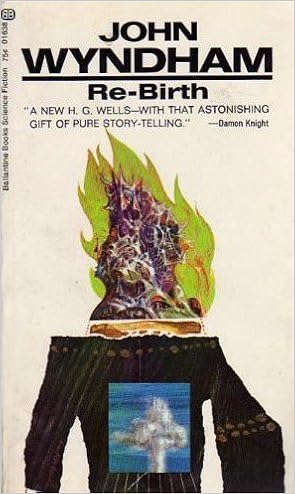
Two Books by John Wyndham

Image result for rebirth john wyndhamImage result for the secret people john wyndham

Two by John Wyndham: Re-Birth and The Secret People

I’ve gone up and down with John Wyndham. A couple of his books – The Midwich Cuckoos and Day of the Triffids – are outstanding; Chocky was just okay. Generally I like his storytelling, and his ideas are wonderful; but they can’t all be gems, no matter who the author is. No problem. Really, this fits in nicely to the Golden Age of Science Fiction, where Wyndham deserves a place, since even Heinlein and Asimov wrote some stinkers. I like Wyndham, though, and I like that I keep finding his books in cheap paperback editions from the 60’s and 70’s with interesting cover art. That cover art was what made me pick both of these.

So I had two of his novels to read, and once I read them, well – to be honest, my opinion of Wyndham went down. This has been mitigated now by the fact that one of these two, The Secret People, was one of his earliest works, written in 1935; my first book isn’t very good, either. But that’s not enough: because this book wasn’t just “not very good.” It’s a stack of crap in a cover.

We’ll start with the good one, though. (Warning: Spoilers ahead.) Re-Birth, from 1955, (Published in Wyndham’s native UK as The Chrysalids, which is a way better title but I assumed they changed it because the American public’s response was overwhelmingly, “Wut’s in tarnation’s a chrysalid?”) is a great book in two ways: it has a post-apocalyptic setting fully as interesting and disturbing as A Handmaid’s Tale, with the same kind of theocratic hypocrisy in full bloom. Told from the point of view of a young boy whose father is a pillar of the community, it has that excellent innocent perspective that makes social commentary novels genuinely effective, from The Giver to To Kill a Mockingbird. We learn how screwed up the society is as the protagonist does, and it works extremely well. There’s a nice twist, too: because we find out that the main character, David, is actually one of the forbidden people, one of the untouchables, as it were, but in a way that enables him to hide it. So we get the view of the society from both a child’s perspective and an outsider’s perspective, and it’s very well done.

The society is an agrarian theocracy after the world-shattering nuclear war; it is probably somewhere in Greenland, though that isn’t entirely clear. (That may be my poor grasp on world geography – or, honestly, it’s been a couple of months since I read it; I may just not remember.) The society has an absolute rule against genetic mutations, which are more common because of the radiation; anyone who is born with any kind of imperfection is essentially exposed to the elements. (Turns out they don’t always die, but that’s not for the society’s lack of trying.) David is a genetic mutation, but not with any physical alteration, and so he slips through the net, and eventually finds several others who are like him.

I don’t want to spoil it any more than that, because it is essentially worth reading. I didn’t really like the ending, though. We get two glimpses into other societies, one of the outcast genetic mutations who have survived on the fringes of the theocratic society, and one highly advanced society from another part of the world; and frankly, both suck. The book as a whole just made me dislike people. Which, I mean, that’s fair, but it’s not always the kind of book I want to read; I also felt that this one didn’t hold out any real hope for a better world or better people. I guess there’s a small chance that David and his friends are the hope, but they continue to be a part of the crappy societies, so I don’t really see it.

But I did like the characters a lot, and I thought the society and the central conflict over genetic “perfection,” with the underlying theme of questioning that very concept – what exactly is the “correct” genotype? Or more importantly, the correct phenotype? At what point does variation become too far from the “norm?” – all that was great. If you’re a Wyndham fan, go ahead and read this one.

Don’t read The Secret People. Not anyone, not for any reason – not even for that epically bizarre cover. Because the cover is a lie! There aren’t any weird dirt-people with mushroom horns! They’re just short! I wanted freaky gnomes and dwarves and stuff, but what I got was – crap. Racist crap.

So The Secret People, originally published in 1935, is a lot like an H. Rider Haggard novel, except Wyndham wasn’t as good a writer. And they both had crap ideas. This book starts with a couple of poorly explained technological advances to get us in the sci-fi mood; the main character is an international playboy with his own jet plane – and I mean, it’s a rocket ship with a cabin and everything, that flies in atmosphere – and at one point, he picks up his newest Bond Girl and flies over the inland sea that is being made where the Sahara used to be. Sadly, they crash into the water, and through a series of mishaps, they find themselves in an underground world peopled by strange beings! Living under the Sahara! SO WEIRD!

Except they’re not. They’re Pygmies, from Africa, who apparently wandered into underground caves centuries ago, and just kept wandering. And just like Haggard, who had a serious case of TheWhiteManIsTheRightMan-itis, Wyndham describes these “secret people” as essentially savages who have been unable to advance their civilization in any way past their original stone-tool-and-superstition society. The modern Eurotrash heroes get chucked into a prison cavern with all the other surface dwellers who have found their way underground now that the inland-sea-over-the-Sahara project has compromised the Secret People’s secrecy, and then they have to find their way out and back to the jet plane, which is their only hope of surviving. Because, you see, the inland sea has started leaking into this vast underground cavern world, and the whole place is going to drown.

But that doesn’t matter! What matters is who gets to the plane first: the heroes, our playboy and his Bond Girl, or the sinister criminal element, who were already in the cavern when our heroes arrive, and who are both rapey and swarthy – an unforgivable combination. But that’s okay, because they’re also stupid and cowardly and everything else you would expect from a swarthy criminal type, and so yes, our heroes are the ones who make it out alive before all of the Secret People drown. Which, y’know, is a happy ending.

Terrible book. Don’t read it. Go for Re-Birth/The Chrysalids – or even better, read The Midwich Cuckoos.

Book Review: The Bell Jar

Image result for the bell jar

The Bell Jar

by Sylvia Plath

This is one of those books that I don’t know why I’ve never read.

There are several of them, and there are several reasons why I haven’t read them. (For instance: never read most of the great Victorian novels, never read Jane Eyre or Middlemarch or anything by Dickens, though I read Oliver Twist a year or two ago and I have Hard Times on my TBR shelf; never read much of the work of Faulkner or Joyce; haven’t read much of the great Russians, never read War and Peace, never read Crime and Punishment; never read Madame Bovary nor Lolita, never read Moby Dick. I could go on. And the reasons? I skipped a year of high school English; I went to a non-traditional college to study literature, where I took a class in Hong Kong literature and another in the films of Howard Hawks, but didn’t read a single Shakespeare play as an undergrad; neither of my parents are readers of the classics, so with their encouragement I read lots and lots of fantasy and science fiction.) This one I didn’t really know anything about. I know Sylvia Plath, know her story, at least the bare bones of it; I have grown to enjoy her poetry since I’ve read it in the last couple of years. But I never read her novel.

Until now. Until a friend and colleague of mine, who told me she was going to be teaching it to her Pre-AP students (who will become my AP students next year), when I said I’d never read it, said, “Oh, you have to!” And I said, “Okay.” And I went to our local used book store and I got myself a copy, and I read it.

Now I need to read it again.

It’s a good book. I can see both why it is now considered a great book, and why it became such a sensational book. For those who do not know, the book is largely autobiographical, and describes a time in Sylvia Plath’s life when she, to use the cliché, descended into madness. She had a breakdown, she attempted suicide, she was given shock treatment (Hey, it was the 1950’s, after all), and then she was institutionalized. That’s as far as the book goes, and Plath’s life story doesn’t go much farther: she moved to England, met and married the poet Ted Hughes, had two children with him, wrote this novel and some extraordinary poetry, and then, at the age of 31, she killed herself. The Bell Jar hadn’t been on the shelves for more than a year, and since it tells of something so intimate, made so simultaneously chilling and vital by the death of the author, it was an immediate bestseller. And then there was controversy regarding its American publication (It was initially published in England, to mixed reviews), because her mother believed that Sylvia would not have wanted the book published in the U.S. because many of the characters are recognizable from Sylvia’s life, and the book is not a kind one. But it was eventually published here, and with its crystal-clear depiction of mental illness, and of mental health treatment, and of society in the 1950’s and particularly how society treated young women at the time, it became an enormous bestseller and a classic.

The book is about a young woman who goes on an internship in New York City during summer break, for a month. It’s a little strange to read about how college worked then, because college now is so solidified: you start when you’re 18, you finish after four years with a bachelor’s degree, or after six years with a Master’s, or never if you pursue a PhD; but Esther, the protagonist, is 19, has finished her first two years of college and is about to enter her senior year. But this is also a time when she is caught between her dreams, which vary widely over the course of the book – she wants to be a writer; she wants to be a professor; she wants to be a magazine editor – and the need to have something solid and steady, which means she should learn shorthand so she can be a secretary. It’s a time when young ladies take classes in deportment. When everyone is so obsessed with marriage and with chastity before marriage that the unavoidably human obsession with sex means that no social interaction has to do with anything else: the boy that Esther has developed a relationship with – though he’s a shmuck and their “relationship” consists of him inviting her up to Yale for proms and then treating her like an inconsequential decoration that also serves as an audience for his ego – is derided as a hypocrite because he’s had sex and yet insists that Esther remain a good girl if they are ever to marry (which her mother desperately wants her to do, of course), and every date she goes on, she considers as a potential husband, or else a potential sexual partner. I suppose that not much has changed on that front, but I’m sorry, this virginity shit is ridiculously stupid.

And beside the point, though it and the need to have an active social life and be seen as popular and dating quality people (like a Yale man! How exciting!) are important elements of the book and of Esther’s life. But then the point becomes something else. It isn’t clear what happens, as I think it wouldn’t be; there isn’t a single traumatic moment, though Esther has some bizarre experiences and some extraordinary pressures to deal with. It begins to come to a head when she goes on several dates and outings towards the end of her internship with another girl in the program, a young lady named Doreen; Doreen has been having a sexual relationship with a charming rock DJ, who appears to have no decent friends and therefore hooks Esther up with jackasses – the last of which assaults her. She finishes her internship without any definite plans for her next step, for her last year of school or for the career afterwards, or for her social or family life; she simply goes home. She leaves all of her clothes in New York, and she goes home in a borrowed outfit.

Once Esther is home, things get worse. Her mother pressures her to move on, to date, to marry, to succeed; and Esther is drawing inward, instead. She goes through a severe depression, which is when her mother takes her to a psychiatrist, a complete shithead who soon recommends electroshock therapy. Because, y’know, it makes you feel better. Except it isn’t done right, and Esther feels agonizing pain during it, and then feels no better. That’s when she begins to think about suicide. She makes several half-hearted attempts, to drown herself, to hang herself, to cut her wrists, and then finally, she finds a place to hide and she takes an entire bottle of sleeping pills which she got because she can’t sleep due to her depression. She survives, and goes to a mental hospital, where things go back and forth between getting better and getting worse. And though I won’t spoil the ending further, I’ll just say: that’s how it goes throughout the rest of the book. It is never entirely clear if it is getting better, or if it is getting worse; when things seem to be going better, Esther’s narrative voice is not any happier or more comfortable. It never gets happy or comfortable again, all the way to the end. Though really, I’m not sure how happy or comfortable it ever was: this is not a happy, comfortable book. I think Plath was not a happy or comfortable woman.

What she was, was entirely honest, with crystal-clear perception, even if the things she was perceiving were not real. Though this book clearly stretches the boundary of fiction: when an author fictionalizes her own life, and describes accurately sensations and experiences that are not real, hallucinations and disassociated thoughts and feelings – is that fiction? Did she make it up? The writing is occasionally beautiful, haunting, poetic; mostly, though, it is so clear and easy to read and understand that you feel very much what Esther feels. I do not myself have experience with depression or suicidal ideation, but I’ve been close to people who have, so I recognize the accuracy of this depiction; and I understand more now than I did before I read the book. As a writer, and a devoted lover of the works of many authors who have gone through what Plath depicted (Virginia Woolf and David Foster Wallace are two of my favorites, along with several others who drank or drugged themselves to death, Poe and Dylan Thomas and so on, so on.) And though I plan to re-read it and look more carefully at the writing (Because this is a book that would go very well with others that I teach, One Flew Over the Cuckoo’s Nest and Catcher in the Rye particularly), on the strength of one reading alone, I would highly recommend it.

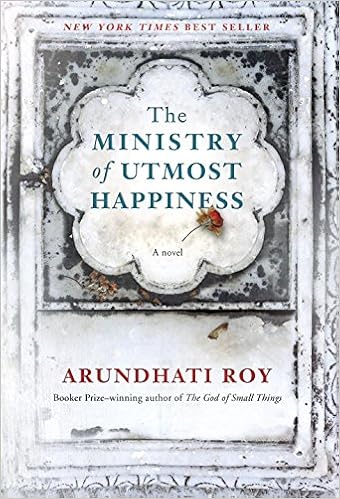
Book Review: The Ministry of Utmost Happiness by Arundhati Roy

Image result for the ministry of utmost happiness

The Ministry of Utmost Happiness

by Arundhati Roy


God damn Arundhati Roy.

God damn her and her beautiful books, which are so impossibly sad and so incredibly beautiful.

I have always thought, because I teach it to my AP students, that The God of Small Things ends with the most beautiful romantic scene I think I’ve ever read because Roy wanted to end the book on a happy note, that she wrote it intentionally out of chronological order specifically so that she could end it with hope, with the two lovers planning to meet again the next day, even though we know they won’t, or if they meet the next day, then they don’t meet the day after that, or ever again.

Now that I am reading The Ministry of Utmost Happiness (I am not finished with it, so I’ll need to stop writing this in a moment and go back to my sorrows), in which she has done nearly the same bloody thing, putting an exquisite lovely romantic scene near the end of a brutally heart-wrenching book, I think I may have to stop believing in the optimistic explanation of the incongruous, unchronological way Roy writes these books. I’m not sure yet, because this isn’t the very last chapter, so maybe other things will happen – and there actually is some hope in the novel that there will be some happiness, a fair number of good characters who could create a safe space to live and laugh in; but in God of Small Things two of the four good characters died and one ended up insane, leaving the fourth utterly alone, so… – but I am familiar enough with this feeling to know that Roy might have made the same play. This book is also out of chronological order, and since it is my first time reading it, that makes it difficult to follow, so there are parts I don’t remember well and maybe I should, to understand; which means maybe I don’t understand. I have to go read more.

But now I’m wondering: what if she put the happiest, most love-full part at the end of The God of Small Things because that makes it impossible to enjoy, since we’ve just been through 25 chapters of sorrows? What if she does it that way because she wants us to read the joyful part and think, “Well, this would be lovely, if my heart wasn’t already shattered into a million pieces by everything else I just read.”? And what if that is the point, because it makes the joyful part into a sad part, knowing that we can’t enjoy the joy because of the sorrows we’ve been through – which makes the sorrows even sadder?

Pardon me. Have to go finish the book. I just had to write down this theory when it hit me.

One hour and twenty minutes later –

All right. Okay. I was wrong: this book does actually have a happy ending. Of course it isn’t that simple, it isn’t all happy; there is death everywhere in the book, and it isn’t good death, not valuable, honorable, restful death. But the book is as much about those who live as it is about those who die, and the deaths make the life more precious, not the other way around.

So: to be clear. This book is about India and the war in Kashmir. At the end of the book, a character reads these words in a notebook: “How do you tell a shattered story? By slowly becoming everybody. No: by slowly becoming everything.”

That’s the book.

It has much of the same beauty that Roy put into The God of Small Things. The writing is, as always, brilliant: essentially beyond my capacity to even grasp, let alone describe. The book has a dense history of India, a complex exploration of the relationship between the present and the past, once again worked out through complicated family relationships and through appalling violence. The caste system is, as I suspect it always is, an indispensable element of the conflicts, though they are largely religious in nature: Muslim versus Hindu versus Sikh versus Christian. There is a terribly intricate narrative structure, with multiple interwoven plots and point of view characters, with no particular adherence to a timeline. There is another character that bears much resemblance to Roy herself, the child of a Syrian Christian woman from the state of Kerala, who studies architecture but does not become an architect, who is beautiful and strange and difficult. There is a beautiful romance, a number of broken romances, and an enormous, unbearable weight of violence and suffering and sorrow and alienation.

But there’s a lot in this book that wasn’t in the first book. The scope is wider: there are more characters, there are more conflicts, there are more settings. There is much more violence, and more villains who carry it out. And there is a lot more happiness at the end, a lot more peace, a lot more closure.

I don’t know if I recommend this book. I will need to read it again, and probably write a lot in the margins. But I feel much the same about this book as I felt about The God of Small Things after I had read it only once without writing anything in it, which was, I thought I should read it again; once I had, it became one of my all-time favorite works of literature. I suspect this one may follow the same path. So in the meantime, in-between time, this is a beautiful and difficult book, and if that’s your thing, I highly recommend it.

Pirate Book Review: Silver

Silver

by Edward Chupack

I’m not sure why I didn’t like this book more.

I love pirate stories (I mean, I LOVE them. I am writing a pirate story that is most of the way through its second book now. I dress as a pirate every Halloween, and talk like a pirate every Septembarrrr 19th, which is International Talk Like a Pirate Day. Some of my favorite authors, my favorite books, are pirate stories.). I love villains, especially when they are the protagonist. I love riddles and puzzles and the very idea of treasure maps. So I should have loved this book: which is about Long John Silver, who is a villain of the first order, a pirate, and the protagonist; and he also spends most of the book talking about riddles that point the way to buried treasure. When he’s not talking about killing people, that is, which he does quite a lot.

But I didn’t love this book.

Part of it is that I am not a serious fan of Treasure Island, the story that spawned Long John himself; I have read it once, in the last couple of years, but never as a kid, when the story really could have captured my imagination. Thus the references in this book didn’t really have much of an impact on me. I recognized some, missed others, and didn’t really care about any of them. Part of it is that the author makes a strange choice to have the entire story be a flashback, which is fine – but Long John is flashing back on his life from his current situation, which is imprisoned in the Captain’s cabin on his own ship, which has been taken from him, and he is being held until he gives up the location of his treasure. It was a letdown that Long John starts off the book having lost. There are some great moments when Silver makes fun of the cabin boy who is constantly bringing him food, which Silver refuses, presuming it is poisoned; and the life he flashes back on was fascinating and supremely piratey; but I hated that he was getting weaker and weaker, starving to death and suffering from a fever the whole time.

I was also disturbed that I couldn’t solve the riddles that led the way to the treasure. There are many hints dropped, and eventually the secret is revealed – or at least, one of them is – but not everything is explained, and I couldn’t get the clues by myself. There’s this one image that is reprinted at least six or seven times, which is supposed to be this fascinating clue that unlocks the secret path to the big treasure: but the whole time, other than the small details that Silver explains, which were pretty apparent from looking at the thing, I got nothing from it. And it is also true that the big treasure was not terribly interesting to me, even though it has some historical accuracy, which is great; but I kind of didn’t care about this one.

Overall, I think it was a good book, and well-written; I think it was just a little off the mark for me. I think someone else who loves pirates – especially someone with a particular love for Robert Louis Stevenson – would really enjoy this one. Though I will note that the Goodreads reviews of this book say that the connection between this book and Treasure Island is tenuous at best, and a shallow marketing scheme at worst, so maybe that wasn’t the problem; maybe it really just isn’t that good a story. I’m going to recommend giving this one a miss. Try Jeffrey Farnol: now that man could write a pirate story!

Book Review: Gone Girl

Gone Girl

Gillian Flynn


I was undecided about this book. I’m not generally a mystery/thriller fan, though I have read and enjoyed several of them in the past, and this one was so popular, and so well-received, that I figured it was a good risk. I have not seen the movie, and I did not know anything about the book’s plot before I started, so I was in the perfect position to enjoy it as much as it could be enjoyed.

But I wasn’t enjoying it. The writing was quite good, and the plot was interesting; but – just like the last two books I’ve written reviews for, sadly – I did not like the characters. So I asked friends: should I continue reading this book? Is it worth it? Do the characters get better? I got a fair number of the responses you would expect from a question like that: a few people said absolutely yes, a few absolutely no; a few said “Why not?” and a few said “If you want to.” A former librarian friend said, “When in doubt, read your age: read as many pages as you have years, and then decide.”

And one friend said, “Yes. You won’t like the characters any more than you do now, but the book is worth it.” She said the characters are intentionally unlikable. She said that she believed the book will become know as a modern classic, and as an expert in literature, Gone Girl is a book I should read.

Well. She was right about the unlikable characters. (Not to be snobbish, but: based on what I have learned about fancy-pants literature as an Advanced Placement teacher, Gone Girl, like most popular fiction, will not in fact ever be considered a classic, as it isn’t complicated enough. The AP program describes their acceptable literature as those works which reward re-reading, meaning that reading the work again gives you new insights, new ideas, that you could not have grasped the first time through. And Gone Girl doesn’t have those hidden depths. Everything’s up front. Which I generally prefer, anyway, because my friend was also wrong to call me a literary expert. I’m not. I enjoyed the flattery, though.) She was also right that the book was worth putting up with the people in it, and also that the characters are intended to be unlikable.

So the basic story is about a married couple, Amy and Nick Dunne; and in the first chapter of the book, on their fifth wedding anniversary, Amy goes missing. (She’s the Gone Girl.) The question is, what happened to her? At first, you get an impression of both of these people, Amy and Nick, and one of them doesn’t come off too well. (I won’t say which one so as not to spoil it.)

But then something happens. That impression changes. You learn a few more things, and suddenly, the other one doesn’t seem too good a person, where the person you didn’t like turns out to be not that bad. That’s about where I asked about continuing, because my reaction was, The hell with both of these people.

Here’s the thing, though. That shift in allegiance for the reader: that’s Gillian Flynn’s intention. That’s the point.

The book isn’t really a mystery. There are mysterious elements, but between a third and halfway through the book, Part One ends, and when Part Two begins, the mystery is revealed. And at that point, the person you’ve been liking more turns out to be MUCH worse than the person you’ve been disliking – though that person, the not-as-bad one, is still pretty obnoxious. What the book’s really about is two things: one is the way that married couples can really destroy each other, and themselves, over the course of a marriage; and the other is the incredible way we can manipulate public opinion. Because this turns into a criminal case, related to Amy’s disappearance, and the apparent guilt is essentially worked out in the court of public opinion. It’s all about who can manipulate the public best; that is the person who will – win, I suppose, though really, you don’t want either side to win, because the entire fight is just despicable. Back to that thing I said about married couples destroying each other. It’s all ugly, it’s all bad, and nobody wins. The same for lying and manipulating appearances in order to seem more righteous: it’s all ugly. It’s all bad.

You do end up rooting for some of the characters, mostly because you want the badness to end; there are some moments of satisfying karmic justice for the ugliness. Mostly, though, my friend was right:  even though I never liked the main characters, the book was worth reading. We’re not supposed to really like them or sympathize with them: Flynn set this up to sway our allegiance back and forth, to show us, I think, that we determine our opinions too quickly on the smallest, most subjective piece of evidence; and because they are so shallow, our opinions can change completely when new information comes to light. It reminds me very much of Shakespeare’s The Tragedy of Julius Caesar, a play I’ve taught dozens of times, because that play shows the Roman public for the fickle mush-heads (Props to Diamond Joe Quimby for the phrase, because the Simpsons have also done this topic) they are: first they love Caesar, then they love Brutus, then they love Mark Antony. And I have always believed that Shakespeare isn’t really talking about the Romans: he’s talking about his own audience, the English theater crowd, the ones whose favor could be won and lost in an instant. I think Gillian Flynn is doing the same thing: she’s using this book, with its masterful manipulations, to show us how wrong we generally are when we choose sides based on what we see on TV, and what we hear from the grapevine, and especially what we all “know” to be true – like how the husband always did it; or once a liar, always a liar; or that pretty people are more trustworthy.

I don’t want to think those things are true of me, too. But I’ve spent almost a thousand words now, talking about how quickly my allegiance to these characters changed: because I made snap judgments based on poor information, and never once questioned whether I should believe what I was being told. Not even when it didn’t make sense, when I had conflicting information about the same character; I never questioned whether something was credible. It was simply that the more recent piece of information had more influence on me; I tended to believe the new information was true, and therefore I should take it more to heart.

So what have we learned? I, too, like most other people, am a fickle mush-head, and I should not credit my knee-jerk opinions about public figures or controversial issues. I should think more. Gillian Flynn is a talented writer who set out to manipulate her audience into liking a character, and then hating that character, and then going back to liking the character, before drifting somewhere into a general distaste for everyone involved — including, for me, the author, who messed with me so much. We’ve learned that this is a well-done book, and people who are interested should read it. And I’m not going to read it a second time. I do not think it will reward re-reading. And I really don’t like these people.