The Truth

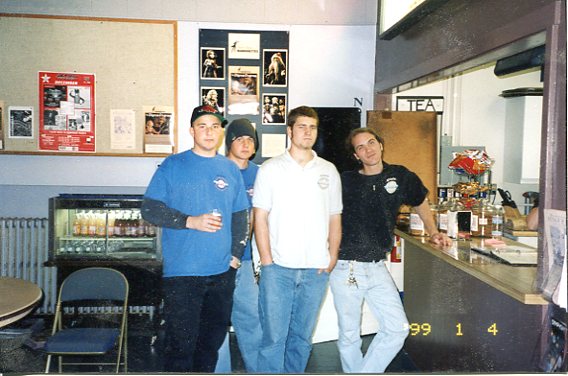
Me (far right) as a janitor
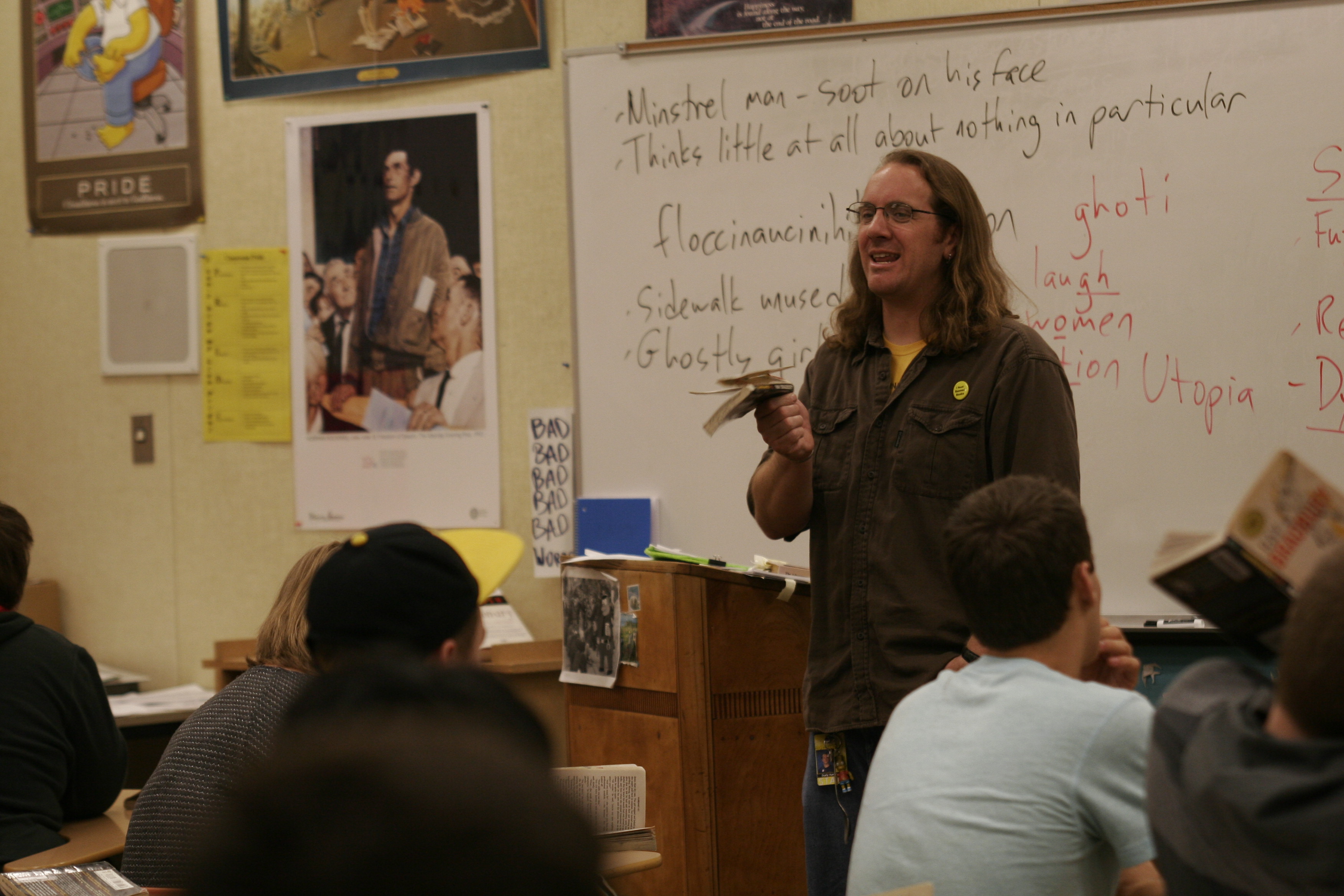
Me as a high school English teacher. Which one looks happier?

I have been a high school teacher for a very long time. Too long, in some ways, because I have watched education change enough in that time to make me very nearly obsolete, and if you stay in a job until your job doesn’t exist any more, that’s too long. I fear that the day is coming when English teachers will not exist: and possibly the day when teachers will not exist.

I’m here today to try to forestall that day. Not for myself – if I reach a point where I cannot teach, I will move into janitorial work, and be quite happy; probably happier than I have been as a teacher. After 25 years of cleaning up student writing, I would rather clean up public restrooms. It’s less work.

But it’s also less important work. Not unimportant work, it’s incredibly important because janitors keep our world working, and keep it livable – but for me, as someone who works in education, that work is more important. I’m just saying custodial work is a good backup for me. I worked in maintenance for five years before I became a teacher, and I liked it. In some ways more than teaching.

So if I liked being a janitor more, you may be thinking, why am I a teacher? And why do I still like and sometimes love being a teacher, despite the issues in education that I deal with every day?

It’s because I love humanity. I think we are incredible. I believe we have infinite potential for goodness, and infinite capacity for wonder. What we have achieved as a race is miraculous – and also sometimes terrible – and despite our almost limitless ability to dream and imagine, we can’t imagine how many more miracles we can achieve. And, hopefully, how many terrors we can avoid, or even eliminate, in the future.

And the key to that, the key to unlocking our potential and achieving progress and positive growth, and to actually making miracles real, is education.

That’s why I’m a teacher. Because my faith, my zeal, my heartfelt belief, is this: the best thing about all of us is that we are human, and the most important thing one can do is help us all become better humans. That’s what I try to do as a teacher. And that’s why I’m here today, speaking to all of you about school. Because I want to help you all to learn something about which you have been deceived – or at least misled. I don’t think any of you really understand what school is or should be – and what you think it is, what you have been told the purpose of school is? That’s a lie.

The lie is that school is about money. All of you students have been told that the purpose of school, the reason you are here and the reason you should try hard and do all of your work, is because that way you can get into a good college, get a good job, and make good money. You’ve been told that all along – though in elementary school it may not have been stated explicitly; but back then you were certainly told, with absolute sincerity, that the purpose of your schooling was to prepare you for the next step, which would be harder, and would matter more: 2nd grade is meant to get you ready for the rigors of 3rd grade, 3rd grade gets you ready for 4th; all of elementary school is preparation for middle school, which is preparation for high school. And all the way along, more often the farther you get in your thirteen years of compulsory schooling, you have been told that the goal of high school is to get you ready to go to college. So that you can get a degree, so you can get a good job, so you can make good money. And since schools also tell you that the next stage is always more important than the current one – “When you get to high school, things get serious, that’s when grades really matter” – the clear implication is that the final goal is the one that really, really matters: college, degree, money. Did you absorb the message in 2nd grade that everything then was intended to prepare you for college and a job and good money? Maybe not, but the cumulative effect of all of this is the same: the goal of school is – money.

Teachers, and especially administrators, you have said this. You have said it to all of your students, probably with certainty, certainly with absolute sincerity. All of you have lied. All of you have misled all of your students. Don’t feel bad: it’s what you were taught, what you were told, what the whole apparatus and engine of the educational system forced on you. So you didn’t know, you couldn’t even think, that it might be a lie. This is some of the power of education: it can influence our beliefs, and therefore our behavior, in pernicious ways as well as positive ones. As always, the pernicious influence is easier. The idea that school is intended to help students make more money is a pernicious lie, and I need to convince you to stop saying it, to stop thinking it.

Don’t take this as a personal attack, either, teachers: I’ve said this too. With certainty. With absolute sincerity. Because it’s what I thought, and it’s what I was taught. But luckily for me, I had an extra advantage that most teachers don’t have, something that helped me realize the truth: I’m an artist. And I’m married to an artist.

My wife and I both went to college to study art. And though I ended up studying education – one of the more useless endeavors of my life – I earned my degree in art, specifically in literature. My wife, who is stronger and braver and smarter and better than I am, stayed with art all the way through. And she had one of the most difficult undergraduate programs I’ve ever heard of; harder than any pre-law or pre-med program, I would be willing to wager, and with far less prestige.

And here’s the thing, the magic secret: she didn’t do it for the money. Neither did I – though I did sell out and become a teacher. Actually, it’s not the becoming a teacher that was selling out; I still reflect and promote the ideas of my art in my teaching, and I am proud of the career I have had, because it is a noble vocation, when it is done right. But I should have kept studying art while I was in school. I hate to think of the potential I lost, the opportunities I walked away from by switching from literature to education. And it’s funny: just as my time in public school didn’t prepare me successfully for college, my college education didn’t prepare me successfully for my career in public school education. The time I spent studying art was far more useful to my teaching than my training in how to be a teacher.

It was in teacher training that I was first trained in the Big Lie, though of course I heard it in some form or other all the way through my own K-12 schooling: the idea that the purpose of school is to get students higher incomes than they would get without it. I was shown the statistics, the data, the graphs, that argue that college graduates make more money, on the average, than non-college graduates. I was shown this, and told to use it on my students, because it’s one of the most effective ways to get students to take school seriously, to work hard and therefore (incidentally) to learn. I assume that’s why all trained educators in this country have been shown the same data: because scaring children with threats about their future is effective. It’s cruel, essentially abusive, and it has some quite severe secondary and unintended consequences, as we are now discovering; but it’s effective. It makes those lazy little punks – that’s you, students – work harder and try more. At least some of them. At least some of the time.

Look: you can’t blame us. Teaching is hard. Everything about it is hard. Organizing curriculum is hard, planning lessons is hard, finding and adapting materials is hard. It’s hard to stand in front of a room and command attention, let alone respect. It’s hard to manage a room full of individual people and get them all to focus, together, on one thing. It’s hard to communicate clearly, and hard to understand children who haven’t yet learned to communicate clearly.

(Let me just say one thing to all the students here: speak up. I’m old; I’ve lost some of my hearing. I cannot understand you when you whisper, when you mumble. Whatever you have to say to me: speak up, please.

(And I’ll try to talk slower.)

And then, after completing all of those difficult tasks, teachers run into the biggest difficulty of all, the one that feels insurmountable: getting the students to do the work. We create this curriculum, design these lessons to deliver it, gather the materials, summon all of our strength, invent positive energy from somewhere, and teach our hearts out: and then all of you students, just – don’t do it. There are many individual reasons why you don’t do it, but in a large number of instances, maybe more common than any other, the reason you don’t do the work is just because you don’t want to. You don’t feel like it. You don’t see the point. You don’t think it matters. You don’t care.

Confronted with that, over and over in student after student, day after week after month after year, teachers have reacted understandably: we try to MAKE you care, dammit! Sometimes we do it angrily, resentfully, with hurt feelings; because we care. And when you care, it hurts to try so hard and have somebody just say, “Nah.” That’s why teachers then try to scare students, that’s why we threaten.

“Your boss won’t accept this kind of work when you have a job.”

“Your college professor won’t care about you, so they won’t make exceptions for you: they won’t even know your name.”

“You think you can act like that out in the real world? Think again!”

Hurt people lash out. We may tell ourselves we’re doing it to be helpful, but we’re doing it because we’re hurt. It makes it easier for us to tell the lie, because the lie is hurtful, where the truth is just difficult – and we’re lashing out at those who hurt us. We shouldn’t do that, but also, maybe all you students should stop hurting your teachers. When a student comes to my class and says something like “This is boring. Can we do something fun instead?” to my face, every day, I definitely want to snap at them about how their attitude won’t be acceptable in the future. Because it’s just not right to insult someone’s passion the way students insult mine.

So it makes sense that teachers have done this, that we’ve told this lie. It makes sense that we’ve structured school, and thought about how we can teach our subjects, and explained this whole endeavor to students, on the basis of this fundamental assumption, this base falsehood, that the purpose of school is to prepare students for the real world, specifically for college, so they can get good jobs and make good money. It makes sense – though, teachers, I won’t take us off the hook entirely, because we really should have recognized the falsehood in this, and seen the hypocrites we make of ourselves, when we tell our students they should study hard specifically so they can make more money: because we are all so very well-educated, and worked so hard to become so, and we are so poorly paid for that effort and education. Did you all go to school, do all that work, and then take this very hard job, for the money?

Neither did I. (Though also, I expect and deserve and demand that I get paid what I am worth. So should we all.)

I do need to point out that we make this claim about the purpose of school in more ways than just talking about money. We do also talk about getting a “good” job, by which we mean a job you like and find fulfilling, a job that you feel has value, to yourself or to society or both. Teaching is all of those things for me, as it is for many of my colleagues; and the money has been generally sufficient, if not actually good, or representative of what I’m worth. We do also talk about getting our students prepared, with skills and knowledge, for the real world, beyond and apart from college. I think we do that, a little. Not enough, though also, here we run into a question of how much someone can be prepared, in school, for the world outside of school, and also how much someone should be prepared in advance of actually living. But regardless: our efforts to prepare students for the real world, as we call it, are founded on the same principle: we try to get them ready for their jobs. We want them to have work skills, and know how to find a job, apply for and interview for a job, succeed in a job. When we talk about our students’ future – other than some basic insincere lip service to the worn cliches “You can be anything you want to be!” and “You can do anything you want to do,” – it’s always the same basic idea. It’s all about the money.

Okay. So those are the lies. Now: are you ready for the truth?

Deep breath.

The truth is, you can not be anything you want to be. You can only be yourself.

The truth is, you cannot do anything you want to do: there are limitations on all of us, some internal, most external.

The truth is school does not prepare you for college or for work. Only you can do that, and no matter how well you do manage to prepare yourself, you will still be surprised, and sometimes unprepared and overwhelmed; and to some greater or lesser extent, you will fail.

The truth is, school is not preparing you for the real world: you are already in the real world, and you always have been. And no, it doesn’t get better. It doesn’t get easier.

The truth – the big truth, the last truth – is that the purpose of education is not, cannot be, and should not be stated as, helping students to get a good job or to make more money.

The purpose of education is to create more life.

***

Okay, that was a lot of truth. Take another deep breath, and then I’ll soften it up some, make it easier to swallow and to digest.

By the way: we absolutely should teach our students how to breathe. There’s nothing more important. Literally.

Okay: now for the softer side of the truth.

While it is true that you can only be yourself, that is also the very best thing you could ever be. Because every single one of you, of us, is as good and valuable and worthy as every one else; and there is also no other person you could be as successfully as you can be yourself. It’s also true that figuring out who exactly you are is incredibly difficult and complex, and the work we do on that project in schools is good work. You get to explore your self and your society and your skills and interests, even while we are barking at you that you need to master proper MLA format for your resume.

While it is true that there are limitations on all of us, which keep us from doing anything we want to do, limitations can be overcome. Muggsy Bogues played a full career in the NBA despite being only 5’3” tall. Also – and this may be even more important – a lot of things we think we want to do are actually really bad ideas. When I was 6, I wanted to be a stage actor, a fireman, and an astronaut. All bad careers for me, for the person I became – especially all at the same time.

The truth is that school does not prepare you completely for college or work: but the truth also is, it helps. We will, as I said, always fail, in college and career and life; but no failure needs to be total, or permanent. Failure always precedes growth. And – heh – school can prepare you for failure.

Unfortunately, the truth – and I cannot soften it – is still that school does not prepare you for the real world. But that’s because you’re in the real world, right now, while you are in school, and there’s no preparing for it, for any of us. There is only living it. Experiencing it. Learning from it. That’s all we ever do, whether in school or not. I do think it’s important that we teachers stop telling students there is some distinction between school and the real world, especially with the implication that the real world is somehow worse, harsher or harder, colder or crueller. People who really think that do not remember what it was like to be in middle school or high school. Or they do not understand the situations that many students, many children, live through. As I said: it doesn’t get better and it doesn’t get easier; but you will get better. And then, if you can, you will make your life better. And that process will continue for as long as you keep trying to learn and improve: always in the real world.

Last one – and, because I know my persuasive rhetoric, this is the important one. This is the point. This is what education is for.

Our world has, I believe, an objective reality. It’s not just in my mind, or in the Matrix. The world would – will – still be here when I am not here to perceive it; it will still be the same world when all of us are gone from it. Although it will be quieter, and less messy. No matter how I imagine the world to be, whether I think the Earth is round or flat, 6,000 years old or 4.5 billion, floating in space or resting on four elephants who are standing on a turtle – there is a truth, a real situation that I don’t change through my perception of it.

However: my perception of the world shapes my world, changes how I experience it, more fundamentally than I think we realize – certainly more than we think about very often. How we see determines what we see. We cannot perceive things that we cannot imagine existing; sometimes we cannot perceive them intentionally, consciously. Take the flat Earth example. If I believe, absolutely, that the world is flat, then there are things I will not do, places I will not go, because of my belief, because of my perception. I will not get on a plane that I think would fly off the edge of the world. I will not go to the world’s edge, let alone beyond it – so I will never see that there is no edge. So even though the world is in fact round, I will never perceive the world as round, because I will avoid – or more simply, deny – anything that would prove to me that the world is round. So for me, functionally, the world would be flat. And I will miss out on any experience associated with the round Earth. My world, shaped by my perception, would be less full: only two-dimensional.

Let’s take a more realistic and more common example. If I were a racist, and hated, let’s say, plaid people, then I would avoid, or dismiss as unworthy of my time, any and all plaid people. They would essentially not exist in my world except as an amorphous abstraction for me to hate and fear and blame. I would never get to know, never get to appreciate, never get to love, anyone who is plaid. And therefore my world, my life, would be smaller.

Because plaid people are some of the finest people there are.

And if you don’t know any plaid people – or, even more shocking, you somehow think that they don’t exist – I think you need to open your eyes and pay more attention. America’s no place for plaid-deniers.

But in all seriousness, this fact, that perception shapes reality, is true in all ways: things that we can’t understand, we avoid; things that we can’t conceive of, we don’t even perceive. And in contrast, when we have heightened understanding, we have heightened perception: my wife’s experience of an art museum is much richer, much fuller, than mine, because her knowledge of art, and her experience with creating art and the deep understanding of the artist’s craft she has thereby, lets her see the works on display in more ways than I can, who makes art only with words. My experience of literature is similarly fuller than most people’s. My dog’s experience of the world of smells is many thousands of times more complex and interesting than my experience of smells: which is why he chooses to sniff cat poop, which I simply avoid. Because he finds it interesting, and I just think it smells gross. But I have to assume that if I could smell what he can smell, I would interact with cat poop the same way he does: my nose would be riveted to every turd. Think how much more enjoyable it would be to live with cats, then. Having the litter box in the house would be a benefit. Maybe we’d put the box on the coffee table. Make it a conversation piece.

I know that sounds bizarre and insane. It sounds that way to me, too. But understand: it only sounds that way because of how we perceive cat poop. Or rather, how we don’t perceive it. How our experience of the world is limited by our range of perception.

Education can change that (Maybe not with cat poop.), because education can introduce us to things, and show us how to perceive them. I wasn’t born reading literature the way I do; I learned that. Because I learned it, my experience of reading is better than most people’s. My world of books is larger, more vibrant, more diverse, more entertaining, more inspiring, more challenging, than most people’s book world. Not because I’m better than other people, not because I’m just built different: because I have been educated. Because I learned. Because I learned how to read and understand what I read to an unusually high degree, I have a larger world to live in. It means I can find greater pleasure and fulfillment in the world of books. I will never get tired of reading books. I will never be bored, not as long as I can get my hands and my eyes on books. I can still perceive all the non-book things as well as all the rest of you can – though some people perceive individual pieces of non-book-reality better than I can, because I don’t know much about cars or sports or calculus, or about being a parent, or about traveling to other places or into other cultures – but in the areas where I learned well, my world is larger than the world of people who didn’t learn as well. In all the areas where I am not ignorant, my life is larger than the world of ignorant people. I live a larger life, in a larger world, than someone with less education with me.

That’s why I’m a teacher. Because I love humanity. Because I want to help people to live larger, fuller, richer lives. To have more chances to be human, to be more human. To make miracles. What else could I possibly do that would be as valuable, as important?

But, you see, my work has, of late, become less valuable. Less effective, and therefore less important.
Because my students are less willing to work with me, to listen to me. They are less willing to learn.

But that’s our fault, teachers, parents, adults in general: because we’ve been lying to them. And they have caught on. These are the unintended consequences of our choice to use the threat of future poverty and failure to scare our students into obedience. Rather than explain the real value of education, even though the idea is complicated, even though it is hard to accept, we have chosen to use the simple lie that the entire point of education is to prepare students for future work. We still tell them, as we have for years, that going to college is the best way, even the only way, to get a good job and make good money, and the point of compulsory public education is to prepare them for college and for jobs – and that’s it. It’s not all we think education is for, but when we are frustrated with difficult and disobedient students, we don’t usually talk about the wonderful benefits of education: we just threaten them. “If you drop out, or get expelled, how will you get a good job? You’ll be flipping burgers for your whole life!”

But, see, we have now gone through a pandemic, and more than one recession; today’s students are in the world of social media, which gives them access to people’s lives and internal thoughts. So they’ve seen behind the curtain, they’ve torn down the veil. They know that there are countless people who have good jobs without ever having finished college, and countless people with lots of education who have miserable jobs. And now college is so absurdly expensive that even those who would want a college-level job – for whom a job that required a college degree would be a “good” job – are not willing to accrue the debt to get that job, and so they’re looking for different jobs, ones that are easier to get, that have fewer requirements. Or, more often than I think we educators realize, they have come to the conclusion that life is not, and should not be, defined by a job: and so what job they end up with simply doesn’t matter to them, as long as they make enough to survive and do what they want to do. What they want to think about and plan for is all the non-job parts of life.

So here you are, students. You’ve been hearing for years, again and again, that school is necessary for getting into college and getting a good job. And you don’t want that. And you know that we are lying to you, that you don’t need college for many good jobs. You also know that life shouldn’t be only about a job.

What, then, is the value of this education we offer and demand, for a student who doesn’t want what we have claimed is the main and even the only goal of that education?

There isn’t any. So you don’t want it. Of course not.

And the more we try to threaten, and cajole, and cozen you into doing the difficult work of education anyway, the more you resist. Of course: you don’t like being lied to, and you don’t like having your time wasted. Wasting time is wasting life, and we all want all the life we can get.

So you ignore and evade and escape education that is nothing for you but life-draining, time-wasting oppression.

And therefore you remain more ignorant than you could be. Not totally ignorant, of course, because you learn on your own. But school could teach you so much more than you can easily learn on your own; and without putting effort into school, you will absolutely know less than you would if you could really do this the way it should be done.

And since you will know less, therefore you will have less life.

***

It has to stop. We need to stop telling students that school equals college equals job equals money. We need to stop focusing on money. I don’t teach literature because it makes money, either for me or for the students – or even for the authors, who I do think deserve money for their work; but that’s not why I want the book, and it’s not why I want to teach the book. I do it because literature expands and improves my experience of being human: and I want that larger life. And I want other people to have what I have. Especially now: because the world kinda sucks. And especially the kids I teach: because being in middle school and high school kinda sucks.

Teachers: we need to tell our students the truth: school sucks, but education will make your life suck less. It will give you more life, and a better life, because it will let you understand more, and therefore do more, and perceive more. And we need to believe this when we say it, and we need to want that for our students.

Otherwise we should all just give up and become janitors.

At least then the world would be cleaner.

Either/Or, Neither/Nor

Oof. That was a rough night.

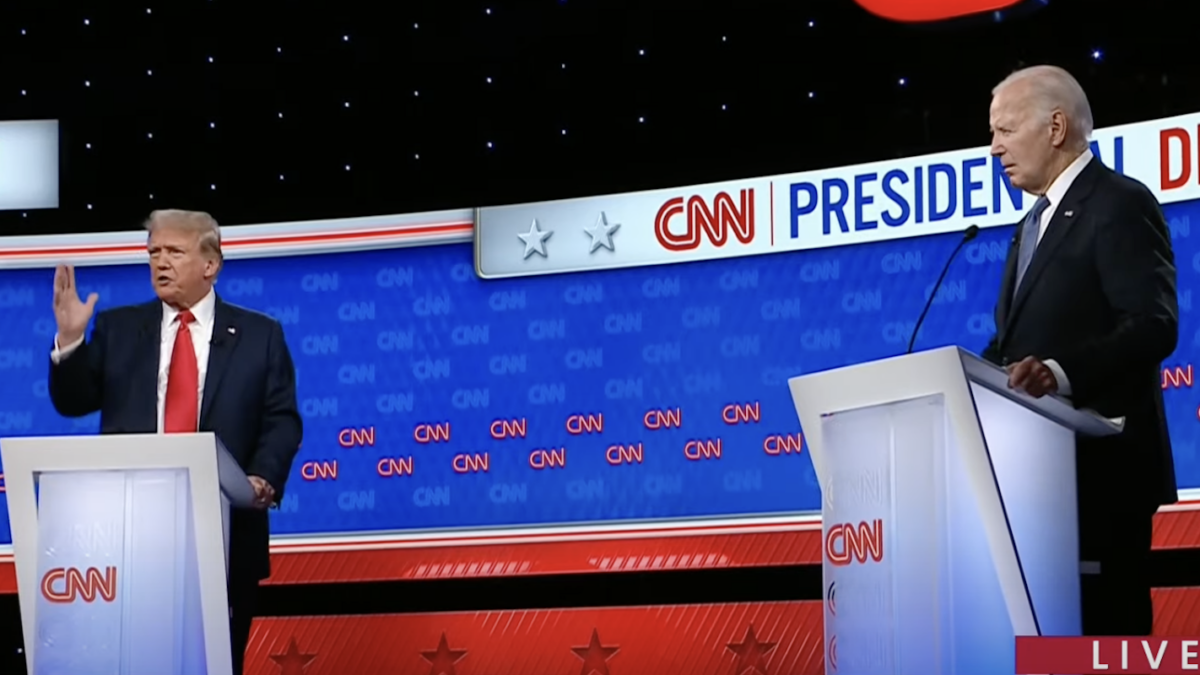
I watched the Presidential debate on CNN last Thursday, and I wish I hadn’t. Or rather, I wish I hadn’t seen what I saw, because I wish it hadn’t happened the way that it did. I wish there hadn’t been a debate for me to watch, because it did not go well for my side. Or, even better, I wish the sides were different: I wish the debate had featured entirely different candidates, giving entirely different answers to the questions — which probably should have been moderated by entirely different journalists on an entirely different channel.

Overall, I’m going to give that debate a vigorous No. None of the Above, please. We saw that Biden is too old and depleted to make up for his shitty moderate stances, and we already knew, and had confirmed for us, that Trump is a lying sack of crap who uses rage and cynicism to make up for his catastrophic reactionary stances. The whole thing just made me feel desperate and hopeless.

And that’s exactly the way it is supposed to be. At least according to the preferences of the people and forces which shape the politics of this country. Which, in our current state of affairs, is not the will of the people nor the votes of the majority: because this country is, practically speaking, not a democracy. The simplest understanding of a democracy is that the majority will of the people rules, and no president has ever been elected by a majority of the citizens of this country, let alone the residents. Certainly not these two specimens.

But that’s fine because this is actually a constitutionally limited republic, not a democracy. So there.

Actually dog Meme Generator - Imgflip
ACtually…

No, I’m fucking around, because there are internet bros who always get snotty when people in political arguments say this country is a democracy. It’s not. By the strictest definition, at least — and it’s a distinction that doesn’t even matter at all, and the fact that shitty people use their nitpickery about it to shame and silence people pisses me off: so I’m mocking those people. Sorry if it is confusing. At least the dog in that Actually meme is cute.

But here’s the real actually: whatever the intended shape of the government for this country, we are in truth currently controlled by an oligarchy: a plutocracy (or maybe a kakistocracy and certainly a kleptocracy) made up of people with too much money, who are willing (unsurprising, but still disgusting) and able (appalling and even more disgusting) to influence the political machinery of the country in order to benefit themselves, at the expense of all the rest of us. They have captured both major parties, thanks in large part to the influential power of money in our elections, particularly as unleashed by the Citizens United decision, and sanctioned de facto by politicians’ continued inability to pass election financing reform, solely because they put their own interests before those of the nation or their constituents.

Unsurprising. But still disgusting.

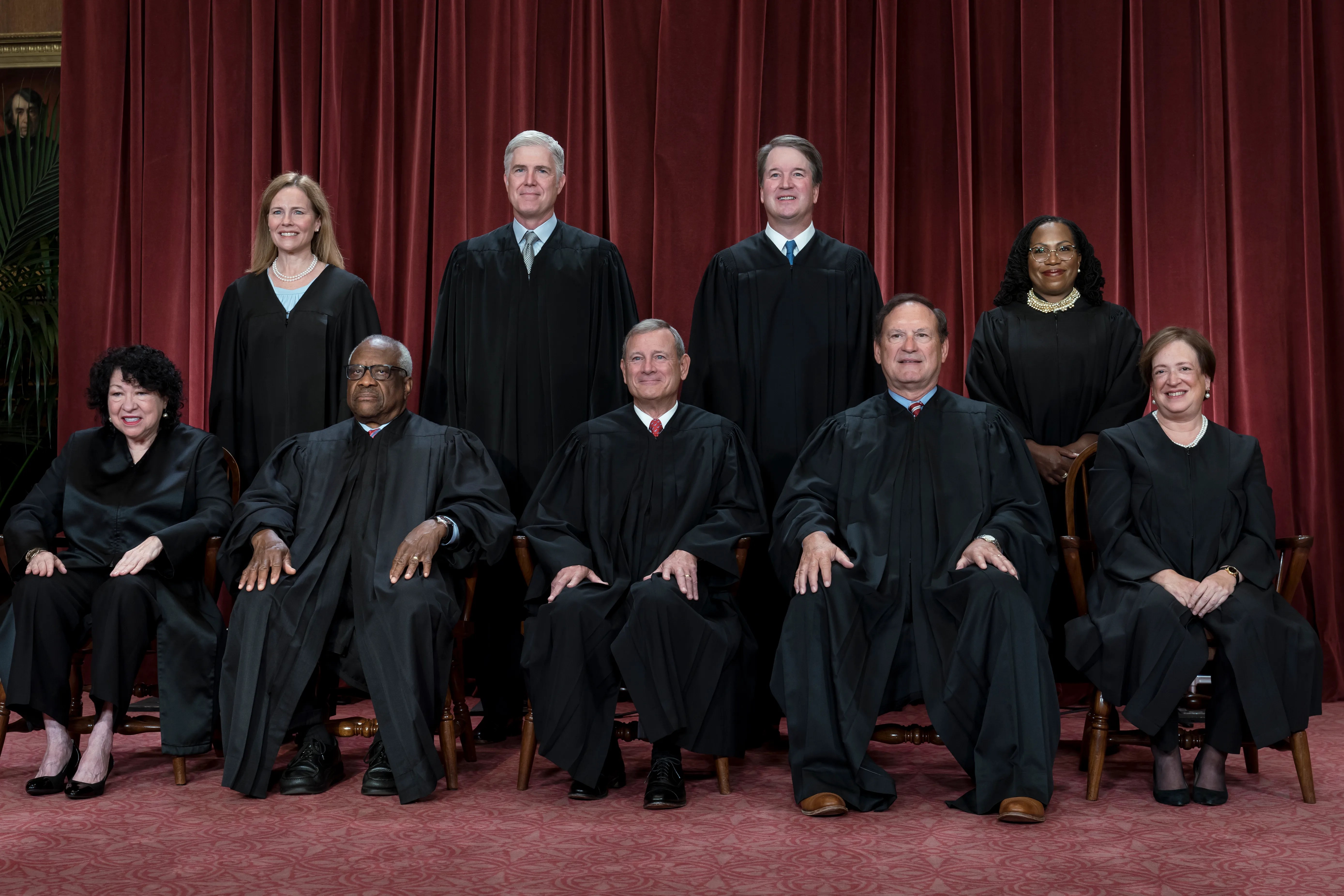
Because the people who run the politicians who run the country are in the business of doing business — namely using their money to make even more money, which is their sole purpose and motivation, their raison d’etre — the corruptions they create in our politics are mostly those which benefit business. They just got their personal Supreme Court to knock down Chevron deference, for instance, which will make it much easier for them — rich people who can afford the attorneys and legal costs, that is — to challenge government regulations in court, because now judges, who are definitely not experts in such matters as workplace safety or environmental impact, but who, like most people — especially these fucking people

Or at least six of them

— like to think they are experts in every way that actually matters, can knock down regulations that they personally don’t think are valid or necessary. Even if the actual experts disagree with them. And do we think that our One-Percenter overlords will be taking advantage of this process?

You bet your sweet bippy we do.

But the point is, the people in charge are best served by the continued dominance of the two major parties. Because both parties rely on enormous infusions of cash in order to defeat — each other. Elections like this one, choices like this one — like the contest between these two terrible old men, the Mummy and the Blob — serve the preferences of the ruling class, because they make us desperate, not hopeful. If we had a good candidate, one who gave us hope — and the last one such was Barack Obama (who still was not a great president, because he, like Joe, was too moderate and didn’t do enough to change the life of the average citizen of this country; though in fairness to Obama, he was trying to make change pretty much on his own, and fighting against the entire political machine, and of course he lost. Donald Trump gave some segment of the populace hope, but he’s a lying sack of shit, so that hope doesn’t count, in my opinion.) — then it would inspire people to get involved, to take action; the rulers do better, have more control, when we despair, and give up, and lie down and take it. Take whatever they give us, and hate everything — and do nothing. Most of us don’t even vote. Which makes it that much easier for the plutocrats to control the votes of those who do turn out. And they like that it is only two parties, and in every specific electoral contest, for every seat and every office, it is winner take all — the person who gets one more vote beats the person who gets one fewer vote — because that also makes it easier to control the politicians. This system means the two opponents are best served by focusing only on each other, cooperatively blocking any third candidate (who already has a named role in most three-way races: “spoiler”) and fighting to the death against their one nemesis, fighting for every single vote: and that means the holders of the moneybags, the distributors of the thirty pieces of silver — the rich fuckers who try to control everything — have a death grip on the entire system, because they have a death grip on both of the two major parties: because they offer either party a way to destroy the other party if the other party dares to try to give up that sweet, sweet dark campaign money. Their money is the best way for both parties to get one more vote than the other party.

See? If the Democrats stop taking corporate One-Percenter cash, they will lose all elections to the Republicans, and vice versa. Shit, even members of the parties who don’t continue to meet with the approval of our corporate masters can’t win elections, because they can’t win primaries in the face of huge amounts of money. And third parties can’t possibly compete with the amount of money that continues to flow to the two major parties — and there’s no need for the One-Percenters to shift their money to the third parties, because the two major parties do everything their masters ask of them, whether it is Trump cutting taxes on corporations (with a bone thrown to the rest of us in the form of a middle class tax cut which had a sunset clause, the tax cuts ending in 2025 [After the end of a hypothetical second Trump term, and no it’s not a coincidence: there ain’t no cynic like a government cynic], while the corporate tax cut did not.) or Biden failing to rein in the corporate profiteering which helped drive the inflation that may cost him re-election.

But if Biden, like Trump, fails to win re-election, that doesn’t matter, of course, at least not to the people who matter; because if Biden loses, our corporate hegemony will be perfectly satisfied with Trump in the White House. The one they couldn’t abide would be Bernie: and that’s why Bernie lost two primaries to deeply unpopular candidates. Because money. And political machinery controlled by money.

Welcome to politics where votes don't count and only money matters - drew  carey oiler meme - quickmeme

Wow. I’m sorry: I didn’t even mean to go that far down this road. Now I’m wrecked in the eternal darkness of the abyss at the end, mired in hopelessness.

No. Fuck that. You know why? Because there is hope. Really. There is hope because, whatever those racist elitist pricks who founded this country meant to do, what they actually did was create a lasting democracy. A democracy — shut the FUCK up about a constitutionally limited republic, please, Internet Bros — because the power to change the entire government rests, in the end, in the hands of the people. No matter how cynical we are, I am, about who is in charge, and no matter how we keep feeling like there’s no way anything can change: there IS a way for things to change, and it is through Americans casting votes for their choice of candidate (and in some cases for their choice of laws). Because we can choose to remove and replace our elected officials, who — money or not — are chosen ONLY by votes, according to our laws, according to our system of government. There is no tiebreaker that counts how much money the candidate has. All that matters, for determining who runs this country, is the votes.

Yes: of course those votes are generally easy to influence through money; that’s how we got to where we are. But influence is not control. No matter how many times I call them overlords and masters and rulers, they are not: the rich influence everything, and so end up getting what they want most of the time. But not all the time. Because it is still votes that change the government. All of it: obviously we could vote in a new President, and new Senators and Representatives; but also, if we stack up enough votes for congresspeople who will actually do what we want them to do, then even the Supreme Court, the one unelected branch, can be controlled: they can be impeached and removed from office, they can be outnumbered by an expansion of the Court, their decisions can be overridden by laws passed by Congress, and even, if necessary, by Constitutional amendments: which are passed by popular vote.

Make no mistake: getting people to vote for anything is nearly impossible, unless you have, at this point, billions of dollars to pour into the campaign. But if something is nearly impossible, it is still possible.

YARN | Now, mostly dead is slightly alive. | The Princess Bride | Video gifs  by quotes | cb1a7c60 | 紗
Just like my hopes. Not all dead. Not yet.

(And also, let me note in passing that we have as much money as the One-Percenters: we just spend it on food and stuff. But we could buy ourselves an election, even in the face of all the dark money in the world, if we really needed to. Just think about that.)

It’s possible for us to throw off the yoke and chains of our oppressors. It is. We’ve done it before, in opposition to slavery and the secession of the Confederacy; after the Great Depression; during the fight for civil rights. We can do it again. The way to compensate for a lack of ready money to throw around is: organization. And patience. If I may paraphrase the Doors: they got the bucks, but — we got the numbers.

But that is the long term goal. So. What do we do about this current debacle?

Clearly we don’t want either of these fucking guys — sorry, I’ve gone far afield, let me bring it back:

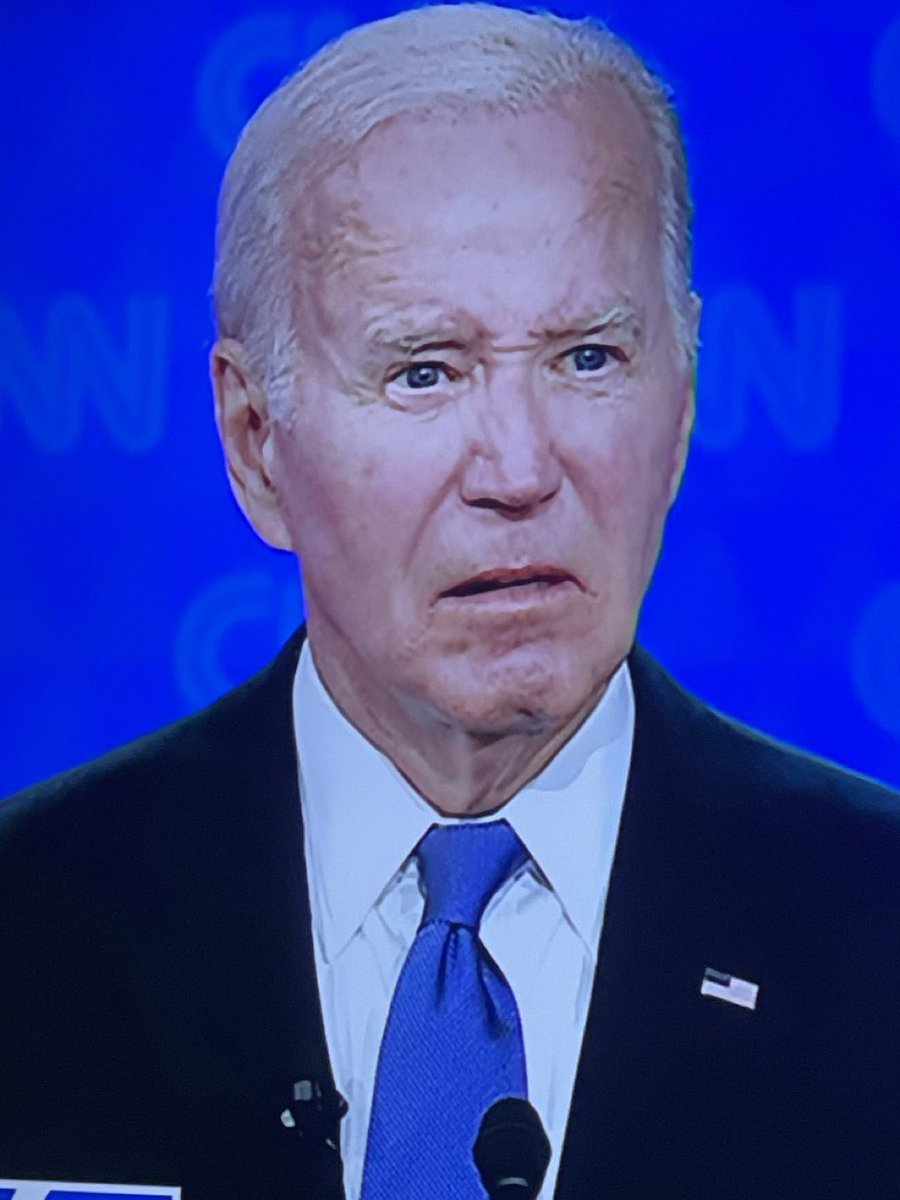
These fucking guys (Source)

We don’t want either of these fucking guys to be in control of our lives. Not even a little bit. I’ve been arguing for a while now, going back to 2020, that Biden is the better choice; but I still don’t want him to be President, and I never have. He was my third-to-last choice in the crowded Democratic field in 2020 (The two below him on my list were Marianne Williamson, because combining lunacy with complete inexperience is just about the worst thing you can do, and Michael Bloomberg, because actually putting one of the One-Percenters in charge is the worst thing you can do. [Note that, Trumpers. I don’t know how you got tricked into forgetting that, but that’s who Trump really is. Actually.]), and he was my second choice even in this election where my first choices (Elizabeth Warren and Bernie Sanders — and Andrew Yang, and Jay Inslee, and Cory Booker and Julian Castro and John Hickenlooper and Tim Ryan and JESUS CHRIST FUCKING ANYBODY ELSE) didn’t run, because Dr. Cornel West would be a far better President than either the Geezer or the Groper. The Sleeper or the Shitbag. The Fumbler or the Fascist.

So do we vote for the third party candidates?

Do we boycott and refuse to vote?

We do not: because this election will put one of these two into the White House. The system cannot change between now and November; not unless we actually rise up and revolt. I don’t plan to grab a pitchfork and light a torch; if you do, we’re going to have to have some serious talks about what you plan to do and why, because violent revolution is something I can’t support as a pacifist; and as someone who both read AND understood George Orwell’s 1984 (That’s not a dig against you: that’s another one for the internet bros who say things like, “Facebook took down my anti-trans meme! It’s LITERALLY 1984!”), I recognize that revolutions generally don’t change the system, they only change the people who hold the whip: they don’t change who the whip falls on, nor remove the whip entirely. So we can discuss it, but I don’t think violent revolution is the right thing to do.

I think the right thing to do is to work on improving the system. We don’t even need to change it, to tear it down and build a new one, because as I said, this actually is a democracy in the most important sense: no, we do not vote directly on all political matters (which is actually what a “democracy” means, control by the people without representatives), but our votes have the greatest authority. We can vote to change literally anything in our system, even the system itself through Constitutional amendment.

I do think we’ll need to change a whole lot of things to make the system functional in the long term. But there are a couple of specific things that we can work to change in the fairly short term — meaning in the next, say, five to twenty years, but not before November — that will make an enormous difference, and make it much easier — even simply possible — to change everything else we need to change. Those things are the factors which give the plutocrats their ability to influence politics so powerfully: unlimited money in campaigns, unlimited advertising in campaigns, monied lobbying and the revolving-door interactions between the government and industry, the winner-take-all two-party system (and other minority-rule structures like the electoral college). I think there are politicians who would be willing to change those things for the better. Or maybe there are people who would be willing to become politicians in order to change those things for the better. Starting with money in politics: that is the simplest and most direct way we have to challenge the plutocrats, the One-Percenters. And people like John McCain existed. People like Alexandria Ocasio-Cortez, who unseated a corporate Democrat using only small-dollar donations, exist and are currently in Washington. It is possible. It can be done. It may take years or even decades to get a majority of such people in Congress: but we can do it. And that’s what we need to do.

But what do we do about November?

About these two fucking guys?

I know some of you aren’t going to like hearing this, and I don’t like saying it: but the answer is, we have to vote for Joe Biden. The arguments haven’t changed, not even with that incredible faceplant of a debate performance. Trump is still a wannabe fascist, who will do untold damage to the actual lives of real people during the four years he would be in office; not to mention the damage he would do to our democracy. Biden is a failure as a leader of our nation: both because he hasn’t done nearly as much as he should have done, and because he is a miserable excuse for a figurehead — not the most important role of a president, but not a negligible one. But he is not a threat to our nation’s continued existence. Trump really is.

Don’t stay home: the MAGAts won’t. Don’t vote for RFK Jr. (If you would otherwise vote for a Democrat, that is: if you’re a Trump voter, go right ahead and vote for ol’ Brain Worms): he’s a seriously terrible candidate in his own right (and currently only on the ballot in eight states, so literally cannot win 270 electoral votes and take the presidency) and votes cast for him would only result in the victory of Trump or Biden, with no positive effect at all; because he’s not running as representative of a legitimate third party. If you want to vote Green Party or Libertarian Party or another established third party, that has more merit, because a larger number of votes cast for a third party makes it easier for the third party to gain entry into future races, which is part of the way we break the duopoly of Democrats and Republicans; but be aware that, in this election, taking a vote away from a Democrat, even a shambling mound like Joe Biden, makes it more likely that Trump will take over, and that will be very bad for us all. Including Republicans, whatever they think about how much they’ll laugh in all those stupid lib faces once Trump is in charge. The truth is that Donald Trump is not our friend, and will not do anything to help anyone but himself, if he is returned to the White House. I promise you. For the same reason, I will not be voting for Cornel West, even though I like and admire him and would choose him over every other candidate. My vote for Dr. West will not make him win: and I cannot abide the thought of a second Trump term.

So I will do the right thing to protect and serve my country and my fellow Americans: I will not choose None of the Above, and I will not cast a protest vote. I will vote for Joe Biden.

This fucking guy.

And then I will work to make sure this kind of bullshit stops. Once and for all.

No more malarkey.

Brave New World Aftermath: Does Everybody Really Want to Rule the World?

It struck me as I was reading Brave New World, both in the beginning when Huxley takes us on a tour of his nightmare baby factory, and at the end when the World Controller, Mustapha Mond, explains that the people of the Brave New World have chosen stability and happiness over independence and change and growth: why would anyone want to create this?

Why would anyone want to rule this?

I admit freely that I don’t really understand the thirst for power. Myself, I’d really rather just be left alone. Sure, I can see the draw of commanding everyone to obey me, both for selfish pleasures (Like ordering people I don’t like to go get me a donut. No! TWO donuts. And then I won’t share the donuts with them. Ha! How you like that, Doug from third grade?!) and because I think that my vision of the world is the correct one and I would like to solve every problem that exists through my genius becoming law according to my whim.

Because surely that could never go wrong.

I have a certain amount of power, because I’m a public school teacher. And while I have no control over the larger context of my profession or the specifics of my particular job — I don’t get to pick my clients or my work hours or my work space — I do have quite a bit of control over my classroom and the other humans in it. I can boss them around. I can generally make them obey me, at least in small things. I have, no joke, gotten them to get me a donut. And you know what I think every single time I am required to take control over them? I think, “Jesus, do I have to do this shit again? Why me? Why can’t they just, I dunno, control themselves?”

Nothing makes you a libertarian anarchist like trying to control a room full of teenagers.

I genuinely don’t understand why people want power. The obvious reason is personal enrichment and glory, and I understand both of  those things; they’re not worth it to me, but I understand them. I want to be rich enough to have all the donuts I want, and I would love to have a donut named after me so I could be remembered after my death. But if it means I have to be in control of the donut shop, and get up at 2am to make the donuts, then the attractions of power become a whole lot less, for me.

(By the way: remember this guy? I do. Fred the Baker. Icon.)

I still don’t fully understand why Donald Trump became president. He was already rich and famous. I suppose a narcissist like our First Stooge can never have enough money and glory, and I guarantee his little troll-ego gets a big happy jolt out of bossing people around — since that was his whole shtick on his TV show — but unless one gets to be a third-world dictator, then being in charge is, believe me, a whole hell of a lot of work. Even being a third-world dictator is a lot of work: because dictators don’t just get power, they have to keep power. And the way you do that is by keeping the other wielders of power happy with you in charge. If your power base is the bankers and corporations, then they have to be given a free hand with the business world to make all the money they want; if the people get upset about the bankers and you want to squeeze those bankers to please the people, you can’t, because then you lose power. If your power base is the military, then you pretty much have to treat the generals as even more important than you, and make sure they get all the wealth and prestige they want. The person in charge has to work, continuously, to remain in charge. Even in my tiny world of one classroom with a couple of dozen students, being in charge is a constant pain in the ass. I can’t imagine what a pain it is to be President.

He must have known that, having been a dictator in the past, with his company. So why did he do it? I maintain that he enjoyed the race: he liked the debates (Which people still talk about him winning through his oratorical skills. No: you act like a shitpitcher, you’re going to score more points than someone trying to be polite. But in any real debate you’d be stopped by the moderators; that didn’t happen because the TV moderators were not really in charge, because they work for TV stations who love shitpitchers, so Trump was allowed to continue being an ass, and then pundits pretend it was a clever strategy.), he loved giving his rallies, he loved being on the nightly news; he’s been powerful and wealthy all his life, but he’s never had crowds cheering for him, and that must have been a hoot. I think he didn’t ever expect to win, and as surprised as we all were that Wednesday morning, he was the most surprised at all. I think he’s only running now because he can’t back down and maintain his ego.

But that doesn’t explain why he does all the stuff he does. I mean, if I’m right and he never wanted the job, then he’d spend all of his time on social media or the golf course — oh wait. My theory gains ground. But still: he also does stuff. He gives speeches that are not about himself. He holds a couple of press conferences. He works to pass laws and whatnot. He’s doing a terrible job, but he’s still doing the job; and now he’s fighting very hard to keep that job. So maybe it’s not as simple as I am arguing; maybe there is another reason for him to want power.

This is where  his supporters get the idea that he is beneficent and patriotic. We all know being president is a shit job, and only someone who really wanted to help Americans would take on that pile of shit. (Though here’s another theory: shitpitchers would be attracted to piles of shit, right? Maybe the biggest pile of shit job drew in the biggest shitpitcher in the country. It’s the law of fecal gravitation.) I don’t believe that because he’s not really helping anyone very much. Other rich assholes, sure, but I don’t think his loyalty to them is strong.

In the Brave New World, the people in charge have an even shittier job, honestly. Because they get prestige, but they don’t really get to be in charge: their job is simply to maintain the machinery of the society, which is exactly what I think makes being President so shitty: there’s an unending mound of duties just to keep things going. In Huxley’s book, the people they control are under perfect and total control, which, I would argue, would take all the fun out of being in control: there aren’t any rebellions to be crushed (And if you want to know how much fun crushing rebellions is, watch Star Wars and think about the fact that Darth Vader controls a GALACTIC EMPIRE and yet spends all his time chasing down a ragtag band of rebel scum.) and even the sucking up you get from your underlings is only because you programmed them to obey. I can see the ego boost from bending another will to your own; but when the will is already broken, what’s the point? In the book the controllers don’t get to put their ideas in place, don”t get to be glorified; the society has erased (and continues to erase) the past, and their social structure was set centuries before the book.

So why would they want the job?

Are they selfless lovers of humanity? Like Trump?

But then why would they crush the humanity out of the people they “serve?”

Like Trump?

I don’t have an answer here. I realized, when I went to get that video clip at the beginning of this, that the song might be satirical; that Tears for Fears meant the song to make the same point I’m making, that ruling the world would be hellish.

But I guess Satan chose to rule in Hell, didn’t he? Maybe that’s enough.

All I know is, it’s time to go make some donuts. Play us out, Fred.

This Morning

This morning, I think I have an answer to my question from yesterday morning.

Yesterday, I was wondering what I could say to my wife, to my students, to myself, that would help comfort us in the face of inevitable suffering, and I wished that I could rely on God as that answer, because then I could at least stop thinking about it — and I should have said worrying about it and fretting about it, because that’s the point; it’s not the idea of not thinking, it’s the idea of “let go and let God.” Which I can’t do, but I appreciate that people can.

But I have another cliche that I have gleaned from outside of the fields of the Lord (And that enormously obscure reference is brought to you by the podcast I’ve been listening to, Sunday School Dropouts. Probably also why God has shown up in this atheist’s morning ramblings.), that as I understand it, many churches focus on as the heart of their message (and others may sprinkle in, in between railing against homosexuals and abortion and Democrats in Washington), which is this: God is love.

Once again, that doesn’t work for me. But it comes with another way of looking at it, that I think does fit in nicely with what I’ve been looking for:

Love is God.

That is to say, love is everything. Everything that matters. It is the alpha and the omega, it is the answer to all questions, all doubts and fears. Love. And love, I think, can offer an answer precisely as satisfying  — and not any more satisfying — as can the answer “God.”

What should I tell my students when the future looms ominously over them? Love. Look for love in your life, look for love in what you do; if you don’t find any love in your life, then change it, and if you don’t find any love in what you do, then stop doing it. Don’t work for money, work for love: and I don’t mean to be flippant there, because I am a person who works for money precisely because he cannot live on what he loves; but for me, the money I earn is spent on those I love, and used to give me an opportunity to do what I love, which I am doing right now. So I never mind my job very much, because it is done for love, if not always in love. And yes, sometimes I love my job: I do love books and poetry, and I love writing, and I guess I don’t entirely loathe my students. (No, I love some of them. More, I love the people they become, and the potential I see in them when they are young.)

What do I tell myself when I am in my darkest, foulest, most hopeless moods? Love. I have lost some of my liberal idealism in these last few years, and I have begun to lean a wee bit more conservative; it has made me worry, because I know that this is a common pattern, especially among aging white men, as we start to get a taste of power and become greedy and start worrying about people taking away what we have. And I do not want to be that guy. But I think that so long as I focus on love, so long as my actions and intentions are begun with love in mind, then I won’t turn into someone I would hate. At least some of my shifting to the right is based on the consideration that people on the right can’t be bad people, can’t be evil people, not all of them. (Trump is.) Not any more than there are evil people on the left. It’s not reasonable to take a person’s political leanings as the sole evidence of their morality or their value, or anything else apart from their political leanings; evil people are conservatives, conservatives aren’t evil people. Thinking that makes me give some conservative ideas (like the free market and lower regulation, the independence of states and, perhaps most shocking to me and those who know me, the value of the Second Amendment) the benefit of the doubt, and that makes me move away from my liberal roots.

But that doesn’t matter. It doesn’t matter if I’m a liberal or a libertarian or a moderate or an anarchist: so long as I consider what is best for my fellow men, and treat them always with respect and with love, then my ideas will never be bad, even if they are wrong.

I also need to remember this for myself when I am disappointed in my writing career. When I think about how old I am compared to other writers, and when I realize how good I am compared to some other writers — and then when I think about how entirely devoid of success I am compared to most other writers; I need to remember: love. I do this because I love it, because I love the me who does this. And so long as I write for love, with love, and out of love, then I can’t be a failure. I am a writer.

What do I tell my wife when she worries about our future, about what we’ll do for money, about where we’ll live, about how we’ll see the world and how we’ll live in it? I will tell her, as I do as often as I possibly can, that I love her, without limits and without end, and that I always will, and that love will see us through, no matter what else happens. Always. Love.

It doesn’t solve the problems we all face. But then, neither does God. I hope that it brings you some comfort, as it brings me some. I hope that it gives us all the strength to keep fighting towards our goals, and I hope it keeps us from hating those who fight against us, or at least in the opposite direction. I hope that the love in your life is enough to make you smile, as it is for me, even on a Monday morning.

Thank you for reading what I write. I won’t say I love you, because I don’t know you, but I love the fact of you and the existence of you, and what you give to me. Thank you.

Now go love!

Citizens: Unite!

(I’m going to do a few posts on politics and money. So if that annoys you, come back in a week or so.)

Donald Trump is not the problem.

(He’s a problem, as you can see from this article about a man who live-Twittered a Trump rally. But the problem of Donald Trump is self-correcting: the Twitters make it clear that the audience is small, and almost entirely white, angry, and incoherent. People with that voting base do not win Presidential elections, witness Newt Gingrich, Pat Robertson, David Duke, and of course, H. Ross Perot, the other angry, incoherent billionaire who ran for President. Trump will, eventually, go away.)

The problem is money. And the first thing we need to do, before we worry about getting rid of this politician or that politician, before we worry about legislation on this issue or that issue – the first thing we need to do, right now, is separate money from politics.

There’s no way to separate them completely, of course. We live in a capitalist society, and money is in everything. Money can buy everything (Other than love.), and so money can represent, can serve as a stand-in, for everything – which means that, on some abstract level, money is everything. Government is largely powered by its ability to control money: through taxation, through regulation, through allocation. Politicians have to be able to spend money, in quantities that are inconceivably vast. I have found myself lately unimpressed by “billions.” I hear that this industry earns profits of $3 billion a year, $5 billion a year, and I always think, “Is that it?” It’s because I pay attention to politics, where the numbers are hundreds of times, thousands of times greater than that. Trillions impress me. Politicians have to spend trillions, and take in trillions, every year. Politicians also have to get paid, and while I sort of like the Founding Fathers’ system of part-time legislators who had to have full-time jobs because they didn’t get a salary for government office, I do know that politics today are much larger and more complicated than 200 years ago, and so I think it should be a full-time job. Therefore they need to get paid.

Maybe less than they do now, though. President Obama made a comment in the State of the Union about how the only people who have been able to keep the same job for thirty years and build up a good retirement were in the Chamber. And they laughed. And I thought, “That’s not a fucking joke, you asshats.” Forgive the rancor, but as someone who has not been able to keep the same job even for fifteen years, and who has a retirement account balance of “We’re still hoping to save something someday,” I find the President’s comment telling. Almost makes me want to go into politics.

But that’s just it: people want to go into politics for personal gain. Because politics is a profitable industry. Of course it is: politics is about power, the wielding of power over hundreds of millions of people, in nearly all aspects of their lives; and money is transferable. Those two facts make some corruption inevitable. Of course people are going to offer money in exchange for favors – meaning the application of power – and of course politicians are going to take money in exchange for favors. But as the people who are manipulated for that money, but don’t get any of that money, it is incumbent on us to try to limit that process, to protect ourselves from being shut out of control over our own lives. We can’t eliminate it: power corrupts, and money is the tool of corruption, and in a capitalist society with a government of any kind, there will be corruption.

There should be less of it, though.

So where do we start?

Fortunately, the most obvious form of corruption, the direct peddling of influence, is already illegal. I suppose, if we believe it still happens too often, that we could strengthen the law enforcement system that investigates this – the FBI, I believe. But I don’t think the issue is a weak FBI. I think it is a weak media. But I’ll come back to that.

The first issue is the second most obvious form of corruption: campaign contributions. These are limited to spending for re-election, and thus are not simple profit for the politicians who take them – but since money buys elections in this country, because money buys advertising and publicity, and advertising and publicity are more reliable ways to get one’s name into the voters’ heads than the media is, campaign contributions are a way to buy the politician’s influence through offering a chance for the politician to retain and expand that influence. It’s sort of an interesting loop, because the money is buying the application of power through the offer of more power; so it’s a power-for-power deal.

But it’s still corrupt. And it’s actually a really, really simple fix, though admittedly not easy to put in place, because the people who want the system to continue as-is are the ones who currently have the money and the power, and therefore the control.

The fix is this: we make it illegal to spend money in a political campaign.

I’m not the first to think of this; several other countries have political finance laws that limit spending in various ways: the UK doesn’t allow television advertising; France and Germany don’t allow contributions from corporations or unions or government bodies; Australia limits the length of campaigns to six weeks. (Wikipedia) It is only in the U.S. that a Presidential campaign can cost $2 billion, as the race between Obama and Romney did in 2012. (Those billions impress me.) Because our system is the most ridiculous, I would call for the most definite limits: limits on overall spending, limits on campaign contributions (I’d like to see that limit be “$0,” but I’ll take something small like $100 and no contributions from organizations.), a complete ban on buying television and radio advertising. Restrictive? Yes. Now let’s talk about why it is needed, and justified, despite being restrictive.

First, let’s point out that the Citizens United decision was incorrect: while spending may be considered free speech – I just argued that money is in some way everything, so I can’t now say that it isn’t speech, as much as I would like to – the Court’s decision ignored the idea that buying political ads in support of a candidate could be a path to corruption because it can buy political access and a more generous consideration from that candidate; they took direct quid pro quo as their only definition of corruption. This is absurd. When someone gives me a gift, I think of them more kindly afterward. When someone gives me a gift and asks me to think kindly of their cause, I will spend more time thinking about that cause, in addition to thinking kindly about the person who gave me the gift and brought the cause too my attention. When that gift is a million dollars, which allows me to keep my lucrative job for another two to six years, I am going to be especially generous to that cause and the side of the giver, in the hopes that I will get another similar gift later on. And that’s corruption: it’s the purchase of influence, if not actual quid pro quo purchases of votes, and it locks those without millions of dollars to spend out of the equation: but not out of the consequences of the decision. This is why we have right to limit this “speech” – because its free exercise limits our own freedoms, and your rights stop where mine begin.

Along with that, the idea that money may be considered a form of speech doesn’t mean that we are free to speak in any way we like: if the “speech” is something like, “Hey, Doug Ducey [Governor of Arizona, for those who don’t already know the Deuce], we’ll give you millions of dollars to run your campaign, in exchange for you representing the interests of large corporations over the needs of your citizens. Love, the Koch brothers,” then we should not consider that speech free. You might as well tell Hired Goons, Inc., that its standard, “Hey, nice blog you got there. Be a shame if something was to happen to it…” sales pitch was protected free speech, or a conversation between terrorists planning a bombing is First-Amendment-sanctioned free assembly.

You can’t use the First Amendment to protect your ability to do harm to others. Even if your ostensible intention is to help yourself.

If we limit campaign contributions to $100 per person or so, then candidates could still be supported by individuals; and if corporations wanted to support candidates with more than a personal contribution, they could use their ability to gather together many individuals – the whole idea of “incorporation,” taking several separate pieces and forming one “body” from them – and convince them that this candidate was better for the corporation’s collective interests than that candidate. You know, political campaigning. The way unions used to do it, before they got lazy and then corrupt themselves. (Don’t get me wrong: I support unions wholeheartedly. But the disconnect between union leadership and its members has led to the same problems that such distance between head and base always creates: members who are not represented by the body they expect to represent them. Though in the case of unions, it’s not because of campaign contributions and monetary corruption so much, but rather because of inertia and apathy on the part of the majority of the workers. Says the former local union leader. Anyway: different topic.) A CEO with 10,000 employees could, even without threats or coercion, help to swing a $1,000,000 campaign contribution. Even without corruption, that’s power. But it’s the right kind of power: because an elected official should listen to the wishes of 10,000 of his or her constituents. And please, let’s not assume that a CEO just naturally represents the wishes of his or her employees; do you think the Waltons speak for the political will of the nation’s Wal-Mart greeters? Neither do I. But the Waltons do have an easy audience in those workers, and they could try to convince them to support the same political causes and candidates. You, know, legally. With actual free speech.

If we limit campaign spending, we will achieve something even more important than limiting campaign contributions; because with the current system of limited personal contributions (Though the current cap is much higher than I would like it to be) and unlimited spending, all that happens is: Trump and Ted Cruz. Trump can swing an election because he can pay for it himself, and outspend any normal opponent; I am using Cruz here to represent politicians who stop doing their actual jobs in order to spend all of their time soliciting campaign contributions, and who are little more than empty shells echoing the sound of the ocean – in this case, whatever is the absurdity most likely to please the people who continue to give him money. If he can raise enough of a “war chest” (And isn’t it indicative of the trouble in this scenario that we use that phrase? Really? The funding used to conquer a people – or maybe the tribute extracted from the conquered. That’s swell, America. Why don’t we ever pay attention to our own words?) then he can win an election; but it takes a huge amount of work, and an even huger amount of bullshit, to raise that much money, and so that’s what we get: politicians who are full of shit, and who spend no time doing anything other than fundraising. So what we do is put a cap on the amount that can be spent on a campaign, with larger caps for larger offices, and/or larger numbers of voters in the campaign. We should also make TV advertising for politics either illegal, or free for all recognized candidates on an equal-time basis. Advertising is the largest expense by far (Though there are others – travel and staff payroll are two expenses I can’t really quibble with; I think it’s good for politicians to get on a bus and travel through the country and meet the people they want to represent. I think it’s good that voters get to hear speeches from their would-be representatives, in person. And I think politicians need good aides and assistants, since I doubt anyone could fully grasp all of the issues a politician will be expected to deal with.), and if we limit that, then the rest of campaign spending could be counted in realistic numbers – millions or tens of millions, rather than hundreds of millions and even billions. You could raise millions in $100-increments if there were enough constitutents pulling for you. At the least, you could pay for your bus and your staff, and sandwiches for everyone.

Now, I’d like there to be only public funding of elections; if we raised a small tax, we could put some millions of dollars aside for elections, and pay for all campaigns without any personal influence at all; but there are ways for that to be corrupted, as well, and so it may not be a necessary step. Still: I think we should reach the point where we agree that money as free speech should be severely curtailed, and political campaigns are a good place to start.

So okay, Humphrey – how do we achieve all of this? It took years for the McCain-Feingold campaign finance bill to become law, and even then it was first watered down and then overturned by Citizens United. The people who make the laws are the very ones you’re looking to limit. So what’s the plan?

But lucky for us, we do still live in a democracy, and there are still ways that the will of the people can override even the most intransigent resistance from the current political and economic powers. One of the ways – the best way, because it can’t be changed by anything but the will of the people – is a Constitutional Amendment. And I would argue that this problem is so widespread, and so pervasive through different levels of government, and so damaging to our national interest, that a Constitutional Amendment is called for. That Amendment could set limits on donations, on spending, on advertising; even if they were basic, it could be enough to swing politics back to what it should be: public service, rather than private enterprise.

Let’s show the government, and those who corrupt it, what citizens united can really do. So that government of the people, by the people, and for the people, shall not vanish from this Earth.

No Art, No Peace

I am generally opposed to the standardization of education (which puts me, amusingly, in line with much of the GOP), but here’s a wish: if schools had all used the same curriculum when I started teaching that they use now, then Toni and I might have known better than to move to Oregon.

We’ve talked about this before, about whether moving there was a mistake. Because Oregon was bad for us. There were some good things: we made some friends; we bought a house and learned some of the treats and tricks of homeownership; it was a good home for our dog, Charlie; and we found our beloved mutant cockatiel Duncan there. But for the most part: the school where I worked for ten years was badly run and badly funded; the community was largely an ignorant backwoods that offered rednecks and mudding as its entertainments, Wal-Mart and Fred Meyers as its shopping; the weather was – I need something beyond “bad” here. Because the issue with the weather wasn’t that it was wet, or that it rained a lot; I grew up in Massachusetts, where it rains and snows and sleets a lot, and Toni is from the rainy section of California, so rain is not the issue. Bad weather is not the issue. But the weather in Oregon is not just bad; it is tortuous. The clouds descend, and seem to wrap around the world, from horizon to horizon; and then they do not leave for the better part of a year. There is nothing at that time in Oregon – not people, places, nor things – that is not coated and permeated with mud or mold. Everything is cold, everything is miserable; the natural world seems to want to curl up and disappear into itself, and you want to go too.

We spent ten largely unhappy years there, and came out no better than we went in, having gained nothing but – character. I’ll say that; Oregon builds character. Oh – and I won teacher of the year. And almost had my teaching license stripped from me in a four-year bureaucratic ordeal worthy of Kafka or Orwell, that earned me the new title of “morally reprehensible.”

We don’t regret moving to Oregon, because there were good parts, and because every place has bad parts. But it would be a good world if we had never moved there. And that world might have existed if I had taught William Carlos Williams’s poem “Raleigh Was Right” back in Escondido, California, in 2003.

The poem is the third in a series, which forms a conversation between three (Actually several; but three are directly connected to this) poets separated by about 350 years and an ocean – and by death. The conversation started with Christopher Marlowe’s poem “The Passionate Shepherd to his Love,” a poem in which a starry-eyed (actually sheepy-eyed) shepherd asks a nameless woman to come live with him and be his love. As an inducement he offers her a variety of gifts, all drawn from the natural world – beds of roses, a cap of flowers, a kirtle embroidered with myrtle. He also says they will sit on rocks and watch the shepherds feed their flocks, which tells you something about this guy’s standard of entertainment. The poem is a quintessential example of the pastoral tradition, mythologizing the Good Old Days Back in the Countryside, when everything was simple and everyone was happy sleeping on beds of roses and watching sheep eat. Marlowe got ripped for his youthful idealism (and his writing style, but that’s neither here nor there) by the older, jaded explorer/pirate/courtier/poet, Sir Walter Raleigh, who wrote “The Nymph’s Reply to the Shepherd.” Raleigh’s poem has that nameless woman rejecting the shepherd’s advances because she can’t take the naivete represented in an offer of love that comes with a cap made of flowers and the chance to sit on rocks; she also tells him that she thinks he’s full of crap (“If all the world and love were young/And truth on every shepherd’s tongue/These pretty pleasures might me move/To live with thee and by thy love.” The key word is “if.”) and she wouldn’t take his offer if he were the last man on Earth. Raleigh won the argument, mainly because both poems were published several years after Marlowe’s death (Which, I have to say, pretty much means that Raleigh loses the moral argument. Because arguing with a dead man is pretty low. But I won’t stoop to repeat his mistake. I’ll let Dr. Williams do it for me.), but that wasn’t the end of it; poets from John Donne to Robert Herrick to Ogden Nash have piled on to poor dead Kit Marlowe, mocking his poem and his theme. William Carlos Williams seems to have been the exclamation point, the last one to stick his nose in and say, “Yeah, what he said!”

But the aspect of the poem I am thinking of is not the whole nymph/shepherd/Marlowe/Raleigh thing. It’s the reasons Williams gives for siding with Raleigh’s nymph against Marlowe’s idealistic shepherd. These are good reasons.

Williams starts his poem with:

We cannot go to the country
for the country will bring us
no peace

This is why the nymph won’t go with the passionate shepherd and be his love: not because he’s an idiot, or because the gifts he offers will eventually fade and die (Which is the main reason why the Nymph says no in the Raleigh poem); but because he’s wrong: the countryside is not a wonderful place full of roses and dancing shepherds’ boys. It is a place that will bring us no peace.

Williams goes on:

Though you praise us
and call to mind the poets
who sung of our loveliness
it was long ago!
long ago! when country people
would plow and sow with
flowering minds and pockets
at ease –
if ever this were true.

The image of the countryside as a place where people can live simply, but also well, and be happy and also satisfied with their lot in life, is archaic, and probably apocryphal. “Flowering minds and pockets at ease,” the image of Thoreau at Walden, with his educated intellectual philosophizing and his life of rich simplicity – except Thoreau lived on Ralph Waldo Emerson’s property, close to his family and their resources, so never had to worry about paying rent, or taxes, or coming up with money for repairmen, or doctors, or all of the other things that mean people who work for a living – like farmers and shepherds – don’t get to “Simplify, simplify, simplify.” Believe me, when we lived in Oregon and needed to find a way to pay for a new roof for our house, we would have loved the chance to simplify; but that wouldn’t have kept the rain from reducing us to a chilly pile of rotting mildew. We needed $7000 for that. And it wasn’t simple.

The last stanza is the one that stands out to me, because recently Toni and I, because we are still dealing with money issues, since we are still somehow not wealthy – I don’t know why my teacher’s union dropped the ball on getting me my cushy overinflated salary, but I have never managed to get my chance to suck on the public teat – talked about living like an artist on an artist’s income (This is akin to feeding one’s self from a garden grown in a 10-gallon fishtank), and these were the lines that came to mind, and brought this blog into existence.

Not now. Love itself a flower
with roots in a parched ground.
Empty pockets make empty heads.
Cure it if you can but
do not believe that we can live
today in the country
for the country will bring us
no peace.

If ever there was a time when two people could live on a teacher’s salary, or even worse, two artists’ income, it is not now. (The lines about love don’t apply to me – that really is Williams picking on Marlowe, and also on his own era, World War II, and saying there ain’t enough love in the world to make a shepherd and his love happy in the countryside. Toni and I don’t have much, but we do have love.) It was not 2000 in southern California, and it really wasn’t in 2004 in St. Helens. Because in that tiny town out in the boondocks, especially after the economy collapsed in 2007 and shot out all of the equity we might have been able to save in the house we had bought in 2005, there was utterly no economic opportunity, particularly not for artists. We couldn’t sell art, we couldn’t sell our expertise; there was no chance to do anything but try to get by on a teacher’s pay. While the whole country was looking to cut teachers’ pay. And that made everything worse.

Here’s the reason: empty pockets make empty heads.

No matter how thoughtful, philosophical, and intellectual you are; no matter how deep your inspiration flows, no matter how energetic is your muse: when you have to worry about money, about paying the bills and buying food and finding $7000 you don’t have so you can pay for a new roof – you will not be able to think very much about art. We moved to Oregon partly so that we could focus on our art; it didn’t happen in the way we wanted it to, we couldn’t be as productive as we wished to be, and this is why. Because empty pockets make empty heads.

I hope that now, here in a place with a lower cost of living, that we will be able to cure this problem. But what I know now, beyond the shadow of a doubt, is this: do not believe that we can live today in the country. For the country will bring us no peace.

Caveat

*world's


Caveat Emptor, they say. Let the buyer beware.

I want to add a caveat: Caveat Magister. Let the teacher beware.

There are a lot of problems and difficulties, even hazards, in being a teacher; someday I’ll write about all of them, and why people should — or, more likely, why you should not — go into teaching. But right now, I want to focus on only one problem. It’s tempting to say it’s the worst or the most serious, but it may not be; what it is, though, is the source of a great number of difficulties that teachers face, on a great number of fronts.

It is this: very few people understand what we do.

Please don’t add a new misunderstanding: I am not complaining “Nobody unnerSTANDS me!”; I am not feeling a black, absinthe-scented drizzle of angst slipping icily down my spine; I am not currently pouting. (All right, I’m pouting a little. But it’s because I’m hungry and yet I have to wait for my lunch to cook. Where the hell is my Star Trek replicator? Or maybe those instant food-pills they had on the Jetsons? Hell, right now I’d take the fat-making shakes from Wall-E.) The issue is not that being misunderstood makes us sad. The issue is that being misunderstood, because of the way we are misunderstood, means that our job, the task of teaching, becomes impossible, if one means to do it in any meaningful way.

The issue is this: at some point in the past fifty years (I’m looking at you, 1980’s) this country decided that all that mattered in life was income. Now, we are a democracy and a capitalist society, which means that we have always focused on money as motive: because in a free society, anyone can improve their lot in life; and in a capitalist society, one rises through wealth. Put these together, and you have a country where cash is the key to the kingdom, and here we are: in a world where we teach our children that they can be anything they want to be — and what they want to be, we tell them, is rich. But looking at our social institutions, particularly education, one sees the pervasive and controlling belief that education was good for people: good for the mind, good for the soul; not just good for the wallet. People used to fight for education; now they just fight it. College cost less, and taught more; K-12 schooling was more difficult, more challenging, more effective, more reasonable. Teachers were more respected, seen as experts, because what they offered was valuable in a larger, holistic sense — the way that religious leaders are respected, the way that doctors and law enforcement and firefighters are respected, because they offer something more than a simple exchange of goods and services for money: they give something that means something. Teachers used to be seen that way, I would argue. It is possible I am wearing rose-colored glasses.

But we certainly don’t think that way now. The predominant (though not the only) view of school is as a means to one very specific end. The progression goes like this: elementary school gets you ready for high school; high school gets you ready for college; college gets you a job. The goal is the job. We have a somewhat broader view of that end, because we want our children to have a job that is satisfying, and valuable, in addition to financially rewarding; but the crux of the biscuit is the number of zeroes in front of the decimal point at the end of the year.

My students think this, universally and uncritically. Whenever I ask them, “Why are you here?”, which I do with some regularity (Because I am fascinated by this and terrified, too), they joke that they’re here because they are forced to be (They’re not joking.). But then the serious answer, the one they think I want to hear and the one they parrot with eerily similar language, year after year, is this one. High school gets you ready for college, college gets you a job. They even have a similar cutoff of the pragmatic value of education: they all tell me that you learn skills and knowledge that are directly applicable and necessary in life until around 8th grade; then, once you know all the math and literacy you will need to get through your day, it’s all about the college-job-paycheck.

They think this because their parents think this. Their parents want them to do well, but mainly, they want them to be made ready for college, and to get into a good college, because a good college means you get a good job — a mediocre college means you get a mediocre job. Or at least, a good college means a better job.

And because the parents think this — or perhaps this is the reason the parents think this — the administration and the political system behind schools all think this. Our success is determined by our graduation rate, and inasmuch as we can follow it, the rate at which our students go on to successful (meaning well-paid) careers.

These aren’t bad goals, of course. The job you do matters, both to you and to society; and in this society, money talks. I do this job because I get paid to do it, and though there are times when I wish I could leave it, I don’t because I don’t know what I would do that I would enjoy more and get paid as much. And college was a prerequisite for doing this job. I even agree that most people get by on what they learned before 9th grade. That’s why they have so many problems spelling text messages. (Please note the meme above.)

But there’s a problem when you focus on the financial side to the exclusion of all else. When money is the only thing that talks. We see that in our national politics these days, when the wealthy get elected to represent the interests of the wealthy, and the rest of us just shuffle along behind hoping we don’t get trampled on by the sudden changes in direction. The problem in the predominance of money in education is this: when we keep our eyes on that particular prize, we blind ourselves to all else.

When elementary school is only intended to prepare one for high school, then all that matters is promotion through the grades. Parents pressure administrators, administrators pressure teachers, and students who aren’t ready get promoted, when twenty years ago, they would have been held back until they learned what they needed to learn — back when the goal was education and improvement, a goal that takes some people longer than others. Parents don’t care now if their kid is learning everything; they care if their kid gets promoted. Because elementary school isn’t what matters: high school matters. Because high school gets you into college and college gets you a good job, and nowhere in that equation does a child need to master the multiplication table. If a kid has trouble with math, well, he’ll go into a career that doesn’t need math. He’ll be a lawyer. He likes to argue. Besides, his brother is good at math. Can’t read, but he’s good at math. That one’s going to be an engineer. Probably with computers. Computers magically make something a good job, did you know? Yes: that’s why we have to have computers in school, now. Because kids need to learn the skills that are necessary in today’s economy. That’s why they’re in school.

So the children are promoted to high school. Now it’s time to get serious. Serious about grades, that is. Because the purpose of high school is to get into a good college, and so all that matters is the GPA. Sure, sure, they need to learn how to do the things they’ll do in college — and that’s the magical argument, by the way, which we all use, including me: they need to read this book because it’s the sort of thing they will do in college — but really, the focus is the grades. We trust the grades to tell us that the child is progressing properly, learning what he needs to succeed: the grades are all we need to worry about. And the same thing for the administration and the politicians, except you can replace “grades” with “test scores.”

I’ve never taught at the college level, but I have no doubt it is the same thing there: the second a child is accepted to a school, he is expected to know what his career after graduation will be — preferably down to the exact position he wants and the exact company where he wants that position, but at the least, a field of endeavor and a job class. And I am sure that everyone grumbles about the classes they are forced to take but don’t need for their career, just like they did in high school, just like they do in elementary school about the stuff they won’t need in high school or college, like learning cursive. And I am sure this myopic view of college as nothing but a series of hoops to jump through until you make lots of money has all the same deleterious effects as it does in K-12.

And what are those, exactly? What are the problems with focusing on promotion — grades — career? Only this: you learn what you set out to learn, gain what you intend to gain, from everything in life. And if all you mean to gain from school is getting out of school — then that’s all you get. I know: that’s what I got from high school. All I wanted was to be left alone. So I was left alone. It was college where I found that learning could expand my mind and make me into a person I liked more with every new thing I learned. College made me who I am. High school didn’t even make me ready for college, because I didn’t try to make it do that for me. I had friends who went to the same high school I did, who went on to far more intellectually challenging college experiences than mine, and into more — well, maybe not “challenging,” but I think probably more cognitively difficult careers than mine, and I’m sure that our high school prepared them better than it did me. Because they went there trying to do that. They focused on learning, and they learned. Garbage in, garbage out: and so with nothing.

There are other problems. The focus on promotion — grades — career moves resources and support into those areas, and not into others. If we need our students to learn more math in order to increase promotion rates, then we will focus on math, and drop art and music. Because after all, they don’t need art and music to succeed in high school or in college or in their careers. If students are having trouble in high school English, then we don’t add classes or more teachers to reduce class size: we dumb down the curriculum, restrict it to basic skill drilling. It doesn’t matter if they learn less, because as long as the curriculum focuses on easily mastered skills, they will inevitably get good grades, and that means they will get into college and we win. And thus we have Common Core, where the focus is on easily mastered skills, and which has been and continues to be pushed onto teachers so that students can get good grades and good test scores, and our graduation rates go up and our college attendance rates go up. Sure, our college graduation rates suffer; but that doesn’t matter to us here at the high school level, just as high school failure based on students coming in with below-grade reading skills doesn’t matter to the elementary schools that focused on promoting students no matter what the cost, because that is the only thing that matters to the administrators, because it is the only thing that matters to the parents, because all that matters in life is a good job with a big paycheck.

It’s not true. Of course future failure bothers teachers, but we have little control over this. I am, for the first time in sixteen years, teaching Common Core this year. Because that is what my administration told me to do, and because I now work in a school that has no tenure — because teacher’s unions are essentially non-existent in this Republican-controlled Right-to-Work state (A state of affairs that exists largely because teachers are not respected like they used to be, because all we do is give kids good grades and get them ready for college so they can get a good job, and then, when the child does eventually fail, because the entire system is broken, teachers make a handy scapegoat. And if it doesn’t sit right with your conscience to talk about teachers like they are all incompetent pinko hellspawn, because you remember your own teachers being good to you, well, you can always blame the teachers’ unions.) — and therefore I have to do what I am told if I want to continue earning a living. And so because my school focuses on grades and test scores and graduation and college acceptance to the exclusion of all else, I am told to teach a canned curriculum that focuses on improving basic skills in order to improve grades and test scores and graduation rates and college acceptance. And I do it.

And here’s what gets lost: novels. There aren’t any in my Common Core curriculum. Because the focus is on easily mastered skills, and because the tests that create the test scores do not require the completion of any full-length texts, just comprehension of short passages. Unless I change the curriculum in some way, I will not teach any full-length novels to my classes this year. No Shakespeare plays, except in excerpts. These students will not have the patience or the perseverance to finish anything that can’t be finished in one setting. I hope that they will learn it somewhere else, because they won’t learn it from me. But I know they won’t. (One quick note: I am allowed to change the curriculum. They will by god read To Kill a Mockingbird. And all of one Shakespeare play. But if I wasn’t the age that I am, with the experience that I have, and the curmudgeonly attitude, I wouldn’t change that curriculum. So what happens when a kid who wasn’t raised reading novels takes my place?)

Here’s what gets lost: our culture. I know it seems like America doesn’t have any beyond Disney and organized sports and bacon, but we do: we have Mark Twain and John Steinbeck and Emily Dickinson and Robert Frost and Toni Morrison and Maya Angelou and Ernest Hemingway and F. Scott Fitzgerald. People in this country read To Kill a Mockingbird and Catcher in the Rye and The Call of the Wild. Our schools have always taught those works, and that gives us something important, along with all of the wonderful gifts that come from making literature like that a part of you: it gives us something in common. It’s books like these, learned in school, for no other reason than because they are worth learning, that make us who we are and that keep us as human as we are, because they are the ones that teach us it’s a sin to kill something that doesn’t do any harm to us, and that we should stand on the edge of the cliff and catch those kids running through the rye, and that every life counts, even a dog’s. And I’m only focusing on the literature because it’s what I know, but you could do the same thing with art, with Norman Rockwell and Andy Warhol and Jackson Pollock and Frederick Sackrider Remington (No — I’m not making up that middle name.); you could easily do the same thing with music, or with film.

None of these things are part of the promotion — grades — career path. All of them are our culture. And if we don’t teach any of these things in school — and we don’t, because they don’t relate to our one overriding purpose for education — then we’ll have no culture left except for organized sports and bacon. And perpetual war, of course.

Toni and I just watched The Wolf of Wall Street last night. It’s about a guy who cared about nothing but money, and did whatever it took to get as much of it as possible, and then went about living the most worthless, hollow excuse for a human life I can think of outside of serial killers and the Inquisition. And the movie focused on that, for three hours, in excruciating detail. I have never seen that many scenes with hookers in my life. It’s a true story, based on an autobiography of the same name; the reviews online of the book (which I will not be reading myself) make the guy sound just as he was portrayed in the movie: as a guy who would lie and cheat and steal as much as he had to just to get more money to put on the pile, so that he could spend it on drugs and prostitutes and midget-throwing parties at work. (Not making that up, by the way.) Who would not regret anything in his life, because, in my opinion, he lacked sufficient humanity to know regret. All he knew was money. All he cared about was money. Now, because the movie was made by Martin Scorsese, it was not actually a celebratory movie: it was an expose of the emptiness of this kind of existence. And I have never felt happier about my life and my choices than I felt while I was watching this epic debauch. I am so proud of myself and everyone who helped me to become what I am — my parents, my wife, my teachers, my culture — that I care about things other than money, that I see money only as a means of survival and not of any source of self-worth or identity definition. I am so happy to be me instead of that shit-heel who called himself “Wolf.” I hope that was Scorsese’s intent, because if so, it was a masterful piece of work that was completely successful.

But I couldn’t help but think: if my students watched this movie, they would want to be this guy. Because he made money. And if I asked them, the next day, why they were in school, they would tell me “Because I want to be like the Wolf of Wall Street.” (I’ve heard similar sentiments in the past, but using Hugh Hefner as an example, or Bill Gates.) And that scares the hell out of me.

Caveat Populus. Let all of us beware.