The Year Of Women (Which Should Be Every Year)

I was having an argument on Twitter the other night.

Okay. It was New Year’s Eve. Okay? That’s right. I spent part of my Greatest Party Night of the Year arguing with trollbots on the biggest dumpster fire in all of social media.

Maybe your New Year’s resolution should be to STOP JUDGING ME!

(I’m probably being a little sensitive. It’s fine. Everything’s fine.)

The argument was mainly about how there should be more women in politics; it started with this Tweet:

I went through this thread, started by Sen. Kirsten Gillibrand saying that 2020 should see more women elected into office, and I replied to every shmuck I saw who felt the need to say, “Voting for women just because they’re women? That’s sexist! You should support the best candidate whoever it is.”

Like this dude:

And this one:

And, of course, from the Trump Camp:

Each of these replies led to a mini-argument, because both I and my interlocutors are men: we feel the need to always get the last word. (See, that was sexist. Trying to offer helpful illustrations here.) Several of these little tiffs followed the same course. I replied:

Let me be clear about this, so that if anyone reading this blog finds themselves in a similar pit full of vipers, you have something handy to throw at them (Sorry it’s not a brick.). The argument that every single attempt to focus on sex is by definition sexism — like this, which I got several times:

— is a false equivalency. Sexism is not “by definition” any attempt to consider sex as a fact, and as an important fact; sexism is an attempt to oppress or denigrate someone on the basis of sex. When you’re using sex as an important consideration in how you relate to or deal with a person, that is only sexist if your consideration does harm and if your consideration is based on stereotyping or prejudice. If I were considering whether I wanted to date a person, I would consider their sex as an important factor in their dateability as I am a heterosexual male and thus would prefer to date women (A much more important factor is that I am ecstatically and joyfully married to the greatest woman alive, but this is just a f’rinstance); this is not a sexist consideration. If I were an OBGYN, I would certainly consider sex as an important factor in determining which patient I would take on, and how to treat them; this also is not a sexist consideration, even if it means I refuse to treat a man solely on the basis of his sex.

It’s not sexist because it isn’t doing harm: my refusing to date a man doesn’t hurt him (Believe me: he’s better off. I am not a catch. Look at how I spent New Year’s.), and an OBGYN refusing to take on a male patient is a recognition of specialized knowledge on the part of the doctor, and a lack of need of that knowledge on the part of the patient; that would be saving harm, or at least inefficiency as the OBGYN wastes their valuable time trying to help a patient who could just as easily be treated by a general practitioner, thus taking time away from someone who could only be treated by that OBGYN. Now, if it was a medical emergency and the OBGYN was the only doctor available, then it would be more questionable if the doctor refused to treat the man, but it would depend on what the reason was. If it was prejudice or stereotyping– that is, that doctor has already made a determination of the worth or character of this man because he is a man (pre-judging him), or if the doctor refuses because this man is like all other men and all men are scum because of their mannishness (stereotyping) —  and the refusal to treat did harm, then that would be sexist.

Let me also note here that transgendered people negate this example I’m giving here: because there are trans men who do, in fact, need the specialized services of an OBGYN since they are men with uteruses; and of course there are many women who have no particular need for an OBGYN because they are women without uteruses (There are other reasons to see an OBGYN. Forgive my reductionism; I think it necessary.). I do not mean to ignore trans people, who should not be simply considered an addendum, an asterisk, a qualification to the usual or norm or standard; but on the other hand, it is impossible to have a discussion of sexism in this society without talking about men and women, and since I’m advocating for building equity, I can’t talk about moving away from gender entirely, which would also solve this problem. I’m going to write a full post about trans people tomorrow, but I want to finish the point I’m making now, today.

I realize I’m overexplaining; it’s not because I think my readers — who, I have no doubt, are people of taste and discrimination and brilliant erudition — need to be taught the meaning of prejudice or stereotyping, or even sexism; it’s because these words are being misused, usually intentionally, and I think the best way to combat that is with absolute pedantic clarity: i.e., overexplaining. Mansplaining. Which, when you do it to fellow men, is just kinda funny.

Which is what I did with my fellow Twits.

All right, I was also sarcastic there with the “more than one thought at a time” comment. But at this point I was realizing that I was arguing with at least a couple of bots or trolls, and ideally those shouldn’t be engaged with — certainly not in an incendiary way, as that will only piss off the people who agree with the bot’s statements, and I believe quite strongly that, while we should stand up for what is right and argue our points clearly, we also should not try to anger our opponents; good argument leads more often to compromise, but angry diatriabes lead to division and more conflict. So I shouldn’t have said this, but hey, I’m on Twitter too: so I’m either trash or fire. Or both.

The main point is my last sentence there. Seeking equity is not sexist. I typed that half a dozen times in response to half a dozen accusations of sexism. (I would have typed out this entire blog, instead, but there’s a 280 character limit. Sometimes I find Twitter very frustrating. But I consider it my penance: mortification of the verbosity.) That’s the real point I want to make here.

Here’s the deal: when men have created a situation where we inherently, by nature of our sex, have an easier time running for and winning elected office — and we have done that, starting most clearly in this country with a Constitution which did not recognize a woman’s right to vote or hold office but only white men’s — then the best way to combat that is to write laws that specifically include women as equal to men, and eliminate laws that make women unequal to men. In both cases, women will benefit more than men, because in the first case women will gain more than men will, and in the second, men will lose a perquisite they have had up until now. But this is not harming men: it is taking away something we have no right to, unequal privileges, in order to create equity, and justice. It is returning what was stolen. It is balancing the scales.

And while it is entirely true that male elected officials are capable of doing that, and historically some have done so, this is also true:

Lamentably, it is an historical fact that privileged groups seldom give up their privileges voluntarily. Individuals may see the moral light and voluntarily give up their unjust posture; but, as Reinhold Niebuhr has reminded us, groups tend to be more immoral than individuals.

We know through painful experience that freedom is never voluntarily given by the oppressor; it must be demanded by the oppressed.

–Rev. Dr. Martin Luther King, Jr., “Letter from a Birmingham Jail”

That means the best way to address the institutional inequalities and injustices in our society is not to beg those in power to do the right thing; it is to empower those who have something to gain from doing the right thing. That way we all gain justice and equality, and, quite simply, a better society.

And that means electing more women.

Let’s make it happen in 2020.
 

This Morning

This morning I am thinking about being positive.

I’ve been as critical as I can  be, the last few posts; I think I should try to come up with some positive solutions to the problems I’ve been describing. After all, if you’re not part of the solution, you’re part of the problem.

Okay, actually, that’s the first thing. No more either/or thinking. No more win or lose, no more all or nothing. (Okay, maybe a little bit of all or nothing. I don’t want to be definitively black and white about this.) It is entirely possible to be both part of the solution AND part of the problem; I  think most of us are like that at least some of the time. It says something positive about you if you have enough self-awareness to recognize that you are part of the problem, and if it is a serious enough, complex enough, intransigent enough problem, then the effort, the incremental steps towards being part of the solution, are good enough. Working is enough. Trying is enough. There are also those who are only part of the solution, not part of the problem, and they will be the ones moving things forward; if those of us who are still stuck with one foot in the muck can just ooze out of their way, that will be enough.

Example? Sure. I do a lot of things right as a teacher. I focus on the actual material and the skills that students can gain from it. I am open and willing to take student input on what we will do in class, how long we will work on it, and so on, so I give them agency in their own education and also some ability to make their education more useful and appropriate. I care about them, but I do not mother them. I know and love my subject, and I model that love and that knowledge for them, as often as I can. So with the problem of, say, adults who don’t treat teenagers with respect but expect both respect and unending effort (and humility) from teenagers, I’m not part of the problem, only the solution. With the problem of education being detached from utility and from interest — the sort of education that stops at “The mitochondria is the powerhouse of the cell” — I am part of the solution and not part of the problem.

But when it comes to argument, I still tend to want to win, and to show myself as smarter and more right than my opponent, and I am all too willing to see my students as my opponents. I overwhelm them and cow them, and make them feel like they’ve been defeated, rather than like they’ve been taught. I do this in all of my arguments. I am aware of it; I am trying to fix it. I am trying to stop myself from taking up arguments in class; two years ago I inserted myself into a class assignment on writing argumentative essays, and I wrote essays in response to my students’ arguments; I don’t do that any more. So I’m learning. But it’s difficult, because I run a discussion-based class, and I want my students to offer attempts and theories, but I also want to challenge them to go further and explain better what their point is. Too often that challenging discussion can slip right into an argument.

So I’m working on it. Still not there yet. If someone else could come in and fix that for me, it would be great, thanks.

But that’s not the positive solution I wanted to offer today. (It’s part of it.) The issue I wanted to talk about today is the one from yesterday, the way that teenaged boys suck. I feel like I’ve got some connection to this problem, though not as much as someone who is actually raising a boy, so I can at least offer some suggestions.

The first one is the most obvious: toxic masculinity has to end. Not the competitive indoctrination, which is a separate issue; but the idea that men must be manly, must be strong and especially silent, must enjoy and appreciate only manly things: all that has to stop. The training in violence that comes with this also has to stop, for more reasons than just for the sake of the boys who our society makes into brutes. So if we can continue to work on the problems of bullying and emotional isolation and gender specific activities and traits and strengths, that would help enormously; I think those things would help all of us be less douchey, not just teenaged boys.

But yes: the thing that I believe will make the most difference with teenaged boys is the constant shouting in their faces that they must be competitive, and they must always strive to win. Sports is the first and most obvious issue here. Sports, especially little league sports, have to be changed entirely and immediately. We need to stop keeping score. We need to stop talking about winning and losing, and about doing whatever it takes to be the one on top.

That probably has to start with how adults consume sports. I was listening to NPR yesterday, and the news host was  talking about the Tampa Bay Lightning, a hockey team who just got eliminated from the playoffs in the first round by a team they were supposed to beat. And though part of me questions whether that is even news outside of Tampa Bay (or Columbus, the team that beat them), the larger issue was the tone of the story: the host actually asked a Tampa sports reporter if the people of Tampa felt angry and betrayed by the loss, in addition to being shocked and disappointed. And the Tampa reporter said: Yes.

Look: if your year, or even your day, is ruined by a game lost by a team that happens to share a zip code with you, you have bad priorities. I will die on this hill.

I am fully aware of the arguments for team spirit, how it brings people together and gives them something to cheer for and to bond over; but there is too much evidence that losing hurts more than winning, and that our time and money would be better spent on almost any other activity rather than watching professional sports (Just look at how “winning” a professional franchise affects a city) to sustain that argument. We’d be better off treating sports as something fun to watch sometimes, and more fun to play, if we’re not too hardcore about winning. That’s how sports should be treated with young boys.

That’s how everything should be treated with young boys. And with grown men. There are serious things that need to be taken seriously: the problems with the world, and the causes of suffering. That’s where we should be aggressive, and take no prisoners and never retreat and never surrender: getting clean water into Flint, Michigan. Ending the spread of AIDS. Peace in the Middle East. You want to teach your kids to fight? Teach them to fight those things. Fight to make this world a better place.

Otherwise, maybe we should teach our kids to just have fun. And we should mean it.

(To be continued.)

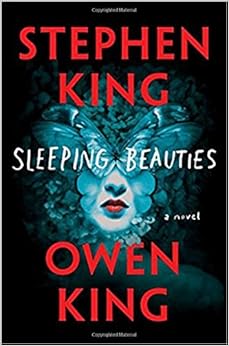
Book Review: Sleeping Beauties

Image result for sleeping beauties

Sleeping Beauties

by Stephen King and Owen King


To start with, I love Stephen King. I always have. I’ve read pretty much every one of his books, most of them more than once; I’ve been reading his work faithfully since I was 13, and my friend loaned me a copy of It to take with me to summer camp. (The Summer of Blood-Soaked Nightmares, I called that one. Subtitle, We all float down here. Sub-sub-title, Don’t ever use the bathroom in the middle of the night when you’re reading It.) I am a great admirer of his remarkable ability to create characters, to build suspense, and to squeeze a thousand details, all of which are both real and also unexpected, into the framework of a story.

So going into this one, I was already going to like it: there have only been two or three Stephen King books I haven’t liked – mostly the ones that have actual aliens invading, The Tommyknockers and Dreamcatcher. Didn’t like Hearts in Atlantis, either, which was too bad because I love the low men and the can toi from Desperation and The Regulators. Anyway, since the man has written like 75 books, the chances were good for Sleeping Beauties: something like 25 to 1.

And I liked it.

It wasn’t my favorite Stephen King book. It might be easy to chalk that up to the influence of his co-author, his son, Owen King; but to be perfectly frank, I couldn’t even tell that this was a collaboration: it just read exactly like a Stephen King book. You’ve got a supernatural being appearing within the very first few pages, and immediately diving into a bloodbath of murder and mayhem, without even the slightest explanation as to who or what they are, or why they are ripping people’s limbs off. You’ve got a large cast of characters, most of them good but flawed people; you’ve got a male lead with a troubled love life; it’s set in a dinky little town half in the wilderness and with one spectacularly creepy location – in this case a women’s prison – that plays into the story in some prominent way. You’ve got a character or two who act as a combination demogogue and Wormtongue, whispering in the ears of the populace, playing on their fears and hatreds to bring out their absolute worst traits; you’ve got a supernatural phenomenon growing more and more powerful, and more and more apparent, though never quite becoming easily explainable; and you’ve got some enormous fight scene at the end, in which at least a good third of the characters die. This one has all of that.

That is not to say Stephen King’s work is monotonous, nor that this book is just like any others of his. Neither statement is true. It’s just that he does have tendencies and preferences, and certain themes that he keeps coming back to: like the mob. Not the mafia mob, but the driven-crazy-by-fear, pitchfork-and-torch-carrying mob. Mr. King knows that mob well, and he recognizes that there is no better reflection of the evils of the 20th century and beyond – unless it is the slick-talking small-town salesman-and-politician which shows up in many of King’s works as well; though not this one.

But there are some real distinctions, as well, in all of King’s books, and in this one. The lead character, for instance, is an interesting man that King has never done before: he is a prison psychologist, married to the town sheriff – another new element for this book, because I can’t remember another woman cop; usually his cops are the bad guys, which is true of several of the cops in this book, but not the sheriff. But her husband, the prison psychologist – Clint Norcross – was a former foster kid with old anger issues from his youth, which was exceptionally violent. He was not the madman that Jack Torrance was in The Shining, and not the epic hero Everyman that, say, Stuart Redman is in The Stand, or Stuttering Bill Denbrough in It. Clint doesn’t save the day. Clint is a mostly good guy who does mostly good things. That’s all.

The real story here is not the Stephen King setting or the tropes; it is the question of sex. Gender. Men and women. Because the concept of this book, the supernatural event that throws everything into chaos, is this: all of the women in the world fall asleep, and they don’t wake up. The supernatural being who comes in and starts removing limbs in a shower of blood is a woman, perhaps Eve or Lilith or Wonder Woman or Pandora or all of the above – certainly Helen of Troy – and she represents a greater power that has decided to give women a chance at a better world, a world where they don’t have to be beaten or raped or killed by men. So whenever a woman falls asleep, she spins a mystical cocoon; and she remains in the cocoon until further notice, while her soul goes – somewhere else.

And meanwhile, without women to abuse and destroy, the men turn on each other.

That’s the basic story, and parts of it were tough to read: the stories of women suffering at the hands of men, fictionalized but by no means exaggerated by King, were often heartbreaking and enraging. I got a little frustrated with Clint Norcross, who reads sort of like the hero, but isn’t really the hero simply because he’s a man; I did like the main villain, who leads the mob into the final fight, because he was sort of the other side of the coin from Clint, which was interesting. But I certainly didn’t like the son of a bitch. One interesting thing, though: King has said that the quickest way for an author to get an  audience to dislike a character is to have the character hurt a dog. (A lesson King probably learned from Jack London). But the villain of this book? He is kind to dogs. Make of that what you will. In some ways, the hero is no specific person, and neither is the villain: the hero of this book is the better half of the human race. (Guess who the villain is.) And they’re not all perfect either, of course, because King doesn’t write perfect characters; but they’re a hell of a lot better than the men. It was a little tough reading 700 pages about why my gender sucks. But it certainly wasn’t news.

The suspense is great; the violence is savage and glorious, as always; the big fight at the end is wonderfully apocalyptic. I actually didn’t like the supernatural element as much, because I didn’t really like the resolution. Should have gone the other way. But I did like the fox. And the Tree.

This is a Stephen King book. It’s not for everybody, but if you like Stephen King, you’ll like this one. I did.