All Together Now: Split Up!

4C946FF5-5DA2-4750-A9F7-0FEC5E9E8926

World War III might be coming soon. (I mean, probably not, but who can say? Who’s to say what CheetoFace the Kleptocrat will do next?)

But the meme war has already begun.

I had a class ask about the war yesterday, and about the draft, and about everything they worry about or are confused by regarding the whole mess. I helped them as much as I could, which wasn’t enough — because I can’t stop the war. One of my students made a nice point, though: someone said that memes would be turned to propaganda for one side or the other, and another student said, “All propaganda is memes.”

That’s the truth. And the corollary is probably also true: all memes are propaganda.

I have a troubled relationship with memes. I think they’re funny a lot of the time, and I’m impressed by the creativity behind them; but I loathe when they are used as arguments. Memes are inherently reductive, and more often than not, flat out wrong. I used to make it a thing to argue with anyone who used a meme to establish a position, especially a political position, especially on a genuine controversial issue.

Like this bullshit:

Image result for gun control memes

Nothing on this meme is true. The U.S. isn’t third in murder rate; we are 77th. Washington isn’t even in the “top” 30 cities in the US with the highest murder rates, and the other three are not the cities with the highest murder rates; in 2018 the total number of homicides in the U.S. was 16,214, and if we take away the 765 murders in Chicago, the 174 in New Orleans, the 304 in Detroit, and the 160 in Washington D.C., (Admittedly, this is a hell of a lot of murders) the number drops to 14,811. My math gives us a murder rate of 4.49 per 100,000 residents; lower than the U.S. rate of 5.0 murders per 100,000 population, according to the FBI, but according to this chart, that would move us down — exactly nine spaces. To between Niger and Lithuania. I’m not even going to talk about whether those four cities do in fact have the “toughest” gun laws in the United States, though I will note that the states  with the most restrictive gun laws according to this article are Hawaii, Massachusetts, New Jersey, Connecticut, Maryland, California, Illinois, and New York. Soooo…. I guess Chicago might be in there. Right?

And is that woman really the Second Amendment? She seems too young.

Anyway, I’ve argued against a lot of memes over the years. It’s slowed down a bit: I stopped trying to argue with everyone and everything I disagree with, and the memes have increased exponentially in number, and increased (though not exponentially) in amusement.

But now we get to the current meme war.

Currently, the memes are showing up (from what I have seen, though my experience is certainly not comprehensive)  in two main forms: World War III is coming, and that’s fucked up and I’m scared, and therefore I’m going to use black humor to deflect from my fear. That looks like this:

Related image

I don’t have anything to say about those memes other than: I’m sorry. I’m sorry that my generation and the ones before mine sunk this country, and this world, into this nightmare of eternal war, and now the current generations have to pay for it. I’m sorry for all that my country has done to harm other countries. I do recognize that there have been some good outcomes of American military intervention; but those outcomes do not come anywhere close to making up for the damage we have done. Not even close.

But that’s not what I wanted to write about here. I’m a pacifist, I’m anti-war; my position on American wars is not surprising.

No: what I wanted to talk about is the other class of memes. Memes like this:

Image may contain: possible text that says 'Pay attention to who gets upset when a terrorist leader is killed. PAY CLOSE ATTENTION.'

And this:

Image may contain: 1 person, smiling

And this lil beauty:

No photo description available.

So look. People can be in favor of war with Iran. I don’t agree, but they have the right to believe that it is the right thing; there’s at least some kind of argument in support of that, so it’s not insane to think it. Iran certainly does and has done terrible things, and maybe war would stop that.

But first, we here in this country need to not act as though we have the moral high ground: we do not.

The truth is that Soleimani was not all that different from any of about five dozen current and former American politicians and bureaucrats — if anything, he was considerably more restrained about the use of force. Yes, he was involved in a lot of bloody wars — but so was every American president since 2000, and besides half the wars he fought in were started or fueled by the United States. It’s just another instance of America’s gigantic hypocrisy when it comes to war.

America is guilty of everything we accuse Iran of doing

Second, whether you are for war with Iran (or war in general) or not, your position does not in any way have any implications about your citizenship, your rights, or how you feel about this country. You can love America and hate the war; you can hate America and love the war; and everything else in between — and the one does not at all imply the other.

I’m not sure how to explain or argue for that idea other than just to state it. To state clearly that one of the foundations of this country is freedom of thought and opinion, and the freedom of speech that allows us to express those opinions in a public forum. There is not any requirement to support the government, the war effort, or even the troops; there are reasons not to support all of those institutions, and therefore someone could reasonably have that opinion, and still think the U.S. is a good country and want to be a part of it. And of course, an American can think that the U.S. is a terrible country, and hate every little thing about it — and still be an American citizen. No less of an American citizen than the most flag-kissin’, woo-hootin’, ‘Murrican-chaps-wearin’ yahoo out there. And if you don’t understand that, the problem is you, not the person who disagrees with the rising tensions in the Middle East. Not someone who sympathizes with Soleimani: because you can think a man is a bad man, and still not want him dead, or be sad that he died — and again, even if you think Iran is a fine country and Soleimani was an Iranian patriot hero, you will still be an American citizen. Because citizenship, moral or legal, is not predicated on one’s opinions. Ever. Actions can change one’s legal or moral right to citizenship; if you try to harm America, one can argue that you lose some right to call yourself an American (Though personally I would say you need to actively alter your legal status, intentionally [And thus President Obama’s killing of Anwar Al-Awlaki was murder and not an act of war] ; and to me, morality has nothing whatsoever to do with citizenship: good Americans and bad Americans are Americans alike.), but saying you want to harm America is only words, only an opinion. It would be far more harmful to America to try to strip someone’s citizenship for an opinion or a statement thereof, because that is a violation of that foundational freedom of opinion and of speech.

And refusing to support a war, a war that will most certainly harm America — and thus should be opposed by those who want to do what is right for this country — is in no way something that changes one’s right to be an American. Doesn’t even make you a bad American. Though I guess someone could have the right to flip me off for that opinion, so I shouldn’t put that last meme into my display of objectionable memes. (Though also, isn’t that desecration of the flag? Just sayin’.)

It’s bad enough that we have to deal with jingoist nationalists trying to murder people around the world. Please don’t also make me have to defend my right to inclusion in my own native country. Please understand the country you claim to love, at least as well as it’s understood by those you say don’t love it enough.

Try to understand the war as well as this guy: (The first Tweet makes the point, but go read the whole thread.)

I do love my country. I do. I hate war. And so I refuse to allow those two things to be seen as the same thing. Even by my countrymen: whose right to be wrong I will defend to my last breath. So please do the same for me.

Understand that we can disagree, but when we fight each other over our disagreements, when our different opinions make you consider me inhuman, or undeserving of inclusion in your group, then we become divided in a way that is incredibly difficult to put back together. And that division hurts us. Not the difference in our opinions: if I think stopping the war is best for America, and you think fighting the war is best for America, then we disagree, but we are not divided: we want the same thing. We stand on common ground. We can discuss it, because we can both start our arguments with, “I want what’s best for our country, just like you do, but…”

But if you think I am not deserving of the title “American” because I don’t share your opinion, then we can’t even talk: I say, “I want what’s best for America,” and you say, “No you don’t, you’re not even a real American.” Now we are arguing about me, not about our country and how to help it.

That is what benefits the enemies of this country, and what harms this country: if we cannot see each other as equals, who happen to disagree.

There’s been far too much of that lately. We should stop doing it. All of us. Right now. Especially as we consider going to war, again. Because if we have to fight each other, we can’t also fight our enemies — and please understand that, although I do not want war, and I do not want violence, I do want to fight my country’s enemies. Enemies like ignorance, and bigotry, and dehumanizing hatred. That is what I will fight. That is what I do my utmost to protect my country, and my countrymen, from.

Because I love my country, and I want what’s best for us all. All of us. That’s what matters to me.

Remember what matters most to you.

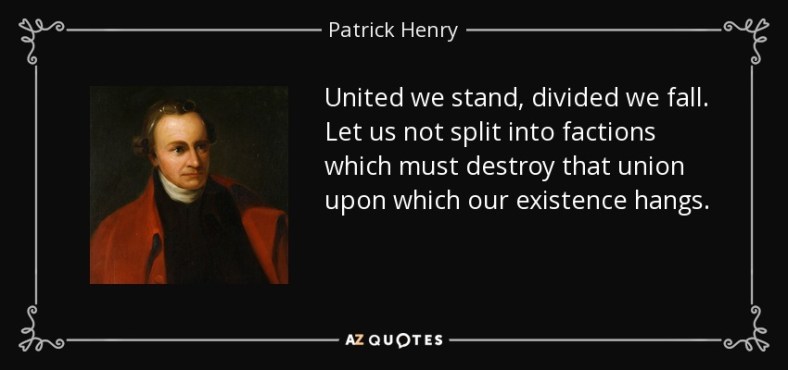
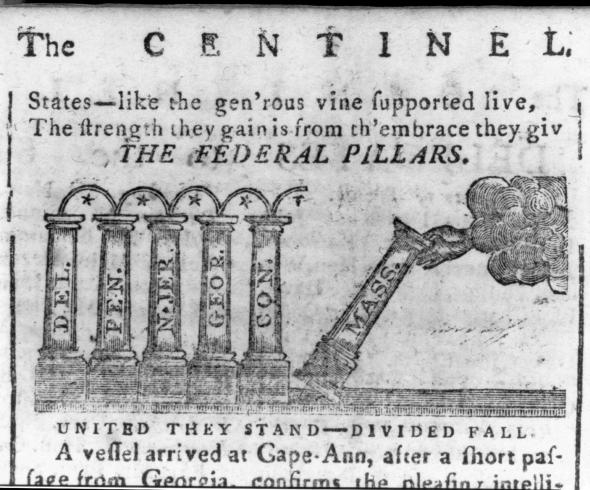
Remember: united we stand.
B7BE484E-2E55-4507-8C06-E8050CCFFFC1

Take Your Time

If I could pick the time I would live in, I would go back a hundred years, and live then. I would be born in 1874, and would now be in 1916. That would be my time.

I decided this a while ago, when I realized that all of my professional aspirations would have served me just as well in the early 20th century, if not better than now. As a schoolteacher then, I wouldn’t have been paid much better than now; but I would have gotten more respect, I think. And I could have paddled my students when they made me mad. More importantly, being a professional writer was, I think, easier then, as there were more people who read, and thus more room for people who wrote. I would be happy continuing on with teaching if I could also have my work published and purchased and read, and I think that would have been simpler back then. There’s also nothing that would have stopped me from owning a shop that sold books and coffee in 1916.

But there are other factors that keep adding to this. I’m healthy, so I don’t care much about the loss of modern medicine; I hate driving fast and I’m not a fan of flying – but I love trains and I would love to take a ship to Europe or the Caribbean. I actually like wearing suits, especially with vests, and hats; though I admit the nonexistence of air conditioning would be tough. I don’t use the telephone very much; I prefer letters. I’ve actually tried to get people to join a written correspondence with me, but nobody keeps it up.

Nobody has time.

I would like to have time.

That’s the main thing, actually. I mean, sure, I like writing on a computer. I like video games. I enjoy having reliable electric power, and recorded music, and broadcast television, and things made out of plastic. Knowing what I know about politics and history, I would not want to live through the World Wars or the Great Depression or the epidemics of influenza and typhoid and smallpox. Though I do wish that the wackiest political candidate now was Teddy Roosevelt, with all his crazy ideas about national parks and the value of exercise. I could not imagine my life without my wife, and if I were alive a century ago, she would not be; if she were, her life would be far more miserable, as a woman without equal rights, or the opportunity to get into art school and do what she loves (though knowing my wife, she would have found a way even back then to be an artist). And of course, she probably would have died in childbirth, as most women did, and I would give anything up to be sure that didn’t happen, including living today in this loud, fast, illiterate world.

But if we can step away from that reality – and since we are talking about traveling in time, we’d better – and just talk about the general shape of life, then yes, an argument could be made for the late 19th/ early 20th century over the 20th/21th. (A note: my word processing program didn’t recognize “21st” as a designation requiring the letters be turned into superscript; but “21th” was no problem. Technology.) And it’s largely because of time and speed. Here – I’ll try to keep it short, so it doesn’t take too much of your time.

I like to take my time. I like moving slowly, and being thorough. Even in the video games I enjoy, I prefer the ability to wander around and explore, the opportunity to re-do a task until I get it right, the power to decide when I go on to the next challenge; I prefer long strategy games and life simulation games because of that. I love puzzles. I like reading books more than short stories, though I enjoy reading an entire newspaper or magazine. I prefer walking or riding my bike over driving. I like the opportunity to think while I am doing other things, and so I like activities that I can pause to consider. It’s the biggest problem my students have with me as a teacher: we take forever to get through a piece of literature, because I’m constantly stopping them to talk about what we just read. They want to get through stuff, and I want to understand every little bit of it.

But that’s also what makes me a good teacher. And it’s what makes me a good writer, and a good reader/reviewer: I take my time. I think about things as I go. I don’t write a lot of drafts for most of my work, but it’s because I think about everything I’m going to say before I say it, and then while I’m writing it. I’ve been thinking about the general shape of this piece for a couple of weeks now, though it has morphed from a screed about Harambe memes, to a rant about Twitter, to this. Which I have started, stopped, and restarted once already.

I can go fast. And I can see the appeal of it. I’ve mowed a lawn using both a push mower and a motorized one, and the push mower is far more annoying; I was only able to do it because I could have music piped directly into my ears through an MP3 player or a radio with headphones. I love being able to write these pieces and then put them instantly in front of a potentially world-wide audience. I do like microwaves and hot water heaters and instant coffee machines.

But generally speaking, the appeal of going fast is to have more time for other things; and if those things are made to go fast as well, then life becomes one frantic screaming headlong tumbling rush. We turn into Alice falling down the rabbit hole: out of control, no idea which way is up or how much time is actually passing, and we never touch the sides, nor reach bottom. We get lost in the chaos, without anything to hold onto. There has to be something that we take slowly, something that we enjoy spending as much time as possible doing; then there is a reason to get through the rest of the day quickly, in order to spend more time doing that one slow thing. The problem with our modern world is that we seem to not have that slow thing, most of us: most of my students, children of their time, simply spend many many hours doing quick things: they scroll through Facebook and Twitter and Instagram; they text and chat and IM constantly; they play videogames all day long, frequently hopping between two or three different games at the same time, playing simultaneously on the computer and on the phone; they spend hours watching videos, everything from full-length movies to six-second Vines. While they are scrolling and chatting and playing games. They spend so much time doing things quickly that everything feels rushed, everything feels late, everything is done at the last minute and under high pressure. They don’t even take the time to sleep.

I would rather sleep. I would rather wait for things – give me a book, or a piece of paper and a pen, and I can wait forever. And in terms of doing things quickly to get to other things, I’d rather not do those things at all. My goal in life is not to accomplish everything when I am young so that I may have a long quiet time at the end of my life; my goal is to avoid or eliminate all of the things I don’t want to do, so I can spend all of my life doing things I want. I haven’t been able to do that yet. But I’m still working on it. I think I’m making progress. Slowly.

I’m not very good at going fast. So I do have a Twitter account, and I do Twit (If it was Tweeter, then the verb would be Tweet; but it’s Twitter. Hence.), and I enjoy it; but not enough. I only Twit once a day or so, most days, and so I don’t get a lot of followers. The same goes for this blog: I can’t find a subject worth talking about at length every day, and I don’t like posting short quick things, and so I don’t get a lot of followers. But that’s okay: because I would rather have readers. I would rather post something at length once a week or so, that a dozen or so people actually read, than post a new sentence every hour and have ten thousand people scroll past it and smile when they do. I’d rather have comments than likes. I’d rather have people come back to read more of my writing than have a post of mine go viral. Don’t get me wrong, I like the likes, and I’m grateful that there are people who think me interesting enough to actually follow on this blog or on Twitter; but if I could trade all of that for some published work, or a weekly column, even if it was in a small newspaper or magazine, I would do it in a heartbeat.

There: that’s something I would do quickly.

I had an interesting week on Twitter, which was part of the impetus for this blog. I live-Twitted several cracks about the debate between Clinton and Trump on Monday night, and that was fun. I do have some followers, mostly my students, and they get a huge kick out of me being on Twitter – which is an ego boost, I will readily admit. Though it sort of freaks me out that the response can sometimes be instantaneous: I have one student that, when she likes or retwits my twits, she does it within a minute of my posting it. It makes me nervous: because sometimes the speed of something like Twitter leads to bad judgment, or truly terrible typos and Freudian slips and malapropisms that may never be lived down. As we learned from the 3am version of Mr. Trump this past week, as well. I’ve been badly burned by my rapid writing, because the posts that nearly got me stripped of my license to teach in Oregon were done without much forethought, in the heat of the moment, and that ended up badly; too, the actual report that led to my blogs being discovered came from a Facebook post. So social media makes me nervous. I like the ability to write what I want to say, and then step back and think about whether it is a good idea to say it or not; there’s a blog post about Hillary Clinton sitting on my computer, where it will stay, because writing it got me too annoyed and I turned much too insulting. But there are no drafts for Twitter. I post things, and I have deleted things after I posted them; but if they already got retwitted, then it’s too late.

Then on Wednesday, one of my favorite authors, Christopher Moore, twitted a Trump joke: “Yo daddy so orange, they push his face in the dough to make jack-o-lantern cookies.” And I quickly twitted back “Yo daddy so orange they use his dandruff to make Tang.” I was ecstatic when I saw Mr. Moore liked and retwitted my post. For a moment I thought it might go viral, or that I’d get a whole swath of new followers; but really, the excitement was that Christopher Moore, whose writing and especially whose humor I have tremendous respect for, liked my joke. That was nice. So on Friday, when I saw one of my favorite comedians, Patton Oswalt, twitting back and forth with several other people about the Alt-Right version of Star Wars – jokes about the Sand People being illegal immigrants and Han Solo not being a real hero because he was captured, and so on – I thought of a good one, and I twitted it to Mr. Oswalt. Hoping for the same response.

But I didn’t get it, because, it turns out, someone else had twitted the same joke (Darth Vader: “You know, if Leia wasn’t my daughter, I’d probably date her”) ten minutes before I did. That person got hundreds of likes and retwits; I got none.

That’s too fast. In ten minutes, my joke went from funny and appreciated, to derivative and ignored. In other words, to make that joke and be successful at it, I would have had to be ten minutes faster – most easily accomplished by obsessively following Twitter feeds and looking at trends and hashtags. But that is not something I want to do. I don’t want to spend hours jumping from thought to thought to thought, cudgeling my brain into coming up with something funny or interesting, in less than 140 characters (Because you have to leave room for the hashtag!), faster than other people can come up with it. If I was already famous then I would have an instant audience and I could twit things at my leisure that they might appreciate; but then I run the risk of twitting idiocy and having all of my followers instantly know about it and spread it all over the twitterverse. Like Mr. Trump. Or Jaden Smith.

I would rather take my time. I would rather think of something original to say, or create a new perspective on an old problem, than follow trends. Particularly because: had I been the one who came up with the joke ten minutes earlier, and gotten the likes and retwits, I would have been forgotten ten minutes later, when the next person thought of the next funny joke. I don’t want to be that fast, and I don’t want to be forgotten that soon.

I think that’s the impetus behind the Harambe memes. Now, to be clear: while some memes are funny, I generally can’t stand them. They represent the lowest common denominator, which is why they spread so widely and catch on so quickly. Sometimes they’re genuinely funny – like some twits in the twitterverse – and frequently they are cute, because cute is one of the lowest common denominators; but they are always the worst form of the argument, when they are about serious topics, and they are always reductive and simplistic and generally obnoxious to one group or another. My favorite use of memes is in messing with my students: because they don’t expect me, their middle-aged English teacher, to use memes, so when I do, there’s a disconnect that I find more amusing than the meme. But for most meme-people, the humor is unpredictable: it’s impossible to say which meme will catch on and which will not. There are people whose lives online revolve around making memes; some of them are good at following and capitalizing on trends; some are good at making trends; all of them are stuck in an endless cycle of rapidity, catching onto jokes that rise and fall in instants, and the fame that comes with originating the joke following the same arc. A year or two ago it was a frog on a unicycle with the tagline, “Here comes dat boi – Oh shit waddup!”

Then it was another frog – no reason in the meme world – named Pepe, with a depressed look in his half-lidded eyes and his downward curving lips (He has had a recent resurgence when it came to light that Pepe is now popular with those who make vile racist memes, because they dress Pepe up as the minority they wish to denigrate. Yup. Funny stuff.).

 We have also gone through a caveman Spongebob, several images from a video of Shia Lebeouf, far too much of the wrestler John Cena, and recently a strange obsession with Rick Harrison, the star of Pawn Stars.

At one point it was Harambe. The gorilla in the Cleveland zoo who grabbed and held a child who got into his enclosure, and was shot and killed by zookeepers trying to protect the boy. It was a sad story that rapidly caught the attention of the country, particularly online, because it hit so many buttons: children’s safety and violence and the treatment of animals.

Harambe memes caught on partly because the biggest audience for memes is teenagers, and teenagers revel in mocking other people who take things too seriously, which is how the outcry over Harambe was seen – people weren’t concerned with the Syrian refugee crisis, or about the murders of African-Americans committed by police officers, they were concerned with the death of one gorilla – and partly because one meme-creator had an idea: a stupid and crude and absurd idea; and so of course, that’s the one that caught on. The idea? Men flashing their genitals as a tribute to the gorilla. The tagline was “Dicks Out For Harambe.”

Yeah: it’s kind of funny. Put in the right absurd context – a job interview, a political appearance, a Christmas special – the absurd notion is amusing. Because it touches on a taboo that people often find absurd anyway, the issue of public nudity, and also touches on the absurd obsession that most men have with their own genitalia, it got even more traction. And it had its usual run as the most popular meme of the moment. I’m sure whatever meme-maker came up with the line had a sharp uptick in followers or likes or reposts, and I’m sure he or she (Probably he) was gratified and possibly enriched by the increase in ad revenue. The popularity has ended now – thankfully – and I rarely see “dicks out” jokes any more. There was a brief resurgence when another great ape, the gorilla Bantu, died owing to a mistake in a medical procedure, but the slogan “Balls Out for Bantu” was apparently too derivative even for meme-fans, and it never caught on the same way. One of my former students twitted a picture to me, of a poster that some (probably apocryphal) English teacher had on a classroom wall that showed a gorilla’s face and the slogan “Books out for Harambe,” which he said I should put on my wall, but when I told him that there wasn’t enough No in the world (A dick joke AND a meme joke? Oh, sign me up!), another of my students took my side: evidence that the meme is largely dead. When even teenagers don’t think you’re funny any more, there’s no place left for you in the meme world.

But I still see Harambe memes. Now they have changed. Now they are about the gorilla being remembered; now the absurdity is in someone crying over the idea that Harambe’s death will be forgotten. Again, mocking people for taking things too seriously, or at least the wrong things too seriously – but now it is without the lowest common denominator. No dicks in this joke. So this one is less absurd, which makes me question why it is so popular.

So I wonder: how much do people who make memes, who spread memes, worry about the thought of being forgotten? How much of this latest spurt of temporary fame is about this genuine fear? In a world where the attention span covers approximately six seconds or so, where this week’s star is the “Damn, Daniel” guy and next week’s star is Rick Harrison and the “Damn, Daniel” guy is gone from people’s memories forever – what is the point of trying to reach the top? The second you do, you fall right back off, and you probably never make it back up again.

That’s exactly what I’m talking about. (And I realize now that I have gone on longer than I intended; I would apologize, but I’m never actually sorry for using a lot of words) When life is about going as fast as possible, then life, too, goes as fast as possible – which is really damn fast. And that may be exciting, but it also gets us to the end before we know it. And whatever that end is, whether it is obscurity or nothingness or even eternal paradise: it won’t be exciting, and it won’t be fast.

I would rather write than trend. I would rather be read than laughed at. I would rather read and consider than get through things. I would like to take my time.