The Trump Doctrine: Bullshit, and Fling Shit

Okay. Let’s talk. Honestly. Let’s get down to brass tacks.

The truth.

I’m trying to get my Freshman English students to do that. To talk honestly. They don’t – ever – but I think it’s mostly because they don’t know how.

See, what we have done in education over the last ten or twenty years is reward lying. Reward cheating. To a certain extent that is not new: I lied constantly when I was a teenager, especially to my teachers and my parents, and I would guess that most teenagers had similar experiences. And for the same reason: schools reward lying and cheating. For as long as schools have been product-focused, rather than process-focused, we have given students an opportunity to achieve all the rewards of school (All the apparent ones, at least) without doing the difficult parts. My grade in my classes was based on the work I turned in: which means that if I can find a way to cheat on those assignments, then I get the exact same grade I would if I did the work myself, the hard way. And sure, we also try to stop students from choosing to cheat, through threats of dire consequences if they get caught; but that “if” in what I just wrote is a humming, glowing, throbbing beacon of glorious light. Because teenagers are dumb: we think that we can get away with anything, even while we are actively not getting away with it. The very first time I caught students cheating – and they were cheating on a small, simple, easy assignment, a set of study questions that came after a reading, which they did with the reading in hand, in class – I realized while I was reading their responses that three young women, all friends, had given identical, word-for-word answers. They had copied. And the giveaway was they had used the word “oasis” completely out of context – something like “and the oasis of the story was the courage the characters had.” One of them – the one who had done the work and given it to the other two, the source student – had written “basis,” in cursive, and the other two had misread it. So I gave them all zeroes for copying, two for doing it and one for letting them, and when I handed the work back, I told them they had gotten zeroes. But instead of confessing, they argued with me. Vociferously. Angrily. Denying that they had ever done such a thing. I hadn’t handed back their papers, choosing to keep them as evidence, and just informed them of their grades; when they demanded I show them the evidence, I realized I had left the papers in my other classroom (Like many first-year teachers, I got the crappiest job assignment, so I floated between three different classrooms and taught two different remedial classes), and they insisted on coming with me to see the evidence; they yelled at me the whole way across campus, about how dare I accuse them, and they would never do that, and it was not fair, and so on. We got to my other classroom, I showed them their papers, pointed at where they wrote “oasis” and said, “Explain that.”

And they actually tried. They tried to come up with some bullshit on the spot about how “oasis” was meant to represent the safe space that had been created in the story by the characters… the girl who was talking trailed off in the middle of the sentence. I just shook my head and said, “No.” And they left. Grumbling. Still denying that they had done what they couldn’t actually prove that they hadn’t done – because they had done it.

But what happened? The student who had done the work had her mother complain to the administration, and I had a meeting with one of the vice principals and this mother. Who told us that her daughter was under a lot of stress, and after all, she had done the work, and then had made the poor choice to let her friends copy because they all just wanted so badly to do well. That’s not really bad, is it?? So, as per the decision my administrator made, that girl got the grade. The other two had a chance to make up the work and get a grade. They got a warning.

A few days later, one of the boys in the class told me that he had actually let the first girl, the source girl – the one who got the grade – copy his work.

So. This is the structure we have built for students. Cheating is overlooked; copying is standard; getting “help” with the answers is encouraged. Because the product is what matters, not the process by which you create that product. (It’s the perfect conceptual framework for a life cut short by working yourself to death in order to get the company more profit. But surely that’s just a coincidence…) And onto that structure we have added the internet, with all of its access to perfect information and perfect writing; and now AI, the same perfect information and perfect writing, but now both customizable – and untraceable. And we still grade students on product, not process. We still assign homework, so they can complete the assignments in privacy, without supervision, with full access to resources like AI and Google. We use the same assignments year after year, so students can pass on work they did to the next year’s class. And we tell them that what really matters in school is getting good grades, so you can get into good college, so you can have a good job and make money. Oh, we tell them they need to learn, they need to master the skills; but that’s just talking. Every single reward in school is derived directly from product. (With the exceptions of PE, the arts [which sometimes reward product, but not always – my wife’s Life Drawing class is graded only on process, her AP Art class graded largely on process… though in that last case that’s because if she graded their art work as she would grade a college student’s work, they’d all fail. She has high standards. And we don’t work at an art school.] and a few classes like foreign language, where students are graded on their conversation and pronunciation and so on: performance metrics.) And almost every product can be completed with some kind of corrupting assistance, whether it is copying from a friend, getting help from a family member, or using the online resources they have available. Even just using the excuse of “Oh no, my paper didn’t upload!” to get extra time to complete it and turn it in, with permission, a second time. Because after all, I can’t blame a student if the WiFi went down, right?

Right.

So I’m trying to get my freshmen to think about lying, and whether it is good or bad. They all, without exception, think it is good in the right circumstances, which are always two: to spare someone’s feelings – the classic “Do I look good in this outfit?” conundrum – and to save yourself from getting in trouble. They do usually offer a third circumstance: when someone threatens to kill you if you don’t tell them something, like where you hid the money, then it is acceptable to lie to save your life. Thank you for including that hypothetical, children; surely an important one. But it’s that middle one, the lying-to-get-out-of-trouble, that I want them to think about. Actually, the first one, too, because I gave them the counterargument: if you tell someone they look great when they look terrible, then you’re telling that person to walk around proudly, while they look terrible, and don’t know it. They didn’t have an answer to that. They’re not ready to admit what I think is the answer, that honesty really is the best policy, and the key to getting along is knowing how to speak truth without being harsh and insulting – you don’t have to say “Damn, you look terrible!” when someone looks terrible in an outfit, but you should not lie and say they look perfect when they look terrible – and the key to not getting in trouble is… not doing things you shouldn’t do. I don’t think they’ll all come over to my side, but I want them to think about it, because they lie to me constantly, and I’m sick of it.

But then, last night, I watched our President stand up in front of Congress, his words broadcast to the whole world, and tell lie after lie after lie. After lie. After lie. For ninety minutes. And the whole time, without exception, the Republican majority clapped and cheered for his lies. The two grinning dolts behind him, Mike Johnson and J.D. Vance, grinned and laughed – because Donald Trump didn’t just lie, he was also needlessly, gleefully cruel, and appallingly stupid, again and again and again, and clearly that stupid cruelty was even more popular than his lies. Because the cruelty won’t even get the apathetic next day fact-checking that his bullshit has gotten today; the cruelty we just let go, maybe frowning a little at how our President doesn’t show the same decorum we enjoyed so much from President Obama (When he wasn’t bombing people in the Middle East or deporting families from the US), who was always polite and well-spoken and never overtly cruel and bullying like this guy, with his goddamn shit-eating grin when he tells some joke about innocent people he’s going to harm, because it will save money, or because it will win him points with his equally cruel, stupid, bullying base. But he won’t have to suffer any consequences for his lies or his stupidity or his cruelty; he did all the same things last time, and we elected him again. Because eggs were too expensive.

(Please understand – and know that I am in the middle of writing a piece about that, about grocery prices and inflation and Trump’s broken promises regarding the issue, but I had to address this absolute horror show of a “speech” – that I recognize the genuine damage and stress that inflation and high prices inflict on those of us who are on the edge of not having enough. I am a high school teacher: I can’t afford eggs. I am also a partial vegetarian: eggs are one of my primary sources of protein. So I get it. I only mock the idea of egg prices as a reason to vote for Trump because even if we do see that as a valid reason to elect a president – and I will argue all day that presidents just don’t have that much control over prices in our system – it ignores SO MANY other things about Donald Trump. I get the need for relief from the cost of living: but that’s not the only thing that matters. That’s why I say it. If you disagree with me about the right priorities to focus on for a vote, then so be it. We’ll discuss this more another time.)

For now, let’s start with talking about what Donald Trump lied about last night in his address. This is easy to find, of course – here’s a good source FactChecking Trump’s Address to Congress – FactCheck.org, that gives a clear list followed by more careful analysis – but while they do include some of the things that sometimes slip past fact checkers, like that Trump ignored the influence of the Covid-19 pandemic on creating the economic situation that the Biden administration dealt with, they focused on the specific lies Trump told in the speech: and that means they don’t talk about the lies he has used as the justifications for his actions thus far, which he then discussed in the speech. And that’s where I want to focus.

But let me also list out, if you are not interested in following the link – if you believe, as many people do, that fact checkers are unreliable, that only independent media sources are believable, which means you have not thought a whole heck of a lot about why “independent” is more important than “part of an organization whose business model relies on truthful reporting rather than garnering attention” – some of the more egregious falsehoods that Trump spouted.

First, the savings he and Elon Musk have found through the “work” of “DOGE.” They have not found hundreds of billions in waste: they have “saved” about $20 billion, claimed $105 billion, and proved that exactly none of it was savings from eliminating fraud. It’s all “savings” from firing employees. Which, sure, that saves money – but it also eliminates work and productivity. If you have three people working for you and you fire one, you save one-third of your payroll costs – AND YOU LOSE ONE-THIRD OF YOUR PRODUCTION. Seems like this would be already known by two guys who run such huge and successful companies, but maybe not. They do both seem to believe that they personally do the work which is actually done by their employees, so, maybe they’re unclear on the concept.

Or maybe the only fraud here is the one being perpetrated by Trump and Musk and DOGE.

Kabosu, Dog Behind Famous 'Doge' Meme, Dead at 18

Next: Social Security. Trump went on and on and on about the MILLIONS of people who Social Security “believes” are over a hundred years old, including some that he said were older than the United States. So let’s be clear on this: when we say that “Social Security” “believes” these people are impossibly old… who are we talking about? Is Social Security the name of the person in charge of the organization? Is it the hive mind of all the bureaucrats who work there? Is it the AI who runs the database? Is Social Security here in the room with us now?

No: social security is the much-beloved system whereby we ensure that senior citizens don’t have to starve to death in shantytowns after they stop working. And it is also the biggest “entitlement” in the Federal budget: and therefore it is the one the Republicans most want to cut. But since so many of their voters are senior citizens, they can’t cut it without facing the wrath of their voters: so they try to turn their voters against social security. By talking about it like it’s the Avatar of bureaucrats, and that it’s stupid enough to “believe” that there are impossibly ancient people still getting social security checks.

Here’s the truth: the social security database is enormous. Tens of millions of people receive checks every month; hundreds of millions of people make payments into the fund for those checks every month. When people pass away, there is a form that one’s survivors are supposed to fill out and file with SS to let them know that someone on the roll has passed and no longer need checks. But: people don’t consider that to be an important job, especially while grieving, so they don’t always do it. Also lots of people don’t have loved ones to file the form. I would guess millions of people, over the years. The ancient people in the database are not people that Social Security “believes” are alive, they are people who were on the rolls as alive, and who have never been confirmed to be dead. See the difference?

Trump doesn’t. Well: he does, he just lied about it, and pretended these two different things are the same. They’re not. If you want to see this as a moment when Trump is monumentally stupid instead of a liar, I’m fine with that. And yes, it’s monumentally stupid: if someone told me there were people on the SS database who were over 120 years old, I would assume there was a mistake in the data, not that Social Security “believed” there were Americans living over 120 years old. Especially not the millions whom Trump gobbled about.

And while thousands of those people – thousands out of the millions, which is fractions of a percentage point – may still get checks, and some of them get checks because living people are using the name of a dead person to collect social security (Frank Gallagher does this with his dead mother in Shameless.), which is fraud, the rest of the millions of unconfirmed-dead people on the roll are just – on the roll. In the database. They don’t get checks. Money is not wasted on them, and it would not be saved by cleaning up the database. Of course cleaning up the database would be a good idea, but how many man-hours would it take to confirm that millions of people are actually dead? And if you decide to remove everyone who is over, say, 100 years old, there will be at least 80,000 people who will want to have a word with you.

Centenarian, older adult population change by state | Northwell Health

Several of Trump’s other lies were of a less serious nature: claiming that 38,000 Americans were killed during the construction of the Panama Canal (5,600 workers died during construction, mostly from diseases like malaria and yellow fever. Not all of them were American. Special Wonders of the Canal – PMC), that Biden inherited a great economy and Trump inherited a terrible one twice, that Europe has given less than the US to the Ukraine and that the US has given $350 billion – these are just bad facts; they’re definitely lies, but they are small, because none of them change people’s minds, and none of them serve as the primary justification for Trump’s bad policies: he wants to take us to war over the Canal because China has an influence there, not because some number of Americans died during construction; he constantly lies about his accomplishments and, especially last night, about Biden’s failures, but that doesn’t change anyone’s opinion about either man; Trump is going to give as much of the Ukraine to Russia as he can, because he wants to be allies with Putin, not because of how much Ukraine costs to defend. And he doesn’t want to be allies with Putin to save money, it is to make himself into a strongman, in appearance if not in fact. (Though I have to note here that when I said last night that Trump wanted to be Putin, my wife’s immediate response was “Trump will never look that good with his shirt off.” Savage, she is. But: she ain’t lyin’.)

But the lies I really want to get to with Trump’s speech are the ones about people who are disenfranchised in this country. Such as people who are described, by that shit-flinging gibbon and his handlers, as representatives of DEI: like General C.Q. Brown, whom Trump fired from his position as head of the Joint Chiefs of Staff, and whose fucking resume looks like this:

EDUCATION
1984 Bachelor of Science, Civil Engineering, Texas Tech University, Lubbock
1991 U.S. Air Force Fighter Weapons School, Nellis Air Force Base, Nev.
1992 Squadron Officer School, Maxwell AFB, Ala.
1994 Master of Aeronautical Science, Embry-Riddle Aeronautical University, Daytona Beach, Fla.
1997 Distinguished graduate, Air Command and Staff College, Maxwell AFB, Ala.
2000 Air War College, Maxwell AFB, Ala.
2004 National Defense Fellow, Institute for Defense Analyses, Alexandria, Va.
2008 Air Force Senior Leadership Course, Center for Creative Leadership, Greensboro, N.C.
2012 Joint Force Air Component Commander Course, Maxwell AFB, Ala.
2014 Joint Flag Officer Warfighting Course, Maxwell AFB, Ala.
2015 Pinnacle Course, National Defense University, Fort Lesley J. McNair, Washington, D.C.
2017 Leadership at the Peak, Center for Creative Leadership, Colorado Springs, Colo.

ASSIGNMENTS
1. May 1985 – April 1986, Student, undergraduate Pilot training, 82nd Student Squadron, Williams Air Force Base, Ariz.
2. May 1986 – July 1986, Student, lead-in fighter training, 434th Tactical Fighter Training Squadron, Holloman AFB, N.M.
3. August 1986 – March 1987, Student, F-16 training, 62nd Tactical Fighter Training Squadron, MacDill AFB, Fla.
4. April 1987 – October 1988, F-16 Pilot, 35th Tactical Fighter Squadron, Kunsan Air Base, South Korea
5. November 1988 – April 1991, F-16 Instructor Pilot, wing electronic combat officer, and wing standardization and evaluation flight examiner, 307th and 308th Tactical Fighter Squadrons, Homestead AFB, Fla.
6. April 1991 – August 1991, Student, U.S. Air Force Fighter Weapons Instructor Course, Nellis AFB, Nev.
7. August 1991 – August 1992, F-16 Squadron Weapons Officer and Flight Commander, 307th Fighter Squadron, Homestead AFB, Fla.
8. September 1992 – October 1994, Weapons School Instructor, and standardization and evaluation flight examiner, F-16 Division, U.S. Air Force Weapons School, Nellis AFB, Nev.
9. October 1994 – July 1996, Aide-de-Camp to the Chief of Staff, Headquarters U.S. Air Force, Arlington, Va.
10. August 1996 – June 1997, Student, Air Command and Staff College, Maxwell AFB, Ala.
11. June 1997 – September 1997, Student, Armed Forces Staff College, National Defense University, Norfolk, Va.
12. September 1997 – November 1999, Air Operations Officer, Current Operations Division, Operations Directorate, U.S. Central Command, MacDill AFB, Fla.
13. November 1999 – June 2003, F-16CJ Instructor Pilot and assistant operations officer, 79th Fighter Squadron; Weapons and Training Flight Commander, 20th Operations Support Squadron; Operations Officer, 55th Fighter Squadron; and Commander, 78th Fighter Squadron, Shaw AFB, S.C.
14. July 2003 – June 2004, National Defense Fellow, Institute for Defense Analyses, Alexandria, Va.
15. June 2004 – June 2005, Deputy Chief, Program Integration Division, Directorate of Programs, Headquarters U.S. Air Force, Arlington, Va.
16. July 2005 – May 2007, Commandant, U.S. Air Force Weapons School, 57th Wing, Nellis AFB, Nev.
17. May 2007 – May 2008, Commander, 8th Fighter Wing, Kunsan AB, South Korea
18. June 2008 – May 2009, Director, Secretary of the Air Force and Chief of Staff Executive Action Group, Headquarters U.S. Air Force, Arlington, Va.
19. June 2009 – April 2011, Commander, 31st Fighter Wing, Aviano AB, Italy
20. May 2011 – March 2013, Deputy Director, Operations Directorate, U.S. Central Command, MacDill AFB, Fla.
21. April 2013 – February 2014, Deputy Commander, U.S. Air Forces Central Command; Deputy, Combined Force Air Component Commander, U.S. Central Command, Southwest Asia
22. March 2014 – June 2015, Director, Operations, Strategic Deterrence, and Nuclear Integration, Headquarters U.S. Air Forces in Europe – Air Forces Africa, Ramstein AB, Germany
23. June 2015 – July 2016, Commander, U.S. Air Forces Central Command, Air Combat Command, Southwest Asia
24. July 2016 – July 2018, Deputy Commander, U.S. Central Command, MacDill AFB, Fla.
25. July 2018 – July 2020, Commander, Pacific Air Forces; Air Component Commander for U.S. Indo-Pacific Command; and Executive Director, Pacific Air Combat Operations Staff, Joint Base Pearl Harbor-Hickam, Hawaii
26. August 2020 – September 2023, Chief of Staff of the U.S. Air Force, the Pentagon, Arlington, Va.
27. October 2023 – present, Chairman of the Joint Chiefs of Staff

SUMMARY OF JOINT ASSIGNMENTS
1. September 1997 – November 1999, Air Operations Officer, Current Operations Division, Operations Directorate, U.S. Central Command, MacDill AFB, Fla., as a major
2. May 2011 – March 2013, Deputy Director, Operations Directorate, U.S. Central Command, MacDill AFB, Fla., as a brigadier general
3. July 2016 – July 2018, Deputy Commander, U.S. Central Command, MacDill AFB, Fla., as a lieutenant general
4. October 2023 – present, Chairman of the Joint Chiefs of Staff

FLIGHT INFORMATION
Rating: command pilot
Flight hours: more than 3,100 including 130 combat hours
Aircraft flown: F-16A/B/C/D and 20 additional fixed and rotary-wing aircraft

MAJOR AWARDS AND DECORATIONS
Defense Distinguished Service Medal with two oak leaf clusters
Distinguished Service Medal
Defense Superior Service Medal
Legion of Merit with three oak leaf clusters
Bronze Star Medal
Defense Meritorious Service Medal
Meritorious Service Medal with two oak leaf clusters
Aerial Achievement Medal
Joint Service Commendation Medal
Air and Space Commendation Medal with two oak leaf clusters
Combat Readiness Medal
National Defense Service Medal with bronze star
Armed Forces Expeditionary Medal
Global War on Terrorism Expeditionary Medal
Global War on Terrorism Service Medal
Korea Defense Service Medal
Nuclear Deterrence Operations Service Medal
NATO Medal
Republic of Korea Order of National Security Merit (Tongil Medal)
Republic of Singapore Pingat Jasa Gemilang (Tentera) Meritorious Service Medal
Republic of Korea Order of National Security Merit (Samil Medal)
Brazilian Order of Aeronautical Merit (Degree of Grand Officer)

PUBLICATIONS
“Developing Doctrine for the Future Joint Force: Creating Synergy and Minimizing Seams,” Air University Press, September 2005 “No Longer the Outlier: Updating the Air Component Structure” Air University Press, Spring 2016

Yeah. That guy was a DEI hire.

People who are endangered by the anti-vaccine movement that Trump supports and promoted last night – which is all of us, but is especially those who can’t work in close proximity to others, for any of a thousand reasons (permanent disability, mental illness, inability to travel, along with being immunocompromised, again for a thousand potential reasons), but who do work, and who who now have to return to work because Trump is a cruel idiot and a liar who claims that “not coming IN to work” is evidence of laziness or fraud. It is not clear to me whether the real goal here is just to fire valuable workers for a reason that Trump’s base can stand behind, so that Trump and Musk can channel the money “saved” from payroll into tax breaks for billionaires, or if it is to undermine the very idea that a person who cannot come into an office can nonetheless, in this day of complete interconnectedness online, still be a productive worker because that idea is, I dunno, woke or some shit. Either way, it is a stupid lie that is cruel to those who need the accommodation of remote work – and also cruel to those who just like it better, because what the hell is wrong with working from home if you can do the work?

Trump is going after people with neurodivergence, in addition to attacking those who need to live in a vaccinated world, by lying about the history of autism diagnoses, in conjunction with his comments about naming the anti-vaxxer Robert F. Kennedy Jr. to a post for which he is not only unqualified, but entirely unfit. It is not true that “not long ago” 1 in 10,000 children had autism; it is true that 50 YEARS AGO we did not understand autism nor how to diagnose the entire spectrum of conditions associated with the term. It is also emphatically not true that autism is a disability that would justify removing or changing the vaccine schedule, as Trump was implying. The entire argument that parents would rather risk their children dying of measles than “becoming” autistic because of the MMR vaccine is disgusting, along with being a thoroughly debunked and incredible lie. Even where autism does present as disabling, ask a parent of an autistic child whether they would rather have their child living or dead – and then duck, before they quite rightly punch you in the face. Though I’d be really happy if all of those theoretical punches landed on Elon Musk, and also on whoever suggested that Elon’s Nazi salute was a sign of Musk’s own autism. Remember: “Always Punch Nazis” includes punching those who argue that being autistic explains away Nazism.

But I will admit that, despite all of the terrible and cruel and stupid things that Trump said in that speech, the lies that actually bothered me personally the most were the transphobic ones. Maybe because they got the loudest cheers. Maybe because he seemed proudest of his anti-trans policies like the declaration that there are only two genders in the U.S. – which is both a lie, and a cruel and stupid statement. Or his executive order keeping men from playing women’s sports, which, HOLY GOD THAT I DON’T EVEN BELIEVE IN CAN WE STOP? Can we just stop? Can we just agree to never again allow anyone to repeat the absolute and utter nonsense and poppycock that there are “men” playing “women’s” sports? There are women playing women’s sports. Nothing more. And 99.99% of those women are those who were assigned female at birth. And also, this is fucking sports we are talking about. Not something important. Sports are entertainment. They are inconsequential. They don’t matter. They matter plenty to the people who play them, both professionally and passionately, and therefore they are worth consideration for the sake of those people; but the idea that a national policy, as a focus of what is essentially a state of the union address, would make such a deal of opposing the existence of trans people, particularly in relation to sport? What the hell are we doing here?

The answer is simple: we, and by “we” I mean that orange-tinted shit-flinging gibbon and his flying monkeys and most definitely not me, are attacking and belittling and trying to destroy and torment and kill anyone whose destruction would make the stupid, cruel base of the Republican party feel stronger and meaner, which is how they want to feel. Trans people are not the danger, regardless of what nonsense some goddamn volleyball player claims (Want to know how many volleyball players get hurt every year? About 35,000. Volleyball Related Injuries in Adolescents: A Decade of Data | Published in Orthopedic Reviews How many of those injuries were caused by trans athletes? Conversely, how many trans athletes suffer injury and abuse and death because of the way they are objectified and demonized and ostracized and assaulted in every way by the entire Republican establishment of this country? I bet it’s more than the one injury Trump claimed was caused by a trans athlete.)

I don’t know why this one upsets me more than the other loathsome false accusations and attacks that Trump launched at everyone who is morally and ethically and humanistically better than he is himself. But it does. I suppose it doesn’t matter why it bothers me, any more than it matters why the base and the Republicans and the shit-flinging gibbon himself chose trans people to try to destroy: it’s just that they found someone they can harm, and I have found someone – millions of someones – whom I want to help protect from that harm, in whatever way I can assist. I don’t really need to justify which fight I choose to take on: I just need to be aware of who my real target is.

It’s not just Trump. Just like Adolf Hitler, who was a uniquely effective figurehead for the Nazi party and the apparatus that rose during the Third Reich, but neither the brains behind that apparatus nor the one in control of it, Trump himself is not the cause of the problem, he is simply the most visible pimple on the very wide flabby ass of the MAGA movement. It is possible that, after Trump is gone (Hopefully before the end of his term, though personally I’m hoping for impeachment and jail rather than the death that many others think he deserves), JD Vance or one of the other flying monkeys will take over as the chief shit-flinger; and that might even be worse. It’s not even the billionaires who back Trump and who are taking advantage of the distraction he is because of the shit he flings – shit that is flung like no one has ever seen before – because the wealthy have always been there, trying to control things, trying to take advantage of every opportunity to have wealth and power, without being in the spotlight themselves. I know it’s not Elon Musk: there’s a reason why the real power brokers don’t ever do what he is doing, and put themselves out front. It’s because when people get mad enough to pick up the torches and pitchforks – and the more effective Musk is, the sooner that will happen, as it always does when inequality gets too extreme – they look for an obvious target for their anger. We all know who Elon Musk is. Who the hell is Rebekah Mercer?

(Is it wrong of me to point out that, were she to become known to those with torches and pitchforks — or, let’s say, were she to get targeted by the next Luigi Mangione — nobody would miss the ENORMOUS target that is her head?)
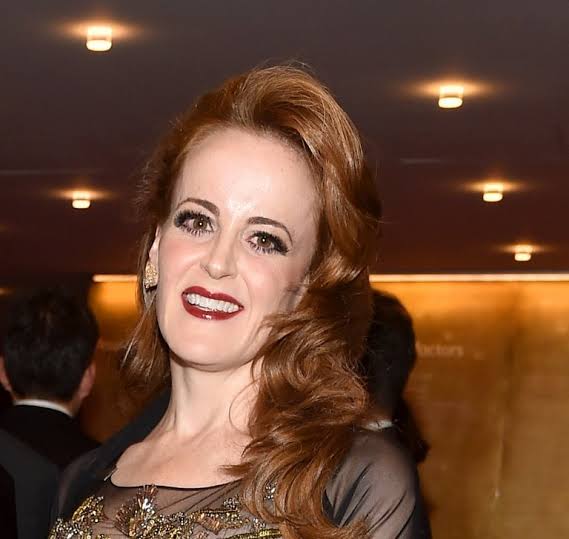
Natural History Museum Curators Revolt Against Trustee Rebekah Mercer for  Funding Climate Change Deniers | Artnet News
Now we know what Megamind’s mom looked like

What I oppose is what Trump represents and distills. It is stupidity, chosen because it is easier than learning, and more comfortable than truth – because stupidity lies to us, even as we lie to the stupid. It is cruelty, because cruelty, also for the sake of ease and comfort, brings the displaced self-hatred of the stupid crashing down on the innocent; and not only do we then have that many more victims, some of whom will lash out at other disempowered people, but we also have those among the stupid who now cannot face enlightenment because then they would have to admit what they did to people who never deserved anything but the kindness and empathy due every one of our fellow human beings, and so those angry, cruel, stupid people will be even more incapable of changing what they are doing, no matter what truth is put before them and no matter what pleas for mercy they hear and ignore.

The worse we act, the less likely we are to stop acting badly. That’s why Donald Trump is the way he is: because he’s always been this way, he’s just been getting worse, for his entire life. And he’s an old, evil, man, now.

And everything he says is bullshit.

Justice Is Served

Opinion | Trump guilty on all counts: Breaking down the media coverage of  the historic trial | Editor and Publisher
My favorite bit is that “Trump appeared to look blankly forward as jurors exited.”

Donald Trump was found guilty on 34 felony counts. Class E felonies, sure — but that’s still 34 more felonies than I’ve ever been convicted of, 34 more than anyone in my family has been convicted of, 34 more than Joe Biden has been convicted of.

So that’s that, right? Surely no one would want to vote for a convicted felon.

Except of course they will.

Donald Trump poll: Half of Americans say Trump guilty verdict was correct,  should end 2024 election bid, ABC News/Ipsos poll shows - ABC7 Chicago
Notice how it isn’t “100% Trump should end campaign.” Which 50% of the population do you think said that he should end it?
Guilty or not guilty, Trump verdict won ...
Notice this number is higher than 50%: which means a good number of people who would vote for him still will even though he has been found guilty.
WANTED OUTLAW PRESIDENT MUGSHOT T-Shirt
I really wish this said “Rootin Tootin” somewhere

This one is amazing. Though I wish I could make out those tattoos. Think there’s a swastika in there somewhere?

I just think he should have gone a little lighter on those eye-bags.

And speaking of going a little lighter… ain’t nobody got hair that yellow.

My Outlaw President #trump #biden #outlaw #badass #MAGA | TikTok

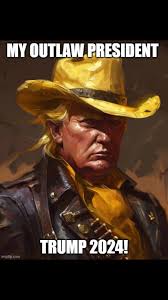
I just want to know: who looks at these images and thinks, “Yes. That is a perfect depiction of how I see this man. This captures my feelings exactly.” I don’t doubt a lot of the images are intended mainly to troll the left, but also, there is literally no sense of irony in MAGA world, and since many of these kinds of images get shared mainly or exclusively in MAGA world, there are actually people there who are encouraged by them. Who nod and think, “Hell yeah!” Seriously.

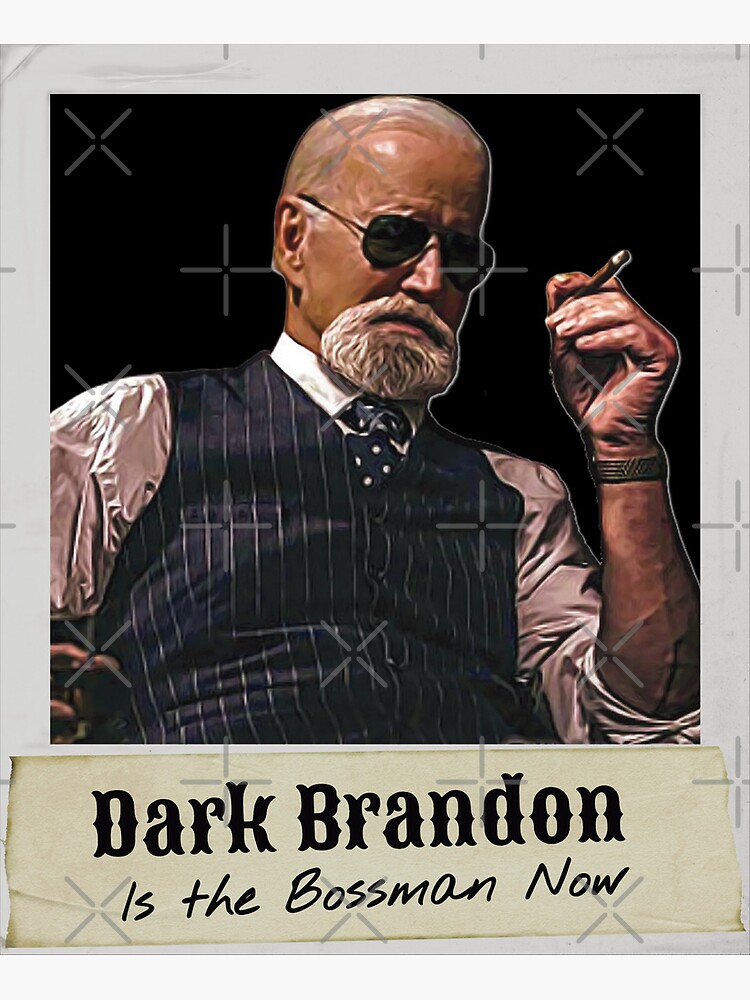
I can’t imagine feeling that on the other side, not really. I mean, this stuff is insane:

(I do appreciate the strong Dr. Manhattan vibes in that image. Even more than the AR-15 Iron Throne.)

Dark Brandon" Canvas Print for Sale by hypershirts | Redbubble
How does that even look like Biden??

I actually like this one, though.

Because they didn’t try to change his appearance. At all. It’s like an old man spontaneously combusting and really confused about it. Hilarious.

But it’s still not going to make me vote for Biden.

No, I’m voting for Joe Biden because I think he’s a decent man who’s done a decent job as president. I’ve talked about it in other posts, I will talk about it more (Now that school is out and my brain has had a chance to recover — this was a really bad year, y’all.), but that’s the reason. Full stop. Not because he’s a Socialist — he’s not, though I wish he were — and not because I fucking hate Trump that much — I do, but that’s not a good enough reason to vote for Biden — but because he’s a decent man who’s done a decent job. Do I wish Biden would step aside with dignity and let somebody else be the Democratic nominee? I do. Do I think that any decent Democratic candidate — who had reasonable credentials on reproductive rights — would kick Trump’s ass in the election? I do, especially now that Trump’s a convicted felon whom most independents already didn’t like. But Biden is worth voting for. That’s my position.

On the other hand, we have this position:

A friend of mine on Facebook shared this meme. (Actually several did; this one was popular.)

And a mutual acquaintance of ours commented thusly:

As much as I dislike both of them I think that whole court case was a crock of shit and shows how people with political power can weaponize the judicial system. That judge on this case was about as corrupt as they get smfh.

So notice how this comment starts by bringing in Joe Biden (Am I presuming too much in saying Joe Biden is the other in “both of them?” I am not. I knew his position, and he confirms it in later comments.), even though the meme had nothing to do with Biden, as the trial had nothing to do with Biden: this was a New York case, brought by the Manhattan DA, about events that happened in 2006 and 2015-2016, and were revealed to the public in 2018. Nothing here to do with Biden’s campaign against Trump. Notice how this makes some pretty extreme accusations — the whole case was a “crock of shit,” people with political power can weaponize the judicial system, the judge was “about as corrupt as they get” — but provides no evidence at all.

This is not unique, of course. This is how American political discourse usually goes. We are all inside our little tents, holding up the collapsing tent poles, ignoring the canvas (or nylon? I honestly don’t know anything about tents, I haven’t been camping since I was 14. Imma go with canvas because I think the metaphor should be circus tents. Don’t you? Uh… circus tents are canvas, right?) falling all around us, completely cutting us off from the outside world, while we yell at people in the other tents that their tent is bad and stupid and they should really be in OUR tent.

To be clear: the Democratic tent is bad, but the Republican party tent has currently been taken over by a proto-fascist cult of personality worshipping a convicted felon. (Love how that last part rolls off the tongue. No, I’m not fucking objective. There are not fine people on both sides. There are formerly fine people in the Republican party who decided to give up on being fine people in order to support the proto-fascist cult of personality worshipping a convicted felon. They don’t get to be fine so long as they are in that tent. If they come out they can be fine people again — even very fine people. There are fine people in the other tents — though not the Libertarians. Libertarians are assholes. But that’s just a joke. The Trump tent comment is not.) They are not the same party, they are not in the same situation. They are not equal, not in any way. I’m just recognizing that a lot of Democrats are blind to reality, too. Including Joe Biden, in some ways. He really should step aside. It would be better for the country.

My first response was fully inside my tent. I don’t remember exactly what I wrote, but it was irate. (I will also say I have a history with this fellow; while he is in some ways reasonable and open-minded, in other ways he is a lot of things I dislike. Even hate. Hence my knee-jerk reaction was not the right one.) It started with “What in the Fox News are you talking about?” (Okay, I admit I’m including that mostly because I’m proud of the phrase, and I want to remember it to use it some other time for real.) I said that there was no political weaponization of the judicial system, the judge was not corrupt, the case was not a crock of shit. I used more words, but that was all I said. And then I hit Post.

I did not provide evidence. I did not explain my arguments. I did not provide context. I just said “NO!” a lot.

It was not a useful contribution to an argument.

So I thought about it. Part of me did not really want to engage in this debate: because I know that there are people who are not worth engaging with because they will not listen and they will not take conversation seriously, they will only take the opportunity provided by disagreement to mock and yell and crow and scoff, which just makes me mad and spreads more distrust and disinformation. That’s what happened the last time I got into an argument with a Trumper (Note: this fellow is not a Trumper, as he hinted and as he said in more detail later), and I specifically didn’t engage with said Trumper because I knew he wouldn’t be an honest participant in a discussion. I said so. He got quite exercised in insulting me and lying about the state of this country — in that case, it was about immigration, because he was also a racist. Shocking, I know.

But part of me knows that this fellow, while he has said things and done things which I dislike and even hate, is also sometimes open-minded, and also sometimes rational, and also sometimes kind.

And more importantly, there is the person I am when I am irritated or angry, and there is the person I think I need to be in order to do what I can to help our society to heal.

So I deleted that comment (Not fast enough, because he was already replying to it, and noted that I had changed my comment; I apologized and invited him to bring up anything from my comment which he wanted to challenge me on. Because I want to be the person I think I need to be.) and replaced it with two questions:

What makes you say the judge was corrupt? And which people with political power weaponized the justice system?

Because I realized something in the last year or two. When I am teaching, I ask questions. All the time. It’s pretty much all I do when my students make comments or observations in discussion. Either I recognize them for their point, and thank them/compliment them/build off of what they said to continue the discussion — or I ask a question. “Why?” is my favorite, of course, though I mostly have to add more words to that — “Why do you think that?” or “Why do you think that character acts that way,” etc. — but I ask other questions, too, all kinds of them, one after another. I rarely make statements, I rarely agree or disagree with them: that isn’t my job. My job is to make them think. And the questions do that quite well. So I realized that I should ask more questions in my political discussions, rather than simply making statements or trying to disprove or deconstruct my opponents’ opinions or ideas. Usually because the positions I oppose do not have internal logic or consistency, and simply asking someone questions about their positions will frequently show the flaws in those positions, without me ever having to get into a fight about what is true and what is not.

And here’s the response I got in this instance, from this fellow. (Partly this was in response to my original combative tone, because he was replying to my first comment, not my questions; I’m not trying to cover up that I reacted badly, just trying to show that I know I did it the wrong way, and my two questions were what I think was the right way. [I will also note that while I am writing this, I am also arguing with a dude who thinks there should be a Heterosexual Pride Day because discrimination against LGBTQIA+ people is mostly gone, and in fact LGBTQIA+ people are now the real bullies, and they are picking on heterosexuals. And I am not simply asking him questions. I am being as polite as I can be, but I am also making declarative statements that he is simply wrong. So I guess I’m not perfect yet. But also — FUCKIN REALLY?!?!?!?!?!])

Theoden Humphrey a NYC DA who campaigned on the sole fact he was gonna find and convict Donald Trump of a crime. Whose campaign was also funded by none other than now ex-WEF leader George Soros.

The trial took place in an 87% Democrat county.

The judge who is a major Biden campaign donor. Also the judge’s daughter works with Leticia James who also has a hard on for convicting Trump.

Evidence of a crime that exceeds the statute of limitation since 2019 but upgraded what is normally a misdemeanor to a class E felony due to other crimes not mentioned being committed.

Corrupt judge tells jury that they do not need to agree on verdict unanimously they just have to agree that Trump committed some kind of crime. Which is a first.

And 34 counts yes. However, they will only sentence him on 1 because all 34 are considered the same 1 “crime”

I just think that this is political persecution to suppress a political opponent. And I’m not really on the Trump train any more. I really enjoy what robert f Kennedy has to offer and think that he better represents the middle isle American who supports the constitution and has left and right leaning views. He’s pro choice and pro 2A I like both those things.

Let’s be real. Biden and Trump are both equally pieces of wealthy filth and we need a big change from what we are being spoon fed. We are stuck with two dog shit choices. Either far left or far fuckin right. All the two parties we have to chose from are doing is further driving a wedge of division in this country.

If Trump is truly guilty throw his ass in prison for 4 years for committing a class E felony. But they should also go after every single politician left and right wing who’s paid out hush money and done exactly what the pos orange man did. I’m just as sick of hearing trumps bullshit as you are too. I’m also sick of genocide joe not giving a single shit about you and I. Neither of them represent us fairly.

I just think that this whole court case crap is only going to fuel the fire of his supporters. Also think it’s coincidental that the sentencing hearing is 4 days before the RNC. Honestly they should have done this 4 years ago when he left office instead of confidently waiting until 6 months before the election. And again I’m not stroking trumps ego on this but I think it’s just in time that now the biden campaign can put ads out talking about how Trump is a convicted felon etc etc.

We are all tired of both biden and trumps shit. And we the people have absolutely no say in a third party member being elected. Here in November 2024 we get two shit ass choice like we have for the last 2 decades. You get to pick corrupt left wing or corrupt right wing. And really your vote don’t mean shit anyways. If you’re a Democrat living in a red state your state is not representing your beliefs same with if your republican living in a blue state.

It’s all a crock of shit Humphrey. Can we atleast agree on that ?

My response to this comment was this:

No, we can’t agree that it’s all a crock of shit. There’s a lot of shit in the mix, absolutely: but there are things here that matter. Things like democracy and the rule of law. Truth. Simple human decency. They matter so much that I believe it’s worth digging through all that shit and wiping it away.

You’ve done something here that we shouldn’t do. That’s not an accusation; I did it too — this was my second reply on your comment, I deleted the first one, because sure I did what you’ve done here: I made statements without evidence, without even fully explaining my point; arguing only by innuendo and implication. I deleted that bad argument, and now I’m going to challenge you on yours. I hope you’ll reach across and work with me on this: because this, too, is important: communication and understanding.

Start with your first point: Alvin Bragg. How do you know he campaigned on going after Trump? And if he did, what would that show about him or what happened in this case? Did he lie? Fake evidence? Bribe the judge? Suborn the jury? Intimidate the witnesses? Same questions about Soros: how do you know he funded Bragg’s campaign? What would it mean if he did? Does that mean Bragg obeys his commands? What is Soros’s goal?

Okay: and here, though it has taken me my customary WAY TOO LONG to get to the point of this, is why I wanted to write about this. I’m not trying to embarrass or criticize my — let’s call him my interlocutor, the fellow I was having the discussion with — and I’m not really trying to argue with him; if I were, I would have continued on Facebook with him. He did post another comment (which I may turn into another post) and when I challenged him on that one, he replied to that challenge and said that he had been writing a long response with the evidence I was asking for, but it had gotten deleted; he then, quite rationally, moved on with his damn life, and the FB debate ended there.

And now here I am, continuing it.

Here’s why. I think there is a ton of misinformation out there in our world. I think a lot of it is spread in exactly this way, in comments on social media posts, which are presented as fact without any support or explanation, as both I and my interlocutor did. I think most of us do not have reliable news sources which we consult regularly, or sources of real information that explain what’s actually going on in our political world. That, I think, is why most of us have opinions that do not change according to new facts or new events: first because, frequently, we are unaware of new facts and new events; and second, because our opinions never were based on facts. I’m not really sure that mine are, either, and so I struggle, every time I write about politics, with the position I should take: should I be neutral and objective? Should I only talk about things I have researched extensively, things I can be considered an authority on? If I just share my opinions, which are not based on facts, how am I different from everyone else?

When I call Trump a fascist, for instance: what is the basis for that statement? Have I studied the history of fascism? Do I know specific instances of actions and positions taken by Trump that align with historical fascism? I have certainly read some history of fascism, and some political analysis of Trump and his GOP supporters that shows him to be aligned with fascism, so I feel fairly comfortable making the accusation: but I surely know that there is room for me to be wrong there, and I surely recognize that I could do more research and more fact-finding to support the opinion.

But the real question is: should I present the opinion? Or should I only present information that is proven to be true, that is purely factual and objective?

Okay, let’s be real. I’m a damn English teacher. And a fantasy/horror writer who likes pirates a lot. My opinions are not the ones that should be taken as proven objective facts.

But what I can offer, what I hope to offer, is what I asked my interlocutor for on Facebook, which he started to provide but then didn’t have time for — and which I now have time for — evidence. Explanation. Enough to show what we are actually talking about, and why we should or should not take it seriously.

So that’s what I want to do here. I want to engage with these talking points, and try to figure out if there is anything behind them. Not disprove them, not show that the fellow who posted this was wrong or bad in any way; but I want to explore these statements a little, and try to see if they are worth considering. If this seems valuable, then I will probably do it again with his second long comment, which I am not including here because this post is already too wordy. But, that’s how we roll here on Just Dusty, so I’m not going to apologize for my verbosity. Just gonna do my thingy.

Here we go.

First: Alvin Bragg. Manhattan District Attorney, who, allegedly, “campaigned on the sole fact he was gonna find and convict Donald Trump of a crime. Whose campaign was also funded by none other than now ex-WEF leader George Soros.”

The first part of that is not true, though the fellow did adjust his statement to say that Bragg made speeches about prosecuting Trump, which is true. But Bragg did not campaign solely on convicting Donald Trump. (It is also meaningful to me that the investigation was opened by Bragg’s predecessor, Cyrus Vance.)

But here’s the thing: does this matter? Is it wrong if a man running for DA, in a district that is, as was pointed out in the next statement, 87% Democratic, says he will go after the (at the time) current Republican president, who is one of the most hated politicians, especially in Democratic circles, of the past, say, twenty years? Does that show prejudice? We can certainly argue that maybe district attorneys shouldn’t campaign on going after political figures, but the question that has to be addressed is: is that respect for the separation of politics and justice, or is it suppression of justice for the sake of the appearance of respect for the separation of politics and justice? That is: if Trump was actually guilty (or could reasonably be accused, since we’re talking about decisions regarding bringing a case, not the verdict) of crimes, should the man running for DA say that he will prosecute Trump? Or should he back off because Trump is a politician?

Obviously we know what Trump would want in this case. But just as obviously, Trump’s position on this — and the same positions parroted by all of his supporters — are not about the respect for the separation of powers and the political process, because that same former President (now convicted felon) and his supporters said that Hillary Clinton should be locked up, and they’ve never stopped going after Joe and Hunter Biden with claims regarding criminality and the justice system.

Honestly, I can see the point in terms of, say, a judge, or a jury member. They need to have both the appearance of objectivity, as well as approaching as close to actual objectivity as they can. But the DA is not supposed to be unbiased. In fact, to do his or her job well, it seem reasonable that a DA should be as biased as possible: it would motivate them to work hard to find all of the evidence to prove their case in court, to prepare and formulate all the arguments and all the strategy needed to convict their target, to “Get their man.” So long as they can remain rational and uncorrupted in their prosecution, so long as they don’t intimidate witnesses, or bribe the judge, or falsify evidence, or try to suppress information or corrupt the jury, or any of the other ways that a DA could corrupt a criminal trial.

Does evidence of bias against Trump provide evidence of corruption or wrongdoing on the part of the DA?

It does not.

The same with Bragg receiving funding in his campaign from George Soros. My immediate question is: what is the impact of that funding? Did Soros call the man up and say “Here’s what I want in exchange for my money: someday — and that day may never come — I may ask you to do a service for me.” Or does his money buy access? Is there an assumption of what Bragg might have to do to maintain that level of funding in the future? Any or all of those would be a concern. (Though none of them would necessarily show that Bragg did anything corrupt in prosecuting Trump.)

But, actually, now that I think about it, my first question is, Is that even true? What evidence do we have that Soros funded Alvin Bragg’s campaign?

The answer? It’s kinda true.

This is Mary Louise Kelly, from NPR, interviewing Emily Tamkin, a spokesperson from Soros’s organization.

KELLY: Let’s start with a basic fact check. What exactly is the connection between George Soros or his foundations and Manhattan DA Alvin Bragg?

TAMKIN: So in this case, Soros gave money to a group called Color of Change, which is a social justice civil rights group that in turn gave some money to the campaign of District Attorney Alvin Bragg.

Right, okay. So in fact George Soros did not give money directly to Alvin Bragg, which pretty much shows that none of the immediate thoughts on possible corruption would be true. They might happen at one remove — Soros pressures Color of Change, and Color of Change pressures Bragg — but that disconnect makes it harder to believe that Soros had any real influence on Bragg. It does raise a question which Tamkin brought up in the NPR interview, while responding to the important question from Kelly:

KELLY: Yeah. I mean, is there any evidence that Soros got something for this money in the case of Alvin Bragg, that his money bought influence in some way?

TAMKIN: No, there’s no evidence of that. And just more broadly, there are critiques to be made – right? – about a billionaire philanthropist who gives money to prosecutors’ campaigns, right? We could have a conversation about money in politics, the power of billionaires in American society. All of that is fair game, right? But that’s not really what this is. This is over-assigning the influence of Soros over Bragg and also dramatically overstating the agency that Soros has over this case.

We could definitely have a conversation about money in politics, the power of billionaires in American society. We could talk about the billionaires who bought the Supreme Court. We could talk about Trump offering policy to oil companies in exchange for a billion dollars. Hell, we could talk about all the billionaires who gave to both Trump and Biden — and Biden had both more donors, and more money from them, in this graph from Forbes. (And yes: Soros is on it.)

But how does the existence of George Soros giving money to a PAC which then gave money to Alvin Bragg show that Soros corrupted the case against Donald Trump as prosecuted by Alvin Bragg? And by the way, where is our understanding of what Soros wants which is corrupt in the first place?

It does not show that the case against Trump was corrupted. And the fact that no one that I have ever heard or seen bring up George Soros’s name can also offer a credible explanation of how he wants to corrupt American politics shows that this use of George Soros’s name to taint one’s political opponents by association is nothing but hot air. (I’m going to leave the description of how people usually go after Soros for another time, another place. Because it’s ugly. And completely off the point here.)

So what is the point here? The point is that the argument, the accusation, being made exists only because so much of it is left out, is unsaid. The argument leaves our imaginations to fill in the gaps. Alvin Bragg campaigned on getting Donald Trump: okay… and? This was why I asked for specific evidence of specific corrupt actions that my interlocutor was accusing Bragg of, and if he had made specific claims, I would have asked for evidence. As it stands, there’s not even really an accusation. He never said “George Soros commanded Bragg, in exchange for his political donation of X dollars, to frame Trump so that Biden could defeat Trump in the election because Biden is trying to create a Socialist state and that’s what Soros wants, so Bragg tampered with evidence and intimidated witnesses to get them to lie about Trump on the stand.” See how that specific kind of claim just screams for evidence? “How do you know all of that?” would be the only thought in my head if I were to read all of that. Which is why that claim wasn’t made: because of course there isn’t evidence for that claim, because it is not true. All this fellow said was “Bragg was funded by Soros.” Never even gave the specifics about how that funding was provided (I’m sure he didn’t know), and neither of us have provided how much funding there was; he didn’t say that only Soros funded Bragg’s campaign, which of course is also not true, but that’s implied in the wording.

This is what I’m talking about. This is argument by innuendo, by hints and implications, accusations left unsaid because we all know what’s really going on here. But what’s really going on here is bad argument, bad discussion: misinformation. We are all doing it, all the time.

We need to stop.

Okay. Moving on.

Next: the case took place in an 87% Democratic county. (Not even sure if that’s true: this website shows it, but — it’s BestPlaces, a real estate website, so not the most reliable source of political information; and the info on this page alone seems to contradict that 87% figure a couple of times, so — I dunno. I’ll stipulate it. [Which is what Trump should have done with his affair with Stephanie Clifford, who uses the stage name Stormy Daniels, who therefore wouldn’t have had to testify in open court about how she spanked his ass, how she rejected his pathetic attempt to Hugh Hefner her, how he didn’t use a condom — all the salacious details which embarrassed Trump, which his lawyers claimed prejudiced the jury and tainted the verdict, all could have been avoided if they had stipulated the affair had happened; but Trump wanted to pretend he never had sex with Ms. Clifford. So here we are, with Trump hoist on his own petard. But I digress.])

The main question is: does this fact, that 87% of Manhattan voted Democrat, show bias against Trump in the potential jury pool?

You bet your ass it does. Any poll — every poll — shows that Democrats pretty roundly and universally and virulently hate Donald Trump. I certainly do, for all kinds of rational and irrational reasons, which I would be happy to list except I already have so just read this if you want.

But.

Two questions: one cynical but important, and one much more to the point.

The cynical question is: yes, and? How is this jury pool different from any other? It’s Donald freaking Trump: what else would you expect? Of course Democrats hate this guy. Just as, of course, Republicans love him (and I’m going to resist the temptation here to point out that they SHOULD NOT, and just accept that they do); it seems clear that any Republican district would have just as much potential bias in the jury pool, it would just have the opposite polarity, so to speak. Of course Trump would like to move the trial to a Republican district; he likes that bias better. But is there anywhere the trial could be moved that would lead to an unbiased jury pool? Everyone is biased when it comes to the 45th President of the U.S. of A. Do we really think there are a dozen people in any locale in these United States who don’t already have a strong opinion of Donald Trump? And here’s the cynical part: there is, therefore, no possible way to find an unbiased jury, if — if — we think that political affiliation and voting record are prejudicial in terms of a juror’s ability to come to a fair verdict beyond a reasonable doubt. Which is where Trump wants to take this argument: to the conclusion that, if there is no way to find an unbiased jury — he should simply never be tried for his crimes. He should be allowed to act with impunity, because any jury would be biased, and therefore incapable of rendering a fair verdict.

I don’t think I need to say that I would not want that situation to happen. I do not want anyone to be above the law. Especially not Donald Trump.

And now we get to the question that really comes to the point. Do we believe that people who voted Democratic in 2016 or 2020, or at any time in the last fifty years, are incapable of setting aside those political views in order to serve as a juror in a criminal case regarding the President as a private citizen campaigning for political office?

Do we really believe that any opinion, one way or another, means that people cannot be fair? Really? Because then we’re going to have to set aside all judgment in all cases, forever and ever. I mean all cases: which parent could fairly judge their child? Don’t parents have opinions about their children? What teacher could grade an assignment? We all have opinions about our students.

Shall I point out here that my interlocutor is a former student?

Look: this is important, but we all know it’s important, so it is already a carefully considered factor. People knowing about something does not mean they are necessarily incapable of fairly judging an event or person associated with that thing. People having connections to a person, or a party, or an experience of any kind, does not necessarily mean that person is incapable of being objective and judging fairly. But because we recognize that it could, that a previous opinion could create an unfair bias, the entire justice system is designed to get around that fact.

I mean: ALL of it. Twelve jurors, selected randomly, then vetted by the judge and by both sides’ attorneys. Proof beyond a reasonable doubt. Unanimous verdict. The right to appeal. Every bit of it, and a hundred other things I didn’t mention — rules of evidence, and admissibility in court, and having statements removed from the record, and jury instructions, and alternative jurors, and jury sequestration, and on and on — is intended to address the problem of jurors’ possible prejudice.

To dismiss that simply because someone voted a particular party at some point in the past — no, not even that; because the people who lived in an area voted for a particular party in the past, which does not include all the people in the area because in addition to the 14% or so who didn’t vote Democrat, there are the 50% or so who didn’t vote, and the people who moved into the area since then — and every single person who voted for Democrats and also voted for one Donald J. Trump.

Like this fucking guy.

undefined

Donald Trump registered as a Republican in Manhattan in 1987; since that time, he has changed his party affiliation five times. In 1999, Trump changed his party affiliation to the Independence Party of New York. In August 2001, Trump changed his party affiliation to Democratic. In September 2009, Trump changed his party affiliation back to the Republican Party. In December 2011, Trump changed to “no party affiliation” (independent). In April 2012, Trump again returned to the Republican Party. (From Wikipedia, emphasis added)

To dismiss every precaution built into the system, every application of judgment about someone’s potential bias, every possibility that someone could look beyond their bias and be a fair juror — that’s not cynical. It’s downright absurd. It’s bullshit.

I have thought to myself, since the trial started, that I could be a juror. I would never pass the voir dire, because they looked at past social media posts, and I’ve been pretty clear that I have strong opinions about Trump; his lawyers would strike me in a hot minute. And they’d be right to do so, because no matter how much I flatter myself that I could be impartial, I would not have the appearance of impartiality (and, honestly, probably not the fact of it either), and my presence on the jury would undermine confidence in the verdict. So even though I think I could be impartial, I wouldn’t be on the jury. Not because I have voted for Democrats, but because I have railed against Trump more times than I could count. I said in this very post that I hate the fucking guy, and I do. So, biased.

(I still kinda think I could be impartial because I do not like all of my students, but I treat them all fairly and grade them all as impartially as I can. But also, a grade on an essay is not a criminal verdict, and none of my students are as hateable as the Nazi Cheeto.)

There’s a process, a system, for finding the most impartial jury possible, and getting those twelve people to overcome any biases they come in with. It’s an imperfect system. But it’s a good system. It deserves our trust. A whole lot more than Donald Trump does.

I’m going to put the next claim, that Judge Merchan was a “major Biden donor” into the same category here; either we trust that someone can put aside their political affiliations in order to serve as a judge in a criminal case — or else we should TAKE THE GODDAMN MAR-A-LAGO DOCUMENTS CASE AWAY FROM EILEEN CANNON.

But I digress.

(Oh also — the claim that Judge Merchan’s daughter worked for Letitia James, who also “has a hard on for convicting Trump” is not true. My interlocutor is mixing up his false claims here. Laura Loomer, an idiot who pushes pro-Trump messaging on the internet, claimed that Merchan’s wife worked for Letitia James, and since it was Loomer who said it, it’s probably not true at all, and if it is it doesn’t show that Mrs. Merchan is biased in favor of AG James; I have worked for a lot of people, and most of them, I DID NOT LIKE, not even if they were as badass as Letitia James — who, if I may say, is the Attorney General of the state of New York, and the first woman and the first African-American elected to hold that post, which means she is amazing on a scale well beyond what this discussion can capture — while Merchan’s daughter is the president and partner of a consulting firm that works for all kinds of big name political clients, including Vice President Kamala Harris. So I’m not sure that any of this claim holds water at all. But if it does? Absolutely none of this shows any particular unfair corrupting bias on the part of Judge Merchan, so we’re just going to leave this one alone. Now, if the judge’s wife had raised a “FUCK TRUMP” flag over the judge’s house during the trial…)

Okay. Phew. I can see why people prefer to argue without explanations and evidence: this is hard. And time-consuming.

But this is how it needs to be: we need to actually show what the hell we are talking about, using resources from other than our own memory or imagination, and we need to actually explain the claims we make. It’s not enough to just be like “THE JUDGE GAVE MONEY TO BIDEN!” You have to go the next step: tell me how this fact (which you also would need to provide evidence for) shows unfair bias on the judge’s part, which was shown in this specific statement or action.

And if that means we might talk less and raise fewer, better points in our arguments? Well, all I can say is I know how long this post is.

But long or not, let me provide some evidence, in the shape of one quick example: Judge Webster Thayer presided over the trial of Niccolo Sacco and Bartolomeo Vanzetti, the two Italian immigrants and anarchists who were convicted and executed for the murder of two guards during the robbery of a payroll in 1920. Here’s Thayer’s bias, which did indeed have an impact on the conviction and execution of these two (probably innocent) men:

Thayer’s behavior both on and off the bench during the trial drew criticism. A Boston Globe reporter, Frank Sibley, who had covered the trial, wrote a letter of protest to the Massachusetts attorney general condemning Thayer’s bias. Others noted the frequency with which Thayer denied defense motions and the way he addressed defense attorney Fred H. Moore. Thayer defended his rulings to reporters saying, “No long-haired anarchist from California can run this court!” According to onlookers who later swore affidavits, in private discussion Thayer called Sacco and Vanzetti “Bolsheviki!” and said he would “get them good and proper”. In 1924, referring to his denial of motions for a new trial, Thayer confronted a Massachusetts lawyer: “Did you see what I did with those anarchistic bastards the other day?” the judge said. “I guess that will hold them for a while! Let them go and see now what they can get out of the Supreme Court!” The outburst remained a secret until 1927 when its release fueled the arguments of Sacco and Vanzetti’s defenders. The New York World attacked Thayer as “an agitated little man looking for publicity and utterly impervious to the ethical standards one has the right to expect of a man presiding in a capital case.”[1] From Wikipedia

So. Get me audio of Judge Merchan saying, “Did you see what I did to that fascist orange motherfucker last month?” and I’ll say he was unfairly biased. Let him deny motions for an appeal or a new trial and then say “I guess that will hold those shitheads for a while! Let them see what they can get out of the Supreme Court!*” and then I’ll say Merchan’s actions were unfair based on his prejudices. Drop some innuendo based on the assumption that political affiliation is a universal source of unconquerable prejudice? I will simply point out that oftentimes an accusation is a confession.

*Also, what they could get from the Supreme Court is: probably any fucking thing they want, because the SCOTUS is, in my opinion, both corrupt and unethical, and also unfairly biased and prejudiced in their judgments connected to Donald Trump. But I digress.

Okay: now we get to the issues regarding the actual case, rather than the people involved. There are three presented.

Evidence of a crime that exceeds the statute of limitation since 2019 but upgraded what is normally a misdemeanor to a class E felony due to other crimes not mentioned being committed.

Corrupt judge tells jury that they do not need to agree on verdict unanimously they just have to agree that Trump committed some kind of crime. Which is a first.

And 34 counts yes. However, they will only sentence him on 1 because all 34 are considered the same 1 “crime”

First: past the statute of limitations? No. From an AP fact-checking article:

CLAIM: “They missed the statute of limitations by a lot because this was very old. They could have brought this seven years ago instead of bringing it right in the middle of the election.”

THE FACTS: Judge Merchan in February denied a request from Trump’s legal team to dismiss the indictment on the grounds that the statute of limitations had passed, according to court documents.

In his decision, Merchan cited pandemic-era executive orders issued in March 2020 and April 2021 by former New York Gov. Andrew Cuomo that extended the limit on filing criminal charges.

New York’s statute of limitations for most felonies is five years. The earliest charge in Trump’s felony indictment was described as occurring on Feb. 14, 2017, while the indictment was filed on March 30, 2023.

(And just in case someone disagrees with this: okay, show me the evidence that this statute of limitations claim is valid.)

The misdemeanor being raised to a felony is something that should be considered; but there is a reasonable argument for the felony: the crime was committed in pursuance of committing another crime, which makes the offense more serious. Reasonably: because someone who will commit one crime in order to commit a second crime is more likely to commit a third crime. Right? So that increases the severity of the initial crime being tried here, the falsification of business records. Alone, it’s a misdemeanor; in conjunction with another crime, it’s a class E felony — which is not far away from a misdemeanor, honestly. We can and should question the step the DA took to try this as an felony, but we can see that choice as reflecting the facts of the case, and thereby necessitating a trial — because if this was only a misdemeanor there’s no way we have this trial — or we can see it as a biased DA corrupting the law in order to go after Trump.

If you think it’s the second one? Prove it.

I think it’s the first one. Not least because the jury, whom I will trust because I trust the system, in the absence of specific evidence to the contrary, convicted Trump of the felonies, which at least implies, post facto, that there was validity in the argument. But let’s get into the details a little more.

Let me include the next claim, that Judge Merchan (who is, in the absence of any specific evidence, definitely not corrupt) instructed the jury that they did not need to be unanimous on the verdict, they just needed to agree that Trump committed some kind of crime.

False. Or at least unclearly stated to such an extent that it becomes false.

From a CBS News article about the trial

Why were the charges a felony?

Under New York law, falsification of business records is a crime when the records are altered with an intent to defraud. To be charged as a felony, prosecutors must also show that the offender intended to “commit another crime” or “aid or conceal” another crime when falsifying records.

In Trump’s case, prosecutors said that other crime was a violation of a New York election law that makes it illegal for “any two or more persons” to “conspire to promote or prevent the election of any person to a public office by unlawful means,” as Justice Juan Merchan explained in his instructions to the jury.

What exactly those “unlawful means” were in this case was up to the jury to decide. Prosecutors put forth three areas that they could consider: a violation of federal campaign finance laws, falsification of other business records or a violation of tax laws. 

Jurors did not need to agree on what the underlying “unlawful means” were. But they did have to unanimously conclude that Trump caused the business records to be falsified, and that he “did so with intent to defraud that included an intent to commit another crime or to aid or conceal the commission thereof.” 

So the crime, the falsification of business records, was well and fully proven by the prosecution; it was what they found him guilty of. 34 times. They also proved guilt in the secondary crime which the falsification was in pursuance of, conspiracy to promote the election of one Donald J. Trump ; that was why they used David Pecker of the National Enquirer as their first star witness.

What they did not need to prove beyond a reasonable doubt was which specific law was violated in the “unlawful means” used to promote the election of Trump. It could have been any of three crimes, all of which had evidence in support provided during the trial; they did not need to prove, and the jury did not need to agree, on which unlawful means were used — or rather, on why specifically those means were unlawful — because that was not the matter being tried here; the jury’s opinion of it was enough for the sake of proving beyond a reasonable doubt that Trump committed the crime of falsification in pursuance of another crime, fraud to promote the election of a specific person. So that’s the answer to the objection: this is part of how the system works. And I should point out that, contrary to the claim that this was unprecedented, this happens all the time: every plea deal involves changing charges up or down the scale of severity, even if the charge that results is not entirely apropos. And every case involving a difficult-to-try person involves crimes that can be proven, which stand in for crimes that can’t be proven but definitely happened; just ask Al Capone. So really, if we don’t like this, we don’t like the thousands of other times it happens in our justice system daily.

I will also say that, honestly, I don’t like that they did this. I have heard legal commentators on NPR saying they think this specific element may lead to a successful appeal of the verdict, and I don’t like that.

But the point here is that I don’t really understand the legal maneuver that the DA used in this case. Not that it was bad, or that it made the verdict bad; just that I don’t understand it, and therefore I don’t like it. Using the same gut-feeling level of decision making, I will say that I believe in my gut that Trump absolutely committed this crime; maybe he shouldn’t have been convicted of it, and maybe he shouldn’t have been convicted in this way — but if he got away with this, that would be a miscarriage of justice.

And we’ll leave this for the Court of Appeals to decide.

Also, not that I want to descend into whataboutism, but if we’re talking about miscarriages of justice? Trump should be on trial in three other court rooms, with stronger evidence of more serious crimes. The fact that he is not, and maybe never will be, shows a miscarriage of justice that FAR outweighs any issue about the misdemeanor felonies and the unlawful means.

Moving on again.

The last one, that Trump was convicted of 34 crimes that were all one crime and so will only be sentenced for one crime — I mean, sure, and that’s why Judge Merchan will probably not sentence him to 34 penalties. This is an area of the justice system that is quite rightly left up to judges to decide in sentencing: sometimes it matters that a crime was committed 34 times, even if it was the same crime. If someone murdered 34 people, that’s different than one murder. If someone raped the same victim 34 times, that is not one crime.

In this case, does the minor nature and the repetitiveness of all 34 counts mean we shouldn’t keep emphasizing that Trump was convicted of 34 felonies?

Sure, maybe. But also: it’s fun to say it. And I’m not going to apologize for, nor draw back, my shit-talking about Donald Trump. This is one case where I will gleefully say “Fuck your feelings.” Karma’s a bitch.

Okay: now we get to the general commentary at the end of the list of factual concerns regarding Trump’s trial and conviction.

First is this: “I just think that this is political persecution to suppress a political opponent.”

Not one thing in all of this so far connected Joe Biden to this trial. Not one thing. Okay: George Soros, and the fact that both Alvin Bragg and Joe Biden — and Judge Merchan, and most Manhattan voters — are Democrats. But man, if everything every Democrat does is in service of and part of a conspiracy involving Joe Biden, then I need to stop writing this blog: I am clearly committing political persecution of Donald J. Trump, at the behest of Joe Biden.

Now, is it convenient for Biden that Trump was tried and convicted? Sure — but let me grab another statement that was made a few sentences later.

I just think that this whole court case crap is only going to fuel the fire of his supporters.

And you’re right. I started out by saying that the verdict doesn’t change very many votes , either way. So why would Biden go after Trump in this way in hopes of changing the election? Doesn’t this show the opposite, that Biden probably didn’t try to do this in order to suppress a political opponent, because this clearly didn’t work, and polls have been showing for months that a conviction wouldn’t swing the election? And I think we all know that a felony conviction doesn’t disqualify anyone from running for president, or from serving if they win. Biden and his advisors knew that. So unless we assume that Biden and all of his political advisors are so completely out of touch or so thoroughly stupid that they didn’t know that Trump’s voters would not change their vote because of the verdict, it’s not reasonable to assume, in the absence of evidence, that Biden masterminded this whole thing. And that Biden and his team were too dumb to recognize the futility is a very poor assumption: after all, whatever else we may think of Joe Biden, the man won election to the highest office in the country. Clearly he knows what the fuck he is doing politically. Especially when it comes to beating Donald Trump, which he also did.

Going on:

Also think it’s coincidental that the sentencing hearing is 4 days before the RNC. Honestly they should have done this 4 years ago when he left office instead of confidently waiting until 6 months before the election. And again I’m not stroking trumps ego on this but I think it’s just in time that now the biden campaign can put ads out talking about how Trump is a convicted felon etc etc.

The sentencing was decided by Judge Merchan. And what exactly will it do when it happens four days before the Republican National Convention? Will they fail to nominate Trump? Will this ruin his run to the November election?

When's John going to appear publicly?” : r/JohnMulaney

No, seriously: why not point out that it is a week after the Fourth of July? Or on John Quincy Adams’s birthday — and also Giorgio Armani’s? This is another attempt at argument just by unclear innuendo. I don’t know what Trump’s sentencing is supposed to do to affect the RNC, but my best guess is that it will rile them all up and they’ll spend three days screaming about a witch hunt while falling in line behind DJT as the GOP nominee.

In terms of the case going to trial four years ago: Cyrus Vance had to sue Donald Trump to get his tax returns. Twice. And it went all the way to the Supreme Court. And then Trumps’ lawyers delayed this in every possible way — and it was delayed quite a bit by the fact that the COVID pandemic backlogged all of the courts for years. (PRETTY CONVENIENT THAT DONALD TRUMP DIDN’T DO ANYTHING TO STOP THE PANDEMIC AND IT DELAYED HIS TRIAL, HUH??? See? I can argue by innuendo too.) That’s why it took so long. I’m sure they would have loved to try it in 2019 — except for the fact that would have meant trying a sitting president, and honestly, maybe that would have been kinda bad.

Is Biden going to make hay out of Trump being a convicted felon? Absolutely. But you know who else is capitalizing on it?

This fucking guy.

He always makes money off his persecution complex.

And there’s another factor here, which connects to all of these points about the timing and how Biden will use this conviction, and so on. Sure: it may be convenient when your opponent’s crimes or scandals or whatever show up — but that doesn’t mean they didn’t happen. Your opponent’s mistakes or wrongdoings are certainly good for you, but that in no way shows that you made them up: it only shows that you took advantage of circumstances, or your opponent’s failures, as anyone would and should in a competition. Do we think the tortoise made the hare take a nap? No: it’s not your fault if your opponent fucks up. It doesn’t mean you made those scandals happen, or drummed up false charges for those crimes. It doesn’t mean the opponent was framed. Not even if you personally have the power to persecute someone, and falsely accuse them of crimes. To show that that happened, someone would need actual evidence that Trump was not guilty of doing what he was accused of.

And did you notice? The one claim that was missing from all of these arguments about this trial?

That Trump was innocent. That he didn’t do anything.

We all know he did it. We all know it was criminal. It’s just a question of whether he should pay, and how much he should pay.

The first answer is emphatically, categorically, YES.

The second question is more to be debated and determined. But it should be determined using facts, using reason, not innuendo and implication and misinformation and lies.

Then we can have something that is not a crock of shit.

We can have justice.

Served up 34 times.

Yummy.

This Morning

This morning, I don’t get paid enough.

I know that’s not a complaint unique to me, and it’s not one unique to teachers. But it’s the truth: I don’t get paid enough. The job is appallingly stressful, and also poorly paid compared to other careers with similar requirements as to education and credentials. 11.1% less than comparable careers, according to this article. In the past, this was compensated for by the benefits, which were better than most other careers offered; now, of course, that is no longer true. Teacher benefits are not any better than most other careers, or not much; and it still doesn’t make up for the pay  gap — that article actually shows that teacher pay is 18.7% less than other careers; the 7% boost in benefits that teachers average is what brings us to almost ten percent lower pay.

Almost.

But none of this is news, neither to you nor to me.

What was news, though, was this. Turns out, I’m paid WAY better than I thought.

I got this — letter — in the mail. It describes my compensation.

This is strange for a few reasons.

First, because why is this in the mail? Why wouldn’t it be an email?

Second, because — I already know my compensation? I signed a contract for the year with a number on it; that number doesn’t change. It’s a year-long contract. That’s what I get paid. There isn’t any change to my compensation in the letter. (There is a single notification that they will be increasing their 401k contribution. But that’s buried in the 5th paragraph, and doesn’t apply to me since I don’t donate to a 401k so they don’t match.) So why send it?

The letter says (And I would include a picture, but I don’t actually want to throw the school I work for under the bus; even for those who know what school I work for, this post should not and will not have their name on it, so as not to make this inappropriate for an employee to post. I thought about redacting names and addresses and such and then posting an image, but the company logo is in the background of the compensation chart. Is that why they used letterhead? To prevent me from doing exactly this? Whatever: the letter is addressed to me, it’s my property; I’m going to share its contents, at least in  part. Consider it part of my compensation.) “The leadership is pleased to provide you with your annual, personalized total compensation statement.”

Notice it doesn’t say why they’re pleased to share this with me. I’ve worked there for five years, my wife has worked for the same school for three years; we’ve never gotten these letters until this year, when we both got one.

It goes on to say that my compensation package includes a benefit program “designed to furnish you with protection against financial devastation due to illness, disability, loss of work, retirement, or death.” As a rhetoric teacher, I find the order of the items on that list fascinating. The letter also says that my compensation package includes the contributions made directly by my employer. A strange statement: contributions to me? Of course. Contributions to a third party? How is that my compensation? Is this like one of those deals where you donate to a charity in someone’s name and call it a Christmas gift?

The letter says that some of these benefits are mandated by state and federal law, but “most” are provided by the company because “your wellbeing is important to us.” Then they encourage me to review the statement and share it with my family, so that they are aware of the benefits that apply to them. Seriously? You think my family doesn’t know what benefits I have? You think if my family doesn’t know, it’s because I forgot to tell them? They do, actually, because it says, “Often our day-to-day responsibilities distract us from truly knowing and understanding what protections we have and the value of that protection for our loved ones.”

So they think I don’t actually know what my compensation is. Not my TOTAL compensation. Including contributions made by the company. Well, let’s turn this bad boy over and look at the graph on the back!

Here’s what we see: a header that reads “Cash Compensation and Benefits Summary,” over a passage that reads: “The amount of your total compensation is much more than what is indicated in your yearly earnings statement. In addition to direct pay, your total compensation includes the value of your health care insurance, disability, life insurance, retirement benefits, and government mandated benefits.”

Oh it does, does it?  See, I was under the impression that my compensation was what you paid me. Money that goes to the government doesn’t seem like my money, somehow. I also like how they’re taking credit for what the government mandates. “And also, we didn’t murder you. Not once. That’s 365 days  of no murder, every year. You’re welcome.”

Regardless, here’s where the breakdown starts. And it’s immediately weird, because it has my salary (That would be the “direct pay,” which all other compensation is in addition to) as $48,585. Then it adds the $2,200 I earned for being Highly Effective on my last evaluation, to hit $50,785. But the odd thing is, my contract salary is actually $46,785. And that includes the $2200.

Well, they must be including some of the value of my insurance and so on.

But no, because the next row is where we hit the insurance: my contribution ($6,557.98 annually for employee+spouse for medical, $609.96 for dental, $67.08 for vision) next to the company contribution, which is $7,386.02, apparently. Now interestingly, when you add up my three contributions,  which this form does not do, you get $7235.02. That is a lot closer to their number than the single number that theirs is listed next to, which is just my medical contribution. Why, if I were the suspicious sort, I might think they intentionally put their largest possible number next to a number that is not as large as it could be, so that  their number seems relatively higher.

Good thing I’m not the suspicious sort.

We drop down a few rows of zeroes, because I don’t have life insurance listed on here (Which is also odd, because in fact, I do have life insurance  through the company, as does my wife. Maybe the value of that explains the discrepancy in my salary. But you’d think that value would go here, and also, since the life insurance policy is, if I recall correctly, for $50,000, I’d think they’d stack all $50K onto my total compensation. Maybe they could offer a murder program so I could collect on those benefits. Anyhoo.) or long term disability or HSA contributions. Then we hit the Social Security and Medicare contributions. Mine are $3885.05, and the company’s are the same.

See, here’s that Charitable-Gift-In-Your-Name thing. It’s real nice that the company gives money to the government — also known as “taxes” — but I don’t see how that’s my compensation. It’s not money that I owed the government. I paid the government what I owed them. You could argue that I will get that money back from the government in my SS and Medicare benefits, but we all know that’s not necessarily true. So I question this being part of my “total compensation.”

Hey — it must because this is a government of the people, for the people, and by the people, so really, the taxes the government collects? That’s my money. My compensation.

Then we hit a subtotal line, where they put my contributions at $11,120.07, and my employer’s at $11,271.07. (I’m really just curious now about that extra $151.) And then comes the final math and the grand total. Ready?

“Cash compensation,” $50,785. Benefits, $11,271.07. Total, $62,056.07.

Hold on. So not only are we including the company’s contributions to Medicare and Social Security — you know, paying their own payroll taxes — but also, we are NOT subtracting MY contributions to the same government funds? Nor my payments for my medical insurance? So the money I pay to the government, and to the insurance company, which I never get to spend, is somehow still my money? And the money the company pays to the government, which I also never get to spend, is also my money?

Here’s what I really want to know. I want to know why the administration can’t comprehend debits and credits, first of all; but really, I want to know why they sent me this paper. To make me think that they pay me better than they do? Even though I see what’s on my check and what’s in my bank account? Is this so that if anyone questions their budget numbers, they can claim this is what they actually pay me — are they hiding money somewhere, and using this letter to blur the numbers? Is this so that teachers will think that we already get a big enough piece of the pie, and thus we won’t demand more money? Because they’ve magicked another $15,000 into my compensation? I can accept their contribution to my medical insurance as my compensation; I gain a benefit from that, namely medical insurance. But that still only puts me at $54,171.02 (The actual $46,785 on the contract I signed plus their somewhat dubious number for company contribution to my medical insurance).Where’s my other eight grand, homey? DUSTY NEEDS A NEW PAIR OF SHOES.

This upsets me. Partly because they think I’ll believe this nonsense. Partly because they seem to be imagining me not only buying this wholesale, but then proudly sitting down to share this with my family so they can see just how much bacon Daddy brings home. Partly because this is the kind of shit that gets out into the world and gives dumbass anti-teacher conservatives their ridiculous arguments about how well-compensated teachers are. “Hey, I wish I made $60,000 a year!!!” I’m just surprised this paper doesn’t also say, “And look, you get summers off! And you only work until 3 in the afternoon, and most of your job is just playing with kids, right? Am I right?”

No. You’re not right.  You already pay me less than what I’m worth: don’t try to dazzle me with this malarkey. It just gives you one more reason why you should be apologizing to me.

You already have enough of those.


Lie For a Mockingbird

So I have this essay I wrote yesterday. It’s an example for two of my classes: my AP Literature students and my Honors Freshman English — the latter we enjoy calling HELA 9, while the former insists on “It’s Liiiiiiiiiitt.” I was going to write two essays, one for each class; but both are writing literary analysis, just on different works and using different prompts: HELA 9 is writing about To Kill a Mockingbird, using simple essay questions I came up with; the AP class  is writing about Macbeth, using old AP test prompts. I wrote this one about TKAM, using an AP prompt; I figured that way I could use it for both classes, without stealing anyone’s topic idea.

I don’t know if people want to read these essays I write for school; but right now, this is pretty much all I’m writing. And, as my wife pointed out when I talked to her about posting this, this is part of me, my life and who I am. And God, I love this book. Just reading the last scene to find the quotes I wanted actually made me choke up a little.

So, here you go. Enjoy. I’ll post another essay in a couple of days, and a book review as soon as I can get to it. You can always pop over and read my time-traveling pirate serial, Damnation Kane.


(2016) Many works of literature contain a character who intentionally deceives others. The character’s dishonesty may be intended either to help or to hurt. Such a character, for example, may choose to mislead others for personal safety, to spare someone’s feelings, or to carry out a crime.

Choose a novel or play in which a character deceives others. Then, in a well-written essay, analyze the motives for that character’s deception and discuss how the deception contributes to the meaning of the work as a whole.

There’s a lot to argue about in literature: was it the Lady or the Tiger, was Shakespeare one man or many (or a woman?), is it Gatsby’s fault or Daisy’s? But one thing we cannot argue about – for it is true beyond contestation – is that Atticus Finch is the best human being ever to exist. Best father, best lawyer, best person. Bar none. No question.

It says something, then, that at the end of Harper Lee’s classic, Atticus, the pillar of moral rectitude, the antithesis of all hypocrites and liars, the man who is the same on the public street as he is in his home – that man chooses to lie. And not only to lie, but to convince his young daughter, Scout – the second best person in all of literature – to lie, as well. It says that sometimes, in certain extraordinary cases, it is not only acceptable, but even good, to lie. Because sometimes, telling the truth would be like killing a mockingbird: harming someone who never did anything bad to anybody. And that, of course, is a sin.

Not all liars are good liars. Two other characters in To Kill a Mockingbird, Bob and Mayella Ewell, lie extensively, and perniciously. The court case the Ewells precipitate serves as the major conflict for the novel’s larger scope; the story is both about the children growing up, and also about this case, and how the Ewells attempt to take advantage of the prejudice of the time even as Atticus tries – unsuccessfully – to fight against it. The case is built entirely on lies, and Atticus shows the jury the truth – against their will, at least in part, because so many things would be so much easier if they could just believe that the Ewells are telling the truth. But they can’t believe that, because the Ewells are not telling the truth. Atticus shows the jury the truth, both about the specific case and also about the Ewells; and because he does, he becomes a target of Bob Ewell’s violent tendencies, his savage and furtive need for revenge; this then creates the need for Atticus’s own lie, and Scout’s as well.

Mayella, the victim of a series of family secrets, including her father’s alcoholism, his physical and mental abuse, and even his sexual abuse of his eldest daughter, tells a number of lies in the name of finding some small token of real affection – because what her daddy do to her don’t count, as we hear from her own victim. When Mayella, a 19-year-old white woman in the town of Maycomb, Alabama, in the 1930’s, decides she wants to kiss a man who is not her father, she seeks out a man she can manipulate and control: a black man. We can understand this, as Mayella has no control over her own life, which is spent taking care of her drunk father and her seven younger siblings; but Mayella wants something more than a life of filth and degradation, as we can see from the geraniums she grows and tends in the junkyard where her family lives in squalor. We appreciate this. Mayella is harmed, repeatedly, by those who are stronger and more violent than she; so when she looks for romance, she tries to protect herself from harm in this vulnerable moment – perfectly understandable. And, as far as it goes, this gives us a reason to at least forgive her various lies: she sends her siblings to town for ice cream, so that she can be alone with her would-be lover; she tells the man as he passes by that she needs help with a repair job inside the house,  so that he will come inside with her, which he would normally never do, knowing how impolite it would be considered for a black man to be alone with a white woman – and also, how dangerous. Then, when Tom Robinson, this kind-hearted man – chosen also because he is, as Scout sees, a fine figure of a man (or would be, if he were whole and not lacking the use of his left arm – and there can be little doubt of the symbolic value of that handicap for Mayella, who is frequently and savagely beaten by a left-handed man: Tom must be a man she does not need to fear), and chosen despite the fact that he is married with three young children – comes into the house, Mayella lies again to get him into her actual grasp, telling him to get her down something from on top of a tall bureau, and then grabbing him around the legs in an awkward and almost precious embrace.

All those lies for Mayella would be forgivable (Though the fact that she attempts to ensnare, through deception, a married man, makes all this much less sweet – a mood that is portrayed perfectly when Mayella tells Tom, “Kiss me back, nigger!” Ah, l’amour.) except for the most important lie, the lie that Mayella tells herself: that she can get away with this. It’s really quite absurd: we don’t know how long it would take the Ewell children to go to town and get ice cream, but neither does Mayella, and since Tom doesn’t see the children at all, they’re already on their way when Tom walks by after work. How much time does Mayella have, in the best case, for her tryst? Not even that long, of course, because her drunken abusive father returns home even sooner than the children – another circumstance she should have been able to foresee, but must have told herself was safely impossible – and catches her kissing Tom. In that moment, we see the truth of Bob’s twisted psyche: he does not rage against Tom, despite the obvious “sin” he has committed, the unforgivable sin of embracing a white woman; no, Bob yells, “You goddamn whore, I’ll kill ya!” at his daughter. Bob knows who is behind this, and we know a truth then about Bob. This truth, of his hatred of his daughter and his attraction to her, as well, leads him to beat her black and blue, even while Tom runs away.

But Tom doesn’t escape, as Mayella must have known he wouldn’t; she then turns him into her scapegoat, aided and abetted – perhaps provoked – by her father. It is not immediately clear to the reader why the Ewells do this, or even who is really behind it. Does Mayella insist that Bob help her create this fiction, in order to protect her virtue? Does Mayella see this as one small show of love she can actually garner from her father? Or does Bob run for the sheriff in order to teach Mayella a lesson? Maybe he does it to show Tom that he can’t get away with trying to put the moves on a white girl? Does Bob lie to himself about that? Do they seek only to gain the temporary approval of the white people of Maycomb, who are glad for a chance to put the blacks in their place, and might be a little grateful to the Ewells for creating that opportunity? That may be: Bob gets away with several small offenses against the elites of the town, including Atticus; he even, for a little while, gets a job, before turning back into the welfare-cheating drunkard he’s  always  been. But we don’t see any reward for Mayella. All she gets is a beating. Presumably more than one.

When Atticus argues this case in the Maycomb County Court, he describes Mayella’s act as something like what a child does when she breaks something: she puts the evidence of her crime as far away from herself as possible. Mayella, Atticus says, is putting Tom Robinson as far away from her as possible, in order to cover up her crime of lusting after a black man. Perhaps the childishness of that metaphor gives us our clue about Mayella’s role in this: perhaps she seeks only self-preservation. But I don’t think so: because it is Mayella, far more than the foolish and untrustworthy Bob, who seals Tom’s fate. After Atticus shows how much of her story is a fabrication, Mayella makes one last statement. She talks about another fiction of the time and place, Alabama in the 1930’s; a commonly accepted one. By calling up this fiction, she forces the men of the jury into a role that at least one of them (who argues for acquittal) does not want, but cannot escape. Mayella says,

“I got somethin‘ to say an’ then I ain’t gonna say no more. That nigger yonder took advantage of me an‘ if you fine fancy gentlemen don’t wanta do nothin’ about it then you’re all yellow stinkin‘ cowards, stinkin’ cowards, the lot of you. Your fancy airs don’t come to nothin‘—your ma’amin’ and Miss Mayellerin‘ don’t come to nothin’, Mr. Finch –“

In the next line of the book, Scout observes that “she burst into real tears.” Real tears, because Mayella is indeed distraught, as who wouldn’t be; but real, also, in contrast to the falsehood she just spoke. The men in the courtroom – and mostly, she is speaking to the jury, as Atticus and Judge Taylor and Sheriff Tate are unlikely to come to her defense – are not cowards, or at least not in this instance. But by insisting that she is the victim of a sexual crime, committed on her white self by a black man, those fine fancy gentlemen have no alternative but to act as Southern gentlemen would have acted at the time: they must kill the black man who defiled the innocent white girl. They cannot take the word of a black man over the word of two white people, not even when that word is the truth. And indeed, in the face of that universally accepted lie, Atticus’s fancy airs don’t come to nothin’. The jury convicts; Tom goes to jail; he is there shot and killed, supposedly while trying to escape – but that is another lie, as he is shot seventeen times, a number of wounds impossible to credit were he actually in the process of climbing the fence of the football-field-sized exercise yard. Tom was, of course, executed by the white prison guards, probably as revenge for his “crime.”

That’s a sin.

Bob Ewell tries to commit another sin, equally heinous; unable to directly harm his perceived enemies, Judge Taylor and Atticus, Bob goes after two other people who did him no harm: Atticus’s two children, Jem and Scout. Bob tries to kill them both as they walk home in the dark on Halloween. But Bob unwittingly chooses the worst possible place to make his attempt on the children’s lives: he attacks them near the Radley house, where lives the most dangerous man in the entire town: the mad boogeyman, Boo Radley. Boo Radley’s reputation is another lie, because the genuinely kind-hearted shut-in hears the struggle, and at great risk to himself, charges out of his hermit’s cave and saves the children by killing Bob Ewell with a kitchen knife. Sheriff Heck Tate investigates the scene once the children are brought home safe – by Boo, who may actually get to compete with Scout and Atticus for the title of Best Person in Literature (He’s certainly the dark horse candidate) – and then the sheriff goes to talk to Atticus about what he found. Atticus is trying to think clearly through his haze of terror about the near-murder of his children (At least partly his fault, both for opposing Bob Ewell and then underestimating the brutal drunkard’s willingness to cause harm), and trying to figure out how much red tape Jem will have to go through for having killed Bob in defending his sister, which is the story that Scout told them both. Not a lie, that one; she wasn’t able to see what really happened, and she’s guessing; Atticus takes her at her word.

But Sheriff Tate knows better: Sheriff Tate knows that Boo Radley brought out a knife from his kitchen and stabbed Bob Ewell with that knife. Tate knows this because he found Bob Ewell’s knife, a switchblade, at the scene, possibly in Ewell’s hand – he says he took the knife off of a drunk man. Tate pockets that knife, and then tells the Finches a lie: he says that Bob fell on his own knife, the kitchen knife, which Tate says Bob must have found in the dump. “Honed it down and bided his time… just bided his time.” Atticus thinks that Tate is trying to save Jem from having to go through the legal system, but that isn’t it. Tate is trying to save Boo. Because Boo is a shut-in, a deep recluse who is nervous just being in a room with other people; and if the truth comes out, then Boo will suffer.

“I never heard tell that it’s against the law for a citizen to do his utmost to prevent a crime from being committed, which is exactly what he did, but maybe you’ll say it’s my duty to tell the town all about it and not hush it up. Know what’d happen then? All the ladies in Maycomb includin‘ my wife’d be knocking on his door bringing angel food cakes. To my way of thinkin’, Mr. Finch, taking the one man who’s done you and this town a great service an‘ draggin’ him with his shy ways into the limelight—to me, that’s a sin. It’s a sin and I’m not about to have it on my head. If it was any other man, it’d be different. But not this man, Mr. Finch.”

Mr. Tate was trying to dig a hole in the floor with the toe of his boot. He pulled his nose, then he massaged his left arm. “I may not be much, Mr. Finch, but I’m still sheriff of Maycomb County and Bob Ewell fell on his knife. Good night, sir.”

And Atticus, finally understanding Tate’s point, makes the decision. He turns to Scout and says, “Scout, Mr. Ewell fell on his knife. Can you possibly understand?”

Atticus looked like he needed cheering up. I ran to him and hugged him and kissed him with all my might. “Yes sir, I understand,” I reassured him. “Mr. Tate was right.”

Atticus disengaged himself and looked at me. “What do you mean?”

“Well, it’d be sort of like shootin‘ a mockingbird, wouldn’t it?”

Atticus Finch – and Heck Tate, who is also a genuinely good man – decide to tell a lie in order to save Boo Radley from attention, which to him is equivalent to harm. The decision is surely made easier for them by the fact that Boo has not, in truth, done anything wrong; by the laws of our society, his act was justified, and no murder. But these men do not lie easily or willingly; throughout the book, Atticus has refused to contemplate saying something or doing something other than what he believes to be right. He won’t even tell little white lies: when his brother Jack explains to the very young Scout what a whore-lady is simply by putting her off with a distraction, Atticus says, “Jack! When a child asks you something, answer him, for goodness’ sake. But don’t make a production of it. Children are children, but they can spot an evasion quicker than adults, and evasion simply muddles ‘em.” And then when Scout asks Atticus what rape is, he responds by saying it is “carnal knowledge of a female by force and without consent.” Where most people would hem and haw, where even the otherwise bold and straightforward Calpurnia told Scout to ask her father what it meant, Atticus simply gives a clear and uncensored definition. He tells Scout the truth.

But in this case, in this one case, Atticus is willing to lie. He is willing to tell his daughter to lie, as well. Because Atticus knows that what makes an act a sin is not truth, or falsehood: it is harm. Because they do nothing bad to us, it is a sin to kill a mockingbird. It is not a sin to lie for one.

Truth

It seems to me there are three ways to come at this essay about the different kinds of truth. The first and most obvious – to me, at least – is to quote the diabolical Sideshow Bob from The Simpsons, who, when on the witness stand and told that the court wants the truth, scoffs, “You want the truth? You can’t handle the truth! No truth-handler you! Bah, I deride your truth-handling abilities!”

The second (and only slightly less amusing) is to make reference to the classic Dwight Schrute meme where Dwight points out the problem with a statement – here, if I may indulge in a visual, is one of my favorites:

Image result for dwight schrute false meme

But I believe I will select the introductory quote about truth that is nearest to my own heart: Dan Rather, the former anchor for the CBS Evening News, said, “The dream begins with a teacher who believes in you, who tugs and pushes and leads you to the next plateau, sometimes poking you with a sharp stick called ‘truth.’”

I would like to poke you with a sharp stick called ‘Truth.’

This would seem, at first, a fruitless enterprise. After all, truth is truth; how can there be kinds of truth? But in fact there are, simply because we are flawed creatures, we humans; we cannot know everything, and so we cannot know absolutes: there may be circumstances and conditions under which anything we think to be true may in fact not be. Therefore there are at least two levels of truth: truth we can know, and truth we cannot because it is absolute and thus requires omniscience. Or more simply, truth we can know and truth we cannot know, but which is nonetheless truth. The key here is to accept that knowing truth changes its truth-value, which is the concept I hope to prove in this essay; the upper limit is truth which requires omniscience to know, but there are degrees leading up to that limit, and recognizable categories, which I will attempt to explicate.

By the way: because I wrote out that Sideshow Bob quote, now my word processor wants to autocomplete “truth” into “truth-hand” every time I write it. This is both wonderful and annoying.

Like truth.

Let us begin with a basic understanding of truth. Truth is perhaps best defined through defining its opposite, falsehood; I would argue that there are essentially two kinds of falsehood, which are one, untruths, and two, lies. Untruths are things – ideas, statements, assumptions – that are not truth because when one attempts to verify them objectively, one finds reality does not match the untruth. If I were to believe it is raining outside because I am in a room with no windows, I can look out through the door and discover whether my belief is true, or untrue: if it is raining then the belief is true, and if it is not raining, then the belief is untrue. This is the first point in arguing that knowing truth changes the truth-value: because the belief that “It is raining outside” is objectively true somewhere, presumably at every possible instant that one could believe it – especially if one broadens the concept of “rain” to include liquid precipitation on other planets and celestial bodies. So sure, it is always raining SOMEWHERE – but unless it is raining where I personally can verify it through my senses, then it doesn’t really matter to the truth-value of my belief; if I were to step outside into a sunny afternoon and say “It’s raining,” someone’s response would likely be

Image result for dwight schrute false

The second kind of falsehood is a lie: this is when the truth, objectively verifiable through the senses, is known, and an idea is put forward that is known to be counter to that truth. This is when I am in a room with windows, looking out at the sun, and I say, “It is raining.” The advantage for our purpose here is that it doesn’t matter which kind of falsehood it is, the truth is always the same: objectively verifiable through the senses.

But there is a difficulty there. Because there are truths that we have discovered, truths that we know, that are not verifiable through the senses, that are not objective. A strict prescriptivist of truth would argue that these truths are therefore not true, because only objectively verifiable facts can be true. To those people I say: talk to Heisenberg. (And this is funny, because it’s mostly science-y people who would say that, and Heisenberg is about as science-y as you can get. Take that, science!) The Heisenberg Uncertainty Principle tells us that when a particle has two complementary properties, such as position and momentum, we cannot know both properties at the same time. If we know precisely where the particle is at a given moment, then we have frozen that particle in time, which means at that instant, to us, it has no momentum: picture it as a snapshot of the particle, showing us where it is, but in that snapshot, it is not moving. Alternatively, we could know the particle’s momentum, its velocity and direction; but we can only measure that by tracking its movement – which means that, over the time period when we re tracking its movement, we cannot say precisely where it was: only give a range, somewhere between Point A and Point B.

The real point is, that particle has both momentum and position, and both of those properties have objective truth, both are definite, verifiable facts – but we can only know one at a time. Knowing one makes it impossible to know the other, but it doesn’t change its truthiness.

Therefore we must add a word to our definition of truth: truth is an idea that is potentially objectively verifiable through the senses. If we had world enough and time, we could verify it; therefore it is true. But I hope we can all see that a truth that is objectively verifiable through the senses has more impact, more weight – more gravity, let us say – than a truth that is only potentially verifiable. If I suspect that the rain falling outside my room is in fact acidic, but I don’t have the instruments to test, then I may want to respond as if it were acidic, and act to protect my plants, let us say; but in the process I will undeniably encounter the verifiable truth of the rain itself: I will get wet. I am more likely to respond to the fact of wetness than to the theory of acid; that truth, then, has more weight, more potential to change my thoughts and actions. That truth has more gravity.

As I was saying, then, the lowest level of truth is one that is only potentially verifiable, but cannot be objectively verified. In fact there is one level of truth lower than that, based on knowledge – or rather, on ignorance; because if knowing a fact gives it more weight, then not knowing gives less. So the lowest kind of truth is truth we don’t know. It’s true, but for us, it is meaningless; because of our ignorance, this is equivalent to the absolute truths we can’t know. In either case, we can’t act on it, or change our thought process or paradigm because of it; it has no impact on us. For us, it might as well not be true, and so it has only the barest sliver of truth. That bottom level is the fact of rain outside a room with no windows and no doors. Or whether or not the worm currently crawling through the earth beneath me is depressed. I don’t know, and so cannot act on it. That’s the lowest kind of truth—and I apologize for using an underground worm’s depression as an example; I really didn’t think about the pun there.

As for truth that could be verifiable but can’t be objectively verified, let’s use as an example the infinite nature of the universe. Is the universe infinite? No idea. We’ll never know. In theory one could find a mathematical proof of it, if we could find the existence of the multiverse and the mechanism whereby new universes are created, but we can’t ever know it for sure. The only thing this kind of truth can do for us is give us a headache: it feels like we could know, but we can’t actually know. This kind of truth is a tease. At best a Zen koan.

Just above that level is an idea that I think is true, but I don’t know why I think it’s true. This kind of truth has the potential of being objectively verifiable, but I as the knower don’t know how to do that, and therefore could never verify it. This is where most racist ideas live. Why do racists think white skin is better than brown skin? They don’t know, but they think it’s true. There are quite a number of outright lies at this level, because people might be able to figure out how to verify their beliefs, but they don’t want to, because the truth will likely be the opposite of what they believe it is. That, in my opinion, is a lie: when I say it’s raining outside, but I refuse to open the door and look because I think it is probably sunny – but I won’t admit that.

The next level up is something that I am sure is true, and that I have evidence for, but which is not clearly objectively verifiable based on my evidence. This is where superstitions are found: Michael Jordan believed that his lucky shorts were one of the reasons for his success, and he wore them for every game he played. He won six NBA championships and three MVP awards wearing those shorts; so there is some evidence that the shorts were lucky. Just not verifiable evidence, because “luck” can’t be tested for – but just like (Okay, not just like) the uncertainty principle, if we were to create a laboratory experiment to confirm that the shorts were not lucky, the element of luck in the form of blind chance or influences on the experiment that we could not control would ruin the results: if we had Michael Jordan play half the time with his lucky shorts and half the time with “control shorts” (Which makes him sound like he has bladder control issues, which is just sad), that doesn’t mean we can make his teammates play the same in both games, or his opponents play the same, or even control all the other factors that go into Michael Jordan playing well or poorly. We can’t prove the shorts are or are not lucky, but there’s objective evidence in the form of success that says they are. And that’s why luck still exists as a concept, and why Jordan wore the same pair of shorts every game for almost fifteen years.

Oh – he did wash them, by the way. After every game.

The next level is one I don’t want to include, but I have to because of the parameters I have set forth. If someone knowing a thing makes it more true than something that nobody knows, then if a lot of people know a thing, it has to be more true than if only one person knows it. Because a known fact has more weight, more gravity, and that is an element of the fact’s truth-value. So the next level up is a thing that is known, with evidence but without objective verification (but still potentially objectively verifiable – have I broken your brains yet?), by a lot of people. I hate this because I don’t want to say that the popularity of an idea has any bearing on its truth, but in fact, if we want to include a truth’s potential to change someone’s mind or behavior – and I do, because otherwise there is no point to speaking about truth at all – then I have to make this a separate and higher level, because something that a lot of people believe to be true has a much greater chance of changing their behavior. This is something like this statement: Hillary Clinton’s use of a private email server makes her a poorer candidate for president (Meaning she would have been a worse president than someone otherwise identical but who didn’t use a private email server; the statement that the private email server made her less likely to win is objectively verifiable truth, because: well, look.). A lot of people believed that Clinton’s private email server made her less trustworthy, and therefore a bad candidate for the Presidency. And because a lot of people believed it, with evidence (Because that’s an untrustworthy act) but not objectively verified (Because she never became president and so we can’t see how untrustworthy she would have been in the Oval Office), it had more weight: it had more impact. It changed enough votes that it, along with other factors, changed the outcome of the election. That truth had more value, more gravity, because more people thought it was true.

Are we having fun yet?

The next level is something that is true not because it is objectively verified but because it cannot be disproven. This is sort of an offshoot from the last level, because there isn’t objective verification, but there is somewhat more weight to these ideas because there is an argument to be made for them, that nobody can disprove the idea, that makes it more likely that people will accept it as truth, which increases the truth-value or gravity of the idea. (Don’t worry: we’re almost at the top. Almost at simple truth. But not quite.) This is the level where God lives. The existence of an omnipotent, omniscient, non-material personal deity is impossible to disprove: there is no observation I can make that would prove that God doesn’t exist. According to science, this makes the god-hypothesis false, because it is unfalsifiable; but I’m not talking about science, I’m talking about impact on humans through the intersection of objective reality and knowledge. There are quite a few people who know God’s existence is real, and since God cannot be disproven, that gives the idea more weight than Michael Jordan’s lucky shorts. (You have to be an atheist to make that statement with a straight face. Okay, I was smiling a little when I wrote it.) It moves the truth of religion to a higher level, how’s that? Not objectively proven, but not objectively disproven, either.

But now, at last, after ignorance and belief and faith and falsifiability and religion and – Lord help us – even sports, we come to the simplest level, and nearly the top. This is where we find: the truth. Simple truth. Facts, with known evidence, which are objectively verifiable: I can look out my door and see that it is or is not raining, and I can actually test it to make sure that it is rain. I can step outside, and I will get wet. Truth. Simple truth.

Of course, even this level isn’t that simple, because the evidence of our senses is, sadly, not necessarily reflective of objective reality; all my senses could verify that it is in fact raining, but I could be mad, or in the Matrix. But that moves us over into the question of absolute truth, and since I can’t know absolute truth, it doesn’t matter to me: absolute truth is actually down at that bottom level, truth I don’t know. (There’s no way out of Descartes’ labyrinth here, by the way. In the Matrix, it is possible to know that the Matrix is not real – but then, the second movie shows us that there is another level of truth, that Neo is the sixth version of the One, and the other characters did not know that truth; and then past that there is another level – because the character Neo, like the character of the Architect who makes him, who made the Matrix, don’t know that they’re actually in a fictional movie. The only truth we can ever know is what our senses tell us. Period. Cogito ergo sum.) We take our reality as just that, as reality, and that is all we know, and all we need to know. That is truth.

One level left: that is the important truth. The weighty truth, the truth that is both objectively verified and also able to change thoughts and actions of humans; the kind of truth that makes a paradigm shift, that combines both science and popularity, and therefore moves mountains and changes continents. Proven facts that also have gravity. This is, for example, the truth that every living thing dies.

The truth that love conquers all.

The truth that money makes the world go ’round.

The truth that man’s inhumanity to man makes countless thousands mourn.

The truth that art is humanity’s highest calling.

The truth that beauty is in the eye of the beholder.

The truth that evolution through natural selection is sufficient to explain all complexity in the biosphere.

The truth that we’ll never know how many angels can dance on the head of a pin.

My last truth is this: we can handle the truth. We can. We do.

Just not enough.

I Suck.

I want to be honest. Want to clear the air.

We have a new president. And he may have many good qualities — though hope for that is fading fast — but there are a number of things about him that are highly disturbing. Perhaps the worst are that he is narcissistic, and indifferent to truth, facts, and transparency. And I don’t mean that as a cheap insult, a dig at him based on his political difference from me or even his appalling personality; I mean quite literally that he appears to be a true narcissist, in love only and always with himself; he really doesn’t seem to care what the truth is so long as he can spin it to reflect well on himself. So extreme arrogance, and dishonesty, are the fundamental issues here — though again, that may only be the scum on top of the cesspool. There may be worse stuff lower down. But for now, these will do.

I just got chewed out, a couple of days ago, by a former friend on Facebook for some of my bad habits. And it hurt, but only because he was right, and I have been fooling myself about those bad habits, pretending they aren’t as bad as they are, or that other people wouldn’t even notice them. Not true. I was lying to myself, in order to protect my ego.

I was like President Stump.*

(*I refuse to type his actual name on this blog. Here’s why.)

Okay. Not that bad.

The guy who tore me up is, let it be known, arrogant on a scale I can’t match, and also a manipulative, obnoxious fuckbiscuit. But that doesn’t matter: that’s for him to deal with, not me. I have to deal with me.

See, the thing is, I spend a lot of time on this blog, and in my fiction books, saying what I think is right. And that is an essentially arrogant stance to take. It is worse for me because I base my authority merely on my opinion of myself, and my ability with language. Which is nice and all, being able to string words together, but it certainly doesn’t make me right all the time: the words reflect thoughts, and to be really right words, they have to come from right thoughts.

However, as I was telling my class today, the only thing a writer can ever be sure of is his own opinion of his work. While writers should consider their audience, we can’t really know what people think of our words and our ideas (Which is why comments are always welcome and appreciated! Even critical ones, because then I know when to pull back on the stick.), we can only know what we think. I think my stories are interesting, which is why I write them. I think my insights are insightful, which is why I share them. It’s the only reason I can ever have to share what I write: I think it’s the right thing to say.

I don’t have a problem with that truth. I can accept that my interests are my best subjects, and that if I think something sincerely, then I will write about it better than something I pick because I think other people will like it. I don’t mind at all that other people don’t always like what I like. I accept the basic egotism of being an artist. But I don’t want anyone thinking that I see myself the way President Rump sees himself. I don’t want people to believe that, just because I act like I’m all that and a bag of chips with a philosophy degree, that I, too, am a fuckbiscuit. I’m not.

So here’s the truth.

I’m arrogant. I think of myself as more intelligent than most people out there. I recognize that other people have knowledge and abilities that I don’t, and I know there are things I know nothing about, and could not learn; but I also think those things aren’t as important as what I know and what I’m good at. I have no valid reason for this belief; I just think it because it makes me more awesome. I think fast and I talk fast and I write fast, and voluminously, excessively, mind-numbingly, all three. Too much. All three. What I don’t do enough of is — listen. Read. Learn. If true wisdom is knowing what you don’t know, then I’m an idiot: because I think I’m a genius.

I argue this way. I don’t read carefully enough what my opponent has to say, I just — and this hurts to say, because I tell my students they should never do this — I find a flaw in the argument and then I attack it. I don’t pay attention to the rest of the argument, as long as I have my weak spot to stab at. I elevate my diction in order to seem objective, but really, it’s a cheap dodge to cover the basic flaw of most of my arguments, which is this: I’m making it up on the spot. I don’t have a whole lot of basis for a lot of my opinions. I think they make sense, and I strive to make them make sense, but there’s not a lot of foundation underneath the surface. I am logically shallow, just good at poking at weak points, and also talking really fast and saying a whole lot that doesn’t have much substance behind it. Sounds good, though. Well — to me.

I teach this way. I do not prepare very much, because I know I can entertain a class, and give them at least a veneer of insight that I come up with pretty much off the cuff. But I don’t read literary analysis, nor pedagogy textbooks, and I don’t try to improve what I do on a fundamental level. I change around what the classes read, and when I remember an insight from a past class (I do have a good memory, which helps) I add it in; but the aspects of my teaching style that don’t work very well stay in place because I don’t do the work necessary to change them. Largely because I think that my system is just fine. Because it’s my system. And I’m arrogant.

I write this way. I don’t edit much, or do a whole lot of drafts; I haven’t studied writing other than studying literature. I know there are flaws in my writing — I talk too much, mainly — but I don’t try to fix them. Because the way I write is fine, because it’s the way I write, and surely that’s good enough. My lack of tangible success is a reflection of the world not seeing my genius; not any reason why I need to change.

Along with arrogance is this: I am lazy. I am damned lazy. I know about my bad habits, but I don’t change them, because it would require effort. I thought about doing my exercises tonight, but I just had Cheez-its, instead. I planned to read much more this year, but so far, I’ve mostly spent time playing mindless video games. My usual habit is this: I recognize a problem with my arguing or teaching or writing, or with myself and my lifestyle; I castigate myself for a little while, until I feel like I’ve suffered enough angst for the flaw — and then I tell myself that I can’t change who I am. Then I start building rationalizations, false justifications for just staying the way I am. Not because I think my flaws are good — but because I don’t want to put in the work to change them. I don’t want to edit my writing. That’s hard. I’d rather just bang out a single draft and call it good. Well, really, I’d rather play mindless video games and listen to Hamilton.

I think the best word for me is glib. I react quickly and perhaps wittily, but without a whole lot behind it. I don’t think about things for very long, and I don’t spend time trying to learn what I don’t know. I am facile, and perhaps charming, and so I get encouragement from the people around me, which confirms for me how cool I am. Though I don’t really need that: because I know I’m cool. And my opinion is enough. Anybody who thinks less of me is clearly wrong and probably a jerk.

There’s more: I have a pretty serious temper, and I tend to cover it until I blow, usually without warning, and then I yell and curse a lot, pitch a fit, and then withdraw to feel put-upon and pouty. I can genuinely hurt people when I blow — I have scared students by yelling loudly; I have hurt the feelings of those I love: I have said terrible things to my wife, to my friends, and to my brother and my parents. I have yelled at and terrified my pets, throwing things and hitting things to make loud noises. I’m sarcastic, and often insulting, particularly in argument. For a guy who wants to be honest and usually claims to be fundamentally honest, I sure lie a lot. Mostly to students. Sometimes it’s even justified. And, obviously, I’m a hypocrite: I criticize other people for not being open-minded, for not trying to learn and improve, and then I sit back on my steadily widening ass and eat more Cheez-its. I talk about the importance of deep thought, and of honesty, and of valid, genuine argument. And then I do all the shit I do.

I am sorely tempted to finish this up by talking about my good qualities. But I think for once I will stop myself from going on. This is what I wanted to say: in a lot of ways, a lot of really important ways, I suck.

Just thought you should know.

A last postscript: it is — I don’t know, probably? Definitely? Surely? — true that the fuckbiscuit isn’t really that arrogant. It’s just that he had the gall to point out my flaws, and be right. (He basically said I talk faster and more than I think, get snotty to cover up my own confusion which is caused by my tendency not to take my time and think things through, and that I insult my opponents and then act put-upon and pissy when they call me on my own bullshit. And that I do this so I can stroke my ego, not so I can actually learn or improve myself or my opinions, which is why I claim to argue. So, I’m a liar, too. All true.) And I don’t like the way he did it, but then, it was effective, and I’m not sure that another approach would have been. So if he is manipulative, it might have been, really, for my own good.

Though I’m not taking back the “fuckbiscuit” part.


Further postscript: I recognize that this post seems like a confession that puts the lie to what I’m confessing — I can’t be that arrogant if I talk about how much I suck! I can’t be a liar if I can be this honest! — but this is one step back from years of these bad habits. I don’t think it balances the scales. I really am all of these bad things; this post is just an anomaly. I want to say that I’m working on these things, and maybe I am. But maybe I’m just going to eat more Cheez-its.

Rental Insanity

You know what’s insane?

Renting a home. It makes no sense at all. The basic concept of the capitalist exchange doesn’t work, here, because you’re not exchanging money for goods or services: the tenant does not own the home, and the landlord is not doing anything for the tenant. Yes yes of course, the landlord is selling the right to live on his property; but he’s not really selling it, because there are stipulations. (And how does one sell the right to live, anyway? I swear I read something once about inalienable, or some such.) Stipulations are only possible when ownership is not exchanged: a landlord telling a tenant he can’t have a dog is like someone selling you a car and saying, “But you’re not allowed to use Reverse. You can only drive forward.” That would make sense if someone was borrowing your car (and you had a pathological fear of moving backwards, or of mirrors, or of the letter R), because you still own it, and you can tell the borrower how to drive it. But that isn’t analogous to renting a home, either: because borrowing is done on a single-use basis, and only with people who know and trust the owner. I have lived in many homes whose owners I have never met, not even seen or in some cases known their names. Nobody would lend things like that. You’re giving someone a valuable thing (Because if it isn’t valuable enough to give back, then it isn’t borrowing — as we all remember from that guy in school who used to ask to “borrow” a sheet of paper every class, and who used to get crap for that verb. “Sure, Tad-Biff — you gonna give it back when you’re done?”) with the expectation that you will get it back after it has been used — generally used once. The borrower reads the book and gives it back; watches the movie and gives it back; makes punch and serves it in the bowl and then gives the bowl back. Unless you’re Ned Flanders and you’re giving your stuff to Homer Simpson, that is. But that just proves my point, because the Simpsons is a satire of modern life, with Homer as the man who does not ever abide by the social contract.

What does it say about landlords when their basic transaction makes them like Homer Simpson?

The real divergence, though, is in the money: if you let someone borrow your car, that person should certainly be responsible for the gas they use and any damage they do; but what kind of full-bore jackass would you be if you charged money just for the simple use, on top?

“Sure, you can use my car while yours is in the shop. Cost you $20 a day.”

You’d be a landlord kind of jackass.

Of course I’m oversimplifying in some ways. There are plenty of businesses that lend use-without-ownership of something valuable in exchange for money — cars, power tools, DVDs, electronics, furniture, even money; but a home isn’t a thing you “use.” Living somewhere is not using the home; we don’t say “Last year I used outside of Denver, but now I use in Colorado Springs.” It’s much more than that. A home is the place where we live: a home is where we spends time with our family; a home holds and protects all of our possessions, which shape and define our time, and therefore our lives, in all the spaces our families don’t. A home becomes a touchstone for almost everything — it’s where people find us, where they send things to us, where they bring us when we’re too drunk to get there ourselves. A home defines a person, in many ways, because it allows you to do the thing that defines you — you can’t be a gearhead without a garage, or a cook without a kitchen, or a gardener without a garden. You also can’t survive at all without shelter or safety or sleep, all of which become extremely difficult to acquire without a home — and therefore a home makes you human. Home is where the heart is, where life is.

How can I live in a place that doesn’t belong to me?

The answer is, I can’t; that’s why the laws defend the resident, the tenant, and even the squatter much more than the owner. Possession is nine-tenths, and our society recognizes that — though that last tenth, in the hands of the 1%, means that our government has done quite a lot to protect the landlord, too. But in essence, we know, deep down, that the person who lives in a place has some right to it, has some claim of ownership on it. It’s just too bad that we don’t actually live according to what we know to be right.

All right, enough: let’s pretend the basic concept is sound, and discuss the jagged little pieces of insanity that come with renting a home. First, landlords lie. The photos online do not in any way resemble the actual property; at best, they choose the one flattering angle and then stand on the garbage can in order to crop out the broken fence, the tumbleweeds, and the rusty nails and shattered beer-bottle glass spread across the yard like tinsel on the world’s worst Christmas tree. Why do they try to change the way the house looks in the pictures? Do they think we’re not going to see the place when we show up to look at the inside, or to rent it, or to take possession? Are they going to stand directly in our line of sight, holding up an enlarged copy of the photo from Craig’s List, saying, “Here, see? Here’s the house, you can see it right here. NO! Don’t turn your head. Close your eyes for a second and I’ll show you the other rooms, one at a time.” Or do they think that we’ll show up, see the reality, and think, “Well, it sure looked better in the pictures. Maybe this is just an off-day. Maybe the light is bad here. I’m sure once I’ve given the landlord money, it’ll look like it did online!”

Maybe landlords just do a lot of internet dating, and got into the habit of using fake pictures and hoping the other person doesn’t bolt when they see the truth.

Now, Toni and I have in fact rented two different properties from a distance, once when we moved to Oregon and then again when we came to Tucson; but for the second one, we had a local connection, a good friend of mine from high school who lives in Tucson, who went around and scouted out our prospects for us. This means that out of the times that we have rented a house, there is exactly one time that deceptive photos online would have taken us in. So then why?

It’s not just the photos, either. “Single-family home” in the ad becomes “Broken-down dirt-crusted center unit in a triplex” when you drive by. “Fenced yard?” Sure, if you think the row of old bent croquet wickets lining the dirt patch qualifies. “Great neighborhood” if you intend to get jumped into the local Crips — is it called a lodge? A chapter? Crips Country Clubhouse? Anyway. “Off-Street Parking” means you can park on the sidewalk between the dumpsters and the rats’ nests. “Cooling system” means you can open the windows and hope for a breeze. We all know the buzz words: “cute” and “quaint” and “cozy” all mean “small;” “character” means “old,” as does “traditional;” “easy maintenance” means “it’s already broken.” Sometimes things just vanish: the included washer and dryer, the recessed lighting, the covered patio “great for entertaining.” And in every case, I wonder: did they think we wouldn’t notice? It’s one thing if you sell a kid a toy in a cardboard box, and it’s only when he gets it home that he discovers that his new G.I. Joe Attack Helicopter doesn’t actually fly by itself — thanks for that emotional scar, Hasbro — but this is a home. The customer is going to live in it, for a very long time. They will notice that the front door is missing, and they will say something about it to the person who still legally owns the home.

But let’s say you find a place. The ad looks great, you drive by and the neighborhood seems acceptable — you know, drug deals happen in a BMW instead of a burnt-out Toyota shell, the graffiti is aesthetic, the local hoarders keep their piles inside instead of in the yard — the place has what you need. So you call: Sorry, that was rented seven years ago last July. Yeah, I need to remember to take down that Craig’s List post.

A moment about Craig’s List: all websites have their problems; some don’t filter well, some have too many ads or not enough information, some don’t have a good map or the photos are too small; but Craig’s List is special. Only there can a month-old listing be automatically renewed and then get labeled as “Posted six hours ago.” Only there can one person list the same property seventy-nine times, so that your search for a place turns up just that one freaking condo. Only there can people post an email address as their sole contact information, and then fail to return any and all correspondence. I’m glad that Craig’s List exists, because I prefer renting from individuals rather than property management companies with their own professional, polished websites; but I really wish someone could keep some individuals from using it.

But as I said, all websites have their problems. No pictures is one. That’s just absurd. Am I supposed to fall in love with the place based on your turgid prose? What is this, the nineteenth century? At least show me an etching. Another problem is failing to give particularly vital information — like the cooling system, here in Tucson. I don’t mean to be single-minded in my housing criteria, but you better believe I want to know about the air conditioning when the summer days regularly reach 110. (Side note: why the hell do all these houses have no air conditioning? Are you aware you live in the desert? And that extreme heat is uncomfortable? What is this, the nineteenth century? Shall I just sweat into my waistcoat and then bathe after a fortnight?) Another problem is when they don’t give the address unless and until you contact them and listen to a spiel about the place. It’s the same thing as the lies: you can say what you want, but I’m still going to drive by, and then insist on seeing the inside, before I give you a dime.

That brings me to a new problem we encountered on this search, but not in the past. There is a company here in Tucson that has two businesses related to rentals: they manage some properties, and they also offer a listing service — meaning they will sift through the dozens of websites and find listings that match your criteria and then send them to you, for a $60 fee for three months of emails. Fine and good. I don’t want to use the service, but I can see the value of it, particularly for very busy people, or those with the time and inclination to look for that one perfect needle in the haystack. The issue I have with them is that their listings, the properties they actually manage, are used as bait: they set the rents low, post listings on all of the regular sites, and conceal the addresses, offering their phone number for more information. Then you call and ask about that one place you saw online, and what do you get? A sales pitch for their listing service, which you need to sign up for before they will tell you a single thing about that one place you called for. Most annoying business model since the Jehovah’s Witnesses.

And by the way: did someone say rent? Did someone say the rent is too damn high?

I can’t go into numbers, because they vary too widely from place to place, but the fact is, the amounts we are expected to pay for housing are just absurd.

A recent report from the Joint Center for Housing Studies (JCHS) at Harvard, puts some numbers on just how bad this problem is: About half of all renters in the U.S. are using more than 30 percent of their income to cover housing costs, and about 25 percent have rent that exceeds 50 percent of their monthly pay.

from The Atlantic

How some of these people can stand to demand this much money for the broken-down shacks they offer is beyond me. I am extremely happy that we have moved to a place where there is enough inventory, and enough vacancy, to enable us to find a place for a decent price — which occurred partly because it was empty long enough for the landlord to bring the rent down — but sadly, the state where we live is one of the worst for paying teachers, so even with reasonable rents, the rent is still too large a piece of our income. But I know I am saying nothing that people don’t already know, and already bewail. Allow me just to point out that in Jonathan Swift’s famous essay A Modest Proposal, the one about eating Irish babies, the villains he names specifically are the landlords who take every penny that the poor Irish could earn or beg, leaving them no choice but to starve:


I grant this food will be somewhat dear, and therefore very proper for landlords, who, as they have already devoured most of the parents, seem to have the best title to the children.

Source

The rent has always been too damn high. Always.

Let me move on to something that not everybody will know about: renting with pets. The first problem is that this cuts your choices in half, if not by two-thirds — although (and this is even more annoying than the number of landlords who won’t allow pets) several of those just don’t have it listed as an option, but if you call them, they don’t mind pets at all. Jerks. The second problem is the types of pets that are allowed: cats OK, but not dogs. Dogs OK, but not cats. Dogs and cats OK, but not over 25 pounds. I had a landlady turn us down once when I told her I had an iguana in a terrarium. The biggest problem, though, is that owning pets seems to be seen as a license for landlords to demand stuff: additional clauses in the agreement. Pet deposits. Pet rent. I mean, pet rent? Are you assuming that my pet has an income, and therefore you deserve a piece of it? Let me tell you: he doesn’t. Nobody pays him to be cute. He gives it away for free. Which is what makes him a better person than you. Let me also note that this whole scheme is bunk: would you charge me different rent based on the number of people living in the place? What if I had two jobs — would I pay two rents? The whole thing is ridiculous. An additional pet deposit on top of the security deposit presumes not only that my pet will do damage to the home, but also that said pet damage will be on top of the damage that I will do to the home, which will consume the entire security deposit. Same thing with additional pet clauses in the agreement: can’t you just leave it at “Don’t mess the place up?” Do we need to describe the ways I am not to mess the place up? Thank you for your trust. Here is all of my money.

All of it, and not just for rent. I’ve seen places that want first and last and a security deposit and a cleaning deposit and a deposit for each pet. A new one this search was a place that actually said the deposit was non-refundable. So does that mean they’re just going to keep it when you move out? Not surprising, that happens more often than not, but to just say it like that takes a lot of brass. Then they want fees: application fees, up to $80 per adult (And again: why do you need both of us? If I can pay the rent with my income, aren’t we done talking?). Just to apply for the opportunity to give you all the rest of my money. They want a credit check, a background check, proof of income (which must be three times the monthly rent), proof of employment, rental history going back five years, references from your last landlord and from three trustworthy individuals who know your character. It’s insane.

Look. I just want a house. Not a big house. It doesn’t have to be brand new, and it doesn’t have to be in perfect condition, and it doesn’t need to have nine bathrooms and a spa and all chrome-and-platinum appliances. I just want a place where my family can sleep at night, and then get up in the morning and go about our day. A place where I can write, and my wife can paint, and our dog can play with his Wubba. Somewhere that has rooms that fit our furniture, with enough space left to walk around and between things. Somewhere I can put my books on shelves, instead of in plastic tubs in the storage shed in the backyard. A cute place would be nice, but I’ll take a place with potential. Somewhere we can feel safe. Somewhere to live.

Is that too much to ask?