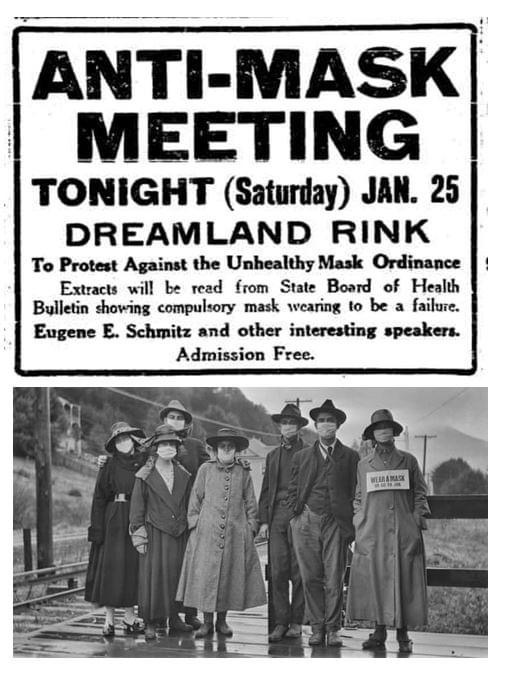
But wut ’bout mah RAHTS??

Got this image from this blog, which says the same things I’m saying, but nicer, and almost a year ago.

All right. I have something to say.

I have several things to say, actually. And I suspect that once I start saying them, even more will bubble up to the surface, like noxious gases from the bottom of the primordial swamp (Or hey, maybe like the scintillant bubbles in effervescing champagne; I probably should shift out of the habit of being maximally dark and depressing. See, there’s another thing I should write about, breaking free of the morass and floating to the surface and freedom, blpblpblpblppPOP!), and soon enough I will have once again exhausted either my readership or my store of ideas. But right now, those things are stacking up, taller and taller, and the ones at the bottom are being squished. Time to Jenga them out of the pile and set them up in their own little spaces.

It’s time to blog.

The first thing I have to say is actually something I’ve said several times already, in various arguments around social media; another reason for me to get back into writing these things. (Yet another reason is that I just said “thing” three times in one sentence: I’ve let my edge get dull, methinks.) You see, I’ve been arguing a lot. It hasn’t gone well. I’ve already destroyed one acquaintanceship (Terrible word. There needs to be another word for the relationship you have with people online who are on your Friends list on Facebook. This guy was not my friend, but I knew him, and we had common interests and values in some areas. So what is that? Normally I’d say acquaintance, or something more specific like coworker or neighbor or my local witch doctor; but what is that when it’s someone on social media? “Mutuals” is a term I appreciate from Twitter and Instagram, meaning someone you follow who follows you; but that doesn’t apply to Facebook. Oop – lost the thread. See? I really do have too much to say. I’m picturing these parentheses as the thin curved walls of the bubbles as they rise up from the depths of my poor swampy head.) and pissed off I don’t know how many people; and so far as I can tell, I have changed zero minds. I know it’s because of the way I’ve been debating these things. Not things, sorry: these issues. The details of it should wait for another post, because I’m too far along the tangent now, but the point is, I realized some time ago that, rather than engage in acrimonious debates with individuals on social media, I should take their topics, and write about them here, where I can make the points I want. The arguments just make people mad. Really, I don’t have them to change minds; I have them because I want to speak my piece, to say what I think – and this is the right place to do that.

I know that the people I have been arguing with, the people who are, in a word, wrong, will not come and read these blogs; but the point is that I haven’t been convincing my opponents anyway, so the arguments have been a waste of time and energy and have produced little more than anger and bitterness, and probably only solidified people in their (wrong) opinions. But maybe if I write a post about the issue, and present my ideas here, people who are interested will read the piece, and maybe spread it in conversation or on social media, and hopefully people will be able to gain some information? Or some inspiration? Or some alleviation of their own turmoil? And maybe that will make a difference.

Enough of my borborygmus. (Hell yes, it’s a word.) Let’s get to the topic.

The question for today is this: do I have a right to not wear a mask?

I know, it probably seems like a dumb question. Because really: who cares if I have a right to not wear a mask? It’s the reasonable and decent thing to do; why would anyone want to not wear a mask during a pandemic? Heck, there are people who love the masks, who have decided to continue wearing them even after the pandemic is over, and bless those people.

But there are millions of people, several of them on my Facebook feed, who hate the masks, hate the restrictions, and REALLY hate the vaccine (I hate to say this, but I’m going to need to write, again, about why vaccines are good and anti-vaxxers are bad. I apologize in advance. But that’s not this post, so let’s let that one sit down in the swamp for a little longer. Down in the toxic murk, where anti-vaxxers come from and where they belong.), and if you talk to them about all of this, at some point they will say “The government shouldn’t get to tell me what to do, where to go, whether or not I should wear a mask or put chemicals in my body. What about my rights?!?!”

That’s what I want to address first. What about my rights? Do I, in fact, have the right to not wear a mask? Do I have the right to keep my business open, which means the government does not have the right to shut me down for purposes of quarantine? Do I have the right to refuse a vaccine?

First, let me say that rights are slippery buggers. I don’t fully understand them, and I won’t pretend to. There is a long and complicated – and fascinating, and important – debate about what a right is and why we have them and which ones we have. So while I have an opinion about this issue of the right to not wear a mask, I freely admit that there may be and probably are factors that I have not considered; I may be wrong. If I am wrong, I invite correction. But here we go with my opinion.

The simple answer is no. I do not have the right to not wear a mask. Not a natural right, nor a moral right. Not an inalienable right, and not a legal right. The Constitution, the Universal Declaration of Human Rights, the Magna Carta, the Bible – none of them say anything about your right to a bare bottom half of your face. A law or regulation requiring you to wear a mask is not a violation of your rights.

Because what would be the basis for it? Again, rights are complicated things and nobody has an incontestable definition of what they are and where they come from, but essentially, the three main sources of rights are: our identity as individual rational human beings; the laws of society and the social contract; and God. God, so far as I know, has not decreed that humans don’t need to wear masks (Indeed, the Abrahamic God seems to be more in favor of covered faces than not). The laws of society are exactly the ones that people are arguing about, because they mostly mandate masks, and the social contract is the main focus of the rest of this writing – and it also probably mandates masks. Our identity as individual rational human beings is the source, according to John Locke among others, of our right to life, liberty, and property; most of the Constitutionally-enumerated rights derive from this. We have the right to speech because we have individual thoughts and opinions, and the free expression of those is a recognition of the value of our individual thoughts and opinions. We have the right to bear arms essentially as a means of self-defense and protection of our continued existence – because I can only exist as an individual rational human being if I’m alive, and my ability to defend myself is a protection of and a recognition of that essential right to exist. My ability to choose my own destiny implies the right to do so, and that’s why I can’t be wrongfully imprisoned. And so on.

But there’s no right to not put cloth on my face. It is not a necessary condition of my individuality. It is not a reflection of a defining characteristic of my reasoning mind. It is not even an inherent preference: in cold weather, most people prefer to cover up their faces as much as they can get away with. When I was a kid in Massachusetts, my favorite piece of winter clothing was a ski mask. And not because I liked robbing banks: because it kept me warm.

There are exceptions, of course, which we all know about (mostly because smug twerps have used them as the basis for false claims to avoid following the guidelines and restrictions) – someone with a phobia or a health condition that might prevent them from safely wearing a mask has a right to refuse to wear a mask, because there is a right to life and to the prevention of bodily harm; nobody has the right to hurt me, nor to force me to hurt myself, in a preventable way. But masks are generally harmless, so we’re going to stipulate those (rare!) occasions where people can’t wear masks with the general statement that people who can’t wear masks are obligated to try to find an alternative that does work for them, that achieves the same purpose as a mask but does not cause harm. And regardless of whether or not someone can wear a mask, the essential obligation of mask-wearing remains.

So let’s get to that. Because while I don’t have a specific right to refuse to wear a mask, that doesn’t mean I should be forced to wear a mask for no reason: the presumption for any question of rights and obligations should be that the individual has every right unless there is a reason to restrict it; that is, all things being equal, I have the right to wear a mask, to not wear a mask, to wear 25 masks stacked on top of one another, to wear a Michael Myers mask while I drive around – I should be free to do whatever the heck I want provided it does not harm anyone else or infringe on any other rights. (The Michael Myers thing is probably an infringement on people’s general well-being. But I think it gets the Humor Exception. Different topic.) What I said above generally holds true: my ability to choose my destiny implies a right to actually do that, to make my own choices and live as I wish to. Every action or inaction should be presumed to fall under my general right to liberty and personal sovereignty – unless it is shown to have an impact on others. If it has an impact on others, then it becomes a question.

The question here is does my not wearing a mask affect other people? And the answer is yes. My breathing, my talking, my sneezing and coughing, without a mask on, has direct and tangible impacts on other people: I can spread a virus to them. It’s provable, it’s known – it’s common sense, really; we’ve all been spat on by close talkers, all been sneezed or coughed on by people who didn’t cover their mouths, all been asphyxiated by the bad breath or our fellow human beings. We all know that a bare mouth and nose in a public space has an impact on other people. As soon as we learned the germ theory of disease, and the properties of viruses, this impact became more clear. Honestly, it’s not clear to me that any of us should ever go without masks: even without Covid-19 as the main reason, we still give each other colds and flus and a dozen other infections simply through bare breathing; maybe face coverings should be universal.

The question then becomes one of burden. Is it reasonable to ask me to wear a mask to protect other people from my spit-propelled infectoids? Is it more reasonable to ask other people to avoid those infectoids? Is the means of prevention a greater burden than the risk of said infectoids getting on with their infecting of other people? If they do get infectionalized (Sorry – like I said, it’s been too long since I wrote, and it’s like a peat bog inside this brain of mine.), does the potential harm they might suffer outweigh the burden on me of prevention? Because again, while there is no enumerated, defined right to not wear a mask, the presumption should be that someone who doesn’t want to wear a mask doesn’t have to wear a mask; individual liberty should be first and foremost in our minds, all the time.

I’m actually going to leave those questions alone for now. Because they are determined by specific circumstances. Basically, the answer is that wearing a cloth mask when I am out in public, in enclosed spaces, within six feet or so of other people, is a lesser burden than the risk of infecting someone with Covid-19. So I should wear a mask during this pandemic. I don’t know if it’s a lesser burden than the risk of infecting someone with the flu; it may be. It is interesting to realize that a generation or so from now, mask-wearing may not even feel like a burden; it may just be the norm, and this whole debate will just be silly. But my topic here is a right: do I have a right to not wear a mask? I do not.

The same argument applies to social distancing, to handwashing, to avoiding handshakes and hugs and so on. It applies to weddings and funerals, to in-person classes and live sporting events. It applies to keeping your business open and serving customers during a pandemic. All of it comes down to the same thing: you are presumed to have the right to do whatever the heck you want with your time and your property; you have control over your own destiny – unless and until it impacts others. All of those activities and preferences, for in-person church, for birthday parties, for holiday gatherings with family, for traveling in planes, trains, and automobiles: all of them create a risk of spreading Covid-19 to others. None of them are necessary for an individual’s continued existence. None of them are rights. I do not have a right to have a wedding or a birthday party or a funeral in the manner and at the time and place of my choosing. All things being equal, I should be presumed to have the liberty to choose my wedding and my funeral arrangements; but not all things are equal during a pandemic. I can still be an individual rational human being without seeing other people in large groups in enclosed spaces without masks and closer than six feet.

There is some question of work: the right to work and to derive an income from work is a right we have, as it is both an expression of our rational selves and a necessity for the continuation of life; there has to be some negotiating around that conflict. If, for instance, society can provide me with an income sufficient to keep me alive and essentially free, then that would compensate for the loss of my ability to work as a waiter or a bartender, for instance. Or if my work can move online, as my job teaching high school English did, then that means I can continue the necessary parts of my human existence, without imposing a risk on other humans that might prevent them from continuing their existence. I do not have a right to make my income however I want. I do not have a right to do my job only in the way I want to do it. I do not, unfortunately, have the right to keep open the business I worked my entire life to create. It breaks my heart to say it, but it’s true: my entrepreneurship, my blood sweat and tears, my lifelong dream – I don’t have a right to any of those. I have a right to exist, and to work to continue my existence. I don’t have a right to thrive: and if my thriving puts other people at risk, as it might during a pandemic, then I don’t get to thrive while putting an undue burden of risk on other people.

Put it this way: if I had a right to keep open my beloved mom-and-pop store, what would that mean if my business failed? If another mom-and-pop store opened right next door to mine, which had lower prices and a better product? Would I have the right to take some of their money? Would I have a right to force customers to come to my store? Would I have a right to demand taxpayer money from the government? Or what if my store caught on fire? What if there was a hurricane, or an earthquake? If I had insurance, then I would get the coverage I paid for – but you don’t need insurance to get your rights, you just get those. And there is, sadly, no right to have my dreams come true, or to keep them from being taken away by a pandemic.

All I have is a right not to have my life taken away because somebody doesn’t feel like wearing a mask.

The last thing I’ll say about this is that anyone who claims to have a right to not wear a mask, or to get a vaccine: you do have that right. You can choose to say no to masks and vaccines. It just means you can’t be around people. At all. If you are willing to quarantine yourself in such a way that you have no risk of spreading the virus to anyone, then you have the freedom to do whatever you wish in terms of refusing masks and vaccines: because your choices will not have any impact on other people, and so your individual freedom prevails. But if you want to live in society, then you have to help society live. That free choice, to be a part of society or to leave society, is the final protector of your individual rights. Again, it is a complicated choice, because not everyone can survive separate from society, and a choice that leads inevitably to my death is no choice at all; society has some responsibility to provide for my continued existence if I can’t have that existence outside of society; that’s why society has a responsibility to provide a minimum income, basic needs, to all members of the society who cannot provide it for themselves. And our particular society does not do a very good job of that. But that’s a topic for another day.

For today, wear your mask. And if you can, get the vaccine.

Do what’s right.

Free to be Safe, Safe to be Free

A friend of mine posted this:

IMG_3831
And so, because this is what I do, I asked: why? Why is freedom more important than safety?

He couldn’t answer.

He replied that freedom was the very fabric that the U.S. was drawn on, which is a lovely statement of sentiment — but not an answer. That tells me why freedom might be so important to Americans, if we accept that freedom is indeed what the U.S. was drawn on; but it doesn’t say either why that is the foundational principle of this country, nor why that foundational principle (or this country) are especially important — nor does it answer my first question, about why freedom is more important than safety. (Heh — I just wrote “freedom is more important than slavery.” Not only pretty close to a tautology, but also a pretty good indicator that my subconscious is damned libertarian, if it equates safety with slavery. Actually, I was just listening to the 1619 Project podcast about the foundations of this country, and I have an argument against freedom being the fabric this nation was drawn on. But that’s another subject for another time.)

Understand that this is a good guy, a really good guy. A generous plenty of his posts are focused on telling his friends that he loves them, especially his male friends, explicitly using the word “love” and supporting them in every way he can; sharing his own struggles with depression and alienation; telling anyone and everyone that he is always willing to listen. Basically he is an antidote to toxic masculinity. He is masculine antitoxin. (Also hilarious. Also a frequent and fully self-aware shitposter. Also a boogaloo boi: his second response to my questioning was a citation of the Second Amendment as the only necessary source of safety. People are complex, aren’t they?) He wasn’t attacking me, calling me a coward or a libtard; he wasn’t even treating me as a troll commenter, which would be an understandable response to my asking philosophical questions on a meme. He was really trying to answer my question, and in so doing, revealing at least some of his ideals, if not his explicated arguments for his ideals.

And I don’t think they’re bad ideals. I think this country should be drawn on the fabric of freedom; and though I don’t agree with The Libertarian Cartoon Head (And I find it kind of hilarious and very telling that it is so very Nordic and square-jawed, with furrowed brow and shaped beard and curled ‘stache, blond hair and blue eyes), I also don’t agree with the woman with the sign. (I will give her slightly more credit in her argument because she put “freedom” in sarcastoquotes, which implies that the debate is set on false premises as these debates often are and maybe have to be by definition; but also, I have no idea where this picture is from or if it is even real, so I can’t say if she knows how to use sarcastoquotes or meant those for emphasis, or if she ever really held that sign in the image, or if it was Photoshopped. So.)

Let me tell you what I think: I think both safety and liberty are, quite simply, vital. They are necessary. Both. I’ll actually throw in the pursuit of happiness, too: all vital to our continued existence as thinking, feeling individuals. That’s why they are unalienable rights.

There’s a deeper and harder conversation about what rights are and where they come from, and what it means to have them, which I am not qualified to have; I have a lot more reading to do in the philosophy world before I can take that on. But for  this conversation, the layman’s understanding of rights should be just fine.

A right is what you have simply by virtue of being an individual, a specific human being: a person. Your rights are essentially a list of what is required for you to experience and explore that existence as a person, as an entity with reason and free will. You must have life, because if you’re dead, you can’t experience your existence as a person. You must have liberty, because liberty is essentially the opportunity to have your own thoughts and feelings, to express your own thoughts and feelings, and to act on your own decisions, which are based on your own thoughts and feelings. Without liberty of thought, of speech, and of action, you are not able to explore and experience your existence as a unique individual. It’s pointless to say you have reason if you are not allowed to think your own thoughts, and then express what you think (Because freedom that is only locked inside your head is not freedom: a human being is capable of expressing and communicating their thoughts, and that expression and communication of thoughts is a fundamental part of being a human; you cannot be a human if you can only think but never speak your truth.); it is untrue to say you have free will if you cannot act according to that will.

You must have life to be you, and so you have the right to life; you must have liberty to truly be you, and so you have the right to liberty. Either without the other is meaningless and empty. The pursuit of happiness, the third unalienable right listed in the Declaration of Independence, is the realization of these two rights extended forward in time: if I have life and liberty right now, I can be myself; and if I can be assured that I will still have life and liberty tomorrow, I can begin planning and acting with that understanding in mind, seeking most likely to achieve a greater happiness for myself according to my wishes. Also necessary, I would argue — although the argument for this one is a bit more fraught, not only because Thomas Jefferson, after cribbing these rights from John Locke, changed Locke’s third unalienable right into the pursuit of happiness; Locke said the third was the right to property, meaning the right to own the fruits of your own labor. That’s a different conversation. It’s also fraught because Jefferson was one of history’s greatest hypocrites, writing that all men are created equal while being attended by James Hemings, his wife’s half-brother — Jefferson’s own brother-in-law, who shared a father with Jefferson’s wife — whom Thomas Jefferson owned. Jefferson also, of course, owned James Hemings’s sister (And Martha Jefferson’s half-sister) Sally. And he owned his and Sally’s six children until his death. All men are created equal, eh?

Regardless of who wrote the words, though, the ideas are sound as written, if not as Jefferson embodied them and helped to codify them into the founding documents of this country. All people are created equal: each and every one of us is a unique individual, essentially capable of thinking and feeling, and in possession of free will. Therefore each and every one of us has the unalienable right to life and liberty, both.

Both.

That’s the trouble with this argument. It’s not that life (which I would argue is represented by safety; I’ll get to that in a second) is more important than liberty, nor that liberty is more important than life. It’s that you cannot separate the two.

Is safety the same as life, here? I don’t want to argue a red herring, to make a false equivalence between the safety in this argument and the right to life in the Declaration of Independence. But what do we mean by safety? Safety, I think, represents the assurance of continued life; like the pursuit of happiness, it is the right extended into the future. If I am safe, I not only know that I am alive right now, but I expect that I will continue to be alive in future, and so I am confident and comfortable in that expectation. In its essence, safety is about the preservation of life over time — and also the preservation of liberty, without which life is meaningless and so too is safety. I know that’s a circular argument, but really: if you were sure that tomorrow you’d be alive, but you’d be in jail, would you say that you felt safe?

And on the other side, if you were free to do as you wish, but you knew you would die tomorrow, would you really feel free?

I know the knee-jerk answer to that second question, from people who agree with the meme (probably my friend as well), would be a resounding HELL YEAH BROTHER! Because part of this argument is based on a quintessentially American/(toxically) masculine ideology that not only honors, but pursues and relishes, death, especially death by martyrdom on the altar of freedom. But while self-sacrifice is honorable and noble, and I am grateful for those who have sacrificed their lives for me  — those sacrifices did not ensure the continued existence of liberty. They (depending on the specific situation) may have helped to eliminate a present threat to liberty with their sacrifice — probably also a threat to life; while the Fascist regimes in WWII were certainly a threat to liberty, they were clearly a much more dire threat to the essential existence of millions if not billions of human beings — but that doesn’t ensure, cannot ensure, that liberty will continue into the future.

Only safety can do that.

Now: it is certainly true that some attempts to limit liberty are presented under the guise of promoting safety; those must be guarded against. But that is not, despite the fanaticism of some liberty-lovers, true of every single attempt to ensure safety, nor even every attempt to limit liberty — some are presented as morally correct, for instance, regardless of whether they create more safety; like certain White House occupants sending certain Federal troops to certain cities to, errr, safeguard statues. That is certainly an attempt to limit liberty, but there’s not really a way to claim that keeping Robert E. Lee atop his horse atop a marble pedestal will make us safer. (There is some attempt, in the name of law and order, to claim that those who would pull down statues are threatening to create — or actually creating — chaos and danger for Americans. But let’s not buy into the bullshit, yeah? The only safety really being promoted there is the safety of the monuments, and the comfortable white supremacy they generally represent.) It’s like the argument that every single gun law is an infringement on the right to bear arms: that’s not really true. The essence of the Second Amendment is to preserve the right of self-defense — which preserves both life and liberty — and so long as one is able to do that, the right is uninfringed. Slippery slopes are not an argument, they’re a rhetorical scare tactic.

It is also true that some attempts to create safety also bring an unacceptable limitation on liberty; I think that’s the argument against lockdowns as a measure against the pandemic. As I think this year has made clear, though, temporary limitations on liberty become more acceptable when they are more effective in preserving life; the way to avoid a restriction of liberty is to find a way to have your cake and eat it too, to ensure safety while also preserving liberty — which in this case would be: masks. Masks are a way to effectively preserve safety by stopping the spread of Covid-19 while also not infringing on liberty, because so long as everyone wears a mask, we can continue with almost all of our preferred activities.

Brief aside to squash this nonsense: Liberty does not mean an unlimited right to do whatever the hell you want, to say no just because someone else says yes, to insist that somehow you don’t need to wear a piece of cloth on your face just because you don’t wanna BECUZ THIS’S AMURRRRRRRICA. It means the ability to control your own actions based on your rational decisions, so long as those actions don’t harm anyone else’s ability to do the same. Anyone making a rational decision not to wear a mask — i.e., “I have claustrophobia and the masks cause panic attacks, so instead I MAINTAIN A STRICT SOCIAL DISTANCE AND MAYBE WEAR A CLEAR FACE SHIELD” or “I don’t enjoy wearing a mask SO I DON’T GO OUT IN PUBLIC” —  is fine; those are rational decisions, and I doubt anyone would have a real problem with those. That’s why exceptions for health reasons are written into every mask ordinance, and why no mask ordinance mandates people leave their homes.  Now, it is certainly true that, all else being equal, the individual should be the one to decide for themselves what is a “rational” basis for their own decisions; but in a pandemic, the actions of individuals have outsized impacts on the life and liberty of others, and therefore some limitation of an individual’s actions is reasonable. The outsized impact on others means that one cannot make a determination of a rational action depending only on one’s own individual will. It means a reduction of one’s ability to choose for one’s self.

To preserve safety. And liberty. Because that’s what it means to live in a society. People who want to be so fanatical about their liberty that they accept literally no restrictions on their liberty imposed by others can still make that choice: they just don’t get to be a part of our society. Society requires compromise. Them’s the breaks. Your right to swing your fist ends where my nose begins, so if you want to swing your fists without any boundaries, get the fuck away from my nose. And then go nuts. Feel free.

Benjamin Franklin gave us one of the more popular arguments about this issue. He said,

“Those who would give up essential Liberty, to purchase a little temporary Safety, deserve neither Liberty nor Safety.”

Now, this quote, like everything else from the Founding Fathers — and, well, everyone famous ever, in this age of disinformation inundation (™) — is pretty regularly misquoted. A Google search for this one gets me this meme, which changes the quote pretty appreciably:

Notable Quote - Benjamin Franklin - Granite Grok

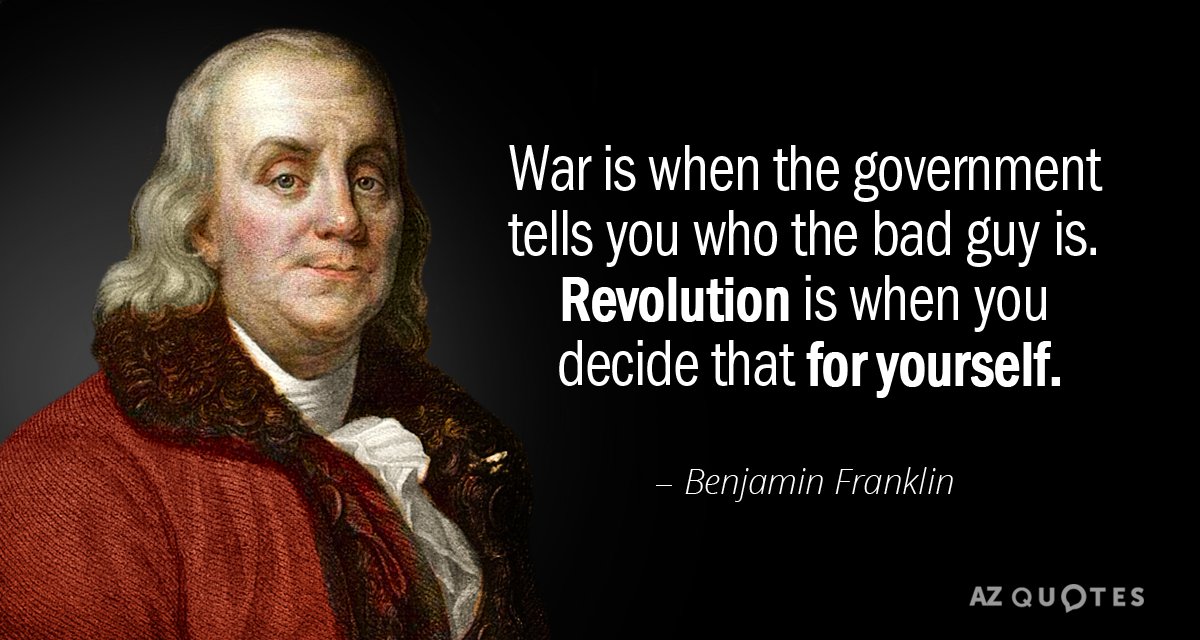
(It also gets me this one, which is hilarious because there’s absolutely no way Benjamin Franklin said this — and not just because “guy” was not commonly used to mean “that fellow over there” until around 1850, 60 years after Franklin’s death BUT MOSTLY BECAUSE OF THAT:)

TOP 25 BENJAMIN FRANKLIN QUOTES ON LIBERTY | A-Z Quotes

(I also really want that not to be a portrait of Franklin, but it probably is. Oh, well.)

But case in point, the comments on the meme that my friend shared had this image in them:

Image may contain: 3 people, beard, text that says '12:23 Kacey Elise Wheeler Kacey Elise Wheeler Yesterday Extreme Liberty 10:55 This shirt our Scofflaw collection has been really popular lately! Get while it's hot! [Link below] ...See More Those would upliberty purchase alety are bitches. Beajamin Franklin (probablyi Like Comment Share Whoolor ខ'

Which really represents what happens when people stop thinking about this stuff. Nothing wrong with wearing a t-shirt, of course; but this is not an argument, any more. Now it’s silly. Now it’s a meme.

But the best and most important thing about Franklin’s actual statement is this: it doesn’t mean what we think it means.

WITTES: The exact quotation, which is from a letter that Franklin is believed to have written on behalf of the Pennsylvania General Assembly, reads, those who would give up essential liberty to purchase a little temporary safety deserve neither liberty nor safety. [emphasis added]

SIEGEL: And what was the context of this remark?

WITTES: He was writing about a tax dispute between the Pennsylvania General Assembly and the family of the Penns, the proprietary family of the Pennsylvania colony who ruled it from afar. And the legislature was trying to tax the Penn family lands to pay for frontier defense during the French and Indian War. And the Penn family kept instructing the governor to veto. Franklin felt that this was a great affront to the ability of the legislature to govern. And so he actually meant purchase a little temporary safety very literally. The Penn family was trying to give a lump sum of money in exchange for the General Assembly’s acknowledging that it did not have the authority to tax it.

SIEGEL: So far from being a pro-privacy quotation, if anything, it’s a pro-taxation and pro-defense spending quotation.

WITTES: It is a quotation that defends the authority of a legislature to govern in the interests of collective security. It means, in context, not quite the opposite of what it’s almost always quoted as saying but much closer to the opposite than to the thing that people think it means.

SIEGEL: Well, as you’ve said, it’s used often in the context of surveillance and technology. And it came up in my conversation with Mr. Anderson ’cause he’s part of what’s called the Ben Franklin Privacy Caucus in the Virginia legislature. What do you make of the use of this quotation as a motto for something that really wasn’t the sentiment Franklin had in mind?

WITTES: You know, there are all of these quotations. Think of kill all the lawyers – right? – from Shakespeare. Nobody really remembers what the characters in question were saying at that time. And maybe it doesn’t matter so much what Franklin was actually trying to say because the quotation means so much to us in terms of the tension between government power and individual liberties. But I do think it is worth remembering what he was actually trying to say because the actual context is much more sensitive to the problems of real governance than the flip quotation’s use is, often. And Franklin was dealing with a genuine security emergency. There were raids on these frontier towns. And he regarded the ability of a community to defend itself as the essential liberty that it would be contemptible to trade. So I don’t really have a problem with people misusing the quotation, but I also think it’s worth remembering what it was really about.

Source

In the end, the things we need to remember are these: safety is important. Preserving life is important. The reasonable assurance of future safety is also important  — I don’t want to get into Maslow’s hierarchy of needs, but liberty is waaaay up at the top of the pyramid, around “self-actualization,” and safety is at the base, the second level just above food — and, dependent on circumstances, justifies a limitation on individual liberty. The preservation of liberty is equally important — but because liberty is more abstract than life, it requires more careful thought to reasonably determine what is, and what is not, a threat to liberty.

The whole reason we have the right to liberty is that we have the ability to reason. If we want to protect that right, then we must use that same reason to know when it is actually under threat. We have to think.

And stop taking memes too seriously. You know: like I just did.