Separate Has A Rat In It

All right: so I have two classes of College Readiness, and they both had to write a UChicago essay — and they both picked a prompt for me to write. (If you don’t know what I’m talking about, read this. If you want to see all the prompts, go here.)

The other class chose this one:

People often think of language as a connector, something that brings people together by helping them share experiences, feelings, ideas, etc. We, however, are interested in how language sets people apart. Start with the peculiarities of your own personal language—the voice you use when speaking most intimately to yourself, the vocabulary that spills out when you’re startled, or special phrases and gestures that no one else seems to use or even understand—and tell us how your language makes you unique. You may want to think about subtle riffs or idiosyncrasies based on cadence, rhythm, rhyme, or (mis)pronunciation.

Here is my response.

Language Separator

See the rat?

I am a dull man. 

I am utterly unspecial, solidly in the mainstream: I am a white American male, cis/het, raised vaguely Christian but now a non-practicing atheist. I am married. I am 49 years old. I own a car and a house, with a mortgage on the house. I have a Bachelor’s degree, more debt than savings, and I vote Democratic. All completely “normal,” in that people who look and live like I do have made sure that our culture believes that people who look and live like I do are the norm, the standard, the expectation – and therefore everyone else is a little weird, a little off, a little less than what they are “supposed” to be. Like most people who look and live like me, I am aware of my privilege, I oppose the unfair societal structures and institutions that promote it – but I don’t really do too much to change them, because after all, I do benefit from them. I feel guilty when I think about that, so I try not to think about it.

Sorry: that went too political. (I am keenly aware that some people find it awkward and uncomfortable – challenging – when I speak of political matters. I do not want to offend them, so I usually do not speak of political matters.) My real point is that there is very little about me that is, according to our society’s generally understood and accepted standards, abnormal.

Until I open my mouth.

My mouth itself is pretty normal (Though I have WAY more fillings than is normal, I think – over 40, with 5 crowns. I have abnormally bad teeth.), it’s what comes out that is abnormal. First of all, I have a weird accent: my parents (The most important influence on a person’s accent and dialect) are from the West Coast, Washington and California, so I speak somewhat in their accents; but I was raised first on Long Island, which has a distinct accent, and then in a suburb of Boston, which has a STRONG accent. I didn’t acquire or keep either of those accents in their entireties, but I did pick up a few pronunciations; and more, Boston’s speech patterns were strongly influential: I speak too fast, as Bostonians do, and I talk faster the more excited I get; and I cuss intemperately. So I sound like a mishmash of two coasts and four states.

It’s more than my accent and my speech patterns, though: it’s what I say.

Don’t get me wrong: I am a student and an artisan — a wright. A smith. — of language. I study literature and rhetoric, and have mastered them to a degree that allows me to teach, generally successfully. I possess linguistic capacity more than sufficient to enable the utilization of language both fanciful and ornate, drawing from the recondite and recherche realm of jargon as well as splashing through the filigree fountain of poetry.

I talk good, is what I’m saying.

 And, as you can see, because I can use language well: I can also abuse it.

My favorite form is mispronunciation. I enjoy completely destroying the actual sounds of words, especially foreign ones. Especially French. Because if any language has worse pronunciation than English, it’s French. That word I used between “recondite” and “realm?” I would enjoy saying that “ruh-churchy.” So I feel that we should pronounce La petite fromage, the little cheese, the way it is spelled: lah puh-teet froh-midge. I draw from classic influences to pronounce the K and the G in “knight,” and to describe for my students when they put the emPHAsis on the wrong syLLAble.

But mispronunciation alone is too simple; a little tame, really. Much more funner is improper forms of words, particularily when the wordination is constructicated of rootages and suffixery (Holy crap, autocorrect accepted that one!  Is that really a word?! Mmmmno, it’s redlined. I think I stunned the autocorrect.) that are close, almost recognizable — but also completely wrong. That’s the besterest. Though one step higher here is when I can corrupt a common usage of a modern slang term in order to make it seem more grammatical while also being deeply annoying: when I was on Twitter, for instance, I made a point of saying I twitted a twit, not tweeted a tweet – because after all, it wasn’t called “Tweeter,” was it? (Now it should be xitted a xit on Xitter, not xeeted a xeet on Xeeter. Though either one would presumably make Elon Musk apoplectic, and that’s a good use of language.)

I admit it’s a touch upsetting that I say these kinds of things and play these kinds of games with my students, because for some reason, they trust me to steer them right with their usage of English, the poor innocent fools; I’m sure I’ve given more than one a bad idea about words from some joke or other — though I will further admit that that’s funny. I do teach them the real insane trivia hidden deep in the pockets of the English language: the word floccinaucinihilipilification (WHICH I TYPED RIGHT THE FIRST TIME) and the sentence “Buffalo buffalo Buffalo buffalo buffalo buffalo Buffalo buffalo.” Both of which are real. And “Y’all’d’nt’ve,” which is not real, but should be. These all show actual facets of this mad and madcap and maddening language that I love, so they are all lessons, on some level, at some point. And I’ll bet you dollars to donuts that most English teachers do not teach those lessons.

Then there are the foreign accents (Or as I am fond of saying, the furrin accents, which we don’t talk here in ‘Murrica.). A number of them show up when I read aloud, when there is some identifiable speech pattern in the dialogue, or a clear setting in an accentish area. I’ll read British stories in my best London fog, and I’ve read ev’ry danged word of Huck Finn by that Mark Twain feller in my best countrified speechery. I do sometimes use my past exposure to New York and Boston accents to play those characters when reading, especially if someone needs to be a tough guy; but I don’t put on my Pepe Le Pew when I read Guy de Maupassant’s “The Necklace.” And I never use Apu Nahasapeemapetilon’s accent, not even when I read The God of Small Things. On the other hand, I will neither confirm nor deny that Neil Gaiman’s story “Truth is a Cave in the Black Mountains” retains a place in my Fantasy Literature elective specifically because I get to use my Scottish brogue.

Of course, none of these accents have the same color, force or frequency as my pirate accent. Not only because I dress up like a pirate for every Halloween, and dress up my voice like one on every September 19th (International Talk Like a Pirate Day, if ye be of the uninitiated). Also because I love doing that accent, and so it shows up whenever anyone makes a pirate reference around me, which is fairly frequent given my reputation and the assorted pirate paraphernalia which I have acquired over the years. If anyone tells me a pirate joke, I am honor-bound to respond in the appropriate manner: “AYE LAD, THAT WERE A FINE SALLY — I’LL SHARE IT WITH ME OWN CREW, THE NEXT TIME I WANT THEM ALL TO FALL ILL OF VILE PUN-ISHMENT! HAR HAAARRRRRRR!!”

Even this list, though, is not exhaustive, because it doesn’t include the character voices I use. In class there are a few definite ones; I am very fond of the voice of Gollum from The Lord of the Rings, as performed by Andy Serkis; it’s a bit rough on the throat, but so very taassssstttyy, precioussssss… And just to one side of that, almost two sides of the same coin, is the voice of Edna Mode from The Incredibles, which I also love using, as long as it is attached to the right character (NO! CAPES!). Those two are my favorites, though also I am not above talking like a Goodfella (“Do I amuse you? What am I, some kinda clown to you?”) or the Lennie of the cartoons (“And I will hug him and pet him and love him and squeeze him and call him George!”) though never when I read Of Mice and Men because that book makes me cry and I can’t make fun of it that way. 

And it goes on from there. When I am reading test directions aloud and I get to a portion that is capitalized or in bold print, I will shout those words at the top of my lungs (“DO NOT WRITE IN THE MARGINS OF THE ANSWER SHEET”), without any warning at all; partly because I like to make my students jump (and laugh, because breaking the tension is part of my job), and partly because I want to make fun of the directions, which are universally terrible. I can actually sing reasonably well, but when I sing in class I usually make my voice sound as awful as I possibly can, intentionally breaking and scratchy and missing all of the notes. I sometimes read as fast as I can, which thanks to my Bostonian upbringing is pretty damn fast, so that all the words run together into a completely indistinguishable fog of sounds.

So the question is: why? Why do I do this? Why am I like this? Especially given my responsibility as a teacher, and my deep and abiding love for my language, and for speech both written and spoken?

Honestly? I don’t know.

It might be because I don’t want to conform. I have to follow the rules in too many ways already; even worse, I have to fight for the rules, have to make other people obey them, have to get them in trouble when they break them: and I hate that. I also can’t stand it when people turn up their noses – or even worse, break into that violent, assaultive cackle that people put on – when they catch someone saying something “wrong,” and they take advantage to say, “It’s ‘wrongly,’ you pathetic dolt!” I hate the arrogance of that, the contempt of it. I hate the hard-edged insistence on rules: when we all know that in English, the rules don’t apply. Tell me the “I before E rule.” Go on. I dare you. 

There are no rules in English, other than the only rule that matters in any language, in any form of communication: if communication was successful among all parties, then the language was effective. That’s it. That’s the whole point. We speak and we write in order to communicate something. Sometimes there is a secondary purpose (or even a primary one) such as intimidation or seduction or persuasion; but in those cases, the goal of the intimidator or seducer or persuader is still a goal that must be communicated, even if only by achieving it. But if my audience can understand what I want them to understand, then nothing else matters: that’s the truth. That’s what I want people to understand, to absorb and believe. That’s why I tell my students (sometimes to the chagrin of my fellow English teachers) that you may start a sentence with “and” or “but,” and you may use “I” in a formal writing context, and you may use contractions, as well. And you may cuss: because sometimes the only word that properly communicates one’s message is “FUCK!!”

Oops. Got too offensive there. Now this document’s going to get flagged. A much worse F-word.

I love playing with English. That’s why I love ee cummings (Even though much of his poetry is political, and even more of it is offensive: but all of it is fun.), who wrote like this:

love is more thicker than forget

more thinner than recall

more seldom than a wave is wet

more frequent than to fail

it is most mad and moonly

and less it shall unbe

than all the sea which only

is deeper than the sea

love is less always than to win

less never than alive

less bigger than the least begin

less littler than forgive

it is most sane and sunly

and more it cannot die

than all the sky which only

is higher than the sky

 and why I admire and enjoy the novel Riddley Walker by Russell Hoban (Even though it is very political, and therefore quite offensive… but it’s okay, because Russell Hoban also wrote this), which looks like this:

Looking at the moon all col and wite and oansome. Lorna said to me, ‘You know Riddley theres some thing in us it dont have no name.’ 

I said, ‘What thing is that?’ 

She said, ‘Its some kynd of thing it aint us but yet its in us. Its looking out thru our eye hoals. May be you dont take no noatis of it only some times. Say you get woak up suddn in the middl of the nite. 1 minim youre a sleap and the nex youre on your feet with a spear in your han. Wel it wernt you put that spear in your han it wer that other thing whats looking out thru your eye hoals. It aint you nor it dont even know your name. Its in us lorn and loan and sheltering how it can.’ 

 and A Clockwork Orange by Anthony Burgess (Which is both extremely political and EXTREMELY offensive, so…maybe we shouldn’t talk about it.), which looks like this:

“What’s it going to be then, eh?” 

There was me, that is Alex, and my three droogs, that is Pete, Georgie, and Dim. Dim being really dim, and we sat in the Korova Milkbar making up our rassoodocks what to do with the evening, a flip dark chill winter bastard though dry. The Korova Milkbar was a milk-plus mesto, and you may, O my brothers, have forgotten what these mestos were like, things changing so skorry these days and everybody very quick to forget, newspapers not being read much neither. Well, what they sold there was milk plus something else. They had no licence for selling liquor, but there was no law yet against prodding some of the new veshches which they used to put into the old moloko, so you could peet it with vellocet or synthemesc or drencrom or one or two other veshches which would give you a nice quiet horrorshow fifteen minutes admiring Bog And All His Holy Angels and Saints in your left shoe with lights bursting all over your mozg. Or you could peet milk with knives in it, as we used to say, and this would sharpen you up and make you ready for a bit of dirty twenty-to-one, and that was what we were peeting this evening I’m starting off the story with.

and all the fantasy novels and science fiction movies and so on that make up entirely new languages, and then translate them into English: because language is fun. The more fun you have, the better it works. The more fun it is, the more you want to use it: and that makes more communication, which means more connection, which means more peace, love, and understanding.

And that would be the besteresterest.

The point of this essay was meant to be what in my language use sets me apart, divides me from other people; I do think it is the degree to which I mess with language, the number of games I play with it, the variety of ways I push the bounds of what is acceptable and what is normal. I do all those things more than most people; and that’s what sets me apart. What I don’t try to do, ever, is make my language harder to understand, to make communication fail: it is maybe my worst habit as a writer that I always try, over and over, to make my communication more clear, to explain further, to give another example, another synonym. As you can see. It makes me much too wordy in my writing. But it also makes me a good (if talkative and boring) teacher. It makes me a good friend, and a good husband, because I always try to explain what I am thinking and what I am feeling; I always try to communicate (And I realize that communication also requires listening, if you were thinking that I do all the talking. I don’t. It’s just that my turn takes three or four times as long.). My wife and I rarely fight because of that, and our fights usually end in compromise and agreement: because we communicate. (I don’t deserve all the credit for that. My wife is exceptionally good at understanding me, and herself, and she listens too. She is also very patient with me, which I appreciate forever.) I think it’s good that I am able to use humor to break up those long, repetitive speeches in which I try to explain everything I am thinking, over and over again.

I just wish other people enjoyed my portmanteaus as much as I do.

Oo! That’s one I forgot to mention! Portmanteaus: when you put two words together into a single word, like breakfast+lunch=brunch, or smoke+fog=smog. I love those things. I think of them constantly, and I bring them up all the time – here, wait, I have a list of my favorite ones.

What’s that? Oh – you have to leave? No time to discuss word nerdery with me? I understand. 

Maybe next time.

And then again: maybe not. 

Just know that I’ll always be here, ready to talk about words, ready to play word games – and ready to communicate. And whether that makes me different, or makes me just like everyone else, I don’t actually care. As long as we’re having fun. And not being … too offensive.

Oh and — fun being offensive? That’s offunsive. And that is a portmanteau.

The Essay That Should Have Been

Every year I make my AP students write an essay in the first week.

I started doing this because when I moved to Arizona and started teaching AP, I went to a summer seminar in how to teach AP, and the instructor — a very smart man who had been teaching AP for 30 years, and whom I respected quite a lot — told us that we should start hard, in a way: give them a practice test, one of the essay questions from an actual past AP exam, right at the beginning and grade it as you would an AP test — no mercy. It shows the students what the test is like, both through the use of an old question and the AP’s generally high standards, and through the use of fairly intense pressure on them to perform; this will motivate them, he said, to work hard in order to be more prepared for the actual test. So I do that: and it works quite well, most of the time. A number of my AP students are the most successful, and the most lauded, students at the school, and I like giving them a test that they don’t automatically ace, as they usually do in their other classes; it puts them off balance, which is usually where they need to be to learn and grow. Also, while I have a well-earned reputation as a generally easy-going sort of cat, I want them to know that the AP is not easy, and so in academic terms, I am not an “easy” teacher.

So, an AP essay, in the first week.

One of the things I do to try to mitigate that difficult assignment is to take the test with them. I know it doesn’t make it any easier if I’m writing an essay while they are writing an essay, but I think it does two things: one, it shows that I am teaching something that I really know how to do, in a practical, everyday sense, and maybe even something I like doing (It is. I like writing essays. I think they just generally don’t believe that I do.); and two, it shows them that I’m not giving them assignments just to torture them, I think they are valuable — valuable enough to do them myself.

Now, most years, this is not very hard for me: I’ve written a lot of essays, I’ve read a lot of literature, I analyze everything all the time. But this year, man. I don’t quite know what it was, but I struggled with both essays, the synthesis essay I gave my AP Lang students, and the open response question I gave my AP Lit class. Okay, I know some of what it was: in the case of the Lang essay, I had trouble with the topic as it was presented in the packet of information (The synthesis prompt asks the students to read six sources which represent two sides of a debate, and then to “join the conversation.” They need to present their own opinion on the issue, using at least three of the sources as references to place their opinion in relation to the rest of the debate.), because one side was clearly right, but also really badly argued, which left me the unfortunate options of choosing the wrong side, or using bad arguments to support the right side; and then in the case of the Lit essay, I asked my students to use the book they chose to read over the summer to answer the question if they could, and so I used the book I read as potential new material for the class — and I didn’t (and don’t) have a good enough grasp of that work to use it well for the essay. Basically I picked a bad topic for Lang, and a bad answer for Lit.

So here’s what I’m going to do: I’m going to use this blog to write the essays I should have written for these two prompts. Partly as a way to vindicate myself as an essayist (Though to be clear, I showed my Lit class today the essay I struggled with, so they could see that I struggle too; and I’ll do the same with my Lang class tomorrow, because I don’t think everything I write has to be perfect), because I should have written better essays; but mainly just because I think these are two genuinely good topics for essays, and I want to do the subject matter justice.

This week I’m going to do the Lit essay. I will also be including the bad one I wrote, which isn’t terrible; but there’s a better answer I could have given, which I’m going to write now.

(Also I don’t think I’ll get this done tonight, Monday, so this week’s will almost certainly be posted tomorrow and maybe even Wednesday. Sorry. School, man. It takes up your time.)

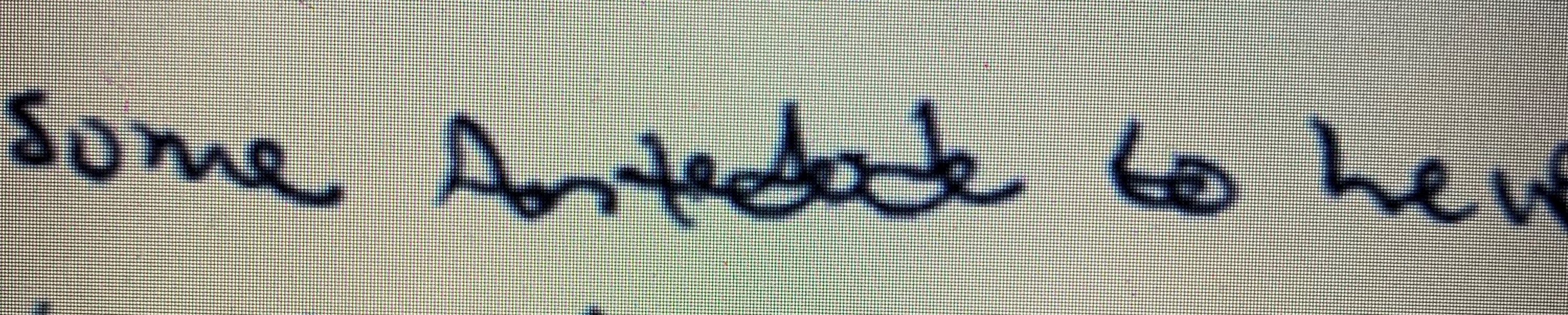
You know what? I’m going to make it a thing. I’m going to type (because my handwriting is atrocious, especially when I’m trying to stick to a time limit with my students) the bad essay I wrote in class and post it tonight, and tomorrow I will come back and finish the good essay. And do the same thing next week, with the other one.

So here we go: the response I wrote in class to the AP Literature Free Response prompt. (As you’ll see, this essay gives a thematic statement, and asks the students to apply it to any full-length work they have read, using the theme given to analyze the work. The perfect work to answer this question with happens to be the book I have read more than any other, and know better than any other; but that’s not the one I wrote about.)

Also, here is the test in my handwriting, so you will understand why I am typing this.

Okay? So here we go.

First, the question:

AP English Literature and Composition 2023 Free Response Question #3:

Many works of literature feature a rebel character who changes or disrupts the existing state of societal, familial, or political affairs in the text. They may break social norms, challenge long-held values, subvert expectations, or participate in other forms of resistance. The character’s motivation for this rebellious behavior is often complex.

Either from your reading or from the list below [Side note: Ummmm, if you haven’t read the book you select to write about, you’re pretty well boned on this essay. So it really should just be the rest of this direction:], choose a work of fiction in which a character changes or disrupts the existing state of societal, familial, or political affairs. Then, in a well-written essay, analyze how the complex motivation of the rebel contributes to an interpretation of the work as a whole.

So the best work I know (though there are several good ones on the provided list of suggestions, including Antigone, Invisible Man, Kindred, One Flew Over the Cuckoo’s Nest, and Paradise Lost) to answer this question is Fahrenheit 451, by Ray Bradbury. The work I used to answer it was Pygmalion, by George Bernard Shaw, which musical film buffs will know as the original version of My Fair Lady.

Here is the essay, complete with the part where I just started cursing because I wasn’t sure exactly how to write this, and then the title I came up with (because of the cursing, so let me tell you, that’s some effective brainstorming) and the rest of the essay.

You know what? Fuck this. Fuck this prompt, fuck this test — and fuck you.

“FUCK YOU, I WON’T DO WHAT YOU TELL ME.”

— Zack de la Rocha

Language is one of the primary determining factors for a number of society’s categories. How we talk shows, or even determines, who we are and how we get treated. I talk about this every year, when I teach diction: how formal language and the use of specialized jargon helps to present me as a teacher, as a person worthy of (but frequently denied) respect. Casual diction, featuring the use of contractions, and slang, and even profanity or “inappropriate” language shows me as — something else.

But does it make me a rebel?

Zack de la Rocha, lead singer and lyricist of the band Rage Against the Machine, is in many ways a rebel. When the band performed their timeless classic “Killing in the Name Of” on the BBC, de la Rocha was asked to leave out a key word in the final refrain, which I used to title this piece. Clearly, asking him to change that particular statement was rather foolish: de la Rocha not only clearly enunciated the entire refrain, he flipped off the camera while he responded to the BBC’s attempted censorship. Violating rules by itself is not rebellious: but when you violate rules as a means of resisting the oppressive power structures that dominate our society, it is certainly rebellious.

Zack de la Rocha’s motivations for this rebellious act are really quite simple (though his motivations in forming the band, writing and singing the songs he does, are not), but more often, rebellious motives are complex. In the play “Pygmalion” by George Bernard Shaw, all of the main characters (Except for poor, pitiful Freddy) are rebellious in one way or another. Professor Higgins and the Colonel [Note: I could not remember the Colonel’s name, so I just used his title throughout. It’s Pickering. Colonel Pickering.] both defy the social order of Great Britain, as does Eliza Doolittle; Eliza also defies the misogyny and elitism which her two “benefactors” partake in unthinkingly, especially Higgins. Mrs. Higgins defies expectation in taking Eliza’s side over her son’s — thus also defying her class role in becoming a partisan for the flower girl — and Mr. Doolittle breaks stereotypes, social order, and all expectations by becoming an accepted member of the upper class, and by not being a dick despite the twin facts of his alcoholism and his neglect of his daughter. However, while they are all rebellious, not all of their motivations are complex, though some are.

Higgins’s motivations may be the simplest among the upper class characters: he wants to prove that he is smarter and better than everyone else. We can see this in his every scene, from his initial appearance when he shows off, and insults everyone at the market, to his final argument with Eliza when he is somehow simultaneously offended and offensive in telling Eliza he loves her but will never love her and love is stupid anyway. All he wants is to be the best, to be the possessor of the most respected and respectable opinion. Fuck him.

The Colonel’s motives are more confusing. He doesn’t want to be the best, nor does he want to prove that Henry is the best; he doesn’t really want to win his bet, he seemed genuinely curious as to whether or not it could be accomplished. Then as time goes on, and he fosters a paternal love for Eliza, his goal seems to be helping her — though in the third act he, like Higgins completely disregards Eliza and her accomplishments by focusing exclusively on the result of the bet with Higgins. Is that because he is comfortable with the elitism that motivates the bet? Is it because he is a kind man who wants to meet Higgins on his own ground? If we are seeing this play as a feminist or Marxist critique of the patriarchy or the class structure, then clearly the Colonel, for all his attempts at being genuine and kind, is simple one of those who work forces.

The same who burn crosses.

[Note: These last two sentences are lines from the Rage Against the Machine song, which is about how police and other soldiers of the power structure are racist and bigoted and attack marginalized people under the guise of enforcing state power. I’m just saying that the Colonel is part of the problem, in ignoring Eliza as her own person with abilities and accomplishments, treating her only as the product of Higgins’s abilities and accomplishments. And if you got that, I apologize for teachersplaining — but it occurs to me as I type this that the audience who would be that familiar with both Rage Against the Machine and Pygmalion is vanishingly small. It didn’t even include me until a week ago.]

Mrs. Higgins seems to be in the same category as the Colonel: generally a solid pillar of the oppressive social order, encouraging her son to act properly and to marry, frowning on but never actually opposing the exploitation of Eliza; but then towards the end, when the Colonel slips, it is Mrs. Higgins who steps up to help Eliza. But while this makes her, like the Colonel, likable and sympathetic, it’s clear that the underlying allegiance to the power structure remains as Mrs. Higgins wants to protect Eliza: rather than empowering her to take control of her own life. This makes both Mrs. Higgins and the Colonel complicit, rather than rebellious, because they see Eliza as an especial exception, rather than just one instance of a whole oppressed class, and by making an exception of her, they prove the rule.

Eliza’s case is more interesting. She participates in the experiment as part of a rebellion against the social order, not merely to prove her superiority, but because she finds fault in the order — why should she be any less than the toffs? She also breaks the misogynistic stereotypes by going to Higgins’s house, intending to hire him, and then continuing to live there in violation of the sexually oppressive morals of Edwardian society, again as an act of rebellion. But it’s no surprise that her acts are more clearly — and cleanly — rebellious, as she is the victim of the power structures she pushes back against. Her motivation is, naturally, selfish, therefore not rebellious — but she also displays a strong sense of justice, all the way from the beginning when she bewails her treatment at the market by all the wealthy people who treat her as an object. She does at that time use the oppressive patriarchal norms as a shield — you can’t treat me this way, I’m just a poor girl (Nobody loves me); but by the end, she objects to her exploitation by Higgins and the Colonel, as well.

And this idea leads to the most rebellious figure within the play, with the most complex motivations: Shaw himself. The playwright, in adapting the Greek myth to an Edwardian England setting, is attacking the mythology of the society he is depicting: because the man who crafts the perfect woman is not only the villain — he is indifferent to his creation, where Pygmalion fell in love with his Galatea. Shaw may be saying there is no love in England that the patriarchal egotism and contempt for the other leaves no room for love of any but the self. He also breaks down the norms of the theater for which he is writing, because where a comedy is traditionally to end in a marriage, and a tragedy in the hero’s fall, this play ends in the heroine’s rise — but without a marriage. What’s more, we are treated to a discussion of why the tale should not end in a marriage, why it is better without a marriage (because Higgins insists he is more honest and honorable for treating everyone badly) — and that’s how it ends, so either Higgins is right, or he has imposed his views on the audience as he imposed them on Eliza.

But then in the additional narration added to the play, Shaw does give us a marriage, though seemingly one that is only economic in character and theme. Thus breaking his own thematic conclusion, as well as his society’s.

Perhaps the most critical rebellion here is Shaw fighting against himself. In using language to criticize language by breaking it down to meaningless idiosyncrasies and stereotypes even as he breaks Eliza’s speech into meaningless phonetics; in using drama to criticize drama, by creating a comedy that rebels against comedy and a myth that rebels against mythology, Shaw undercuts his own authority, even his own argument. He rebels against himself, and like Higgins, rejects any connection to his own creation — and thus, perhaps, personifies God, the Devil, and Cain, who is not his brother’s keeper. nWhen Shaw looks up, flips the middle finger, and says “Fuck you, I won’t do what you tell me,” he is not speaking to the BBC, he is speaking to himself. And the only result is paradox.

Good stuff, right?

Well no.

Though actually, as I read through all of this, I realize that there are some genuinely interesting ideas here: I was just limited by, first, the time frame, and secondly, by the fact I couldn’t use the text to look up specific details, or the internet to look up general concepts and ideas. Give me a couple more hours and my usual resources, and I could have made this into something actually interesting. 

I would want to change the thesis, first of all because the one I have here is terribly awkward. “In the play “Pygmalion” by George Bernard Shaw, all of the main characters (Except for poor, pitiful Freddy) are rebellious in one way or another. Professor Higgins and the Colonel both defy the social order of Great Britain, as does Eliza Doolittle; Eliza also defies the misogyny and elitism which her two “benefactors” partake in unthinkingly, especially Higgins. Mrs. Higgins defies expectation in taking Eliza’s side over her son’s — thus also defying her class role in becoming a partisan for the flower girl — and Mr. Doolittle breaks stereotypes, social order, and all expectations by becoming an accepted member of the upper class, and by not being a dick despite the twin facts of his alcoholism and his neglect of his daughter. However, while they are all rebellious, not all of their motivations are complex, though some are.” I hate that last sentence, which was the result of me trying to include the prompt’s demand for complex motivations, clashing with the fact that not all of the characters have complex motivations: Higgins, the phonetics professor who helps Eliza Doolittle learn to speak like an upper class Englishwoman, really is just an arrogant twerp who wants to be right all the time; and I never should have brought up Eliza’s father, who is not a useful character, just a moment of comic relief. And if I was going to bring him up, I shouldn’t have called him a dick (or “not a dick.” Not better.) 

But also, this thesis says that all of the characters are rebellious: and that’s not true. Higgins does try to break the social order of England by helping Eliza, from the lower class, to become superficially part of the upper class; but he’s bending the rules of that social class, not trying to break them, not least because he doesn’t actually want Eliza to join the upper class: he just wants to trick everyone into thinking she is part of the upper class once he teaches her to speak in a certain way. That’s not rebelling against the social class, that is using the exception to prove the rule, showing that without Higgins’s own genius, the social classes would continue to correctly segregate the lower from the upper classes based on their patterns of speech. Colonel Pickering is the same, and Mrs Higgins does sort of defy family by protecting Eliza — which I would keep, because it is interesting — but again, it’s not like she changes the situation in the long run, or questions the values that put Higgins and Eliza at odds. She just feels sorry for the poor girl and thinks her son is a cad, which he is. 

I also don’t like how I moved from Eliza to Shaw by saying that this idea brings us to the biggest rebel of them all: and that’s not true, because there’s no particular reason why Eliza would link us to Shaw. It’s just that I was running out of time and I was tired of analyzing how these characters are or are not rebels; I wanted to get to Shaw and wrap the whole thing up. That idea, that the real rebel is Shaw himself, was the best way I could think of to resolve the difficulty I had (and still have) in figuring out the ending of the play, which seems to ruin every message the play itself could have: Eliza does not join the upper class; Higgins does not soften his misanthropy; British society does not break down its bigotry. The play just sort of ends with this “So that was a thing that happened, 23-skiddoo, let’s go have a drink!” I find it very frustrating. But I pretty much hate my ending more, because I was just starting to open up new ideas about what Shaw’s choices mean, when I just had to stop, because time was running out. So I did the thing I tell students never to do: I brought up new information in the conclusion, and didn’t explore it enough, even though there is a lot to explore there.

But that’s also the good part of this: because the end of this play is a genuinely confusing choice on the part of the playwright, and those choices are absolutely the best things to analyze and figure out. I don’t know if Shaw was really echoing (or prefiguring, since he wrote his almost a century before de la Rocha) Rage Against the Machine, but it’s an interesting thought. If language breaks down, and the norms of literature break down, then the standards of society that oppress Eliza both as a poor speaker of low-class British English, and as a woman, can also break down, because they are just as arbitrary as the other standards. That’s an interesting possibility, one I would like to explore. Did Shaw make Higgins into such a prick because he was trying to criticize all the arrogant middle aged white British men who were surely watching the play? Yeah, maybe; that would be interesting to think about and talk about. I wish I had. Maybe, when my class reads the play, we’ll talk about all of this; and as my students often do, maybe this class will help me figure this out. If they do, I may rewrite this and make it good.

But for now, I’m just going to write on this same prompt using the work I definitely should have used: Fahrenheit 451. I will post that essay tomorrow.

For now, enjoy this song, which I love, but which I forgot entirely was from My Fair Lady. I associate it with a pair of raccoons singing about a La-Z-Boy. And as always in movies like this, please enjoy the absurdity that is a film trying to make Audrey freaking Hepburn seem unattractive if she has dirt on her face. Sure, guys. Sure. Dirty-face-Audrey is super ugly. You bet.

(Also, here is the version with the raccoons, which I still love.)

What’s In a Name?

I want to write about the AP exam I scored. But those scores haven’t been released yet, and neither have the examples and so on, which show how the scores were earned; and I don’t want to get in trouble for posting confidential material.

So, without going into too much detail about the exam or the prompt or how a student earned a specific score, I’m going to talk about one general aspect of the exam which I noticed this year more than most: terminology.

In keeping with the theme I seem to have established of talking about my dad, and also of using quotations to center and introduce my thoughts, here is one of my dad’s all-time favorite quotes:

“The map is not the territory, the word is not the thing itself.”

This is from the science fiction novel, The World of Null-A, by A.E. van Vogt. It hasn’t been turned into a meme on the internet — so I’m going to put the cover of the novel here, because it’s awesome.

A.E. van Vogt – The World of Null-A (1948) Review | A Sky of Books and  Movies
Wouldn’t you love to live in Purple World? Arches and spires everywhere? STAIRCASES TO NOWHERE?!?

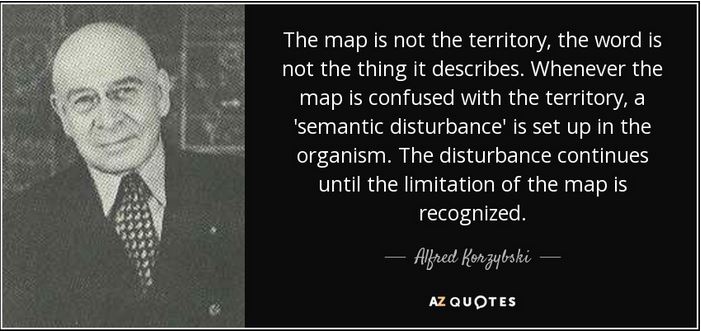
The quote is slightly adapted from a statement originally from Alfred Korzybski, a Polish-American philosopher and engineer, and while van Vogt’s words have not been memed, Korzybski’s have been.

Map And Territory - We Confuse The Map With The Territory

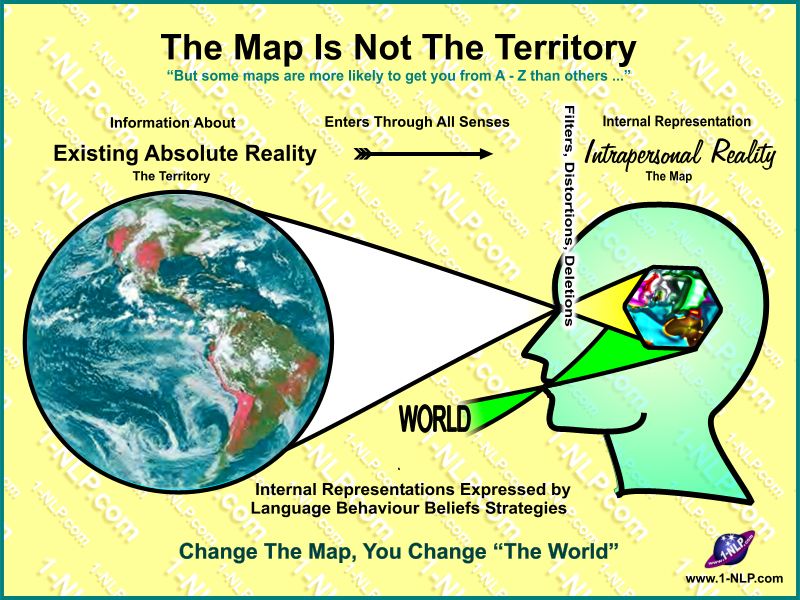
That’s the full quote, and you can see how quickly it makes one’s eyes cross. Here it is made even more confusing by the visuals:

The Map is Not The Territory – Explained in Simple Terms – Welcome to Club  Street Post
This was made by someone who does not understand how to explain things.

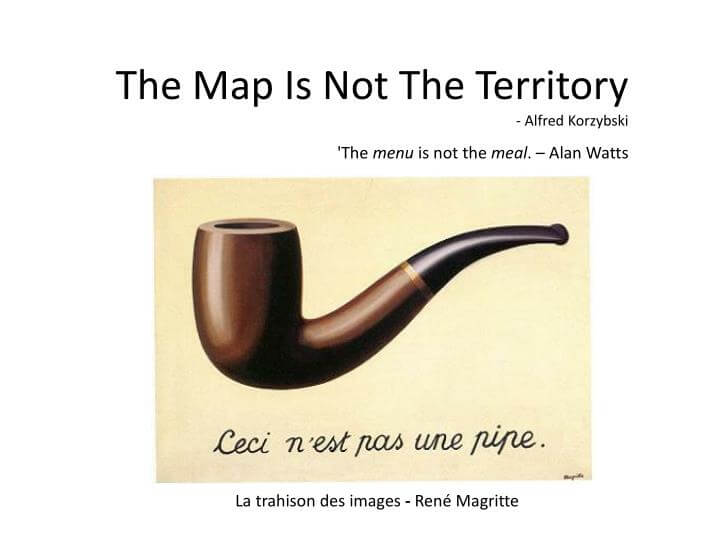
But that’s okay, here’s the simpler version, complete with standardized background image:

The more observant among you will notice the resemblance to a meme I used in yesterday’s post here.

But really, I prefer this last version, because I also like Watts’s iteration of this — and I love Rene Magritte.

The map is not the territory - Tom McCallum

So the point of this, then, is to recognize the limitations of representation and image — and of language itself. The map is probably the best example, because a map always sacrifices detail for coverage, showing a greater area while not showing everything about that area. If a map showed every detail of the area it depicted, it would be a photograph, not a map — and its value would be limited.

(Though it might be funny sometimes.)

On some level, this shows the difference between “book knowledge” and “world knowledge” — which my students still, still, call “street smarts,” a perfect example of a name that has lasted despite its limitations, which makes it a perfect example of the second half of this statement. If you know the name of a thing, that is analogous to “book knowledge;” and if you understand the thing (which is where I think the quote is going here, to a point about understanding, because certainly with a concrete object there is no doubt that the word could be the thing itself: I’m not sitting in the word “chair” right now.), that is equivalent to the experiential and deeper understanding implied by “street smarts.” Knowing the name for something does not mean you understand that thing, because the word is not the thing itself; again like the map, words reduce specific details in order to gain another value — generally universality, and economy, meaning I can communicate a fair amount of information, to a lot of people, without too many words. If I say I own a black SUV, then you don’t have much detail about my car — but (if you speak English) you have a general understanding of the category of vehicle to which my car belongs, and a general idea of its size and shape and appearance and so on, because we understand what aspects are included in the category “SUV,” and we know the color “black.” Also, as my wife has pointed out many times, with steadily growing annoyance as each year passes, all SUVs look the same — and a large proportion of them are black. But that means, while you can get a general idea of many, many cars with just two words, you can’t really identify those specific cars very well. And you definitely don’t know the things that make my car special, that make my car into my car. Not terribly important to understand the special things about my car, of course; but if you want to understand a person, you need to know much more than their name.

This comes into focus with the AP exam because I teach my students that they don’t really need to know the name of what they are talking about: but they need to understand the thing. This is, clearly, not how all AP teachers instruct their students, because I had MANY essays that used vocabulary the student did not really understand: and it showed. They named things they didn’t really have, because they didn’t understand the thing named. So that I don’t do that, to explain the details lacking in the term “AP exam,” so that you have more understanding of this thing instead of just knowing the name, the essay I scored last month was for the AP Language and Composition exam, which focuses on non-fiction writing, and examines primarily rhetoric. “Rhetoric” is another good example of a word which people know and use without really understanding it, because the connotations of the word have changed; now it mostly comes in a phrase like “empty rhetoric,” and is used to describe someone — usually a politician — who is speaking insincerely, just paying lip service to some idea or audience, without saying anything of substance; or in more extreme cases, using words to lie and manipulate their audience for a nefarious purpose. My preferred definition of rhetoric, the one I teach my students, is: “Using language to achieve a purpose.” What I am doing now in this blog is rhetorical: I am choosing words and using examples that I think will achieve my purpose — in this case to explain my idea, and to a lesser extent, to convince my audience that I am correct in my argument: that knowing the name of a thing is less important than understanding the actual thing.

So in the AP exam on Language and Composition, which focuses on rhetoric — or understanding and explaining how a speaker or writer uses language to achieve their purpose, as when a politician tries to convince an audience to vote for him or her — there are 50 or so multiple choice questions, and three essay questions. This year I scored the second essay question, which is the Rhetorical Analysis question; for this year’s exam (This is not privileged information, by the way; the questions were released right after the exam in May. It’s the answers that are still secret.) they used a commencement speech given at the University of Virginia at Charlottesville by former U.S. poet laureate Rita Dove. The goal of the essay was to “Write an essay that analyzes the rhetorical choices Dove makes to deliver her message about what she wishes for her audience of graduating students.”

Interestingly enough, the AP exam writers have given hints to the students in this instruction, which I’ve taken from the exam. They generally give important context in their instructions, quite intentionally; it’s easier to analyze rhetoric if you understand the context in which the speech or writing was delivered, so knowing that this speech was given at a commencement, at a university, in 2016, gives you a better idea of what is going to be said in the speech — you get the general shape of what is included in the thing named “commencement address.” One of the key aspects of this speech by Dove is both the expectation of what is included in a commencement address, and how she subverts that expectation: and that centers around the term “wish.” That’s the hint in the instruction there, along with the buzzwords “message” and “audience,” which are commonly part of a study of rhetoric and of rhetorical analysis.

Okay, that wasn’t interesting. I’ve lost you here, I realize. Let me use fewer words and just give you the general gist of my point: when students were analyzing Dove’s rhetoric, they did much better if they explained what she was doing and why, but didn’t know the proper name for her strategy; some of them knew the name of the strategy — or of a strategy — but couldn’t really explain it. They had the name, but not the thing itself.

Partly that’s because the study of rhetoric is very old, and thus has an enormous amount of terminology attached to it: much of it based on Latin and Greek roots, which makes the words sound really smart to modern speakers and readers of American English. It’s cool to use the words “antithesis” and “juxtaposition” and “zeugma,” so students remember the words and use them for that reason. I think it is also partly because a number of AP classes focus on remembering the word for something, rather than knowing the thing itself, because lists of words are easier to teach and easier to memorize and easier to test. Partly it’s because students under pressure try to impress teachers with the things they can do, to dazzle us and make us not notice the things they can’t do — like actually explain the thing they named.

Again, I don’t want to get into too many specifics on this particular essay because it hasn’t been released yet and I don’t want to get in trouble, so let me just give general examples.

There’s a rhetorical device called “polysyndeton.” (Cool name, isn’t it? Little annoying that the two y‘s are pronounced differently…) It means the use of more conjunctions than would be strictly necessary for grammar. If I listed all of my favorite activities and I said, “I love reading and writing and music and games and spending time with my pets and eating delicious food and taking walks with my wife,” that would be an example of polysyndeton. And if you were writing an essay about my rhetoric (Please don’t), you could certainly say that I used polysyndeton, and quote that sentence as an example. And if you used that sentence, it would be a correct example, and the person scoring your essay would recognize that you know what polysyndeton is, and you correctly defined and identified it, which is surely worth some points. Right?

But what does polysyndeton do? What did I do when I wrote the sentence that way, instead of, for instance, “I love reading, writing, music, games, spending time with my pets, eating delicious food, and taking walks with my wife.”? The ability to understand that, and to explain that — and, most importantly for the AP exam and for rhetorical analysis, the ability to explain how the effect I achieved through the use of polysyndeton helps to deliver my message, to achieve my purpose — that’s what matters. Not knowing the name.

(It’s a bad example here, by the way, because I made up the sentence just to show what the word meant, so it isn’t really part of my larger purpose; the purpose of using polysyndeton there was just to show what the hell polysyndeton is. And sure, I guess it was effective for that.)

The worst offenders here, on this year’s exam as in most, are the terms logos, pathos, and ethos, which are words used to describe certain kinds of argument, and also certain aspects of rhetoric. The words are Greek, and were chosen and defined by Aristotle; most rhetoric teachers at least mention them, usually, I imagine, as a way to show that there are many different ways to win an argument and to persuade an audience. That’s why I mention them in my class. But while a lot of students know the words, they don’t understand the thing itself, and so they find items in a passage they’re analyzing that looks like it belongs in one of those categories. Like statistics, which they identify as logos arguments, meaning arguments that appeal to reason and logic, which is indeed one way that statistics can be used. Dove uses a statistic in her speech, and a raft of student writers identified that as an instance of logos. The problem is that it isn’t logos, partly because it’s not a real statistic — she uses the phrase “150% effort,” and at one point lowers that to “75% effort” and “50% effort;” but at no time is she trying to present a reasoned and logical argument through the use of those numbers, which of course don’t come from any study or anything like that — and even more, because she’s not really trying to persuade her audience.

She was telling her audience an anecdote. And that’s where I ran into a stumbling block, over and over again in reading and scoring these essays: just because students know the name for something doesn’t mean they understand the thing: and just because students remember the name for something doesn’t mean they remember how to spell it.

Let me note, here and now, that these students are brilliant and courageous for even trying to do this damn test, for even trying to write three college-level essays in two hours AFTER answering 45 difficult multiple-choice questions in one hour. Also, because this was written under pressure in a short time frame, and with almost certainly only one draft, mistakes are inevitable and should be entirely ignored when they don’t get in the way of understanding. I knew what every one of these students were trying to say, so I ignored their spelling, in terms of scoring the essay. I also ignored their generally atrocious handwriting, not least because mine is as bad as any of theirs and usually worse.

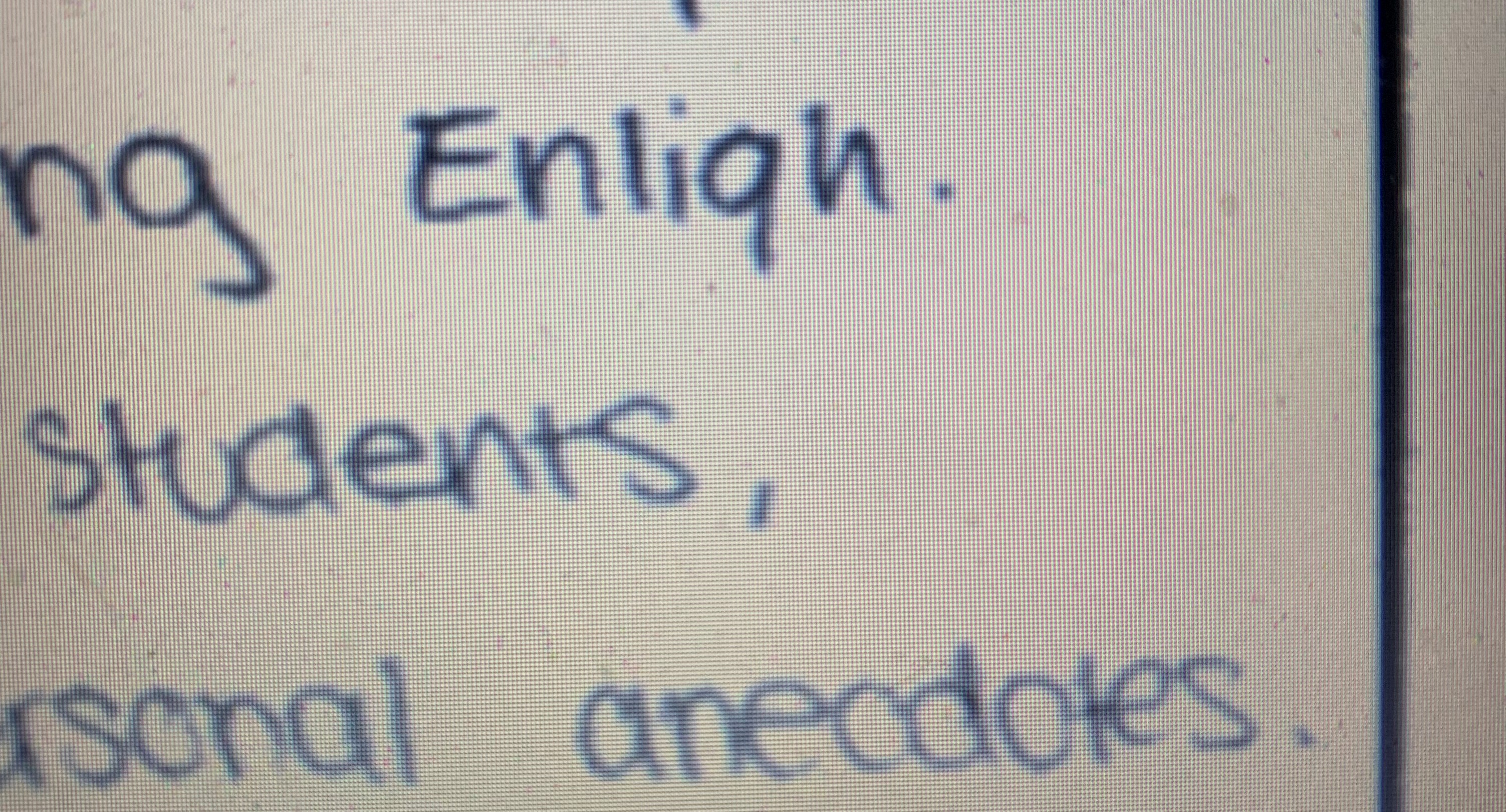
I just thought this was a fine example of knowing a term but not really knowing it. Ya know?

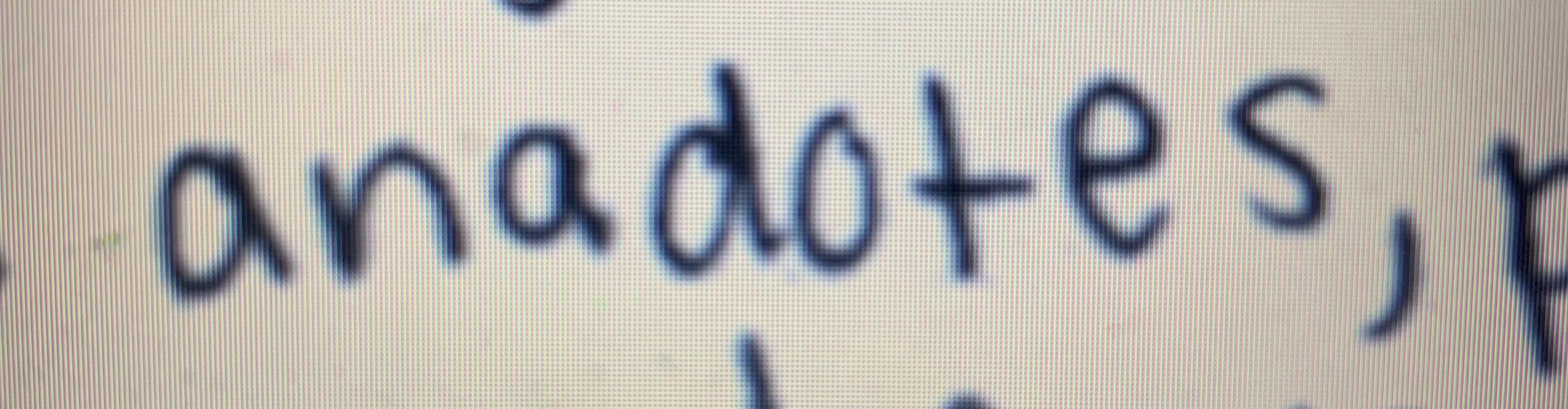
(Also I apologize for the image quality. Just trying to make a point. And the picture is not the point.)

The first one gets it right. Another one gets it right — but spells “English” as “Enligh.” Also please note the spelling of “repetition” which students repeatedly struggled with.

Fun, huh? I scored 695 essays this year. Last year it was over a thousand. And that exam passage also used anecdotes.

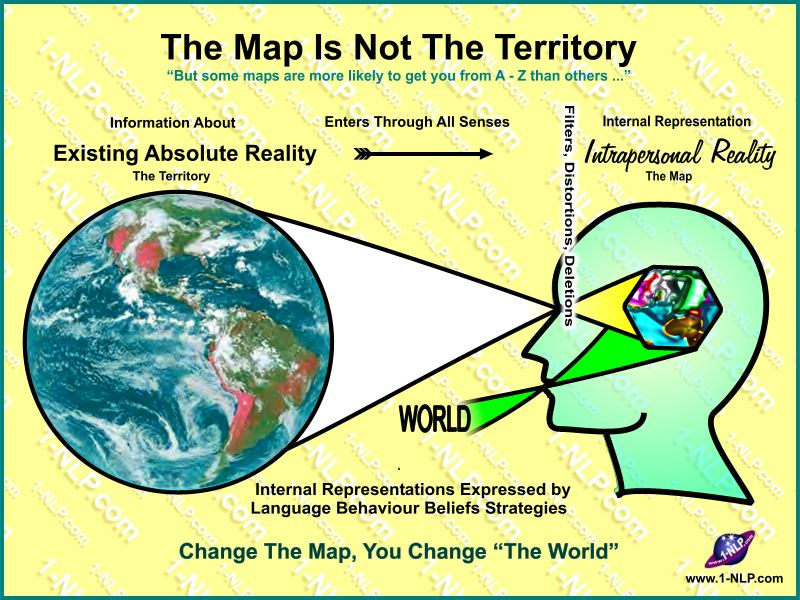
I’m really not trying to mock the students; just using this fact to show that knowing a term doesn’t mean you understand the term, because the word is not the thing itself. By the same token, knowing the spelling doesn’t mean you know the term, or that you understand the thing itself; which is why we ignore misspellings in scoring these essays. I think understanding the thing is much more important than knowing the word — and I’m a word guy. I love words. (Flibbertigibbet! Stooge! Cyclops! Wheeeee!) But I’m a word guy because I think this world is magnificent and incredible, and I want to understand as much of it as possible; words help me to do that, and to share my understanding of the world we live in. That complicated image I used above to show how some people can’t explain things well? Here, I’ll bring it down here so you don’t have to be confused which one I’m talking about.

This one.

This makes a few important points, even if it makes them badly. I do like how it goes from an image of the Earth, to a jumbled collage of colors inside the head, to the one word “world.” I think that, once you can follow it, makes this point well, how much translation and simplification happens between observed reality and the words we use to represent them. Though it should also lead to another head, of a listener, and show how that one word activates their own jumbled collage of colors in their head represented by the word “world.” (Far be it from me to suggest making this more complicated, though.) Because communication happens between two minds, and both minds contribute to the communication: which is why language works despite this simplifying process.

I do also like the statement at the bottom of the image: “Change the map, you change the world.” (Even though I hate how they capitalized and punctuated it.) Because that’s the last point here: while words are not the things they represent, they are incredibly important to our understanding of the world and our reality. Because we think and communicate in words. Not exclusively: my wife, for one, is deeply eloquent in communicating with images; my dogs can communicate with a look; musicians communicate with sounds that are not words. And so on. But language is our best and most effective form of interpersonal communication: and also one of the main ways we catalogue and recall our knowledge inside our heads. So getting the names of things right is incredibly important to our ability to use the information we know, and to communicate it to others. And what is the most important factor in getting the names of things right? Understanding the things we are talking about.

Because a rose by any other name would smell as sweet — but if you want people to know you are talking about one of these, you better call it a rose.

How to Say Rose in Different Languages | 1800Flowers Petal Talk

And for my sake, please spell it right.