I Did It My Why

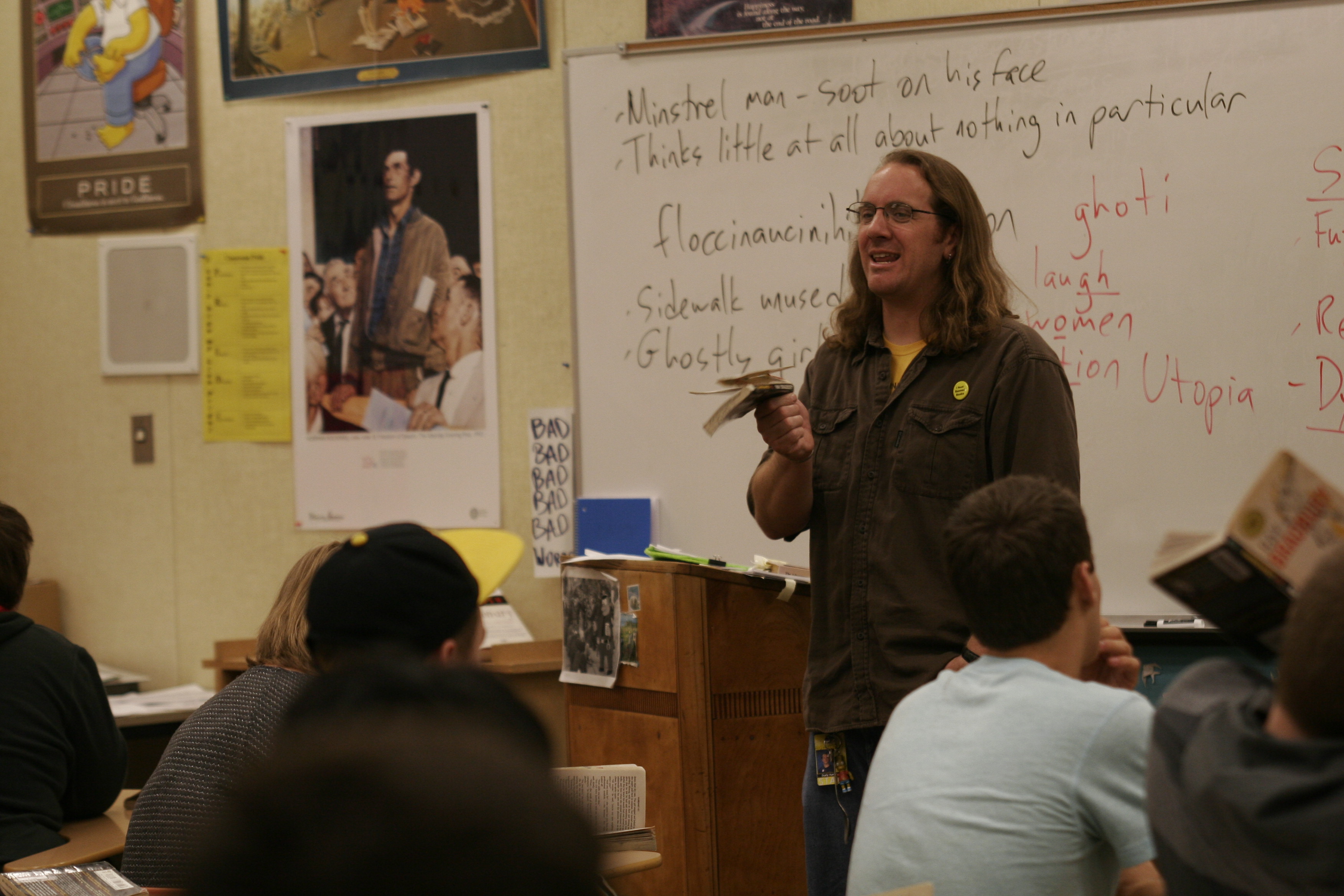
when admin says remember your why - Tony Stark Eye Roll Meme Generator

It’s inservice season!

Of course that should be the time of year, as the old joke goes, when we all get to hunt inservices, but it just means that this is the time of year when teachers go back to work in order to pre-game before the students arrive. (Yes, if you’re wondering, we’ll be drinking – but not enough. Never enough.)

If you are wondering – or, if you are one of my fellow teachers, which means your mouth is hanging open and you are cussing foully at the very thought of this – yes, this is absurdly early. In fact I am writing this at the end of the first half-week of inservice: this year I went back to school on July 16th. I kept seeing memes from teacher meme accounts that joked about our general outrage over Back to School sales happening now, with some kind of How-dare-you caption or comment that included the phrase, “It is JULY!” And though I share that outrage, every time I saw it I had to just sigh. Because not only am I back to work in the middle of July, but I will actually have students in July: classes this year start on Tuesday, July 29th. Thereby spelling the doom of that last vestige of the past advantages of being a teacher: it used to be a steady job, that was respected and appreciated, and which offered good benefits and a lovely, long summer vacation; now none of that is true, at least outside of the wealthier blue states.

But at least we’re still badly paid. So that tradition goes on.

Whenever I think about inservice – which I try not to do whenever I am not in the middle of it, but when I am in the middle of it, I always find myself stuck in uncomfortable chairs in rooms full of people who will look askance at me if they do not actually accuse me of disrespectful misbehavior should I have the audacity to distract myself from the pointless and condescending lecture being presented as helpful instruction, and so I end up spending quite a bit of inservice time pondering in silence the meaning of various available abstractions like this one – I wonder: What is inservice? (Also Why am I here? And Is there value in suffering?) It’s a strange word, after all: is it intended to differentiate this process from some other system called outservice? Which, frankly, if the only difference between inservice and outservice is that outservice is carried out in some place other than the school building, I’ll still take that one every time. And whether the service is in or it is out: who is being serviced? Am I and my fellow teachers the recipients of said service, like cars out of tune? Or are we the ones servicing something or someone else? If it is the teachers performing the service, what (who?) are we servicing, and why?

The ostensible answer is that inservice is meant to provide teachers with time and training to help us prepare for the upcoming school year; so essentially, it is the first one: we teachers are rolling into the garage like smoke-belching, backfiring, broken-down jalopies (Not entirely inaccurate), and the mechanics tune us up to get us ready for the race about to begin. I’m not sure what that makes the students, who are not the drivers and not quite passengers – maybe the cargo? Maybe the road we are driving on? – but I think that’s taking the metaphor too far. This lens does bring into clarity a number of obnoxious things that happen during inservice, not the least of which is: remembering my why.

There are themes that run throughout inservice everywhere, always, and which return every year, like a repeating motif in a Beethoven symphony, or like a recurring nightmare; one of these is the certainty that someone, almost certainly someone who does not teach, will ask the teachers to remember their why.

Why do we teach? Why do we take on this difficult and underappreciated job? Why do we come back to it year after year? Is it like returning to an abusive relationship? Is it like trauma that hides behind a memory block, as is supposed to happen with women who go through natural childbirth and then have to forget how incredibly painful the experience is or they would never have any more children?

As I have never given birth, nor been in an abusive relationship other than working in education, I cannot say. I will say that I remember, every year, how awful the previous year was – and also how wonderful it was, at times.

Which brings me to this year, and the current inservice season, and the direction – which was indeed delivered last week, by a presenter who is not a teacher – to remember my why.

Last year was bad. It wasn’t my worst year – that will always be 2011-2012, when I was working through a recession and a state investigation and a union contract negotiation in which I was the lead negotiator (And it says something that 2012 was the year I won Teacher of the Year for my school district in St. Helens, Oregon) – but it was bad. I spent a fair amount of time last year thinking about, and looking for, jobs that were not teaching jobs. That’s how bad it was: it changed my why into a What the hell am I doing here?, a question that is much less conducive to being a good teacher, and so not one that will be recognized at most inservice training sessions, even though surely many teachers at those sessions are asking that question, repeatedly, sometimes out loud, though under our breaths, so we don’t get dirty looks.

But here I am, one more time – my 26th – starting a new school year, about to teach high school English to a new (Well, partly new; partly familiar, which is at least part of the problem) cohort of students. And I found myself this past week thinking, genuinely wondering, Why?

Why am I teaching? Still? Why am I doing this to myself?

I don’t have an answer, not an immediate one. On some level, I don’t want to be here any more, don’t want to be teaching, don’t want to be teaching at the school where I have been teaching for the last 11 years. But that, too, is not the whole answer, and the whole answer is not immediately obvious in that context, either.

So let’s talk about it.

Why am I here? Why am I teaching?

First of all, most clearly and fundamentally, I’m here because I need a job. If I lived in a different kind of society – one that I think would be better in countless ways – that did not define a person’s value by their economic activity, then I would not be a teacher, at least not a classroom teacher. I have often thought I would like to teach the way Socrates did: at dinner parties, in conversations with interested parties, or out on the streets with random passersby; obviously I couldn’t do that for money, but I think I’d be pretty good at it. But I don’t live in that society, I live in this individualistic capitalist one, and so I must work for money so I can have a house and food and air conditioning, all the vital necessities of life. It’s possible I could survive without a job, but my level of misery would go up exponentially, even over what I went through, what I go through, as a teacher. So I work, rather than become homeless and starve on the street.

But does it need to be this job? At the moment, that answer is close to a definite yes, because my wife, who was also a teacher last year, and who had a far worse year than I did, lost her job to budget cuts at the end of last year; as she is working to build her entrepreneurial endeavors, it falls to me to provide a steady income and health insurance; because teachers are generally more valuable as we gain experience, our pay goes up every year and then drops precipitously if we change schools or school districts – I have done this twice, the first time losing about 20% of my annual pay and the second time 40% — so that means I need to stay in this job, rather than get another teaching position. That wasn’t an easy or a simple decision: I applied for, and could have gotten, a job teaching in a different school that would have earned me about 30% less than I make now; but I just couldn’t afford the drop in pay. So here I am. (It does help that I have many dear friends at this school, and that some of my students are lovely people. But it only helps, it doesn’t make the decision easy. It’s not the why.)

It is possible I could change jobs entirely, even change industries; but because most jobs pay more with experience, like teaching does, I would have to start at the bottom of the scale, and that is generally also less than I make as a teacher, even if the upper end of pay would be more. I am also painfully aware that the current political power structure puts continuing health insurance across changes in employers at serious risk of ending, which makes me doubly unwilling to leave my current job for a new one. Any job that would pay as much as or more than I make teaching would require additional training and/or certification, which makes them possibilities for the future, but not for now. (Also, I am 51, so starting a whole new career at the bottom and working my way up is both less attractive and also less likely than it would have been 20 years ago. Plus ça changeplus c’est la même chose.)

But of course, I could do those things. I could get a job in marketing, or in public relations, or in corporate training. (I could become one of the people who provide inservice to teachers, but I would really have to hate myself to do that.) Especially if I and my family moved states, to one that had a generally higher payscale for professional jobs, I could find something that provided the same approximate income. Yet here I am, back teaching again. So there’s more reason for my returning to teaching than just necessity, more than just money. I will also point out that, if I just wanted to receive my paycheck and cared about nothing else, it would be fairly easy for me to keep my job despite becoming a terrible teacher, because it is in fact quite hard to fire bad teachers. So long as I didn’t hit or harass one of my students, I could treat my job very differently from how I treat it now, how I have always treated it, so that even though it was the same job, it would be a very different experience.

Let me be a little specific. I teach English to high school students, and I do it well. I make literature both understandable and interesting to my students – or at least I create an opportunity for them to find literature both understandable and interesting. I make the class as valuable and entertaining an experience as I can, as much of the time as I can – and that’s a good amount of the time (though of course the experience of my class is subjective and I don’t doubt that some students think I do a terrible job of teaching, and/or that my class is boring as hell. But mostly, they don’t think that, not if they pay attention and try.). I work very hard to achieve that: I spend hours and hours thinking about what I am going to teach and how, hours and hours preparing materials and assignments and activities, and then when it is time to go and teach those things, I show up, every day, as ready as I can be to teach the material to the students I have. I ignore the inconveniences and frustrations of my daily work, of my classes and my situation, and do my best to treat every class period as an opportunity for both progress and also fun. I try to learn as much as I can about my individual students, both so that I can teach them better and so I can show them the respect they are due as human beings who are as wonderful and valuable as every other human being, despite being adolescents (That’s not a dig, not really; adolescence is miserable, and all of us react to that misery by inflicting misery on others. I did it too. I don’t blame them for it: but it can be very hard to deal with them while they work their way through it.). I try to be as honest and vulnerable and trusting with them with my own genuine self as I can be, again so that I can teach them better and so I can show them the respect of being real with them, so they can trust me, so they can work with me.

The fact that I do that, that I have done that every year, is part of the reason why I had a bad year last year, and part of why I don’t want to do this any more: because my students last year did not generally return my respect and my openness. They did not listen or value my honesty and vulnerability, and they did not show me the respect I deserve as a fellow human being, let alone as a teacher who has some ability to affect their lives, possibly for the better. They mostly didn’t disrespect me maliciously, just being teenagers in this modern world; but it was hard to remember that and to keep caring about them and keep trying to be the kind of teacher I want to be with them while they treated me with callous indifference. There were many times, for instance, when I would ask my students about something, and they would ask me what I thought or what my experience was in regards to that idea or situation, and while I was answering the question they asked me, they would not listen: they would turn away and have side conversations, or look at their phones or Chromebooks, or leave the room, because they were bored. Not because they hated me and wanted to insult me, but just because they didn’t care, and they didn’t feel like they needed to show me the respect of their attention, even as I answered the question or gave the explanation they asked for. So as I said, not malicious, but nonetheless hurtful, and hard to deal with. And this year, I will have many of those same students back again. Will they treat me more respectfully? Will they listen to me when I talk, either as their teacher or as a fellow human being?

Probably not. But I am willing to try.

I don’t have to: I could assign them readings, and questions, and maybe videos or audio files of literature – particularly non-fiction, which is what my administrators want me to focus on anyway, as it is the heart of the testing that produces the data that is the obsession of all administrators everywhere –  and I could sit at my desk and monitor their online activity to ensure they were on task. To my school, that would be considered teaching, to a degree sufficient for me to keep my job and my current pay, which is not really related to my success or failure in actually teaching my students. If I produced data that was better than what I currently engender with my involved, honest, human, active, interactive teaching, then I would be even more secure in my job. I might even get a little bonus money if their test scores went up. And it would be so easy. Especially if I just had AI design my “lessons” for me. And grade their assignments.

I choose not to do that. I choose to take the much more difficult path, which does not necessarily make my job more secure, and which definitely does not produce the best test scores. And why do I choose that, you might ask?

That’s the Why worth thinking about.

I teach the way I do because I don’t just teach for money, and I don’t ever teach for test scores. I think that my teaching methods help students to get better at understanding literature and at explaining their understanding in writing, and so higher test scores should be the result of my methods; but those test scores are not my why. If anything I sometimes, perversely and against my own best interests, want those scores to go down while my students’ knowledge and abilities improve, for the data to become less reflective of my students’ actual learning and abilities. Because I want my students – and also my school and my community and my society – to care less about test scores and measurable progress data. Ideally they would not care about it at all, ever; and my hope is that when students grow and learn in my class, and know that they grow and learn in my class, and everyone around them knows that they grow and learn in my class, and then those test scores don’t improve, or even go down, then it shows the truth: that test scores do not measure what matters in education. Test scores and measurable progress data are the wrong focus for educators, because they put the focus on the wrong thing, especially in my subject: English as a subject of study is not about measurable progress in discrete skills. There is no “mastery” in English. It is about growing: growing as a person, as a thoughtful person, as a person who thinks about the world and our place in it, who is curious about the world, who is appreciative of the world, and who cares about the humans who live in it with them.

I want my students to be that. It will make them better people, with better lives, in a better world. I want to make that happen. So I am willing to work for it. Even though it’s hard. I’ve worked for it, worked hard, every day and every week and every month and every year, for coming up on three decades.

Last year, and to a lesser extent the few years before that, it didn’t work as well as I thought it should. My students did not grow as much as I wanted them to. Partly because they did not pay attention enough and did not try enough to actually improve in the subject, to actually work and learn in the class; because they did not pay me the respect I deserve as their teacher and as a fellow human being with some ability to improve their lives and the world they live in, who is working hard to do that, who shows up every day and who is as honest and vulnerable and genuine and compassionate as I can be with them, as often as I can be, and regardless of how they treat me and the work I do and the subject I love. Part of what made last year bad, I think, was that I was not able to keep being patient with my students when they disrespected me and my class: it made me lash out in frustration, or it made me shut down, which then confirmed for them that this was not a class and I was not a person they needed to listen to or be respectful of. We spiraled, because of that, both my students and myself, more than once; it took extra effort to drag us out of those spirals – and very little of that effort came from my students. If anything the majority of them encouraged that spiral, because they know that if I give up, and they give up, then they can stop trying, and they can just do nothing for as long as I have given up, as long as I stop trying and do nothing. For many of my students, for much of the time, their goal is to do absolutely nothing, to put forth no effort, to achieve no ambitions – to have no ambitions – and to not care about anything at all. Because of that they put all of the requirement for effort and motivation on me: often consciously and intentionally, again so that they can give up by making me give up.

But I did not give up, not in the long run (though I did, too often, in specific moments with specific classes), no matter how annoying some of my students were to work with, to be honest and vulnerable with, no matter how disrespectful they were in not listening, in not trying to think or empathize with me or to connect to the material. And the reasons why I didn’t give up are another part of my why, and more of what brought me back to teaching again this year.

The first one, the simpler one, is that I love English. I love literature, I love poetry and plays and novels and stories and essays and screeds and letters and songs and – all of it. I love reading and writing, and I love talking about those things, and learning about them, and teaching about them. All of it is fascinating and beautiful and magical to me, as well as incredibly important, both practically and esoterically, concretely and abstractly. It would wound me, deeply, if I were to treat my subject as something not worthy of real attention and focus and thought and energy, if I were to reduce it to excerpts and handouts and multiple choice questions and AI-generated content. It would dishonor this area of knowledge, this way of living in and interacting with the world, that has meant so much to me, that has consumed so much of my time and effort, that has brought me so much joy and also so much power. And I won’t do that, not even though my students do it every minute of every day, in every class, to one extent or another. Part of my why, part of my reason for teaching, is to fight back against that apathy and indifference and cynicism, that belief, endemic among my students and my society and growing worse every year, that reading is boring and pointless unless it is reading the captions on a TikTok or the comments on a YouTube video or a SubReddit, that writing is something best done with a prompt to ChatGPT. Preferably one entered with talk-to-text. I don’t think I can change that attitude in all of my students; certainly not in the ones who never even try to get better in my class, the ones who prefer to do nothing, at least in this context, and to be nothing as a consequence, at least in this context; but I can help change it for some of them, at least. And because I have read and taught and thought about Ray Bradbury’s novel Fahrenheit 451 for so many years, I know that winning some people over to the side of the angels, to the side of the readers and the writers and the thinkers, the poets and the storytellers and the wordsmiths, is enough to save the soul of humanity and society – at least until we blow it up.

But then we will rebuild. If there are people who have not given up. The character Granger says it at the end of the book, after their world has, at least a little, blown up:

“There was a silly damn bird called a Phoenix back before Christ: every few hundred years he built a pyre and burned himself up. He must have been first cousin to Man. But every time he burnt himself up he sprang out of the ashes, he got himself born all over again. And it looks like we’re doing the same thing, over and over, but we’ve got one damn thing the Phoenix never had. We know the damn silly thing we just did. We know all the damn silly things we’ve done for a thousand years, and as long as we know that and always have it around where we can see it, some day we’ll stop making the goddam funeral pyres and jumping into the middle of them. We pick up a few more people that remember, every generation.”

That’s the other reason why I keep teaching, and again it is fairly abstract and idealistic, and again it is generally ineffective with the majority of my students: I want to make my society a better place. I want my students to understand the damn silly things we do, and that burn us up, so that they can help get us closer to that day when we stop jumping in the middle of our own goddamn funeral pyres. I want some of them to remember. To never give up.

I can’t fix all of it, of course, and so that makes it harder to keep coming back and trying again; just this year, I have had to sit through a conversation among teachers, who should all know better, about how AI is both inevitable and a valuable tool, and so we should not only accept it, but take part in it, contribute to its growth, tumor-like, on the collective mind of humanity; hearing that from my fellow teachers felt like being stabbed in the gut, and it makes me want to throw up my hands and cry out “A plague on both your houses!” I have for years chosen not to fight my students on their use of electronics, preferring to ask them to come along with me into the world of literature I make available and interesting and useful in my class; but I have watched as more and more and more of them have refused my kind invitation, my well-meaning passivity, and have failed to gain anything from me as a consequence. So now I will have to fight to make my classes available to my own students, and I don’t know how well that will work – and I don’t want to do it. I have no choice, so I will; but I don’t want to. That’s a why on both sides: I want to teach so I can fight for the souls of my students, and I want to let them do what they want, even if it destroys them.

But as I have learned from literature and from being a part of humanity and thinking about humanity, when some people are allowed to destroy themselves, they bring the rest of us down with them. I don’t want to allow that, not for a reason as stupid and worthless as laziness or fear of failure which creates failure, which are the main reasons why students don’t pay attention in class. Again, I don’t think I can save all of them – I don’t think I can save any of them, really, but I think I can help make a change in the paths for some of them, which will allow them to save themselves – but if I can save some, that will be enough. Not enough to make me happy, or to make my job easy; but enough to keep society moving mostly forward, and to allow humanity to continue to get better. If I can help them to empathize with others, as they might learn from To Kill a Mockingbird, or to think about the consequences of lies and self-serving fingerpointing, as they might start doing after reading The Crucible, or if I can just make them curious about the real value and power of reading, as they might learn from Fahrenheit 451, then I will accomplish that goal. I’ve done it before: and I hope to do it again. And again. Until I can’t do it any more.

That’s why.
The Truth

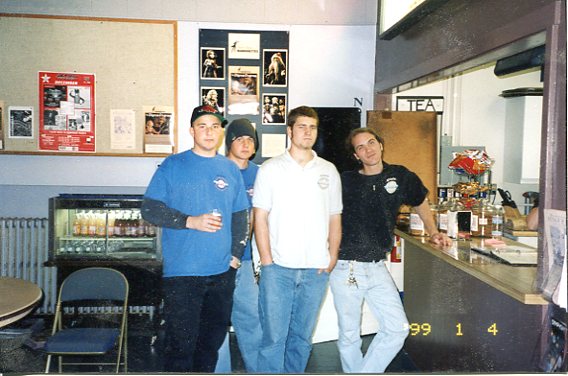
Me (far right) as a janitor
Me as a high school English teacher. Which one looks happier?

I have been a high school teacher for a very long time. Too long, in some ways, because I have watched education change enough in that time to make me very nearly obsolete, and if you stay in a job until your job doesn’t exist any more, that’s too long. I fear that the day is coming when English teachers will not exist: and possibly the day when teachers will not exist.

I’m here today to try to forestall that day. Not for myself – if I reach a point where I cannot teach, I will move into janitorial work, and be quite happy; probably happier than I have been as a teacher. After 25 years of cleaning up student writing, I would rather clean up public restrooms. It’s less work.

But it’s also less important work. Not unimportant work, it’s incredibly important because janitors keep our world working, and keep it livable – but for me, as someone who works in education, that work is more important. I’m just saying custodial work is a good backup for me. I worked in maintenance for five years before I became a teacher, and I liked it. In some ways more than teaching.

So if I liked being a janitor more, you may be thinking, why am I a teacher? And why do I still like and sometimes love being a teacher, despite the issues in education that I deal with every day?

It’s because I love humanity. I think we are incredible. I believe we have infinite potential for goodness, and infinite capacity for wonder. What we have achieved as a race is miraculous – and also sometimes terrible – and despite our almost limitless ability to dream and imagine, we can’t imagine how many more miracles we can achieve. And, hopefully, how many terrors we can avoid, or even eliminate, in the future.

And the key to that, the key to unlocking our potential and achieving progress and positive growth, and to actually making miracles real, is education.

That’s why I’m a teacher. Because my faith, my zeal, my heartfelt belief, is this: the best thing about all of us is that we are human, and the most important thing one can do is help us all become better humans. That’s what I try to do as a teacher. And that’s why I’m here today, speaking to all of you about school. Because I want to help you all to learn something about which you have been deceived – or at least misled. I don’t think any of you really understand what school is or should be – and what you think it is, what you have been told the purpose of school is? That’s a lie.

The lie is that school is about money. All of you students have been told that the purpose of school, the reason you are here and the reason you should try hard and do all of your work, is because that way you can get into a good college, get a good job, and make good money. You’ve been told that all along – though in elementary school it may not have been stated explicitly; but back then you were certainly told, with absolute sincerity, that the purpose of your schooling was to prepare you for the next step, which would be harder, and would matter more: 2nd grade is meant to get you ready for the rigors of 3rd grade, 3rd grade gets you ready for 4th; all of elementary school is preparation for middle school, which is preparation for high school. And all the way along, more often the farther you get in your thirteen years of compulsory schooling, you have been told that the goal of high school is to get you ready to go to college. So that you can get a degree, so you can get a good job, so you can make good money. And since schools also tell you that the next stage is always more important than the current one – “When you get to high school, things get serious, that’s when grades really matter” – the clear implication is that the final goal is the one that really, really matters: college, degree, money. Did you absorb the message in 2nd grade that everything then was intended to prepare you for college and a job and good money? Maybe not, but the cumulative effect of all of this is the same: the goal of school is – money.

Teachers, and especially administrators, you have said this. You have said it to all of your students, probably with certainty, certainly with absolute sincerity. All of you have lied. All of you have misled all of your students. Don’t feel bad: it’s what you were taught, what you were told, what the whole apparatus and engine of the educational system forced on you. So you didn’t know, you couldn’t even think, that it might be a lie. This is some of the power of education: it can influence our beliefs, and therefore our behavior, in pernicious ways as well as positive ones. As always, the pernicious influence is easier. The idea that school is intended to help students make more money is a pernicious lie, and I need to convince you to stop saying it, to stop thinking it.

Don’t take this as a personal attack, either, teachers: I’ve said this too. With certainty. With absolute sincerity. Because it’s what I thought, and it’s what I was taught. But luckily for me, I had an extra advantage that most teachers don’t have, something that helped me realize the truth: I’m an artist. And I’m married to an artist.

My wife and I both went to college to study art. And though I ended up studying education – one of the more useless endeavors of my life – I earned my degree in art, specifically in literature. My wife, who is stronger and braver and smarter and better than I am, stayed with art all the way through. And she had one of the most difficult undergraduate programs I’ve ever heard of; harder than any pre-law or pre-med program, I would be willing to wager, and with far less prestige.

And here’s the thing, the magic secret: she didn’t do it for the money. Neither did I – though I did sell out and become a teacher. Actually, it’s not the becoming a teacher that was selling out; I still reflect and promote the ideas of my art in my teaching, and I am proud of the career I have had, because it is a noble vocation, when it is done right. But I should have kept studying art while I was in school. I hate to think of the potential I lost, the opportunities I walked away from by switching from literature to education. And it’s funny: just as my time in public school didn’t prepare me successfully for college, my college education didn’t prepare me successfully for my career in public school education. The time I spent studying art was far more useful to my teaching than my training in how to be a teacher.

It was in teacher training that I was first trained in the Big Lie, though of course I heard it in some form or other all the way through my own K-12 schooling: the idea that the purpose of school is to get students higher incomes than they would get without it. I was shown the statistics, the data, the graphs, that argue that college graduates make more money, on the average, than non-college graduates. I was shown this, and told to use it on my students, because it’s one of the most effective ways to get students to take school seriously, to work hard and therefore (incidentally) to learn. I assume that’s why all trained educators in this country have been shown the same data: because scaring children with threats about their future is effective. It’s cruel, essentially abusive, and it has some quite severe secondary and unintended consequences, as we are now discovering; but it’s effective. It makes those lazy little punks – that’s you, students – work harder and try more. At least some of them. At least some of the time.

Look: you can’t blame us. Teaching is hard. Everything about it is hard. Organizing curriculum is hard, planning lessons is hard, finding and adapting materials is hard. It’s hard to stand in front of a room and command attention, let alone respect. It’s hard to manage a room full of individual people and get them all to focus, together, on one thing. It’s hard to communicate clearly, and hard to understand children who haven’t yet learned to communicate clearly.

(Let me just say one thing to all the students here: speak up. I’m old; I’ve lost some of my hearing. I cannot understand you when you whisper, when you mumble. Whatever you have to say to me: speak up, please.

(And I’ll try to talk slower.)

And then, after completing all of those difficult tasks, teachers run into the biggest difficulty of all, the one that feels insurmountable: getting the students to do the work. We create this curriculum, design these lessons to deliver it, gather the materials, summon all of our strength, invent positive energy from somewhere, and teach our hearts out: and then all of you students, just – don’t do it. There are many individual reasons why you don’t do it, but in a large number of instances, maybe more common than any other, the reason you don’t do the work is just because you don’t want to. You don’t feel like it. You don’t see the point. You don’t think it matters. You don’t care.

Confronted with that, over and over in student after student, day after week after month after year, teachers have reacted understandably: we try to MAKE you care, dammit! Sometimes we do it angrily, resentfully, with hurt feelings; because we care. And when you care, it hurts to try so hard and have somebody just say, “Nah.” That’s why teachers then try to scare students, that’s why we threaten.

“Your boss won’t accept this kind of work when you have a job.”

“Your college professor won’t care about you, so they won’t make exceptions for you: they won’t even know your name.”

“You think you can act like that out in the real world? Think again!”

Hurt people lash out. We may tell ourselves we’re doing it to be helpful, but we’re doing it because we’re hurt. It makes it easier for us to tell the lie, because the lie is hurtful, where the truth is just difficult – and we’re lashing out at those who hurt us. We shouldn’t do that, but also, maybe all you students should stop hurting your teachers. When a student comes to my class and says something like “This is boring. Can we do something fun instead?” to my face, every day, I definitely want to snap at them about how their attitude won’t be acceptable in the future. Because it’s just not right to insult someone’s passion the way students insult mine.

So it makes sense that teachers have done this, that we’ve told this lie. It makes sense that we’ve structured school, and thought about how we can teach our subjects, and explained this whole endeavor to students, on the basis of this fundamental assumption, this base falsehood, that the purpose of school is to prepare students for the real world, specifically for college, so they can get good jobs and make good money. It makes sense – though, teachers, I won’t take us off the hook entirely, because we really should have recognized the falsehood in this, and seen the hypocrites we make of ourselves, when we tell our students they should study hard specifically so they can make more money: because we are all so very well-educated, and worked so hard to become so, and we are so poorly paid for that effort and education. Did you all go to school, do all that work, and then take this very hard job, for the money?

Neither did I. (Though also, I expect and deserve and demand that I get paid what I am worth. So should we all.)

I do need to point out that we make this claim about the purpose of school in more ways than just talking about money. We do also talk about getting a “good” job, by which we mean a job you like and find fulfilling, a job that you feel has value, to yourself or to society or both. Teaching is all of those things for me, as it is for many of my colleagues; and the money has been generally sufficient, if not actually good, or representative of what I’m worth. We do also talk about getting our students prepared, with skills and knowledge, for the real world, beyond and apart from college. I think we do that, a little. Not enough, though also, here we run into a question of how much someone can be prepared, in school, for the world outside of school, and also how much someone should be prepared in advance of actually living. But regardless: our efforts to prepare students for the real world, as we call it, are founded on the same principle: we try to get them ready for their jobs. We want them to have work skills, and know how to find a job, apply for and interview for a job, succeed in a job. When we talk about our students’ future – other than some basic insincere lip service to the worn cliches “You can be anything you want to be!” and “You can do anything you want to do,” – it’s always the same basic idea. It’s all about the money.

Okay. So those are the lies. Now: are you ready for the truth?

Deep breath.

The truth is, you can not be anything you want to be. You can only be yourself.

The truth is, you cannot do anything you want to do: there are limitations on all of us, some internal, most external.

The truth is school does not prepare you for college or for work. Only you can do that, and no matter how well you do manage to prepare yourself, you will still be surprised, and sometimes unprepared and overwhelmed; and to some greater or lesser extent, you will fail.

The truth is, school is not preparing you for the real world: you are already in the real world, and you always have been. And no, it doesn’t get better. It doesn’t get easier.

The truth – the big truth, the last truth – is that the purpose of education is not, cannot be, and should not be stated as, helping students to get a good job or to make more money.

The purpose of education is to create more life.

***

Okay, that was a lot of truth. Take another deep breath, and then I’ll soften it up some, make it easier to swallow and to digest.

By the way: we absolutely should teach our students how to breathe. There’s nothing more important. Literally.

Okay: now for the softer side of the truth.

While it is true that you can only be yourself, that is also the very best thing you could ever be. Because every single one of you, of us, is as good and valuable and worthy as every one else; and there is also no other person you could be as successfully as you can be yourself. It’s also true that figuring out who exactly you are is incredibly difficult and complex, and the work we do on that project in schools is good work. You get to explore your self and your society and your skills and interests, even while we are barking at you that you need to master proper MLA format for your resume.

While it is true that there are limitations on all of us, which keep us from doing anything we want to do, limitations can be overcome. Muggsy Bogues played a full career in the NBA despite being only 5’3” tall. Also – and this may be even more important – a lot of things we think we want to do are actually really bad ideas. When I was 6, I wanted to be a stage actor, a fireman, and an astronaut. All bad careers for me, for the person I became – especially all at the same time.

The truth is that school does not prepare you completely for college or work: but the truth also is, it helps. We will, as I said, always fail, in college and career and life; but no failure needs to be total, or permanent. Failure always precedes growth. And – heh – school can prepare you for failure.

Unfortunately, the truth – and I cannot soften it – is still that school does not prepare you for the real world. But that’s because you’re in the real world, right now, while you are in school, and there’s no preparing for it, for any of us. There is only living it. Experiencing it. Learning from it. That’s all we ever do, whether in school or not. I do think it’s important that we teachers stop telling students there is some distinction between school and the real world, especially with the implication that the real world is somehow worse, harsher or harder, colder or crueller. People who really think that do not remember what it was like to be in middle school or high school. Or they do not understand the situations that many students, many children, live through. As I said: it doesn’t get better and it doesn’t get easier; but you will get better. And then, if you can, you will make your life better. And that process will continue for as long as you keep trying to learn and improve: always in the real world.

Last one – and, because I know my persuasive rhetoric, this is the important one. This is the point. This is what education is for.

Our world has, I believe, an objective reality. It’s not just in my mind, or in the Matrix. The world would – will – still be here when I am not here to perceive it; it will still be the same world when all of us are gone from it. Although it will be quieter, and less messy. No matter how I imagine the world to be, whether I think the Earth is round or flat, 6,000 years old or 4.5 billion, floating in space or resting on four elephants who are standing on a turtle – there is a truth, a real situation that I don’t change through my perception of it.

However: my perception of the world shapes my world, changes how I experience it, more fundamentally than I think we realize – certainly more than we think about very often. How we see determines what we see. We cannot perceive things that we cannot imagine existing; sometimes we cannot perceive them intentionally, consciously. Take the flat Earth example. If I believe, absolutely, that the world is flat, then there are things I will not do, places I will not go, because of my belief, because of my perception. I will not get on a plane that I think would fly off the edge of the world. I will not go to the world’s edge, let alone beyond it – so I will never see that there is no edge. So even though the world is in fact round, I will never perceive the world as round, because I will avoid – or more simply, deny – anything that would prove to me that the world is round. So for me, functionally, the world would be flat. And I will miss out on any experience associated with the round Earth. My world, shaped by my perception, would be less full: only two-dimensional.

Let’s take a more realistic and more common example. If I were a racist, and hated, let’s say, plaid people, then I would avoid, or dismiss as unworthy of my time, any and all plaid people. They would essentially not exist in my world except as an amorphous abstraction for me to hate and fear and blame. I would never get to know, never get to appreciate, never get to love, anyone who is plaid. And therefore my world, my life, would be smaller.

Because plaid people are some of the finest people there are.

And if you don’t know any plaid people – or, even more shocking, you somehow think that they don’t exist – I think you need to open your eyes and pay more attention. America’s no place for plaid-deniers.

But in all seriousness, this fact, that perception shapes reality, is true in all ways: things that we can’t understand, we avoid; things that we can’t conceive of, we don’t even perceive. And in contrast, when we have heightened understanding, we have heightened perception: my wife’s experience of an art museum is much richer, much fuller, than mine, because her knowledge of art, and her experience with creating art and the deep understanding of the artist’s craft she has thereby, lets her see the works on display in more ways than I can, who makes art only with words. My experience of literature is similarly fuller than most people’s. My dog’s experience of the world of smells is many thousands of times more complex and interesting than my experience of smells: which is why he chooses to sniff cat poop, which I simply avoid. Because he finds it interesting, and I just think it smells gross. But I have to assume that if I could smell what he can smell, I would interact with cat poop the same way he does: my nose would be riveted to every turd. Think how much more enjoyable it would be to live with cats, then. Having the litter box in the house would be a benefit. Maybe we’d put the box on the coffee table. Make it a conversation piece.

I know that sounds bizarre and insane. It sounds that way to me, too. But understand: it only sounds that way because of how we perceive cat poop. Or rather, how we don’t perceive it. How our experience of the world is limited by our range of perception.

Education can change that (Maybe not with cat poop.), because education can introduce us to things, and show us how to perceive them. I wasn’t born reading literature the way I do; I learned that. Because I learned it, my experience of reading is better than most people’s. My world of books is larger, more vibrant, more diverse, more entertaining, more inspiring, more challenging, than most people’s book world. Not because I’m better than other people, not because I’m just built different: because I have been educated. Because I learned. Because I learned how to read and understand what I read to an unusually high degree, I have a larger world to live in. It means I can find greater pleasure and fulfillment in the world of books. I will never get tired of reading books. I will never be bored, not as long as I can get my hands and my eyes on books. I can still perceive all the non-book things as well as all the rest of you can – though some people perceive individual pieces of non-book-reality better than I can, because I don’t know much about cars or sports or calculus, or about being a parent, or about traveling to other places or into other cultures – but in the areas where I learned well, my world is larger than the world of people who didn’t learn as well. In all the areas where I am not ignorant, my life is larger than the world of ignorant people. I live a larger life, in a larger world, than someone with less education with me.

That’s why I’m a teacher. Because I love humanity. Because I want to help people to live larger, fuller, richer lives. To have more chances to be human, to be more human. To make miracles. What else could I possibly do that would be as valuable, as important?

But, you see, my work has, of late, become less valuable. Less effective, and therefore less important.
Because my students are less willing to work with me, to listen to me. They are less willing to learn.

But that’s our fault, teachers, parents, adults in general: because we’ve been lying to them. And they have caught on. These are the unintended consequences of our choice to use the threat of future poverty and failure to scare our students into obedience. Rather than explain the real value of education, even though the idea is complicated, even though it is hard to accept, we have chosen to use the simple lie that the entire point of education is to prepare students for future work. We still tell them, as we have for years, that going to college is the best way, even the only way, to get a good job and make good money, and the point of compulsory public education is to prepare them for college and for jobs – and that’s it. It’s not all we think education is for, but when we are frustrated with difficult and disobedient students, we don’t usually talk about the wonderful benefits of education: we just threaten them. “If you drop out, or get expelled, how will you get a good job? You’ll be flipping burgers for your whole life!”

But, see, we have now gone through a pandemic, and more than one recession; today’s students are in the world of social media, which gives them access to people’s lives and internal thoughts. So they’ve seen behind the curtain, they’ve torn down the veil. They know that there are countless people who have good jobs without ever having finished college, and countless people with lots of education who have miserable jobs. And now college is so absurdly expensive that even those who would want a college-level job – for whom a job that required a college degree would be a “good” job – are not willing to accrue the debt to get that job, and so they’re looking for different jobs, ones that are easier to get, that have fewer requirements. Or, more often than I think we educators realize, they have come to the conclusion that life is not, and should not be, defined by a job: and so what job they end up with simply doesn’t matter to them, as long as they make enough to survive and do what they want to do. What they want to think about and plan for is all the non-job parts of life.

So here you are, students. You’ve been hearing for years, again and again, that school is necessary for getting into college and getting a good job. And you don’t want that. And you know that we are lying to you, that you don’t need college for many good jobs. You also know that life shouldn’t be only about a job.

What, then, is the value of this education we offer and demand, for a student who doesn’t want what we have claimed is the main and even the only goal of that education?

There isn’t any. So you don’t want it. Of course not.

And the more we try to threaten, and cajole, and cozen you into doing the difficult work of education anyway, the more you resist. Of course: you don’t like being lied to, and you don’t like having your time wasted. Wasting time is wasting life, and we all want all the life we can get.

So you ignore and evade and escape education that is nothing for you but life-draining, time-wasting oppression.

And therefore you remain more ignorant than you could be. Not totally ignorant, of course, because you learn on your own. But school could teach you so much more than you can easily learn on your own; and without putting effort into school, you will absolutely know less than you would if you could really do this the way it should be done.

And since you will know less, therefore you will have less life.

***

It has to stop. We need to stop telling students that school equals college equals job equals money. We need to stop focusing on money. I don’t teach literature because it makes money, either for me or for the students – or even for the authors, who I do think deserve money for their work; but that’s not why I want the book, and it’s not why I want to teach the book. I do it because literature expands and improves my experience of being human: and I want that larger life. And I want other people to have what I have. Especially now: because the world kinda sucks. And especially the kids I teach: because being in middle school and high school kinda sucks.

Teachers: we need to tell our students the truth: school sucks, but education will make your life suck less. It will give you more life, and a better life, because it will let you understand more, and therefore do more, and perceive more. And we need to believe this when we say it, and we need to want that for our students.

Otherwise we should all just give up and become janitors.

At least then the world would be cleaner.

This Morning

This morning, I think I have an answer to my question from yesterday morning.

Yesterday, I was wondering what I could say to my wife, to my students, to myself, that would help comfort us in the face of inevitable suffering, and I wished that I could rely on God as that answer, because then I could at least stop thinking about it — and I should have said worrying about it and fretting about it, because that’s the point; it’s not the idea of not thinking, it’s the idea of “let go and let God.” Which I can’t do, but I appreciate that people can.

But I have another cliche that I have gleaned from outside of the fields of the Lord (And that enormously obscure reference is brought to you by the podcast I’ve been listening to, Sunday School Dropouts. Probably also why God has shown up in this atheist’s morning ramblings.), that as I understand it, many churches focus on as the heart of their message (and others may sprinkle in, in between railing against homosexuals and abortion and Democrats in Washington), which is this: God is love.

Once again, that doesn’t work for me. But it comes with another way of looking at it, that I think does fit in nicely with what I’ve been looking for:

Love is God.

That is to say, love is everything. Everything that matters. It is the alpha and the omega, it is the answer to all questions, all doubts and fears. Love. And love, I think, can offer an answer precisely as satisfying  — and not any more satisfying — as can the answer “God.”

What should I tell my students when the future looms ominously over them? Love. Look for love in your life, look for love in what you do; if you don’t find any love in your life, then change it, and if you don’t find any love in what you do, then stop doing it. Don’t work for money, work for love: and I don’t mean to be flippant there, because I am a person who works for money precisely because he cannot live on what he loves; but for me, the money I earn is spent on those I love, and used to give me an opportunity to do what I love, which I am doing right now. So I never mind my job very much, because it is done for love, if not always in love. And yes, sometimes I love my job: I do love books and poetry, and I love writing, and I guess I don’t entirely loathe my students. (No, I love some of them. More, I love the people they become, and the potential I see in them when they are young.)

What do I tell myself when I am in my darkest, foulest, most hopeless moods? Love. I have lost some of my liberal idealism in these last few years, and I have begun to lean a wee bit more conservative; it has made me worry, because I know that this is a common pattern, especially among aging white men, as we start to get a taste of power and become greedy and start worrying about people taking away what we have. And I do not want to be that guy. But I think that so long as I focus on love, so long as my actions and intentions are begun with love in mind, then I won’t turn into someone I would hate. At least some of my shifting to the right is based on the consideration that people on the right can’t be bad people, can’t be evil people, not all of them. (Trump is.) Not any more than there are evil people on the left. It’s not reasonable to take a person’s political leanings as the sole evidence of their morality or their value, or anything else apart from their political leanings; evil people are conservatives, conservatives aren’t evil people. Thinking that makes me give some conservative ideas (like the free market and lower regulation, the independence of states and, perhaps most shocking to me and those who know me, the value of the Second Amendment) the benefit of the doubt, and that makes me move away from my liberal roots.

But that doesn’t matter. It doesn’t matter if I’m a liberal or a libertarian or a moderate or an anarchist: so long as I consider what is best for my fellow men, and treat them always with respect and with love, then my ideas will never be bad, even if they are wrong.

I also need to remember this for myself when I am disappointed in my writing career. When I think about how old I am compared to other writers, and when I realize how good I am compared to some other writers — and then when I think about how entirely devoid of success I am compared to most other writers; I need to remember: love. I do this because I love it, because I love the me who does this. And so long as I write for love, with love, and out of love, then I can’t be a failure. I am a writer.

What do I tell my wife when she worries about our future, about what we’ll do for money, about where we’ll live, about how we’ll see the world and how we’ll live in it? I will tell her, as I do as often as I possibly can, that I love her, without limits and without end, and that I always will, and that love will see us through, no matter what else happens. Always. Love.

It doesn’t solve the problems we all face. But then, neither does God. I hope that it brings you some comfort, as it brings me some. I hope that it gives us all the strength to keep fighting towards our goals, and I hope it keeps us from hating those who fight against us, or at least in the opposite direction. I hope that the love in your life is enough to make you smile, as it is for me, even on a Monday morning.

Thank you for reading what I write. I won’t say I love you, because I don’t know you, but I love the fact of you and the existence of you, and what you give to me. Thank you.

Now go love!