The Enemy, Within

Listen. I’m not your enemy.

it may seem at times like I am. I get pretty mad about politics, and I say some aggressive and accusatory things, and also some pretty damn insulting things. We disagree, very strongly, about a number of issues; and you may see some of my opinions as representing a threat.

For instance, you see Donald Trump as the best choice for the next President. I see him as an orange fascist, a shit-flinging gibbon, who may be a threat to this country’s continued existence; though I admit, Trump’s not actually the threat; it’s the people who come crowding in with him, who, while we’re all staring at the shit-gibbon, are sneaking around in the shadows trying to make our lives worse so they can gain more of what they already have, wealth and power and the protective bubble of privilege. I don’t understand why you can’t see the threat of those people behind Trump. Though I understand why you’re staring at Trump: we all are. I went to the San Diego Zoo when I was a kid and watched a chimp pee in its own mouth. We like watching primates fling excrement. It’s wild.

I know that you think Kamala is the threat to our country; or, even more likely, you see her the same way I see Trump: you think she is a low-IQ failure, a Communist/Marxist liar who got her start in politics by spreading her legs for Willie Brown, and who never even won the nomination, just stepped in when Joe dropped out, conveniently for Kamala too late for the DNC to run a new primary but not too late for her to take the money he raised; and you think she is mainly a distraction whose job it is to open the door for those same shady characters I mentioned before, who, you think, will strip away our freedoms and the things that make us who we are, that make us the greatest country on Earth.

You worry about what she’s going to do to the economy, and how that will affect the people of this country.

I worry about what he’s going to do to the people of this country while we’re all focusing on the economy.

So, we disagree. Strongly. Often.

But we’re not enemies.

Neither one of us is trying to destroy the country, though we both accuse each other of doing exactly that. I think the threats you see, the things you believe will destroy the country, are absurd non-issues — like preventing trans people from playing sports — and I can’t understand why you don’t focus on the real threats that I see — like climate change. And yes, you guessed it: you can’t fathom why I believe in these things that are barely even real, like climate change, and why I ignore the moral collapse of this country, caused by the rise of DEI and drag queen story hour.

I know that the issue of trans rights is not the biggest issue on your mind, I know that it is the economy, immigration, and crime, in that order; I’m trying to show the starkest differences between us — because people on my side are also concerned about the economy and about immigration in ways I personally don’t agree with. So look on the bright side: you already won both of those arguments, as you won the argument about defunding the police. Whoever gets into office, Trump or Harris, Democrats or Republicans, they will cut taxes (though they shouldn’t, they should raise taxes on corporations and use it to fund Medicare for all, which will then save us more money and, more importantly, more headache than any tax cut ever could — but I also recognize that you think this is socialism gone wild, and you can’t believe I would ever trust the government to do anything important like provide real health care to real people; and I can’t believe you would trust corporations to do it instead of the government — and here we are.), and they will definitely pass that hard-on-immigration bill that the Dems handed the Republicans before Donald Trump told them not to pass it. He’s been taking shots for months, now, about that bill, so you better believe he would pass that same damn bill — except with the wall stuck in there somewhere. So you will get a tougher stance on immigration, and you will get a tax cut, and you will get a better economy (Because the economy during any presidency is largely built by the one before, so whoever wins this election will be hailed as a brilliant economic president because of the work that Biden has done for the last four years. But we can disagree on that, too.). One of the other places we disagree is trans rights, and that one I think is still up in the air; that’s why I used it as an example. I could have picked abortion: but I don’t think we actually disagree on that, not substantively.

I’m explaining this because I don’t want you to think I’m trying to paint you in a terrible way by talking about trans people playing sports or reading to children: I am not. I disagree with you. (If you are a trans person, or an ally and a supporter of trans rights as I am, and you think I am cozying up to people who want to remove your right to exist, hold on. Trust me. Read on to the end. I am not your enemy, either. [I’m just going to go ahead and assume that anyone who actually is trans is not on the Trump side politically. Not really.]) I do not think you, whom I disagree with politically, are my enemy.

I would like you to recognize the same thing about me.

Let’s talk about our disagreements a little more, and see if you can see this my way.

What makes someone your enemy? For me, it boils down to one thing: your enemy intends you harm. They wish to harm you. People who are not our enemies may (and often do) harm us, but they don’t intend it; that’s the difference. Anyone who intends you harm is your enemy.

So look at where we disagree. Start with immigration, because I don’t mean to ignore what many people think is a very serious issue. Here’s my opinion on it: there are too many illegal immigrants coming into this country.

Ha. Didn’t expect that, did you? Want me to really blow your mind? I’m in favor of the Second Amendment, too.

Where we disagree is what should be done about illegal immigration. I do not think illegal immigrants are bad people. I am tempted to explain that position by saying that I am not a racist, because I think a LOT of people who oppose illegal immigration hold that position because they are racist; but not everyone does, by any means. Many people oppose illegal immigration because it is illegal; many people oppose it because they think our country doesn’t have the room or the resources to support countless immigrants, and priority should be given to those who come here legally. I disagree with the first argument because laws can be changed: what matters to me is harm, not the fact of a law prohibiting specific behavior. I talk to my students about laws and morality all the time, and every single one of them thinks that some laws should be broken when the law is bad or the need is severe or the cause is righteous; I presume we agree on that, as well. I don’t like holding one position in one context and then changing it in another context; that is hypocrisy. So the issue is, if illegal immigrants are doing harm, their actions should be illegal, and they should be stopped; but if they are not doing harm, then it doesn’t matter that their actions are illegal: harmless actions that are illegal imply the laws should be changed, not that the actions and the people are bad somehow despite the lack of harm.

The harm illegal immigrants may be doing is taking limited resources. And as I said: I think there are too many illegal immigrants. (I kind of think there are too many people in this country, period, but then I don’t like people, so I’m not going to pay much attention to that thought of mine.) I will only say that illegal immigrants may be taking limited resources because it isn’t clear to me that illegal immigrants are the problem: they are emphatically not the cause of inflation or the housing crisis. But it is possible they are taking too many limited resources, and if so that should stop: one way would be if they should be reduced in number.

Here’s how I think we could do that, if it is the right thing to do: work permits and the right to migrate freely across the border, in either direction, for employment. Doing that would eliminate as an area of concern all of the people who immigrate and reside permanently in the US simply for economic reasons: because they could travel here, work, and then go back home with their families for vacations or when they have enough money. They wouldn’t bring their families here, because they would only come to work and send money home. Most people don’t want to move their family to a whole new country just for a job: they do it because if someone comes to the US for a job, they can’t ever go back, because then they could never return to work more. People used to cross the border to work when the agricultural season called for more workers, and then return to their native country when the season ended. We are the ones who stopped that, and it was stupid, and it caused millions of people to immigrate here with their families, permanently, reluctantly, because they had no economic opportunities in their home country and they didn’t want to be separated from their families forever. But go to the U.S. alone, just to work for a couple of months for picking season? No big deal. And then the only people who migrate here permanently would be those actually seeking asylum, seeking an entirely new life: a MUCH smaller number.

So. That’s my view on illegal immigration. I think immigration does no harm when it is handled reasonably; because of that, I think handling it reasonably is the best thing to do. Not build walls, not deport people, not militarize the border. (We are not, by the way, talking about fentanyl trafficking or human trafficking: one of the ways that we get twisted in politics is by conflating multiple issues that should be considered separately. This is just the immigration discussion.) Work permits and freedom to cross for work.

Maybe you still disagree with me. Maybe you think illegal immigration is illegal and so there should be a penalty involved, because breaking a rule is in itself harmful; okay. Maybe you think that immigrants with work permits would still take jobs that should go to Americans; okay.

Can you see that, even if you hold these opinions, or some other opinion that makes you disagree with my idea — can you see that I don’t intend you any harm? That I don’t mean to harm anyone? I want to make it easier to separate those migrants who want to work and then leave, from those immigrants who want to come here permanently, and I want to make it easier for both to get what they want. I believe that will do the most to decrease harm. (And, not coincidentally, it will reduce the harm done through human trafficking and drug smuggling, because much of that is done through exploitation of desperate people, and if we reduce desperation we reduce exploitation. But this is just the immigration discussion. I just want you to know I’m not ignoring the other problems.) That’s my full intent: and so even if you think I’m missing a critical concern of yours with my solution, I’m not planning anything that is intended to cause you harm. Or to cause anyone harm, but we’re talking about you.

That’s why I’m not your enemy.

Want to do another one? Take climate change. You may oppose the Green New Deal because you think that it will make everything too expensive, and that climate change can’t be affected by making you buy an electric car. You may think that Democratic politicians are using the Green New Deal to give kickbacks to the shady people standing behind them (Though if you do, you are ignoring that one of the biggest recipients of sweetheart environmental laws and policies is Elon Musk, who is not a friend to Democrats.), and you may think that electric cars suck and you don’t ever want to own one. (You may tell yourself it’s because EVs don’t have the range, or that the batteries are dangerous and lithium mining is toxic, or that the power to charge them comes from fossil fuels used to generate power in the first place — but it’s really because EVs don’t make the cool sounds that gas cars do, and you know it. Right, JB?)

I do not believe in a Green New Deal. I think it is a political statement that is now toxic. I wish it weren’t, because I believe in what it represents; but I don’t need the statement, I just want the results. I believe the government should support and encourage the US to move towards a greener economy and a greener infrastructure. I do not want Democrats giving kickbacks or sweetheart deals to their corporate cronies; they are bad at picking them, because they picked freaking Musk and made him the richest man on Earth, and he then fucked up Twitter. I really liked Twitter, so now I hold a grudge. (Mostly against Musk, who sucks for a plethora of reasons.) I believe the government has a role in educating the public, and especially in making sure that the corporations which profit from causing climate change do not get to lie about climate change, as all of the oil and gas companies have been doing for generations now. I admit I think that EVs are better and cooler than gas cars, and specifically because they don’t make the same noises that gas cars do.

It’s okay if we’re enemies on that score.

But again: can you see how I don’t intend to cause you harm? We may have different ideas of what should be done, and how it should be done. I want education. I want encouragement and support, but I want the change to come from the people and the companies of this country, not to be imposed by the government. I want that because government imposition of changes so vast and momentous doesn’t work: and I really think our actions on climate change need to work, and they need to work now. But I’ll bet you anything that we could find a reasonable compromise on the specifics of this issue.

Because I am not your enemy.

Go down the line: you will find the same thing, again and again. I hear pundits and people on both sides say that we are all Americans and we are not that different; I don’t actually agree, I think we are that different. I think we disagree on a whole lot of stuff. But I don’t think we are enemies, because I don’t think we intend each other harm. I don’t think most people intend anyone harm, other than those they see as enemies. I don’t think people who want to deport illegal immigrants want to harm those people, I think they just want to protect this country and they think immigrants are harming the US, and that deportation (and a wall) are the best way to prevent that harm. I know that people who want to impose EV mandates and so on are not intending any harm for those who might get affected; they want to prevent the much greater harm of the onrushing environmental collapse. Talk to citizens who support the idea of a Green New Deal about something like subsidies for those who can’t afford to buy an electric car, to make it possible to switch to an EV, and I guarantee they’ll agree immediately; and if you think that’s socialism, well. Tell me who it harms, and how.

You know what made me realize this? It’s abortion. Over 60% of this country’s citizens support abortion rights. That’s more than all of the people in either party, Democrat or Republican. The people I sometimes think of as white supremacists, the people I sometimes think of as religious fanatics (Don’t blame me for thinking that, you guys have Mark Robinson on your side.) — large proportions of them, of you, support abortion rights. And yet there are whole states — which may not have 60% support for abortion rights, but sure as hell have more than 0, which is the number of abortions some states seem to want to allow — trying to ban abortion entirely.

Even those people, most of them, don’t intend harm. They are trying to prevent harm. I think, vehemently, that they are wrong, that they are causing more harm than they are preventing; but I can have that debate with them. And other than the fanatics who actually want to murder people, I think they would be willing to have the discussion with me, too. Because we’re not enemies.

Now: let me say that there are people who intend harm. There are people who oppose immigration because they are racist; they want to militarize the border because they want people to die trying to cross into the US; they want there to be camps built to hold immigrants because they want immigrants to suffer and die. Those people are my enemies. As I think they are yours. There are people who want to prevent trans athletes from playing on teams with their identified gender because those people hate trans people, and think trans people shouldn’t exist. Those people intend harm to trans people: therefore they are my enemies. But I don’t think that’s you, either. I think most people who oppose trans rights think that it’s fine for trans people to exist; they think trans people shouldn’t play on sports teams, and they think trans people shouldn’t be around children. I disagree with those ideas — but I don’t think the people who hold them intend harm. I think those ideas actually do cause harm, quite severe harm; but I don’t think it’s intentional harm. Where it is intentional harm, where people think trans people — or those they mistake for trans people, like drag performers — should be killed? Those people are my enemies. And they should be yours. Murderers, even would-be murderers, do not get a place in the debate.

But I really don’t think that most people want to commit murder. And I think if you don’t want to kill people, we can talk.

So this, I think, is how we should think about this going forward. I disagree with you, a lot, and I will fight you, tooth and nail, over political points — but not literally, because I do not intend you harm, and you do not intend me harm. We are all Americans, even though we are very different. We are not enemies.

But you know who is my enemy?

People who try to convince you that I am your enemy. People who say that I am, intentionally, destroying our country, which I love dearly. People who say that I should be destroyed, that I should be jailed, or killed, for my beliefs and my political ideas.

People like Donald Trump.

So understand this: I don’t hate people who vote for Donald Trump — though I don’t like you, either. But I don’t think that most of you are my enemies. Some are: the racists are, and the anti-trans bigots, and the ones who want people to suffer and die because they disagree politically with Trump and his ilk. Donald Trump, however, is my enemy: because by trying to make you think that I am your enemy, he intends me harm. If you think the same thing about Kamala Harris, then I accept that she is your enemy — though I doubt you think that unless you think that all Democrats are out to kill all Republicans, and if you think that, you’re probably my enemy already. Trump is Kamala Harris’s enemy, and so she says things about him you wouldn’t say about people who aren’t your enemy: and he deserves them.

Because he is the enemy.

You’re not.

So if my enemy wins this election, I’m going to oppose him, and I’m going to be fighting those who supported him because he is my enemy, and I think he intends harm. But then after he is gone — and even if he wins this election, he will not destroy this country, because he has too many enemies and not enough allies — we will need to come back together, and hopefully find a new set of leaders to elect who do not tell any of us that we are each other’s enemies. Hopefully that type will never rise again.

Hopefully it won’t be you.

But I don’t think it will. Because we’re not enemies.

Do you agree?

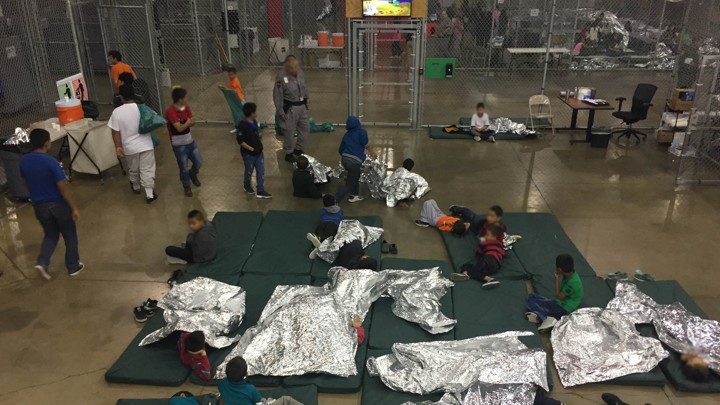
Children in Cages

People arrested for allegedly trying to enter the US illegally wait in cages inside a warehouse in McAllen, Texas. Picture: AP

People arrested for allegedly trying to enter the US illegally wait in cages inside a warehouse in McAllen, Texas. Picture: AP


CUSTOMS AND BORDER PATROL VIA REUTERS


Did you know we’re keeping children in cages?


I actually wrote a different blog yesterday, about how I fear that Trump’s success – or at least the positive things that are happening around him, even if they’re not because of him, like the unemployment rate going down – will encourage a cultural shift towards bullying. But I can’t post that one until I write and post this. Because this is the first thing that needs to be discussed. In fact, we should start every conversation with this until the answer can genuinely be, “No, we’re not; they stopped that.” Walk into Starbucks, and the barrista should say, “Hi, there are children in cages, but can I take your order?” And you should say, “Unnecessary family separation as a deterrent policy is a crime against humanity, and I’ll have a latte.”

So. Because of the attack on the media from Trump and the right (And because the corporate media has been sliding down into the muck for a generation at least), let’s establish facts.

First fact: when you type “children” into the Google search box, the first option is “Children in cages.” This is America. Childish Gambino released that video a month early.

Second fact: is this actually happening? Yes.

Federal officials said Tuesday that since May, they have separated 2,342 children from their families, rendering them unaccompanied minors in the government’s care.

(Source)


Third fact: are these children being kept in cages? Here’s a good explanation of the semantic argument.  If I may, the answer is: Yes. They are detention facilities, they do provide for the basic needs of the children, with the exception of the most obvious one: their parents aren’t there. But the essential point is: the children are held in enclosures made of chain-link fencing on concrete floors, and they are not allowed out of those enclosures. They are not able to see or communicate with their parents unless they can wend their way through an enormous bureaucracy.

Fourth fact: The children separated from their parents include infants and toddlers. Being kept in “Tender age shelters.”


Fifth fact: this is not, despite the administration’s stance, required by law, nor is it the fault of the Democrats. Unless we stop believing in free will. The administration has claimed – I heard White House spokesman Hogan Gidley reference all three of these elements during an interview with NPR – that the separation of families and the detention of children is the result of three things: the Flores Agreement from 1997, the William Wilberforce Trafficking Victims Protection Reauthorization Act of 2008, and the 2016 decision by the 9th Circuit Court which included accompanied minors in the previous laws regarding unaccompanied minors.

Here’s a good article from PolitiFact about this argument

If I may quote Inigo Montoya: “Lemme ‘splain. No, is too much: lemme sum up.”

The Flores Settlement agreement (Which settled a class-action lawsuit actually going back to the Reagan Administration) says that aliens in the custody of INS (now ICE) who are unaccompanied minors must be held in the “least restrictive setting” possible. Specifically, it says,

“The INS shall place each detained minor in the least restrictive setting appropriate to the minor’s age and special needs, provided that such setting is consistent with its interests to ensure the minor’s timely appearance before the INS and the immigration courts and to protect the minor’s well-being and that of others.”

Source

This means, to the Trump administration, that children can’t be jailed, and if their parents have to be, then the children must be separated from the jailed parents. I’ve seen various sources say that the settlement requires unaccompanied minors be released within 20 days, but I can’t find that passage in the agreement. If you’d like to try, look here.

The 2008 law applies because it says:

Except in the case of exceptional circumstances, any department or agency of the Federal Government that has an unaccompanied alien child in custody shall transfer the custody of such child to the Secretary of Health and Human Services not later than 72 hours after determining that such child is an unaccompanied alien child.

Source

This means that, once the children are separated from their parents (and therefore, according to the Trump administration, they are unaccompanied minors), they cannot be held by either INS, if the parents are being held pending an immigration hearing, nor by the U.S. Marshals, who hold the parents if they are being accused of a federal crime – which, under this administration, they are; that’s the “Zero Tolerance” policy that Jeff Sessions announced in April. Sessions’s memo to the state attorneys general is here,  and the law that he cites, the law against unlawful entry, is here.

Please note that the maximum penalty for a first offense is six months in jail, which makes this crime a misdemeanor. Most adult immigrants, once they reach a hearing, are released with time served.

Finally, the 2016 decision from the 9th Circuit Court of Appeals broadened the Flores Settlement to include accompanied minors, meaning that they, too, had to be held in the least restrictive setting available, and, as with the 1997 settlement, the government had to prioritize release of children in custody to family members over any other solution; the decision says that this was also the case with minors detained with their parents, though it does also make clear that this does not require the government to release the parents in order to provide a custodial parent for the children. It does require, as the Flores Settlement did, that parents be released with their children if they are not a legal or flight risk. 

Text of the Decision


So what does all this mean? It means that the Trump administration is arguing that they must uphold the law, and they must do something drastic to reduce the crisis of immigration across the southern U.S. border. They claim that those who cross the border have committed a crime, and therefore they must be prosecuted. If those people brought their minor children with them in the commission of this crime, those children have to be separated from their parents as they cannot be held in a prison with their parents, but must be remanded to the custody of Health and Human Services, as per the Flores Settlement, the 2016 decision by the 9th Circuit, and the 2008 Wilberforce Reauthorization Act. HHS then places those kids into tents and warehouses, wherever they have facilities that meet the standard of the Flores Settlement (Which says that they have to have the basic needs, and also opportunities for exercise, entertainment, education, and contact with their parents. Well.). This, they say, is all required by law, and at various times, various members of the administration from President Trump on down have all claimed that this is the fault of the Democrats: first they claimed that Democrats passed the laws (They didn’t), then they claimed that this has been going on since either the Obama administration or the Clinton administration (Neither is true; both administrations detained unaccompanied minors in similar settings, but neither intentionally separated accompanied minors from their parents and then treated them as unaccompanied minors. Generally they released families. It should also be noted that there were not nearly as many families trying to immigrate with their minor children in the past. Source), and then they claimed that the Democrats could end this any time by passing legislation to change the laws or the policies – their preference, apparently, is for the alteration of the Flores Settlement, so that they can detain children, accompanied and unaccompanied, for as long as necessary. This is also untrue in that the Republicans control all branches of government; it is true that they need Democrat votes to pass a law through the Senate, but the first obstruction to any legislation is and has been the President, who just will not say what he is willing to support; the two bills currently being debated in the House, one more conservative without a path to citizenship for the DACA recipients, one more moderate (but still Republican/conservative) with a path to citizenship (along with limiting legal immigration and funding the Trump border wall) have BOTH got his support, whatever the hell that means.

But please, in this era of lies and exaggeration and political spin, let’s just get down to brass tacks. This policy of family separation is. Fucking. WRONG. It is vile and appalling and inhumane and cruel and everything that this country is not supposed to be. Regardless of whether the parents of those children have committed crimes (and in the case of asylum seekers, some of whom have also reportedly been separated from their children because the asylum seekers stay in the custody of ICE while awaiting their hearings and the children have to be remanded to HHS according to Wilberforce, literally no crime has been committed, as seeking asylum is legal.), the children have not, and the children have rights. They have the right to be with their parents, and they have the right to not be jailed. That doesn’t imply that you put them into chainlink-partition-spaces in tents in Texas; it implies that you find a way to ensure that the parents can be released from custody without violating the laws you are trying to enforce.

Now let’s talk about that. Because there really is an obvious solution here, even though it is one that Trump finds untenable because it makes his base froth at the mouth: he calls it “Catch and Release.” This is the policy that previous administrations have used with most families (Not, as Obama’s Department of Homeland Security Secretary Jeh Johnson said, in cases where there might be some doubt as to the child’s familial relationship to the adult; thereby rebutting current DHS Secretary Kirstjen Nielsen’s argument that children must be separated in all cases because the families have no documentary evidence of familial relationship and therefore ICE has to assume the adults are human traffickers) and with many other immigrants seeking asylum or going through legal processes. You set up a court date, and then you release the people on their own recognizance, with the understanding that they will show up for their court date.

Here’s the thing. This is how our system works. Our Constitution requires the provision of bail that is not excessive, and that everyone receive a fair and speedy trial, and that anyone accused of any crime is innocent until proven guilty. Unlawful entry is a misdemeanor. The maximum fine is $250. Reasonable bail for that crime would be, what, maybe $100? Public intoxication, also a misdemeanor punishable by a maximum of 6 months (Varies by state – I’m using Indiana because it came up first on Google) and a fine of a whopping $1000, has a bail around $200-$500, according to the Bail Bonds Network. So I would think that bail for the parents should be something that most of them should have access to, especially if they have friends or family in the U.S. Once bail has been granted, then the question is whether or not the accused will show up for court; President Trump, of course, argues that they won’t, that the illegal immigrants are intending exactly this: showing up with their kids so that if they get caught, they will be released and then they will vanish into the Heart of Darkness inside the U.S. and never be seen again until they get arrested for rape or murder.

But here’s the thing. Immigrants show up. They don’t miss their court dates.

Moreover, studies show that asylum seekers—like many of the thousands of Central American families fleeing violence and arriving to the U.S.—are likely to appear for proceedings, because they have such a strong incentive to avoid returning to persecution. Indeed, as United Nations High Commissioner for Refugees (UNHCR) researchers found in 2013, asylum seekers have a natural “inclination towards law-abidingness,” and view making a refugee claim as “a manifestation of faith in legal process.” U.S. research bears this out. A Vera Institute study, from 1997 to 2000, of asylum seekers in expedited removal proceedings found to have credible fear, found that 93 percent with intensive supervision complied with all court proceedings; 84 percent complied with minimal supervision; and 78 percent complied even if simply released without supervision. These compliance rates were so high that Vera concluded that “[a]sylum seekers do not need to be detained to appear…. They also do not seem to need intensive supervision.”

Source

And if that rate doesn’t appeal, there are certainly ways to improve it. Immigrants with legal representation, for instance, attend hearings at an even higher rate. Solutions like allowing immigrants to check in via phone call or smartphone location apps create higher response rates. Even ankle bracelets (like the two that Paul Manafort has to wear ) would allow a tough-on-crime sort of stance, while allowing families to stay together, and reducing the burden on government resources to house all of these people.

In other words: there are alternatives. Even if you accept the claim that the administration is enforcing immigration law, it has to be pointed out that there are also 11 million illegal immigrants currently residing in the U.S., who are not currently being rounded up, separated from their children, and housed in federal lockup. So apparently the Trump administration is actually choosing and prioritizing which laws it enforces to what extent. Which is, indeed, the whole goddamn point of an executive branch. And this executive is choosing to prosecute people accused of first time illegal entry – a misdemeanor with a lesser penalty than some states impose for jaywalking – and therefore choosing, as a matter of intentional, proactive, object-oriented policy, to separate families and put children in cages. This is our government, and our country. It is us, unless we do something about it.

It is fucking wrong. It has to stop. It has to be the first thing we say, and the first thing we act on, in our current opposition to the abuses of our government. And I don’t care if you are a progressive liberal or a libertarian anarchist: this is what you should be talking about. This is what you should be fighting. Call your representative, call the White House, write letters, march, protest, donate, do anything and everything you can. Fight this. Fight it now.

We are keeping children in cages.

Book Review: The Devil’s Highway

Related image

The Devil’s Highway

by Luis Alberto Urrea


In May, 2001, 26 men tried to cross the border from Mexico into the United States. Three of them were paid guides – coyotes; the others were poor workers, mostly from the southern part of Mexico, all looking for work, hoping to make some money. They tried to walk through some of the ugliest, cruelest, deadliest desert in the world.

Twelve of them survived.

This was a rough book to read. Urrea does an incredible job of showing these people for who they were; even the coyotes, who weren’t bad people – they weren’t the heads of the ring, just flunkies; the one who led the trip, who took the wrong turn and got them lost, was a 19-year-old kid who couldn’t make enough money working in a factory that made roofing tiles, so he took on this job, instead. The men who paid for the trip were husbands and fathers; none of them wanted to emigrate, just to get a job, earn some money, and pay for something back home. Mostly they wanted to buy or build a better house for their wives and sweethearts and children and mothers. Urrea explains all of it: how the men (Plenty of these walking trips through the desert include women and children, but this particular group happened to be all men, ranging in age from 16 to 56) got approached by a friendly coyote, a fixer, someone who made all the arrangements, who talked to the poor coffee farmers, the broke factory workers, about how much money they could make in the North. Urrea talks about how Mexico, unlike the US, stretches now east-west, but north-south; El Norte is to the poor of Mexico’s southern states what the western frontier was to Huckleberry Finn and the 49ers: opportunity. But this opportunity costs money – an average of $1700 per person, not counting expenses on the way; how are these dirt-poor men supposed to pay for that? Easy, says the fixer; my boss, the head of the ring, can guarantee a loan to cover the whole amount. You can pay it off out of all that money you’ll make working in the citrus fields of Florida, or the slaughterhouses of Oklahoma. Only 15% interest. No need for collateral: miss a payment – we kill your family.

So these men took a chance. And then their lead guide, the one who really knew the route, took a powder: he vanished the day before the group was supposed to board their final bus, for the last leg before their long walk. No problem: the ring sent two more guides, to back up the second-in-command, the 19-year-old.

And then they took a wrong turn.

They spent four days in the Arizona desert, in an area known as the Devil’s Highway. Complete desolation, stuck between a national park, a reservation, and an enormous military base. Sand, rocks, cacti, unclimbable mountains; nothing else. Not a hundred miles from where I’m sitting, right now, in air-conditioned comfort, which made reading this book a bizarre experience: as Urrea went on and on about the harsh conditions, the terrors of the cacti, the rough, jagged, broken terrain, the unbelievable heat (There was a heat wave when those men went: it hit 108 degrees one day. At night it never got below 85.), I couldn’t fathom that the place where I live could be so deadly. I mean, sure, it’s too hot in the summertime, but – deadly? The book describes others who got stuck out in the desert and succumbed to the heat, tourists and daytrippers; they died in mere hours.

And I walk my dog in that heat. I mean, early in the morning, of course – but still, in July, it’s probably 80-90 when we walk. Thinking about people dying in those conditions was bizarre. Though not as bizarre, I’m sure, as actually going through it.

Urrea brings it to life. He talks extensively about what the heat of the desert does to you, which was a particularly brutal chapter to read, coming as it did in between the stories of the men walking, and then the description of those same men dying. He talks almost as much about the Border Patrol, who they are and what they do; though at first Urrea is not terribly flattering – just honest – by the end, when the story becomes just a rescue attempt, those BP agents become heroes. They saved lives by risking their own, and it was quite inspiring to read.

It’s a good book. The writing is remarkable, and it gives a far better and clearer picture of immigration and the border than anything else I’ve encountered. Highly recommended, even if you don’t live in the desert.

Grateful

(Note: this was mostly written Monday.)

Yesterday I was feeling down. All right, I admit it: I was feeling pissy. I have to go back to work today, after a two-week vacation, part of which was spent visiting my father’s family in San Diego. And as an introvert, I do mean “spent:” it costs me energy and will to go a-visitin’, to put on my happy face first thing in the morning (because I was staying with my aunt and uncle, who are lovely people – but unfortunately early risers, at least my uncle, who was up with or before me every morning) and then keep it there all day, even when I am enjoying myself, as I did on this trip. But the days after a trip like that are precious layers of rest in which I can wrap myself, like armor, against the day I have to go back to being around people (No, my wife and pets don’t count: being with them is restful, as I do not ever have to put on an appearance or affect. And I am supremely grateful that that should be so.). And today’s the day, so yesterday was my last day of resting: hence, pissy. My rest-armor still feels thin.

Plus, today isn’t going to be a good day of work. I frequently enjoy my job, more frequently don’t mind it too much, and sometimes can’t stand it: today is going to be one of those last. My current employer takes the first day of the new semester as a chance for professional development, which they do like the corporation they are: all of the employees at the various sites all have to converge at a single school – luckily, it’s mine; half of the schools are in Phoenix, and those poor bastards have to start their morning with a three-hour commute in order to get in on this little hootenanny – and we start with a motivational speech from our CEO, a polished politician who has probably never taught a day in his life; then a team-building exercise generally involving random groups (for the last two I have been grouped with my boss, who’s a nice guy, but – yikes!) and competition and office supplies: we have built wind-driven vehicles out of pencils and paper and aluminum cans; we have had to open sealed envelopes and break apart chains of paper clips using nothing but a single pencil per team member. Then we will have “breakout sessions,” which are individual seminars on teaching methods, none of which I will ever, ever use. Then a “networking lunch,” and yes, it actually says that on the schedule of events; followed by another “breakout session” and then a final group discussion of the importance of what we do, especially what we have done here today, and the granting of awards which I will never win (My data is insufficiently polished.). It is a complete waste of time. Part of me is happy that I don’t have students to deal with – but more of me realizes that dealing with students is actually what I do, and I do it well and it is better that it be done; therefore any day that is spent without students, and also not spent on preparing for students, is wasted time. Today will be wasted time. I suppose it’s possible that I will find something useful in one of these meetings, but in fifteen years of being professionally developed, that has rarely been true; I’m not holding out much hope for today.

And the last thing is this: I’m dreading Tuesday, too – the return of students. Not because I don’t like my students; I do, most of the time, and some of them all of the time. Not because it’s going to be a terribly hard day of teaching: we’ll mostly go over old work and start orienting ourselves for the new semester, which is more big picture stuff, less actual sifting through the ash for things that survived the fire (Because that’s what I do: the searing heat of modern life has destroyed much of the literature I would have taught fifty years ago, made it impossible for young people today to read and appreciate and gain from, along with the understanding of the importance of the skills centered around that literature, namely reading and writing and thinking.); I’m dreading Tuesday because of grades. Two and a half weeks ago, I gave my students final exams, and collected final projects, and then I did the thing I hate most about teaching: I assigned grades. I passed a final judgment on them, categorized and evaluated them – emphasis on the “value,” in our current view of school as a churn that brings the cream to the top and curdles what’s left, a process in which grades are the vital element, the stick that I thrust up and down and swirl around through them, beating them until they convert from liquid to solid and start turning sour. And now I will have to see them again. I know several of them are going to be upset, generally because that 90% slipped down to an 89%, and their letter went from A to B. And they’re going to want to know why. Oh, I’ll be able to tell them; but it will be upsetting for them to know how they failed to achieve their goal of straight As, to know that they couldn’t quite or didn’t quite muster enough wherewithal to accomplish their best result. They will feel defeated and futile. They will also blame me, though they may not say it, and it will strain our working relationship. And as for me, I will be unable to convince them that grades are meaningless, that nobody should pay attention to them ever, least of all the students who get them. I wish I could convince them of that. I do try. But then, because it is my job, I have to make myself a hypocrite, by assigning grades, by placing them into arbitrary categories which have actual consequences in their real lives, and I have to try to do that in a logical manner, as contradictory as that sounds. Then I have to face them with the result, and admit that I am not right when I say that grades don’t matter. Even though I should be.

So yeah, not a good week ahead of me. And it made my mood go black and jagged Sunday afternoon – despite the fact that I saw Star Wars: The Force Awakens earlier on Sunday, and it was awesome. But work, and grades, and breakouts that are a lot more like imprisonings.

But then two things happened last night. One was this: Toni and I watched an episode of Inside Man, a show created by and starring Morgan Spurlock, our favorite documentary filmmaker – Supersize Me quite literally changed our lives, and we’ve watched everything he’s done since then – about immigration. And in the show, Spurlock tries to go into the lives of people involved in a particular issue; in this case, he went and picked oranges with the migrant workers, visited their homes, met their families.

I saw people who work ten hours or more a day, hauling 90-pound bags of oranges up and down 20-foot ladders that aren’t really propped on anything, just sort of leaned against a tree’s leafy boughs and then driven down by the picker’s weight until, hopefully, a branch catches and holds it; they dump these bags into enormous tubs which must hold a half a ton of oranges: a tub for which they are paid 95 cents. On a good day they fill ten tubs – which takes ten-plus bags of oranges per tub — and make a little more than minimum wage. A family of six, with two working parents, lived on around $25,000 a year – and that’s without any social services, as they are illegal immigrants and therefore have no access to health care or food stamps or any other government programs that require a social security card, which they can’t get. The father of the family had open-heart surgery last year, and was back in the orange groves six weeks later, because he doesn’t get disability or sick leave or unemployment, and now he had a hospital bill to pay along with feeding his family. Hey: at least they pay taxes.

And I realized: my god, my job is easy. Well, okay – no, it isn’t; it requires a tremendous amount of knowledge and preparation and dedication and patience and energy to do it, and even more to do it well, which I think I do. But it certainly isn’t back-breaking. It won’t cripple me before I’m fifty, as farm labor will. I won’t say I make a decent living, because I don’t think what I’m paid is decent; but it isn’t obscene, which is what I would call farm labor wages in this day and age. I don’t live my life in fear of being discovered, because any discovery by authorities – anything, a traffic stop, an accident, any official report of any kind – would lead to jail and deportation.

It made my crappy Monday seem a whole lot less onerous. Still unpleasant, but no more than that.

The second thing that happened was this: my mother called and told me that my uncle is seriously ill. Maybe dying. And it’s a cliché, but – how can you not think of the good things in your life when you hear that someone else is about to lose everything? Okay: I have a job that drives me crazy, and a vocation on top of that that frequently leaves me feeling frustrated and insignificant; but I’m not dying. I have years and decades ahead of me to solve the problems that face me now. And even if I never solve them, I have a lovely and pleasant life: I have a wife who is my soulmate, who is my apotheosis of beauty and of kindness, and who makes me laugh all the time; I have pets that love me unconditionally; I live in a beautiful city, where the sun shines almost every day, on rocks inscribed with poems. I have all of my senses, and I can hear music and see art and taste coffee and smell perfume and feel my new warm socks on my feet. I have all of this, and I’m mad because – what? Because I’m going to be bored? People who don’t understand what I do will presume to teach me how to do it better? Because I can’t sit at home for several hours, as I’ve been able to do for most of the past two weeks?

So rather than coming on here and ranting about the irritations and frustrations of teaching, and of working for a corporation with corporate-style management, and of the state of education today (And let me break the narrative thread here and say: it’s Tuesday now, since I didn’t get this piece finished yesterday morning, and after a full day of professional development on Data-Driven Instruction, Toni and I watched the next episode of Inside Man: which was about education. So believe me when I say I have some ranting to do.), I would like to say this: I am grateful. I don’t want to say thankful, as most of the things I have that make me happy are not due to another person’s actions, and of course I believe in neither God nor fate; though I will say I am thankful for those people who did influence me: I am thankful to Stephen King and John Steinbeck, Edgar Allan Poe and Piers Anthony, Robert Frost and William Shakespeare and James Baldwin and Virginia Woolf and all the rest, for writing and publishing their work; I am thankful to Rocco MacDougall and Nick Roberts for teaching what their hearts and minds told them to teach; I am thankful to my parents for raising me to be a thinking person and a compassionate person; I am thankful most of all to Toni for asking me if I wanted gum, and for actually coming when I invited her to my vampire-themed LARPing session: most people would not have done so. I am very thankful that she did.

But beyond that, I am, if not thankful, grateful: a word that comes from gratus, the Latin for “pleasing.” I am pleased: pleased with who I am, and where I am, and what I am. The life around me fills me with pleasure, today, and yesterday, and tomorrow. Life is good, and I have it still.

Now let’s get to work.