Waking Up

I had a nightmare the other night.

We all had one two weeks ago. But that one is just beginning.

I don’t have very many nightmares. Although, I don’t remember my dreams very often, so it’s possible that I am running through a constant string of terrifying dreams all night and then blanking my mind of them when I wake; I do suffer from insomnia, and so I frequently wake up in the middle of the night and think anxious and frustrated thoughts for a while before I manage to get back to sleep — if I do get back to sleep. That might be from that hypothetical string of nightmares suddenly reaching some kind of tipping point, driving me out of sleep and into waking anxiety.

Hmmm… a series of nightmares that build up to a climax of anxiety which ruins sleep. That does sound like the current situation of this country, doesn’t it?

In my nightmare the other night, my wife and I were going through a zombie apocalypse scenario. I don’t remember the whole thing, but at the end, we were hurrying through the halls of a Generic School-In-A-Dream™, and it was right at the point of the zombie plague where you look around, and you realize that the people around you are not people, but are rather zombies: and not only that, but the people are giving you that sullen, angry stare that zombies tend to have right before they charge. In my dream it was particularly creepy because the one I saw and recognized as a zombie was a child, and the signal that the kid was zombied up was a bloody rip across his cheek. In the dream, Toni and I ran; but we didn’t get very far.
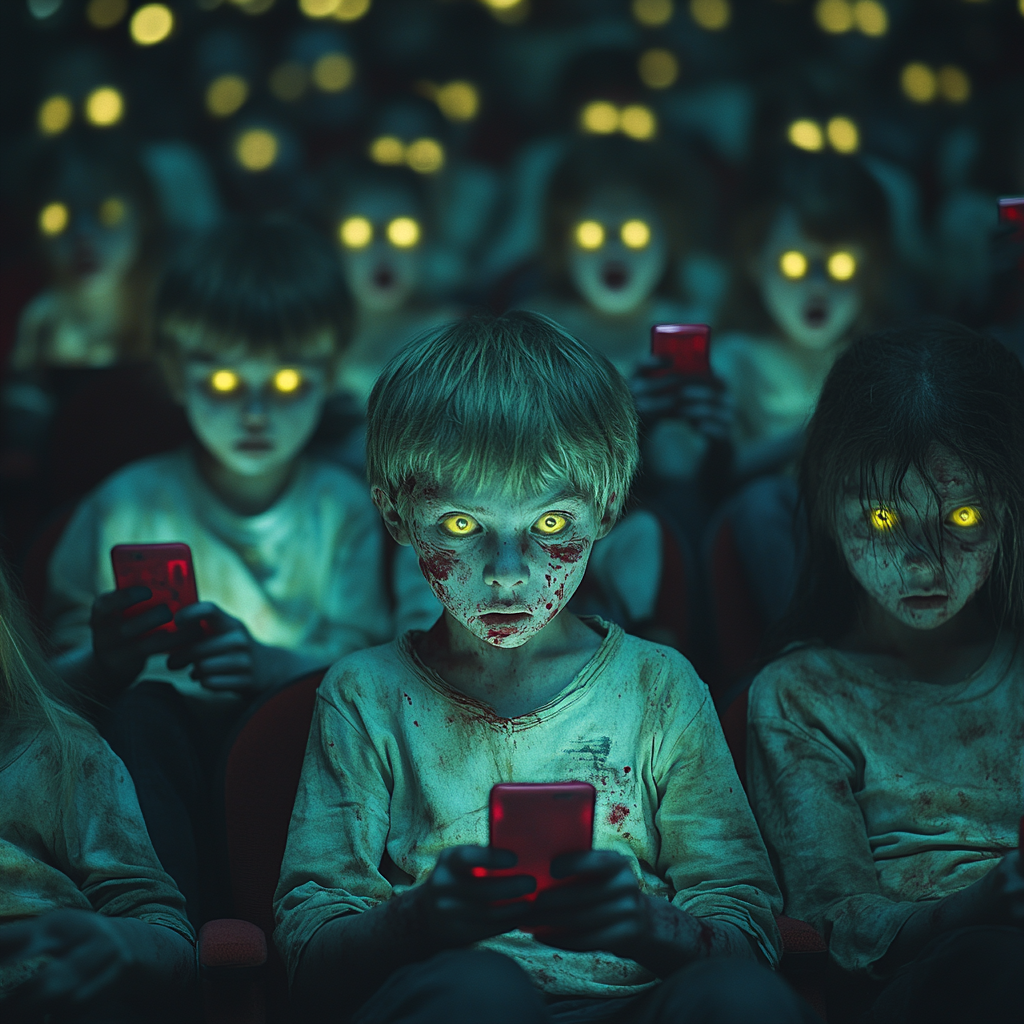
Zombie children staring at cell phones in dark theater. - Stock Image &  Prompt | 2Moons
Not the kind of zombies I was thinking of — but also, isn’t it?

I am scared of zombies. Of course I am, and not just because the idea of being eaten alive is utterly horrifying; I am also scared of the zombie apocalypse because I know how it would go: I would die. Quickly. I have no survival skills, I have no combat ability, I have nothing that I could even offer to a group of survivors that would make them want to take me in, other than how well I could correct their grammar and help them interpret poems: two skills that I expect will not be highly prized in the apocalypse.

As they are not prized now.

But that is much less frightening to me than this: what would happen to my family?

My wife is a badass; she can fight, she can shoot a gun (which I never have), she is tough as nails. She could make it, at least for a while — as long as I was not slowing her down. But she wouldn’t leave me, so I would definitely be slowing her down; and that means I would have to worry about her survival, because I would be a liability for it — I would be putting her at risk. And then, even if we decided we would run for the hills or something, we also have pets: two dogs, a great big tortoise, and a tiny bird in a cage. Okay, the tortoise I could release into the wild; he would probably be fine — would zombies even eat tortoises? (Note to self: story idea — zombie turtle. Talk about slow zombies.) — but my dogs and my bird would not be fine. And I wouldn’t leave them. And that, of course, makes me think about the horror of watching my loved ones get hurt. Which is, far and away and always, the worst nightmare imaginable.

And that — watching people we love get hurt — is also the current situation of this country.

So look: I said in my last post that, if you were looking to solve certain problems and thought voting for Donald Trump and the Republicans was the way to solve those problems, that doesn’t by itself make you my enemy. I don’t agree with you, but if you did it without meaning harm, I don’t have to consider you that way, with full and vituperative enmity. But the thing is, voting for Trump was unquestionably voting for someone who will do harm: and while that doesn’t mean you wanted harm to be done, it sure as hell means you accepted the fact that harm will be done. Maybe you lied to yourself, and convinced yourself Trump would not do harm; but that was a lie, and you probably know it. The man not only did harm to people in his first term, he promised extensive harm for this term, and he has been accused and found liable for causing quite a bit of harm entirely separate from the trials he was able to maneuver out of because too many people voted for Trump over the rule of law. Again, I assume that if you voted for Trump, you weren’t actually thinking, “I don’t want the rule of law any more!” Maybe you even thought that Trump and the Republicans are the law and order party; which is fine, in some ways they are — but Trump himself is not, and you should have been cognizant of that.

More likely was that you expected harm would be done, but you expected it will not be done to you or your family, and you were willing to accept that outcome. If you weren’t willing to accept that outcome, obviously, you didn’t vote for Trump. If you voted for Harris, thank you, and I’m sorry; if you didn’t vote, well. You’re not my enemy. But you’re pretty damn pathetic. And if you voted for harm that won’t fall on you, then I want you to think about that, for the next four years, and then hopefully for the rest of your life.

(And don’t try to both-sides me: I recognize that voting for Harris was voting for harm to continue in Gaza with American support. I would have been thinking about that for the rest of my life. I probably already will be, as I voted for Joe Biden, who has been supporting that genocide for a full year now.)

So, when I had this nightmare about the zombies rising up to kill my wife and I, I woke up scared. I realized immediately that it was a nightmare and it wasn’t real (Unlike the current situation in this country, which feels just like a nightmare but unfortunately is quite real), but like an idiot, I thought this thought: What if the situation were real? How would I actually deal with a zombie apocalypse? And while most of the time (I don’t think about zombie apocalypse survival strategies all the time, but I have thought of them, when it isn’t 3:00 am on a school night) I can fool myself (See? I do it too.) into thinking that I would escape by hiding or running or just being super clever, on this particular night, lying in the darkness, I faced the truth: I’d be screwed. I would die. Probably in an awful way. And I would have to either hope to die first (which would break my most important promise to my wife), or I would have to watch my loved ones killed in awful ways in front of me, while I couldn’t do anything about it.

And that feels just like the situation in this country today.

I know that there are people who would read this and think, “Psssh. You’re just being dramatic. Come on, comparing the second Trump term to a zombie apocalypse? That’s ridiculous! He’s just gonna lower taxes and deport some people. Maybe ban trans people. Maybe go after abortion and birth control. No big deal! He’s not gonna end the world!” To be fair, maybe people who would think that way wouldn’t read this, but my point is that there are people, probably the majority of the 76 million people who voted for Trump, who would think I was exaggerating with this analogy.

You know those people in zombie movies who act like complete idiots? Who refuse to accept the truth? They deny that the zombies are rising, or that they are eating people; they refuse to accept the obvious danger, or to accept that their own actions — making too much noise, for instance, or opening doors without knowing what is on the other side — are unacceptably risky? You know how those people almost always get other people killed before themselves succumbing to the ravenous horde?
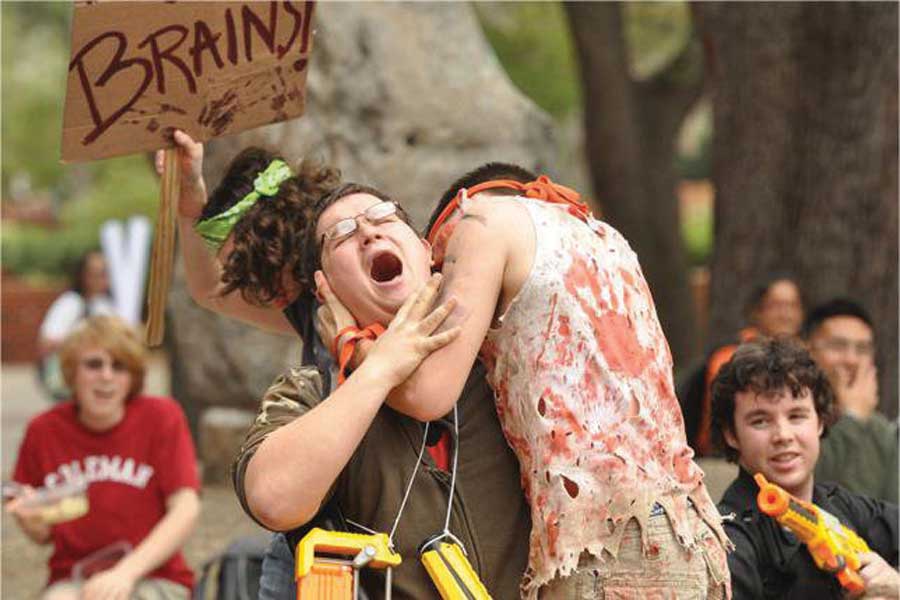
Humans vs. Zombies: Fight of the living dead – Basement Medicine

Right. This country has at least 76 million of those people.

No, I don’t know if that is true. Not all the people who voted for Trump are fools who think he won’t do any harm. Many of them want him to do harm. They are gleefully rubbing their hands together in eager anticipation of all that harm he will do; they probably have a list of intended victims they are especially eager to enjoy the suffering of. Maybe they have a pool, and are laying odds on who will get it, and who will be first. (To be clear, these people are my enemies.)

You know those characters in zombie movies who are rooting for the zombies, and hoping all of humanity dies in hideous agony?

Right: you don’t. Because there aren’t any people like that in zombie movies. There are no people, in a story of struggle between humanity itself and the vile corruption that is bent on destroying humanity, who want humanity to lose. (Note to self: zombie movie in which some people actually want the zombies to win and talk about how much cheaper eggs will be when most of the population has been eaten. Maybe include the zombie turtles in this?) Which just tells you that some proportion of Trump’s voters are even worse than the people in zombie apocalypse movies.

Which is pretty damn terrible to think about.

I really don’t understand it. I understand (though I condemn) the partisanship that kept people from being able to vote for Harris or any Democrat; I understand (though I deplore) the willful ignorance that allowed people to “forget” that Trump will do harm, or the barely concealed hatred and aversion that allowed people to accept the limited harm they think Trump will do, which they think won’t affect them directly. I understand and agree with the anger that I know many people felt over the DNC’s choice of Kamala Harris, who is not and never was the best candidate the left could have produced for President; though also, I have to say this: people are nervous about what Trump will do now that he doesn’t have the same guardrails keeping him in line as he had the first time, and the truth is that the biggest guardrail Trump had to get over was — us. We are the guardrail. We are the defenders of democracy and freedom in this country, because the actual political power in this country resides in our votes. And we had one job: to vote against Trump’s return to the White House. As people trying to get our apathetic, lethargic, cynical, disjointed, selfish political class to produce an actually good candidate who could provide actual positive outcomes, we had several things we could have and should have done; but as defenders of democracy, we had one job: don’t let the would-be tyrant get back into power.

And we failed. We let the zombie virus out of the lab. For the second time, too, because this is the sequel: and as with every sequel, the stupidity of those who fail to take the zombie apocalypse seriously has to be even more appalling and egregious — because Jesus Christ, we already went through this once, weren’t you paying attention when all those zombies were eating people?!? — and the violence and gore the zombies inflict on people has to be even more shocking, even more horrendous, either more disgusting or on a much wider scale; because the sequel has to up the ante from the first installment, or there’s no point to having a sequel. Right?
Zombieworld 2 - Movies on Google Play
Love the zombie in the bottom right looking the wrong way.

What kills me is the breadth and depth of Trump’s win. I can’t just blame those frickin Pennsylvanians: every swing state went to Trump. My state, Arizona, went to Trump. There are Trump supporters all around me, wishing harm but not talking to me about it. You know how the worst thing in a zombie movie is when the people are actually turning into zombies, and you don’t know who is going to turn next? Who has already been infected? Who is suddenly going to surprise you by revealing themselves as your enemy, as the person who wishes you harm, or even as the monster who is going to do you harm themselves, who is going to take a bite out of your shoulder on the way up to your jugular? Everyone looks the same, all looking normal, all talking about things the same way — and then suddenly someone’s eyes roll up in their heads, their skin turns chartreuse, and they groan and start nomming on their neighbors? Don’t you think that’s the worst part of zombie movies?

Okay, no, the worst is probably when people get dragged screaming into a horde that tears them apart and eats them alive.

I hope that there won’t be anything even metaphorically like that in this situation. It is just an analogy; I don’t think the world is going to go through even a human apocalypse, let alone something like a zombie apocalypse. I know we will survive this.

But also, Nazis marched in Ohio this past weekend. So I’m really not sure there won’t be a scene of savage and shocking violence where someone innocent is dragged screaming to their horrible bloody death.

So my dark-of-night thought about the zombie apocalypse was: I’d probably just give up. I’d run for a while — if we’re starting with my dream, I’d be with Toni — and then I’d end up giving in to despair, and I’d have to do one of those hideously sad scenes where two people say goodbye and then let themselves die together. And when I heard the election results, I thought sort of the same thing: maybe I should just give up. I mean, this is clearly what the people of this country want, more than I want to believe they want it. But they do. I don’t just think ignorant and evil people voted for Trump; I think there were rational people, good people, who made a bad decision, but who thought it was the right decision. I want to think that, given a chance to talk to them honestly and openly, I could convince those people that they made a bad decision: and then maybe they won’t make the same kind of mistake again — but also, I failed to convince them before this election. I failed to make any difference in this election. However hard I tried, it wasn’t good enough; I wasn’t good enough to solve the problem, to prevent this terrible outcome, to protect people from harm. I thought, Why would I try again when I failed the last time?

And that’s actually why I recognized this parallel between Trump’s election and the zombie apocalypse, and why I wanted to write about it.

Because what zombies represent is hopelessness.

The basic concept of the zombie trope is this: people, who are unique and special and valuable individuals, become zombies, a horde of identityless, soulless, lifeless husks, taken over and corrupted by some vile invader — a virus, an alien parasite, Disney. Having been corrupted, the former humans stalk other humans relentlessly, and turn those individual people into more indistinguishable members of the horde. It represents all of our fears of losing our selves, our identities, in the larger society, which grinds us up and devours us (along with the visceral horror of cannibalism, the idea of being devoured, reduced to mere sustenance and then destroyed and consumed by those who should shield and succour you). Zombies are seen as representing our fear of the future, particularly of technology, and the advancement and growth of our society into something that either doesn’t recognize our individual human value — or doesn’t care about it. Zombies don’t care that I am a teacher, or a husband, or a writer, or a man who loves animals; to them I’m just meat. And zombies are the meat grinder.

Zombies are the Machine. Zombies are the Man, in the abstract sense of an authority that doesn’t respect or value us, that sees us only as grist for the mill, or at best fuel for the engine.

But none of that is the horror of zombies. (That’s not true: much of the horror of zombies is in the eating, particularly in the eating alive, which is just appalling in and of itself.) The horror of zombies is in their relentlessness: the horde keeps coming after you, and nothing can make them stop. They do not get tired or bored or distracted (mostly), because they are lifeless and thoughtless and devoid of all desires other than hunger. They can not be killed, can not be scared off. You can sometimes destroy them, such as with the famed head shot, or with something like an explosion, a consuming fire, a bulldozer: some kind of overwhelming force, far more than would be needed to stop a human who was coming after you, which shows the sheer power to be found in giving up (or losing) humanity. But even if you fight the zombies, and win the battle, you can’t win the war, because you will run out of ammunition, you will use up all of your resources, and the zombies will keep coming: because we got the guns, but they got the numbers, to misquote the Doors. And of course, every one of ours we lose is one that they gain. You can outrun them — but eventually they will catch up with you, because you will get exhausted, simply because you are alive and therefore you need to rest. The dead — or rather, the undead — do not need to rest.

That’s the main horror of zombie apocalypse stories. There is no escape, and no way to stop what is coming for you. What is going to eat you, or turn you into another part of itself. And the result of that inevitability, (I have to link that clip. Also, the third movie is an interesting re-interpretation of the same fear, being consumed and turned into the corrupted enemy.) of course, is despair: a loss of hope, and the subsequent surrendering to apathy and lethargy and numbness, and then death and destruction.

Hm. Sounds like depression. Also sounds like the situation in this country right now.

So that’s what I felt, what I thought, when I heard that Trump had won the election. Fortunately, because I spend most of my time outside of politics, I didn’t feel that total despair, I didn’t lose all hope — because hey, the zombie hordes aren’t outside my door. They aren’t stalking me. I understand that some people don’t have that luxury, that solace, because the hordes are stalking them, and they are in real danger; but, without being selfish or trying to sound callous, I am glad that I can take solace in that I can still live. I can still teach — and while some of my students are a different kind of soulless zombie horde, many of them are vital and wonderful young people who learn from me. So there is hope there. I can still write, even though it is harder to find the time and energy to do it, these days. Because this is neither a movie nor my dream, I do not in fact need to sacrifice my wife, or hold her while we both die; actually, we are both quite healthy, which is nice to say. And the pets are safe and well. So no, it is not the apocalypse, not for me. I have hope, and hope means I can fight.

And it is not time to give up hope.

I mean that. While many of the guardrails that held Trump back from his worst impulses last time are gone now, and he will act like what he is, a cross between Veruca Salt (not the band) and a shit-throwing gibbon (Note to self: that would be a good punk band name.), there are still guardrails in place. We should be disturbed by the ones that are gone, and we should work to put them back in place, or even replace them with improved versions; but don’t think that Trump will be able to do all the worst things he or we could ever imagine. He won’t. The military will not betray this country, the Constitution, and their oaths, for Donald freaking Trump: and without the military, he can never have a coup or become dictator for life. He can get every single one of the Proud Boys, and the 3%ers, and the Neo-Nazis, and the Karens for Trump or whatever, and march them all on Washington: and a single armored division would wipe them out in minutes. So he cannot overthrow the government. And while the Supreme Court, themselves corrupted by something vile and awful and alien — namely a level of arrogance that we haven’t seen, I think, since literal nobles before the French Revolution — have given Trump the green light to do whatever official act he wants — they also reserved for themselves the right to decide what is an official act. And if you think they would ever give up that control over Trump, or any other President, well. You haven’t seen any movies with the nobility in them. Honestly, the people backing Trump don’t want him to overthrow the government and destroy this country; this country is where they keep their money. The Supreme Court serves that crowd, the billionaire class who want to retain the rule of law because that protects their billions — and, not coincidentally, the Court’s own power. So anything that looks like Trump trying to overthrow the Constitution and set himself up as a king will be thrown down by those who already consider themselves our overlords.

Let Them Make Mistakes: Marie Antoinette's Life and Wedding
Is this the Supreme Court — or is this:
This Week in Genre History: Mars Attacks! wanted to destroy Earth a bit too  much | SYFY WIRE

So no, Trump won’t destroy the country, or our democracy.

But he’ll hurt people. A lot of people. Starting with the immigrants he deports, the women he strips of rights, and the trans people he tries to exterminate by allowing bigots to say trans people shouldn’t exist. And all of the people who love them, and will have to watch those people get hurt.

So in the face of that, we shouldn’t feel helpless or hopeless, and we shouldn’t despair.

We should feel sober. And frightened, especially for those who are in Trump’s crosshairs, although that may not be us and our families; it is surely people we know and care about, and people we should protect, support and succour.

We should feel so. Fucking. Angry.

And we should then focus that anger, that fear, that seriousness, on the task at hand: to fight the horde. To stop them from breaking down all of the doors, tearing down all of the walls, and especially to stop them from devouring people, whether they are our people or not. Because now it’s down to this: you are human, and you are unwilling to sacrifice those who are threatened for your own sake, especially for your own convenience, or for something as trivial as the price of eggs — or you are not. If you are not, you are of the horde, and you are our enemy.

All of you humans, all of my kin and friends and allies: don’t stop. Don’t give up hope: this horde will be defeated. This will be one of those zombie apocalypses where the zombie plague is cured, or something happens to wipe all the monsters out. You know why?

Because Donald Trump is an unhealthy 78-year-old, who very carefully and determinedly built a cult of personality around himself. For reasons I can’t really fathom, he was incredibly successful at that — more successful than any demogogue since 1945, probably. He turned the United States of America on its head, and got us to choose the path that leads to our own destruction — twice — and to cheer while we did it. It’s goddamn 1984. (And by the way: I’ve read 1984. And I understood it. My allusion is accurate.) But the best and most secure guardrail that will help protect us from total collapse into the evil and anarchy of Trump’s world vision is that Donald Trump will not live forever — and while he is alive, he is old, and unhealthy, and lazy. Half the stuff he could do, he won’t do, because he’ll be too busy watching Fox News and telling his cronies that he really is smarter than everyone else. And because only he himself is the focus of that cult of personality, nobody else will be able to step into his shoes when he dies.

In the meantime, before he leaves office with his diaper and his hands full of his own feces, or before he drops dead of a massive coronary, he will do harm. To people we know. To people we love. To people. And so that is our fight. To stop that harm when we can, to mitigate it when we can, and to balance it always by being so fucking aggressively kind that even the zombies would decide not to eat us, would instead pick us a flower and smile with their broken teeth in their rotted mouths, and say, “Thaaaaangk yyyooouuuuuuuu!”
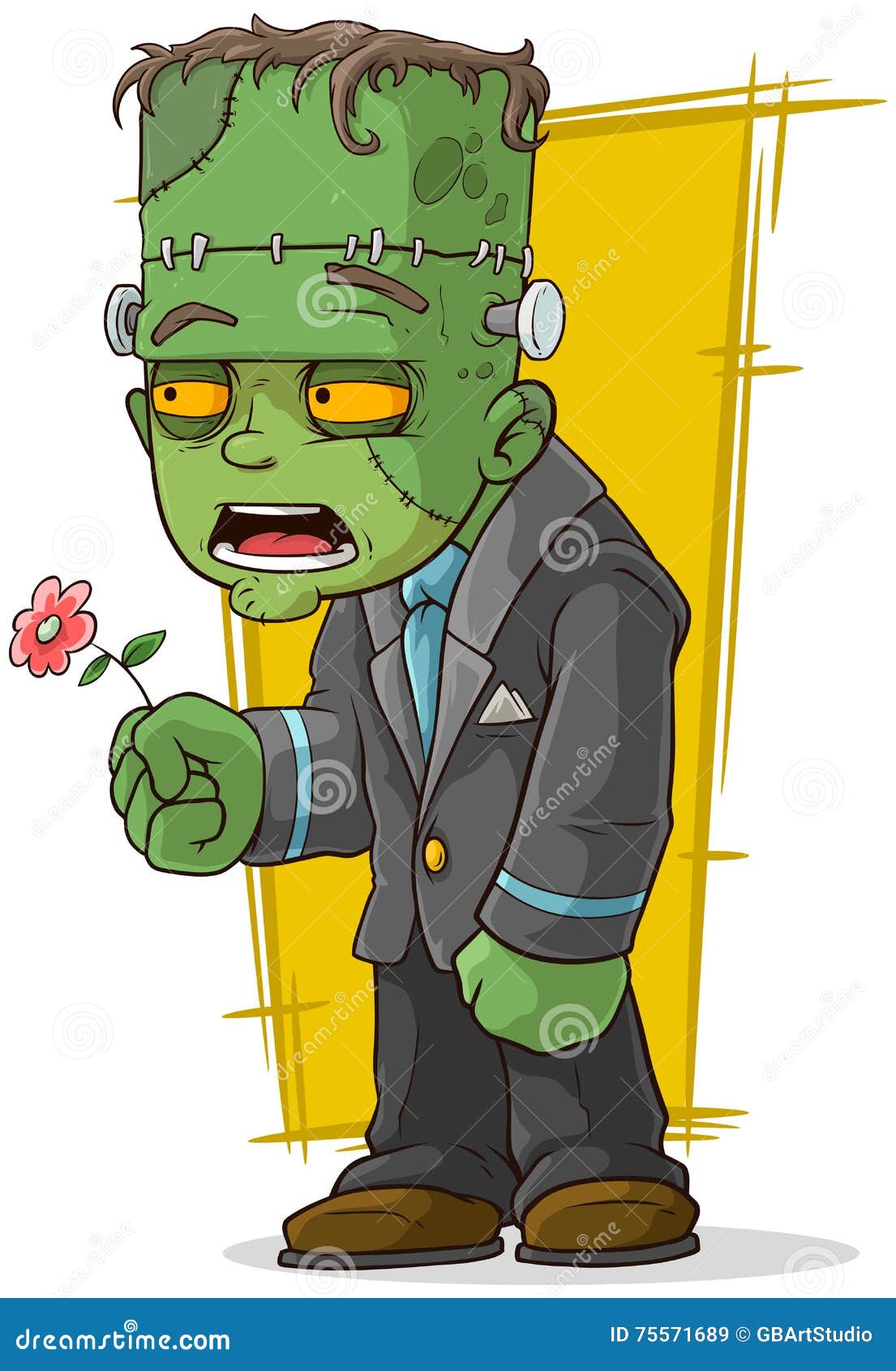
Cartoon Green Zombie Monster with Flower Stock Vector - Illustration of  death, yellow: 75571689

I’m going to shoot for that result with my classes, too. We’ll see if I can pull it off.

As for me? After I thought I would give up in the zombie apocalypse, and then told myself that I would never give up — and then thought that I am too weak, too ignorant, too pathetic and lame to actually be of any use to anyone in that dystopian scenario, I remembered something. I remembered a different post-apocalyptic book I read, years ago: one where the collapse is due to a disease that simply kills people, not one that reanimates the dead — you know, a much more realistic book. Science fiction, of course, as the most accurate and truthful books often are. And in that book, the main character is, at first, a conman, a liar who manages to get accepted into the broken anarchic society that replaces our modern one after the collapse; he gains food, shelter, allies — a life. And he does it first by lying. And then, he does it by storytelling, and entertainment: he puts on plays for the fortified groups he visits; he recites poetry. As years turn into decades, he helps to teach the children born into this terrible world, and because he travels from place to place, around and around a particular circuit, he becomes something of a messenger, helping these small, isolated communities to build connections, and to unite, in the end, against the common foe.

By the end of the book, it becomes clear that the conman, the entertainer, has actually done something genuinely valuable for the people he thought he was just lying to: he has given them hope. He has inspired them to keep going, even in the face of despair, even in the face of seemingly insurmountable odds. He has brought people together, and reminded them of what it means to be human, to be more than savages slaughtering each other for food and warmth. To be people, rather than part of the faceless horde.

The name of the book is The Postman, by David Brin, a wonderful SF writer. It was turned into a reeeaaalllllyy bad movie with Kevin Costner in the lead role; it was so bad it has probably been entirely forgotten. But the book was actually good.
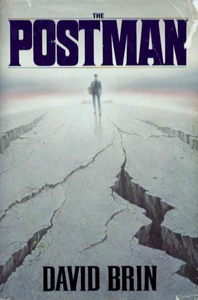
The Postman - Wikipedia

And you know what? I can do that. I could do all of that. (Not the lying, hopefully, because I am not good at it and I very much hate doing it. But I can.) I can be entertaining, and I can bring people together, and I can maybe inspire people to keep going, even in the face of despair and the seemingly insurmountable numbers of the horde.

I can survive the zombie apocalypse.

We all can.

Let’s go.

Indie Film Box Office: 'Shaun Of The Dead' Lives In Bloody Good 20th  Anniversary Re-Release

Sneak Preview! Dusty Wrote A Vampire Book!

It’s getting close, now.

The Tucson Festival of Books is one month from now. Four weeks.

This week I ordered my copies of the two Damnation Kane books, 30 of Volume I and 20 of Volume II; I should have waited, but I got worried that I might not have anything to sell at the Festival, and I hated that idea, so now I can at least be sure that I will have 50 copies of books about pirates. So I just have to hope that everyone who comes by is new, and hasn’t already bought both of those books. (Since I brought and sold the same number last year, there are at least ten people who bought the first book and not the second; so hopefully if they come back, they’ll want Volume II.)

But once I had that set, I turned to the new book.

Which was a pain in the butt.

I hadn’t put a book together at Lulu.com, which does my printing and online sales for me, for, what, three years? I forgot the difficulties in making the text look the way it’s supposed to look for the paper book. I edited the whole thing — 128,000 words, it is — and then I thought I’d be able to just drop it into the template I downloaded from Lulu. So I Control-A, Control-C, and Control-V — and the template disappears, and the text is formatted like the original document, set up for 8.5×11 pages instead of the 6×9 trade paperback format. I tried it again, same thing. Downloaded a new template, tried it again — same thing.

So I had to drop the text into Notepad: which erases all formatting.

Which included all of the italics. In 128,000 words.

But at least the margins were right.

So I’ve been going through the text and putting all the italics back. It’s been good, actually: I caught a couple more mistakes, made a few changes I like; I think the book is a little stronger for the effort I’ve put in this week.

And then when I put this chapter into this post, I realized I missed an incongruity: I changed the timeline of the book a few years, for the sake of believability for a later important chapter (where characters needed to be a leeetle bit younger), and missed one of the references I made. So now I need to double check all the time references to make sure I didn’t miss any others.

Sigh.

It’s fine. The book may not be out in time for the Festival, but even if it isn’t, I will publish it — and anyone who is interested in purchasing a copy can get it directly from me. Signed, sealed, and even delivered, if you live in the Tucson area and don’t mind me dropping by your house, or you want to come to my school.

So in order to keep you all as excited about this new book as I am, here’s another sneak preview: this is the first chapter, which comes right after the Prologue I posted before. I hope you like it!

Chapter 1

            I don’t remember dying.

            You’d think I would, wouldn’t you? The narrowing of vision as everything faded to black, the tunnel of light, the sight of loved ones there waiting for me: Gramps, and Uncle Bill, and Oscar, my first dog. If my buddies in the Army counted as loved ones, there’s be a whole parade of faces at the end of that tunnel. Though they might not be so happy to see me. I’m sure a psychologist would call it survivor’s guilt, the idea that my friends who died would hate me for living, but what the hell does a shrink know? If it’d been me who’d gotten nailed, I would have been royally pissed at everyone who made it out, who made it back to the world. Hell, I am pissed at all of you. That’s why I eat you.

            But I don’t remember any of it. The lack of memory might be because of the way of my dying: it could have been the booze, it might have been the smack, but whatever it was, whether it was cirrhosis or a heart attack or a stroke brought on by the abuse I put my body through in those last few years, I’m sure that at the time I was so wasted I didn’t feel a thing. I probably slept through my own death, which, I know, sounds peaceful and all – but I wish I could remember. I might even have been murdered, lying unconscious in an alley somewhere; I have scars I can’t account for, can’t remember where they came from – though there are plenty of ways I could have gotten those. I lived through my tour in ‘Nam, but I doubt that anyone came out of that without scars.

            I remember ‘Nam. I remember the fear, and I remember the disgust; and I remember the anger that came out of them, and made it possible to pull that trigger. More than anything I remember being tired: just wanting to sleep, sleep for years. I remember other things, too, but I don’t look at those memories. They were what pushed me into the haze of alcohol and drugs that carried me like a sleeping baby into the darkness at the end.

            I remember a few things from before the war: Mom and Dad, my sister Anne, my little brother Franklin, the farm in rural Iowa. I remember some things from after: San Francisco and the Haight, the few moments of lucidity in between stupors that could have lasted for weeks, months, or even years. I do remember a girl, kisses and whispers and silky movement under the moonlight, and for that memory, I’m grateful.

            For the most part, though, those days blended together into a thick gray fog, without beginning or end, for so long that I lost track. I wouldn’t have any idea how old I was when I died, except that I know what year it is now, and I know how long it has been since I shuffled off this mortal coil, and awoke again to see that face looming over me, awash in the haze of red light that has tinted everything I have seen from that day to this. A little subtraction tells me the answer: I was 27 when I died 29 years ago. I’d be 56 now, if I was still alive.

            But I’m not alive now, walking and talking notwithstanding. Those don’t count. You’re not alive if you don’t age: your years on this earth are nothing if there’s to be no end to them. The two absolutes are that everything must be born and everything must die; if one of those (or both) does not apply to you, then you are – nothing. My body may function, my eyes may still see, my ears hear; I may still think and feel, a little; but I’m dead. I killed myself in 1978, another delayed casualty of a war that nobody won.

            I was not reborn on that night when the vampire brought me back. I was remade. No longer human, not quite a machine, but a combination of both living thing and automaton. I am a slave, and I may very well remain a slave until the sun goes out. Who knows? Even that may not be the end. My master is a creature of the night, after all; perhaps the perfect blackness of space would be his idea of Heaven.

            Christ knows if there is a heaven like the one in the Bible, then he ain’t getting in. But then, neither am I.

            I walked into the apartment and threw my keys on the table by the door.  I was stripping off my clothes before the door even swung shut, dropping them on the floor in a line headed toward the shower. I had had to take a dip in the Bay, after, to wash all the blood off; I used the kid’s clothes to dry myself before getting dressed again. But then I had to bury him, along with his clothes, and that was a dirty business. Besides, you think the Bay smells bad to you? Try my nose on for size. Between the stink of sewage and rotting fish, the iron-scent of blood that lingered underneath, and the smells from his clothing, his sweat and soap and cologne, I felt like I would gag every time I caught a whiff of myself. The thought made me laugh. I could devour a human being with relish and pleasure, commit heinous and depraved acts at the whim of my master without batting an eye – but the smell of polluted water and body odor made me sick.

            When I didn’t stink any more, I got out, toweled off, and walked out of the bathroom. I spotted my clothes lying where I had left them like scraps of scraped-off onion skin, and went to pick them up. I went to the kitchen and pulled a large plastic garbage bag off the roll on the counter, shoved the suit into it and tied the bag closed. I dumped it outside the door, in the hallway. My laundry was picked up and dropped off each day. If they were going to clean it anyway, what did wrinkles matter, right? Besides, I had a dozen more suits just like that one – my livery, so to speak.

            I walked out into the main room of the apartment and looked around. The only furniture was the overstuffed, oversized armchair in front of the windows, the catch-all table by the door, and the stereo system that sat on the floor by one wall. I don’t have anything else because there’s nothing else I really need – not now.

            I haven’t turned the stereo on more than half a dozen times in the last two years. I used to listen to it every waking moment. The apartment used to be filled with books, and there used to be art on the walls, and even, as God is my witness, a potted plant on the windowsill. But that was before. I realized that nothing I could put in this apartment would make it anything but a cage, a kennel for the dog. So I took everything out, threw it all away because I didn’t know anyone I could give it to and I couldn’t see myself holding a garage sale. I kept the stereo because – I don’t know why. I’ll get rid of it, too. Soon.

             Suddenly I couldn’t stay in here any longer. I couldn’t smell the Bay, or the blood and sweat and the stink of humanity – but I could smell myself. Nothing in here but the stale smell of me, the hours – the years – I had spent sitting in that chair, watching the sun rise because it was the only rebellion I allowed myself, to look at what my master could not. I could smell every one of the days and weeks I had spent in this apartment, in some pathetic mockery of life; I could see it smeared on the walls and dripping from the ceiling. I had to get outside.

            I went to my closet, donned a pair of pants and a dark shirt, shoved my feet into loafers without socks, and left, throwing on my overcoat as an afterthought on the way out the door. I left the door unlocked. Any thief could have whatever he could find in there. It was all trash.

***

            I went downstairs and out onto the sidewalk, and I started walking. All I could think about with every step was how many times I had walked this way: how many times I had come up this street, gone through that door; how many times I had walked up the five flights of stairs to my apartment – no, that wasn’t right. Not my apartment: the apartment where they kept me. How many times I had washed blood from my skin and left a bag of stinking clothing in the hallway.

            Almost thirty years. And I barely remembered the first ten.

            Oh, they picked a good one when they found me, all right. Not that they knew my personality, of course, or the particular shape of the demons that drove their needles into my brain and dragged me down Skid Row to the morgue. They knew that I was young, that I had been in the military and thus had combat training, that I was big – a corn-fed Iowa farmboy – and that I had no family, proven by the fact that I died a derelict junkie on the streets of San Francisco, and my body then lay unclaimed in the morgue for a week. They might not even have cared about that last when they picked me out of the morgue drawer and laid me out for the ritual. I died young and left a good-looking corpse, and that was all they needed.

            No. That’s not true, and I knew it. They did not want a zombie: they wanted a monster. That’s why they picked me. They knew exactly what my demons were: knew that I suffered from a severe case of post-traumatic stress disorder, knew that I drank and drugged myself to death to escape the memories of what I had done. This made me even more attractive to them: it showed that I take orders well, that I would do what my superiors commanded even if I personally found it so horrifying that I would rather be dead than remember it. After all, I killed myself so that I could forget – but I did the things I wanted to forget in the first place, didn’t I? I was already a monster before I died. I was already a slave. The vampires just gave me sharper teeth.

            But dying had done what I had wanted it to do: it had given me oblivion. At least for a while. For a long while, actually; for ten years, I hadn’t had a coherent, rational thought. I don’t know why that changed, not exactly. But it had: I had woken up, and my mind woke up with me; and once I started thinking again, I couldn’t stop. So I had tried to find a different way to live with what I was. That was when I decided that hedonism would make up for the fact that I was an undead monster.

            It still makes sense, in a way. It seems to me that we all have to pay for what we’ve got. If you have a good life, you owe, and you have to pay. A debit for a credit – balance the books. If I have been given this eternal life – eternal barring a violent death, of course – then I have to do something to earn it, to be worthy of what I have.

            And what makes us worthy of life? Living to our purpose. If, say, we are here to spread the word of God, then that’s what we need to do, and the happier and more enjoyable our lives are, the harder we have to work to earn that by spreading His word that much farther.

Of course, being an undead man-eating ghoul who hurts people for a crime syndicate run by a soulless monster pretty much eliminates “spreading the word of God” as my purpose, don’t you think? Yeah. Me too.

            No, when I started thinking again for the first time in ten years, I decided that my purpose was more earthy, something simple and concrete. I figured that a creature as unnatural as me has to work as hard as possible to make life as natural as possible, and to enjoy the natural parts of life as much as I can. Thoreau would have sent me to Walden and told me to grow crops, but to me, the natural parts of life are all the things that make humans human. That set humans apart from animals. Good music. Art. Literature and philosophy and science, wisdom and knowledge and imagination.

            After all those years living without thinking, I started spending all of my time doing just that: thinking. Learning. Reading, listening, seeing. I swam in a sea of beauty and truth, truth and beauty – and splashed as well through ugliness and lies and bloody, pointless deaths that put the cap on tawdry, shallow little lives. They were the twin currents that spun me, like a leaf in a stream, for almost twenty years. When I had a job to do for my master, or when I got hungry, I threw myself into the blood, into the pain and fear and death, and tried to revel in the animalistic slaughter. I tried to feel like the predator my rebirth had made me. When I didn’t have a job, when it was just me, then I read every book I could, I listened to as much music as I could, I saw every piece of art on display in San Francisco and as many other places as I could get to within my limitations.

            And for most of that time, for most of eighteen years, it was fine – I was fine. I actually enjoyed it, enjoyed the passionate lives I glimpsed in the jazz clubs and the galleries, in the books and on the streets, sweating and loving and bleeding and crying and laughing and dying. I loved it, loved them. Loved life.

            But the more I learned to love life, the worse it made me feel when I ended it for others. Every time I did it, every time I killed, I reduced a human being from the height of divine creation and earthly evolution to a mere bag of flesh and blood and bone. The more I learned to respect and cherish those lives and all that they were capable of, the more I hated myself for ending them, just so I could go on enjoying what they had made.

            And so, when I couldn’t stand it any more, I stopped. Stopped learning, stopped living life to its fullest, because it wasn’t my life that I was living. I already threw away my life, with a little help from Uncle Sam and Jack Daniels. Enjoying my stolen life as much as possible didn’t make it any less stolen: it made it more so.

            For the past two years, then, I have been trying to live like I did the first ten years after I was remade: without thought, without any connection to the world or events around me. Maybe I’m trying to atone for my life by not enjoying it now; I don’t know. I’m trying not to think that hard about why I do what I do, why I am what I am.

            But it isn’t working. I can spend my time brooding instead of reading, hating myself and the world instead of enjoying it, but I can’t get rid of the sick feeling in my gut. I can’t seem to wash off the stink. I can’t go back to ignorance. I can’t go back to being dead.

            I wish I could.

            I looked up then and saw that I had walked quite a ways, from my apartment near Fisherman’s Wharf to Dogpatch, at the base of Potrero Hill. I realized my hands were in the pockets of my coat, and I felt my sunglasses; startled to find that I wasn’t wearing them, I hurriedly put them on. It made me notice the light in the air, that the sun would be rising soon. I needed to head back. I got my bearings, turned around – and stopped.

            I knew that Hummer.

            I dug around in my overcoat, and found what I needed in the inside pocket: a small notebook, one of those things you can pick up for a buck at any drugstore – one of those things that makes an old Iowa boy like me think, “Back in my day, we could buy that for a nickel!” I flipped through the pages, scanning the entries, glancing up now and again to check the license plate on the forest green Hummer that was parked with two wheels up on the sidewalk to accommodate the thing’s wide wheel base. And there it was: almost two months ago now, the note “tree grn Hum. 3AHN619. 2x hit.” And then, underlined twice: “FAT.”

            I believe in karma. Maybe not the karma that a Hindu or a Buddhist would know; I believe in my own version of karma. It’s back to that balancing act I think we all have to do: something good to make up for something bad. There may be a power in the universe that takes care of that for us, but I don’t have enough patience to wait for it. I like to help out. It makes me feel useful. So I keep this little notebook, and when I see somebody do something that requires punishment, I write it down – and when I get a chance, sometime down the road a bit, I carry out that punishment. This notebook is my karma to-do list.

            Here in San Francisco, I try to focus on the most common, most frustrating, and least punished offenders: bad parkers.

            If you’ve never been to San Francisco, understand this: while every city has parking problems, good ol’ Frisco has the added bonus of being built on steep hills, with narrow, twisting streets, often one-way, often with a stop sign right at the peak. So not only is parking hard to find, but actually getting into a spot can be next to impossible. Naturally, not everyone handles this challenge well; naturally, when someone does it badly – or worse, rudely – it makes an already difficult situation into a melting pot of imminent murder.

            My job, then, as the karma assistant, is to teach bad parkers a lesson, in the hopes that they will change their ways, and make every driver’s life a little easier.

            This particular twit had, my note said, smashed into two cars while I watched – front and back – while trying to pull out of a space, and then driven off without even leaving a note. And because he drove a Hummer, his damage had been minimal, and all to the bottom of his massive black bumpers; but he had torn huge gashes in the hoods of both other cars. I had been hoping that I would have a chance at this one, and here it was. Just when I needed it most.

            I glanced around quickly to see if anyone was watching; it wasn’t yet dawn, though it was close, and the streetlights were just flickering off. People would be moving around soon, but right now, they were still hitting the Snooze button or getting into the shower. I had a few minutes.

            I moved around to the street side, the driver’s side, and lay down on my left side next to the mighty green beast. I reached under and took hold of the front axle, just behind the wheel, with both hands, and then I squeezed and twisted. Slowly and carefully, because I wanted to get it just right. Another little twist, and – there! The body of the car settled, just a little bit, but it held when I let go. I rolled over to my other side and turned around, and then did the same to the rear axle, crumpling the metal just enough to make the chassis sag maybe an inch, but no more. Then I slipped around to the sidewalk side and did the last two wheels.

            My goal here was simple: I had observed that the driver of this Hummer was, shall we say, built proportionally to his grossly oversized vehicle – hence the subtle notation “FAT” in my notebook. If I did this right with the wheels, then he wouldn’t notice anything wrong with his car until he sat in it – when the axles would fail and the wheels would all fold, and the whole thing would come crashing down. He wouldn’t even be able to get the thing towed, not without on-the-spot repairs of some kind, or else a crane. Which served him right. Really: how hard is it to leave a note? You can afford a Hummer, but not the insurance bill? How about two new axles, pal: can you afford those?

            I finished, and slid out from under the metal behemoth (which now rested on dainty girlish ankles, so to speak). I nearly queered the whole deal when I nudged it with my shoulder as I twisted my torso to get my hands under me; the metal groaned slightly and quivered, and I went absolutely still, holding my breath and waiting. It didn’t fall. I scooted a foot away and then came to my feet quickly, dusting myself off and checking for witnesses. None. I was clear.

            I just hoped the owner moved quickly, too, and jumped in before he discovered what I had done to the Hummer. But even if he didn’t get to sit down harder than he expected, I still got to cross this one off my karma to-do list, and there’s nothing better than completing a to-do list. Maybe I should make myself a complete self-improvement list – you know, things like “Adjust to new lifestyle” and “Learn to accept adversity with a zen-like serenity.” Maybe even “Free self from magically enforced servitude.”  But at any rate, I felt better now than I had when I left the apartment. My head felt clearer.

            I headed back. Home.

Thrill Time

I’m excited about this.

I’m nervous about it, too: and also somewhat conflicted. But mainly, I’m excited.

I’m going to publish a new book.

Part of the conflict in me is that it isn’t the book I intended to publish. I regret to inform those who are waiting, patiently or impatiently, that I am not going to be publishing the final volume of The Adventures of Damnation Kane this spring. I won’t have the book finished in time for the Tucson Festival of Books, which was the immediate deadline I was trying to hit; I worked on it all through the end of 2022, but I realized that I wasn’t going to be able to get it done AND make it good in time for the Festival. I’m not going to bring out a book that isn’t good: but I very much wanted to bring out a book for the Festival. I spent a bunch of money on a booth, and I didn’t want to be there with only the same two books I had last time.

So instead, I am going to publish a different book.

It’s a book I wrote some time ago, and I think it’s one of my best pieces of work — honestly, better than Damnation Kane, though there are lots of things about my pirate story that I love unreservedly. But there are limitations in the Damnation books, and this one really captures the kind of writing I want to do, the kind of writer I want to be. It’s an urban fantasy novel, dark almost to the point of horror, with a total smartass for a main character; I think it captures the same tone that one of my fantasy writer heroes, Jim Butcher, has mastered with the Harry Dresden books, which I think is one of the best series and one of the best characters since Tolkien.

And that’s the other conflict for me in publishing it. See, this book got closer than anything else I’ve written and submitted to actually getting picked up by an agent, and then (presumably) by a publisher. Jim Butcher’s agent read the first chapter, and then asked to see the first 50 pages of the novel — the only time in fifteen years of writing and trying that I have not simply been rejected by an agent. She then turned it down, but still: I thought this was my best shot at getting an agent, and getting published by a traditional publishing house. And I’ve been holding the book back, refusing to self-publish it, because I still dream of finding representation and a legacy publisher to produce my work. That, along with winning awards and worldwide fame and wealth, is the last ambition I have as a writer. I’ve already done the main things, the big things: I’ve written books, good books, and had people buy them, read them, and tell me they are good books. That, for me, is success. I am enormously proud of my accomplishments as a writer.

But there was still that one remaining ambition: and this was the book I meant to use to achieve it. (There’s another book I’ve never published, but that’s because I don’t think I can publish it under my name unless I quit teaching first. That’s a whole other thing.)

But I realized: first of all, though I think this is a good book, I don’t think it’s the best book I’ll ever write. I wasn’t one of those flash-in-the-pan literary prodigies who created my one good work before I was 25; I think I’ve gotten better with every book. I’m hopeful that the last Damnation Kane book will be even better than this book, and the one I write after that will be even better than both of them. I think my last book will be my best book, and I’m a long, long way from my last book. And secondly. just because I publish these books myself doesn’t mean they can’t be picked up by agents or legacy publishers; at this point, honestly, my publication of my books is also my best advertising for them, so making this book available is the best way for me to get it noticed.

And finally, you know what? Even more than I want to use this book to get published, I want to share it with people. I want people to read it. I want you all to like it. Maybe even love it. That’s really why I write, after all: because it’s fun, and inspiring, and meaningful; and I want other people to find the same fun and inspiration and meaning that I find in the words.

So to that end, I’m going to post the first chapter of the book, which captures the spirit of it, and which gives a good idea of what the book is about. Sometime soon I will be able to post the cover of the book, and sometime soon after that I will be able to make copies available for purchase: and I hope that you all will be willing to buy it, and read it, and — I hope — enjoy it.

Let’s start with this.

The novel is called BRUTE.

(Content trigger warning: this scene includes violent death and, well, nasty stuff.)

BRUTE

Prologue

I see him, though he doesn’t know it. I see him watching. Watching me.

            He leans against the wall, shadows draped across one side of his face, the other side glowing in the harsh light from the halogens above. There’s a bored expression on his face as he sips Coke through a thin red straw, like blood through a tiny vein. His head turns from far left across to far right, then down to grab the straw with lips and tongue and drink another sip.

            He is too young to be here in this club, so I doubt there is rum in the glass, but I am too far away to smell it and know for sure in this air, crowded with the scents of too many. He looks soft and well-fed, his clothes wrinkled, torn, savagely black; but they are soft, too, and nothing to do with work. His soft hair is dyed black, as well. To me, he looks wealthy. Spoiled. Probably the neglected child of a powerful parent. I bet he got into the club with a last name instead of an ID.

            He went straight to that wall when he arrived, and his eyes immediately began roving, searching for someone cool. But since he saw me, his gaze has hurried over the rest of the club so it can linger on me, concealed by his lashes as he sips his drink.

            He wants to be nonchalant, so he keeps his distance. That all-important distance. Nothing can be allowed to break that shell of cultivated boredom, the complete alienation which separates him from the unwashed masses, who can’t possibly understand his pain. Maybe – maybe – I can.

            I might be what he wants me to be. What he hopes I am, the thing he has hoped to find. But I also might be a freak, a loser; and if I am, he can’t be seen showing any interest in me. I am wearing a dark fedora forty years out of style, and a dark overcoat, dark leather gloves, and heavy sunglasses – at night, in a bar, on a warm spring night in San Francisco. I sit alone in the bar and sip my drink, and nobody talks to me and nobody looks at me. These things have intrigued him. So he watches.

            Of course, he might simply be gay. I do look pretty damn hot in this hat. Either way, I don’t want him to approach me in here. I am curious about the pickup lines he might use: maybe something like, “Pardon me, but you look like someone who understands the cosmic loneliness that envelops us all in a cloud of neverending night. Can I buy you a drink to drown our sorrows in as we wait for the inevitable curtain to fall?”

            Actually, that’s not bad.

            I take a deep breath, enjoying the harsh antiseptic smell of my gin and tonic, and then I down the last swallow in the glass, tasting nothing. I drop money on the table, enough to cover the tab and a generous tip for the waitress, a pale, pretty redhead who had served my drink without trying to see what was behind the sunglasses. If she had tried, and succeeded, then she would have gotten much more than money for her gratuity. She would not have wanted it.

            I walk out past the bouncers, through the short maze of corridors that once connected the office spaces to the open central area, back in the 70’s when this was a warehouse. A sweatshop, actually: three hundred and fifty Vietnamese women stuffed behind ancient sewing machines dangerous with exposed gears and needles that punched through fingers as easily as cloth. They spent sixteen hours a day in here, making those tiny American flags – the ones that people would wave on Memorial Day to honor the men who died in Vietnam.

Sometimes the world paints the irony with a heavy hand.

            The sweatshop had been closed down thirty years ago amid headlines and indictments, and the warehouse had sat empty for fifteen years before it had been bought and converted. But very little had changed. The doors were scarred steel on rollers, the walls were ugly exposed brick, the lights were harsh and unpleasant. The lights were not supposed to make you relax, they were supposed to make you feel watched. Seen.

            The corridors, once intended to slow down any government officials who happened to come in the front so the workers (or at least the owners) could slip out the back, now served as a sound baffle, dulling the edge of the industrial music that rattled the club during drinking hours. Not that the people in this neighborhood would complain about the noise. The warehouse was the last stop on the way out of a depressed and crumbling industrial zone and into the dead and rotting tenements that had once housed the workers, who were now dead and rotting themselves. The tenements now held nothing but the fear and pain and desperation the people had left behind, smeared on the walls like soot, blowing in the wind like cold, greasy ashes. That wilderness of old pain is what draws us here to this club, both me and that kid – who watches my every step as I leave – though we come for different reasons. He and others like him come here because the surroundings confirm what he always suspected about the uselessness of it all.

            My reason’s easier. I love the night life. I love to boogie.

            I grin as I walk out into the night and take a deep breath of the clammy air. I can smell the Bay, of course, because that’s what you do when you breathe in San Francisco, but I can also smell the heat and the sweat oozing out of the club. I can smell the musky scent of those who come here to hunt, and the quivering eagerness of those who know they are prey and come here because they wish to be hunted, to be taken, and devoured, and freed. I smell beating hearts and moist palms, clenched stomachs and lungs shivering like a new butterfly’s wings. A line of slaver runs down my chin and I wipe it away with one gloved hand. My grin widens into a smile I couldn’t wipe away if I wanted to.

            Quickly now: into the darkness. He’ll know where I’ve gone. It will make him follow all the faster.

            But before I make it to the corner and turn into the deep shadows there, I am impressed. He steps out from an alley that runs between the warehouse and the moldering brick building beside it. He is in front of me. He used a back door and made a good guess about which way I would turn – a good guess if I am not predictable. I hope I am not predictable. He plants himself boldly in my path and he smiles.

            His eyes widen when he sees my teeth, which are now grown too large and numerous to cover with my inadequate lips. They are not a human being’s teeth. But they are also not the teeth he expected.

            He falters back, just a little, and I quicken my step. I shove past him, hard. I hate being surprised. I do not like to be seen, like this. As I shoulder past him, I can smell – everything: he is afraid, and both excited and angered by his fear; his cologne is good, understated and expensive; his clothes smell rich, clean; his fingers smell of tobacco, his wrists and chin of the filet mignon he had for dinner; his lips and tongue smell of Coke and dark rum – he is older than I thought, or else he snuck a bottle past the bouncers.

            The hunger wakes up and roars inside of me, making my head spin as it drives iron spikes into my spine. But that doesn’t matter. He has seen. I’ll kill him for that. But later; not tonight. I wasn’t ready for him to see me, and that makes it all wrong, ruins the whole deal. I’ll find a wino, an alley crawler as usual. I quicken my step, lean away from him into the night.

            “Master, wait!”

            Around the corner and into the dark, I pause. He stumbles after me, stuttering to a halt ten feet behind my back. I close my eyes. I don’t want this. Fear is good, fear is fine, but horror and disgust are not. I have learned this. But then his scent trickles into my nose, and brings the truth, for scents cannot lie. He is not disgusted. He is – eager. And still afraid. He smells of sweat and adrenaline, and dry eyes opened wide.

            “Master. Please.” He takes a hesitant step toward me and holds out his hand, the thread of tobacco and tender meat rising in the tapestry of his scent. The spikes drive deeper, into my neck and the base of my skull and the hinges of my jaw.

            Very well. I cannot fight it. I have nothing left to fight it with. I have learned this, too.

            I take off my sunglasses, slowly, though I do not turn to face him. “Who dares to speak to me?” I ask. I growl to hide the slight lisp from my teeth. My part doesn’t call for a lisp.

            I know this role, this scene, quite well. I have read the same books he has, I have seen the same movies. I know why he was hanging in the darkest, most depressing nightclub in town, and I know why he picked me out and followed me away from there, to this place, which is even worse. He has convinced himself that what he saw of my teeth, what he saw when my human mask slipped, is false. A trick of the light, no more. Surely I have only two oversized teeth, instead of a mouthful. And now that I have spoken, in a dark voice full of menace and arrogance, now he is sure he is right. He is sure that I am a Childe of Darkness, One Who Walks With The Night, a godlike immortal who drinks the precious nectar of life, the blood of the innocent.

A vampire.

            He takes another step toward me. “I am nothing compared to you, my lord – uhhh, Master.” He pauses, probably mortified that he stumbled over the proper honorific. Does Miss Manners prescribe a form of address for someone who is about to kill and eat you? He goes on. “I am one who seeks to serve you. Who wishes to become like you. Who wishes to receive the gift of immortality.”
            I almost ruin the scene again, by laughing. That’s the second biggest lie in the books and the movies: that you can “earn” the gift, that it is given for love or as a reward for services. If you catch their attention and impress them enough, we are told, you will be made one of them. What a crock.

            The biggest lie, of course, is that it is any kind of a gift at all.

            I haven’t responded, haven’t moved an inch, but he starts smelling encouraged. Probably because I haven’t laughed at him. He expects to be laughed at.

            “Why would you serve?” I ask in a low voice, just a murmur.

            He takes another step, and now I can hear his heartbeat, the racing blood that stains his pale cheeks red and brings the heady scent of warm flesh closer, closer. “Because. Because I want to show them. I’m going to show everybody.” He sniffs, and I can smell just a trace of tears, tears and anger. “I’m going to show them why they shouldn’t laugh.”
            I understand, though I wish I didn’t. It would be easier for me if I didn’t understand. Or if, like my masters, I understood but simply didn’t care. If I didn’t understand I could walk away, despite the pounding steel hunger. If I didn’t care I wouldn’t want to walk away. But then, if I didn’t care, I would be something I don’t want to be, something I have not yet become.

            Not yet.

            He takes another step. “Master, please. Take me. Take me with you.”

            The smell of eagerness rises, like an electric current running through musk. The smell of his adrenaline, coursing, rings through me like a bell in my ear. The hunger drives all else out of my mind.

            He is three steps, then two steps behind me now, close enough to hear me as I whisper. “Do you know what you ask? Are you sure you want what I offer?”

            One step. “Yes, Master.”

            I give him what he wants.

            When he is dead, I sling him over one shoulder and start running. His weight is nothing to me. I wish I could fly. They can fly. That’s one thing the movies got right. But thinking of them reminds me of what else I’d have to do if I could fly, if I was like them, and then I don’t want to fly any more. Running is fine. I never really get tired, after all – just hungry. Like now.

            I get him away from the streets, down by the edge of the water, and then I throw him down. His head flops on his broken neck, and his eyes look up at me, glazed in death but still somehow accusing. He expected me to embrace him, to plunge my fangs into his throat – not to kill him quickly, simply, with a single twist of my hands. His face is the face of thousands just like him, thousands who haunt the dark places, who dream of dark things. If he had been less desperate or less determined, if he had let me leave without seizing the moment and chasing after me, then he might have lived out his life as the rest of them do: never catching more than a passing glance at the things that live in the dark places. Things like me.

            I take a deep breath to make sure nobody is nearby. I smell only death: the dead fish in the Bay, the body someone buried over there several months ago – smells like a wino, curdled and rotten before he even died – and, of course, the dead man at my feet. My stomach rumbles then, and it takes a lot of willpower to resist it. But I like this coat. I close my eyes as I strip off my clothes, and again I inhale deeply, filtering out all the scents but his: again I smell the meat and the liquor on his tongue, and the fear and the pain that are ripe on his flesh. And I hate that he smells that way, because I love it.

            And when I am naked and ready, I dive in. I tear his clothes from him because they would stick in my teeth, and then I feed. It is not the beautiful moment he expected, that essentially erotic coupling that is the vampire’s kiss. I am a predator, and he is prey. That is all.

            I eat his tongue first. Fear makes the flesh salty, and pain makes it bitter, and both are good. But it is only when I eat their tongues that I can taste what I really want, what I haven’t had for thirty years now: the taste of food. Cooked food, the food a man would eat, instead of this dog’s dinner that I get now, the raw flesh and cooling blood of the kill. I tear the meat apart with my teeth: the jagged, cutting teeth of a shark, rather than the graceful fangs he expected. He wanted them to be fangs, he wanted me to use them to take his blood, just as he wanted me to make him my slave. He had that part wrong, too. I’m the slave. I’m not the master, because I’m not a vampire. He wasn’t the beloved vessel that holds the stuff of life which the vampire craves; the red blood, the passion, the warmth of life, the caress of the soul that runs through it.

            He’s nothing but meat for a ghoul.

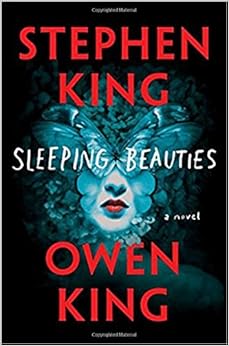
Book Review: Sleeping Beauties

Image result for sleeping beauties

Sleeping Beauties

by Stephen King and Owen King


To start with, I love Stephen King. I always have. I’ve read pretty much every one of his books, most of them more than once; I’ve been reading his work faithfully since I was 13, and my friend loaned me a copy of It to take with me to summer camp. (The Summer of Blood-Soaked Nightmares, I called that one. Subtitle, We all float down here. Sub-sub-title, Don’t ever use the bathroom in the middle of the night when you’re reading It.) I am a great admirer of his remarkable ability to create characters, to build suspense, and to squeeze a thousand details, all of which are both real and also unexpected, into the framework of a story.

So going into this one, I was already going to like it: there have only been two or three Stephen King books I haven’t liked – mostly the ones that have actual aliens invading, The Tommyknockers and Dreamcatcher. Didn’t like Hearts in Atlantis, either, which was too bad because I love the low men and the can toi from Desperation and The Regulators. Anyway, since the man has written like 75 books, the chances were good for Sleeping Beauties: something like 25 to 1.

And I liked it.

It wasn’t my favorite Stephen King book. It might be easy to chalk that up to the influence of his co-author, his son, Owen King; but to be perfectly frank, I couldn’t even tell that this was a collaboration: it just read exactly like a Stephen King book. You’ve got a supernatural being appearing within the very first few pages, and immediately diving into a bloodbath of murder and mayhem, without even the slightest explanation as to who or what they are, or why they are ripping people’s limbs off. You’ve got a large cast of characters, most of them good but flawed people; you’ve got a male lead with a troubled love life; it’s set in a dinky little town half in the wilderness and with one spectacularly creepy location – in this case a women’s prison – that plays into the story in some prominent way. You’ve got a character or two who act as a combination demogogue and Wormtongue, whispering in the ears of the populace, playing on their fears and hatreds to bring out their absolute worst traits; you’ve got a supernatural phenomenon growing more and more powerful, and more and more apparent, though never quite becoming easily explainable; and you’ve got some enormous fight scene at the end, in which at least a good third of the characters die. This one has all of that.

That is not to say Stephen King’s work is monotonous, nor that this book is just like any others of his. Neither statement is true. It’s just that he does have tendencies and preferences, and certain themes that he keeps coming back to: like the mob. Not the mafia mob, but the driven-crazy-by-fear, pitchfork-and-torch-carrying mob. Mr. King knows that mob well, and he recognizes that there is no better reflection of the evils of the 20th century and beyond – unless it is the slick-talking small-town salesman-and-politician which shows up in many of King’s works as well; though not this one.

But there are some real distinctions, as well, in all of King’s books, and in this one. The lead character, for instance, is an interesting man that King has never done before: he is a prison psychologist, married to the town sheriff – another new element for this book, because I can’t remember another woman cop; usually his cops are the bad guys, which is true of several of the cops in this book, but not the sheriff. But her husband, the prison psychologist – Clint Norcross – was a former foster kid with old anger issues from his youth, which was exceptionally violent. He was not the madman that Jack Torrance was in The Shining, and not the epic hero Everyman that, say, Stuart Redman is in The Stand, or Stuttering Bill Denbrough in It. Clint doesn’t save the day. Clint is a mostly good guy who does mostly good things. That’s all.

The real story here is not the Stephen King setting or the tropes; it is the question of sex. Gender. Men and women. Because the concept of this book, the supernatural event that throws everything into chaos, is this: all of the women in the world fall asleep, and they don’t wake up. The supernatural being who comes in and starts removing limbs in a shower of blood is a woman, perhaps Eve or Lilith or Wonder Woman or Pandora or all of the above – certainly Helen of Troy – and she represents a greater power that has decided to give women a chance at a better world, a world where they don’t have to be beaten or raped or killed by men. So whenever a woman falls asleep, she spins a mystical cocoon; and she remains in the cocoon until further notice, while her soul goes – somewhere else.

And meanwhile, without women to abuse and destroy, the men turn on each other.

That’s the basic story, and parts of it were tough to read: the stories of women suffering at the hands of men, fictionalized but by no means exaggerated by King, were often heartbreaking and enraging. I got a little frustrated with Clint Norcross, who reads sort of like the hero, but isn’t really the hero simply because he’s a man; I did like the main villain, who leads the mob into the final fight, because he was sort of the other side of the coin from Clint, which was interesting. But I certainly didn’t like the son of a bitch. One interesting thing, though: King has said that the quickest way for an author to get an  audience to dislike a character is to have the character hurt a dog. (A lesson King probably learned from Jack London). But the villain of this book? He is kind to dogs. Make of that what you will. In some ways, the hero is no specific person, and neither is the villain: the hero of this book is the better half of the human race. (Guess who the villain is.) And they’re not all perfect either, of course, because King doesn’t write perfect characters; but they’re a hell of a lot better than the men. It was a little tough reading 700 pages about why my gender sucks. But it certainly wasn’t news.

The suspense is great; the violence is savage and glorious, as always; the big fight at the end is wonderfully apocalyptic. I actually didn’t like the supernatural element as much, because I didn’t really like the resolution. Should have gone the other way. But I did like the fox. And the Tree.

This is a Stephen King book. It’s not for everybody, but if you like Stephen King, you’ll like this one. I did.

Book Review: Dracula

Dig the cover for two reasons: it’s Boris Vallejo, and my copy says “Basis for a major motion picture.” No shit.


Dracula

by Bram Stoker


Since this past week was Mr. Stoker’s birthday – and according to some people, also Vlad Tepes the Impaler’s – it seemed appropriate to finally write up his famous book, which I have at long last read to its completion.

I know, I know; I read fantasy and horror both, I have written a book about vampires – how could I have never read Dracula? I can’t really say. I tried reading it once, several years ago, and stopped because it got boring; I’ve never been very good at reading classics, having avoided most difficult work in high school and nearly all of the classic canon in college. It has only been in the last couple of years, with my discovery of Jeffrey Farnol’s magnificent pirate books and his excellent Regency romances, and then my becoming an AP English teacher, who must teach his students more of the classics of British and American literature than I have hitherto, that I have started going back and actually working my way through Bronte, and Dickens, and suchlike.

And now, Dracula.

I will say that Stoker didn’t really do himself many favors, in the eyes of the modern reader. He had this wonderful idea, and a real gift for both action scenes and wonderful atmosphere, and what is three-quarters of this book? Victorian manners and stupid people fluttering about wringing their hands. Several of the characters are great, at least in concept: the Count himself is wonderful, as are his three ladies of the night, and Renfield is one of the most interesting people in the book. The concept of eating life, of capturing flies and feeding them to spiders, and then feeding the spiders to birds, and then eating the birds – that is fantastic. It’s one of those things that a madman would think, but it makes so damn much sense that it gives we sane folk (I flatter myself, of course, and probably you, too, if you’re reading this review of mine) pause. Van Helsing is a great character in theory, though in his actual words and deeds, he is much more annoying than I wanted him to be. But everyone else is boring and stupid and obnoxious, more often than not.

And then there is the vampire. The Count is good as a character, particularly the contrast between the dignified nobleman and the lizard-crawling wolf-summoning bat-transforming blood-drinking monster; but just the idea of it is so magnificent, that even if the book was total trash – and it isn’t – the way that Stoker brought this idea to life and into the modern world (at the time), and the legacy he built, would be enough to justify his fame. The man must have known he had lightning in a jar, when he thought of this one. The creature that lives among its prey; the creature that once was one of its own prey, and became a predator; the creature that turns humanity, the most destructive and murderous of the animals, into victims, a solid step down from the top of the food chain – the dead that eats life to live – that is an amazing thing. No wonder we just keep writing about it and talking about it.

As for the book, the beginning is boring. Jonathan Harker goes to Dracula’s castle, and it’s creepy there, but nothing actually happens. When Stoker wrote it, I’m sure people were swooning over the Count and his evil magic, but now that we all know what vampires are and what Count Dracula was, it just drags on until Harker finally escapes. And then we get to the most annoying part of the book: Mina Murray fretting over the slow decline of her friend Lucy. Again, when the idea was new, it might have held more suspense; but even then it must have been difficult for a reader to sustain interest when Mina is such. An. Idiot. “Oh me, my dear friend is pale and weak, as if she has lost much blood; she has holes in her neck; and that strange man was bent over her on the bench with his face right by her throat. I WONDER WHAT EVER COULD BE THE MATTER?!?!?!?” Good grief, woman. The only saving grace in this part was Renfield. It also made it much more difficult to be on board with the gentlemen who team up to fight Dracula, as they swear their undying devotion to Mina, whom they will give their very lives and their Christian souls to save, for she is so good and pure and perfect, and I’m like, “Don’t give your life for that moron. Let Dracula have her: she might be more interesting once she’s dead. (Lucy was: I like that she went straight to eating children. Reminded me of Angel on BTVS.) Find yourself a smart girl.” It took something away from their heroism that it was dedicated to a dolt. But then, it also took something away from their heroism that they just kept swearing their dedication to their task, which they seemed to do every chapter, every conversation, and that they had so damn much trouble accomplishing it. Ask me, they were all idiots.

So for the book overall, the beginning is boring, the characters are idiots, and the Victorian writing drags sometimes – the fact that Stoker wrote it as diary entries and letters works well for the most part, but he actually included the correspondence from the guys who drove the cart that carried Dracula’s boxes of dirt, for the love of God; and the gentlemen all see this as a chance to praise Mina for her wondrous abilities, which did kind of crack me up. “My God! A Victorian woman who can type as well as swoon? What a goddess! I pledge my life to save her!” – but none of that matters. Because it’s Dracula. It’s vampires. It’s wonderful. I’m sorry I didn’t read it sooner, but I’m glad I read it now.

Book Review: Duma Key

Duma Key

by Stephen King


For some reason it took me a while to get to this one. My wife and I read every Stephen King book, and we generally get them and read them within a year or so of publication; this is one author we are willing to pay full hardcover price for.

Maybe that’s the reason, actually: maybe Duma Key sat on the shelf for so long because it’s not a hardcover; we bought it in mass market paperback, and what’s more, we bought one of those tall paperbacks – the “Summer beach read” edition, I’ve seen them labeled. And in terms of book format, I didn’t like it. It just seemed wrong. Off, somehow. Which, actually, is probably entirely appropriate.

Well, now I’ve read it, and: it’s not one of my favorites. It’s got some great elements to it. I loved that the main character, Edgar Freemantle, is an artist. I love when King is able to describe what it’s like to make art, to feel the need to make art, and especially the down side of it: the emptiness and exhaustion that come after working on art, the constant self-doubt and that nagging belief that these people only like your work because they like you. I also liked the scenery: set in the Florida Keys, in a salmon-colored beach house that the hero calls Big Pink, there are wonderful descriptions of the Gulf, of walks on the beach, of overgrown greenery, of grand old Florida houses. I liked the characters, for the most part, especially the key characters of Elizabeth and Wireman and Jack, the people that help Freemantle discover the solution to the mystery of Duma Key.

But I didn’t like the way the novel went bad. Now, all of King’s books go bad: the man writes horror, after all, and even when he’s not, he tends to put his characters in horrible situations. I’ve read The Dark Tower (No way that movie’s going to work, by the way. Not because of the casting, but because the beauty of The Dark Tower is the world that King built, this amazing world that has moved on. And it took King seven novels, ranging from 300 to 1000 pages each, to build that world. Make that into a movie, and it will be a month long. Which, actually, sounds pretty awesome, but I feel like those seats would get really uncomfortable after a while. And if you thought movie theater floors were sticky before . . .) and it’s definitely fantasy – but that is not a happy place, that world, and those are not happy lives those characters lead. So of course Duma Key would feature some terrible things. And like many of King’s books, this one starts off bad: because Edgar Freemantle was a builder, until he got crushed by a crane at one of his job sites. He suffered several crippling injuries, not least to his head, and his right arm was amputated above the elbow. The book starts with his recovery, and focuses on his troubles with speech and wild and violent mood swings while recovering from his traumatic brain injury. And like the other things that King has written since he himself got crushed by a car, this is vivid and detailed and very true to life. And then when Freemantle moves to Duma Key to continue his rehabilitation, it’s great: the Key is wonderfully depicted, and that’s where we meet all of the other good characters, and encounter the mystery, which is pretty cool. And then the majority of the book is Freemantle’s life as an artist on a Florida Key, and I liked it.

But then the horror comes in. And I feel like King got caught up in his own story as an artist in the Keys, whether he went there to write the book or only imagined them; because it’s almost like he forgot he was writing a horror novel. There is a sudden appearance of a horrible apparition, and it’s bad, but there doesn’t seem any reason for it. And then Freemantle is afraid of his mystical painting gifts (Those gifts, a result of both his injuries and the magic of Duma Key, were well done: but the change from being fascinated by that magic to being scared by it was not.), and I don’t see why. And then everything falls apart, as it often does at the end of King’s novels (and in life), but it all goes bad too quickly. It made me long for The Shining, or Insomnia: one of King’s books where the flow and the buildup of tension are just right, and you end up reading wide-eyed and dry-mouthed at three in the morning because you just can’t put it down.

Duma Key didn’t do that. It was good, I liked the ending and its solution to the evil mystery, and I loved the time on the Keys; but this wasn’t my favorite of King’s novels.