I Wish for Each

“Congress shall make no law respecting an establishment of religion, or prohibiting the free exercise thereof; or abridging the freedom of speech, or of the press; or the right of the people peaceably to assemble, and to petition the Government for a redress of grievances.”

So all right. We’ve been hearing a lot about this lately, right? Those are the words of the First Amendment to the Constitution. But what does it mean?

What is free speech?

Does it mean anybody can say anything they want? Anything? Or are there limitations? Should there be?

Does it only apply in American? Only to citizens? Does it apply differently to public figures, to famous people?

And why the hell are we still talking about this? Do we not know what it means? Shouldn’t we know what it means by now? I mean, really?

Okay: well first, let me just address that. I do not think there is anything wrong with having a conversation again. I don’t believe that something can be talked through once, and then that’s it, and we all know everything there is to know, and there’s no need to bring it up again. I understand that people get tired of having the same conversation over and over again, but you see, I’m a high school teacher: my whole job is essentially to have the same conversation over and over and over again. From one year to the next, from one class to the next, from one student to the next, I have to continuously repeat myself, and that often means I have to continuously find new ways to say the same things I have said before. The fact that I am willing to do that, even eager to do that, is what makes me a good teacher: because if I got impatient with students who didn’t hear or didn’t understand what I said to another student, then nobody would learn after the first student. I confess that I do get tired of saying the same things to the same people over and over again, but that’s not the same thing as having the same conversation: that is stating the rules, the limits and boundaries which are necessary for us to live and work together and abide one another, and then stating them again because some childish, selfish person decided they didn’t have to follow the rules. And then I repeat myself: and then I get angry about it.

But if you didn’t understand what I said before? I will say it again. If you don’t understand it after the second time, I will say it a third time, in different words or with different examples. And I will keep repeating it until it is clear and fully understood. And then, when you have a new thought or a new experience, and that changes how you view what we talked about before, I will happily talk about it again: perhaps after I have thought about it some more, to integrate whatever new concept or perspective you brought into it today, apart from what we discussed yesterday. No problem.

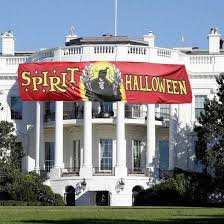
We seem to still be having trouble with freedom of speech. We are still talking about it, still debating it, still disagreeing over it; and now we are doing this in the wake of Charlie Kirk’s death. In that wake, and, I suspect, pretty directly related to that terrible crime, my wife was censored by Facebook, because someone reported a post she shared about Trump, calling it spreading misinformation. It was not, it was simply a joking criticism of the administration; specifically, it was this:
Exploring Shutdown Day 1: Discovering New Perspectives

My working assumption is that the person who reported her post was a Trump supporter, angered (as always) by libs and the left and so on, and recently energized by Kirk’s murder and the gaslighting from the right, convincing people to take action now to defend free speech (And please stop talking about the Epstein files and the still ongoing wars in Gaza and the Ukraine and the swiftly tanking U.S. economy), who probably reports every left-leaning or Trump-criticizing meme they see. Probably laughing while they do it. Facebook, as a private company that doesn’t want to suffer the wrath of the Trump administration, not only took down my wife’s post, but has also been monitoring and restricting her posts ever since: they are limiting her free speech. These new situations — unique neither to Charlie Kirk nor to my wife — has given people a new perspective on the issue, so: let’s talk about it again.

Here. This is where we start.

“Congress shall make no law respecting an establishment of religion, or prohibiting the free exercise thereof; or abridging the freedom of speech, or of the press; or the right of the people peaceably to assemble, and to petition the Government for a redress of grievances.”

Okay, so the First Amendment actually says a lot of things. It restricts Congress’s ability to control religion, and the press, and peaceable assembly, and the right to petition, all in addition to the freedom of speech. Let’s put those other aside for now: though it may be worth considering why all of those different, and all of those important, ideas were all packed together into a single amendment, and then the next one is only on one issue: guns. And the one after that is only about not letting soldiers sleep in your house against your will. Both important, maybe (though neither as important as freedom of speech) but both very narrow topics. Why are all these other things together in one place? Honestly, I haven’t read enough on the Founding Fathers and their choices regarding the Bill of Rights, so I could only speculate; but either way, we can ignore this topic for now, because we’re only here talking about the freedom of speech (and the others will become more clear as we focus just on speech, I think). Freedom of the press might come into it directly if we want to talk about Jimmy Kimmel, but it’s not clear to me that that discussion needs to involve anything other than free speech; that one right seems enough to cover what happened there. So let’s focus.

What is freedom of speech? Why do we have a right to it?

So hot take: freedom of speech is not actually critical. It is a roundabout way to protect the actually critical thing — or rather, two critical things: freedom of thought, and freedom to express those thoughts. Freedom of thought is absolutely critical to humanity, because in the most essential sense, we are our thoughts. I am what happens inside my skull. My body is also a critical part of me, but if I have a broken body, I am still me, because it doesn’t change what is inside my skull. It changes how well I can act out and reflect the decisions I make inside my skull — my freedom to express my thoughts — but it doesn’t change who I am. But if my brain dies, then who I am is gone, even if my body remains. My body can’t express my thoughts if I have no more thoughts: and without those thoughts, there is nothing for my body to express, no purpose for it to achieve; it can continue for a period of time, and then it will, mercifully, stop.

I wonder if my body would be sad if my brain died. Would my body grieve the loss of my mind?

Well: I would grieve the loss of my mind, so the question of my body’s reaction is academic. It is a part of me.

Now, in the ordinary way of things, there is nothing that could limit my freedom of thought. It’s one of the great things about being a sentient, thinking being; on that most essential level, we are always free. (Well, almost.) It’s because we are always essentially alone, and because there is no substance to thoughts: they can dance and flit anywhere we can imagine, always within the skull that holds the brain; and nothing will change other than the thoughts themselves — and potentially the mind having those thoughts. Nothing else is affected, and so nothing else can affect those thoughts: they can dance and flit to anywhere else, faster than anything that actually exists. Nobody else will even ever know where our thoughts are going, inside our minds. This was what Henry David Thoreau was talking about in On Civil Disobedience, when he described the inability of the state to actually punish him with a night in prison after he refused to pay his taxes:

I could not but smile to see how industriously they locked the door on my meditations, which followed them out again without let or hindrance, and they were really all that was dangerous. As they could not reach me, they had resolved to punish my body; just as boys, if they cannot come at some person against whom they have a spite, will abuse his dog. I saw that the State was half-witted, that it was timid as a lone woman with her silver spoons, and that it did not know its friends from its foes, and I lost all my remaining respect for it, and pitied it. Source

As he says, his thoughts cannot be trapped inside the cell, but can go anywhere that Thoreau wishes to send them: and the attempt to punish his body because they cannot punish his mind is just pitiable. What the State wants here is to control his thoughts, because they want to control Thoreau’s actions through his decision-making ability. Because their initial attempt to control his actions, through a threat to his body’s freedom if he made a certain decision the way the State didn’t want him to decide, didn’t work: knowing the threat, Thoreau still decided not to pay his taxes. His thoughts were uncontrolled, and his person/body/being followed along that thought decision, and didn’t pay his taxes. So then the State put him in jail: and he just kept right on deciding not to pay his taxes, regardless of what they did to his body. His thoughts were entirely unaffected, and uncontrolled, and they did the thing that the State didn’t want them to do — without any influence from the State at all. And so we all do, every thought we have that is in defiance of what our society demands of us. We are free to think whatever the fuck we want to, even the thoughts we’re not supposed to have, or not allowed to have.

Please take a moment and think a thought or two, which people outside of your head would not allow you to have, if they could tell you what to think. Any thought you like. Any thought at all.

Nice.

So because nobody can control a person’s thoughts, the laws focus on the second critical part of the process of having a free mind: the expression of our thoughts. Free speech, and in a broader context, free expression. Let me focus on that second aspect for a moment, because it shows more clearly what the point is here.

I can have my thoughts, and you can’t stop me. So far so good. But obviously, if I can’t act on those thoughts, then my thoughts cannot be complete. If, for instance, I think about spitting on the sidewalk, decide to spit on the sidewalk, but I cannot spit on the sidewalk — at the moment that is just because there is no sidewalk near me; I could spit on the floor of my office and call it a sidewalk, and to some extent I would have acted out my thought, and brought that thought to its completion, but then I would have to deal with my spittle, and also my wife would kick my ass — so I don’t spit: and thus the thought is not free, it is limited. I think, “I’m going to spit on the sidewalk!” and then I can’t do it: the thought is constrained. When the thought is constrained by reality — “I want to grow nine arms and use them to juggle chainsaws!” — then again, my thought is not free, but there’s no point in talking about our freedom to do things that we can’t do, or the need to pass laws to prevent things that are not possible. At that point, all we can do is shrug, and say, “It sucks to suck, Dusty. But you go ahead and dream of nine chainsaw-juggling arms, that’s fine, you can think about it all you want.” Freedom of thought is still protected, because I can carry the juggling arms thought as far as it can go; and as thought is still the most essential aspect of being human, that’s fine then. Thoreau can think that his taxes should not be collected by a government that supports both human chattel slavery and a war of conquest against Mexico (the reasons Thoreau didn’t pay his taxes), and if the action is not possible — if taxes didn’t exist and so he couldn’t choose to pay them or not to pay them — then he has all the freedom he could ever have.

But see, what happened is, Thoreau’s aunt paid his taxes for him, against his will. I don’t know why: I suspect she either thought he was suffering in jail and wanted to help him, or she was ashamed that her nephew was in jail, and wanted him to stop embarrassing her. (I would guess the second one, because she did not consult with him before she did it, and if she wanted to help, seems like she would at least visit and ask if he was okay.) Which then limited his free expression of his thoughts: he could think his money shouldn’t go to the government, and he could decide not to give his money to the government; but the government got his money anyway. Not because it was impossible for the government to have his money, but because someone else took his choice away. I guess it wasn’t really his money, it was his aunt’s money; but Thoreau’s idea was not to save his own pocket change, it was to refuse to participate in the government’s immoral acts, and when money went to the government in his name, it defied and negated his decision. Imagine if he talked to someone about not paying his taxes, if he argued with the government tax collector about the issue, and expressed his disagreement with the government, and said, “I will never contribute to this immorality, sir!” Can’t you just see the agent smirking and saying, “Sure, buddy. I mean, we already have your money, so you can say what you want.” Thoreau’s thought, while still free, has been constrained in its expression: and that pretty much ruins the thought; a thought which was not constrained by impossibility, it was possible, and he could have acted upon it — but then the option was taken away.

This is why, of course, jail is actually a very effective punishment for most people: because while we are all free to think our way out of jail, I would guess most people in jail want to walk out of jail: and they can’t. Which means their thoughts, while potentially free, are nonetheless really trapped along with their bodies. It is worth noting that, if you can find a way to free your thoughts, then prison wouldn’t matter so much; it would become a struggle to try to force you, through continued discomfort, to think about being in prison and how much you don’t want to be; then your thoughts are controlled, and trapped, and you are suffering for your punishment. But when Malcolm X was in prison, he found freedom in learning: and he talked in his autobiography about how prison really didn’t bother him at all, once he taught himself how to read and found things worth reading — and also once he found his faith in Islam, which also gave him something to think about that wasn’t constrained by being in a cell.

I have often reflected upon the new vistas that reading opened to me. I knew right there in
prison that reading had changed forever the course of my life. As I see it today, the ability to read
awoke inside me some long dormant craving to be mentally alive. I certainly wasn’t seeking any
degree, the way a college confers a status symbol upon its students. My homemade education gave
me, with every additional book that I read, a little bit more sensitivity to the deafness, dumbness,
and blindness that was afflicting the black race in America. Not long ago, an English writer
telephoned me from London, asking questions. One was, “What’s your alma mater?” I told him,
“Books.” You will never catch me with a free fifteen minutes in which I’m not studying something I
feel might be able to help the black man.

But I’m digressing. I told the Englishman that my alma mater was books, a good library. Every
time I catch a plane, I have with me a book that I want to read-and that’s a lot of books these days.
If! weren’t out here every day battling the white man, I could spend the rest of my life reading, just
satisfying my curiosity – because you can hardly mention anything I’m not curious about. I don’t
think anybody ever got more out of going to prison than I did. In fact, prison enabled me to study
far more intensively than I would have if my life had gone differently and I had attended some
college. I imagine that one of the biggest troubles with colleges is there are too many distractions,
too much panty-raiding, fraternities, and boola-boola and all of that. Where else but in a prison
could I have attacked my ignorance by being able to study intensely sometimes as much as fifteen
hours a day? Source

So again: the real goal of punishment, the only kind that is possible being constraint of the body, is to control the mind; and if the mind is able to continue thinking, then the constraint of the body is essentially meaningless. But in the vast majority of cases — and also, I will point out, in these two cases I have mentioned, because I don’t doubt that at some point Thoreau would have wanted to get out of jail and therefore would have felt trapped, and therefore actually would have been trapped, and Malcolm X would have been severely constrained if he had not been released to become the leader he became — trapping the body, because it limits the expression of thoughts, is an effective way to control a person’s thoughts. And even more importantly, for the purposes of society in general, constraining someone’s actions, the expression of their thoughts, is enough, because the purpose of prison is to stop a person from affecting others, and thoughts have no effect without expression. So just like I accept that I can’t ever have those juggling arms I dreamed of, society accepts that it can’t ever control our thoughts: and it just makes do with having potentially total control over our bodies.

And that’s where the amendment comes in.

I hope it is clear that thought without expression through the body, whether through action, through communication, or through a public display of some kind, is incomplete, and more importantly, useless. A useless thought is not a bad thought: all impossible thoughts are useless in and of themselves, which includes every dream, every fantasy, and every imagined existence; but they can still have enormous impact; and even if they don’t, they can encapsulate important things about the person who thought them, and that’s good, even if that encapsulated thought never reaches outside the mind that dreamed it. But when society wants to control us, controlling the impact we can have on other people is the primary goal and thus also the primary means of controlling people and the thoughts that define us. And that’s why the Founding Fathers included an Amendment that protects free expression in several different forms, most importantly speech and press and peaceable assembly.

Let me be clear now: the Founding Fathers were not always right. You don’t have to look any further than chattel slavery to know that they and their ideas, and the documents and the nation that they built, were fundamentally flawed, right from the beginning. There were some bad thoughts in there, and we’re still dealing with the legacy of those bad thoughts. But they were right in this: government wants to control people, and that means they need to control our thoughts — but they can only control our bodies, which is what they try to do. The First Amendment is there to set a baseline protecting our thoughts, through protecting the only things the government can attack and control, which is our actions.

So that is the essence of the Amendment, and the right: we have the right to express our thoughts, freely. The government cannot control our expression of those thoughts, so long as the thoughts do not have a direct impact on others in a way the government can control, and should control. In other words, if I decide to pick up a rifle and shoot someone I disagree with, that is no longer simply the expression of my thought, now it is an attack on another person, and it can be controlled, and should be because it is harmful. Though I will point out that, to some extent, the expression of that thought can’t always be controlled; sometimes it can only be reacted to after I have already done the thing I decided to do. But insofar as it can be predicted, and thus prevented, it should be.

Do I need to talk about why I shouldn’t have the unfettered ability to inflict harm on my fellow humans? Or can I assume we’re all on board with that? Just for the sake of saying it, the issue is that I have no right to control other people’s thoughts, nor their expression of their thoughts, except in the service of preventing harm. If I do harm to another person, I am affecting their ability to express and complete their thoughts, or possibly even their ability to think thoughts in the first place. If I am the one looking to do harm, not just prevent harm, then someone should have the ability and the right to stop me before I do harm.

Should that be the government? My first thought was to say that of course it should be; that this is the reason why we create governments and cede to them the power to control us: so they can prevent us from doing harm to one another. But government is frequently bad at this, and in that case, maybe other people and other authorities should have that power, that right, that responsibility, to prevent my harmful actions. But this is where we get into a conversation about how society should work, and that’s too complicated for right now. Suffice to say that the government, as imagined by the Founding Fathers — that is, existing with the consent of the governed — is a reasonable place to invest the power to control people’s obviously harmful actions. I would like to expand on the FF’s ideas about the governed who were consenting to the government, to include all of those who are governed, which would include people they didn’t consider worthy of consideration, or even consider to be people; it would also include all those who reside within the jurisdiction of the government in question, and who would be subject to the government’s control: those people should be considered “governed,” and therefore should be asked for consent to the government over them. Yes, that means undocumented migrants as well as those who don’t have full legal status. And also suspects, convicts, prisoners and parolees, all those governed by the justice system: they, too, must consent to the government over them, or else it becomes illegitimate and tyrannical.

And to be clear, when I say “consent,” I mean continuous, affirmative, and enthusiastic consent. The only kind of consent that matters.

Also at this point, I would like to express my burning volcanic rage that the First Amendment does not include the right to vote. What the actual FUCK, Madison? Why did you leave that one out?

It was the slaves, wasn’t it.

So all right: we should give the government the power to control our actions which can be harmful (and which can be controlled): but we retain the power to consent to be governed, and also the power to abolish the government if it becomes destructive of the ends we created it for, ideally through voting in free and fair elections. Since the government exists with our consent, what one thing do we most clearly need in order to legitimize that government?

A voice. The power to say “Yes,” and the power to say “No,” and to have those words heard. The power to consent, in the simplest terms. Continuous, affirmative, enthusiastic consent. If we don’t have that power, the government has taken too much control and has lost its legitimate authority, and should then be abolished: and that is the intent of the First Amendment, to protect and enshrine, first and foremost, our power to keep or abolish our government, which would otherwise have unchecked power over us.

You know: the power to vote. But in the absence of that, the power at least to speak, and to be heard. Not just to think freely, but to actually express those thoughts. The power to spit on the sidewalk. And on fascists.

So. Now. Did Charlie Kirk have freedom of speech? He did, and he should have: he spoke, and was heard. He lost that freedom when another person caused harm to him, murdered him, in an act that our government should have done all it could to prevent. Was Charlie Kirk a promoter, and therefore a martyr, for the cause of free speech? He was not: it was not his job to protect people’s right to free thought nor to free speech as an expression of their thoughts; inasmuch as he encouraged free thought and the free exchange of ideas through debate, then he was a proponent of free speech; but watching his debates makes it very quickly clear that he was not interested in the expression and free exchange of ideas, he was interested in scoring points and (as my students would say) farming aura: trying to get famous and powerful because he was seen as a staunch defender of his political and religious views. This is no criticism of the man: I would also like to get famous and powerful using my words, though I’d probably rather write than speak; but I want the same thing. But it does mean he was not a martyr for the cause of free speech, because free speech was not his cause: it was the means by which he tried to achieve his purpose, to fight for his cause. He shouldn’t have had to defend his free speech, he should have simply been able to exercise it. And just like Charlie Kirk, as a private citizen, it is not my job to protect free speech directly: that is what the government is for. To secure these rights, to Life, Liberty, and the Pursuit of Happiness.

Let me emphasize that again, because we talk about free speech as though it is just something that needs to be protected from the infringement of the government on our rights, that the point of the First Amendment is to constrain the government from taking away our free speech; the First Amendment is that thing, that is its point — but also, the real point of the amendment is to tell the government that it should be working to protect and secure that right for all people within its jurisdiction and influence. Actively. Affirmatively. Enthusiastically. Continuously.

Which means, in practical terms, that the government should not only have done more to protect Charlie Kirk from being murdered (if we believe the government could have done more to prevent that, which I think is self-evident, but that’s not the argument I’m making here), but also, it should be doing more to ensure that all people under the jurisdiction of the U.S. government, all persons resident in this country and under its control around the world, have the opportunity to be heard, to express their thoughts freely. By publishing their opposition to the war and genocide in Gaza, without losing their legal status. To have their case heard before an immigration judge, through the due process of law. Through posting whatever the fuck you want on social media, even if other people don’t like it, so long as it is not actively, directly causing harm. Through speech, through the press, through petition, through peaceable assembly.

Which means the government should have kept the Fairness Doctrine. And in this modern era, the government should ensure that social media does not censor people’s free speech, so long as that speech does no harm. In fact, I would argue that the government should have a platform for people to be heard, to be seen, to which all people who must consent to the government over them have access. I would include NPR, PBS, and VOA among those platforms, but I would argue the government should also provide some simple form of social media, to at least offer an alternative to the private companies, which are all controlled by billionaires with agendas. I don’t think the government should seek to control the social media companies per se, but they have a responsibility to ensure our rights: including the right to speak our thoughts, online as well as through print and speech. The government should also protect protestors and ensure that they have the right to assemble and petition for redress of grievances, so long as they are peaceable in that assembly.

Yes, that last clause, as well as the earlier condition that speech should be protected as long as it does no harm, does create an opportunity for the government to limit free speech, depending on what we mean by speech that does harm, or by peaceable assembly. I think the current laws distinguishing between protest and riot, and the laws preventing libel and slander, make sense and should remain (I don’t know enough about the specific laws and so can’t speak to their current efficacy, but conceptually, I’m in favor), and where these two rights cross over, with the law preventing speech that incites to violence, is also a useful law that protects people from harm. I also think there should be a gray area around and beyond those laws (Does “Fight like hell or you won’t have a country” count as incitement to violence? I honestly can’t say, not without further evidence of intent and context. If only there had been a trial…), and that the burden of proof within that gray area should definitely be on the government, as the ones who enact the control of people’s speech, to show that someone lost their right because they were causing harm with their speech. We have a system in place to carry out that process: but we need to have people in the government who are dedicated to maintaining and using that system.

We do not currently have that. We have an authoritarian who wants to eliminate free speech because he doesn’t want anyone to have rights except himself. We have a legislature that agrees with him, completely and slavishly — they are not expressing their thoughts, they are expressing only his. (The opposition, presumably, is not expressing the authoritarian’s thoughts. We just need to find where that opposition is hiding…) We have a Supreme Court that also thinks no one should have rights other than the President, and themselves, because they think their trump card over Trump (pun obviously intended, as all puns should be — also, we should have a right to pun…No, we do have a right to pun, and it should be protected by the government.) enables them to live as exceptions to the dictatorial power they want to give him, and they like the idea that a dictator could enhance the lives of the people whom they (the “justices”) deem worthy of enhancement, and destroy the lives of those whom they deem worthy of destruction, without they themselves dirtying their lil fingies. They’re wrong, of course, because if Trump ever did become a dictator, he would end up killing or jailing the justices because they have defied him in the past, and no dictator can abide that kind of challenge to their power; but then, all of these people are wrong. They all think that the dictator would only use power the way they want him to use power, and that’s not how dictatorship works.

Please take note, all you MAGA voters who want Trump to hurt the people you hate, but not you yourself. That’s not how dictatorship works. He doesn’t dance to your tune. If the Supreme Leader is the only one with rights, then we will no longer have rights ourselves: not the right to life, not the right to liberty, not the right to the pursuit of happiness. We will then not have the right to express our thoughts through speech or writing, through assembly and protest and petition; more importantly, we will no longer have the right to consent, and though that immediately means the government will no longer be legitimate, it also means that we won’t have the ability to remove it without violence.

That is where the Second Amendment comes in. It is not, as the fools who care only about that one and not the First would have us all believe, the right which ensures all the others; that is the First Amendment. It is free speech. It is the power to consent, and to withdraw consent. The practical power that enforces the moral and intellectual power is the right to communicate, to agree, to assemble and stand together: that is what changes governments. (Also, if we don’t lose it, the right to vote. Tell me why the right to free exercise of religion usurped the place that should have gone to the ballot, I beg you.) The right to defend ourselves physically is the last resort when the first one has been lost: and every one of those gun rights advocates, from the rational ones to the chuckleheads, have been ignoring the infringement of the First Amendment while trying to protect the Second. Protecting it, I might add, through their right to free speech.

So. Free speech is not only important, it is critical, it is definitive, both to us as humans, and to our country as a free country, with government of the people, by the people, for the people. It is the most important right we have, and it is the best way to delegitimize, remove, and replace the current government, which I think we can say safely does not have our consent any longer to govern us, taking “our” and “us” in the largest collective sense, meaning the majority of people governed by this administration. The government should not only not be infringing on it, the government should be actively protecting and promoting it: that is the government’s job, the reason it exists, and the best way to ensure that the other rights are also maintained. Because free speech leads to the free exchange of ideas and information, to the shining of a light into the darkness where tyranny grows. It’s what lets us all communicate and understand each other, and then agree: and take action.

Before it’s too late.

The Trump Doctrine: Bullshit, and Fling Shit

Okay. Let’s talk. Honestly. Let’s get down to brass tacks.

The truth.

I’m trying to get my Freshman English students to do that. To talk honestly. They don’t – ever – but I think it’s mostly because they don’t know how.

See, what we have done in education over the last ten or twenty years is reward lying. Reward cheating. To a certain extent that is not new: I lied constantly when I was a teenager, especially to my teachers and my parents, and I would guess that most teenagers had similar experiences. And for the same reason: schools reward lying and cheating. For as long as schools have been product-focused, rather than process-focused, we have given students an opportunity to achieve all the rewards of school (All the apparent ones, at least) without doing the difficult parts. My grade in my classes was based on the work I turned in: which means that if I can find a way to cheat on those assignments, then I get the exact same grade I would if I did the work myself, the hard way. And sure, we also try to stop students from choosing to cheat, through threats of dire consequences if they get caught; but that “if” in what I just wrote is a humming, glowing, throbbing beacon of glorious light. Because teenagers are dumb: we think that we can get away with anything, even while we are actively not getting away with it. The very first time I caught students cheating – and they were cheating on a small, simple, easy assignment, a set of study questions that came after a reading, which they did with the reading in hand, in class – I realized while I was reading their responses that three young women, all friends, had given identical, word-for-word answers. They had copied. And the giveaway was they had used the word “oasis” completely out of context – something like “and the oasis of the story was the courage the characters had.” One of them – the one who had done the work and given it to the other two, the source student – had written “basis,” in cursive, and the other two had misread it. So I gave them all zeroes for copying, two for doing it and one for letting them, and when I handed the work back, I told them they had gotten zeroes. But instead of confessing, they argued with me. Vociferously. Angrily. Denying that they had ever done such a thing. I hadn’t handed back their papers, choosing to keep them as evidence, and just informed them of their grades; when they demanded I show them the evidence, I realized I had left the papers in my other classroom (Like many first-year teachers, I got the crappiest job assignment, so I floated between three different classrooms and taught two different remedial classes), and they insisted on coming with me to see the evidence; they yelled at me the whole way across campus, about how dare I accuse them, and they would never do that, and it was not fair, and so on. We got to my other classroom, I showed them their papers, pointed at where they wrote “oasis” and said, “Explain that.”

And they actually tried. They tried to come up with some bullshit on the spot about how “oasis” was meant to represent the safe space that had been created in the story by the characters… the girl who was talking trailed off in the middle of the sentence. I just shook my head and said, “No.” And they left. Grumbling. Still denying that they had done what they couldn’t actually prove that they hadn’t done – because they had done it.

But what happened? The student who had done the work had her mother complain to the administration, and I had a meeting with one of the vice principals and this mother. Who told us that her daughter was under a lot of stress, and after all, she had done the work, and then had made the poor choice to let her friends copy because they all just wanted so badly to do well. That’s not really bad, is it?? So, as per the decision my administrator made, that girl got the grade. The other two had a chance to make up the work and get a grade. They got a warning.

A few days later, one of the boys in the class told me that he had actually let the first girl, the source girl – the one who got the grade – copy his work.

So. This is the structure we have built for students. Cheating is overlooked; copying is standard; getting “help” with the answers is encouraged. Because the product is what matters, not the process by which you create that product. (It’s the perfect conceptual framework for a life cut short by working yourself to death in order to get the company more profit. But surely that’s just a coincidence…) And onto that structure we have added the internet, with all of its access to perfect information and perfect writing; and now AI, the same perfect information and perfect writing, but now both customizable – and untraceable. And we still grade students on product, not process. We still assign homework, so they can complete the assignments in privacy, without supervision, with full access to resources like AI and Google. We use the same assignments year after year, so students can pass on work they did to the next year’s class. And we tell them that what really matters in school is getting good grades, so you can get into good college, so you can have a good job and make money. Oh, we tell them they need to learn, they need to master the skills; but that’s just talking. Every single reward in school is derived directly from product. (With the exceptions of PE, the arts [which sometimes reward product, but not always – my wife’s Life Drawing class is graded only on process, her AP Art class graded largely on process… though in that last case that’s because if she graded their art work as she would grade a college student’s work, they’d all fail. She has high standards. And we don’t work at an art school.] and a few classes like foreign language, where students are graded on their conversation and pronunciation and so on: performance metrics.) And almost every product can be completed with some kind of corrupting assistance, whether it is copying from a friend, getting help from a family member, or using the online resources they have available. Even just using the excuse of “Oh no, my paper didn’t upload!” to get extra time to complete it and turn it in, with permission, a second time. Because after all, I can’t blame a student if the WiFi went down, right?

Right.

So I’m trying to get my freshmen to think about lying, and whether it is good or bad. They all, without exception, think it is good in the right circumstances, which are always two: to spare someone’s feelings – the classic “Do I look good in this outfit?” conundrum – and to save yourself from getting in trouble. They do usually offer a third circumstance: when someone threatens to kill you if you don’t tell them something, like where you hid the money, then it is acceptable to lie to save your life. Thank you for including that hypothetical, children; surely an important one. But it’s that middle one, the lying-to-get-out-of-trouble, that I want them to think about. Actually, the first one, too, because I gave them the counterargument: if you tell someone they look great when they look terrible, then you’re telling that person to walk around proudly, while they look terrible, and don’t know it. They didn’t have an answer to that. They’re not ready to admit what I think is the answer, that honesty really is the best policy, and the key to getting along is knowing how to speak truth without being harsh and insulting – you don’t have to say “Damn, you look terrible!” when someone looks terrible in an outfit, but you should not lie and say they look perfect when they look terrible – and the key to not getting in trouble is… not doing things you shouldn’t do. I don’t think they’ll all come over to my side, but I want them to think about it, because they lie to me constantly, and I’m sick of it.

But then, last night, I watched our President stand up in front of Congress, his words broadcast to the whole world, and tell lie after lie after lie. After lie. After lie. For ninety minutes. And the whole time, without exception, the Republican majority clapped and cheered for his lies. The two grinning dolts behind him, Mike Johnson and J.D. Vance, grinned and laughed – because Donald Trump didn’t just lie, he was also needlessly, gleefully cruel, and appallingly stupid, again and again and again, and clearly that stupid cruelty was even more popular than his lies. Because the cruelty won’t even get the apathetic next day fact-checking that his bullshit has gotten today; the cruelty we just let go, maybe frowning a little at how our President doesn’t show the same decorum we enjoyed so much from President Obama (When he wasn’t bombing people in the Middle East or deporting families from the US), who was always polite and well-spoken and never overtly cruel and bullying like this guy, with his goddamn shit-eating grin when he tells some joke about innocent people he’s going to harm, because it will save money, or because it will win him points with his equally cruel, stupid, bullying base. But he won’t have to suffer any consequences for his lies or his stupidity or his cruelty; he did all the same things last time, and we elected him again. Because eggs were too expensive.

(Please understand – and know that I am in the middle of writing a piece about that, about grocery prices and inflation and Trump’s broken promises regarding the issue, but I had to address this absolute horror show of a “speech” – that I recognize the genuine damage and stress that inflation and high prices inflict on those of us who are on the edge of not having enough. I am a high school teacher: I can’t afford eggs. I am also a partial vegetarian: eggs are one of my primary sources of protein. So I get it. I only mock the idea of egg prices as a reason to vote for Trump because even if we do see that as a valid reason to elect a president – and I will argue all day that presidents just don’t have that much control over prices in our system – it ignores SO MANY other things about Donald Trump. I get the need for relief from the cost of living: but that’s not the only thing that matters. That’s why I say it. If you disagree with me about the right priorities to focus on for a vote, then so be it. We’ll discuss this more another time.)

For now, let’s start with talking about what Donald Trump lied about last night in his address. This is easy to find, of course – here’s a good source FactChecking Trump’s Address to Congress – FactCheck.org, that gives a clear list followed by more careful analysis – but while they do include some of the things that sometimes slip past fact checkers, like that Trump ignored the influence of the Covid-19 pandemic on creating the economic situation that the Biden administration dealt with, they focused on the specific lies Trump told in the speech: and that means they don’t talk about the lies he has used as the justifications for his actions thus far, which he then discussed in the speech. And that’s where I want to focus.

But let me also list out, if you are not interested in following the link – if you believe, as many people do, that fact checkers are unreliable, that only independent media sources are believable, which means you have not thought a whole heck of a lot about why “independent” is more important than “part of an organization whose business model relies on truthful reporting rather than garnering attention” – some of the more egregious falsehoods that Trump spouted.

First, the savings he and Elon Musk have found through the “work” of “DOGE.” They have not found hundreds of billions in waste: they have “saved” about $20 billion, claimed $105 billion, and proved that exactly none of it was savings from eliminating fraud. It’s all “savings” from firing employees. Which, sure, that saves money – but it also eliminates work and productivity. If you have three people working for you and you fire one, you save one-third of your payroll costs – AND YOU LOSE ONE-THIRD OF YOUR PRODUCTION. Seems like this would be already known by two guys who run such huge and successful companies, but maybe not. They do both seem to believe that they personally do the work which is actually done by their employees, so, maybe they’re unclear on the concept.

Or maybe the only fraud here is the one being perpetrated by Trump and Musk and DOGE.

Kabosu, Dog Behind Famous 'Doge' Meme, Dead at 18

Next: Social Security. Trump went on and on and on about the MILLIONS of people who Social Security “believes” are over a hundred years old, including some that he said were older than the United States. So let’s be clear on this: when we say that “Social Security” “believes” these people are impossibly old… who are we talking about? Is Social Security the name of the person in charge of the organization? Is it the hive mind of all the bureaucrats who work there? Is it the AI who runs the database? Is Social Security here in the room with us now?

No: social security is the much-beloved system whereby we ensure that senior citizens don’t have to starve to death in shantytowns after they stop working. And it is also the biggest “entitlement” in the Federal budget: and therefore it is the one the Republicans most want to cut. But since so many of their voters are senior citizens, they can’t cut it without facing the wrath of their voters: so they try to turn their voters against social security. By talking about it like it’s the Avatar of bureaucrats, and that it’s stupid enough to “believe” that there are impossibly ancient people still getting social security checks.

Here’s the truth: the social security database is enormous. Tens of millions of people receive checks every month; hundreds of millions of people make payments into the fund for those checks every month. When people pass away, there is a form that one’s survivors are supposed to fill out and file with SS to let them know that someone on the roll has passed and no longer need checks. But: people don’t consider that to be an important job, especially while grieving, so they don’t always do it. Also lots of people don’t have loved ones to file the form. I would guess millions of people, over the years. The ancient people in the database are not people that Social Security “believes” are alive, they are people who were on the rolls as alive, and who have never been confirmed to be dead. See the difference?

Trump doesn’t. Well: he does, he just lied about it, and pretended these two different things are the same. They’re not. If you want to see this as a moment when Trump is monumentally stupid instead of a liar, I’m fine with that. And yes, it’s monumentally stupid: if someone told me there were people on the SS database who were over 120 years old, I would assume there was a mistake in the data, not that Social Security “believed” there were Americans living over 120 years old. Especially not the millions whom Trump gobbled about.

And while thousands of those people – thousands out of the millions, which is fractions of a percentage point – may still get checks, and some of them get checks because living people are using the name of a dead person to collect social security (Frank Gallagher does this with his dead mother in Shameless.), which is fraud, the rest of the millions of unconfirmed-dead people on the roll are just – on the roll. In the database. They don’t get checks. Money is not wasted on them, and it would not be saved by cleaning up the database. Of course cleaning up the database would be a good idea, but how many man-hours would it take to confirm that millions of people are actually dead? And if you decide to remove everyone who is over, say, 100 years old, there will be at least 80,000 people who will want to have a word with you.

Centenarian, older adult population change by state | Northwell Health

Several of Trump’s other lies were of a less serious nature: claiming that 38,000 Americans were killed during the construction of the Panama Canal (5,600 workers died during construction, mostly from diseases like malaria and yellow fever. Not all of them were American. Special Wonders of the Canal – PMC), that Biden inherited a great economy and Trump inherited a terrible one twice, that Europe has given less than the US to the Ukraine and that the US has given $350 billion – these are just bad facts; they’re definitely lies, but they are small, because none of them change people’s minds, and none of them serve as the primary justification for Trump’s bad policies: he wants to take us to war over the Canal because China has an influence there, not because some number of Americans died during construction; he constantly lies about his accomplishments and, especially last night, about Biden’s failures, but that doesn’t change anyone’s opinion about either man; Trump is going to give as much of the Ukraine to Russia as he can, because he wants to be allies with Putin, not because of how much Ukraine costs to defend. And he doesn’t want to be allies with Putin to save money, it is to make himself into a strongman, in appearance if not in fact. (Though I have to note here that when I said last night that Trump wanted to be Putin, my wife’s immediate response was “Trump will never look that good with his shirt off.” Savage, she is. But: she ain’t lyin’.)

But the lies I really want to get to with Trump’s speech are the ones about people who are disenfranchised in this country. Such as people who are described, by that shit-flinging gibbon and his handlers, as representatives of DEI: like General C.Q. Brown, whom Trump fired from his position as head of the Joint Chiefs of Staff, and whose fucking resume looks like this:

EDUCATION
1984 Bachelor of Science, Civil Engineering, Texas Tech University, Lubbock
1991 U.S. Air Force Fighter Weapons School, Nellis Air Force Base, Nev.
1992 Squadron Officer School, Maxwell AFB, Ala.
1994 Master of Aeronautical Science, Embry-Riddle Aeronautical University, Daytona Beach, Fla.
1997 Distinguished graduate, Air Command and Staff College, Maxwell AFB, Ala.
2000 Air War College, Maxwell AFB, Ala.
2004 National Defense Fellow, Institute for Defense Analyses, Alexandria, Va.
2008 Air Force Senior Leadership Course, Center for Creative Leadership, Greensboro, N.C.
2012 Joint Force Air Component Commander Course, Maxwell AFB, Ala.
2014 Joint Flag Officer Warfighting Course, Maxwell AFB, Ala.
2015 Pinnacle Course, National Defense University, Fort Lesley J. McNair, Washington, D.C.
2017 Leadership at the Peak, Center for Creative Leadership, Colorado Springs, Colo.

ASSIGNMENTS
1. May 1985 – April 1986, Student, undergraduate Pilot training, 82nd Student Squadron, Williams Air Force Base, Ariz.
2. May 1986 – July 1986, Student, lead-in fighter training, 434th Tactical Fighter Training Squadron, Holloman AFB, N.M.
3. August 1986 – March 1987, Student, F-16 training, 62nd Tactical Fighter Training Squadron, MacDill AFB, Fla.
4. April 1987 – October 1988, F-16 Pilot, 35th Tactical Fighter Squadron, Kunsan Air Base, South Korea
5. November 1988 – April 1991, F-16 Instructor Pilot, wing electronic combat officer, and wing standardization and evaluation flight examiner, 307th and 308th Tactical Fighter Squadrons, Homestead AFB, Fla.
6. April 1991 – August 1991, Student, U.S. Air Force Fighter Weapons Instructor Course, Nellis AFB, Nev.
7. August 1991 – August 1992, F-16 Squadron Weapons Officer and Flight Commander, 307th Fighter Squadron, Homestead AFB, Fla.
8. September 1992 – October 1994, Weapons School Instructor, and standardization and evaluation flight examiner, F-16 Division, U.S. Air Force Weapons School, Nellis AFB, Nev.
9. October 1994 – July 1996, Aide-de-Camp to the Chief of Staff, Headquarters U.S. Air Force, Arlington, Va.
10. August 1996 – June 1997, Student, Air Command and Staff College, Maxwell AFB, Ala.
11. June 1997 – September 1997, Student, Armed Forces Staff College, National Defense University, Norfolk, Va.
12. September 1997 – November 1999, Air Operations Officer, Current Operations Division, Operations Directorate, U.S. Central Command, MacDill AFB, Fla.
13. November 1999 – June 2003, F-16CJ Instructor Pilot and assistant operations officer, 79th Fighter Squadron; Weapons and Training Flight Commander, 20th Operations Support Squadron; Operations Officer, 55th Fighter Squadron; and Commander, 78th Fighter Squadron, Shaw AFB, S.C.
14. July 2003 – June 2004, National Defense Fellow, Institute for Defense Analyses, Alexandria, Va.
15. June 2004 – June 2005, Deputy Chief, Program Integration Division, Directorate of Programs, Headquarters U.S. Air Force, Arlington, Va.
16. July 2005 – May 2007, Commandant, U.S. Air Force Weapons School, 57th Wing, Nellis AFB, Nev.
17. May 2007 – May 2008, Commander, 8th Fighter Wing, Kunsan AB, South Korea
18. June 2008 – May 2009, Director, Secretary of the Air Force and Chief of Staff Executive Action Group, Headquarters U.S. Air Force, Arlington, Va.
19. June 2009 – April 2011, Commander, 31st Fighter Wing, Aviano AB, Italy
20. May 2011 – March 2013, Deputy Director, Operations Directorate, U.S. Central Command, MacDill AFB, Fla.
21. April 2013 – February 2014, Deputy Commander, U.S. Air Forces Central Command; Deputy, Combined Force Air Component Commander, U.S. Central Command, Southwest Asia
22. March 2014 – June 2015, Director, Operations, Strategic Deterrence, and Nuclear Integration, Headquarters U.S. Air Forces in Europe – Air Forces Africa, Ramstein AB, Germany
23. June 2015 – July 2016, Commander, U.S. Air Forces Central Command, Air Combat Command, Southwest Asia
24. July 2016 – July 2018, Deputy Commander, U.S. Central Command, MacDill AFB, Fla.
25. July 2018 – July 2020, Commander, Pacific Air Forces; Air Component Commander for U.S. Indo-Pacific Command; and Executive Director, Pacific Air Combat Operations Staff, Joint Base Pearl Harbor-Hickam, Hawaii
26. August 2020 – September 2023, Chief of Staff of the U.S. Air Force, the Pentagon, Arlington, Va.
27. October 2023 – present, Chairman of the Joint Chiefs of Staff

SUMMARY OF JOINT ASSIGNMENTS
1. September 1997 – November 1999, Air Operations Officer, Current Operations Division, Operations Directorate, U.S. Central Command, MacDill AFB, Fla., as a major
2. May 2011 – March 2013, Deputy Director, Operations Directorate, U.S. Central Command, MacDill AFB, Fla., as a brigadier general
3. July 2016 – July 2018, Deputy Commander, U.S. Central Command, MacDill AFB, Fla., as a lieutenant general
4. October 2023 – present, Chairman of the Joint Chiefs of Staff

FLIGHT INFORMATION
Rating: command pilot
Flight hours: more than 3,100 including 130 combat hours
Aircraft flown: F-16A/B/C/D and 20 additional fixed and rotary-wing aircraft

MAJOR AWARDS AND DECORATIONS
Defense Distinguished Service Medal with two oak leaf clusters
Distinguished Service Medal
Defense Superior Service Medal
Legion of Merit with three oak leaf clusters
Bronze Star Medal
Defense Meritorious Service Medal
Meritorious Service Medal with two oak leaf clusters
Aerial Achievement Medal
Joint Service Commendation Medal
Air and Space Commendation Medal with two oak leaf clusters
Combat Readiness Medal
National Defense Service Medal with bronze star
Armed Forces Expeditionary Medal
Global War on Terrorism Expeditionary Medal
Global War on Terrorism Service Medal
Korea Defense Service Medal
Nuclear Deterrence Operations Service Medal
NATO Medal
Republic of Korea Order of National Security Merit (Tongil Medal)
Republic of Singapore Pingat Jasa Gemilang (Tentera) Meritorious Service Medal
Republic of Korea Order of National Security Merit (Samil Medal)
Brazilian Order of Aeronautical Merit (Degree of Grand Officer)

PUBLICATIONS
“Developing Doctrine for the Future Joint Force: Creating Synergy and Minimizing Seams,” Air University Press, September 2005 “No Longer the Outlier: Updating the Air Component Structure” Air University Press, Spring 2016

Yeah. That guy was a DEI hire.

People who are endangered by the anti-vaccine movement that Trump supports and promoted last night – which is all of us, but is especially those who can’t work in close proximity to others, for any of a thousand reasons (permanent disability, mental illness, inability to travel, along with being immunocompromised, again for a thousand potential reasons), but who do work, and who who now have to return to work because Trump is a cruel idiot and a liar who claims that “not coming IN to work” is evidence of laziness or fraud. It is not clear to me whether the real goal here is just to fire valuable workers for a reason that Trump’s base can stand behind, so that Trump and Musk can channel the money “saved” from payroll into tax breaks for billionaires, or if it is to undermine the very idea that a person who cannot come into an office can nonetheless, in this day of complete interconnectedness online, still be a productive worker because that idea is, I dunno, woke or some shit. Either way, it is a stupid lie that is cruel to those who need the accommodation of remote work – and also cruel to those who just like it better, because what the hell is wrong with working from home if you can do the work?

Trump is going after people with neurodivergence, in addition to attacking those who need to live in a vaccinated world, by lying about the history of autism diagnoses, in conjunction with his comments about naming the anti-vaxxer Robert F. Kennedy Jr. to a post for which he is not only unqualified, but entirely unfit. It is not true that “not long ago” 1 in 10,000 children had autism; it is true that 50 YEARS AGO we did not understand autism nor how to diagnose the entire spectrum of conditions associated with the term. It is also emphatically not true that autism is a disability that would justify removing or changing the vaccine schedule, as Trump was implying. The entire argument that parents would rather risk their children dying of measles than “becoming” autistic because of the MMR vaccine is disgusting, along with being a thoroughly debunked and incredible lie. Even where autism does present as disabling, ask a parent of an autistic child whether they would rather have their child living or dead – and then duck, before they quite rightly punch you in the face. Though I’d be really happy if all of those theoretical punches landed on Elon Musk, and also on whoever suggested that Elon’s Nazi salute was a sign of Musk’s own autism. Remember: “Always Punch Nazis” includes punching those who argue that being autistic explains away Nazism.

But I will admit that, despite all of the terrible and cruel and stupid things that Trump said in that speech, the lies that actually bothered me personally the most were the transphobic ones. Maybe because they got the loudest cheers. Maybe because he seemed proudest of his anti-trans policies like the declaration that there are only two genders in the U.S. – which is both a lie, and a cruel and stupid statement. Or his executive order keeping men from playing women’s sports, which, HOLY GOD THAT I DON’T EVEN BELIEVE IN CAN WE STOP? Can we just stop? Can we just agree to never again allow anyone to repeat the absolute and utter nonsense and poppycock that there are “men” playing “women’s” sports? There are women playing women’s sports. Nothing more. And 99.99% of those women are those who were assigned female at birth. And also, this is fucking sports we are talking about. Not something important. Sports are entertainment. They are inconsequential. They don’t matter. They matter plenty to the people who play them, both professionally and passionately, and therefore they are worth consideration for the sake of those people; but the idea that a national policy, as a focus of what is essentially a state of the union address, would make such a deal of opposing the existence of trans people, particularly in relation to sport? What the hell are we doing here?

The answer is simple: we, and by “we” I mean that orange-tinted shit-flinging gibbon and his flying monkeys and most definitely not me, are attacking and belittling and trying to destroy and torment and kill anyone whose destruction would make the stupid, cruel base of the Republican party feel stronger and meaner, which is how they want to feel. Trans people are not the danger, regardless of what nonsense some goddamn volleyball player claims (Want to know how many volleyball players get hurt every year? About 35,000. Volleyball Related Injuries in Adolescents: A Decade of Data | Published in Orthopedic Reviews How many of those injuries were caused by trans athletes? Conversely, how many trans athletes suffer injury and abuse and death because of the way they are objectified and demonized and ostracized and assaulted in every way by the entire Republican establishment of this country? I bet it’s more than the one injury Trump claimed was caused by a trans athlete.)

I don’t know why this one upsets me more than the other loathsome false accusations and attacks that Trump launched at everyone who is morally and ethically and humanistically better than he is himself. But it does. I suppose it doesn’t matter why it bothers me, any more than it matters why the base and the Republicans and the shit-flinging gibbon himself chose trans people to try to destroy: it’s just that they found someone they can harm, and I have found someone – millions of someones – whom I want to help protect from that harm, in whatever way I can assist. I don’t really need to justify which fight I choose to take on: I just need to be aware of who my real target is.

It’s not just Trump. Just like Adolf Hitler, who was a uniquely effective figurehead for the Nazi party and the apparatus that rose during the Third Reich, but neither the brains behind that apparatus nor the one in control of it, Trump himself is not the cause of the problem, he is simply the most visible pimple on the very wide flabby ass of the MAGA movement. It is possible that, after Trump is gone (Hopefully before the end of his term, though personally I’m hoping for impeachment and jail rather than the death that many others think he deserves), JD Vance or one of the other flying monkeys will take over as the chief shit-flinger; and that might even be worse. It’s not even the billionaires who back Trump and who are taking advantage of the distraction he is because of the shit he flings – shit that is flung like no one has ever seen before – because the wealthy have always been there, trying to control things, trying to take advantage of every opportunity to have wealth and power, without being in the spotlight themselves. I know it’s not Elon Musk: there’s a reason why the real power brokers don’t ever do what he is doing, and put themselves out front. It’s because when people get mad enough to pick up the torches and pitchforks – and the more effective Musk is, the sooner that will happen, as it always does when inequality gets too extreme – they look for an obvious target for their anger. We all know who Elon Musk is. Who the hell is Rebekah Mercer?

(Is it wrong of me to point out that, were she to become known to those with torches and pitchforks — or, let’s say, were she to get targeted by the next Luigi Mangione — nobody would miss the ENORMOUS target that is her head?)

Natural History Museum Curators Revolt Against Trustee Rebekah Mercer for  Funding Climate Change Deniers | Artnet News
Now we know what Megamind’s mom looked like

What I oppose is what Trump represents and distills. It is stupidity, chosen because it is easier than learning, and more comfortable than truth – because stupidity lies to us, even as we lie to the stupid. It is cruelty, because cruelty, also for the sake of ease and comfort, brings the displaced self-hatred of the stupid crashing down on the innocent; and not only do we then have that many more victims, some of whom will lash out at other disempowered people, but we also have those among the stupid who now cannot face enlightenment because then they would have to admit what they did to people who never deserved anything but the kindness and empathy due every one of our fellow human beings, and so those angry, cruel, stupid people will be even more incapable of changing what they are doing, no matter what truth is put before them and no matter what pleas for mercy they hear and ignore.

The worse we act, the less likely we are to stop acting badly. That’s why Donald Trump is the way he is: because he’s always been this way, he’s just been getting worse, for his entire life. And he’s an old, evil, man, now.

And everything he says is bullshit.

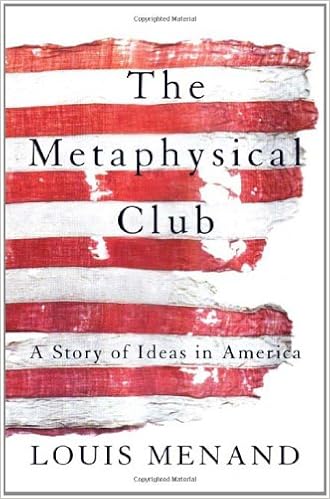
Book Review: The Metaphysical Club

Image result for the metaphysical club

The Metaphysical Club

by Louis Menand

I’m not smart enough for this book.

But I want to be, and I think that means I have to keep trying to read books like this, and think about what they say while I’m reading them.

So this book traces the influence of four American intellectuals on the general mindset of the United States. The four are Oliver Wendell Holmes, Jr., the Supreme Court Justice; William James, philosopher and psychologist (And older brother of the writer Henry James); Charles S. Peirce, whom nobody has heard of but was an influential thinker and writer; and John Dewey, the philosopher who had more influence on American education than anyone else. The wonderful thing about the book is that the sheer volume of information is staggering, and yet it is told in a generally simple and straightforward narrative style, well-written, and with a deft human touch; Menand delves into the men’s youth, their childhoods and upbringings, their parents, particularly their fathers, and the influence those men had on these four men, and builds a fuller picture than I have seen in most histories – and he does it for all four of them, while also pursuing a history of a set of ideas. So for instance, we read about Charles S. Peirce, whose father, Benjamin Peirce, was a mathematician, author, and Harvard professor; we see how the elder Peirce’s ideas reflected and interwove with the dominant ideas of the time – since the book focuses on men who came of age in America in the second half of the 19th century, the most important event was the Civil War and the most important idea Darwin’s theory of evolution through natural selection – and how his father’s ideas influenced Charles’s thinking, and how Charles’s thinking was affected by Darwin and by the Civil War; and then lastly, how Charles’s thought influenced and was influenced by the thought of the other three men. Along with the philosophy of Emerson and Kant and Hegel and umpteen other pieces that go into an exploration of a whole set of ideas.

It’s a complicated web. That’s why I’m not smart enough: because I knew none of this, knew nothing about these men – had never heard of two of them, and could never remember whether Holmes Jr. or Sr. was the jurist – I could not keep all of the facts and names and such straight. By the end of the book I was having to look back to the beginning of the book to remember who people were; this was made easier by the extensive index in the back, but still, that’s not my favorite way to read. And while I enjoyed the book, it was hard enough to get through that I don’t want to read it again, which is obviously the best way to handle this much information.

But: while the book is a history of four important men (The details of whose lives, while interesting, are not things I really need to retain), it is more an exploration of a set of ideas. And those, I found fascinating, and do want to spend more time thinking about. The basic ideas that stuck with me, after this first reading and without doing more research and thought (I just finished the book fifteen minutes ago), are: truth is socially constructed. We don’t know if what we know corresponds in any way to an external reality, but we can know if it corresponds with what other people know – which, unless we are born with certain ideas already implanted in our brains and our DNA, is the only way we can learn anything. Identity also may be socially constructed, meaning that we only learn who we are in relation to who other people are, and thus who we are not. Conflict is always and only the result of a misunderstanding, which, depending on how optimistic one is, may naturally get worked out on the way to a common understanding. There are no rules that can be formulated that can trump the specific context of an individual case (though I’m probably misstating or overstating that one), meaning that the historicity and specific application of an idea are necessary parts of understanding it.

That’s where this book really shines. Because Menand gives context. To everything. Everything he talks about is grounded in the specific events of the day and of these men’s lives. He has a wonderful habit, too, of giving brief synopses of the end of the story; Charles Peirce divorced his first wife as part of a large scandal in the late 1800’s that cost him his academic career, and before this book is over, we know not only what happened to Charles afterwards, but also what happened to both his first wife and the woman he left her for. It’s great. Even somewhat minor characters, people that move quickly in and out of the lives of the four main subjects, get parenthetical descriptions, like, “Joe Smith (who would go on to international fame as the Ambassador-at-large for chickens), had an encounter that struck our hero in an interesting way.” That was my favorite part of the book as history.

My favorite part of the book as philosophy and thought-provocation? I’ll let you know when I’m done thinking about it.

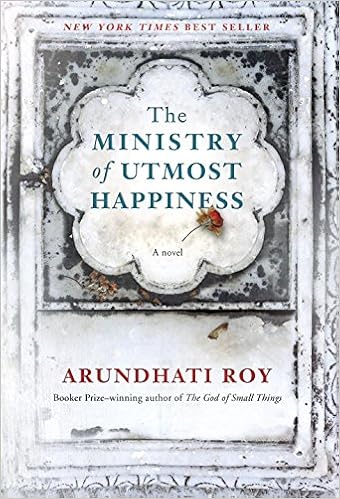
Book Review: The Ministry of Utmost Happiness by Arundhati Roy

Image result for the ministry of utmost happiness

The Ministry of Utmost Happiness

by Arundhati Roy


God damn Arundhati Roy.

God damn her and her beautiful books, which are so impossibly sad and so incredibly beautiful.

I have always thought, because I teach it to my AP students, that The God of Small Things ends with the most beautiful romantic scene I think I’ve ever read because Roy wanted to end the book on a happy note, that she wrote it intentionally out of chronological order specifically so that she could end it with hope, with the two lovers planning to meet again the next day, even though we know they won’t, or if they meet the next day, then they don’t meet the day after that, or ever again.

Now that I am reading The Ministry of Utmost Happiness (I am not finished with it, so I’ll need to stop writing this in a moment and go back to my sorrows), in which she has done nearly the same bloody thing, putting an exquisite lovely romantic scene near the end of a brutally heart-wrenching book, I think I may have to stop believing in the optimistic explanation of the incongruous, unchronological way Roy writes these books. I’m not sure yet, because this isn’t the very last chapter, so maybe other things will happen – and there actually is some hope in the novel that there will be some happiness, a fair number of good characters who could create a safe space to live and laugh in; but in God of Small Things two of the four good characters died and one ended up insane, leaving the fourth utterly alone, so… – but I am familiar enough with this feeling to know that Roy might have made the same play. This book is also out of chronological order, and since it is my first time reading it, that makes it difficult to follow, so there are parts I don’t remember well and maybe I should, to understand; which means maybe I don’t understand. I have to go read more.

But now I’m wondering: what if she put the happiest, most love-full part at the end of The God of Small Things because that makes it impossible to enjoy, since we’ve just been through 25 chapters of sorrows? What if she does it that way because she wants us to read the joyful part and think, “Well, this would be lovely, if my heart wasn’t already shattered into a million pieces by everything else I just read.”? And what if that is the point, because it makes the joyful part into a sad part, knowing that we can’t enjoy the joy because of the sorrows we’ve been through – which makes the sorrows even sadder?

Pardon me. Have to go finish the book. I just had to write down this theory when it hit me.

One hour and twenty minutes later –

All right. Okay. I was wrong: this book does actually have a happy ending. Of course it isn’t that simple, it isn’t all happy; there is death everywhere in the book, and it isn’t good death, not valuable, honorable, restful death. But the book is as much about those who live as it is about those who die, and the deaths make the life more precious, not the other way around.

So: to be clear. This book is about India and the war in Kashmir. At the end of the book, a character reads these words in a notebook: “How do you tell a shattered story? By slowly becoming everybody. No: by slowly becoming everything.”

That’s the book.

It has much of the same beauty that Roy put into The God of Small Things. The writing is, as always, brilliant: essentially beyond my capacity to even grasp, let alone describe. The book has a dense history of India, a complex exploration of the relationship between the present and the past, once again worked out through complicated family relationships and through appalling violence. The caste system is, as I suspect it always is, an indispensable element of the conflicts, though they are largely religious in nature: Muslim versus Hindu versus Sikh versus Christian. There is a terribly intricate narrative structure, with multiple interwoven plots and point of view characters, with no particular adherence to a timeline. There is another character that bears much resemblance to Roy herself, the child of a Syrian Christian woman from the state of Kerala, who studies architecture but does not become an architect, who is beautiful and strange and difficult. There is a beautiful romance, a number of broken romances, and an enormous, unbearable weight of violence and suffering and sorrow and alienation.

But there’s a lot in this book that wasn’t in the first book. The scope is wider: there are more characters, there are more conflicts, there are more settings. There is much more violence, and more villains who carry it out. And there is a lot more happiness at the end, a lot more peace, a lot more closure.

I don’t know if I recommend this book. I will need to read it again, and probably write a lot in the margins. But I feel much the same about this book as I felt about The God of Small Things after I had read it only once without writing anything in it, which was, I thought I should read it again; once I had, it became one of my all-time favorite works of literature. I suspect this one may follow the same path. So in the meantime, in-between time, this is a beautiful and difficult book, and if that’s your thing, I highly recommend it.

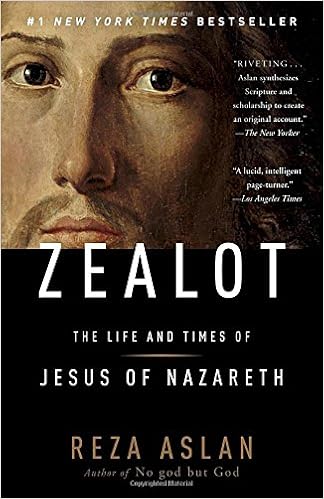
Book Review: Zealot

Zealot: The Life and Times of Jesus of Nazareth

by Reza Aslan

I have rarely encountered a more appropriate title on a book. This book is exactly what the title says it is: it is the life and the times of the historical figure of Jesus, who, according to the information provided, was essentially a zealot.

Two immediate points that have to be raised: the man is not the Christ, and though the Bible is the primary source of information along with the other apocrypha, Aslan never tries to talk about the risen Son of God as though that was the actual person. As a historian and religious scholar, Aslan considers the religious version of Jesus to be a matter of faith unrelated to the person who actually lived 2000 years ago in what is now Israel; the Gospels and the New Testament, Aslan explains in great detail, were all written by people who had had no contact at all with the historical figure of Jesus son of Joseph, and most of the New Testament was written by (or at least in the name of) an educated, Roman, Greek-speaking Jew who had no interest in the poor illiterate Jewish preacher from Galilee – St. Paul preferred the perfect embodiment of God that is now so familiar to modern Christians. The second point is that “zealot” is a word that meant something very specific in Jesus’s time, and the term applies quite well to Jesus himself; whether the modern meaning of the word would also apply is a different matter.

The basic idea is this: Jesus son of Mary and Joseph was a Nazarene. Right? Jesus of Nazareth, King of the Jews? Wasn’t that what the Romans wrote on the plaque over his head when they crucified him? So Nazareth is a tiny village in Galilee in northern Israel, where, like almost all of what came to be called Palestine by the Romans, the people lived in mud huts, with their livestock taking up one of the two rooms, spoke Aramaic, could not read or write, and believed that the Temple in Jerusalem was the place where God’s presence existed on Earth, but could only be approached by the High Priest. Jesus was not born in a manger in the barn outside a crowded inn in Bethlehem; his family would have had no reason to travel to Bethlehem, and certainly no Asian kings popped by with gold and frankincense and myrrh to worship at his side. So Jesus was an illiterate dirt-poor laborer – probably not even specifically a carpenter, since wood was an expensive building material that nobody in Nazareth would have been able to afford – whose mother was certainly not a virgin, who had brothers and sisters, and who lived his life under the oppressive control of the Roman empire. That life ended somewhere around 30 C.E. (Because Jesus was probably born around 4 BCE, a factoid that emblemizes absolutely all of the doublethink necessary to accept the Church’s version of this: the man was born four years before the first “year of Our Lord.”) when he was crucified for trying to incite a rebellion against the Roman control of Palestine, and against the corrupt high priests of the Temple. That’s the story told in this book.

Aslan says, and he’s right, that the historical Jesus is worth learning about. It’s a much less grandiose story; take away all of the I-am-the-son-of-THE-LORD-YOUR-GOD stuff, and Jesus had very small and comparatively humble intentions: he wanted to free Israel from the Romans, and (probably) rule the Jews as their king on Earth, the descendant (spiritually if not literally – but maybe literally) of King David, the founder of the nation. But that was plenty of ambition to be going on with, considering the fate of every other would-be messiah and king of the Jews under the Roman occupation. That fate is one of the linchpins of Aslan’s understanding of Jesus, because unlike Jesus himself, there is plenty of historical information about the Romans and crucifixion. He discards all of the standard arguments about Jesus’s trial and Crucifixion, and takes it down to what makes the most sense: the plaque over Jesus’s head was the Roman statement of his crime, not sarcastic, not ironic, but exact. The man wanted to be King of the Jews; he made a splash by gathering a large following, parading into Jerusalem exactly in the manner of an Earthly king, and then busting into the Temple and stirring up shit. The man who would later be turned into the “Prince of Peace” actually wanted the Romans, and the corrupt priests of the Temple, killed: he wanted God to smite them with a curse. (That’s the “zealot” part. The Jews believed that, if one had sufficient zeal for the lord, that God would aid them directly in winning their wars and destroying their enemies. Jesus wanted that, too. He wanted to be a warrior for God and Israel.) This is the rabble-rouser who told his disciples to make sure they brought swords to the Garden of Gethsemane, and if they didn’t have one, to sell their coats and buy two swords. He then got caught, and he got executed; that’s the end of the story – apart from what happened to his legend as it got re-created by his followers and adherents. I’d bet that one of the toughest pieces of this book to read, for a devoted believer in the literal Bible, is when Aslan lists the several would-be messiahs who were all trying to overthrow Roman control of Palestine around the same time: in that list, Jesus is one of the smaller and less impressive ones. Though really, if he was exactly what Aslan says he was, then Jesus of Nazareth had far more faith, courage, and conviction than I can imagine; I have more respect for this patriotic Jewish preacher than I do for the Christ. (I am, of course, an atheist and emphatically not Christian.)

I thought it was fascinating. This book is an outstanding piece of popular historical scholarship. Aslan gives extensive notes that show all sides of the issue, including the work of theologians who disagree entirely with the premise of this book; it is easy to read, clearly explained to a modern person like myself with no fundamental grounding at all in the history or the Bible; at the end, I’m pretty well convinced that he’s right, and I feel like I could sit down and explain the whole thing to someone else. I think that’s the best recommendation I can give.

Book Review: Homage to Catalonia

Image result for homage to catalonia

Homage to Catalonia

By George Orwell


In 1937, when he was in his mid-30’s, George Orwell decided he needed to take an active role in the fight against fascism. Orwell was already a published author and fairly well-known critic and journalist; he was even better known as a socialist. His first book, Down and Out in Paris and London, had been published by a leftist publisher, and in early 1937, he published The Road to Wigan Pier, a book about the living conditions of coal miners in the north of England. Both books describe the terrible conditions faced by the poor and working class, and both are strong indictments of the capitalist system. Orwell, deeply concerned by the rise of Hitler and Mussolini, watched closely as the Spanish civil war began and intensified; when General Franco’s fascist forces, backed by Germany and Italy, began to rise to power, Orwell went to Spain to join the other side. He had trouble finding a place that suited him; he was already growing disillusioned with the corruption of Communism in Soviet Russia by Stalin, and the weak way that European socialists knuckled under to Stalin’s will – The Road to Wigan Pier is as much a criticism of English socialists as it is of the mine owners, and the publisher added a disclaimer to the book, hoping to prevent a backlash from the left. Orwell tried to join the English Communist Party – but was refused because he wouldn’t do what he was told. He eventually connected with John Macnair, who was a member of the Independent Labour Party, and who got Orwell a spot in the militia of the Workers’ Party of Marxist Unification, the POUM in Spanish.

This is where Homage to Catalonia, the book that Orwell wrote about his experiences, begins: when he goes to boot camp as a new member of the POUM militia. It covers the next eight or ten months, which was all the time that Orwell spent in the war and in Spain before returning to England, eventually to write Animal Farm and 1984, two of the most effective criticisms of Soviet Communism ever created. This time, these experiences in this war, contributed to his disillusionment with Communism under Stalin’s influence.

Those two themes, the experience of actual warfare and the criticism of European leftists, especially the Communists, are the meat of the book. Orwell turns all of his remarkable ability as a journalist, his ability to describe and explain a scene, and his gift for clear and sharply-drawn imagery, bring the war to life: for half of the book, you could very well be in the trenches with him, or in Barcelona, where he was on leave from the front lines when fighting broke out in the streets between different factions of the Republican forces who opposed Franco’s fascists. Orwell talks about inadequate supplies, the freezing and filthy conditions, and, interestingly enough, the generally plentiful food and wine, and the overly abundant lice, which he experienced as a member of the militia. He was involved in several battles, most of them inconclusive, though he managed to escape the battle that eventually ended the POUM’s militia, a battle for the town of Huesca that killed thousands of militiamen and won nothing at all; Orwell was seriously wounded before that when he was shot through the throat by a sniper while standing in a Republican trench — targeted probably because he was quite a bit taller than most of the Spaniards in the trench with him. The bullet missed his carotid artery by a slim margin and left him unable to speak and in considerable pain.

When he is not describing life at the front, Orwell explains the convoluted situation on the leftist side of the war: Spanish Republicans included labor unions, Communists, socialists of all kinds; they had rebelled against the monarchy when Franco’s coup began, but had also led the successful resistance against the fascist general’s military forces. When Orwell was still in England, and then when he first arrived to join the militia, Spain was apparently the first successful people’s revolution: the bourgeois had fled or been eliminated, the Catholic church had been broken, churches looted and the clergy all but vanished. The POUM had attempted to create a classless militia, where the officers and the enlisted men received the same pay and lived in the same conditions, sharing tents and food and equipment regardless of rank. Members of the militia did not salute their superiors, and orders did not have to be followed if the men did not understand or agree with them; officers could not force compliance, but had to rely on persuasion, explaining to the men why the orders should be followed. (In a rather strange coincidence, the book I read two days after finishing this one, Joe Haldeman’s The Forever War, talks explicitly about this phenomenon, the POUM militia in the Spanish Civil War, where the men could refuse their superiors’ orders. I wonder if Haldeman read Homage to Catalonia.) But the POUM was a small piece of the Republican forces: much larger and more influential were the Communist Party, a different Spanish socialist party, and the two largest labor unions. And all of these groups soon took their lead from Stalin’s Russia, essentially because the Soviets supplied them with weapons and materiel for continuing their fight.

This does not sit well with Orwell. Several chapters break down the conflicts between the leftist parties, showing clearly which side Orwell himself was on; he meticulously tears apart the reporting of the war by the European Communist papers, particularly the fighting in Barcelona while he was on leave: it was begun when the police tried to take over the telephone exchange which was held by the labor unions, and led to several days of nasty fighting in the streets which eventually left something like 400 dead and over 1000 wounded (Though the numbers are reported by Orwell’s enemies and so seen as basically unreliable). After it was over, however, every major Communist and socialist media outlet blamed – the POUM. At the end of the war, after he is recovered from his wound, the Communists and socialists cracked down on the POUM, jailing hundreds of their leaders, usually without trial or even an accusation of a crime. Orwell, assuming that he would also be on the list for arrest, has to flee the country with his wife, leaving behind his friends and compatriots to die in dank prison cells, or to be shot by police and thrown into mass graves.

This war, these crimes, are what eventually create Napoleon of Animal Farm and O’Brien of Room 101 in 1984. Having read those books – several times – it was fascinating to read this book and see the seeds of what would come, a decade later. There is even a moment when Orwell expresses his visceral hatred of rats; and all I could think was, That’s why O’Brien uses them on Winston Smith.

As a description of a war experience, the book is vivid and interesting. As a political commentary, it is largely obsolete, but still fascinating if one is interested in Orwell’s fiction. This is the truth that is almost – but not quite – stranger than it. And the writing, of course, is brilliant. After all, it’s Orwell.

Spring Break Book Review #1: Angels and Ages

(So here’s the deal: it’s my Spring Break, and I plan to spend it reading. I will be posting as many reviews as I can. Here’s the first, for the book I finished reading Saturday, March 18 — first day of Spring Break.)

Angels and Ages: A Short Book about Darwin, Lincoln, and Modern Life

by Adam Gopnik

This was an interesting one: one of those “slow burn” sort of books. I came across it at my local used bookstore (Bookman’s in Tucson – Woo! Bookman’s!) in the discount rack, marked down to $1. I had just a day or two before read an article by Mr. Gopnik (Who is a 30-year veteran at the New Yorker) online, and so I recognized the name; even though I have been trying not to buy new books until I clear off my To Be Read shelf –or, rather, shelves – I couldn’t resist the subject matter. So I bought it, and even though I haven’t been able to find time or energy very well of late, what with school-before-Spring-Break, I decided to give it a read.

Odd phrase, that. Am I being generous with my time, granting Mr. Gopnik, and Mr. Darwin and Mr. Lincoln, a few of my hours, growing ever more precious as I age? I am acting as an audience, without which they would be forgotten (Well, at least a little bit. But then, the whole point of the Darwin half of this book is that those little bits, little bits of time and little bits of life, are all there are.). But then again, they are giving me something even better: they are inspiring me.

Mr. Lincoln, who comes off a little bit worse than his iconic status (and rightfully so) nonetheless inspires me to believe in the power of a single man to change things; particularly in the last summative chapter, this book points out how incredibly influential Lincoln was with this analogy: imagine if Boris Yeltsin had been able to maintain the Russian empire, and also install a functioning democracy obeying the rule of law. That is Lincoln’s accomplishment, and though the Civil War likely would have happened without him, and the subsequent events of Reconstruction, Jim Crow, and eventual ongoing equality, the country wouldn’t have been the same. He also inspires me because he was a freethinker, an atheist, an introvert, and a deeply literate man.

Mr. Darwin, who comes off a bit better than most depictions and associations of him (and rightfully so) inspires me with his ability to be focused on both the infinite and the infinitesimal. Gopnik shows how Darwin had extraordinary powers of concentration and observation, and these, along with a constant need to ask, “Why is this so? How did this get to be this way?” are what led him to his great world-changing theory – which he knew was world-changing, also knew was absolutely correct (as far as science can ever be absolute or correct), and sought, and found, the best way to pour this thought into the collective consciousness of the world. It is remarkable, Gopnik shows, that a theory that in most people’s hands would have been a mere footnote in biology and likely would have taken generations if not centuries to percolate up through the strata until it hit the top – like, as Gopnik says, Gregor Mendel’s work on genetics – was able to completely shift the world’s conversation from a Young Earth creationism to the truth in a single generation. I also love that Mr. Darwin was so deeply in love with his wife that he delayed publication of his work because it would upset her, and also that his own atheism was softened by the same knowledge: that his devout wife would be upset by too-vigorous protestations of what he knew to be true. Though I don’t have to make the same compromise, I appreciate that he did it for her.

I am inspired, last but not least, by Mr. Gopnik. This is a complicated book; too complicated, in some ways, because the ideas and the writing are dense, and for me, the subject matter a touch too abstract to hold me down while I work my way through it. It’s written like an essay – unsurprisingly, it started as two essays in the New Yorker, one on each great man (United in this book first by the coincidence of a shared birthday – February 12, 1809 – and second by their impact on the world) – and it’s tough to follow, because Gopnik intentionally didn’t write it as a historical/biographical book. Since I haven’t ever read a good biography of either man, some of this book was lost on me. But I appreciate the enormous effort and scholarship that went into all the thought in this book, and the basic thesis that the two men are equally important to the creation of the modern world, Lincoln in the proof of the ability of liberal democracy and the rule of law to survive, Darwin in the revolution he led that changed essentially everything in the world about how we live with science. I appreciate the effort it shows in the density and complexity and beauty of the language Gopnik uses. I appreciate that he shows how Darwin and Lincoln are Darwin and Lincoln – and not, say, Alfred Russel Wallace and Stephen Douglas – because of how extraordinarily good both men were as writers. Both masters of rhetoric. Both able to accomplish what they did because of how Lincoln spoke, and how Darwin wrote, and how both of them argued.

I like this argument. I like how it’s written. I would like to be able to do the same thing as any or all three of these, at least as a writer.

Thank you, gentlemen. I appreciate your time.

The Wordy Shipmates

I was hoping this book would be a revelation. It wasn’t.

That’s not to say I was disappointed with it. Okay, I was, but that was no fault of the book’s: it’s a good book, well-written, interesting, informative. It’s just that I wanted my jaw to drop, wanted my impressions of the Puritans — built through a childhood spent in Massachusetts, going to Plymouth Plantation  on a school field trip every year between third grade and eighth–  to undergo a startling transformation. It’s happened to me before, when I first seriously taught Arthur Miller’s play The Crucible, about the Salem Witch Trials; because in the play’s text are extensive passages of background about the Puritans of 1692 Massachusetts, and one of the companion pieces I taught with it was On Plymouth Plantation by William Bradford, the first governor of the Plymouth Colony. That was the first time I saw the Puritans as courageous, traveling thousands of miles into an unknown, landing in the wrong place, losing half of their number in the first winter — and then staying there anyway, and fighting for survival in a harsh and hostile environment. Miller talks about how this circumstance forced the Puritans to live in each other’s pockets, because they either worked together and protected each other, or they all would die; it was just this sort of all-in collective life, surrounded by a danger that the Puritans personified as Satan (who lived in the woods and had wild animals and the Native American “savages” as minions) that led to the Witch Trials as Miller depicted them in his play.

I was hoping this book would change my mind again, and give me yet another perspective on the Puritans beyond “Religious fanatics whose draconian morality caused half of our country’s hypocritical opinions regarding sin and pleasure, and work ethic and such,” or “Those Thanksgiving guys (who actually betrayed and slaughtered the Native Americans who helped them out).” And it sort of did, because Vowell shows that the Puritans were extraordinarily literate — hence the “wordy” in the title —  and valued learning and reading and writing and thought, all of which  I appreciate. She shows how their remarkable idealism was what really pushed them to become the trailblazers they were, and allowed them to survive in the conditions they met on that trail. She shows most clearly how that idealism both informs our modern view of America, and how it has been corrupted by cynical politics, when she speaks of the co-opting of “the City on a Hill,” which came from a Puritan minister’s sermon, and was then used by both John F. Kennedy and Ronald Reagan, among others.

But while I hadn’t known how literate the Puritans were, I don’t know how interesting that is. Which is how I felt about the book. Maybe I was already too aware of the Puritans and their history; maybe I am not aware enough of the history of literacy and the valuing of education; but the book was good when I wanted it to be great.


I hope someone else can find it great.