Book Review: The Matriarch’s Devise

This one’s been a bit of a long time coming; I got this book  from the author herself at the Tucson Festival of Books, where Brick Cave Media had a booth just two down from mine. I meant to read it right away, but of course — school. And then moving. Now I’ve read it, and I’m glad.

The Matriarch's Devise (The Healer's Trilogy Book 2) by [Skinner, Sharon]

The Matriarch’s Devise

by Sharon Skinner


This is the second book I’ve read by Sharon Skinner – this is the sequel to the first book of hers which I read, The Healer’s Legacy – and like the first, this one’s going on the Keep Forever shelf. Maybe partly because Ms. Skinner signed it for me when I bought it from her at the Tucson Festival of Books, but that’s not the main reason: the main reason is that this is a book I needed to read.

In some ways it’s a second book in a series: the characters are already established, and of course I already had my favorites (Those who know me will be entirely unsurprised to hear it is the animals even more than the people, though I like the two main human characters quite a lot, especially Kira), and so I admit to some disappointment when my favorites were not the stars of this book; the animals and Kira are separated fairly early on, and the wyvern Vaith and the hunting cat Kelmir come back into the story later, but never play a major role. The plot picks up at the very second (almost) the last one left off, and after Skinner places the characters where she wants them, the book – ends. Something of a cliffhanger, though it does wrap up the story from this book (and MOST satisfactorily, I have to say), but yes, it leaves you wanting more. Perfectly normal, there’s plenty of development in this novel to satisfy, we’ve seen our people go through a lot; now I have to get the third book, and I have no problem at all with that.

In some ways, though? This is an entirely new story. The twist regarding Kira’s identity – by the end of the book you know who her parents were, what happened to them and to her, and also, how she has the ability to bond with her animal companions – is not something one could possibly see coming, aand the world she is thrown into because of it is fantastic and imaginative and basically entirely unlike the world of the first book. It’s like reading, say, a Tamora Pierce novel, and then the sequel to that suddenly moves the characters into a Rick Riordan novel – like the second book starts with, “Oh, didn’t you know? You’re also an Olympian demigod. Let’s deal with this, now!” Skinner shows a range of writing and world-building that I have not often seen. Let me also say that the change is not jarring: the stories do fit together, and there is more than enough consistency between the worlds and the characters to make it simply fascinating, to watch these characters jump into an entirely new situation.

No spoilers, but: I liked the new world and the people, and the depiction of their magical powers was super cool, especially the defense that keeps their land safe; the villain was extremely villainous, which made it a little frustrating (in a good way) that the villainy kept happening and I wanted to yell, “Why are you not figuring that out?!? IT’S THE BAD PERSON! GO GET THE BAD PERSON!” I was a little bummed that the final conflict sort of borrowed the bad guys from the first book; that did feel slightly out of place – but I loved how the book ended, and as I said, I love the characters and the ways they’ve developed over this book.

I also have to say that I am very pleased that Skinner has written a high fantasy book which not only has a female main character, who is involved with but in no way overshadowed by her romantic interest, but this book also has an absolutely lovely depiction of a long-term lesbian couple done in exactly the right way: like real people in a real relationship, without anything strange or remarkable about their love for each other. The two women are powerful and respected leaders in their country, interesting and sympathetic characters in the story, clearly in love but also with friction between them – it was wonderfully done. This element, though it doesn’t predominate in the story, was another reason why I needed to read this book.

Now I need to read the sequel. I can’t wait.

This Morning

This morning, I’m thinking about Game of Thrones.

Image result for game of thrones

I haven’t watched it.

YEAH, THAT’S RIGHT, I HAVEN’T WATCHED IT. YOU GOT SOMETHING TO SAY ABOUT IT? COME SAY THAT TO MY FACE,WHY DON’T YOU?

Okay, that’s probably angrier than the situation warrants. But I know there are people who reacted to this with that level of shock that approaches anger, when the raised  voice of surprise turns into a shout, a roar, of outrage. (Or at least there are people who would. I think all of my readers are calm, contemplative, rational types. But then, maybe those aren’t the descriptors for the average Game of Thrones fan.)

I have been surprised to see the response that this show has gotten, especially these last three weeks as the final season has slouched towards Bethlehem to be born, so to speak. And honestly, it has made me regret not watching the show; I mean, this is high fantasy, this is my kind of stuff: this is the thing that I should have been on board with right from the start, and I should be reveling in this rare moment when fantasy captures center stage, when the imaginations of millions are fired up, all at once, by swords and sorcery. It’s a beautiful thing. I wish I was part of it.

I’m not.

I blame George R. R. Martin.

That’s the problem, you see. Because I didn’t need to watch the first few seasons of this show: I read the books. I started reading The Song of Ice and Fire in 2003, when the third book had just come out in paperback. One of my favorite students from my first school — great guy, smart and funny as hell, the son of one of my fellow English teachers; he was repeating a class in summer school that he had had no business failing over the regular school  year, but it worked out for me, because he had no problem doing anything I asked, and also made the class fun for everyone in it, made the discussions better, told fun stories, asked good questions, everything you want from a student — he recommended the books to me, and I took him up on it. And I was hooked: those are outstanding books, with a level of action and raw blood-curdling savagery that you don’t normally see in high fantasy, which tends much more towards Tolkien and his magical floating elves and roly-poly hobbits. (Not that there’s anything wrong with that, but can you imagine a sex scene in Tolkien? I really, really hope your answer was no.) I burned right straight through the first three books in the series, and gushed about them with Danny, the guy who got me to read them. I excitedly told him that the fourth book was slated to come out soon. And he warned me: Martin doesn’t make deadlines. The third book had apparently been delayed two or three times before being published, so I shouldn’t expect the fourth book to come out as scheduled.

Danny was right. The fourth book was delayed, and then delayed again; it was finally released in — I think it was 2005? (Wikipedia confirms.) I remember buying it in Portland, at Powell’s City of Books, because we moved to Oregon in 2004. But I bought it, in hardback, and read it excitedly, too; and it was great — but it was incomplete.

If you don’t know, the series goes  through probably twenty different point of view characters, switching between them every chapter. Some of the story lines are wildly separated; part of the interest was in seeing how Martin was going to draw all these threads together into a single web. It was fascinating. But the fourth book, A Feast for Crows, was only half of the storylines. What gives? I thought, angrily, because several of my favorite characters hadn’t made an appearance at all (And I already got burned on this in The Wheel of Time, when a wall collapsed on Mat at the end of one book AND THEN HE WASN’T MENTIONED EVEN ONCE IN THE NEXT BOOK. If you’ve read the series, then you know my pain; if you haven’t, don’t worry about it.) and I wanted to know what was going to happen to them. But at the end of the book, there was an author’s note: Mr. Martin said, “I know, this is only half the story. But don’t worry! It was only because there was too much to put in one volume, so we split it into two books, both covering the same time span, but with different main characters. That other book is almost done; it’ll be out any day now.”

That’s what he said, in essence.

He lied.

It took SIX YEARS.

2011 was when that book, Book Five, was published.

Know when Book Six was published?

Yeah: we all want to  know that. Because it hasn’t been.

A Song of Ice and Fire was projected as a seven-book series. The book that was “almost done” took six years to finish, and the next book is going on eight years. The last book? Well: George R. R. Martin is 70 years old now. And not in the best of health.

Like I said, I got burned by The Wheel of Time. That was my favorite series: and though Robert Jordan, the brilliant author, was in no way at fault for this, he died before he could finish the series; he was diagnosed with a rare blood disease that killed him at just 59. I don’t mean to put too much weight on a set of fantasy books, but those books are a great gift, and it is a terrible loss that Mr. Jordan wasn’t given the time to finish them.

George R. R. Martin has had the time. He just hasn’t done it.

And in the meantime, he started making this TV show.

I’m bitter about it. Unreasonably so, I fully admit. I’m actually extremely glad that Game of Thrones has been so hugely successful; it’s nothing but a bright moment for fantasy, and something that can only help the genre, and would-be fantasy authors like me. I’m grateful to Mr. Martin for penning the series, and for getting it on TV, and for helping to make it so good that it has become a cultural phenomenon.

I’ll watch the show eventually. I’m curious, my wife is curious; I want to see it. I need to get over this grudge against Martin. I realize that. And the show isn’t only his, and I have nothing against the other excellent people who have done, it seems, an amazing job of storytelling.

But no matter how good it is, no matter how well the show has done, and no matter how unfair it is of me to berate an author for not writing fast enough (and worse, hypocritical, because my first novel was published in 2009, and was the first in a trilogy — but I haven’t written the second book yet), I still can’t help but be bitter about Martin taking so goddamn long, and letting himself get distracted by television when he should be first dedicated to writing the books, and finishing the story for his first fans, his readers.

Know why?

Because Danny’s never going to get to read the end of the series.

Danny died of leukemia. He never even got to read Book Five.

It’s stupid to put these things together like this; Danny’s loss would have been tragic any time, and there are a million things he never got to do, and reading these books was not the top of that list, not the saddest nor the most important. But I talked to him, near the end, on the phone, and you know what we talked about? Books. Fantasy books. So yeah, I put them together. And I blame George R. R. Martin for not writing those books fast enough for my friend to get to read them all. And I blame the show for being the final distraction that now likely means the book series will never be finished. And I don’t give a shit if none of this is reasonable.

I hope you all enjoy the show, I really do. And I’ll watch them eventually.

But right now, I’m not watching Game of Thrones.

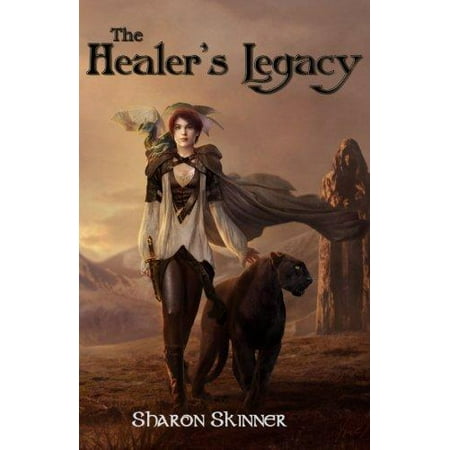
Book Review: The Healer’s Legacy

Image result for the healer's legacy

The Healer’s Legacy

by Sharon Skinner


So I bought four books at the Tucson Festival of Books. All independently published, all of them bought directly from the authors (And all the authors signed their books for me, which is excellent.). Unfortunately, two of those books were not very good, and I didn’t finish reading them.

But two of those books were excellent. And interestingly, they were both from the same publishing house, Brick Cave Media. I think those folks have their act together. The first good one was Platinum Magic by Bruce Davis; the second is this one, The Healer’s Legacy by Sharon Skinner.

It’s a high fantasy, swords and sorcery, magical beasts and inhuman races; but like all good fantasy, the setting and the world is only that: the setting. The story is about Kira. And sure, Kira has a psychic connection with a moon cat (Essentially a black panther) and a wyvern (a tiny dragon), and she has training in herbalism and the healing arts; but the main thing is that she is an orphan who was taken in by a healer who made her an apprentice, and when Kira reached her adolescence, she quite naturally rebelled, and ran away from home after an argument; she then met a man. A strong, handsome, dashing man, who swept the young woman off of her feet and made her a princess – because this man is the Warlord, the leader of a mercenary company that fought off an invasion and saved all of the people of the countryside.

But this man is also abusive, violent, unstable, and obsessed with Kira. And that, more than anything else, is the story of this book. Kira manages to escape in the beginning chapters, and then she nearly kills herself throwing off pursuit, because the warlord’s men do not give up, as they know their master will not give up. But Kira does manage to give them the slip, and then, for a while, she finds peace, and what may be a new home – maybe even a new family.

Until the Warlord finds her again. Then she has to decide whether she will run away, or try to stand and fight: the second option is her only hope for a lasting freedom from her abuser, but it is immeasurably more dangerous for her and for the people she’s grown to care about.

And of course I won’t spoil which option she chooses. I will add that there is an additional reason for Kira to be traveling: she isn’t just running away from something terrible, she is also running towards something – the hope that she can find out something about her mother’s people, which is where she got her red hair and green eyes, and might be where she got her psychic ability, as well. And the place where she stays, and where she might decide to make a stand, is not filled only with welcoming kind-hearted folk; she has enemies there, enemies that might even be more dangerous to her than is the warlord himself.

The characters are really good: deep and complex, well-realized and genuine despite being characters in a fantasy novel. There are all the elements of a good story here, and that story dominates, complemented by the fantasy world and the political intrigues and the rest of it. The fantasy world is also good, with an interesting depiction of feudalism and a good use of Kira’s healer training, one which made both the character and the world more relatable and realistic.

It’s a good book. I will be reading the sequel. And also checking out more stuff from Brick Cave Media.