In Memoriam

Tis Better to have Loved and Lost #Inspiration #Tennyson – Poems for  Warriors

I am now always suspicious of quotations that I find on the internet. Too many of them get misquoted and misattributed; particularly when they are turned into lovely images with flowers and weathered wood in the background, as this one is.

Like this, for instance.

Be not afraid of going slowly, be afraid only of standing still. – FS News  Online

There are many iterations of this one, which does in fact seem to be a Chinese proverb. Though the other images don’t have a baby sea turtle in them, so, y’know — lame. But definitely a Chinese proverb, at least according to the majority of the Google results.

Or wait: maybe it’s from a fantasy series by an author named Jeff Wheeler. Who created a culture named Dawanjir. (To be fair, the series is strongly influenced by Chinese culture, according to Goodreads. But still. This meme just says it is a Dawanjir proverb, and then slaps the author’s name under it.)
Jeff Wheeler Quote: “Be not afraid of growing slowly, be afraid only of standing  still. – Dawanjir
Also, where’s the turtle?

Or maybe it was this Joshua Muax guy?
I'm not afraid of growing slowly,as long as i'm not standing: OwnQuotes.com
I love that this website is called “Ownquotes.”

No, wait, I’m wrong — it was Benjamin Franklin who said it.
Benjamin Franklin quote: By improving yourself, the world is made better.  Be not...

(Benjamin Franklin is probably the one person most frequently given internet credit for stuff he never said.)

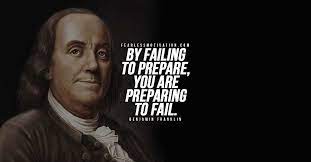
PosterEnvy - Ben Franklin Healthy Quote - NEW Humorous Nutrition Poster  (he039)
This one’s just mean.

But it turns out that, in fact, my first meme has it right:

Alfred Lord Tennyson - 'Tis better to have loved and lost...

That is the actual quote, and it was originally written by Alfred, Lord Tennyson, in a poem (a VERY LONG poem) he wrote after a good friend, Arthur Henry Hallum, died young. The poem is called “In Memoriam A.H.H.” And I would quote it here, but — seriously, it’s over 180 pages long. It’s here, if you’d like to read it.

All of this is a very roundabout way to come to my question: is this true? Is it better to have loved and lost, than never to have loved at all?

I started thinking about this last week, when I went to visit my father and help out with the memorial for his wife. My dad’s wife Linda (who was, of course, my stepmother, but I never ever called her that or thought of her that way) passed away in February, from complications from paraplegia, which she had lived with for about two and a half years. She and my father had been together at that point for thirty years, give or take; they had been married for almost twenty-five years.

No photo description available.

Linda’s passing was hard. The two and a half years before that had been extremely hard, on both Linda and my father. The four months after her death were very difficult for Dad, as well. And so at the end of all of that, I certainly found myself wondering: was it worth it?

I won’t presume to even try to answer this for my father; I only bring up his love and loss to explain why my thoughts turned down such a cynical and morbid path. When I was thinking about this, I was thinking about myself and my wife: we also have been together for almost thirty years, and married for nearly twenty. I hope and expect to be with her until one of us passes: and that thought was the one that started me on this track.

Let’s be clear: the answer is yes. Without a doubt, it is better to have loved and lost than never to have loved at all. I would never give up my wife, or my life with my wife, no matter how difficult the end of our lives together may be. And I have some idea, now, just how difficult it may be, for one or both of us — but that doesn’t matter, because suffering would never wash out all the incredible happiness and the years – decades — of simple contentment which my marriage has brought me. I do not undervalue contentment, as I hope you don’t, either — as many people do when they think about love, and how love changes from fiery passion to simple human affection and connection. The novel The Awakening, by Kate Chopin, with which I have tormented several years’ worth of AP Literature classes (The book is good, but it’s written in Victorian English, which is not my students’ cup of tea; and the main character is intentionally obnoxious in some ways, which makes it hard to sympathize with her. Actually, all the characters are obnoxious, which generally makes students want to give up on the book.), features a protagonist who believes that life should be mad passion, extreme highs and lows, especially in love; this leads her to unfortunate decisions and a bad ending. My romance has stayed more passionate than many, I think (Mainly because my wife is SUPER hot); but even if it fades to simple companionship, I think that would be a wonderful thing to have in my twilight years.

More to the point, there are people who avoid romance and particularly commitment because they believe that the fire fades, that the passion diminishes; and that is somehow sad — and therefore they avoid love because they don’t want to suffer that diminishment. For them, tis better to have never loved at all, than to have loved and then lost that love, at least the passionate part of that love. And those people are clearly wrong.

But here’s the thing: I don’t know if they are. They don’t know if they’re right. Tennyson didn’t know if he was right: because there’s no way to compare the two states of being. If you have loved and lost, then you can’t have never loved; if you’ve never loved, then you can’t have loved and lost.

I’m not trying to logic my way into a clever Gotcha! to disprove Lord Tennyson; even I’m not that annoying, I hope. It’s not that we can’t live two lives in order to compare them: it’s that we can’t possibly know what our lives would be like if things went differently. I think about this a fair amount, not least because I’m a fantasy writer who reads and teaches science fiction as well, and so I have spent more than my fair share of hours thinking about time travel and alternate history. I’ve read (and taught) about the butterfly effect, and about the multiverse; I wrote two books about a time-traveling Irish pirate (They’re right here, and I swear to you that Book III will be out by spring of next year), for Pete’s sake. And in my own life, I have thought extensively about the slow accrual of causal events, themselves too insignificant to recognize, which add up to something significant, in terms of my life with my love: because if I had not been a screwup in high school, and therefore lacked the GPA to get into a four-year school; if my father had not lived and worked in California and had a friend who taught physics at UCSC, who mentioned to my father that UCSC had a creative writing program; if I had not gone to the community college after high school in order to transfer to UCSC to study writing; if my counselor there had gotten my transfer credits right and I had finished at community college in two years instead of three; and if I had not been wearing a button that said “A dragon on the roof keeps burglars away” and thus gotten into a conversation with a fellow gamer nerd who became my friend and eventually helped me get a job distributing student IDs at the school — I would never have met my wife. All those ridiculous coincidences had to happen in just that way for me to find the love of my life. And also, let me say, there are just as many on her side: just as many ways that her path could have taken her far away from me. Which would have changed both of our lives.

For the better? For the worse?

Who knows? Who can possibly say?

One way it could have gone differently would have been if I had been able to succeed as a student in high school. I got my first Ds and Fs in my freshman and sophomore years, mainly because I did not have study habits. But I developed those study habits, quickly, when I went to community college; so certainly I could have had them in high school. If I had stayed in my honors tracks and earned good grades, I might have followed most of my friends, who went to Ivy League or similar top-tier schools. I might have ended up a lawyer, as many of my friends in high school did. I love argument and I write and read well, so it would make sense. My oldest friend did that, and he started his own law firm; could I have joined him in that? Could it be McGuire, Humphrey and Associates, LLC? (No question Josh would get first billing, by the way.)

Would I be happier that way? Ignoring for the moment the obvious other possibility that goes along with that alternate track, which is that I would have met and fallen in love and presumably married someone else; and though she would not be as perfect and wonderful as my wife is — because there is no one as perfect and wonderful as my wife — I had fallen in love before I met my wife, and so I could probably fall in love with someone else. But forget that: the question is, would I be happy if I never fell in love, or at least never married?

My brother Marvin is three years older than me, so he’ll be 52 this month. And though I don’t know all the details of his romantic life (and don’t want to pry), I know that he has never lived with a woman and never married a woman. (Also I know that he is not gay, which wouldn’t matter to me in the slightest either way, but one of my favorite stories is from when Marvin had dinner with our dad and Linda, and after a prolonged silence at one point, Dad and Linda burst out with, “You know, it’s okay if you’re gay.” To which Marvin responded, in some way, “Thank you? But I’m not?” Which is a scene that still cracks me up. But Dad and Linda thought they should say that because Marvin had not brought home any women to meet them, and so they made a reasonable assumption.) Marvin is exceptionally accomplished: his degree is in music composition, and after he graduated he became a digital editor in a recording studio, teaching himself how to handle the equipment and the tasks involved; and then after that, he became a self-taught software engineer and web designer, which he now does professionally — all the while keeping up his music; he sings and plays several instruments, in addition to writing and arranging in several different genres. (Also, he can ride a unicycle off-road.) And the question has to be asked: would he have been able to do all that if he had gotten into a long-term romantic relationship? Would he have wanted to do the same things? Or would he have made entirely different choices?

To the point: my brother is essentially a happy man. I am also essentially a happy man. Though our father has not been all that happy for the last few years, for a very long time before that, he was an extremely happy man — and, now that he has moved through the most immediate grief, and reached the closure of a memorial service, I think he can be happy again. Our mother, by the way, has been single since she and Dad divorced in the early 90s; and she is also a happy woman, most of the time. She had one proposal, some years ago, from a man she had been dating; she turned him down. And went happily on her way.

So is it better to have loved and lost than never to have loved at all? Frankly, I don’t think it’s possible to decide.

What is definitely true is this: once one has found love, real love, love that brings joy and contentment, love that lasts as long as life does and then even beyond that: there is nothing that would persuade one to give that love up. Not even the knowledge that some people might be happier living without that kind of commitment, that kind of potential turmoil, and without the devastating grief that waits at the end for all of us who love another person. I love my wife, and I always will; and that is who I am. Would I be happier if I had never met her? No: because that would not be me. That would be some other dude. Maybe a happy dude, but not me. My life became mine when that gorgeous woman came up to me in the cafeteria at Cabrillo Community College and said, “Hey — do you like gum?”

In truth, I love it. And her. Forever.

No photo description available.

More Weight

Continuing from last week’s post, I still want to discuss the probability of education collapsing under the current weight we are carrying. In last week’s post, I wrote about how educators are leaving the profession, largely but not exclusively due to the poor pay compared to the duties and expectations of the job; and rather than deal with that problem, America is asking teachers to do more to cover the gaps left by those who have already made it off of the sinking ship, which is making it even harder on those of us who remain.

Today I want to talk about the other reason why people are leaving.

It’s because we’re tired.

I had another day, yesterday. Another day that wore me out completely, that left me dragging my way home, feeling drained and depressed even after I had a lovely, fun, relaxing evening with friends, and even after dinner with my wife. I woke up this morning feeling the same way: at least partly because I have to go back and face the same classes, the same students, who wore me out yesterday, which certainly puts a pall on the morning; but partly because I just don’t have the energy to keep going back and doing all of this, day after day after day. I used to have it: but it’s gone now. And that fact makes me worry about my long-term future as a teacher, and even more, it makes me worry about the long term future of education.

Now, I don’t want to sound like I’m whining: I recognize that everyone is dealing with this, and all of us for the same reasons. I do not think that teachers have it harder than everyone else; that’s not my point.

My point is that teachers have it harder than we used to have it.

I’ve been a teacher for 22 years, and it’s always been hard. But it’s gotten tangibly worse in the last three years.

Here’s the problem, and what I felt yesterday and what I have watched get worse and worse and worse for the last three years: we’re tired, more now than ever before, and all for the same reason. All of us: students, teachers, parents, administrators and staff. We’re all so tired. The pandemic and the shutdown took this already difficult and troubled endeavor — using limited and uneven resources to provide a complete education for every student in the country — and made it so much harder. Over a two-week span, between March 13 and March 31, I had to change everything I had done for 20 years before that, and essentially without any help or guidance, because everyone else was doing the same. Students, too, had to try to adjust to a brand new, entirely different way of learning, at the tail end of the school year — and they, like their teachers and parents and all of their supports, were also dealing with the threat of a deadly pandemic, and all of the political and economic turmoil that came with it. Worrying about ourselves and our loved ones, and the whole world, while trying to build whole new resources for learning, on the fly, before the school year ended. It’s the hardest thing I’ve ever done.

And it didn’t stop there: at the end of that school year, we were still in a serious quarantine, still watching the crisis take the lives of millions of people around the world, watching economies crumble, watching our “leaders” screw the whole thing up in a hundred ways (And worrying that the election in the fall was not going to fix that problem, and uncertain what we could or should do about that) — and knowing, the whole time, that we would need to continue doing things differently in the fall, when classes started up again. That whole summer, I had no idea what to do about the coming school year. I wasn’t sure what it was going to look like. At the time, I was primarily worried that we would have in-person classes, and I was confident that I would, therefore, get COVID, because children are germ factories, and every teacher gets sick every year, usually several times, because children sneeze on us; so I knew that I would probably get it, whatever precautions I took — and I was certain that I would bring it home and give it to my wife, who has indeed gotten numerous colds and flus over the two decades of my teaching career for precisely that reason; and because she has severe allergies and consequent asthma, I was terrified that COVID would kill her. That’s what I spent my summer worrying about. And I know I wasn’t alone.

And before I leave that terrible summer of 2020 to talk about the terrible school year of 2020-2021, let me point out another aspect of the whole ordeal that affected me and other high school teachers — and to a different extent, teachers at all grade levels: graduation. It’s one of the parts of the school year that makes being a teacher worth it: to watch our students cross that final finish line, accomplish this remarkable achievement, and to celebrate it with them, is one of the great joys of being in education. I expect elementary and middle school teachers have the same feeling watching their students move on to the next stage; but high school graduation is the real rite of passage, and it is a tremendous source of joy and satisfaction. I have for the last five years taken a key role in the actual commencement ceremony at my school, as I took over the Master of Ceremonies duty after my predecessor left: I’m the one who welcomes the students and their families to the ceremony; I’m the one who reads all their names as they come up to get their diploma; I’m the one who tells them to turn the tassels to the right, to officially mark their completion of their mandatory education. It means a lot to me, because it means a lot to them.

And in 2020, we didn’t have it.

We did, actually; precisely because we knew graduation meant so much to the students and their families, and because the seniors who were graduating in 2020 had already lost the last third of their senior year, including Prom and the Senior Trip, we found a way to make graduation work. We had it outside, during the day — in 100+° heat, in glaring sunshine, in masks with social distancing. But it was terrible, and the graduates have told me since they wish we hadn’t had it then; they would have preferred to come back a year or two later and had a proper ceremony inside, with a tiny hint of reunion. Ah, well. Hindsight is — never mind.

We had a graduation ceremony, but it didn’t feel right. Just like everything else that year didn’t feel right. The usual rewards for what we do were missing. The usual joys were all stripped away from us, leaving only the bad things behind, the worry, the stress and anxiety and fear. And the anger. And the exhaustion. The exhaustion from doing all the work, first, while also trying to make joy when there wasn’t any, trying desperately first to hold onto normal, and then to recapture and recreate normal after it had vanished. It didn’t work: we would have been better off moving on to new normals, finding new joys. Frankly, we should have known that from the outset, should have accepted it and dealt with reality instead of trying to cling to a doomed past; but I guess when it comes to longing for what has been lost in a time of upheaval, we’re all Boomers.

But we tried. We tried to lift up that weight, to make everything okay even when it wasn’t okay. And like adults all over the world who try to conceal difficulty in order to protect their children, we were suffering ourselves while we were trying to lift up that weight. We couldn’t do it, but we tried. And that trying took everything we had.

We haven’t gotten it back.

Okay. I’m losing control of this. I apologize: I started this post Friday morning, and now it is Sunday morning, and I want to finish it and post it, but — I don’t know what else to say. I don’t know what point I’m making. I don’t know where I’m going with this.

I don’t know if any of this makes sense; I don’t know if other people had the same experience — or a worse one. I’ve tried to imagine what it must have been like to go through all of that and also lose your job and your home, move back in with family with your own family coming with you, or even move onto the streets; I certainly have enough examples of people all around me who have lost their homes, as the unhoused population has exploded in the last two years, here in Tucson, where it doesn’t snow and kill people with cold (Though the heat is certainly deadly in the summer) and therefore the population of visibly desperate people is larger and more obvious; but I find myself shying away from that. It’s another result of everything we’ve gone through, the trauma we have suffered, the grief we are still suffering for what we have lost, for the joys that were taken and have not and will never return: the loss of empathy. I can’t do it, can’t reach out and take on the feelings of other people, not like I used to. I don’t have room. I have too many feelings inside me already. And yes, that means I shouldn’t be talking about all of this to other people who are also suffering empathy overload. All I can say is, I seem to not have any choice. I looked back at my posts for the last two years, and I realized that I keep writing this same thing, over and over, about every six months: I’m tired. This sucks. I can’t take this any more. And here I am again. Again. I’m frankly getting sick of myself feeling this way.

And just like that, I know that I am speaking for others as well: because I know other people feel that, too. We’re sick of ourselves feeling this way. Sick of being tired. Sick of being angry. Sick of not feeling the happiness we used to feel. Just fucking sick of all of it. Aren’t you? Aren’t we all?

I’ve had more students come to me for help this year. Not help with school work, my students never do that; help with their lives. Help with their emotions. I am sort of a pseudo-therapist: mainly because I listen well, and I know how not to give too much advice when people really just need to talk. And I’m very pleased that I can help young people who need help: but also, I don’t know how much more weight I can carry. Judging from how this post has gone, the answer is — not much.. Not very much more weight at all. I got pissed, just furious, on Friday this past week, the same day I started writing this post, because my administration sent out an email reminding all of the teachers that we need to update our grades, and that the expectation is that we should all have two grades per week, per class, which means we should now have 10-12 grades in the gradebook. The reason they sent this email and prodded us to update our grades? Sports. The student athletes who had failing grades, who had turned in their work, had not had their grades updated for as long as three weeks, and so they still couldn’t play.

This blew my top. Completely. First because I don’t have two grades per week per class; not every class does work at that exact pace — my AP classes, for example, tend towards larger, longer projects, because they are doing college-level work, which for English generally has complete essays to write and full books to read, not worksheets to complete in a half hour — and secondly because I don’t have all the assignments graded. Know why? Because they are essays. I read them. I comment on them. I give suggestions for how to improve them. It takes time: 20-30 minutes per essay. I have just about 100 students in classes that write essays (I teach two electives that don’t currently include essay writing): that means, if I give them all essays and they all write them (The latter is far less likely than the former, though they do all trickle in eventually), then I have 50 hours of grading to do. That’s on top of all of my other work. And of course grading is part of my job, and yes, there is some time built into each day to get it done: one hour. Per day. Actually, 50 minutes, because I have one prep period and our periods are not a full hour long. So if I can get two essays done in that time, that means I can get all of the essays done in — yup, only ten weeks.

So of course I work before and after school on grading, and on the weekends as well; but I also have prep work to do, to get ready for my other classes. And those students who come to me for pseudo-therapeutic help? That takes time, too. And I don’t want to turn them away, because I know they’re close to the edge, and I don’t want them to harm themselves, and I don’t want them to suffer additional trauma because they get desperate and feel alone and lost. So all of that time is not spent on grading essays.

And then my admin gets on my case because kids want to play sports.

I get it: of course I do. Those sports are exactly the source of joy that I’ve been talking about which is missing. Of course those kids need that joy. And why should I stand in the way of them having that joy, when all that is needed is for me to go back and grade a piece of late work and enter it into the gradebook? Then everyone will be happy.

I mean: not me, of course. But the kids will be. And that’s all that matters, right?

I lost control of this, and I’m sorry. My wife read my last post and was pleased and complimentary to see that I had stayed on topic the entire time, which is unusual for me; I was proud of that and meant to do it again, this week. I’ve failed. But you know what? I just don’t have the strength to keep up with all of everything, and also take on more weight. I need to put something down. This week, it was this blog being rational and organized; I need to use it to vent. I will honestly try to get back to the actual project of rationally discussing and exploring the world of education; but I think I won’t be able to be focused and reasonable every week. But I do want to post every week, because I need to write and keep writing. So, for this week, here it is.

I’m fucking tired of being told, desperately, that I need to do everything I used to do, and also all of the new things that people have realized also need to get done, right away, or else everything will fall apart. That’s what it has felt like to be a teacher for as long as I’ve been teaching, because every year, they add new things, but they never take anything away: it’s just that now, it’s worse. Much worse. Because I have all this other weight on me from the pandemic and everything that came with it, including the trauma and the grief and the loss of joy. I’m fucking tired of being asked to help other people out with their needs, while not being given help with mine. (Please note: my friends, my family, my wife, they are all doing everything they can for me, all listening, all present, all willing to offer support. I’m only speaking of school people, and not the friends I have there.) And on top of all of that, I’m just fucking tired. Scroll back through my other posts for a better description of why.

Arthur Miller’s classic play “The Crucible” is about the Salem Witch Trials, and about the Red Scare of the 1950s. But really, it’s about a society turning on itself during a crisis, and devouring itself, starting with its best and most beloved members, who are destroyed mainly because they just can’t prevent the destruction, and so they become the first targets. I love teaching the play — though it’s hard to get it right, because the students have to get swept up in the story, and sweeping teenagers up in anything is difficult — and one of the big reasons is Giles Corey. Giles Corey was a real person in Salem, Massachusetts in 1692; he was an 83-year-old farmer at the time, and he was one of the casualties of the society’s inward collapse. Miller turns him into a fantastic character, a cranky old coot with a heart of gold who argues with everyone but means no real harm, who screws up and gets his wife arrested for witchcraft, and then tries desperately to save her. Because he tries to save her — because he failed to protect her in the first place — he gets accused of complicity in the conspiracy, and therefore of witchcraft. One of the complications in the original trials, highlighted in the play, is that when someone was accused of witchcraft, they had to plead guilty or not guilty; if they pled not guilty, they would go to trial, and at the time, they would surely be convicted and sentenced to death. If they pled guilty, there would be no trial and they would not serve time in jail — but their property would be confiscated and sold at auction to the highest bidder. People accused their neighbors of witchcraft in order to essentially steal their land.

But Giles was too smart for that: he had children, and he wanted his farm, which was large and prosperous and valuable, to go to his children, not to his corrupt and greedy neighbors. So when he was accused of witchcraft, he refused to plead. He wouldn’t say guilty; he wouldn’t say not guilty. (In the play, he won’t reveal the name of a friend who gave him evidence, because he knows that friend would be accused in turn; but the end result is the same.) He just kept his mouth shut and sat there.

So they tortured him. They pressed him with stones: they laid the man flat on his back, and put heavy stones on his chest, one at a time, one on top of another. And after each one, they asked him, “How do you plead?”

And Giles Corey simply said “More weight.”

I love that. I think it’s amazing, and brilliant, and courageous, and the perfect cantankerous coot’s way to say “Fuck you” to people who really need to hear someone say “Fuck you.” I admire Giles, and want to think I would be willing to do the same, to suffer torture in order to protect my family and my rights.

The problem, of course, was that Giles Corey died from the weight.

So my question for myself, and my fellow teachers, and for the society and the school system that keeps piling more on us is: how much weight can we hold? How much will they keep adding? How much weight is there?

How much more weight?

I Lost My Job*

(*But not really.)

Don’t worry, I’m not unemployed. I just don’t know what my employment is, any more.

What exactly is my job?

Seems like a simple question, doesn’t it? With a simple answer? I’m a teacher. I teach. I teach high school English, also known as Language Arts, with a few extra frills like AP and College Readiness (A required elective at my school intended to, well, ready students for — not really college, more college admissions. Though I do take the opportunity to teach some “life skills” like how to handle credit and resume writing and so on.). So as a high school English teacher, I help students aged 14-18 to improve their language skills: their writing, their reading, their speaking and listening.

Except it’s not that simple. It’s actually very tough to know exactly what my job is.

It’s tough to know, for sure, for a number of reasons. First and most important, because right now it is changing, and the changes are bad; I am grieving the loss of what my job used to be. 

It’s tough second because society is not clear on what role they want schools to play, and therefore what my job is. Am I a supplementary parent? Should I be teaching the wee tykes how to live in the world? Teach them responsibility, time management, punctuality, and how to distrust the Google predictive text? (Sorry, that last one was mine, not society’s — I will not be writing these on Docs any more.) Should I be teaching them morality? To be aware of and sensitive to the needs of others? To be kind, open-minded, empowered, woke? 

Or am I a functionary with a single, limited task: to prepare students for a career that will earn them a good living, while staying the hell away from their values?

It’s tough thirdly because my administration wants me to do a job that is so clearly not my actual job that I can’t abide doing what lazy-minded people throughout history have done when these kinds of conundrums confront them: just follow orders. 

Huh. Actually, you know, I could do that. It would make things so much easier. If I stopped thinking about what I should be doing, and only did what I was instructed to do. Followed the curriculum as it is prescribed, used the activities recommended by people who don’t teach and don’t care, gave students behavior recognition awards and sent them to the dean of students when they misbehaved. The students would stop having high expectations of me, and would stop giving me grief when I couldn’t be all things to all of them, all the time. 

It sounds nice. It sounds simple, and easy, to just do what they want me to do.

Except it also sounds like Hell. 

One of my classes asked last week how long I’ve been teaching, and I told them this is my 22nd year. And then they asked “How do you keep doing this? How are you still so patient with us?” And the answer is two things: one, I think I’m good at this, and that means I don’t worry too much about losing my job, or about not being able to do my job on any given day or given any particular situation; and two, I believe this job is important.

They confirmed for me that I am good at this job, which is very kind of them to say and made me feel good; but that doesn’t solve this essential conundrum, because if I asked my students what, precisely, my job is, they would give me all the same answers I have laid out here, and between which I struggle deciding upon as my fundamental task. (None of this, by the way, is made easier by the voice yelling in my head, which sometimes sounds like my wife, that my real job, my real task, is to write. It’s an important voice. Maybe I should stop silencing it just so that I can focus on teaching.) Some would say my job is to teach them English. Some would say my job is to do what the school tells me to do, whatever will earn my paycheck. Some would say my job is to help them get ready to get jobs — though if I pursued that line, and asked them how I, specifically, am to help them get ready, they would mostly say that reading helps expand your vocabulary so you don’t sound dumb, which is most often what they say when I ask them why English is a core subject, why it is important to study this language and our literature. And that ain’t it.

So here I am, good at a job I can’t define, trying to perform it while watching it essentially collapse around me.

I have to go back to something I said earlier. Because (confession time) I stopped writing this post four or five months ago, and I just came back to it this morning; I have been thinking about finishing it since I stopped writing it, but I’ve never made the time to do it until now (I don’t listen to that voice that tells me to write.). However, every time I thought about this post, I thought of it as the one about grieving the loss of my job as I’ve known it. That was the main point I wanted to make here, although I seem to have gotten off into my usual tangents about trying to figure out what the hell I actually do. That’s my usual tangent because, honestly, I really don’t know. Which is maddening. I perform my job duties as I see fit: beyond the basic requirements of showing up every day, making sure students don’t stab each other, taking attendance and posting grades and attending meetings, everything else I do is selected according to my thoughts and understanding of my job. But I am never sure, never, that I am making the right choices. I’m not even sure it matters what choices I make.

See? There I go again, off on this subject, instead of the one I think I need to write about. Grief. Suddenly it seems to me that I am avoiding it. (Pardon me, I have to go wake my wife up. And make more coffee. Eat some breakfast. I’ll come right back to this subject, I swear.) Now. Here I am. Let’s talk about this.

I got this idea from my meditation app, Headspace (Highly recommend. Many different styles of guided and unguided meditations, relaxations, sleep aids, etc. Free for teachers.), which at one point said that many of us, in this madhouse of a world, are grieving the loss of normalcy. That was the emphasized point: it is grief. We are grieving. And I realized that I am.

But also, I don’t want to be. Partly because I know my grief doesn’t compare to the grief of those who have lost someone in the last two years, and there are far too many of those people — though I also know that comparing emotions to someone else’s, and comparing situations to someone else’s, are both foolish and self-negating. Partly also because I don’t want to grieve my job. That would make the job too serious, too important. I’ve always wanted to leave teaching behind, and if I’m grieving the loss of my normal concept of teaching — doesn’t that mean I’m too attached to it? That I — ick! — love it? Was destined to do this? Isn’t that yet another indicator that, in fact, my true calling is not writing, or anything else I’ve dreamed of doing over the years (Voice acting, politics, running a bookstore-cafe, etc.), but is trying desperately to get lazy, indifferent teenagers to write a real paragraph without counting sentences?

No. It doesn’t mean that. (Also, that’s not what teaching is. I may not be sure of what my job is, but I have a very good idea of what it isn’t. That’s why I don’t simply give up and act the way my administration wants me to act. Because they’re wrong. [Also my administration has, staggeringly and unexpectedly, changed in the time between beginning this post and finishing it; but that’s a subject for another day.])

When I say I am grieving the loss of my normal concept of teaching, I mean just this: that everything has changed. I had a good grip on it. I was good at it, and I knew it. I knew how to be good at it. I knew how to actually help my students, how to give them something of what they need. I felt comfortable making choices about what my students should do, what I should do with them, in order to help them in the ways I knew they needed help. But that knowledge, that sense of comfort and expertise, was predicated on a version of teaching that suddenly vanished entirely in March of 2020. And it has not come back yet. And without it, without a class full of students, whose faces I can see, whom I can cajole and persuade and intrigue into participating in a discussion about literature — I’m lost. I don’t know what I need to do now, and I don’t know how to do it.

And that sucks. That is crippling. I lost my sense of purpose, I lost my sense of mastery and my consequent self-respect. I lost all of my confidence. I have always been puzzled by what others want me to do: but mostly because I knew exactly what I wanted to do, what I thought was important, which was frequently different from what others wanted me to do. But that was okay, because they were wrong, and I was right, and I knew it. And now I don’t know, any more. Because what was important and what I wanted to do? Those are gone.

That hurts. No, of course it doesn’t hurt as much as the loss of a loved one, as much as the loss of health, or any of the other severe, permanent, defining, devastating losses some people have suffered over the course of this damn pandemic. But it hurts, nonetheless. And it leaves me confused, and angry, and uncertain about what I do now, and how I define myself.

And that is grief.

I know that the right thing for me to do is address it. But of course, I don’t know how; I’ve never grieved for something like this before. So I’ve been ignoring it, just sort of hoping for things to go back to the way they were, for my normal to come back. And getting angry when things keep refusing to go back to the way they were. And getting more and more tired and frustrated and despondent with dealing with things that are unlike what I’ve lost, what I miss, what I wish would return for me.

But that’s just it. Things are never going to go back to the way they were. Even if some things return, other things will stay forever changed. My students will be back in the classroom — they are now — but they had over a year of working online while staying at home all day every day; and some of them loved that, and they miss it, and they resent being forced to give it up and go back into the building, back into the classroom. There’s a large section of the student population that have a whole new grievance of their own with school, now. And that changes the dynamic of the classroom. There are different ideas about priorities, and different ideas about what school should be and what it is; they have a new understanding of what’s important, and it’s different from what it used to be, which means they don’t want to do things they used to do willingly, because now they see those things as inconsequential. Things like following along with the pace of the class; looking at me when I’m talking; speaking up when they have thoughts. None of those mattered over the year we were online. And over that year, they never had to deal with the annoying kids in the class: and now they have to again, and they don’t know how.

Because they’re grieving too. Which is why I can’t just tell them to suck it up and act the way I want them to. Because that, for many of my students, is a loss, a serious and severe loss, which they resist as I have resisted this loss.

I have to deal with that: I have to adapt to the new normal.

But first, I have to accept that my old normal, the situation that felt so generally good and right to me, is gone.

And to accept it, I need to grieve its loss. The loss of the me that lived in that world. I really liked him.

Hopefully I’ll like the new me, too. We’ll just have to see.

This Third Day Is Harder

I’m having a tougher time finding the positive space today. I didn’t sleep well last night, had a rough hour with one of my online classes today; and of course, the universe dropped this on us:

I tried to think of something I could share today that would be happy; but honestly, I’ve just been singing Bill Withers songs in my head all day. I won’t say I grew up listening to him (I kind of did, though, because “Lean On Me” is an anthem for me. First song I learned to play on the piano, back when I was still going to Sunday School. And that was a looooong time ago.) but the last few years I’ve come to appreciate his genius: once I found out just how many beautiful songs he wrote that I already knew. My favorite thing that I found out today, listening to his Best Of… album, was that one of my favorite R&B hooks was taken from Mr. Withers.

You just need to hear the first ten seconds — though of course, if you want to hear the whole song, it’s worth it. And it’s only two minutes.

And here it is again, from 1996:


But thinking about this is sad. So I can’t write about this.

At the same time, though, I can’t pretend even on my happiest day that the world isn’t caving in under the weight of sadness and fear and pain — I want to add “right now” at the end of that sentence, but it’s always like that for some of us, at least some days: every day is sad. Every day there is death and loss and sorrow and grief. And while I don’t want to dwell on that, I want to bring some joy even to people who are grieving right now — and any time — I don’t want to ignore it, either, don’t want to pretend that the pain isn’t real.

So while I will grieve for Mr. Withers’s passing, I will remember this, from another of my very favorite artists:

“Listen,” said Granger, taking his arm, and walking with him, holding aside the bushes to let him pass. “When I was a boy my grandfather died, and he was a sculptor. He was also a very kind man who had a lot of love to give the world, and he helped clean up the slum in our town; and he made toys for us and he did a million things in his lifetime; he was always busy with hishands. And when he died, I suddenly realized I wasn’t crying for him at all, but for the things he did. I cried because he would never do them again, he would never carve another piece of wood or help us raise doves and pigeons in the back yard or play the violin the way he did, or tell us jokes the way he did. He was part of us and when he died, all the actions stopped dead and there was no one to do them just the way he did. He was individual. He was an important man. I’ve never gotten over his death. Often I think, what wonderful carvings never came to birth because he died. How many jokes are missing from the world, and how many homing pigeons untouched by his hands. He shaped the world. He did things to the world. The world was bankrupted of ten million fine actions the night he passed on.”

Granger stood looking back with Montag. “Everyone must leave something behind when he dies, my grandfather said. A child or a book or a painting or a house or a wall built or a pair of shoes made. Or a garden planted. Something your hand touched some way so your soul has somewhere to go when you die, and when people look at that tree or that flower you planted, you’re there. It doesn’t matter what you do, he said, so long as you change something from the way it was before you touched it into something that’s like you after you take your hands away. The difference between the man who just cuts lawns and a real gardener is in the touching, he said. The lawn-cutter might just as well not have been there at all; the gardener will be there a lifetime.”

Ray Bradbury, Fahrenheit 451

I’m sure I’ve posted this before, but this is the passage that sticks with me. This is what I think of when I think of death, and when I think of memory, and of legacy. I don’t know if I believe in a soul, but I certainly know two things: the world has been bankrupted of uncountable fine actions, now that Mr. Withers has passed on; and, whenever we hear things like this, things that he shaped and touched, he will be there. His soul will live on in this.


And here, of course, is where Bill Withers’s soul will touch all of us: because Mr. Withers told us how we handle the unbearable weight of the world. With the help of others.

Thank you, sir. Rest well.

This Morning

This morning I’m thinking about sadness.

I woke up feeling blue. Not too sad, really; it’s Saturday, which is lovely, and though I had a long and difficult week, there were some excellent moments with friends, with writing, with my wife and our pets. But I was down; melancholy. I slogged around the house for a half an hour while the coffee cooked, and then I took my dogs for a long, slow walk. (Though they wanted to go for a long, fast walk, with many sudden stops for sniffies. I wouldn’t let ’em. Misery loves company. [Actually, I let  them have their sniffies. We just didn’t walk that fast. They didn’t seem to mind too much.])

While I was walking, I was thinking. Why do we get sad? I’m an atheist, so anything to do with metaphysics or God’s will or sin isn’t a good enough answer for me. I know the Buddhist answer is that suffering is a consequence of desire; I get that for anger, or grief, and certainly envy or jealousy; but melancholy? I don’t think I was desiring anything this morning other than not being sad — and being sad because I wish I wasn’t sad seems like much too cruel a cosmic Catch-22 to be reasonable. I suppose there could be an argument that the particular melancholy this morning was the result of an unfocused desire, that I wish my life was different in some ways and so when I woke up into the same life, as a steadily aging public school teacher who still hasn’t achieved success as a writer, it made me sad. Maybe so, but I wasn’t really thinking about any of those things; I was just — blue.

What about modern science and pyschology? As far as I know (And that bummed me out, too, because I realized that even though I don’t know what role sadness plays in our psyche or our evolution, somebody out there does; so this whole chain  of thought isn’t because I’m deep, it’s because I’m ignorant. I feel like that is pretty much always true: that any question I have, someone out there knows the answer, and if I just took the time to look, I’d learn the truth. Sometimes that makes me hopeful, and sometimes it makes me hopeless.) the model of emotions is that they are nothing but chemical reactions, hormones released in the brain and limbic system in response to stimuli. I think as well that the idea is that all aspects of human existence evolved as the result of some kind of survival pressure, because in some way it gives us an advantage. Anger makes us strong and aggressive; love helps us pair-bond for mutual cooperation and procreation; fear is a warning of danger. Even when those emotions are not targeted in an evolutionarily advantageous way, like when we get angry at video games, or fall in love with our cars, or when we’re afraid of moths (Don’t look at me like that: they are Satan’s butterflies.)

Image result for moth

Know what that is? That’s a moth DRINKING TEARS FROM A BIRD’S EYE. Fucking tell me they’re harmless. Bullshit.

But what evolutionary advantage does sadness give us? How does being blue help me to find food or evade predators on the savannah?

It’s possible that sadness is a misdirected emotional cue. Like modern food and eating habits make us fat because our bodies are geared towards craving sugar, salt, and fat, as all three of those have definite survival advantages if you’re living out on the savannah: sugar gives you quick energy to run away from lions, fat contains vitamins and gives long term energy storage, salt helps us BECAUSE ELECTROLYTES ARE WHAT A BODY CRAVES. It’s just that food today can be manufactured with so much fat, salt, and sugar, where foragers or hunter-gatherers on the savannah had a much harder time collecting them, that our reward system, geared  to give strong rewards for tiny amounts gained after strenuous work, overrewards us for just sitting around and horking down Cheez-Its. It’s a misdirected survival mechanism, because we didn’t evolve with 2019 in mind.

But sadness, I would argue, doesn’t always have a trigger. (As I’m writing this, though, I’m getting more and more tired, and curling up with a blanket and going back to sleep sounds absolutely wonderful, so suddenly I’m wondering if melancholy is simply a signal to slow down and have a snooze. Maybe so. I’m still going to finish my point.) Even when it does, when you see someone hurt, or hear about suffering and despair in the world, how does it help me to deal with that if I feel depressed because of it? What possible adaptive value could being in a funk present?

So there I am, walking my dogs, dragging my feet and hanging my head, and thinking about the value of sadness, and what it could possibly be good for. What could sadness do for us. What power does sadness have. Power. And then I thought: imagine if someone gained power from being sad. Like Samson and his hair, but with angst. Imagine if the Hulk  got stronger when he was sad, instead of when he was angry. Imagine if someone had to make themselves sad in order to be strong, and the sadder they got, the stronger they were. Imagine if someone was a sorceror, say, and instead of sacrificing a virgin to Baal, they had to break their favorite childhood toy, or watch a hurt animal try to walk.

Hmmm. Just imagine.

And just like that, I came up with an idea for a book  I’d like to try to write. I still need to flesh it out, work on the characters and build the world, and come up with a plot and all; but I really love the concept. Which  I came up with because I was feeling down.

So that, I think, is the value of sadness. It does help us to slow down and take it easy, too, because when we’re sad I think we don’t want to do anything but curl up and sleep, and particularly in our overworked overstressed world, that is very important and very, very good for us. But mainly, I think that sadness, by the simple fact that we generally don’t like it, makes us want to do something to change the way we feel. This is the same argument I make with my students about learning: they need to feel uncomfortable, they need to feel like they’re missing something, in order for them to learn; if they are perfectly content, then their brains don’t seek out a solution to the problem, because there’s no problem. So the brain just closes its eyes and takes a nap, so to speak, if the person is too comfortable. It’s when we are uncomfortable that the brain seeks out a new equilibrium, by observing and processing what is around ; that is how we learn best.

Maybe sadness does the same. Maybe sadness is an inspiration, a impetus, to get off our butts and do something to take the sadness away.

Or else it’s my brain and body telling me I really need to nap. I’m going to go lie down, now. And maybe think about my new idea.