I Wish for Each

“Congress shall make no law respecting an establishment of religion, or prohibiting the free exercise thereof; or abridging the freedom of speech, or of the press; or the right of the people peaceably to assemble, and to petition the Government for a redress of grievances.”

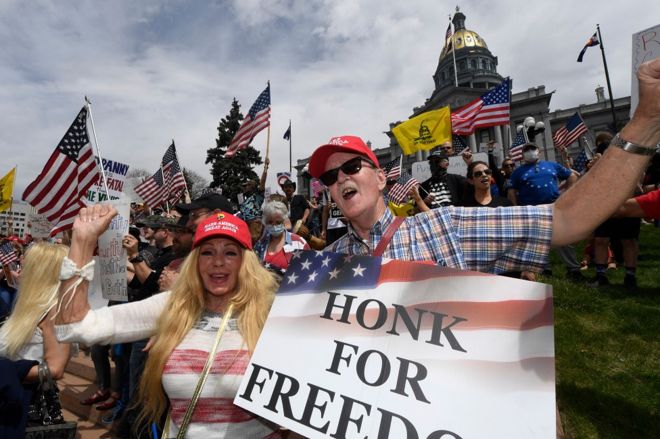
So all right. We’ve been hearing a lot about this lately, right? Those are the words of the First Amendment to the Constitution. But what does it mean?

What is free speech?

Does it mean anybody can say anything they want? Anything? Or are there limitations? Should there be?

Does it only apply in American? Only to citizens? Does it apply differently to public figures, to famous people?

And why the hell are we still talking about this? Do we not know what it means? Shouldn’t we know what it means by now? I mean, really?

Okay: well first, let me just address that. I do not think there is anything wrong with having a conversation again. I don’t believe that something can be talked through once, and then that’s it, and we all know everything there is to know, and there’s no need to bring it up again. I understand that people get tired of having the same conversation over and over again, but you see, I’m a high school teacher: my whole job is essentially to have the same conversation over and over and over again. From one year to the next, from one class to the next, from one student to the next, I have to continuously repeat myself, and that often means I have to continuously find new ways to say the same things I have said before. The fact that I am willing to do that, even eager to do that, is what makes me a good teacher: because if I got impatient with students who didn’t hear or didn’t understand what I said to another student, then nobody would learn after the first student. I confess that I do get tired of saying the same things to the same people over and over again, but that’s not the same thing as having the same conversation: that is stating the rules, the limits and boundaries which are necessary for us to live and work together and abide one another, and then stating them again because some childish, selfish person decided they didn’t have to follow the rules. And then I repeat myself: and then I get angry about it.

But if you didn’t understand what I said before? I will say it again. If you don’t understand it after the second time, I will say it a third time, in different words or with different examples. And I will keep repeating it until it is clear and fully understood. And then, when you have a new thought or a new experience, and that changes how you view what we talked about before, I will happily talk about it again: perhaps after I have thought about it some more, to integrate whatever new concept or perspective you brought into it today, apart from what we discussed yesterday. No problem.

We seem to still be having trouble with freedom of speech. We are still talking about it, still debating it, still disagreeing over it; and now we are doing this in the wake of Charlie Kirk’s death. In that wake, and, I suspect, pretty directly related to that terrible crime, my wife was censored by Facebook, because someone reported a post she shared about Trump, calling it spreading misinformation. It was not, it was simply a joking criticism of the administration; specifically, it was this:

Exploring Shutdown Day 1: Discovering New Perspectives

My working assumption is that the person who reported her post was a Trump supporter, angered (as always) by libs and the left and so on, and recently energized by Kirk’s murder and the gaslighting from the right, convincing people to take action now to defend free speech (And please stop talking about the Epstein files and the still ongoing wars in Gaza and the Ukraine and the swiftly tanking U.S. economy), who probably reports every left-leaning or Trump-criticizing meme they see. Probably laughing while they do it. Facebook, as a private company that doesn’t want to suffer the wrath of the Trump administration, not only took down my wife’s post, but has also been monitoring and restricting her posts ever since: they are limiting her free speech. These new situations — unique neither to Charlie Kirk nor to my wife — has given people a new perspective on the issue, so: let’s talk about it again.

Here. This is where we start.

“Congress shall make no law respecting an establishment of religion, or prohibiting the free exercise thereof; or abridging the freedom of speech, or of the press; or the right of the people peaceably to assemble, and to petition the Government for a redress of grievances.”

Okay, so the First Amendment actually says a lot of things. It restricts Congress’s ability to control religion, and the press, and peaceable assembly, and the right to petition, all in addition to the freedom of speech. Let’s put those other aside for now: though it may be worth considering why all of those different, and all of those important, ideas were all packed together into a single amendment, and then the next one is only on one issue: guns. And the one after that is only about not letting soldiers sleep in your house against your will. Both important, maybe (though neither as important as freedom of speech) but both very narrow topics. Why are all these other things together in one place? Honestly, I haven’t read enough on the Founding Fathers and their choices regarding the Bill of Rights, so I could only speculate; but either way, we can ignore this topic for now, because we’re only here talking about the freedom of speech (and the others will become more clear as we focus just on speech, I think). Freedom of the press might come into it directly if we want to talk about Jimmy Kimmel, but it’s not clear to me that that discussion needs to involve anything other than free speech; that one right seems enough to cover what happened there. So let’s focus.

What is freedom of speech? Why do we have a right to it?

So hot take: freedom of speech is not actually critical. It is a roundabout way to protect the actually critical thing — or rather, two critical things: freedom of thought, and freedom to express those thoughts. Freedom of thought is absolutely critical to humanity, because in the most essential sense, we are our thoughts. I am what happens inside my skull. My body is also a critical part of me, but if I have a broken body, I am still me, because it doesn’t change what is inside my skull. It changes how well I can act out and reflect the decisions I make inside my skull — my freedom to express my thoughts — but it doesn’t change who I am. But if my brain dies, then who I am is gone, even if my body remains. My body can’t express my thoughts if I have no more thoughts: and without those thoughts, there is nothing for my body to express, no purpose for it to achieve; it can continue for a period of time, and then it will, mercifully, stop.

I wonder if my body would be sad if my brain died. Would my body grieve the loss of my mind?

Well: I would grieve the loss of my mind, so the question of my body’s reaction is academic. It is a part of me.

Now, in the ordinary way of things, there is nothing that could limit my freedom of thought. It’s one of the great things about being a sentient, thinking being; on that most essential level, we are always free. (Well, almost.) It’s because we are always essentially alone, and because there is no substance to thoughts: they can dance and flit anywhere we can imagine, always within the skull that holds the brain; and nothing will change other than the thoughts themselves — and potentially the mind having those thoughts. Nothing else is affected, and so nothing else can affect those thoughts: they can dance and flit to anywhere else, faster than anything that actually exists. Nobody else will even ever know where our thoughts are going, inside our minds. This was what Henry David Thoreau was talking about in On Civil Disobedience, when he described the inability of the state to actually punish him with a night in prison after he refused to pay his taxes:

I could not but smile to see how industriously they locked the door on my meditations, which followed them out again without let or hindrance, and they were really all that was dangerous. As they could not reach me, they had resolved to punish my body; just as boys, if they cannot come at some person against whom they have a spite, will abuse his dog. I saw that the State was half-witted, that it was timid as a lone woman with her silver spoons, and that it did not know its friends from its foes, and I lost all my remaining respect for it, and pitied it. Source

As he says, his thoughts cannot be trapped inside the cell, but can go anywhere that Thoreau wishes to send them: and the attempt to punish his body because they cannot punish his mind is just pitiable. What the State wants here is to control his thoughts, because they want to control Thoreau’s actions through his decision-making ability. Because their initial attempt to control his actions, through a threat to his body’s freedom if he made a certain decision the way the State didn’t want him to decide, didn’t work: knowing the threat, Thoreau still decided not to pay his taxes. His thoughts were uncontrolled, and his person/body/being followed along that thought decision, and didn’t pay his taxes. So then the State put him in jail: and he just kept right on deciding not to pay his taxes, regardless of what they did to his body. His thoughts were entirely unaffected, and uncontrolled, and they did the thing that the State didn’t want them to do — without any influence from the State at all. And so we all do, every thought we have that is in defiance of what our society demands of us. We are free to think whatever the fuck we want to, even the thoughts we’re not supposed to have, or not allowed to have.

Please take a moment and think a thought or two, which people outside of your head would not allow you to have, if they could tell you what to think. Any thought you like. Any thought at all.

Nice.

So because nobody can control a person’s thoughts, the laws focus on the second critical part of the process of having a free mind: the expression of our thoughts. Free speech, and in a broader context, free expression. Let me focus on that second aspect for a moment, because it shows more clearly what the point is here.

I can have my thoughts, and you can’t stop me. So far so good. But obviously, if I can’t act on those thoughts, then my thoughts cannot be complete. If, for instance, I think about spitting on the sidewalk, decide to spit on the sidewalk, but I cannot spit on the sidewalk — at the moment that is just because there is no sidewalk near me; I could spit on the floor of my office and call it a sidewalk, and to some extent I would have acted out my thought, and brought that thought to its completion, but then I would have to deal with my spittle, and also my wife would kick my ass — so I don’t spit: and thus the thought is not free, it is limited. I think, “I’m going to spit on the sidewalk!” and then I can’t do it: the thought is constrained. When the thought is constrained by reality — “I want to grow nine arms and use them to juggle chainsaws!” — then again, my thought is not free, but there’s no point in talking about our freedom to do things that we can’t do, or the need to pass laws to prevent things that are not possible. At that point, all we can do is shrug, and say, “It sucks to suck, Dusty. But you go ahead and dream of nine chainsaw-juggling arms, that’s fine, you can think about it all you want.” Freedom of thought is still protected, because I can carry the juggling arms thought as far as it can go; and as thought is still the most essential aspect of being human, that’s fine then. Thoreau can think that his taxes should not be collected by a government that supports both human chattel slavery and a war of conquest against Mexico (the reasons Thoreau didn’t pay his taxes), and if the action is not possible — if taxes didn’t exist and so he couldn’t choose to pay them or not to pay them — then he has all the freedom he could ever have.

But see, what happened is, Thoreau’s aunt paid his taxes for him, against his will. I don’t know why: I suspect she either thought he was suffering in jail and wanted to help him, or she was ashamed that her nephew was in jail, and wanted him to stop embarrassing her. (I would guess the second one, because she did not consult with him before she did it, and if she wanted to help, seems like she would at least visit and ask if he was okay.) Which then limited his free expression of his thoughts: he could think his money shouldn’t go to the government, and he could decide not to give his money to the government; but the government got his money anyway. Not because it was impossible for the government to have his money, but because someone else took his choice away. I guess it wasn’t really his money, it was his aunt’s money; but Thoreau’s idea was not to save his own pocket change, it was to refuse to participate in the government’s immoral acts, and when money went to the government in his name, it defied and negated his decision. Imagine if he talked to someone about not paying his taxes, if he argued with the government tax collector about the issue, and expressed his disagreement with the government, and said, “I will never contribute to this immorality, sir!” Can’t you just see the agent smirking and saying, “Sure, buddy. I mean, we already have your money, so you can say what you want.” Thoreau’s thought, while still free, has been constrained in its expression: and that pretty much ruins the thought; a thought which was not constrained by impossibility, it was possible, and he could have acted upon it — but then the option was taken away.

This is why, of course, jail is actually a very effective punishment for most people: because while we are all free to think our way out of jail, I would guess most people in jail want to walk out of jail: and they can’t. Which means their thoughts, while potentially free, are nonetheless really trapped along with their bodies. It is worth noting that, if you can find a way to free your thoughts, then prison wouldn’t matter so much; it would become a struggle to try to force you, through continued discomfort, to think about being in prison and how much you don’t want to be; then your thoughts are controlled, and trapped, and you are suffering for your punishment. But when Malcolm X was in prison, he found freedom in learning: and he talked in his autobiography about how prison really didn’t bother him at all, once he taught himself how to read and found things worth reading — and also once he found his faith in Islam, which also gave him something to think about that wasn’t constrained by being in a cell.

I have often reflected upon the new vistas that reading opened to me. I knew right there in
prison that reading had changed forever the course of my life. As I see it today, the ability to read
awoke inside me some long dormant craving to be mentally alive. I certainly wasn’t seeking any
degree, the way a college confers a status symbol upon its students. My homemade education gave
me, with every additional book that I read, a little bit more sensitivity to the deafness, dumbness,
and blindness that was afflicting the black race in America. Not long ago, an English writer
telephoned me from London, asking questions. One was, “What’s your alma mater?” I told him,
“Books.” You will never catch me with a free fifteen minutes in which I’m not studying something I
feel might be able to help the black man.

But I’m digressing. I told the Englishman that my alma mater was books, a good library. Every
time I catch a plane, I have with me a book that I want to read-and that’s a lot of books these days.
If! weren’t out here every day battling the white man, I could spend the rest of my life reading, just
satisfying my curiosity – because you can hardly mention anything I’m not curious about. I don’t
think anybody ever got more out of going to prison than I did. In fact, prison enabled me to study
far more intensively than I would have if my life had gone differently and I had attended some
college. I imagine that one of the biggest troubles with colleges is there are too many distractions,
too much panty-raiding, fraternities, and boola-boola and all of that. Where else but in a prison
could I have attacked my ignorance by being able to study intensely sometimes as much as fifteen
hours a day? Source

So again: the real goal of punishment, the only kind that is possible being constraint of the body, is to control the mind; and if the mind is able to continue thinking, then the constraint of the body is essentially meaningless. But in the vast majority of cases — and also, I will point out, in these two cases I have mentioned, because I don’t doubt that at some point Thoreau would have wanted to get out of jail and therefore would have felt trapped, and therefore actually would have been trapped, and Malcolm X would have been severely constrained if he had not been released to become the leader he became — trapping the body, because it limits the expression of thoughts, is an effective way to control a person’s thoughts. And even more importantly, for the purposes of society in general, constraining someone’s actions, the expression of their thoughts, is enough, because the purpose of prison is to stop a person from affecting others, and thoughts have no effect without expression. So just like I accept that I can’t ever have those juggling arms I dreamed of, society accepts that it can’t ever control our thoughts: and it just makes do with having potentially total control over our bodies.

And that’s where the amendment comes in.

I hope it is clear that thought without expression through the body, whether through action, through communication, or through a public display of some kind, is incomplete, and more importantly, useless. A useless thought is not a bad thought: all impossible thoughts are useless in and of themselves, which includes every dream, every fantasy, and every imagined existence; but they can still have enormous impact; and even if they don’t, they can encapsulate important things about the person who thought them, and that’s good, even if that encapsulated thought never reaches outside the mind that dreamed it. But when society wants to control us, controlling the impact we can have on other people is the primary goal and thus also the primary means of controlling people and the thoughts that define us. And that’s why the Founding Fathers included an Amendment that protects free expression in several different forms, most importantly speech and press and peaceable assembly.

Let me be clear now: the Founding Fathers were not always right. You don’t have to look any further than chattel slavery to know that they and their ideas, and the documents and the nation that they built, were fundamentally flawed, right from the beginning. There were some bad thoughts in there, and we’re still dealing with the legacy of those bad thoughts. But they were right in this: government wants to control people, and that means they need to control our thoughts — but they can only control our bodies, which is what they try to do. The First Amendment is there to set a baseline protecting our thoughts, through protecting the only things the government can attack and control, which is our actions.

So that is the essence of the Amendment, and the right: we have the right to express our thoughts, freely. The government cannot control our expression of those thoughts, so long as the thoughts do not have a direct impact on others in a way the government can control, and should control. In other words, if I decide to pick up a rifle and shoot someone I disagree with, that is no longer simply the expression of my thought, now it is an attack on another person, and it can be controlled, and should be because it is harmful. Though I will point out that, to some extent, the expression of that thought can’t always be controlled; sometimes it can only be reacted to after I have already done the thing I decided to do. But insofar as it can be predicted, and thus prevented, it should be.

Do I need to talk about why I shouldn’t have the unfettered ability to inflict harm on my fellow humans? Or can I assume we’re all on board with that? Just for the sake of saying it, the issue is that I have no right to control other people’s thoughts, nor their expression of their thoughts, except in the service of preventing harm. If I do harm to another person, I am affecting their ability to express and complete their thoughts, or possibly even their ability to think thoughts in the first place. If I am the one looking to do harm, not just prevent harm, then someone should have the ability and the right to stop me before I do harm.

Should that be the government? My first thought was to say that of course it should be; that this is the reason why we create governments and cede to them the power to control us: so they can prevent us from doing harm to one another. But government is frequently bad at this, and in that case, maybe other people and other authorities should have that power, that right, that responsibility, to prevent my harmful actions. But this is where we get into a conversation about how society should work, and that’s too complicated for right now. Suffice to say that the government, as imagined by the Founding Fathers — that is, existing with the consent of the governed — is a reasonable place to invest the power to control people’s obviously harmful actions. I would like to expand on the FF’s ideas about the governed who were consenting to the government, to include all of those who are governed, which would include people they didn’t consider worthy of consideration, or even consider to be people; it would also include all those who reside within the jurisdiction of the government in question, and who would be subject to the government’s control: those people should be considered “governed,” and therefore should be asked for consent to the government over them. Yes, that means undocumented migrants as well as those who don’t have full legal status. And also suspects, convicts, prisoners and parolees, all those governed by the justice system: they, too, must consent to the government over them, or else it becomes illegitimate and tyrannical.

And to be clear, when I say “consent,” I mean continuous, affirmative, and enthusiastic consent. The only kind of consent that matters.

Also at this point, I would like to express my burning volcanic rage that the First Amendment does not include the right to vote. What the actual FUCK, Madison? Why did you leave that one out?

It was the slaves, wasn’t it.

So all right: we should give the government the power to control our actions which can be harmful (and which can be controlled): but we retain the power to consent to be governed, and also the power to abolish the government if it becomes destructive of the ends we created it for, ideally through voting in free and fair elections. Since the government exists with our consent, what one thing do we most clearly need in order to legitimize that government?

A voice. The power to say “Yes,” and the power to say “No,” and to have those words heard. The power to consent, in the simplest terms. Continuous, affirmative, enthusiastic consent. If we don’t have that power, the government has taken too much control and has lost its legitimate authority, and should then be abolished: and that is the intent of the First Amendment, to protect and enshrine, first and foremost, our power to keep or abolish our government, which would otherwise have unchecked power over us.

You know: the power to vote. But in the absence of that, the power at least to speak, and to be heard. Not just to think freely, but to actually express those thoughts. The power to spit on the sidewalk. And on fascists.

So. Now. Did Charlie Kirk have freedom of speech? He did, and he should have: he spoke, and was heard. He lost that freedom when another person caused harm to him, murdered him, in an act that our government should have done all it could to prevent. Was Charlie Kirk a promoter, and therefore a martyr, for the cause of free speech? He was not: it was not his job to protect people’s right to free thought nor to free speech as an expression of their thoughts; inasmuch as he encouraged free thought and the free exchange of ideas through debate, then he was a proponent of free speech; but watching his debates makes it very quickly clear that he was not interested in the expression and free exchange of ideas, he was interested in scoring points and (as my students would say) farming aura: trying to get famous and powerful because he was seen as a staunch defender of his political and religious views. This is no criticism of the man: I would also like to get famous and powerful using my words, though I’d probably rather write than speak; but I want the same thing. But it does mean he was not a martyr for the cause of free speech, because free speech was not his cause: it was the means by which he tried to achieve his purpose, to fight for his cause. He shouldn’t have had to defend his free speech, he should have simply been able to exercise it. And just like Charlie Kirk, as a private citizen, it is not my job to protect free speech directly: that is what the government is for. To secure these rights, to Life, Liberty, and the Pursuit of Happiness.

Let me emphasize that again, because we talk about free speech as though it is just something that needs to be protected from the infringement of the government on our rights, that the point of the First Amendment is to constrain the government from taking away our free speech; the First Amendment is that thing, that is its point — but also, the real point of the amendment is to tell the government that it should be working to protect and secure that right for all people within its jurisdiction and influence. Actively. Affirmatively. Enthusiastically. Continuously.

Which means, in practical terms, that the government should not only have done more to protect Charlie Kirk from being murdered (if we believe the government could have done more to prevent that, which I think is self-evident, but that’s not the argument I’m making here), but also, it should be doing more to ensure that all people under the jurisdiction of the U.S. government, all persons resident in this country and under its control around the world, have the opportunity to be heard, to express their thoughts freely. By publishing their opposition to the war and genocide in Gaza, without losing their legal status. To have their case heard before an immigration judge, through the due process of law. Through posting whatever the fuck you want on social media, even if other people don’t like it, so long as it is not actively, directly causing harm. Through speech, through the press, through petition, through peaceable assembly.

Which means the government should have kept the Fairness Doctrine. And in this modern era, the government should ensure that social media does not censor people’s free speech, so long as that speech does no harm. In fact, I would argue that the government should have a platform for people to be heard, to be seen, to which all people who must consent to the government over them have access. I would include NPR, PBS, and VOA among those platforms, but I would argue the government should also provide some simple form of social media, to at least offer an alternative to the private companies, which are all controlled by billionaires with agendas. I don’t think the government should seek to control the social media companies per se, but they have a responsibility to ensure our rights: including the right to speak our thoughts, online as well as through print and speech. The government should also protect protestors and ensure that they have the right to assemble and petition for redress of grievances, so long as they are peaceable in that assembly.

Yes, that last clause, as well as the earlier condition that speech should be protected as long as it does no harm, does create an opportunity for the government to limit free speech, depending on what we mean by speech that does harm, or by peaceable assembly. I think the current laws distinguishing between protest and riot, and the laws preventing libel and slander, make sense and should remain (I don’t know enough about the specific laws and so can’t speak to their current efficacy, but conceptually, I’m in favor), and where these two rights cross over, with the law preventing speech that incites to violence, is also a useful law that protects people from harm. I also think there should be a gray area around and beyond those laws (Does “Fight like hell or you won’t have a country” count as incitement to violence? I honestly can’t say, not without further evidence of intent and context. If only there had been a trial…), and that the burden of proof within that gray area should definitely be on the government, as the ones who enact the control of people’s speech, to show that someone lost their right because they were causing harm with their speech. We have a system in place to carry out that process: but we need to have people in the government who are dedicated to maintaining and using that system.

We do not currently have that. We have an authoritarian who wants to eliminate free speech because he doesn’t want anyone to have rights except himself. We have a legislature that agrees with him, completely and slavishly — they are not expressing their thoughts, they are expressing only his. (The opposition, presumably, is not expressing the authoritarian’s thoughts. We just need to find where that opposition is hiding…) We have a Supreme Court that also thinks no one should have rights other than the President, and themselves, because they think their trump card over Trump (pun obviously intended, as all puns should be — also, we should have a right to pun…No, we do have a right to pun, and it should be protected by the government.) enables them to live as exceptions to the dictatorial power they want to give him, and they like the idea that a dictator could enhance the lives of the people whom they (the “justices”) deem worthy of enhancement, and destroy the lives of those whom they deem worthy of destruction, without they themselves dirtying their lil fingies. They’re wrong, of course, because if Trump ever did become a dictator, he would end up killing or jailing the justices because they have defied him in the past, and no dictator can abide that kind of challenge to their power; but then, all of these people are wrong. They all think that the dictator would only use power the way they want him to use power, and that’s not how dictatorship works.

Please take note, all you MAGA voters who want Trump to hurt the people you hate, but not you yourself. That’s not how dictatorship works. He doesn’t dance to your tune. If the Supreme Leader is the only one with rights, then we will no longer have rights ourselves: not the right to life, not the right to liberty, not the right to the pursuit of happiness. We will then not have the right to express our thoughts through speech or writing, through assembly and protest and petition; more importantly, we will no longer have the right to consent, and though that immediately means the government will no longer be legitimate, it also means that we won’t have the ability to remove it without violence.

That is where the Second Amendment comes in. It is not, as the fools who care only about that one and not the First would have us all believe, the right which ensures all the others; that is the First Amendment. It is free speech. It is the power to consent, and to withdraw consent. The practical power that enforces the moral and intellectual power is the right to communicate, to agree, to assemble and stand together: that is what changes governments. (Also, if we don’t lose it, the right to vote. Tell me why the right to free exercise of religion usurped the place that should have gone to the ballot, I beg you.) The right to defend ourselves physically is the last resort when the first one has been lost: and every one of those gun rights advocates, from the rational ones to the chuckleheads, have been ignoring the infringement of the First Amendment while trying to protect the Second. Protecting it, I might add, through their right to free speech.

So. Free speech is not only important, it is critical, it is definitive, both to us as humans, and to our country as a free country, with government of the people, by the people, for the people. It is the most important right we have, and it is the best way to delegitimize, remove, and replace the current government, which I think we can say safely does not have our consent any longer to govern us, taking “our” and “us” in the largest collective sense, meaning the majority of people governed by this administration. The government should not only not be infringing on it, the government should be actively protecting and promoting it: that is the government’s job, the reason it exists, and the best way to ensure that the other rights are also maintained. Because free speech leads to the free exchange of ideas and information, to the shining of a light into the darkness where tyranny grows. It’s what lets us all communicate and understand each other, and then agree: and take action.

Before it’s too late.

The Trump Doctrine: Bullshit, and Fling Shit

Okay. Let’s talk. Honestly. Let’s get down to brass tacks.

The truth.

I’m trying to get my Freshman English students to do that. To talk honestly. They don’t – ever – but I think it’s mostly because they don’t know how.

See, what we have done in education over the last ten or twenty years is reward lying. Reward cheating. To a certain extent that is not new: I lied constantly when I was a teenager, especially to my teachers and my parents, and I would guess that most teenagers had similar experiences. And for the same reason: schools reward lying and cheating. For as long as schools have been product-focused, rather than process-focused, we have given students an opportunity to achieve all the rewards of school (All the apparent ones, at least) without doing the difficult parts. My grade in my classes was based on the work I turned in: which means that if I can find a way to cheat on those assignments, then I get the exact same grade I would if I did the work myself, the hard way. And sure, we also try to stop students from choosing to cheat, through threats of dire consequences if they get caught; but that “if” in what I just wrote is a humming, glowing, throbbing beacon of glorious light. Because teenagers are dumb: we think that we can get away with anything, even while we are actively not getting away with it. The very first time I caught students cheating – and they were cheating on a small, simple, easy assignment, a set of study questions that came after a reading, which they did with the reading in hand, in class – I realized while I was reading their responses that three young women, all friends, had given identical, word-for-word answers. They had copied. And the giveaway was they had used the word “oasis” completely out of context – something like “and the oasis of the story was the courage the characters had.” One of them – the one who had done the work and given it to the other two, the source student – had written “basis,” in cursive, and the other two had misread it. So I gave them all zeroes for copying, two for doing it and one for letting them, and when I handed the work back, I told them they had gotten zeroes. But instead of confessing, they argued with me. Vociferously. Angrily. Denying that they had ever done such a thing. I hadn’t handed back their papers, choosing to keep them as evidence, and just informed them of their grades; when they demanded I show them the evidence, I realized I had left the papers in my other classroom (Like many first-year teachers, I got the crappiest job assignment, so I floated between three different classrooms and taught two different remedial classes), and they insisted on coming with me to see the evidence; they yelled at me the whole way across campus, about how dare I accuse them, and they would never do that, and it was not fair, and so on. We got to my other classroom, I showed them their papers, pointed at where they wrote “oasis” and said, “Explain that.”

And they actually tried. They tried to come up with some bullshit on the spot about how “oasis” was meant to represent the safe space that had been created in the story by the characters… the girl who was talking trailed off in the middle of the sentence. I just shook my head and said, “No.” And they left. Grumbling. Still denying that they had done what they couldn’t actually prove that they hadn’t done – because they had done it.

But what happened? The student who had done the work had her mother complain to the administration, and I had a meeting with one of the vice principals and this mother. Who told us that her daughter was under a lot of stress, and after all, she had done the work, and then had made the poor choice to let her friends copy because they all just wanted so badly to do well. That’s not really bad, is it?? So, as per the decision my administrator made, that girl got the grade. The other two had a chance to make up the work and get a grade. They got a warning.

A few days later, one of the boys in the class told me that he had actually let the first girl, the source girl – the one who got the grade – copy his work.

So. This is the structure we have built for students. Cheating is overlooked; copying is standard; getting “help” with the answers is encouraged. Because the product is what matters, not the process by which you create that product. (It’s the perfect conceptual framework for a life cut short by working yourself to death in order to get the company more profit. But surely that’s just a coincidence…) And onto that structure we have added the internet, with all of its access to perfect information and perfect writing; and now AI, the same perfect information and perfect writing, but now both customizable – and untraceable. And we still grade students on product, not process. We still assign homework, so they can complete the assignments in privacy, without supervision, with full access to resources like AI and Google. We use the same assignments year after year, so students can pass on work they did to the next year’s class. And we tell them that what really matters in school is getting good grades, so you can get into good college, so you can have a good job and make money. Oh, we tell them they need to learn, they need to master the skills; but that’s just talking. Every single reward in school is derived directly from product. (With the exceptions of PE, the arts [which sometimes reward product, but not always – my wife’s Life Drawing class is graded only on process, her AP Art class graded largely on process… though in that last case that’s because if she graded their art work as she would grade a college student’s work, they’d all fail. She has high standards. And we don’t work at an art school.] and a few classes like foreign language, where students are graded on their conversation and pronunciation and so on: performance metrics.) And almost every product can be completed with some kind of corrupting assistance, whether it is copying from a friend, getting help from a family member, or using the online resources they have available. Even just using the excuse of “Oh no, my paper didn’t upload!” to get extra time to complete it and turn it in, with permission, a second time. Because after all, I can’t blame a student if the WiFi went down, right?

Right.

So I’m trying to get my freshmen to think about lying, and whether it is good or bad. They all, without exception, think it is good in the right circumstances, which are always two: to spare someone’s feelings – the classic “Do I look good in this outfit?” conundrum – and to save yourself from getting in trouble. They do usually offer a third circumstance: when someone threatens to kill you if you don’t tell them something, like where you hid the money, then it is acceptable to lie to save your life. Thank you for including that hypothetical, children; surely an important one. But it’s that middle one, the lying-to-get-out-of-trouble, that I want them to think about. Actually, the first one, too, because I gave them the counterargument: if you tell someone they look great when they look terrible, then you’re telling that person to walk around proudly, while they look terrible, and don’t know it. They didn’t have an answer to that. They’re not ready to admit what I think is the answer, that honesty really is the best policy, and the key to getting along is knowing how to speak truth without being harsh and insulting – you don’t have to say “Damn, you look terrible!” when someone looks terrible in an outfit, but you should not lie and say they look perfect when they look terrible – and the key to not getting in trouble is… not doing things you shouldn’t do. I don’t think they’ll all come over to my side, but I want them to think about it, because they lie to me constantly, and I’m sick of it.

But then, last night, I watched our President stand up in front of Congress, his words broadcast to the whole world, and tell lie after lie after lie. After lie. After lie. For ninety minutes. And the whole time, without exception, the Republican majority clapped and cheered for his lies. The two grinning dolts behind him, Mike Johnson and J.D. Vance, grinned and laughed – because Donald Trump didn’t just lie, he was also needlessly, gleefully cruel, and appallingly stupid, again and again and again, and clearly that stupid cruelty was even more popular than his lies. Because the cruelty won’t even get the apathetic next day fact-checking that his bullshit has gotten today; the cruelty we just let go, maybe frowning a little at how our President doesn’t show the same decorum we enjoyed so much from President Obama (When he wasn’t bombing people in the Middle East or deporting families from the US), who was always polite and well-spoken and never overtly cruel and bullying like this guy, with his goddamn shit-eating grin when he tells some joke about innocent people he’s going to harm, because it will save money, or because it will win him points with his equally cruel, stupid, bullying base. But he won’t have to suffer any consequences for his lies or his stupidity or his cruelty; he did all the same things last time, and we elected him again. Because eggs were too expensive.

(Please understand – and know that I am in the middle of writing a piece about that, about grocery prices and inflation and Trump’s broken promises regarding the issue, but I had to address this absolute horror show of a “speech” – that I recognize the genuine damage and stress that inflation and high prices inflict on those of us who are on the edge of not having enough. I am a high school teacher: I can’t afford eggs. I am also a partial vegetarian: eggs are one of my primary sources of protein. So I get it. I only mock the idea of egg prices as a reason to vote for Trump because even if we do see that as a valid reason to elect a president – and I will argue all day that presidents just don’t have that much control over prices in our system – it ignores SO MANY other things about Donald Trump. I get the need for relief from the cost of living: but that’s not the only thing that matters. That’s why I say it. If you disagree with me about the right priorities to focus on for a vote, then so be it. We’ll discuss this more another time.)

For now, let’s start with talking about what Donald Trump lied about last night in his address. This is easy to find, of course – here’s a good source FactChecking Trump’s Address to Congress – FactCheck.org, that gives a clear list followed by more careful analysis – but while they do include some of the things that sometimes slip past fact checkers, like that Trump ignored the influence of the Covid-19 pandemic on creating the economic situation that the Biden administration dealt with, they focused on the specific lies Trump told in the speech: and that means they don’t talk about the lies he has used as the justifications for his actions thus far, which he then discussed in the speech. And that’s where I want to focus.

But let me also list out, if you are not interested in following the link – if you believe, as many people do, that fact checkers are unreliable, that only independent media sources are believable, which means you have not thought a whole heck of a lot about why “independent” is more important than “part of an organization whose business model relies on truthful reporting rather than garnering attention” – some of the more egregious falsehoods that Trump spouted.

First, the savings he and Elon Musk have found through the “work” of “DOGE.” They have not found hundreds of billions in waste: they have “saved” about $20 billion, claimed $105 billion, and proved that exactly none of it was savings from eliminating fraud. It’s all “savings” from firing employees. Which, sure, that saves money – but it also eliminates work and productivity. If you have three people working for you and you fire one, you save one-third of your payroll costs – AND YOU LOSE ONE-THIRD OF YOUR PRODUCTION. Seems like this would be already known by two guys who run such huge and successful companies, but maybe not. They do both seem to believe that they personally do the work which is actually done by their employees, so, maybe they’re unclear on the concept.

Or maybe the only fraud here is the one being perpetrated by Trump and Musk and DOGE.

Kabosu, Dog Behind Famous 'Doge' Meme, Dead at 18

Next: Social Security. Trump went on and on and on about the MILLIONS of people who Social Security “believes” are over a hundred years old, including some that he said were older than the United States. So let’s be clear on this: when we say that “Social Security” “believes” these people are impossibly old… who are we talking about? Is Social Security the name of the person in charge of the organization? Is it the hive mind of all the bureaucrats who work there? Is it the AI who runs the database? Is Social Security here in the room with us now?

No: social security is the much-beloved system whereby we ensure that senior citizens don’t have to starve to death in shantytowns after they stop working. And it is also the biggest “entitlement” in the Federal budget: and therefore it is the one the Republicans most want to cut. But since so many of their voters are senior citizens, they can’t cut it without facing the wrath of their voters: so they try to turn their voters against social security. By talking about it like it’s the Avatar of bureaucrats, and that it’s stupid enough to “believe” that there are impossibly ancient people still getting social security checks.

Here’s the truth: the social security database is enormous. Tens of millions of people receive checks every month; hundreds of millions of people make payments into the fund for those checks every month. When people pass away, there is a form that one’s survivors are supposed to fill out and file with SS to let them know that someone on the roll has passed and no longer need checks. But: people don’t consider that to be an important job, especially while grieving, so they don’t always do it. Also lots of people don’t have loved ones to file the form. I would guess millions of people, over the years. The ancient people in the database are not people that Social Security “believes” are alive, they are people who were on the rolls as alive, and who have never been confirmed to be dead. See the difference?

Trump doesn’t. Well: he does, he just lied about it, and pretended these two different things are the same. They’re not. If you want to see this as a moment when Trump is monumentally stupid instead of a liar, I’m fine with that. And yes, it’s monumentally stupid: if someone told me there were people on the SS database who were over 120 years old, I would assume there was a mistake in the data, not that Social Security “believed” there were Americans living over 120 years old. Especially not the millions whom Trump gobbled about.

And while thousands of those people – thousands out of the millions, which is fractions of a percentage point – may still get checks, and some of them get checks because living people are using the name of a dead person to collect social security (Frank Gallagher does this with his dead mother in Shameless.), which is fraud, the rest of the millions of unconfirmed-dead people on the roll are just – on the roll. In the database. They don’t get checks. Money is not wasted on them, and it would not be saved by cleaning up the database. Of course cleaning up the database would be a good idea, but how many man-hours would it take to confirm that millions of people are actually dead? And if you decide to remove everyone who is over, say, 100 years old, there will be at least 80,000 people who will want to have a word with you.

Centenarian, older adult population change by state | Northwell Health

Several of Trump’s other lies were of a less serious nature: claiming that 38,000 Americans were killed during the construction of the Panama Canal (5,600 workers died during construction, mostly from diseases like malaria and yellow fever. Not all of them were American. Special Wonders of the Canal – PMC), that Biden inherited a great economy and Trump inherited a terrible one twice, that Europe has given less than the US to the Ukraine and that the US has given $350 billion – these are just bad facts; they’re definitely lies, but they are small, because none of them change people’s minds, and none of them serve as the primary justification for Trump’s bad policies: he wants to take us to war over the Canal because China has an influence there, not because some number of Americans died during construction; he constantly lies about his accomplishments and, especially last night, about Biden’s failures, but that doesn’t change anyone’s opinion about either man; Trump is going to give as much of the Ukraine to Russia as he can, because he wants to be allies with Putin, not because of how much Ukraine costs to defend. And he doesn’t want to be allies with Putin to save money, it is to make himself into a strongman, in appearance if not in fact. (Though I have to note here that when I said last night that Trump wanted to be Putin, my wife’s immediate response was “Trump will never look that good with his shirt off.” Savage, she is. But: she ain’t lyin’.)

But the lies I really want to get to with Trump’s speech are the ones about people who are disenfranchised in this country. Such as people who are described, by that shit-flinging gibbon and his handlers, as representatives of DEI: like General C.Q. Brown, whom Trump fired from his position as head of the Joint Chiefs of Staff, and whose fucking resume looks like this:

EDUCATION
1984 Bachelor of Science, Civil Engineering, Texas Tech University, Lubbock
1991 U.S. Air Force Fighter Weapons School, Nellis Air Force Base, Nev.
1992 Squadron Officer School, Maxwell AFB, Ala.
1994 Master of Aeronautical Science, Embry-Riddle Aeronautical University, Daytona Beach, Fla.
1997 Distinguished graduate, Air Command and Staff College, Maxwell AFB, Ala.
2000 Air War College, Maxwell AFB, Ala.
2004 National Defense Fellow, Institute for Defense Analyses, Alexandria, Va.
2008 Air Force Senior Leadership Course, Center for Creative Leadership, Greensboro, N.C.
2012 Joint Force Air Component Commander Course, Maxwell AFB, Ala.
2014 Joint Flag Officer Warfighting Course, Maxwell AFB, Ala.
2015 Pinnacle Course, National Defense University, Fort Lesley J. McNair, Washington, D.C.
2017 Leadership at the Peak, Center for Creative Leadership, Colorado Springs, Colo.

ASSIGNMENTS
1. May 1985 – April 1986, Student, undergraduate Pilot training, 82nd Student Squadron, Williams Air Force Base, Ariz.
2. May 1986 – July 1986, Student, lead-in fighter training, 434th Tactical Fighter Training Squadron, Holloman AFB, N.M.
3. August 1986 – March 1987, Student, F-16 training, 62nd Tactical Fighter Training Squadron, MacDill AFB, Fla.
4. April 1987 – October 1988, F-16 Pilot, 35th Tactical Fighter Squadron, Kunsan Air Base, South Korea
5. November 1988 – April 1991, F-16 Instructor Pilot, wing electronic combat officer, and wing standardization and evaluation flight examiner, 307th and 308th Tactical Fighter Squadrons, Homestead AFB, Fla.
6. April 1991 – August 1991, Student, U.S. Air Force Fighter Weapons Instructor Course, Nellis AFB, Nev.
7. August 1991 – August 1992, F-16 Squadron Weapons Officer and Flight Commander, 307th Fighter Squadron, Homestead AFB, Fla.
8. September 1992 – October 1994, Weapons School Instructor, and standardization and evaluation flight examiner, F-16 Division, U.S. Air Force Weapons School, Nellis AFB, Nev.
9. October 1994 – July 1996, Aide-de-Camp to the Chief of Staff, Headquarters U.S. Air Force, Arlington, Va.
10. August 1996 – June 1997, Student, Air Command and Staff College, Maxwell AFB, Ala.
11. June 1997 – September 1997, Student, Armed Forces Staff College, National Defense University, Norfolk, Va.
12. September 1997 – November 1999, Air Operations Officer, Current Operations Division, Operations Directorate, U.S. Central Command, MacDill AFB, Fla.
13. November 1999 – June 2003, F-16CJ Instructor Pilot and assistant operations officer, 79th Fighter Squadron; Weapons and Training Flight Commander, 20th Operations Support Squadron; Operations Officer, 55th Fighter Squadron; and Commander, 78th Fighter Squadron, Shaw AFB, S.C.
14. July 2003 – June 2004, National Defense Fellow, Institute for Defense Analyses, Alexandria, Va.
15. June 2004 – June 2005, Deputy Chief, Program Integration Division, Directorate of Programs, Headquarters U.S. Air Force, Arlington, Va.
16. July 2005 – May 2007, Commandant, U.S. Air Force Weapons School, 57th Wing, Nellis AFB, Nev.
17. May 2007 – May 2008, Commander, 8th Fighter Wing, Kunsan AB, South Korea
18. June 2008 – May 2009, Director, Secretary of the Air Force and Chief of Staff Executive Action Group, Headquarters U.S. Air Force, Arlington, Va.
19. June 2009 – April 2011, Commander, 31st Fighter Wing, Aviano AB, Italy
20. May 2011 – March 2013, Deputy Director, Operations Directorate, U.S. Central Command, MacDill AFB, Fla.
21. April 2013 – February 2014, Deputy Commander, U.S. Air Forces Central Command; Deputy, Combined Force Air Component Commander, U.S. Central Command, Southwest Asia
22. March 2014 – June 2015, Director, Operations, Strategic Deterrence, and Nuclear Integration, Headquarters U.S. Air Forces in Europe – Air Forces Africa, Ramstein AB, Germany
23. June 2015 – July 2016, Commander, U.S. Air Forces Central Command, Air Combat Command, Southwest Asia
24. July 2016 – July 2018, Deputy Commander, U.S. Central Command, MacDill AFB, Fla.
25. July 2018 – July 2020, Commander, Pacific Air Forces; Air Component Commander for U.S. Indo-Pacific Command; and Executive Director, Pacific Air Combat Operations Staff, Joint Base Pearl Harbor-Hickam, Hawaii
26. August 2020 – September 2023, Chief of Staff of the U.S. Air Force, the Pentagon, Arlington, Va.
27. October 2023 – present, Chairman of the Joint Chiefs of Staff

SUMMARY OF JOINT ASSIGNMENTS
1. September 1997 – November 1999, Air Operations Officer, Current Operations Division, Operations Directorate, U.S. Central Command, MacDill AFB, Fla., as a major
2. May 2011 – March 2013, Deputy Director, Operations Directorate, U.S. Central Command, MacDill AFB, Fla., as a brigadier general
3. July 2016 – July 2018, Deputy Commander, U.S. Central Command, MacDill AFB, Fla., as a lieutenant general
4. October 2023 – present, Chairman of the Joint Chiefs of Staff

FLIGHT INFORMATION
Rating: command pilot
Flight hours: more than 3,100 including 130 combat hours
Aircraft flown: F-16A/B/C/D and 20 additional fixed and rotary-wing aircraft

MAJOR AWARDS AND DECORATIONS
Defense Distinguished Service Medal with two oak leaf clusters
Distinguished Service Medal
Defense Superior Service Medal
Legion of Merit with three oak leaf clusters
Bronze Star Medal
Defense Meritorious Service Medal
Meritorious Service Medal with two oak leaf clusters
Aerial Achievement Medal
Joint Service Commendation Medal
Air and Space Commendation Medal with two oak leaf clusters
Combat Readiness Medal
National Defense Service Medal with bronze star
Armed Forces Expeditionary Medal
Global War on Terrorism Expeditionary Medal
Global War on Terrorism Service Medal
Korea Defense Service Medal
Nuclear Deterrence Operations Service Medal
NATO Medal
Republic of Korea Order of National Security Merit (Tongil Medal)
Republic of Singapore Pingat Jasa Gemilang (Tentera) Meritorious Service Medal
Republic of Korea Order of National Security Merit (Samil Medal)
Brazilian Order of Aeronautical Merit (Degree of Grand Officer)

PUBLICATIONS
“Developing Doctrine for the Future Joint Force: Creating Synergy and Minimizing Seams,” Air University Press, September 2005 “No Longer the Outlier: Updating the Air Component Structure” Air University Press, Spring 2016

Yeah. That guy was a DEI hire.

People who are endangered by the anti-vaccine movement that Trump supports and promoted last night – which is all of us, but is especially those who can’t work in close proximity to others, for any of a thousand reasons (permanent disability, mental illness, inability to travel, along with being immunocompromised, again for a thousand potential reasons), but who do work, and who who now have to return to work because Trump is a cruel idiot and a liar who claims that “not coming IN to work” is evidence of laziness or fraud. It is not clear to me whether the real goal here is just to fire valuable workers for a reason that Trump’s base can stand behind, so that Trump and Musk can channel the money “saved” from payroll into tax breaks for billionaires, or if it is to undermine the very idea that a person who cannot come into an office can nonetheless, in this day of complete interconnectedness online, still be a productive worker because that idea is, I dunno, woke or some shit. Either way, it is a stupid lie that is cruel to those who need the accommodation of remote work – and also cruel to those who just like it better, because what the hell is wrong with working from home if you can do the work?

Trump is going after people with neurodivergence, in addition to attacking those who need to live in a vaccinated world, by lying about the history of autism diagnoses, in conjunction with his comments about naming the anti-vaxxer Robert F. Kennedy Jr. to a post for which he is not only unqualified, but entirely unfit. It is not true that “not long ago” 1 in 10,000 children had autism; it is true that 50 YEARS AGO we did not understand autism nor how to diagnose the entire spectrum of conditions associated with the term. It is also emphatically not true that autism is a disability that would justify removing or changing the vaccine schedule, as Trump was implying. The entire argument that parents would rather risk their children dying of measles than “becoming” autistic because of the MMR vaccine is disgusting, along with being a thoroughly debunked and incredible lie. Even where autism does present as disabling, ask a parent of an autistic child whether they would rather have their child living or dead – and then duck, before they quite rightly punch you in the face. Though I’d be really happy if all of those theoretical punches landed on Elon Musk, and also on whoever suggested that Elon’s Nazi salute was a sign of Musk’s own autism. Remember: “Always Punch Nazis” includes punching those who argue that being autistic explains away Nazism.

But I will admit that, despite all of the terrible and cruel and stupid things that Trump said in that speech, the lies that actually bothered me personally the most were the transphobic ones. Maybe because they got the loudest cheers. Maybe because he seemed proudest of his anti-trans policies like the declaration that there are only two genders in the U.S. – which is both a lie, and a cruel and stupid statement. Or his executive order keeping men from playing women’s sports, which, HOLY GOD THAT I DON’T EVEN BELIEVE IN CAN WE STOP? Can we just stop? Can we just agree to never again allow anyone to repeat the absolute and utter nonsense and poppycock that there are “men” playing “women’s” sports? There are women playing women’s sports. Nothing more. And 99.99% of those women are those who were assigned female at birth. And also, this is fucking sports we are talking about. Not something important. Sports are entertainment. They are inconsequential. They don’t matter. They matter plenty to the people who play them, both professionally and passionately, and therefore they are worth consideration for the sake of those people; but the idea that a national policy, as a focus of what is essentially a state of the union address, would make such a deal of opposing the existence of trans people, particularly in relation to sport? What the hell are we doing here?

The answer is simple: we, and by “we” I mean that orange-tinted shit-flinging gibbon and his flying monkeys and most definitely not me, are attacking and belittling and trying to destroy and torment and kill anyone whose destruction would make the stupid, cruel base of the Republican party feel stronger and meaner, which is how they want to feel. Trans people are not the danger, regardless of what nonsense some goddamn volleyball player claims (Want to know how many volleyball players get hurt every year? About 35,000. Volleyball Related Injuries in Adolescents: A Decade of Data | Published in Orthopedic Reviews How many of those injuries were caused by trans athletes? Conversely, how many trans athletes suffer injury and abuse and death because of the way they are objectified and demonized and ostracized and assaulted in every way by the entire Republican establishment of this country? I bet it’s more than the one injury Trump claimed was caused by a trans athlete.)

I don’t know why this one upsets me more than the other loathsome false accusations and attacks that Trump launched at everyone who is morally and ethically and humanistically better than he is himself. But it does. I suppose it doesn’t matter why it bothers me, any more than it matters why the base and the Republicans and the shit-flinging gibbon himself chose trans people to try to destroy: it’s just that they found someone they can harm, and I have found someone – millions of someones – whom I want to help protect from that harm, in whatever way I can assist. I don’t really need to justify which fight I choose to take on: I just need to be aware of who my real target is.

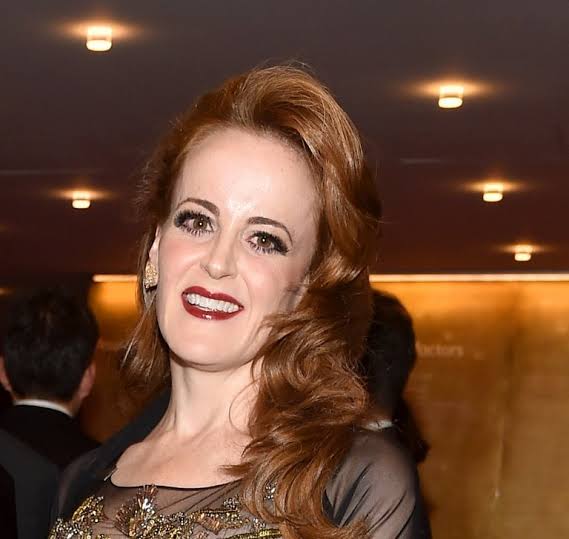
It’s not just Trump. Just like Adolf Hitler, who was a uniquely effective figurehead for the Nazi party and the apparatus that rose during the Third Reich, but neither the brains behind that apparatus nor the one in control of it, Trump himself is not the cause of the problem, he is simply the most visible pimple on the very wide flabby ass of the MAGA movement. It is possible that, after Trump is gone (Hopefully before the end of his term, though personally I’m hoping for impeachment and jail rather than the death that many others think he deserves), JD Vance or one of the other flying monkeys will take over as the chief shit-flinger; and that might even be worse. It’s not even the billionaires who back Trump and who are taking advantage of the distraction he is because of the shit he flings – shit that is flung like no one has ever seen before – because the wealthy have always been there, trying to control things, trying to take advantage of every opportunity to have wealth and power, without being in the spotlight themselves. I know it’s not Elon Musk: there’s a reason why the real power brokers don’t ever do what he is doing, and put themselves out front. It’s because when people get mad enough to pick up the torches and pitchforks – and the more effective Musk is, the sooner that will happen, as it always does when inequality gets too extreme – they look for an obvious target for their anger. We all know who Elon Musk is. Who the hell is Rebekah Mercer?

(Is it wrong of me to point out that, were she to become known to those with torches and pitchforks — or, let’s say, were she to get targeted by the next Luigi Mangione — nobody would miss the ENORMOUS target that is her head?)

Natural History Museum Curators Revolt Against Trustee Rebekah Mercer for  Funding Climate Change Deniers | Artnet News
Now we know what Megamind’s mom looked like

What I oppose is what Trump represents and distills. It is stupidity, chosen because it is easier than learning, and more comfortable than truth – because stupidity lies to us, even as we lie to the stupid. It is cruelty, because cruelty, also for the sake of ease and comfort, brings the displaced self-hatred of the stupid crashing down on the innocent; and not only do we then have that many more victims, some of whom will lash out at other disempowered people, but we also have those among the stupid who now cannot face enlightenment because then they would have to admit what they did to people who never deserved anything but the kindness and empathy due every one of our fellow human beings, and so those angry, cruel, stupid people will be even more incapable of changing what they are doing, no matter what truth is put before them and no matter what pleas for mercy they hear and ignore.

The worse we act, the less likely we are to stop acting badly. That’s why Donald Trump is the way he is: because he’s always been this way, he’s just been getting worse, for his entire life. And he’s an old, evil, man, now.

And everything he says is bullshit.

More Like POO-Preme Court, Amirite?

Ha! POO-Preme.

Neener-neener-neener GIFs - Get the best GIF on GIPHY

I will definitely change that title.

But there’s nothing I can do to change the Supreme Court.

Let me start with the reasons why the Supreme Court should be changed.

First and foremost, it has been captured by one political party, in defiance of all of the ideas they claim to hold dear: in defiance of democracy, in defiance of the ideals in the Constitution and the will of the Founders, in defiance of our nation’s proud traditions.

Should I use the word “captured?” Yes: if it wouldn’t be better to use the word “corrupted.”

Captured because Mitch “Fucking Turtle-Necked Chinless Redneck Powerhungry Asshole” McConnell (Am I the only one who uses that nickname for him? I shouldn’t be.) delayed a Supreme Court nomination for a damn year, after Antonin Scalia died in 2015, with some absolute bullshit about how it wasn’t appropriate to name a new Justice during an election year — and then he turned right around and named a new Justice during an election year, only a month before the Presidential election, when Ruth Bader Ginsburg died in 2020. What McConnell did wasn’t illegal, which is why those two Justices he stole for the GOP — or to be fair, one or the other of them was stolen: if we want to accept that Justices shouldn’t be named in an election year, then Neil Gorsuch’s nomination was legit and Amy Coney-Barrett’s was not; if we think the Justices should be named whenever the seat is empty, then Barrett is legit and Gorsuch is not — are both still Justices on the Court, making bullshit decisions according to their political ideology; but it’s clear that what McConnell and the GOP did was in defiance of all honor and decency, and intended only to swing the nation’s highest court over to their side so they could achieve their ideological goals. He did the same thing with the lower courts, holding up nominations through Obama’s second term in hopes of getting a Republican President to go with his Senate majority: which of course he did, and that’s why hundreds of federal judges were named by Trump instead of Obama. Which is bullshit — but it’s bullshit as usual. The Supreme Court nominations were not. That was blowing through precedent and decency for political gain. That, along with a hundred other examples of same, are why I will never accept criticism from the Republicans about Democrats playing politics. You don’t get to criticize when you do worse shit with more terrible consequences.

But hey, let’s pretend that all is fair in politics. (It’s not, as all is not fair in love nor war, whatever the old cliches say.) Because I certainly won’t pretend that the GOP’s justification for all of their shenanigans — that they are protecting the country from Marxism — has any merit at all, whatsoever. But sure, let’s pretend that as long as it’s legal to pull BS, you can go ahead and pull it. So then the 6-3 Conservative majority is permissible, even if it’s shitty.

So now let’s talk about corruption.

Let’s talk about Clarence Thomas accepting hundreds of thousands of dollars in gifts from a Republican mega-donor with interest in cases before the Court, from which Thomas never recused himself. Nor did he report the gifts on his disclosure forms. Also never disclosed that Crow paid his great-nephew’s tuition in expensive private schools. Or that Crow bought Thomas’s mother’s house. (My favorite counter-example, by the way, is that Justice Elena Kagan turned down a gift basket of bagels and lox from old high school friends because she wasn’t certain how it would look in terms of the ethics of accepting gifts.)

Let’s talk about Samuel Alito doing the same thing — accepting lavish vacation “gifts” from a conservative billionaire with cases before the Court.

Let’s talk about Neil Gorsuch selling a house to a law firm that has had several cases decided by the Supreme Court, from which Gorsuch never recused himself.

Let’s talk about Chief Justice John Roberts’s wife, who recruits lawyers for high-end firms that are frequently before the Supreme Court, making $10 million in commissions, which Justice Roberts described as “salary” on his disclosure forms. Also never recused himself.

Makes Kavanaugh and Coney-Barrett seem almost righteous.

I mean, unless you believe Christine Blasey Ford. Which of course I do. So that makes four conservative justices guilty of some questionable connections to wealthy Republicans with business before the court — and one credibly accused of sexual assault.

Wait, no, sorry — two. Because I fucking well believe Anita Hill, too.

And while we’re at it, let’s give that crapstack Thomas the trifecta, and include his wife, Ginni Thomas, who has frequently been closely connected to cases before the Court, from which her arrogant asshole of a husband has never recused himself. Not to mention her involvement in the Insurrection of January 6, 2021.

That’s the majority on the Court. To be fair, all of the Justices, including the liberal ones, accept travel as gifts from donors; mostly it is for appearances and speeches and so on, but sometimes it is for vacations. It’s just that they declare those vacations.

So yes: I consider the Court to be captured. To be corrupted. And that’s without even talking about the questionable decisions they have made over the last decade — going back to the Citizens United and Shelby County decisions, whose implications are still affecting us and our election processes, most intensely.

So let’s talk about those decisions.

First of all, as background, we should discuss the doctrine of originalism, which is a crock of fewmets to begin with. Created most actively by Robert Bork (80s kids will remember) as a reaction to the Warren court, which ended segregation, to the chagrin and outrage of every White supremacist then and since, originalism is the doctrine that the Constitution should be interpreted according to the original intent of the Framers who wrote it, and not adapted to meet the changing needs of the society they tried to shape into a democracy — pardon me, a Constitutionally limited Republic; Lord knows I don’t want to be accused of using the wrong term to describe this country, and therefore not knowing what the hell I’m talking about.

(Also, “AR” in “AR-15” doesn’t stand for “Assault Rifle.” It stands for “Armalite Rifle.” Don’t let anybody mock you for that one, which is quite literally the stupidest argument in the history of the gun control debate.)

There are several problems with originalism. For one, it’s impossible to know for sure what the Framers intended. We have their language in the actual Constitution, and we have in some cases writings they left behind explaining their intent. But — and please, take it from me, since this is literally all I do — all writing requires interpretation. And no author’s intent is purely apparent from their writing. Please see my last post for more on this.

Now, it’s fine to interpret the wording of the Constitution; that’s what the Supreme Court is for. The problem with originalism is they claim there is only one legitimate way to interpret that wording, and it’s their way. Why does one interpretive model always win when another must always be wrong? Go ahead, you try and justify it; I can’t. The objection against the more liberal decisions of the Supreme Court is that they interpreted the Constitution instead of following what it says; but since everybody interprets the Constitution, as everybody interprets all language and communication, it’s simply absurd to claim that THE OTHER GUYS are interpreting, and you’re going straight to the true essence. It’s bullshit.

The second problem with originalism is that, even when you get it right, the Framers were a bunch of racist sexist elitist shitheads. Sure, they had some incredible progressive ideas, especially for their time; and they had incredible intellects and great powers of reasoning, remarkable political acumen and voluminous knowledge of history and philosophy and so on, and, yes, wonderful rhetorical skill: but they still thought that only White men of means should be in control of this “free” nation they were creating. So it seems to me like their intent is not always the best guiding light for this modern nation descended from theirs. It is also ridiculous, by the way, to claim that this nation’s success is itself proof that the Framers had everything exactly right: that would require that everything in this nation’s history happened exactly as the Framers intended, and surely that whole Civil-War-Emancipation thing, not to mention women’s suffrage, was definitely not their intent.

Third problem with originalism: just like the Framers’ intent, the application of originalist doctrine is — malleable. It’s reasonable to interpret the Framers’ intent with firearms; while the form and function of firearms has changed in several ways, the essential concept of guns then and now is the same: it is a force multiplier that gives one person the ability to kill another from a distance with minimal risk to the shooter. So if we think that all of the Framers’ thoughts on guns were the best ever (and they probably weren’t — but actually, I think the problem is that we misinterpret the Second Amendment, not that the Second Amendment is a terrible piece of law), we can maybe apply those thoughts to modern gun control laws. Probably not a good idea still, but not absurd. But to say that “free speech” and “free press” and “free assembly” actually define the internet is to misunderstand the internet entirely. There is not any way you could print a thing, in any sense of “print,” that could reach 5 billion people around the world in mere seconds; but the internet can do that, in theory. There is no speech that could ever reach 5 billion people, period; but one YouTube video can. There is no sense of assembly that includes the ability to link FIVE BILLION PEOPLE in real time, but in different locations — but the internet can do that. The internet is a new thing. It is not a thing the Framers could have predicted, and therefore it is not a thing for which we can find the Framers’ intent. We have to make that shit up. Which means that, according to originalist doctrine, there should be no regulation of the internet at the federal level at all, because the Tenth Amendment reserves that power to the states. The same as the bullshit justification for the Dobbs decision overturning Roe v. Wade. Yet, strangely, the originalists do not claim that all internet regulation in any form should be done at the state level. Why? Because originalism is not a solid doctrine, it is all and only interpretation — opinion. It just has a particularly convincing, albeit specious, justification for why this opinion is better than other opinions.

The fourth problem with originalism (What, did you think three was enough? You thought I was done? AU CONTRAIRE, MON FRERE.) is, following the same logic, we should examine the intent of the original framers of the doctrine of originalism, Robert Bork being the main one. Robert Bork was an asshole. He was also one of the most influential people behind movement conservatism and trickle-down economics, which means we can also blame this crapstack for income inequality and our current plutocracy. It makes perfect sense that Bork would create originalism, and look to the 18th century Framers for guidance: he, like them, was a sexist, racist, elitist shithead. Which means that his doctrine should also not be a guiding light for a modern enlightened society.

The fifth and final problem with originalism? There are five originalist justices on the Supreme Court. Want to guess which five? Well, the easier way is to guess the one who isn’t: it’s Roberts, who strongly believes in stare decisis and respect for precedent. Roberts was the one who agreed with the Dobbs decision in favor of the state of Mississippi’s specific statute limiting abortion access; Roberts did not agree that Roe should be overturned. Because Roberts, while a conservative, is not an originalist. Alito, Barrett, Gorsuch, Kavanaugh, and Thomas are, and those five votes overturned 50 years of precedent, and removed a Constitutionally protected right from American citizens.

And then, when they struck down affirmative action, and the right for LGBTQ people to receive equal treatment in the free marketplace, they did it again — overturning 50 years of precedent in the affirmative action case, and removing Constitutional protections of the rights of Americans in the 303 Creative case, the decision that gave a Colorado web designer the right to refuse her services to (hypothetical) gay clients, as it would somehow violate her First Amendment rights. This time with Roberts joining in. Because he’s still a prick.

Okay: I was going to go through the decisions that I think the Court has decided wrongly, but I think this thing has gotten too long already; turns out I have a lot of beefs with the current Supreme Court. This is a good list from Truthdig of the bad decisions of the Roberts court; it doesn’t include the most recent ones.

YARN | I got a lot of problems with you people... | Seinfeld (1993) -  S09E10 The Strike | Video clips by quotes | 0f8e26b9 | 紗

Okay. So we all agree the current Supreme Court sucks. (MY title, by the way, was inspired by a Tweet I saw that called it the SUCK-preme Court. And mine’s better than that. But I will change it before I post this, I promise.) What do we do about it?

No, we can’t expand the court. Sure, it’s tempting, and there are both precedents and logical reasons for doing it — the best I’ve heard is that there are 13 Appeals Courts (12 districts and the Federal Appellate Court) and so there should be one Supreme Court justice per Appellate court, which would allow Biden and the current Democratic Senate to name four new justices and win a 7-6 majority going forward — but that only starts a game of back and forth: if the conservatives get a majority after liberals expand the court and add four seats, then the Republicans would add at least another two seats and take the majority back. And so on.

By the same token, we can’t impeach all the Justices. They haven’t committed high crimes and misdemeanors. (Thomas probably has.) They did say under oath that they would hold to established law in regards to abortion rights, but it’s not perjury if you changed your mind after you answered the question; and who could prove that the Justices were lying when they said something that wasn’t true? The free gifts from Republican donors, and the money taken in by Roberts’s wife, did not provably change a decision made by the Court; the law firm that bought Gorsuch’s house, for instance, received his vote eight times, but he voted against them four times — and honestly, it’s a pretty good bet that Gorsuch would agree with a conservative law firm two times out of three without anyone buying a log cabin. As we all learned with that other corrupt piece of shit Trump, it’s about the quid pro quo.

Though I learned it from Hannibal Lector.

Quid Pro Quo Qpq GIF - Quid Pro Quo Qpq Hannibal Lecter - Discover & Share  GIFs

No, the truth is, there isn’t anything we can do about this current court, except suffer.

But there is something we can do about the situation in this country, which the Supreme Court is making worse.

We can pass laws.

We can elect Democrats who can win a majority in both houses of Congress, and win the White House. It wouldn’t even be that hard, honestly, because so much of the country is blue; I know we’re fighting GOP gerrymandering and election tampering, but surprisingly, those were two of the decisions the Court made that went the right way, so neener neener.

neener Neener* GIF | Gfycat

But really: the Court can only toss out legal protections if they are not enshrined in law. They can toss Biden’s student debt relief plan (EVEN THOUGH THE PLAINTIFF HAD NO STANDING, GODDAMMIT), but they can’t tell Congress not to cancel student debt.

And the better we do at electing Democrats, the better off we will be in terms of election maps and rules going forward: and that will snowball in the future — until we can properly nominate new Justices to replace these assholes.

This court’s biggest mistake is in overturning precedent in order to appease their personal biases. We should not make the same mistake, and so compound the problem, by expanding the court or by impeaching Justices for being assholes. Not to be morbid or anything, but Clarence Thomas is 75 and Samuel Alito is 73; I think we can expect to name two new Justices in the next ten years — and so if the Democrats can maintain control of the White House and the Senate, or at least one or the other, then those can be liberal nominees, and that will swing the Court back to a better balance.

And then the liberal justices can just overturn all of the fucked up decisions that this court is making. Which is what happens when you throw out precedent: the next guy also gets to throw out your precedent, and reverse all of your decisions.

You know who pointed that out to me? My dad.

And that’s how we come full circle and start this blog off the right way.

Much better than that awful title.

I promise I’ll change that.

Okay, no I won’t.

I Thought It Was Funny GIFs | Tenor

Happy 4th of July, everyone.

What are we fighting for?

HONK FER FREEDUM

Coronavirus: the US resistance to a continued lockdown

I want to understand the argument.

I don’t. And it’s vital that we understand the argument, even if we don’t agree with it; agreement is not necessary, compromise can be reached, solutions can be found even if we don’t agree.

But if we don’t understand? Then what do we do?

“We believe that the state governor has gone beyond his constitutional authority in shutting down businesses and ordering people to stay at home,” organiser Tyler Miller tells me from the grounds of the state capitol.

In mid-March Washington Governor Jay Inslee announced an emergency proclamation mirroring many issued around the world; closing restaurants and bars and banning large gatherings.

But protestors say that was unconstitutional.

“The state constitution says that the right of the people to peaceably assemble shall never be abridged. We believe that the (emergency coronavirus) proclamations that the governor here ordered violate that,” Mr Miller says.

Mr Miller said he was not protesting against the recommendations from the public health bodies and respected the need to ‘flatten the curve’.

“I even self-quarantined for 14 days back at the very beginning of this myself, when I had an illness that mirrored some of the symptoms,” he says.

“The fact I am protesting does not mean I think it is a good idea to have gatherings, I just believe that the government has no authority to prohibit them.”

Throughout the crisis, Mr Miller has also been able to continue his work as an engineering technician with the navy.

He says the thing that has angered him is what he feels it is an un-American overreach of power by the Democratic governor of Washington.

I don’t understand that argument.

There is a simpler argument, which is just that people are getting desperate: the country has been shut down in places for more than a month now, and people are facing another rent payment, another car payment, on May 1st, this coming Friday. I understand that desperation, that anxiety; I understand and (mainly) support the desire to let government officials know that you need and demand action. I think it’s a mistake to violate social distancing guidelines, and there are people in the article above and others I have seen who say things like “I have a strong immune system, I take care of myself,” who I think are somewhere between ignorant and idiotic: ignorant if they don’t know that Covid-19 has killed young and healthy people as well as older, sicker people; idiotic if they believe unfounded statements (Mostly from conservative “news” sources) that the novel coronavirus is no worse than the flu.

(This may be too harsh: this is an interesting article about how we are wired to be intuitive, and so underestimate the evidence that comes from outside our experience. I know I was telling my students in March that any shutdown of schools would only last a couple of weeks and would certainly not affect their graduation. On the other hand, I am not saying the same thing now, because I have learned better; I’m not sure why these people haven’t, but my two options above are certainly possibilities.

(Also, this ad popped up in that same article about people being too optimistic. Lol.

Screenshot (6)

(If you believe not only that a miracle stretch relieves years of back pain, but also that chiropractors are stunned by it, AND that chiropractors are the authority whose stunning represents a medical breakthrough, then you are unquestionably in this overly-optimistic bunch.)

But while I understand and sympathize with people who are desperate to get back to work and pay their bills, and I believe (and am infuriated) that the federal government has once again bailed out large corporations with deep political donation pockets and left average citizens to twist in the wind, I don’t understand the other argument. The freedom argument.

I don’t think it’s a reasonable argument.

Listen. I worry about government overreach. I won’t say I’m learned in history, but I know about the Japanese internment camps during World War II, and I know some things about the rise of the various authoritarian dictatorships that plagued the 20th century. I have hated the USA PATRIOT Act since it was imposed on us, during the paranoid jingoist nationalist fervor that swept the country after 9/11 and swept us into a neverending war. I know that it gets renewed every time it comes up because the government doesn’t like to give away power that it has seized. Because of that experience, I have been pointing out to my friends who argue against the lockdowns that the thing we need to worry about is the powers the government arrogates to itself after the crisis: the new regulations and limitations, and invasions of citizens’ rights, that follow a partial return to normalcy, and that are intended to prevent this kind of thing from ever happening again. We have to watch out for the permanent changes, or for the attempts, often subtle and underhanded, to make temporary changes permanent.

I don’t doubt those will happen. I think the first attempt will be by President Trump, when he decides to make his temporary limit on immigration permanent.

But see, I think that because Mr. Trump has a long history of a clearly established position to end immigration. I think that because I have read reports that Trump’s anti-immigration advisors have talked about this pause into something more long lasting. Because this article quotes DHS acting secretary, Chad Wolf, as saying to Fox News that

his agency will soon recommend a move to limit temporary work visas as well.

“That is something that the department has been looking at for the past several months, so we are well underway and look forward to presenting to the President those recommendations for additional steps,” said Wolf.

So there’s your government overreach, as part of an established pattern of behavior, aiming at known long-term targets. After the fact. Once the danger has passed. The current actions are not government overreach: they are government responding as government should to a crisis. The stay-at-home orders were issued during a crisis, and in line with scientific facts and the advice of experts. This is exactly when, and exactly why, people’s rights can and should be limited. We have the right to protest, but if you decided to walk into a burning building in order to protest the fire, people would stop you: and they would be right to. We have the right to freedom of speech, and of assembly, but you cannot gather with an army and plan the destruction of the United States: the right is to peaceably assemble, and free speech does not include sedition or criminal conspiracy. Individual rights are not limitless, not under any circumstances; even the most libertarian of us would state clearly that one person’s rights cannot be permitted to infringe on another’s, that your right to swing your fist stops where my nose begins. And of course individual rights are limited in an emergency, because the free exercise of one’s rights puts others into danger.

This is what government is for: to protect people from danger. Now, if you want to argue that the coronavirus is not that dangerous, then you’re in the wrong place. Start with this.

Then read this.

Then read this.

Then read this. 

(Especially that last one; it’s about the infectiousness of the coronavirus. And lest you think that the infectiousness of Covid-19 is lower than SARS or MERS, both of which caused fewer problems and killed fewer people, go back and read those other articles again, and then also pay attention to this quote from that last article:

“An R0 value of 1 means the average person who gets that disease will transmit it to one other person; in that case, the disease is spreading at a stable rate. An R0 of more than 1 means the disease spreads exponentially.”

And then read this essay about exponential growth.

Okay? Okay.

As I said, the government has the right and the responsibility to limit individual freedoms in response to a crisis, in order to protect the people from that crisis. (I’m aware that some people don’t agree with this: some because they don’t think the coronavirus is a crisis, and if you still think that, go back and read the above articles, but this time with your eyes open; and some because they think that nothing should ever limit individual rights under any circumstances: my above examples of protesting inside a burning building, or convening an army to overthrow the US government, are just fine, for them. I will be writing another blog about that. I’ll let you know when it’s done. The important thing is that, while I don’t agree with that argument, I understand it.) I think, though, that the basic argument behind the protests, the reason that President Trump tweeted support for people trying to “liberate” the states that have both lockdown orders and Democratic governors, is that the government is not trying to protect people from the crisis: the government is trying to control people. To take away their freedom. that’s the argument I don’t understand.

(I am also not going to write here about the elephant in the room, namely the upcoming election and the similarities — remarked on in the BBC article I linked first — between the anti-lockdown protests and Trump rallies. People who are going to the rallies just to support President Trump are certainly not reading this, and are not worth the time to put forward an argument. President Trump is probably trying to use the rallies as a way to hype his base up for the election, but he also said that he thinks Georgia Governor Brian Kemp is opening his state too soon, so I’m not going to jump on Trump today. We’ll see what happens tomorrow. Also: I understand this argument.)

But here’s the thing with tyranny: it makes sense. There is reason behind it.

That’s what’s missing from the freedom argument of the protests.

Break it down. Think it through. Okay, the government — pardon me, the govment (Read this article that I wish I wrote) — limits people’s rights to assemble and move freely, to run a business and participate in the free market economy. Because they want to establish tyrannical control over the free people of these United States.

Why?

I understand that the government has taken on, for most of the people who support these protests, the aura of Darth Sidious and the Sith: evil just for the sake of evil; power hungry just for the sake of power. But, see, that’s a character from a movie franchise, and it’s not a realistic one. I admit, if the Democratic governors were trying to raise a clone army from a mysterious source; or they were trying to corrupt a Jedi knight with incredible power but terrible self-control, then I would see the danger.

Why would the Democrats, or the government in general, want to lock people inside? I saw someone argue that the Democrats exaggerated the danger of Covid-19 in order to justify the lockdown expressly so they could destroy Trump’s economy, because that’s the only way they could beat him in the next election.

Come on.

(An argument I have seen but will not be rebutting is that Andrew Cuomo of New York exaggerated the need for ventilators so he could get…a huge excess of ventilators. Sure. As you do. He’s going to put them in one huge room and then go swimming in them like Scrooge McDuck. Swimming through the ventilators.)

First of all, there’s no way that an economy ruined by Democrats would be pinned on Trump. Trump is already positioning himself to argue that it was the Democrats who did the harm in this crisis. (Elephant in the room…) If this is provably true, if Covid-19 is really not that bad and the Democrats have exaggerated the danger, we’ll know it before November, and this Dem gambit will fail. Secondly, and more important, if they ruin the economy, they not only have no hope of winning the next election, but they lose access to the money. If  the Democrats, or the government in general, are corrupt,  they want money. Money does not come from enforcing a stay-at-home order. We are all losing money, including the government. I know they are flinging money around like it’s meaningless paper (…), but there is a limit to that because at some point the economy will actually collapse, and the more they spend now the closer that outcome gets: and why would anyone in power want that? To destroy the economy that underpins the entire system they are ostensibly seeking to control? Nonsense. There are people who want the government and the entire society to collapse, but they are not the ones in power: they are the ones without power. That’s why they want the system to collapse, because they don’t currently gain from it. The ones in the system, the Democrats in Washington and the state capitals, very much want this current system to survive, even if they are corrupt, because this system is how those corrupt people get what they want. The corrupt actions the Democrats take (And yes, many Democrats are corrupt; not all of them or only them, but yes they are.) are clearly intended to increase their wealth and their ability to stay in their current positions so they can continue increasing their wealth. That’s why we still don’t have term limits or meaningful campaign finance reform. Nobody wants to make the money go away, least of all corrupt Washington politicians.

So what’s the reasoning? Because the Democrats are secretly anti-American communists? Okay, let me try to address the idea of Dems seeking power for power’s sake; I still think that sounds like the Sith, but sure, let’s imagine that they are simply evil and that’s their reasoning. Communists, or anyone trying to overthrow the government, would be trying to seize the reins of power. They would be going after the sources of power, trying to control those so they could then get the next source of power, and so on; it’s like Risk. You conquer territory that lets you conquer more territory. You don’t just act arbitrarily, you seek the means of control. In this country, the means of control are (in no particular order): violence and force; the ballot; information; and money.

Which of those things are the Sith-Democrats gaining through the lockdown? Not money; I already talked about that. (Sure, the government is giving money to corporations, who paid the politicians. But those corporations make more money in an open economy. The same goes for people arguing that the government is trying to make people dependent on government handouts rather than their own paychecks: the money will run out if the economy doesn’t open. then the system collapses and the people in power lose.) Greater control over information? If there are secret things going on that we can’t see because we’re all staying home, then I take all of this back and apologize; let me know if the clone army executes order 66, or the Final Order fleet rises from Exegol. Otherwise the press has not seemed limited by the lockdown, and I don’t really see how it would be; limiting reporters’ physical movements seems a loser’s gamble in a world of the Internet and drones with cameras. The ballot? I mean, we’ll see when the election comes, but at the moment, the lockdown seems to play more into Republican hands because it limits voters’ access to the ballot box, which tends to favor conservative politicians.

Does the lockdown give the government more ability to commit violence, more ability to use force against the people? I honestly can’t see how. I mean, I guess they could be trying to force us to obey so we get more used to obeying, so that the next time they give us an irrational and arbitrary order, we’ll obey just because that’s what we do now. But if that were the case, they wouldn’t be using Covid-19 as their cover. Because that gives us a reason, and that means they’ll need to have another reason, as good as this one, to support their next attempt to tell us to stay home: that progression only works with weaker and weaker justifications. Using a global pandemic is not a weak justification; quite the opposite. (And notice that even this one isn’t working…)  Read 1984: O’Brien wants Winston to not only tell him he sees five fingers, he wants him to actually see five fingers; and that’s the only reason Winston gets for the months of torture he undergoes. He is very intentionally not given a reason to obey Big Brother: he just has to do it, or else he suffers. In this case, if we don’t obey, it’s not that we suffer the wrath of the government — it’s that we get sick. (And this is true.) If you want to create a totalitarian state, you need to create loyalty to the state without reason: loyalty to the state based on an emergency doesn’t cut it. Because the loyalty ends when the emergency does.

Now: if this lockdown turns out to continue past when the virus disappears. Or if the virus doesn’t disappear, either because the press is controlled and doesn’t report the true numbers of the disease (And I know people think that is happening, but I’m talking about the press saying there are thousands of cases when there are none, not the medical authorities miscounting the thousands of cases that are in existence; if anything we are undercounting the actual cases, and we all know it.), or because the government takes actions that continue the spread of the coronavirus (I mean, maybe tweeting support for protests that seem to be increasing the chances of the disease spreading would qualify as that?). Then I will agree that this is an attempt to establish tyranny. But you see what the actually despotic actions are there? Enforcing control over freedom of movement when there is no crisis. Controlling the press. Actually using biological warfare, directly or indirectly, against the people. Those are tyrannical actions.

Asking people to stay home is not tyranny. It’s concern. Even if you think it is unfounded concern, I don’t see any reasonable way to argue that it is anything other than concern.

But you know what really concerns me?

People are acting based on this argument. This argument that doesn’t seem to have any real rational basis. It honestly seems to be just “You can’t tell us what to do. Not even if it’s in my best interest.” Rebellion for rebellion’s sake. Cowboy shit. Cowboy shit that has no particular goal, no particular target; it’s just people wanting to act like cowboys. Rebels. March and wave flags. That doesn’t make any sense: but people are still doing it.

The fact that I can’t figure out the argument doesn’t concern me as much as the fact that people seem willing to act even though they don’t understand why they are acting. That’s irrational.

I don’t know how to argue with irrational people.

Even worse, I don’t know how to live in the same country with them.

People say this country is founded on the rule of law, or on the Constitution, or even on the will of God; none of that is true. It was founded on reason. The argument for the Constitution and the rule of law is reasonable, it is rational; it makes sense. The way the Constitution sets up our government is rational, every aspect of it. Hundreds of reasonable people argued — argued! Gave reasons and explanations! Appealing to the intellect of their opponents! — for years to write it. Some of the arguments were wrong, and some of the beliefs were wrong; the people making the Constitution were imperfect, and had some bad reasons, which should give way to better reasons over time — but that’s the system they set up, one in which better arguments, better reasons, will win out over worse ones. It’s all founded on reason.

The country can live through any danger, even the coronavirus. But it can’t live through the death of reason.

That’s what scares me. That’s why I want to understand, because if I can understand, I know that my opponents, even if they are wrong, are still listening to reason, and that means there’s hope.

I hope I can understand.

Children in Cages

People arrested for allegedly trying to enter the US illegally wait in cages inside a warehouse in McAllen, Texas. Picture: AP

People arrested for allegedly trying to enter the US illegally wait in cages inside a warehouse in McAllen, Texas. Picture: AP


CUSTOMS AND BORDER PATROL VIA REUTERS


Did you know we’re keeping children in cages?


I actually wrote a different blog yesterday, about how I fear that Trump’s success – or at least the positive things that are happening around him, even if they’re not because of him, like the unemployment rate going down – will encourage a cultural shift towards bullying. But I can’t post that one until I write and post this. Because this is the first thing that needs to be discussed. In fact, we should start every conversation with this until the answer can genuinely be, “No, we’re not; they stopped that.” Walk into Starbucks, and the barrista should say, “Hi, there are children in cages, but can I take your order?” And you should say, “Unnecessary family separation as a deterrent policy is a crime against humanity, and I’ll have a latte.”

So. Because of the attack on the media from Trump and the right (And because the corporate media has been sliding down into the muck for a generation at least), let’s establish facts.

First fact: when you type “children” into the Google search box, the first option is “Children in cages.” This is America. Childish Gambino released that video a month early.

Second fact: is this actually happening? Yes.

Federal officials said Tuesday that since May, they have separated 2,342 children from their families, rendering them unaccompanied minors in the government’s care.

(Source)


Third fact: are these children being kept in cages? Here’s a good explanation of the semantic argument.  If I may, the answer is: Yes. They are detention facilities, they do provide for the basic needs of the children, with the exception of the most obvious one: their parents aren’t there. But the essential point is: the children are held in enclosures made of chain-link fencing on concrete floors, and they are not allowed out of those enclosures. They are not able to see or communicate with their parents unless they can wend their way through an enormous bureaucracy.

Fourth fact: The children separated from their parents include infants and toddlers. Being kept in “Tender age shelters.”


Fifth fact: this is not, despite the administration’s stance, required by law, nor is it the fault of the Democrats. Unless we stop believing in free will. The administration has claimed – I heard White House spokesman Hogan Gidley reference all three of these elements during an interview with NPR – that the separation of families and the detention of children is the result of three things: the Flores Agreement from 1997, the William Wilberforce Trafficking Victims Protection Reauthorization Act of 2008, and the 2016 decision by the 9th Circuit Court which included accompanied minors in the previous laws regarding unaccompanied minors.

Here’s a good article from PolitiFact about this argument

If I may quote Inigo Montoya: “Lemme ‘splain. No, is too much: lemme sum up.”

The Flores Settlement agreement (Which settled a class-action lawsuit actually going back to the Reagan Administration) says that aliens in the custody of INS (now ICE) who are unaccompanied minors must be held in the “least restrictive setting” possible. Specifically, it says,

“The INS shall place each detained minor in the least restrictive setting appropriate to the minor’s age and special needs, provided that such setting is consistent with its interests to ensure the minor’s timely appearance before the INS and the immigration courts and to protect the minor’s well-being and that of others.”

Source

This means, to the Trump administration, that children can’t be jailed, and if their parents have to be, then the children must be separated from the jailed parents. I’ve seen various sources say that the settlement requires unaccompanied minors be released within 20 days, but I can’t find that passage in the agreement. If you’d like to try, look here.

The 2008 law applies because it says:

Except in the case of exceptional circumstances, any department or agency of the Federal Government that has an unaccompanied alien child in custody shall transfer the custody of such child to the Secretary of Health and Human Services not later than 72 hours after determining that such child is an unaccompanied alien child.

Source

This means that, once the children are separated from their parents (and therefore, according to the Trump administration, they are unaccompanied minors), they cannot be held by either INS, if the parents are being held pending an immigration hearing, nor by the U.S. Marshals, who hold the parents if they are being accused of a federal crime – which, under this administration, they are; that’s the “Zero Tolerance” policy that Jeff Sessions announced in April. Sessions’s memo to the state attorneys general is here,  and the law that he cites, the law against unlawful entry, is here.

Please note that the maximum penalty for a first offense is six months in jail, which makes this crime a misdemeanor. Most adult immigrants, once they reach a hearing, are released with time served.

Finally, the 2016 decision from the 9th Circuit Court of Appeals broadened the Flores Settlement to include accompanied minors, meaning that they, too, had to be held in the least restrictive setting available, and, as with the 1997 settlement, the government had to prioritize release of children in custody to family members over any other solution; the decision says that this was also the case with minors detained with their parents, though it does also make clear that this does not require the government to release the parents in order to provide a custodial parent for the children. It does require, as the Flores Settlement did, that parents be released with their children if they are not a legal or flight risk. 

Text of the Decision


So what does all this mean? It means that the Trump administration is arguing that they must uphold the law, and they must do something drastic to reduce the crisis of immigration across the southern U.S. border. They claim that those who cross the border have committed a crime, and therefore they must be prosecuted. If those people brought their minor children with them in the commission of this crime, those children have to be separated from their parents as they cannot be held in a prison with their parents, but must be remanded to the custody of Health and Human Services, as per the Flores Settlement, the 2016 decision by the 9th Circuit, and the 2008 Wilberforce Reauthorization Act. HHS then places those kids into tents and warehouses, wherever they have facilities that meet the standard of the Flores Settlement (Which says that they have to have the basic needs, and also opportunities for exercise, entertainment, education, and contact with their parents. Well.). This, they say, is all required by law, and at various times, various members of the administration from President Trump on down have all claimed that this is the fault of the Democrats: first they claimed that Democrats passed the laws (They didn’t), then they claimed that this has been going on since either the Obama administration or the Clinton administration (Neither is true; both administrations detained unaccompanied minors in similar settings, but neither intentionally separated accompanied minors from their parents and then treated them as unaccompanied minors. Generally they released families. It should also be noted that there were not nearly as many families trying to immigrate with their minor children in the past. Source), and then they claimed that the Democrats could end this any time by passing legislation to change the laws or the policies – their preference, apparently, is for the alteration of the Flores Settlement, so that they can detain children, accompanied and unaccompanied, for as long as necessary. This is also untrue in that the Republicans control all branches of government; it is true that they need Democrat votes to pass a law through the Senate, but the first obstruction to any legislation is and has been the President, who just will not say what he is willing to support; the two bills currently being debated in the House, one more conservative without a path to citizenship for the DACA recipients, one more moderate (but still Republican/conservative) with a path to citizenship (along with limiting legal immigration and funding the Trump border wall) have BOTH got his support, whatever the hell that means.

But please, in this era of lies and exaggeration and political spin, let’s just get down to brass tacks. This policy of family separation is. Fucking. WRONG. It is vile and appalling and inhumane and cruel and everything that this country is not supposed to be. Regardless of whether the parents of those children have committed crimes (and in the case of asylum seekers, some of whom have also reportedly been separated from their children because the asylum seekers stay in the custody of ICE while awaiting their hearings and the children have to be remanded to HHS according to Wilberforce, literally no crime has been committed, as seeking asylum is legal.), the children have not, and the children have rights. They have the right to be with their parents, and they have the right to not be jailed. That doesn’t imply that you put them into chainlink-partition-spaces in tents in Texas; it implies that you find a way to ensure that the parents can be released from custody without violating the laws you are trying to enforce.

Now let’s talk about that. Because there really is an obvious solution here, even though it is one that Trump finds untenable because it makes his base froth at the mouth: he calls it “Catch and Release.” This is the policy that previous administrations have used with most families (Not, as Obama’s Department of Homeland Security Secretary Jeh Johnson said, in cases where there might be some doubt as to the child’s familial relationship to the adult; thereby rebutting current DHS Secretary Kirstjen Nielsen’s argument that children must be separated in all cases because the families have no documentary evidence of familial relationship and therefore ICE has to assume the adults are human traffickers) and with many other immigrants seeking asylum or going through legal processes. You set up a court date, and then you release the people on their own recognizance, with the understanding that they will show up for their court date.

Here’s the thing. This is how our system works. Our Constitution requires the provision of bail that is not excessive, and that everyone receive a fair and speedy trial, and that anyone accused of any crime is innocent until proven guilty. Unlawful entry is a misdemeanor. The maximum fine is $250. Reasonable bail for that crime would be, what, maybe $100? Public intoxication, also a misdemeanor punishable by a maximum of 6 months (Varies by state – I’m using Indiana because it came up first on Google) and a fine of a whopping $1000, has a bail around $200-$500, according to the Bail Bonds Network. So I would think that bail for the parents should be something that most of them should have access to, especially if they have friends or family in the U.S. Once bail has been granted, then the question is whether or not the accused will show up for court; President Trump, of course, argues that they won’t, that the illegal immigrants are intending exactly this: showing up with their kids so that if they get caught, they will be released and then they will vanish into the Heart of Darkness inside the U.S. and never be seen again until they get arrested for rape or murder.

But here’s the thing. Immigrants show up. They don’t miss their court dates.

Moreover, studies show that asylum seekers—like many of the thousands of Central American families fleeing violence and arriving to the U.S.—are likely to appear for proceedings, because they have such a strong incentive to avoid returning to persecution. Indeed, as United Nations High Commissioner for Refugees (UNHCR) researchers found in 2013, asylum seekers have a natural “inclination towards law-abidingness,” and view making a refugee claim as “a manifestation of faith in legal process.” U.S. research bears this out. A Vera Institute study, from 1997 to 2000, of asylum seekers in expedited removal proceedings found to have credible fear, found that 93 percent with intensive supervision complied with all court proceedings; 84 percent complied with minimal supervision; and 78 percent complied even if simply released without supervision. These compliance rates were so high that Vera concluded that “[a]sylum seekers do not need to be detained to appear…. They also do not seem to need intensive supervision.”

Source

And if that rate doesn’t appeal, there are certainly ways to improve it. Immigrants with legal representation, for instance, attend hearings at an even higher rate. Solutions like allowing immigrants to check in via phone call or smartphone location apps create higher response rates. Even ankle bracelets (like the two that Paul Manafort has to wear ) would allow a tough-on-crime sort of stance, while allowing families to stay together, and reducing the burden on government resources to house all of these people.

In other words: there are alternatives. Even if you accept the claim that the administration is enforcing immigration law, it has to be pointed out that there are also 11 million illegal immigrants currently residing in the U.S., who are not currently being rounded up, separated from their children, and housed in federal lockup. So apparently the Trump administration is actually choosing and prioritizing which laws it enforces to what extent. Which is, indeed, the whole goddamn point of an executive branch. And this executive is choosing to prosecute people accused of first time illegal entry – a misdemeanor with a lesser penalty than some states impose for jaywalking – and therefore choosing, as a matter of intentional, proactive, object-oriented policy, to separate families and put children in cages. This is our government, and our country. It is us, unless we do something about it.

It is fucking wrong. It has to stop. It has to be the first thing we say, and the first thing we act on, in our current opposition to the abuses of our government. And I don’t care if you are a progressive liberal or a libertarian anarchist: this is what you should be talking about. This is what you should be fighting. Call your representative, call the White House, write letters, march, protest, donate, do anything and everything you can. Fight this. Fight it now.

We are keeping children in cages.

How do you shut a revolving door?

ANSWER: With a door-stop made of JUSTICE!

(This is the second in a series about politics that’s looking like it will be three essays long. Once again, if you’re not interested – no, you know what? You should all read this. And share it so that other people can read it too. Because – damn.)

And speaking of corruption in politics . . . two words: regulatory capture.

Two more words: revolving door.

And the final five: Lobbying in the United States.

You know that there’s a real problem when the corruption has become so common, and so tightly bound into the fabric of government, that there is a Wikipedia article about it. There are three, actually, which I’d suggest as reading – they are all linked above. And it is amazing that this is such a common and accepted situation that the articles talk about recent events, about people whose names we know – this isn’t the Teapot Dome scandal, or the robber barons of centuries past; this is Eric Holder, who left after six years as Attorney General to return to his partnership position at a law firm that represents Wall Street banks (Now you understand why no bankers have been prosecuted for the financial collapse?); this is Deepwater Horizon and the oil companies that got new permits to drill in the Gulf of Mexico only weeks after the worst ecological disaster in history; this is the very internet I am using, and SOPA, et al. This is our world, us, right now.

Regulatory capture is when a government regulatory body – like the FCC, or the SEC, or the Department of the Interior or Agriculture – is controlled by the industry it is intended to regulate. The fox not only gets into the henhouse, he puts on a red comb and declares himself the rooster. Then he puts in place a new Hen Resources policy whereby every hen must have a one-on-one meeting with the new CER(F) [Chief Executive Rooster (Fox)], out back in the woods, at night; and the hens have to bathe in barbecue sauce beforehand.

Think I’m exaggerating? Allow me to quote from the Wikipedia article on this subject:

Commodity Futures Trading Commission

In October 2010, George H. Painter, one of the two Commodity Futures Trading Commission (CFTC) administrative law judges, retired, and in the process requested that his cases not be assigned to the other judge, Bruce C. Levine.Painter wrote, “On Judge Levine’s first week on the job, nearly twenty years ago, he came into my office and stated that he had promised Wendy Gramm, then Chairwoman of the Commission, that we would never rule in a complainant’s favor,” Painter wrote. “A review of his rulings will confirm that he fulfilled his vow.” In further explaining his request, he wrote, “Judge Levine, in the cynical guise of enforcing the rules, forces pro se complainants to run a hostile procedural gauntlet until they lose hope, and either withdraw their complaint or settle for a pittance, regardless of the merits of the case.” Gramm, wife of former Senator Phil Gramm, was accused of helping Goldman Sachs, Enron and other large firms gain influence over the commodity markets. After leaving the CFTC, Wendy Gramm joined the board of Enron.


That’s right: the wife of a senator running a regulatory agency, corrupting a judge, and then taking a seat on the board of the company she was supposed to be regulating. There are more examples, too. Many. How about this one:

Federal Aviation Administration

The Federal Aviation Administration (FAA) has a dual-mandate both to promote aviation and to regulate its safety. A report by the Department of Transportation that found FAA managers had allowed Southwest Airlines to fly 46 airplanes in 2006 and 2007 that were overdue for safety inspections, ignoring concerns raised by inspectors. Audits of other airlines resulted in two airlines grounding hundreds of planes, causing thousands of flight cancellations. The House Transportation and Infrastructure Committee investigated the matter after two FAA whistleblowers, inspectors Charalambe “Bobby” Boutris and Douglas E. Peters, contacted them. Boutris said he attempted to ground Southwest after finding cracks in the fuselage, but was prevented by supervisors he said were friendly with the airline. The committee subsequently held hearings in April 2008. James Oberstar, former chairman of the committee said its investigation uncovered a pattern of regulatory abuse and widespread regulatory lapses, allowing 117 aircraft to be operated commercially although not in compliance with FAA safety rules. Oberstar said there was a “culture of coziness” between senior FAA officials and the airlines and “a systematic breakdown” in the FAA’s culture that resulted in “malfeasance, bordering on corruption.”


So glad I flew Southwest when I traveled this past Christmas. Or maybe you’re concerned with nuclear power? Here, this is a peach:

The NRC [Nuclear Regulatory Commission] has given a license to “every single reactor requesting one”, according to Greenpeace USA nuclear policy analyst Jim Riccio to refer to the agency approval process as a “rubber stamp”. In Vermont, ten days after the 2011 Tōhoku earthquake and tsunami that damaged Japan’s Daiichi plant in Fukushima, the NRC approved a 20-year extension for the license of Vermont Yankee Nuclear Power Plant, although the Vermont state legislature had voted overwhelmingly to deny such an extension. The Vermont plant uses the same GE Mark 1 reactor design as the Fukushima Daiichi plant. The plant had been found to be leaking radioactive materials through a network of underground pipes, which Entergy, the company running the plant, had denied under oath even existed. Representative Tony Klein, who chaired the Vermont House Natural Resources and Energy Committee, said that when he asked the NRC about the pipes at a hearing in 2009, the NRC didn’t know about their existence, much less that they were leaking. On March 17, 2011, the Union of Concerned Scientists (UCS) released a study critical of the NRC’s 2010 performance as a regulator. The UCS said that through the years, it had found the NRC’s enforcement of safety rules has not been “timely, consistent, or effective” and it cited 14 “near-misses” at U.S. plants in 2010 alone. Tyson Slocum, an energy expert at Public Citizen said the nuclear industry has “embedded itself in the political establishment” through “reliable friends from George Bush to Barack Obama”, that the government “has really just become cheerleaders for the industry.”


There’s more, too. And again, let me note: this is from a Wikipedia article. This is not, by any stretch of the imagination, anything like whistle blowing or investigative journalism; this is common knowledge, stuff that is all over the news, all over the web. I got to all of this with exactly two clicks: one from my Google search to Wikipedia, and one from my first article (on “revolving door”) to the link that said “See also: regulatory capture.” These examples I have cited are just a few from the section headed “United States Examples.” (If it makes you feel better, there is also one Canadian example, two Japanese examples, and one international example. To balance the twenty-plus American examples. USA! USA!)

And speaking of the revolving door: this is the name we apply to the practice of private professionals becoming government officials, generally with power over those same industries that employed them prior to election or appointment, and government officials becoming private professionals in the industries they oversaw. This is the kind of thing where members of Congress block a bill regulating, say, Wall Street, and then leave office to get a lucrative job as an advisor on Wall Street. The most famous example is probably Dick Cheney, who “left” Halliburton to become Vice President (Got a “severance” package of $20 million, too) and then spent much of his vice presidency creating new business opportunities for Halliburton (the company builds oil fields and refineries), particularly in Iraq. But there are others: Dick (Two corrupt men named Dick? COINCIDENCE?!?) Gephardt, who was a Congressman (And a Democrat, lest anyone think I am bashing on the GOP, or everyone named Dick.) for years, is now a lobbyist; the FCC commissioner who approved the NBC/Comcast merger left the FCC four months later for a position at Comcast; the use of bovine growth hormone was approved by three employees of the Food and Drug Administration with ties to Monsanto.

Again, not investigative journalism: I Googled “Government officials from the industries they regulate” and clicked on the first link, which was to the “revolving door” article on Wikipedia.

It shocks me, to some extent, to think that anyone believes it a good idea to hire government regulators with ties to the industries they are supposed to regulate. But I get it: those people understand the industry, have ties and connections to the corporations involved; they could be very good at administering the people’s interests. And, to some extent, the interests of the industries need to be protected from heavy-handed government intervention; if they put me in charge, for instance, I’d just eliminate half a dozen major corporations entirely, which would, I guess, be bad for the economy.

Though considering what those same corporations did to the economy, and how much it affected me personally, I’m kind of willing to make that sacrifice. Then again: even if I crushed Halliburton and Monsanto and Enron and Goldman-Sachs and Exxon-Mobil and Wal-Mart beneath the heel of my jackboot, I know perfectly well that other companies would simply rise up and take their place. The lobbyists wouldn’t even be replaced: they’d just change a number in their speed-dial.

But I do get the need for a voice from the industry in the regulatory agencies. In my own small world, I think it is always best (and only rarely true) that school administrators be former teachers, with more than a couple of years of experience, in subjects more demanding than P.E. Those people understand what teachers go through, understand that the ever-increasing burden of unnecessary and even counter-productive requirements – for testing, for accountability, for record-keeping, for committee membership and meeting after meeting after meeting – is what keeps teachers from actually doing our job. It’s funny to say that government intervention is the biggest problem facing teachers in schools, but it’s true.

On the other hand: my motive for doing my job is not profit. I want to do my job well. I want administrators who understand my job not because I want their approval of my new untested pharmaceutical to go straight to market, sacrificing public safety in order to increase my bottom line; I want understanding administrators so that I can teach To Kill a Mockingbird and Romeo and Juliet. And my influence over those administrators, those government officials who regulate my industry, is based on exactly one thing: my status as a citizen and a teacher. That status allows me to, maybe, get a chance to speak my mind on this issue, provided I go through the efforts to put myself in front of those officials. I can, perhaps, use my eloquence, what I have of it; my reputation, if people actually like what I do; and even my soapbox, this here blog. What I can’t use is billions of dollars and a quid-pro-quo offer of a position after retirement.

Though that’s a great image. Hey, Congress, I got a deal for you: you eliminate the requirements for standardized testing in public schools, and I’ll hook you up with a position as a Teacher’s Aide in a special needs classroom. Or I can try to swing a spot as a fill-in janitor. Huh? Huh? Tempting! Tell you what: I’ll sweeten the deal with, say, $20. Which is about all I could afford in bribes. Hang on, let me see if I can do a DonorsChoose . . .

Now the question is, what do we do about this? We can’t simply ban lobbying, as tempting as that is; citizens have the right to “free speech” (Sarcastoquotes brought to you by the Citizens United decision: claiming that money is speech from sea to shining sea, and conveniently forgetting that most speech can not be used by the audience/recipients to buy yachts, and that this somewhat changes the equation. [Imagine how many readers I could get if you could trade my words for yachts?!? I would sleep on a keyboard so that when I rolled over I could make $50 from whatever words I randomly typed.]) and the right to petition their government for redress of grievances; again, my personal prejudices aside, corporations have the right to have their interests represented by the government that seeks to regulate them.

But the difference is: the companies don’t need to have their employees hired by the regulators. That is not part of “petitioning the government.” When I wanted to argue against the decisions of my local school board, I didn’t get myself appointed to that school board; I went to a public meeting and spoke in front of them. (Guess what? It didn’t work. Well, it kind of worked: they grew to fear me. The last time I spoke at a school board meeting in Oregon, they pushed me to the end of the line, allowing every other person with an opinion to speak before me. Which just gave me the headlining spot. But you know what else? It didn’t work: they didn’t change the policy.) They are welcome to speak to the regulators, they can even “speak” to them using money and hired lobbyists. There is an argument made in the Lobbying article on Wikipedia which claims that the solution to the problem is to increase lobbying competition: to have more non-profits, more public interest groups work the lobbying system as well, to balance the private corporations; I can see the value in that.

But we need to close the revolving door. The regulators should not be hired from the industries they regulate. It may make their jobs harder if they don’t have ties to the industries, don’t have those handy insider contacts; good. Jobs should be hard. That’s why we get paid to do them. I can see industry people as advisors, as resources, as witnesses testifying in front of committees; not as the ones holding the gavel, the ones actually in charge. You might ask your kids what they want for dinner, but you don’t let them cook it. You can poll inmates in a prison as to what improvements they would like to see, but you don’t let them make the decisions: “I’d like to see the bars and fences and walls removed, and all inmates put on the honor system.” As ridiculous as this is, this is what we’re doing with Monsanto and Halliburton and Wall Street.

At the same time, it is absurd that government officials can leave office and then go to work for those companies they “regulated” while in office. Direct bribes are already illegal, and I have already argued against the use of campaign funds as indirect bribes. So the next step in ending corruption should be this; and in this case, it’s a pretty simple law, and it’s a law that could be passed, I think, with our current legislators – the majority of whom are not part of corruption quite this brazen. I may not like most of the people in office, but they’re not Dick Cheney. (Did you know that the EPA can’t regulate fracking because of the “Halliburton loophole,” a clause added to a 2005 energy bill by Dick freaking Cheney when he was Vice President? Suddenly I feel like he shot me in the face. Or rather, the entire country.) If we the people apply a modicum of pressure to our elected officials, we may be able to get a simple delay put in place: a government official cannot work for an industry that benefited materially from that official’s votes or committee membership for a period of ______ years after leaving office. Let’s say five. After five years out of office, the official’s ties and contacts would be out of date and useless; and five years out of office and working at a normal human’s job is too long a delay: I don’t think most people would accept the offer of a lucrative job as a bribe if they had to wait five years to cash in. Not even the corrupt ones.

So here’s what we do: agitate for this law. There are already laws in place regarding the connections between lobbyists and officials, and ex-officials turned lobbyists, and lobbyists turned regulators; even Dick Cheney had to “retire” before he could be “elected.” (This latter set of Sarcastoquotes brought to you by the Supreme Court decision to end the recount in Florida, which handed an election actually won by Al Gore and Joe Lieberman over to Bush and Cheney, who actually lost. And so did the country.) All we need to add is a law mandating a delay between leaving office and becoming a lobbyist or consultant. Then we set up a committee (or give the responsibility to an agency already in place, like the FBI or the Federal Election Commission) to oversee what federal officials do after they leave office, correlate that with their votes for or against any industry that subsequently hires them, and bring charges if they break the waiting period.

And oh yes: the people on that committee can’t be lobbyists.