How Do I Say This Nicely?

So there I am, just minding my own business, right? It’s a Saturday morning, I just got out of the shower, so I need a minute to cool off because it’s June in Tucson and it’s already 94 degrees outside, so by the time I finish shaving and brushing my teeth my forehead is slicked with sweat, and I need to sit under the fan to return my temperature to equilibrium before I get one last cup of coffee.

  1. No, I should not drink hot coffee when it is 94 degrees. But I’m going to anyway. Forever.
  2. Yes, I should take cold showers — though I will point out that shaving really should be done with hot water, and that would make me sweat regardless because I am applying said hot water to my face. I do rinse with cold. It doesn’t fix the problem. Only sitting quietly under the fan does.
  3. All of this is beside the point.

I’m looking at my phone, trying to decide whether I want to read (I’m trying to get through four more books before the end of June, because I really want to read at least 52 books this year [and I’m at 22 and if I get to 26 before the first six months of the year are gone that will be meaningful, right?] since I have not done that for the last few years, and I know I shouldn’t worry about how many books I read or whether I’m reading books at all, but I’m not going to start another list) or if I should write, because I have really good ideas for blogs that I want to get to while it is summer and school is not destroying me, or if I maybe want to work on my audiobook (I’m recording myself reading Damnation Kane. It’s going slowly.), or maybe just keep building my ULTIMATE FORTRESS in Minecraft, which is what I’ve been doing to relax for the past week or so, because I spent the past week reading 546 essays about napping for the AP Language and Composition exam. And while looking at my phone, I check my email, and there’s a message from Substack (Which I will maybe start posting these essays to, as per my wife’s suggestion, which is a good one and maybe that would get me more readers — but also, can I handle more readers?), so because I’m considering posting to Substack, I go to check it out and see if it’s easy to put a post on there. So I open the email, and I see this teaser and headline:

“I have never felt very comfortable with the stance that writing, as an undertaking, is both very difficult and emotionally intolerable”

In this edition of the Weekender: vows of silence, teenage idols, and exploring whether writing is actually torture.

So I read it.

Now I need to sit under the fan for a minute.

Here, you can read part of what Monica Heisey wrote.

i have never felt very comfortable with the stance, held by some writers, that writing as an undertaking is both very difficult and emotionally intolerable. while i understand there is plenty about being alone with your thoughts, sharing your ideas in public, and attempting to take something from inside your mind and bring it into the physical realm that is uncomfortable, it is not difficult like digging a ditch. it is not intolerable like having your heart broken, or even like having a sunburn. when people say things like “writing is torture,” i often think, if you really feel this way, why not do something else?

i encountered this line of thinking so frequently in the early days of my career that it occasionally caused me to doubt myself. i loved writing. i couldn’t believe i got to do it for a living, and found it, often, actively fun. did this mean i was doing it wrong, somehow? was there a more arduous and therefore more correct method that would lead me to create stronger work? if suffering for one’s art provided no special benefit, why were writers i admired constantly tweeting or appearing on panels to say their working life was hellish and exhausting?

to this day there is a little voice in the back of my mind that pops up once in a while to suggest i am shirking “real work” by enjoying myself. i was immensely soothed to see ali smith, an objectively wonderful writer with a prolific output, call herself “immensely lazy” in an interview at the hay festival, holding a beer and suggesting she doesn’t really work until she has a deadline and a paycheque scheduled, adding that she “does basically nothing until she has to” and considers staring into space an important part of the creative process. there, i thought watching it, is someone who is enjoying their working life.

WORK: it’s supposed to be fun – by monica heisey

Okay, look. I don’t want to attack this person. To each their own (Which is why I’m also not going to comment on the choice this writer made not to use capital letters), and I understand that, indeed, that is the intended point of this piece: not every writer, not every artist, has the same experience as every other. Valid. In some ways I have a much easier time with writing than a number of my fellow wordsmiths because I have a style and a platform that coheres with single draft composition: I get an idea, I go to my computer, I write something close to stream of consciousness, and I hit “Post” without rewriting. I do not, like many of my fellow writers, suffer from anxiety or depression, or struggle with addiction, or trauma. I’m glad that this writer has a generally good time, a generally pleasant experience, both as a writer and with her professional work. I do not think enjoying herself makes her writing worse, and I do not think that it is necessary to suffer for one’s craft, either as an artist or as a professional of any kind.

But hey lady: writing is fucking hard. It is fucking. Hard.

Like I said, I don’t mean to attack, and I don’t mean to judge. The piece does go on to show that the initial stance taken here is not the whole story, because of course it isn’t.

this is not to say that i do not have bad days, or that i am immune from complex feelings about, in particular, the “putting it out into the world” part of writing. in the last week of editing my most recent novel i dreamt every night about dying or being murdered or murdering someone else. one night i physically felt the tip of my nose touch the lid of my own coffin as it closed over me. it was not, let’s say, “chill.” but the actual writing, in the day, sat up in bed and combing through pages, killing only my darlings, was almost pure pleasure.

Okay, that makes more sense. Yes, I agree: writing does feel good when it is flowing, when it is working, when you’re able to see the thing you want to create and you have a path to get there and you can put one metaphorical foot in front of the other on the way towards creating that thing you want. Yes, I do often have fun with my work. I like (sometimes — not lately) reading what I have written in the past. I like laughing at my own jokes: I think I’m funny. I think I have a decent gift for writing the occasional banger of a sentence, and I like reading those when I hit the bullseye. I think that I have sometimes had something valuable to say, and I have said it clearly and well on this blog, and I am proud of that. I am somewhat mystified, but definitely gratified, to see that, despite my lack of production over the last year or two, and despite my constant whinging when I do manage to write something, people are still finding my blog and looking at my old posts. I am equally gratified to have people buy my books from me, and then, as they sometimes do, come back to tell me that they liked reading them. There are many things about writing that are pleasant, and they are certainly part of the reason why I keep doing this.

So I won’t judge you for wanting to focus on similar parts of your own experience. I won’t assume that my writing life is anything like yours, and so I won’t use mine as a standard to lecture you about yours and what you are doing right or what you are doing wrong. As I said: to each their own, and there is no particular reason why someone would have to suffer for their art — but I do understand the cliche that tells us that we should be suffering for our art, and I appreciate the way you question yourself in those terms. No, you are not doing it wrong, and you are not writing inferior art just because you are not suffering.

Oh look, the essay goes on. What else do you have to say on this?

so! four paragraphs of bragging about how i loooove to work and have sooo much fun doing it… this is insufferable, you are probably thinking. i hope this bitch gets back into her own coffin and stays there! give me a minute. i have tips.

Okay. Now. Now you are indeed become insufferable, but not because you have been writing about how much you love work and how much fun you have doing it: now you are insufferable because you have fucking tips.

Let me be clear about a couple of things. One, although I found this piece irksome because it goes some way to invalidating or at least devaluing and minimizing my own experience, I meant what I said: I won’t judge anyone else based on my experience, whether that means thinking they have it better or thinking they have it worse than me. I don’t know enough about another person to even have any opinions about their lives, let alone judge them. Two, I have thus far resisted the temptation to get snotty about the fact that she is young, and talk about how my life as a writer has been harder than hers, because I don’t know her life and because I don’t think it’s fair to use my age and longer lived experience to discredit a younger person’s understanding; and also, as I said, suffering is not a requirement for art, and so the fact that I have had a harder time as a writer than she apparently has doesn’t make me more of a writer. Three, I haven’t wanted to try to flex my writing ability in comparison to hers, nor to humble myself as a writer in comparison to her, because obviously being a good writer doesn’t change someone’s experience of life as a writer, and isn’t necessarily related to one’s process: some artists have the gift of easy production of work, and some of us struggle with every single thing we do; none of that changes good art, and none of it makes any of us less or more of an artist.

But she has tips. She has a newsletter, too. And that means she is not giving anyone else the grace that I am trying to give her: she is specifically telling me (Well, she is speaking to a faceless audience, not to me personally) that I am doing it wrong, and that she knows how to do it better, and if I read her posts — or even better, subscribe to her newsletter — then I can learn to be the same kind of writer that she is. More importantly, this shows that she is not an artist. She’s a hack.

Hold on. Let me sit under the fan for a minute, and cool off.

Nope: it’s not helping.

Okay, it helped a little: I take back the “hack” comment. I’ll explain that first, because I want to be clear about why this angers me so much; and then I want to talk about my own experience of writing. (Right here. Mark this moment. I’ll explain.)

There is a trend in the modern world — maybe an old trend, I don’t know, this is the only world I’ve lived in and been an artist in and been married to another artist in — of people claiming to be artists who are not in fact artists at all. I’m not trying to gatekeep art, by any means; but I think the meanings of words are important, and “artist” is a particularly important word, and therefore the meaning needs to be clear, even while it must be broad enough and inclusive enough to include any and all kinds of art. So here it is:

An artist is someone who defines themselves by their art.

Okay? That’s it, but it’s important, so let me explain — and hold on until the end of this, because I may either confuse you or piss you off, but I’m going somewhere, so come with me until we get there.

Someone who paints or draws for fun is not an artist. Someone who paints or draws for money is not an artist. Someone who teaches painting or drawing is not an artist. Someone who paints houses, or fills in coloring books, or doodles in the margins, is not an artist. Someone who uses drawing and painting as therapy, for themselves or for others, is not an artist.

An artist can be a person who does any of those things. I would assume that most artists do most of those things — certainly making work for fun should be part of the experience of being an artist no matter what the art is. I would hope that everyone who is an artist has the opportunity to make money with their art; it is magical when it happens. As a teacher, married to a former teacher, I think every artist who has the chance to teach their art is doing a good thing both for themselves and for the world. Hopefully we all experiment with various related tasks somehow connected to our art — I would certainly include reading AP Lang essays about napping as connected to my art as a writer, and my wife makes amazing doodles and also is goddamn good at painting houses. And hell yes, my art is therapeutic: why do you think I’m writing this, so I can make money from it? So I can get you to subscribe to my newsletter?

But to be an artist, your identity has to be tied to your art. It has to mean so much to you that it means you. If it doesn’t, it can be a lot of good things, and you can do a lot of good things with it — but it’s not art and you’re not an artist. I will add one caveat to that last comment, which is that art can come from surprising places, so people who are not artists can absolutely produce art, and even great art; and also that people’s identities change, so someone can be an artist for a time, and then change how they identify themselves, how they define themselves, and cease being an artist; that temporary condition is no more or less valid than my lifelong condition (Now it sounds like a disease — Ooo, did you hear? Dusty caught art. Oh man, poor guy.). But during that time, for you to be an artist, you have to see yourself as defined by that art.

I’m not going to get into what is art here; it’s any creative endeavor that, as I’ve been saying, defines the person who pursues it. Art is defined as much by the artist as the artist is defined by the art. It’s the self-definition that matters.

So the trend that is prevalent in the digital world and might have always been present is people who want to make money by calling themselves artists — not people who want to make a living with their art, and not someone who defines themselves as an artist also calling themselves an artist: but someone who is posing as an artist in order to make money. And what these people do is they create a program: a guide, some kind of how-to instruction manual, that tells other people who want to make money by calling themselves an artist, how to do that. And the number one way to do that is to create a program, a guide, some kind of how-to instruction manual on how to make money pretending to be an artist, and then sell it to other people who want to make money by pretending to be an artist.

I see it constantly: any forum, any interaction that connects writing to money, has at least one shmuck trying to shill their system by which they made some remarkable amount of money, and if you pay them money they will tell you the secret how they did it: and that’s the secret. They made a sales pitch to get people to pay them money to find out how to make money “with art.” But, as should be abundantly clear, these people are not artists: they are marketers. They are salespeople. They are, in my own colloquial lexicon, hacks. So now, when I see someone trying to tell me how to be an artist, how to be either successful or happy as an artist, especially someone who has a newsletter, I think, Hack.

Looking through this woman’s tips, I think she may not be a hack. I think she may actually be a writer: one of her tips is to read, and another is to write, and she has some points about not being too hard on yourself, which is all genuinely good advice for other writers. Sharing your own experience as an artist, even selling your own experience as an artist or using your experience as an artist in order to gain a following, are all valid things to do. As I have no experience of this woman’s work other than this one piece, I will try not to judge her too harshly for what seems to me like hackery but might not be. If she is an artist, then my problem is not with her, it is only with what she said here; so we’ll assume that, and let it go for now.

Now let me tell you why she is wrong.

Let me tell you why writing is fucking hard.

Because I never know. Never.

I never know if I should be writing, or not. Sometimes I try, and it doesn’t work, and I get incredibly frustrated and also caustically self-critical — because why the fuck can’t I write? Am I not smart? Am I not wordly (Should I use that word which is not a word? Will people even see that word, or will they just think I wrote “worldly” and skip past it? Have I made this point too obvious by adding this parenthetical?)? Am I not literate? Am I not creative? Do I not have good ideas? At my most generous, I will think I guess this just isn’t the time to write, and at my least I will think: Because I am not a writer. And when I think that — which is fairly frequently — it hurts. I do not want to be not a writer. I define myself as a writer. It matters to me.

But even though I am a writer, I never know if my writing is good. I never know if it is done, which is why I tend towards one-draft posting; because if I write it fast and then publish it fast, I push it away from me, and that way I don’t have to think about it any more, it’s already out there, it’s already published, I can’t make it any better, it has to be good enough. I never finish: I only surrender. And as I said, I sometimes like reading what I have written; but I don’t like how I always find flaws, or at least things I could have improved. Because then I know that I gave up too soon, that I should have kept working; and maybe that’s why I’m not successful, because I give up too soon, because I don’t revise and polish my work enough.

Because I am not a writer.

I have a thousand ideas. I never know which one is the right one to be working on. I never know which one is the right idea, and I never know what is the right time, and I never know what is the right thing to say, and I never know if I have said it or if I have said it well enough. I never know who my audience is or will be, and I never know how they will accept my writing, whether it will seem good to them or not, whether it will be meaningful or not, whether it will be right or not. That’s why I told you to mark that spot, up above: that was the moment when I thought, Ahhh, nobody wants to read that. Nobody wants to know what your experience of being a writer is. They don’t care. They won’t understand. I think that, or some version of it, every single time I write. Am I right about that? Am I wrong? I never know. And if somebody reads my work, and they tell me it was good and meaningful and right, I don’t know why, and I don’t know how to do it again. I never know. I’m always guessing, always taking a chance, especially when I publish my work; because there’s always the chance that I’m wrong, that I did it wrong, that the work is bad or ineffective: that it is not the art I wanted to produce. And that matters to me, it matters to me if the work is not what it should have been, what it could have been if I had worked harder, or if I had thought more, or if I had greater innate skill or more training or more practice or — I don’t know what. I never know what is lacking. But I know that something always is.

Because I am not a writer.

That’s what I end up telling myself. If I were a writer, then I would know. Then I would be sure. Sometimes I think that’s a matter of innate skill or intelligence, because I didn’t do the thing that great writers do, and create THE GREAT AMERICAN NOVEL when I was in my 20s; sometimes I think it’s a matter of the choices I have made, and the choices I have not been able to make, in my life. I became a teacher because I didn’t think I could write successful novels fast enough to make a living with them right out of college, and I wanted to make a living, so I chose to do something other than writing: and for the last three decades, I have thought that maybe that was the wrong choice. Maybe I could have been a writer if I had tried to do that and nothing else.

But also, I know there are other factors. I couldn’t be a journalist, for instance, because I’m an introvert, so I suck at interviewing people and finding sources and networking and all the rest of that; I didn’t go into film or television writing because I grew up loving books even more than movies or TV. I don’t know if there’s any reason for that, but that’s been my experience, so my writing career has been slow, because I write novels. I have written six, and started several more. And I am still a teacher.

I tried to make a living out of my writing. I tried submitting stories to magazines, and I tried submitting my novels to agents and to publishers. I have never gotten anything other than rejection. Once — once — an agent liked the first six pages I sent them, and asked to see the first 50 pages of my novel; I sent them 50 pages… and they rejected it. (I first wrote “They rejected me.” Which should I say, here? Should I show the self-confidence to recognize that rejection of my work is not rejection of me as a person or as an artist? Or should I say what it felt like, what it always feels like? I know that everyone’s advice is to keep submitting, to never give up, to always send your work in and never take rejection personally. I know that. And I still wrote “They rejected me.” Because that’s how I feel. Should I not feel that way? Maybe I’m doing it all wrong. I guess it’s because I am not a writer.)

I don’t regret becoming a teacher; I am incredibly proud of what I have accomplished as a teacher, the difference I have made in the lives of my students, the ways I have had a positive impact on the world; if I had gone directly into writing and made a career of it, I think I would struggle with not having given back to the world in the way I think I have as a teacher. By the same token, I’m never sorry that I made the life I have: I do not regret moving to the places I have moved, even though I never moved to New York City so I could immerse myself in the writing life. I do not regret the time and energy I have put into being a pet parent, and I am absolutely and always happy with my choice of life partner, because my wife is the best thing in my world, followed by my pets.

But see, maybe if I didn’t have those things, I would be a better writer. Maybe I would have been able to focus more, or been more driven; maybe I would have spent more time, when I was younger and more energetic or more confident or didn’t sometimes struggle with words or didn’t have so many doubts or so many obligations or so many difficult things to deal with — maybe I could have succeeded. Maybe that’s why I am not a writer.

I never know. I never know what I am, or what I am not, or why I got to be this way, or how to change it. I have ideas, and I have feelings, and I have inspirations, and I have despairs: but I never know.

But I still keep trying to write. To be a writer.

That’s why I AM a writer.

That’s why I am an artist. I define myself by my art, by my work, by my ambitions to keep making work, to make better work, to make more work. But because I never know what I’m doing, it’s so goddamn hard to keep coming back to it and trying. I mean, if I had all the time and money in the world, maybe it wouldn’t be hard; and if I knew that a million people would read my work and love it no matter what I wrote, then it wouldn’t be hard; and if I didn’t fucking care, then it wouldn’t be hard.

But none of those things are true. What is always true is: I never know. So it’s always hard. It’s always hard to make myself do this. Even when it’s fun, which it often is, and even when I’m proud of my work, which I often am, and even when I have had some success, which I have had, at least a little, it is still hard to make myself write. Because I never know.

So spare me, Ms. Heisey. I don’t want to attack you, because all this means is that I wasn’t the right audience for your post. I hope the right audience finds it, and I hope it is good and meaningful and right to them. It was not, to me. And I would leave it at that, let your work fly past me to where it belongs — except you tried to tell me how I could live more like you, you tried to give me advice. But you don’t have any idea what this experience of being a writer is like to me, even though you presume to know, and I find that annoying. So spare me.

Let me also stick in here the part that really makes me angry about this, and the reason why I’m not just letting this go: it’s the privilege. I’m glad that this person doesn’t go through what so many artists go through: so many of us deal with depression and anxiety, with mental health issues, with trauma, with addictions; I have none of those, and my life as an artist is still hard. The simple fact of the stress in my life, which is not inconsiderable, makes everything to do with my art even more difficult on top of the difficulties of being an artist that I have tried to show here; I haven’t mentioned all the shit going on right now, which is making everything hard. To go through everything that I go through, AND to suffer as mental illness or trauma make us suffer? Those people, those artists, who deal with that are the strongest fucking people in the world. Everyone who has mental illness or trauma or both, and who nonetheless pursue their life’s goals, are the strongest fucking people in the world. And while that’s certainly not exclusive to artists, it is prevalent among artists, largely because artists are frequently more sensitive and observant and contemplative of the world and our place in it (Is that because we are artists, or are we artists because of that? Egg or chicken?), and I assume also because art is in fact excellent therapy, and because one of the most therapeutic aspects of art is the way it helps us to understand and to connect with our fellow humans so that we can feel less alone, which is so very necessary for someone struggling with mental health or trauma or both. So yeah, a lot of artists have trauma and mental health issues; a lot of people with trauma and mental health issues become artists. And for you to fucking sit there and pull out this, “Ummm, you guys, art is supposed to be fun! If it’s not fun you’re doing it wrong!” That makes me mad. That makes me want to say things to you, and about you, that are not nice. But all I will say directly is this: check your privilege.

Maybe when you have collected more experiences like mine, you will understand more why those of us who say that art is hard keep saying that; maybe when you do, if you do, you will want to read something written by someone who knows why art is hard, why it is always hard. Maybe you’ll even read this. Maybe it will be interesting, and meaningful, and right.

I’ll never know.
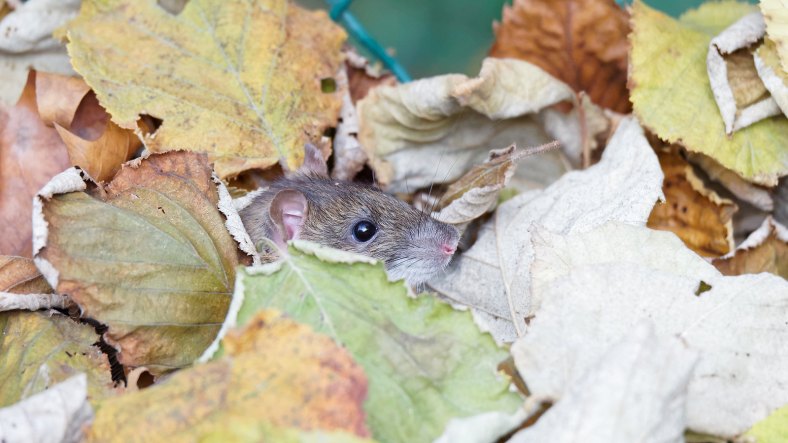
Separate Has A Rat In It

All right: so I have two classes of College Readiness, and they both had to write a UChicago essay — and they both picked a prompt for me to write. (If you don’t know what I’m talking about, read this. If you want to see all the prompts, go here.)

The other class chose this one:

People often think of language as a connector, something that brings people together by helping them share experiences, feelings, ideas, etc. We, however, are interested in how language sets people apart. Start with the peculiarities of your own personal language—the voice you use when speaking most intimately to yourself, the vocabulary that spills out when you’re startled, or special phrases and gestures that no one else seems to use or even understand—and tell us how your language makes you unique. You may want to think about subtle riffs or idiosyncrasies based on cadence, rhythm, rhyme, or (mis)pronunciation.

Here is my response.

Language Separator

See the rat?

I am a dull man. 

I am utterly unspecial, solidly in the mainstream: I am a white American male, cis/het, raised vaguely Christian but now a non-practicing atheist. I am married. I am 49 years old. I own a car and a house, with a mortgage on the house. I have a Bachelor’s degree, more debt than savings, and I vote Democratic. All completely “normal,” in that people who look and live like I do have made sure that our culture believes that people who look and live like I do are the norm, the standard, the expectation – and therefore everyone else is a little weird, a little off, a little less than what they are “supposed” to be. Like most people who look and live like me, I am aware of my privilege, I oppose the unfair societal structures and institutions that promote it – but I don’t really do too much to change them, because after all, I do benefit from them. I feel guilty when I think about that, so I try not to think about it.

Sorry: that went too political. (I am keenly aware that some people find it awkward and uncomfortable – challenging – when I speak of political matters. I do not want to offend them, so I usually do not speak of political matters.) My real point is that there is very little about me that is, according to our society’s generally understood and accepted standards, abnormal.

Until I open my mouth.

My mouth itself is pretty normal (Though I have WAY more fillings than is normal, I think – over 40, with 5 crowns. I have abnormally bad teeth.), it’s what comes out that is abnormal. First of all, I have a weird accent: my parents (The most important influence on a person’s accent and dialect) are from the West Coast, Washington and California, so I speak somewhat in their accents; but I was raised first on Long Island, which has a distinct accent, and then in a suburb of Boston, which has a STRONG accent. I didn’t acquire or keep either of those accents in their entireties, but I did pick up a few pronunciations; and more, Boston’s speech patterns were strongly influential: I speak too fast, as Bostonians do, and I talk faster the more excited I get; and I cuss intemperately. So I sound like a mishmash of two coasts and four states.

It’s more than my accent and my speech patterns, though: it’s what I say.

Don’t get me wrong: I am a student and an artisan — a wright. A smith. — of language. I study literature and rhetoric, and have mastered them to a degree that allows me to teach, generally successfully. I possess linguistic capacity more than sufficient to enable the utilization of language both fanciful and ornate, drawing from the recondite and recherche realm of jargon as well as splashing through the filigree fountain of poetry.

I talk good, is what I’m saying.

 And, as you can see, because I can use language well: I can also abuse it.

My favorite form is mispronunciation. I enjoy completely destroying the actual sounds of words, especially foreign ones. Especially French. Because if any language has worse pronunciation than English, it’s French. That word I used between “recondite” and “realm?” I would enjoy saying that “ruh-churchy.” So I feel that we should pronounce La petite fromage, the little cheese, the way it is spelled: lah puh-teet froh-midge. I draw from classic influences to pronounce the K and the G in “knight,” and to describe for my students when they put the emPHAsis on the wrong syLLAble.

But mispronunciation alone is too simple; a little tame, really. Much more funner is improper forms of words, particularily when the wordination is constructicated of rootages and suffixery (Holy crap, autocorrect accepted that one!  Is that really a word?! Mmmmno, it’s redlined. I think I stunned the autocorrect.) that are close, almost recognizable — but also completely wrong. That’s the besterest. Though one step higher here is when I can corrupt a common usage of a modern slang term in order to make it seem more grammatical while also being deeply annoying: when I was on Twitter, for instance, I made a point of saying I twitted a twit, not tweeted a tweet – because after all, it wasn’t called “Tweeter,” was it? (Now it should be xitted a xit on Xitter, not xeeted a xeet on Xeeter. Though either one would presumably make Elon Musk apoplectic, and that’s a good use of language.)

I admit it’s a touch upsetting that I say these kinds of things and play these kinds of games with my students, because for some reason, they trust me to steer them right with their usage of English, the poor innocent fools; I’m sure I’ve given more than one a bad idea about words from some joke or other — though I will further admit that that’s funny. I do teach them the real insane trivia hidden deep in the pockets of the English language: the word floccinaucinihilipilification (WHICH I TYPED RIGHT THE FIRST TIME) and the sentence “Buffalo buffalo Buffalo buffalo buffalo buffalo Buffalo buffalo.” Both of which are real. And “Y’all’d’nt’ve,” which is not real, but should be. These all show actual facets of this mad and madcap and maddening language that I love, so they are all lessons, on some level, at some point. And I’ll bet you dollars to donuts that most English teachers do not teach those lessons.

Then there are the foreign accents (Or as I am fond of saying, the furrin accents, which we don’t talk here in ‘Murrica.). A number of them show up when I read aloud, when there is some identifiable speech pattern in the dialogue, or a clear setting in an accentish area. I’ll read British stories in my best London fog, and I’ve read ev’ry danged word of Huck Finn by that Mark Twain feller in my best countrified speechery. I do sometimes use my past exposure to New York and Boston accents to play those characters when reading, especially if someone needs to be a tough guy; but I don’t put on my Pepe Le Pew when I read Guy de Maupassant’s “The Necklace.” And I never use Apu Nahasapeemapetilon’s accent, not even when I read The God of Small Things. On the other hand, I will neither confirm nor deny that Neil Gaiman’s story “Truth is a Cave in the Black Mountains” retains a place in my Fantasy Literature elective specifically because I get to use my Scottish brogue.

Of course, none of these accents have the same color, force or frequency as my pirate accent. Not only because I dress up like a pirate for every Halloween, and dress up my voice like one on every September 19th (International Talk Like a Pirate Day, if ye be of the uninitiated). Also because I love doing that accent, and so it shows up whenever anyone makes a pirate reference around me, which is fairly frequent given my reputation and the assorted pirate paraphernalia which I have acquired over the years. If anyone tells me a pirate joke, I am honor-bound to respond in the appropriate manner: “AYE LAD, THAT WERE A FINE SALLY — I’LL SHARE IT WITH ME OWN CREW, THE NEXT TIME I WANT THEM ALL TO FALL ILL OF VILE PUN-ISHMENT! HAR HAAARRRRRRR!!”

Even this list, though, is not exhaustive, because it doesn’t include the character voices I use. In class there are a few definite ones; I am very fond of the voice of Gollum from The Lord of the Rings, as performed by Andy Serkis; it’s a bit rough on the throat, but so very taassssstttyy, precioussssss… And just to one side of that, almost two sides of the same coin, is the voice of Edna Mode from The Incredibles, which I also love using, as long as it is attached to the right character (NO! CAPES!). Those two are my favorites, though also I am not above talking like a Goodfella (“Do I amuse you? What am I, some kinda clown to you?”) or the Lennie of the cartoons (“And I will hug him and pet him and love him and squeeze him and call him George!”) though never when I read Of Mice and Men because that book makes me cry and I can’t make fun of it that way. 

And it goes on from there. When I am reading test directions aloud and I get to a portion that is capitalized or in bold print, I will shout those words at the top of my lungs (“DO NOT WRITE IN THE MARGINS OF THE ANSWER SHEET”), without any warning at all; partly because I like to make my students jump (and laugh, because breaking the tension is part of my job), and partly because I want to make fun of the directions, which are universally terrible. I can actually sing reasonably well, but when I sing in class I usually make my voice sound as awful as I possibly can, intentionally breaking and scratchy and missing all of the notes. I sometimes read as fast as I can, which thanks to my Bostonian upbringing is pretty damn fast, so that all the words run together into a completely indistinguishable fog of sounds.

So the question is: why? Why do I do this? Why am I like this? Especially given my responsibility as a teacher, and my deep and abiding love for my language, and for speech both written and spoken?

Honestly? I don’t know.

It might be because I don’t want to conform. I have to follow the rules in too many ways already; even worse, I have to fight for the rules, have to make other people obey them, have to get them in trouble when they break them: and I hate that. I also can’t stand it when people turn up their noses – or even worse, break into that violent, assaultive cackle that people put on – when they catch someone saying something “wrong,” and they take advantage to say, “It’s ‘wrongly,’ you pathetic dolt!” I hate the arrogance of that, the contempt of it. I hate the hard-edged insistence on rules: when we all know that in English, the rules don’t apply. Tell me the “I before E rule.” Go on. I dare you. 

There are no rules in English, other than the only rule that matters in any language, in any form of communication: if communication was successful among all parties, then the language was effective. That’s it. That’s the whole point. We speak and we write in order to communicate something. Sometimes there is a secondary purpose (or even a primary one) such as intimidation or seduction or persuasion; but in those cases, the goal of the intimidator or seducer or persuader is still a goal that must be communicated, even if only by achieving it. But if my audience can understand what I want them to understand, then nothing else matters: that’s the truth. That’s what I want people to understand, to absorb and believe. That’s why I tell my students (sometimes to the chagrin of my fellow English teachers) that you may start a sentence with “and” or “but,” and you may use “I” in a formal writing context, and you may use contractions, as well. And you may cuss: because sometimes the only word that properly communicates one’s message is “FUCK!!”

Oops. Got too offensive there. Now this document’s going to get flagged. A much worse F-word.

I love playing with English. That’s why I love ee cummings (Even though much of his poetry is political, and even more of it is offensive: but all of it is fun.), who wrote like this:

love is more thicker than forget

more thinner than recall

more seldom than a wave is wet

more frequent than to fail

it is most mad and moonly

and less it shall unbe

than all the sea which only

is deeper than the sea

love is less always than to win

less never than alive

less bigger than the least begin

less littler than forgive

it is most sane and sunly

and more it cannot die

than all the sky which only

is higher than the sky

 and why I admire and enjoy the novel Riddley Walker by Russell Hoban (Even though it is very political, and therefore quite offensive… but it’s okay, because Russell Hoban also wrote this), which looks like this:

Looking at the moon all col and wite and oansome. Lorna said to me, ‘You know Riddley theres some thing in us it dont have no name.’ 

I said, ‘What thing is that?’ 

She said, ‘Its some kynd of thing it aint us but yet its in us. Its looking out thru our eye hoals. May be you dont take no noatis of it only some times. Say you get woak up suddn in the middl of the nite. 1 minim youre a sleap and the nex youre on your feet with a spear in your han. Wel it wernt you put that spear in your han it wer that other thing whats looking out thru your eye hoals. It aint you nor it dont even know your name. Its in us lorn and loan and sheltering how it can.’ 

 and A Clockwork Orange by Anthony Burgess (Which is both extremely political and EXTREMELY offensive, so…maybe we shouldn’t talk about it.), which looks like this:

“What’s it going to be then, eh?” 

There was me, that is Alex, and my three droogs, that is Pete, Georgie, and Dim. Dim being really dim, and we sat in the Korova Milkbar making up our rassoodocks what to do with the evening, a flip dark chill winter bastard though dry. The Korova Milkbar was a milk-plus mesto, and you may, O my brothers, have forgotten what these mestos were like, things changing so skorry these days and everybody very quick to forget, newspapers not being read much neither. Well, what they sold there was milk plus something else. They had no licence for selling liquor, but there was no law yet against prodding some of the new veshches which they used to put into the old moloko, so you could peet it with vellocet or synthemesc or drencrom or one or two other veshches which would give you a nice quiet horrorshow fifteen minutes admiring Bog And All His Holy Angels and Saints in your left shoe with lights bursting all over your mozg. Or you could peet milk with knives in it, as we used to say, and this would sharpen you up and make you ready for a bit of dirty twenty-to-one, and that was what we were peeting this evening I’m starting off the story with.

and all the fantasy novels and science fiction movies and so on that make up entirely new languages, and then translate them into English: because language is fun. The more fun you have, the better it works. The more fun it is, the more you want to use it: and that makes more communication, which means more connection, which means more peace, love, and understanding.

And that would be the besteresterest.

The point of this essay was meant to be what in my language use sets me apart, divides me from other people; I do think it is the degree to which I mess with language, the number of games I play with it, the variety of ways I push the bounds of what is acceptable and what is normal. I do all those things more than most people; and that’s what sets me apart. What I don’t try to do, ever, is make my language harder to understand, to make communication fail: it is maybe my worst habit as a writer that I always try, over and over, to make my communication more clear, to explain further, to give another example, another synonym. As you can see. It makes me much too wordy in my writing. But it also makes me a good (if talkative and boring) teacher. It makes me a good friend, and a good husband, because I always try to explain what I am thinking and what I am feeling; I always try to communicate (And I realize that communication also requires listening, if you were thinking that I do all the talking. I don’t. It’s just that my turn takes three or four times as long.). My wife and I rarely fight because of that, and our fights usually end in compromise and agreement: because we communicate. (I don’t deserve all the credit for that. My wife is exceptionally good at understanding me, and herself, and she listens too. She is also very patient with me, which I appreciate forever.) I think it’s good that I am able to use humor to break up those long, repetitive speeches in which I try to explain everything I am thinking, over and over again.

I just wish other people enjoyed my portmanteaus as much as I do.

Oo! That’s one I forgot to mention! Portmanteaus: when you put two words together into a single word, like breakfast+lunch=brunch, or smoke+fog=smog. I love those things. I think of them constantly, and I bring them up all the time – here, wait, I have a list of my favorite ones.

What’s that? Oh – you have to leave? No time to discuss word nerdery with me? I understand. 

Maybe next time.

And then again: maybe not. 

Just know that I’ll always be here, ready to talk about words, ready to play word games – and ready to communicate. And whether that makes me different, or makes me just like everyone else, I don’t actually care. As long as we’re having fun. And not being … too offensive.

Oh and — fun being offensive? That’s offunsive. And that is a portmanteau.

This Week

I’m doing this a day early, because I already have the answer from this week’s experiment: exercising every day is not a good idea.

Of course there are degrees. I may have simply overdone it: I went through pretty serious workouts every day this week, and that may be the main reason why it seemed like too much. I’ve also had some stress and some trouble sleeping because of moving and such, and so I haven’t been as healthy in general as I should be; maybe that’s why.

But for me, this week, it was too much. So I’m resting today. I may work out tomorrow, but more likely my exercise this week will just be moving.

That’s part of the issue. My wife, who knows more about exercise than me (Like she knows more than me about pretty much everything) pointed out that working out when one is sore and tired is asking for an injury. And since we are moving this week, I couldn’t risk that — and wouldn’t want to risk it anyway. So let’s be clear: good exercise includes rest. It needs rest. Part of me thinks that if I work out more, faster and longer, that it will work even better, will make me lose more weight (Or more fat, really — one of the things I have to keep in mind is that, since I do weight training, I’m not going to lose a lot of pounds. Muscle weighs more than fat, so as I build up muscle, even if I lose a lot of fat, I won’t lose “weight.”), will make me stronger. But it isn’t true. I’m sure there are professional athlete types and body builder types who work out every day, but first, they are younger than me and so they recover faster and easier; and also, that’s what steroids are for. Most performance enhancers don’t actually make your muscles bigger or stronger: they shorten recovery time so you can work out again sooner.

So when people are turning to illegal and dangerous substances in order to achieve a faster pace of exercise, maybe I should calm the hell down, is my point.

I will say that I still had fun exercising this week. I like working out. I like riding my bike more than I like going to the gym, which tells me I may want to focus more on that; because I think the key to long term exercise — which is absolutely the best kind, you want to build habits that last a lifetime, so that even if you never hit some pinnacle of buffitude, you stay active and always have a way to work in some physical exertion, which will never be unimportant to overall health and well-being — is fun. Making it enjoyable is entirely necessary to exercise. I listen to music (Also necessary because my gym tends to play the most awful music imaginable — I can’t imagine who sets the music system to EDM, since the majority of the clientele are retirees, but whoever it is, I hate them.) and I give myself breaks and stay away from the specific exercises I really don’t like; things like that. I go at a time of day that is convenient for me, and because I am an introvert, I go by myself and don’t interact with anybody, or I go with my wife who is equally introverted and together we don’t interact with anybody but each other.

But still, I prefer riding my bike. I like the feeling of the wind, I like the forward progress of it, I like the changing views, I like seeing other people passing by. I’m lucky because Tucson has a wonderful bike path that goes around the whole city in a 100+ mile loop (I’m also lucky because it was recently named for a long-time county supervisor who had a lot to do with creating the path, and that man’s name is Chuck Huckleberry, which is one of my favorite names of all time — so now it is the Chuck Huckleberry Loop) and so there is an excellent place to ride, but I’ve pretty much always liked riding my bike and usually been able to find a place to do it. I am happy that I have put in the money for a good bike; it’s been worth it.

That’s it, really. Exercise is hard and you shouldn’t overdo it, but if you find a way to enjoy it, you should do so, for only so long and only so often as you feel comfortable doing it: because exercise is a good habit, and it is best in moderation.

Book Review: My Man Jeeves

(Note: this is not the cover of the edition I read; but this one is awesome.)

My Man Jeeves

by P.G. Wodehouse

This is the second Jeeves book I’ve read. I liked it, but not as much as the first. If you don’t know P.G. Wodehouse’s Jeeves books, then here’s the basic setup: Jeeves is a butler who works for a – toff? Is that the word? – an upper-class British gentleman by the name of Bertie Wooster. Bertie is a lovable dolt who has a tremendous amount of money and even more friends; because he has all this money, he has no need to do anything with himself other than buy new clothes and attend social events, which is pretty much all that happens in these stories. Unless one of Bertie’s friends gets in trouble: then Bertie springs into action. Because Bertie has a heart of gold, which is one of the charming things about these books; as much of a dolt as Bertie is, he really is a lovable one. More important for the stories and for Bertie’s friends, Bertie has a secret weapon: Jeeves. When I say “Bertie springs into action,” I mean he turns to his butler and asks him what he thinks they should do. Jeeves is a genius, and no matter how delicate or intractable the problem is that Bertie brings to him, Jeeves inevitably finds the solution. The stories work because Bertie is more appealing than all of his doofus friends, who are dolts without the golden tickers; because Jeeves is fantastic, both in his unflappable-British-butler demeanor and in his solutions, which all rely on common sense and logic more than a Sherlock-Holmes-ian insight. They also work because Wodehouse was a fantastic writer, a splendid craftsman who writes some of the best dialogue I know, and who can use slang better than anyone I can think of – which is hilarious, because it’s Jazz Age upper-class British slang, and it’s fabulous. They’re basically the lightest-hearted mystery stories I know, with the mysteries being things like, “Jeeves, my chum Reggie has to convince his rich uncle that he is married, but not to his actual wife,” rather than “Who killed that family of four” or “Who stole the Hope Diamond?” Basically, they are adorable. They are also an amusing commentary on the worthlessness – but also the essential harmlessness – of the bourgeoisie, and the wisdom of the working class, the value of street smarts, so to speak. Though it is very clear in the books that Jeeves is the only one of these two who reads.

As for this book I read, I’m not actually sure if this is an original publication; it’s an on-demand printing, with absolutely no extraneous information; no back cover, no book jacket, no author bio, no list of other works by Wodehouse or titles in the Jeeves series. It’s possible this is like a book club knock-off collection, in some way, or one of those Hey-the-author-died-but-here-are-half-a-dozen-obscure-stories kind of “new” title in a classic series.

Because that’s what this is: a half a dozen short stories by Wodehouse. Three of them aren’t even Bertie Wooster/Jeeves stories, which was a bit disappointing. They were still Wodehouse, so they were good, and the character – one Reggie Pepper – was almost exactly like Bertie in that he was an upper class idler with a trust fund and not a whole lot of brains. But without Jeeves there to bring about resolution, the story becomes a bunch of upper-class dolts fumbling around until something happens, which is not nearly as fun. The Jeeves stories in this book were great, but I do wonder if there is some other edition or title that has these same stories out there; in which case, don’t worry about getting this particular one. But do go out and read you some P.G. Wodehouse. I highly recommend it.


**Note: Having looked at some Amazon reviews of this book, turns out these are the very first Jeeves stories, when Wodehouse was still working out his characters and style and all; Reggie Pepper was an early version of Bertie Wooster, and not nearly as cool as the final product. These stories were re-written later, and re-published in a different book. The fact that this is the first Jeeves book is, I now remember, entirely why I got this one. So I’d recommend giving this edition a miss and looking for something else. I have a few other Jeeves books; I’ll read them and figure out if it’s important to go chronologically. I doubt it.

Spring Break Book Review #6

(Had a slowdown there when I had to get some work done for school, and had a family visit. But it’s still Spring Break! And I’m still reading!)

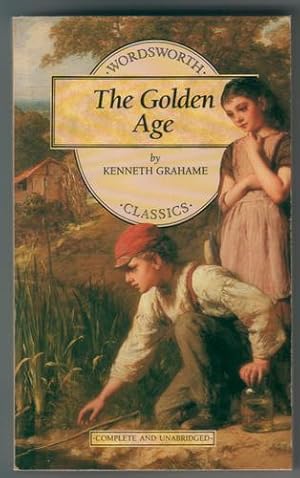
Image result for the golden age kenneth grahame

The Golden Age

by Kenneth Grahame

I think I have just read the most British book ever written.

It’s Victorian, of course. Written by the man who wrote The Wind in the Willows. It is about a family of children, three boys and two girls, who are orphaned; but that fact is, in proper British fashion, never really talked about: it is hinted at by saying that they know a long succession of aunts and uncles, none of whom they get along with too terribly well, and never talking about their mother and father. It describes their childhood in the most idyllic fashion imaginable: they scamper and run and play in the green meadows and fertile farms and darkened woods of the English countryside, never seen as anything other than glorious and, yes, golden; and the narrative is almost entirely tongue in cheek, but not in a terrible way: it’s more like a grownup playing along with children, taking their games seriously, believing what they believe, but always knowing and appreciating the innocence of those kids.

It’s nicely done, actually. Made me laugh several times. The kids have great imaginations, and they play games that sound like enormous fun, and made me want to go out and steal a rowboat and row it up a creek, pretending to be Jason and the Argonauts in search of the Golden Fleece. I like how they constantly try to dodge their lessons – provided, in very upper-class-British fashion, by a tutor and a governess; I like how they play King Arthur and fight over who gets to be Lancelot. There is a very sweet moment when they plan to throw a snarky celebration when their much-feared governess departs, but as the day grows closer, they realize they don’t really hate her, but will miss her when she is gone, and their snarky celebration turns into a genuine sadness over the leavetaking. There is a hilarious moment when they play a game at midnight, creeping through their house, and in the process scare off their new replacement tutor, who thinks they are ghosts and goblins. There are many realistic moments when they talk about their relationship with each other, which sibling is the tattle-tale, which one is the most manipulative, which one is the easiest to trick; and also when they talk about their relationships with adults, who often condescend or ignore, or – worst of all – think that everything they say is funny. So annoying, those would-be comedians.

It is a golden age: so golden it’s almost fantasy. Which is interesting, because this book is almost more fantastic, in the sense of being make-believe, than The Wind in the Willows, which has fantastic elements in a much more serious and realistic setting and plotline. This book is very much a depiction of childhood innocence, and it was a lot of fun to visit those halcyon days of yore.

Third Time’s the Charm

UnLunDun
by China Mieville

I’ve tried to read Mieville’s books before. Twice. Couldn’t do it either time. (Same thing with Mervyn Peake’s Gormenghast trilogy. Two strikes. There won’t be a third pitch with that bloated sack of wood pulp.) Admitting that makes me feel like less of a fantasy reader, as everyone seems to just love China Mieville’s work. He”s one of the stars of fantasy fiction of the last ten years. What kind of a twerp can’t appreciate his writing?

So that feeling of inferiority, that niggling voice that tells me that everyone else is right, and I’m just not reading this stuff the right way (Must be because I’m not smart enough?), made me go back a third time to try Mieville’s work. I tried to read Perdido Street Station and couldn’t; I tried to read King Rat and couldn’t — maybe this one will be better.

UnLunDun.

You know what? This one was better.

In fact, I loved this book. I loved the two heroines, the pair of school-age tween girls from the council flats (British version of the projects) who find their way to UnLunDun; I loved the Wonderland feel of the anti-city that these two girls go to; I loved the characters they meet there, particularly the bus conductor, the strong man in the diving suit, and the rooftop Parkour gypsies. I loved the humor of the book, the sheer joyful whimsy of it. I loved the bad guy, the patsies, the thugs and monsters on both sides. I loved the ladder-tower of books — and I know what my UnLunDun job would be. I loved the morals tucked away here and there between the puns, and how they didn’t rise up and slap you in the face, but just sat there, quietly, waiting for you to notice them: books are a path to wonder. Destiny doesn’t matter as much as choice. Courage and loyalty can win the day — sometimes. Corruption is everywhere — but it can be fought.

This is a book I would strongly recommend. I would recommend it to people who love fantasy, to people who love humor, to people who want to see the world in a new light. I would highly recommend it to young women looking for fantasy books with female heroes, as this may be one of the best examples I’ve read of that particular under-represented character in the fantasy/sci-fi world: girls who kick ass.

And I’d recommend it to people who want to read China Mieville but just can’t get into his books. This one worked for me.

Maybe I’ll give another of his books a try.