I Wish for Each

“Congress shall make no law respecting an establishment of religion, or prohibiting the free exercise thereof; or abridging the freedom of speech, or of the press; or the right of the people peaceably to assemble, and to petition the Government for a redress of grievances.”

So all right. We’ve been hearing a lot about this lately, right? Those are the words of the First Amendment to the Constitution. But what does it mean?

What is free speech?

Does it mean anybody can say anything they want? Anything? Or are there limitations? Should there be?

Does it only apply in American? Only to citizens? Does it apply differently to public figures, to famous people?

And why the hell are we still talking about this? Do we not know what it means? Shouldn’t we know what it means by now? I mean, really?

Okay: well first, let me just address that. I do not think there is anything wrong with having a conversation again. I don’t believe that something can be talked through once, and then that’s it, and we all know everything there is to know, and there’s no need to bring it up again. I understand that people get tired of having the same conversation over and over again, but you see, I’m a high school teacher: my whole job is essentially to have the same conversation over and over and over again. From one year to the next, from one class to the next, from one student to the next, I have to continuously repeat myself, and that often means I have to continuously find new ways to say the same things I have said before. The fact that I am willing to do that, even eager to do that, is what makes me a good teacher: because if I got impatient with students who didn’t hear or didn’t understand what I said to another student, then nobody would learn after the first student. I confess that I do get tired of saying the same things to the same people over and over again, but that’s not the same thing as having the same conversation: that is stating the rules, the limits and boundaries which are necessary for us to live and work together and abide one another, and then stating them again because some childish, selfish person decided they didn’t have to follow the rules. And then I repeat myself: and then I get angry about it.

But if you didn’t understand what I said before? I will say it again. If you don’t understand it after the second time, I will say it a third time, in different words or with different examples. And I will keep repeating it until it is clear and fully understood. And then, when you have a new thought or a new experience, and that changes how you view what we talked about before, I will happily talk about it again: perhaps after I have thought about it some more, to integrate whatever new concept or perspective you brought into it today, apart from what we discussed yesterday. No problem.

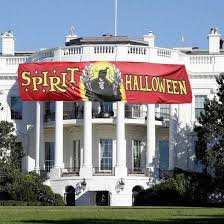
We seem to still be having trouble with freedom of speech. We are still talking about it, still debating it, still disagreeing over it; and now we are doing this in the wake of Charlie Kirk’s death. In that wake, and, I suspect, pretty directly related to that terrible crime, my wife was censored by Facebook, because someone reported a post she shared about Trump, calling it spreading misinformation. It was not, it was simply a joking criticism of the administration; specifically, it was this:
Exploring Shutdown Day 1: Discovering New Perspectives

My working assumption is that the person who reported her post was a Trump supporter, angered (as always) by libs and the left and so on, and recently energized by Kirk’s murder and the gaslighting from the right, convincing people to take action now to defend free speech (And please stop talking about the Epstein files and the still ongoing wars in Gaza and the Ukraine and the swiftly tanking U.S. economy), who probably reports every left-leaning or Trump-criticizing meme they see. Probably laughing while they do it. Facebook, as a private company that doesn’t want to suffer the wrath of the Trump administration, not only took down my wife’s post, but has also been monitoring and restricting her posts ever since: they are limiting her free speech. These new situations — unique neither to Charlie Kirk nor to my wife — has given people a new perspective on the issue, so: let’s talk about it again.

Here. This is where we start.

“Congress shall make no law respecting an establishment of religion, or prohibiting the free exercise thereof; or abridging the freedom of speech, or of the press; or the right of the people peaceably to assemble, and to petition the Government for a redress of grievances.”

Okay, so the First Amendment actually says a lot of things. It restricts Congress’s ability to control religion, and the press, and peaceable assembly, and the right to petition, all in addition to the freedom of speech. Let’s put those other aside for now: though it may be worth considering why all of those different, and all of those important, ideas were all packed together into a single amendment, and then the next one is only on one issue: guns. And the one after that is only about not letting soldiers sleep in your house against your will. Both important, maybe (though neither as important as freedom of speech) but both very narrow topics. Why are all these other things together in one place? Honestly, I haven’t read enough on the Founding Fathers and their choices regarding the Bill of Rights, so I could only speculate; but either way, we can ignore this topic for now, because we’re only here talking about the freedom of speech (and the others will become more clear as we focus just on speech, I think). Freedom of the press might come into it directly if we want to talk about Jimmy Kimmel, but it’s not clear to me that that discussion needs to involve anything other than free speech; that one right seems enough to cover what happened there. So let’s focus.

What is freedom of speech? Why do we have a right to it?

So hot take: freedom of speech is not actually critical. It is a roundabout way to protect the actually critical thing — or rather, two critical things: freedom of thought, and freedom to express those thoughts. Freedom of thought is absolutely critical to humanity, because in the most essential sense, we are our thoughts. I am what happens inside my skull. My body is also a critical part of me, but if I have a broken body, I am still me, because it doesn’t change what is inside my skull. It changes how well I can act out and reflect the decisions I make inside my skull — my freedom to express my thoughts — but it doesn’t change who I am. But if my brain dies, then who I am is gone, even if my body remains. My body can’t express my thoughts if I have no more thoughts: and without those thoughts, there is nothing for my body to express, no purpose for it to achieve; it can continue for a period of time, and then it will, mercifully, stop.

I wonder if my body would be sad if my brain died. Would my body grieve the loss of my mind?

Well: I would grieve the loss of my mind, so the question of my body’s reaction is academic. It is a part of me.

Now, in the ordinary way of things, there is nothing that could limit my freedom of thought. It’s one of the great things about being a sentient, thinking being; on that most essential level, we are always free. (Well, almost.) It’s because we are always essentially alone, and because there is no substance to thoughts: they can dance and flit anywhere we can imagine, always within the skull that holds the brain; and nothing will change other than the thoughts themselves — and potentially the mind having those thoughts. Nothing else is affected, and so nothing else can affect those thoughts: they can dance and flit to anywhere else, faster than anything that actually exists. Nobody else will even ever know where our thoughts are going, inside our minds. This was what Henry David Thoreau was talking about in On Civil Disobedience, when he described the inability of the state to actually punish him with a night in prison after he refused to pay his taxes:

I could not but smile to see how industriously they locked the door on my meditations, which followed them out again without let or hindrance, and they were really all that was dangerous. As they could not reach me, they had resolved to punish my body; just as boys, if they cannot come at some person against whom they have a spite, will abuse his dog. I saw that the State was half-witted, that it was timid as a lone woman with her silver spoons, and that it did not know its friends from its foes, and I lost all my remaining respect for it, and pitied it. Source

As he says, his thoughts cannot be trapped inside the cell, but can go anywhere that Thoreau wishes to send them: and the attempt to punish his body because they cannot punish his mind is just pitiable. What the State wants here is to control his thoughts, because they want to control Thoreau’s actions through his decision-making ability. Because their initial attempt to control his actions, through a threat to his body’s freedom if he made a certain decision the way the State didn’t want him to decide, didn’t work: knowing the threat, Thoreau still decided not to pay his taxes. His thoughts were uncontrolled, and his person/body/being followed along that thought decision, and didn’t pay his taxes. So then the State put him in jail: and he just kept right on deciding not to pay his taxes, regardless of what they did to his body. His thoughts were entirely unaffected, and uncontrolled, and they did the thing that the State didn’t want them to do — without any influence from the State at all. And so we all do, every thought we have that is in defiance of what our society demands of us. We are free to think whatever the fuck we want to, even the thoughts we’re not supposed to have, or not allowed to have.

Please take a moment and think a thought or two, which people outside of your head would not allow you to have, if they could tell you what to think. Any thought you like. Any thought at all.

Nice.

So because nobody can control a person’s thoughts, the laws focus on the second critical part of the process of having a free mind: the expression of our thoughts. Free speech, and in a broader context, free expression. Let me focus on that second aspect for a moment, because it shows more clearly what the point is here.

I can have my thoughts, and you can’t stop me. So far so good. But obviously, if I can’t act on those thoughts, then my thoughts cannot be complete. If, for instance, I think about spitting on the sidewalk, decide to spit on the sidewalk, but I cannot spit on the sidewalk — at the moment that is just because there is no sidewalk near me; I could spit on the floor of my office and call it a sidewalk, and to some extent I would have acted out my thought, and brought that thought to its completion, but then I would have to deal with my spittle, and also my wife would kick my ass — so I don’t spit: and thus the thought is not free, it is limited. I think, “I’m going to spit on the sidewalk!” and then I can’t do it: the thought is constrained. When the thought is constrained by reality — “I want to grow nine arms and use them to juggle chainsaws!” — then again, my thought is not free, but there’s no point in talking about our freedom to do things that we can’t do, or the need to pass laws to prevent things that are not possible. At that point, all we can do is shrug, and say, “It sucks to suck, Dusty. But you go ahead and dream of nine chainsaw-juggling arms, that’s fine, you can think about it all you want.” Freedom of thought is still protected, because I can carry the juggling arms thought as far as it can go; and as thought is still the most essential aspect of being human, that’s fine then. Thoreau can think that his taxes should not be collected by a government that supports both human chattel slavery and a war of conquest against Mexico (the reasons Thoreau didn’t pay his taxes), and if the action is not possible — if taxes didn’t exist and so he couldn’t choose to pay them or not to pay them — then he has all the freedom he could ever have.

But see, what happened is, Thoreau’s aunt paid his taxes for him, against his will. I don’t know why: I suspect she either thought he was suffering in jail and wanted to help him, or she was ashamed that her nephew was in jail, and wanted him to stop embarrassing her. (I would guess the second one, because she did not consult with him before she did it, and if she wanted to help, seems like she would at least visit and ask if he was okay.) Which then limited his free expression of his thoughts: he could think his money shouldn’t go to the government, and he could decide not to give his money to the government; but the government got his money anyway. Not because it was impossible for the government to have his money, but because someone else took his choice away. I guess it wasn’t really his money, it was his aunt’s money; but Thoreau’s idea was not to save his own pocket change, it was to refuse to participate in the government’s immoral acts, and when money went to the government in his name, it defied and negated his decision. Imagine if he talked to someone about not paying his taxes, if he argued with the government tax collector about the issue, and expressed his disagreement with the government, and said, “I will never contribute to this immorality, sir!” Can’t you just see the agent smirking and saying, “Sure, buddy. I mean, we already have your money, so you can say what you want.” Thoreau’s thought, while still free, has been constrained in its expression: and that pretty much ruins the thought; a thought which was not constrained by impossibility, it was possible, and he could have acted upon it — but then the option was taken away.

This is why, of course, jail is actually a very effective punishment for most people: because while we are all free to think our way out of jail, I would guess most people in jail want to walk out of jail: and they can’t. Which means their thoughts, while potentially free, are nonetheless really trapped along with their bodies. It is worth noting that, if you can find a way to free your thoughts, then prison wouldn’t matter so much; it would become a struggle to try to force you, through continued discomfort, to think about being in prison and how much you don’t want to be; then your thoughts are controlled, and trapped, and you are suffering for your punishment. But when Malcolm X was in prison, he found freedom in learning: and he talked in his autobiography about how prison really didn’t bother him at all, once he taught himself how to read and found things worth reading — and also once he found his faith in Islam, which also gave him something to think about that wasn’t constrained by being in a cell.

I have often reflected upon the new vistas that reading opened to me. I knew right there in
prison that reading had changed forever the course of my life. As I see it today, the ability to read
awoke inside me some long dormant craving to be mentally alive. I certainly wasn’t seeking any
degree, the way a college confers a status symbol upon its students. My homemade education gave
me, with every additional book that I read, a little bit more sensitivity to the deafness, dumbness,
and blindness that was afflicting the black race in America. Not long ago, an English writer
telephoned me from London, asking questions. One was, “What’s your alma mater?” I told him,
“Books.” You will never catch me with a free fifteen minutes in which I’m not studying something I
feel might be able to help the black man.

But I’m digressing. I told the Englishman that my alma mater was books, a good library. Every
time I catch a plane, I have with me a book that I want to read-and that’s a lot of books these days.
If! weren’t out here every day battling the white man, I could spend the rest of my life reading, just
satisfying my curiosity – because you can hardly mention anything I’m not curious about. I don’t
think anybody ever got more out of going to prison than I did. In fact, prison enabled me to study
far more intensively than I would have if my life had gone differently and I had attended some
college. I imagine that one of the biggest troubles with colleges is there are too many distractions,
too much panty-raiding, fraternities, and boola-boola and all of that. Where else but in a prison
could I have attacked my ignorance by being able to study intensely sometimes as much as fifteen
hours a day? Source

So again: the real goal of punishment, the only kind that is possible being constraint of the body, is to control the mind; and if the mind is able to continue thinking, then the constraint of the body is essentially meaningless. But in the vast majority of cases — and also, I will point out, in these two cases I have mentioned, because I don’t doubt that at some point Thoreau would have wanted to get out of jail and therefore would have felt trapped, and therefore actually would have been trapped, and Malcolm X would have been severely constrained if he had not been released to become the leader he became — trapping the body, because it limits the expression of thoughts, is an effective way to control a person’s thoughts. And even more importantly, for the purposes of society in general, constraining someone’s actions, the expression of their thoughts, is enough, because the purpose of prison is to stop a person from affecting others, and thoughts have no effect without expression. So just like I accept that I can’t ever have those juggling arms I dreamed of, society accepts that it can’t ever control our thoughts: and it just makes do with having potentially total control over our bodies.

And that’s where the amendment comes in.

I hope it is clear that thought without expression through the body, whether through action, through communication, or through a public display of some kind, is incomplete, and more importantly, useless. A useless thought is not a bad thought: all impossible thoughts are useless in and of themselves, which includes every dream, every fantasy, and every imagined existence; but they can still have enormous impact; and even if they don’t, they can encapsulate important things about the person who thought them, and that’s good, even if that encapsulated thought never reaches outside the mind that dreamed it. But when society wants to control us, controlling the impact we can have on other people is the primary goal and thus also the primary means of controlling people and the thoughts that define us. And that’s why the Founding Fathers included an Amendment that protects free expression in several different forms, most importantly speech and press and peaceable assembly.

Let me be clear now: the Founding Fathers were not always right. You don’t have to look any further than chattel slavery to know that they and their ideas, and the documents and the nation that they built, were fundamentally flawed, right from the beginning. There were some bad thoughts in there, and we’re still dealing with the legacy of those bad thoughts. But they were right in this: government wants to control people, and that means they need to control our thoughts — but they can only control our bodies, which is what they try to do. The First Amendment is there to set a baseline protecting our thoughts, through protecting the only things the government can attack and control, which is our actions.

So that is the essence of the Amendment, and the right: we have the right to express our thoughts, freely. The government cannot control our expression of those thoughts, so long as the thoughts do not have a direct impact on others in a way the government can control, and should control. In other words, if I decide to pick up a rifle and shoot someone I disagree with, that is no longer simply the expression of my thought, now it is an attack on another person, and it can be controlled, and should be because it is harmful. Though I will point out that, to some extent, the expression of that thought can’t always be controlled; sometimes it can only be reacted to after I have already done the thing I decided to do. But insofar as it can be predicted, and thus prevented, it should be.

Do I need to talk about why I shouldn’t have the unfettered ability to inflict harm on my fellow humans? Or can I assume we’re all on board with that? Just for the sake of saying it, the issue is that I have no right to control other people’s thoughts, nor their expression of their thoughts, except in the service of preventing harm. If I do harm to another person, I am affecting their ability to express and complete their thoughts, or possibly even their ability to think thoughts in the first place. If I am the one looking to do harm, not just prevent harm, then someone should have the ability and the right to stop me before I do harm.

Should that be the government? My first thought was to say that of course it should be; that this is the reason why we create governments and cede to them the power to control us: so they can prevent us from doing harm to one another. But government is frequently bad at this, and in that case, maybe other people and other authorities should have that power, that right, that responsibility, to prevent my harmful actions. But this is where we get into a conversation about how society should work, and that’s too complicated for right now. Suffice to say that the government, as imagined by the Founding Fathers — that is, existing with the consent of the governed — is a reasonable place to invest the power to control people’s obviously harmful actions. I would like to expand on the FF’s ideas about the governed who were consenting to the government, to include all of those who are governed, which would include people they didn’t consider worthy of consideration, or even consider to be people; it would also include all those who reside within the jurisdiction of the government in question, and who would be subject to the government’s control: those people should be considered “governed,” and therefore should be asked for consent to the government over them. Yes, that means undocumented migrants as well as those who don’t have full legal status. And also suspects, convicts, prisoners and parolees, all those governed by the justice system: they, too, must consent to the government over them, or else it becomes illegitimate and tyrannical.

And to be clear, when I say “consent,” I mean continuous, affirmative, and enthusiastic consent. The only kind of consent that matters.

Also at this point, I would like to express my burning volcanic rage that the First Amendment does not include the right to vote. What the actual FUCK, Madison? Why did you leave that one out?

It was the slaves, wasn’t it.

So all right: we should give the government the power to control our actions which can be harmful (and which can be controlled): but we retain the power to consent to be governed, and also the power to abolish the government if it becomes destructive of the ends we created it for, ideally through voting in free and fair elections. Since the government exists with our consent, what one thing do we most clearly need in order to legitimize that government?

A voice. The power to say “Yes,” and the power to say “No,” and to have those words heard. The power to consent, in the simplest terms. Continuous, affirmative, enthusiastic consent. If we don’t have that power, the government has taken too much control and has lost its legitimate authority, and should then be abolished: and that is the intent of the First Amendment, to protect and enshrine, first and foremost, our power to keep or abolish our government, which would otherwise have unchecked power over us.

You know: the power to vote. But in the absence of that, the power at least to speak, and to be heard. Not just to think freely, but to actually express those thoughts. The power to spit on the sidewalk. And on fascists.

So. Now. Did Charlie Kirk have freedom of speech? He did, and he should have: he spoke, and was heard. He lost that freedom when another person caused harm to him, murdered him, in an act that our government should have done all it could to prevent. Was Charlie Kirk a promoter, and therefore a martyr, for the cause of free speech? He was not: it was not his job to protect people’s right to free thought nor to free speech as an expression of their thoughts; inasmuch as he encouraged free thought and the free exchange of ideas through debate, then he was a proponent of free speech; but watching his debates makes it very quickly clear that he was not interested in the expression and free exchange of ideas, he was interested in scoring points and (as my students would say) farming aura: trying to get famous and powerful because he was seen as a staunch defender of his political and religious views. This is no criticism of the man: I would also like to get famous and powerful using my words, though I’d probably rather write than speak; but I want the same thing. But it does mean he was not a martyr for the cause of free speech, because free speech was not his cause: it was the means by which he tried to achieve his purpose, to fight for his cause. He shouldn’t have had to defend his free speech, he should have simply been able to exercise it. And just like Charlie Kirk, as a private citizen, it is not my job to protect free speech directly: that is what the government is for. To secure these rights, to Life, Liberty, and the Pursuit of Happiness.

Let me emphasize that again, because we talk about free speech as though it is just something that needs to be protected from the infringement of the government on our rights, that the point of the First Amendment is to constrain the government from taking away our free speech; the First Amendment is that thing, that is its point — but also, the real point of the amendment is to tell the government that it should be working to protect and secure that right for all people within its jurisdiction and influence. Actively. Affirmatively. Enthusiastically. Continuously.

Which means, in practical terms, that the government should not only have done more to protect Charlie Kirk from being murdered (if we believe the government could have done more to prevent that, which I think is self-evident, but that’s not the argument I’m making here), but also, it should be doing more to ensure that all people under the jurisdiction of the U.S. government, all persons resident in this country and under its control around the world, have the opportunity to be heard, to express their thoughts freely. By publishing their opposition to the war and genocide in Gaza, without losing their legal status. To have their case heard before an immigration judge, through the due process of law. Through posting whatever the fuck you want on social media, even if other people don’t like it, so long as it is not actively, directly causing harm. Through speech, through the press, through petition, through peaceable assembly.

Which means the government should have kept the Fairness Doctrine. And in this modern era, the government should ensure that social media does not censor people’s free speech, so long as that speech does no harm. In fact, I would argue that the government should have a platform for people to be heard, to be seen, to which all people who must consent to the government over them have access. I would include NPR, PBS, and VOA among those platforms, but I would argue the government should also provide some simple form of social media, to at least offer an alternative to the private companies, which are all controlled by billionaires with agendas. I don’t think the government should seek to control the social media companies per se, but they have a responsibility to ensure our rights: including the right to speak our thoughts, online as well as through print and speech. The government should also protect protestors and ensure that they have the right to assemble and petition for redress of grievances, so long as they are peaceable in that assembly.

Yes, that last clause, as well as the earlier condition that speech should be protected as long as it does no harm, does create an opportunity for the government to limit free speech, depending on what we mean by speech that does harm, or by peaceable assembly. I think the current laws distinguishing between protest and riot, and the laws preventing libel and slander, make sense and should remain (I don’t know enough about the specific laws and so can’t speak to their current efficacy, but conceptually, I’m in favor), and where these two rights cross over, with the law preventing speech that incites to violence, is also a useful law that protects people from harm. I also think there should be a gray area around and beyond those laws (Does “Fight like hell or you won’t have a country” count as incitement to violence? I honestly can’t say, not without further evidence of intent and context. If only there had been a trial…), and that the burden of proof within that gray area should definitely be on the government, as the ones who enact the control of people’s speech, to show that someone lost their right because they were causing harm with their speech. We have a system in place to carry out that process: but we need to have people in the government who are dedicated to maintaining and using that system.

We do not currently have that. We have an authoritarian who wants to eliminate free speech because he doesn’t want anyone to have rights except himself. We have a legislature that agrees with him, completely and slavishly — they are not expressing their thoughts, they are expressing only his. (The opposition, presumably, is not expressing the authoritarian’s thoughts. We just need to find where that opposition is hiding…) We have a Supreme Court that also thinks no one should have rights other than the President, and themselves, because they think their trump card over Trump (pun obviously intended, as all puns should be — also, we should have a right to pun…No, we do have a right to pun, and it should be protected by the government.) enables them to live as exceptions to the dictatorial power they want to give him, and they like the idea that a dictator could enhance the lives of the people whom they (the “justices”) deem worthy of enhancement, and destroy the lives of those whom they deem worthy of destruction, without they themselves dirtying their lil fingies. They’re wrong, of course, because if Trump ever did become a dictator, he would end up killing or jailing the justices because they have defied him in the past, and no dictator can abide that kind of challenge to their power; but then, all of these people are wrong. They all think that the dictator would only use power the way they want him to use power, and that’s not how dictatorship works.

Please take note, all you MAGA voters who want Trump to hurt the people you hate, but not you yourself. That’s not how dictatorship works. He doesn’t dance to your tune. If the Supreme Leader is the only one with rights, then we will no longer have rights ourselves: not the right to life, not the right to liberty, not the right to the pursuit of happiness. We will then not have the right to express our thoughts through speech or writing, through assembly and protest and petition; more importantly, we will no longer have the right to consent, and though that immediately means the government will no longer be legitimate, it also means that we won’t have the ability to remove it without violence.

That is where the Second Amendment comes in. It is not, as the fools who care only about that one and not the First would have us all believe, the right which ensures all the others; that is the First Amendment. It is free speech. It is the power to consent, and to withdraw consent. The practical power that enforces the moral and intellectual power is the right to communicate, to agree, to assemble and stand together: that is what changes governments. (Also, if we don’t lose it, the right to vote. Tell me why the right to free exercise of religion usurped the place that should have gone to the ballot, I beg you.) The right to defend ourselves physically is the last resort when the first one has been lost: and every one of those gun rights advocates, from the rational ones to the chuckleheads, have been ignoring the infringement of the First Amendment while trying to protect the Second. Protecting it, I might add, through their right to free speech.

So. Free speech is not only important, it is critical, it is definitive, both to us as humans, and to our country as a free country, with government of the people, by the people, for the people. It is the most important right we have, and it is the best way to delegitimize, remove, and replace the current government, which I think we can say safely does not have our consent any longer to govern us, taking “our” and “us” in the largest collective sense, meaning the majority of people governed by this administration. The government should not only not be infringing on it, the government should be actively protecting and promoting it: that is the government’s job, the reason it exists, and the best way to ensure that the other rights are also maintained. Because free speech leads to the free exchange of ideas and information, to the shining of a light into the darkness where tyranny grows. It’s what lets us all communicate and understand each other, and then agree: and take action.

Before it’s too late.
Day of Hope

Yesterday was my birthday. I had a great day: my wife and I went out for an incredible brunch at a restaurant in Tucson called Blue Willow – HIGHLY recommend the breakfast burrito, if you go – and then went home and had presents – I got two awesome t-shirts and a video game, Skyrim for my Nintendo Switch, which is a lovely thing mainly because Skyrim was one of those games I avoided when it was new, since I knew it was exactly the kind of video game I love most (sandbox swords and sorcery) and would therefore consume all of my waking hours once I opened Pandora’s Box and started playing it, and as I told all of my students at the time when they asked if I was going to play Skyrim, I have a job; which means that now I have been given permission to go ahead and let my free time be consumed, partly because I deserve and need nice things, and partly because the truth is that I will not actually allow ALL of my free time to be consumed, that I can be trusted to do what is necessary even if I would rather just dive back into the video game (Hold on, the t-shirts reminded me: I need to cull my collection. Be right back. [Got rid of seven shirts. Good progress.]) – and then we went to an arcade with friends, where I got to play pinball and a car racing game and a pirate shooting game and the BIGGEST SPACE INVADERS IN NORTH AMERICA, and then we came home and ordered Chinese food in and then had huge slices of an AMAZING cake. It was a great day.

Yesterday in Washington D.C., the Republican party passed Donald Trump’s “Death to the Poors” bill (I will neither call it the B.B.B. as that shitmouth named it – though honestly I appreciate the bald hypocrisy of that, coming from the party that has been loudly and repeatedly criticizing large omnibus bills for years if not decades, until said omnibus comes from President Turdtongue – nor talk about it as a tax cut bill as the news outlets insist on calling it, while they also name it as a Asslips’s “most significant accomplishment,” which is a wild phrase: just imagine talking that way about, say, Auschwitz, or the Night of the Long Knives, or the invasion of Poland, as Hitler’s “biggest achievements” to date. I will come back to hypocrisy.), which Pres. Butt-Teeth will be signing today, in a continuation of his efforts to taint and corrupt every single piece of American culture so that nobody can ever enjoy anything ever again in this country.

Not that this is my favorite holiday: I’m a vegetarian, and I live in Tucson, Arizona, so barbecues at the park are out on both meat-related and heat-related grounds; plus my dog is terrified of fireworks, and I personally dislike the strong possibility of wildfires being started by an idiot with a bottle rocket and a match. But there are, nonetheless, reasons why I want to celebrate this holiday, and hold onto it in the face of ol’ Colon-Throat’s attempted appropriation. And I want to write about it today because I realized that the reasons for me, for us, to hold tight to the Fourth of July are the very same ideas that I want and need to write about.

I wasn’t sure what I wanted to write about. Part of me doesn’t want to write at all: I just want to curl up on my couch, pet my dog, and play video games. (And not only because I just got Skyrim, though that is definitely part of the draw… I can hear it calling to me right now… No, wait, that’s my cockatiel Duncan screaming because he’s upset about something.) And while I want to rant about Donald Trump, and the Supreme Court, and the Congress, because all three branches of government have been captured by the proto-fascists who want to turn America into a white Christian ethnostate with a patriarchal dictatorship that is decidedly unChristian, I don’t know what the value would be in ranting: the people who would read it already agree with me, and it would just make them sadder than they already are because the horror is relentless and it’s hard to remain so ourselves; and the people who might read it who don’t agree would find it tiresome to just hear more ranting; and the people who are on the opposite side of these issues (who don’t read, but just hypothetically) would be giddy with Schadenfreudish glee, cackling about how angry I am and signing up for WordPress accounts just so they can comment “Cry more!” and throw down some of the memes I’ve been getting hit with because I have (foolishly) been commenting on news stories on Facebook. And I don’t want to create any of those responses.

I recognize that the most important thing we can do is spread good information, and so that makes me want to become a journalist, and share correct information, and – I mean, maybe I should do that. But I already have a job. And it’s a hard job, and I work hard at it. And I have a family which I love, but which, like all families, requires a lot of time and energy – and not that I begrudge that, I do not, I would spend all of my time and energy on my family if I didn’t have to work, and I look forward to the day when that happens; I’m just saying that I will not take time and energy away from my family in order to become a journalist. There are already better journalists, trained and professional journalists, out there doing that work, so I shouldn’t have to. Clearly my fight against misinformation is in my teaching, and I will continue to do my very best there, in every way I can.

But that leaves me with nothing to write about.

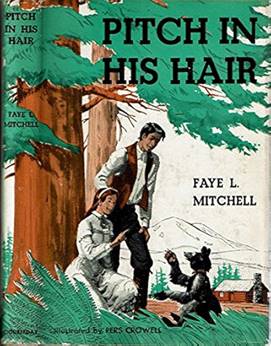
It is summer, and so that makes me want to write, because over the school year I am often too tired and burnt out and frustrated to write; but I have been facing this conundrum about what to write about, and I haven’t been writing much. (Also my summer has not been all that restful, but it’s mostly been family stuff, so I don’t resent it.) As I haven’t been writing, however, I have been trying to get back into my other great passion that I haven’t been able to spend enough time on: I’ve been reading. And one of the things I’ve been reading has been these:

These are my great-grandmother’s novels, published in the late 50s, when she had retired from teaching. (Have I mentioned that I come from a line of teachers and writers on  my mother’s side? This is part of that line.) I’ve never read them before, partly because I never knew my great-grandmother; for most of my life I didn’t even know that she had written books or published them or that we had copies. So I’m reading them now, and they have shown me a couple of things. First, because these are young adult books, and historical/regional fiction (They are all set in western Washington, where the Mitchells lived and where both my grandmother and then my mother were born and raised, during the frontier times between about 1970 and 1890, when the Mitchells did not live there – Faye and her husband Burt emigrated from Kansas), they are not great literature in a canonical sense: but they are good stories. And this helps to settle in me something I have always struggled with, because I am not a writer of great literature, and though I don’t want to be, I always think I should be; but I think that in truth I am, like my great-grandmother, a storyteller, not a literary giant. And I would rather be that. Second, these books, because they are set where they are and because the main character, Abby Conner, is a young woman who wants to become a teacher and a writer and who talks about what it means to be a teacher and a writer, are helping me to be prouder of the teacher and the writer that I am, because I think that my great-grandmother would probably be proud of me, and I like that – and my Nonna, whom I loved and respected but who passed before I had even decided to become a teacher, would definitely be proud of me, and I love that. And third, because my great-grandmother clearly wrote about what he knew, I have been thinking about how I need to do that. Not with my novels, which are almost certainly going to stay fantastic and more about vampires and time-traveling pirates and magical dreams that change reality; but with these blogs, and with the things that I write every day: I need to write about what I know.

So this is what I’m going to do: I’m going to write about what I know.

So. What the hell do I know?

I used to be optimistic.

My wife talks about it, about how I used to be much more cheerful, and much more calm, and much more positive. She doesn’t make it sound as bad as I just did: she doesn’t say all those things at once, and she doesn’t say it with any kind of accusation or disappointment or anything – never “You used to be a lot more fun!” or anything like that. She has taken note of it out of concern for me: because my general demeanor has become darker and angrier over the last decade or so. And it’s coming out in ways and in places that I don’t like: I have had a hard time keeping myself from losing my temper with my students, and I have failed at that, and lost my temper, several times in the last few years, sometimes to my real regret. I am also having a hard time keeping my spirits up in order to push back against my wife’s occasional depressing outlook, which is sometimes something she needs me to do (Don’t we all?), and which I have not been doing as well as I used to.

I suspect this happens to a lot of people, if not to all of us. We lose our idealism, and our hopefulness – those of us who ever had it, that is, which is not everyone. But I think as time goes on, and life gets harder, and as people just keep on disappointing us, over and over again – say, by re-electing an orange-tinted fascist would-be dictator even after he tried to overthrow our government the first time: it’s hard to look down the road and think that it actually goes to a better place. And while Trump certainly wasn’t inevitable, the difficult and sad things that happen as we get older are inevitable: we lose people we love, and eventually we lose ourselves, and there is often a great deal of suffering on the way to that. As that happens to us more, and as we are shielded from it less, our lives become sadder in many ways, and it makes sense that we would do the same.

I do also think the last few years have been rough on people in this country. Trump’s two electoral wins and two administrations, the pandemic, the various economic and global crises: it’s been tough to keep looking on the bright side of this pile of shit. I certainly haven’t been immune to that. In fact, it has been directly detrimental to my optimism: because I keep thinking, and saying, and arguing, and preaching, that things are going to work out the right way: and I keep being wrong. I said that Trump was going to lose in 2016, both in the primary and then in the election, and I thought that he would go to trial for his crimes and that he would get convicted, and I thought he would lose in 2024. Wrong, every time. (Okay, he was convicted, but only of the least important one, and it didn’t affect his political ambitions in any way at all, which I also thought it would. Still: he is a fucking convicted felon, and anyone who claims it was only a politically motivated prosecution, you’re goddamn right, and it was a successful one, and it should have kept people from voting for him, and it was therefore the right thing to do – but I think we can see that, even though it was a politically motivated prosecution, that didn’t affect the general populace very much: the election is evidence that the jury was honest and sincere.) That record makes me not want to keep my hopes up: not mainly because I hate being wrong and looking dumb (though I do, both), but mainly because I don’t want to give people false hope and then have them fall farther and harder when my false hope is proven wrong. Again.

But okay: now let’s talk about the Fourth of July. (See, this is why I’m so goddamn wordy and circuitous in my writing, even though the only way to write great literature is to keep it short and simple, as much as possible, to edit even more than you write: because I’m not a great literary mastermind, I’m a storyteller, and this is how stories get told. Thanks, Great-grandmother. Actually, since I called her daughter Nonna, I’m just gonna call Mrs. Mitchell Grandnonna. I hope she would like that. And let me note that, as wordy and circuitous as I am, I get back to where I want to go. Eventually.)

The Fourth of July is a convergence of three of my heroes. Three of the greatest writers in American history, because all three were three of the greatest thinkers and idealists in American history. Not all the best people, but I generally think the art, and the truth, can transcend the people who discover it or create it. If you look at science, for instance, there is not and never has been a scientist who was worthy of the power of what they discovered: not Newton, not Darwin, not Einstein… maybe Carl Sagan. I don’t know if Galileo was a good man, honestly, but how could he possibly be good enough to live up to what he did for our understanding of the universe, for what he made possible? He couldn’t. The same with great artists: the people who affect the lives of millions and even billions of other humans in positive ways couldn’t possibly be good enough in and of themselves to really be seen as deserving of the praise that their impact deserves. Martin Luther King, Jr., could not possibly be good enough as a person to actually deserve the honor that he rightfully gets as the civil rights leader and genius communicator that he was, even if he hadn’t been an egotist who cheated on his wife. But his impact, his positive impact on the world, is beyond measuring: is beyond what one person could contain. So I am willing to praise the work, and the words, and the ideas, even if the person who created those things was worse than their impact.

This does not excuse J.K. Rowling, by the way, though I do also think the criticism of Harry Potter is lazy and vicious and incorrect; but Rowling is, it turns out, a terrible person who should absolutely be canceled entirely. While we all keep reading Harry Potter. Don’t worry, it will get easier when she is dead.

So: the three people who are connected by the Fourth of July and whom I find inspiring are Thomas Jefferson, Frederick Douglass, and Abraham Lincoln. (See what I mean about not the best people? Douglass was a saint, but I only say that because I don’t know enough about him to know the bad stuff; Lincoln was a racist egotist, and Jefferson owned his own children. But the point here is that we need to look at the work, and the ideas, and the words.) Thomas Jefferson, of course, wrote this:

When in the Course of human events, it becomes necessary for one people to dissolve the political bands which have connected them with another, and to assume among the powers of the earth, the separate and equal station to which the Laws of Nature and of Nature’s God entitle them, a decent respect to the opinions of mankind requires that they should declare the causes which impel them to the separation.

We hold these truths to be self-evident, that all men are created equal, that they are endowed by their Creator with certain unalienable Rights, that among these are Life, Liberty and the pursuit of Happiness.–That to secure these rights, Governments are instituted among Men, deriving their just powers from the consent of the governed, –That whenever any Form of Government becomes destructive of these ends, it is the Right of the People to alter or to abolish it, and to institute new Government, laying its foundation on such principles and organizing its powers in such form, as to them shall seem most likely to effect their Safety and Happiness. Prudence, indeed, will dictate that Governments long established should not be changed for light and transient causes; and accordingly all experience hath shewn, that mankind are more disposed to suffer, while evils are sufferable, than to right themselves by abolishing the forms to which they are accustomed. But when a long train of abuses and usurpations, pursuing invariably the same Object evinces a design to reduce them under absolute Despotism, it is their right, it is their duty, to throw off such Government, and to provide new Guards for their future security.–Such has been the patient sufferance of these Colonies; and such is now the necessity which constrains them to alter their former Systems of Government. The history of the present King of Great Britain is a history of repeated injuries and usurpations, all having in direct object the establishment of an absolute Tyranny over these States. To prove this, let Facts be submitted to a candid world.

Those two paragraphs might be the best argument ever written: because the words are perfect, the logic is perfect, and the idea was so much better than the people who formulated it that it has led to better outcomes and a better world for hundreds of millions of people, for two and a half centuries. We hold these truths to be self-evident.

All men are created equal.

(Which also means that we all suck. Just sayin’.)

And I think we know why this idea, these words, and this man are connected to this day, for me. For all of us.

Lincoln, on the Fourth of July in 1863, said this:

Four score and seven years ago our fathers brought forth on this continent, a new nation, conceived in Liberty, and dedicated to the proposition that all men are created equal.

Now we are engaged in a great civil war, testing whether that nation, or any nation so conceived and so dedicated, can long endure. We are met on a great battle-field of that war. We have come to dedicate a portion of that field, as a final resting place for those who here gave their lives that that nation might live. It is altogether fitting and proper that we should do this.

But, in a larger sense, we can not dedicate — we can not consecrate — we can not hallow — this ground. The brave men, living and dead, who struggled here, have consecrated it, far above our poor power to add or detract. The world will little note, nor long remember what we say here, but it can never forget what they did here. It is for us the living, rather, to be dedicated here to the unfinished work which they who fought here have thus far so nobly advanced. It is rather for us to be here dedicated to the great task remaining before us — that from these honored dead we take increased devotion to that cause for which they gave the last full measure of devotion — that we here highly resolve that these dead shall not have died in vain — that this nation, under God, shall have a new birth of freedom — and that government of the people, by the people, for the people, shall not perish from the earth.

This is sometimes described as the perfect speech – partly because it is so short, and therefore nothing that I ever could have produced – and there’s an argument to be made for that. I find it inspiring because I think it translates some of Jefferson’s ideals, which were intentionally more universal, into something more personal, more grounded: this is how the idea that all men are created equal comes to be an American ideal instead of a human one – though it is still, and always should be, a human ideal. Still, Lincoln and this address are why we as Americans should consider this to be something personal, something we own, not simply a truth that exists in the world. Jefferson and the Founding Fathers are part of that as well, because the Declaration of Independence was not just a statement of ideals, but also a political and pragmatic document (which is why I include the first paragraph in the quotation from it, and in what I describe as the perfect argument: that sets the purpose for the second paragraph, where all the intellectual brilliance is. But as a rhetoric teacher, purpose matters, so the first paragraph is part of that, and part of what Jefferson and the rest of them were committed to, like Lincoln.); but because the Founding Fathers were patriarchal slaveowners who didn’t want to pay taxes, their purpose doesn’t rise to the level of their ideals. Which makes them fascinating, really, because slaveowners who didn’t want to pay taxes somehow managed to formulate and then enact one of the greatest ideals in human history, that all men are created equal and that government should be based on that fact and all of the logical consequences of that fact, such as the necessity of consent; but Lincoln’s purpose in saying his words was, first, to honor the sacrifice of people who died for those ideals, which is one of the most important and perhaps most abused elements of recognizing the worth of all humans (and not something expressly focused on in the Declaration, not even in its lists of abuses and usurpations), and second, to maintain the existence of the nation based on that fact, and to help bring it closer to being a nation that lives up to its own purpose, a nation governed by a system based on the fact that all men are created equal. Those purposes are worthy of those words, of the ideas they express, as the words and the ideas are worthy of the purpose. Probably not so with Jefferson.

And then Douglass. I wish I could have heard Douglass speak, because unlike the other two, Douglass was a great speaker as well as a great writer; but at least we have the words he wrote down, and the story he told with them, the story of his own life. And if you don’t know why Frederick Douglass is connected to the Fourth of July, it’s because of this:

(1852) Frederick Douglass, “What, To The Slave, Is The Fourth Of July”

Frederick Douglass

Daguerreotype photo by Samuel J. Miller

That whole speech is worth reading. But let me focus on this:

Fellow-citizens, pardon me, allow me to ask, why am I called upon to speak here to-day? What have I, or those I represent, to do with your national independence? Are the great principles of political freedom and of natural justice, embodied in that Declaration of Independence, extended to us? and am I, therefore, called upon to bring our humble offering to the national altar, and to confess the benefits and express devout gratitude for the blessings resulting from your independence to us?

Would to God, both for your sakes and ours, that an affirmative answer could be truthfully returned to these questions! Then would my task be light, and my burden easy and delightful. For who is there so cold, that a nation’s sympathy could not warm him? Who so obdurate and dead to the claims of gratitude, that would not thankfully acknowledge such priceless benefits? Who so stolid and selfish, that would not give his voice to swell the hallelujahs of a nation’s jubilee, when the chains of servitude had been tom from his limbs? I am not that man. In a case like that, the dumb might eloquently speak, and the “lame man leap as an hart.”

But, such is not the state of the case. I say it with a sad sense of the disparity between us. I am not included within the pale of this glorious anniversary! Your high independence only reveals the immeasurable distance between us. The blessings in which you, this day, rejoice, are not enjoyed in common. The rich inheritance of justice, liberty, prosperity and independence, bequeathed by your fathers, is shared by you, not by me. The sunlight that brought life and healing to you, has brought stripes and death to me. This Fourth of July is yours, not mine. You may rejoice, I must mourn. To drag a man in fetters into the grand illuminated temple of liberty, and call upon him to join you in joyous anthems, were inhuman mockery and sacrilegious irony.

Here we see Douglass’s purpose, and the reason he also needs to be included in this list of great writers connected to the Fourth of July: because Douglass held this country to account for its hypocrisy. (Told you I’d come back to it.) Douglass showed, more clearly than anyone else, that the United States has never lived up to its ideals.

He said this:

I remember also that as a people Americans are remarkably familiar with all facts which make in their own favor. This is esteemed by some as a national trait—perhaps a national weakness. It is a fact, that whatever makes for the wealth or for the reputation of Americans, and can be had cheap will be found by Americans. I shall not be charged with slandering Americans if I say I think the American side of any question may be safely left in American hands.

I leave, therefore, the great deeds of your fathers to other gentlemen whose claim to have been regularly descended will be less likely to be disputed than mine!

My business, if I have any here to-day, is with the present. The accepted time with God and his cause is the ever-living now.

Trust no future, however pleasant, Let the dead past bury its dead; Act, act in the living present, Heart within, and God overhead.

We have to do with the past only as we can make it useful to the present and to the future. To all inspiring motives, to noble deeds which can be gained from the past, we are welcome. But now is the time, the important time. Your fathers have lived, died, and have done their work, and have done much of it well. You live and must die, and you must do your work. You have no right to enjoy a child’s share in the labor of your fathers, unless your children are to be blest by your labors. You have no right to wear out and waste the hard-earned fame of your fathers to cover your indolence. Sydney Smith tells us that men seldom eulogize the wisdom and virtues of their fathers, but to excuse some folly or wickedness of their own. This truth is not a doubtful one. There are illustrations of it near and remote, ancient and modern. It was fashionable, hundreds of years ago, for the children of Jacob to boast, we have “Abraham to our father,” when they had long lost Abraham’s faith and spirit. That people contented themselves under the shadow of Abraham’s great name, while they repudiated the deeds which made his name great. Need I remind you that a similar thing is being done all over this country to-day? Need I tell you that the Jews are not the only people who built the tombs of the prophets, and garnished the sepulchres of the righteous? Washington could not die till he had broken the chains of his slaves. Yet his monument is built up by the price of human blood, and the traders in the bodies and souls of men, shout —”We have Washington to our father.”—Alas! that it should be so; yet so it is.

The evil that men do, lives after them, The good is oft’ interred with their bones.

And this:

At a time like this, scorching irony, not convincing argument, is needed. O! had I the ability, and could I reach the nation’s ear, I would, to-day, pour out a fiery stream of biting ridicule, blasting reproach, withering sarcasm, and stern rebuke. For it is not light that is needed, but fire; it is not the gentle shower, but thunder. We need the storm, the whirlwind, and the earthquake. The feeling of the nation must be quickened; the conscience of the nation must be roused; the propriety of the nation must be startled; the hypocrisy of the nation must be exposed; and its crimes against God and man must be proclaimed and denounced.

What, to the American slave, is your Fourth of July? I answer: a day that reveals to him, more than all other days in the year, the gross injustice and cruelly to which he is the constant victim. To him, your celebration is a sham; your boasted liberty, an unholy license; your national greatness, swelling vanity; your sounds of rejoicing are empty and heartless; your denunciations of tyrants, brass fronted impudence; your shouts of liberty and equality, hollow mockery; your prayers and hymns, your sermons and thanksgivings, with all your religious parade, and solemnity, are, to him, mere bombast, fraud, deception, impiety, and hypocrisy—a thin veil to cover up crimes which would disgrace a nation of savages. There is not a nation on the earth guilty of practices, more shocking and bloody, than are the people of these United States, at this very hour.

Douglass said a lot that could apply to us today, which is why it is worth reading the whole speech. (And I’m thinking now I may teach it next year. We’ll see.)

But, since I have now gone on for far too long (Not gonna feel bad. Storyteller. Also, I was quoting.), let me get to my purpose: the reason why I wanted to talk about these three men and their writings on this day, the Fourth of July.

Because all three of these men represent hope.

If they did not believe that this nation could exist in its ideal state, or at least that it could come closer and that approaching that ideal would be better than moving away from it, they would never have said what they did. None of them lived in this nation in its ideal state, and probably none of them thought they ever would live in that nation: but they all believed it (or something close to it) could exist, and that that wonderful reality was worth fighting for. I know because all three fought to achieve it, for essentially all of their adult lives, with all of the considerable powers at their disposal. They fought, for years, for decades, in the face of insurmountable odds, of endless trudging through swamps of opposition, the stinking mud sticking to them and tainting everything they did and everything they saw, making absolutely no progress, for longer than some people have to live their whole lives.

But they kept fighting. Because they believed they could succeed. They did not give up. No matter what.

That’s what optimism is. It’s determination, and belief. It is hope. It doesn’t have to be based on reality and an understanding of the truth and the terrible odds stacked against us: but when it is based on that, it is that much stronger, that much more potent. That much more indomitable.

I don’t know if I’m indomitable. But I do know I’m stubborn as fuck. And maybe that’s the same thing.

I don’t know if I have that kind of optimism. But I hope I do: and so I’m going to keep fighting, and keep trying, and keep writing. Because I think that my purpose, and my ideals, are worth all of that effort, and all of that fight, and all of that struggle. And because I believe that the world I dream of is possible. Even if I never see it.

But I hope I do. And I hope you will, too.

Happy Independence Day.

Just Imagine

I want you to do something for me.

Imagine you were born with only one arm.

Doesn’t matter which one, left or right; for simplicity’s sake, imagine you have your dominant arm, whichever hand you write with. That one is still there, exactly as it is right now, and has always been there. But the other one — in my case, my left arm — was never there. You didn’t lose it in an accident, or to cancer or anything like that; you were just born without it. No stump, just a perfectly smooth shoulder.

Imagine that for a second.

Now, if you were born that way, with only one arm, it wouldn’t be that big a deal. Really: there are some things that would be difficult to do, because they require two hands working simultaneously; it would be a bit harder to drive, for instance (though you certainly could do it), and there are a lot of musical instruments you just couldn’t play, like guitar and piano (But if Rick Allen of Def Leppard is any example, you can play drums with one arm all the way to the Rock and Roll Hall of Fame); and sports would be challenging, especially baseball and basketball and hockey. You could play football, if that were your preference, though not all the positions; and soccer, of course, it wouldn’t even be a disadvantage, really. Other than that? You couldn’t play pattycake, and jumprope would be tough (unless you jumped double-dutch), but you could play tag, or hide-and-seek; and you could play with dolls and Legos. Some video games would be impossible or close to it: but you could play Wii, and handle most driving games; and of course with any strategy or puzzle based games, your one-armedness would mean nothing at all. Most parts of life, in fact, having one arm would mean nothing at all: you could still read and write and do math and science, you could use a computer or a smartphone, you could ride a bike, you could dance in the rain. You could date and fall in love (There might be some people who would reject you for only having one arm, but come on, how ridiculous and messed up is that?), you could marry and have children. You could be a lawyer, a doctor, a car salesperson, a carpenter, a sculptor, a farmer, an engineer, a rocket scientist, a dogwalker. You could live a full and healthy and rich life.

It would be difficult to find clothes that fit you well. People would probably stare. Little kids would make jokes, and tease you. For a lot of people, it would be the first thing they would ask you: it would be a thing that defined your identity, even though to you, it would mean next to nothing. You never had the arm. You don’t miss it. You may sometimes wish you had two arms so you could throw a flowerpot on a pottery wheel, or shoot a longbow; but it would be more comfortable for you to sleep on that side, because you’d never have to figure out where the hell to put your arm so your hand didn’t fall asleep. Mostly, it just wouldn’t matter.

Can you picture that? Try going through your day, in your mind, with only one arm. Some things might be a little tougher — mostly it would just take more time — but really, not that big a deal.

Okay: now imagine, having lived your life with only one arm, you came home today, took a lil nap because it’s Monday and we all deserve a lil nap on Monday; and when you woke up — you had two arms.

Picture that. Not how wonderful it would be to suddenly be able to juggle three chainsaws: but how incredibly brain-meltingly shocking and horrifying it would be to suddenly have a whole other limb where one hadn’t been before. Step out of this whole thought experiment for a second and imagine how it would feel to wake up from your lil nap to find you have three arms, one new one growing out of the middle of your chest. Would you think “Hell yeah, now I can juggle FOUR chainsaws!” or would you think “AAAAAAAAHHHH WHAT THE FUCK IS THAT THING GROWING OUT OF MY CHEST JESUS CHRIST GET IT OFF GET IT OFF!!!!”

I know what I would think. And so I know, for the person who had one arm their whole life, suddenly getting that second arm would be absolutely appalling. Your body would suddenly be different. Your balance would be off. All of your clothes, bought and maybe adjusted or even tailored to fit your one-armed self, would suddenly be different. Everyone who ever knew you would talk about nothing else, pretty much forever, especially if you didn’t have an easy explanation for what happened. If you have any fundamentalist Christian friends, they might decide it was a miracle, a gift of God, and they might try to make an example out of you; conversely, they might think it was the work of the Devil, and shun you, or try to exorcise the demon in your new arm.

Your whole idea of yourself would change. You wouldn’t recognize your body in the mirror. Imagine how weird it would be to keep seeing a hand, fingers moving and gesturing, in the wrong place, attached to the wrong side of your body. Everything you had ever thought, ever said, ever come to a difficult recognition of, about what it is like to be a one-armed person in a generally two-armed world — all of that would go out the window. You’d have to be — normal. But at the same time, not at all yourself. Everybody would think you were normal now, and they would probably congratulate you, and be super happy for you: but the whole time, you would, most likely, feel wrong. Just wrong. Not yourself. Not at home and not comfortable in your own body. You wouldn’t know how to sleep, because you’d have spent your whole life sleeping on the side where there was no arm, and being perfectly, totally comfortable that way: now there’s a fucking arm there, and the whole thing is different. Is wrong.

So here’s the question. If you felt that way, if you felt uncomfortable and strange and weird, all the time, would you grow to hate your new arm? You might. I might. I might not: I might adapt, might adjust; but I might not adapt, either. I might resent my new arm. I might miss being one-armed. And if there were people around me, if I had joined a group of one-armed people, say, and I had to see them sleeping comfortably with their single arms, I might really hate what had happened to me: and I might even grow to hate myself.

If that happened — and I know we’re getting pretty out there, but hold on, we’re close to the end — what if I came to a decision, and went to a doctor, and told that doctor to remove my left arm? To give me back my self-image the way I thought it should be, to make me into the person I knew I really was, no matter how I might look to others who thought I should be happy to have two arms like they do?

Would that be wrong of me to do? Would it be insane, to remove a healthy limb? Would it be butchery, for the doctor to agree?

What if I had really descended into depression and self-loathing? What if I were suicidal, because I had too many limbs, and I couldn’t stand it any more? Then would it be wrong of me to ask, and would it be wrong of the doctor to remove my unwanted body part?

I think it would not. I think it would be my choice, and I think there is nothing at all wrong with being one-armed. I think if someone chooses to be one-armed, then they have every right to make that decision, and to be that person if that’s what they want — particularly if being that person would help them to live a happy life, to have a good self-image and self-esteem, and to keep from harming themselves.

And that’s why I support trans rights.

Now: this may seem offensive. And if this were the actual analogy I were making, it would be; because there actually is a disadvantage in only having one arm, and there is literally no disadvantage, at all, in being transgender, other than how people treat transgender people. There is nothing “wrong” or “missing” in a transgender person, at all. But this is not the analogy I’m making: this is just the warm-up, just the practice round. (Okay, I’m kind of making this analogy: because there are a number of parallels. But it is an imperfect analogy. And it is not the main one I want to make.) Now it’s time to move to the actual topic of conversation here.

You see, there’s a trend I’ve seen in arguing with conservatives (And with assholes, let me point out, because I do my arguing these days on Twitter, which is now like the black hole of assholes [WON’T… MAKE… THAT… JOKE… WORSE… THAN… IT… ALREADY… IS!], pulling them all in until they have more mass than anything else in the solar system), and it has to do with the issue of transgender people getting gender-affirming health care, in two specific areas: one, young trans people getting puberty blockers and then hormone therapy during their adolescence, before they complete puberty; and two, trans people of any age getting surgery.

The trend is this: these folks, both the “compassionate” conservatives (And some of them probably are genuinely compassionate, but not a one of them tries to understand or empathize with what trans people experience, so their compassion is more performative than genuine) and the transphobic assholes, say that they don’t mind people being trans or living how they want: but they don’t agree with people changing their bodies to match their gender identity. They do what conservatives, and compassionate people, and assholes the world over have always done, which is claim to have the right to decide what other people should do, in this case because they are arguing only for young trans people: for children, they will tell you, children who are not mature enough to make decisions about themselves or their lives or their identities.

“What about a young person making decisions in collaboration with their parents, and with loving and competent medical care providers?” I ask these people, over and over again. I get either a simple refusal to accept anyone making a decision these people disagree with — or silence. It speaks volumes, either way. It shows that they are lying when they claim only to be watching out for children, only protecting those too young to protect themselves.

And at some point, I realized why.

They object to surgery, most specifically and frequently, because, they say, nobody should “cut off healthy body parts.” That’s crazy, they say. And for them, maybe it would be — though I would disagree with calling it “crazy,” because our bodies do not define us, we define our bodies: starting with tattoos and piercings and circumcision (Not that I’m getting into THAT conversation, because while I will fight all day with transphobes, intactivists scare the bejeebers out of me) and all kinds of voluntary surgery like cosmetic surgery and permanent birth control like vasectomies and tubal ligations; so honestly, if somebody decided their life would be better with only one foot, then I say mazel tov: go for it. Save all that money on shoes; now every sale is BOGO (though you’d need a friend who only had the other foot, in the same size. [Business idea: ShoeMates, for people who only need one shoe, to share with another person who only needs the other shoe. Call the Tinder people. Whole new meaning for swiping “left” or “right.”]). Make all kinds of jokes about “The shoe’s on the other foot now!” or waiting forever for the other shoe to drop. Joke — or lament — about how you will never again have to do the Hokey Pokey. But okay, let’s say that to someone who likes having two feet, removing a healthy foot would be crazy. Or to stop stigmatizing mental health, let’s just say it would be something they would never, ever do. To them, it would make no sense, and they’d never, ever do it. Just like most of us would never voluntarily choose to remove an arm, particularly not one that we’ve had our whole lives, particularly not a healthy one.

But what they are not considering is how one’s body feels if one is trans.

DISCLAIMER: I am not trans. I have never been trans, and I do not for one second think that I can speak for trans people or try to explain how they feel or how they experience the world or their bodies. I, unlike the conservatives and assholes I’ve been arguing with, would much rather leave ALL people, trans, cis, and everyone else, to make up their own damn minds about who they are and how they feel, and what their bodies should look like, with absolutely no unsolicited input from me at all, ever. But what I want to do, what I think I can do, is try to get some of the people who actually can be compassionate to understand what is wrong with this argument that I’ve been facing. This argument that it is wrong for someone to remove a “healthy” body part just because of how it makes them feel, particularly when they are young (though again, conservatives are not actually protecting young people, as can clearly be shown BECAUSE TRANS PEOPLE ARE AT PARTICULAR RISK OF SUICIDE AND SELF-HARM AND GENDER-AFFIRMING CARE IS PROVEN TO HELP WITH BOTH ISSUES AND IS THEREFORE THE BEST WAY TO PROTECT CHILDREN BUT I GUESS I FUCKING DIGRESS), and therefore, gender-affirming health care should be banned for those under 18 (or under 21, when the mask starts to slip and they reveal that it isn’t about children, it’s about control), particularly hormone therapy, puberty blockers, and surgery.

“Butchery.” They keep fucking calling it “butchery.” They insist on it. As if we weren’t talking about medical procedures carried out by fully trained and licensed physicians in a modern hospital with all the proper precautions and care and science around it.

It’s because they’re not trying to understand how the trans person feels, what made them decide to pursue hormone therapy or puberty blockers or surgery.

The people arguing against GAHC (Gender Affirming Health Care, and yes I hate the acronym, but it’s a pain to type out over and over and I don’t want to change the name from what it actually is because words matter and my opponents intentionally use the wrong terms) are thinking about what it would be like if they went to the doctor and removed their body parts. Their healthy body parts. Their wanted body parts.

That’s not it.

Here’s the real thought experiment. Ready?

So instead of picturing yourself with one arm, and then suddenly waking up with two, picture yourself as you are now: and then you take your lil Monday nap — and you wake up with the wrong genitalia.

If you are a woman, imagine waking up with no breasts. Not that they have been removed, which would be traumatic enough: they’re just not there. Flat chest, completely. And imagine in between your legs, you suddenly have a penis and testicles. If you are a man, imagine waking up without your penis and testicles. And you have breasts. And — forgive me for this, but it helps make the point — they’re big. That penis and testicles, those breasts, they’re HUGE. Just slapping around, there. Every time you move — and when you move, it’s awkward, because you never had them before so you do it wrong, and it hurts more than a little — they shift, they flop, they smack into something else, into your legs or arms, into your belly, into everything. They are there, and they are unavoidable.

And they are WRONG.

Joking aside: can you picture that? Can you imagine how awful it would be to wake up with the wrong body parts in the wrong places?

Now imagine you go running out and go to your loved ones, and say “WHAT THE HELL IS HAPPENING TO ME!?!?”

And imagine if they acted like it was normal. And like you were strange for thinking those body parts were wrong. Maybe they would even be offended.

If I woke up with different body parts, with large lumps where before there had been no large lumps, I would immediately think it was cancer. Or like some kind of horrible infestation or infection, like the aliens had laid eggs in me. It would terrify me. It would be awful.

But to everybody else who wasn’t me, those lumps would be — healthy. Normal. Not only normal, but positive, important, defining.

Think back to when you went through puberty. When your body started changing. Did you have someone — a loved one, or maybe, like me, one of those terrible cheesy sex ed movies from the 70s — tell you that you were perfectly normal? That your body was supposed to change, that it was supposed to look like that? That you were becoming a man, or a woman?

What if you were becoming the wrong one?

Can you imagine how that would feel?

If I had woken up as a young woman, with breasts, with feminine hips (And imagine if I burst into tears, and immediately thought that I was crying like a little girl), my mother would have been ecstatic. I said before, she always wanted a daughter: it would be affirming for her if I had been her little girl. She could have taught me everything she knows about being a woman, as she understands it — and my mom knows a lot. She cooks. She knits. She sews. She is a nurse. She worked for decades with post-partum mothers and children with complications, so she can handle ANYTHING to do with babies. And my mom is a very feminine woman, in the classic stereotypical sense: she sings, she dances, she wears bright colors and pretty dresses. She would have LOVED to take me under her wing and show me how to dress and how to act with my feminine body. How to sing with my high feminine voice. How to live with my menstruation, and what it all meant for my future as a mother.

But if I was me — and in my mind I have always been male — all of that would be horrifying. Particularly because I would know that refusing to be the girl my mom wanted me to be would break her heart. But I’ll tell you right now: even apart from the horror of finding my body was not the body I wanted or expected it to be, the very thought of pregnancy and childbirth is the most horrifying thing I can imagine. It has always given me the heebie-jeebies in a way and to an extent that I can’t explain. I’m terrified of all of it.

And if I were, in my mother’s eyes, a girl, and she started talking about how lucky I was that I would get to look pretty in dresses, and eventually get married to a man (Ew) and have babies?

Aw, HELL no.

This is not how it feels to be trans. Puberty does not happen overnight, and doesn’t change a familiar, known, comfortable body into an entirely different body. But puberty does feel sudden, because you don’t notice the changes until you do: and then suddenly it feels like everything has changed. And for someone who is trans, that change might feel — wrong. And every day it continues unchecked, it gets worse: it gets wronger. But if you go to someone for comfort, for understanding, they will most likely not sympathize with your feeling: they will most likely tell you that your feelings are wrong, that your understanding of yourself is wrong, that your body is right, and you should just try to accept it. They might even get offended: and insist that the body, and the identity that they associate with it, is a good thing, a thing you should be happy about and proud of.

Picture that: you, as a man, wake up with breasts, and your loved ones say “But you’re such a pretty girl!” You, as a woman, wake up with a penis and testicles, and your loved ones say, “Come on, stop crying, BE A MAN! Show some BALLS!” But you are not a man. You do not want balls.

That’s the point. Don’t imagine GAHC as removing your body parts, healthy, wanted body parts: imagine if you had body parts you DID NOT want. Body parts that DID NOT belong on your body. They might look healthy to everyone else, but to you, they are more like tumors. More like infections, or infestations. They are wrong. They do not belong there. And worst of all, those body parts redefine you, in everyone else’s eyes, as something you are not. As something you do not want to be.

Wouldn’t you want them removed?

Wouldn’t you want to have the right body, the body you know, the body that you belong in?

What wouldn’t you do to get that body back?

That’s how we should think of GAHC. It’s not changing someone from what they should be into what they should not be: it is AFFIRMING a person’s body, making it look like what that person knows it should look like, what it should feel like. Making it into the right body. And, not least important, changing the way everyone else responds to that person and their body, so that they can live the way they know they should live.

I know that I have done this badly. I apologize for that. I know I’ve said this in a terrible cringey way, and I’ve probably been insulting. I do not mean to be. I just want people who think that GAHC, particularly gender affirming surgery, is removing “healthy” body parts, to understand that it is not what conservatives and assholes say it is. It isn’t about taking your body, that you belong in, and making it different; it is about taking a body that is already wrong — and making it right.

That’s the point. I hope, if I have said everything here crudely and stupidly, that I have at least helped make it more clear that most cis people think of GAHC in entirely the wrong way: we think about it like ourselves. But we never think about it as it is for trans people.

We should stop that.

Hey, you know what we should do?

Listen to the people in question tell us, themselves, what they need, what they want, what is right for them. And then we should support them so they can have that, the same way of life that most of us enjoy without ever recognizing how easy it is for us to live as ourselves.

Imagine that.

The Rest of the Words

I keep not doing this: but I need to do this. Now, because there are always other things which I can write about, which I want to write about; this week I got into an incredibly stupid argument on Twitter, which is crying out for me to write a full-length takedown of my opponent; also, we had parent conferences, which opens up a couple of good discussions about students in general; also, I agreed to go to an AVID conference this summer, which means I can talk about AVID and conferences and so on; also, we had to pay money in taxes this year AND IT’S MY SCHOOL’S FAULT —

So there’s a lot I could write about.

But I need to write about this.

I already wrote about the beginning of Dr. Martin Luther King Jr.’s “Letter from Birmingham Jail,” but I didn’t write about the whole piece. Intentionally, because my essay was already too long, and the place where I stopped is important enough and valuable enough to receive the final emphasis of closing that piece with it; but now we need to talk about the rest of the piece, not least because it is still brilliant, nor only because it is still relevant to our society today, and the discourses we have around race and prejudice and equality and so on. Also because I said I would do this: and I need to keep my word.

So here we go again.

(One quick note: I have put some jokes in here, particularly in a couple of the links; I hope that doesn’t come across as too irreverent. Dr. King is and will always be one of my most idolized heroes. I just think that a little humor helps to get through an essay this long, with this much heavy subject matter. But I do apologize if any of the jokes hit a sour note.)

The First Essay

So the section I covered there goes to the end of the second page; I wonder how much of that length is intentional in that it seems like a piece that long and no longer could easily be reprinted in newspapers, but I don’t know. It also builds beautifully as an argument, leading to that conclusion. In any case, the next paragraph opens a new line of argument — though it is related, of course. This link shows another iteration of the letter, this one with a clear transition at this point, which I like.

YOU express a great deal of anxiety over our willingness to break laws. This is certainly a legitimate concern. Since we so diligently urge people to obey the Supreme Court’s decision of 1954 outlawing segregation in the public schools, it is rather strange and paradoxical to find us consciously breaking laws. One may well ask, “How can you advocate breaking some laws and obeying others?” The answer is found in the fact that there are two types of laws: there are just laws, and there are unjust laws. I would agree with St. Augustine that “An unjust law is no law at all.”

Notice that Dr. King continues the same tone and structure of argument, even after he has had this incredible cri de coeur about the African-American experience in the U.S.: he states their objection, and then turns it around on them. Willingness to break laws is a concern, you say? By gum, you’re right! You all should obey the Supreme Court’s decision to desegregate schools, shouldn’t you? But again, he offers this point about their hypocrisy in the politest possible way: by saying that it might be strange to see the civil rights activists doing the same apparently hypocritical thing, defending the law while breaking the law. But then he explains why the civil rights activists are not, in fact, doing anything hypocritical — and note that he uses “paradoxical” rather than the term “hypocritical:” because a paradox is only seemingly contradictory, generally from one perspective; there is another perspective by which it makes perfect sense (For instance, the paradox “To preserve peace, you must prepare for war.” It only seems like a contradiction; it actually makes perfect sense in a world where not everyone shares a desire for peace.): because there are two types of laws. King separates here the concept of “legal” from the concept of “just” — a distinction we point out again and again in our society.

Marian Wright Edelman Quote: “Never let us confuse what is legal with what  is right. Everything Hitler did in Nazi Germany was legal, but it was not  r...”
By the way: Mrs. Edelman was referring to Dr. King’s Letter when she said this. It’s on p. 8 of this speech, for one example.

And where does Dr. King get the justification for his distinction? Why from Saint Augustine: one of the most important and influential of all Christian thinkers. How you like them apples, Clergymen?

Continuing his explanation of the distinction between law and justice, Dr. King refers to the other most influential and important Christian thinker, St. Thomas Aquinas:

Now, what is the difference between the two? How does one determine when a law is just or unjust? A just law is a man-made code that squares with the moral law, or the law of God. An unjust law is a code that is out of harmony with the moral law. To put it in the terms of St. Thomas Aquinas, an unjust law is a human law that is not rooted in eternal and natural law. Any law that uplifts human personality is just. Any law that degrades human personality is unjust. All segregation statutes are unjust because segregation distorts the soul and damages the personality. It gives the segregator a false sense of superiority and the segregated a false sense of inferiority. To use the words of Martin Buber, the great Jewish philosopher, segregation substitutes an “I – it” relationship for the “I – thou” relationship and ends up relegating persons to the status of things. So segregation is not only politically, economically, and sociologically unsound, but it is morally wrong and sinful. Paul Tillich has said that sin is separation. Isn’t segregation an existential expression of man’s tragic separation, an expression of his awful estrangement, his terrible sinfulness? So I can urge men to obey the 1954 decision of the Supreme Court because it is morally right, and I can urge them to disobey segregation ordinances because they are morally wrong.

And yes: he also referred to Paul Tillich, one of the most influential Christian philosophers of the 20th century; and to Martin Buber, “the great Jewish philosopher.” (How you like them apples, Rabbi?) Let me emphasize here, if I didn’t do it enough before, that Dr. King wrote this letter in jail: without reference materials. He just knew all this stuff. (I mean, he did have a doctorate in systematic theology; and his dissertation was partly about Tillich’s work, so.) The only way to improve an ethos argument this strong, with references to authorities this relevant to both your point and your audience, is to show that you yourself are an authority to be reckoned with.

The argument itself is remarkable. He provides three different definitions of his distinction between just and unjust laws: first, a religious one — just laws square with the law of God (and note he includes non-religious people by also calling it “the moral law”, and then brings it back to religion and Aquinas by referring to the idea of laws “not rooted in eternal and natural law”); second, a psychological definition, saying that just laws uplift human personality and unjust laws degrade it; and third, Buber’s philosophical concept of the “I-it” relationship replacing the “I-thou” relationship, turning people into objects. Into things. And look at the use of parallelism here: three reasons why segregation is unsound, followed by another way that it is wrong (and adding the idea that segregation is sinful”; three different ways that segregation is an expression of man’s evil; and a juxtaposition of two antithetical examples that match King’s categories: one just law, and one unjust law.

Then, if that isn’t enough ways to help his audience understand this concept , King gives us this next paragraph:

Let us turn to a more concrete example of just and unjust laws. An unjust law is a code that a majority inflicts on a minority that is not binding on itself. This is difference made legal. On the other hand, a just law is a code that a majority compels a minority to follow, and that it is willing to follow itself. This is sameness made legal.

That’s right, a more concrete definition, with another simple summative way to understand it: difference made legal, and sameness made legal. He’s right: this is more concrete, and has none of the religious overtones of the last paragraph — but it makes just as much sense, and is just as sound. Have we got enough ways to understand this now? Of course we do.

And then he adds another one:

Let me give another explanation. An unjust law is a code inflicted upon a minority which that minority had no part in enacting or creating because it did not have the unhampered right to vote. Who can say that the legislature of Alabama which set up the segregation laws was democratically elected? Throughout the state of Alabama all types of conniving methods are used to prevent Negroes from becoming registered voters, and there are some counties without a single Negro registered to vote, despite the fact that the Negroes constitute a majority of the population. Can any law set up in such a state be considered democratically structured?

Here Dr. King brings in another issue: voting rights. How can a law be democratic when the people were not capable of opposing nor supporting its passage, because of the suppression of their rights and their franchise? The argument is so plain and irrefutable that he doesn’t even bother to answer his rhetorical question. Instead, perhaps feeling understandably bitter as he sits in a jail cell writing about justice and injustice, Dr. King moves to one other complexity in the distinction between legal and just: when the application of a law makes it unjust. And I say he might have been bitter because his example is once again his own, talking about the city of Birmingham’s use of a parade permit ordinance to remove the civil rights activists’ First Amendment rights.

These are just a few examples of unjust and just laws. There are some instances when a law is just on its face and unjust in its application. For instance, I was arrested Friday on a charge of parading without a permit. Now, there is nothing wrong with an ordinance which requires a permit for a parade, but when the ordinance is used to preserve segregation and to deny citizens the First Amendment privilege of peaceful assembly and peaceful protest, then it becomes unjust.

Then he goes on to compare Birmingham first to three villains from history, and himself and his allies to the heroes who were suppressed by the villains — and then Dr. King confirms Godwin’s Law (Within a different context), while breaking the corollary to Godwin’s Law. Because Dr. King brings up Adolf Hitler. And THEN he throws in Stalin and Communism: it’s like the perfect American argument, here. Note that the three villains and heroes he mentions before going to the Nazis are both religious and political: Nebuchadnezzar, the Babylonian king who tried to kill the three Jewish prophets Shadrach, Meshach, and Abednego (I’M SORRY DR. KING I HAVE TO) in the Old Testament; the Romans, who tried to suppress Christianity with various atrocities; and the elite of Athens, who executed Socrates for teaching the truth. Note also that all three villains lost these fights.

Which side is Dr. King’s? Which side would you rather be on?

Of course, there is nothing new about this kind of civil disobedience. It was seen sublimely in the refusal of Shadrach, Meshach, and Abednego to obey the laws of Nebuchadnezzar because a higher moral law was involved. It was practiced superbly by the early Christians, who were willing to face hungry lions and the excruciating pain of chopping blocks before submitting to certain unjust laws of the Roman Empire. To a degree, academic freedom is a reality today because Socrates practiced civil disobedience.


We can never forget that everything Hitler did in Germany was “legal” and everything the Hungarian freedom fighters did in Hungary was “illegal.” It was “illegal” to aid and comfort a Jew in Hitler’s Germany. But I am sure that if I had lived in Germany during that time, I would have aided and comforted my Jewish brothers even though it was illegal. If I lived in a Communist country today where certain principles dear to the Christian faith are suppressed, I believe I would openly advocate disobeying these anti-religious laws.

Once again, Dr. King has made an argument so strong, so irrefutable at this point, after he has given so many different ways to understand it, and so many different reasons to accept it, that I really can’t fathom why people still don’t agree with this argument. Except for those who haven’t read it, of course.

The next part of King’s letter brings up the element that my brother, when I mentioned that I had written an essay about Dr. King, used to identify the Letter from Birmingham Jail as distinct from Dr. King’s other masterworks: “Ohhh,” he said to me on the phone when I was trying to tell him which piece I had analyzed, “is that the one with the white moderates?”

Yes it is.

I MUST make two honest confessions to you, my Christian and Jewish brothers. First, I must confess that over the last few years I have been gravely disappointed with the white moderate. I have almost reached the regrettable conclusion that the Negro’s great stumbling block in the stride toward freedom is not the White Citizens Councillor or the Ku Klux Klanner but the white moderate who is more devoted to order than to justice; who prefers a negative peace which is the absence of tension to a positive peace which is the presence of justice; who constantly says, “I agree with you in the goal you seek, but I can’t agree with your methods of direct action”; who paternalistically feels that he can set the timetable for another man’s freedom; who lives by the myth of time; and who constantly advises the Negro to wait until a “more convenient season.” Shallow understanding from people of good will is more frustrating than absolute misunderstanding from people of ill will. Lukewarm acceptance is much more bewildering than outright rejection.

He confesses: and then he destroys us with his disappointment. This part of the essay I have trouble reading and teaching; not because it’s too complicated, or too upsetting in its language and images (as some of my students find the Perfect Sentence I wrote about in the first post) — but because it’s true, and it’s me. I am a White moderate. I mean, I’m pretty goddamn liberal — but also, I don’t act in order to achieve a more just society; I simply support the cause. It’s not entirely me, because I don’t object to the methods used by those who are more active in pursuing our common goal; but it’s me because I don’t participate in those methods.

King here juxtaposes this critique of people who support the cause but not enough, with those who oppose the cause though they claim to be understanding of it: the Clergymen. No White moderates, those Alabamians; they seem like pretty rock-ribbed conservatives, fitting perfectly into the mold of paternalistic White leaders whom King refers to above, as they compliment “their” [“our”] Negro community for keeping the peace, which is exactly what King is taking issue with. But he does it in such an incredible way:

In your statement you asserted that our actions, even though peaceful, must be condemned because they precipitate violence. But can this assertion be logically made? Isn’t this like condemning the robbed man because his possession of money precipitated the evil act of robbery? Isn’t this like condemning Socrates because his unswerving commitment to truth and his philosophical delvings precipitated the misguided popular mind to make him drink the hemlock? Isn’t this like condemning Jesus because His unique God-consciousness and never-ceasing devotion to His will precipitated the evil act of crucifixion? We must come to see, as federal courts have consistently affirmed, that it is immoral to urge an individual to withdraw his efforts to gain his basic constitutional rights because the quest precipitates violence. Society must protect the robbed and punish the robber.

That’s right: not only does King compare himself, for the third time, to Socrates — now he actually compares himself to Jesus. And, of course, he’s right: blaming the victims of oppression for inciting the violence of the oppressors is precisely like blaming Jesus for making the Romans crucify him. And who does that in the story of the Passion?

Why, this guy, of course.

(I know, this is probably the wrong thing to use for this reference. But I love rock opera. Please ignore the ridiculous whiteness of the Jews in the crowd, and especially of Jesus — but DON’T ignore the AMAZING homoeroticism of the flogging performed by what appears to be The Village People, while a sunburned Disco hedonist looks on and cackles.)

In the next paragraph, King jumps back to the White moderates, connecting the two not only with their half-hearted support or opposition to King’s cause, but with a parallel to the teachings and goals of the Church:

I had also hoped that the white moderate would reject the myth of time. I received a letter this morning from a white brother in Texas which said, “All Christians know that the colored people will receive equal rights eventually, but is it possible that you are in too great of a religious hurry? It has taken Christianity almost 2000 years to accomplish what it has. The teachings of Christ take time to come to earth.” All that is said here grows out of a tragic misconception of time. It is the strangely irrational notion that there is something in the very flow of time that will inevitably cure all ills. Actually, time is neutral. It can be used either destructively or constructively. I am coming to feel that the people of ill will have used time much more effectively than the people of good will. We will have to repent in this generation not merely for the vitriolic words and actions of the bad people but for the appalling silence of the good people. We must come to see that human progress never rolls in on wheels of inevitability. It comes through the tireless efforts and persistent work of men willing to be coworkers with God, and without this hard work time itself becomes an ally of the forces of social stagnation.

By putting these two groups, White moderates who say they support civil rights but oppose the methods used by the activists, and the Alabama clergymen who say they understand the desires of African-Americans for freedom but show they really would rather maintain the status quo of segregation and oppression, in such close parallel, switching back and forth with what almost seems a complete lack of connecting transitions between subjects, King achieves his goal: he shows that these groups are essentially the same. There is what they say, and then there is what they do: and their actions speak louder than their words. He is thus chastising both groups, by comparison to each other: the clergymen are no better than Northern White moderates, synonymous in the South with lying hypocrisy; and the White moderates are no better than White Southerners: synonymous with racist oppressors. Neither group is willing to be coworkers with God: they are the forces of social stagnation which the coworkers with God oppose.

(Okay, I don’t think that’s me any more. Though I still worry that I would disappoint Dr. King.)

Dr. King’s next argument has to do with “extremism.”

YOU spoke of our activity in Birmingham as extreme. At first I was rather disappointed that fellow clergymen would see my nonviolent efforts as those of an extremist. I started thinking about the fact that I stand in the middle of two opposing forces in the Negro community. One is a force of complacency made up of Negroes who, as a result of long years of oppression, have been so completely drained of self-respect and a sense of “somebodyness” that they have adjusted to segregation, and, on the other hand, of a few Negroes in the middle class who, because of a degree of academic and economic security and because at points they profit by segregation, have unconsciously become insensitive to the problems of the masses. The other force is one of bitterness and hatred and comes perilously close to advocating violence. It is expressed in the various black nationalist groups that are springing up over the nation, the largest and best known being Elijah Muhammad’s Muslim movement. This movement is nourished by the contemporary frustration over the continued existence of racial discrimination. It is made up of people who have lost faith in America, who have absolutely repudiated Christianity, and who have concluded that the white man is an incurable devil. I have tried to stand between these two forces, saying that we need not follow the do-nothingism of the complacent or the hatred and despair of the black nationalist. There is a more excellent way, of love and nonviolent protest. I’m grateful to God that, through the Negro church, the dimension of nonviolence entered our struggle. If this philosophy had not emerged, I am convinced that by now many streets of the South would be flowing with floods of blood. And I am further convinced that if our white brothers dismiss as “rabble-rousers” and “outside agitators” those of us who are working through the channels of nonviolent direct action and refuse to support our nonviolent efforts, millions of Negroes, out of frustration and despair, will seek solace and security in black nationalist ideologies, a development that will lead inevitably to a frightening racial nightmare.

Specifically, King is replying to this sentence in the Statement: “We do not believe that these days of new hope are days when extreme measures are justified in Birmingham.” (Blogger’s Note: Since I did that to them, I’m going to do this to Dr. King’s words: “We must come to see that human progress never rolls in on wheels of inevitability.“) This line clearly pissed King off: but more important, it’s an idea that he can’t allow to shape the narrative. So as he does with so many other parts of the Statement’s argument, he smashes this again, and again, and again. He shows the two extremes in the African-American community: one extreme is those African-Americans who have been worn down by the oppression that has defined their lives; and the other is — Malcolm X. King doesn’t name the other man, with whom he was so often presented in juxtaposition as two opposites, the moderate and the extremist; but he doesn’t have to. Elijah Muhammad (Himself no moderate) and his Nation of Islam are synonymous with Malcolm X, and though King and X were a hell of a lot closer in a lot of ways than most people thought or said, it is exactly these kinds of people, these southern Clergymen, who would have used King as an example of a better leader, a more reasonable leader, than X, because King used non-violence while Malcolm X talked about violence. I suspect this comparison and the implication that King was softer and more accommodating to the oppressors’ status quo, made the man angry: and so the description at the end of this paragraph — a fine example of Dr. King showing that he did not believe that non-violence was the only way to achieve freedom: just that it was the best way, as it would not lead to “floods of blood.” If the warning is not clear, he reiterates it in the next paragraph:

Oppressed people cannot remain oppressed forever. The urge for freedom will eventually come. This is what has happened to the American Negro. Something within has reminded him of his birthright of freedom; something without has reminded him that he can gain it. Consciously and unconsciously, he has been swept in by what the Germans call the Zeitgeist, and with his black brothers of Africa and his brown and yellow brothers of Asia, South America, and the Caribbean, he is moving with a sense of cosmic urgency toward the promised land of racial justice. Recognizing this vital urge that has engulfed the Negro community, one should readily understand public demonstrations. The Negro has many pent-up resentments and latent frustrations. He has to get them out. So let him march sometime; let him have his prayer pilgrimages to the city hall; understand why he must have sit-ins and freedom rides. If his repressed emotions do not come out in these nonviolent ways, they will come out in ominous expressions of violence. This is not a threat; it is a fact of history. So I have not said to my people, “Get rid of your discontent.” But I have tried to say that this normal and healthy discontent can be channeled through the creative outlet of nonviolent direct action. Now this approach is being dismissed as extremist. I must admit that I was initially disappointed in being so categorized.

But as I continued to think about the matter, I gradually gained a bit of satisfaction from being considered an extremist. Was not Jesus an extremist in love? — “Love your enemies, bless them that curse you, pray for them that despitefully use you.” Was not Amos an extremist for justice? — “Let justice roll down like waters and righteousness like a mighty stream.” Was not Paul an extremist for the gospel of Jesus Christ? — “I bear in my body the marks of the Lord Jesus.” Was not Martin Luther an extremist?– “Here I stand; I can do no other so help me God.” Was not John Bunyan an extremist? — “I will stay in jail to the end of my days before I make a mockery of my conscience.” Was not Abraham Lincoln an extremist? — “This nation cannot survive half slave and half free.” Was not Thomas Jefferson an extremist? — “We hold these truths to be self-evident, that all men are created equal.” So the question is not whether we will be extremist, but what kind of extremists we will be. Will we be extremists for hate, or will we be extremists for love? Will we be extremists for the preservation of injustice, or will we be extremists for the cause of justice?

(Note on the text: the iteration of the Letter I have been pulling from separates this into two paragraphs. This one doesn’t. I think it should be one paragraph.)

This is another of my favorite arguments, and not least because King again compares himself to Jesus Christ — and also to Abraham Lincoln and Thomas Jefferson, along with the Jewish and Christian luminaries Amos, St. Paul, Martin Luther, and John Bunyan. (Also I love that he drops his namesake in there without even batting an eye — and don’t forget that the vast majority of Southern White Christian racists were of Protestant denominations). I also love the rapid-fire call-and-response of rhetorical questions with direct quotations that serve both as answers and as proof, while making use of all of the poetry in these various wonderful statements, and also showing off, again, King’s own erudition and understanding of the power of the right word at the right time for the right reason. And then those final rhetorical questions, with the explicit use of “we” inviting the audience — the White moderate, the White Southern clergyman, and every single person who ever reads this letter, including me and including you — to come up with our own perfect words, our own response to this call. What will we do? What kind of extremist will we be?

After this King closes his criticism of White moderates with the most terrible form of the guilt-imposing “I’m not mad, I’m just disappointed” position that he is using here: the “Maybe I expected too much of you.”

I had hoped that the white moderate would see this. Maybe I was too optimistic. Maybe I expected too much. I guess I should have realized that few members of a race that has oppressed another race can understand or appreciate the deep groans and passionate yearnings of those that have been oppressed, and still fewer have the vision to see that injustice must be rooted out by strong, persistent, and determined action.

Look at that. Look at it! “I guess I should have realized?” GodDAMN, sir. I would like to personally apologize for everyone and everything, ever. He does lighten the load slightly by naming a number of White activists, primarily reporters who had given fair or even favorable coverage to the Civil Rights movement, and thanking them for their contribution. Which makes me feel a tiny bit better because I’m writing this. But I’m still sorry, sir. I have eaten the plums that were in the icebox, the ones you were saving.

This next part, though? I got nothing but smiles for this. Because then he goes after the church.

Honestly, I’m going to skip over this, because this is not my area. I have not attended church since around about 1986, and my personal animus for religion would color my analysis of this too much. I want to pick out every single detail where King tells his fellow clergymen that the White church has let him down, and highlight every one, like some kind of manic hybrid of a mother-in-law and Vanna White, finding every single possible fault and holding it up for the audience to observe, while I smile from ear to ear. But I won’t do that. I will just point out that he specifically mentions one of the Eight Clergymen, Reverend Earl Stallings, for his action in allowing Black worshippers into his church without segregating them; this seems to me like a direct response and even challenge to the passive aggressive way the Clergymen never name Dr. King, even though EVERYBODY FUCKING KNOWS THAT’S WHO THEY MEANT. “Outside agitators,” my ass. I still recommend reading the entire letter, including this section; but here I’m just going to post his conclusion, because it’s so damn beautiful.

I hope the church as a whole will meet the challenge of this decisive hour. But even if the church does not come to the aid of justice, I have no despair about the future. I have no fear about the outcome of our struggle in Birmingham, even if our motives are presently misunderstood. We will reach the goal of freedom in Birmingham and all over the nation, because the goal of America is freedom. Abused and scorned though we may be, our destiny is tied up with the destiny of America. Before the Pilgrims landed at Plymouth, we were here. Before the pen of Jefferson scratched across the pages of history the majestic word of the Declaration of Independence, we were here. For more than two centuries our foreparents labored here without wages; they made cotton king; and they built the homes of their masters in the midst of brutal injustice and shameful humiliation — and yet out of a bottomless vitality our people continue to thrive and develop. If the inexpressible cruelties of slavery could not stop us, the opposition we now face will surely fail. We will win our freedom because the sacred heritage of our nation and the eternal will of God are embodied in our echoing demands.

“We were here.” I love that. “Our destiny is tied up with the destiny of America.” Just incredible.

At this point, having made all of his arguments, he’s almost — no, wait, he’s not done. He has one more thing to say.

I must close now. But before closing I am impelled to mention one other point in your statement that troubled me profoundly. You warmly commended the Birmingham police force for keeping “order” and “preventing violence.” I don’t believe you would have so warmly commended the police force if you had seen its angry violent dogs literally biting six unarmed, nonviolent Negroes. I don’t believe you would so quickly commend the policemen if you would observe their ugly and inhuman treatment of Negroes here in the city jail; if you would watch them push and curse old Negro women and young Negro girls; if you would see them slap and kick old Negro men and young boys, if you would observe them, as they did on two occasions, refusing to give us food because we wanted to sing our grace together. I’m sorry that I can’t join you in your praise for the police department. It is true that they have been rather disciplined in their public handling of the demonstrators. In this sense they have been publicly “nonviolent.” But for what purpose? To preserve the evil system of segregation. Over the last few years I have consistently preached that nonviolence demands that the means we use must be as pure as the ends we seek. So I have tried to make it clear that it is wrong to use immoral means to attain moral ends. But now I must affirm that it is just as wrong, or even more, to use moral means to preserve immoral ends.


I wish you had commended the Negro demonstrators of Birmingham for their sublime courage, their willingness to suffer, and their amazing discipline in the midst of the most inhuman provocation. One day the South will recognize its real heroes. They will be the James Merediths, courageously and with a majestic sense of purpose facing jeering and hostile mobs and the agonizing loneliness that characterizes the life of the pioneer. They will be old, oppressed, battered Negro women, symbolized in a seventy-two-year-old woman of Montgomery, Alabama, who rose up with a sense of dignity and with her people decided not to ride the segregated buses, and responded to one who inquired about her tiredness with ungrammatical profundity, “My feets is tired, but my soul is rested.” They will be young high school and college students, young ministers of the gospel and a host of their elders courageously and nonviolently sitting in at lunch counters and willingly going to jail for conscience’s sake. One day the South will know that when these disinherited children of God sat down at lunch counters they were in reality standing up for the best in the American dream and the most sacred values in our Judeo-Christian heritage.

He leaves this until the end. He knows that this is the one part of this letter most likely to anger his readers, because he is here criticizing the police — and even now, 60 years later (And please note that this April will be the 60th anniversary of this whole ordeal), I think we all know what happens to people who criticize the police. But he can’t not say this. He doesn’t have proof, not that the Clergymen or the White readership at large will accept — it is only the word of the arrested activists; nobody was there with a cell phone to record this scene — and you can see his bitter acknowledgement of the superficial truth of what the Clergymen said, that the police have been “rather disciplined in their public handling of the demonstrators.” Though even there, look at the use of the phrase “rather disciplined,” instead of the words “calm” and “restraint” which the Clergymen used. Notice the emphasis on “public,” immediately contradicted by the word “handling,” with its implication of manhandling, echoed in the word “disciplined,” with its sense of harsh control and even physical punishment. But of course, because he is Dr. Martin Luther King, he immediately shows how this example is the precise opposite of the “nonviolent” label the police might claim: because they are pursuing immoral ends. And they are contrasted against the truly nonviolent protestors and pioneers, who use genuine nonviolence to promote moral ends of justice — “the best in the American dream and the most sacred values in our Judeo-Christian heritage.” And since this comes here, at the very end, it has extra weight — I do think the overall length of this letter does make this seem more like a postscript than a strong conclusion; I think the passage I quoted above, at the end of the section about the church, is the real conclusion — but this is one final blow that is impossible to ignore. But of course, the police do not get the last word: that goes to the real heroes of the South, James Meredith, and Rosa Parks, and all of the people who fought alongside Dr. King for freedom. I, for one, would like to thank them all for their courage and their honor and their sacrifice.

Speaking of postscripts — and of too-lengthy writings, which need to finally be brought to a close — let me just end with the saltiest “Yours truly” in the history of letters:

If I have said anything in this letter that is an understatement of the truth and is indicative of an unreasonable impatience, I beg you to forgive me. If I have said anything in this letter that is an overstatement of the truth and is indicative of my having a patience that makes me patient with anything less than brotherhood, I beg God to forgive me.

Because in the end, even though the accusation that the civil rights movement and Dr. King were “impatient,” were “unwise and untimely,” was entirely false and absurd — it would be much, much worse if Dr. King were too patient.

And now, Dr. King’s actual “Yours truly,” which I would humbly like to echo myself, to everyone who reads this.

Yours for the cause of Peace and Brotherhood

Wallingford prepares for MLK Day ceremony

But wut ’bout mah RAHTS??

Got this image from this blog, which says the same things I’m saying, but nicer, and almost a year ago.

All right. I have something to say.

I have several things to say, actually. And I suspect that once I start saying them, even more will bubble up to the surface, like noxious gases from the bottom of the primordial swamp (Or hey, maybe like the scintillant bubbles in effervescing champagne; I probably should shift out of the habit of being maximally dark and depressing. See, there’s another thing I should write about, breaking free of the morass and floating to the surface and freedom, blpblpblpblppPOP!), and soon enough I will have once again exhausted either my readership or my store of ideas. But right now, those things are stacking up, taller and taller, and the ones at the bottom are being squished. Time to Jenga them out of the pile and set them up in their own little spaces.

It’s time to blog.

The first thing I have to say is actually something I’ve said several times already, in various arguments around social media; another reason for me to get back into writing these things. (Yet another reason is that I just said “thing” three times in one sentence: I’ve let my edge get dull, methinks.) You see, I’ve been arguing a lot. It hasn’t gone well. I’ve already destroyed one acquaintanceship (Terrible word. There needs to be another word for the relationship you have with people online who are on your Friends list on Facebook. This guy was not my friend, but I knew him, and we had common interests and values in some areas. So what is that? Normally I’d say acquaintance, or something more specific like coworker or neighbor or my local witch doctor; but what is that when it’s someone on social media? “Mutuals” is a term I appreciate from Twitter and Instagram, meaning someone you follow who follows you; but that doesn’t apply to Facebook. Oop – lost the thread. See? I really do have too much to say. I’m picturing these parentheses as the thin curved walls of the bubbles as they rise up from the depths of my poor swampy head.) and pissed off I don’t know how many people; and so far as I can tell, I have changed zero minds. I know it’s because of the way I’ve been debating these things. Not things, sorry: these issues. The details of it should wait for another post, because I’m too far along the tangent now, but the point is, I realized some time ago that, rather than engage in acrimonious debates with individuals on social media, I should take their topics, and write about them here, where I can make the points I want. The arguments just make people mad. Really, I don’t have them to change minds; I have them because I want to speak my piece, to say what I think – and this is the right place to do that.

I know that the people I have been arguing with, the people who are, in a word, wrong, will not come and read these blogs; but the point is that I haven’t been convincing my opponents anyway, so the arguments have been a waste of time and energy and have produced little more than anger and bitterness, and probably only solidified people in their (wrong) opinions. But maybe if I write a post about the issue, and present my ideas here, people who are interested will read the piece, and maybe spread it in conversation or on social media, and hopefully people will be able to gain some information? Or some inspiration? Or some alleviation of their own turmoil? And maybe that will make a difference.

Enough of my borborygmus. (Hell yes, it’s a word.) Let’s get to the topic.

The question for today is this: do I have a right to not wear a mask?

I know, it probably seems like a dumb question. Because really: who cares if I have a right to not wear a mask? It’s the reasonable and decent thing to do; why would anyone want to not wear a mask during a pandemic? Heck, there are people who love the masks, who have decided to continue wearing them even after the pandemic is over, and bless those people.

But there are millions of people, several of them on my Facebook feed, who hate the masks, hate the restrictions, and REALLY hate the vaccine (I hate to say this, but I’m going to need to write, again, about why vaccines are good and anti-vaxxers are bad. I apologize in advance. But that’s not this post, so let’s let that one sit down in the swamp for a little longer. Down in the toxic murk, where anti-vaxxers come from and where they belong.), and if you talk to them about all of this, at some point they will say “The government shouldn’t get to tell me what to do, where to go, whether or not I should wear a mask or put chemicals in my body. What about my rights?!?!”

That’s what I want to address first. What about my rights? Do I, in fact, have the right to not wear a mask? Do I have the right to keep my business open, which means the government does not have the right to shut me down for purposes of quarantine? Do I have the right to refuse a vaccine?

First, let me say that rights are slippery buggers. I don’t fully understand them, and I won’t pretend to. There is a long and complicated – and fascinating, and important – debate about what a right is and why we have them and which ones we have. So while I have an opinion about this issue of the right to not wear a mask, I freely admit that there may be and probably are factors that I have not considered; I may be wrong. If I am wrong, I invite correction. But here we go with my opinion.

The simple answer is no. I do not have the right to not wear a mask. Not a natural right, nor a moral right. Not an inalienable right, and not a legal right. The Constitution, the Universal Declaration of Human Rights, the Magna Carta, the Bible – none of them say anything about your right to a bare bottom half of your face. A law or regulation requiring you to wear a mask is not a violation of your rights.

Because what would be the basis for it? Again, rights are complicated things and nobody has an incontestable definition of what they are and where they come from, but essentially, the three main sources of rights are: our identity as individual rational human beings; the laws of society and the social contract; and God. God, so far as I know, has not decreed that humans don’t need to wear masks (Indeed, the Abrahamic God seems to be more in favor of covered faces than not). The laws of society are exactly the ones that people are arguing about, because they mostly mandate masks, and the social contract is the main focus of the rest of this writing – and it also probably mandates masks. Our identity as individual rational human beings is the source, according to John Locke among others, of our right to life, liberty, and property; most of the Constitutionally-enumerated rights derive from this. We have the right to speech because we have individual thoughts and opinions, and the free expression of those is a recognition of the value of our individual thoughts and opinions. We have the right to bear arms essentially as a means of self-defense and protection of our continued existence – because I can only exist as an individual rational human being if I’m alive, and my ability to defend myself is a protection of and a recognition of that essential right to exist. My ability to choose my own destiny implies the right to do so, and that’s why I can’t be wrongfully imprisoned. And so on.

But there’s no right to not put cloth on my face. It is not a necessary condition of my individuality. It is not a reflection of a defining characteristic of my reasoning mind. It is not even an inherent preference: in cold weather, most people prefer to cover up their faces as much as they can get away with. When I was a kid in Massachusetts, my favorite piece of winter clothing was a ski mask. And not because I liked robbing banks: because it kept me warm.

There are exceptions, of course, which we all know about (mostly because smug twerps have used them as the basis for false claims to avoid following the guidelines and restrictions) – someone with a phobia or a health condition that might prevent them from safely wearing a mask has a right to refuse to wear a mask, because there is a right to life and to the prevention of bodily harm; nobody has the right to hurt me, nor to force me to hurt myself, in a preventable way. But masks are generally harmless, so we’re going to stipulate those (rare!) occasions where people can’t wear masks with the general statement that people who can’t wear masks are obligated to try to find an alternative that does work for them, that achieves the same purpose as a mask but does not cause harm. And regardless of whether or not someone can wear a mask, the essential obligation of mask-wearing remains.

So let’s get to that. Because while I don’t have a specific right to refuse to wear a mask, that doesn’t mean I should be forced to wear a mask for no reason: the presumption for any question of rights and obligations should be that the individual has every right unless there is a reason to restrict it; that is, all things being equal, I have the right to wear a mask, to not wear a mask, to wear 25 masks stacked on top of one another, to wear a Michael Myers mask while I drive around – I should be free to do whatever the heck I want provided it does not harm anyone else or infringe on any other rights. (The Michael Myers thing is probably an infringement on people’s general well-being. But I think it gets the Humor Exception. Different topic.) What I said above generally holds true: my ability to choose my destiny implies a right to actually do that, to make my own choices and live as I wish to. Every action or inaction should be presumed to fall under my general right to liberty and personal sovereignty – unless it is shown to have an impact on others. If it has an impact on others, then it becomes a question.

The question here is does my not wearing a mask affect other people? And the answer is yes. My breathing, my talking, my sneezing and coughing, without a mask on, has direct and tangible impacts on other people: I can spread a virus to them. It’s provable, it’s known – it’s common sense, really; we’ve all been spat on by close talkers, all been sneezed or coughed on by people who didn’t cover their mouths, all been asphyxiated by the bad breath or our fellow human beings. We all know that a bare mouth and nose in a public space has an impact on other people. As soon as we learned the germ theory of disease, and the properties of viruses, this impact became more clear. Honestly, it’s not clear to me that any of us should ever go without masks: even without Covid-19 as the main reason, we still give each other colds and flus and a dozen other infections simply through bare breathing; maybe face coverings should be universal.

The question then becomes one of burden. Is it reasonable to ask me to wear a mask to protect other people from my spit-propelled infectoids? Is it more reasonable to ask other people to avoid those infectoids? Is the means of prevention a greater burden than the risk of said infectoids getting on with their infecting of other people? If they do get infectionalized (Sorry – like I said, it’s been too long since I wrote, and it’s like a peat bog inside this brain of mine.), does the potential harm they might suffer outweigh the burden on me of prevention? Because again, while there is no enumerated, defined right to not wear a mask, the presumption should be that someone who doesn’t want to wear a mask doesn’t have to wear a mask; individual liberty should be first and foremost in our minds, all the time.

I’m actually going to leave those questions alone for now. Because they are determined by specific circumstances. Basically, the answer is that wearing a cloth mask when I am out in public, in enclosed spaces, within six feet or so of other people, is a lesser burden than the risk of infecting someone with Covid-19. So I should wear a mask during this pandemic. I don’t know if it’s a lesser burden than the risk of infecting someone with the flu; it may be. It is interesting to realize that a generation or so from now, mask-wearing may not even feel like a burden; it may just be the norm, and this whole debate will just be silly. But my topic here is a right: do I have a right to not wear a mask? I do not.

The same argument applies to social distancing, to handwashing, to avoiding handshakes and hugs and so on. It applies to weddings and funerals, to in-person classes and live sporting events. It applies to keeping your business open and serving customers during a pandemic. All of it comes down to the same thing: you are presumed to have the right to do whatever the heck you want with your time and your property; you have control over your own destiny – unless and until it impacts others. All of those activities and preferences, for in-person church, for birthday parties, for holiday gatherings with family, for traveling in planes, trains, and automobiles: all of them create a risk of spreading Covid-19 to others. None of them are necessary for an individual’s continued existence. None of them are rights. I do not have a right to have a wedding or a birthday party or a funeral in the manner and at the time and place of my choosing. All things being equal, I should be presumed to have the liberty to choose my wedding and my funeral arrangements; but not all things are equal during a pandemic. I can still be an individual rational human being without seeing other people in large groups in enclosed spaces without masks and closer than six feet.

There is some question of work: the right to work and to derive an income from work is a right we have, as it is both an expression of our rational selves and a necessity for the continuation of life; there has to be some negotiating around that conflict. If, for instance, society can provide me with an income sufficient to keep me alive and essentially free, then that would compensate for the loss of my ability to work as a waiter or a bartender, for instance. Or if my work can move online, as my job teaching high school English did, then that means I can continue the necessary parts of my human existence, without imposing a risk on other humans that might prevent them from continuing their existence. I do not have a right to make my income however I want. I do not have a right to do my job only in the way I want to do it. I do not, unfortunately, have the right to keep open the business I worked my entire life to create. It breaks my heart to say it, but it’s true: my entrepreneurship, my blood sweat and tears, my lifelong dream – I don’t have a right to any of those. I have a right to exist, and to work to continue my existence. I don’t have a right to thrive: and if my thriving puts other people at risk, as it might during a pandemic, then I don’t get to thrive while putting an undue burden of risk on other people.

Put it this way: if I had a right to keep open my beloved mom-and-pop store, what would that mean if my business failed? If another mom-and-pop store opened right next door to mine, which had lower prices and a better product? Would I have the right to take some of their money? Would I have a right to force customers to come to my store? Would I have a right to demand taxpayer money from the government? Or what if my store caught on fire? What if there was a hurricane, or an earthquake? If I had insurance, then I would get the coverage I paid for – but you don’t need insurance to get your rights, you just get those. And there is, sadly, no right to have my dreams come true, or to keep them from being taken away by a pandemic.

All I have is a right not to have my life taken away because somebody doesn’t feel like wearing a mask.

The last thing I’ll say about this is that anyone who claims to have a right to not wear a mask, or to get a vaccine: you do have that right. You can choose to say no to masks and vaccines. It just means you can’t be around people. At all. If you are willing to quarantine yourself in such a way that you have no risk of spreading the virus to anyone, then you have the freedom to do whatever you wish in terms of refusing masks and vaccines: because your choices will not have any impact on other people, and so your individual freedom prevails. But if you want to live in society, then you have to help society live. That free choice, to be a part of society or to leave society, is the final protector of your individual rights. Again, it is a complicated choice, because not everyone can survive separate from society, and a choice that leads inevitably to my death is no choice at all; society has some responsibility to provide for my continued existence if I can’t have that existence outside of society; that’s why society has a responsibility to provide a minimum income, basic needs, to all members of the society who cannot provide it for themselves. And our particular society does not do a very good job of that. But that’s a topic for another day.

For today, wear your mask. And if you can, get the vaccine.

Do what’s right.

What are we fighting for?

HONK FER FREEDUM

Coronavirus: the US resistance to a continued lockdown

I want to understand the argument.

I don’t. And it’s vital that we understand the argument, even if we don’t agree with it; agreement is not necessary, compromise can be reached, solutions can be found even if we don’t agree.

But if we don’t understand? Then what do we do?

“We believe that the state governor has gone beyond his constitutional authority in shutting down businesses and ordering people to stay at home,” organiser Tyler Miller tells me from the grounds of the state capitol.

In mid-March Washington Governor Jay Inslee announced an emergency proclamation mirroring many issued around the world; closing restaurants and bars and banning large gatherings.

But protestors say that was unconstitutional.

“The state constitution says that the right of the people to peaceably assemble shall never be abridged. We believe that the (emergency coronavirus) proclamations that the governor here ordered violate that,” Mr Miller says.

Mr Miller said he was not protesting against the recommendations from the public health bodies and respected the need to ‘flatten the curve’.

“I even self-quarantined for 14 days back at the very beginning of this myself, when I had an illness that mirrored some of the symptoms,” he says.

“The fact I am protesting does not mean I think it is a good idea to have gatherings, I just believe that the government has no authority to prohibit them.”

Throughout the crisis, Mr Miller has also been able to continue his work as an engineering technician with the navy.

He says the thing that has angered him is what he feels it is an un-American overreach of power by the Democratic governor of Washington.

I don’t understand that argument.

There is a simpler argument, which is just that people are getting desperate: the country has been shut down in places for more than a month now, and people are facing another rent payment, another car payment, on May 1st, this coming Friday. I understand that desperation, that anxiety; I understand and (mainly) support the desire to let government officials know that you need and demand action. I think it’s a mistake to violate social distancing guidelines, and there are people in the article above and others I have seen who say things like “I have a strong immune system, I take care of myself,” who I think are somewhere between ignorant and idiotic: ignorant if they don’t know that Covid-19 has killed young and healthy people as well as older, sicker people; idiotic if they believe unfounded statements (Mostly from conservative “news” sources) that the novel coronavirus is no worse than the flu.

(This may be too harsh: this is an interesting article about how we are wired to be intuitive, and so underestimate the evidence that comes from outside our experience. I know I was telling my students in March that any shutdown of schools would only last a couple of weeks and would certainly not affect their graduation. On the other hand, I am not saying the same thing now, because I have learned better; I’m not sure why these people haven’t, but my two options above are certainly possibilities.

(Also, this ad popped up in that same article about people being too optimistic. Lol.

Screenshot (6)

(If you believe not only that a miracle stretch relieves years of back pain, but also that chiropractors are stunned by it, AND that chiropractors are the authority whose stunning represents a medical breakthrough, then you are unquestionably in this overly-optimistic bunch.)

But while I understand and sympathize with people who are desperate to get back to work and pay their bills, and I believe (and am infuriated) that the federal government has once again bailed out large corporations with deep political donation pockets and left average citizens to twist in the wind, I don’t understand the other argument. The freedom argument.

I don’t think it’s a reasonable argument.

Listen. I worry about government overreach. I won’t say I’m learned in history, but I know about the Japanese internment camps during World War II, and I know some things about the rise of the various authoritarian dictatorships that plagued the 20th century. I have hated the USA PATRIOT Act since it was imposed on us, during the paranoid jingoist nationalist fervor that swept the country after 9/11 and swept us into a neverending war. I know that it gets renewed every time it comes up because the government doesn’t like to give away power that it has seized. Because of that experience, I have been pointing out to my friends who argue against the lockdowns that the thing we need to worry about is the powers the government arrogates to itself after the crisis: the new regulations and limitations, and invasions of citizens’ rights, that follow a partial return to normalcy, and that are intended to prevent this kind of thing from ever happening again. We have to watch out for the permanent changes, or for the attempts, often subtle and underhanded, to make temporary changes permanent.

I don’t doubt those will happen. I think the first attempt will be by President Trump, when he decides to make his temporary limit on immigration permanent.

But see, I think that because Mr. Trump has a long history of a clearly established position to end immigration. I think that because I have read reports that Trump’s anti-immigration advisors have talked about this pause into something more long lasting. Because this article quotes DHS acting secretary, Chad Wolf, as saying to Fox News that

his agency will soon recommend a move to limit temporary work visas as well.

“That is something that the department has been looking at for the past several months, so we are well underway and look forward to presenting to the President those recommendations for additional steps,” said Wolf.

So there’s your government overreach, as part of an established pattern of behavior, aiming at known long-term targets. After the fact. Once the danger has passed. The current actions are not government overreach: they are government responding as government should to a crisis. The stay-at-home orders were issued during a crisis, and in line with scientific facts and the advice of experts. This is exactly when, and exactly why, people’s rights can and should be limited. We have the right to protest, but if you decided to walk into a burning building in order to protest the fire, people would stop you: and they would be right to. We have the right to freedom of speech, and of assembly, but you cannot gather with an army and plan the destruction of the United States: the right is to peaceably assemble, and free speech does not include sedition or criminal conspiracy. Individual rights are not limitless, not under any circumstances; even the most libertarian of us would state clearly that one person’s rights cannot be permitted to infringe on another’s, that your right to swing your fist stops where my nose begins. And of course individual rights are limited in an emergency, because the free exercise of one’s rights puts others into danger.

This is what government is for: to protect people from danger. Now, if you want to argue that the coronavirus is not that dangerous, then you’re in the wrong place. Start with this.

Then read this.

Then read this.

Then read this. 

(Especially that last one; it’s about the infectiousness of the coronavirus. And lest you think that the infectiousness of Covid-19 is lower than SARS or MERS, both of which caused fewer problems and killed fewer people, go back and read those other articles again, and then also pay attention to this quote from that last article:

“An R0 value of 1 means the average person who gets that disease will transmit it to one other person; in that case, the disease is spreading at a stable rate. An R0 of more than 1 means the disease spreads exponentially.”

And then read this essay about exponential growth.

Okay? Okay.

As I said, the government has the right and the responsibility to limit individual freedoms in response to a crisis, in order to protect the people from that crisis. (I’m aware that some people don’t agree with this: some because they don’t think the coronavirus is a crisis, and if you still think that, go back and read the above articles, but this time with your eyes open; and some because they think that nothing should ever limit individual rights under any circumstances: my above examples of protesting inside a burning building, or convening an army to overthrow the US government, are just fine, for them. I will be writing another blog about that. I’ll let you know when it’s done. The important thing is that, while I don’t agree with that argument, I understand it.) I think, though, that the basic argument behind the protests, the reason that President Trump tweeted support for people trying to “liberate” the states that have both lockdown orders and Democratic governors, is that the government is not trying to protect people from the crisis: the government is trying to control people. To take away their freedom. that’s the argument I don’t understand.

(I am also not going to write here about the elephant in the room, namely the upcoming election and the similarities — remarked on in the BBC article I linked first — between the anti-lockdown protests and Trump rallies. People who are going to the rallies just to support President Trump are certainly not reading this, and are not worth the time to put forward an argument. President Trump is probably trying to use the rallies as a way to hype his base up for the election, but he also said that he thinks Georgia Governor Brian Kemp is opening his state too soon, so I’m not going to jump on Trump today. We’ll see what happens tomorrow. Also: I understand this argument.)

But here’s the thing with tyranny: it makes sense. There is reason behind it.

That’s what’s missing from the freedom argument of the protests.

Break it down. Think it through. Okay, the government — pardon me, the govment (Read this article that I wish I wrote) — limits people’s rights to assemble and move freely, to run a business and participate in the free market economy. Because they want to establish tyrannical control over the free people of these United States.

Why?

I understand that the government has taken on, for most of the people who support these protests, the aura of Darth Sidious and the Sith: evil just for the sake of evil; power hungry just for the sake of power. But, see, that’s a character from a movie franchise, and it’s not a realistic one. I admit, if the Democratic governors were trying to raise a clone army from a mysterious source; or they were trying to corrupt a Jedi knight with incredible power but terrible self-control, then I would see the danger.

Why would the Democrats, or the government in general, want to lock people inside? I saw someone argue that the Democrats exaggerated the danger of Covid-19 in order to justify the lockdown expressly so they could destroy Trump’s economy, because that’s the only way they could beat him in the next election.

Come on.

(An argument I have seen but will not be rebutting is that Andrew Cuomo of New York exaggerated the need for ventilators so he could get…a huge excess of ventilators. Sure. As you do. He’s going to put them in one huge room and then go swimming in them like Scrooge McDuck. Swimming through the ventilators.)

First of all, there’s no way that an economy ruined by Democrats would be pinned on Trump. Trump is already positioning himself to argue that it was the Democrats who did the harm in this crisis. (Elephant in the room…) If this is provably true, if Covid-19 is really not that bad and the Democrats have exaggerated the danger, we’ll know it before November, and this Dem gambit will fail. Secondly, and more important, if they ruin the economy, they not only have no hope of winning the next election, but they lose access to the money. If  the Democrats, or the government in general, are corrupt,  they want money. Money does not come from enforcing a stay-at-home order. We are all losing money, including the government. I know they are flinging money around like it’s meaningless paper (…), but there is a limit to that because at some point the economy will actually collapse, and the more they spend now the closer that outcome gets: and why would anyone in power want that? To destroy the economy that underpins the entire system they are ostensibly seeking to control? Nonsense. There are people who want the government and the entire society to collapse, but they are not the ones in power: they are the ones without power. That’s why they want the system to collapse, because they don’t currently gain from it. The ones in the system, the Democrats in Washington and the state capitals, very much want this current system to survive, even if they are corrupt, because this system is how those corrupt people get what they want. The corrupt actions the Democrats take (And yes, many Democrats are corrupt; not all of them or only them, but yes they are.) are clearly intended to increase their wealth and their ability to stay in their current positions so they can continue increasing their wealth. That’s why we still don’t have term limits or meaningful campaign finance reform. Nobody wants to make the money go away, least of all corrupt Washington politicians.

So what’s the reasoning? Because the Democrats are secretly anti-American communists? Okay, let me try to address the idea of Dems seeking power for power’s sake; I still think that sounds like the Sith, but sure, let’s imagine that they are simply evil and that’s their reasoning. Communists, or anyone trying to overthrow the government, would be trying to seize the reins of power. They would be going after the sources of power, trying to control those so they could then get the next source of power, and so on; it’s like Risk. You conquer territory that lets you conquer more territory. You don’t just act arbitrarily, you seek the means of control. In this country, the means of control are (in no particular order): violence and force; the ballot; information; and money.

Which of those things are the Sith-Democrats gaining through the lockdown? Not money; I already talked about that. (Sure, the government is giving money to corporations, who paid the politicians. But those corporations make more money in an open economy. The same goes for people arguing that the government is trying to make people dependent on government handouts rather than their own paychecks: the money will run out if the economy doesn’t open. then the system collapses and the people in power lose.) Greater control over information? If there are secret things going on that we can’t see because we’re all staying home, then I take all of this back and apologize; let me know if the clone army executes order 66, or the Final Order fleet rises from Exegol. Otherwise the press has not seemed limited by the lockdown, and I don’t really see how it would be; limiting reporters’ physical movements seems a loser’s gamble in a world of the Internet and drones with cameras. The ballot? I mean, we’ll see when the election comes, but at the moment, the lockdown seems to play more into Republican hands because it limits voters’ access to the ballot box, which tends to favor conservative politicians.

Does the lockdown give the government more ability to commit violence, more ability to use force against the people? I honestly can’t see how. I mean, I guess they could be trying to force us to obey so we get more used to obeying, so that the next time they give us an irrational and arbitrary order, we’ll obey just because that’s what we do now. But if that were the case, they wouldn’t be using Covid-19 as their cover. Because that gives us a reason, and that means they’ll need to have another reason, as good as this one, to support their next attempt to tell us to stay home: that progression only works with weaker and weaker justifications. Using a global pandemic is not a weak justification; quite the opposite. (And notice that even this one isn’t working…)  Read 1984: O’Brien wants Winston to not only tell him he sees five fingers, he wants him to actually see five fingers; and that’s the only reason Winston gets for the months of torture he undergoes. He is very intentionally not given a reason to obey Big Brother: he just has to do it, or else he suffers. In this case, if we don’t obey, it’s not that we suffer the wrath of the government — it’s that we get sick. (And this is true.) If you want to create a totalitarian state, you need to create loyalty to the state without reason: loyalty to the state based on an emergency doesn’t cut it. Because the loyalty ends when the emergency does.

Now: if this lockdown turns out to continue past when the virus disappears. Or if the virus doesn’t disappear, either because the press is controlled and doesn’t report the true numbers of the disease (And I know people think that is happening, but I’m talking about the press saying there are thousands of cases when there are none, not the medical authorities miscounting the thousands of cases that are in existence; if anything we are undercounting the actual cases, and we all know it.), or because the government takes actions that continue the spread of the coronavirus (I mean, maybe tweeting support for protests that seem to be increasing the chances of the disease spreading would qualify as that?). Then I will agree that this is an attempt to establish tyranny. But you see what the actually despotic actions are there? Enforcing control over freedom of movement when there is no crisis. Controlling the press. Actually using biological warfare, directly or indirectly, against the people. Those are tyrannical actions.

Asking people to stay home is not tyranny. It’s concern. Even if you think it is unfounded concern, I don’t see any reasonable way to argue that it is anything other than concern.

But you know what really concerns me?

People are acting based on this argument. This argument that doesn’t seem to have any real rational basis. It honestly seems to be just “You can’t tell us what to do. Not even if it’s in my best interest.” Rebellion for rebellion’s sake. Cowboy shit. Cowboy shit that has no particular goal, no particular target; it’s just people wanting to act like cowboys. Rebels. March and wave flags. That doesn’t make any sense: but people are still doing it.

The fact that I can’t figure out the argument doesn’t concern me as much as the fact that people seem willing to act even though they don’t understand why they are acting. That’s irrational.

I don’t know how to argue with irrational people.

Even worse, I don’t know how to live in the same country with them.

People say this country is founded on the rule of law, or on the Constitution, or even on the will of God; none of that is true. It was founded on reason. The argument for the Constitution and the rule of law is reasonable, it is rational; it makes sense. The way the Constitution sets up our government is rational, every aspect of it. Hundreds of reasonable people argued — argued! Gave reasons and explanations! Appealing to the intellect of their opponents! — for years to write it. Some of the arguments were wrong, and some of the beliefs were wrong; the people making the Constitution were imperfect, and had some bad reasons, which should give way to better reasons over time — but that’s the system they set up, one in which better arguments, better reasons, will win out over worse ones. It’s all founded on reason.

The country can live through any danger, even the coronavirus. But it can’t live through the death of reason.

That’s what scares me. That’s why I want to understand, because if I can understand, I know that my opponents, even if they are wrong, are still listening to reason, and that means there’s hope.

I hope I can understand.

This Morning

This morning I am happy. My senior students graduated yesterday; I was the MC for the ceremony, which meant I was nervous and uncomfortable all day leading up to it — because regardless of how much time I spend in front of a classroom full of students, it doesn’t take away my stage fright or my introversion. And also, a classroom full of students is quite different from a gymnasium filled with probably 500 people, including parents and grandparents and all of my fellow teachers and my administrators and my wife. Much more nerve-wracking.

But it went well, my speech was well-received, I made my former students cry. Here, for the sake of those who did hear it and want to remember, is my speech; it won’t mean a whole lot to people who don’t know these kids, but these kids aren’t the only ones who suit these words, so feel free to substitute your own children or students for the ones I was talking to and about.

Ladies and gentlemen, friends and family, students, teachers, administrators – and, of course, graduates.

Welcome to the Graduation Ceremony for the Class of 2019!

(to the grads) I bet some of you thought you wouldn’t make it here today. But you did it. All of you: you did it.

You had help – parents, siblings, relatives; teachers, and friends – and all your online friends, YouTube, Khan Academy, Quizlet, Yahoo answers, Wikipedia, Sparknotes, Slader, 123HelpMe.com.

But the point is: you did the real work. You spent the late nights, and the all-nights; the early mornings, the lunchtimes and the passing periods, cramming and studying and reviewing and furiously finishing assignments. You’ve gone through thousands of sheets of paper, hundreds of pencils and pens, gallons of energy drinks, an average of fourteen Hydroflasks each, and a literal ton of hot Cheetos. You sweated through the tests, the essays, the labs, the presentations. You fought through the despair, and stress, anxiety and depression, fear and anger and sadness and happiness – because honestly, nothing makes it harder to sit down to a test than when you’re having a really good day.

You did all of that. All of it. Make no mistake: if anyone tries to minimize this accomplishment, to tell you that this was easy, that it is not impressive – don’t listen. This is impressive. You are impressive. You made it. High school – all school – is rough. And you’ve made it.

And I only have one thing to say to you: don’t let the door hit you in the butt on the way out.

Seriously – and I say it with love – get out. Go away and don’t come back. We’re all as tired of you as you are of us, and we’re all going to breathe a huge sigh of relief when you all have left. This is one of the most – let’s say “challenging” – classes I think this school has ever seen.

Want to know why?

You’re one of the smartest classes this school has ever seen.

You’re so smart, all of you, that it has been impossible to keep up with you. Impossible to consistently challenge you. Impossible to control you. Speaking from my experience, trying to run a discussion with all of you was insane: too many of you had things to say, and if you didn’t get to say them to the class, you would say them to each other, all at once. It was chaos.

You all burn so brightly that you draw all the air from the room – and because this school, these rooms, are so small, there wasn’t that much air to begin with. I honestly think that’s why you fought so much with each other: too many lions in too small a cage. It was a daily struggle to be on top, to stand out, to show how good you are individually, among all these other amazing people.

So. Now’s your chance.

You’ve been held in this small space, like a flower in a too-small pot, for too. Long. Now – you are free. Free to grow as tall and as grand and as glorious as you can. You will overshadow this place. You will tower over us, spread far beyond us.

I cannot wait to see what you all become.

So get out.

There was a keynote speaker, of course, a NASA scientist and actor who happens to be related to one of our newest alumni. I thought he did a great job with his speech — but I couldn’t help noticing that he leaned pretty heavily on clichés. He was actually quite up front about it: part of his theme was using Google (or technology in general) to find what you need, which was fine since he was talking to a STEM school; but the Commencement Speeches he Googled were apparently pretty generic. It was good and useful advice, but — generic.

So I thought I would write some of my own advice. Here, then, is something like what I would say if I were to be the keynote speaker at a graduation. This is what I would tell a group of students who were about to leave high school and embark on the adult part of their lives — also known as “the good part.”


Speeches like this are always full of clichés. Now, I don’t dislike clichés; I think most of them are true, and have genuinely useful things to say. Clever sayings don’t become clichés if they aren’t true, and truth isn’t talked about unless it is cleverly worded; so pay attention to clichés. At the same time, though, be aware of when the overuse of clichés clouds the message: because it’s a rarely known biological fact that people’s ears go deaf while that person is rolling their eyes. Think of them like memes: they are great, they make you laugh and make you think; then you get tired of them; then they’re dead. Clichés are like your favorite food: you can fall back on them when you have nothing new that sounds good; but you can also get tired of even your very favorite food, and that is a sad day.

I think one of the best things we can do is examine clichés, and reimagine them. Deconstruct them. Critique them. Because then we’re actually thinking about things we normally just swallow whole, without any consideration’ and that is no way to live, nor any good way to eat. You’ve got to chew your food: and your clichés, as well.

Ready? Here we go.

“All you need is love.” One of my favorite songs, and one of my favorite cliches. Also true — kinda. It’s not true that love is ALL you need; but it is true that love is one of the most important things you can have.

Image result for love is all you need meme

The first piece of advice I want to give you is this: find love. True love, if you can; genuine and lasting love, at the least. I did, and there is not a day that goes by that I am not shaken to my core by gratitude and happiness because of it. And though I think I am extraordinarily lucky in love, I am entirely sure that all of you can find love, too. Make it a priority: make time for it, time for the looking and then time for the love once you find it. It doesn’t have to be romantic love, if that’s not what you’re after; it can certainly be love for family, for a parent, for a sibling, for a child; it can definitely be love for your best friend, or for a beloved pet — although, as much as I love my pets, I would recommend finding a human person to love. Because human persons talk back to you, and because pet persons die too soon. But it doesn’t have to be a spouse-type person, and it doesn’t have to be only one person. But in all the years I have spent with my wife, nothing has mattered to me as much as going home to her, as having her support and her companionship, as loving her and being loved by her. Don’t settle for something less than that: keep looking until you find it, because a half-measure of happiness will keep you from the full measure, and it isn’t worth it. If you think you’ve found it, and then you turn out to be wrong, don’t stay: divorce that person, leave that person, kill that person and stuff them in a sack.

Okay, don’t do that last one. But definitely leave the relationship and look for something better. Don’t give up on love. Not ever. And if you lose love, unless the memories of that love are enough for you, go out and find more love, find new love. Always. Life is better with love than without: and I truly believe everyone can find someone to love.

Next: “Never give up on your dreams. Shoot for the moon. Even if you miss, you’ll land among the stars.”

Image result for if you aim for the stars and miss meme

Okay, once again, there’s truth to this. You should have some kind of ambition in life, and it is better if it is grand; but if it is grand, it will also be, for the vast majority of us, unachievable. Which means you will have two options: give up, or keep working for something you may never accomplish. (Whatever you do, don’t look at the affirmational quotations for this one. As someone who has tried for twenty years to be a published author, and who is still a high school teacher, it both amuses and disturbs me to hear celebrities who caught their lucky break telling people to never give up. Sure, if I had been handed my dreams when I was 17, I’d believe that anyone could accomplish anything they wanted to do — if I was arrogant enough to think that luck came to me because of my talent. I’m not bitter.)

Personally, I would recommend not giving up. Not because of this landing among the stars nonsense; that’s neither true nor meaningful — I mean, if my “moon shot” is to be a published author, what does it mean to land among the stars? I can certainly imagine a second-level success — say, I sell some pleasing number of books which I self-publish, or I get to a pleasing number of followers on this blog, both of which are secondary goals I’m working towards and would be happy to achieve — but how does that fit the metaphor? The moon is infinitesimal compared to the stars, which are infinitely farther away; so what does that mean? Nothing, that’s what. But that’s okay: the point is really that working towards your dreams is a good thing to do regardless of whether or not you achieve the original dream. I really prefer this quote to the cliché, because I think this captures my experience and a lot of other people’s, as well. (Makes sense that it came from an actress whose best-known role came when she was 36.)

“As long as you keep going, you’ll keep getting better. And as you get better, you gain more confidence. That alone is success.” –Tamara Taylor

That’s why I say it is worthwhile to have a grand ambition, even if it is one you will never achieve.

But that takes me, in a roundabout way, to what may be the most important advice I have to give you; though it is also probably the most vague. It is this: there are two kinds of people in this world, and two kinds of experiences.

(There are a bunch of these memes…


Image result for there are two types of people


Image result for there are two types of people

Image result for there are two types of people

Image result for there are two types of people

But this one’s my favorite:)

Image result for there are two types of people


Here are my two kinds: One is the kind of person, and the kind of experience, that limits your future choices, your freedom, your ability to control your life; the other is the kind that expands those choices, that freedom, that ability to make up your own mind and to control your own life. Look always for the second kind of person, the second kind of experience. There will be many choices you will make in life, and many of them will limit your future freedom: and those are the choices you have to be most careful of. You have to make them at the right time, and for the right reason. Choices like what to study in college — after you decide whether or not to go to college. Like what job to take. Where to live. When, and if, you will marry; when, and if, you will have children. These are the defining choices in life, and if you are not yet ready to be defined, don’t make them.

More importantly, don’t EVER let someone else make those choices for you. Don’t let someone pick you for marriage unless you pick them, too. Don’t let someone pick your time to have children, or with whom. Don’t let anyone push you into a career path, and don’t push yourself into one unless you want that career to define you. Until you are ready to make that choice, and lose the freedom to choose again later. (Though here’s a secret, and another cliché I won’t deconstruct: it is never too late to change your mind. Though it does get harder as time passes and you get more settled in your place in the world.)

Let me say one more thing about work: this one?

Image result for do what you love and you'll never work a day in your life

Complete bullshit. (You can tell by the background. What the hell kind of job does this image represent? Forest ranger? Have fun chasing poachers and meth cooks all over those mountains, in between rescuing dumbass dayhikers who thought they could just take a jaunt through those woods without equipment because they were in the Brownies. Also have fun getting furloughed when the government shuts down the next time.) Jobs are work. There is always work, or else nobody pays you for it; and the aspects that are work are not going to be fun. Jobs are always difficult, even if you love them, because you can’t possibly love every aspect of them (unless you’re on a whooooooole lotta drugs, and that has its own drawbacks.). I love some things about teaching, I really do — but I HATE the paperwork, and the grades, and indifferent students and overbearing parents, and a few other things as well. I love writing — but I HATE promoting myself. Even if I achieve my dreams of being a professional published author, I will need to write to very strict deadlines, and I will have to worry about my next book being a failure and sending me into the oblivion of Used-To-Be’s. I will have to travel, and speak publically, and participate in conventions and panel discussions and incessant insipid interviews, and I’ll have to be positive ALL THE TIME. I will hate that.

Honestly, I think the best way to view a job is to refuse to let it define you, unless you choose to define yourself that way. Back to the idea of limiting or expanding your freedom: if somebody wants to tell you that you are a teacher, and therefore you can’t be, say, a stripper on the weekends, don’t listen to them; you can be a stripper who teaches during the week. If you don’t care what you do for money because your passion is elsewhere, is in your avocation or your craft or your art or your family, then good: somebody asks what you do, you tell them that you make kayaks in your garage. They don’t need to know — they probably don’t really care — that you deliver pizzas for money; the kayak-building is FAR more interesting and important. So the point is, define yourself by your passion, not by your job; don’t expect your job to BE your passion, though it is certainly nice when they coincide. As much as I hate parts of teaching, I love, so much, that I get to spend all day every day with words, with literature, with reading and writing.


There are some other, smaller pieces of advice I would like to give, but they don’t come from clichés and they don’t have their own memes (Advice from a writer and a teacher: stick with a theme only as long as it makes sense; when it’s not working any more, drop it.). One is to take advantage of opportunities when they come up. Saving things for a later day is too often saving them for never; freedom to choose in life hits an early peak and then steadily decreases — until the very end, when you gain the freedom that comes with loss. That is, once you have a house and pets and a family and a career you want to keep, it becomes much harder to travel the world — until you lose all of those things. So if you have the chance to travel, do it.

Another is to pay attention: look around you. Take your time: you actually have quite a lot of it, and it will feel like more if you pay attention. I recommend walking, often, with your eyes and ears open to your surroundings.

Another is to read, and to keep learning. Doesn’t matter what you read, doesn’t matter what you learn; if you read the conspiracy theory websites that show how the Rothschilds are behind the measles outbreak, at least you’ll learn how crazy people are — and if you believe what you read, then the rest of us can learn to avoid talking to you, which is really for the best.

An important habit related to both of those is to always question. Question yourself, question your world, question your assumptions. You have to be careful not to take this to the point of permanent uncertainty and anxiety, but that has more to do with knowing when to trust the answers you get or the answers you make, and to move on to a different question; you can always come back to this question later. (Example: should I have written this blog? Is this too long? Is it a terrible topic, that everyone will find boring? Do I seem too arrogant, giving everyone advice? Well, I’ve written this much, and I don’t have a better idea, so — here it is. If I lose readers because of it, so be it. I’ll write something short and pleasant tomorrow. Also, I’ll hopefully get some feedback on this, which will help me know if it was the right thing to do. Also, please comment and Like content you enjoy, always. One of the best things to happen to me in the last few months was when someone read my book and sent me a comment telling me how much they liked it. I’m still floating from that one.)

Actually, that’s a real piece of advice: speak up. Do it in writing, do it anonymously if you are uncomfortable with direct conversation and confrontation; I certainly do, and I do almost all of my talking through a computer keyboard. I even write letters to my students when I want to chew them out, and you know what? INCREDIBLY effective. Feels much more formal and serious when I tell them in a letter that I’m sick of their bad behavior. Highly recommend it. But: speak. Up. Always. Positive and negative. When you are grateful that someone did something nice, say it — not just “Thank you,” but “I appreciate the way you gave me that/helped out with that/did that nice thing.” Tell your loved ones not only that you love them, but also what you love about them. As often as you think of it, say it. When someone angers you or upsets you, say something. When someone makes you uncomfortable, say something. Don’t suffer in silence: say it. Always. The worst case scenario is that you’ll be a pathetic whiny sniveler, and this way, the rest of us will know that and avoid you: so then everyone wins.

Well, except you.

But that’s what you get for being a whiny sniveler.

Last thing, and it’s not cheerful, but it’s true, and it’s important: people love telling younger people that life gets harder, that high school is nothing compared to college, and that college is nothing compared to the real world. I heard that all through school — “When you get to high school, it’s going to be MUCH harder . . . When you get to college, that’s when school/professors/assignments/grades get REALLY hard . . . When you get out into “the real world,” you’ll see how much better you had it while you were still a student!” — and I’m sure you’ve heard it too.

Well, here’s your last truth from me: it’s all bullshit.

Every stage of life is hard. And every stage of life has rewards that make it bearable. College is harder than high school academically; but the freedom you gain, the agency and control over your own life, makes it worthwhile. Also, you get to meet much better people. That same combined difficulty and reward comes with moving out of school and into the world of jobs and such — whether you make that transition after high school or after college doesn’t matter, it’s always the same — you gain more responsibilities, but also more power. The power gives you more freedom and more agency — you earn your own money and you can spend it how you want, for instance — but the responsibilities reduce that freedom, as well.

It’s always like that. When you are older you will probably have more financial security, but your health will probably be worse, and you’ll be aware of your dwindling years to enjoy your life. When you are young, you have all the time in the world — and too much of it has to be spent struggling.

I’m not saying this to depress you, just to let you know: it doesn’t get worse. In most ways, it gets better, because even though there are troubles to weigh down your joys, there is something else that happens as you go through life: you get stronger. Whatever does not kill you, right? It’s true: you get stronger every single day you are alive. It doesn’t make the troubles you face less — but it means you have an easier time handling them. And as long as you keep your eyes open, and take the time to recognize what you have, your happinesses will seem greater. I am happier now than I have been at any time in my past. Last year I would have said the same thing. Ten years ago I would have said the same thing. (Not nine years ago, though. That was a shitty year. But you can’t avoid those, so don’t worry about them. Try to get through them, that’s the best you can do.)

I’m going to end this with my attempt to make my own cliché — but because I thought of it, I actually find it much too annoying to just say; so I’m going to say it with memes. (Another piece of writer’s and teacher’s advice: know your audience.)

They tell us to never give up — but sometimes, giving up means you can walk away, and go find something better to try. So the best way to look at this is:

Image result for picard make it so

or

Image result for let it go frozen


Thank you for coming to my TED talk.

This Morning

This morning I’m thinking about the Constitution. About the Second Amendment.

“A well regulated Militia, being necessary to the security of a free State, the right of the people to keep and bear Arms, shall not be infringed.”

I have thought about this particular sentence quite a lot over the years. I’ve shifted my position on this several times, generally in the same direction; not because the side I’ve shifted towards is entirely right (Though it is the right-wing position, the conservative position, that doesn’t make it the right-minded position), but because I came into this debate with a pretty extreme view.

See, I was raised to hate firearms. Violence of all types, certainly, but firearms in particular. My mother, a nurse and a pacifist and the kindest person I have ever known, never even let me have a BB gun, no matter how many times I watched “A Christmas Story.” There was one occasion when I was about 8 or so when our family went over to visit friends for dinner; my mom and dad liked this couple quite a lot: he was a computer guy who worked with my dad, and she was a ceramic artist. They all got along great — until Ben, the husband, showed my brother Marvin and I his pistol. I have a clear recollection of the gun — a revolver — being entirely unloaded, the cylinder open with no shells in it; I remember him letting us hold it. And I remember my mother coming in the room and finding us there holding a gun.

We never saw them again. Not only didn’t go over to their house, but we never saw the Kirchners again. I think my mom saw Mrs. Kirchner at some point, because we had a number of mugs that she made; but we never saw Ben after that.

So I’ve never been in a fight, and I’ve never gone hunting, and I’ve never killed an animal larger than a mouse, and I’ve never fired nor even held a gun past that one time when I was eight. I remember being in an online debate when I started taking this topic on, and my opponent accused me (as online debaters — read “assholes,” including myself when I debated online — are wont to do) of being a hoplophobe, someone who is irrationally afraid of firearms (Please note that this is just a politically charged insult recently coined, like “snowflake” or “soyboy” or that kind of bullshit.). And my response, which stunned the asshole who threw the word at me, was, “Yes. Yes, I am.” I did add the clarifications that I was afraid of people wielding firearms, not of the weapons themselves, and that this fear was not in fact irrational.

The response was basically that I should get a gun and learn to defend myself like a man.

This is a bullshit argument.

But it’s not actually the argument behind the Second Amendment.

Let’s be clear: the Second Amendment has been misinterpreted (in my opinion) by the courts, and even more by the general populace. It does not define the right to self-defense: there is no need to define and protect the natural right to self-defense, because self-defense is never a crime. But I don’t believe there is a guarantee in the Second Amendment that an individual has a right to, needs to, or even should, have a gun for self-defense.

The Second Amendment is also not in any way a defense of hunting or target shooting or collecting firearms to display in your home. None of those are rights. They’re amusements, hobbies; you have no right to a hobby. “But Dusty, what about people who hunt for food?” Well actually, you don’t have a right to food, either. People should have food, and it makes sense for us as a country to ensure that people have food and the ability to get food; but we do it because it makes sense, not because it’s a right. If it stops being sensible to provide food — let’s say we all voluntarily go into the Matrix, and survive on pink goo pumped directly into our gastrointestinal systems — then the provision of food will stop, without any violation of rights.

Let me explain a bit before I go too far into the weeds. The Second Amendment states that the people — not a person — have the right to keep and bear arms, in order to defend the security of a free State. The implication is that the main threats to a free State are external: I think that’s the “security” line. If it was primarily about the defense of a free people from the state, then it would say something more like “to ensure the integrity and continuation of a free State.” But I don’t mean to be one of those people who parse every word of the law in order to determine what the point is: I don’t actually idolize the Founding Fathers, and don’t think that their intentions should be the deciding consideration when trying to interpret the Constitution. I think we should look at what the document is really supposed to do, not necessarily what the men who wrote it wanted it to do.

The Constitution is intended to create and preserve a nation based on the rule of law, and not the whims of men. Laws need to be interpreted and executed by people, so our opinions have some importance; but the defining, essential purpose of the Constitution and the Founding Fathers was to escape and prevent the tyranny of powerful men.

You know how you escape the tyranny of powerful men? You spread power out as much as humanly possible. You create separate but equal branches of government, with checks and balances. You ensure that, as much as possible, the people who run that government are beholden to the masses, through the power of the ballot. (It’s probably a good idea to ensure that the people who are in charge of the actual laws are not quite so beholden to the people, but rather to the law itself — but that’s a different topic.) And because physical force is a source of power, you spread out the physical force as widely as possible: you don’t allow it to concentrate in the hand of a few, or even, if you can manage it, in the hands of many: you put it in the hands of all. That’s what the Second Amendment does, and what it does is right to do: the wider the dispersal of power, the less likely power is to be abused.

I do think the Second Amendment is intended partly to ensure that the people stay free and are able to defend that freedom against a rising tyranny in their own government. But it’s not that specific: it’s intended to create resistance to any gathering of power. The Ku Klux Klan have less power when the Black Panthers have rifles: it’s really as simple as that.

That means that we need to have the right to own firearms, as firearms are the most powerful individual force-multiplier we people can own. Tanks would be better, and an entire air force or navy owned by each individual WAY better; but that’s not feasible.  Anyone can own a gun, and a person with a gun is more deadly than one without. That’s why the Amendment defends the right to keep and bear arms. That does also imply that we should have the right to defend ourselves from personal harm using firearms. It makes sense: the point of maintaining a free State is so we free individuals can have a place to live; therefore the purpose of defending a free state also encompasses defending a free individual. Also, not to get too silly, but you can’t defend the state if you get killed by an intruder in your home.

But here’s the thing: there’s nothing in the Amendment, neither the wording nor the logic, that implies that we should not require background checks on every single purchase of a firearm. And a national gun registry of every owned or manufactured firearm. And red flag laws that allow the removal of firearms from dangerous individuals. And mandatory firearms training and testing, just like we have for motor vehicles. And limits on types of firearms (To some extent — there should be a limit on the limits so that the limits do not become a de facto ban), and on magazine capacity, and on everything else that we see fit to regulate. See, the goal here is to ensure that power is spread out: not that power has to be granted and defended for every halfwit who can pull a damn trigger. Not that the power has to allow one sovereign citizen to take on the military, or even the police, and win. The arguments against regulation are all predicated on the (rather paranoid) idea that the main purpose of the Amendment is to limit the ability of the federal government to control people, and that’s just not the case. Anyone who is a threat to us needs to be controlled, primarily by the limiting of power in the hands of those who are a threat. Note that: if we fear the rising power of the Federal government, then clearly the answer given by the Constitution is to limit that power, not to rise up against it. The worst case scenario is that the people will need to overthrow their own government, but the Amendment isn’t the plan for that; the Amendment is part of the plan for preventing that.

Our ability to own firearms is one thing that helps keep the government from the most simple and brutal sort of tyranny (And it really does do that, and I think I’ll have to talk about that at greater length on another day; the topic is too complex for a single post); but to keep us from turning our power on each other (And to keep the citizens from turning their power on the government for corrupt reasons, too; let’s not forget that. Let’s not imagine that most revolutions are idealistic and freedom-loving.), well — that’s why it says “Well-regulated.” Right there in the front of the Amendment. Even before the “keep and bear arms” part.


I think this will have to be continued.

Book Review: The Healer’s Legacy

Image result for the healer's legacy

The Healer’s Legacy

by Sharon Skinner


So I bought four books at the Tucson Festival of Books. All independently published, all of them bought directly from the authors (And all the authors signed their books for me, which is excellent.). Unfortunately, two of those books were not very good, and I didn’t finish reading them.

But two of those books were excellent. And interestingly, they were both from the same publishing house, Brick Cave Media. I think those folks have their act together. The first good one was Platinum Magic by Bruce Davis; the second is this one, The Healer’s Legacy by Sharon Skinner.

It’s a high fantasy, swords and sorcery, magical beasts and inhuman races; but like all good fantasy, the setting and the world is only that: the setting. The story is about Kira. And sure, Kira has a psychic connection with a moon cat (Essentially a black panther) and a wyvern (a tiny dragon), and she has training in herbalism and the healing arts; but the main thing is that she is an orphan who was taken in by a healer who made her an apprentice, and when Kira reached her adolescence, she quite naturally rebelled, and ran away from home after an argument; she then met a man. A strong, handsome, dashing man, who swept the young woman off of her feet and made her a princess – because this man is the Warlord, the leader of a mercenary company that fought off an invasion and saved all of the people of the countryside.

But this man is also abusive, violent, unstable, and obsessed with Kira. And that, more than anything else, is the story of this book. Kira manages to escape in the beginning chapters, and then she nearly kills herself throwing off pursuit, because the warlord’s men do not give up, as they know their master will not give up. But Kira does manage to give them the slip, and then, for a while, she finds peace, and what may be a new home – maybe even a new family.

Until the Warlord finds her again. Then she has to decide whether she will run away, or try to stand and fight: the second option is her only hope for a lasting freedom from her abuser, but it is immeasurably more dangerous for her and for the people she’s grown to care about.

And of course I won’t spoil which option she chooses. I will add that there is an additional reason for Kira to be traveling: she isn’t just running away from something terrible, she is also running towards something – the hope that she can find out something about her mother’s people, which is where she got her red hair and green eyes, and might be where she got her psychic ability, as well. And the place where she stays, and where she might decide to make a stand, is not filled only with welcoming kind-hearted folk; she has enemies there, enemies that might even be more dangerous to her than is the warlord himself.

The characters are really good: deep and complex, well-realized and genuine despite being characters in a fantasy novel. There are all the elements of a good story here, and that story dominates, complemented by the fantasy world and the political intrigues and the rest of it. The fantasy world is also good, with an interesting depiction of feudalism and a good use of Kira’s healer training, one which made both the character and the world more relatable and realistic.

It’s a good book. I will be reading the sequel. And also checking out more stuff from Brick Cave Media.