How Peculiar!

This is Hugh. Hugh rocks.

Miss Peregrine’s Home for Peculiar Children
Hollow City
Library of Souls

by Ransom Riggs
These three books make up one story, so I thought I’d just combine the review into one, now that I’ve read all three.

Before I say anything else, let me say this: I read all three books in a row, and didn’t get tired, or bored, or annoyed with the story or the characters or the writing. Since I generally have to space out my series reading with other books in between, this is a very good sign.

And indeed, these are very good books. It’s a type of fiction which I love: fantasy that is mixed into the modern world, like Harry Potter’s secret world of wizarding, like most urban fantasy and paranormal books, with hidden or open worlds of supernatural creatures. This particular series has sort of an X-Men flair: there are people hidden amongst us who are . . . peculiar. They have strange powers and abilities, some physical, some psychic, some essentially magical. They hide because they are often persecuted for their strangeness, and also because they are being hunted: by monsters.

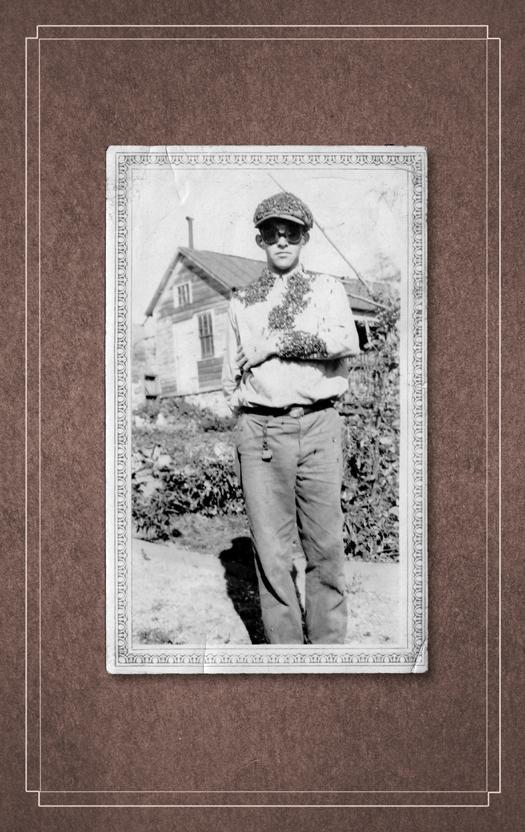
The special twist in these books is that the author, whether prior to writing these or as part of writing them, dove into the world of found photographs. And believe me: it’s a good twist. I have rarely seen a better connection between images and text, other than in graphic and illustrated novels. The remarkable thing about these photographs is that they are found, some by the author himself, more by a group of collectors who shared their prizes with him.

The photos are all old, I assume at least a century or so; many of them have that solemn I-can’t-smile-because-this-image-takes-thirty-minutes-to-capture feel to them, though many others are  instants that could not have been held for that long. Most of the images chosen for this book were doctored, but not by the author; the original photos were doctored, either in the composition or in the developing process. The doctoring generally isn’t terribly realistic, a truth the main character actually comments on when he first finds some of the photos, which then appear in the book and confirm what the narrator says; but it is, I have to say, enormously fun to think that the photos are real, and that rather than camera tricks, they are depicting people who are, quite simply, peculiar. As I said, it’s a good twist, and it improves the books, overall. There are some photos that were clearly chosen because they were interesting or they spoke to the author for some reason, and some of these have to be really pretty bent and folded and spindled to fit them into the narrative; there are others that are just thrown in for the sake of including the image, and so the characters pass by these scenes while traveling, or one of them mentions somebody they knew once, whose photo then appears. It does get a wee bit cheesy at times. But the photos are unfailingly interesting, and where they are used to give visuals that play a direct or important role in the story, they really add another dimension that most novels don’t have. It’s cool. (All three cover images are these found photographs, so you can see what I’m talking about. All three of those images are part of the story.)


(Warning: Spoilers Ahead)

Book I: Miss Peregrine’s Home for Peculiar Children

This one takes too long to get to the good stuff. But taken as the first part  of a trilogy, it’s not bad at all — think of it like The Fellowship of the Ring, with a whole lot of traveling and getting to know something of the world the books are set in, and then it isn’t so bad. We are introduced to Jacob Portman, the hero and narrator of the series, and his family. The short version of his family is that his grandfather is awesome, and the rest of them kind of suck. Including Jacob, who is spoiled and self-pitying in the beginning.

But, it turns out, Jacob’s grandfather was connected to the world of the peculiar, and when he dies in strange circumstances, Jacob, after much hemming and hawing and puttering around (Too much, really; this is where the taking-too-long-to-get-to-the-good-stuff happens), finds his way to the peculiar world. Where he discovers several important things. First is that peculiars live in time loops, which are single days that repeat endlessly; time loops are difficult to get into and thus excellent protection. They are created and maintained by a special sort of peculiar called an ymbryne, in this case the titular Miss Peregrine. The second is that the peculiars live in these loops largely because they are being hunted by terrible creatures called the Hollowgast. Finally, number three: the fact that Jacob can get himself into this time loop proves that he, too, is peculiar, as his grandfather was, because this particular loop was the one that sheltered his grandfather sixty years ago when he was a young peculiar on the run.

Once we get into the peculiar world, the book takes off. There is intrigue, there is action, there is even romance, though it is more than a little creepy in this book because Emma, the young peculiar beauty who falls for Jacob, was once in love with Jacob’s grandfather. Because she has never left the time loop, she hasn’t aged, but the characters talk about how much Jacob looks like his grandfather, and that is clearly the beginning of Emma’s feelings for him. Jacob notes this, but then blows it off because Emma is really hot. And, well, okay, I was a teenaged boy once and I agree that the creepiness wouldn’t stop him; but it’s still weird to think about.

The book ends on a serious cliffhanger, which was something of a problem for me because I actually bought and read this a few years ago, and was irritated by the ending; but now that the other two are published and available, the ending of this one isn’t a problem. Because we can go straight to:


Book II: Hollow City

There are some parts of this book that are fantastic. Most of it takes place in London in 1940, during the Blitz, and those scenes and descriptions are wonderful. The characters from Miss Peregrine’s Home, now that they have left their time loop on their quest (the cause and goal of which I don’t want to give away; basically they are trying to save someone), become fully fleshed out and fascinating characters; there are several other characters  encountered along the way who are also extremely interesting, particularly Addison, the talking peculiar dog. I thought including peculiar animals was an excellent choice, though the emu-raffe was one of those uncomfortable stretches based entirely on a particularly funky photograph. The Hollowgast are very much at their scariest in this book, both the more monstrous creatures that do the actual hunting and killing of peculiars and the ones who are able to blend into human society and use it to their advantage — in this case, infiltrating the military of both England and Germany, and using the war as a cover to track down the peculiars. The action in the book is non-stop, and generally well-done; it gets perhaps a little too breathless at times, when the characters comment about how exhausted they are and yet go on to fight and run and fight and run for another few chapters; but it’s a fast read because of this.

The not-great parts are the scenes with the gypsies, who felt badly shoehorned into the story partly because the author had a whole set of photographs he wanted to use, none of which fit into the narrative very well, and partly because gypsies are awesome. And I agree, they are awesome, but they are not well done in this book.

And I hated the ending. There’s a twist, and it’s a heck of a surprise, but it isn’t a good surprise. The bad guys make out too well in this novel as a whole, and I didn’t like it.

You know, it really is a lot like The Lord of the Rings, because The Two Towers, like Hollow City, is the darkest book, where the bad guys seem to be winning pretty much all the way through.  (Though there’s a great scene when the good guys win, just like  Helm’s Deep: all I’ll say is, Hugh rules.)

But I will also say this: the development of Jacob’s peculiar gift is outstanding, both in this book and in the next. Well, at least the first half of the third book. Before it all goes weird.


Book III: Library of Souls

The ending of the second book is also a cliffhanger, but don’t worry; this book is the end, and wraps up the whole tale.

Unfortunately, it doesn’t do it very well.

Most of the book is great: the Devil’s Acre is the best setting in the whole series, and the way the characters get there and make their way through it was some of the best reading in all three books.

But then there were some real let-downs.

The characters do manage to get into the stronghold of the Hollowgast, and while getting in there is suitably difficult, as soon as they are in, it’s like the bad guys just disappear: the characters are able to roam around at will, finding their friends, freeing them, having really no trouble at all as they actually reach the goal of the quest that started in the first book. It’s a terrible anti-climax, honestly.

Then things get good again, because Jacob turns out to be a royal-class, no-holds-barred badass, and the way his power makes him a badass, and the way he discovers it, and especially the way he uses it, are all completely awesome. Best fight scene in the whole series, right there, and it’s not a short one.

But then it all goes south. Completely. We find out the reason for the Hollowgast’s attempts to wipe out all peculiars, and it’s not the reason we thought, not exactly; and the real reason is really pretty stupid. You see, the Hollowgast were once peculiars, but an experiment in which they attempted to make themselves immortal/all-powerful went wrong (And I just have to say: sci-fi/fantasy people have to stop using the Tunguska blast as a reference point. Seems like every series I read that can fit the timeline has to throw it in there. “And they tried to do some huge ritual, but it all went wrong  — and there was an explosion in Siberia in 1906 that was heard around the world!” Yeah, okay. Move on. Somebody use Krakatoa or something, please?) and turned them into monsters. Cool. I like that. But at the end of this book we find out that the experiment was actually a trick, and the real thing that was being sought by the leaders of the Hollowgast-to-be is just — well, dumb. It’s a dumb idea, and the idea that this thing still exists but isn’t in use, and the idea that Jacob is the key to making it work and that it somehow ties into his peculiar ability but how exactly is never explained, and the way the bad guys get to the final scene and what happens there? All bad. Really. None of it is good.

It’s as if Frodo and Samwise get to Mount Doom, and they find out that Sauron is actually just Gollum in a cloak and a fireproof hat, and Gollum (who has pretty much no power at all, and yet somehow they are afraid of him) shakes his fist at Frodo, who hands over the ring without even an attempt at resistance even though it’s just freaking Gollum, and then while Gollum is capering around, suddenly turned into a hugely powerful bad guy by the ring, Samwise walks right up behind him and shoves, and Gollum falls into the lava, and the good guys win. You know: all a letdown, no final tension, no real danger, no real fight; just a twist that wasn’t needed, and then boom — the good guys win.

And then, just like the final chapters when they all go back to the Shire, Jacob goes back home, leaving behind the peculiar world he has fallen in love with, and which we have too. And the home he goes back to still sucks! Just like it did in the first book! And he spends way too much time in the suck-world before things do finally work out in the end.


So how was it overall? It was — good. The peculiar world and the Hollowgast are both good ideas, generally well-realized. The action, which takes up the majority of the books, is extremely good. Jacob and his friends are good characters. The various settings, particularly the ones the author can really play with because they are time-loops, are cool. The theme of the found photographs is unique and inspired, and generally really effective and fun to read.

I just didn’t like the last third of the last book. The very end is okay, but it didn’t make up for the actual conclusion to the overall conflict between the peculiars and the Hollowgast. Really too bad.

So I’d recommend reading the first one, see how much you like the world and the found photographs; and decide if that will carry you through a bad ending. If it will, read the books and enjoy the good parts while they last. I did.
I’d read it 13 1/2 times.

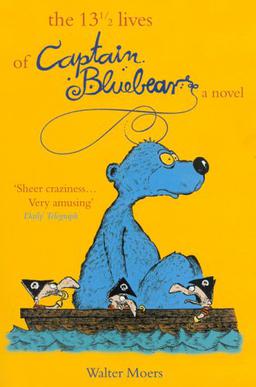
The 13 ½ Lives of Captain Bluebear

by Walter Moers

What I really want to do is spin a yarn worthy of this book. Something about how I found it rattling around inside a mandolin that was given to me by a Chupacabra who had disguised himself as a mariachi in order to hide from his family, who didn’t understand his determination to give up sucking the blood of goats and stick entirely to turnip juice, which he found much less phlegmy.

But that’s not my task. My task here is simply to tell people about this book, and how it was to read it; I have to tell you about Walter Moers’s imagination.

So here it is: this is an amazing book. Simply amazing. The cover says that it is “equal parts Douglas Adams, J.K. Rowling, and Shel Silverstein.” That’s essentially right, though it is honestly not quite as funny and improbably absurd as Douglas Adams’s books (But then, what is?). But it does have the same sort of basically shy, unobtrusive main character swept up in events larger than he, though Bluebear does come into his own more than Arthur Dent ever did, and it does have the same no-holds-barred universe, where literally anything is possible: where a character can transform into a fish in midair to save themselves from a fatal plummet off a cliff; where one can walk into the brain of a giant and have adventures accompanied by a thought; where an entire city can exist inside a tornado, and another can launch itself as a giant spaceship. Most importantly for the Adams connection, this book has an explanatory device that functions like the Hitchhiker’s Guide: Professor Nightingale’s Dictionary, which Bluebear has inside his head, after studying with the Professor himself for a time, and to which he refers whenever he is mystified by his surroundings – which is frequently. Those are some mystifying surroundings.

They are magical, too, which is how like this book is like Rowling’s work; the depth and breadth of the world is much like the magical realm of Harry Potter; and this one, too, exists within – or perhaps parallel to – our own world; I wish I could walk into Zamonia just like I wish I could visit Diagon Alley and Hogwarts.

And what’s more, this book is illustrated by the author, whose style is much like Silverstein’s. As if the wonderful story wasn’t enough, he adds these adorable cartoony drawings, just to bring it that much more to life.

There are a few other books and authors that this novel reminds me of: Alice in Wonderland springs to mind, of course, as does Winnie the Pooh, whose sweet innocence and serenity are echoed in Bluebear (Who is also, of course, a bear: one with blue fur, as the name implies). China Mieville’s UnLunDun is the most recent book I’ve read that has the same magical realm close to our world in it, which also brings me to Neil Gaiman’s Neverwhere, though that book is darker than this one. My own childhood mythology included the Moomintrolls of Tove Jansson (Also European, also translated, also illustrated by the author, as is Bluebear), and in the epic and episodic nature of this adventure, I can see just a little of Don Quixote and my favorite fantasy series, The Lord of the Rings and The Wheel of Time.

It’s got a bit of everything, and so I would recommend it to – well, everyone. Quite highly.

Shadows of the Dark Crystal

Shadows of the Dark Crystal

by J.M. Lee


“Ahhhhhh, Gelfling!”

Stretched out in that high-pitched screech (Supplied by the inimitable Frank Oz), that phrase has been with me since my childhood. I loved the Muppets, loved Jim Henson’s creations; The Dark Crystal most especially. It was one of the most magical fantasies I can remember, and elements of it — Aughra’s massive astrolabe, the singing of the Mystics, Fizzgig, the Landstriders, and of course, the Skeksis — have never left me, never left my imagination.

And now I got to live them all over again. In Shadows of the Dark Crystal, by J.M. Lee.

First, for fans of the movie, let me say: the book lives up to it. It has very much the same feel, that magical, soft-edged fantasy world suddenly interrupted and fractured by deeply disturbing and grotesque nightmares; going from the sweet, pastoral life of the Gelfling, to the corruption of the land by the flaw at the heart of the Dark Crystal, which creates and unleashes monsters — the book is very much in line with all of that. It keeps the same essential storyline, as well; nothing in the book veers away from the original world. So if you loved The Dark Crystal, absolutely you should read this book.

For those who are not necessarily fans of the movie, let me say: this is a genuinely good book. It’s a young adult fantasy, with the perfect heroine for the genre: Naia is the daughter of the clan leader of a tribe of Gelfling who live in the Swamp of Sog; she leaves home on a quest to seek out her twin brother, who left home to be a guard at the Castle of the Crystal, and now needs help. She is strong and brave and capable, but she is young, and so she suffers self-doubt and frequent moments where she is not sure what is the right thing to do. But her kindness and her courage carry her through, as far as those things can; what happens then, I’ll leave for the book to reveal. The action in the story is exciting without being overly gruesome or violent; the language and the writing are interesting and well-crafted without going beyond the abilities of a young adult reader; the world is vast and beautiful and wonderfully described.

All that said: the book really does follow in the footsteps of the original movie, and so I would highly recommend watching that, first. If you like what the imagination of Jim Henson and Brian Froud created, you’ll like what J.M. Lee added to it; if the movie is too dark or disturbing for you to enjoy or allow your children to watch, then you’ll probably feel the same way about the book.

If I have any criticism, it’s that I wish the storyline had started farther back: not to spoil anything, but I’d be more interested in reading about how the villains of the movie became that way, how the original problem started, rather than how the situation that exists at the beginning of the movie got to be that way, which is essentially what this book tells. However, there will be a series — the novel isn’t a cliffhanger, but the story doesn’t end with the ending of this book — and perhaps we’ll find out more.

I am, without question, going to keep reading these books. And I’m going to go watch the movie again.

Redwall Book II: Mossflower

Mossflower
by Brian Jacques

The second Redwall novel is a lot like the first.

Maybe a little too much like the first.

Don’t get me wrong: the most notable and important similarity is that these are both lovely books. This one is a distant prequel to Redwall; it tells the story of how the animals gathered at the place that would become Redwall Abbey, and decided to build that great haven. It is the story of how Martin the Warrior came to be the hero of Redwall, and how he got his mighty sword, the same weapon that Matthias searches for in Redwall. The writing is just as good, and just as sweet; these books read more like fairy tales than anything else, and it makes them great fun — though like the original fairy tales, they are not by any means bloodless, nor do all of the heroes make it to Happily Ever After. There are cute younguns, and amusingly crotchety elders, and the food still sounds delicious.

There are differences, too: in this, the villains are striking out from a castle, rather than trying to win their way into one; it changes the battles and the strategies, and that was well done. This one ranges farther afield, as our heroes quest to Salamandastron, the legendary volcano far to the east, in hopes of finding allies. That was also excellent, particularly the parts with the rabbits, whom I enjoyed tremendously in Redwall when there was only one pommy British fellow with long ears; in this book there are nearly a dozen, and every one is delightful.

But: you’ve still got a horde of weasels, stoats, and ferrets led by one particularly savage tyrant; the weasels, stoats, and ferrets are still clumsy incompetent buffoons who lose battles against the heroes because of their stupidity and cowardice. You still have the great, sinister predator — in Redwall it’s a serpent, in this one it’s an eagle — that threatens everyone who comes near. You still have the badger who carries the battle with its great strength. You still have the desperate quest for allies that goes far afield and comes back at the last second — with shrews, both times. You still have the one bird that is not really trusted but is extremely helpful. And of course you have the mouse who saves the day with a big sword and limitless courage.

I suppose I shouldn’t make too much of this; it is a series, after all, and therefore is going to have common threads that run through all the books. But this one felt a little too familiar, for all that the familiar parts were still delightful.

I’m hoping the next book will offer a little more variety.

The Foundling, and Other Tales of Prydain

The Foundling: and Other Tales of Prydain

by Lloyd Alexander

I wish I had had this book the last time I re-read the Book of Three series, the stories of Taran the Assistant Pig-Keeper. Like any good fantasy buff, I read the books first when I was young; I was excited and then disappointed when Disney made The Black Cauldron and got everything wrong about the main characters (Though as I recall, the side characters were great, Gurgi and the Horned King and the three witches in the swamp.); I named my very first Dungeons & Dragons character “Taran.” Stole the name from my friend and fellow fantasy buff. I regret nothing.(Another side note: I met a guy, works at my local grocery store, named Taran. It was an exciting moment for me, because I am also named from a fantasy series of about the same era. He was not as excited. I believe his response was, “Is there anything else I can get you?”)

Anyway, I loved these books when I was young, but when I re-read them, I discovered something: they are terribly sad. They are based on old Welsh myths, and perhaps that’s the source of the sadness; but the general arc of the books tells the life of a young man who wishes for adventure, finds it, and then wishes he had never left home in the first place. It’s not all sad, he ends up well in the end of the last book; but especially in the third and fourth books, when he is feeling lost and directionless, trying to find himself and his purpose, there is a real angst that, after the sweetness of the first book, made me sad. There’s also a tendency in the books to see the villainous characters as not really that villainous, simply as victims of their own greed or shortsighted ambition or fear; this makes it much less fun to hate them and wish them ill. Which I suppose is the point, but fantasy is supposed to have villains, dammit. Villains who cackle as they twist their mustachios, and who get soundly and at least semi-permanently defeated by the heroes. And Lloyd Alexander didn’t do that.

But this book, which serves as sort of a coda to the five books of Prydain, makes up for that sadness. Because this book is delightful. It allows you to go back and revisit the characters once more, and to see them in other circumstances than in the series, most of which is taken up with the war against Arawn, lord of the land of the dead. It gives the backstory on Dallben (He’s the Foundling, raised by the three witches of the swamp, who are also the Three Fates), and Colm, and Fflewddur Fflam, and all of them. The stories are short, they are not sad (Other than Dallben’s, which isn’t all that sad because it leads up to the Prydain books, where he’s like a great big ice cream cake of awesome, and this tells how he got to be like that), and they help fill in a lot of the little gaps in the stories from the Prydain books. Basically, this is what The Silmarillion should have been, and it was wonderful.

And if I haven’t made it clear, this book really needs to be read as part of the larger series. I think it would be fine to read it first, as it gives a good idea of Alexander’s wonderful telling-stories-by-the-fireside writing style and it’s very short and easy to read; but I think it’s best to read it as I did, after reading the longer series, so that you can get a final grace note and a happy ending. That way seems the most satisfying to me. So for those Prydain fans who haven’t read this one, go get it now. Enjoy.

Book Review: The Aeronaut’s Windlass

The Aeronaut’s Windlass

by Jim Butcher

I’m tired, now.

I’m not tired because it’s Monday (Okay, no, I am tired because it’s Monday – but that’s not the main reason.), but because I just got finished being dragged along, like a dinghy tied to the back of a battleship, in the wake of probably the best action writer working right now.

Jim Butcher.

The Aeronaut’s Windlass is the first book in a new series, The Cinder Spires; it is science-fiction, and it is steampunk. It is set in a world where the people live in impossibly tall structures, called Spires, that stand miles into the atmosphere; people travel between Spires on airships that fly using electrical currents in the atmosphere which they catch with great webs of silken ropes, like solar sails. The main characters include the captain of the fastest air ship on the planet – which is not Earth; it seems to be a planet with a much denser atmosphere, as the ships are described as sinking down into the permanent mist, or sailing up out of it in order to navigate or to fight – as well as a pair of what might as well be called wizards, master and apprentice Etherealists with strange powers and the strange penalties that so often accompany power. There are also a selection of nobles of the main Spire in the story, Spire Albion; nobles both wealthy and poor, honorable and deceitful, beautiful and deadly. They duel, they backstab, they fight for position and prominence and power. There are several soldier characters, as well, as this is the story of a war between Spires, or at least the beginning of the war: and the first strike is not only the deadliest, but it carries deeper meaning, as well. There are wheels within wheels, here, and fires within fires. There are also some of the nastiest villains I’ve read in quite a while: an evil Etherealist and her bodyguard, and they are extraordinarily vicious and disturbing. All I’ll say is: their allies of choice are enormous alien arachnids that skitter up walls before they leap down and tear limbs off with their giant insectoid jaws, wrapping up their human opponents in strands of sticky web-silk. And those are the less-frightening ones.

But hold on: because all is not lost. As confused and desperate as these humans become – and the heroes really do sink pretty low, though I’ll spoil this: they don’t lose every fight – they still hold onto hope.

Because some of the characters in this book are cats.

That’s right: steampunk, airships, war, magic, battle, alien spider-monsters – and talking cats.

And because it’s Jim Butcher, the battle scene starts about a third of the way into the book: and then it. Does. Not. Stop. Even on the last page, we are finding out about new betrayals, new dangers, new challenges that face our heroes. It is enormous fun to read, because Butcher does it the right way: he has his characters face setbacks and surprises and even awful defeats; but then the right person with the right ability is in the right place at the right time, and out of that good fortune or good planning comes– victory. At least a small one. Sometimes a large one. And you’re cheering for them the whole way, because Butcher also writes wonderful characters, complex and intriguing and genuine, and of course, Butcher has that wonderful sense of humor, which sparkles through the whole book – particularly the scenes with the cat interacting with his human companions (and inferiors, as he sees them; he is, after all, a cat.).

It’s not flawless; the way the airships function was hard for me to follow at times, and the world is larger and more complex than could ever be covered in one book unless that book was nothing but history and atlas. This one isn’t, so there are things I want to know more about and things I don’t yet understand. But this was tremendous fun to read. And for the rest?

You’re durn tootin’ I’m going to read the next book to find out. And the one after that.

Book Review: The Fallen Country

The Fallen Country

by Somtow Sucharitkul

I think I may have learned a lesson from this book. Actually, two.

You see, I read this book when it was new, in 1986, when I was an angry twelve-year-old boy. I was angry for the usual twelve-year-old reasons, and to the usual twelve-year-old degree – for both, the answer is “Not much” – and reading this novel, about a boy who escapes his truly awful life of neglect and abuse through his neverending rage, which takes him into a world of snow and ice, where the cold deadens the pain and his white-hot anger is a great and powerful weapon, may have helped me realize that I didn’t really have much to be angry about, and really, I wasn’t all that angry. Not angry like this character is. There’s a scene in the book where his friends accompany him to this world, the Fallen Country, and in order to take them there he asks them to think of all of the injustices they have suffered, all the torments they have endured, and focus all of their anger into helping him reach this other place; afterwards, they confess that they were thinking about – getting grounded. Or failing Algebra. Or being jealous when their crush was smiling at another boy. Only the main character is angry about the years of systematic, violent beatings he has suffered every night from his adoptive father, or the way his adoptive mother ignores this terrible abuse, along with everyone else he has ever known, who have all been unable to help him in his war against the Ringmaster, the evil god who enslaves and tortures all of the inhabitants of this magical realm.

I think now that this book may have helped me realize that I was more like the friends, and less like the main character. And that that was okay: because while his anger gives him great strength, and the Fallen Country sounds like a wonderful place to escape to – he rides a dragon and rescues princesses, slaying hydras with his ice-sword of rage – the point of the book is that this is not a good way to live. And it makes that abundantly clear: you do not want to be like this kid. Harry Potter does the same thing, shows that while it’s awesome to be a wizard in a magical world, really, it’s probably better to have parents that weren’t murdered when you were an infant. Same thing here, only more so, because the beatings that Sucharitkul described are truly terrible.

And now that I have gone back and re-read it, here’s the second lesson I learned: books I loved in my youth should, sometimes, stay there. You see, this isn’t that great a book. There are some good things about it: the characters of the friends are nicely drawn, good renditions of Average-teenage-kid; the Fallen Country is incredible, both enchanting and terrifying, poetic and with the ring of truth; the plot and the final resolution between the main character and the Ringmaster are nicely done. But the way that the abused child is rescued by the people around him, after not having been rescued in the past, is cheesy in the extreme, and very hard to believe – nobody has cared before, even though he shows up to school daily with bruises and cuts and welts; then these characters decide to care, and lo, he is saved by their caring – and the adult characters are all awful. Not terrible morally, though the abusive parents certainly are; but just unrealistic and superficial. There’s a school counselor who doesn’t realize that her job is to report the abuse until she is talked into it by one of the teenagers. Whom she also flirts with. Yikes. It feels like the author was trying to simplify, as this is intended as a young adult book, but honestly, it my be a little too dark for that; and the result is a good book, based on a good idea, that isn’t written very carefully, or very well. Sucharitkul underestimates his audience, assuming they will believe the cardboard characters, or at least not care that they are cardboard; and the same for the weak points in the plot.

You know, I wonder if the reason I liked this author so much was because none of my fantasy/sci-fi friends had ever heard of him; I discovered this book, and I was the only one who read Sucharitkul. I also remember being enchanted by the foreignness of his name; I remember memorizing the way it was spelled, and practicing what I assumed was the correct pronunciation (Since I was never exposed to any other Thai names at the time, I was probably wrong.), and thinking how cool it was that he was also an accomplished composer of classical music.

Dammit. I was a teenaged hipster. Yeah: some things should definitely stay buried in the past.

Magic Bus

Here, the background music first:


Okay, so when I was young, I wanted to own my own bus. I had this great idea: I was going to buy an old tour bus, take out all of the seats — maybe leave a row or two up front, for passengers — and fill the rest with custom furniture, specifically hammocks and beanbags and TVs and video game consoles.

Then I owned a home, and found out what a pain in the rear it is to convert or customize or upgrade anything. I also found that I have no knowledge of, nor interest in, automotive repair or mechanics. So I let this fantasy go, along with being an astronaut and out-selling Stephen King.

But then I saw this beauty parked in my neighborhood. And now I want a bus again.

IMG_0192IMG_0188 IMG_0189 IMG_0190 IMG_0191

Coffee Day (Hail the 42! Hail the Blessed Beverage!) is coming up next week, on February 11. I hope to have a story written by then, about driving this bus, with its beautiful restored retro style, and its utterly cool coffee theme, down to Belize to find the perfect coffee bean. But if I don’t get it done — at least I have this bus indelibly imprinted in my imagination.

And I choose to think there are hammocks inside. And beanbags in front of the flatscreen TVs and the Playstations.

Nightglory

Nightglory

by Mathew Babaoye

I liked this book. I just wish I could have liked it more.

There is a lot to like. The concept is good: it is about a supernatural Lady, the Queen of Night, and her struggle to consolidate her control over her world. She struggles with her subjects, with her responsibilities, with her power, and with herself; it’s a story with a lot of interest, a lot of conflict, a lot of places it could go. I like the writing style: short sentences, short paragraphs, breaks where there shouldn’t be breaks; it makes the reader consider the words more carefully, makes us notice what’s being said. There’s an element of the epic in the writing, in the way certain phrases – her blue-black hair and black dress; the old hard-bitten gold carpet in her throne room – are repeated, almost Homeric. And the name, of course, is brilliant: Goldenslaughter. I still don’t know: are the last two syllables “slaughter” – or “laughter?” I love that ambiguity, as much as I love both possibilities.

But the potential is not quite realized. The writing style is interesting, but the mechanical mastery is insufficient to allow the style to really flow; there are flaws in the writing, in the editing, that make the reader question what is intentional, what just a mistake, and that means the moments when you notice what the prose is doing, when you see it start to dance – you don’t know if it’s only stumbling. The epic phrases are too few, and too often repeated; they start to seem dull, rather than classical. The storyline gets lost in the mystery: the story begins with Goldenslaughter already having conquered her realm, gained the loyalty of her subjects, and then lost that loyalty through an attempt to gain total mastery of the Power that keeps her on the throne. Coming in to the middle of the plot can work, but there has to be a careful process of backbuilding, through flashbacks and the like, so that the audience can gain a complete understanding of how the story got to where it is; this book doesn’t do that. The best way I can put it is that the book makes the reader work too hard to understand what’s going on, rather than the writer doing all of the heavy lifting for the audience. Here: an example. There is a scene in the early going when Goldenslaughter confers with the Lady of Elements, who has had a prophetic dream; that dream gives hints of what will happen to Goldenslaughter. By the end of the book, that dream comes true, and after that happens, Goldenslaughter and the Lady mention that earlier discussion, and the warning that the Lady offered to her Queen, which the Queen did not heed. This is all fine: except the poetic language the two use in the first discussion is too abstract, and I for one had no idea what the Lady was talking about until the later scene when Goldenslaughter refers to it. So the foreshadowing of the prophecy was lost on me, as were all of the hints of what Goldenslaughter meant to do and why it would be challenging and dangerous.

The end of the book is the best part: the final climax is well-done, with a good battle scene and a really fine resolution to the central conflict, when Goldenslaughter makes her choice about who and what she is. I just couldn’t really follow most of the book leading up to that, even though I enjoyed reading it.

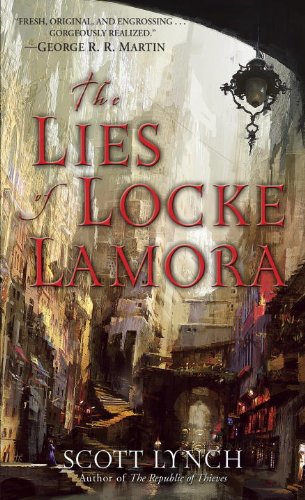
Book Review: The Lies of Locke Lamora

The Lies of Locke Lamora

by Scott Lynch

I should have loved this book: I like fantasy, particularly with intrigue and action (I would love the Song of Ice and Fire, except I’ll NEVER FORGIVE GEORGE R. R. MARTIN); I like caper stories; I am passionate about pirates – which is what drew me to this book, which definitely has a swashbuckling feel to it. The premise is really great: a thief takes in a group of orphans, and sets about making them into the first (and greatest) gang of long-con confidence men this town has ever seen; he intends to unleash them on the nobility, and see just how much they can steal. Move forward twenty years and the plan has succeeded: these thieves are the most successful in a city full of thieves, with a hidden vault full of a vast fortune. But then there is an upheaval in the underworld: a new challenger has arisen to take on the King of Thieves – and he is a threat to our heroes, as well. And not to spoil anything, but this is a revenge fantasy to make Hamlet an envious shade of green.

The setting is good: the city is an independent duchy in a crumbling empire, independent, sprawling, and wealthy; there is a vast divide between the rich and the poor, with the poor living in crowded, squalid slums while the rich dwell in ancient and mystical towers built by a race long gone. There is magic, but it is not common; there are many gods, but prayers and sacrifices to them are traditional rather than earnest. A few tweaks and this could be Venice or Algiers, New Orleans or Hong Kong. It works well for the storyline.

The concept of the characters is great: the gang of con-men are splendid black-sheep heroes; the kingpin of crime is the perfect blend of honorable man and savage; the nobles depicted are both cruel and arrogant, but also with surprising depth, shown to have as much humanity as the poor they oppress.

I should have loved this book.

But I didn’t love this book.

The problem is one that I seem to be encountering more and more these days, either because I’m getting bitter and pretentious as I age, or because books really are getting crappier: the writing just isn’t that good. The first problem with this particular book is that it’s about 200-300 pages too long: a caper story should move quickly, even one that starts with this much backstory; but this one does not. Lynch chose to sprinkle the flashbacks in between chapters, and it was a mistake; it just slows everything down, and it became annoying to get to the end of an exciting chapter, often with a cliffhanger, and have to flash back fifteen years to a training montage. And while the exploration of the thief-training was well done, the characters themselves are given only the vaguest motivation: the lead, Locke Lamora, for instance; we know he’s an orphan who becomes a thief, and quickly proves himself the most audacious thief ever. Why? What makes him this way? No clue. He just is. I’d say it’s in his blood, but we have no idea what his blood is – because orphan. Now, there are sequels, and maybe this will be a grand reveal; but for this book, it was annoying.

There’s more: the action was well-described in slow motion, but the larger scenes of combat and riot were not; overall, there is a feel of missing the forest for the trees, a poverty of grandiosity that ruins the crumbling glory of the old empire feel of the piece. If I may be forgiven some fantasy name-dropping, Lynch should have read more Michael Moorcock: a good chunk of Melnibone would have helped a lot. That combat had the nice realistic touch of pain for everyone: nobody gets out of a fight unscathed, even the ones who are good at fighting, and I like the way Lynch did that – but at the same time, he then has his characters heal real quick so they can get on to the next scene, and so in the end, the bloodshed becomes as unrealistic as an unblooded victor would have been. And though this doesn’t normally bother me, there was a whole lot of gratuitous profanity in this book. I believe in the timely use of the F-word; there’s no better way to express certain emotions. But when you use it too much, it loses that power – by the end of Scarface, you don’t even notice it any more. Same thing here. And in a writer,especially a fantasy writer who has a free hand with inventing language, it just shows a lack of imagination.

I would love to read this book if Jim Butcher or Robert Jordan had written it. But as it stands, this one is only middling good. Not worth recommending.