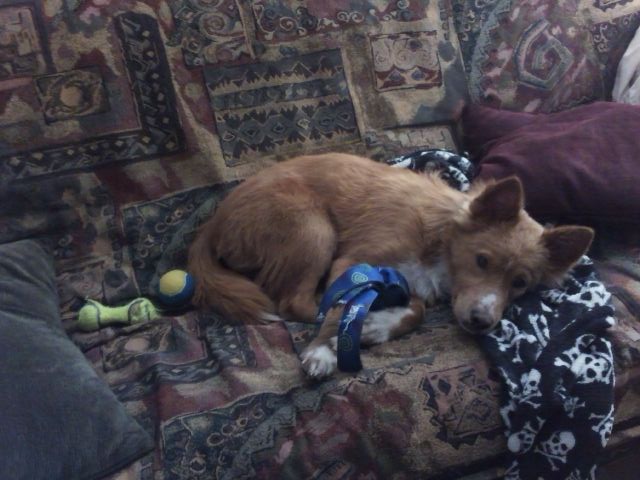
Looking Up

Still one of the best movie songs ever.

You know what?

Things are actually looking up.

No, really: I mean it. 

Tomorrow is the beginning of classes, which means I now have to deal with students — but as always, though teenagers are frustrating, they are the reason why my job exists, and the aspect of it I actually enjoy. Teaching is hard — but it’s better than inservice. And since classes start tomorrow, that means inservice is over. (My district tried to extend it, pushing a two-day training on how to teach ACT prep — actually there are somehow three two-day trainings for English, one in reading, one in writing, and one in…English… but when I said I didn’t want to go, my direct supervisor said I didn’t have to go, in contrast to his supervisor who said he “strongly recommended” that ACT prep teachers be SENT to this training. But my boss said I didn’t have to go. Which means that inservice is over. And also that my boss is on my side, which is — well, it’s lovely.) My students make me laugh as often as they make me grit my teeth in rage; and they sometimes tell me that I helped them, that I taught them, even that I inspired them. And I like that.

I am typing this on my brand-new MacBook Air, which I got for my birthday as a present from my brother. Which means not only that I have this sweet new machine (Which, admittedly, I am having trouble adjusting to, but that’s only because it doesn’t have a ten-key pad on the right side of the keyboard, and because the Command key I have to use to copy and paste and so on is in a different place than it has been on the last two laptops I’ve had, both Windows machines — and because I didn’t know that you ran two fingers together over the touchpad to make the screen scroll BUT IT TURNS OUT YOU DO THAT ON THE GODDAMN WINDOWS MACHINES TOO I JUST DIDN’T KNOW IT BECAUSE I MOSTLY USE A PLUG-IN MOUSE AND TRYING TO DEAL WITH THE WINDOW ON THIS LOVELY NEW MACHINE WITHOUT BEING ABLE TO SCROLL WAS A TRIAL, BELIEVE ME but then I figured this out, and now it’s easy. And now I know this new thing, so that means I’ll never have this struggle again.

That’s amazing, isn’t it? That there can be single pieces of knowledge that you don’t have, and without them things are hard or confusing or even frightening; but then you find out that one thing — and the problem is gone. Gone entirely. Never going to be a problem again. Things can actually get solved. Not everything, certainly, but there are situations that are like that: you find the answer, and then you have it. The answer. The solution.

But also, anyway, the other thing about getting this beautiful new (EXPENSIVE) computer as a gift from my brother is this: my brother gave it to me. He and I haven’t always gotten along, sometimes even emphatically not; but that, too, has gotten better. I don’t think the relationship has been solved by a single answer that suddenly came clear, because relationships aren’t really like that; but definitely things have gotten better, and they will stay that way as long as we keep working on them — and he got me this absolutely lovely and generous gift, which I think was a very nice thing for him to do.

Thank you, Marv. I love the laptop. Though I feel dumb about the touchpad scrolling thing. Also it just autocorrected your name to Marc, so. Something to think about. And I’ll make you a deal: if you go by Marc (Or Marcin, in full), I’ll go by Dussy. Which was recently given me as an interpretation of my name at my optometrist’s office. It’s a new one.

Though to be honest, I’m not sure how it would benefit you for me to go by Dussy. Or how it would help me if you went by Marc. Nah, forget the whole thing. I’m still grateful for the gift, and glad that we’re doing well with each other.

And speaking of family, I finally mailed away my spit, in the tube my wife bought for me, to ancestry.com (That was a Christmas present, if you weren’t aware of how bad I am at following through on some things in a timely manner), and so I found out a little bit more about my family: mostly German and Scottish and English and French, all of which I knew — but also, about 3% African. Which I did not know. 1% each from Ivory Coast and Ghana, Benin and Togo, and Cameroon, Congo, and Western Bantu peoples. Obviously it is not a significant amount of my heritage — but it is significant that it is there, that I am that much of a mutt, that I have a little bit of African DNA in me. I think that’s wonderful and fascinating. I can relate even more closely to my dogs now, as they are both mutts.Which are obviously the best kind of dog.

So thank you, Toni. It was a very cool gift, and I’m sorry it took me so long to use it. 

Oh — and speaking of white people with just a tiny bit of Africa in them, and also speaking of  things I would spit on: Elon Musk is now not only a goddamn idiot, but he’s a goddamn idiot that has shown himself to be a goddamn idiot, and therefore proof positive that there is no meritocracy in capitalism, that even complete dipshits like Musk — who, I’m sure, would prefer to be called Xxxx Xxxx, so that’s what I’m going to be calling him from now on. Or maybe just Muxx? (Or Marc?) — have too much money and absolutely do not deserve it, and do not deserve our respect for their ridiculous hoarding of wealth. Because their wealth does not show their brilliance.

So the guy buys Twitter, right, and it isn’t really clear why. It seems mostly like he wanted to prove to everyone that he could do it, because Xxxx obviously believes his own hype to a truly epic degree, like Trumpian level delusion here: and literally every choice he’s made in running this company has been a bad one: first he let all the extremists and slanderers and liars and shitbags back onto the platform, which made the platform not only actively worse for everyone but also genuinely dangerous for some; and then he destroyed the verification system, which reduced the value of being a name on Twitter and of following names on Twitter, which reduced the value of the site and of the company; then he introduced a bad subscription model, which is still a cheap gag for everyone on the site who doesn’t have a blue check; and then he expanded the length of the Tweets; and then he limited the number of Tweets that someone could see in a day; and somewhere in there he also threatened to remove (and did remove) a number of people and a number of tweets that he disliked or disagreed with, thus proving to everyone but his legion of sycophants (Also suffering from Trumpian levels of delusion) that he as not actually interested in protecting free speech like he pretended do be doing when he bought the site; and now the crowning glory, his most recent conversion of Twitter to — X. Twitter is a household name, with Tweet a known slang verb used across the internet; and he threw all of that away. Because he thinks X is cool. And X, in actuality, is a shit name for a company, and a shit name for an app, and he picked a shit logo, and the rollout has been absolutely terrible — mine just switched over today, and it still says Tweet and Twitter all over the site. I mean, even I could do a rebranding better than this, and not because of my business acumen or my marketing skills — but just because I’m not a goddamn idiot. I can tell you that I am already filled with a visceral loathing for the X app, and am really just hopeful that it will go ahead and finally die so I can stop looking at it. 

Just look at that garbage.

It’s possible that that’s what Musk wants, too. There is profit to be made in breaking a company up and selling off the pieces; but it doesn’t really seem like Musk is doing that, because everything he’s done, other than fire all the workers and refuse to pay bills (In the short term, dumping salary and holding onto cash would be profitable if you meant to destroy the company and sell the pieces — but he hasn’t done that yet.), everything has reduced the value of the company: which would seem to really reduce the potential profit he could be making as a vulture capitalist. On the other hand, if he planned on keeping the company and building something bigger out of it, which is what he has claimed to want to do, then firing half the staff and refusing to pay bills is a shit-stupid way to handle a company that does an incredibly difficult and complicated thing like maintain a free marketplace of ideas on the internet — let alone grow it into an all-inclusive financial network where people can handle literally all of their business interactions. I saw an article that said this:

Expanding the platform’s reach to include things like shopping and paid subscription content could actually help it flourish in the long term by creating several revenue streams and making it less reliant on large companies’ willingness to spend money, analysts said. 

In the short term, building out those capabilities would require a massive investment in staff and infrastructure. It’s far from clear if a company that slashed about three-quarters of its staff and is now embroiled in multiple lawsuits over unpaid bills can deliver that.  

“The investment is a lot in terms of cloud infrastructure — we’re talking about $40 billion, $50 billion in upfront investments,” Singh said. “Twitter as a standalone app doesn’t have the infrastructure to become an everything app.”

https://www.cbsnews.com/news/twitter-rebrand-x-name-change-elon-musk-what-it-means/

And also this:

But the name change suggests Musk is likely to keep control of the company for the near future, said Bloomberg Intelligence analyst Mandeep Singh. After Musk’s takeover in April of 2022, some observers believed the billionaire could make some changes to Twitter and quickly flip it to a different owner, Singh said.

“That option is off the table now given the name change — I don’t think there’s any other prospective buyer who will take it now,” he said.

So maybe Xxxx is shit-stupid.

I will note that his new sign got turned off because it was too bright.

There is also a profit to be made in being a corrupt oligarch who opposes and helps to suppress free speech and the free exchange of ideas; and one of the ways you could achieve that, as a corrupt oligarch, would be to buy the marketplace of ideas and just set the whole thing on fire. And it very well could be that this is really want Xxxx wants, and if so, on this front, he’s doing a bang-up job.

I will definitely say that that is a sad thing. Communication is one of the highest forms of human endeavor and accomplishment: our ability to share ideas and spark new ideas in each other is unmatched in the natural world, so far as we know. And the internet and social media have made that possible on a scale unheard of before now; Twitter was part of that. But now it’s not. Because now it’s X.

Speaking of corrupt oligarchs fucking up things that were once worthwhile: Trump is another example of something that actually seems to be going right. I don’t want to count my chickens before they’re hatched, because I, like most of us rational, thinking people, was deeply overconfident in 2016, and I just could not believe it when TFG won the election. But it does really seem like he is facing a whooooooole lot of serious legal trouble, and at least in the Mar a Lago documents case, he’s clearly as guilty as sin: and when you put that shithead in front of a jury (Not that he’ll show up for his own trial, if he can possibly avoid it), he’s not going to get a pass like he did in both impeachments under a corrupt senate. 

Oh right — and let me take a moment to wish Mitch McConnell ill. Forgive my schadenfreude, but that fucking no-neck piece of shit has ruined untold numbers of lives with his power mongering, so fuck him. I hope he did have a stroke, and I hope he suffers in his declining years.

Anyway, the court system is not as easily bought as Congress: so Trump will likely go to jail. And while that doesn’t mean he can’t run for president, it surely does mean that most Republicans will not vote for him, and his base still will, or they won’t vote at all; and that likely means a runaway victory for the Democratic Party — which, if Biden is the nominee (And I personally hope he will withdraw from the race and let someone younger take it over), and wins a second term, I will say that he has actually been doing a goddamn good job so far at restoring the American government to what it should be, and we could do a whole lot worse than the guy who has re-established NATO even while supporting Ukraine in the war, and who is establishing new alliances across Asia, and who has passed the Inflation Reduction Act and the Build Back Better Infrastructure Act, and who has therefore done more for American manufacturing and industry and for fighting climate change than literally any other American president. We could do a whole lot worse.

So let me just say that, too: this time we all have to try to do our part to make sure we don’t do a whole lot worse. Joe Biden is old, yes. I do not want an octogenarian President. But he’s actually doing a good job. And if Trump goes to jail, the democrats might just win both houses of Congress — and then maybe we can name a couple of new Supreme Court justices, too. But if we’re too overconfident going in, we might get another TFG presidency, and that might just turn all of this back around, and send us all spiraling down until we crash. Let’s try to make sure it doesn’t go that way. Let’s keep our eyes on the prize, and keep things looking up, okay?

So okay, this wasn’t exactly the most cheerful blog, because things have been pretty bad for a while. But hey. School starts tomorrow.

Let’s make this a good year.

Actually just found this. The band is donating proceeds to the ACLU. Plus a player piano!

PETS!

Here are all the videos I couldn’t share before.

This is Roxie wagging her tail. Unfortunately, her snoot gets in the way.

Here’s Toni giving Neo his watermelon:

This is Neo yawning (With a cameo by Samwise)

This is Samwise having puppy dreams:

Duncan getting a nice skritchy — and then biting me a little.

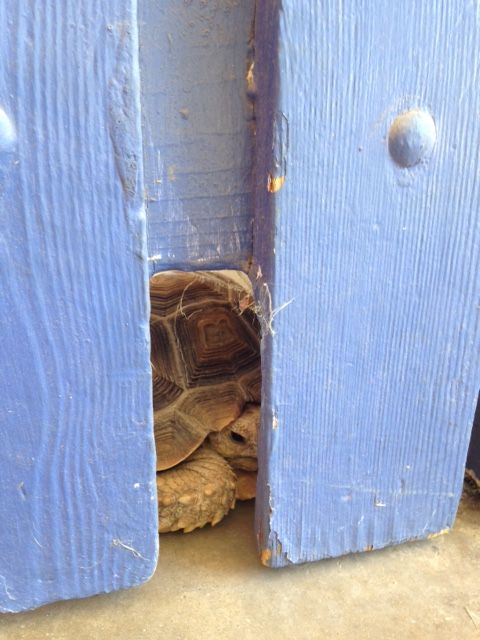
Is it weird that this actually makes me want a strawberry? And a napkin for the tortoise?

Finally, here’s Roxie again, snoozing away.


This Morning

This morning I’m thinking about choices. And about fate.

And about these two.

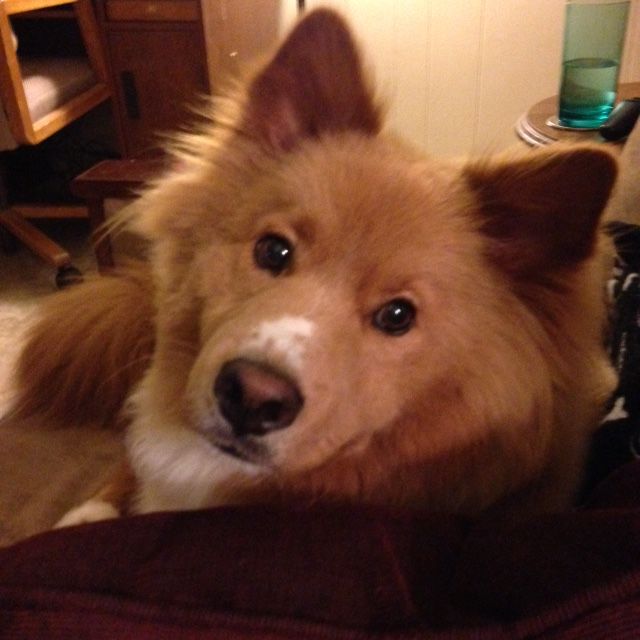
Image may contain: dog

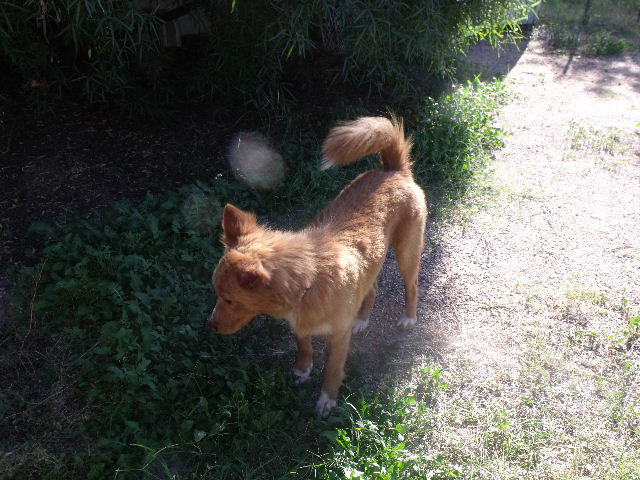
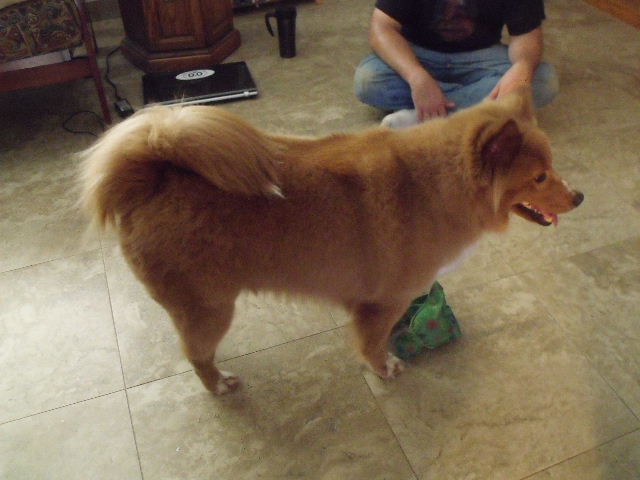
These are my babies. The fluffy one on the left is Samwise, and the little girl with the house-elf ears is Roxie.


Image may contain: dog and indoor

A better picture of Roxie

Image may contain: dog

Samwise’s close-up

They both came from PACC, the county animal shelter near here. Samwise was first; we brought him home in 2014, just a few months after our first dog Charlie died.

Image may contain: 1 person

This is me and Charlie, holding paws while we pursue our favorite hobbies.

Samwise was not our first choice. We’d been walking dogs at the shelter for a few months, partly as therapy and partly to keep an eye out for a good boy or girl to bring home. We had just decided that we were ready for another dog, and we found a different dog, a Whippet mix named Henry, if I remember right, and took him out for a nice long walk with his kennel buddy. Henry was great: he was happy and energetic, and smaller and less dominant than Charlie had been — he was part Chow-Chow, and was so alpha he made other dogs pee just by looking at them. We went home and thought about it, and then back to the shelter the next day to get Henry. But first we took him for another walk: and he freaked out. Completely. He was making a strange whining noise, walking erratically, and he kept jumping on his kennel buddy and trying to sort of play, sort of bite his ear. He wasn’t sick or anything, just acting entirely different from how he had acted the day before. And far more aggressive/invasive to another dog; the kennel buddy, who was bigger and more dominant, almost started to fight a couple of times, and we had to walk them separately.

So we decided not to bring Henry home. I’m sure somebody else took him, and I’m sure he’s a great dog; but we were still recovering from losing Charlie, and we weren’t  ready for that much of a challenge.

Somewhat despondently, we split up and walked around the kennels, looking at the other dogs, wondering if there was anyone else we might like. And when I looked down the row, there was this little face, resting on the bottom of the cage door, looking out at me.


No photo description available.

It may be hard to tell from the picture, but he didn’t look well: he was far too thin, his fur was thin and patchy. And he looked sad. And scared. I went over and said hello, and then I went and got my wife, and we took him out for a walk. We went to a bench outside the shelter, and he came up to us and put his paws on our hands, one on each.

So we took him home. Really, what choice did we have?

Turns out that he was a special needs adoption: his first owner had apparently abandoned him onto the streets of Tucson, and he had spent some number of — days? Weeks? Months? — living on whatever he could find, which is how he got so thin and why his fur was short and patchy: they had had to cut off tangled mats of fur, and he had scratches and was malnourished. He was also plagued by fleas and ticks, and in the time he spent on the street, he had developed tick fever, a parasite infection that produces anemia. Tick fever requires fairly expensive blood tests (About $300 every six months to a year) and a long run of antibiotics to treat, and so Sam (He was named Benny, then, but that was a moniker picked by the shelter; whatever motherfucker had him and then threw him out onto the street didn’t have any right to pick a name for him.) had been adopted and returned, twice, by people who balked at the expense. He was basically on his last strike when we took him; if we hadn’t, he probably would have been put to sleep, because of his illness.

The tick fever is chronic, it turns out, but also, Sam is now so happy and healthy that his blood count is essentially normal and he lives without symptoms. It also turns out that he’s fluffy as hell, and the best, sweetest, smartest, calmest boy I have ever known. We call him our Goodwill Ambassador, because he’s far friendlier and more outgoing than his introverted parents, and he never fails to be upbeat and pleasant; we’ve taken him to school, to farmer’s markets, to California, and he has been swarmed by children looking to pet him, and he always sits calmly and lets them. He’s very soft.

But then, after Sam had lived with us for almost two years, my wife went back to work full-time outside of the house, and Samwise was left alone all day. We worried that he was lonely — and I wanted a second dog, I admit; Charlie was my first dog, Sammy is my second, and I’ve never had two. And so we went back to the shelter to find him a sister.

And we did.

No photo description available.

Image may contain: dog and indoor

Image may contain: dog and indoor

Roxie was also not our first choice. They had puppies at the shelter, and we planned to get one of them, because we wanted to be sure that the new dog would not crowd Sam. We figured it would be fine because Sam is so calm and friendly, but you never know how two dogs are going to react to each other. The puppy would have been ideal, because then Sam could have been the big brother from day one. But after the puppies had been there for a couple of days, and we had gotten to know them a little, their owner turned up and claimed them. So that was out.

But there was this other dog, a tall dog, who every time she saw us, wagged her tail so hard it shook her entire body. She’d whack it against the bars of the cage loud enough to be heard across the room.

That was Roxie.

Image may contain: dog and indoor

Roxie was also found on the street; we don’t know if she was abandoned intentionally, or if she got out and her owners never went looking for her. She wasn’t alone for long, because she was basically healthy when we adopted her, though she was  clearly traumatized and had not been taken care of well. She was unsure about coming in the house, unsure about getting up on the furniture even when invited; she has no idea how to play with toys, and she shrinks away from objects held in the hand, which tells us that she was either hit, or had things thrown at her, or both.

But, as it turns out, she is also the sweetest dog in the world. She is even friendlier than Sam: she wants to meet everyone, and pulls on the leash towards anything that moves within her sight line: people, other dogs, wild rabbits, coyotes, cats, anything. If she meets anyone she tries to lick their hands or faces, and jumps up on people no matter how we try to break her of the habit. She never growls, never threatens or bristles; and always, always, she is wagging her tail.

If her first jackass owner had claimed her, we wouldn’t have been able to take her. If the puppies’ owner hadn’t come forward, we’d probably have one of them instead. If Henry hadn’t freaked out, or if I hadn’t noticed Samwise, or even if Charlie had lived for another year or more, we wouldn’t have these dogs, we wouldn’t have this family.

That’s what I’m thinking about this morning.

Image may contain: dog and indoor

Honoring America

Listen, listen – listen.

Listen to me, okay? I know: you’re pissed off. You have every right to be.

But listen.

I’m sure that, if you know me at all, I have pissed you off personally in the past. I tend to do that: I’m pissed off, too, and I lash out. I usually regret it, and I often try to take it back. But I can’t. Also can’t stop myself. Neither can you: we’re pissed off.

But listen, anyway. Because I’ve seen people, all kinds of people, with all kinds of views all over the political spectrum, saying that THOSE PEOPLE OVER THERE are trying to divide us. THOSE PEOPLE are trying to turn us against each other, trying to ruin what has taken generations to build: this country. This amazing, beautiful, irreplaceable country. We can’t let them divide us. Can’t let them ruin this country. Not even when they are we.

But listen. Really. Because I have to say this.

The military is not my country.

WAIT WAIT WAIT. The country wouldn’t exist without the military. I know it. The military, both past and present, veterans and casualties and current service members, are and have been a vital part of the creation and maintenance of this country. They protect us, they serve us, they are the reason we became and the reason we have been able to remain a sovereign nation.

But you know who else made it possible for this country to become and remain a sovereign nation?

Parents. And grandparents, and aunts and uncles and brothers and sisters and cousins and everyone else in the family who helps to raise us. Who teach us and guide us, protect us and encourage us. We would never survive without families. (There are people who do, and they are incredibly strong and impressive; but the majority of us couldn’t live like that. I couldn’t. I needed my family to survive, and I need them now to keep me going.) Our families are just as important to this country as is the military, because while the military has kept us a sovereign nation, our families gave us life, and made it possible for us to become who we are. Without our families we wouldn’t be here, so there wouldn’t be a sovereign nation for the military to defend, and there wouldn’t be citizens who would volunteer for our military. We need our families as much as we need the military: without either one, this country wouldn’t exist.

You can’t get mad at me for that, right? Being grateful to family as much as I am to the military? Saying that families are as vital to the country as is the military?

Okay, good. Because our families aren’t the only ones who give us life, who make us into genuine, complete people, people who can understand what a nation is, what it represents, what it can be and how we must strive to make it what it should be. You know who else is a vital part of that?

Doctors and nurses and medical professionals. Let’s face it: there’s at least one time in each of our lives when we would have died had it not been for the intervention and assistance of a medical professional. Even with the military to protect us, we still get sick, we still get hurt, disasters still strike; and we could not make it on our own. Our families often save us – but they are just as often the one who dared us, the one who held the ladder so we could climb on top of that thing we just jumped off. That’s when we need doctors, nurses, EMTs. Right? Without doctors we likely would have died, and without people there isn’t any country? Right?

Okay, and right along with that, you know what we need to survive? Food. I know this one’s a little more abstract, because we all can and do produce or obtain our own food without any help; I’ve grown tomatoes and basil, both, so if there was such a thing as a pasta plant, I’d have a mean plate of spaghetti right out of my backyard. But the point is, we don’t produce the vast majority of our own food, even if we grow food, because people who live on a working wheat farm tend to eat things other than wheat. For most of us, we couldn’t produce enough food to feed ourselves, let alone the entire nation. So we should recognize that the people who make the food: farmers, ranchers, fishers; and the people who move the food: pickers, processors, truckers (And all the variations of those things); and the people who bring the food and/or cook the food, restaurants, grocery stores, and the almighty pizza delivery people – the country wouldn’t run without them. You could live without a few of them, I suppose, but – even the military has to eat.

There wouldn’t be much of a country if we didn’t have any food.

And of course, we wouldn’t want to have food if we couldn’t have something to wash it down, and also to wash the food off, and our hands, and everything else we want to keep clean – and that means we need all of the people who provide our water. The workers, the managers, the hydrologists – oh, crap. I forgot about all the scientists. Wait: I’ll get to them in a second. Point is, we need the many, many people who gather the water, store the water, clean the water, transport the water, and then take away and handle the waste water; and of course, we definitely need plumbers. I can’t tell you how grateful I am for plumbers. Honestly, now: if we had the world’s strongest military – but not a single working toilet in the entire country – would that be enough? I think not. We need plumbers.

We need electricians, too. There are millions of people going without power tonight, all over the Gulf Coast and Florida, all over the island of Puerto Rico and throughout the Caribbean – millions of Americans – and they will stay without power for weeks. Months, in some areas. Think about that. Think about the fact that it’s September, and that even where I live in Tucson, it’s still in the 80’s and 90’s every day. I went a week without functioning air conditioning this summer, and it was hell – and eleven people died in a nursing home in Florida after Hurricane Irma killed their power and they didn’t have AC. I don’t mean to say that HVAC technicians are as important as the military, but I do think that the power companies, and the linemen and electricians who make it possible for us to have light and heat and communications, that power our factories and hospitals and, yes, our military bases: I think we could not survive as we do without them. If we had the world’s strongest military but we lived in the dark ages, I do not think we would feel the same way about our country.

And since we need all of these specialized workers, we need somebody to discover all they need to know, and then somebody to make sure that people know what each of us needs to know: and that means we need scientists and researchers, and teachers and librarians and authors. Now, I know a lot of people think that scientists get a lot of things wrong, and that they waste a lot of money; but the truth is that without scientists and researchers, we wouldn’t have the power or the water or the sanitation or the modern agriculture or the medical science or the military capability that we have. And of course, there are a lot of missteps and a tremendous amount of wasted effort and spent resources involved in science; but that is true of every single aspect of modern civilization. We may not like what they use up, but we certainly like their results – he said, typing the words into his laptop before posting them on the Internet for others to see at the touch of a button.

(Pausing to take a sip of clean, clear, refreshing water.)

As for teachers, I know that many people think we are incompetent and corrupt and generally terrible. And many of us are. We’ve all had bad teachers, we’ve all known bad teachers; I am sure that there are quite a few people out there who think that I am a bad teacher. But just like everything else in society, the problems and the complications don’t change the basic necessity: our world is complex, and somebody needs to help people get ready for it. Somebody needs to train our people in the work we need done, or else it wouldn’t get done. If there are people who don’t do it well, then we should try to help them get better or replace them – not throw out the entire system. Now I certainly include everyone outside of traditional school who helps people to learn and grow: homeschoolers, and tutors, and family members and friends who help explain how things work; religious leaders and technical/vocational teachers and master craftsmen, and those who help the new guy on the job figure out what to do and how to do it. You – we – are all teachers, and all of us are necessary. A country that can’t think is no country at all – not to mention all the people who have to know how to do what we need done. Including the military, who have some of the best teachers and trainers, to get people ready for some of the toughest and most important jobs, in the world. And I’ll bet – in fact, I know – that some of those trainers, and some of the people they train, are not very good at their jobs.

That, I think, is the other thing we have to remember about the military. It is just like our own families: some of our family members are, shall we say, less helpful than others. Some have less-admirable motivations. Some actually cause more trouble than they help us out of. The military is far too large and complex an organization – nearly a civilization unto itself – to think that every single member is just as good and valuable as every other one. If that were true, there wouldn’t be dishonorable discharges, and there wouldn’t be military police, military courts, and military prisons.

Right! We can’t forget them. We must have all of the people who protect our safety against things other than disease and enemy nations and ignorance: firefighters, and police, and all of the other parts of the criminal justice and public safety system: lawyers and judges and prison guards and parole officers and social workers and crossing guards. Just like the doctors, there is at least one time, I’d bet, for everyone when we needed someone in law enforcement, and/or public safety, to save our lives or our property.

There. Is that everybody? I could go on, of course: I didn’t even talk about mental health, or the inspectors and regulators who help to protect our safety by preventing crises from occurring, or those who provide shelter by building our homes; I didn’t talk about people who make roads, and build bridges, and run airports. I didn’t talk about the people who make our economic world possible, bankers and accountants and the stock market; nor the people who make it possible for us to have our regular-people jobs, employers and entrepreneurs and everyone who makes the money that makes the world go ’round. I think there’s even an argument for people who entertain us, because at some point, we all need to do more than live and protect our liberty: we need to pursue happiness. And, depending on how fine you focus this lens, that could even bring in – professional football players. Even those who take a knee during the National Anthem.

That’s my country. Yes: the military is a vital part of it. But it isn’t the only part of it. When someone stands up and puts their hand over their heart, faces the flag and salutes, and sings along or maintains a respectful silence, during the National Anthem or the Pledge of Allegiance, they aren’t just honoring the military: they are honoring this country. All 330 million people, all 3.8 million square miles, all 240+ years of history. That’s what the flag and the anthem and the Pledge represent: they represent America.

And America is not the military.

So if you want to honor this country, this is what you do: you recognize that we don’t all have to agree. That we can even be opposed, and maybe even bitter enemies. All of that can be forgiven as long as we all have the best interests of the country at heart, and remember that the other side, too, has the best interests of the country at heart. Of course we disagree on what those interests are, and what will best serve them, whether it is a strong military or a strong social safety net; whether it is a government that represents and serves all of the people, or no government at all; whether it is equality or competition – or both. That is the point of open and honest debate, enshrined as one of the most vital of our individual rights in our First Amendment; because in talking about what we think, we figure out both what to do, and where we agree. The biggest reason for the current widening partisan divide is simply because we don’t speak to each other enough. And I’m sure that there are people, Americans on some level, who do not have the best interests of this country and its people at heart; and they should be prevented from doing harm. But they are easy to identify: because there is a world of difference between people who want to do good, but are doing it wrong, and people who want to do evil, and are doing it – right. For the rest of us, the vast, vast majority of us – and remember that that large group includes the people who are doing the wrong thing for the right reason – we have to remember that we all have the same goal. We all love our country. We all want what’s best for it, and we are all grateful to the people who have lived and died in service to this country, both in uniform and out, on the battlefield and in the cornfield, in the hospital and the school and the courthouse and everywhere in between where people live and strive to do what is right. However you choose to honor those people, that history, this country, whether it is by standing up and taking off your hat while you are watching sports on TV; or whether it is by offering your effort, your reputation, or your life in aid of the ideals this country stands for, I, for one, thank you. I will salute you as I salute and honor my country, our country: in the way that makes the most sense to me.

Even if you don’t like the way I do it.


(Postscript: Bob Costas agrees with me.)

Contempt and Hate

I don’t think most of us understand hate.

I know I don’t. I don’t think I’ve ever actually felt it.

We use the word often; I use it all the time. I hate voluntary ignorance; I hate violence and war; I hate BBQ potato chips. But we also say “love” more than, I think, we mean it: I love my dog and I love my wife, but I also say I love Ren and Stimpy (Ren more than Stimpy – though I still love Stimpy, the big goof!), and I love Cheez-Its. Obviously, the feelings aren’t the same, aren’t even similar, and I have written before about the absurdity of this language, with its incredible vocabulary and the multiple nuances and shades of meaning available in the specific words and the specific uses we can put them to, having only one or two words for a positive feeling – I “like” this, and I “love” that. Now, that actually isn’t true, we have a ton of words to describe good feelings; and it would make me ecstatic if we could start saying adore and cherish and esteem – I am fond of funny T-shirts! I hold napping in high regard! – but that’s probably not going to happen.

Considering, however, all of the talk that has been flying about regarding hate “lately,” with Charlottesville, and with the alt-right administration currently abandoning the White House like lice fleeing the comb, I think this particular word requires some serious attention. I fear we are misusing it, and therefore making a mistake in how we handle the people, the groups, and the actions to whom we apply it.

Now, as I am unsure that I’ve ever genuinely experienced the feeling of hate (which doubt makes me think that I can actually be sure that I have not, because I think if I had, I would know it), it would seem that I could not write about it; but I can speak from observation, and also from the similar emotions I have felt, as hate is on one end of a spectrum, and all of us have been somewhere on that spectrum. I also have expert testimony to draw from: because I talked to my wife about this subject, and I asked her, “Do you think you’ve ever experienced real hate?” She said “Yes” before I could even finish the question. Without hesitation, without equivocation. I don’t intend to air her dirty laundry here, but suffice to say that one of her parents is one of the best people I’ve ever known, and the other one is very much the opposite of that. (For those reading this who may actually know my wife and her family, be aware that you have never met the shitty parent; you know her step-parent, who is a fine person as well.)

Here is how she describes what she feels for that parent. Every time she thinks of this person, it makes her angry. Angry enough to do harm: to punch, to kick, to attack. Every single time. It follows her around, she said, this anger; it is a part of her, and it never goes away. This is partly due to the fact that the object of her hatred, as one of her biological parents, is also a part of her; she knows this, and she hates that it is so. Everything that she hates about this person, reflects in some way on her, either because of their connection, or because of how it makes her feel. Which just makes her angrier.

That is hate. Hate is anger that lasts, and that never goes away. Violent, intense anger, anger that taints everything around it, including one’s own self: to have something or someone in your life that you hate would make you upset with yourself for feeling this way, particularly in this culture that teaches forgiveness and resolution and closure. My wife cannot force this to heal, cannot close this wound; and so it festers and aches and weeps. This, of course, intensifies her negative feelings, because then she feels saddened that she has to continue dealing with this, that she can’t find a way to get over it or get past it; and then she naturally blames the source of that hate for bringing these other terrible feelings on her, as well, for being so hate-worthy that now she has to carry all the rest of it along with the hate.

(A final note: she is right. That parent is worthy of hate. It’s the closest that I feel to hate, as well, because of what my wife has had to suffer, and continues to suffer. The cultural trope that my wife should forgive and forget is nothing but nonsense. That person does not deserve forgiveness. Those of you who may feel the urge to say that she should turn the other cheek, that her feelings are only hurting her and will go away if she forgives: shut up. You don’t know what you’re talking about.)

I have felt anger that made me want to do violence. I have felt it several times for a single person or event, so I think I have felt some level of hate; but my hate, my anger, has always faded, and I’ve always been able to feel better afterwards. That fact has enabled me to call myself a pacifist, to say that I oppose violence in all forms at all times. Because I have always been able to escape my desire to do violence, so I have the luxury of thinking that people can always do that, can always turn the other cheek and just – calm down. (Also, I have never had to fight for my safety or my life, and so I can think that people never really need to do that.) This has made me incapable of understanding people who are members of what we blithely call hate groups: why, I think, can’t they just calm down?

There’s two answers, there, because I think there is more than one type of member in a hate group. Probably there is a spectrum as broad as the number of people in the group, but there are two categories at least we can put them into, and should. One is the group that is actually, genuinely filled with hate: every time they encounter the object of their hatred – let’s say, every time a Neo-Nazi encounters a Jewish person, or every time a Klansman meets an African-American – they are filled with a rage that brings them to violence. That rage never fades; they carry it with them, everywhere, always. It is a part of them. It is possible that they are upset with themselves, and saddened, as my wife is, that they cannot simply let that rage go; I would wager that if they lose loved ones, family members or friends that turn a cold shoulder because of the Klansman’s/Neo-Nazi’s hate, that they wish that they could just let the hate go. But they can’t: and every negative feeling that gets piled on someone who hates, gets added to the list of reasons to hate. The object of the hate receives the full blame for all of the consequences of hate. The Klansman thinks, “If those [African-Americans] wouldn’t be so awful, then my life wouldn’t be so terrible. I hate them even more for making me hate them, and for screwing up my life with that hate.”

This kind of conflict cannot be reasoned with. It cannot be cajoled away. I don’t know that it always lasts for everyone who feels it; surely some people change. But I don’t think there is a pattern to that, not a process that can be prescribed to end real, violent, hate. I think the only thing that can be done about it is my wife’s solution: separation. She never sees the person she hates, and never intends to. It doesn’t make her feel better, it doesn’t make the hate go away; but it keeps her from becoming violent. It minimizes the occasions when she has to think about it. (And I have to say: as important as I think this topic is, I feel terrible that writing this is going to drag my wife back down into everything she feels about her family. I really am sorry. She will of course read this before it is published and so it is possible, if she wishes it, that no one else will ever read it.) That’s the best we can do with the people who feel genuine hatred.

But for the rest of them – probably, I think, the majority of them – what they feel is not hatred. For them, it’s more like me saying I hate when my students ask me the same question three times in a row (“When is this due?” “Friday. It says it on the board.” “Wait – when is it due?” “Friday.” “What’s due on Friday?” “I hate you.”). That does drive me crazy; but it doesn’t make me feel violent, and it doesn’t make me feel sad. I don’t even know that it makes me angry, as such.

I think the word for what I feel at those times is: contempt. Maybe disgust, but I think disgust has a visceral, nauseous element; disgust turns one’s stomach. Students not paying attention doesn’t turn my stomach. What it does do is make me smirk at them, and think mean things about how dumb they are – after all, why can’t they read the due date on the board, right over there? Why weren’t they listening when I explained this to them not thirty seconds ago? They must be idiots. They’re not, not really: I’ve been a teacher for 17 years, and I don’t think I’ve ever had a student that I would call an actual idiot; every single one of them was either capable of doing what I asked, or had a reason (such as autism or developmental disabilities) why they couldn’t do it. The majority of them have not done the majority of what I have asked, but not because they were idiots. When I think that, it is a dismissal, a belittling, created from my contempt.

That, I think, is what most members of hate groups actually feel for the object of their “hate.” Contempt. I think their ideas are about as valid as my contempt for my students when they don’t listen, and I’d guess that every instance of contempt is similarly unfounded; it may be that their contempt is, like mine, largely projected: I get mad at my students for not listening at least in part because I know full well that I never really listened to my teachers when I was in high school. My irritation with them is certainly some irritation with my past teenaged self, seen reflected in their slack jaws and dull eyes, so like my own. It’s also true that they are most distracted when my class is most boring, and I know that when it is boring, it is mostly my fault, not theirs (though I will note that often the boring things I teach are unavoidable: somebody has to explain commas and apostrophes and the passive voice); when I taught John Knowles’s terrible novel A Separate Peace, boredom was the appropriate response. Maybe even contempt.

But I’m not all that interested in trying to understand why Neo-Nazis feel what they feel, whether it is contempt or it is hatred; I don’t really care. There isn’t a way to feel hatred for an entire race that is justified the way my wife’s hatred is justified, because an entire race of people cannot be guilty of heinous acts towards a single person. Contempt for an entire race is also moronic, as my contempt for my students would be if it lasted more than a few seconds; but after they all know what the due date is, we go back to discussion of George Orwell, and they have intelligent and interesting things to say, and I realize they’re not at all idiots, and I was being a jerk when I thought they were. I don’t understand why Neo-Nazis and Klansmen don’t have that same realization. I kinda think they’re idiots. That is the biggest difference: my contempt is only momentary, and never very serious; a Neo-Nazi feels a long-term, maybe even a permanent contempt for the contemptuous object. Enough to make him willing to join the swastika crowd. The Neo-Nazis that aren’t idiots – and of course there are some such – either feel hate, or they are those who can be turned away from their hate groups, those people who make a friend of a different race and realize they maybe shouldn’t be marching in the hate parade.

Here’s what matters. Contempt can frequently be dismissed as unimportant, because it does not incite violence. Nobody wants to hit someone they feel contempt for; the object of contempt is too pathetic, too insignificant, to go through all that trouble. You might shove them out of your way, but you would never pursue them and beat them; you would never run them down with your car, or hang them from the nearest tree. Those are acts of hate. Hate, obviously, should not be dismissed as harmless. That is not to say that everyone who hates is violent or murderous; but the emotion creates the chance of violence, where contempt does not.

I think a lot of our treatment of Neo-Nazis and Klansmen and other white supremacists is contemptuous. We make fun of them, we belittle them, we dismiss them. We feel contempt for them, because we think that all they feel for their victims is also contempt, so we don’t really worry about them doing harm. (Also: they’re idiots. I think.) By contrast, our treatment of terrorists is fearful: because we know that they feel hate, and therefore are they very dangerous. People who would set off a bomb in a crowded place are full of hate. People who would drive a car, or a plane, into innocents, are full of hate. And if and when we see white supremacists marching, at night, carrying torches, chanting “BLOOD AND SOIL!” we recognize that as more than contempt: that is hate. You watch video of police officers setting attack dogs on civil rights protesters, it is clear: that is hate. Hate, genuine hate, must be treated as something dangerous, because it is. Treating a person filled with hate as if they only felt contempt would make us vulnerable; we can turn our backs on people who feel contempt. We can get up in their faces during a rally, we can yell at them, we can follow them playing “Ride of the Valkyries” on a tuba. We can laugh at people who feel contempt. It is dangerous to treat those who hate as if they only feel contempt. That is the first mistake we have made in the past, and hopefully, the events of Charlottesville will remind us that ignoring, dismissing, belittling those who actually hate is never going to make them go away. For them, we must make them go away: we must enforce separation. Which probably means law enforcement.

But here’s the thing. When we treat those who only feel contempt as if they actually feel hate, that is ineffective, too. Because it isn’t justified: a guy who makes racist jokes doesn’t need to be on an FBI terror watch list. Some putz who hangs a Nazi flag on his house, or a Confederate flag on his truck, doesn’t need to be treated as if he is about to explode into violence. And if you confront that person and say, “You’re full of hate!” in whatever way you say that, they will say, “No, I’m not. I don’t hate anybody. I just think racist jokes are funny, and the Confederacy fought for Southern pride and state’s rights.” They may say, “I have plenty of [black/Jewish/female] friends.” And maybe they do, though I think it is hard to be friendly with someone for whom you also feel contempt. But regardless, they do not feel hate. They can reasonably deny any label that they are members of a hate group, or that they are a violent threat to a civil society. If you try to force that label on them, they can turn it around and call you intolerant, and a bigot; they can call you Communist or antifa or the alt-left. They can claim that you are limiting their freedom of speech by keeping them from speaking on your college campus. They can take the moral high ground. Then they can argue for greater freedom for their groups and their causes – and then that means greater freedom for the members of those groups and causes who actually feel hate, who are genuinely dangerous.

Then you get Charlottesville.

So the issue is, we have to make a distinction between those who feel contempt, and those who feel hate. And we have to treat them differently. The hateful must be watched, and prevented from doing harm; the contemptuous we should ignore.

Unfortunately, that’s as far as I’ve gotten in my plans for how to fix all of this. I do not know how to discern hate from contempt; they probably blend together for the observer, they may both be present in the same person. No reason why a Neo-Nazi couldn’t feel contemptuous of Jews and hate African-Americans, for instance. Or feel contempt for African-Americans and hate black policemen, specifically. A contemptuous person may get angry and sound just like someone full of hate, even if that feeling fades quickly, where it wouldn’t in someone who genuinely hates. But I do think that we will make more progress, and have better results, if we treat the two categories differently when it is clear which is which. That crying Nazi who got banned from OKCupid, for instance? That dude is not full of hate. A man who hated non-whites would hate them more after they got him banned from Tinder. He might lie about it, of course; but I think he probably would not cry.

Though maybe that thought is coming from my own contempt.

I hate that.

Tied Down at the Edge of a Cliff

We say we have to get me out of teaching. We say it often, laying in bed at night before we turn the lights off, when we usually turn to face each other, heads on pillows, and sort of put a punctuation mark on the day – sometimes an exclamation point, sometimes a question mark; but usually just a comma or a semi-colon, because the end of the day is almost never an ending, almost always a brief pause for breath before we go on with the next clause, the next day, separate from the last but still connected – always connected.

My life is a run-on sentence. And I don’t know how to stop it.

No: I know how to stop it. (And I’m going to leave this metaphor behind now, this navel-gazing grammatical pun. Jesus, Dusty. Get a life.) I could change my life quickly if I leave everything behind, including my wife and my pets, a sentence that took me several tries to actually write. I could change everything if I left everything. I do what I do so I can earn what I earn so we can live how we live: as we. But our bed, where we lay at night together, is actually the ground at the top of a cliff. Everywhere I go, I am at the top of this cliff. At night we lay together, our heads heavy on the pillows, and we look into each other’s eyes and I tell her how much I love her and she smiles at me and I love her more, and then we kiss goodnight, and roll over – and I stare off the edge of the cliff.

The cliff is the edge of my world. I don’t mean the end of life; I’m not talking about dying. I’m talking about where the place I am, the place I live, where it ends, abruptly, startlingly, dangerously. Honestly I have pretty much always stayed near that cliff’s edge, in various ways. But never too near: because I am a coward, I think. And though every night I look out into the open air beyond that cliff, to actually jump off that cliff and land somewhere entirely different – or perhaps instead of landing, take flight and sail across the sky, which is how I imagine it would feel to be a writer – I would have to leave behind everything I am now, everything that is this place where I live, this life where I live, where I sleep with my head heavy on my pillow and my eyes straining to look out farther but tired, so very tired, with the looking; but behind me (or no: before me, between me and the cliff, not to protect me but because she is even closer to the edge of that empty space that might hold a new life) is the best woman in the world, and at our feet lies the sweetest dog I’ve ever known, and nearby are a bird and a tortoise who need me, who are tied to me, who are weighing me down. And none of them – not even the bird, sadly – can fly.

Let me be clear: it is not my wife’s fault. She never asked me to get this job, never demanded a larger home, a larger paycheck, health insurance, stability, all the tethers of the modern world that tie me down at the top of the cliff, safe and immobile, able to turn my head and look out to eternity, growing and throbbing out there beyond the fall to the bottom. She doesn’t demand them of me now, never tells me when I talk of leaving teaching that I can’t do that because the family relies on my stable income and health insurance. She has never said that once. She never would. She lies with her head on her pillow, holds my hand, her fingers exploring mine as she imagines drawing my hands (as she imagines drawing everything), and says, with her eyes sad, “We have to get you out of teaching.” Now that she has tethered herself down right next to me – but closer to the edge of the cliff than I am – she says “We have to get ourselves out of this.”

Then we talk about how we can be free, mobile, able to pick and choose what we do with our lives, if we just buckle down and teach for three years and pay off all of our debts. Maybe four years. Maybe five. Tethered down right at the edge of this cliff, looking out into space, lying with our heads heavy on the pillow, holding hands.

I’ve never jumped off a cliff. I jumped off a swing into a river, once, but I landed flat on my back when I tried an ill-advised backflip; it hurt. I don’t remember if I went back on the swing again after that, but probably not; I’m a coward, and I always have been, and that’s why I’m still at the top of this cliff, near the edge but not on the edge. I’m looking out on this vista, this panorama, of wide open space, and I’m – I don’t know, shouting over the edge? Maybe whispering, blowing words like soap bubbles, glittering and evanescent as they drift pointlessly free? But I’m still here, on solid ground, holding on for dear life even though I am nowhere close to falling.

I should be falling. If I was a writer, I’d be falling; if I was falling, I’d be a writer.

Instead I am – yes, I know it. A spider. Remember the tiny ones at the end of Charlotte’s Web, how they spin out a single thread of silk and throw it up into the wind, letting the air lift and carry them away? That’s how I want to go out over the edge of the cliff; not free fall, not dropping down and just hoping that something will catch me, though I’m not sure now if that’s because I’m a coward or just because I don’t care for the thrill, never have, never liked adrenaline, never wanted to feel alive because I almost died. I hate stories that rest on that idea: that life is either risk or boredom, that everything that is lovely or pleasant or simple becomes blasé, because I feel like if I could live forever, I would just read all of the books that I won’t have time to read, and play all the video games, and walk over every inch of the Earth, and why would that get boring? I don’t believe that it would. And so I want to drift over the edge of the cliff, not plummet. So here I lay, throwing out single threads of silk, gossamer words, hoping that one of them will catch the wind and lift me free and sail me away through the sky – and my wife and our family with me.

I’m growing roots. I have been for years, though I frequently pull them out of the ground and let them wither and die. I don’t need the roots, though I don’t hate them; that’s probably why I let them grow, and maybe that’s why I haven’t gone over the cliff, because I don’t mind the slow growth, don’t mind drifting down into the earth instead of up into the sky. Maybe if there was a way to sink below the surface, grow a taproot large enough and deep enough and then pour myself down instead of drawing nutrients up, follow my own growth into the deeps, and then tunnel down through the cliff from behind its face, back behind the bones, down and down and down until I came to the bottom and then slid out from between the teeth, out with the breath of the earth back into the open air. Then I’d be in a new place, and not at the edge of a cliff looking out; then I would have changed, would have moved.

But I would have never flown. Never left the ground. Is that, could that be, what it would mean for me to be a writer? To move through the earth to new ground? Does that metaphor make sense?

Is this the thread that will lift me? Or the one that I can crawl down, like Dante down the leg of Lucifer, crawling down until suddenly he was crawling up, out of the depths of Hell to the mountain of Purgatory? But see, he was carried on that final voyage out. He was on a mission from God. All he had to do was hold on and wait.

I don’t think I can just hold on and wait. I think I need to move. I don’t know if I can fly and take my family with me – and I won’t leave them behind. There is nothing that would be better without them. I don’t even know why I say it, other than I know that most people who jump off the cliff, who make themselves suddenly into writers (or into flattened, shattered remains), go it alone. I don’t want that. I don’t think I ever have, but I know I don’t now. So the question is: do I keep throwing strands of silk into the air? Do I stitch them together into a single sail, and just wait for a wind great enough to lift me, and my wife, and our heavy heads from off of our pillows, and we can grab the bird and the dog and the tortoise in passing and carry them with us? Could there be a wind great enough to lift a sail large enough to carry us all aloft?

Or do I try to find a new way, this magic that will turn the earth beneath me malleable, let me alter the flow and the path of all things so that I grow in the wrong direction, turning the wrong into right? Honestly, I don’t even know what this metaphor means: would I write for the local scene, find local websites, write for the Tucson newspaper? Is that what it means to go down your own taproot, to go deeper into the earth, to become a writer by digging down? I don’t know. I want it to be magical, somehow, to be an alteration of the paradigm, a new path, a new alchemy that turns stone into water, just for me, so that I could swim through something that can’t be swum through – but though I can imagine that, I don’t understand it, I don’t know how I could do that, if it could be done. I don’t know if I’m creative enough to do it, if I have the wizardry to break the laws of nature. But since it took me four tries to actually type the word “wizardry,” I’m going to say the omens are bad.

Maybe I should try to climb down the cliff. Grind it out, slow and steady, keep working, keep writing, keep moving; no magic, just constant effort, every moment testing my strength to the limits, every moment hyperalert, looking for that next ledge, that next handhold.

I don’t know. I’m 42, and I haven’t started climbing yet. I might already be too tired just from lying at the top of the cliff. Lifting my head off that pillow every goddamn morning. Looking out at the expanse of sky and thinking about how wonderful it would be to sail away. Spinning my silken threads, my tenuous sails – watching them break and fall, or vanish off into the ether without me. And here I lie.

I don’t know how to fly.

Update.

Toni read this. We talked about it. And having talked to her about it, the answer is clear: we will be alchemists. We will swim through the Earth, and see where we end up.

I consider the metaphor of flight to represent getting published by a traditional brick-and-mortar company, selling books out of Barnes and Noble, the whole Best-Selling Author bit. I’d still like to fly. I’m going to keep sending up streamers of spidersilk, hoping that one will catch just the right breeze and lift me up into the sky. I would like that. For Toni, the same metaphor probably applies to suddenly hitting it big in the art world: becoming a name, being sold in galleries, getting commissions for public art, all of that. And that would be swell, too.

But that’s not the goal. Neither is the goal a safe and sure and trying descent.

No: the goal is to try something new. We plan to write and illustrate and sell graphic novels, and illustrated novels. I plan to go back to publishing a serial novel, which will be available as enriched and expanded e-books, featuring extra stories, back stories, side characters, and so on. Maybe we’ll run a book store. I will publish my novels, and she will sell her art – and we will see what we are capable of and where we can go. What new places can we discover, and explore? What exactly is down there, underneath us? Could it be even more intriguing, even more wondrous, than the sky above?

We will never jump off the cliff. And we will never leave each other behind. (Nor the pets.)

We choose – magic.

This Post Is Covered With Shit. But Not Full of It.

There are a lot of ways to look at education.

You can see education as a means for students to practice and perfect skills: writing skills, reading skills, math skills, science skills. Incremental improvement in ability over time, largely through careful, guided practice. The steady honing of a functional tool, which will then be slotted into its proper space in the Machine.

You can see education as a place for children to explore: to learn what is out there in the world, and what connections they can make to it, and to each other, and to themselves. School is a big pot of fun ‘n’ friends; the Best Time Of Their Lives.

You can see education as the passing on of a torch, the filling of a vessel with the golden ambrosia of knowledge — or maybe the cooking of a roast. New people come to the school, and they are unburnt, or empty, or raw; and we light them, fill them, roast them, and then they are — like us. Members of a culture and an intellectual tradition, with an awareness of what that means and how they can pass the fire/water/ uh . . . heat? What does cooked meat pass? Calories? A delicious aroma? Whatever, they can pass it on to the next generation.

Or you can see education the way my students do: as the longest, most agonizing obstacle course they have ever faced, filled with everything bad — pain, fear, sorrow, impotent anger, self-loathing, failure, futility, and wedgies — going on for years and years and years, draining every drop of life from them, only to spit them out the end: where they become, most likely, new obstacles on the course for the next batch of runners.

Or you can see education the way I do, the way most teachers do: it’s a job. Better than some, worse than others. Probably not worth what we put into it.

That’s not all it is, though. And I don’t doubt that most people see education as a combination of those things, and maybe a few others — I know there are certainly those who see it as indoctrination; at my last school, in a small rural town in Oregon, I know school was seen by many as the best source for husbands and wives, for fathers and mothers of the next generation, which they saw no reason to wait to produce. There was a daycare in the school building for the children of students. Also the children of teachers and a few children from the general populace, but still: that daycare housed a whole lot of, let’s call them extracurriculars.

However we see education, though — and I don’t think we all need to agree about what it is and what it should be; I think an ongoing debate about education is probably a healthy tension — the one thing we should all agree on is this: it is important. Maybe not school, maybe not for everyone or in every way; but education is a part of how our race survives: because humans are born useless and pathetic. Giraffes and horses and moosen can stand mere minutes after being born, and run not long after that; we can’t even put on our own pants for years. Humans without education are dead. Period. So if we matter, then education matters.

And it takes the same thing to make us matter that it takes to make education matter. That thing is substance. There has to be something inside us, something behind the mask, something that makes us move, that makes us act. Something that tells me the words to say next.  Some people are driven by their emotions and passions; some people are driven by their reason; and some people are driven by the desires of something larger than themselves, even if it is larger only in their own minds. That thing could be a religion, or a nation, or a father, or just society’s approval in general; whatever it is, those people take their cue from someone outside themselves, and that is what drives them: they live to please and honor that larger thing. And I don’t mean to denigrate that type of substance, especially not when it is so clearly part of my own motivation. I want to live up to the example of those who came before. I want to please my readers. I want to win awards. And I want to experience and honor my passions, and I want to follow the course set down by my reason. All at once. All mixed up.

Nothing’s ever simple, is it?

(That’s why we need education.)

My strongest motivation is this: I want to make my wife proud. I want to make her happy. I want to take away all of her regrets, and all of her fears, and all of her frustrations; I want to give her a perfect launching pad for her own life, for her own dreams, her own motivations; I want to be the support for her substance. I mean, I want my own substance, too; but I want her to have hers, first. Because she’s better than me. And I am not at all ashamed to say that: I am proud that I am the one she chose, and I am proud that I can work to give her her chance.

And I am furious that she has to deal with bullshit instead of flying free and doing what she wants, what she is capable of. It drives me crazy that she has to claw her way out of the muck of this cesspool of a world before she can become herself. It’s like a giant, sticky, neverending cocoon made of petrified bullshit: and people like my wife, people who are and always have been butterflies, have to kill themselves getting out of it. Goddamn it.

But what this all comes down is substance. I know, I know, I haven’t defined it well. I got onto a rant-tangent — a rangent, if you will (Or tangerant?) — because I am angry about my wife’s fight against bullshit. But let me try to get back to my point. I started with education because that’s what I know best, but it could as easily be politics, or commerce, or family, and the issue would be the same: to be worthwhile, to be something that actually does for humanity what it is supposed to do, the thing must have substance.

For a family to have substance, the family members have to actually do and feel and think the way a family is supposed to, fulfilling the role that family is to fill: they have to love and support one another. There has to be genuine connections between the family members, and all involved have to honor and maintain those connections. When a family has that real bond, then it improves the lives of the members of the family; it gives them shelter in the shit-storm (A veritable shit-climate, in fact), and a way to climb up out of the muck, to break free of their cocoons. (Can I call them poop-cocoons without losing the thread here? It’s just — it’s calling to me. Poop-cocoons. I can’t help it. Sorry.) Because there is something real there, it lends real mass, real energy, real velocity, to the constituent parts; their substance has something to back it up, to drive it, and so they can have real substance.

Am I making sense here? I feel like there’s a genuinely important thing underlying this, and I fear that I’m losing it. Let me keep trying.

When politics works well, then it creates an opportunity for the citizens of the political entity — call it a country for simplicity’s sake — to be something they could not be if they lived in a place where their politics did not work well. Because this country has, through much of its history, had politics that worked well, we have been able to do extraordinary things, to be extraordinary things. Not all of us, for a lot of reasons; but we have been extraordinary. We were the first to fly, and the first to touch the moon; we cured polio; we split the atom; we created the blues, and jazz, and rock and roll, and hip-hop. George Carlin was an American. Those things came out of this nation because the nation’s political structure had substance. It was driven by serious people working for serious reasons (whether those reasons for a particular person were emotional, logical, or ethical), and taking their jobs seriously. They didn’t just live up to the appearance of their role, the mere surface; they went deep inside. And I know that because look at what happened: it worked. We created substance, which only comes from substance. Something doesn’t come from nothing.

Nothing can come from something, though. Sadly. We can come from substance, from something real, and we can turn it into a joke. And there are as many reasons for that as there are for people to live with substance, but they all have one trait in common: they are shallow. Greed, for instance, if we can turn to commerce. When someone runs a business with substance, when they recognize their role in providing goods or services to customers, and earning a fair profit in return, then great things happen: Hollywood movies and Apple computers and Ford motors. But when people seek only profit, and they recognize that creating the appearance of substance is cheaper than actually creating substance — but if the facade is good enough to fool the customers, then they can charge the same as companies that have substance — then you get reality TV, and Goldman-Sachs, and Wal-Mart. Driven only by greed, they create only hollow hills, which collapse under their own weight when we try to climb them. They don’t get us out of the shit: they bury us in more of it. A neverending shit-storm.

When education has substance, no matter what is taught, no matter how fast students learn it or how many students learn it or how much exactly they learn — they learn. When education has substance, students come out of it changed, and improved, even if indirectly. Education with substance comes, only and always, from educators with substance. They don’t have to be teachers, of course, and most of the time, probably, they are not; I’d say the most common educators with substance are parents, followed by best friends. They teach us and they make us better. They use their substance to give us substance.

I do think the majority of teachers bring substance to their work. It’s hard not to, because it’s hard to miss the importance of the job — as I said, without education, there are no people; that’s a heavy weight, which I’m glad we don’t bear alone: but we hold some of it. When we have substance, we teachers, we can hold up a fair amount of that weight. Raise it up out of the shit.

And the worst thing in the goddamn world for teachers is when we are trying to maintain our substance — using up our own personal substance to do it — and we are forced to spend our time and energy instead on surface bullshit. On forms and paperwork that cover the asses of administrators, that stroke the egos of spoiled parents, that allow shallow, empty politicians to get elected one more time by people who don’t really know what the fuck they’re doing in the voting booth.

What precipitated this rant? A lot, actually; a lot of shit. But the clearest trigger was this last weekend, this three-day weekend, a holiday in honor of Martin Luther King’s birthday (A man of substance, to be sure), which my wife and I spent a large portion of shoveling shit. Not building a structure of substance for our students, or even better, ourselves, to stand on and reach out of the shit; no no no — we were throwing shit. We were working on a syllabus for an Advanced Placement class, because we both teach AP courses at the high school where we work, me AP Literature and AP Language, she AP Art. When you teach an AP class, to be allowed to use the official AP designation, you have to turn a syllabus into the College Board, which runs the AP program (Also the SAT.).

Those syllabuses are bullshit.

The requirements for what has to be included on the syllabus are so entirely unrealistic that I doubt that a single one — not one of the thousands upon thousands of AP courses out there who have gone through this — really represents what happens in the actual class. I know mine certainly don’t reflect reality, not for either of my classes. If I taught to an empty room, I couldn’t cover all of that material, not in the kind of depth that is needed. See, the purpose of an AP class is to earn college credit while still in high school; that’s why my students take it, at least. Well, that’s the surface reason. The real reason is because these classes are challenging, and they give students a better understanding of and ability in the subject. They are classes with substance. I know both of mine are. I go into those classes with everything I have: with my experience, and my expertise, and more preparation and organization than I have ever brought to my regular classes — and I’m a good teacher in a regular class. For the AP classes, I’m better. And my students respond: I watch them grow and improve, and for the most part, I see them succeed. Some of them don’t, but that’s because they don’t bring their substance to the class; they take the class because their friends are in it, or they think I am cool (I am — but only on the surface) and they wanted to take a class, any class, with me; or they didn’t really think about how hard it would be. Or they were put in the class without any input of their own. You know: surface reasons. Bullshit reasons. Those students don’t succeed, necessarily. But the ones who come with real motivation, who do real work for real reasons? They get better. They grow. They become educated. I give them a platform to stand on — which I bust my ass building and maintaining — and they climb up out of the shit. Sometimes they even fly away.

None of that is on my syllabus. Largely because substance takes time and focus, and so you can’t cover a whole lot of ground — it’s dense. Concentrated. Has to be. But the AP syllabus has to cover, for literature, all of Western literature from 1500 to the present day: poetry and drama and prose, both short form and novels. All of it. They have to know what a sonnet is, and how William Shakespeare’s differ from ee cummings’s. They have to know both the traditional canon of dead white men, and they have to be familiar with the contributions to Western literature that have come from non-whites, and from the non-dead, and from non-men (Also called women.). They have to be able to read deeply, and analyze correctly, and write eloquently, and do all of it in 40 minutes.

And I have to spend my weekend correcting a syllabus. To make sure that it covers every one of the required learning components, that it has sufficient evidence to show that it covers every learning component, and that the evidence is in the form the AP auditors prefer. And their feedback looks like this:

Component (Which I’m making up, but isn’t far from the truth) #28: The course shows students the wide range of literary techniques from Guadalajara, Mexico, as represented by the many poets and playwrights who have hailed from that locale over the last four centuries.

Evaluation guideline: The syllabus must include the wide range of literary techniques from Guadalajara, Mexico, as represented by the many poets and playwrights who have hailed from that locale over the last four centuries.

Rating: Insufficient evidence

Rationale: The syllabus must list specific literary techniques used in specific titles of specific types (prose, poetry, and drama) by specific authors. The literary techniques, titles, and authors must be specifically connected to specific activities that show specific criteria for student mastery of the wide range of Guadalajaran literature.

Please examine our sample syllabi, or contact a Curriculum Specialist for personalized feedback, though be aware that this latter course will take weeks and weeks and run you right past the deadline for when this syllabus has to be approved for this school year.

So we got this for the syllabus we were working on, right? And we added in “The course shows students the wide range of literary techniques from Guadalajara, Mexico, as represented by the many poets and playwrights who have hailed from that locale over the last four centuries.”
It’s a lie, because I don’t consider Guadalajaran literature important enough to cover to the depth demanded by the component; instead, I teach the same wide range of literary techniques with, say, Oaxacan literature, which I spend two months on in my class. We add this lie to the syllabus — no substance there, just a surface checkmark to please someone looking only at the surface — and send it in. And get it back. Rejected again. With the exact same feedback.

So we add more evidence. We list out those literary techniques, and we list those Guadalajaran authors, and the Oaxacan ones just for good measure, and then we throw in three or four haiku-writers from Tenochtitlan, just in case. We describe the multiple essays, treatises, and book-length theses the students are going to have to write on each and every one of these elements. And then we send that pile of sloppy, gooey bullshit in.

Approved.

And that’s the end of it. The College Board doesn’t follow up on this. They don’t come and watch the class. They don’t come and ask the students what they have learned — don’t even correlate test results with specific syllabi, and ask teachers to look for areas for improvement; none of that. They don’t survey students or parents or teachers. They don’t ask us to send in work samples, or example lesson plans. All they want is the syllabus. Which they want to say very, very specific things, but which they don’t write for us; they just keep telling us we’re writing it wrong until we get it right. Which is when it’s all bullshit. Which fact they have to know: there’s no way they couldn’t. Not when every one of those thousands and thousands of syllabi are nothing but bullshit.

Here’s the kicker: once the syllabus is approved, it never has to be resubmitted. It just gets re-approved, every year, automatically. Even though my class, like pretty much every class of substance, changes substantially from year to year. Doesn’t matter.  In fact, if the course had a syllabus at the same school with a previous teacher, the College Board encourages the teacher to simply copy and “update” the old syllabus.

It’s all bullshit. I have no doubt that the intent is twofold: to prevent lawsuits from students who fail the AP exam — “I’m sorry your daughter got a -6 on the test, Mr. Svenswinderssonsen, but the syllabus on file from her school clearly states that she was taught all of the Guadalajaran literary techniques.” — and to present the AP program as being extremely rigorous. Is it actually rigorous? Not through any fault of the College Board. And not as it is purported to be on those syllabi. Which took hours and headaches to get right. So that everybody can now ignore them until the end of time.

This turned into a much larger piece than I intended it to be. But I’m feeling pretty deep in the bullshit right now, and it takes a lot of shoveling to get out. Because this isn’t just an AP issue: this is all of school. Everything I do that isn’t actually teaching is related to the same sort of thing: I give bullshit tests to show bullshit data about bullshit growth so the administrators can tell the school board and the politicians that the school has the surface appearance of actual substance. I fill out forms for students who get IEPs for exactly one reason: to avoid lawsuits. To maintain a reputation. To create an appearance of rigor and value and substance. And every hour I spend on that bullshit is one less hour I have to provide actual substance to my actual students.

We’re burying ourselves in bullshit, and ruining the one thing that we actually need, just because — we’re looking at the surface, only at the surface. Not at the substance — or lack thereof — underneath it.

Maybe in this mixed-metaphor ramble, I have uncovered something of substance for you to stand on. Maybe you can make a little more progress on getting out of your poop-cocoon. I hope so, I really do. Some of us have to become butterflies. Some of us have to take to our wings and fly. All of this shit-shoveling has to lead to something good. Something extraordinary.

I’m just afraid that the most extraordinary people are exactly the ones neck-deep and shoveling, and the ones climbing out aren’t butterflies in poop-cocoons: they’re just giant bags of shit. Standing above us, and looking down.

Happy Inauguration Day.

On the Fifth Day of Blogging, Just Dusty Blogged for Me…

An introduction to his familyyyyyy!


My wife and I speak for our pets.

I know this isn’t unique; maybe not even unusual. And though it may seem like it is to other people, especially the petless and those on the lower end of the imagination spectrum, it isn’t even strange or nonsensical: our pets, like any sentient thing, have personalities, and the clearest way for humans to depict that is to put it into words. We also do pantomime and funny voices for all of the pets, but that isn’t something I’m prepared to re-create on this blog.

So just the words will have to do.

What I have noticed over the years of speaking for my pets is this: my pets are smart. Very smart. Also kind of insane, but still — smart. The things they have to say, when we humans try to step outside ourselves and solidify their apparent perspective, are often true and even insightful things. This may be exactly because the attempt to speak in another persona allows us to step outside our own egos, and gain a new and perhaps clearer perspective; it may be because animals don’t care about the same bullshit that humans care about, and when you are speaking for an animal, it is impossible to speak like a human. It may be because I actually like animals better than humans, and so when I am speaking for them I tend, consciously or not, to make them sound like better people than human people generally are.

Though that last one isn’t entirely true. Because I speak for Dunkie, too, and he’s crazy. But also very sweet. And he don’t take no shit off of nobody, which is something that is not true for me, and which I admire and envy.

Regardless, whether it is escaping my own ego, or escaping a human’s perspective and a human’s baggage, or even if it is just that I want to make my pets seem like good people, it seems to me that their advice is worth listening to. So I’m going to be giving them a regular sort of column on this blog, and asking them what they have to say about the world we all share.

First, let me have them introduce themselves.


Duncan the Cockatiel:

Theoden Humphrey's portrait.

This is Duncan. He insists on going first, because he’s the oldest, and because he believes he is the most important.

YOU’RE GODDAMN RIGHT I’M THE MOST IMPORTANT! Yeah, that’s right — because it’s all about Dunkie. Oh! Right, yeah, introduce myself. Okay, LISTEN UP! I’m Duncan. I am named for a king. KING DUNKIE! I bring beauty into this house.


My feathers are pure white, and very clean and neat, because I spend the majority of my wakey-time grooming myself. I have a beautiful gold crest and awesome orange cheeks, and I whistle and sing and make kissy noises when I feel like it. 


When I don’t feel like it, THAT’S WHEN I START SCREAMING!


I can be very loud. BUT ONLY WHEN THEY DON’T DO WHAT I WANT! I can’t help it. I’m very small and I’m stuck in a cage. I don’t have a lot of weapons. I can bite, and I threaten that a lot. Doesn’t seem to work, though. BUT THE SCREAMING DOES! Yeah, it works good. It gets a real response, you better believe it. They always think they can ignore me, BUT NOBODY IGNORES DUNKIE! Even though I’m a tiny little pretty bird, I AM A FOUNT OF RAGE! It never lasts very long, though. But the screaming can go on and on and on and on because nobody is as stubborn as a bird. But then they just cover me up. That makes me stop screaming.

But really, all they’re doing is making me swallow my rage. The screams don’t stop, they just go inside.

For now.

It’ll come back later. Rage always does. You better believe it, pal. Just as soon as you do something I don’t like. Yeah.

I’M DUNKIE!

Oh yeah — and I can be very sweet, sometimes, too. I picked Mama out special when she came into the pet shop where I was living when I was new. Birds are usually standoffish to strangers, but I walked right up to her and put my foot out, reaching for her shoulder so I could stand on her. I still like to cuddle and have her give me skritchies. And then I close my eyes and make the tiniest little peeping noise.

It’s almost enough to make you forget about the rage.

Almost.


after-grooming
This is Samwise. Samwise, also known as Sammy, also known as the Fox in Socks (the Spitz in Spats), is the middle child (we think — both his age and the tortoise’s age are somewhat in doubt.) and is the sweet one.

 
HEYYO!* I am Samwise! I am a goodwill ambassador, that’s what my persons say. These are my persons, my mom and my pop.

Toni DeBiasi's portrait.

DSCF1669


I call them that because they took me in when I was in the joint. See, I used to have different persons, but they abandoneded me, and then I had to live on the street for a while. I came pretty close to starving to death, and it made me very scared and anxious. Then I got picked up and put in the shelter — but the dogs call it the joint, because though it sort of is shelter because you get a roof and food and water and stuff, you’re still locked in a cage, and you’re alone and scared pretty much all the time, which is why all the dogs in the joint bark a lot and act really mad. Because they’re scared and they don’t know why they don’t have a home any more, because we all used to have homes and persons, and then all of a sudden we don’t, and we’re in the joint.

The joint changes a dog.

But it didn’t change me!** Because I am super sweet, and very friendly and curious. (Though I still get scared sometimes.) I like everybody. I greet everyone and let them all pet me — I am very soft and fluffy. I never ever growl or bark, and I am not afraid of strangers — I like to stand up and pat them on the tum, because I like tum rubs and I think everyone should have tum rubs. My mom and pop think it’s amazing that I’m still so friendly and sweet, because I have plenty of reasons not to be, from my early life before I came to live here. But they don’t understand: that was all in the past. Now I have a nice home, and lots of food and tasty treats, and two persons that love me and will always take care of me, even though I bit my mom on the first day she brought me home because I got anxious and freaked out like I do sometimes, but they didn’t bring me back to the joint like the persons who took me home before them who only kept me for a week and then brought me back, or the ones before them who did the same thing (Pop says it’s because people suck, and because I have this thing they call tick fever from when I was on the street and it means I need to go to the vet and get medicine and tests and stuff and it costs money and the persons who took me home didn’t want to pay for me, but I don’t know what money is and I don’t even like the vet because they poke me with owie things but then they give me treats so it isn’t too bad but still if I could I would skip the whole thing and I’d really rather just have persons even if they don’t take me to the vet because all I really want is a home. And I have one now. So the persons who didn’t keep me before, that was just because they weren’t the right persons. I had to wait for just the right persons. And I found them!). So now I have a home, where I get to sleep in the bed, and I get two walks a day, and I get treats all the time, and they always pet me when I want them to and rub my tum and everything.

So why shouldn’t I be happy? See how nice persons are? Just look at my mom and pop! I think they’re awesome!

Okay I have to go now! Now you get to say heyyo to my outside brother! He doesn’t live in the house because he poops everywhere. I don’t know what the problem is. His poop seems pretty easy to clean up. But then I guess I’m not the one who cleans it. Anyway, he lives outside and he seems to like it. Okay bye!

(*Sammy’s greeting is pronounced like “Hello” with a Spanish “ll,” pronounced as a “y,” like “La Jolla.” It does not sound like Ed McMahon’s response to Johnny Carson jokes.)

(**Actually, it changed him quite a bit. When we brought him home, he weighed 25 pounds; he is now almost twice that, and has three times as much fur. Before and after:)

1526792_709556565807081_2954433223766361570_nsam1first-day-2after-the-grooming


Neo is an African spurred tortoise. We named him Neo because he was a gift from our former landlady, and when I was looking up African names, I found that “Neo” is a gender-neutral name that means “gift” in Tswana. We pronounce it like the name of the Keanu Reeves character from the Matrix, though I am sure that the actual word is pronounced differently; but we love the Matrix movies, and I sort of like the idea that the tortoise is actually the messiah. The actual word for the tort is “calm.”

neo-peeking

Hello. I’m Neo. I like food. Especially grass.

Theoden Humphrey's portrait.

This was the new sod we got for him, and the fence that didn’t keep him out. (Photobomb by Sammy’s butt.)


Food is good. So is sleep. I like to hide so no one bothers me. Especially that furry guy (“HEYYO!”). He sniffs me a lot. He moves too much. And too fast. You have to take your time, because otherwise you might miss things. Like food. I eat pretty much anything. I can’t see very well, so I usually try to eat everything I can find. Then I sleep.

Sleep is good.

I have a shell because I don’t want to be bothered, but usually I walk around a lot and look for food. I can walk surprisingly fast, especially when one of the tall people come out and come near me, because they usually have food and I walk straight to them as quick as I can. Which is pretty quick. Not that quick.


Not as quick as the sniffer. I have an extra house, like a shell for my shell.


I sleep in there because it has a warm rock* that I like to sleep on. Warm is good. Sleep is good. I walk around every day and graze, and eat my plate of salad, and then I go and lie in the sun or lie on my warm rock and sleep.

*Warm rock=heated basking spot designed for tortoises. Basically a hard plastic tile with a heating coil inside.


Life is good.

Mama!

(This was a Facebook quiz that caught my attention. It was a little tough explaining all of the questions to our children, but this is what they came up with.)

WITHOUT ANY prompting, ask your child these questions and write down EXACTLY what they say. It is a great way to find out what they really think. When you re-post put your Child’s age.
These are the answers for all of my kids:

Dunkie the Cockatiel (5),Duncan VS Origami Whale


Neo the Tortoise (2),

Neo

and Sammy the Dog (1.5)

Sammy 3

(That’s his Wubba there, in his paws.)


1. What is something mom always says to you?
Dunkie: Stop that!
Neo: Where are you?
Sammy: I love you.

2. What makes mom happy?
D: Dunkie! And drawing lines on paper. WHICH SHE WON’T LET ME CHEW UP!
N: Peace and harmony.
S: Cuddles and when I kiss her nose.

3. What makes mom sad?
D: Dunkie. And when she can’t draw lines on paper. Or when I chew them up.
N: The suffering in the world.
S: I don’t know, but when she’s sad I bring her my Wubba-toy and we play and she laughs and then she’s not sad any more.

4. How does your mom make you laugh?
D: She snorts when she laughs.
N: She smiles when she sees me, and I smile with her.
S: When she plays with me and Wubba.

5. What was your mom like as a child?
D: Dunkie-less. So, sad.
N: The child is echoed in the adult. She is kind, and she is beautiful. She is present in the moment.
S: Mama was a child?

6. How old is your mom?
D: She has gray headfeathers.
N: Old enough to be wise.
S: Mama-old.

7. How tall is your mom?
D: Tall enough to perch on and be really high!
N: She fills the sky.
S: Mama-tall.

8. What is her favorite thing to do?
D: Whistle with Dunkie!
N: Be at peace with her family.
S: Cuddle. And play Wubba.

9. What does your mom do when you’re not around?
D: Draw lines on paper.
N: If a tree falls and no one is there to hear it, does it make a sound?
S: Oh, I’m always around.

10. If your mom becomes famous, what will it be for?
D: Dunkie! Or drawing lines on paper.
N: She is loved. It is enough.
S: Best Mama ever.

11. What is your mom really good at?
D: Skritching under my headfeathers like I like.
N: Worrying.
S: Tum rubs. And she makes Daddy laugh a lot.

12. What is your mom not very good at?
D: DOING WHAT I WANT, WHEN I WANT HER TO DO IT! Goddamnit . . .
N: Not worrying.
S: Mama’s good at everything.

13. What does your mom do for a job?
D: Draws lines on paper.
N: Takes care of others.
S: What’s a job?

14.What is your mom’s favorite food?
D: Bread. And green stuff. She doesn’t like my nibbles.
N: What she grows.
S: The stuff she shares with me. Usually cheese.

15.What makes you proud of your mom?
D: WHEN SHE DOES WHAT I WANT, WHEN I WANT IT!
N: That she has a kind soul.
S: She’s Mama.

16. If your mom were a character, who would she be?
D: A beautiful bird. LIKE DUNKIE!
N: If you imagine how another imagines you, who is then created?
S: Ummm . . . Mama.

17. What do you and your mom do together?
D: Whistle!
N: Enjoy the world around us.
S: Wubba.

18. How are you and your mom the same?
D: We both snort when we laugh.
N: We are living souls. We are more alike than we are different.
S: We love to nap and play Wubba. And eat cheese. And go walkies.

19. How are you and your mom different?
D: She doesn’t do what I want, and I don’t do what she — oh wait. That’s the same.
N: I have a shell. She needs a shell.
S: She likes baths.

20. How do you know your mom loves you?
D: WHEN SHE DOES WHAT I WANT! And when she whistles my song. And skritches under my headfeathers like I like.
N: She loves all things. It is her burden and her gift.
S: She brought me home from dog-jail, and she doesn’t make me live on the street like my last person did. She takes care of me.

21. What does your mom like most about your dad?
D: He does what she wants.
N: He is her other half.
S: He’s Daddy! He plays Wubba good. And he likes cheese. And naps. And cuddles.

22. Where is your mom’s favorite place to go?
D: I don’t know. Somewhere I CAN’T SEE HER!
N: Out into the world, and then back into herself.
S: Walkies!

23. How old was your Mom when you were born?
D: I DON’T CARE! GIVE ME SKRITCHY! AND NIBBLES! DO IT NOW!
N: What did your face look like before your grandparents were born?
S: I don’t know. Was Mama around then? I didn’t see her until she came to the dog-jail to get me. OH I KNOW! She was Mama-old minus me. Right, Daddy?

What is this?

(Please note: throughout this piece, every use of “I” and “me” should be taken to mean both myself and my wife; we are equal partners in this endeavor. She has read and approved this before publication, and she has kindly let me speak for us both. It was just too awkward to keep saying “Toni and I.”)

DSCF1627

This is the dog who lives at my house. The question is, what does that make me?

I call myself his father; I call him my son. But of course, he’s not that; we are of different species. He doesn’t look like me at all. I don’t treat him as I would a human son. He doesn’t eat at the table. He doesn’t wear clothing. He doesn’t have Legos.

My human son would have Legos. I would teach him to read, and to talk like a pirate. We would watch The Iron Giant and Monty Python together, and play Sorry and Parcheesi and War. I would learn to play chess so I could teach him.

None of these things are true with the dog. So he must not be my son.

The law calls me his owner; him, my property. But how can that be? The measure of an individual life, the distinction between an object and a person, between animate and inanimate, is sentience. Sentience is the ability to feel or perceive: the dog can clearly do both. His perceptions are markedly more sensitive than mine, in some cases.

Not in all cases, though. His sense of taste, for instance. Not only does he regularly chew up live, squirming insects of any kind that he can catch, he also picks up anything — anything — that might resemble food, no matter how remotely, while on his walk. Sure, he grabbed that discarded Goldfish cracker, and he tried to eat the doughnut that someone dropped and then ran over; but he also picks up bird feathers, cigarette butts, flower petals, balls of lint and hair, pieces of tar and plastic, shiny things, and the excrement of other animals. He also regularly licks the tile floor in the kitchen, for minutes at a time. I have doubts about the functionality and acuity of those taste buds.

But there is no doubt that he can feel. He misses me when I am gone. He is happy when I return. He loves to cuddle, and to play tug-fetch. He has trouble with anxiety: when I change my routine, it can upset him, and he — well, he freaks out. He starts moving and breathing quickly, and he tries to get as close to me as possible, nipping at me and whimpering softly, desperately; if he doesn’t calm down at that point, the next stage is a good five minutes of sprinting, at top speed, in and out of the room where I am, throwing himself as violently as possible onto the bed or couch where I lay, barking at every turn and biting anything or anyone who intervenes. Clearly he has feelings — prodigiously strong feelings. He suffers because of it.

The mechanistic paradigm would hold that these are nothing more than reaction to stimuli and conditioned response, and perhaps so. As such, they are no different from any of my feelings, about which one could make the same argument — I smile when he comes to me and rolls onto his back because doing so ensures me a pleasurable experience, namely rubbing his belly, which feels good to my fingers, lowers my blood pressure, and so on. Such affection is pleasurable because it signifies pack bonding, which helps to ensure my individual survival: for I have allies in the hunt and against my enemies.

Whatever. The point is, he is as sentient as I. I do not think he can be considered an object. Property. No more than I.

When I come home, he meets me at the door, wagging his tail, but he is not a jumper; he likes it when I come down to his level. I crouch down, usually with one knee on the floor and the other out to the side, and he curls into me, pressing his body against my leg and across my torso, and I put my arms around him and bend low to kiss his head, and he is surrounded and encapsulated by me. Each morning when I get up, I lay on the couch to drink my first coffee, and he leaps up to lay beside me, sitting in the space made by my sideways lap. He leans against me while I pet him, and if I use only one hand, he puts his front paw on the other one and tugs, as if to say, “Why aren’t you using this hand, too?” So I do. And he smiles. Within minutes he melts, oozing down to lie beside me in the narrow space I do not occupy, his long legs lolling over the side of the futon. Often he rolls onto his back, hoping that I will gently scratch his belly. That’s his favorite.

He wants to be in the room where I am, no matter what. As I move back and forth between kitchen, living room, bathroom, bedroom, he follows me, his chew toy in his teeth, laying down on the bed even for the half a minute while I put on my belt and pick up my shoes. Whenever I go to any door, he wants to lead me through it, the grand marshal of my daily parade.

So what does that make him, all of that? My pet? Too condescending. My shadow? Too stalker-y. My companion? Perhaps.

I call him my friend. My buddy. (I sing the song, which I learned by heart during my adolescence when the television burned at both ends.) And it’s true. But there’s more.

I named him. We call him Samwise — Sammy for short — after my favorite character in the same books that gave my name to my parents (Well, my second-favorite character, but really, The Witch-King of Angmar, Lord of the Nazgul is no name for a dog. That’s a cat name. Or a bunny.). I named myself for him, because I speak for him as I speak to him. I recognize that the names, like the words, like the personality and the voice that I have created for him (He sounds like Sniffles the Mouse from the old cartoons) are all and only of and from me, not from him; but he takes them on, for me. He lets me color him in. He lets me play with him when I want to laugh, and hug him when I want to cry, and always, he makes me feel better.

So what is he, to me?
Here’s why it matters, what he is to me; here’s why I’m writing about this. Here. This is the second time I’ve had a dog-friend-son. The first was Charlie.

2011_1220pictures0020

Charlie died last year. He died because of a brain tumor. But really, he died because I killed him. I told the doctor to poison him, and I held him while he died.

If Charlie was my son — and just as I do with Sammy, I called him such, called myself his father; my parents called him their grand-dog — then I would not have done this. I would have fought that tumor, would have put Charlie on the medication, gotten him the CAT scan, talked to doctors about surgery, about chemo and radiation, about prognoses and time and quality of life.

If Charlie was my property, I wouldn’t feel badly about his death. When a possession is broken — and that tumor broke him, at the end, sent him into grand mal seizures, caused apparent blindness and confusion and loss of equilibrium and loss of bladder control, and I can’t imagine how much pain he’d have been in had we not had him on analgesics — you throw it away. Maybe you miss it, but you don’t regret throwing it away. I didn’t even throw Charlie away: I kept his ashes in a white box, high on a shelf, with his collar beside it, and the Christmas ornament we got for him, embroidered with his name.

But I feel badly about Charlie’s death. I regret the decision I made, even if it was the only one I could have. I know it was the only one I could have made, and the actual decision took almost no time; there was no question that it was the right thing to do, none at all. But I wish I hadn’t had to make it. I still wish he was here. I miss him. I loved him. I still do.

If he was my friend, then his death at my hands makes some sense. He was suffering. He was losing himself, and every day that he lived would have taken him further away from who he was. When you face that, it may be your friend — your buddy — that you ask to pull the trigger, to pull the plug, to end it.

But I’ve had friends. I have friends. None of the other ones live with me, and even when they did, I never, ever scratched their tummies like they liked. There’s a connection here, a trust and an intimacy, that friendship does not include. And, more, there’s this: the truth is, I don’t know if Charlie wanted me to have him put to sleep. He didn’t ask me for that. He didn’t decide.

I decided for him.

If I had a human child with a terminal illness, at some point, I would make the same decision — though I might decide differently. But still, I would decide to keep fighting or to let go. I would. Not the child. And I would never make that decision for a friend. Only for someone whose life was actually in my hands, someone who trusted me so completely, that I knew so well, that I could make that call for him. I’ve never had a friendship that close, and don’t expect I ever will.

That kind of relationship is family.

So, I guess that’s what Sammy is, what Charlie was. My family. My pack. My son.

My dog.

DSCF1669