The Essay That Is


Here you go, the answer I should have written for the prompt I gave my AP Lit students this week.

Maybe.

AP English Literature and Composition 2023 Free Response Question #3:

Many works of literature feature a rebel character who changes or disrupts the existing state of societal, familial, or political affairs in the text. They may break social norms, challenge long-held values, subvert expectations, or participate in other forms of resistance. The character’s motivation for this rebellious behavior is often complex. 

Either from your reading or from the list below, choose a work of fiction in which a character changes or disrupts the existing state of societal, familial, or political affairs. Then, in a well-written essay, analyze how the complex motivation of the rebel contributes to an interpretation of the work as a whole.

How does one become a rebel?

It seems like a simple question, but I don’t think it is. There is one obvious way that one could become a rebel: one could be made into a rebel by the sudden appearance or dominance of an authority that takes away the freedom or the lifestyle that one was familiar and comfortable with; if another country invaded this one and overthrew my government and imposed Draconian laws on me, I would rebel against that invader. But first, that seems uncommon; though there have certainly been such invasions and takeovers in the past, they are not the norm; and second, “rebel” implies that there is an established authority, an accepted norm, which the rebel then fights back against — if there is an invasion and a conqueror, then really one who fought that would be a freedom fighter, not a rebel. The invading conqueror would call you a rebel, sure, but only because they want to pretend their power grab was legitimate; and that’s just propaganda.

If you are not conquered by an outside force, then either you were born a rebel, and had to grow up under the established authority, which would make it hard to stay rebellious as they would pressure you, all the time, from all sides, to conform to what is accepted; or the oppressive regime had to grow slowly, over time, getting worse and worse — and then the question becomes, what would be the final straw? What would push you, at the last, from grumbling about the government, to fighting back against the government? Sometimes there may be a sudden shift, a surprise attack that would move the needle well beyond what was acceptable all of a sudden; but I think most authority doesn’t work that way — and surely social conventions do not. The American Revolution was motivated by a long serious of usurpations and abuses, according to the Declaration of Independence; though the American Civil War kicked off after Abraham Lincoln was elected president, there were a hundred smaller elements of the conflict before that. So why was one of the earlier actions of the authority not the one that set off the rebellion? Why was it not a later one? What makes the last straw the last straw?

Those, I think, are not easy questions to answer. But I surely would like to know, not least because I am an authority figure in a classroom full of naturally rebellious people; and not least because I live in a country that at times seems to be sliding slowly into tyranny, one which I will not accept — but where will I draw the line? What is the right place to draw the line?

In the novel Fahrenheit 451 by Ray Bradbury, the protagonist Guy Montag becomes a rebel. But he does not start that way. In fact, Montag lives his entire life, until 30 years of age, not only accepting the norms and authorities that control him, but actively participating, encouraging, defending those norms and that authority: Montag is a fireman in a society where firemen, formerly rescuers, are now tasked with eliminating the possibility of rebellion, by destroying free thought and free thinkers. In the novel, the society — an American society set some number of centuries in the future — uses the particular oppressive mechanism of ignorance: they have banned, and now routinely destroy, all books. Montag burns books. It is the first thing that happens in the story, and even more, we immediately know that Montag loves it: the first line of the book is “It was a pleasure to burn.” Even later, when he has changed and is working against the oppressive society that raised him, he still loves burning, he still loves destruction; he still turns to it as a solution to his problems, even though he knows it doesn’t work. But old habits die hard: and that’s my point about rebellion. If a rebel, like Montag, grew up in the oppressive regime, how would they maintain their will to fight back, for their whole lives? Montag has the seed of rebellion in him even before the events of the book bring it to fruition: he steals books that he is supposed to burn, and keeps them; he has been doing this for a year before the novel’s plot begins, and has twenty or so illicit books inside his house. He also fails to report a book reader he meets in a park, simply keeping his name and address in his own personal files, even though in the encounter he knew the old man had a book of poetry in his pocket. So even before the book starts, Montag is not entirely conformist, not completely comfortable with who he is and the world that has made him this way: but he does not at first rebel against it. He does end up subverting expectations, by turning on the very society he helps prop up; but before that, he had to conform to the expectations before he could subvert them. And which act is more significant? If I spend ten years kicking your ankles, and then one day get you an ice pack for your bruises — and I now the good guy? Is Montag?

Clarisse, on the other hand, has always been a rebel: we are told that this young woman, Montag’s neighbor, has always been different, has never fit in. And we can see the cost of that: she is being watched carefully, along with her whole family, by the government, Fire Captain Beatty reveals to us; Clarisse tells us that she has been often kept out of school and has to report to a psychiatrist to make her act “right.” She says that she doesn’t really have any friends among her peers, because children her age scare her: bereft of the empathy and broader perspective that reading books can provide, along with the other results of living under an oppressive tyranny, the young people in this world are savage and violent, killing people for fun. Clarisse is different, and her difference has an effect on Montag: when she speaks to him, in a way that is not any longer an accepted and conventional way of speaking to people, she inspires in him a curiosity that drives him to try to learn things he didn’t know before. This is certainly part of what makes Montag a rebel: but it is also probably part of what kills Clarisse, who vanishes early on in the book, never to return; we are told she was killed in a car accident, which is probable, considering how the people act and how they drive; but also, maybe the government removed a threat to their control over the people. 

So why isn’t that done to Montag? 

It makes sense that he would be driven to fight back once he realizes that Clarisse had shown him how terrible his world is; but why does he realize that? He responds more honestly and openly to Clarisse when she starts speaking to him; she comments on it. But wouldn’t that imply he was willing to speak to the “crazy” people like Clarisse before, and just never got caught at it? Why didn’t he get caught? Captain Beatty knows right away that Montag has been speaking to Clarisse. It’s one of the great things about this novel: the ruling power structure is not stupid, and are more than capable of discovering and eliminating threats to their hold on power. 1984 makes the same point, even more effectively, because in that book, Big Brother wins — which raises the question of just how rebellious is Winston Smith?

How rebellious is Montag? Are you rebellious if you fail?

Clarisse was rebellious in following her passions and her curiosity, exploring her world, speaking to people as she wanted to, rejecting the mind numbing activities and schooling that keeps all of her peers asleep in their own lives; in all of that, she rebels, and is successful at it. But she never even thinks about attacking the power structure: she just wants to stay alive. That makes sense to me. Faber, too, the old man in the park with a poetry book whom Montag did not turn in, is somewhat rebellious in mind and heart: he has considered ways that the power structure could be fought, mostly eliminating impossibilities — which shows how existing effective power structures become incredibly adept at preventing rebellion — but keeping a couple of tricks up his sleeve; when Montag comes to him looking for help and advice, Faber is able to give Montag at least a little bit. But he doesn’t actually help. He advises Montag against taking action. He refuses to do anything more than talk to Montag while Montag takes all the risks. I don’t know how rebellious that is, though Faber is rebel-adjacent, at least. 

But that only occurs because Montag refused, on a whim, to turn Faber in when he should have, and now Montag has a desire to rebel — and no idea how he should actually do it.

So what pushed Montag to rebellion?

He mentions a few experiences: Clarisse’s death, after her friendship with Montag, is certainly one. Another is that Mildred, his wife of ten years, overdoses on pills right at the beginning of the book; the clear depiction of this in the novel is that overdoses like hers are incredibly common — the hospital doesn’t admit her, instead sending technicians to her home to pump her stomach and filter her blood, and when Montag asks why there isn’t a doctor there to help her, they laugh and say that’s not necessary, all they need is the machines and two plumbers. And they do treat her like a broken toilet, for whom they don’t care one way or another: because Mildred is nothing special, just like all the other people who live or die in this world. So Montag recognizes the heartlessness of his society, separate from Clarisse’s example. But also, when the firemen talk about how they use the Mechanical Hound, a robot who tracks fugitives by smell and kills them with a massive overdose of opiates, to alleviate boredom by setting it to kill one of a small group of animals released in a closed space, betting on which one will get caught and killed, Montag mentions how he stopped participating in that practice some time ago. So did he have empathy before? How? If it was strong enough to affect him, how did he not get caught showing unseemly feelings for his fellow men, or even just for the cats the firemen set the Mechanical Hound to kill?

Did he hide his non-conforming attitudes and behaviors? How? He’s not really an actor: when he does try to pretend that everything is fine, he is in a constant state of near-panic, and Captain Beatty always knows it — though Beatty doesn’t always comment on it. Beatty knows how to keep secrets.

Want to know one secret Beatty kept? He has read books. Lots of books. The clear implication is that Beatty was once a reader and lover of reading, but then was convinced to join the forces of darkness and oppression, and he does it, gladly and whole-heartedly. It’s another question which could (and should) be explored: why do rebels sometimes stop rebelling, and swing all the other way to become enforcers of the status quo? 

One more influence that seems to help drive Montag to rebellion is the woman on Elm St. — my personal hero in this book — who, when the firemen show up at her house to burn her books, and threaten to burn her, beats them to the punch, setting her own house and her own self ablaze. Montag is strongly affected by it, which again shows that he may be different, that he may care more when people die horribly; but the other firemen are silent, as well, as they drive away. So they seem to be affected by this, just like Montag. So why does he resist, and the others do not? 

To return to the main question, then: what drives Montag to rebel? Because he does, finally, rebel: he reads the books he stole, and then when Mildred brings her vacuous friends over to watch TV with her, he reads a poem from a book at them — Matthew Arnold’s “Dover Beach,” about the slow loss of faith in the world and the terrible emptiness that remains when all hope and goodness are lost. And maybe that poem represents why Montag fights back against his society; but also, in the poem, Arnold doesn’t fight against the loss of faith, he simply asks for true love to protect himself and his new wife from the terrible darkness and the dangers all around them. Like Faber, he accepts the loss of a good world, and tries to survive if he can. Not so Montag, who then goes on to fight more openly and aggressively: when Beatty tries to arrest Montag, knowing that he has stolen a book and read it (Montag is reported for the Dover Beach incident, though that’s not the only way Beatty knows about Montag’s defiance of their norms), Montag instead murders Beatty, assaults two other firemen, destroys the Mechanical Hound, and goes on the run. On the way out of town, he also stops and plants his own ill-gotten books in the home of another fireman, calling in the alarm himself so that the fireman will lose his home and suffer suspicion that he won’t deserve. Is that rebellion? In a way, certainly, because he’s breaking the rules and harming an enforcer of the tyrannical government; but also, that fireman is no more guilty of oppressing society than is Montag himself. 

Is it rebellious if you remove yourself as an enforcer of norms and conventions? If you simply refuse to participate in making other people toe the line, are you a rebel? Doesn’t feel like enough. Imagine if George Washington had just — not collected the Stamp Tax. So if pulling himself out of the ranks of enforcers isn’t enough to make Montag really a rebel, then why would it be enough to ruin one other guy’s life? Just one more drone removed from the ranks; what is the point of that? There are always more drones.

Then again: if Clarisse was the catalyst for Montag’s rebellion, then maybe losing their home to an unfair raid by the firemen would be enough to change the views of Mr. and Mrs. Black.

In the end, it is not really clear why Montag rebels. He doesn’t plan it out, he doesn’t think about it; he just does it — and he doesn’t know what he’s doing or why while he is actually doing it, in most cases. When he steals a book from the home of the woman on Elm St., he watches his hands tuck the book inside his jacket, and he describes them as someone else’s hands, not his, nothing to do with him; clearly that isn’t true, but it shows his understanding of his actions at the time — or rather, his almost total lack of understanding. He wonders, repeatedly, why Clarisse affected him so much; he also asks where she came from, how someone like her could exist. And we don’t know. Her family is different: but why are they allowed to exist? We know why Faber exists and lives in this society that is everything he hates: he is a coward, self-professed, and cannot bear the thought of fighting; even when he joins Montag, Faber actually does nothing active or practical to fight against the government that has taken everything away from him, over the course of decades. He helps a rebel, but he isn’t one. 

This is the final message of Bradbury’s book, and of his characterization of Montag as the protagonist and main rebel against this dystopian regime: Montag doesn’t have any special reason to rebel. Montag is not in any way special. He’s just a guy. He’s not particularly smart, he’s not particularly brave, he doesn’t really have any insights; within his circumstances, the things that happen to him are not that extraordinary. But for some reason, they affect Montag just a little bit differently, just a little bit more, than they might affect another person — and so everything changes.

That’s the point. Regimes like this dystopian nightmare are doomed: because nobody can predict what would make someone rebel. The totalitarian tyranny would naturally seek to eliminate all questions, all threats, all non-conformity; and they would probably do so very effectively. But it doesn’t take much to make someone take action. Sometimes, all it takes is one friend: gaining one friend, and losing one friend. Sometimes all it takes is realizing the answer to one simple question: Are you happy? Montag realizes he is not: and that’s what makes him fight to change his world. 

But Bradbury’s book, unlike the film versions that have been made based on it, is also not that hopeful: because in the end of Bradbury’s novel, the result of Montag’s rebellion is — nothing. He has no impact whatsoever. The tyrannical government collapses on itself through its own actions, not because Montag saved the day. So while the government’s attempt to prevent rebels like Montag from existing is hopeless, because the motivation, the driving force behind those rebels is mysterious and will always remain so; the rebellion of people like Montag is equally hopeless: because while the flapping of a butterfly’s wings can start a hurricane on the other side of the world, it can’t save human society. 

Because it can’t make people want to read books. 

However: that isn’t the end of this. Because Bradbury’s book is not just about people reading books, nor is it simply about a dystopian world with a totalitarian state; it is not only about Montag and his futile (though well-meaning and justified) rebellion. After Montag kills and escapes the servants of the state, he returns to Faber: who takes action and helps Montag to escape. And then Faber takes further action, leaving the city to seek out a printer he knew, so they can begin printing books once again — unquestionably rebellious, and also a more effective form of rebellion than Montag’s plan of planting book in all the firemen’s houses. Faber also tells Montag to leave the city and seek out a group of people who live on the outskirts of civilization, which Montag does: and those people, former professors and scholars and readers, and still current thinkers, show Montag (and us) the hope Bradbury sees even in his dystopian vision. It is learning. Granger, the leader of this group, describes for Montag how humanity seems to always destroy itself, and then rebuild itself out of the ashes — but the difference is that humanity learns from its mistakes. We recognize the damn stupid thing we just did, he says, and we learn not to make the same mistake. Sure, we go ahead and make a new mistake, and destroy ourselves again — but we don’t do it the same way twice. Which means, eventually, we may learn not to destroy ourselves any more.

That’s the hope. And it runs throughout this novel: because the point of this is that change, and improvement, are slow and incremental. Exactly as I described the slow degradation into tyranny and the slow rise of rebelliousness at the outset of this essay. Things don’t tend to happen quickly in our society: but they do happen. Montag doesn’t overthrow the government — but he tries. He changes. He changes because Clarisse talked to him, asked him a question, treated him as a friend; little things, but they were enough to influence Montag. Montag changed Faber, not much, but a little, just as Faber was changing Montag, giving him direction, giving him support. Granger changed Montag, and is changed by him in return: because at the very end of the book, Granger lets Montag take the lead, stepping aside for him. Just as they are walking: but for a small change, it is symbolic.

Like Montag’s rebellion. It comes in small steps, comparatively, and it has small impacts: but so does everything we do. And as this book shows, just the right small impacts in just the right places at just the right times — it can set the world on fire.

Or put it out.
“Comic” Books: Two Reviews In One

Books With Pictures:

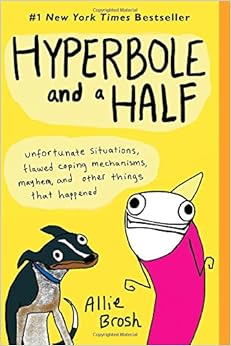
Hyperbole and a Half by Allie Brosh

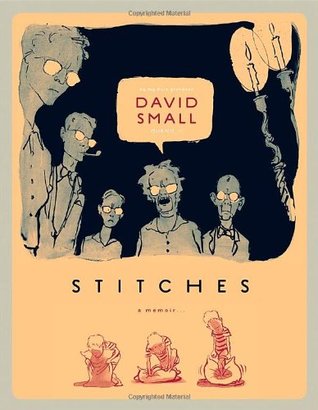
Stitches by David Small


So I’m a word guy, right? I love books, love reading; I enjoy movies and TV, but not the same way. I teach Fahrenheit 451 pretty much every year; in fact, I’m teaching it now. We’re at the point when Captain Beatty is explaining why the firemen are a good thing, because books, he claims, are a bad thing. He says, along with a mess of other interesting statements, that things started changing when photography came into its own, followed by motion pictures, radio, and TV – and, though Ray Bradbury didn’t predict it, the internet, YouTube, memes, GIFs, et cetera. Beatty says that things got simpler because they had mass: because a picture of a face is more solid than the face that one might imagine given a description. Guy Montag, the hero of the novel, is described as 30 years old, having a thin face, black hair, heavy eyebrows, and a “blue steel shaved-but-unshaved look.” So which is more solid, the face you’re imagining after reading those words, or this:


(By the way: took me twenty minutes looking through Google image search to come up with that. Searching for the description got me page after page after page of male models with swirly/spiky hair on top that was shaved on the sides. I mean, this dude

is not Guy Montag.

(Also by the way: I had to go back and re-do this search because my GODDAMN MS-WORD CLONE CAN’T SAVE PICTURES AND THEN UPLOAD THEM TO MY BLOG AND WHENEVER I TRY IT CRASHES THE THING AND THEN THE WHOLE POST IS BLANK AAARRRRRGGGGH Okay, I’m fine now. This is also why I like words more than pictures.)

Now, Beatty is the bad guy in the book, and if he is for it, I’m pretty much against it, including replacing books with visual mediums like film and television and the interwebs. But as Professor Faber (he is the Yoda to Montag’s Luke Skywalker) explains later, it is possible for books and movies and TV to all accomplish the same good things – the same things that music, and art, and conversations with good friends can all accomplish.

I think these two books, even though they are as visual and pictorial as they are literary – as many pictures as words, and the pictures essentially communicate as much as the words do – do the right things in the right way. That’s why I’m putting them together in this review. That, and the fact that both, despite the largely light-hearted genres they ostensibly belong to (Stitches is a graphic novel and Hyperbole and a Half a web comic), are actually quite somber and poignant and sad.

Hyperbole and a Half is a web comic that I discovered, as I think a lot of people did, because the author, Allie Brosh, wrote about the Alot. I hate that word; I love that comic. So I got the book that Brosh published, and read it. It’s a collection of her comics, which are about herself and her life: and though they are frequently stunningly funny, they are also profoundly sad and poignant to read. Brosh lives with fairly severe depression, according to what she depicts here, and she pulls absolutely no punches in describing what that life is like, and also allowing that condition, those feelings, to bleed into her other comics, as it no doubt bleeds into all parts of her life. Realizing how much she struggles with this turns even the more conventionally funny and wacky comics a bit more serious; because the strangeness that at first was just amusing now seems another piece of Brosh’s lifelong alienation.

But as hard as that is at times to read, it is also, simply, brilliant. I have rarely read something so honest and perceptive and brave, something that so perfectly shows a unique mind both in turmoil and in triumph.

Oh hey – know when else I read something that showed the same sort of genius and pain at once? Why, it was when I read Stitches, by David Small.

This one is a more traditional graphic novel; as such, it is in a more familiar storyboard format, and the art looks more like comic art; Small is an excellent illustrator, where Brosh’s art is intentionally simple and childish (Though still effective, and amusing as hell where it isn’t heartbreaking.). This is also a single story, told in words and images, rather than a series of shorts and vignettes like Hyperbole and a Half. It is the story of David Small’s family, particularly his violently abusive mother. The title comes from Small’s experience with cancer as a child: he had an undiagnosed tumor in his throat, which eventually led to the removal of one of his vocal chords, leaving him essentially mute, and also with a Frankensteinian line of stitches across his neck. This one is an even more terrible story. It’s maybe a little easier to live with, because it has villains and therefore heroes; Small should be considered heroic simply for surviving and growing up and getting his freedom, and then finding the strength to write this book – but the fact of his heroism makes the villains that much more terrible, and the story that much harder to get through.

But like Hyperbole and a Half, it is worth getting through. And in both of these cases – despite what Captain Beatty might think – the images don’t make the story easier to read, though I do think they give the stories mass. Almost too much of it, in fact.

I hope I haven’t made these books seem too dark or painful to read; they are both hard to read, but both are wonderfully realized, and really more moving than anything else. They are both genuine and honest memoirs written by intelligent and creative people, and I recommend them both.

Just – don’t read them one after the other. Put something more cheerful in the middle, there.

(Here: try this. I think it’s funny.)

Books vs. Movies Part II: Books

Here is the second essay: here is the one I wrote because I felt  dirty after writing the first one. Because I don’t actually think movies are better than  books; not at all, not in any way. In fact, I think the preference for movies over books is extremely harmful to our society.

So I wrote this one. Please note: it is directed at my students, who are as I describe them here. I expect that people who read this blog are not the non-readers I describe. Though the ending call to action still applies, to all of us who haven’t given up hope.

Not sure if I have given up or not, yet. But this essay is pretty clearly on the side of despair.

Enjoy!

Everything Is Terrible And We’re All Going To Die

I’m not like you.

I’m sure that’s not a surprise.

Unlike most teachers, I think, and say, that grades don’t matter and test scores don’t matter. Because all that matters is learning, and grades and tests don’t measure that; they may test what you know, in terms so specific that they become useless, but that doesn’t say what you will do with that so-specific knowledge: will you forget it the minute the test is over, the grade is filed? Will you be inspired by that knowledge?  Affected by it, changed by it? Tests can never measure that, and grades can never rate that. That change, that inspiration, is the purpose and value of education. That’s what matters.

Unlike most of America, and presumably the rest of the world, I don’t like money. I like a few of the things it can buy me, like a comfortable home, food, electricity, pirate outfits, Converse, books, coffee; but money itself is a trap. It leads us down a very specific path, a path that we must not deviate from, or else we don’t get the money; the problem is, that once we reach the end of that path, we find that the money isn’t what we want. What we want is freedom from the money, or more precisely, from the need to continue procuring the money. But the more money we make, the more stuff we buy, and the longer we have to keep getting money to pay for the new stuff. It’s a trap. I don’t like it. That’s the rest of the reason why I don’t believe in the value of grades: because every argument for grades comes back to money.

I’ve already lost you, haven’t I? Sure: you don’t care about me, or about what I believe; if what I have to say has some interest or benefit for you, you’ll read it – but if not, then you won’t. And me preaching at you doesn’t interest you or benefit you: it doesn’t entertain you, doesn’t dispel the cloud of melancholy that darkens most of your days, and which you are constantly seeking to escape through whatever momentary distraction you can find; and it doesn’t earn you money. Why would you read this, just for the sake of reading? Please.

Because unlike me, you don’t read.

DISCLAIMER: Yes, I know there are exceptions. I know there are people reading this who are readers. But I also know there aren’t very many. (Let’s be clear: “reading” Facebook or Twitter or Reddit is not reading. Reading here means books. E-books count, but memes and BuzzFeed and the captions on YouTube videos do not.) Most people read when they are forced to, by English teachers like me; most people will read something if there is “buzz” about it. (Meaning: if it is exciting.) But most people would rather wait for the movie. Even with assigned reading, the majority of people don’t read the whole book; they read enough to know they don’t want to read any more, and then they look at the SparkNotes, or they get their friend who is a reader to tell them about the rest of it, or they just fake it on the test – because the reading doesn’t matter, what matters is the grade, which gets you into the college, which gets you the job, which gets you the money.

Allow me to quote from a book that most of you haven’t read, or if you have, you didn’t pay enough attention to.

“Picture it. Nineteenth-century man with his horses, dogs, carts, slow motion. Then, in the twentieth century, speed up your camera. Books cut shorter. Condensations, Digests. Tabloids. Everything boils down to the gag, the snap ending…Classics cut to fit fifteen-minute radio shows, then cut again to fill a two-minute book column, winding up at last as a ten- or twelve-line dictionary resume. I exaggerate, of course. The dictionaries were for reference. But many were those whose sole knowledge of Hamlet (you know the title certainly, Montag; it is probably only a faint rumour of a title to you, Mrs. Montag) whose sole knowledge, as I say, of Hamlet was a one-page digest in a book that claimed: ‘Now at last you can read all the classics; keep up with your neighbours.’ Do you see? Out of the nursery into the college and back to the nursery; there’s your intellectual pattern for the past five centuries or more.

“Speed up the film, Montag, quick…Digest-digests, digest-digest-digests. Politics? One column, two sentences, a headline! Then, in mid-air, all vanishes! Whirl man’s mind around about so fast under the pumping hands of publishers, exploiters, broadcasters, that the centrifuge flings off all unnecessary, time-wasting thought!

“School is shortened, discipline relaxed, philosophies, histories, languages dropped, English and spelling gradually gradually neglected, finally almost completely ignored. Life is immediate, the job counts, pleasure lies all about after work. Why learn anything save pressing buttons, pulling switches, fitting nuts and bolts?”

That is from Fahrenheit 451 by Ray Bradbury.

And it’s you. You only read to get to the ending; once you know the ending, you stop reading –  and for the same reason, you never re-read. If you know enough to answer questions about a book – or about anything, really – you don’t see any need to keep learning about it; you can already answer the questions. You don’t see the need to learn anything other than what you will need to earn money, hopefully lots of money; and the purpose of earning that money is – pleasure.

The movie-vs.-book argument is built on a flawed foundation, the same flawed foundation that the dystopian society in Bradbury’s novel is based on: the idea of happiness.  Captain Beatty, the same evil clown who explains to the protagonist Montag how our society turned into theirs, also says this: “Ask yourself, What do we want in this country, above all? People want to be happy, isn’t that right? Haven’t you heard it all your life? I want to be happy, people say. Well, aren’t they? Don’t we keep them moving, don’t we give them fun? That’s all we live for, isn’t it? For pleasure, for titillation? And you must admit our culture provides plenty of these.”

When we try to decide whether movies or books are better based on the idea of which is more entertaining, the argument is immediately flawed: not only is entertainment transitory and essentially meaningless, but it is also too subjective to offer any coherent judgment: this fellow says he likes books more because they are more entertaining; this chap says he likes movies more for the same reason; and neither can be wrong, and neither can be right. We must turn to Bradbury – a novelist, of course – for a reasonable determination of value. If we believe that human society is valuable and worth preserving, then books offer a better opportunity for the continuation of the species than do movies. If, on the other hand, human culture is nothing more than what Beatty describes – something that exists only to provide its constituents with pleasure, with titillation –  then it doesn’t matter whether books or movies are better; at that point, humanity doesn’t matter, because something that exists only to please itself is too insular, short-sighted and pathetic to survive.

In that case, movies can be better. You can just keep watching Netflix until the ice caps melt and the water supply vanishes and the food supply follows; maybe you can watch The Road to get some pointers on what comes next. I’d tell you to read the novel by Cormac McCarthy, but – well. Don’t worry: the movie has Viggo Mortensen.

Bradbury shows in his book – and any observant student of humanity can confirm –  that books stimulate thought, and that novels promote empathy. Books of any stripe can provide evidence, rational argument, and conclusions about any subject; following the path of reason improves one’s ability to do the same. Novels create characters, who then give the reader a glimpse into their lives and psyches; understanding those people, assuming one can suspend disbelief enough to see the characters in a novel as people, at least potential people, improves our ability to understand actual people. Movies do neither of those things. Bradbury, who loved movies and television, has his Wise Old Man character offer the possibility that movies and television could offer the same thing that books do  – the same argument I’ve been hearing for years from my students when they try to explain to me why they don’t need to read, not really – but in my opinion, Bradbury was wrong about that. I don’t think movies and television can help, not at all.

The key, I think, is imagination. Imagination is the survival skill that enabled humanity to rise to the top of the food chain; because we could imagine what would happen when the mammoth came by, or when the saber-toothed cat jumped out of those bushes, we were able to plan for the possibility; that advance preparation made up for our total lack of physical prowess compared to other species. Imagination gave us the chance to survive long enough to build a civilization; imagination, in the form of ambition and aspirations, gave us a reason to build a civilization and allowed us to build civilization into what it is today; imagination would allow us to solve the problems we face that threaten our survival in the future.

If we still had imagination, that is. But you see, imagination requires a human intellect to create: to fill in blanks, to build images and scenes based only on hints. The kinds of things we do when we read, where even the best authors can only tell, never show. The kinds of things we never do when we watch movies or television, because they show: the images are created for us, the characters are presented to us, a fait accompli, without any need for our participation, for our imagination. The most we can do with a movie is decide if we like the image as presented to us; decide if it is entertaining or not.

Now, someone with imagination can watch a movie or a television show and have a new idea; they can think of what could have happened if the characters had encountered a different situation, or had different traits, or different resources; a person with an imagination could think of how a situation they watched on Netflix could parallel one in real life, and how the Netflix situation could lead to a real-life solution.

But you don’t get imagination from watching movies. You get it from reading books.

There is some good news. Our technology already exists, as does our science; and the lucky thing is, one person with imagination can keep a hundred engineers working, a thousand, more –  just ask Nikola Tesla. So as long as there are a few readers, a few thinkers, those people may be able to keep us afloat, in terms of problem-solving and innovation, for a few generations more; but that’s where we hit the empathy snag. You see, the notable problem in the society of Fahrenheit 451 (By the way: are you tired of me talking about a fictional society instead of the real world? Yeah. Check your phone: maybe there’s something more interesting to watch on YouTube. People falling down, or something. “Life becomes one big pratfall, Montag; everything bang, boff, and wow!” What am I saying? You’re not still reading this.) isn’t a lack of technology; their technology is more advanced than ours. The problem is that they don’t care about each other, and thus they don’t care about themselves. They run each other down in cars for fun. They commit suicide at an absurd rate – and they don’t care. They go to war, and nobody really pays any attention until the bombs actually drop on their heads: and even then, they only notice when the television screen goes blank, in the split second before it all turns to ash and dust and nothing.

You’re heading that way, now. People don’t care about each other the way they used to. Oh, some still do; most still care to a certain extent – but a lesser extent than in the past.  I can tell because look at your politics: not that you elected Mr. Trump, but the reason why you did – because you got tired of caring about other people’s problems. You don’t want to worry about refugees, or about problems in other nations, or the reasons why people do things we don’t understand, like carry out terrorist attacks in the name of an ideal; you don’t want to think about long-term issues like climate change, and you don’t want to pay taxes that don’t help you directly – don’t want to pay for other people who can’t find jobs, or who get hooked on drugs. You want to keep your money for yourself, not spend it on other people. Just like you don’t want to learn things that don’t directly increase your chances of finding a job that will earn you more money. Those other things don’t matter. Those other people don’t matter.

In Fahrenheit 451, when Montag goes looking for a way to solve the problem – he can’t possibly think of a solution himself, never having used his imagination and barely his intellect in his bookless life – he finds an old English professor, a man named Faber. He asks Faber what they can do, and Faber doesn’t give Montag much hope.

“The whole culture’s shot through. The skeleton needs melting and re-shaping. Good God, it isn’t as simple as just picking up a book you laid down half a century ago. Remember, the firemen are rarely necessary. The public itself stopped reading of its own accord. You firemen [In the novel, the firemen burn banned books, and the houses where they are hidden. And sometimes the people who hid them.] provide a circus now and then at which buildings are set off and crowds gather for the pretty blaze, but it’s a small sideshow indeed, and hardly necessary to keep things in line. So few want to be rebels any more. And out of those few, most, like myself, scare easily. Can you dance faster than the White Clown, shout louder than `Mr. Gimmick’ and the [television]`families’? If you can, you’ll win your way, Montag. In any event, you’re a fool. People are having fun.”

“Committing suicide! Murdering!”

A bomber flight had been moving east all the time they talked, and only now did the two men stop and listen, feeling the great jet sound tremble inside themselves.

“Patience, Montag. Let the war turn off the families. Our civilization is flinging itself to pieces. Stand back from the centrifuge.”

“There has to be someone ready when it blows up.”

“What? Men quoting Milton? Saying, I remember Sophocles? Reminding the survivors that man has his good side, too? They will only gather up their stones to hurl at each other. Montag, go home. Go to bed. Why waste your final hours racing about your cage denying you’re a squirrel?”

“Then you don’t care any more?”

“I care so much I’m sick.”

“And you won’t help me?”

“Good night, good night.”

On the off-chance that you don’t like what I’ve said here, and you care enough to do something about it, the solution is simple: read. Read for real, read for your mind and your imagination; read for your future. It doesn’t matter what you read: it only matters how, and how much. Read with your mind, and read as much as you can. If you ever have younger people you can influence, as a teacher or a parent or a mentor of any kind, try to get them to read, too. It doesn’t take everyone: it just takes some. More than a few, if we can.

I hope for your sake that you do. As for me, I’ll be dead by the time the world falls apart. I’d like to think that the books I write will outlive me.

But I doubt it.

Good night, good night.