Take My Penis, Please

Warning: I’m not sure how offensive this is going to get. Can it get more offensive than my title? you may ask. Of course it can. I don’t know how far I will go. I am not intending to offend everyone who is capable of being offended; there is a specific group of people that I intend to be maximally offensive to, but they will never care at all what I say, and the rest of you fine people are not targeted for intentional offense. I suppose the issue is more that this post might make you feel — kinda squidgy. Uncomfortable, like. For that, I’m sorry, but I can’t write anything other than this right now. I won’t. This is the one for now, until I finish this. Then I’ll go back to less squidgy things. Promise.

I mean — if I can.

I am a white male. I am, more specifically, a cis/het white male American. If any of those terms confuse you, allow me to explain: American should mean I was born in any of 35 countries or 13 territories in the North and South American continents or in the Caribbean; but because I was born on the pushiest, grabbiest, most narcissistic nation in the Americas if not on the planet, it only means that I was born in the United States. And I was: in the Northeast, in the state of New York, to be precise. “White” means nothing: we should probably switch to blanco, the Spanish version of the color name, because the “blank” cognate is much more appropriate than “Caucasian,” the usual, err, technical term for my race and ethnicity. Because “Caucasian” makes no sense. To find any of my ancestors who were anywhere near the Caucasus region (The hunk of land between the Black and Caspian Seas, which is mostly Armenia, Azerbaijan, Georgia, and Russia.), you’d have to go back so far in my family tree that it wouldn’t be recognizable as my family tree. My race is, basically, “Nothing specific,” and my ethnicity is “More of the same.” I suppose I am European; what I know of my national heritages includes Welsh, English, Scottish, German, and French; my family name is most probably derived from a Saxon word that means “Defender of the Home,” though my grandfather theorized it came from “Dall’Umpre,” from Umpre, which he thought was an area of Spain where the Basque people lived. That’s way more interesting than my family heritage actually is, though. I’m just white. Moving on.

The “cis/het” is the most recent addition to my descriptors; I will add that I use the pronouns “He/him,” because I, unlike a whole bunch of goddamn idiots on the internet, am not upset nor offended by the use of pronouns. I speak English, I read and write English; I understand the necessity of pronouns in my language. If you don’t, allow me to present English without pronouns: here is the same paragraph I am finishing up now, without any pronouns. Ready?

The “cis/het” is the most recent addition to Dusty’s descriptors; Dusty will add that Dusty uses the pronouns “singular male signifier subjective case/singular male signifier objective case,” because Dusty, unlike a whole bunch of goddamn idiots on the internet, is not upset nor offended by the use of pronouns. Dusty speaks English, Dusty reads and writes English; Dusty understands the necessity of pronouns in Dusty’s language. If the audience reading this paragraph doesn’t, allow Dusty to present English without pronouns: here is the same paragraph Dusty is finishing up now, without any pronouns.

Isn’t that fun? Sorry: Isn’t the activity Dusty just completed fun?

Of course not. It’s garbage. Everything is better with good pronoun use. Everybody should, therefore, embrace the appropriate use of pronouns. Which means respecting what other people want you to use in reference to them. And which also means including your preferred pronouns in your self-description/introduction when you can, so we all can get used to asking about and respecting people’s preferred pronouns. I know that it may feel strange, especially to those of us who had the habit beaten out of us, to use singular “they,” or to use a pronoun that doesn’t obviously match a person’s appearance, or to use one of the new pronouns like xe/xem/xer [Those are pronounced “zee/zem/zurr”, and are, in order, subjective, objective, and possessive: Xe wanted a ride on xer pony, so we gave xem a turn.]; but suck it up. Practice a little bit, don’t feel bad when you unintentionally make a mistake; just do your best, and you’ll get used to it. My first trans student — pardon me; I had trans students whom I did not know were trans students at the time they were in my classes — my first out trans student used pronouns I wouldn’t have associated with him, based on my assumptions about his appearance, and I struggled with it more than once; but over the four years I knew him, I stopped making the mistake, and he never got mad at me about it. Partly because I never said anything like “This is hard and I’m tired of it, why can’t I just call you ______?” The only expectation, the only burden being asked of us is, “Don’t be an asshole.” Which is too much for some, I know, but don’t let them influence you: you don’t have to be an asshole. So don’t.

“Cis/het” means that I am cisgender, which is the opposite of transgender, meaning I identify as the gender to which I was assigned at birth, and which matches the stereotypical assumptions based on my appearance, at least most of the time — I had very long, very pretty hair for a long time, and I was frequently mistaken for a woman, which I did and do find flattering. Because the “het” part means I am heterosexual, so I am attracted to members of the opposite gender from myself, in this case women; calling me a woman means I would be, in my eyes, far more attractive than most men. (I say “most” because there are some very pretty men out there.)

Why am I saying all of this when most of you certainly already know this? Two reasons: one, it’s difficult to ask about all this stuff, and I know some people are still confused; it took me quite a while to remember what “cis” meant. And it’s difficult to ask for clarification because the issue seems very sensitive, and it often is: but remember, the only expectation is, Don’t be an asshole. I constantly ask my students to explain what their slang and lingo means, and they think it’s cute that I don’t understand. They love teaching me, even though they cringe, visibly, when I use the slang myself. You know why? Because I’m not an asshole. (I’m based, fam. frfr.) And also because I’m not an asshole, I very much want to normalize this entire topic: I want everyone to be comfortable talking about preferred pronouns, and transgender and cisgender people, and heterosexuality and homosexuality and bisexuality and pansexuality and asexuality, and everything in the queer world, in general. Because this is the queer world. Right here. Right now. We all live in it. There is no “normal.” There’s just — people. All of us. And all of us need to not be assholes: and that is the only expectation that matters.

The second reason I am talking about all of this is because there are, apparently, too many people in this country who don’t understand, or who misunderstand, and I assume that some of my friends and loved ones and my beloved readers are included in that group. That is not an insult: none of you are assholes. (Because assholes wouldn’t read what I write every week. I don’t hang out with assholes.) But some of you are uncertain, or confused, or misinformed, I assume. So I want to clarify. I want to help, and I believe that understanding reduces tension, and there is too much goddamn tension in this country right now. (Please also note: I am not an expert in this, and there is stuff I don’t know and stuff I get wrong. This is just what I do know, presented in the hopes that it will be helpful to some.)

So here I go: not talking about my penis.

The last word I used to describe myself is “male.” I identify as male. I think of myself as a man, which is not the same thing as being male: when I was young, I was male, but I was only a boy; when I was an adolescent, I was male, but I was an asshole. And in this whole list, the only one that has anything to do with my genitalia is the last one: because the main reason why I was an asshole when I was a teenager was because I had a penis, and the usual teenage sex drive, and the common total lack of morals or empathy where that sex drive was concerned. Too much focus on the penis makes one less of a man, I have found.

That’s why I picked the title. Because honestly? I don’t need it. I don’t care enough about it, and it drives me fucking nuts that there are so many goddamn people who believe that the existence of a penis attached to my body is somehow the most important defining characteristic when it comes to my gender and sex; so I’m sick of it. Take it. Give it to someone who wants it. I wish them well of it.

I wrote last week about being proud, and what it means to be proud. I am proud of being a man. I believe that is something I have accomplished over the years — though I will immediately and repeatedly say I didn’t do it all by myself. But I am not proud of my penis. My penis did not make me a man. My penis did even make me male: because the category of “male,” biologically speaking, means “of or denoting the sex that produces small, typically motile gametes, especially spermatozoa, with which a female may be fertilized or inseminated to produce offspring.” [Also, writing this I realize that I may not be a male, because I have not to my knowledge ever produced offspring. So do my testicles actually produce spermatozoa? Maybe not.] Which means that my testicles made me male, and more generally, my XY chromosome structure (So far as I know. As I have never had my genes examined, I may not be chromosomally male, any more than spermatozoically male. That’s not a word.). Know how I know that my penis didn’t make me male? Because if I lost my penis in an accident, nobody would identify me as anything other than a cis male: because most people (Obviously no longer including Republican lawmakers, who are trying to pass bills requiring genital examinations as a prerequisite for sports. For fucking sports.) do not check my penis before deciding that I am a male. So its lack would go unnoticed in the face of secondary characteristics: I would still have facial hair and body hair in a “masculine” pattern, and I would still have a relatively deep voice, and I would have the same shoulders and hips, hands and feet and facial structure, and I would still be 5’10”. Those things, amusingly, are much more to do with my heritage, with my race and ethnicity, than with my gender or sex, because I am squarely in the average for most adult white people. Those things are also, at this point, not dependent on my testicles; I could lose those in an accident (And seriously, take ’em. Useless lumps. Itch and sweat and get in the way. And give me cancer scares. [Also, PSA to testicle-havers: do self-exams in the shower. Get used to how your testes are shaped, because you are looking for changes as a sign of potential problem.] Totally pointless, and very annoying.), or have them removed if they became cancerous, and still keep most of the same traits that would make people identify me as male; the ones that might fade would be easily recovered with some simple hormone treatments. Which many of my fellow men will get voluntarily as they get older, even without losing their testicles. And that won’t make them men, either, just as the natural decrease of testosterone doesn’t make one not a man. Regardless of what all those ads on the radio and the spam emails want me to believe.

You know what else didn’t make me a man? Having sex. I know because I had sex when I was still — I don’t want to say “a boy,” because that takes this into weird[er] places; I was between about 15 and 17 when I first had sex, so not a boy: but I was sure as hell not a man. I was an adolescent. I was immature. I was selfish. I was, as I said above, an asshole. And, again, not having sex would not make me not a man: if I lived the rest of my life as a celibate, I would still be a celibate man, and everyone would see me as a man, with no idea of what my sex life was or was not like. The vast majority of you, thankfully, not caring, and wanting to know nothing about it, as I don’t want to discuss it. Further, having children does not make you a man, because I don’t, but I am. (Again, and this still makes me chuckle, the ability to produce sperm that can father children apparently does make you male, which means I might not be male. Well, Mom always wanted a daughter.)

Being aggressive does not make you a man: I am an introvert, and I hate and fear and dread confrontation of all kinds. I can do it, and I have when it is necessary; but I hate it. Being violent does not make you a man: I have never committed an act of violence, never been in a fight, never fired a gun, never killed anything larger than a mouse. (Killing a mouse does not make you a man. Elsewise cats would be men. Though of course they don’t want to be men: cats don’t want to be anything other than cats. Why would you? Once you’ve reached the peak, you don’t come down if you don’t have to.) Loving sports, especially blood sports, does not make you a man; I don’t care for most sports, but the ones I do like are generally skill and grace sports, like gymnastics and skateboarding.

We’ll come back to sports. Because there are a whoooooole bunch of assholes focusing almost exclusively on sports these days, in relation to this issue.

I think to be a man means, in part, not being an asshole. And I hate that, not only do millions of people disagree with that, but millions of people think the opposite: that being an asshole makes you more of a man. It does not. It just makes you an asshole.

And here’s the point: believing and affirming that trans men are not men, or that trans women are still men (or confused men, or “biological men”) makes you an asshole. Not a man. Not a rational person. Not a defender of women, or of people in general. It does not mean you adhere to science and accept objective reality. It means you are an asshole. Because you are helping to oppress and potentially destroy the lives of thousands upon thousands — millions, more likely — of trans people. Men don’t oppress and destroy innocent people. Monsters do that.

So okay, out of all of these things that do not make one a man — including a penis and testicles — what does make one a man?

Well that’s the thing: it changes, doesn’t it? It depends on context. I know that’s an annoying answer (This is why my students hate English sometimes, and prefer math, where there are definite answers. It’s easier that way. But please remember that life is poetry, not geometry.), but it’s the only one, and we know it. I’ve been giving some examples of the classic standards by which we define men, along with counterexamples that show those standards are not actually definitive: appearance does not make one a man, genitalia does not make one a man, fatherhood does not make one a man (Though it sure would be nice if more men were fathers and more fathers were men — though also, more fathers should be women and more women should be fathers. By which I only mean that shitty people shouldn’t be parents, and people who are parents shouldn’t be shitty people.). The only answer that actually fits all circumstances is this: I make myself a man. By deciding that I should act like one, according to my definition of a man’s behavior, and then doing it.

This is a dangerous answer, though. Because if I happen to think that being a Nazi and slaughtering millions of innocent people is what would make me a man, and I did that, then by my definition I would be a man; and I think it’s clear that would make me a monster, not a man. So there have to be some real standards of manhood, for the idea of manhood to have any meaning or value; and since, as I said, I am proud of being a man, I think we should retain the idea of manhood and manliness. I just really, really need us not to focus that idea on the genitalia. And preferably without any gender distinctions, because I think anyone can be a man who wants to identify themselves that way. Anyone who shows the qualities I define as manly qualities will absolutely be welcome to be called a man by me, if you want me to.

So what does manhood mean? First, it means being responsible, because being a man is about being an adult. Children are not men. Nor are they women: they are children. For me, the major difference between childhood and adulthood is responsibility. Responsibility means knowing what is needed, and then being strong and using that strength to do what is needed. Please note that this is not exclusive to men, because women also must be responsible and adult in order to be women — and also, children can be responsible and even adult in some ways, while still being children. The difference there is that children who must be adult are being harmed by that: asking adulthood of children is asking too much, and is harmful even if the kid can handle it; it’s still bad to make kids grow up too fast. Adults are those for whom responsibility doesn’t harm, it actually helps. I feel better when I am responsible, when I do my work, when I do what is necessary. I don’t like it, a lot of the time; but I feel better for it. Another aspect of adulthood which is necessary for manhood (and also for womanhood) is control: self-control, that is. Children do not have good self-control, but that is forgivable in children; it is less so in adults, in men and women. (Though I will note that everyone can be irresponsible from time to time, and also can give up self-control and let loose, sometimes. Just not all the time. Not when it matters. And to be an adult, you have to know when it matters.)

I will also say that one of the toughest kinds of self-control to have is the ability to keep yourself from controlling others. It is also, however, one of the most important. I have been struggling lately, because one of my classes needs to learn that it is important for them to pay attention to the class when I am teaching it; the way I am teaching them that is by not teaching them for a time, and letting them teach themselves. And they are doing a terrible job. And it is so damn hard for me not to stand up and take the class over and make them all learn the way they should be learning: but I need to not control them, I need them to learn. So I’m controlling myself, and letting them learn this vital lesson. It’s hard. But I’m doing it. Because I am a man. Men control themselves. (Also: please note, therefore, that rapists are not men. They are monsters. And any definition that allows rapists to be fully included in the ranks of men is a shit definition. Remember that when we talk about penises as man-defining.)

So that’s what distinguishes men from boys, from children. What distinguishes men from women?

As I said, it’s unclear: it changes. It depends on context. There is not a single trait of manhood that I could name that should not also be part of womanhood. Which is why transphobic bigots have to rely on the one clearly distinct difference in their eyes: genitalia. Ask them about intersex people (Intersex people are those who have more than one of the traits for male and female biological sex — so both ovaries and testicles, for instance. There is a wide range of people with a wide range of traits, and the term is non-exclusionary. Read more here. Note, for instance, androgen insensitivity syndrome, which can affect people with XY chromosomes and can, in some cases, mean that their cells reject male-trait inducing hormones entirely: and they will be phenologically [Is that a word? Should it be “phenotypically?”] indistinguishable from someone with a stereotypically female phenotype), or about men who lose their genitalia, and they will dodge the question. Every time. “Intersex people are so rare,” they will say. “I’m talking about MOST people.” Sure: most of the time “shit” means excrement; but sometimes (say, on 4/20) one might want to go out and buy some “good shit,” and would be VERY upset if someone sold them a baggie of excrement for $50. If you insist that “shit” only be used, ever, for the most common cases, you are losing some very important uses of the word — and your definition, therefore, is shit. A shit definition of shit. So too with simple definitions of “man” and “woman.”

I think in our society most people see the major distinction as being one between strength and kindness. Most people in our society see strong qualities as men’s qualities, and kind qualities as women’s qualities. People who are not assholes, of course, understand that everyone should be kind and everyone must be strong; but if there is a meaning to gender at all (And by the way, I’m totally cool with dispensing with gender entirely: I’m a human and a person much more than I am a man. I said I was proud of being a man, but I am really proud of being strong and responsible and kind.), I think it lands there. I think that I am a strong person, and my accomplishments that have required strength are the ones I am proud of, as a man. I have developed greater strength over time, and I am proud of that; though I think there is an upper limit (like, it’s not true that the stronger I get, the manlier I get, ad infinitum: if I am twice as strong as I used to be, I’m not two men [though I might like just repeating the syllable in one word, like I could go from being a man to being a manman, and then a manmanman].), I do think there is a general area where having enough strength to get through something — and often, to help someone else get through something — distinguishes one as a man from a child, because a child would need to take strength from someone else, where a man would provide strength to someone else who needed it. And a child who got through something requiring strength just on their own is seen as — grown up.

But here’s the thing: I may be a man because I am strong — but I am a good man because I am kind. So let’s not pretend that either virtue is exclusive, or disallowed to anyone in any category. Let’s not be assholes. Which category certainly includes a subset of both men and women. But recognize, again, that there are no traits that are exclusively men’s traits, and no traits that are exclusively women’s traits.

Which is why the debate over trans rights is so goddamn stupid. They have to focus on the only thing that they can point to as exclusively male: my penis. And ignore all the exceptions to that oversimplified definition. Most particularly, they have to ignore that the logical result of that argument is this: if someone who wasn’t born with a penis acquired a penis, then they would, by the anti-trans bigot’s own definition, become a man. This is why the more intelligent anti-trans bigots focus instead on chromosomes: which is just as reasonable and intelligent as distinguishing between people based on their skin color. You can describe someone with their chromosomes, if you can know their genes; but you can’t define them that way. Also, if you look at the intersex links I put above, you will find that there are people with chromosomes that just don’t fit into either category. “But those cases are so rare,” they say. “I’m talking about most people.”

You know what’s amazing about these people, and these arguments? That they then make the exact opposite point by claiming that trans athletes are a threat to sports. To women’s sports, of course — they never talk about trans men in men’s sports. (Someday a trans man is going to join a men’s gymnastics team, and he’s going to wipe the fucking floor with those dudes. But anyway.) Do you know how many trans athletes there are competing at the collegiate level in this country? In this nation of 330,000,000 people or more?

36. 36 trans athletes. (Source)

Out of 520,000 NCAA athletes, nationwide. (Source)

It is impossible to get a complete count of the number of trans athletes, of course, because not all of them are out; but whatever count you come up with, it is vanishingly small. So if you’re going to ignore intersex people and insist there are only two biological sexes, then you should bloody well ignore the tiny percentage of trans athletes and just let people compete. Actually, you should just let people compete even if there are millions of trans athletes: because people who want to compete should be allowed to compete. I wrote once before about how biological differences are sometimes accepted and sometimes not in sports, and it’s earth-shatteringly stupid to say that Usain Bolt has a fair advantage and Caster Semenya has an unfair advantage because Bolt has a penis and Semenya does not. Protecting women’s sports from trans athletes only makes sense if you pretend that trans women are not women: and they are. More importantly, why are we so goddamn concerned with some people winning sports and other people losing? Aren’t they still sports if you lose?

Or did all of my PE teachers lie to me?

Sports are supposed to be fun. I keep hearing they’re not about winning, they’re about sportsmanship and competing and building team spirit and so on; but apparently not so to Republican legislatures around this country, and all the assholes on Twitter, who are fucking up sports, and fucking up the lives of young people, because they hate and fear trans people. The assholes who constantly use videos and photos of trans adults to mock the idea that someone can be trans: and yet nobody speaks of all the men in the world who look damn “feminine,” and all the women in the world who look damn “masculine.” They only attack trans people, which shows how absurd their bigotry is: exactly like racism, exactly like thinking someone is less because of the color of their skin, but ignoring when some “White” people have darker skin than some “Black” people. Or more orange skin than any human anywhere. Because it’s not actually about appearance: it’s about hating the idea of trans people. They see trans people as toxic, as dangerous; as able to spread their “condition” (variously called an illness, a delusion, and every other shitty word that assholes use to insult other people unfairly) to others like a contagion.

That’s why all the arguments about people “turning” children trans, of trans kids being “peer pressured” into seeking gender-confirming medical care like puberty blockers or hormone treatments or even surgery. Look: I am a high school teacher. I have trans students, and I have had several trans students in the past. I did not know all the trans students I had in the past, because not all of them were out; until the last decade, none of them were out, so far as I know — but of course, I don’t know if any of my earlier students were trans and I never knew it, because they might have been visibly indistinguishable from other people of their identified gender; and some of them may have been transitioning without me knowing about it.

Know how much that affected me, or my relationship to them as students?

Neither do I, because I don’t know who or how many there may have been. So I’m going to have to say the impact of their being trans was — none. No impact. Didn’t matter in the least. As with the former students who have come out as trans, or queer, or genderfluid, or anything else under the sun: none of my relationships have been affected by their gender identity. Which is as it should be.

But those people themselves have been sometimes greatly affected by their gender identity. In every single case that I know of, these young people have been happier when they have been accepted as who they are, as people who have been able to find their way to live their truth, to define themselves according to their own standards. As I have been doing for myself in this blog, because I have a right to: and not because I have a penis. Those young people have struggled mainly because they have had people who denied their self-identification, people who told them they were wrong for being who they are, for knowing who they are, and for defining themselves, as we all not only have the right to do, but the responsibility to do, the obligation to do. And then, as reasonable human beings should, the rest of us are responsible for accepting what other people determine their own identity to be. As I have accepted with my trans students, which is why I have never had any trouble with them being trans. Nor will I ever: beyond sometimes slipping up with names and pronouns. But I’m not an asshole, so I do my best, and I always accept people for who they tell me they are. I don’t question or argue with it. Because it’s not up to me, and I don’t try to control other people’s choices, because I am a man, and I am not an asshole.

And in no case, not one case of any student I have ever had, or ever will have, has genitalia been anywhere in the consideration.

Right! See how horrible that is? The very idea of an English teacher judging a student by genitalia? SO WHY THE FUCK DOES ANYONE DO IT, EVER??? How can anyone rationally decide to pass a law requiring genital examinations as a prerequisite for participation on a specific sports team? How can that happen? What kind of insanity is that? It’s as ridiculous as me asking all of you to read this essay I titled with a consideration of my genitalia. Don’t nobody want that. (Actually, the anti-trans bills are unquestionably worse than my title for this piece. But I still feel guilty for talking about my piece in this piece. Kinda.)

By the same token, taken one small step further: we don’t actually judge anyone’s identity by secondary sexual characteristics, not in terms of identity. Nobody thinks a boy with a high voice is not a boy. Nobody thinks a girl with a flat chest is not a girl. Nobody (sorry, guys) thinks that a teenager with a sad peachfuzz mustache is actually a man. But also, I have students with more facial hair than I will ever grow: but I still don’t think of them as more manly than me. Because I am an adult, and they are not, however thick and luxurious their face-locks. Appearances don’t matter. Not for who people are.

So.

If someone wants to be called by a different name, call them that. (Definitely don’t ever be the person who uses only the name on the attendance sheet: my wife’s birth name was Anthony. Because her dad was a prick who wanted a son, not because she is not a woman. On a much less controversial note, my official name is Theoden, but I prefer to be called just Dusty. Partly because most people can’t pronounce Theoden correctly.) And because pronouns are not at all more meaningful than names, if they want you to use different pronouns, then use the different goddamn pronouns. Mistakes are fine, but do your best, and don’t be an asshole. (Unless you identify as an asshole, in which case, fuck you. And don’t ever make an “I identify as…” joke. They’re not funny.) Don’t judge someone by their appearance. Yes, someone is perfectly able and permitted to be a trans man or boy and wear dresses and long hair, as someone is perfectly allowed to be a cis male and wear dresses and long hair. Yes, someone can be a trans woman or girl and have facial hair. If you think it doesn’t look right, nobody cares what you think. It’s not up to you. If someone changes their name or identity or preferred pronouns several times, just try to keep up: and expect to make mistakes, and expect those mistakes not to matter, so long as you are being kind. Don’t question why they changed; it’s not up to you. Don’t say they’d be happier if they didn’t change, or you liked them better before; it’s not up to you. Your only job is to try not to be an asshole.

And one last thing. I wanted to write this blog because I heard about recent polls that show that the public view of trans people in this country is, in my opinion, going in the wrong direction. This research from Pew shows that the majority of Americans believe people’s sex is only what is assigned at birth (and that majority has grown over the last six years), and that the majority of Americans think that trans athletes should not be allowed to compete on teams that match their gender identity, and that almost half of Americans think that medical treatments should be limited for trans youth under 18.

So let me be clear. Gender is not determined by sex. Sex is not determined by chromosomes. And neither is set in stone and immutable. That being the case, who is the one person most likely to know best what their gender identity is? Themselves. (Notice the singular “they” there. And if you wanted me to write “Him/herself,” then get over it.) We know ourselves better than anyone else knows us. And sure, not all of us know ourselves very well; I have been confused about how much of myself I have discovered just in the last few years, and I’m 48 years old. So it’s reasonable to think that young people who think they may be trans may be unclear, or uncertain — just as some cis people are unclear or uncertain about who they are, for countless reasons, including the possibility that they may actually be trans, and not know it, or not be able to accept it.

In that case, you know who are the best people to help the young person figure out what their real self, their true identity is? It’s not reactionary, transphobic, attention-seeking Republican lawmakers, that’s for goddamn sure. No: it is the young person’s family, and their caring medical professionals. And of course some people have fucked up families, who shouldn’t be allowed to influence their children’s choices: but don’t you think that’s true in whatever way the family is fucked up? Macaulay Culkin’s family should not have been allowed to steal all his money. Brittney Spears’s father should never have been granted conservatorship over her. Abusive parents should not be allowed to abuse their children. But if you think that trans youth are only trans because their parents, or their friends, or their teachers, or their social media, tell them they should be trans, then you’re either an asshole, or an idiot. The world tells trans people they should not exist: nobody tells cis people they should be trans. Nobody chooses to be trans, just as nobody chooses to be white: some of us just are. The world should allow us to be who and what we are, so long as we don’t cause any harm. And trans kids don’t harm anyone by being trans. Or by playing on sports teams. Or by receiving gender affirming care, which is often critically important to prevent harm being done to the one person most likely to be hurt by a trans kid: themselves.

And if it helps, if the young trans person who told me that he wants a penis wants mine, he can have it. Take it. Please.

But it’s still not going to make you a man.

You’ve already done that, sir: because you are strong, and you are kind.

Now if only everybody else could be the same.
Late to Work, Work Too Late

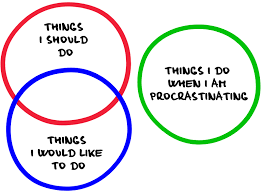
I have a confession to make: I procrastinate my work.

Specifically, I procrastinate my grading. I procrastinate my paperwork, too; if I’m not the last one every year to get my self-evaluation done, I’m the runner-up. It’s almost a point of pride for me to refuse to turn in my Intent to Return paperwork until it is appallingly late; I dress it up as a sort of protest, because I hate the system — my school requires teachers in February to sign a letter of intent that says we do mean to return for the next school year, and listing the classes we would like to teach (There is also an option on there for “I would like to work for the school district, but I am willing to transfer schools” which I have never and will never check, because if anyone puts me into a middle school, I’m quitting on the spot and becoming a meter maid. Or maybe one of those guys who spin signs for tax preparers.), but then they don’t actually offer us a job, or tell us what we will be teaching, until JULY. I hate that we are supposed to commit to the school MONTHS before they have to commit to us — and in some cases, they don’t tell us the classes we are teaching until the school year starts: in 2021 I was teaching a full set of online classes, but I did not know until an administrator emailed me and asked “Hey, how do these students I have registered for your class sign into the Zoom?” ON THE FIRST DAY OF CLASSES. So yeah, the system pisses me off: but also, I do intend to return, and the people who need my signed letter — specifically my principal — are not the people who set up this obnoxious unbalanced system. So there’s no particular reason why I procrastinate signing the letter; I just do. Like with all of my paperwork. And all of my grading.

I don’t like admitting it, because I’m a teacher, and I’m supposed to set a good example for my students; I’m supposed to not only teach them that, in the real world, deadlines matter, and organization and a work ethic are important; but I’m supposed to enforce that learning by requiring them to hold to deadlines, to be organized, to develop a work ethic, so that they will be prepared for the real world. If I don’t prepare them for the real world, I’ve been told, then not only will I be setting them up for a rude awakening when they get fired from their jobs, but also I am tearing apart the foundations of our society by eliminating personal responsibility, which means that everything in this country will fall apart when this current generation gets out of school and goes into the real world.

Where have I been told this? On Twitter, of course. Where I was this morning when I should have been working.

Step 1: head on Twitter Step 2: regret your life decisions | Twitter | Know  Your Meme

Please don’t get me wrong: I have a strong work ethic. I take personal responsibility for the tasks that are required of me. If anything, I take too much responsibility, and work too hard; where I could just shrug cynically and say “Hey, if those rotten little punks don’t want to read the book, then they’ll fail and they’ll deserve it,” instead I say, “Maybe I should read it to them in class, so I can explain it and make it more interesting, and they can at least understand what’s in the book and what it means, even if they aren’t reading it on their own.” Does that require more of me? It does. Not only do I have to work harder in class, then, but also it means I can’t assign quiet independent work in class, and get my grading done while my students are working; that means I have to do my grading outside of class, which inevitably means I have to do it on the weekends.

Which causes a secondary problem: because I put so much effort into my daily classes, trying to run every lesson, keep every kid involved, cover every topic with them and make the information interesting, so I can be (at least somewhat) sure that they understand and are learning, I have little energy or motivation at the end of the week to do grading. And frankly, at the end of the week of work, I think I deserve a break: and I’m right. I do deserve a break. Teaching is a hard job, and I work very hard at it. It’s important to me: I recognize the value of education, and the value of an educated populace; I think of it as my most valuable contribution to a world that has been very generous to me in my life — and also, I’m good at it. And my students need to learn, and they need to have good teachers and good adults in their lives, and I am all of those things. So while I am at school, and after school, and during my lunch breaks, and so on, I work as hard as I can to do as much as I can for my students.

The result, then, is that on many weekends, I don’t do any grading. Even though I haven’t done it over the week at school, either. Because I’m tired, and because I deserve a break, and weekends are what I get.

The result is that it takes me too long to grade.

It’s a problem. It’s a problem for a lot of reasons: first because it’s bad teaching practice. Feedback should come quickly: students (like anyone) forget in short order what they did on an assignment or how they did it; if they get the assignment back with feedback within a few days, then they can take the feedback as constructive suggestions on how to improve. But if they get the work back two weeks later, or three weeks later, or four, five, six, seven, even eight weeks later — and yes, I have done that — then it’s useless. They don’t even remember doing the assignment. I have frequently handed back a paper to a class, and had them say “What is this? Oh man — I forgot all about this.” I cringe every time. And tell myself I’ll do better: I’ll spend more time grading, less time doing nothing at school or doing other things at home. The job is important, after all.

But then when the weekend comes, I can’t bring myself to do it. And there are all of the other things that I also need to do: I need to spend time with my wife, who is my whole world; and as important as my students are, and as important as teaching is, she is more important. Much more important. Orders of magnitude more important. Plus, spending time with her makes me happy: which does have the added benefit of helping me recover from the work week, which then gives me more energy to teach as well as I can in the next week. Which is also important: and maybe more important than getting those grades done. The same goes for spending time with my pets, and also working on my house, or going to the gym. All of them are important — the gym helps reduce my stress, and will keep me healthy, which will help me live longer (certainly something that teaching will not do for me…); working on my house makes me more comfortable, and also helps increase the value of the house, which means I will be more financially secure in the future — which not only reduces my stress, it also helps to ensure that I will be able to keep this important job in this underfunded, underpaying state of Arizona.

And so on. There are always reasons to do things other than grade: and I don’t mean bullshit reasons like “I just don’t really feel like it right now,” but valid reasons, genuine excuses: other important priorities that should come first. So I put them first. And so I don’t grade.

Grading Memes 20+ Funny Images Only Teachers Will Understand

And then there are the feedback loops.

You see, because I know that I take too long to grade, and I give myself all the excuses I could ever want to keep allowing myself to do that, I can’t bear to make my students stick to hard grading deadlines. Even though it would be easier, because that way there would be less for me to grade. Even though it would be “teaching them about the real world and taking personal responsibility.” Even though it would make the work more meaningful when they did it, because when they come back weeks or months after an assignment was to be turned in and they complete it then, the chance that they are still able to learn from the lesson is almost nil. But I can’t do it. If I don’t stick to hard deadlines, how can I make them?

I mean, of course I could. We have unequal power in the class. I get to set their deadlines, and the consequences for missing those deadlines; and I get to decide when I complete my own work. I have the power to make these determinations.

But I can’t justify it. I can’t justify the time I take to do the grading, so I can’t justify holding my students to a short, hard deadline, and then taking weeks and weeks to give them back the grade on the assignment they turned in on time.

So I don’t hold them to deadlines. Which is how I contribute to the imminent collapse of our society, according to those Twitter pundits who told me that holding students to deadlines is critical for preparing them for the real world.

It’s also, I know, how I leave an opening for students to put themselves into a real bind. Because I don’t hold them to deadlines, and I don’t get mad and yell and get them in trouble and ruin their GPAs if they don’t get the work done for my class, I make it that much easier for them to procrastinate the work for my class. And, see, they have so many classes, and so much homework for all of them, and their math and science and history teachers all keep hard deadlines, and chew them out and shame them when they miss deadlines, and refuse to let them turn work in late, and therefore ruin their grades if they don’t get the work done — that they always choose to do the work on time for their math and science and history classes. They know they can take a little more time for Humphrey’s work. So they take it: because after a long day of sitting in classes and trying desperately to learn — and they are trying — even when it is boring, even when the teacher doesn’t communicate well, even when other things in their lives or in the classroom are distracting them, they are tired. And understandably so: it’s hard work trying to learn. Especially trying to learn complicated advanced concepts like how to write an essay. But that’s okay, they can put off Humphrey’s work; he doesn’t care.

Let me just set the record straight on that one, because it makes me mad every single time they say it.

Are you listening, kids? (Of course not.) Here it is anyway.

I care.

I care about how you act in my class. I care about whether or not you are paying attention to me. I care about whether you are looking at your phone or if you are reading. I care about whether or not you turn in the work on time. I care about your grades. I care about your test scores. I care about everything. All of it. Always. I care.

I just don’t have the energy to apply pressure on all of you, all the time. I can’t do it. I can’t make the lesson interesting and useful to all of you, while also fighting to make you listen to the lesson I have already put effort into to make it interesting and useful. I can’t stand to have to fight to make you listen to my interesting and useful lesson: you should just fucking listen. Okay? You want to talk about not caring? How about all of you little punks not caring about how much you annoy me when you don’t listen to me no matter what I do or say? Even after you say you like me and like my class? You still don’t listen, and you don’t care how much that hurts, and how frustrating that is. You make me fight you, make me make you follow the rules you know you have to follow already, and then when I ask you to follow the rules, you argue, and you fuss. So I have to fight harder.

Think of this: for every action there is an equal and opposite reaction, right? So if it takes a certain amount of time and effort to overcome your resistance to doing work in class any given day, and I have to be the one to overcome that resistance for you, then that means the effort put into my action to create the reaction in you that allows you to learn is just as hard for me as it is for you. So if you struggle to make yourself pay attention and try, I struggle just as hard to make you pay attention and try. The difference is, I have to struggle with 20 of you, every single period, every single day. And then once I have managed the struggle, and gotten you all to pay attention and try — then I have to teach you. And make it interesting and useful for you, so you can keep paying attention. And that takes effort, too.

So much of the time, even most of the time, I just can’t do it. I can’t put out that much effort in every class, every day, with every student. So I blow it off. I procrastinate. I just start teaching the lesson, knowing that not everyone is paying attention; hoping that somehow they will listen to me as I try to make it interesting and useful, and they will do the work themselves, and then I will be able to help them learn.

It never happens. Not with the whole class. Not with a whole unit.

So I have to let it go. And since I let it go, I can’t demand that they put out more effort than I’m willing to put out. To be clear, again: I could do that. Lots of teachers do that. The fact that I don’t do that is one of the reasons they like me. But because they like me, they feel more casual about my class, and it’s easier to blow off work for a class that is more casual, especially when the teacher is cool and doesn’t care about deadlines. (I. CARE.)

Matrix Morpheus Meme - Imgflip

So the students blow off deadlines, and that creates more work for me. Because I need to try to track them down to get the work completed so I can grade it; or by the time they get around to it, they don’t remember how to do it, and I have to take some time to remind them of what the assignment was. Or they blow off some assignments, which lowers their grade, and then they need to make sure other assignments are perfect so they can bring their grades back up — and that means they need to check with me about what the expectations are, and what they need to do, and if the work they have so far is good enough or how they can change it to make it better and get a better grade. Which is freaking awesome: because it means they’re learning, and they want to learn, and they want me to help them get better, and that is the whole point of all of this —

And it takes more time and energy. Which I am happy to expend on students who ask for help, especially the ones who have been struggling and have low grades because they haven’t turned anything in, which always makes me worry that they don’t understand the assignment or the content at all; when they ask for help, and I help them, and they get it, then I feel like I won. And they turn the work in, very very late, and I grade it immediately because I’m so pleased they got it done, and then I am complimentary in their feedback because I want to encourage them to keep turning in work and showing improvement.

Which, of course, just encourages them to keep turning work in late, and getting extra individual attention, and getting nice feedback and so on.

But then I’m even more tired, and so I get even less done for the class as a whole. Which makes me feel bad, like a slacker, like a bad teacher. Sometimes I get so depressed I can’t stand to work at all. But of course, I keep doing it. Because I have to. Because the students need me. Even if they never act like it.

Meme Creator - Funny You can come back to work now We miss you (& need you)  Meme Generator at MemeCreator.org!

That’s what procrastination is.

I don’t know how or when or why we all forgot that, all got confused about it. Who told us that procrastination was being lazy? Nonsense: blowing off work entirely, never getting it done at all; sometimes that is due to laziness. (Rarely, I would argue. But sometimes.) Procrastinators do the work, we just do it late, or at the last minute, while also applying enormous pressure to ourselves mostly in the form of anxiety. So if you do the work a little at a time from Monday through Thursday, and I cram it all in on Thursday night, and we both turn the work in on Friday — or if I do all the work on Sunday and then turn the work in late on Monday — which of us has done more work? Nobody, of course, unless, as I said, you want to count the extra effort I expended on anxiety and guilt. (And maybe the extra effort you spent on organizing and managing your time and the project — but you loved doing that, and we all know it.) We all do the work. It is certainly true that waiting until the last minute frequently limits the amount of time we have to put into the work: but in my experience it does not at all limit the effort put into it. That is a separate decision, which lots of people make — and sometimes it is due to laziness, I agree. But procrastination is not lazy.

It’s prioritizing.

As I said, when I decide on Friday night that I would rather spend an evening with my wife than grade papers, that is a choice I am making based on what I think is most important: not what requires less effort. Okay, spending time with my wife does require less effort: but considering how much time I spend away from her doing work, it should be clear that I don’t always pick the easier path because it’s the easier path. I usually don’t. When I do choose to spend time with her, it is partly because I have spent all of the effort I can possibly spend, and now I need to do something that puts something good back into me: and an evening with the woman I love will do that. (Also I choose to spend time with her because she is the best and most important person in my world, and she deserves to have my time more than any of my students do.) The time I spend writing is time I could spend grading, and believe me, this is not any easier in terms of intellectual effort. I think it is more important, at least once a week, for my self-understanding and my identity. So I prioritize: I make a choice. And that choice means I have less effort and time to spend on the other tasks. I will still spend as much time and effort on them as I can: but sometimes — frequently — constantly — that effort is not my full effort. It just can’t be.

Because I have too much shit to do.

Want me to get all my work done? Reduce my student and class load, without reducing my pay (Because if I get paid less, I’ll need to go find a second job to cover my expenses, and I will not have more time.). Or even better, make all of my students do their part by having them pay attention to my lesson, to my whole lesson, every day, so I don’t have to fight to make them stay on task and learn the content. Though, to do that, you’ll need to lighten their load as well: because believe me, after being told all their lives that they need to learn everything and get good grades OR ELSE THEY WILL BE DOOMED TO A LIFE OF MISERY AND WASTE BECAUSE THEY DON’T HAVE ANY WORK ETHIC OR RESPONSIBILITY AND THEY WILL HAVE DISAPPOINTED EVERYONE AROUND THEM, they are also trying just as hard as they can: and it isn’t their fault they can’t do everything we demand of them any more than it is my fault.

We are simply demanding too much. And then calling it procrastination when everything doesn’t get done.

This is the point I want to make, and I want to make it twice. Because people on Twitter (Assuming they are people, and not malicious semi-sentient globs of slime) have repeatedly and vociferously claimed that teachers are lazy. We are not. We work as hard as any and harder than most. Of course there are lazy teachers, as there are lazy people in every group; but teaching as a profession takes all that we have, and demands even more. Students, like all children, are a bottomless hole of need: they always need something, and then they always need more. It’s fine; they are children, they’re not supposed to be self-sufficient. But there is never an end to their need. So we who provide care to children, of any kind, we have the full range of tasks required of us professionally — and then we have all those children. And all of their needs. It’s too much: and so I, like all of my colleagues, prioritize. Some of us choose to prioritize work over family, or over ourselves; some of us choose one aspect of work over others — I have colleagues who spend enormous amounts of time and energy making sure that their students are happy, even if the curriculum maybe doesn’t all get covered; I have others who make sure that the students are understanding all the work, even if that means they maybe don’t have the most fun and exciting classes; I try to make sure that my students find some interest in and affection for my subject, because I want, more than anything else, to get them to be readers: and thus lifelong learners, who will grow far beyond what I could ever impart to them. But the issue is, we all try to do all of those things, all at the same time, along with doing all the rest of our work; and it is too much to get done. So we do what we can, and procrastinate the rest, and when we finally run out of time — we say to ourselves that we’ll work on that next year.

And now let me make the same point twice: students need help. They need support. Not all of them need the same help in the same way, but all of them need something. All of them. Partly because they are children: and partly because everybody needs help; everybody, young or old, needs something. What students need more than anything else is grace. They need kindness. They need us to try to understand what each of them individually needs, and to try to provide that to them, as much as we can. We need to know where our boundaries are, when we run out of energy and the ability to give; because they can’t be expected to know how much is too much, and they will always need more than we can give. It’s fine: they are children. Children need support. And there are fortunate children who get most of what they need provided for them by their families and friends; those children don’t need much from their teachers and other caretakers. But they still need something: even if it’s only praise for a job well done, and a suggestion about where they could go next.

The other reason why students all need help and grace is because we demand too much from them. We give them limited time, limited resources, and the limited energy and support of their teachers, and expect them to accomplish — everything. Not only to learn all of the subjects which their teachers have spent our professional lives mastering, but also to learn everything else they need for adult life. And apparently — according to Twitter, at least — they need to learn it all NOW, before they get into the “real world” and discover that they are unprepared for the harsh realities of life. They need to learn to do their work, and do their best, all the time, no matter what they may have going on in their lives outside of school; because in the REAL WORLD, you don’t get to give excuses: you just get fired if you show up late or miss a day of work or miss a deadline or break the rules in any way.

Never mind that I have frequently been late turning in my work. Never mind that I have had colleagues and coworkers who show up late, or miss work, all the time. (I tend not to miss work, and I’m obsessive about being on time. But also, I let my classes get off topic at the drop of a hat, and waste all kinds of time arguing with students over silly subjects instead of pursuing curriculum. We all do the things our bosses don’t want us to do.) Never mind that I and several of my colleagues constantly disobey the dress code, or don’t clock in or out properly, or cuss in front of students, or spend time on our phones looking at social media when we’re supposed to be working. Or show up hungover to work. (I’ve never done that one, either. But I did get suspended because of things I posted online about my students. So I guess I never learned that “If you don’t have anything nice to say then don’t say anything at all” lesson in high school, huh? Must have missed that day. Probably hungover.)

No: we tell these children, who don’t know any different, don’t know any better, because they have only been in school, because we won’t let them leave, that they have no chance in life if they don’t learn everything we have to teach them RIGHT NOW NOW NOW NOW NOW NOW NOW. And then we give them far too much to learn, all at once. And tell them they not only have to learn all of it, but they have to get high grades, or else they are doomed, and we will be disappointed.

And then we are surprised when they procrastinate? When they blow work off sometimes? When they try to take a little bit of time and space for themselves, to do something they enjoy, after hours and days and weeks of doing work, for no tangible reward? We’re shocked when they sleep until noon on the weekends — and then we call them lazy?

How dare we?

No. Students are not lazy. They are doing their utmost to live up to our impossible standards, to our impossible expectations, even with their limited resources and their nonexistent experience, which means they have not mastered the same coping strategies that we have. They don’t know what to do other than — maybe not do some work. And then we get mad at them for not doing their work, and they feel bad, and they fear the consequences we give them right now so they can learn to avoid consequences later; and all of that adds pressure, which wears them down — and they need to take more time off, to escape from even more work. Just so they can survive.

Just like us.

The answer is: they need to work less. We all need to work less. And if we can’t, then the very least we can do for each other is, when we have the power and the opportunity — be nice. Be kind. Give someone a little grace. And take a little for yourself. Even if it looks to others like you’re procrastinating. It’s better to turn in the work too late, than to work until it is too late.

We’re all doing our best.

Happy Freakin Holidays

I bet you’re thinking that I forgot, aren’t you?

Or worse: that I remembered, but decided to just blow you off, to ignore the promise I made that I would be on time with the next blog.

It would make sense if you thought either of those things: since here I am, not only a few days late, but two full weeks. I broke my promise. Missed a post. Missed a deadline. Twice. (Almost three times, but as this is Monday, and a new year, I’m giving myself enough slack to consider this one on time.) I flaked, I slacked, I failed.

Nope. I broke my house. And I had to deal with the holidays.

I don’t want to get into too much detail, partly because it isn’t just my house, it is also my wife’s, and I don’t mean to take away her privacy by talking about things that concern her as if they are only my issue; and also because the insurance is still considering our claim, and I don’t want to do something like claim fault that could potentially screw up that claim. I am clearly going to have to write about insurance at some point in the near future.

And to be clear: it was not my fault. But it is the reason why I have missed now two deadlines for posts, on the last two Sundays.

Friday the 16th was a rough day. It was the workday after the end of the fall semester, and so I had grading to do. Because I believe in grading students based on their work rather than their adherence to deadlines, I always have extra late work to grade; because I teach AP, which are supposed to be rigorous classes designed to prepare students for a rigorous test, I give final exams in the last week. And because this has been a tough month, I fell behind on my grading. All of which meant that I had a ton of work to do on the last workday of the semester before grades were due — and I am still planning to write about how teachers have too much responsibility and too much work. And then my administration raised the difficulty level for me: because they set the grade deadline at midnight on Friday the 16th, at the end of the last week of classes, at the end of one teacher workday for grading and finishing up the semester’s paperwork.

To be clear: the grade deadline is arbitrary. There is no requirement from the state Department of Education, or any other regulatory body, as to when grades must be finalized. Schools are required to provide grades or something equivalent in a timely manner, of course; but what does that mean? Does that mean the final grades must be complete within 36 hours of the last bell releasing students? Of course not. In comparison to other local districts, we got out of school a week early — Tucson Unified, the largest public district in the county, had classes up to the 22nd — and even if you want grades completed by the next business day, which for us would have been Monday the 19th, is there any reason why those grades couldn’t be collected by midnight on Sunday? Of course not.

But for no good reason, the person in charge decided it had to be midnight Friday. So I tried, as hard as I could, to get everything graded by midnight Friday — to be clear, not to please the administration, but because after the grading deadline, the window to update and post grades would close, and I wouldn’t be able to add anything else to my students’ semester grades. They did the work, they deserve the grade (Or they didn’t do the work, and they deserve that grade [Caveat here: anyone “deserving” a grade is pretty antithetical to my view of education, but hold off on that for now. You get my point.]): so I had to get everything done before the deadline. I started grading when I got up at 6am on Friday, and other than breaks for meals (and a VERY valuable hour-plus spent commuting to school and back home, because the same administration (Not the same specific administrator, but it might as well be) insists that we go into work even on days without students, and also wanted to have a VERY valuable staff meeting in person, at which they introduced us to new staff members [Totally different subject, but my school lost four staff members mid-year, for various reasons, which almost never happens in schools because contracts are for the whole school year and we generally strive for continuity — but this is the second year in a row in which we have gone through this mid-year staffing issue. Four staff members is roughly 10%. Second full year we’ve had this 10% staff turnover midyear, after the pandemic shutdown — but surely that’s just coincidence.] and bid farewell to those leaving. Then they wished us a happy and restful vacation. As my students say: LOL.) I continued grading for the next 16 hours. At 10:45pm, I received the email which informed me that the grading deadline had been moved to midnight Sunday. And I went to bed.

Saturday morning I was back to grading; fortunately, there really wasn’t much left, and I soon had it all done, including the last-minute stragglers. And then, to start off my vacation, I headed over to a friend’s house to help him string Christmas lights and drain his reservoir of available beer. But partway there, I got a text message from my wife: the kitchen faucet, which had been leaking, had suddenly gotten worse, actually spraying water when she turned it on. So I turned around and came home to fix the leak. No problem: I have changed kitchen faucets before. My wife and I headed out to Home Depot, bought a faucet that seemed reasonable, and I went to work.

And when I tried to turn off the water under the sink, the hot water valve broke off in my hand.

The next segment of time seemed like forever, though it was not very long. Hot water was spurting out of the pipe end, spraying me, spraying the kitchen; fortunately it wasn’t scalding hot, but it was a LOT of water. I ran outside to turn the water off where it comes into the house — only to find that this house doesn’t have a cutoff valve at that usual spot. I ran to the driveway to turn off the water to the whole house — only to find that what I thought was the main water valve was only a junction for a defunct sprinkler system. I ran around literally yelling “I don’t know what to do!” along with the loudest profanity I think has ever come out of me, while my wife and I tried desperately to catch the water, to use a hose to redirect the water that was soaking our kitchen and puddling in the living room. My wife ran to our neighbor’s house, asked him if he knew where the water cutoff was — and he did! It was in back of the house, in the alley. So I ran back there, to meet him because he had the tool to open the cover and turn the valve if it was stuck.

It wasn’t stuck. It wasn’t there.

This wonderful neighbor did eventually find the main water cutoff: it was in the alley, where he said; it was just buried under a good two inches of dirt. He unburied it, turned off the water, and ended the crisis.

Then we started the cleanup. A plumber came out that night, on Saturday, and told us the pipe couldn’t be fixed without tearing out the wall; he recommended that we contact a restorationist to deal with the water damage, and said we could either fix the pipes when the restorationist tore the kitchen apart — or we could repipe the entire house. (If there’s been good news in this, it is that we do not need to repipe the house.) Because he couldn’t even get the replacement parts, it being Saturday evening after the hardware stores closed, he left without fixing the hot water pipe. Though also without charging us, so I don’t have any complaints about that. I did have complaints about not having working hot water, and a flooded house. In December. Over the holidays.

My amazing friend Tim (The one I had been headed to help string lights and drink beer) came over that evening with a shop vac and helped us clean up the water; he also showed me how to turn off the hot water at the water heater, so we could have cold water, at least. Which let us stay in the house for the night, which was good for our pets, if not necessarily for us. He and his wife also gave us lasagna and invited us over in the morning to get a hot shower. And then the next day, Tim came over and fixed the broken pipe, thereby saving us hundreds or thousands of dollars in plumbing bills. I can’t thank him enough. I am doing my best to thank him as much as I can. (By the way, Tim, if you read this, my dad said he’s proud of you.)

The issue of the water damage to the house is the focus of the insurance claim, which as I said is ongoing; suffice it to say that insurance claims are never fun, not even when they pay out. There are investigations and reports and deductibles, and worst of all for my introverted little family (My dogs are both extroverts: but they didn’t like this either, because they are also territorial), there have been people coming into our house essentially every day since it happened. As I write this, it’s been five days since people were here — but there’s another coming over on Friday. And who knows how many more, over how much longer, after that.

So. That was the first Sunday I missed a deadline. I was too busy trying to unbreak my house (I do apologize for the reference, but the words came out and I had no choice but to link it) and deal with my what I can only describe as trauma. I don’t mean to exaggerate it, or minimize what other people have gone through that is so much worse than just a broken water pipe; but honestly, I have never felt so much anxiety and so much guilt so intensely in one period.

And then for the next week, while we were trying to handle the fallout from the damage, my wife and I also tried to deal with the holidays.

Which is what I want to talk about now, today, when they are finally fucking over — and I am almost as relieved about that as I am about the house. Though of course, the house issue is still ongoing: and those goddamn holidays aren’t finished yet, because I still have to go back to work and answer every single person who asks me how my vacation was. And since I teach high school, that’s going to be a lot of people asking about that. And since I try to foster an atmosphere of open dialogue, and I model that by trying to be open and honest about myself and what I’m doing at the moment, I try to answer all of their questions honestly and completely; so I can’t just write on my board “Don’t ask me about the vacation” or something similar. I am just going to have to relive it in every single class period.

The thing that made the house problem so difficult for me was guilt. I felt responsible for the broken pipe — even though, again, I am definitely not responsible for it — because it broke off in my hand, so I keep telling myself it wouldn’t have happened if I hadn’t tried to turn off the water to the sink. But much worse than that is the guilt I feel because I didn’t know what to do afterwards. For years, I have been telling myself that I am good in a crisis, that I keep my head and take the correct steps when the shit hits the fan; and that has, generally, been true. I have been through two housefires, and have extinguished both; I have dealt with medical emergencies in my classroom; I have stopped student fights, including a potential knife fight (They were just posturing, but they did both have knives.) without anyone getting hurt. It’s a minor list compared to what, say, emergency personnel deal with; but still, I have handled those situations and others — I am particularly good at handling emotional crises, considering what I do and the kind of person I am, and I still think I’m good in those emergencies — and done it well.

But this time, I was completely useless. I had no idea what to do, and I didn’t even know who to ask for help. If my wife hadn’t gone to the neighbor, who knew where the water cutoff valve was, I honestly have no idea what I would have done. Called the city water? Asked them to cut off the whole block? I don’t know. Which fact just makes it worse: I didn’t know what to do, and I didn’t handle it well. And I feel guilty about that.

And that same stupid, useless feeling of guilt is how I and my wife and countless other people feel about the holidays.

Because Christmas and New Year’s, and Hanukkah and Kwanzaa and the Winter Solstice (and Festivus), are supposed to be happy times. Joy to the World, and we’ll take a cup of kindness yet, for Auld Lang Syne. My wife and I had had a rough fall, because of school and family and everything else that makes life difficult; and we were really looking forward to this break. We needed the vacation, and we needed the happy times. We were going to decorate the house, go shopping for interesting presents for each other, send out Christmas cards to everyone; we were going to spend some time exploring Tucson, going to various holiday events and so on. So it wasn’t just the expectations from others: we had the expectations ourselves, and they were pretty intense.

But of course, we didn’t do any of that. I did put up lights outside the house, which I’m happy about; and we did manage to do a little shopping for gifts for each other and for our pets. But that was it. We watched a couple of Christmas movies, hiding in our bedroom because our house was full of large, loud machines trying to dry out the water damage. We did not have the time, energy, money, or mental space to live up to all of ours and others’ expectations this year.

Which is why I missed the second post deadline: I tried to write this post on Christmas morning, I did; but I couldn’t handle it, and I had to stop. I would have posted it the next day, on Boxing Day, but the house crisis heated up that morning, and instead I had what was pretty close to a panic attack. I cried, which is unusual for me. Not a good day for blogging.

It was not a merry Christmas.

But the point is, that isn’t just this year, and it wasn’t just because our house was broken.

Christmas and the holiday season are always fraught with expectations: and really, we never live up to them. The holidays never live up to their own hype, and neither do any of us. The decorations are never as cool as we want them to be; the presents are never quite as wonderful and inspiring as we hope they will be. If we see relatives, it’s not as much fun as we want it to be; if we get to spend the time alone, it’s never as long or as peaceful and relaxing as it should be. Pretty much all of that is because our expectations of the holidays are simply too high.

That’s probably why my favorite Christmas movie is A Christmas Story: because Ralphie gets his Red Ryder BB Gun at last — and immediately hurts himself. He has literally no fun with that thing, at least not as far as we see in the movie. The family loses their Christmas dinner, the lamp gets broken but repaired so that both parents are upset about it: basically, their holiday sucks. I relate to that.

But much of the issue is that we don’t only put those expectations on ourselves: we do, and that’s a problem; but at least when I look at my Christmas lights and think they are lame, I can also tell myself, “But come on, you’re no electrical engineer. What did you expect, the Las Vegas strip? This?” Of course not: and so I am able to talk myself out of those unreasonable expectations. But I can’t stop other people from looking at my lights and thinking, “Wow those are lame.” I can’t stop people from asking about our holiday plans: and then being disappointed in whatever we say. I can’t stop my family from calling me over the holidays and asking about what activities we did, what food we ate, what gifts we gave and received; and then being disappointed in everything we say.

I can’t solve the ever-present issue I face as a teacher, which all of us face in our own workplaces but is somewhat intensified for teachers because we work with children: do I decorate for Christmas? Do I wear festive holiday clothes? Do I participate in Secret Santa and holiday potlucks? It’s a little more intense with teachers because people have more intense expectations around children and the holidays — and I realize my wife and I are lucky that we don’t have kids to carry through all this shit, this year (But also, that wasn’t luck, it was an intentional choice on our part, and right now, it was a good one and I’m quite happy with it) — and so they put those expectations on teachers since we are around their children. This isn’t new, of course, and it isn’t unique to the holidays: but again, it is more intense during the holiday season. I am expected to be jolly for THE CHILDREN, and to dress up in my ugly Christmas sweater — but also, to value and celebrate all of their diversity as people (as CHILDREN) of different cultures and traditions, so not to go too hard on the Christmas music in my classroom, for instance. (I generally play Heavy Metal Christmas music in school when I have the chance. I think it strikes a nice balance between living up to the expectations of those who want traditional Christmas trappings, and those who want to subvert them.)

And the big issue, for us this year and for too many people every year: what if you just don’t fucking feel like Christmas? What if you’re sad? What if your house is broken? What if you don’t want to be around people? What if you’re broke and you can’t afford Christmas presents? What if you don’t like Christmas movies or Christmas music or Christmas decorations? What if you’re a vegetarian and you don’t eat turkey? What if you have troubled relationships with your family — or no relationships? Or no family?

Do you really need to explain that to every single person who asks what you plan to do for Christmas this year? Or to every single person who asks how your holidays were this year? Should you really have to listen to the Hallmark movies, and the commercials, and the newscasters, and the random passersby in life or on social media, telling us that the holidays always bring people together, for a time of celebration and joy with our loved ones?

No. Fuck that. Fuck — and I say this with nothing but kindness in my heart — all of you people who ask about how the holidays were. Wish me a merry Christmas, or happy holidays; that’s lovely, thank you for the pleasant wishes. Hopefully you do the same when it isn’t holiday season, and you wish people a good day often and sincerely; but regardless, I accept and appreciate kind wishes. But don’t fucking ask me about my holiday, neither before nor after. And not just this year, but every year. Stop expecting me to have a big story to tell about my holiday plans, stop angling for a way to tell your big story if I didn’t ask about it; if we’re friends, go ahead and tell me — and if we’re not, go find a friend to tell it to. Stop expecting anything of me for the holidays. Then maybe I can stop expecting big happiness and joy for my entire world, every year.

And maybe I can just relax.

Thank you, if you didn’t give up on me over the last couple of weeks; and I do, sincerely, wish you a happy New Year and a wonderful 2023. But if it doesn’t work out that way, I won’t be disappointed. I promise. And either way: I won’t ask.

Standards (De)Based Education

All right. It’s time.

Let’s talk about standards.

I won’t say I appreciate or admire the people who picked the word “standards” to describe their prescription for education in this country. But I will acknowledge an absolute masterstroke of rhetoric, which is what that was. “We have high standards,” they could say. “Don’t you think schools should have standards? Don’t you have any standards for your students?” they could ask teachers who objected.

What can I do but hang my head in shame, and agree to teach THE STANDARDS?

I’ll tell you what I can do: I can, and do, object to the standards as they are written. I object, too, to the very idea of standards: but let’s take one thing at a time. And the less radical, first.

It’s not too far out there to object to the standards, at least in one way: pretty quickly after the Common Core were adopted in most states, they received the approval of the Obama administration – and therefore the whole-hearted hatred of the Republican side of the country, particularly during the Tea Party boondoggle. So if I say I hate the Common Core, I at least have allies – though they’re not necessarily the allies I want to have. But I’ll take them, because they are correct in essence, if not in attribution of causation.

Backing up. First, what are the standards? According to the Arizona Department of Education, they are this:

These standards define the knowledge and skills students should have within their K-12 education careers so that they will graduate high school able to succeed in entry-level, credit-bearing academic college courses and in workforce training programs. The standards:

  • Are aligned with college and work expectations;
  • Are clear, understandable and consistent;
  • Include rigorous content and application of knowledge through high-order skills;
  • Build upon strengths and lessons of current state standards;
  • Are informed by other top performing countries, so that all students are prepared to succeed in our global economy and society; and
  • Are evidence-based.

Standards are a list of skills and knowledges that students should have when they graduate high school. Jim dandy. Seems useful to know what a student should know.

Quick question: who decides what a student “should” know? And how do we decide that? What is the basis for picking a specific skill and saying a student “should” know that before graduating high school? That knowledge of X, Y, and Z is necessary to “earn” a high school diploma?

Hang on: first let’s look at the sales pitch for the standards.

Critical Message about Arizona’s College and Career Ready Standards – English Language Arts/Literacy and Mathematics

· The purpose of the new standards is to provide a consistent set of English Language Arts (ELA)/Literacy and Mathematics expectations that prepare all students for college and career options.

· The standards are designed to ensure that our students remain competitive in the global market of the 21st century.

· Arizona’s College and Career Ready Standards – English Language Arts/Literacy and Mathematics standards include Arizona additions. Arizona’s adoption of these standards ensures a more seamless education for high mobility students since grade level standards and expectations are consistent across 46 participating states.

· The creation of the English Language Arts/Literacy and Mathematics standards was a state-led effort coordinated by the National Governor’s Association (NGA) and the Council of Chief State School Officers (CCSSO).

Okay: a consistent set of expectations that prepare all students for college and career options. Cool. Equity of access and opportunity is important, it is a fundamental promise of this country, and it is also one of the best ways to assure the general welfare of our people; so yes, all students should have access to the same preparation for college and career options.

I mean: they don’t. There are several other factors involved in educational outcomes, primarily the students’ socioeconomic status and family educational levels (which are also, of course, socioeconomically influenced if not determined). And because education funding in this country is primarily a factor of local district tax base, it ensures that students in the richest schools have access to the best educational opportunities and resources, and students in the poorest schools do not, and that system will survive that way as long as we keep the same archaic, institutionally-racist and classist funding structure.

But yes, surely all students should meet a certain minimum set of expectations. I’m with that. Standards, right? We have standards, and students have to live up to our standards, or we won’t accept them.

Umm…not sure what that means. I mean, if someone I go on a blind date with doesn’t meet my standards, then they go off to find someone else whose standards they do meet, and I go home alone, But what does it mean when a child – when a fellow citizen – doesn’t meet our standard? Does it mean they don’t get to live in this country? Don’t get to be citizens? Does it mean they have to struggle for the rest of their lives, because they weren’t good enough according to our standard?

You ever think about what it says about a student – a child, that is, since I’m talking about K-12 education, and the majority of students are still under 18 when they graduate high school – when we say that student doesn’t deserve a diploma? Hasn’t earned an education? Didn’t prove themselves to be good enough? If all education meant was the achievement of a specific set of skills and knowledges, then it would be appropriate to say those things (though the implication of merit in words like “deserve” and “good enough” is questionable if not outright wrong); but it doesn’t just mean that. We attach quite a number of value judgments to people who “earn” a diploma, and withhold them from people who “fail” to “earn” one. Those who don’t meet our standards, that is. Those children, we determine and decree, will suffer and struggle, because they’re not good enough. Never mind that there are countless ways to live, and live successfully, without ever mastering the skills and knowledges that “earn” one a high school diploma. Never mind that high school diplomas don’t necessarily show that one has or has not mastered the skills and knowledges: a diploma shows that one was able to prove one’s mastery of skills and knowledges to the satisfaction of those who decide who earns that diploma – me, in other words, as a teacher who gives grades, who determines who passes and who fails my classes. Me and all of my fellow educators. We decide who gets a diploma, who has shown to our satisfaction that they have mastered the skills and knowledges we chose for them to master, to our standard, on our assessments.

I think about my wife, who is one of the smartest and most capable people I have ever known (And I’ve known a hell of a lot of smart people), who was not allowed to earn a diploma because she called her principal an asshole. After he told her that she wasn’t good enough to graduate from his school, because he thought she was lazy and disrespectful. She was expelled from the school. She got a GED, a Graduation Equivalency Diploma – hang on; that’s not it. I just looked it up, and it actually stands for General Educational Development test. Huh. Did you know that’s what it was? Maybe I’m the only one who didn’t. Anyway, she earned her GED certificate, and also a high school proficiency certificate, by acing those two tests (because she is incredibly intelligent, if I didn’t already make that clear – they wanted to skip her two grades in elementary school. TWO GRADES. Nobody ever suggested I skip any grades. I’m not jealous, though.) and then went to work: but she couldn’t get a job, because she wasn’t yet 18 and so wasn’t allowed to work in most places in California during the regular school day. She was also told that the GED wasn’t as good as a diploma because she hadn’t shown she had the work ethic to complete the normal schooling program.

So I guess it isn’t just about showing mastery of the skills and knowledges required for college and career readiness. Huh? It’s also about showing oneself to be the kind of person our society approves of. It’s about winning the good regard of teachers, who are by nature and training judgmental. I mean, I’m a swell guy, and surely all of my judgments of my students’ characters are right on the money, and totally should have a significant impact on the lives of all of the students who pass through my classes. Some of those other teachers, though… pretty sketchy.

My wife’s story – this point I’m making about teachers and our generally subjective judgments of students – is one of the arguments behind standards, of course. Because CHUDs like the guy who told her she wasn’t “Aptos High material,” and she’d never amount to anything in her life, shouldn’t be the ones keeping the gates and refusing entry to our citizens. If students can show that they possess the skills and knowledges we expect them to have, then that should be enough: and no individual with their own biases and prejudices should be able to torpedo any person’s progress into productive citizenship.

I agree with that. It’s the one argument for standards, and for standardized testing, which I agree with and support whole-heartedly. My wife got the shit end of this stick because she was what this guy saw as a “troublemaker;” maybe because she is a woman, maybe because she was not in the same socioeconomic class as many students at that school (Though not all the students at the school were wealthy, not by any means), maybe for any of several other reasons. But there are millions of kids who suffer this same sort of fate, being prevented from achieving not because they lack the skills, but because someone in charge doesn’t think they’re good enough: and the most common reason, of course, is racism. I have heard people who know better than me point out that standardized tests, while imperfectly anti-racist themselves, are at least objective and colorblind in their allocation of success or failure: which means a student with racist teachers can still pass the test, can still prove they have met the standards, and therefore should be able to earn a diploma no matter what their racist teachers think. I appreciate that argument, and I therefore wouldn’t want to argue that all standardized tests and grades and so on should be removed, at least not until we can ensure no bias in the people acting as gatekeepers.

I will argue that we should remove the idea of gates, and specific standards of achievement.

But hold on: before I argue against standards entirely – before I show that I do not, in fact, have any standards – I want to finish my point about the standards we all have right now. They are no longer the Common Core standards, which became politically tainted during the 2010’s; though if you think they are appreciably different from those Common Core standards, you don’t know education: we don’t like changing things, we like keeping the old things – or even better, resurrecting the older things – and giving them a new name. The Common Core State Standards look like this: “By the end of grade 10, read and comprehend literature [informational texts, history/social studies texts, science/technical texts] at the high end of the grades 9–10 text complexity band independently and proficiently.” And the all-new, all-improved Arizona College and Career Readiness Standards look like this: “By the end of grade 10, read and comprehend informational and functional text, including history/social studies, science, and technical texts, at the high end of the grades 9–10 text complexity band independently and proficiently. (AZ.9‐10.RI.10)” You can see for yourself how Arizona is independent, and not still following along with that whole socialist Common Core mandate. WOO! States’ rights!

So my question is, still: who decided what were the skills and knowledges required to graduate high school? Who determined what students “should” know?

It’s not actually a simple question to answer – neither the one about what students should know, nor the one about who decided it. The issue with deciding what students should know is deciding what we think students should be ready to do. Do we think they should be ready to go to work? Do we think they should be ready to go to college? Do we think they should be capable of teaching themselves? Or do we think they should already know everything they will ever need to know? What mixture of those four things is correct, job/college/already know/can learn? But then there are more questions: what should students know to be ready to go to work? What kinds of jobs are we talking about? And what does “ready” mean? I haven’t ever been “ready” for any job, if “ready” means “already capable of every aspect of the job required.” I have always had to learn on the job. Do we want them ready for entry level, or ready to move up to the top echelons of management? Do we want them ready for local jobs, or do we want them to be ready for any jobs? Please note that if we decide to make our students ready for any jobs, then they’re going to be learning a whole lot of things that seem like they aren’t important, because those students will look around their part of the world, look at the people they know, and they will think, “Nobody in my town knows physics, or needs to know physics. Why do I need to know physics?” If our only answer is, “You might find a job somewhere else that requires a knowledge of physics,” we’re not going to convince a lot of students to try very hard in physics class. But also, if we decide that nobody who goes to school in this town needs to know physics, then we are sentencing those students to live only in places and have only careers that do not require any knowledge of physics. Maybe that’s fine: we decided, pretty unanimously, that none of the students in American schools need to be familiar with Mongolian folk dancing; we therefore cut them all off from careers involving Mongolian folk dancing.

Pretty fucked up, guys. Denying our children that avenue in life? Who were we to decide that for them?

But also: how much time and energy do we want to dedicate to teaching Mongolian folk dancing, on the expectation that some number of our students will pursue a life that involves Mongolian folk dancing?

And before you scoff too hard at that: recognize that almost all American students were, at some point in the last several decades, taught how to square dance. We thought that was a valuable use of time and resources. And I, for one, would rather know Mongolian folk dancing than how to do-si-do.

This is amazing.

(Let me also point out, though this is off topic and too large a subject, THAT WE SHOULD NOT FOCUS EDUCATION ENTIRELY ON THE ABILITY TO MAKE STUDENTS PRODUCTIVE AND CAREER-READY. LIFE IS NOT JUST ABOUT YOUR JOB. STOP TELLING STUDENTS THAT EVERYTHING THEY LEARN AND EVERYTHING THEY DO IS GETTING THEM READY FOR “THE REAL WORLD OF WORK.”)

But okay, we’re really only talking about English/Language Arts and Mathematics. (Hey: who decided those two were the most fundamental skills? I agree that communication is vital in essentially everything; but is English the only way to learn to communicate? What if we decided instead to teach every student to be fluent conversationally in three different languages other than English? Or what if we decided that proper communication required an understanding of our context, including our cultural context and the context of our interlocutors, and therefore all students must master 12 years of social studies including sociology and psychology? AND DON’T GET ME STARTED ON MATH.) So surely the expectations of what should be mastered in those subjects is more straightforward. Right?

It may be. I object to a number of the standards – for instance, I am supposed to dedicate considerable time and energy to this one: “Analyze various accounts of a subject told in different mediums (e.g., a person’s life story in both print and multimedia), determining which details are emphasized in each account.” (AZELA Standard 9-10.RI.7) – but I can’t argue against the ones which say students should be able to read proficiently and independently, or that students should cite evidence for their claims, or that students should know how to analyze complex characters. And all of the different sets of standards were all written with input from various teachers and teacher groups and other educators.

But not only teachers.

Common Core, for one example (And there are lots of examples, of course. Education is a very profitable business. Lots of companies get involved in trying to create educational resources, and then trying to sell them to the very large market of schools and teachers flush with all that gummint porkbarrel money), was written by the Council of Chief State School Officers, which is essentially all of the various Superintendents of Instruction from each of the 50 states. They took input from the National Council of Teachers of English, the Association of Mathematics Teacher Educators, the NEA and the AFT (the two largest national teachers’ unions), and various other teachers and educators. I suppose I should point out that most of the chief state school officers have education backgrounds, though not all of them; but more importantly, I think, is that the CCSSO was not the only organization involved: it was also the National Governors’ Association, which certainly has a stake in education at the state level, but generally includes a whole lot fewer educators; and also, a certain non-profit group founded in 1996 called Achieve. (Don’t be too impressed, by the way, by this group being non-profit; the College Board is non-profit, and they’re the ones who make all of the AP tests, and the ACT, and the SAT. And then charge millions of students hundreds of millions of dollars every year to take their tests. But they’re not profiting from it.)

That last one is the interesting one. Because you figure the CCSSO and the teachers’ unions are going to represent what the educational establishment wants: what is best for the current school structure, and for the teachers. And the Governors’ association will represent the will of, if not the people, at least the constituents who have the ear of the governors; which surely includes parents’ groups and the larger constituency special interests. I think it’s safe to say that both groups, the CCSSO and the NGA, of politicians would represent the interests of the monied class in this country: since that is who commands the attention if not the obedience of politicians.

So who did Achieve represent? Maybe the students? The ones who have the most skin in this game, so to speak, the ones most affected by all of this wrangling, and the ones who, as lacking votes and money in general, do not have the attention and obedience of the politicians?

Of course not.

Alice In Wonderland Disney GIF - Alice In Wonderland Disney Mad Hatter GIFs

Achieve’s website tells us this: “Achieve is an independent, nonpartisan, nonprofit education reform organization dedicated to working with states to raise academic standards and graduation requirements, improve assessments, and strengthen accountability.”

Very nice! That sounds great. But…who are you?

I couldn’t actually find a list of the board of directors on their website (I admit I didn’t look too hard, as I expected to have to go outside of the organization to find what I wanted to know), but I found one on Ballotpedia, interestingly enough; seems like Achieve has some involvement in politics, as well as in education. Well, they said they work with the states, right?

Here are their directors, according to Ballotpedia (Which got the list from the Achieve website, accessed in 2016; unfortunately when you follow the same link to the current list of the board of directors, you get this:

Achieve is led by governors, business leaders, and influential national leaders committed to improving K-12 educational outcomes for all students.

Created in 1996 by a bipartisan group of governors and business leaders, Achieve is leading the effort to make college and career readiness a priority across the country so that students graduating from high school are academically prepared for postsecondary success.

Cool, thanks.)

Here’s the list from 2016:

  • Mark B. GrierVice chair
  • Michael CohenPresident
  • Craig R. BarrettChair
  • S. James Gates Jr.
  • Governor Bill Haslam (R-Tenn.)
  • Governor Jay Nixon (D-Mo.)
  • Governor Maggie Hassan (D-N.H.)
  • Former Governor John McKernan Jr. (R-Maine)
  • Louis V. Gerstner Jr.Chairman Emeritus

Sorry to use out of date information, but also: Mark B. Grier is listed by Ballotpedia as the current top executive at Achieve, and while he has also moved on to a director position at Freddie Mac, his profile there still lists him as a board member at Achieve, so I’ll take this list as representative if not current.

Who are these people? Glad you asked.

Dr. Sylvester James Gates, Jr., is a badass. An award-winning and influential theoretical physicist, professor, author, and documentarian, his involvement with Achieve could only improve their work. Not sure how much sway he actually has, but his presence on the board is the best thing I found. (He’s also the only African-American on the board, but surely that’s neither here nor there.)

Michael Cohen, president (Not THAT Michael Cohen) is actually an educator (Though he worked for Bill Clinton, so he’s a neoliberal educator). He is also the only one with a page readily available on the Achieve website – though to be fair, their Search function is not currently available, and the website hasn’t been updated since 2021. Craig R. Barrett, chairman, is the former CEO of Intel. Mark B. Grier, vice chair (and maybe current chair) is the former CFO at Prudential. (Also: “Grier’s leadership on the board continues Prudential Financial’s longstanding commitment to improving education outcomes.  Former Prudential Chairman Art Ryan served on the Achieve board from 1999 to 2008, and as the chairman from 2005 to 2008.” So again, if the list isn’t current, it’s at least representative. Mark Grier to Lead Achieve Board | Achieve) Louis V. Gerstner Jr., Chairman Emeritus, is the former CEO of IBM, and the former chairman of the Carlyle Group, a private equity firm. Gov. Bill Haslam of Tennessee  is also the former president of Pilot Corp, a petroleum company that owns the Flying J rest stops. Former Gov. Jay Nixon of Missouri is one of the Democrats on the “nonpartisan” board, and is a lawyer turned politician rather than a corporate overlord, so he wasn’t too bad – but did hand control of Ferguson over to the state highway patrol and later called in the National Guard to put down riots after Michael Brown was shot and killed. Maggie Hassan (The only woman on the board, but surely that’s neither here nor there) and Jock McKernan are also former lawyers turned politicians, Hassan the current embattled Democratic senator from New Hampshire, McKernan the Republican governor of Maine in the late 80s and early 90s (And the husband of Senator Olympia Snowe, if that matters), and are generally not offensive.

So that’s who wrote the Common Core. Teachers – but also politicians, and business executives. And who do we think had the most influence, the final say? Probably not the teachers. And definitely not the students.

But is that so terrible? I think I hear you ask. What’s wrong with business executives promoting the standards? Well, inasmuch as they were simply people who understood complicated systems and processes, and who live in this society and therefore may have a stake in its success, nothing. But that’s not all they are. Businessmen, especially executives of these sorts of large, international corporations, are not particularly loyal to any one society; they are loyal to the bottom line: shareholder value. I cannot believe that these men created Achieve, and pushed for the Common Core standards to be accepted nationwide, for any reason other than they knew it would be good for business.

From what I can see of the standards, and the intent of those who wrote them, they are very good at producing exactly what businesspeople seem to want: conformist rule-followers who don’t think very originally, and who don’t question authority, but who are very good at mindless, repetitive tedium, and who seek simple entertainment and satisfaction at the end of the very long work week. Good workers (Remember how the work ethic is as important if not more important than mastery of the skills?) who are also good consumers. Good employees, and good customers.

How do standards do that? In a number of ways. Partly because they are standard: the goal is to make every student the same as every other student, capable of all the same things. If we see those things as a baseline, and give schools room and resources to reach beyond that, then there’s no problem; but that’s not how the school system works – and again, that is because of the same people wielding the same influences. Because the other part of the push for common standards is – the push for accountability. It’s right there in the Achieve mission statement. “Achieve is an independent, nonpartisan, nonprofit education reform organization dedicated to working with states to raise academic standards and graduation requirements, improve assessments, and strengthen accountability.(Emphasis added)

See, we can’t have universal standards unless we can be sure they are adhered to. Right? We have to make sure these schools, and those wacky tree-huggin’ hippie teachers, are doing what they’ve been told to do. So in addition to creating new standards that will define what is taught, we will create and implement test after test after test after test, to make sure that the teaching is – well, meeting the standard.

Do you know what happens when you create an entirely new system of curriculum, and a new set of assessments? Particularly during a global recession, when state education budgets are being slashed and burned like virgin forests in logging country? (By the way, Jay Nixon of Missouri was also called the “cutter-in-chief” for all the cuts he imposed on the Missouri state budget. But he did also support investment in education when things started turning around, so. Good and bad, I suppose.)

The schools fail, that’s what. New curriculum takes time to figure out and make functional. New assessments take time for students to get used to them. Even in the ideal testing situation, the whole idea is that you take the results of the test and use it to inform the next year’s instruction in order to raise the scores: which pretty much requires that the first year’s scores are going to suck.

And so they did. And do.

Which opens up a lot of options for those who want to control the education system in this country, say, in order to produce better worker drones and more consumers to buy products.

Any time the school does not meet the standard, any assessment that shows the students are not showing the specific evidence asked for which proves they have mastered the chosen skills and knowledges to the extent and in the manner determined by the people in charge, then the school is failing, the teachers are failing, the students are failing. And when a school is failing, we will sanction it in some way, and follow one of a number of alternative courses: we could use that  failing school as evidence that a current politician has failed their constituents, and thus push for the candidates we like; we could use that failing school to argue that the school system in general is failing and therefore we should promote vouchers for private schools; or to argue that the school system is failing and therefore the state needs to loosen the requirements for charter schools; or to argue that the school system is failing and it is the fault of those damn teachers’ unions. So many options!

We could also argue that the school system is failing, so there needs to be greater emphasis on achieving the standards. Now that we have these lovely standards written, we can push to have them adopted across the country (Maybe in conjunction with a huge federal mandate, which rhymes with Moe Wild Heft Refined, which also mandates accountability…), and then use that to impose more expectations that schools will adhere to the standards, so that every child in every state can have the same results! Won’t that be wonderful? If … Moe wild is heft refined?

(Sorry.)

Once we decide that the school is failing and the most important thing is to make sure that students MEET THE STANDARD, the stage is set for the process we have watched play out across this country: we start teaching to the test; and more devastating, we eliminate everything that is not teaching to the test. Electives are cut, because the students need more remedial instruction in math and English. Which frustrates the students, and makes them feel like the system is not helping them but is instead out to crush their spirits (because it is), and of course they resent it, and so of course they rebel against it: they don’t try as hard as they could on the tests, because fuck the tests, man!

That Test You Didnt Study For GIF - Fuck This Shit Give Up Unprepared GIFs

Which means the school does not meet the standard: and so we can go through another round of whatever-flavor-of-damage-we-want-to-inflict-on-the-system.

My school knows that I’m a good teacher. It’s hard not to: my students generally like me, their parents generally like me; the surveys the school does of parents and students always reward me with sterling reviews. I was even named in a Google review of the whole school as one of the reasons why my school is worth going to. And, if I may presume, I think that anybody who comes and watches me teach will see that I am good at it. (I mean, I’m not always sure I’m good at it, but that’s because I have imposter syndrome and a certain amount of anxiety over my abilities. Never mind. It’s not important.)

But what the school tells me, every single time they evaluate me, (Which in this environment of hyper assessment, is every goddamn year; also I live in a “Right to Work” state, for a charter school, which means there is no teacher’s union to represent me, and therefore no tenure. Can’t let them lazy goddamn teachers just relax and teach! They need to worry about losing their jobs all the time! That’ll keep ‘em in line!) is that I need to provide documentation that I am teaching the standards. I need to write objectives on the board. I need to review those objectives with my students, every class. I need to align my instruction and my assessments, and now my grades, with those standards. I need to write daily lesson plans that show I’m focusing on the standards. I need to give common formative assessments, five times a quarter, to show that my students are progressing in their mastery of the standards.

We-need-to-have-some-standards-here GIFs - Get the best GIF on GIPHY

That’s what my job has become. Standards-based instruction, with (eventually) standards-based grading. Everything standardized. Which makes the businesspeople happy: and since my charter school is run by a corporation, and therefore by businesspeople, they will be happy, too. They’re pretty dang sure that creating a laser focus on the standards will achieve the results they want: proof that all of our students are meeting and exceeding all the standards, because all our teachers do all day long is try to get them to learn and master the standards. Because, we are told, that is how the school is assessed and graded by the state: according to our ability to make our students meet the standard of mastering the standards on standardized tests.

Yeah, it stopped meaning anything to me, too. Quite a while ago now.

You know what might be the most insidious part? There’s still an argument to be made for standards. As I said, there is nothing wrong with a baseline of ability that all students should be provided an opportunity to reach. I still think we should not tell a child that they are “failing” just because they can’t pass fucking Algebra or whatever, but I do think that a general education is a good idea, and that there are things that should be included in everyone’s education. Yes to that. Assessment of student achievement and ability is an important part of education (Though there are YEARS worth of caveats and qualifications in that. Most of which I’ve already written about, and I’ll get to the rest.), so assessment of a student’s mastery of a standard is a valid pursuit.

Here’s the thing that kills me about standards-based education: you get what you measure. You find what you are looking for. If what you want is to see if students have mastered a standard, and you teach to the standard and then assess the standard, then students will show that they achieved mastery. If you focus harder on the standard and teach it more, they will generally do better. If you point out to the students, by writing it on the board and going over it with them every day, exactly what they are supposed to learn and which standard they have to master, then they will do as they are told: they will focus on that idea, that knowledge, that skill, and they will master it. Which means the student data in that class will improve when you do things like write the objectives on the board and go over them in class every day. It works. And, as I have also written about for years, teachers are so hungry for proof that what we spend our lives doing is worth something, when we see those results, see those data points march upwards, know that students are passing the assessments: we like it. We want more of it.

So we do it. We teach to the standards. We use standards-based curriculum, and standards-based grading. It works, after all; and it’s what’s expected of us.

We stop questioning where the standards came from: they’re just the standards, and we have to teach them, so we do. We stop thinking about how dumb those standards are. We forget about the things we used to teach that weren’t measured by the standards – those things are long gone, and after all, they’re not part of the test, not part of the assessment of the students or the teachers or the school. They can’t be that important.

But they are important. All the things that aren’t in the standards are the things that matter most. The things that inspire people, that make them love learning, that make them grow and change. Things like real literature, poetry and novels and plays. Things like learning, for the first time, the history of the oppressed people and the non-dominant cultures – especially important if you happen to be part of one of those cultures, one of those people. Things like relating to and empathizing with other people. Things like school spirit, and community service, and even sports, goddamn it. These things still exist: but they are fading. Students are losing access to sports because they have to spend their after-school time in tutoring, because they haven’t mastered all the standards. Clubs and service organizations are less active, less involved, because there’s not enough time for all of that: students have to study for tests. Teachers can’t give the lessons and assign the projects that become part of a student’s life and personality, because we have to focus on the standards. All of that gets lost by the focus on the standards. Not least because the standards are, by design, simple, measurable nuggets of information. There’s no standard for the intangibles.

You get what you measure. And you lose everything that can’t be measured.

There’s a guy I used to teach with who I think is wrong about almost everything he’s ever said: but there was one thing he said which I thought was 100% accurate. He said that there should only be one standard, one expectation, one guiding goal that drove all of education: Students will learn to think critically. I would actually add to that something more human, like “Students will learn to love their world and themselves,” but I don’t know that schools should consider that a definite and intentional goal, so I’m willing to keep mine as an unspoken purpose, and focus only on the one.

What else is there? There are a dozen ways to learn to think critically, and all of them are valuable. Every subject, every class, can help students to do that. That one skill, with all of the myriad aspects that contribute to it, is the most important thing that people today should have – and that too many of us today can’t do.

And the best part of all? It can’t be measured. And it can’t be standardized.

That’s something that meets my standards.

Best Your Loner GIFs | Gfycat

This Morning

This morning I’m tired.

I’m tired of incompetence, malfeasance, and foolishness. I’m tired of administrators who are so afraid of lawsuits that they make bad decisions and do harm to the very school they are supposedly trying to protect. I’m tired of those same administrators being so slavishly devoted to conformity and universality of results that they take away everything that is good about teaching and learning, and about school. I’m tired of students who are more willing to fail than try to learn, who take every opportunity to ask for a free day, who say, “Why don’t we just do nothing today?” Who say “I don’t know how to do that” when they do, just because if they don’t know how then they won’t be asked to try, and they can sit and stew in their own torpor, staring at anything even vaguely stimulating. I watched four students watch one student spin a quarter on the desk for half a period. Just watching him. None of them doing the work they were supposed to be doing. I mean, I was a lazy student, sure, but — seriously?

I’m tired of parents who expect teachers to parent their children, and of teachers who are willing to do it. I’m tired of parents, and teachers, who focus on the signs and symbols of learning rather than on the actual thing itself. I’m tired of telling students that they’ll need this in the future, and that their boss won’t put up with the same crap that I put up with, as if everything I do is designed only to train students to be good employees.

I’m tired of doing things designed only to train students to be good employees.

I’m tired of being a good employee. I’m tired of teachers who obey inane rules rather than rock the boat, and I’m very tired of being one of those teachers. I’m tired of being cautious, and tired of being afraid, when I should be respected  and proud. I’m tired of wasting my time on things that don’t really need to happen, and of falling behind on the things that really do need to happen. I’m tired of trying to find time for myself in between the time I spend on others.

I’m tired of making the same old complaints and accusations.

I’m tired of being tired.

Boy, thank God it’s Friday, right?

Expectations

[With deep gratitude to Judy Brady for her incredible essay, “I Want a Wife,” which was the model for this piece. You can read it here.]

Expectations

I am a part – a cog – in that machinery called education. I am a Teacher. And I am quite fond of some of the individuals whom I teach.

A friend of mine has just earned his Master’s in Education – online of course – and has immediately stepped from his third year as an elementary P.E. teacher into an administrative job with a large suburban high school. The school is respected, well-funded, and effective; so as you would expect, my friend is looking to improve the staff with some new teachers in order to earn his new administrative paycheck. He’s searching for brand new teachers, of course, some of those with fresh energy and inspirational idealism. He has asked me to help him in his search for a brand new teacher, and I am always happy to oblige.

So what are the expected qualifications of this brand new teacher?

The teacher will be required to teach the classes. The teacher will be expected to manage a classroom full of 35 students, students grouped according to their birthday and where they happen to live around the beginning of the school year, students who represent 35 different levels of ability and interest in any given subject. When around 10% of these students will move out of the class partway through the year, and be replaced by a similar number of new students arriving in the middle of units, the teacher will be expected to bring these newcomers up to speed and familiarize them with the new material and the new learning environment. The teacher must do this gently, of course, because new students are under quite a lot of stress. The teacher will be expected to handle between five and eight classes of 35 students apiece, every day (five classes would be if the new teacher is part-time, a decision that will be made at the start of the new school year, or within the first six weeks of instruction); though next year, my friend told me, the school will be moving to an A/B block system: four classes one day and the other four the next day, with all eight on a shifting schedule every ninth class day, the day when the school will occasionally have special schedules for pep assemblies and school-wide activities such as the science fair. The teacher will be required to design something science- or STEM-related for the science fair. And the project will need to correlate to the teacher’s own subject. And also the project must draw new students to the school, so the school can compete with those charter schools. The teacher will also be expected to participate in the pep assemblies, preferably in some sort of costume provided by the teacher and related to the school mascot, the Phalanx. But that’s next year: this year the school has an eight-period day, so the teacher will be obligated to prepare for every class, every school day. Some of the classes will be identical courses, but the student makeup in each case will be radically different, and the teacher will be expected to find a way to keep all of the identical courses on the same pace despite the need to differentiate instruction. The teacher will be expected to reteach subject matter to any classes that didn’t master it, and to give extra enrichment activities to the more advanced students who did achieve mastery. The teacher is expected to make the extra work, both the remedial practice and the advanced enrichment, particularly engaging and rewarding for the students, who will not wish to take on extra assignments on top of the required work. There are three minutes between classes, shortened to ensure maximum instructional time; the teacher will need to avail themselves of that time to give students assistance if they fall behind the rigorous pace. The teacher will, of course, be expected to teach bell to bell. Before the beginning of each class, the teacher will be expected to be standing outside their classroom, with a pleasant but formal demeanor, and to personally greet every student as they come into the classroom. The teacher will of course have to make sure they don’t drink too much fluid, as they won’t have a chance to go to the bathroom until lunch at the earliest. Fortunately, lunch is only four hours after school starts. Unless the new teacher is given an early morning class before the regular start time. The teacher will also be expected to spend the lunch period supervising a public area to make sure students are not littering nor using inappropriate language or touching; the teacher can use the between-class intervals for attending to personal needs.

The teacher will be expected to know the content. The teacher will be required to answer all questions correctly and completely, while also encouraging students to do further research on their own, and to offer the students an organized and vetted list of appropriate resources the students could use to find their own information. The teacher will be expected to stay current with the newest developments in the subject, to attend professional development trainings in their free time, to learn the latest methods and strategies, which the teacher will be expected to incorporate into their lesson plans. All lesson plans must be filed with the administration at the beginning of each quarter, and any last-minute modifications must be approved by administration at least one week before they are implemented. The teacher will be mandated to be open to suggestions from administrators, and to be eager to benefit from administrators’ cutting-edge pedagogical training. The teacher is expected to know how their subject matter connects to other areas of instruction and other subjects, and be able to coordinate thematically with other classes. The teacher will be required to control the pace of instruction to match that of other subjects so that no student falls behind and has to suffer through overwork in order to catch up.

In terms of the students’ work, the teacher will be expected to assess baseline abilities, to place students along a continuum, and to develop individual learning plans for each student so that they can receive optimum instruction for their ability level. The teacher will be obligated to provide easily-read charts and graphs of all student progress, both in aggregate for conferencing with administration and for each individual student for parent conferences. Where appropriate, the teacher will be required to coordinate student learning plans with the Exceptional Student Services department; all ESS clients’ learning plans must adhere to all applicable laws and policies, and must receive approval from the ESS department and the parents of the ESS students. The teacher will be expected to issue surveys and to conduct ice-breaking, team-building, trust-fostering, and getting-to-know-you activities, so that the teacher can assess the students’ interests, their cultural backgrounds and biases, their maturity level, and their relative mastery of the curriculum so that the teacher can find  materials that the students will find engaging, but which will neither be offensive nor beyond their current developmental stage or ability level. Once all of the students are assessed and plotted, the teacher will be able to start differentiating instruction in earnest, in order to personalize each student’s learning for maximum improvement, ensuring at all times that all instruction is drawn from the district-approved curriculum and adheres to research-based best practices.

Most importantly, the teacher will be expected to communicate with parents, both about grades and about interesting and important upcoming events. The teacher will need to plan interesting and important upcoming events so that parents can be informed about them. The communication should be professional, such as (but not limited to) a desktop-published newsletter or a website that offers updates through social media interaction. The teacher should note that district computers are not to be used for social media access. The teacher will be expected to encourage parent participation: invite them into the classroom, to help supervise the class (Though of course the parent volunteer cannot provide the instruction, not being a licensed teacher; the teacher will be obligated to make sure the parent volunteers have security clearance, have their fingerprints and background checked by the FBI and ensure the parent volunteers have had a TB test and proof of a recent MMR innoculation); the teacher will be asked to recognize that having a few extra adults to help supervise activities can be very beneficial for students, even high school students, as well as a great help to the teacher. The teacher will be expected to plan class activities which the parents as well as the students will find interesting and educational. The teacher will be required to provide the parent volunteers with an outline, an observation rubric, and a teacher script so they can follow along with the teacher through the lesson, and help observe and chart the students’ responses, especially that of their own child, so the parents can be involved in their child’s ongoing assessment. The parents probably won’t know all of the students in their child’s class, but the teacher will be able to make a printout of the seating chart with student ID photos with only seven or eight steps through the online attendance database. The teacher will be mandated to ensure that the volunteers aren’t given too much information about the students, and to collect the seating charts at the end of the day, so as not to violate confidentiality. The teacher will be expected to make valuable use of the parent volunteers.

The teacher will be expected to prepare students for their futures, to ready them for college, or for the workforce – though of course the school prefers that all students attend college, as that is one of the administration’s own evaluation criteria. The teacher will also, therefore, be expected to make sure students graduate, even if that means simplifying the material and curving their grades; that way they can also participate in sports and extracurricular activities, which are important because they inspire students to work harder in school. Those activities do tend to take time away from school work; but the parents prefer that teachers not assign too much homework anyway, as that causes the students stress. This means that the teacher will be required to arrange to give the student-athletes all of their work during the regular class period, so that academic progress can be maintained without impinging on extracurricular studies; this is a splendid opportunity for the teacher to differentiate instruction. The teacher will also be expected to adjust grades as necessary to maintain athletic eligibility for our top performers.

The teacher will be obligated to sacrifice, voluntarily, for the children. The school has limited resources, and everything must be focused, unalterably, on the children. The teacher will be asked to give up money, time, healthcare, benefits, retirement, tenure, and all aspects of an individual and satisfying future, for the children. The teacher will be required to agree that they did not get into this to get rich, that they teach because they want to make a difference. The teacher will be paid commensurately with their willingness to sacrifice for the children, though regardless of level of sacrifice, the compensation will not be enough. The teacher is expected to have expected this.

In the unlikely event, which has recently grown significantly more likely, of a school shooting, the teacher will be expected to carry a firearm (Firearm, a state-approved method of securing the firearm until needed, and sufficient training in its use to be provided by the teacher) and to end the threat to the children. The teacher will be required to be aware that the school shooter is likely to be one of their current or former students, and the teacher must not hesitate to pull the trigger and put the shooter down. Though of course, the teacher will be obligated to not do anything to put innocent lives in greater danger. If the teacher is troubled by this turn of events, the teacher should consider whether the teacher could have done more to prevent the crisis before it reached this danger point. Perhaps the teacher should have paid more attention, and done more to build trust. And also reported any suspicions they might have of students to the administration, so the school can follow up with law enforcement. If only the teacher had paid more attention. And if the teacher is unwilling or unable to use a firearm to defend the students, the teacher will be expected to shield the children with their own body, and die. For the children.

This is what is expected of this brand new teacher. The question is: who the hell would want the job?