What A Piece Of Work

Meeting Alien Astronaut On Mysterious Planet Stock Illustration 1796849164  | Shutterstock

So every year, I teach a class called College Readiness. It is intended, among other things, to help students apply to college and win admission; since I am an English teacher, that means helping them write application essays. I generally use the Common App prompts — which I recommend, if you’re looking for college admission essay topics — and they write several drafts over the year, with revisions and feedback about how to make their essays more interesting and more effective.

And then, for their last essay draft of the year, I have them pick one of the topics from the University of Chicago’s list of topics. They have two essay questions for their applicants: the first is a very standard, straightforward essay, about why you want to attend UChicago and what you are looking for there; and then the second — well.

They asked prior students and graduates for ideas for essay topics. And those students and alumni delivered.

You should go take a look at them — but here are some highlights.

Essay Option 1

Exponents and square roots, pencils and erasers, beta decay and electron capture. Name two things that undo each other and explain why both are necessary.
– Inspired by Emmett Cho, Class of 2027

Essay Option 2

“Where have all the flowers gone?” – Pete Seeger. Pick a question from a song title or lyric and give it your best answer.
– Inspired by Ryan Murphy, AB’21

Essay Option 3

“Vlog,” “Labradoodle,” and “Fauxmage.” Language is filled with portmanteaus. Create a new portmanteau and explain why those two things are a “patch” (perfect match).
– Inspired by Garrett Chalfin, Class of 2027

Essay Option 4

A jellyfish is not a fish. Cat burglars don’t burgle cats. Rhode Island is not an island. Write an essay about some other misnomer, and either come up with and defend a new name for it or explain why its inaccurate name should be kept.
– Inspired by Sonia Chang, Class of 2025, and Mirabella Blair, Class of 2027

Essay Option 5

Despite their origins in the Gupta Empire of India or Ancient Egypt, games like chess or bowling remain widely enjoyed today. What modern game do you believe will withstand the test of time, and why?
– Inspired by Adam Heiba, Class of 2027

Essay Option 6

There are unwritten rules that everyone follows or has heard at least once in their life. But of course, some rules should be broken or updated. What is an unwritten rule that you wish didn’t exist? (Our custom is to have five new prompts each year, but this year we decided to break with tradition. Enjoy!)
– Inspired by Maryam Abdella, Class of 2026

Essay Option 7

And, as always… the classic choose your own adventure option! In the spirit of adventurous inquiry, choose one of our past prompts (or create a question of your own). Be original, creative, thought provoking. Draw on your best qualities as a writer, thinker, visionary, social critic, sage, citizen of the world, or future citizen of the University of Chicago; take a little risk, and have fun!

So I require my students to choose one of the topics — there are over 40 others after these six — and write an essay on it. And I ask them if there is one topic they would like me to write an essay about.

This was their choice for this year:

You are on an expedition to found a colony on Mars, when from a nearby crater, a group of Martians suddenly emerges. They seem eager to communicate, but they’re the impatient kind and demand you represent the human race in one song, image, memory, proof, or other idea. What do you share with them to show that humanity is worth their time?

And here is my response.

Okay look. There are a bunch of assumptions in this question. First it assumes that I want to communicate with the Martians, when in reality I might just want to atomize them with my Blastotron 5,000,0000X Destructothunderation Disintegratorianator. And that does seem like a poor assumption since I am an American, after all. When have we ever talked first and slaughtered after? Then it assumes – even more strangely – that the Martians have the same senses we do, and would be able to appreciate something I could present to them at all, let alone having the same aesthetic senses or interest in what I would have to present. It assumes that I would have this thing on me at the moment I met them, or access to it (which probably shows an assumption based on the existence and ubiquity of smartphones, which is fine, I would no doubt have my phone with me on the Martian surface – but also, I bet the wifi signal there sucks.), and that I wouldn’t just be limited to what I would normally be able to produce on the spot – which now relies on my performance skills. (Which are, I grant, stellar. Out of this world, even. Especially my punnery.)

And worst of all: the question assumes I believe humanity is worth the Martians’ time. 

So, considering all these considerations, I have several answers, the specific choice between being reliant on the specific situation. 

First, I would not immediately blast the Martians, because of course it would be better to lull them into complacency and then carry out a sneak attack later, preferably on their home territory; that’s the proper American way.

Second, we’ll take it as a given that the Martians would have at least similar senses to mine – though I will say, if they do have a different set of senses, I would absolutely play to that, because a society focused on smell would be far more impressed by our greatest olfactory achievements than any symphony or art work or whatever I could present. (And in that case, the smell would be a Thanksgiving feast: the scents of turkey and gravy, fresh bread, and apple pie, with a delicate touch of the smell of candle wax burning, hickory wood burning in the fireplace, and a whiff of my wife’s perfume.) But for the sake of argument, we’ll accept that they would use primarily sight and sound to interact with their environment, otherwise they wouldn’t be able to communicate their intentions to me, and if they just came at me waving their tentacles or whatever, it’s Blastotron time. On sight.

So what would I show them to prove that humanity is worthwhile – or, in a more moralistic sense, that we are good? See, now we get into questions of aesthetics, for art, or into questions of values in general, and it becomes almost impossible to answer. I recognize that the goal of the prompt is to examine my aesthetics, my values, to find out what I think is the highest achievement of humanity; but since my area of interest and expertise is actually rhetoric, and that means I choose my communication with my audience in mind, I know better than to decide something like this only using my own criteria and nothing else. If you seriously just want me to pick the best thing in the world according to me with no other considerations at all, I’m going to go with the poetry of ee cummings, particularly “anyone lived in a pretty how town.” But see, much of the beauty in that poem comes from understanding both human society and the history of human poetry, and it wouldn’t translate quickly enough to the Martians; so that can’t be my answer.

If we imagine that the Martians have been watching us through Martioscopes for centuries – and why wouldn’t they? Don’t we watch fail videos constantly on YouTube? And what is human history if not one giant fail video? – then the background knowledge necessary to understand the context could actually be assumed; and in that case, I might go with something like cummings’s poetry. Or for visual art, I would probably select Michelangelo’s Pieta, or the Sistine Chapel ceiling. Or, for the sake of including multiple senses in my appeal for the value of humanity, I might go with a performance of an opera or a musical, because that can include singing, dancing, music and literature, all at once. In that case I would pick Hamilton, which I think is utterly brilliant  dramatically, musically, and poetically — though that thought process does lead me to consider movies as a way to include visual and auditory art, and to include many different kinds of aesthetic appeal: and in that case I would choose either Pleasantville, partly because it includes quite a bit of very beautiful art; or Fantasia, because it includes so much beautiful music.

But this all assumes that art is the highest achievement of humanity. I think there is an argument for that, because what is important for humanity, specifically, has to be the things that are unique to humanity; and the only things I believe are unique to humanity are the search for truth, and the creation of beauty, both for no reason apart from the intrinsic value of truth, and of beauty. Other creatures seek and discover truth – the best way to pull termites out of a mound, for instance – but they do it in pursuit of survival, not for the joy of discovery and the goal of understanding. Not that survival is less valuable than art for art’s sake and truth for understanding’s sake; but survival for survival’s sake is less human. So I do think that beauty is one of the crowning achievements of humanity: but I would have a much more difficult time arguing that it is the only, or the best, achievement of humanity, rather than truth.

So I have to also consider: what is our greatest truth?

Is it science? Perhaps; but the creation of the scientific method as a formula is pretty well associated with only one man – and I have a hard time accepting that a dude who died trying to freeze chicken is literally the one best person in the history of humanity. Especially when his name was Francis Bacon. But then, if it’s not science, what is it? What is the one greatest truth that humanity has ever known, which I could then speak to an alien race and show them what we have accomplished?

I can’t think of one. (Take it as a given that it is not math.) Mainly because so much of our truth-seeking has to do with ourselves: and we still don’t know jack about ourselves, not really. I could go with “The only thing that I know is that I know nothing,” from Socrates, or “Existence is suffering, and suffering is caused by desire” from the Buddha; but honestly, I think “All you need is love” by Sir Paul McCartney is just about as profound and valuable as either of those. 

That’s why I turn to art. But that’s not fair: because I’m biased. So my biased answer suits the intent of the essay prompt, as my choice says something about me; but it wouldn’t actually present the pinnacle of human achievement unless I assume that I am qualified to judge that – which implies that I am the pinnacle of human judgment. And I’m not: I ate Peeps dipped in salsa. That was not sound judgment on my part. This, of course, also implies that I should not be choosing the pinnacle of human artistic achievement (though I sure did that without hesitation, didn’t I?), as that too requires judgment.

So I think the best answer is this: I would not choose.

Because I know nothing, because I have great respect for humanity (And much respect for myself, don’t get me wrong; but more for humanity), and because I don’t actually accept the premise of this question, I think that what I would choose to present to show the worth of humanity is – humanity. 

All of it. All of us. Because part of the glory of humanity is how incredibly different we all are, how various, how multifarious; and yet at the same time, how similar: because my mom is nothing like your mom, and yet somehow, the way my mother used to kiss my head when she tucked me in is exactly how your mother kissed you when she tucked you in. Or maybe how your father did, or your grandparent. The way I look up into warm raindrops and smile is exactly the same way you do it, when we are dancing in the rain. The incredible pride I feel when I finish the project I’ve been working on – whether it’s a novel about vampires or pirates, or a bookshelf I built, or the successful sale of my mother-in-law’s house after her husband died – is the same as the incredible pride you feel when you finish what you’ve been working on, whether that is a sales presentation, a complete re-watch of every episode of Supernatural, or helping your child master their dance for the Christmas recital. And yet how much does your child’s dance recital routine resemble my pirate novel?

It depends: does your kid dance the hornpipe?

If I want to show humanity’s greatest achievement, I think I have to show humanity’s greatest strength: our diversity, our individuality, and our unique and personal ability to take almost anything and turn it into a work of art, a magnificent accomplishment, just because one human being – and often, no one else on the whole damn planet – saw that activity, that pursuit, that project, that idea, as worth all of one human being’s time and energy and focus: and thus that one human being accomplished something incredible.

Now, this would likely encounter some resistance from the Martians. Because, as the prompt says, these beings are impatient: they are the ones who asked me for one single piece of work to present to them to represent all of humanity.

But really? That’s just a request for a sales pitch. They’re asking me to convince them that one thing is the best thing in all of human history. (I would prove this by asking them to show me, first, the one thing that represents all of Martian culture. And by the way, if they could do so, then I would have an excellent idea of what their aesthetics or values are, and I could think of one wonderful example to show them in return. But I bet I’m right: because this seems like an absurd request with any race. I mean, show me the best cat of all time. The best horse. The greatest star. You see? There are too many criteria, too many options, in almost any collection of items as large as everything accomplished in an entire race’s history.) So I would first show them this:

And then express that here we have an example of nearly perfect writing, combined with – I wouldn’t necessarily call it nearly perfect acting, because I don’t want to judge; but it’s not only one artist, you see? The words have to be brought to life by the actor, and the end result – is that the accomplishment of one human? Or two? Or many, since directors and acting coaches and everyone else who contributed to these performances also participated in the creation of this moment. And since there are so many interpretations and versions of this particular speech written by William Shakespeare, it’s hard to say if this one is the best version of it – or maybe this one.

Or this one.

Or no. It’s this one.

(Actually, I can’t find a clip of my favorite version of this speech, which was my first encounter with it: when Nick Nolte gives the monologue in the movie Down and Out in Beverly Hills. Other than that one, I think I actually like Cumberbatch the best out of these.)

But the point is, I would argue, that because of the individual ability of humans to interpret reality, and to translate it, inculcating our own ideas and feelings into what we take in, blending what we learn with what we are – to understand one great accomplishment of one human, one also has to appreciate the other versions of the same idea, the same art, the same achievement. When I was young, I was deeply impressed by Thomas Edison – and then when I learned about Nikola Tesla, I was even more impressed by him, because of what I had felt about Edison; and then, honestly, I was once again impressed by Edison (Though I know that isn’t the popular interpretation, as the memes nowadays would have us believe that Tesla was all of the genius and Edison only stole it: but no, Edison was more than that. But this isn’t the argument I want to have with these Martians.).

If I got them listening with my versions of this speech as presented by different actors, I would then point out that every one of Shakespeare’s plays was based on a story written by someone else. That the Bard himself, whom I still consider the greatest wordsmith in the history of the English language, wrote adapted rather than original screenplays – and who knows, maybe the Boccaccio version was better. 

(Okay, that pun might be the greatest accomplishment of humanity. But probably not.)

So then, once I had them on the hook with this idea that different humans can create different versions of the same masterpiece and make it into entirely new and different masterpieces – then I would show them all of humanity that they could ever want to see.

I would show them the internet.

I would hand over my phone, and starting with the items that I have mentioned here – the poetry of ee cummings, and the art of Michelangelo, and the work of Shakespeare and of Lin-Manuel Miranda, and of Pleasantville and Fantasia, and also Mozart’s Requiem and the album In the Court of the Crimson King and Tolkien’s The Lord of the Rings and Arundhati Roy’s The God of Small Things and everything else that is perfect – I would show them everything that can be found on the internet that shows what humanity is and what humanity can do.

Including the wars. And the genocides. The atrocities and the errors and the destructions. The atomic bombs. The Holocaust. The history of holy wars around the world. Because those, the perfect masterpieces of evil that we have created: those are humanity too.

And the Martians should have some warning, at least.

And then, once they were all completely riveted by what they saw on the screen?

Blastotron.

Wanted:


(Couldn’t resist)

I want to say that I want everything back that I’ve wasted. All the money, all the time, all the opportunities.

The money I spent on things that would have been cheaper if I had waited, or if I had gone to another store. The money I wasted on things that I thought would be better than they were. The money I threw away  on things that broke as soon as I bought them: things that I threw away almost before the money for them left my hand. I want back the money I spent on the ten bikes I lost between the ages of 8 and 18. One a year. I want back the money for all the food I have bought and dropped, all the expensive coffee I have spilled, everything I’ve bought that went bad before I got a chance to eat it.  My God, I want back all the money I spent on cigarettes.

I want back the time I’ve lost being bored. Being depressed. Thinking that I just didn’t feel like doing anything useful or important, or even anything fun. Just doing something I enjoyed would have made me feel better; why couldn’t I just do that? Just start? All the time I have spent changing channels instead of turning off the TV, and turning pages of bad books rather than putting them down and picking up better ones, and all the mindless video game levels I have played, and replayed, and played again. I can’t even remember the video games I’ve finished: but I remember  how anticlimactic it has always been to reach that final screen. I have never had a less satisfying “win.”

I want back the time I gave to people who didn’t deserve it, and I want to spend that time with people who deserved more than I gave them. I want to tell Rocco that I made it. I want to talk to my uncle Rob and my cousin Chelsea more. I want my Nonna to read my book.

I want another chance at all the opportunities I’ve missed: because I was too slow, because I was too lazy, because I was too afraid. I should have written twice as many books, and I should have sent ten times as many query letters; maybe if I had, I wouldn’t be writing this: because I wouldn’t be teaching any more. I want the opportunity not to do this any more, and if I’ve had it and missed it, I want it back again.

I want it all back again. That’s what I want to say.

But as I was thinking about this, I realized: those things I wasted were only wasted for me — and not always that. Every opportunity that I missed, gave someone else their chance, or gave me something that I wanted even more. Every dollar that I wasted taught me something, or gave me a laugh, or a story to tell: and those laughs and lessons and stories were worth more than the dollars they cost.

Well. Maybe not the cigarettes. That really was a lot of money. A pack a day for almost 17 years, and the average price of those packs was at least $4.00. It’s about $25,000. I don’t have any stories worth that.

But maybe I do: and maybe I have missed opportunities to write them, or to publish them; but every time an agent said no to me, that agent looked at the next query, and liked it more: and someone else got their dreams to come true. If the agent picked my book, then they would have had one less space to take on someone else; the opportunity only missed me. And my turn will come. In the meantime, I’ve become someone I am proud of. I don’t know if that would have happened if I had gone straight into professional writing; a lot of literary people are not people I want to be. Or if I had stayed a janitor, a job I could do in my sleep; maybe that would have been easier, but I was never proud of how well I scraped gum off the bottom of the seats.

Okay. I was a little proud of that.

Time is never wasted, because no matter what, you keep moving forward: and sometimes the path, even when it’s rocky and difficult, leads places you don’t expect. When I was a teenager, I hated high school. Partly because my father moved to California when I was in 8th grade, and without him around, I lacked structure and discipline,  and my native laziness and idiocy took over. But mainly, I felt like high school wasn’t for me, wasn’t good for me; it didn’t teach me anything I wanted or needed to know. So I never put any effort into it, and I got back pretty much the same nothing. A few teachers mattered, a few classes; a few friends. Not a whole lot. For the most part I was a failure at high school.

But because my father moved to California, that’s where I went to go to college. And because I was a failure, I went to a community college, because I couldn’t get into the university I wanted to attend, with my nothing grades.

And that’s where I met my wife.

If I had been a success in high school, I never would have met her. And that would be the biggest loss of them all. She also helped me become and stay a teacher, where I got the second advantage of my failure: being a teenaged idiot made me a better teacher, because I understand my teenaged idiots better than most of their teachers do, because their other teachers were not idiots.

If I hadn’t wasted time reading bad books, watching bad TV, and playing bad video games, I wouldn’t have the sense of humor I have now, nor the ability to draw something useful from almost any pile of crud you put in front of me. I can do things that matter to me more efficiently now because I’ve wasted so much time in the past. (I wrote this in about 45 minutes.)

The money I’ve wasted, which has gone to make good stories and funny experiences, for the most part, has paid for other people to do things that might have been great. Not many, because I’ve never had much money to waste; but every little bit helps, and it hasn’t hurt me very much. Except for the cigarettes. That one still hurts.

So you know what I want? I don’t want that money back: I spent it, and even if I didn’t get my money’s worth, somebody else did. I don’t want that time back: regretting the choices I’ve made would mean regretting all the wonderful things that I have now because I’ve taken the particular path that led me here. I don’t want those opportunities back: I want to make new ones, better ones, and while I still want to be better about seizing those opportunities, I know that every one I let slip by makes me stronger and faster and better at grabbing the next one: and there’s always another opportunity.

No, what I want is this: I want to take back all the terrible things I have thought and said about myself, all the times I called myself lazy, or a coward, or a failure. I want to see myself as positively and as optimistically and as admiringly as I see almost everyone else: because humans amaze me, yet somehow, I’ve always thought that I came up short of the mark. I don’t. I surpass all expectations. At least some of the time.

I want to be proud of myself for who I am, and never regret the things that made me, me.

Even the cigarettes.

Mind the Gap

Last one. The student who suggested this was definitely on the side of “The wage gap is only because men work harder and have better jobs!” That is, not because of discrimination, but because men go into STEM fields more often, and are more aggressive in seeking promotion and wage increases. But then the question becomes, “Why do men go into STEM fields more often? Why are men more aggressive in seeking promotion and wage increases?”

Here’s my answer.


QUESTION:  Is there a gender wage gap? What explains the gender wage gap, if there is one?

There are simple answers to these questions, but there’s a problem: these questions come at the topic from the wrong side. 

Oh – the simple answers are, respectively: “Yes;” and, “Sexism.” 

But when we focus on questioning the existence of the gap, when we try to examine the truth value of a simple truth, the only way to have the argument is to keep breaking the wage gap down into smaller and smaller pieces, because that response values the position that the truth is not true: there must be a reason why my opponent questions the existence of the wage gap. Let’s consider his argument. Is there maybe a flaw in how we describe the wage gap? How we measure it? Is it only a rumor, or propaganda? 

So then we look for explanations that could cast doubt on the existence and extent of the wage gap: is the wage gap because women work fewer hours than men? Because women are less likely to go into high-paying careers? Because men have more education? Because women leave work to have children? Because women are less assertive in demanding more money or greater pay increases? Because men are smarter than women? 

Other than the last one (which, again, has a simple answer: #NOPE), each of these can be adjusted for when examining the data; if you look only at hourly wages, it removes the difference in hours worked and resulting total salary; if you look side-by-side at only specific careers, it removes the question about men going into more highly paid careers than women, and so on. 

Two things result from this: one, with each adjustment, the wage gap goes down; but two, the wage gap never disappears. Since it goes down, however, someone with a specific bias in this argument could extrapolate from the adjusted data and say there is no real gap, or it doesn’t matter; or someone could intentionally skew the data or make unfounded claims to support a different argument.

Here’s an example, from the Economic Policy Institute, a Washington thinktank which has a left-center bias, but is highly rated for its truthiness, according to mediabiasfactcheck.com (Source: https://mediabiasfactcheck.com/economic-policy-institute/). The EPI did a meta-study of several wage gap studies, and then adjusted for different factors, and reported this:


Models that control for a much larger set of variables—such as occupation, industry, or work hours—are sometimes used to isolate the role of discrimination in setting wages for specific jobs and workers. The notion is that if we can control for these factors, the wage gap will shrink, and what is left can be attributed to discrimination. Think of a man and woman with identical education and years of experience working side-by-side in cubicles but who are paid different wages because of discriminatory pay-setting practices. We also run a model with more of these controls, and find that the wage gap shrinks slightly from the unadjusted measure, from 17.9 percent to 13.5 percent.9 Researchers have used more extensive datasets to examine these differences. For instance, Blau and Kahn (2016) find an unadjusted penalty of 20.7 percent, a partially adjusted penalty of 17.9 percent, and a fully adjusted penalty of 8.4 percent.

Source: https://www.epi.org/publication/what-is-the-gender-pay-gap-and-is-it-real/


What matters is that second fact. The wage gap doesn’t disappear. It is always there. And just as an overall analysis of all workers will have some extraneous data and some uncontrolled influences and therefore exaggerate the problem (Regionalisms, for instance. Is it likely true that in some areas women are less educated than men because a strong religious influence makes it taboo to teach women, or because the teachers are traditionally men who do a better job of teaching young men than they do teaching young women, and therefore women have fewer high-paying jobs or are paid less because they have less education? Of course it is. So these factors may make the wage gap seem larger than it might be in some other locale, while not reflecting a “true” national wage gap. This is why statisticians have margins of error and confidence indices. But I don’t even understand the sentence I just wrote, so I just use lots of words and examples.), so too will generic adjustments remove some important data (Such as a part-time worker, who was told straight up by a supervisor, “I’m paying you less because you’re a woman, and for no other reason,” but the data vanishes because we only look at full-time workers. And so on.), so the adjusted rates aren’t any more objectively true than the unadjusted rates. All of it is skewed, all of it is complicated.

But what matters is that second fact. The wage gap doesn’t disappear. It would take some genuine statistical skullduggery to actually make it disappear. Which tells us that we shouldn’t be questioning the existence of the wage gap, we should be using it as evidence. The question that matters isn’t: Does the gender wage gap exist? The question that matters is: Is our society still sexist?

And the answer is yes. As proven by countless individual anecdotal experiences, and by a hundred objective facts. Among them: the wage gap. 

There is a thing my students do when I assign them difficult essays; in fact, it is such a common thing that it shows up on rubrics as a possible reason to lower a grade: they “substitute an easier task.” Rather than analyzing the plot, they summarize the plot. Rather than evaluate the characters, they describe first one character, and then another. This is what we have done in our society: we see that sexism still exists, we see that there is a gender wage gap; and rather than deal with sexism, we substitute the easier task, and pass laws that say women can’t be paid less than men for performing the same job. The first one was passed in this country in 1963: President John Kennedy signed the Equal Pay Act, which attempted to “prohibit discrimination on account of sex in the payment of wages by employers.” (Wikipedia.org) 

And that’s when the problem was solved. 

Yeah. Right. Because laws like that are the perfect way to eliminate sexism. 

It’s not that it’s a bad idea to make it illegal to discriminate on the basis of sex; there are those people who openly do it, and they shouldn’t be allowed to. But the real problem is sexism. Because even if the wage gap did disappear, even if we did find the perfect legal remedy for it, our society would still be sexist: and people would suffer in other ways. 

It’s time we dealt with the real problem, instead of substitute an easier task – and then fail to solve that one, too.

This Is Inappropriate

(Okay, the title’s a little clickbait-y. This is entirely appropriate. Promise.) This was a sample I wrote from a student’s suggestion of topic.


Why should the school care about what students wear? 

I’ve heard students argue about dress codes for as long as I’ve been a teacher. Honestly, they have terrible arguments: but not because they’re wrong. They have terrible arguments because they’re young and inexperienced with argument, and because their emotions often tend to overwhelm their reason – they get busted for wearing clothes they like, told the clothes they like and feel comfortable in are bad or inappropriate or in poor taste (And all too often, the arguments leveled against them by adults are direct insults – “Why would you wear that? Why would you think it was a good idea to wear that to school?”); of course they get upset, and of course that makes it hard to think clearly of logical reasons why the dress code is bad. That’s without even talking about the deeply troubling message of the dress code, especially when it is enforced against young women: your clothing is incorrect because it shows your body, and your body is inappropriate. Is unacceptable. Is wrong.

Enough is enough. I have been asked to take up this argument, and though I don’t necessarily have personal insight into the dress code – I myself was never busted for a dress code violation in school, even when I wore clothes with offensive messages on them, which I did for years; I have never been told as an adult that my clothing is inappropriate (other than when my friend laughed at me for wearing a white suit, saying I looked like Colonel Sanders. She wasn’t wrong, though.) – I do have logical reasons why the dress code is wrong. The first and most important is: because it upsets the students so much that they can’t think straight. 

Because it does that. That is not to say that students being upset is reason to let them break the rules, which I know is the immediate thought of those who believe in dress codes – probably including the words “snowflake” and “safe space” and maybe some aggressively angry references to people in the past being tougher and stronger and whatnot than kids today, and maybe even a muttered “Avocado toast!” – but it is something that should be considered: because this is a school, and these children are our students. The first (ostensible) reason for a dress code is to ensure that students can focus on their education; but if students are so upset by the dress code and the methods of its enforcement that they can’t, as I’ve said, think logically enough to argue against that dress code, can those students be expected to think clearly enough to learn? And if not, what exactly is the dress code supposed to accomplish? Are those reasons enough to ruin a child’s education, even for one day? Enough to harm that child’s self-image, to teach that child that she herself is inappropriate? 

First, let’s examine the idea that a dress code reduces distraction based on sexuality. That is, when girls wear revealing clothing to school, the boys are incapable of thinking about schoolwork, because all they will be capable of doing is ogling the girls in their revealing clothing. (To a far lesser extent the argument goes both ways: but dress codes are overwhelmingly focused, both in the specific restrictions and the enforcement, on female students post-puberty, because of the distraction of male students post-puberty. LGBTQ students are twice as likely to be the victims of sexual assault or harassment, but I don’t hear that in the arguments for the dress code.) I’ve heard the argument made that revealing clothing invites harassment from teenaged boys, as well, from which girls need to be protected. By disallowing the girls from wearing revealing clothing, thus keeping them safe from boys. (Which is why, currently, 58% of high school girls experience some form of sexual harassment [That number varies by study. A Harvard school of education study found that 87% of teenage girls suffer sexual harassment. Check the link.], and over 10% say they have been forced to have sex: because the dress code is working!)

The obvious answer to this problem – and it is so obvious that it has become a meme, an online trope – is to teach the boys not to harass the girls (Again, this goes both ways, as well, but people rarely focus on sexual harassment of male students. Assume I’m including that issue, as well. I am.), and to redirect the boys to their schoolwork, to train them to overcome their urges and focus on the task at hand. If school can’t even do that, what are we even doing? And if we can’t do that because it can’t be done, if teenaged boys are so inevitably focused on sexual thoughts that no power on this Earth could stop them from staring at girls and fantasizing, why would you ever think that a loose polo shirt and ill-fitting dress pants would do the trick? I’m not going to pretend that this argument is reasonable, because I refuse to accept the underlying claim that males cannot possibly overcome our urges, that we are all rapists at heart, barely held in check by terror of punishment; but the same clichés that give this argument its power contradict the idea of a dress code: if teenaged boys are so horny, thinking about sex every seven seconds, willing to do literally anything for the chance at sexual release, if, as movies describe it, “linoleum” or “a stiff breeze” are sufficient to put teenaged boys in the mood – what clothing choice could possibly stop that?

Is it possible that, instead, we should deal with the actual issue head on? Teach students, especially male students, about consent? About rape? About sexual harassment? Teach our students the truth about their pubescent hormones and their bodies?  Stop pretending that sexual urges are bad, but teach them that unwelcome sexual advances are bad, and are not excused by clothing choices? Is it possible that we should teach young people to control themselves, and to redirect their thoughts when they become problematic? Talk about it all honestly, so that we can address actual concerns, answer their questions, rather than try to shamefully cover up? As awkward as those conversations might be, I would have that conversation a thousand times before I would tell a female student to cover up because I can see her breasts.

Once we get past the question of sex-based distraction, the second most common argument for a dress code is even sillier: not because those who create and enforce dress codes have terrible goals, but entirely because the benefits are not worth the costs. The argument is that the dress code reflects a professional work environment; students will not be allowed to wear tank tops and miniskirts (or sagged jeans and wifebeaters) to work. Which I suppose is true (Except for my former student who wore a bikini to work, because she was Miss Teen California; and let’s not pretend that none of our students become models, or strippers, or dancers, or Hooters waitresses – or simply work at home, a trend that has grown enormously as telecommuting and gig work have become more popular; and working at home means you can wear literally nothing to work, every single day. Even if you have to teleconference, nobody sees if you’re not wearing any pants.) but here’s the thing: students aren’t at work. School is not work. You can tell because we don’t pay them. I am a firm believer in the idea that students work as hard at school as most people do at their jobs, and their compensation is the education and the opportunities they gain; but nonetheless, they are not professionals, and should not be held to professional standards. Simply because any professional can quit: and students cannot. Since we compel them to attend, they should be allowed more freedom than a professional would be – and letting them wear what they want seems a reasonable concession.

In terms of preparing them for their future: how much preparation does this habit actually require? Is it hard to figure out how to dress for a professional office? If it is, then kids are in trouble: because it’s not actually how they are required to dress for school. I’ve never been required to wear a uniform polo shirt – and I work in a high school. One with a uniform code: for students. But on the other hand, I never thought it would be okay to wear booty shorts and a mesh crop-top to work, so practice not wearing booty shorts and a mesh crop-top to school doesn’t seem necessary. If someone is confused about the appropriateness of their attire, then what is required is a conversation: not years and years at a school with a dress code. If we’re going to all this effort, and causing all of this discomfort to our students, in order to spare their future supervisors from having one potentially awkward conversation, we need to straighten out our priorities. Because school staff have years of awkward conversations, which can have serious effects on the students’ self-image, in order to spare one adult conversation. It’s simply not worth it. Thinking that it is, is silly.

We can ratchet the silliness up another notch with this next one: uniforms make the student body look and feel like they belong, like they are part of a unified team. It’s difficult to believe that actually works; I’ve worn the same outfit as another person before and somehow never thought of the close bond that was thus created. I’ve never hugged the other people wearing Doc Martens just because what they have on their feet resembles what I have on my feet. (If that worked, wouldn’t we all be bonding over the simple existence of socks? WOO! SOCKS! HUG IT OUT FOR SOCKS!) Maybe it’s because I never played a lot of sports, and it’s the sports uniform that makes a team come together; but I did play some sports, and I did have a team uniform: it didn’t make me feel like I belonged. Probably because the other kids on the team made fun of me. Even though we were all wearing the same uniform. Because I was bad at sports.

Which brings us to another potential reason for a dress code, or more specifically for a uniform code: if students wear uniforms, then none of them can make fun of other students for what they are wearing. There is, I admit, some truth to that; because students do mock each other for their dress, particularly along socioeconomic class lines. But I cannot imagine that identical uniforms will overcome those class distinctions: the rich kids will still have, and will notice and comment on, their better hair and skin and makeup and accessories; even if every kid had a bag over their head, kids would still know who was rich and who was poor, and there would still be conflict.

This is what is wrong with all of the arguments for a dress code, or for a uniform code: they all treat the symptoms, and not the actual problem. If students are being distracted by sexy thoughts about their peers, the issue is the distraction and the sexy thoughts; not what the peers are wearing. If students mock each other for their clothes, the answer is not to change their clothes; it is to change their attitudes and their behavior. If we want students to feel like they are part of a team, that they are in a place where they belong, then by God let us make them feel like they are a part of the school community: let us treat them as equals, not as underlings. If we want them to feel like they belong, then please, let us treat them as if they have a right to be on the school campus, as if this is a place that they can feel comfortable: let them wear whatever they want to wear. 

Then if one of them shows up in a Speedo, we can have that one awkward conversation. 

I was going to do it anyway…

Here we go: time for teaching argument again. I had my students write a sample essay, so I could see how well they argue already and what they need to learn; while they were writing, I was writing.

This one was my choice of topic.


Is there any value in teaching argument?

The cynical part of me says no, because my students either know how to argue or they don’t, and going through my class doesn’t seem a terribly good way to get them to understand what argument is or how to craft a good argument. I’ve taught argument for twenty years now, and still people make the same mistakes and have the same wrong conceptions of what argument is. They still yell at each other; they still try for insults, mockery, and Gotchas as a way to “win” an argument. They still think that everyone has the right to their opinion, no matter how absurd, unfounded, or even dangerous that opinion may be; and they don’t think that a person should have to support their opinion, because they don’t think people should question each others’ opinions. Mainly because they don’t want me or someone like me to question their opinion, because they can’t support their opinions: they can yell about them.

But if I judged what topics should be taught by how well my students absorb them, then honestly, I wouldn’t teach anything; because no matter what I teach, or how I teach it, some of my students don’t get it. I could give the same description, or a similar one, for any topic I present to my class, any skill I try to instill in them. Sometimes they go out knowing only as much as they knew coming in. 

But that’s not entirely true. First because the topics in English class (and probably every class, but this is the one I know) are not discrete and mutually exclusive; reading narratives and writing essays and analyzing setting and character and especially plot are all skills that will serve the students well if they ever decide to participate in a serious argument. Speaking and listening, and writing and reading, are generally useful skills, and they all encourage growth in each other; and while my students may not all master argument, they do all improve in some way in my class, and any area of improvement is at least somewhat valuable in every other area. (This is also why I don’t like standards based grading, but that’s a different argument.)

Secondly, it is impossible to say what effect I have on my students in the long term. I know for a fact, because I have been told this by former students, that my class, for any of a myriad reasons, had a significant impact on them, often in ways they did not expect and I could not predict, often years after they moved on to another teacher or another school. So do my students learn better argument from me even if they don’t show tangible improvement while we are working on the unit? I hope, and think, yes. 

So my answer would be: yes. There is value in teaching argument. The impacts may be invisible, they may be far in the future; they may even be tangential, as argument skills may be improved by some other part of the class, or other skills may be improved by the work on argument. The important factor is this: argument itself is important. People in our world need to know how to argue. They need to know how to clearly define their subject and their claim, they need to know how to find and build support for their opinions, they need to know how to listen to, analyze, question, and address alternative viewpoints. They need to know that opinions are not inherently equal in value, nor sacrosanct, just because an individual (who is equal in value to all other individuals) holds that opinion, and they need to know how to dislodge someone from a dangerous or wrong opinion, both for their own convenience and for the greater good. They need to know how to recognize when an argument is lost and should be given up. They need to know how to deal with being wrong, and having someone else prove it to you.

We need these skills in our society. I don’t know for sure that our country is falling apart, or rather being blasted apart, by partisan intransigence and rancor; but I know, for sure, that our inability to argue rationally is making everything in our democracy worse: less sure, more troubled, more irrational and therefore dangerous. And when democracy fails, then some form of tyranny is the inevitable result. And we don’t want that: not even if the tyrant is on our side.

Don’t believe me? Then let’s argue about it.


Arguing With Myself

One of the things that makes this argument assignment I’m doing so interesting is it is an opportunity for students to see both sides of an issue, and in many cases, both sides have been argued rationally, cogently, convincingly. They’re able to see that there are in fact two generally reasonable sides to most truly controversial issues, and that, while they may definitely agree with one side only, they should also understand that the other side is not insane, not absurd: they just have a different opinion.

In several cases, I have been able to argue against my own opinion; my students also see that it isn’t easy to do, but that it can be done well.

Here is my latest: one of my students argued very well for the legalization of all drugs; a stance I agree with, for several reasons. But he took my side: so I had to argue the other. His title, by the way, was “Do All the Drugs.”


“Do all the drugs,” he says. It’s a joke, of course. We all know it’s a joke.

But drugs aren’t a joke.

Look: I kid around about them, too. I talk about the Devil’s lettuce, and Scarface’s mountain of cocaine, and being drunk. I watched Breaking Bad. Good show. It’s fiction, though.  

The truth is my grandmother. My grandmother was an alcoholic. My father used to come home from middle school and find his mother passed out on the living room floor; he would have to clean her up before his siblings got home, so they wouldn’t see their mother that way. My Catholic grandfather divorced her, in the 1950’s, despite the stigma attached to that, because she was too destructive to live with. I never met my grandmother, because before I was born, she fell down a flight of stairs and broke her own neck. She was drunk.

The truth is that I have lost my other three grandparents, my mother’s father before I ever met him, all because of tobacco: both my grandfathers smoked, and my mother’s father died of a stroke before I was born. His wife and my paternal grandfather both died of tobacco-related lung cancer. I picked up a cigarette when I was sixteen (because I was drunk, and hanging out with friends who smoked), and within six months of that idle, thoughtless experiment, I was smoking a pack a day. I kept that habit, through thick and thin, for the next nineteen years; and I have no doubt that this will eventually be the cause of my death. I just hope I live to my eighties, like my dad’s dad, rather than dying in my sixties like my mom’s dad.

And that’s just tobacco and alcohol: the legal drugs. We know the problems with the legal drugs. We don’t really see the problems with the illegal drugs. Take marijuana, for instance. It is common knowledge that nobody dies of a marijuana overdose. And that’s a good thing, of course. The CDC reported that about 2,200 people died in the U.S. in 2012 from an overdose of alcohol. We wouldn’t have to worry about that with marijuana, which is wonderful.

Except 88,000 people die every year in the U.S. alone from alcohol-related causes, according to the National Institute on Alcohol Abuse and Alcoholism, part of the federal government’s National Institutes of Health. Almost 10,000 people die every year in alcohol related car crashes — 9,967 in 2014 (NIAAA.NIH.gov). Five times as many as the number who died from overdose. There are more than 200 diseases and injury-related health conditions that alcohol contributes to. The World Health Organization estimated that 139 million life years were lost to alcohol-related conditions and incidents. 139,000,000 years. 3.3 million deaths, worldwide, in 2012. Alcohol misuse is the number one risk factor in premature death and disability among people aged 15-49. It is responsible for one-fourth of the total deaths age 20-39. (NIAAA.NIH.gov)

And alcohol can’t compare to what tobacco can do. Cigarette smoking causes 480,000 deaths per year in the United States alone. (www.cdc.gov) 6 million deaths per year globally. That will increase to 8 million deaths worldwide. Every year.

Why am I talking so much about alcohol and tobacco, instead of methamphetamine and heroin and crack?

Because tobacco and alcohol are legal. Which means they are easier to get. Easier to use. Cheaper. More acceptable. And you can see the results.

Nearly 21 million Americans ages 12 and older had a substance use problem in 2015, according to a new federal estimate.

Among those with a substance use disorder, three out of four people (or about 15.7 million) had a substance use disorder related to alcohol, Kana Enomoto, the principal deputy administrator of the Substance Abuse and Mental Health Services Administration (SAMHSA), said at a news conference today (Sept. 8).

In addition, 1 in 3 people with a substance use disorder had a disorder related to drug use, and 1 in 8 people had a disorder involving both drugs and alcohol, Enomoto said.

http://www.livescience.com/56026-drug-use-america-2015-report.html

Three-fourths of the substance abuse problems in this country are related to alcohol. Just imagine what would happen if marijuana,and crack, and heroin, and meth were as easy to get as a beer. Look at prescription drugs compared to heroin:

Among those who reported using opioids in the past year, prescription drugs were the most common type used, Enomoto said. An estimated 3.8 million people in the U.S. currently misuse prescription pain relievers, according to the report.

An estimated 830,000 people in the U.S. used heroin in 2015, Enomoto said — more than double the number from 2002. She noted that there was a slight decrease, however, in heroin use from 2014 to 2015, but it was not statistically significant (meaning it could have been due to chance). http://www.livescience.com/56026-drug-use-america-2015-report.html

Almost five times  as many people misused legal prescription drugs as used heroin. But heroin is cheaper and easier to produce than Oxycontin or Percocet or fentanyl. That’s why the heroin use rate has doubled in the last fifteen years: because people get addicted to legal pain relievers, and then find that heroin is cheaper. And can be bought without a prescription. If we legalize everything, would someone need a prescription to buy heroin? Or would it be even easier to get than it is now, when it is illegal? So what if heroin was legal, and available on the street corner —  inside the Walgreens? Or the Walmart? Or the McDonald’s?

What if the numbers equalized? What if as many people developed drug abuse problems as have alcohol abuse problems? What would happen to this country, to this world, if we had three times the current number of drug addicts? Five times as many heroin addicts? Right now, while they’re illegal and dangerous and hard to get, look at how many overdose deaths there are from drugs:

National Overdose Deaths—Number of Deaths from All Drugs.

(www.drugabuse.gov)


See how that rate is going up? That’s because of the legal opioid epidemic. Legal drugs cause overdoses, and lead to illegal drug use that causes even more overdoses. More than 50,000 overdoses in 2015. Alcohol, which has a much lower rate of overdose, has a much higher rate of abuse — three times as  high. What if all of those drugs were legal?

It’s another common argument around this issue to say that people use drugs more when they are illegal, because they enjoy the thrill. It is also common to argue that banning drugs has no effect; just look at Prohibition, which surely didn’t work. And yet, when Colorado made marijuana legal, somehow they managed to earn more than $1 billion in sales. A cannabis industry research firm, ArcView, estimated that legal marijuana sales could top $20 billion by 2020. (Fortune.com) Are those all people who bought all of their drugs illegally until this year? No: the global estimate for profit from illegal sales of marijuana is $75 billion (www.pbs.org). Unless a sizeable percentage of those drug users all live in Colorado, then the increase is coming from new users.

Of course it is: ease of access is one of the primary contributors to drug use and addiction. Why do rehabs cut people off from their regular lives, take them from their homes and their social circles? In order to remove the temptation. To limit the access. Another factor is the stigma: if an act is illegal, it sends a strong message that that act is wrong; most people believe that our laws make sense and are correct, and most people therefore obey them. That’s why alcohol abuse is three times as common as drug abuse, because alcohol consumption is more socially acceptable than drug consumption. For every Snoop Dogg, after all, there are thousands upon thousands of people who drink wine with dinner, every night.

What will happen if we make drugs legal? What costs will offset that greater profit that Colorado has seen? The CDC estimates that 16% of all motor vehicle accidents involve drugs other than alcohol. There are 121 million self-reported incidents of driving under the influence of alcohol every year, because we don’t see driving under the influence of alcohol as a serious issue — not if it’s only a little alcohol.

What if it’s a little meth? A little LSD? A little heroin?

One of the most frightening experiences of my life was when one of my best friends dropped acid in high school and hung out at my house. He had a bad trip: and I watched my friend lose his mind. He spent two hours ranting, screaming, throwing things, breaking things; he put his fist through a window. He punched me in the face, kicked me in the groin. He was bleeding; I was bleeding: and he had no idea. No idea what he was doing, or why. They took him away in an ambulance, handcuffed to a gurney, screaming obscenities at us.  He didn’t know where he was, or who he was, until the next day.

And that’s just acid. One of the former students at the school where I taught in Oregon, who became a meth user after high school, committed first-degree murder. She and two other addicts were trying to steal enough money to buy more meth, and they killed their victim. Imagine if that was someone you knew: turned into a murderer by drugs.

Now: all of this is not to say that the way we deal with drugs in this country right now is the right way. The incarceration rate for non-violent drug offenders is obscene. But that doesn’t mean that we should solve that problem by making drugs legal and therefore more prevalent: it means we need to reconsider our incarceration system. Drug users should be in treatment, not prison; but we can only mandate treatment if drugs are illegal — otherwise it is only voluntary. And look how many alcoholics give up their addiction voluntarily, how many cigarette smokers. Drug dealers, at least the minor ones, should be rehabilitated, given an opportunity to find new ways to make a living that don’t involve ruining other people’s lives. Far too many people turn to selling drugs because there is literally no other way for them to earn money for food and rent; but that is not because drugs are illegal, it is because our economy has deep flaws, and we need to deal with the systemic problems in inner cities.

You don’t do that by giving those people weed. Not even if it’s legal weed. The very suggestion is absurd.


I could go on, but I don’t need to. This argument  just becomes repetition. Look up any serious consequence that comes from alcohol abuse, and then look for similar consequences for drug abuse, and you will find that the drugs’ effects are the same, or even worse. The only reason people keep talking about overdose when they talk about marijuana is because it is the one factor that doesn’t apply; this is why nobody talks about impaired driving, an area in which marijuana is certainly not innocent. The idea that marijuana is non-addictive is based on evidence as flimsy as the argument that Prohibition didn’t work: people who use marijuana tend to keep using it, even after serious consequences like memory loss start to show up; what is that if not addiction? Just because someone doesn’t go through physical withdrawal doesn’t mean they aren’t addicted: what would happen if all of you tried to give up your phones? Prohibition unquestionably reduced alcohol consumption, even after it was repealed,to less than half the level of consumption before Prohibition. It wasn’t Prohibition that led to its own repeal, wasn’t the unquenchable thirst of the nation: it was the Great Depression. Prohibition ended an industry,  and a profitable one, as well as taking away a potential comfort for people whose lives were ruined by the state of the nation; that’s why people brought the booze back. They were desperate. They weren’t thinking clearly.

We should not make the same mistake.

There are problems in this country related to the war on drugs. But that means we should change the way we fight; not surrender and hand the nation over to drug abuse. The simple truth is that drugs, without exception, make you stupid, and then they make you dead; and in the meantime, they do unmeasurable damage economically, physically, emotionally, mentally, to the users and everyone around them. Even with most drugs still illegal, the costs are almost unbelievable:

Beyond the negative consequences for the individual that drug abuse and addiction can have for individuals, there is also a significant impact on society at large. Estimates of the total overall costs of substance abuse in the United States, including productivity and health- and crime-related costs, exceed $600 billion annually. This includes approximately $193 billion for illicit drugs, $193 billion for tobacco, and $235 billion for alcohol. As staggering as these numbers are, they do not fully describe the breadth of destructive public health and safety implications of drug abuse and addiction, such as family disintegration, loss of employment, failure in school, domestic violence, and child abuse (https://www.ncadd.org/about-addiction/drugs/understanding-addiction)


But I don’t need to tell you that, not all of you. The NIAAA estimates that one in ten minors live with at least one parent with alcohol problems. Count the people in the room.

Do you really think the answer is more drugs?

Neither do I.

Books vs. Movies Part III: Everybody Wins!

Bro, Do You Even Read?

I’ve now written about movies over books. It felt false; I had to work too hard to convince myself that movies were actually better than books. I’ve been telling my students for years that they should try arguing from the opposite side, as a way to gain depth to their perspective, to understand their opponent – and therefore defeat him more easily – but I guess I haven’t done it myself, not often enough. I’m not sure if that says something about our society, that we have trouble stepping out of our comfortable ruts and visiting ruts on the other side of the road (which is certainly true) or if it says something about me, about my arrogance, telling people what to do when I never do it myself. It’s probably the second one. I’d like it to be the first.

I wrote, as well, about why books are better than movies; or to be more precise, why people who watch movies but do not read books are destroying our society. It didn’t feel false: I believe that. I’ve read Fahrenheit 451, and I’ve seen how close Ray Bradbury got to what is actually happening in our world; people who don’t read at all, and thereby don’t gain the necessary skills that reading can give, are a genuine threat to us all. They lack imagination, and they lack empathy; but they don’t lack power, or influence, or a voice. And thus are they very dangerous.

But while that essay didn’t feel false, it did make me both angry and sad; and I’d rather not feel that way. So I find myself seeking a middle ground: something that will be true to what I really think, but will also be fair to the other side, and won’t make me feel like I’m pointing fingers at those I damn to perdition, sentencing them to burn at a stake, flames rising from burning books (Because zealots always destroy what they love, along with what they hate) to purify their corruption. Arguing for destruction is no way to accomplish anything but destruction; if I imagine my angry essay becoming influential, all it leads to is a witch hunt for the non-reader, and protestations of devout readerlihood. I would, for the first time, expect the Spanish Inquisition.

So the middle ground is this: I am currently reading a difficult book, Ralph Ellison’s Invisible Man. And it’s fascinating, really; it challenges me to find hidden meaning, it makes me think things I’ve never thought before, it gives me insight and inspiration. But it’s hard. I can’t read it for long, especially not after a day of teaching and/or reading essays. So when I get home, in the late afternoon or early evening after I’ve relaxed post-work for an hour or two, I may read it, for an hour.

Then I watch TV. Or play mindless video games, things like Mah Jongg or Candy Crush or Guitar Hero. Then, when it’s time for bed, I read again (because screens disrupt our sleeping patterns) – but then I read Harry Potter and the Chamber of Secrets. Because it’s relaxing.

I don’t watch very many movies, specifically, but it’s a fool’s game to try to build a distinction between movies and television; television breaks up a story into chapters, or it tells several related stories – a literary model followed by the best-selling novel of all time, Miguel de Cervantes’s Don Quixote. Right now my wife and I are watching Dexter, at a rate of about one episode per night; a single season, twelve episodes, is indistinguishable from a long movie – like, say, The Lord of the Rings, which is nearly twelve hours total in the extended editions, just like a dozen episodes about my favorite serial killer. My wife joins me for the TV show, and then she goes to her studio and draws and paints; she hasn’t read a book in months. She feels guilty about it, and I know that’s because of me and my ire about non-readers; but I don’t consider her a non-reader, just a person with a very difficult and trying job who prefers art as a means of relaxing at the end of the day. How can I criticize that? Is art any less valuable than reading? Of course not.

But how can I let people – specifically my students – think it’s okay to watch movies and TV? Just because I try to find the middle ground, enjoying both books and television, that doesn’t mean that my audience will join me there. I know how it works: when I tell students that the first draft doesn’t have to be complete or polished, you don’t give me something rough; you give me one paragraph that’s mostly typos. When I tell you the book report doesn’t have to cover the entire work, you give me something that only covers three chapters. When you realize I’m lax about deadlines, you simply stop turning things in until I actually give you zeroes and your grade drops. When I say once that grades do matter, everything else I ever say about grades not mattering is gone forever – I confirmed your preferences, your prejudices; now you’re done listening.

You really are good Americans.

So if I say that movies are entertaining, and are important as a source of relaxing entertainment, how do I convince you that you also need to read, to do the work, to make your mind tired before you get to the relaxing part?

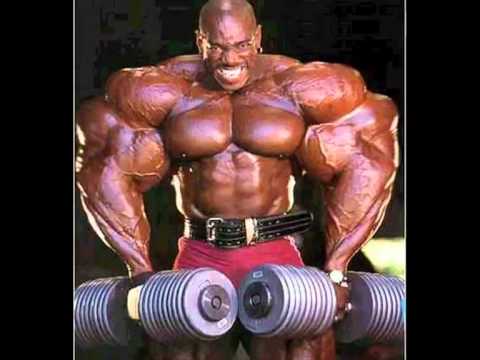
Here goes. Reading is like working out. If you’re really dedicated, if you truly love it or it suits your ambition, then you can do it every single day, for hours at a time – but then mentally you’re the equivalent of this guy:

And nobody wants that.

For most people, who just want to be healthy and happy, you should work out a few times a week, on a regular basis. Read something challenging. Of course it doesn’t have to be a book, specifically, and it doesn’t have to be fiction; it just has to be reading, and it has to be challenging. This is where you strain, and work until you fail; this is where you build strength. Then, on other days, do something like cardio or abs: read something easy, something you could keep reading for a while without hurting yourself. The key there is to keep at it, to not give up.

Once you have done your workout, then it’s time to relax: do something easy, something that doesn’t tax your brain at all; watch a movie, watch a TV show, play a video game (And please don’t tell me that video games are mentally challenging. I play them, too. They’re not. If figuring out how to finish that mission on Grand Theft Auto is mentally challenging, then your brain is out of shape, is a couch potato of the first order. You need to read more.), have a conversation, take a walk, take a nap. Take it easy.

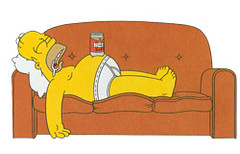
But for the sake of your mind, don’t just skip straight to the nap. Americans already do that with exercise, which is why the nation is unhealthy and out of shape; our brains are moving that way, as well, as we spend more and more of our time taking it easy, and not enough of it working out. You also don’t want your brain to look like this guy:

464621041_1601057ada_m

Moderation is the key. A little of this, a little of that; a little reading, then a little Netflix.

Now: as a student, you get a pass, like my wife does; you are involved in a mentally taxing endeavor, one that takes up all of your time and mental energy. So your free time should be spent relaxing and recovering. Until you reach the point where you aren’t having to work very hard mentally: summer time, or senior year, when you have two academic classes and nine TA/free periods. Then you need to work out. Then you need to read.

It’s important. It’s necessary. And because our society is based on information, which is still transmitted through the written word, then the mental exercise you must master, and then continually practice, is reading. Challenging reading. Depending on what else you want to do with your life, other mental exercises may be necessary for you, as well: math, science, art, engineering, music, what have you. Perhaps making movies will be your mental challenge, and if so, carry on: it is a difficult thing to do well, as shown by the number of people who do it badly. Movies are fun, but they aren’t necessary: except inasmuch as relaxation is necessary. As to the question of whether watching movies is a necessary means of relaxation in our culture, if you must watch certain movies or television shows in order to understand how our culture works and to participate in it, I leave that argument for another day.

Right now, my brain is too tired. What time are those sports games on?

Books vs. Movies, Part One: Movies

I’m having my classes write arguments, one at a time, which we then discuss with the whole class; one student starts an argument on any topic they wish, and then someone else has to volunteer to argue the other side of that topic. If nobody volunteers, either the first student has to write a second argument from the opposing viewpoint — or I write an argument opposing them. Last week one of my students wrote about why books are better than movies; he did a good job, and nobody wanted to argue with him.

So I did it. And writing this made me feel so awful that I had to write one about why books are better than movies, which I did; but that one made me so depressed about the current state of the world that I had to write a third essay, more upbeat, about moderation between the two.

I’ll be posting all three over the next three days. Here’s the first installment: the dirty one. Enjoy. (Don’t hate me.)

All right: pay attention, because I’m only going to say this once, and then after that, I will go back to denying everything in this essay.

Most of the time, I mean what I say. I really think that grades don’t matter, that math is evil, that violence is never the answer – and that books are always better than movies.

But sometimes, those things aren’t true. Sometimes the opposite is true.

Grades matter when the reward for the grade is worth the time spent earning the grade. Grades matter when you set yourself a grade-based goal, and then, through hard work and improvement, you achieve it. Grades matter when you need grade-based scholarships to pay for college, which is too damn expensive to be worth it. Oh – and sometimes you don’t need college at all.

Math is both the foundation of the universe, and the clearest expression of its poetry. There is no work of literature more musical than the Fibonacci sequence, or the Golden Rectangle. I don’t think there should actually be a distinction between math and language; both get you to make the same journey, from concrete fundamentals to abstract concepts that bend and hurt your brain. Both are necessary. Both are fascinating. And I genuinely like, and admire, Dr. Sade. [Blogger’s note: Dr. Sade is the head of the math department at the school. He is a brilliant man and an outstanding teacher, and one of the most sarcastic, cynical people I have ever met. He and I have a running feud about math and English: he says that I love to hug my students, and I call him an emotionless mathematical golem. It’s fun.]

Violence is always wrong, but sometimes it is necessary – and sometimes the positive outcome is worth the cost. The Nazis needed to be stopped, and nothing but war would have done it. Bullies need to get their asses handed to them, and rapists should be stripped of a pound of flesh – probably a very specific pound. People who suborn terrorists and create suicide bombers need to be set on fire, and then we should all gather round and spit on the greasemark they leave behind. If you hurt my family, I will buy a gun, learn to use it, and then shoot you in the face.

After I admit all of that, it isn’t very hard to say that movies are better than books, is it?

Because they are. Not in every case, no – but in quite a few of them. Mostly, they’re just – different.

The real problem is the same here that it is with the whole math-English feud: this shouldn’t even be a fight. The real problem with this argument is that books and movies simply can’t be compared: they have different purposes, different strengths and weaknesses, and different definitions of success. A book is successful when it changes you; a movie is successful when it creates an intense immediate response, laughter or tears or a scream. A movie can create an immersive experience, tantalizing  your senses and crafting a new reality for you; a book forces you to create your own reality, without any connection to your senses — thus movies are fun and books are useful. Movies are fast and books are slow. The purpose of a movie is to offer an escape from reality; the purpose of a book is to bring us closer to reality. There are some books that reach for the movie goal and movies that reach for the book goal, but they aren’t the best, in either case. The best movies make the world disappear for a few hours: The Lord of the Rings. Star Wars. The Marvel Universe. They take us away from our world, and bring us to another world, where things are – not necessarily better, but the problems are not the same problems we face. Even in serious dramas, the ones that win Oscars, the problems aren’t the same as they are in the real world, for real people: Hollywood chooses extraordinary people with extraordinary stories, so that when the rest of us watch the film, we can imagine a life entirely different from our own, for a few hours. Slumdog Millionaire is about a penniless orphan growing up in the slums of India in the present day; The King’s Speech is about the King of England during World War II. Neither is about me.

Marshall McLuhan, an influential media theorist, said “The medium is the message.” He meant, among other things, that the way information is transmitted to the audience is at least part of the essential meaning of the transmission: that is, these things I am writing now, for this class, would be different if I were simply saying them; the fact of my speaking rather than writing would change the words I would use and the way you would understand them. The fact that I am writing this out instead of simply rambling on from behind my podium has a large influence on what I am really trying to say, even apart from the point I am making with the words: I am trying to say that this thing, these words, this essay, is a more important point than one I would be making in discussion. If I made a channel on YouTube and recorded a video of myself talking about this, that would change the message as well. There are things that you can only say in a two-hour movie, and other things you can only say in a 300-page novel; and they are not the same things. If you try to say the same thing in both mediums, one of them will fail. This is why movie versions of books are inevitably different, and the only time they are really successful is if the message is changed to fit the medium.

For example: The Shining is both an excellent book and an excellent movie; but the book is about how isolation can drive an alcoholic to violence; the movie is about how a haunted hotel can make an unbalanced man really lose his biscuits. The movie is visually stunning; the book is incredibly creepy, with one of the most subtle, slow builds of suspense that I know. The movie has very little suspense: as soon as the winter starts, Jack Torrance starts losing those biscuits; it’s just a question of how many he will lose, and what he will do when they’re all gone. As an audience member, though, you’re not even thinking about that: you’re just looking at that screen, watching the blood come pouring out of the elevator, wondering what’s really going on in Room 237, freaking out over those two little blonde girls at the end of the hall. It’s an entirely different experience. Is it better than the experience of the book? I don’t know; is filet mignon better than remembering how to solve a difficult math problem on your final? How do you compare the two experiences?

You don’t. But because books and movies have this one essential similarity, that they seem to tell the same story about the same people and the same events, people inevitably compare them; because books and movies are two things we truly love, and because different people tend to like one or the other more, we talk about this comparison a lot, and we have a lot riding on the answer. Every time a movie person agrees that the book is better, it feels like a win for the book side – which wins should include The Chronicles of Narnia, and The Watchmen, and The Black Cauldron and The Hitchhiker’s Guide to the Galaxy – and every time I say that movies are better than books, it’s a win for movies – which have to include, among others, Stand By Me, The Godfather, Jurassic Park, James Bond, and everything written by John Grisham.

So let me just go ahead and take a side. Movies are better because brevity is the soul of wit: the goal of all literature is essentially entertainment, and it’s simply easier to be entertained when you don’t have to work hard for it. It is easier to be entertained for the two hours of a movie than it is to be entertained for the twenty or more hours of a book; parts of that book, no matter how good it is, are going to get boring. Movies never have to be boring. Movies are unquestionably more popular, and therefore more influential: there were 1.36 billion movie tickets sold in the U.S. and Canada in 2012; there were about 620 million books sold in the U.S. in 2013 — half as many. We also re-watch movies more frequently than we re-read books; I’ve seen The Lord of the Rings twenty times or more, but I’ve only read it three times all the way through. Books represent the work of a single person, the author; a movie can have many different talents adding to the overall effect, from the writer to the director to the musicians on the soundtrack to every actor in the film; therefore where one person may be weak, someone else can pick up the slack. In a book, though, if the author is bad at, say, comedy, or action, or interesting dialogue, you’re just out of luck: that part of the book is going to suck.

Because movies can create a more immersive, sensation-rich experience, they can have a stronger visceral effect on us: movies scare us, sadden us, anger us, and elate us more easily and more intensely than do books. We cry at movies; we sigh at books. Movies make us laugh out loud until our bellies hurt; books make us chuckle, a little. We can get an adrenaline rush from movies, which no book can really do. Movies can be extremely sexy; books trying to be sexy are just awkward. We remember particular lines and scenes from movies far more often than we do from books. I can quote you pretty much all of Monty Python and most of Star Wars; but I can’t remember anything from a book with the same accuracy. We bond over movies, going to see them with friends and family and on dates; who goes on a date and reads a book together? Who sits with their friends and reads? It’s not “Barnes & Noble and chill,” after all: there’s a reason for that.

The truth is, books are a part of our past. An important one, still, but a fading one. Movies are our future. Don’t let yourself get stuck in the past.

Lie For a Mockingbird

So I have this essay I wrote yesterday. It’s an example for two of my classes: my AP Literature students and my Honors Freshman English — the latter we enjoy calling HELA 9, while the former insists on “It’s Liiiiiiiiiitt.” I was going to write two essays, one for each class; but both are writing literary analysis, just on different works and using different prompts: HELA 9 is writing about To Kill a Mockingbird, using simple essay questions I came up with; the AP class  is writing about Macbeth, using old AP test prompts. I wrote this one about TKAM, using an AP prompt; I figured that way I could use it for both classes, without stealing anyone’s topic idea.

I don’t know if people want to read these essays I write for school; but right now, this is pretty much all I’m writing. And, as my wife pointed out when I talked to her about posting this, this is part of me, my life and who I am. And God, I love this book. Just reading the last scene to find the quotes I wanted actually made me choke up a little.

So, here you go. Enjoy. I’ll post another essay in a couple of days, and a book review as soon as I can get to it. You can always pop over and read my time-traveling pirate serial, Damnation Kane.


(2016) Many works of literature contain a character who intentionally deceives others. The character’s dishonesty may be intended either to help or to hurt. Such a character, for example, may choose to mislead others for personal safety, to spare someone’s feelings, or to carry out a crime.

Choose a novel or play in which a character deceives others. Then, in a well-written essay, analyze the motives for that character’s deception and discuss how the deception contributes to the meaning of the work as a whole.

There’s a lot to argue about in literature: was it the Lady or the Tiger, was Shakespeare one man or many (or a woman?), is it Gatsby’s fault or Daisy’s? But one thing we cannot argue about – for it is true beyond contestation – is that Atticus Finch is the best human being ever to exist. Best father, best lawyer, best person. Bar none. No question.

It says something, then, that at the end of Harper Lee’s classic, Atticus, the pillar of moral rectitude, the antithesis of all hypocrites and liars, the man who is the same on the public street as he is in his home – that man chooses to lie. And not only to lie, but to convince his young daughter, Scout – the second best person in all of literature – to lie, as well. It says that sometimes, in certain extraordinary cases, it is not only acceptable, but even good, to lie. Because sometimes, telling the truth would be like killing a mockingbird: harming someone who never did anything bad to anybody. And that, of course, is a sin.

Not all liars are good liars. Two other characters in To Kill a Mockingbird, Bob and Mayella Ewell, lie extensively, and perniciously. The court case the Ewells precipitate serves as the major conflict for the novel’s larger scope; the story is both about the children growing up, and also about this case, and how the Ewells attempt to take advantage of the prejudice of the time even as Atticus tries – unsuccessfully – to fight against it. The case is built entirely on lies, and Atticus shows the jury the truth – against their will, at least in part, because so many things would be so much easier if they could just believe that the Ewells are telling the truth. But they can’t believe that, because the Ewells are not telling the truth. Atticus shows the jury the truth, both about the specific case and also about the Ewells; and because he does, he becomes a target of Bob Ewell’s violent tendencies, his savage and furtive need for revenge; this then creates the need for Atticus’s own lie, and Scout’s as well.

Mayella, the victim of a series of family secrets, including her father’s alcoholism, his physical and mental abuse, and even his sexual abuse of his eldest daughter, tells a number of lies in the name of finding some small token of real affection – because what her daddy do to her don’t count, as we hear from her own victim. When Mayella, a 19-year-old white woman in the town of Maycomb, Alabama, in the 1930’s, decides she wants to kiss a man who is not her father, she seeks out a man she can manipulate and control: a black man. We can understand this, as Mayella has no control over her own life, which is spent taking care of her drunk father and her seven younger siblings; but Mayella wants something more than a life of filth and degradation, as we can see from the geraniums she grows and tends in the junkyard where her family lives in squalor. We appreciate this. Mayella is harmed, repeatedly, by those who are stronger and more violent than she; so when she looks for romance, she tries to protect herself from harm in this vulnerable moment – perfectly understandable. And, as far as it goes, this gives us a reason to at least forgive her various lies: she sends her siblings to town for ice cream, so that she can be alone with her would-be lover; she tells the man as he passes by that she needs help with a repair job inside the house,  so that he will come inside with her, which he would normally never do, knowing how impolite it would be considered for a black man to be alone with a white woman – and also, how dangerous. Then, when Tom Robinson, this kind-hearted man – chosen also because he is, as Scout sees, a fine figure of a man (or would be, if he were whole and not lacking the use of his left arm – and there can be little doubt of the symbolic value of that handicap for Mayella, who is frequently and savagely beaten by a left-handed man: Tom must be a man she does not need to fear), and chosen despite the fact that he is married with three young children – comes into the house, Mayella lies again to get him into her actual grasp, telling him to get her down something from on top of a tall bureau, and then grabbing him around the legs in an awkward and almost precious embrace.

All those lies for Mayella would be forgivable (Though the fact that she attempts to ensnare, through deception, a married man, makes all this much less sweet – a mood that is portrayed perfectly when Mayella tells Tom, “Kiss me back, nigger!” Ah, l’amour.) except for the most important lie, the lie that Mayella tells herself: that she can get away with this. It’s really quite absurd: we don’t know how long it would take the Ewell children to go to town and get ice cream, but neither does Mayella, and since Tom doesn’t see the children at all, they’re already on their way when Tom walks by after work. How much time does Mayella have, in the best case, for her tryst? Not even that long, of course, because her drunken abusive father returns home even sooner than the children – another circumstance she should have been able to foresee, but must have told herself was safely impossible – and catches her kissing Tom. In that moment, we see the truth of Bob’s twisted psyche: he does not rage against Tom, despite the obvious “sin” he has committed, the unforgivable sin of embracing a white woman; no, Bob yells, “You goddamn whore, I’ll kill ya!” at his daughter. Bob knows who is behind this, and we know a truth then about Bob. This truth, of his hatred of his daughter and his attraction to her, as well, leads him to beat her black and blue, even while Tom runs away.

But Tom doesn’t escape, as Mayella must have known he wouldn’t; she then turns him into her scapegoat, aided and abetted – perhaps provoked – by her father. It is not immediately clear to the reader why the Ewells do this, or even who is really behind it. Does Mayella insist that Bob help her create this fiction, in order to protect her virtue? Does Mayella see this as one small show of love she can actually garner from her father? Or does Bob run for the sheriff in order to teach Mayella a lesson? Maybe he does it to show Tom that he can’t get away with trying to put the moves on a white girl? Does Bob lie to himself about that? Do they seek only to gain the temporary approval of the white people of Maycomb, who are glad for a chance to put the blacks in their place, and might be a little grateful to the Ewells for creating that opportunity? That may be: Bob gets away with several small offenses against the elites of the town, including Atticus; he even, for a little while, gets a job, before turning back into the welfare-cheating drunkard he’s  always  been. But we don’t see any reward for Mayella. All she gets is a beating. Presumably more than one.

When Atticus argues this case in the Maycomb County Court, he describes Mayella’s act as something like what a child does when she breaks something: she puts the evidence of her crime as far away from herself as possible. Mayella, Atticus says, is putting Tom Robinson as far away from her as possible, in order to cover up her crime of lusting after a black man. Perhaps the childishness of that metaphor gives us our clue about Mayella’s role in this: perhaps she seeks only self-preservation. But I don’t think so: because it is Mayella, far more than the foolish and untrustworthy Bob, who seals Tom’s fate. After Atticus shows how much of her story is a fabrication, Mayella makes one last statement. She talks about another fiction of the time and place, Alabama in the 1930’s; a commonly accepted one. By calling up this fiction, she forces the men of the jury into a role that at least one of them (who argues for acquittal) does not want, but cannot escape. Mayella says,

“I got somethin‘ to say an’ then I ain’t gonna say no more. That nigger yonder took advantage of me an‘ if you fine fancy gentlemen don’t wanta do nothin’ about it then you’re all yellow stinkin‘ cowards, stinkin’ cowards, the lot of you. Your fancy airs don’t come to nothin‘—your ma’amin’ and Miss Mayellerin‘ don’t come to nothin’, Mr. Finch –“

In the next line of the book, Scout observes that “she burst into real tears.” Real tears, because Mayella is indeed distraught, as who wouldn’t be; but real, also, in contrast to the falsehood she just spoke. The men in the courtroom – and mostly, she is speaking to the jury, as Atticus and Judge Taylor and Sheriff Tate are unlikely to come to her defense – are not cowards, or at least not in this instance. But by insisting that she is the victim of a sexual crime, committed on her white self by a black man, those fine fancy gentlemen have no alternative but to act as Southern gentlemen would have acted at the time: they must kill the black man who defiled the innocent white girl. They cannot take the word of a black man over the word of two white people, not even when that word is the truth. And indeed, in the face of that universally accepted lie, Atticus’s fancy airs don’t come to nothin’. The jury convicts; Tom goes to jail; he is there shot and killed, supposedly while trying to escape – but that is another lie, as he is shot seventeen times, a number of wounds impossible to credit were he actually in the process of climbing the fence of the football-field-sized exercise yard. Tom was, of course, executed by the white prison guards, probably as revenge for his “crime.”

That’s a sin.

Bob Ewell tries to commit another sin, equally heinous; unable to directly harm his perceived enemies, Judge Taylor and Atticus, Bob goes after two other people who did him no harm: Atticus’s two children, Jem and Scout. Bob tries to kill them both as they walk home in the dark on Halloween. But Bob unwittingly chooses the worst possible place to make his attempt on the children’s lives: he attacks them near the Radley house, where lives the most dangerous man in the entire town: the mad boogeyman, Boo Radley. Boo Radley’s reputation is another lie, because the genuinely kind-hearted shut-in hears the struggle, and at great risk to himself, charges out of his hermit’s cave and saves the children by killing Bob Ewell with a kitchen knife. Sheriff Heck Tate investigates the scene once the children are brought home safe – by Boo, who may actually get to compete with Scout and Atticus for the title of Best Person in Literature (He’s certainly the dark horse candidate) – and then the sheriff goes to talk to Atticus about what he found. Atticus is trying to think clearly through his haze of terror about the near-murder of his children (At least partly his fault, both for opposing Bob Ewell and then underestimating the brutal drunkard’s willingness to cause harm), and trying to figure out how much red tape Jem will have to go through for having killed Bob in defending his sister, which is the story that Scout told them both. Not a lie, that one; she wasn’t able to see what really happened, and she’s guessing; Atticus takes her at her word.

But Sheriff Tate knows better: Sheriff Tate knows that Boo Radley brought out a knife from his kitchen and stabbed Bob Ewell with that knife. Tate knows this because he found Bob Ewell’s knife, a switchblade, at the scene, possibly in Ewell’s hand – he says he took the knife off of a drunk man. Tate pockets that knife, and then tells the Finches a lie: he says that Bob fell on his own knife, the kitchen knife, which Tate says Bob must have found in the dump. “Honed it down and bided his time… just bided his time.” Atticus thinks that Tate is trying to save Jem from having to go through the legal system, but that isn’t it. Tate is trying to save Boo. Because Boo is a shut-in, a deep recluse who is nervous just being in a room with other people; and if the truth comes out, then Boo will suffer.

“I never heard tell that it’s against the law for a citizen to do his utmost to prevent a crime from being committed, which is exactly what he did, but maybe you’ll say it’s my duty to tell the town all about it and not hush it up. Know what’d happen then? All the ladies in Maycomb includin‘ my wife’d be knocking on his door bringing angel food cakes. To my way of thinkin’, Mr. Finch, taking the one man who’s done you and this town a great service an‘ draggin’ him with his shy ways into the limelight—to me, that’s a sin. It’s a sin and I’m not about to have it on my head. If it was any other man, it’d be different. But not this man, Mr. Finch.”

Mr. Tate was trying to dig a hole in the floor with the toe of his boot. He pulled his nose, then he massaged his left arm. “I may not be much, Mr. Finch, but I’m still sheriff of Maycomb County and Bob Ewell fell on his knife. Good night, sir.”

And Atticus, finally understanding Tate’s point, makes the decision. He turns to Scout and says, “Scout, Mr. Ewell fell on his knife. Can you possibly understand?”

Atticus looked like he needed cheering up. I ran to him and hugged him and kissed him with all my might. “Yes sir, I understand,” I reassured him. “Mr. Tate was right.”

Atticus disengaged himself and looked at me. “What do you mean?”

“Well, it’d be sort of like shootin‘ a mockingbird, wouldn’t it?”

Atticus Finch – and Heck Tate, who is also a genuinely good man – decide to tell a lie in order to save Boo Radley from attention, which to him is equivalent to harm. The decision is surely made easier for them by the fact that Boo has not, in truth, done anything wrong; by the laws of our society, his act was justified, and no murder. But these men do not lie easily or willingly; throughout the book, Atticus has refused to contemplate saying something or doing something other than what he believes to be right. He won’t even tell little white lies: when his brother Jack explains to the very young Scout what a whore-lady is simply by putting her off with a distraction, Atticus says, “Jack! When a child asks you something, answer him, for goodness’ sake. But don’t make a production of it. Children are children, but they can spot an evasion quicker than adults, and evasion simply muddles ‘em.” And then when Scout asks Atticus what rape is, he responds by saying it is “carnal knowledge of a female by force and without consent.” Where most people would hem and haw, where even the otherwise bold and straightforward Calpurnia told Scout to ask her father what it meant, Atticus simply gives a clear and uncensored definition. He tells Scout the truth.

But in this case, in this one case, Atticus is willing to lie. He is willing to tell his daughter to lie, as well. Because Atticus knows that what makes an act a sin is not truth, or falsehood: it is harm. Because they do nothing bad to us, it is a sin to kill a mockingbird. It is not a sin to lie for one.

Small Things, Big Anger

It begins so beautifully.

“Dissolute bluebottles hum vacuously in the fruity air. Then they stun themselves against the clear windowpanes and die, fatly baffled in the sun.
“The nights are clear, but suffused with sloth and sullen expectation.
“But by early June the southwest monsoon breaks and there are three months of wind and water with short spells of sharp, glittering sunshine that thrilled children snatch to play with. The countryside turns an immodest green. Boundaries blur as tapioca fences take root and bloom. Brick walls turn mossgreen.”

It’s so lovely: fatly baffled — what a phrase! Suffused with sloth and sullen expectation — what alliteration, what a way to draw out those sounds, slower and slower, exactly like a slow, sultry night time when you wait forever for coolness that never comes. Thrilled children — what a rhyme! And the sharp, glittering sunshine they snatch to play with — what an image! Immodest green and mossgreen — my God!

And though the tone is far darker, it ends with the same beauty:

“He held her against him, resting his back against the mangosteen tree, while she cried and laughed at once. Then, for what seemed like an eternity, but was really no more than five minutes, she slept leaning against him, her back against his chest. Seven years of oblivion lifted off her and flew into the shadows on weighty, quaking wings. :Like a dull, steel peahen. And on Ammu’s Road (to Age and Death) a small, sunny meadow appeared. Copper grass spangled with blue butterflies. Beyond it, an abyss.”

It’s magnificent. The clarity of the images, the remarkable insight into the symbolism of color and movement and the connections between life forms — he against the tree and she against him; oblivion flying away like a peahen, both of them dull and steel-colored; a sunny meadow appearing on the road of life in this small, lovely interlude, this moment of peace in the midst of turmoil and destruction and sorrow, leading to that waiting abyss. It’s amazing. I can’t read this book enough. I can’t teach it enough. I don’t know that I’ve ever enjoyed a novel by a writer as poetic as Arundhati Roy, in her book The God of Small Things.

So then what the hell is this:

“He was a naked stranger met in a chance encounter. He was the one that she had known before Life began. The one who had once led her (swimming) through their lovely mother’s cunt.”

Wait, what? That’s the image, twin infants swimming through the birth canal? And that’s the word you want to use? Their lovely mother’s cunt? Why on God’s green and verdant Earth would you use that word, and that image, in that moment? Admittedly, the very next line connects this passage to the idea of jarring discord, to paradox and conflicting feelings — “Both things unbearable in their polarity. In their irreconcilable far-apartness.” So I assume that the use of jarring words and clashing images, the image of the pain and the tearing and ripping of birth sweetened into a casual synchronized swim, and the juxtaposition of “lovely mother” with “cunt,” are meant to show this unbearable polarity, this irreconcilable far-apartness. Okay. It makes sense. I still don’t like it, but it makes sense.

But that’s not the only one. There’s also this:

“As Khubchand lay dying on his cushion, Estha could see the bedroom window reflected in his smooth, purple balls. And the sky beyond. And once a bird that flew across. To Estha—steeped in the smell of old roses, blooded on memories of a broken man—the fact that something so fragile, so unbearably tender had survived, had been allowed to exist, was a miracle. A bird in flight reflected in an old dog’s balls. It made him smile out loud.”

And I love the phrase “smile out loud.” So what’s with the dog’s purple scrotum? Who spends that much time staring at dog balls? How the hell could the sky be reflected in dog scrotum-skin? Is that possible? You know what, I’m never going to know. Because I’m never going to check. And the idea that this is a smiling occasion, that old dog nuts are the perfect image of tender fragility, is just not a thought I’m prepared to entertain. Nope. Once again, I get it — testicles are indeed fragile, as I’m fully aware; and an old dog is a deeply tender and sweet beast: I already had my heart broken just before this passage, when Roy describes the dog’s failing health, his murky eyes and his uncontrolled bladder, because both of those are crystal clear reminders of my beloved dog’s last days — but I don’t need to know what mystical secrets you see when you stare at a dog’s junk. This only makes me think Estha and Arundhati Roy herself are too irretrievably weird for me to handle.

But I can’t just leave it at that. Because I get the book. I understand the idea of the Small Things, and how deeply important they are, and how the whole world can pivot on a single point, can go from up-facing heaven-ascending glory, swiveled down to a face full of mud and hell, on one brief tick of the clock, sometimes no more than a minute. There is a moment when Ammu, the lovely mother of the swimming twins, looks up and sees Velutha, the man who will become her lover, the man who makes her oblivion fly away, and she sees him for the first time as a man: she has known him since childhood, and their respective stations in life — he an Untouchable Hindu laborer, she the upper-caste daughter of a factory owner and a Syrian Christian — have kept them from seeing each other as equals and therefore potential partners; but in this one moment, she spots him not only with his shirt off and his lovely body showing, but also, she sees him playing affectionately with her daughter, and Ammu thinks: father — husband — man. Had she not looked up in that moment, she might never have seen Velutha in that way, and she might never have leaned against him under a mangosteen tree and laughed and cried at once. And the doom of everyone in the novel may not have been sealed. She had to see him right then, and she had to be feeling the way she did right then. That one moment changed everything.

Life is a collection of such tiny moments. But most of them, we ignore completely: because we only look at the big things. We are inundated with the suffering of the world around us, and so we cannot bear to speak of our own, not even when that speech would save us from guilt and choking silence like that which eventually swallows Estha, before he follows in the footsteps of his surrogate father and becomes for his twin sister Rahel the God of Small Things, as Velutha was for Ammu, their mother — and, we hope (though we do not know) is saved and redeemed by that one small moment of solace, his own oblivion leaving him as Ammu’s did before. We do as Estha did: we think of ourselves as small, as unimportant; we think of those tiny moments, those pivotal points when everything changes, as tiny as well, even though they are, in reality, everything. Even the large things, the suffering of war, and famine, and pestilence, and death, are made up of tiny, pivotal moments in the lives of tiny individual people — individual people who make up all of teeming humanity.

So how does Roy show us this contrast, between the big things and the small things? With a madman’s penis, that’s how.

“Murlidharan, the level-crossing lunatic, perched cross-legged and perfectly balanced
on the milestone. His balls and penis dangled down, pointing towards the sign which
said

COCHIN
23 KM

“Murlidharan was naked except for the tall plastic bag that somebody had fitted onto
his head like a transparent chef’s cap, through which the view of the landscape continued –dimmed, chef – shaped, but uninterrupted. He couldn’t remove his cap even if he had wanted to, because he had no arms. They had been blown off in Singapore in ‘42, within the first week of his running away from home to join the fighting ranks of the Indian National Army.”

That’s right: an army veteran with no arms, because he lost them in a pointless war, only a week into his military service. And because of his missing arms — surely the thing we notice the most, as we are forced to consider the experience of living without through the surreal and terrible image of some buttmunch putting a plastic bag on this poor guy’s head, which he can’t then remove — we only notice the large things, and not the small things. But it’s the small things that matter: the character’s madness, described as cabinets in his mind, which predicts Estha’s future similar mindset; and the place they are going, where Estha’s madness will begin when he is molested by the Orangedrink-Lemondrink Man. Where is that place? Cochin. And what points the way there?

Murlidharan’s dick.

Why, Ms. Roy? Why do you have to make a dick joke? Why couldn’t this guy just be sitting under the sign, with the words right over his head, or maybe reflected in his eyes? Why does he have to point to them with his genitalia?

AND WHY DO I HAVE TO KEEP THINKING “WELL, THOSE MUST BE THE SMALL THINGS?”

Here’s why I hate this. Because the book is both brilliant and complex. Because it’s taken me three readings to understand maybe half of it well. And I know there is far more that I am missing than I am getting. So when I read these little obscene, absurd moments, when I am so bothered and discombobulated by them, I can’t help but think that I am missing something. That there is no possible better word to describe birth than “swimming,” and no better way to talk about Ammu than to refer to her cunt. That the perfect image for fragility is a flying bird reflected in dog’s balls. That the best foreshadowing in the world is to have a penis pointing to the name of the place where another penis will begin the ruination of Estha.

I assume, when I am bothered by what I think of as really terrible choices by a really brilliant author, that the problem is not her, but me. That I am too lame to appreciate the book fully. And that turns my whole-hearted admiration for this wonderful work into something much more sour and cracked and sulfurous.

See? It’s the little things that make all the difference.