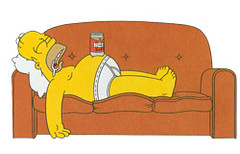
The Most Important Lesson

So this is how I started my English 10 classes this year. I first had my students write an essay about what they want, and what they need. Then I showed them this, and asked them first to discuss what I had to say here about wants and needs, and I asked them to write a second draft of their essay. Then we read a short story — “The Bet” by Anton Chekhov — and talked about how that story said something about wants and needs, because the goal of the class, in part, is to get them to think about what literature has to say about life and about the human condition, and how it relates to them personally and directly. Then I asked them to add another piece to their essay about that short story, which I also did with mine.

So here is my essay, on the most important lesson anyone can learn.

***

When I was learning how to be a teacher, we had a presentation from a guy who had been a teacher for a long time. He came in talking fast and loud, brimming with confidence: his opener was something like “What I’m about to show you is the most important lesson you’re ever going to see!” He was saying that on two levels: he was talking both to us, a group of university students on the way to becoming teachers, and to the students we would eventually have, because this was how he started the lesson he was presenting to us, which was the way he started his own classes as a teacher, and he was telling us what he thought we should say to our future students. He was saying this was the most important lesson we were going to learn, that would make all the difference for us as future teachers, and telling us that we needed to take advantage of it: and he was telling us how to pitch his lesson to our students, the way he pitched it to his, as the most important thing they would ever learn. And then his lesson was on the difference between wants and needs.

Here’s how it went. He would start his class by asking his students what they needed. Right then, in school or out, whatever: he wanted them to say what they needed. He would call on some, get some volunteers, and make a list of things on the board that they said they needed. “A job” was one. “A car” was another. “A girlfriend” was the one he put down as a joke, but I don’t doubt that he got that response many times over his years of teaching this lesson this way. “Sleep” might be another example, or “McDonald’s.” 

Once he got this list, he would then ask: Okay, what happens if you don’t get this? He would pick out the students who gave the different answers, and ask them: what will happen if you don’t get a job? If you don’t get a car? If you don’t get a girlfriend? The students would joke about it, maybe – “It would suck!” “I’d have to rob banks for money!” – and then get down to the answer, the truth: nothing would happen, really. If that student didn’t get the car, they would just continue getting rides from other people, or riding the bus or walking, or however they got around. They would be able to continue on just as they had been up until that point, because of course they did not have a car (Imagine if someone who had something said that they needed it? How ridiculous! You don’t need things you already have!), and they had been able to get to that point in their lives just fine.

“Okay,” the teacher would say. “Then you don’t need that. Right? You don’t need that job, that car, that girlfriend. You just want those things.”

Then he would go to one of the other examples given: like sleep. Or McDonald’s. And he would focus on those: what happens if you don’t get sleep? Is that the same as not getting a car, or a girlfriend? Or McDonald’s: okay, maybe you don’t actually need a Big Mac and fries – but if you don’t have any food at all… you would not be able to keep living.

That was different from not getting a car, or a girlfriend. Without food, without sleep, we cannot live.

“So those,” he would tell his students, “are needs. Things you can’t live without. Everything else is just a want.”

That lesson, that conversation, has stuck with me – obviously – for a long time: more than a quarter century. I’ve never actually used his lesson, because the want/need discussion went on to a different topic, which was his actual point: he would then talk about control. We all want control, he would say to his students, but we don’t need it. His point was that those students did not get to have a lot of control over their own lives – as you do not – and that they wanted it, as you probably do; and it was his belief that much of the misbehavior that students carried out in his class was an attempt to take control: teenager gets bored of doing what the teacher wants, which is really being tired of being controlled, so they yell out something disruptive or do something distracting, because they want to take control of the class. They don’t necessarily want to focus on the distracting thing they say or do: they just want to remove the teacher’s ability to control the class, and to control the time and attention of that particular student who was being disruptive. Who was trying to take control of themselves, and coincidentally, of the class. And he said that he would ask his students to allow him to have control over the class, so that the class could get through the work they needed to do: and that was why he talked about wants and needs, because while the student may want control, what they needed was to learn; and so while he as the teacher may not want control, he needed it if they were going to learn anything. He needed them to let him have control over them, to choose to let him take control. On days when they might be struggling with being controlled, he would take the disruptive students out into the hall and ask them if they could let him take control over them temporarily, and they generally would let him – or, if they just couldn’t stand to let him be in charge of them right then, he would accept that and just ask them to go to the principal’s office, where they would not be under his control, but they also wouldn’t be taking control of the class away from him. And when he gave them that choice, they usually were able to choose one or the other: accept his control over the class, or accept leaving the class for that day.

He said it was the best method he had ever heard of or seen for maintaining discipline in a class. He actually told us that we were not allowed to use his lesson if we ended up teaching in the same school where he taught, because he wanted to be the one to use it and he didn’t think it would work if two teachers used it with the same students. I remember being impressed by that. Because most of the people we learned from were not actually teachers, not in high schools or middle schools; they taught teachers, they didn’t teach teenagers. But this guy did teach teenagers, and this was a lesson that was actually important to him: not just an idea he had that he thought might work, maybe, which was my impression of most of the rest of the examples I was being given.

But I never taught that lesson to my classes. Because I hate the idea of taking control. I like the idea of being allowed to have control, of asking people to consent to my temporary control, because I recognize that I need to have some control to teach the class; but I hate the idea of taking it. I hate telling people what to do. Which is maybe something I shouldn’t be saying to you. Because what if you now think that you can take control away from me, and I won’t do anything to take it back?

See, the thing of it is, I may not want to take control. But if I need to, I can. And I will.

What I would rather do, though, is get you all to understand what you want, and what you need – and what I can do to help you get what you want, and what you need. So let’s get back to that.

The reason that teacher started his lesson about control with a discussion of wants and needs was that he wanted his students to recognize that they did not need to take control of the class, because they already had control over the only part of the class that really mattered: themselves. The teacher was telling his students – and us, his potential future co-workers – that we had control over ourselves, all of us, because we have choice. His students could choose to let him take control over them, or they could choose to leave. If they chose to leave, and go to the principal’s office, there would be consequences, of course – just like if you all choose not to come to school at all, or if I chose to quit my job – but the truth is, there are consequences of every choice: choosing to come to school and sit in class and let the teacher be in charge means you are choosing to be bored, at least some of the time. Choosing to sit through things that you already know, or do not need to know, or do not want to know. Choosing to be uncomfortable, to not have the things you want, right now, like sleep, or McDonald’s.

I never taught the lesson that teacher showed me (Which was titled “EVERYONE IS TRYING TO CONTROL ME AND I CAN’T MAKE THEM STOP!”) because I do not want to take control. I don’t like the idea of telling my students that I need to take control over them. (His explanation of how he proved to the students how they chose to come to school was “Nobody is holding a gun to your head!” And I do not like that, do not like the idea of a want being anything that is not literally a risk to the continuation of your life, do not like the idea that the need I am providing for is, therefore, someone holding a gun to the heads of my students.) I do, however, like the idea of helping my students to see that they already have control, because they have choice: you have choice. You can choose to be here, or you can choose to not be here. Both choices have consequences, of course, but both are possible. There are, in fact, several ways you could achieve your goal, if your goal is to not be here; and all of those ways have consequences, and all of those ways have steps you would need to take to get to where you wanted to be (Not here). For instance, you would not be here if you went to a different school; and there are ways you could try to achieve that. You would not be here if you graduated early; and there are ways you could achieve that – even at your young age, though you would have to have already started on that path to have achieved it by this current moment. Still: you could have achieved that. You could achieve not being here by ditching class, and maybe you could even avoid those consequences; but probably not for long. But hey, maybe your consequences for ditching would be a suspension – and then you wouldn’t be here!

Or, you can choose to be here. Which then leads to several more choices: you can choose to pay attention, or not; you can choose to participate actively, or not; you can choose to disrupt the class, or not. All of those choices have consequences, some good and some bad – though all I mean by that is that some are consequences that you may want and some are consequences that you would not want. (Choices also have moral consequences that make them good or bad, but that’s WAY too big a topic to get into in this conversation.) – but all of them are choices you can make. Because you have control over yourself. Unless you give me control, unless you choose to give me control, I don’t have control over you. Which is good, because I don’t want it. 

Why don’t I want control? Especially when so many other teachers do? Let me put it this way. There’s a part in a story I teach in one of my classes (“The Story of an Hour” by Kate Chopin) where the main character realizes that she is now free, that no one will be able to control her any longer; and she thinks “There would be no powerful will bending hers in that blind persistence with which men and women believe they have a right to impose a private will upon a fellow-creature. A kind intention or a cruel intention made the act seem no less a crime as she looked upon it in that brief moment of illumination.” That last part, when I read it and thought about it, hit me hard: controlling someone else – imposing my private will on them – is a crime, whether it is done with a kind intention or a cruel intention. That’s why I don’t want to take control of you: because I don’t want to commit a crime.

Please notice, though, that when I do take control as a teacher, it is not me imposing my private will on you: it is done because it is my job to be in control of this class, and it is justified by the fact that you personally are not the only person here. There is a public need which overrides private will. But this is beside the point. The point is that I do not want to impose my private will on you. Ever. I want you to choose to work with me.

So that’s why I wanted to write about this, and to share it with you. That’s why I wanted you to write about what you want and what you need, and why I want you now to think about it more – and talk about it more, if you want to do that. Because while that other teacher focused his lesson on control, I want to focus on wants and needs; I think those are much more interesting, and important, to talk about, and think about, and then write about. (If you want to talk about why wants and needs are more interesting than control, we can talk about that.)

I think his distinction, the difference that he described, between wants and needs – that needs are things you can’t live without, and wants are everything else, which you can choose to have or not – is much too simple. I mean, you could get everything you need, and you would survive, but if you never got anything you wanted – would you want to keep living that way? And even in terms of getting what you need to live: how much of it do you need? Are there things we need more than other things we need? We need food and water and shelter, because without them we cannot live; but we also need sleep. But we can live without sleep: just not in any way we would want to live. The same with social interaction, with relationships with other people: we CAN live without any of that at all; but not any kind of full, healthy, satisfying life. And then, for me personally, I don’t just eat because I need to live, I eat because I want to. I love food. (Not McDonald’s, though.) So much, in fact, that I eat more food than I should, and that will at some point lead to me having medical problems that might make it harder for me to live; so, too much of what I need, as much as I want, becomes something I can’t have. 

His claim that, if you didn’t get what you wanted, then nothing would happen, nothing would change, is not true. There are consequences to both getting and not getting anything, wants or needs. And the idea that someone who had a car would not say they needed a car, because you don’t need something you already have, is clearly not true: we say that we need food even when we have food: because the need is ongoing. When we eat the food we have, we will need more food. Having it doesn’t mean we don’t need it any more. In some cases, having something might even mean we need it more, because we get used to having something – like a car, or a girlfriend – and we would suffer without it. Once we have it, and get used to it, we need it more than we did before we ever had it: so even a want can become a need, maybe. 

It’s complicated. But I also think it’s incredibly important. And also pretty interesting.

There’s a story about this, which I think comes at it in an interesting manner: Anton Chekhov’s “The Bet.” The story is about two men, in 1870, who make a bet about – well, actually, it’s not clear what it’s really about, or what their motivations are; it seems fairly clear that the bet is really just an example of how foolish these two men are, in different ways and for different reasons. The bet arises during a dinner party conversation about the death penalty: the participants discuss whether capital punishment is more or less moral than life imprisonment. Uninterested in actually considering what the meaning of “justice” might be, or the purpose of the criminal justice system in our society, a banker gets irritated at a lawyer who claims that life imprisonment is not so bad, and he bets the lawyer two million (he never mentions the units, but maybe “pounds” makes sense – which translates to something like $400 million in modern money) that the lawyer can’t stay voluntarily imprisoned for five years. The lawyer, apparently so incredibly arrogant in his opinions that he cares about nothing more than proving he’s better, ups that time to fifteen years, and the two agree. The lawyer then goes into confinement in a wing of the banker’s house for fifteen years. He actually goes through with it: he spends the next fifteen years trapped in a single room, without talking to a single person, without seeing the sun once. In that time he is given as many books as he wants, and he reads extensively – of course, having not much else to do – and then by the end of his confinement, he has changed. The banker has changed as well: since he is careless with his wealth (As is pretty obvious when a man is willing to bet 2 million pounds for – what? For winning an argument? He says later that this bet doesn’t prove either side, not that capital punishment is better nor that life imprisonment is better. Is it for the thrill of winning? Why didn’t he insist that the lawyer put up stakes? The banker stands to profit exactly nothing from this bet even if he wins it. That’s not a good money manager. So actually, I guess he has not changed.) he has lost much of it, and if he now has to pay out the 2 million pounds, he will be ruined. So, as one does, he decides to sneak into the locked room the night before he loses the bet, and kill the lawyer. However, he finds a letter beside the sleeping lawyer; he reads it and finds out that the lawyer has decided that nothing in this life matters, that he doesn’t want anything, not freedom, not money, not life; and so he will intentionally lose the bet to show that he doesn’t need the money. Saved from destitution, the banker leaves; then the lawyer leaves, losing the bet – and then the banker conceals the lawyer’s letter.

The interesting element of the story, for me, is the choices these two characters make, and the motivations behind them. Why does this bet happen? What are the characters after? In other words: what do they want? It’s definitely not a need – no one needs to bet anything, really. The original bet happens because both men are bluffing: they each want the other to give up. They both go through with the bet because they want to prove that they are men of their word: even when their word is foolish. It makes me realize that I want to be a man of my word, as well; though I think I need to not make foolish promises like “I will stay in one room for fifteen years just to prove that I can.” By the end of the story, the lawyer, after years spent alone reading and studying everything from natural science to philosophy to religion, comes to the personal revelation that Heaven’s value far outweighs everything on Earth, and therefore he does not want the money for the bet – but he also does not care if he has his freedom, or even his life. He stays in the prison voluntarily (as he has all along) to show that he doesn’t need freedom or health or anything on this Earth; he leaves just minutes before he would win the bet to show that he doesn’t need the money, either. I’ll agree with him that money is not something we need, not something of great value: but I could not disagree more that life on this Earth is without any value whatsoever. I need my life, on this Earth, and I need it to have value and purpose, while I am alive. Whether there is a heaven or not at the end of this life is irrelevant to this life, because we do not know anything other than this life exists: therefore this life is, for now, everything.

But in the story, both men’s choices are interesting to me. Among other impressions I get from this, I think it shows that more of our needs are really only wants than we actually think; when the lawyer deprives himself of things we see as critical to our lives, primarily human company, he realizes that he does not actually need those things at all. But I think the story also shows that we do need an audience for the important things we have to say – more often than we probably realize – and that sometimes we need to keep other people from having an audience, which is why the banker hides the lawyer’s letter at the end of the story. The narration claims it was to “avoid unnecessary rumors,” but it does not identify what rumors the letter will start; I have to wonder if it is the “rumor” that maybe two millions – or even $400 million – is not anything of great importance, if you choose to think of it that way. The banker’s decision to murder for that same amount shows that, for some people, that money is certainly important.

I would say that the actually important thing here is choice. 

So now you have a choice, which I am giving you because I don’t want to take control and tell you what to do. (Though I am limiting your choices within the boundaries of what I can control, and I am requiring you to make this choice; so in some ways I remain in control. Though you still, of course, have the choice to pay attention or not, to participate or not. As you always do. With consequences no matter what you choose.) We can talk, as a whole class or in small groups you will choose, about the difference between wants and needs, what it means to want something and what it means to need something; or you can each think about it on your own. In either case you will write about it, expanding on what you wrote before, because I want you to learn that writing about something is an excellent way to help you understand it, as long as you actually think about what you are writing about, especially after you already thought about it and wrote about it a little, and then read something about it and think about it some more.

No matter what you choose, you will eventually need to figure some of this out. You need to know what you need, and what you want, in your life. You need to figure out how you want to get what you need and what you want in your life. Not right now, not all at once – but eventually, you need to know.

Or else you won’t get it.  

And that’s the most important lesson you will ever learn.

***

Unfortunately, my students did not seem to learn this lesson. Their first essays about what they want and need were (mostly) incoherent, because they (mostly) do not think about what they write: they write to complete a task, to get finished and turn something in so they can get a grade. Their second essays were the same: because they (mostly) don’t re-think what they have already done; the task was accomplished without thought, what good would it do to think about it afterwards? Their third attempts, after we read “The Bet,” were confused in two ways: first because they didn’t really understand the story, they just thought it was weird and really dumb that the lawyer would choose fifteen years when he could have gotten the money for five, and they were pretty sure they would have done five years for millions of dollars, because money is (clearly) the most important thing in life; and then they were confused about how to include those weird ideas in their essays, which were about different things, things they want and need, not what some old guy in 1870 wanted and needed.

I’m exaggerating a bit (and leaving out the examples that were from students who really did think about this stuff, and really did have some insights and some interesting thoughts), but basically, my students did not see the need to think very much about any of this. They just wanted to get the task done. And when they found out that they would get a 100% for completing the essay, no matter what they wrote or how, they decided not to think, because it was easier to just do nothing. And while they accept that they need to do schoolwork and get good grades, so they can graduate and get good jobs, so they can make money (because money is the most important thing in the world), they don’t want to do anything other than fun stuff like talk to their friends and play video games. Which, okay, valid.

And I don’t want to control them.

I think I need to find a new career.
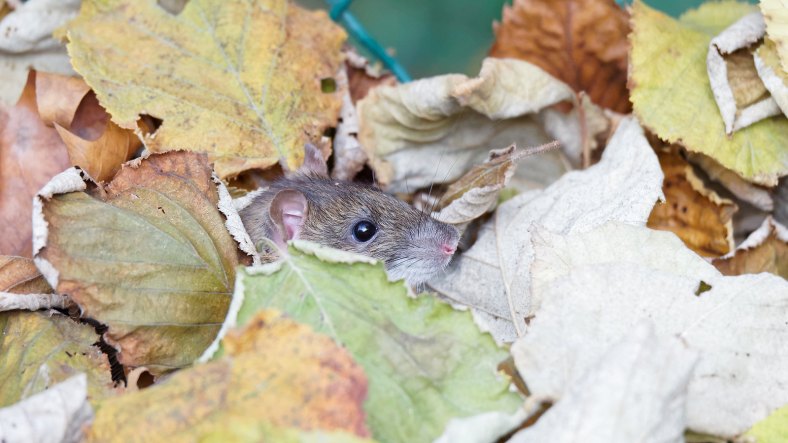
Separate Has A Rat In It

All right: so I have two classes of College Readiness, and they both had to write a UChicago essay — and they both picked a prompt for me to write. (If you don’t know what I’m talking about, read this. If you want to see all the prompts, go here.)

The other class chose this one:

People often think of language as a connector, something that brings people together by helping them share experiences, feelings, ideas, etc. We, however, are interested in how language sets people apart. Start with the peculiarities of your own personal language—the voice you use when speaking most intimately to yourself, the vocabulary that spills out when you’re startled, or special phrases and gestures that no one else seems to use or even understand—and tell us how your language makes you unique. You may want to think about subtle riffs or idiosyncrasies based on cadence, rhythm, rhyme, or (mis)pronunciation.

Here is my response.

Language Separator

See the rat?

I am a dull man. 

I am utterly unspecial, solidly in the mainstream: I am a white American male, cis/het, raised vaguely Christian but now a non-practicing atheist. I am married. I am 49 years old. I own a car and a house, with a mortgage on the house. I have a Bachelor’s degree, more debt than savings, and I vote Democratic. All completely “normal,” in that people who look and live like I do have made sure that our culture believes that people who look and live like I do are the norm, the standard, the expectation – and therefore everyone else is a little weird, a little off, a little less than what they are “supposed” to be. Like most people who look and live like me, I am aware of my privilege, I oppose the unfair societal structures and institutions that promote it – but I don’t really do too much to change them, because after all, I do benefit from them. I feel guilty when I think about that, so I try not to think about it.

Sorry: that went too political. (I am keenly aware that some people find it awkward and uncomfortable – challenging – when I speak of political matters. I do not want to offend them, so I usually do not speak of political matters.) My real point is that there is very little about me that is, according to our society’s generally understood and accepted standards, abnormal.

Until I open my mouth.

My mouth itself is pretty normal (Though I have WAY more fillings than is normal, I think – over 40, with 5 crowns. I have abnormally bad teeth.), it’s what comes out that is abnormal. First of all, I have a weird accent: my parents (The most important influence on a person’s accent and dialect) are from the West Coast, Washington and California, so I speak somewhat in their accents; but I was raised first on Long Island, which has a distinct accent, and then in a suburb of Boston, which has a STRONG accent. I didn’t acquire or keep either of those accents in their entireties, but I did pick up a few pronunciations; and more, Boston’s speech patterns were strongly influential: I speak too fast, as Bostonians do, and I talk faster the more excited I get; and I cuss intemperately. So I sound like a mishmash of two coasts and four states.

It’s more than my accent and my speech patterns, though: it’s what I say.

Don’t get me wrong: I am a student and an artisan — a wright. A smith. — of language. I study literature and rhetoric, and have mastered them to a degree that allows me to teach, generally successfully. I possess linguistic capacity more than sufficient to enable the utilization of language both fanciful and ornate, drawing from the recondite and recherche realm of jargon as well as splashing through the filigree fountain of poetry.

I talk good, is what I’m saying.

 And, as you can see, because I can use language well: I can also abuse it.

My favorite form is mispronunciation. I enjoy completely destroying the actual sounds of words, especially foreign ones. Especially French. Because if any language has worse pronunciation than English, it’s French. That word I used between “recondite” and “realm?” I would enjoy saying that “ruh-churchy.” So I feel that we should pronounce La petite fromage, the little cheese, the way it is spelled: lah puh-teet froh-midge. I draw from classic influences to pronounce the K and the G in “knight,” and to describe for my students when they put the emPHAsis on the wrong syLLAble.

But mispronunciation alone is too simple; a little tame, really. Much more funner is improper forms of words, particularily when the wordination is constructicated of rootages and suffixery (Holy crap, autocorrect accepted that one!  Is that really a word?! Mmmmno, it’s redlined. I think I stunned the autocorrect.) that are close, almost recognizable — but also completely wrong. That’s the besterest. Though one step higher here is when I can corrupt a common usage of a modern slang term in order to make it seem more grammatical while also being deeply annoying: when I was on Twitter, for instance, I made a point of saying I twitted a twit, not tweeted a tweet – because after all, it wasn’t called “Tweeter,” was it? (Now it should be xitted a xit on Xitter, not xeeted a xeet on Xeeter. Though either one would presumably make Elon Musk apoplectic, and that’s a good use of language.)

I admit it’s a touch upsetting that I say these kinds of things and play these kinds of games with my students, because for some reason, they trust me to steer them right with their usage of English, the poor innocent fools; I’m sure I’ve given more than one a bad idea about words from some joke or other — though I will further admit that that’s funny. I do teach them the real insane trivia hidden deep in the pockets of the English language: the word floccinaucinihilipilification (WHICH I TYPED RIGHT THE FIRST TIME) and the sentence “Buffalo buffalo Buffalo buffalo buffalo buffalo Buffalo buffalo.” Both of which are real. And “Y’all’d’nt’ve,” which is not real, but should be. These all show actual facets of this mad and madcap and maddening language that I love, so they are all lessons, on some level, at some point. And I’ll bet you dollars to donuts that most English teachers do not teach those lessons.

Then there are the foreign accents (Or as I am fond of saying, the furrin accents, which we don’t talk here in ‘Murrica.). A number of them show up when I read aloud, when there is some identifiable speech pattern in the dialogue, or a clear setting in an accentish area. I’ll read British stories in my best London fog, and I’ve read ev’ry danged word of Huck Finn by that Mark Twain feller in my best countrified speechery. I do sometimes use my past exposure to New York and Boston accents to play those characters when reading, especially if someone needs to be a tough guy; but I don’t put on my Pepe Le Pew when I read Guy de Maupassant’s “The Necklace.” And I never use Apu Nahasapeemapetilon’s accent, not even when I read The God of Small Things. On the other hand, I will neither confirm nor deny that Neil Gaiman’s story “Truth is a Cave in the Black Mountains” retains a place in my Fantasy Literature elective specifically because I get to use my Scottish brogue.

Of course, none of these accents have the same color, force or frequency as my pirate accent. Not only because I dress up like a pirate for every Halloween, and dress up my voice like one on every September 19th (International Talk Like a Pirate Day, if ye be of the uninitiated). Also because I love doing that accent, and so it shows up whenever anyone makes a pirate reference around me, which is fairly frequent given my reputation and the assorted pirate paraphernalia which I have acquired over the years. If anyone tells me a pirate joke, I am honor-bound to respond in the appropriate manner: “AYE LAD, THAT WERE A FINE SALLY — I’LL SHARE IT WITH ME OWN CREW, THE NEXT TIME I WANT THEM ALL TO FALL ILL OF VILE PUN-ISHMENT! HAR HAAARRRRRRR!!”

Even this list, though, is not exhaustive, because it doesn’t include the character voices I use. In class there are a few definite ones; I am very fond of the voice of Gollum from The Lord of the Rings, as performed by Andy Serkis; it’s a bit rough on the throat, but so very taassssstttyy, precioussssss… And just to one side of that, almost two sides of the same coin, is the voice of Edna Mode from The Incredibles, which I also love using, as long as it is attached to the right character (NO! CAPES!). Those two are my favorites, though also I am not above talking like a Goodfella (“Do I amuse you? What am I, some kinda clown to you?”) or the Lennie of the cartoons (“And I will hug him and pet him and love him and squeeze him and call him George!”) though never when I read Of Mice and Men because that book makes me cry and I can’t make fun of it that way. 

And it goes on from there. When I am reading test directions aloud and I get to a portion that is capitalized or in bold print, I will shout those words at the top of my lungs (“DO NOT WRITE IN THE MARGINS OF THE ANSWER SHEET”), without any warning at all; partly because I like to make my students jump (and laugh, because breaking the tension is part of my job), and partly because I want to make fun of the directions, which are universally terrible. I can actually sing reasonably well, but when I sing in class I usually make my voice sound as awful as I possibly can, intentionally breaking and scratchy and missing all of the notes. I sometimes read as fast as I can, which thanks to my Bostonian upbringing is pretty damn fast, so that all the words run together into a completely indistinguishable fog of sounds.

So the question is: why? Why do I do this? Why am I like this? Especially given my responsibility as a teacher, and my deep and abiding love for my language, and for speech both written and spoken?

Honestly? I don’t know.

It might be because I don’t want to conform. I have to follow the rules in too many ways already; even worse, I have to fight for the rules, have to make other people obey them, have to get them in trouble when they break them: and I hate that. I also can’t stand it when people turn up their noses – or even worse, break into that violent, assaultive cackle that people put on – when they catch someone saying something “wrong,” and they take advantage to say, “It’s ‘wrongly,’ you pathetic dolt!” I hate the arrogance of that, the contempt of it. I hate the hard-edged insistence on rules: when we all know that in English, the rules don’t apply. Tell me the “I before E rule.” Go on. I dare you. 

There are no rules in English, other than the only rule that matters in any language, in any form of communication: if communication was successful among all parties, then the language was effective. That’s it. That’s the whole point. We speak and we write in order to communicate something. Sometimes there is a secondary purpose (or even a primary one) such as intimidation or seduction or persuasion; but in those cases, the goal of the intimidator or seducer or persuader is still a goal that must be communicated, even if only by achieving it. But if my audience can understand what I want them to understand, then nothing else matters: that’s the truth. That’s what I want people to understand, to absorb and believe. That’s why I tell my students (sometimes to the chagrin of my fellow English teachers) that you may start a sentence with “and” or “but,” and you may use “I” in a formal writing context, and you may use contractions, as well. And you may cuss: because sometimes the only word that properly communicates one’s message is “FUCK!!”

Oops. Got too offensive there. Now this document’s going to get flagged. A much worse F-word.

I love playing with English. That’s why I love ee cummings (Even though much of his poetry is political, and even more of it is offensive: but all of it is fun.), who wrote like this:

love is more thicker than forget

more thinner than recall

more seldom than a wave is wet

more frequent than to fail

it is most mad and moonly

and less it shall unbe

than all the sea which only

is deeper than the sea

love is less always than to win

less never than alive

less bigger than the least begin

less littler than forgive

it is most sane and sunly

and more it cannot die

than all the sky which only

is higher than the sky

 and why I admire and enjoy the novel Riddley Walker by Russell Hoban (Even though it is very political, and therefore quite offensive… but it’s okay, because Russell Hoban also wrote this), which looks like this:

Looking at the moon all col and wite and oansome. Lorna said to me, ‘You know Riddley theres some thing in us it dont have no name.’ 

I said, ‘What thing is that?’ 

She said, ‘Its some kynd of thing it aint us but yet its in us. Its looking out thru our eye hoals. May be you dont take no noatis of it only some times. Say you get woak up suddn in the middl of the nite. 1 minim youre a sleap and the nex youre on your feet with a spear in your han. Wel it wernt you put that spear in your han it wer that other thing whats looking out thru your eye hoals. It aint you nor it dont even know your name. Its in us lorn and loan and sheltering how it can.’ 

 and A Clockwork Orange by Anthony Burgess (Which is both extremely political and EXTREMELY offensive, so…maybe we shouldn’t talk about it.), which looks like this:

“What’s it going to be then, eh?” 

There was me, that is Alex, and my three droogs, that is Pete, Georgie, and Dim. Dim being really dim, and we sat in the Korova Milkbar making up our rassoodocks what to do with the evening, a flip dark chill winter bastard though dry. The Korova Milkbar was a milk-plus mesto, and you may, O my brothers, have forgotten what these mestos were like, things changing so skorry these days and everybody very quick to forget, newspapers not being read much neither. Well, what they sold there was milk plus something else. They had no licence for selling liquor, but there was no law yet against prodding some of the new veshches which they used to put into the old moloko, so you could peet it with vellocet or synthemesc or drencrom or one or two other veshches which would give you a nice quiet horrorshow fifteen minutes admiring Bog And All His Holy Angels and Saints in your left shoe with lights bursting all over your mozg. Or you could peet milk with knives in it, as we used to say, and this would sharpen you up and make you ready for a bit of dirty twenty-to-one, and that was what we were peeting this evening I’m starting off the story with.

and all the fantasy novels and science fiction movies and so on that make up entirely new languages, and then translate them into English: because language is fun. The more fun you have, the better it works. The more fun it is, the more you want to use it: and that makes more communication, which means more connection, which means more peace, love, and understanding.

And that would be the besteresterest.

The point of this essay was meant to be what in my language use sets me apart, divides me from other people; I do think it is the degree to which I mess with language, the number of games I play with it, the variety of ways I push the bounds of what is acceptable and what is normal. I do all those things more than most people; and that’s what sets me apart. What I don’t try to do, ever, is make my language harder to understand, to make communication fail: it is maybe my worst habit as a writer that I always try, over and over, to make my communication more clear, to explain further, to give another example, another synonym. As you can see. It makes me much too wordy in my writing. But it also makes me a good (if talkative and boring) teacher. It makes me a good friend, and a good husband, because I always try to explain what I am thinking and what I am feeling; I always try to communicate (And I realize that communication also requires listening, if you were thinking that I do all the talking. I don’t. It’s just that my turn takes three or four times as long.). My wife and I rarely fight because of that, and our fights usually end in compromise and agreement: because we communicate. (I don’t deserve all the credit for that. My wife is exceptionally good at understanding me, and herself, and she listens too. She is also very patient with me, which I appreciate forever.) I think it’s good that I am able to use humor to break up those long, repetitive speeches in which I try to explain everything I am thinking, over and over again.

I just wish other people enjoyed my portmanteaus as much as I do.

Oo! That’s one I forgot to mention! Portmanteaus: when you put two words together into a single word, like breakfast+lunch=brunch, or smoke+fog=smog. I love those things. I think of them constantly, and I bring them up all the time – here, wait, I have a list of my favorite ones.

What’s that? Oh – you have to leave? No time to discuss word nerdery with me? I understand. 

Maybe next time.

And then again: maybe not. 

Just know that I’ll always be here, ready to talk about words, ready to play word games – and ready to communicate. And whether that makes me different, or makes me just like everyone else, I don’t actually care. As long as we’re having fun. And not being … too offensive.

Oh and — fun being offensive? That’s offunsive. And that is a portmanteau.

The Skinny Poem

My apologies; I have had a hell of a few days, and though I wrote this on Saturday (Partly: part of it I wrote a week ago), I completely forgot to post it both Sunday and Monday.

So here it is, my Tuesday post: this is an analysis of the poem “I Was a Skinny Tomboy Kid” by Alma Luz Villanueva. I wrote this because my wife told me that I needed to do a better job of using my essays as models for my class; that when I wrote an essay for them, rather than my usual self-conscious method of reading it fast and then moving on, I needed to actually go through it, explain what I did, and get feedback from the students about what worked and what didn’t, and why. So I did that. My AP class had to write an analysis of this poem, and most of them didn’t do it, so I gave them this to show what it should look like. I think it helped.

I hope it gives you something worth reading. If nothing else, the poem is amazing; read that, and then go about your day, and you won’t have lost anything.

I Was a Skinny Tomboy Kid

[My apologies for the link; the poem is written a specific way on the page, and I can’t capture it in this post format. YOU MUST GO AND LOOK AT THE POEM THE WAY IT IS MEANT TO BE READ.]

Literary Analysis of Alma Luz Villanueva’s “I Was a Skinny Tomboy Kid”


When do we grow up? What makes it happen? When we say someone grew up too young, or too fast – what does that mean? Is it possible to grow up before you grow up? If that happens, is it bad? And then, once someone has grown up – is that it? Is childhood gone? Is innocence gone? Can we never be childlike, if not actually be a child, ever again?

In Alma Luz Villanueva’s narrative poem, “I Was a Skinny Tomboy Kid,” the speaker seems to grow up over the course of the piece; and it seems to be positive that she does so, not least because she realizes the truth about some important things in her life. But then at the end, she seems simultaneously to regress and progress, and so the overall message is unclear. But perhaps that is intentional: after all, how many of us know the actual clear, definitive answers to any of these questions about life?

The poem starts with the title line: since the word “tomboy” clearly associates with a female child – because who would call a boy a tomboy? Boys are just boys – and since the author is female, it’s tempting to assume that the piece is autobiographical and accurate. But whether the speaker is the author or not, she is fierce in that opening: her “fists [are] clenched into tight balls.” So she is angry, and defensive – maybe even offensive, maybe even looking for a fight. But at the same time, while she is a tomboy, which connotes overtly stereotypical masculine traits like aggression and risk-taking, she is also, in the title and the first lines, a skinny kid. Which connotes weakness, and fragility, and youth and innocence, because “skinny” seems to say a child who hasn’t grown a lot yet, who hasn’t yet reached her potential. This makes her fists seem much less intimidating: as does the use of the phrase “tight balls,” which don’t make her fists sound terribly frightening. And since she is a skinny kid, they’re probably not very frightening at all.

From that first image, we go into a different view of being a tomboy kid: because she isn’t fighting, she is avoiding people. “I knew all the roofs/And backyard fences,” we are told: places where other people would not be, would not see her. She goes on:

I liked traveling that way

            sometimes

      not touching

the sidewalks

            for blocks and blocks

it made

      me feel

victorious

somehow

over the streets.

So she is avoiding. She is hiding, trying not to be seen, trying not to touch the places where other people are. Only sometimes. And only, we are told, because she liked traveling that way: but the desire to feel victorious over the streets is telling. It implies that the streets are not something she could normally be victorious over, so she has to seek this way of doing it. And as another author pointed out, that pause between “feel” and “victorious somehow” pretty clearly shows some doubt or some question in that wording, doubt created both by the pause and by the uncertainty in “somehow.” So “victorious” maybe isn’t the right word, here. Maybe the streets aren’t her enemy? Maybe the streets can’t be conquered? What does it even mean to conquer the streets? Based on her description of achieving victory here, it seems to mean escaping them, rising above them – becoming more, grander. Learning to fly. Gaining freedom.

I liked to fly

         from roof

  to roof

      the gravel

falling

away

beneath my feet,

      I liked

          the edge

        of almost

not making it.

And the freedom

of riding

                  my bike

  to the ocean

and smelling it

    long before

I could see it,

We can see here one of Villanueva’s stylistic choices, in the line breaks and the formatting of the poem, with some lines jutting out beyond the others – particularly appropriate when describing the edges the speaker jumps off of, the edge of almost not making it. The gravel falling away, the words almost sliding across the page under our eyes as the gravel slid away under her feet. So here we see the risk-taking, which may be what the speaker does to be considered a tomboy – also climbing up on buildings and jumping across alleys is not a traditional “female” activity (Though it should be, because women usually have better balance than men): but now, separate from the issue of tomboyhood and so on, we have to ask the question: why does she do this? Why is she jumping from rooftop to rooftop? On some level she enjoys the freedom of flying, as she calls it; but then she clearly wants the risk, she liked the edge of almost not making it. Gravel falling away beneath her feet, which scares me just thinking about it. 

Why would someone want that? 

But the thought cuts off there, almost as if she shies away from it, changing the subject to something less shocking, less disturbing: she likes riding her bike to the ocean! How lovely! She likes smelling the ocean before she could see it – which may have some small meaning about the usual smells around her, the smells of city streets, which are generally awful and that’s why she revels first in smelling the ocean; this is emphasized by the fact that she can jump from roof to roof, and along or over backyard fences, for “blocks and blocks:” which shows the size of the urban area and how densely crowded the houses and buildings are there. But enough of the streets this speaker wants to defeat: now we’re going to the ocean.

Disguised as a boy, she thought. In an old army jacket. 

Why does she want to be disguised as a boy? Why did she think wearing an old army jacket would disguise her as a boy? Because women aren’t in the army? Don’t wear army jackets? She does continue the thought in the same stanza:

and I traveled disguised

as a boy

      (I thought)

          in an old army jacket

  carrying my

fishing tackle

    to the piers, and

        bumming bait

        and a couple of cokes

Fishing, bumming bait and a couple of cokes: these are all boy things, right? Sure, I don’t really understand why myself; I grew up as a boy and never carried fishing tackle down to the piers, never bummed bait or a couple of cokes – or caught crabs, as she goes on to say in the next stanza. But because the speaker says “I thought,” this is no longer about actual gender roles or expectations: this is about her perception of them. She thought wearing an old army jacket, carrying fishing tackle and so on, disguised her as a boy. So the more interesting question is not whether that disguise would work, what society would think of what she is wearing; it’s why she wanted to wear it. Why she thought it would work. 

The next stanza – though it isn’t clear that it is a new stanza; there is a large line break between “and a couple of cokes” and the next line, “and catching crabs,” but that is clearly continuing the same action, the same thought, and the new stanza doesn’t start with a capital as the last one doesn’t end with a period – goes on with this fishing expedition, with no particularly interesting images or ideas – until all of a sudden, after a dash, but without changing sentence or stanza, the speaker shifts from apparently fond memories of the seashore to this:

I didn’t like fish

       I just liked to fish—

and I vowed

                     to never

    grow up

    to be a woman

      and be helpless

  like my mother,

but then I didn’t realize

         the kind of guts

it often took

              for her to just keep

       standing 

where she was.

I’m sorry, what? How did we get from talking about fishing to talking about the speaker’s mother, and the speaker’s apparent contempt for her?

The answer is that we have been talking about this all along: it was just disguised in an old army jacket, with fishing tackle, jumping from roof to roof and almost falling. 

The speaker wants to not be female. “To never grow up to be a woman and be helpless like my mother.” That’s a sharp intrusion, a sudden juxtaposition, and a hard one to take in. The associations: growing up, being a woman, being helpless, like my mother; three of them are all neutral if not positive – but all changed entirely by the idea of helplessness. To this girl, her mother is helpless. Women are helpless. Perhaps adults are helpless, though it seems likely that her mother’s womanhood is the real culprit, not her maturity (On the other hand, the speaker is apparently not helpless yet, and the thing she wants to avoid is growing up, along with being a woman like her mother. So maybe it is age.). What kind of terrible situation makes this girl connect these ideas this way? To think that her mother’s helplessness – a word that describes both total vulnerability, and also complete isolation, because she is in need of help and has none – is inherent in womanhood? Is inevitable for her mother? 

My first thought is that her mother is abused. The victim of domestic violence. If this is what the poem implies, then I also suspect that this is a common situation in this girl’s world, because while she uses her mother as the example, she does associate this helplessness with womanhood, so perhaps she’s seen other women, perhaps all other women she has ever seen, in the same situation. But it is also possible that the trouble here is that her mother is trapped: perhaps by responsibility – perhaps by the girl herself, as the trap for the mother might be the fact of her motherhood – and can’t escape. Maybe that’s why the speaker escapes into freedom, and feels victorious by doing so. The rest of the stanza, while it changes the girl’s perception of her mother, doesn’t resolve this for us: it simply tells us that the girl later recognizes the kind of guts, the kind of strength and courage, that it took for her mother to “just keep standing where she was.” The courage to remain, standing and static, “where she was” might imply the mother is trapped; but the “just keep standing,” and the “kind of guts it took,” might imply the violence.  Either way, it makes us pity this poor woman, and understand, if not necessarily empathize, with the girl’s desire to escape – empathy being potentially held back because: why doesn’t she help her mother? Although the fact that she doesn’t, that she sees this situation as inherent in womanhood, and the fact that the poem opens (and closes) with the speaker’s fists, all maybe implies that the mother is the victim of violence, and there is simply nothing the daughter can do about it, being just a skinny kid. Other than to escape it, and spend quite a long time outside of her home, pretending to be a boy.

The last quarter of the poem brings in some new ideas. Partly because this depiction of the speaker’s mother shows her transition from childhood to adulthood:

I grew like a thin, stubborn weed

watering myself whatever way I could

believing in my own myth

transforming my reality

and creating a

legendary/self

She grew: she became an adult. She stayed skinny, though – though now it turns into “thin,” with a connection to “stubborn” and “weed,” which for me implies a certain strength, though it feels like a somewhat desperate strength; but I think that fits. It takes strength to be one’s own support, to water one’s self and produce one’s own growth; it takes resourcefulness for the kid to find “whatever way I could” to provide for herself. It also shows trauma: because it shows neglect, and the “whatever way I could” implies that the ways she did find were insufficient, or problematic. I have to wonder if something happened to this growing kid’s mother, that prevented her from watering the weed-kid, forcing the child to take care of herself: to grow up too fast. The last part of this section of lines (Not the end of the stanza, which goes on without a line break) shows the more positive view of that experience: the child grows up too fast, abandoned or neglected in some way – but that makes her powerful, in some ways. “Believing in my own myth” is a beautiful way to depict this: the idea of a child finding her own strength and her own way to support herself has a real pull-yourself-up-by-your-own-bootstraps  paradoxical impossibility to it; and believing in one’s own myth has the same. Myths are false, of course, but they do provide something useful to people, in that they create a story, an explanation that makes sense of the universe and of the human condition, which is then useful to help us to move forward and not get stuck in existential despair. Faith creates strength and confidence, even if the faith is in nothing tangible or even real. It’s a house built on sand: but sometimes it can be enough for someone to grow strong and move on to a more solid foundation. As this kid did: she transformed her reality, and created a legendary/self. 

I’m not sure what to make of that slash; my first thought is that it creates two equal alternatives, like using “he/she” as a pronoun, meaning either option is equally likely and valid. Which means that this kid’s adult self is legendary, and I can’t see that as anything but positive. But that’s not right, because I can see it as something other than positive: legends also, like myths, are not real – though in my understanding, they are based on real life. There was a King Arthur, after all; he just didn’t pull the sword from the stone or preside over chivalrous knights seated at a round table. He united Angles and Saxons in the vacuum created by the departure of the Romans; and then his kingdom crumbled after his death, and was turned into something much more idyllic by romantic authors writing five or more centuries after him. So a legendary self might be a false self, an illusion: still just that myth, even if she believes it herself.

Reading on, I think that may be the answer: that the self she creates is legendary, both in that the facade she creates for herself is amazing and strong and capable, and also in that it is false. Because the next section of the poem says this:

every once in a while

late at night

      in the deep

       darkness of my sleep

  I wake

        with a tenseness

in my arms

       and I follow

it from my elbow to

      my wrist

and realize

       my fists are tightly clenched

and the streets come grinning

and I forget who I’m protecting

This is a clear and effective description, for me, of childhood trauma coming back to haunt the former skinny kid. The return to the clenched fists and the streets from the beginning of the poem show me the echo from her childhood; the fact that it comes at night, when she relaxes her control, and that it is associated with darkness, with tenseness, all makes me think she has never entirely recovered from what she went through as a child. But then: none of us really do, ever, “recover.” We assimilate the pain and the sadness, we perhaps find a way to accept it; but it never heals. It never goes away. This shows the hollowness, in a way, of the myth, the legend, of the adult who was once the skinny kid: I think she created a new self, which for me sounds like a victory; but I think inside that newly created skin, there is still that same little kid, trying to escape and unable to, trying to win and really just running away. There is a detachment in the description of her waking, feeling tension in her arms, and following it to the clenched fists: she doesn’t immediately realize that her fists are clenched, she has to discover them after following the feeling; that numbness and alienation from the actual fists seems like they are still her child’s fists, still representing the same anger and fear that she tried to fight in the past – and still, even now, small and ineffective, unintimidating: because look, the streets come grinning. They don’t fear her. They laugh at her attempt to fight back. Perhaps at her attempt to escape, because they come back, even now, even when she is presumably far away from where she grew up; they still come back, and when they do, she forgets where and who she is now (Now because these last lines are in the present tense for the first time in the poem).

I don’t know what to make of the last line in this section. “I forget who I’m protecting.” Who is she protecting, and why does she forget? If she is protecting herself, which seems likely – how could anyone forget that? And if not herself, who? Her child self? How does a present adult self protect a former child self? Is she protecting someone else entirely? Who, then, is she protecting them from? 

The last hints come in the final four lines of the poem; though to interpret those hints, we have to look back at the rest of the poem. The last lines are:

and I coil up

          in a self-mothering fashion

and tell myself

it’s o.k.

These have several possible meanings. This is intentional, of course, because there’s no doubt that part of the author’s purpose here is to create doubt, or rather to show the speaker’s doubt. One thing that is lost in the absence of strong, present parental figures is surety and confidence: it takes someone telling you that you are right before you can start believing you are right, and the first one whose word we take as gospel is always our parent. It’s a trope, sometimes even a joke – Milhouse, the nerdy best friend of Bart Simpson, confidently tells us that “My mom says I’m the handsomest guy at the school.” What a dork: but also, what a good mom. The doubt throughout this poem, and particularly at the end, is certainly representing the absence of that early guiding light, which leaves our speaker without any real way to know what is right and what is wrong, except to figure it out for herself: which in the case of something as abstract as morality, means she has to believe her own myth, find her own truth and believe it just because.

One way to read these final lines is positive: the kid has grown up, and in the absence of a mother figure, she has become her own mother figure, and now she can offer herself comfort. It’s another possible depiction of real strength and a successful adaptation; the same as in the legendary/self that transformed her own reality. And this isn’t wrong: the last words of the poem are “it’s o.k.” She is self-mothering as she is a legendary/self: she has become what she herself didn’t have, and that is both impressive and comforting, that in the absence of something we truly need, we can be enough for ourselves. 

But also, the idea that “it’s o.k.” is enough to dispel night terrors – and maybe it’s just me, but that line “the streets come grinning” is genuinely terrifying; the streets are, we all know, a place and source of danger, and grinning danger is the worst kind, both supremely confident that we can’t protect ourselves from it, and happy about what harm it is about to do to us – that’s not right. If the streets are coming for me in the deep darkness, I don’t want someone to tell me it’s o.k., I want someone to tell me they will protect me, and they have a shotgun. “It’s o.k.” is a weak sort of comfort. And the fact that the speaker has to be self-mothering, while it could be a sign of great strength, is also paradoxical: one cannot be one’s own mother, and so self-mothering seems as impossible as a weed watering itself, as a myth becoming real by believing in itself. That impossibility creates doubt as to the truth of this description. Is she mothering herself? Or is she just pretending? I think the phrase “I coil up” also shows this, because it sounds tense: not relaxed, not sweet and comforting, but desperate; and that makes that final statement sound like a lie. I also note she doesn’t simply state a truth that it is o.k.; she tells herself that, and then it is up to her to believe it. And it’s minor, but – “o.k.” is lower case. Unimportant. A whisper, not a confident shout. Put it all together, and it seems like this woman is not any better off than she was when she was a kid, and she was trying to escape but could not. She’s still the same kid: maybe a little taller – but still skinny.

However: all of this leaves out one unresolved question. Who is she protecting? Who did she forget she was protecting, when her past terrors resurface during her deep darknesses?

I don’t believe it is herself. The reaction when threatened, especially when threatened by a terrifying figure from one’s childhood, is to draw inward, to become more selfish, to protect one’s self instead of someone else. It’s a shameful response, maybe, but a wholly human one. I can’t see how she could forget to protect herself – in order to protect herself. I’ve tried to wrap my head around the idea that she was protecting her child self, but that doesn’t make sense either: what does it mean to protect one’s child self, once one has grown up? To preserve an illusory memory, to refuse to accept the ugly truth? It doesn’t fit. The only other person talked about in this is her mother: and if she was protecting her mother, and the streets came grinning and then she forgot and tried to defend herself – that doesn’t fit with the first part of the poem, when she leaves her mother behind while she runs off to be free. Now, maybe, there is some memory here of a time she did protect her mother, and stood up to a threat (maybe one from the streets) and the memory of that dangerous situation comes out in her dreams, and she forgets that she fought to defend her mother, and in her night terror, only thinks of herself. That’s not terrible.

Except “I forget who I’m protecting” is in the present tense. She’s protecting someone now, not in the past. 

And now this talking about her mother, and protecting, and the past to the present brings up another question: how did she finally learn that her mother was actually strong? The implication is that she has learned it in the years since her childhood, because the lines say 

but then I didn’t realize

         the kind of guts

it often took

              for her to just keep

       standing 

where she was.

Then she didn’t realize means now she does. So what is different about now? Is it just that she is an adult? A woman?

Or is it that she is a mother?

What if she realized her mother’s strength when she had to use the same strength herself? What if that’s when she realized that her mother needed to be strong for her, her mother’s child – and maybe her mother couldn’t do it, couldn’t provide the structure and the safety and the support that her child needed, leaving our speaker to grow as she could, on her own: but maybe the mother had to use all her strength just to shield the skinny kid from the danger the mother dealt with every day. Maybe the reason the skinny kid could be a tomboy was because her mother had the guts to keep standing where she was: between the skinny kid and the danger – maybe, again, the danger from the streets. And maybe the kid thought she was helpless, but really she was standing, strong, as a shield, sacrificing herself to defend her child. 

And maybe now the skinny kid, no longer a tomboy or a kid, is herself standing and trying to be strong for her own child: protecting her own child. And now, when she has to find her strength to be a mother, to be strong for her child, in nothing more than believing her own myth, because she never got the support from her mother that would have let her grow up with the strength to be strong when she became a mother, maybe now she understands that her mother had to do the same, find strength somewhere within herself, because her mother also didn’t strength from the generation before. Maybe the tomboy’s mother also swore not to grow up to be a woman and be helpless – until she became a mother to a skinny tomboy kid. And then somehow found the strength to protect her kid, who grew up, if not confident, at least safer; and then maybe that kid, grown up into a legendary/self, could find the strength to give her child both safety and confidence.

Even if sometimes, in the deep darkness of sleep, she wakes up scared – a relic left from her difficult childhood, which wasn’t all bad, really, since she got to ride her bike to the ocean and go fishing, got to fly from roof to roof for blocks, thanks to the freedom her mother won for her, even if she had enough pain and fear to not understand what a gift that freedom was – and she has to stand in for mother, now gone, and for a moment, mother herself.

Until she can get up and mother her child. 

A Day of No Need

So, as I frequently do, I assigned my AP students an essay. They weren’t happy with it. Most of them didn’t do it. So I wrote an example for them. The assignment was to describe, with imagery and details, your perfect day: and this would be mine.

I think this says more about me and my life than it does about my writing or about my students and this assignment.

A Day of No Need

My perfect day is in the autumn. Probably November: there is no longer any pressure over getting Halloween exactly right; Thanksgiving is coming, but thankfully, I will never host any gathering larger than myself and my wife and our pets, so there’s no pressure there. But thinking about what food we will eat on that day, and about the four-day weekend, blocks any worries about Black Friday or holiday shopping; this is the time of year when, if you see something you think someone on your list would like, you pick it up and buy it, and feel good about yourself for getting ahead of the game.

The weather is perfect: the sun is out, and bright, but not hot; the breeze is cool, sometimes becoming a wind that bites and makes you want to tuck yourself into your jacket like a turtle pulling into his shell. Jackets are a must: which is great because it means more pockets, and also a layer that you are almost required to take off when you go inside, which means you can be warm outside and not too hot inside. If there are leaves on the trees, they are turning into beautiful colors; if they have already fallen, they are turning into beautiful sounds with every step through them, every stride leaving a wake behind, a surging wave of leaves leaping ahead. The smell of warm, spiced apples rises from the cup of cider in my hand.

But in truth, all of that is negotiable. Almost any weather can be perfect: there is such a thing as too hot, and another such thing as too cold; but hot and cold between those extremes are both fine, and warm is as good as cool. Green leaves on trees are almost as lovely as fall colors, and the bright blooms of spring and summer break up any monotony in the foliage. I like rain, and snow, and clouds, and blue sky – and night, for that matter. I don’t need any weather for my perfect day.

I need there to be no need.

On my perfect day, nobody needs me. My parents don’t need to call, my in-laws don’t need to call me to tell me to tell my wife to call them, like some bizarre game of phone foursquare. I don’t need to get up, I don’t need to walk my dogs (though if I feel like it, it would be fine; I like walking with them, as long as I don’t need to), I don’t need to shower, I don’t need to pick out and put on my teacher clothes; if I shower, it will be only when I feel like it, and if I get dressed beyond my pajamas, it will be in whatever I feel like wearing. If I eat breakfast I won’t need to cook. I don’t need to make the coffee for my wife, I don’t need to get her up for work, I don’t need to feel bad for waking her up to go to a job she mostly doesn’t like. I don’t need to find or make lunch, don’t need to fill a water bottle, don’t need to make my coffee just right, because if it’s not sweet enough I can just go into my kitchen and add more sweetener, any time I want to. I don’t need to go to the bathroom before I leave, because there will be time to go whenever I need to. I don’t need to check and double check that I have everything before getting into the car, and I don’t need to drive through traffic for 30 minutes to get to school. I don’t need to change the radio 65 times over that 30 minutes just to find some goddamn music instead of radio DJ blathering or used car salesmen yelling (LOOKING AT YOU SCOTT LEHMAN).

I might go to work, because I like seeing my coworkers, and even some of my students sometimes; but I won’t have duty, and I won’t have to period sub, and I won’t have to run a lunch meeting, and I won’t have to have meetings after school where I have to report on a student’s progress, or even worse on my progress, and I won’t have to listen to somebody or other telling me that I’m not doing my job well enough. I won’t have to stay to watch a sportsing event, or to watch my NHS students sell snacks at a sportsing event.

And most of all: I won’t have to teach. My students will be ready to learn on their own: I won’t have to drag them behind me, or drive them before me, to force them to gain an education for their own good. I won’t have to argue with them about learning, or about what we are learning, and I won’t have to listen to them complain about and criticize everything I do, over and over and over again, even though they probably won’t do it regardless of how they actually feel about it, which is only rarely the same way they say they feel about it. I won’t have to listen to students lie to me about how hard the class or the assignment is, because they want to lower the bar so they don’t have to work as hard. I won’t have dozens of different people trying to wear me down so they can have a day off, even though they have ten times the down time that I have: after all, I don’t have PE, or study halls; and while they have to write the essays, I have to read them – and you figure if I assign an AP essay to my 40 AP students, and they average 2-3 pages per response, that’s somewhere around 100 pages of writing I have to read and respond to, while they ask me if I’ve graded that essay yet.

But not today. Today they don’t fight me, and they don’t argue with me, and they don’t complain at me about what I do to help make them and their lives better. Most of all they don’t need me: they do the work on their own, without the need for me to pressure them. I don’t have to walk around the room and check on them, don’t have to make sure that none of them are cheating or sleeping or skipping, I don’t have to monitor their bathroom visit duration, or make sure they are signing out like they know they have to. I don’t have to tell them to put away their phones or close their Chromebooks. Because today, on my perfect day, my students do what they know they should do, what they know they are expected to do, what is entirely rational and reasonable for them to do: learn the material without being cajoled or coerced, and without disrupting the learning for themselves or others, and without being rude to anyone involved. They act like young adults, today, and so, they don’t need me. If they ask me any questions, it’s only because they’re curious what I think, not because they want my answer so they can write it down so they don’t have to come up with one themselves. None of them will have a test or missing assignments for another class, so they have to ask me, once again, to let them ignore my subject because the other class is more important than mine.

Today none of my students, and also none of my friends, are in crisis, and so nobody needs me to listen to them tell me what’s wrong. It’s not that I don’t want to listen when someone needs me: I just want nobody to need me, for nobody to be having a panic attack, or an explosion or righteous anger, or a bout of severe depression. I want to not need to find a way that I can help even though there’s not really much I can do: because the one thing I can do is listen, and empathize, and I don’t want to have to do that. I want nobody to need that, today. I don’t want to have my own bout of righteous anger or an explosion of panic or a depression attack. I just want to be okay, and for everyone else to be okay. Just for one day.

I want none of my students to need me to grade that one assignment, or to help them figure out how to do that one assignment, or need me to find another copy of that other assignment. Nobody should have a field trip form, or a grade check for their parents, or a failing grade the day of the big game, or a letter of recommendation they need, or advice and editing help on an application essay.

Nobody thinks they need to take advantage of me. Nobody does things they know they shouldn’t do just because they know I won’t get them in trouble for it. Nobody says “Oh, Humphrey doesn’t care if we do nothing.” Nobody lies to me. Nobody cheats on my assignments. Nobody insults me or my subject, calling school useless or saying that reading is boring. Nobody even thinks that the only reason people need to read is so they can learn more vocabulary words. Nobody asks if they can re-read a book they read before, or if they can just watch the movie, or if watching subtitles on an anime counts as “reading.” Nobody asks if we can watch a video on YouTube instead of reading today. Nobody forgets what I taught them the day before. Nobody asks if we can just do nothing today. Nobody even mentions the word “chill.”

Nobody asks if we can play Head’s Up Seven Up.

At the end of the day, I don’t need to drive home, don’t need to go to the grocery store, don’t need to make dinner. I don’t need to make or keep any appointments, and I don’t need to pay any bills, or do anything for extra money. If I write, it’s only because I want to. My bird doesn’t scream at me, and my tortoise doesn’t try to eat my foot, and my dogs don’t whine at me when I’m petting the other one and not them.

The only one who needs me is my wife. Because I need her, and I need her to need me. She will need me to hug and kiss her, and tell her I love her, and she will need to tell me she loves me. We will need to eat together, and share stories about our day together, and then unwind in front of the TV or in our office/studios making art. Though I won’t need to make art, and I won’t need to write an angry rant about anything, and I won’t need to tell all the idiots on Twitter that they are idiots: if I want to play Minecraft, then I can. I would not mind if my dogs needed to greet me when I come home, or need to lie next to me so I can pet them while I eat or while I relax.

And when I go to sleep, I won’t need to take Advil to get rid of my headache, and I won’t need to take melatonin to help fight off my insomnia. I won’t need to lay awake for an hour in the middle of the night, worrying about what happened in school today, or what’s going to happen tomorrow. Nobody will send me late night messages, or early morning messages, because they need an extension on an assignment, or because they are having a crisis and need to vent to me, or because they need me to cover their first period class in the morning. And I won’t have to worry about how I’m getting older, and things about my health are starting to scare me, and how my life has not been everything I want it to be: and I will not need to be more than I am, because I will, the whole day, just. Be. Happy.

That would be perfect.

Books vs. Movies Part III: Everybody Wins!

Bro, Do You Even Read?

I’ve now written about movies over books. It felt false; I had to work too hard to convince myself that movies were actually better than books. I’ve been telling my students for years that they should try arguing from the opposite side, as a way to gain depth to their perspective, to understand their opponent – and therefore defeat him more easily – but I guess I haven’t done it myself, not often enough. I’m not sure if that says something about our society, that we have trouble stepping out of our comfortable ruts and visiting ruts on the other side of the road (which is certainly true) or if it says something about me, about my arrogance, telling people what to do when I never do it myself. It’s probably the second one. I’d like it to be the first.

I wrote, as well, about why books are better than movies; or to be more precise, why people who watch movies but do not read books are destroying our society. It didn’t feel false: I believe that. I’ve read Fahrenheit 451, and I’ve seen how close Ray Bradbury got to what is actually happening in our world; people who don’t read at all, and thereby don’t gain the necessary skills that reading can give, are a genuine threat to us all. They lack imagination, and they lack empathy; but they don’t lack power, or influence, or a voice. And thus are they very dangerous.

But while that essay didn’t feel false, it did make me both angry and sad; and I’d rather not feel that way. So I find myself seeking a middle ground: something that will be true to what I really think, but will also be fair to the other side, and won’t make me feel like I’m pointing fingers at those I damn to perdition, sentencing them to burn at a stake, flames rising from burning books (Because zealots always destroy what they love, along with what they hate) to purify their corruption. Arguing for destruction is no way to accomplish anything but destruction; if I imagine my angry essay becoming influential, all it leads to is a witch hunt for the non-reader, and protestations of devout readerlihood. I would, for the first time, expect the Spanish Inquisition.

So the middle ground is this: I am currently reading a difficult book, Ralph Ellison’s Invisible Man. And it’s fascinating, really; it challenges me to find hidden meaning, it makes me think things I’ve never thought before, it gives me insight and inspiration. But it’s hard. I can’t read it for long, especially not after a day of teaching and/or reading essays. So when I get home, in the late afternoon or early evening after I’ve relaxed post-work for an hour or two, I may read it, for an hour.

Then I watch TV. Or play mindless video games, things like Mah Jongg or Candy Crush or Guitar Hero. Then, when it’s time for bed, I read again (because screens disrupt our sleeping patterns) – but then I read Harry Potter and the Chamber of Secrets. Because it’s relaxing.

I don’t watch very many movies, specifically, but it’s a fool’s game to try to build a distinction between movies and television; television breaks up a story into chapters, or it tells several related stories – a literary model followed by the best-selling novel of all time, Miguel de Cervantes’s Don Quixote. Right now my wife and I are watching Dexter, at a rate of about one episode per night; a single season, twelve episodes, is indistinguishable from a long movie – like, say, The Lord of the Rings, which is nearly twelve hours total in the extended editions, just like a dozen episodes about my favorite serial killer. My wife joins me for the TV show, and then she goes to her studio and draws and paints; she hasn’t read a book in months. She feels guilty about it, and I know that’s because of me and my ire about non-readers; but I don’t consider her a non-reader, just a person with a very difficult and trying job who prefers art as a means of relaxing at the end of the day. How can I criticize that? Is art any less valuable than reading? Of course not.

But how can I let people – specifically my students – think it’s okay to watch movies and TV? Just because I try to find the middle ground, enjoying both books and television, that doesn’t mean that my audience will join me there. I know how it works: when I tell students that the first draft doesn’t have to be complete or polished, you don’t give me something rough; you give me one paragraph that’s mostly typos. When I tell you the book report doesn’t have to cover the entire work, you give me something that only covers three chapters. When you realize I’m lax about deadlines, you simply stop turning things in until I actually give you zeroes and your grade drops. When I say once that grades do matter, everything else I ever say about grades not mattering is gone forever – I confirmed your preferences, your prejudices; now you’re done listening.

You really are good Americans.

So if I say that movies are entertaining, and are important as a source of relaxing entertainment, how do I convince you that you also need to read, to do the work, to make your mind tired before you get to the relaxing part?

Here goes. Reading is like working out. If you’re really dedicated, if you truly love it or it suits your ambition, then you can do it every single day, for hours at a time – but then mentally you’re the equivalent of this guy:

And nobody wants that.

For most people, who just want to be healthy and happy, you should work out a few times a week, on a regular basis. Read something challenging. Of course it doesn’t have to be a book, specifically, and it doesn’t have to be fiction; it just has to be reading, and it has to be challenging. This is where you strain, and work until you fail; this is where you build strength. Then, on other days, do something like cardio or abs: read something easy, something you could keep reading for a while without hurting yourself. The key there is to keep at it, to not give up.

Once you have done your workout, then it’s time to relax: do something easy, something that doesn’t tax your brain at all; watch a movie, watch a TV show, play a video game (And please don’t tell me that video games are mentally challenging. I play them, too. They’re not. If figuring out how to finish that mission on Grand Theft Auto is mentally challenging, then your brain is out of shape, is a couch potato of the first order. You need to read more.), have a conversation, take a walk, take a nap. Take it easy.

But for the sake of your mind, don’t just skip straight to the nap. Americans already do that with exercise, which is why the nation is unhealthy and out of shape; our brains are moving that way, as well, as we spend more and more of our time taking it easy, and not enough of it working out. You also don’t want your brain to look like this guy:

464621041_1601057ada_m

Moderation is the key. A little of this, a little of that; a little reading, then a little Netflix.

Now: as a student, you get a pass, like my wife does; you are involved in a mentally taxing endeavor, one that takes up all of your time and mental energy. So your free time should be spent relaxing and recovering. Until you reach the point where you aren’t having to work very hard mentally: summer time, or senior year, when you have two academic classes and nine TA/free periods. Then you need to work out. Then you need to read.

It’s important. It’s necessary. And because our society is based on information, which is still transmitted through the written word, then the mental exercise you must master, and then continually practice, is reading. Challenging reading. Depending on what else you want to do with your life, other mental exercises may be necessary for you, as well: math, science, art, engineering, music, what have you. Perhaps making movies will be your mental challenge, and if so, carry on: it is a difficult thing to do well, as shown by the number of people who do it badly. Movies are fun, but they aren’t necessary: except inasmuch as relaxation is necessary. As to the question of whether watching movies is a necessary means of relaxation in our culture, if you must watch certain movies or television shows in order to understand how our culture works and to participate in it, I leave that argument for another day.

Right now, my brain is too tired. What time are those sports games on?

Books vs. Movies Part II: Books

Here is the second essay: here is the one I wrote because I felt  dirty after writing the first one. Because I don’t actually think movies are better than  books; not at all, not in any way. In fact, I think the preference for movies over books is extremely harmful to our society.

So I wrote this one. Please note: it is directed at my students, who are as I describe them here. I expect that people who read this blog are not the non-readers I describe. Though the ending call to action still applies, to all of us who haven’t given up hope.

Not sure if I have given up or not, yet. But this essay is pretty clearly on the side of despair.

Enjoy!

Everything Is Terrible And We’re All Going To Die

I’m not like you.

I’m sure that’s not a surprise.

Unlike most teachers, I think, and say, that grades don’t matter and test scores don’t matter. Because all that matters is learning, and grades and tests don’t measure that; they may test what you know, in terms so specific that they become useless, but that doesn’t say what you will do with that so-specific knowledge: will you forget it the minute the test is over, the grade is filed? Will you be inspired by that knowledge?  Affected by it, changed by it? Tests can never measure that, and grades can never rate that. That change, that inspiration, is the purpose and value of education. That’s what matters.

Unlike most of America, and presumably the rest of the world, I don’t like money. I like a few of the things it can buy me, like a comfortable home, food, electricity, pirate outfits, Converse, books, coffee; but money itself is a trap. It leads us down a very specific path, a path that we must not deviate from, or else we don’t get the money; the problem is, that once we reach the end of that path, we find that the money isn’t what we want. What we want is freedom from the money, or more precisely, from the need to continue procuring the money. But the more money we make, the more stuff we buy, and the longer we have to keep getting money to pay for the new stuff. It’s a trap. I don’t like it. That’s the rest of the reason why I don’t believe in the value of grades: because every argument for grades comes back to money.

I’ve already lost you, haven’t I? Sure: you don’t care about me, or about what I believe; if what I have to say has some interest or benefit for you, you’ll read it – but if not, then you won’t. And me preaching at you doesn’t interest you or benefit you: it doesn’t entertain you, doesn’t dispel the cloud of melancholy that darkens most of your days, and which you are constantly seeking to escape through whatever momentary distraction you can find; and it doesn’t earn you money. Why would you read this, just for the sake of reading? Please.

Because unlike me, you don’t read.

DISCLAIMER: Yes, I know there are exceptions. I know there are people reading this who are readers. But I also know there aren’t very many. (Let’s be clear: “reading” Facebook or Twitter or Reddit is not reading. Reading here means books. E-books count, but memes and BuzzFeed and the captions on YouTube videos do not.) Most people read when they are forced to, by English teachers like me; most people will read something if there is “buzz” about it. (Meaning: if it is exciting.) But most people would rather wait for the movie. Even with assigned reading, the majority of people don’t read the whole book; they read enough to know they don’t want to read any more, and then they look at the SparkNotes, or they get their friend who is a reader to tell them about the rest of it, or they just fake it on the test – because the reading doesn’t matter, what matters is the grade, which gets you into the college, which gets you the job, which gets you the money.

Allow me to quote from a book that most of you haven’t read, or if you have, you didn’t pay enough attention to.

“Picture it. Nineteenth-century man with his horses, dogs, carts, slow motion. Then, in the twentieth century, speed up your camera. Books cut shorter. Condensations, Digests. Tabloids. Everything boils down to the gag, the snap ending…Classics cut to fit fifteen-minute radio shows, then cut again to fill a two-minute book column, winding up at last as a ten- or twelve-line dictionary resume. I exaggerate, of course. The dictionaries were for reference. But many were those whose sole knowledge of Hamlet (you know the title certainly, Montag; it is probably only a faint rumour of a title to you, Mrs. Montag) whose sole knowledge, as I say, of Hamlet was a one-page digest in a book that claimed: ‘Now at last you can read all the classics; keep up with your neighbours.’ Do you see? Out of the nursery into the college and back to the nursery; there’s your intellectual pattern for the past five centuries or more.

“Speed up the film, Montag, quick…Digest-digests, digest-digest-digests. Politics? One column, two sentences, a headline! Then, in mid-air, all vanishes! Whirl man’s mind around about so fast under the pumping hands of publishers, exploiters, broadcasters, that the centrifuge flings off all unnecessary, time-wasting thought!

“School is shortened, discipline relaxed, philosophies, histories, languages dropped, English and spelling gradually gradually neglected, finally almost completely ignored. Life is immediate, the job counts, pleasure lies all about after work. Why learn anything save pressing buttons, pulling switches, fitting nuts and bolts?”

That is from Fahrenheit 451 by Ray Bradbury.

And it’s you. You only read to get to the ending; once you know the ending, you stop reading –  and for the same reason, you never re-read. If you know enough to answer questions about a book – or about anything, really – you don’t see any need to keep learning about it; you can already answer the questions. You don’t see the need to learn anything other than what you will need to earn money, hopefully lots of money; and the purpose of earning that money is – pleasure.

The movie-vs.-book argument is built on a flawed foundation, the same flawed foundation that the dystopian society in Bradbury’s novel is based on: the idea of happiness.  Captain Beatty, the same evil clown who explains to the protagonist Montag how our society turned into theirs, also says this: “Ask yourself, What do we want in this country, above all? People want to be happy, isn’t that right? Haven’t you heard it all your life? I want to be happy, people say. Well, aren’t they? Don’t we keep them moving, don’t we give them fun? That’s all we live for, isn’t it? For pleasure, for titillation? And you must admit our culture provides plenty of these.”

When we try to decide whether movies or books are better based on the idea of which is more entertaining, the argument is immediately flawed: not only is entertainment transitory and essentially meaningless, but it is also too subjective to offer any coherent judgment: this fellow says he likes books more because they are more entertaining; this chap says he likes movies more for the same reason; and neither can be wrong, and neither can be right. We must turn to Bradbury – a novelist, of course – for a reasonable determination of value. If we believe that human society is valuable and worth preserving, then books offer a better opportunity for the continuation of the species than do movies. If, on the other hand, human culture is nothing more than what Beatty describes – something that exists only to provide its constituents with pleasure, with titillation –  then it doesn’t matter whether books or movies are better; at that point, humanity doesn’t matter, because something that exists only to please itself is too insular, short-sighted and pathetic to survive.

In that case, movies can be better. You can just keep watching Netflix until the ice caps melt and the water supply vanishes and the food supply follows; maybe you can watch The Road to get some pointers on what comes next. I’d tell you to read the novel by Cormac McCarthy, but – well. Don’t worry: the movie has Viggo Mortensen.

Bradbury shows in his book – and any observant student of humanity can confirm –  that books stimulate thought, and that novels promote empathy. Books of any stripe can provide evidence, rational argument, and conclusions about any subject; following the path of reason improves one’s ability to do the same. Novels create characters, who then give the reader a glimpse into their lives and psyches; understanding those people, assuming one can suspend disbelief enough to see the characters in a novel as people, at least potential people, improves our ability to understand actual people. Movies do neither of those things. Bradbury, who loved movies and television, has his Wise Old Man character offer the possibility that movies and television could offer the same thing that books do  – the same argument I’ve been hearing for years from my students when they try to explain to me why they don’t need to read, not really – but in my opinion, Bradbury was wrong about that. I don’t think movies and television can help, not at all.

The key, I think, is imagination. Imagination is the survival skill that enabled humanity to rise to the top of the food chain; because we could imagine what would happen when the mammoth came by, or when the saber-toothed cat jumped out of those bushes, we were able to plan for the possibility; that advance preparation made up for our total lack of physical prowess compared to other species. Imagination gave us the chance to survive long enough to build a civilization; imagination, in the form of ambition and aspirations, gave us a reason to build a civilization and allowed us to build civilization into what it is today; imagination would allow us to solve the problems we face that threaten our survival in the future.

If we still had imagination, that is. But you see, imagination requires a human intellect to create: to fill in blanks, to build images and scenes based only on hints. The kinds of things we do when we read, where even the best authors can only tell, never show. The kinds of things we never do when we watch movies or television, because they show: the images are created for us, the characters are presented to us, a fait accompli, without any need for our participation, for our imagination. The most we can do with a movie is decide if we like the image as presented to us; decide if it is entertaining or not.

Now, someone with imagination can watch a movie or a television show and have a new idea; they can think of what could have happened if the characters had encountered a different situation, or had different traits, or different resources; a person with an imagination could think of how a situation they watched on Netflix could parallel one in real life, and how the Netflix situation could lead to a real-life solution.

But you don’t get imagination from watching movies. You get it from reading books.

There is some good news. Our technology already exists, as does our science; and the lucky thing is, one person with imagination can keep a hundred engineers working, a thousand, more –  just ask Nikola Tesla. So as long as there are a few readers, a few thinkers, those people may be able to keep us afloat, in terms of problem-solving and innovation, for a few generations more; but that’s where we hit the empathy snag. You see, the notable problem in the society of Fahrenheit 451 (By the way: are you tired of me talking about a fictional society instead of the real world? Yeah. Check your phone: maybe there’s something more interesting to watch on YouTube. People falling down, or something. “Life becomes one big pratfall, Montag; everything bang, boff, and wow!” What am I saying? You’re not still reading this.) isn’t a lack of technology; their technology is more advanced than ours. The problem is that they don’t care about each other, and thus they don’t care about themselves. They run each other down in cars for fun. They commit suicide at an absurd rate – and they don’t care. They go to war, and nobody really pays any attention until the bombs actually drop on their heads: and even then, they only notice when the television screen goes blank, in the split second before it all turns to ash and dust and nothing.

You’re heading that way, now. People don’t care about each other the way they used to. Oh, some still do; most still care to a certain extent – but a lesser extent than in the past.  I can tell because look at your politics: not that you elected Mr. Trump, but the reason why you did – because you got tired of caring about other people’s problems. You don’t want to worry about refugees, or about problems in other nations, or the reasons why people do things we don’t understand, like carry out terrorist attacks in the name of an ideal; you don’t want to think about long-term issues like climate change, and you don’t want to pay taxes that don’t help you directly – don’t want to pay for other people who can’t find jobs, or who get hooked on drugs. You want to keep your money for yourself, not spend it on other people. Just like you don’t want to learn things that don’t directly increase your chances of finding a job that will earn you more money. Those other things don’t matter. Those other people don’t matter.

In Fahrenheit 451, when Montag goes looking for a way to solve the problem – he can’t possibly think of a solution himself, never having used his imagination and barely his intellect in his bookless life – he finds an old English professor, a man named Faber. He asks Faber what they can do, and Faber doesn’t give Montag much hope.

“The whole culture’s shot through. The skeleton needs melting and re-shaping. Good God, it isn’t as simple as just picking up a book you laid down half a century ago. Remember, the firemen are rarely necessary. The public itself stopped reading of its own accord. You firemen [In the novel, the firemen burn banned books, and the houses where they are hidden. And sometimes the people who hid them.] provide a circus now and then at which buildings are set off and crowds gather for the pretty blaze, but it’s a small sideshow indeed, and hardly necessary to keep things in line. So few want to be rebels any more. And out of those few, most, like myself, scare easily. Can you dance faster than the White Clown, shout louder than `Mr. Gimmick’ and the [television]`families’? If you can, you’ll win your way, Montag. In any event, you’re a fool. People are having fun.”

“Committing suicide! Murdering!”

A bomber flight had been moving east all the time they talked, and only now did the two men stop and listen, feeling the great jet sound tremble inside themselves.

“Patience, Montag. Let the war turn off the families. Our civilization is flinging itself to pieces. Stand back from the centrifuge.”

“There has to be someone ready when it blows up.”

“What? Men quoting Milton? Saying, I remember Sophocles? Reminding the survivors that man has his good side, too? They will only gather up their stones to hurl at each other. Montag, go home. Go to bed. Why waste your final hours racing about your cage denying you’re a squirrel?”

“Then you don’t care any more?”

“I care so much I’m sick.”

“And you won’t help me?”

“Good night, good night.”

On the off-chance that you don’t like what I’ve said here, and you care enough to do something about it, the solution is simple: read. Read for real, read for your mind and your imagination; read for your future. It doesn’t matter what you read: it only matters how, and how much. Read with your mind, and read as much as you can. If you ever have younger people you can influence, as a teacher or a parent or a mentor of any kind, try to get them to read, too. It doesn’t take everyone: it just takes some. More than a few, if we can.

I hope for your sake that you do. As for me, I’ll be dead by the time the world falls apart. I’d like to think that the books I write will outlive me.

But I doubt it.

Good night, good night.

How To Be Happier: Teenager Edition

This is an example essay I wrote for my AP Language class when they were assigned a Process Analysis. If it’s a little on the nose, well — it’s for teenagers.


How To Be Happier

Are you dissatisfied with your life?

You’re teenagers. Of course you are.

But that’s the bad news. (Okay, it’s probably not news. But how would you know? When was the last time you actually watched the news? I’m not even going to ask about reading it.) The good news is that you can fix this. You can change your daily routines, in simple, manageable ways, and the result will be improved satisfaction with your life. In fact, even more than that: your life will get clearly, demonstrably better. I guarantee it.

Let me tell you how. Step by step, so you don’t get lost. Pay attention.


Step One: Waking Up

You’re probably still tired. School does come early, doesn’t it? I don’t really have a solution, because even when researchers say school should start later, their suggestion is between 8am and 8:30, so it’s as good as it’s going to get; but I will say that often, catching just a few more minutes of sleep can make you feel a bit more – well, not happy, certainly, but resigned, at least; accepting, maybe – of your day’s new start and the requirement that you must now move, and act, and interact with someone other than your pillow. So the key to that is to minimize your time preparing for school (or work, on the weekends) in the morning. Here’s what you do.

First, put your phone down. Checking the Twitters, or your Insta-Face GramBook, or your text messages or what have you probably doesn’t take a lot of your time, considering that your thumbs can move at skittering-cockroach speeds over the screen; but it does take your attention, and that slows you down. Brushing your teeth while looking at a screen is slower than brushing your teeth while looking at your teeth. Sure, brushing your teeth isn’t nearly as interesting as social media, but the goal here is a few more minutes of sleep: so stare into that bathroom mirror, pretend you’re a rabid wolf foaming at the mouth (Peppermint-flavored rabies is the best kind of rabies!), and get it done quickly. Same with depilation, if that is part of your morning routine: every minute you shave off of your shaving is a minute more unconscious. And that’s always the goal.

Do as many tasks as possible before you go to bed in the evening. Set out your clothes for the next day; floss at night instead of in the morning (If you floss both times, you’re either obsessive, or you snack too much in your sleep. Seriously, who has food in their teeth before breakfast? Do it at night like a regular person.). If you can shower at night without your hair doing alien levitation tricks the next day, go for it. Get your backpack/binder/whatever ready the night before, so you can just grab it and go.

Don’t skip breakfast, though. That’s important. Speaking of which…


Step Two: Breakfast

First, put your phone down. If you are one of those incredibly fortunate people with a loved one who actually makes you breakfast, show your gratitude by speaking to them. Try to be pleasant, though don’t demand a miracle from yourself; if this person is actually willing to get up in the morning and cook for someone else, they are almost certainly willing to carry the conversation, and would be happy with the chance to share their overly-chipper-insanity-babbles with you. Ask them what their plans are for the day, and then just try to nod without actually falling asleep on top of your waffles on the way down.

If you, like me, are on your own for breakfast, then it’s toast or cereal that you are looking for. If you’re a toaster: try buttering both sides. For the more cereal person, I highly recommend Mom’s Cereal. It is delicious, and it seems local, organic, and environmentally conscious; actually, it’s a Post brand with a good marketing scheme. It just pretends to be more aware.

Like you.

If you are eating cereal, then the only thing you are permitted to look at is the cereal box. Yes, I know it isn’t interesting; but that’s how cereal must be eaten. It’s a tradition. Try comparing the nutrition facts on the box to anything else you have available with a recommended daily allowance. Like the bottle of bleach under the sink! Pop quiz: which one’s healthier, bleach or Lucky Charms?

(Hint: it’s bleach. It’s also delicious on the cereal!)

All right, all fueled up and ready to hit the road? Then let’s go!


Step Three: Driving

This is a bit tougher, because there are two areas for improvement in driving: driving safer, and avoiding boredom while driving. The two can seem mutually exclusive, because things you do to entertain yourself can detract from your safety. But there are ways to accomplish both goals, which is where my suggestions will aim; anything you can substitute for entertainment is up to you. Here’s my idea.

First, put your phone down. Distracted driving is rapidly becoming the largest cause of accidents. According to the Almighty Google, 431,000 people were injured in accidents involving distracted drivers in 2014, and by far the largest population of drivers using phones while they drive is teenagers. You. Putting your phone down is the easiest thing you can do to make yourself safer – and believe me, you do not want to start your day with a car crash. Or end it that way. Or have one in the middle.

In terms of entertainment, try singing along, at maximum volume, to whatever is on the radio. It’s best when you’re listening to opera or Spanish music. When you have no idea what the words are, you get to make them up. And the tune, too! Try it with your windows down – entertain the other drivers! See, it feels good to make other people happy!

Before you know it, you’ll arrive. (Even faster if other people are chasing you.) Time for…


Step Four: School

Once again, there are many aspects, some of which can pull you in opposite directions. If you do well in class, does that make you a nerd, and therefore persona non grata among the interesting sex? (If you are interested in women, then no: they tend not to be that shallow. If you are interested in men, then no: they are way too shallow to care about intelligence.) But in any case, I will try to help you out in as many aspects as I can. Here we go.


Classes: If you really can get more sleep, that will make the biggest difference. Along with eating breakfast. Nobody can learn while they are asleep. Other than getting more sleep, the next best thing you can do is this: first, put your phone down. Pay attention. I know it can be difficult, but it’s a positive feedback loop: the more you pay attention, the more sense it makes, and that makes it easier to pay attention and also more useful at the same time; at some point, you will be able to get distracted by the ideas in the class, and still pay attention at the same time.

Trust me. That is a very fun way to learn something. Give it a shot; your current method of ignoring the very idea of work, and then hoping that something, somehow, will make sense when the test is placed in front of you, is probably not working real well.


Using the bathroom: First, put your phone down. Carefully: you don’t want to drop it here. And talking to someone else while you are on the toilet makes you worse than Stalin. No exaggeration. But it is fun to have a fake one-way conversation while someone is in the next stall. Ask the air how their hemorrhoids are doing. Or if they plan to torture that last one they caught, or just kill it and dump the body. Or try talking to the person in the next stall, demanding a response, and then when they respond, say disgustedly, “I wasn’t talking to you!”

Please note: if you are using the men’s room, don’t talk to people while you’re using urinals. Don’t do it. Ever. Worse than Stalin. Really.


Dealing with teachers and assorted “authority” figures: First, put your phone down. The people who think they are in charge of the school are old-fashioned; to them, eye contact is respectful, and looking down and away – say, at a phone screen subtly palmed in one hand (Or both hands, if you have an iPhone 6) –  is disrespectful. I know, I know, it makes no sense – you don’t respect them whether you look at them or not – but you will find that things are much easier when you give people what they want, particularly with “authorities,” when it doesn’t actually cost you anything to give it to them. It bothers my pride, too, to just give people something they didn’t earn (Like passing grades or an answer to their ridiculous questions); but then, in exchange, they don’t give me something I didn’t earn: a Walmart-sized ration of crap. So look them in the eye when they are talking to you. Unless they are angry: then look down at the ground. At the ground, mind you – not at a phone. Teachers hate it when you look at phones while they are talking to you. I think it’s because they don’t actually use their phones. They never have friends. And even if they do, nobody texts a teacher: they correct your grammar. Ain’t nobody got time for that.

A secondary note: teachers never want to see your phone. Never. They don’t want to look at that video, they don’t want to read that webcomic, they don’t want to scroll through those memes or screencapped text conversations. If they look when you bring it to them, they are only being polite, and praying that you will go away soon. If you think you have something so funny or interesting that a teacher has to see it, send them an email. If it’s not worth you putting out that much effort, then it isn’t worth them looking at your cracked screen, trying to make out the tiny letters.


Social Life: First, put your phone down. Seriously. Counterintuitive, I know, but listen: people who want to hang out with you will want to hang out with you. Not your phone. There is no meme you can show them that they haven’t already seen. And if you make memes, nobody will want to hang out with you. Ever. Nobody. I mean it. Stop making memes. And when you meet someone that doesn’t immediately make you want to puke with boredom or nap with rage, then try talking to them. Of course you can talk about your phones, but you’re either going to make them feel bad when your phone is better than theirs, or feel bad when their phone is better than yours. Better to just forget about the phones and, I don’t know, talk about music. Or movies, maybe. Or which teachers suck least. Or how individual existence is only an illusion and we’re all connected aspects of one divine godhead. Once you get to know a person, you could sit together for hours staring at your phones together; but it’s better if you don’t. If you want to watch something, get a bigger screen; otherwise you’re breathing their damp, half-used exhaled air, and they’re stealing bites of your Twinkies and sometimes catching your fingers instead, and it’s weird. If you don’t have access to a bigger screen, try going out and doing something together. Take a walk. Go to a dog park or the shelter and pet puppies for free. Go to the mall and race the old people – it’s up to you if it’s more fun when they know you’re racing, or if it’s more fun when they don’t; I recommend both. You always get better stories when you make them than when you see them online.


Homework: First, put your phone down. You are fooling nobody when you cheat. Seriously. Fooling nobody, and gaining nothing but disdain and a sense of your own hopelessness. Feel free to not do the homework, of course – who really cares? I mean, teachers, but who cares that matters? Nobody, that’s who. Your parents may think they care, but there’s an easy way out: pretend you’re gay, if you’re not; or pretend you’re not, if you are and your parents know it. Then when they’ve forgotten entirely about that missing math assignment, just tell them it was a phase. It never fails. More advanced options include convincing them that you have fallen in love with, say, a toaster. Everybody knows about teenaged hormones: you can sell it, if you work hard enough at it. Just like pregnant women can convince people that they want to eat literally anything, and usually get the person to provide it. I almost wish I could be a pregnant woman: I’d tell everyone that I was suffering an unbearable craving for human flesh; then I’d stare at them silently, hungrily, and wait to see who was really my friend.


All right, that’s the end of your school day. For the drive home, treat it the same way as the drive to school: sing your way home. Pretend your car is powered by music. See if you can get it to fly on the wings of song. As for dinner, treat it like breakfast: if you are provided dinner, show your gratitude by talking to the person about their day, but this time, try to add something about yours. It doesn’t matter what, as long as it isn’t on your phone. If you make your own dinner, read the cereal box. Oh: let me add one thing here that could be scattered throughout your day.


Step In-Between: Waiting in line/in traffic/for your turn

Go ahead and get your phone out. This is what phones are actually good for, other than talking to Grandma. Unless you’re driving: if you’re driving, now’s your chance to really wow your audience in the nearby cars, because they’re waiting with you. Here’s a challenge: get them to listen to you when their windows are rolled up. Try adding pantomime to your singing.


Once you finally get through the day, it’s time for . . .


Step Five: Evening entertainment

I don’t want to tell you what to do with your free time. I mean, how invasive  and controlling and arrogant, to tell somebody how to live their life. You do you.


Step Six: Bedtime

At last, time to get some sleep! After you shower, floss, shave, pack your bags and set your clothes out for tomorrow, that is. Your pillow has been waiting for you all day! Oh, how you’ve missed it! You’ve got your narwhal pajamas on, your six fans directed at you, three of them blowing over heater vents and three over buckets of ice; the alarm is set, the clock is turned away so you don’t obsess over how much time you have until you have to get up; you’re all set. And how do you make your sleep deeper, more restful, more rejuvenating for the next day?

First: put your phone down.