This Morning

This morning I am thinking about ending gun violence.

Really, the solution is quite simple: after the apocalypse, when we’ve all reverted back to Stone Age savagery (Well, mostly died; those few who remain will revert), guns will be nothing but strangely-shaped clubs that occasionally explode. But since I seek to save lives, the idea of letting things go their course until the majority of people have died (My same solution would work for climate change, too, I’ll note) is antithetical to the purpose. So let’s be serious.

For simplicity’s sake, because I want this to be a short blog, let us assume that the Second Amendment is worth preserving. I’ll come back to it tomorrow and discuss it at length  (Hopefully not too-long length) but for now, let’s just agree that it’s part of our Constitution, that it’s the accepted law of the land, and that fighting against it or arguing against it directly is going to be counterproductive. I hope we can also agree that there is value in it — I think there is — but we’ll save that for tomorrow.

Because the first thing I want to say about this cause, preventing gun violence, particularly trying to put an end to gun violence in schools (This post is a continuation of this one, if you haven’t been reading along.), is this: it doesn’t begin in our schools.

It begins with the military.

There are two reasons. Three, really, but one of them will wait for tomorrow. The first is that we live in a culture soaked in violence, steeped in blood; that culture influences us to see violence as an answer. The military is the first and most prominent source of this idea, that violence is a solution to problems; because not only does our diplomacy start and end with force, but we laud it, incessantly, as the best thing about us: we are the world’s superpower, we are the global police force, we are the shining light on the hill — which we think is the Bat signal. Anyone anywhere needs help, one of the first things we do is send the Marines. Hoo rah. All of our military veterans are heroes, everything good about this country — our freedoms, our values — are due to the military.

And what does the military do? The military kills people.

Of course that’s not all the military does; and the other tasks, I would gladly maintain. I would cherish a global rescue force that sent in manpower and superior engineering knowledge to help with natural disasters. I would absolutely adore a massive collection of dedicated, patriotic men and women who actually lived and worked among real people in terrible places, and helped them, and got to know them; I think those soldiers, the ones who win hearts and minds, are indeed heroes, and the best possible face that we could put on America to people around the world.

But only if those same soldiers don’t kill the people they have gotten to know.

That’s the second reason why the military has to be the first place we do something to end gun violence: because an Iraqi child’s life is not worth less than an American child’s life, and while we grieve sorely for the school children we have lost to gun violence, I don’t hear the same outpouring for the tens of thousands of children in Iraq and Afghanistan whom we killed.

I don’t blame soldiers for the violence they commit and represent; that is their job, and it is we, the people, who ask — who insist  — that they do it. So this is the first place to start, if we’re serious about ending gun violence. Anything else, any attempt to remove firearms from the hands of our civilian populace, while we pay a million men and women to circle the globe with their fingers on the trigger, is absurd. First we have to put down the nation’s gun.

In a practical sense, I’d suggest keeping a massive and essentially unbeatable National Guard, with as much of it as practicable as Reserves: let’s go back the Minutemen, one of the first and most important ideas of the founding fathers, and one of the first that they lost, because a standing army is just such a useful tool. You can use that hammer to smash anything. Or anyone. I’d also suggest that as many of our current assets as possible be transferred to the UN for their peacekeeping forces — or to another similar body if we’re not happy with the United Nations specifically. I do recognize that force is necessary at times, to stop atrocities around the globe; but I also recognize that we are too reluctant to commit our own troops to that cause. So we should participate in the cause, but not be in charge of it. Frankly, we could use the humility.

That’s first. The second step in ending gun violence for real is something that should happen in this country, and it is this: legalize all drugs.

I don’t know that drug users and drug dealers are the biggest source of illegal activity that includes gun violence, but I know they are one of the worst, and also one of the easiest to put a stop to. Legalize drugs, control them, build a market for them, and not only does the majority of crime in this country stop (or take on a different tenor, which is certainly likely; the other thing we need to do to stop crime is reduce income inequality — but that’s a different blog and also a societal issue that leads to property crime more than violent crime. Drugs tend more towards violence, especially between and among dealers.), but also the majority of violent crime and societal instability in Mexico.

Are you listening, Trump? You want to make Central and South America a better place, with fewer gangs and less violence, and therefore less reason for people to emigrate to the US? Here’s your chance. Legalize drugs. Problem — not solved, but certainly ameliorated.

But the legalization of drugs, while it would stop some of the worst gun violence we face, would actually contribute somewhat to what is possibly the saddest cause of gun violence, and the hardest to fix: domestic violence and abuse. This is the third step we have to take. Not only because the thousands of women who are killed by their partners every year are not worth less than the school children we grieve so sorely, but also because it has to be obvious by now that one of the potential causes of school shootings is a violent, unstable home life, generally one cause by abuse and neglect. (And inasmuch as drugs and alcohol contribute to abuse and neglect, my second solution makes this one harder; however, I would hope that legalized drugs would have less stigma attached to seeking help, and maybe that would make some difference, too. There would need to be stiff penalties for crimes committed while under the influence. That’s probably another blog.)

I don’t know how to stop this, to be honest. I can’t understand someone turning in anger and attacking their own loved ones — and I also can’t understand someone living with people they don’t love. Of course desperation is part of it, especially for people who stay with abusers; so maybe solving our income inequality and poverty problems are more imperative in this cause than I thought. I do feel like this one is the hardest and the longest-lasting problem, one that will take at least a generation of hard work to reduce if not eliminate; because the only way to solve this is to break the cycle of abuse. Abusers are broken people; and they break the people they abuse. (Not everyone. But it’s no shame to be broken by someone who seeks to do it, and it does happen, far too often.)

That is, when the abusers don’t simply murder them. Often with guns.

So these are the first three steps we must take. And I’m fully aware that just that first step is essentially impossible in this country in this day and age; everyone in politics is beholden to the military, forced to kowtow to them in a country where even the NFL, a bastion of American spirit if ever there was one, was humbled by the rumor of disloyalty to the military. And of course there is the very real possibility that the military would not allow itself to be dismantled: there are a number of very powerful people with a vested interest in maintaining our addiction foreign wars, and if we think a military junta couldn’t overthrow our government simply because this is America, then we haven’t been paying attention. There’s also the awesome might and influence of the military-industrial complex, and they have less than no morals. I kinda feel like, if this blog were to go viral, they would murder me just for suggesting this.

That’s all right, I’m not scared of them.

I’m scared of someone coming to my school with a gun to kill people. To kill my students, my friends. To kill me. But despite my fear, despite the immediacy of it, if we don’t start with these three steps, then anything we do claiming to reduce gun violence is just hollow.

Let’s do this right.

Arguing With Myself

One of the things that makes this argument assignment I’m doing so interesting is it is an opportunity for students to see both sides of an issue, and in many cases, both sides have been argued rationally, cogently, convincingly. They’re able to see that there are in fact two generally reasonable sides to most truly controversial issues, and that, while they may definitely agree with one side only, they should also understand that the other side is not insane, not absurd: they just have a different opinion.

In several cases, I have been able to argue against my own opinion; my students also see that it isn’t easy to do, but that it can be done well.

Here is my latest: one of my students argued very well for the legalization of all drugs; a stance I agree with, for several reasons. But he took my side: so I had to argue the other. His title, by the way, was “Do All the Drugs.”


“Do all the drugs,” he says. It’s a joke, of course. We all know it’s a joke.

But drugs aren’t a joke.

Look: I kid around about them, too. I talk about the Devil’s lettuce, and Scarface’s mountain of cocaine, and being drunk. I watched Breaking Bad. Good show. It’s fiction, though.  

The truth is my grandmother. My grandmother was an alcoholic. My father used to come home from middle school and find his mother passed out on the living room floor; he would have to clean her up before his siblings got home, so they wouldn’t see their mother that way. My Catholic grandfather divorced her, in the 1950’s, despite the stigma attached to that, because she was too destructive to live with. I never met my grandmother, because before I was born, she fell down a flight of stairs and broke her own neck. She was drunk.

The truth is that I have lost my other three grandparents, my mother’s father before I ever met him, all because of tobacco: both my grandfathers smoked, and my mother’s father died of a stroke before I was born. His wife and my paternal grandfather both died of tobacco-related lung cancer. I picked up a cigarette when I was sixteen (because I was drunk, and hanging out with friends who smoked), and within six months of that idle, thoughtless experiment, I was smoking a pack a day. I kept that habit, through thick and thin, for the next nineteen years; and I have no doubt that this will eventually be the cause of my death. I just hope I live to my eighties, like my dad’s dad, rather than dying in my sixties like my mom’s dad.

And that’s just tobacco and alcohol: the legal drugs. We know the problems with the legal drugs. We don’t really see the problems with the illegal drugs. Take marijuana, for instance. It is common knowledge that nobody dies of a marijuana overdose. And that’s a good thing, of course. The CDC reported that about 2,200 people died in the U.S. in 2012 from an overdose of alcohol. We wouldn’t have to worry about that with marijuana, which is wonderful.

Except 88,000 people die every year in the U.S. alone from alcohol-related causes, according to the National Institute on Alcohol Abuse and Alcoholism, part of the federal government’s National Institutes of Health. Almost 10,000 people die every year in alcohol related car crashes — 9,967 in 2014 (NIAAA.NIH.gov). Five times as many as the number who died from overdose. There are more than 200 diseases and injury-related health conditions that alcohol contributes to. The World Health Organization estimated that 139 million life years were lost to alcohol-related conditions and incidents. 139,000,000 years. 3.3 million deaths, worldwide, in 2012. Alcohol misuse is the number one risk factor in premature death and disability among people aged 15-49. It is responsible for one-fourth of the total deaths age 20-39. (NIAAA.NIH.gov)

And alcohol can’t compare to what tobacco can do. Cigarette smoking causes 480,000 deaths per year in the United States alone. (www.cdc.gov) 6 million deaths per year globally. That will increase to 8 million deaths worldwide. Every year.

Why am I talking so much about alcohol and tobacco, instead of methamphetamine and heroin and crack?

Because tobacco and alcohol are legal. Which means they are easier to get. Easier to use. Cheaper. More acceptable. And you can see the results.

Nearly 21 million Americans ages 12 and older had a substance use problem in 2015, according to a new federal estimate.

Among those with a substance use disorder, three out of four people (or about 15.7 million) had a substance use disorder related to alcohol, Kana Enomoto, the principal deputy administrator of the Substance Abuse and Mental Health Services Administration (SAMHSA), said at a news conference today (Sept. 8).

In addition, 1 in 3 people with a substance use disorder had a disorder related to drug use, and 1 in 8 people had a disorder involving both drugs and alcohol, Enomoto said.

http://www.livescience.com/56026-drug-use-america-2015-report.html

Three-fourths of the substance abuse problems in this country are related to alcohol. Just imagine what would happen if marijuana,and crack, and heroin, and meth were as easy to get as a beer. Look at prescription drugs compared to heroin:

Among those who reported using opioids in the past year, prescription drugs were the most common type used, Enomoto said. An estimated 3.8 million people in the U.S. currently misuse prescription pain relievers, according to the report.

An estimated 830,000 people in the U.S. used heroin in 2015, Enomoto said — more than double the number from 2002. She noted that there was a slight decrease, however, in heroin use from 2014 to 2015, but it was not statistically significant (meaning it could have been due to chance). http://www.livescience.com/56026-drug-use-america-2015-report.html

Almost five times  as many people misused legal prescription drugs as used heroin. But heroin is cheaper and easier to produce than Oxycontin or Percocet or fentanyl. That’s why the heroin use rate has doubled in the last fifteen years: because people get addicted to legal pain relievers, and then find that heroin is cheaper. And can be bought without a prescription. If we legalize everything, would someone need a prescription to buy heroin? Or would it be even easier to get than it is now, when it is illegal? So what if heroin was legal, and available on the street corner —  inside the Walgreens? Or the Walmart? Or the McDonald’s?

What if the numbers equalized? What if as many people developed drug abuse problems as have alcohol abuse problems? What would happen to this country, to this world, if we had three times the current number of drug addicts? Five times as many heroin addicts? Right now, while they’re illegal and dangerous and hard to get, look at how many overdose deaths there are from drugs:

National Overdose Deaths—Number of Deaths from All Drugs.

(www.drugabuse.gov)


See how that rate is going up? That’s because of the legal opioid epidemic. Legal drugs cause overdoses, and lead to illegal drug use that causes even more overdoses. More than 50,000 overdoses in 2015. Alcohol, which has a much lower rate of overdose, has a much higher rate of abuse — three times as  high. What if all of those drugs were legal?

It’s another common argument around this issue to say that people use drugs more when they are illegal, because they enjoy the thrill. It is also common to argue that banning drugs has no effect; just look at Prohibition, which surely didn’t work. And yet, when Colorado made marijuana legal, somehow they managed to earn more than $1 billion in sales. A cannabis industry research firm, ArcView, estimated that legal marijuana sales could top $20 billion by 2020. (Fortune.com) Are those all people who bought all of their drugs illegally until this year? No: the global estimate for profit from illegal sales of marijuana is $75 billion (www.pbs.org). Unless a sizeable percentage of those drug users all live in Colorado, then the increase is coming from new users.

Of course it is: ease of access is one of the primary contributors to drug use and addiction. Why do rehabs cut people off from their regular lives, take them from their homes and their social circles? In order to remove the temptation. To limit the access. Another factor is the stigma: if an act is illegal, it sends a strong message that that act is wrong; most people believe that our laws make sense and are correct, and most people therefore obey them. That’s why alcohol abuse is three times as common as drug abuse, because alcohol consumption is more socially acceptable than drug consumption. For every Snoop Dogg, after all, there are thousands upon thousands of people who drink wine with dinner, every night.

What will happen if we make drugs legal? What costs will offset that greater profit that Colorado has seen? The CDC estimates that 16% of all motor vehicle accidents involve drugs other than alcohol. There are 121 million self-reported incidents of driving under the influence of alcohol every year, because we don’t see driving under the influence of alcohol as a serious issue — not if it’s only a little alcohol.

What if it’s a little meth? A little LSD? A little heroin?

One of the most frightening experiences of my life was when one of my best friends dropped acid in high school and hung out at my house. He had a bad trip: and I watched my friend lose his mind. He spent two hours ranting, screaming, throwing things, breaking things; he put his fist through a window. He punched me in the face, kicked me in the groin. He was bleeding; I was bleeding: and he had no idea. No idea what he was doing, or why. They took him away in an ambulance, handcuffed to a gurney, screaming obscenities at us.  He didn’t know where he was, or who he was, until the next day.

And that’s just acid. One of the former students at the school where I taught in Oregon, who became a meth user after high school, committed first-degree murder. She and two other addicts were trying to steal enough money to buy more meth, and they killed their victim. Imagine if that was someone you knew: turned into a murderer by drugs.

Now: all of this is not to say that the way we deal with drugs in this country right now is the right way. The incarceration rate for non-violent drug offenders is obscene. But that doesn’t mean that we should solve that problem by making drugs legal and therefore more prevalent: it means we need to reconsider our incarceration system. Drug users should be in treatment, not prison; but we can only mandate treatment if drugs are illegal — otherwise it is only voluntary. And look how many alcoholics give up their addiction voluntarily, how many cigarette smokers. Drug dealers, at least the minor ones, should be rehabilitated, given an opportunity to find new ways to make a living that don’t involve ruining other people’s lives. Far too many people turn to selling drugs because there is literally no other way for them to earn money for food and rent; but that is not because drugs are illegal, it is because our economy has deep flaws, and we need to deal with the systemic problems in inner cities.

You don’t do that by giving those people weed. Not even if it’s legal weed. The very suggestion is absurd.


I could go on, but I don’t need to. This argument  just becomes repetition. Look up any serious consequence that comes from alcohol abuse, and then look for similar consequences for drug abuse, and you will find that the drugs’ effects are the same, or even worse. The only reason people keep talking about overdose when they talk about marijuana is because it is the one factor that doesn’t apply; this is why nobody talks about impaired driving, an area in which marijuana is certainly not innocent. The idea that marijuana is non-addictive is based on evidence as flimsy as the argument that Prohibition didn’t work: people who use marijuana tend to keep using it, even after serious consequences like memory loss start to show up; what is that if not addiction? Just because someone doesn’t go through physical withdrawal doesn’t mean they aren’t addicted: what would happen if all of you tried to give up your phones? Prohibition unquestionably reduced alcohol consumption, even after it was repealed,to less than half the level of consumption before Prohibition. It wasn’t Prohibition that led to its own repeal, wasn’t the unquenchable thirst of the nation: it was the Great Depression. Prohibition ended an industry,  and a profitable one, as well as taking away a potential comfort for people whose lives were ruined by the state of the nation; that’s why people brought the booze back. They were desperate. They weren’t thinking clearly.

We should not make the same mistake.

There are problems in this country related to the war on drugs. But that means we should change the way we fight; not surrender and hand the nation over to drug abuse. The simple truth is that drugs, without exception, make you stupid, and then they make you dead; and in the meantime, they do unmeasurable damage economically, physically, emotionally, mentally, to the users and everyone around them. Even with most drugs still illegal, the costs are almost unbelievable:

Beyond the negative consequences for the individual that drug abuse and addiction can have for individuals, there is also a significant impact on society at large. Estimates of the total overall costs of substance abuse in the United States, including productivity and health- and crime-related costs, exceed $600 billion annually. This includes approximately $193 billion for illicit drugs, $193 billion for tobacco, and $235 billion for alcohol. As staggering as these numbers are, they do not fully describe the breadth of destructive public health and safety implications of drug abuse and addiction, such as family disintegration, loss of employment, failure in school, domestic violence, and child abuse (https://www.ncadd.org/about-addiction/drugs/understanding-addiction)


But I don’t need to tell you that, not all of you. The NIAAA estimates that one in ten minors live with at least one parent with alcohol problems. Count the people in the room.

Do you really think the answer is more drugs?

Neither do I.

I Don’t Like the Drugs.

(Yeah, okay.)

I’m teaching argument right now, to my AP Language and Composition students. And as I always do when I teach persuasion and argument, I have them write an essay about any controversial issue they like, and I help them generate a list of possible issues. It allows me to encourage those who pay attention to the things going on around them — students who are aware, for instance, that the dipstick new governor of Arizona has proposed a budget that cuts education spending rather than increasing it; this in a state that currently scores 48th in the nation in education achievement, and one in which the legislature refused to follow their own laws and increase education spending to match inflation. The state currently owes Arizona public schools $317 million for one year, and might owe over $1.3 billion. It also allows me to push them towards topics that are genuinely controversial — gun control, for instance, rather than “Pollution is bad.”

Yes, I’ve had students write about that.

And whenever I ask teenagers to come up with topics they would like to argue about, they always — ALWAYS — bring up legalization. They usually go for marijuana, though I am fond of hijacking their topic suggestion and making it legalization of ALL drugs; because it is essentially the same argument for heroin, methamphetamine, and LSD as for marijuana. In all cases, there is a legitimate medical use — LSD seems effective in treating addiction (Like alcoholism. Ain’t that a trip?), heroin is essentially a form of morphine, and methamphetamine is an effective upper/energy pill/weight loss drug — and in all cases, crime rates would plummet, saving our jails and police and court systems, not to mention a large proportion of poor and minority people in this country, particularly urban men; and regulation of the quality and supply of the drug would drop overdose cases to almost nothing, thereby saving lives, money, and misery.

My students shy away from the “Legalize EVERYTHING!” argument, but they love arguing for legalized pot. And the reduction or elimination of the drinking age — they love that one, too. And at some point in these conversations, someone is sure to ask me my opinion of the issue; and as a corollary, they are sure to ask me my opinion of the substances.

My opinion of the issue of legalization is what I explained above. I am opposed to the war on drugs, a feeling that grows more intense with the militarization of American police forces and the concurrent breakdowns of our courts — leaving me wondering Quis custodiet ipsos custodes? — and the privatization of prisons. I do believe that regulation and taxation of vice would better serve our country, by far. I think that we need to, at long last, get over out Puritan roots, and the belief that fun is sin, that recreation is bad, that pleasure is not a valid reason to do something. And I think that the hypocrisy that allows alcohol to be sold at the rate of $162.2 BILLION per year while imprisoning a woman for twelve years for selling $31 worth of pot (Story’s right here. #2, Patricia Spottedcrow.) is one of the more appalling facts about us as a nation and a culture.

But how do I feel about the drugs?

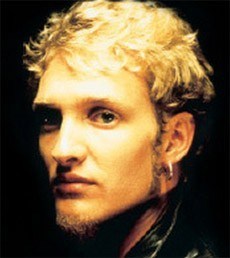
I admit it, I’ve tried them. They’re fun. But when I think about drugs, I can’t help but think about Layne Staley. I mean, look at him. Listen to him. Just for four and a half minutes.

While you’re at it, you can look at Mike Starr, playing the bass in that same video. Because he used to do heroin with Layne. And now he’s dead, too. With Layne. Who, if I may say, was not only one of the most talented and innovative heavy metal singers, but — damn, that was a pretty man. Just look at him.

layne_staley

Dead. Heroin overdose.

I think of Brad Nowell. Who couldn’t even appear in this video, because by the time this song hit, he was already dead, also of a heroin overdose. Though that is his dog there, looking even sadder than his former bandmates, trying to act like they have the heart to do any of this bullshit after their frontman and songwriter died.

Hell, I think of Elvis Presley. I mean, sure, it was a whole lot of hard living that did him in — but I think we know what the primary cause was. It wasn’t those fried sandwiches. And my God, what a voice that man had.

I think of Heath Ledger. Who I loved from when I saw him in Roar, and who just — I mean, come on. What can I say?

He even makes Christian Bale act well. (Unnecessary dig. Bale’s not bad. But Batman in the movies is boring without the villains — and this is the best one. Bar none. Better than Nicholson in the same role. Nicholson has three Oscars. Ledger’s dead. Because of drugs. )

I believe that the purpose of humanity as a race — as compared to our purpose as individuals, which is most simply put as “Make yourself happy,” a commandment that pushes us to do the things we think are right, as well as prioritizing our limited time and focusing our scattered attention on what really matters, while allowing us to be the free individuals we must always be — our purpose as a race is to do the things that other species cannot do, and that is, in my opinion, to find truth and to create beauty. Artists, along with others, do that. And the sheer number of absolutely wonderful and unique and gifted and visionary — in the best sense of the word: human — artists that have been destroyed by drugs makes me weep.

And I’m not even counting alcohol. Because I’m a writer, and if I start that list, we’ll be here forever.

And so I end up in a terrible position. A paradoxical and ultimately frustrating position, one that I don’t ever want to defend, but have no choice. Drugs should not exist. They should never be taken to excess, they should never be relied upon; they should be avoided. There is too much goodness in life to need an illusion of it. What we should do is support one another, and love one another, so that people don’t need drugs — and then let them use drugs recreationally all they want to.

What I tell my students is this: drugs make you stupid, and then they make you dead. That’s a question of increased usage, not inevitability, but increased usage is common. I do think — in a painfully simplified sense — that it is the lack of support that forces people into that fatal spiral, a lack of human treatment at the hands of our fellow men; when it is not simply bad luck, or fate, or whatever name you want to give to Dame Fortune and her spinning wheel.

And I think that what drugs have taken from us is just heartbreaking.

https://www.youtube.com/watch?v=03yPUlBE5OU