Opening The Window

…Maybe Shouting Out of It

I have been thinking about writing. I do that a lot: mostly because I haven’t been writing a lot. But I just don’t know what to write.

Then I saw this:

@therapyjeff

You’ve got, like, 1 to 3 business days before hypernormalization drags you back under. #mentalhealth #therapy

♬ original sound – TherapyJeff

It hit me.

It’s hard to predict what will hit you, what will have an impact; that’s part of why I haven’t been writing as much — I don’t know what to say to have an impact on my audience (if I even have any audience left), and I can’t predict what will have an impact on me. And the hypernormalization that he talks about is definitely real, and strongly controlling of my day-to-day interactions with the world and the world of current events. I will also say that my role as a teacher is partly to encourage some of that hypernormalization, because my students freak out, often because they enjoy freaking out and more often because they are young people in a terrifying and confusing world; and whether they are freaking out for the sake of their shattered nerves, or for the sake of the meme (or freaking out for the meme as a way to disassociate from their shattered nerves) , the answer is always to remain calm and to try to pour water on the flames they are fanning. So I spend part of pretty much every working day trying to calm the tempestuous waters of teenaged souls. Then I come home, and sometimes my wife is freaking out — in that case it is never for the meme, it is only because of her shattered nerves or because the world really is a dumpster fire and sometimes we are caught in the flames (which is NOT FINE) — and then sometimes, again, my job is to make awful things seem normal and manageable and not a big deal. Sometimes my job is to freak out with her, which, sadly, I am bad at, because my freaking out usually looks like me getting really mad, and that doesn’t always make people around me feel peachy; but I do my level best anyway, Partly because my nerves are shattered, too.

But this is counterproductive for my writing, because I don’t want to write about how things are normal, how they are just fine. I want to write about how they are fucked up. I don’t want to freak out, because nobody wants to read pages and pages of AAAAAAAAAAAAAAAAAAAAAAAAAAAAAAAAAAAAAAAAAAAAAAAAAAAAAAAAAAAAAAAAAAAAAAAAAAAAAAAAAAAAAAAAAAAAAAAAAAAAAAAAAAAAAAAAAAAAAAAAAAAAAAAAAAAAAAAAAAAAAAAAAAAAAAAAAAAAAAAAAAAAAAAAAAAAAAAAAAAAAAAAAAAAAAAAAAAAAAAAAAAAAAAAAAAAAAAAAAAAAAfuckfuckfuckfuckfuckfuckfuckfuckfuckfuckfuckfuckfuckfuckfuyckfukfuyckfuckfuckfukfuckfuckfuck Hey that’s pretty fun when you get the rhythm going!

But it’s hard to write, calmly and rationally, about how things are fucked up when you are yourself freaking out. Which is, of course, what the powers that be want: they want us to draw into our individual isolated shells and hide from the horrors they have put into the world, because that makes us easier to control, and easier to eliminate; and that’s why this very nice therapist made this TikTok, in which he tells us to take a step, even a small step, towards interacting and connecting with others during this particular moment of jarring insanity; because, as he says at the close of that video, even that small step of having a conversation or connecting with a group of potentially like-minded people, is much bigger than sinking back into the hypernormalization without having done anything other than twitch bonelessly for the 1-3 business days of this moment when we can break loose.

So let’s break loose. Rationally. Without freaking out, but also without rationalizing everything into normality. Because this is not normal: a man shot Charlie Kirk in the throat. Charlie Kirk is dead — apparently assassinated, though one thing I will say is that we absolutely must stop speculating about shit we know nothing about, until we actually know what is going on. We don’t know that the murderer was an assassin in the sense that we know for sure that the killing was politically motivated, and that Kirk was murdered because he was a prominent political voice; he was a prominent political voice, so in the case that we see any such death as an assassination, then it was, but I think it is important to distinguish between John Hinckley’s attempted killing of Ronald Reagan and Lee Harvey Oswald’s successful killing of John F. Kennedy: Oswald intended to kill the US President because he disagreed with Kennedy’s political stances and actions, and maybe what Kennedy represented; Hinckley thought Jodie Foster would notice him if he shot the President. That second one is not, to me, an (attempted) assassination. If we assume that this one was an assassination, which is a reasonable assumption but not a certainty because the killer carved fucking memes into his bullet casings — “If you read this you are gay LMAO” is not a political statement — it is also not clear if it was done because Kirk was too right wing, or if he was not right wing enough, which means we may be able to label it as an assassination, but not then go on to say anything meaningful about that fact other than it was a terrible, horrible thing, like every murder, especially unnecessary ones. (Yes, there are necessary murders. Not many, and they are still terrible, but there are. Not this one, so that is not our topic.) We do not know, and I will disagree with the people saying all over the internet and TV, that Kirk was killed for his political views, or his ideological beliefs, or his past statements which the killer may have found too offensive or not offensive enough; when all of that becomes clear, then we can discuss it — though we are unlikely to come to any useful consensus about it. And that’s partly because of Charlie Kirk.

I don’t want it to be because of me, too. I like to think it never could be, because I, of course, am rational and reasonable — and also correct, which, as I like to tell my students (quoting the late great Bill Hicks), gives my argument that extra oomph — but of course we all think that about ourselves. I do certainly write divisive things, both because my arguments are aggressive and confident, sometimes even spoken in words as hard as cannonballs (to quote Ralph Waldo Emerson), and because my language and my personal statements about my opponents and enemies are frequently deeply offensive. If people who disagree with me read these posts, they probably get pretty mad at me, and at them. Though they may deny it, because of course online debaters must never admit that they are upset, that they are emotional and out of control.

I am quite emotional. I am often somewhat out of control, usually, as I said, because I have a temper, and because my nerves are shattered. Anybody who doesn’t feel the same, at least that last part, is either lying or a sociopath.

Because stuff is fucked up. Deeply, multifariously, evilly fucked up. A man was murdered, and we all flipped our shit about it: and on the same day, two children were wounded by a third, who shot them at their school and then killed himself. I don’t even know how many other people have died in the days since Kirk was killed, but if we keep up this year with last year’s average it would have been about 47 per day. The right accused the left of causing Kirk’s murder with our political rhetoric; the left accused the right of causing Kirk’s murder with their violent fascism; people posted about how saddened they were by the death, especially because his wife and children were there and saw it happen; other people posted about how they were glad Kirk had been killed because of the awful things he had said and the positions he had espoused in the past, including racism and sexism and homophobia and transphobia.

It’s all fucked up. And even the virtuoso guitar playing of Stevie Ray Vaughan (Who was only five years older than Kirk — 36 to Kirk’s 31 — when SRV died in a helicopter crash) can’t make it better, can’t make me feel calmer and more in control at this moment.

So I had a thought. A step to take, in this window (which may have closed already, because it’s been four days since he died; but I’m going to try to do this anyway because I don’t think I’ve sunk back into the hypernormalization yet) of opportunity. Not to argue for gun control, though I am doing that on social media; not to argue against hyperpartisanship because arguing against people arguing badly is a losing endeavor, no matter how you slice it; not to lament the loss of free speech in this country, because Malcolm X was assassinated sixty years ago — also in front of his wife and children — and the Alien Enemies Act signed into law by President John Adams in 1798 was used by President Donald Trump in 2025 as a legal justification for deporting both citizens and non-citizens without due process, so I would argue that we have never had fully free speech in this country.

I want to try to reverse the polarity of this moment. I want to try to speak positively. Not about Kirk’s murder, which is nothing but horrendous; I just want to use this moment to try to imagine a world in which Kirk would not have been murdered. A world that certainly could have existed, if we had made different choices as a nation and a people, and one that we can certainly bring into existence if we try. Maybe if I try to normalize hope, then we can have some when we sink back into our absurd routines.

Let’s start with a beautiful image. This one came from here, and is advertised as using no AI.

I don’t see why not. Hope is not any harder than despair: hope takes work, but we have to work to keep our despair gurgling inside of us, just as much. We have to spend time looking for more reasons to feel despair, have to keep thinking negatively about what is in our world or in ourselves — or what is not there — have to keep all of that front of mind, or else we might spot a video of a cute puppy and not be sad any more. If you’ve ever felt sorrow or despair, then you know the struggle to keep it that I am talking about. (Depression, now: depression does not require any work to maintain; that’s why it is depression. But I’m not talking about mental health, other than to say that hope and positivity in a non-toxic way might help with depression, as well. Not going to oversimplify the facts of depression, but still. Here’s that puppy.)

Your Puppy: What to Expect at 13 to 16 weeks - Vetstreet | Vetstreet
This is my favorite ear configuration: one up, one down. And nobody does it better than Corgis. This image is from here.

I’m not trying to slap some pretty pictures up over the horrors: that kind of forced, hollow veneer just makes things feel worse because we know how thin it is. I’m just using the images to counteract the — let’s call it the acidity of the first part of this post, the corrosiveness of horror and violence and conflict. But for the hope, I want to speak genuinely. Because I think the hope is real.

First, what am I hoping for? I’m hoping for a society that recognizes the value of all of its members, and takes all stakeholders seriously when considering what to do collectively. I’m hoping for a world where people are able to find and create joy, consistently, throughout their lives. A country where we try to find our common ground, and respect our common humanity, before we disagree about what our country should look like. A life where people recognize the liars and conmen, the gaslighters and manipulators, and see the corruption for what it is, and don’t tolerate it because it smells just like our own. A world of integrity and trust.

No. It isn’t impossible. I’m certainly speaking in broad generalities, because no, I don’t expect any world to reach a point where problems are eliminated, where there is no conflict, where liars are vanished and corruption is prevented before it taints everything. But I do know that our world, our society, our ethos, used to be different, in at least some ways and to some degree; and that means that change is possible. We talk about the pendulum swinging, and it does, and it will — though I suspect that the pendulum, like most other political machinery in this ever-so-exploitable country, has been manipulated in some way to ensure that the people in power don’t lose that power when the pendulum swings; but the power of the pendulum metaphor is that the swings are inevitable, and reactive: you can hold back the pendulum, you can even push it farther away from plumb; it’s just going to swing harder and faster when it finally goes, and swing farther in the other direction when it does. It can’t be stopped. And it can’t be stopped because people are essentially good, despite what our cynical profiteers would have us all believe — because they want us all hiding in our individual isolated shells, hiding from the horrors, easily controlled and easily exploited. No: people are essentially good. We are just — we’re really, really scared. That’s what we have to overcome.

Here’s a nice picture of individual shells:

🔥 Cuban snails ( Also said to be the most beautiful land snails ) :  r/NatureIsFuckingLit
These are Cuban snails. Image from the subReddit NatureIsFuckingLit. Hell yeah.

And it begins with trust.

That’s the message I want to share today. Hope is possible, and achieving what we hope for is possible, especially if we all hope for (essentially) the same things. It begins with trust: we need to trust each other, to believe that we all will cooperate, so far as we can, to achieve those things we hope for.

I know this because I am a high school English teacher. And I have watched my classes struggle more, in some ways, every year, as their attentions spans wane, as their interest in reading disintegrates, as they become less and less literate. I have certainly lost hope at times; I have certainly lost trust in my students, have believed that they do not want to learn what I have to teach, that they do not want to read, that they do not want to do anything other than play video games, watch TikToks, and be annoying. I have believed all of those things because there are days when they act like that. Some of my students act that way all the time, and some of those even say that they have no interest in learning to read better, no interest in ever reading as long as they live. It’s hard to keep trusting kids who say that to me, especially the ones who know the impact on me of what they are saying.

But those are only some days. And those kids? They are only kids. They don’t want to read because they don’t have any hope. They are not incapable of reading, and they are not incapable of hope. On my worst days, I don’t believe that; but on my best days, I inspire hope in them. I know it: I’ve seen it, and I’ve been told about it, both in the moment and years afterwards. I was having a rough day this last Friday: and then one of my students — now former student, because they have departed my school for online schooling — came back to thank me for being their teacher. They gave me a lovely hardback copy of To Kill a Mockingbird, the book I taught them. Because they saw it and they thought of me, and they wanted me to have it. They saw a book: and they recognized the value of that book, because I taught them that book had value. And, I mean, I’m a good teacher: but I’m no miracle worker. This was just an ordinary interaction, a regular unmotivated and difficult student, who I happened to connect with enough that they trusted me when I said that TKAM was worth reading: and then I proved it. And for the rest of their life, they will know at least one book that has value, that is something worth giving to another person as a thank-you gift.

That’s hope.

And it starts with trust.

I’m going to keep going with this idea, because I like it, and I think there is value in it. Hopefully I can get some of you (if there are any of you — but I trust that there are) to trust me enough to start hoping, as well. And if we can agree on what we should be hoping for, then we can make it happen. We’ll turn that goddamn pendulum into a wrecking ball — one made of candy.

That’s how we’ll change it.

Bi(Partisan) Curious

Donald Trump is going to turn me into a conservative.

That’s probably not true. But it does feel like I have grown a bit more in tune with conservatives as I understand them – certainly how I idealize them, which I know is about as far away from the truth as are the demonizations of the left that are so popular on the right, that we are babykillers or pedophiles or corrupt Fascist socialists who sell American secrets to China so we can feed that money to Hamas to promote anti-Semitism. But one obvious thing keeps coming up: I have grown much more suspicious of government, and much more frustrated with government inefficiency; and both of those feel conservative-leaning.

I mean, maybe it’s not Trump: maybe it’s because I’m getting older, which supposedly swings people to the right; though to be frank, I’m not getting richer, which I think is the actual reason why people become more conservative as they age. It’s always easy to demand higher taxes on the rich when you aren’t one of them – though it is also true that liberals, masters of NIMBYist virtue signaling, are also fond of raising taxes on other people and not on ourselves. I suspect as well that growing anxiety and paranoia contributes to the stereotypical political changes that come with age; as my own anxiety and paranoia are focused almost exclusively on government and authority, it’s basically driving me closer to socialism – or anarchism, even – rather than the increased fear of crime and of marginalized people which I’ve seen in older people around me.

But I’ll tell you what, I do think there needs to be a rebirth and resurgence of the conservatism that I grew up with (Now THAT makes me sound like an old man), at least the conservatism I think I grew up with; though it would be swell if people would first figure out that trickle-down economics is a lie intended to consolidate wealth and power in the hands of those who already have it and who then espouse trickle-down economics. The economic side is coming along, I think, as Americans may actually be figuring out that the Republicans we elected last year have done somewhere between fuck-all and fuck-you in terms of helping make life more affordable, while they fire thousands of people, reduce useful and vital government services, and cut taxes for the rich, as personified by Elon Musk. (I tell you what, if Musk turns out to be a double-agent for progressives, I will yell “AHA!” Because not a lot of genuine conservatives could have managed to throw as much shit on the GOP as Musk has done. I mean, he’s no Trump, but it still seems too much for it to be coincidence.) But I think the rest of what I imagine as idealized conservative values, like small government, local government, a clear focus on maintaining the rule of law and of the Constitution: that is what I think we actually need. And then, inasmuch as conservatism ever represented the values of independence and personal integrity, “family values,” patriotism and Christianity both in a humble, individual sense, I think people turning back to that would be an incredibly good thing.

Though honestly, it would be best if that happened to the people who are actually supposed to be conservative, namely Republicans, rather than if it happened to me. But I will confess a certain imaginary scenario in which someone like me, and maybe actually me, steps into the void left in the GOP after Donald Trump dies or becomes politically insignificant (and God willing let that happen soon), and helps people to remember that there is nothing particularly wrong with conservatism, that progressive ideas need to be tempered in rational ways, that there is benefit in a marketplace of ideas and a political process that features opposition and negotiation, that a single-minded government is dangerous no matter how right-minded (or left-minded) that government is. That the problem with the current GOP is, first, Donald J. Trump, and second, everything that Trump represents: authoritarianism, white supremacy, anti-intellectualism, hypocrisy and narcissism. Not the essential values of conservatives, which, while I generally don’t agree with them, I don’t think they are at all bad. I think the Republican party returning to those values – maybe a little more modernized than the 1950’s Eisenhower Republicans I’m probably imagining – would be the best thing for our country, barring an actual leftist revolution that swept the entire nation along with it, and I keep looking for someone to carry it out.

Can’t find them. Not in Trump’s GOP.

Can you imagine that, though? If someone charismatic enough to actually get Republicans to listen reminded them of what the party of Lincoln should truly be about? I can’t imagine a change in the politics of this country that would have a more immediate positive impact. Not even the hard pendulum swing to the left which I suspect is coming after this particular round of violent greed is over, because as long as progressives and liberals and Democrats in government are opposed by people who will lie with every breath, spread rumors and character assassination with every press interaction, start pretty literal fistfights over every disagreement, and ignore all political norms (Which, to be clear, are the ESSENCE of conservative sensibility, and there is not a much better indication that the Trump movement is not authentically conservative – other than the obvious abandonment of respect for law and order and police authority, in favor of supporting a multiple felon and the complete discarding of all due process) in order to exploit any opportunity to harm their opponents and increase their own power, government will continue to be too dysfunctional to inspire any long-term support for progressive ideas and movements.

Think of it: if the Democrats as they are currently constituted, headed by people like AOC and Cory Booker, Jamie Raskin and Adam Schiff, and Pete Buttigieg and Gavin Newsom, rather than Joe Biden and Nancy Pelosi and Chuck Schumer, trying to actually enact Medicare for All, over the objections of Senators Donald Trump Jr. and Marjorie Taylor Greene-Trump (Dunno if she’ll marry one of the Trump boys or get Trump himself to adopt her, but I promise that she’ll be part of the family in the next decade. I am going to put my money on her taking up with The Nazi Cheeto himself after Melania finally divorces him.), who holds a filibuster on the floor of the Senate to accuse every one of the Democrats of supporting Chinese Triads in smuggling Fentanyl into Gaza to make Palestinian super-soldiers who will be unleashed across the southern US border to rape white women in order to bring about a wave of abortions which will then be used to distill that baby brain juice which keeps the Clintons alive.

What are the chances that any progressive/liberal alliance would be able to survive through that kind of inferno of flaming horseshit?

As long as Trumpian MAGA fanatics remain popular, they will ruin all attempts at a functional government. Because that is the larger Trumpian project: the undercutting of a functional federal government and a social power structure that serves the public interest and the general welfare promised in the Constitution, in service of the two main goals of the movement, namely a more lawless society where wealthy people and the white supremacist power structure can have free rein, and a right-wing-media-fed zeitgeist of apocalyptic terror that allows Daddy Trump to claim that only he has the strength and intelligence to save us all from the dangers and threats that surround us.

I do think that there is real value in conservative ideas and values – at least in real conservative values. It would have been wonderful if the last twenty years had included more genuine attempts to balance the federal budget and reduce the deficit and the debt, particularly in the times of economic growth, so long as it had been done the right way, by raising taxes on the wealthy. You know, the way Eisenhower did it: because asking the wealthy to contribute their fair share would show a respect for individual responsibility, and patriotism in the humble sense that asks everyone to contribute to the betterment of this nation and the people who make it up. (Also, while I’m no expert, I swear that taxing the rich seems pretty dang Christian…) Which value, when taken to a Trumpian extreme, is turned into that your-own-bootstraps nonsense which then justifies – or rather pretends to excuse – cutting Medicaid and food stamps and all of the social safety net, while allowing billionaires to extract all the wealth they could ever want without any return on our investments which made the wealth possible in the first place. I think the progressive desire to create programs that produce positive change is wonderful, but when combined with the liberal/Democratic desire to protect everyone and everything that needs protecting, it leads to levels of red tape and bureaucracy that undercuts the progressive program entirely; and, at least in theory, real conservatives would be useful in tempering or preventing that excess. Take, for example, this: https://open.spotify.com/episode/0uxWGBxJWf2oAB9uyDMoOB?si=407ef6fb2213428a

This episode of Jon Stewart’s wonderful podcast features Ezra Klein, the progressive former MSNBC host, who discusses a program intended to build rural broadband access under President Biden’s infrastructure bill. The program had a fourteen-stage process before a region – state or county or city – could receive grant money, which process produced so much red tape that out of 56 regions that applied for grants to build broadband infrastructure, only 3 had finished that process in the three years between the law being signed in 2021 and the end of infrastructure spending in 2024. And none of those three had actually managed to get the money and build the broadband. Klein goes into agonizing detail – he wrote about this in his most recent book – and shows how all of the delays and all of the red tape are well-meaning, but basically none of it is necessary, and taken as a whole, it was destructive: because no rural broadband was built. Multiply that by every other program Biden’s administration passed, and you can see why the Democrats lost the election: because even their important and genuine accomplishments never actually came to pass in the real world. Klein talks about how Biden planned everything on a six- to ten-year timeline – when elections happen every two or four years.

The best line in the podcast was this: “We are stuck between a party that wants to destroy government, and one that can’t make government work.”

I would argue that conservatives arguing for real conservative values could have counteracted the problems that come with a too-singleminded focus on liberal and progressive values. To be fully transparent, I do think that much of the problem is in the liberal influence on progressive movements, because I think it is liberals and Democrats who insist on political correctness and purity tests and virtue signaling, where progressives are focused on functional efforts to improve people’s lives. Klein talks about that, too, that part of the issue was things like a requirement that the subcontractors hired for the broadband installation represent women and non-white minority-run businesses, which is a great intention to have and a wonderful thing to try to do – but it’s not the point. The point was to build rural broadband (Which, coincidentally, would do a hell of a lot to help a large number of marginalized people; remember that women in rural areas are the ones who can’t find meaningful work opportunities, and also remember that the rural areas of the South are largely not white. Or maybe that’s not so coincidental, but it does show why liberals given total control can sometimes step on their own feet.). It’s this desire, not to achieve real progress, but to be liked, to be good, while working through the process, which makes the left twist itself into knots and get nothing done – though what I am ignoring is the fact that progressive goals and projects are frequently unpopular, because they are expensive and difficult and do not tend to aggrandize benefits in the hands of those who already have privilege, and it requires a spoonful of liberal/Democratic people-pleasing to help the progressive medicine go down… if there’s not going to be an actual leftist revolution, that is.

I don’t really know, at this point, if conservatives really do have that no-nonsense gruff exterior that we think of as people just getting shit done; but that’s what I’m imagining. I just picture a 60-year-old white man (Hey, I’m not stupid enough to think that the GOP will suddenly become multicultural; let’s not go too far into the fantasy) in a committee meeting, who just keeps responding to every liberal feel-good virtue-signaling suggestion with a steady beat of “The goal here is to build rural broadband.” Basically, I think we need people in government who just want to get shit done: not necessarily make sure that everything gets done in exactly the “right” way.

There is an important point to be recognized in the conservative drive to demand people work hard: because while government is necessary to make changes for large groups of people, particularly changes that are not profitable for any other group currently with privilege and power, what it comes down to, always, is people working hard. People in government work hard to make it possible for everybody else to work hard, by trying to ensure that everyone has an opportunity to actually benefit from their hard work. That’s the truth. Take it from me, a government employee who works hard to make other people work hard, so they can benefit from their own hard work. That’s what school is. And I don’t know that liberalism actually pushes people to work hard; within my example of myself and schools, liberals are the ones who get 504 accommodations and IEPs enacted and followed, and who make sure that the curriculum includes social-emotional learning and multicultural perspectives: conservatives are the ones who teach math and science and history. (English teachers are all liberals. With very few exceptions, who are mostly psychopaths.)

In the most simple sense (And I know I’m oversimplifying and basing this on stereotypes; doesn’t make me wrong, though), the recognition in liberal politics of the burdens of social marginalization and intersectional oppression, of mental health struggles and of the value of self-care, promotes a deeply valuable drive for people to take it easy, to relax and take care of themselves. But conservatism does value and push individual hard work, personal responsibility, self-reliance. Not Trumpian pseudo-conservatism, of course, which pushes people to hate everyone who doesn’t have dirt under their fingernails (Daddy Trump, as in all things, excluded, of course) unless the skin of those hands is brown, in which case they should be hated anyway no matter what is under their fingernails; but conservatism tells us that people need to do things themselves, and be responsible for the consequences of their decisions: which allows people to actually make those decisions themselves, without approval by a dozen committees, and then (in theory) holds them responsible for those decisions.

Liberalism is necessary to make sure that conservatives don’t treat people like shit in the name of promoting personal responsibility. (Also to make sure that conservatives in this country don’t go full white supremacist; which would naturally occur, as conservatism by definition is trying to retain and preserve a past system, which in this country means an oppressive racist and sexist system.) Progressives are the ones trying to make the world a better place, rather than trying to retain the status quo. I do not imagine that a United States run by conservatives of any stripe would be the best version of this country. But my God, watching the Democratic party fuck up every single opportunity that we vote for them has worn me the fuck out. The 2024 election broke me. The Republicans are going to lose in the midterms next year, and I am looking forward to that: but I cannot stand to watch Democrats win control of Congress in the coming reaction to Trump, and then do every fucking thing wrong again, so that 2028 swings back to the goddamn Republicans.

But right now, there is another reason. The main reason, the real reason, why I find myself wishing for a renewal of a conservative movement that probably never really existed. It’s not policies, not red tape and bureaucracy, not tax breaks, not cuts to the social safety net. It’s not the next election, not the future of how we see government. It’s none of those things.

I want to find a way to ensure that this country will still exist.

I’m trying not to overreact. I’m trying to see this as just more bullshit from Trump. But, I mean — he fucking sent in troops. Thousands of troops. To LA, to California, under his command, his and that fucking idiot Hegseth. He sent them not because they were needed, not because they were asked for, not because their presence will help: just because he wants to start a fight with the left, with California, with Gavin Newsom personally, who has been criticizing Trump for years, and who is willing to fight him back. Because MAGA wants to have the fight with the left — by which I mean the majority of the population of this country, the ones who don’t want a dictator, who don’t want tyranny, who actually want this to remain a Constitutional Republic, a country under the rule of law. They want to fight all the rest of us. They want to hurt us because they think we have stolen their country and filled it with illegal immigrants and trans people and abortions and fentanyl. They want us to pay for that: and Trump wants to help them do it. Not because he gives a shit about this country or what is happening to it; just because he wants to point his finger and see people die at his command. He wants the full might of the U.S. military to obey him, and destroy those he wants destroyed.

This is not about left and right, liberal and conservative. It’s about this asshole sending fucking troops to LA. It’s really just about life and death: life and death of immigrants and marginalized groups in general, life and death of this country and its self-image, life and death of the rule of law and the experiment in democracy that seems, at last, to have failed.

Our President sent troops to LA. Not to enforce the law: to enforce his will. To set off a fight — a fight that people are giving him — so he can escalate the tension until people finally snap, and fight, for real, fight for life and death.

Because Trump wants a war.

If Conservatives, real Conservatives, would help prevent that, then – yeah, I’ll be one.

I am a middle-aged white man, after all.

And whatever else I think of this country, I don’t want America to fall. Not like this.

Whatever it takes.

Upon Further Consideration

*Let me give one disclaimer: I use a lot of ways to call someone crazy in this piece. At no time, not even for one second, not in any instance or in any way, am I actually referring to someone with mental illness or neurodivergence. I’m using every form of “crazy” to mean only someone who holds a position or acts in a way that I don’t agree with, and generally that I can’t understand. That’s it. Okay?

Okay. Here we go.

Conservatives are crazy.

charlize theron – foolish watcher

Okay, not ALL of them. And they’re not crazy about everything: taxes and regulations can be onerous, and while society absolutely needs to progress, it needs to do it in a way and at a pace that allows people to grow comfortable with change, which is never easy.

But conservatives created the monstrosity that is President Donald Trump. And before that, they created neoliberal economics, generally known as “trickle-down” economics, which has been devastating people in this country and around the world for the last half-century or more. And they just kept supporting it, that entire time, all facts to the contrary notwithstanding. Libertarians are conservatives, for the most part, and so was Ayn Rand — and between Rand and Trump, I don’t need to say anything else to show that conservatives, broadly speaking, are crazy. A few sandwiches short of a picnic. Daft. Cracked. Meshugge. Bonkers. Non compos mentis. The cheese fell off their cracker a long time ago.

They think that we’re crazy, of course, mostly in how we accept things that seem so obviously counter to what conservatives call common sense — like the existence and worth of trans people, for instance, or like believing the government can do good things and can be trusted (in some ways — we know about the Tuskegee Experiment, too), or thinking that guns are somehow to blame for gun violence — and partly how we are so entirely hypocritical while we accuse them of being the real hypocrites.

I gotta pause on that last one, because — really, y’all, there are some pretty upsetting things that we argue, and never even think about. Like how we argue that guns should be banned in order to reduce gun violence, but that drugs should be legalized in order to reduce drug crime. Abortion and the death penalty is another one: we mock conservatives for being pro-life with fetuses, but very happy to kill people on death row, but somehow we never talk about how we hold exactly the same apparently contradictory positions, just in reverse — we are willing to accept the death of the unborn, while we work to preserve the lives of the worst people imaginable. And that’s not to say that the left is wrong on those issues and the right is right; but it is — I’m going to say disingenuous — that we don’t actually engage with our own apparent hypocrisy while we are simultaneously aghast that the right doesn’t engage with their apparent hypocrisy.

To be clear, since I brought up the examples: the ban on drugs is different from a proposed ban on guns mainly because the users are entirely different. I suppose some gun owners could be characterized as addicts, though I think they wouldn’t enjoy that description; but mainly, drugs create a market for themselves, the members of which have very little chance to refuse to consume the substances. Certainly there are forces that push people to buy and use guns, and certainly those forces would make it impossible to remove all illegal guns from the country, should guns ever be banned here; but they are not the same forces that have made the drug war unwinnable. That’s the essential difference, and the details are worth thinking about and talking about. And with abortion and the death penalty, it is only necessary to point out that “pro-choice” is not and never has been “pro-abortion.” The left does not wish the unborn to die, any more than we wish murderers to die; that is the unknotting of the apparent paradox in our opinions. And I also have to point out that the apparent contradictions in conservative stances can be just as easily explained away: it’s just that they make assumptions that the left doesn’t make, like the idea that innocence makes a child’s life worth more than an adult’s life, or that an armed citizen is the best defense against an armed criminal. Or more simply and more importantly, that God and the Christian faith should be an important part of our political consciousness.

The point is, there are things the left accuses the right of being crazy about, which the right is not at all crazy about, and there are also things that the left thinks which are batshit insane — a whole bunch of people in the Democratic establishment who thought that Hillary Clinton made a better candidate than Bernie Sanders, for instance, and then that Joe Biden also made a better candidate than Bernie: and then that Joe Biden should have ever been a candidate for a second term. Bat. Shit. Insane. And a lot of us swallowed and set our faces right and stood in line. I did.

I have decided that I have been wrong.

I don’t need to rehash the last several elections, though; as I have said several times, Joe Biden was a much better president than I thought he would be, and MUCH better than he gets credit for being, and I don’t know that Bernie could have beat Trump either in 2016 or 2020, and I’m not sure anyone could have beat Trump in 2024. I don’t understand how that could be true, considering all of Trump’s baggage, but the truth seems to be that the economic situation in this country ensured that only a Republican could win in 2024 — and as the primary showed, Trump had ensured that of all the Republicans in this country, only he can be on the top of the ticket.

Because conservatives are crazy.

I’m not going to back off of that, not even with my both-sidesing liberal and conservative positions and arguments: there is no other way to see how the entire right side of the political spectrum in this country has embraced Donald Trump so completely other than as totally nuts; and the way people still — stillSTILL!!! accept trickle-down economics as viable even after FIFTY FUCKING YEARS of increasing inequality and the resultant social unrest is proof that those same people are either insane or so utterly drool-fountain stupid that there’s no reason to even talk to them any more, because they can’t understand anything stated in standard English — only things that look or sound like this:

(I would say that conservatives are crazy because they listen to country music — but a lot of country music is good, so that’s not enough to prove that conservatives are crazy. Also, I first heard this song on Dr. Demento in the 80s, so really, who’s the crazier one? The one who listens to country music, or the one who listens to a guy named Demento who also played this?)

I guarantee you nobody in middle America listened to that garbage. I’ve been listening to it since I was in middle school. I think you see my point.

But you don’t, because in my usual inimitable way, I have failed utterly to get to my point. So let me stop screwing around and make it now.

I have for DECADES now thought that conservatives — specific ones, especially the ones in Washington — were crazy because they refused to compromise. Compromise, I hope we all know, is good. Compromise is how people get along, and how things get done. Compromise respects the value of both sides of an issue, both the humanity and the intelligence of people who happen to disagree, which makes it the best possible outcome — two heads are better than one, after all. I have essentially never entered an argument where I was totally unwilling to compromise. Okay, there have been a few online debates, sure — I’ve argued against normalizing pedophilia, and I’m not gonna meet them halfway on that one — but in real life, I have never drawn a line in the sand, put my foot down, in a place I was utterly unwilling to move. I am always willing to compromise, because in every case in my life, I have argued against other rational human beings, who deserve as much consideration as I do; so how could I do any less than be willing to compromise with someone? What on Earth makes me so much better, so much righter, than them that I would not take even a step in their direction? On a larger scale, how can you have a society where people don’t compromise? How do people get along if they can’t agree on at least some elements of their disagreements?

That’s what I thought. And I still think that, because it’s true — you can’t have a society without compromise — but also, that’s a social truth, and a practical idea.

It’s not good politics.

In politics, refusing to compromise is the right thing to do. Compromise is dangerous. And self-defeating.

My point today is this: it is time, and past time, and long past time, that Democrats specifically and the left in general started doing what is actually good politics.

I listened to an episode of Pitchfork Economics — an outstanding podcast which I recommend to everyone; though I would say you probably shouldn’t do the absurd (crazy?) thing I’m doing, which is listening to the entire archive from the beginning, in 2017; it’s a little strange that I have been listening to this podcast for two or three years now, and they still haven’t reached Joe Biden’s election as the 46th President — and they interviewed Professor James Kwak, whose books I now have to read. (One of them is free online! Nice!) But more to the point for this particular writing, in the interview Professor Kwak was talking about the Democratic party, which he both called the most important political party in the world, as the only thing standing in the way of full-on fascism on the part of the Trump GOP (My words, not the professor’s; he said the Dems were the most important party, but was more polite about the rest.) and also described as having drank the Kool-Aid of neoliberalism (Again, my wording) around the time of Bill Clinton’s administration, and thus gave up being the actual party of the people, of labor, of the poor, of progressivism and liberal ideas.

Here, if you are interested. It’s a good interview.

As I listened, I thought the professor was right: the Democrats have had a critical job especially for the last eight years, because it was up to them to stop us from having President Donald Trump, and for two of the three chances they have had to step up and do that critical task, to preserve the United States, to protect the rule of law and government of the people, by the people, for the people — they failed. Pretty badly, really.

And I thought, Maybe the Democratic party is really bad at this politics thing.

It’s not the first time I’ve had this thought. I listen to another podcast which I’ve talked about frequently before, called UNFTR, UnFucking The Republic. One of the essential claims from that podcast is that the Democratic party is bad at politics, and a bad bulwark against Trump and the rise of fascism; but because they are one of the only two parties with full access and the full machinery to mount and win a national political campaign in this country, the answer is not to create a third party: the answer is to take over the Democratic party, much as the Tea Party and then the MAGA movement have taken over the GOP, from the inside, and then turn the Democratic party into what it should be, but currently is not. Progressive. Successful. A party for the left.

But I’ve never been willing to follow that thought to the end, and to start actually arguing against voting for the compromise candidate — for Hillary Clinton, for Joe Biden, for Kamala Harris; none of whom I supported, all of whom I voted for and encouraged others to vote for.

That’s where I’ve been wrong.

In talking about how conservatives differ from liberals in the U.S., and how conservatives have managed to become so incredibly dominant, Kwak said that there were several things that conservatives had done over the last fifty years which had enabled them to become this unstoppable force that managed to sweep Trump back into the White House despite everything (Again, the interview is now five years old, so Professor Kwak is not actually talking about the current travesty in Washington, but it’s not any different, it comes from the same strategy and worked in the same way): and the main one was that they were willing to stand for their ideology, even if it cost them elections. He said that the right had been putting up more conservative candidates against moderates in primaries even when the more conservative candidate was less likely to win the general election. Which sounded crazy to me — but the result is that the right is seen as dedicated to their beliefs, their ideals, where the left is seen as — wishy washy. Because the left will back a politician who doesn’t represent all of the ideals we ourselves espouse, where the right is not generally willing to do that: you can see it in how the GOP has purged all of the members unwilling to support Trump, like Liz Cheney or Mitt Romney. Their choice to throw every single bit of their support behind Trump is crazy: but the way they do it is impressive. It shows determination, and dedication, and a willingness to sacrifice one’s own preferences or ambitions for what you see as the greater good. And before this, you could see in how the GOP starting in the 80s forced all national politicians on the right to sign Grover Norquist’s oath never to raise taxes, for any reason — which was one reason George H.W. Bush lost his reelection to Bill Clinton. Which, I mean — that’s crazy.

But it got them the right reputation. A reputation that can resist anything, even facts. This is why the right is seen as willing to fight for what they believe — and why the right is seen as more reliable on the issues that they all stand for, like opposing immigration and making the economy work for people. Do they do those things? Not always: but they ALWAYS stand on those principles, and they ALWAYS stand together, and cast out those who are more willing to compromise.

They’re crazy. The shift in the GOP from the conservative party to the party of Trump has been unbelievable to watch: it has felt like a Soviet purge, removing everyone who did not fawn at the feet of the Great Leader. And the rise of Trump has definitely shown the downside of the GOP’s strategy of absolute loyalty to the ideals of the party.

But on the other hand, they fucking win elections. And then gerrymander the districts so they can win every election in the future. Which the Democrats do, too, because our system is deeply corrupt: but the main difference is that, most of the time, in most states, the Democrats DON’T win elections. And it’s partly because the left is more willing to compromise. So we’re seen as wishy washy. Soft. Unreliable. And in worse cases, or as the stakes rise and the rhetoric gets harsher, as hypocrites, and as liars.

And even worse, as corrupt, unreliable politicians who are willing to do whatever it takes to retain power, whether that requires compromise of our apparently most important ideals, or lying about what is at stake in an election, as we argue that Trump is a fascist who signifies the end of this country — and then the second he takes power, FIFTY-EIGHT FUCKING DEMOCRATS VOTE FOR THAT BULLSHIT LAKEN RILEY ACT. Fifty-eight. How many Republicans voted for Biden’s priorities? Or Obama’s? And, I mean, we claim to believe that white men should not be put ahead of, or above of, women or people of color; we chastise the right for their overwhelming whiteness and maleness. And then what do we do?

We nominate and elect Joseph R. Biden.

And then Biden waited until after the election was lost to do a whole heap of things that he should have been willing to do on day one — if he really believed in what he claims to believe. Only at the very end did he hand out the pardons. Only at the end did he warn us about the technocrat oligarchy. Six months before, he was still taking their campaign contributions.

Don’t get me wrong, I don’t think there’s anything wrong with being strategic with the support a politician has, and the public opinion of the things they want to do; that’s necessary. I love the idea of going in and just doing whatever the hell one wants, what one knows is right — but also, that’s how Trump does it. It’s not good strategy.

It’s just why he wins.

But I don’t think Biden did anything wrong, in waiting until the end of this term to, for instance, commute the sentences of people on federal death row. But when the other side is so bold, so forward, so utterly confident in their rightness that they will do whatever they think is right at any time and damn the political consequences — well. The decision to be strategic in any way certainly seems like political manipulation. Not wisdom.

And while I do not want to imitate the right, because they are crazy, I also do not want to continue losing elections to them.

So this is where I think we need to adopt an aspect of their system, of their overall strategy, that works for them.

I want to stop compromising.

Not on everything: but there have to be some issues that the left is not willing to negotiate on, that we are unwilling to accept anything else because we know, down to our blood and bones, that we are right, and the right is wrong. That anyone who disagrees with us is wrong. That we can discuss ways and means, to some extent, and even compromise on that sort of thing — or on the timeline, or the order of specific priorities; the details can almost always be discussed. But the central idea, the heart, the essential concept: that never goes away. It never stops being the ideal, and we never stop fighting for it. For them. Think of the heroes of the left: the leaders of the Civil Rights movement, Malcolm X and Martin Luther King Jr.; think of Bernie, whose appeal was based partly on this fact, that he never, ever changed what he was saying about economic inequality and the need to address it. Not in fifty years. THAT. THAT is what we need to do, that is how we need to fight for our central ideals. (It’s why we should have nominated Bernie, but I guess that train has already left the station, huh?)

I have some ideas about what those things should be — five of them coming directly from UNFTR — but I want to think about them some more before I take a stand. Because once I take a stand on these things, I don’t ever want to back down from them. Not ever. Not for any reason, not under any circumstances. Even if it costs us votes in a specific election — because look at what compromising has gotten us. It’s gotten us fucking Trump, and a Republican congress, and a ludicrously “conservative” Supreme Court. We supported the moderate candidate in order to protect the things that mattered most, like the right to choose; and we lost the things that mattered because we lost the elections. And I think this is quite a large part of why. It’s not all of it, this isn’t the only thing we need to do: but I think this is part. I think we need to do this.

Compromise in politics, on the most essential ideas, is a path only to losing. Which protects nothing, not even the compromises we tried to fight for. Look at Obamacare. Do we think that’s going to live through the next four years? John McCain saved it last time. And John McCain is gone, along with everyone else who thought the way he did, on the right. No disrespect to Senator McCain, who was a remarkable man and a man of principles, who died sadly of a terrible disease; but I think we know that if he had lived, he would have been voted out of the GOP for opposing Trump. Just like everyone else who did so, who was willing to compromise with the left. Jeff Flake. Mitt Romney. Liz Cheney. All gone. They all lost. Just like us.

So I think we should stop compromising, and start winning.

Now we need to decide what we will not compromise on. It can’t be everything: but it has to be something. And once we decide, we can’t ever back down. We can’t every compromise, not on these things.

And then there’s this: it makes sense to me not to compromise with the party of Trump. After all — they are crazy.

Waking Up

I had a nightmare the other night.

We all had one two weeks ago. But that one is just beginning.

I don’t have very many nightmares. Although, I don’t remember my dreams very often, so it’s possible that I am running through a constant string of terrifying dreams all night and then blanking my mind of them when I wake; I do suffer from insomnia, and so I frequently wake up in the middle of the night and think anxious and frustrated thoughts for a while before I manage to get back to sleep — if I do get back to sleep. That might be from that hypothetical string of nightmares suddenly reaching some kind of tipping point, driving me out of sleep and into waking anxiety.

Hmmm… a series of nightmares that build up to a climax of anxiety which ruins sleep. That does sound like the current situation of this country, doesn’t it?

In my nightmare the other night, my wife and I were going through a zombie apocalypse scenario. I don’t remember the whole thing, but at the end, we were hurrying through the halls of a Generic School-In-A-Dream™, and it was right at the point of the zombie plague where you look around, and you realize that the people around you are not people, but are rather zombies: and not only that, but the people are giving you that sullen, angry stare that zombies tend to have right before they charge. In my dream it was particularly creepy because the one I saw and recognized as a zombie was a child, and the signal that the kid was zombied up was a bloody rip across his cheek. In the dream, Toni and I ran; but we didn’t get very far.

Zombie children staring at cell phones in dark theater. - Stock Image &  Prompt | 2Moons
Not the kind of zombies I was thinking of — but also, isn’t it?

I am scared of zombies. Of course I am, and not just because the idea of being eaten alive is utterly horrifying; I am also scared of the zombie apocalypse because I know how it would go: I would die. Quickly. I have no survival skills, I have no combat ability, I have nothing that I could even offer to a group of survivors that would make them want to take me in, other than how well I could correct their grammar and help them interpret poems: two skills that I expect will not be highly prized in the apocalypse.

As they are not prized now.

But that is much less frightening to me than this: what would happen to my family?

My wife is a badass; she can fight, she can shoot a gun (which I never have), she is tough as nails. She could make it, at least for a while — as long as I was not slowing her down. But she wouldn’t leave me, so I would definitely be slowing her down; and that means I would have to worry about her survival, because I would be a liability for it — I would be putting her at risk. And then, even if we decided we would run for the hills or something, we also have pets: two dogs, a great big tortoise, and a tiny bird in a cage. Okay, the tortoise I could release into the wild; he would probably be fine — would zombies even eat tortoises? (Note to self: story idea — zombie turtle. Talk about slow zombies.) — but my dogs and my bird would not be fine. And I wouldn’t leave them. And that, of course, makes me think about the horror of watching my loved ones get hurt. Which is, far and away and always, the worst nightmare imaginable.

And that — watching people we love get hurt — is also the current situation of this country.

So look: I said in my last post that, if you were looking to solve certain problems and thought voting for Donald Trump and the Republicans was the way to solve those problems, that doesn’t by itself make you my enemy. I don’t agree with you, but if you did it without meaning harm, I don’t have to consider you that way, with full and vituperative enmity. But the thing is, voting for Trump was unquestionably voting for someone who will do harm: and while that doesn’t mean you wanted harm to be done, it sure as hell means you accepted the fact that harm will be done. Maybe you lied to yourself, and convinced yourself Trump would not do harm; but that was a lie, and you probably know it. The man not only did harm to people in his first term, he promised extensive harm for this term, and he has been accused and found liable for causing quite a bit of harm entirely separate from the trials he was able to maneuver out of because too many people voted for Trump over the rule of law. Again, I assume that if you voted for Trump, you weren’t actually thinking, “I don’t want the rule of law any more!” Maybe you even thought that Trump and the Republicans are the law and order party; which is fine, in some ways they are — but Trump himself is not, and you should have been cognizant of that.

More likely was that you expected harm would be done, but you expected it will not be done to you or your family, and you were willing to accept that outcome. If you weren’t willing to accept that outcome, obviously, you didn’t vote for Trump. If you voted for Harris, thank you, and I’m sorry; if you didn’t vote, well. You’re not my enemy. But you’re pretty damn pathetic. And if you voted for harm that won’t fall on you, then I want you to think about that, for the next four years, and then hopefully for the rest of your life.

(And don’t try to both-sides me: I recognize that voting for Harris was voting for harm to continue in Gaza with American support. I would have been thinking about that for the rest of my life. I probably already will be, as I voted for Joe Biden, who has been supporting that genocide for a full year now.)

So, when I had this nightmare about the zombies rising up to kill my wife and I, I woke up scared. I realized immediately that it was a nightmare and it wasn’t real (Unlike the current situation in this country, which feels just like a nightmare but unfortunately is quite real), but like an idiot, I thought this thought: What if the situation were real? How would I actually deal with a zombie apocalypse? And while most of the time (I don’t think about zombie apocalypse survival strategies all the time, but I have thought of them, when it isn’t 3:00 am on a school night) I can fool myself (See? I do it too.) into thinking that I would escape by hiding or running or just being super clever, on this particular night, lying in the darkness, I faced the truth: I’d be screwed. I would die. Probably in an awful way. And I would have to either hope to die first (which would break my most important promise to my wife), or I would have to watch my loved ones killed in awful ways in front of me, while I couldn’t do anything about it.

And that feels just like the situation in this country today.

I know that there are people who would read this and think, “Psssh. You’re just being dramatic. Come on, comparing the second Trump term to a zombie apocalypse? That’s ridiculous! He’s just gonna lower taxes and deport some people. Maybe ban trans people. Maybe go after abortion and birth control. No big deal! He’s not gonna end the world!” To be fair, maybe people who would think that way wouldn’t read this, but my point is that there are people, probably the majority of the 76 million people who voted for Trump, who would think I was exaggerating with this analogy.

You know those people in zombie movies who act like complete idiots? Who refuse to accept the truth? They deny that the zombies are rising, or that they are eating people; they refuse to accept the obvious danger, or to accept that their own actions — making too much noise, for instance, or opening doors without knowing what is on the other side — are unacceptably risky? You know how those people almost always get other people killed before themselves succumbing to the ravenous horde?

Humans vs. Zombies: Fight of the living dead – Basement Medicine

Right. This country has at least 76 million of those people.

No, I don’t know if that is true. Not all the people who voted for Trump are fools who think he won’t do any harm. Many of them want him to do harm. They are gleefully rubbing their hands together in eager anticipation of all that harm he will do; they probably have a list of intended victims they are especially eager to enjoy the suffering of. Maybe they have a pool, and are laying odds on who will get it, and who will be first. (To be clear, these people are my enemies.)

You know those characters in zombie movies who are rooting for the zombies, and hoping all of humanity dies in hideous agony?

Right: you don’t. Because there aren’t any people like that in zombie movies. There are no people, in a story of struggle between humanity itself and the vile corruption that is bent on destroying humanity, who want humanity to lose. (Note to self: zombie movie in which some people actually want the zombies to win and talk about how much cheaper eggs will be when most of the population has been eaten. Maybe include the zombie turtles in this?) Which just tells you that some proportion of Trump’s voters are even worse than the people in zombie apocalypse movies.

Which is pretty damn terrible to think about.

I really don’t understand it. I understand (though I condemn) the partisanship that kept people from being able to vote for Harris or any Democrat; I understand (though I deplore) the willful ignorance that allowed people to “forget” that Trump will do harm, or the barely concealed hatred and aversion that allowed people to accept the limited harm they think Trump will do, which they think won’t affect them directly. I understand and agree with the anger that I know many people felt over the DNC’s choice of Kamala Harris, who is not and never was the best candidate the left could have produced for President; though also, I have to say this: people are nervous about what Trump will do now that he doesn’t have the same guardrails keeping him in line as he had the first time, and the truth is that the biggest guardrail Trump had to get over was — us. We are the guardrail. We are the defenders of democracy and freedom in this country, because the actual political power in this country resides in our votes. And we had one job: to vote against Trump’s return to the White House. As people trying to get our apathetic, lethargic, cynical, disjointed, selfish political class to produce an actually good candidate who could provide actual positive outcomes, we had several things we could have and should have done; but as defenders of democracy, we had one job: don’t let the would-be tyrant get back into power.

And we failed. We let the zombie virus out of the lab. For the second time, too, because this is the sequel: and as with every sequel, the stupidity of those who fail to take the zombie apocalypse seriously has to be even more appalling and egregious — because Jesus Christ, we already went through this once, weren’t you paying attention when all those zombies were eating people?!? — and the violence and gore the zombies inflict on people has to be even more shocking, even more horrendous, either more disgusting or on a much wider scale; because the sequel has to up the ante from the first installment, or there’s no point to having a sequel. Right?

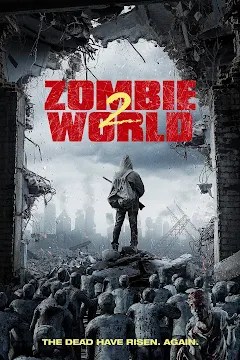
Zombieworld 2 - Movies on Google Play
Love the zombie in the bottom right looking the wrong way.

What kills me is the breadth and depth of Trump’s win. I can’t just blame those frickin Pennsylvanians: every swing state went to Trump. My state, Arizona, went to Trump. There are Trump supporters all around me, wishing harm but not talking to me about it. You know how the worst thing in a zombie movie is when the people are actually turning into zombies, and you don’t know who is going to turn next? Who has already been infected? Who is suddenly going to surprise you by revealing themselves as your enemy, as the person who wishes you harm, or even as the monster who is going to do you harm themselves, who is going to take a bite out of your shoulder on the way up to your jugular? Everyone looks the same, all looking normal, all talking about things the same way — and then suddenly someone’s eyes roll up in their heads, their skin turns chartreuse, and they groan and start nomming on their neighbors? Don’t you think that’s the worst part of zombie movies?

Okay, no, the worst is probably when people get dragged screaming into a horde that tears them apart and eats them alive.

I hope that there won’t be anything even metaphorically like that in this situation. It is just an analogy; I don’t think the world is going to go through even a human apocalypse, let alone something like a zombie apocalypse. I know we will survive this.

But also, Nazis marched in Ohio this past weekend. So I’m really not sure there won’t be a scene of savage and shocking violence where someone innocent is dragged screaming to their horrible bloody death.

So my dark-of-night thought about the zombie apocalypse was: I’d probably just give up. I’d run for a while — if we’re starting with my dream, I’d be with Toni — and then I’d end up giving in to despair, and I’d have to do one of those hideously sad scenes where two people say goodbye and then let themselves die together. And when I heard the election results, I thought sort of the same thing: maybe I should just give up. I mean, this is clearly what the people of this country want, more than I want to believe they want it. But they do. I don’t just think ignorant and evil people voted for Trump; I think there were rational people, good people, who made a bad decision, but who thought it was the right decision. I want to think that, given a chance to talk to them honestly and openly, I could convince those people that they made a bad decision: and then maybe they won’t make the same kind of mistake again — but also, I failed to convince them before this election. I failed to make any difference in this election. However hard I tried, it wasn’t good enough; I wasn’t good enough to solve the problem, to prevent this terrible outcome, to protect people from harm. I thought, Why would I try again when I failed the last time?

And that’s actually why I recognized this parallel between Trump’s election and the zombie apocalypse, and why I wanted to write about it.

Because what zombies represent is hopelessness.

The basic concept of the zombie trope is this: people, who are unique and special and valuable individuals, become zombies, a horde of identityless, soulless, lifeless husks, taken over and corrupted by some vile invader — a virus, an alien parasite, Disney. Having been corrupted, the former humans stalk other humans relentlessly, and turn those individual people into more indistinguishable members of the horde. It represents all of our fears of losing our selves, our identities, in the larger society, which grinds us up and devours us (along with the visceral horror of cannibalism, the idea of being devoured, reduced to mere sustenance and then destroyed and consumed by those who should shield and succour you). Zombies are seen as representing our fear of the future, particularly of technology, and the advancement and growth of our society into something that either doesn’t recognize our individual human value — or doesn’t care about it. Zombies don’t care that I am a teacher, or a husband, or a writer, or a man who loves animals; to them I’m just meat. And zombies are the meat grinder.

Zombies are the Machine. Zombies are the Man, in the abstract sense of an authority that doesn’t respect or value us, that sees us only as grist for the mill, or at best fuel for the engine.

But none of that is the horror of zombies. (That’s not true: much of the horror of zombies is in the eating, particularly in the eating alive, which is just appalling in and of itself.) The horror of zombies is in their relentlessness: the horde keeps coming after you, and nothing can make them stop. They do not get tired or bored or distracted (mostly), because they are lifeless and thoughtless and devoid of all desires other than hunger. They can not be killed, can not be scared off. You can sometimes destroy them, such as with the famed head shot, or with something like an explosion, a consuming fire, a bulldozer: some kind of overwhelming force, far more than would be needed to stop a human who was coming after you, which shows the sheer power to be found in giving up (or losing) humanity. But even if you fight the zombies, and win the battle, you can’t win the war, because you will run out of ammunition, you will use up all of your resources, and the zombies will keep coming: because we got the guns, but they got the numbers, to misquote the Doors. And of course, every one of ours we lose is one that they gain. You can outrun them — but eventually they will catch up with you, because you will get exhausted, simply because you are alive and therefore you need to rest. The dead — or rather, the undead — do not need to rest.

That’s the main horror of zombie apocalypse stories. There is no escape, and no way to stop what is coming for you. What is going to eat you, or turn you into another part of itself. And the result of that inevitability, (I have to link that clip. Also, the third movie is an interesting re-interpretation of the same fear, being consumed and turned into the corrupted enemy.) of course, is despair: a loss of hope, and the subsequent surrendering to apathy and lethargy and numbness, and then death and destruction.

Hm. Sounds like depression. Also sounds like the situation in this country right now.

So that’s what I felt, what I thought, when I heard that Trump had won the election. Fortunately, because I spend most of my time outside of politics, I didn’t feel that total despair, I didn’t lose all hope — because hey, the zombie hordes aren’t outside my door. They aren’t stalking me. I understand that some people don’t have that luxury, that solace, because the hordes are stalking them, and they are in real danger; but, without being selfish or trying to sound callous, I am glad that I can take solace in that I can still live. I can still teach — and while some of my students are a different kind of soulless zombie horde, many of them are vital and wonderful young people who learn from me. So there is hope there. I can still write, even though it is harder to find the time and energy to do it, these days. Because this is neither a movie nor my dream, I do not in fact need to sacrifice my wife, or hold her while we both die; actually, we are both quite healthy, which is nice to say. And the pets are safe and well. So no, it is not the apocalypse, not for me. I have hope, and hope means I can fight.

And it is not time to give up hope.

I mean that. While many of the guardrails that held Trump back from his worst impulses last time are gone now, and he will act like what he is, a cross between Veruca Salt (not the band) and a shit-throwing gibbon (Note to self: that would be a good punk band name.), there are still guardrails in place. We should be disturbed by the ones that are gone, and we should work to put them back in place, or even replace them with improved versions; but don’t think that Trump will be able to do all the worst things he or we could ever imagine. He won’t. The military will not betray this country, the Constitution, and their oaths, for Donald freaking Trump: and without the military, he can never have a coup or become dictator for life. He can get every single one of the Proud Boys, and the 3%ers, and the Neo-Nazis, and the Karens for Trump or whatever, and march them all on Washington: and a single armored division would wipe them out in minutes. So he cannot overthrow the government. And while the Supreme Court, themselves corrupted by something vile and awful and alien — namely a level of arrogance that we haven’t seen, I think, since literal nobles before the French Revolution — have given Trump the green light to do whatever official act he wants — they also reserved for themselves the right to decide what is an official act. And if you think they would ever give up that control over Trump, or any other President, well. You haven’t seen any movies with the nobility in them. Honestly, the people backing Trump don’t want him to overthrow the government and destroy this country; this country is where they keep their money. The Supreme Court serves that crowd, the billionaire class who want to retain the rule of law because that protects their billions — and, not coincidentally, the Court’s own power. So anything that looks like Trump trying to overthrow the Constitution and set himself up as a king will be thrown down by those who already consider themselves our overlords.

Let Them Make Mistakes: Marie Antoinette's Life and Wedding
Is this the Supreme Court — or is this:
This Week in Genre History: Mars Attacks! wanted to destroy Earth a bit too  much | SYFY WIRE

So no, Trump won’t destroy the country, or our democracy.

But he’ll hurt people. A lot of people. Starting with the immigrants he deports, the women he strips of rights, and the trans people he tries to exterminate by allowing bigots to say trans people shouldn’t exist. And all of the people who love them, and will have to watch those people get hurt.

So in the face of that, we shouldn’t feel helpless or hopeless, and we shouldn’t despair.

We should feel sober. And frightened, especially for those who are in Trump’s crosshairs, although that may not be us and our families; it is surely people we know and care about, and people we should protect, support and succour.

We should feel so. Fucking. Angry.

And we should then focus that anger, that fear, that seriousness, on the task at hand: to fight the horde. To stop them from breaking down all of the doors, tearing down all of the walls, and especially to stop them from devouring people, whether they are our people or not. Because now it’s down to this: you are human, and you are unwilling to sacrifice those who are threatened for your own sake, especially for your own convenience, or for something as trivial as the price of eggs — or you are not. If you are not, you are of the horde, and you are our enemy.

All of you humans, all of my kin and friends and allies: don’t stop. Don’t give up hope: this horde will be defeated. This will be one of those zombie apocalypses where the zombie plague is cured, or something happens to wipe all the monsters out. You know why?

Because Donald Trump is an unhealthy 78-year-old, who very carefully and determinedly built a cult of personality around himself. For reasons I can’t really fathom, he was incredibly successful at that — more successful than any demogogue since 1945, probably. He turned the United States of America on its head, and got us to choose the path that leads to our own destruction — twice — and to cheer while we did it. It’s goddamn 1984. (And by the way: I’ve read 1984. And I understood it. My allusion is accurate.) But the best and most secure guardrail that will help protect us from total collapse into the evil and anarchy of Trump’s world vision is that Donald Trump will not live forever — and while he is alive, he is old, and unhealthy, and lazy. Half the stuff he could do, he won’t do, because he’ll be too busy watching Fox News and telling his cronies that he really is smarter than everyone else. And because only he himself is the focus of that cult of personality, nobody else will be able to step into his shoes when he dies.

In the meantime, before he leaves office with his diaper and his hands full of his own feces, or before he drops dead of a massive coronary, he will do harm. To people we know. To people we love. To people. And so that is our fight. To stop that harm when we can, to mitigate it when we can, and to balance it always by being so fucking aggressively kind that even the zombies would decide not to eat us, would instead pick us a flower and smile with their broken teeth in their rotted mouths, and say, “Thaaaaangk yyyooouuuuuuuu!”

Cartoon Green Zombie Monster with Flower Stock Vector - Illustration of  death, yellow: 75571689

I’m going to shoot for that result with my classes, too. We’ll see if I can pull it off.

As for me? After I thought I would give up in the zombie apocalypse, and then told myself that I would never give up — and then thought that I am too weak, too ignorant, too pathetic and lame to actually be of any use to anyone in that dystopian scenario, I remembered something. I remembered a different post-apocalyptic book I read, years ago: one where the collapse is due to a disease that simply kills people, not one that reanimates the dead — you know, a much more realistic book. Science fiction, of course, as the most accurate and truthful books often are. And in that book, the main character is, at first, a conman, a liar who manages to get accepted into the broken anarchic society that replaces our modern one after the collapse; he gains food, shelter, allies — a life. And he does it first by lying. And then, he does it by storytelling, and entertainment: he puts on plays for the fortified groups he visits; he recites poetry. As years turn into decades, he helps to teach the children born into this terrible world, and because he travels from place to place, around and around a particular circuit, he becomes something of a messenger, helping these small, isolated communities to build connections, and to unite, in the end, against the common foe.

By the end of the book, it becomes clear that the conman, the entertainer, has actually done something genuinely valuable for the people he thought he was just lying to: he has given them hope. He has inspired them to keep going, even in the face of despair, even in the face of seemingly insurmountable odds. He has brought people together, and reminded them of what it means to be human, to be more than savages slaughtering each other for food and warmth. To be people, rather than part of the faceless horde.

The name of the book is The Postman, by David Brin, a wonderful SF writer. It was turned into a reeeaaalllllyy bad movie with Kevin Costner in the lead role; it was so bad it has probably been entirely forgotten. But the book was actually good.

The Postman - Wikipedia

And you know what? I can do that. I could do all of that. (Not the lying, hopefully, because I am not good at it and I very much hate doing it. But I can.) I can be entertaining, and I can bring people together, and I can maybe inspire people to keep going, even in the face of despair and the seemingly insurmountable numbers of the horde.

I can survive the zombie apocalypse.

We all can.

Let’s go.

Indie Film Box Office: 'Shaun Of The Dead' Lives In Bloody Good 20th  Anniversary Re-Release

Abidin’ Biden

Joe Biden: The President | The White House

There’s my guy. My buddy Joe. Pretty regular fella — other than the fact that his 81-year-old face has fewer wrinkles than my 49-year-old one, which, sure, fine, lots of people use Botox and plastic surgery and all — but Joe is unquestionably at the stage where his face has been so thoroughly Zambonied that it looks more “plastic” than “young.” But other than a flat plastic face, overly-squinchy eyes, and those too-white-pearly-whites? Very normal man. Reminds me of my dad. Especially when he talks, since most of the time he sounds like he’s kind of running out of breath, unless he is particularly excited.

I have to admit, though, that for a normal man — a regular dude — he’s sure fond of supporting some pretty fucked up things. Like Israel’s genocide in Gaza. Hopefully we can all agree that the ones really responsible for the atrocities and the genocide are Hamas, and Benjamin Netanyahu’s war-loving government, both of whom benefit from increased conflict and greater frequency and intensity of atrocity, as it increases their support by radicalizing more of the population; and also creates enough confusion among the smoke and rubble for them to siphon off wealth. I do not for a second believe that my old buddy Joe could put his arm around Bibi’s shoulders, lean in real close, and whisper, “Hey, man, cut the shit, okay?” and get any kind of real result. Netanyahu is never going to stop the war, because when the war stops, so does his political career, as he is epically unpopular now — but when he leaves office, he’ll no longer be able to avoid prosecution for his corruption, which is pervasive and pretty concretely proven everywhere but in that court of law he is avoiding. (Sounds like a certain would-be Fascist dictator in this country, doesn’t it? No wonder they get along.) But on the other hand, even though Ol’ Joe can’t stop the genocide in Gaza, I would very much appreciate not having my country supply the weapons to Israel for their genocide.

And then there’s Joe’s past support for crime bills targeting African-Americans, and a lack of support for abortion access for women, and for clearing Clarence fucking Thomas for the Supreme Court, and his willingness to destroy people’s lives at the southern US border, which he backs partly because he wants to be able to blame the Grand Ol’ (Fascist) Party, the GO(F)P, for their failure to secure the border, undercutting their own main talking point; but also because he’s clearly pretty comfortable with adopting said Fascist party’s framing of the issue as a crisis at the southern border, and the problem being one of too many people trying to live out the American dream and the ideals we claim to stand for, and with the argument that punishing those people as brutally as we can is definitely the best way to handle it.

All of that is garbage. And all of it is Joe Biden.

Plus there’s the simple fact of the man’s titanic goddamn ego, which makes him look in the mirror every morning and say, in all sincerity, “The only man who can be President is you. The only man who can stop Trump is you. You have to run again, Joe. You gotta save the world! All by yourself! LET’S DO THIS!” That’s Joe Biden, too.

But you know what else is Joe Biden?

He’s the most progressive president we’ve had in 75 years — even though he failed to provide Medicare for All or a livable minimum wage or a permanent child tax credit or a Voting Rights Act or a balanced and reasonable Supreme Court.

But the focus on climate change spending, particularly in the Inflation Reduction Act, is brilliant. The Infrastructure bill was good though not enough — but it was good, no question. The change in tone and the reintegration of the US into the world’s leadership, particularly NATO, was necessary. And his administration has done a good job of making sure the US did not fall into the economic malaise that the rest of the world has fallen into. I don’t like everything about the way they did it, because like always, inflation was brought under control mainly by punishing working and middle class families by raising interest rates to levels high enough to make us stop buying houses, even though the rent is too god-fucking-damn high; and like always, the majority of the GDP gains went to the top 1% so the corporations and Wall Street mavens could keep making campaign contributions to Joe and the Democratic party; but still, unemployment is ridiculously low — and there have been some actual gains to wages set against inflation and the cost of living.

So. Considering all of that, I have a request for all of you.

Vote for him. Vote for my man Joe in November.

I mean, to be clear, the only other realistic option for someone who could actually win is the fucking Fascist. And you — yes you, person who is reading this right now, who has felt enough connection to me that you came here to read this piece that I wrote — you better not vote for the fucking Fascist.

But that’s not the issue here. Right? Millions of cultish fans, and millions of people freaking out over the scourge of Socialism, are going to vote for Trump; but he lost the popular vote in both of his elections, so I expect he will lose again. The issue is whether or not enough of the voters on the margins, the ones who maybe don’t want to vote, who don’t care enough to vote, or who are wavering between the two choices, will swing the battleground states to the right side to win the Electoral College. That’s what the issue is, and what I want to talk about: will the undecided voters decide to go the right way?

It should honestly be pretty simple for every Democrat and progressive: Joe Biden is no progressive — but the progressive movement has made major gains with this administration, and importantly, Smilin’ Joe’s worries about his legacy, and also his genuine and historic support for unions and the working class, mean that he would likely continue to move slightly to the left of center, and might be able to enact and solidify some of the gains made in this first term. Any other president, from the left or the right, would be likely to ignore Biden’s accomplishments and try to create their own: but Biden will try to make sure that Biden’s wins stay in place. And Barack Obama doing exactly that is why we still have the Affordable Care Act despite all the best attempts by the fascists and corporate interests to root it out and remove people’s health insurance. Compared to Medicare for All, the ACA is hot garbage; but it was and is progress. It was and is a good thing. The same goes for Biden’s wins. Even though we’d like to have more of them, it would be useful to make sure what we’ve got, we won’t lose; like any other leftist/progressive idea, once it is in place, people realize it’s probably a good thing — and then they don’t want to get rid of it. Just ask Trump and his Republican congress about the ACA.

So re-electing Biden would make sure that we don’t move backwards. And let me point out how important that is: both Trump and Biden did a whole lot of stuff through executive order; and because those come from one man’s pen, they can be (and were) undone by another man’s (or a woman’s) pen. That fact, and the stark contrast between Trump’s foreign policy (Which is basically this) and every sane President’s desire to remain involved with the world on some kind of good terms, are why so much of the rest of the world is now wary of relying on the US for anything. And while I definitely think it would be better for the US and the world not to have the US in any kind of leadership role, since we have fucked up almost every other country on the planet at one time or another for our own desires or aggrandizement or simple profit, I do think that inconsistency from our policies or our economy has severe negative long-term knock-on effects on the rest of the world. So keeping ourselves in check is the best possible thing for everyone: and for that, a second Biden term, with his focus on maintaining American value around the world and renewing and continuing old policies about connection and cooperation, are the best possible choice.

I understand and agree that just maintaining what we have is not enough. We need to have an actual progressive administration, and more importantly, a progressive congress to go with a progressive executive, so they can name progressive judges, and then we can do some of the things we really need to do. And the more often we are given this kind of bullshit either-or, Lesser-of-Two-Evils choice, the longer we have to delay an actual progressive movement and the accomplishment of simple but necessary things that will save lives, like a livable minimum wage and Medicare for All. But to accomplish that, we need to start at the grass roots: and that’s where progressives suck. Don’t we? Because we won’t fear monger the same way the establishment and especially the Fascists will, we can’t drive the same kind of brand loyalty that only comes with paralyzing fear of the other side. We have to educate. And the political education of the populace relies on one thing: actual policy wins. Actual things being done, by government, to help people. And you know what we need in order to achieve that? More progressives in office, which basically starts with more progressives in the world.

And you know what drives more progressives in office? Anger and frustration with Fascists and with the establishment Democrats who appease them. In the large historical sense, the longer we have to deal with these people in charge, the better our side will do in recruitment and inspiration and drive. You cannot stop the pendulum from swinging: the GO(F)P has done a fantastic job of slowing down the swings for a long time now; but there have been lots and lots of little swings — LGBTQ rights, for instance, even though we’re seeing the violent Fascist reaction to that swing — and the big swing? It’s coming. And it’s going to swing a long way.

And then it will swing back again.

Let me also point out that the reason the GO(F)P has done so well for the last twenty-five years is because they started at the grass roots FIFTY years ago, and built up slowly; and the best news I can say for the future of the progressive movement is that Trump and MAGA have completely torn down the Republican infrastructure that helped put Trump into office. So if we can stay focused, and pay attention and do the work, we can take the country back. For real. I’ll write more about that another time.

And if none of that convinces you? Let me just remind you: the guy on the other team is a fucking Fascist. And no, I won’t tone down that language or that accusation: it is appropriate, and accurate. I will express that in greater detail another time, but I hope everyone reading this is already close to accepting that, if you’re not already there.

So let me sum up.

Biden has done a genuinely good job. He should have done more, but he has done more good than harm — and that’s an important metric for any politician. The first line of the Hippocratic Oath is “Primum non nocere” — first, do no harm. Politicians should all swear the same thing. Actually, we all should. And Biden has done good, for the economy, for the country’s manufacturing and infrastructure, for climate change adaptation, and for the international rules-based world order.

The best criticisms against him are: he has failed to end support for the genocide in Gaza, which is an entirely fair criticism, and the reason why I voted against Biden in my state’s primary, as I want him to recognize that this is an issue; he has tried to meet the GO(F)P in the middle of the aisle, particularly on the border, which shows far too much acceptance of Fascism and, essentially, racism and sexism, which were already issues for Biden as they are for so very many white male Americans; and he has accepted the current framing of issues like the economy, where he has failed to support the real change that would actually achieve his “from the bottom up and the middle out” economic growth.

Oh right — and he’s old.

And he sounds kinda dumb when he talks sometimes.

Those criticisms are bullshit.

He’s old. Granted. So why does he need to be young? Because only young people understand the needs of young people? Are we really that wedded to identity politics, that we believe that nobody can understand the needs of a group to which he doesn’t belong? That nobody can be sympathetic to those needs, and supportive of them? How different are those needs, really? Do we actually think there’s that much of a gap between the basic human needs of someone who is 8 and someone who is 80, when both people are human beings? Both love their family, both want to be safe and healthy, both love cheese and naps; must we have an 8-year-old president in order for 8-year-olds to live good lives? And if not: why do we need a 40-year-old President? Or a 50, 60, 70-year-old President?

He doesn’t speak well. And? Why does he need to speak well when he can get other people to deliver complicated policy platform announcements, or to handle press conferences with the piranhas of the press corps? Do we really need Joe Biden to inspire us with his soaring rhetoric? Or could we maybe read a book, listen to a poem, watch a Rage Against the Machine concert video, and get our inspiration from those? If we have a President who needs the help of other people to run his administration, then maybe we get something more like, I dunno, a representative Republic serving democratically. Instead of a strongman who handles everything himself, and who can and might want to build a cult of personality.

Whatever else you say about Old Joe, he is not going to build a cult of personality. None of us can stand his personality. No: he will build a team of smart and capable and driven people, who will help to fill in the gaps where he doesn’t have the best strengths. One of the best things about Biden is that he realizes who he is and what he can do (Other than his enormous ego, but clearly that is a prerequisite for an American politician), and he looks to others for help. He stood behind Barack Obama completely. That says a lot. I am also, despite my criticisms of his past shitty positions, genuinely impressed with his ability to recognize when he might be wrong, and to listen to others with better ideas. The fact that he is not the same man with the same ideas he had fifty years ago? That’s a good thing.

Look. Seriously. The President doesn’t need to be young. The President doesn’t need to be strong. The President doesn’t need to be a good speaker. We like all those things in our politicians, as we like them in all of our celebrities: but the reality is that the President is a politician and a leader. And that doesn’t require strength in a physical, youthful sense. It requires determination and drive: and Biden has those. Even if he needs to take a nap every day (And don’t pretend we wouldn’t all support a President who mandated a daily nap), he gets up and still has the same absolute convictions about the right things: the goodness of America, the desire to help people, the opposition to cruelty and violence. Right? You can’t miss those things when you talk about Biden. That same ego I was mocking earlier actually shows his strength in this area: he believes he is right, and a lot of the time, in a lot of ways, he is.

Let me also note: if our President is strong-willed, so strong that nobody could stop him or oppose him or stand in his way — how do we not end up with a dictator? Hell, we almost got a dictator with the last guy, and he only thinks he is strong and commanding. Someone who actually is? There’s a real risk there. And there’s only a benefit in that if we think that this country is actually carried by one guy.

It is not. The strength of this country is not in the leadership. It is not in the White House. It is not in our politicians, at all: they are all — or almost all — weak people. Weak morals, weak wills, and a lot of weak minds, especially in the GO(F)P.

We are the strength of this country. We are smarter, stronger, braver, wiser, kinder, and better in every way than our political leaders. As we should be: because we are the ones who run this country. We are.

When we abdicate those roles and those responsibilities, when we elect politicians intending for them to carry the load for us, to do our thinking for us, to do everything for us so that we need to do nothing for ourselves — we get exactly what we want. We get controlled. We get exploited. We get screwed: because we put people in power over us, people who want to screw us, and we hand them the tools to do it.

Joe Biden, whatever else he is — old, weak, stumbling, mumbling, moderate, somewhat racist, somewhat sexist — he is not looking to screw us. He just wants to help.

So let him.

Vote for him.

My man.

Joe Biden 'not sure' he would seek re-election if Trump were not running

The Court of Public Opinion

George Floyd's mother was not there, but he used her as a sacred invocation
I want to open with this because I don’t want to center the discussion on me or on my erstwhile opponent in this debate: the real focus here is on the police murder of George Floyd. Rest in peace, sir.

Let’s get this out of the way first: I don’t like Ben Shapiro.

It’s not hard to understand why: he is deeply conservative and I am liberal; I believe in the value of real argument and he’s the definition of a sophist; I strive to be honest and a rational intellectual (Meaning someone who uses reason and thought to discern and communicate truth; I’m not necessarily trying to be seen as super-smart and therefore an authority — though I admit I wouldn’t mind being seen as super-smart), and he’s a manipulative liar who hides behind the trappings of pseudo-intellectualism (meaning he is trying to be seen as super-smart and therefore an authority, regardless of the actual merits of his position — and I think he is intelligent enough to know what he’s doing and why, which implies that he is either deeply cynical or tragically self-deluded).

Basically, he’s a stinky poopoo head. Just know that going in.

As a brief aside, let me address the likely counterjab from any Shapiro fans who happen to be reading this: no, I don’t hate Shapiro because he’s a conservative; I have deep respect for many conservatives. No, I’m not simply jealous; I freely admit I would love to have Shapiro’s platform, his fame and money and success, but frankly, I could get it the same way he did, the same way Glenn Beck and Tucker Carlson and Rush Limbaugh and Steven Crowder did: I could loudly proclaim myself a prophet of outrage and amplify conservative grudges, and use my skills as a writer and a speaker to build a following. As to whether or not I dislike Ben Shapiro simply because he’s right and he proves my liberal ideas wrong, I’ll let this argument address that.

The argument I want to address specifically is this one:

I want to take this slowly: because one of Shapiro’s signature techniques is talking fast and overwhelming his opponents with words that have the appearance of sound, logical arguments. So, right from the beginning: his main claim here, as presented by the title of the video and the first 13 seconds, is that the real reason Derek Chauvin was convicted of murder in the killing of George Floyd was because he had already been convicted in the court of public opinion of being a racist. He expands this in the following 45 seconds by describing Chauvin as “emblematic of an American system of racism,” and uses as evidence the claim that if you asked Americans today if Derek Chauvin was a racist, Shapiro guarantees that a majority of Americans would say yes.

I don’t want to spend too much time exposing Shapiro’s logical failings; the fact that he is a poor debater who wins with sophistry is an issue I have with him and not the central problem with this argument. But it is necessary to identify the places where his argument shifts, because one of the most common manipulations of a discussion is changing the topic, or changing the focus, or changing the argument. We all know it: one of the classic cliches is that arguments between spouses start out with one problem, but then turn into an argument about whose turn it is to do the dishes.

Shapiro does this here. Whether or not Derek Chauvin is personally a racist has nothing at all to do with whether or not he is emblematic of an American system of racism. Whether he is a racist or an emblem of racism has nothing at all to do with whether the majority of Americans perceive him as a racist. And none of that has anything to do with whether or not he is guilty of the murder of George Floyd. Again, because Shapiro is a sophist, he doesn’t seem to argue here that Chauvin was innocent of murder; he argues that Chauvin was unfairly convicted of racism, and simply implies that this unfair conviction of Chauvin for the “crime” (Shapiro’s description) of racism was the “real” reason Chauvin was convicted of murder. He also says, between about 1:00 and 1:30, that America was convicted of being racist because of this one “data point,” Chauvin killing George Floyd; he seems to be implying that America has also been unfairly convicted of that crime of racism, because the conviction of the country was dependent on the conviction of Chauvin for racism, and that conviction was unfair, and also convicting the entire nation because of this one crime is also unfair. Not the conviction for the crime of murder, again, but Chauvin’s conviction for the crime of racism. Which was unfair because it was never brought up in court, never alleged, and never proven, as he says, strongly, several times in this video.

This is what I mean about shifting the argument, and why I call Shapiro a sophist. He’s saying that racism was the reason for Chauvin’s conviction, and in almost the same breath (I don’t know if it was the same breath because I’m not sure that Ben Shapiro breathes: it is genuinely impressive how many words he can get out in a minute, without ever seeming to pause. Sorry; off-topic.) he states that race was never brought up in the trial. How on Earth is the lack of evidence supposed to serve as evidence? It’s not: his evidence is that “we all know” that Chauvin’s conviction was for racism, not for murder. His evidence is that if you asked Americans if Chauvin is a racist, the majority would say that he is. Or at least, Shapiro says (in fact he guarantees) that the majority of Americans would say that Chauvin is a racist.

What Shapiro is really relying on here is the resentment in his audience — generally a white conservative audience — about being called a racist. His audience doesn’t like to be called racist when there is not crystal clear evidence of racist action and intention presented: evidence that would meet the standard in a court of law. That is, unless you can point to the Nazi tattoo on my forehead, and the sworn statement I signed that my Nazi tattoo represents my genuine conviction that the white race is supreme, AND my conviction in a court of law for a hate crime committed in pursuance of the achievement of those white supremacist views — then it is not fair to call me a racist. And since that is his audience’s definition of a racist, calling someone a racist who does not have all of that evidence of racism is deeply offensive. Of course it is: who would want to be accused of that kind of atrocity?

This is, by the way, one of the central conflicts in our society, and it is a subject I will keep coming back to again and again: we have never had a real national conversation about what the word “racism” means, about what it is to be racist. We have not had that conversation because too many people, like Ben Shapiro and also like a much greater number of people on the left, garner too much political power out of misusing accusations of racism, which is easier if they don’t carefully define their terms. It is also much easier to continue maintaining a racist society if the definition of racism is unclear.

Shapiro points out that the evidence of Chauvin’s racism is the death of George Floyd. He says (About 1:00) that is not evidence of racism, it is evidence of a bad cop, of bad police procedure, of recklessness; it is not evidence of racism. But what is his evidence of this claim? That racism was never brought up in the court during Chauvin’s trial. As I said, the charge of racism can only be proven with evidence presented in a court of law: not in the “court of public opinion.” And in another amazing piece of sophistry, starting about 1:45, he says “Let us be real about this,” and then goes on to describe how the presentation of evidence to the public would have shifted public opinion, and therefore the verdict. He says that if the bodycam footage had broken at the same time as the video captured by Darnella Frazier, and if all of the evidence had been presented, and there had not been “20 million people in the streets declaring that America was systemically racist and that this case was and that this case was a case of racism” then it is “highly doubtful” to Ben Shapiro that the jury would have convicted Chauvin of murder.

I honestly don’t know if Chauvin is guilty of murder. I watched the video, and I saw the bodycam footage. I recognize that Shapiro is arguing here that the bodycam footage starts earlier, and shows the struggle between Mr. Floyd and the police before the officers put Mr. Floyd on the ground and before Chauvin knelt on him, and therefore it shows justification (Shapiro is alleging) for the use of force because Mr. Floyd was resisting arrest and so on, whereas the video that helped make this case so famous just starts with Chauvin applying force without giving us the justification for that force, and therefore prejudiced people against Chauvin. I did not see the extended footage as justification. I thought it showed that the police, who probably should not have been called in the first place (I don’t think passing a counterfeit $20 is evidence of criminal action requiring a police response), should not have approached a man in his car, unaware that he had been reported for passing a counterfeit $20, from out of his line of sight, startling him, scaring him and provoking an agitated response, and then using that response to justify pointing a gun at him, scaring him further and provoking an even more agitated response, and then continuously escalating the interaction until it becomes an argument about how much force is required to restrain someone who is resisting being restrained. In fact, I think the extended footage implicated the three other officers in the murder. Not because I know in my liberal heart that Derek Chauvin is racist, but because I don’t presume that George Floyd was a threat, as the police clearly did, and I don’t think that violence is justified in ending a threat, and certainly, without a question, the use of force should end when the resistance ends. If Mr. Floyd was fighting or running away, force might have been called for — but as soon as he stopped fighting, the use of force should have ended. Period. Not gone on for nine and a half minutes. Did the police see Mr. Floyd as a threat because of his race? Was his race the reason why the store’s owner called the police on him for passing a counterfeit $20? I think the answer is definitely yes, but I can’t say for sure. What I can say is that the full footage does not clearly, undeniably sway public opinion towards vindicating Chauvin’s actions, because it doesn’t exonerate Chauvin for me. Though I recognize that other people disagree with me, and think his actions were justified. I see Shapiro’s point, that the full footage might have moved people differently than just the witness’s video did; the death of Ma’Khia Bryant seems to be showing that: but that is a question of how you can move (or manipulate) public opinion, not an argument for how you can find the truth in this case: which is why this extraordinary sophistry. Just watching the videos does not prove Chauvin’s guilt or innocence, which is why I say I can’t know for sure if he was guilty or not.

But this I can say for sure: the best evidence that I know, on either side, is that 12 American citizens, after hearing weeks of evidence and argument, found Chauvin guilty on three counts including second degree murder. Shapiro has not one single argument here that is better or more reliable than that verdict. Nor do I. So I will accept that verdict as the answer, over the doubts of one Ben Shapiro. I suspect that Shapiro, who is in fact incredibly intelligent and both educated and experienced, having graduated from Harvard Law and worked as an attorney before going full time into conservative punditry, also recognizes that he does not have one single argument that is better or more reliable than that verdict. But he doesn’t say that, because he is a sophist and a manipulative pseudo-intellectual who profits from stoking the flames of outrage and partisan division, and convincing his white conservative audience that Chauvin is not guilty of racism, and therefore neither are they, and that the accusation of racism is much worse than the actual murder of George Floyd by Derek Chauvin, because that false accusation of racism caused the wrongful conviction of Chauvin for murder, when at best he was just a bad cop following bad police procedure and acting recklessly. And why those three descriptors, Shapiro’s own, should not be sufficient to show that the killing was in fact murder is beyond me: clearly those reasons, which were presented in the trial and supported by video evidence and expert testimony, were sufficient to make the jury convict Derek Chauvin of murder.

Of course, because Ben Shapiro is a sophist and a manipulative pseudo-intellectual who profits from stoking the flames of outrage and partisan division, he builds from his claim (presented without evidence beyond his own opinion and “what we all know to be true,”) into greater assumptions and accusations, namely that this case has been entirely political, that it has been used by Democrats to build the narrative that America is racist. Again, not to get too deep into flaws in the argument and logical fallacies and such, because the focus here is simply that Ben Shapiro is wrong, but I have to revel in the towering house of cards he has built here: starting with (1) Derek Chauvin was innocent of murder; then (2) Chauvin was convicted because the public decided he was racist, along with (2B) The public would not have decided Chauvin was racist if they had seen George Floyd resisting arrest and being visibly agitated. Then you have (3) Because it was not proven in the court that Chauvin was racist, Chauvin was therefore not racist; (4) America was accused of racism because Chauvin was accused of racism, while simultaneously, (-4) Chauvin was accused of racism because America is and was and has been accused of racism; then (5) since Chauvin is not racist, America is not racist — and also (-5) since America is not racist, Chauvin is not racist — and then (6) the Democrats have taken up this issue because they use false accusations of racism for political gain. All assumptions, many of them contradictory and even absurd on their face, yet we’re just supposed to accept them as true (Because Shapiro’s audience does accept them as true, I would guess). As an example of this, Shapiro, starting at 3:28, begins talking about Philonise Floyd, George Floyd’s brother, who gave a statement about Chauvin’s conviction in which he compared his brother to Emmett Till. Shapiro gets very exercised about this, taking offense on behalf of Emmett Till’s family — and also revealing his (Shapiro’s) additional faulty reasoning for the justification of George Floyd’s death — but there are several problems with this. One is that he gets some of the details of Emmett Till’s murder wrong, but I don’t want to nitpick; I’m only pointing that out because if you want to get self-righteous about the truth, you should present the whole truth. The big problem is that he argues that the analogy is wrong because the circumstances surrounding the death of Till and the death of George Floyd were entirely different, and therefore it is a bad analogy intended to make the murder of George Floyd as tragic and abominably racist as was the murder of Emmett Till. And therefore, of course, the murder of George Floyd was not as tragic and abominably racist as the murder of Emmett Till.

But here’s the thing: that is not the analogy that is being made.

Frankly, I’m not going to speak for Philonise Floyd. His brother was killed, the murderer was convicted; Mr. Floyd is welcome to say whatever the hell he wants in the aftermath of that tragedy. He can say that his brother was the Second Coming, or the greatest American since Abraham Lincoln, or that he was cooler than Napoleon Dynamite: none of that is evidence of any of the accusations that Shapiro makes about the Democratic party using Floyd’s murder to make political hay. (I will say that Shapiro does not directly criticize Mr. Floyd: he rather goes after the more famous men standing in support of Mr. Floyd, namely Rev. Al Sharpton, Rev. Jesse Jackson, and Ben Crump — who, weirdly, I guess have to name as the head of George Floyd’s family’s legal team, which one would think could be the explanation for Mr. Crump’s presence at Philonice Floyd’s press conference, rather than the political agenda Shapiro seems to ascribe to him. Shapiro calls them all racebaiters, of course without any evidence whatsoever, allowing that ad hominem attack to support his house-of-cards assumptions about the political agenda being expressed here.)

But others have made the same connection between Emmett Till and George Floyd, so let me address that: the argument has not generally been that Floyd was murdered in the same way that Till was. Nobody has made that claim, other than Till’s cousin, Ollie Gordon, who did say that she felt the same way watching the video of Floyd’s murder as she did when her cousin was lynched. The point that has been made repeatedly is that Till’s murder, and even more importantly, his mother Mamie Till’s decision to publicize the horrifying details of her son’s murder, with an open casket funeral and published pictures of his wounds, galvanized the civil rights movement and helped bring about the changes the movement wrought over the ten years after the 14-year-old was killed; similarly, George Floyd’s murder, which was not unique but was certainly more publicized than most similar murders, galvanized the protests that happened in 2020, and may lead to some changes — potentially including the conviction of Derek Chauvin. And that is a reasonable analogy; but it does support the idea that the country is in fact racist, which is why Shapiro has to argue against it.

In the process of arguing against it, Shapiro does go after George Floyd: he describes Emmett Till with a list of negatives, all of which are points Shapiro wants to make about George Floyd. He says that Emmett Till was not someone passing counterfeit bills, that he was not a repeat drug offender, that he was not a repeat criminal who had done jail time, that Till did not hold up a pregnant woman at gun point and rob her house while her kid was in the house. And perhaps the most important point (though it is not the most emotionally manipulative point), Till did not resist arrest. Of course: none of these things matter in the slightest. George Floyd was not killed because he was a repeat drug offender, nor because he was high when the police detained him. He was not killed because he had a criminal record. He was not killed because he was passing counterfeit bills (There is no evidence, of course, that he even knew that he was passing counterfeit bills). He was, and this is the crucial point, not killed because he was resisting arrest.

George Floyd was killed because Derek Chauvin murdered him. As was proven in a court of law.

Now, I do have to point out again that Shapiro doesn’t actually say that Chauvin did not commit murder; he said that he doubted a jury would convict Chauvin of murder had it not been for the court of public opinion convicting Chauvin of racism. I don’t agree, clearly, but I will say there is some argument to be made that the jurors were swayed by the events of last summer, and by the protestors showing up in great numbers outside the courthouse throughout Chauvin’s trial. It may be that the jurors convicted because they were afraid that there would be riots if they acquitted Chauvin. That may be true, though of course it may not be; there is just as much reason to think that the jury, or at least some members of the jury, would acquit in defiance of that pressure, would even seek out the violence that may have followed an acquittal. It is extremely likely that some members of the jury would fear the consequences that might have come, that still might come, from the police because Derek Chauvin was convicted. In any case, it is not true that the jury convicted Chauvin only because of the accusation of racism. Since, as Shapiro states, race was never brought up in the trial, the only way the jury could have convicted based solely on the accusation of racism would be if they came in with that idea already in their heads, that they were prejudiced against Chauvin and no amount of evidence would ever sway them. But since 46% of Republicans and 25% of independents think it was the wrong verdict, based on the same public opinion evidence that Shapiro claims is the reason for the conviction, it’s far more likely that, if public opinion actually held such sway over the minds of the jurors, some of the jury would have voted to acquit. It’s practically impossible that the jury would be all Democrats (Also, 10% of Democrats think it was the wrong verdict, so at least one juror on an all-blue jury would have thought that, statistically speaking), and hard to believe that Republicans would overcome their prejudices while Democrats would not, based on the same evidence. One pro-police Republican voting to acquit would have led to a hung jury and a mistrial, and that has historically been exactly what happened in even the most egregious cases of police violence. Instead all twelve jurors, some of them likely sympathetic to pro-police ideas if not personally in support of them, all of them surely feeling pressure from conservative friends and neighbors as much as from liberal friends and neighbors, voted to convict. On all three counts.

Because Derek Chauvin murdered George Floyd. As was proven in a court of law. Without race being brought up once.

Now: is America racist? Was Derek Chauvin’s murder of George Floyd emblematic of that systemic racism? Might the video, the case, the public response both from 20 million people on the streets and from politicians and political pundits, all potentially have had, or will have in the future, an impact on the racism in this country?

The answer to those questions is the same as the answer to this one: Is Ben Shapiro a sophist and an annoying twerp?

Investigation

There should be an investigation.

Sorry: I assume that I don’t need to give any more explanation than that of my topic here; but in truth, there are several things happening right now that could lead me to call for an investigation, so I should certainly give my audience a little more than that.

There should be an investigation into the accusation of sexual assault made against Brett Kavanaugh.

There. Is that clear enough? Mmm, perhaps not; I know this story has exploded into unavoidability, but I also know that many of my fellow citizens, and many interested parties around the world, make a point of staying away from the mass media and the political news cycles; those people may need more information. I don’t expect that any of them read this blog – not sure that anyone will read this blog once they have realized what my subject is – but in case they do, I should explain.

Judge Brett Kavanaugh, currently an appellate judge on the U.S. Court of Appeals for the Washington D.C. District, has been nominated by President Trump for the seat on the U.S. Supreme Court vacated by Justice Anthony M. Kennedy. Judge Kavanaugh is on the fast track to confirmation, partly because he’s a fine conservative judge with excellent experience and credentials, and therefore a good choice for the seat (if you don’t mind the fact that he’s a perfect fit for the mold of Republican Honky, having grown up wealthy and privileged and white, attending private schools and Yale, working for the Bush White House, et cetera, et cetera. He’s even married with two children whom he coaches in softball, for God’s sake. He’s a Republican Ken doll. Does that make him a good or bad choice for the Supreme Court? Honestly, I want to help my party stop playing identity politics, because identity politics are bullshit, and so I’m going to say we should let Judge Kavanaugh’s stereotypical markers go, and focus on his actual record of words and deeds), and partly because the Republican-controlled Senate wants to fill Justice Kennedy’s seat before the November elections, when the Democrats may win control of the Senate, and may then cast out any Republican judicial nominations while chanting “Merrick Garland! Merrick Garland!”

I have to say: I had this splendid and insane idea. What if the Democrats, should they win the elections in November and take control of Congress, could call Merrick Garland for a hearing, and then vote him into Kennedy’s seat? I mean, he was nominated for the Supreme Court by a President, and he wasn’t voted down by the Senate, simply never given a chance to be considered. Could they go back and pull his nomination out of the cold case files, so to speak, dust him off and put him through the process now?

The answer is no, sadly. His nomination officially expired when the 114th Congress closed in January of 2017. Too bad. Think how sweet that would have felt. It might even have precipitated the second civil war, and about time, I say. I don’t mean that.

Anyway. Judge Kavanaugh was going forward with his successful bid to become an entrenched 30-year bastion of conservatism, when suddenly the car went off the road and crashed down a hillside. It is currently flying, in super slow motion, over a cliff’s edge; it is not clear yet whether it will flip over, smash into the ground and explode in red-white-and-blue flames, or if it will glide perfectly onto another roadway on the other side of the narrow chasm it may currently be flying over. That is to say: Kavanaugh’s nomination has suddenly gone awry, but it may still straighten out and land him in a seat at the Supreme Court.

The reason the Kavanaugh car went off the road is a woman named Christine Blasey-Ford, Dr. Christine Blasey-Ford, who has stated publicly that, when she was a teenager known simply as Christine Blasey, she was assaulted at a party by a drunken 17-year-old boy who pushed her down, lay on top of her, groped her and kissed her, tried to take her clothing off, and when she tried to scream for help, he put his hand over her mouth to silence her. That drunken assault was committed, according to Dr. Ford, by Brett Kavanaugh.

Okay. Cue outrage. Cue insanity. Cue tens of millions of people all saying, “Oh, shit.” I know I certainly did, several times, when I first heard this story after it broke. But after the outrage and insanity and the Oh-Shits have passed, we now have to deal with this situation. And the question is, what do we do?

It’s not fair to treat this as a special case because of the political ramifications. If Dr. Ford’s story is true, then she was attacked by a drunken savage, who may quite possibly have raped her had his equally drunken buddy, a man named Mark Judge, not jumped laughingly atop the two while they struggled on the bed, knocking all three to the floor and enabling the young woman to get away. (I have to say, though maybe I shouldn’t, but I have to: that’s the part that makes me think Dr. Ford’s story might be true exactly as she said it. That is not the kind of act someone would make up, because it’s so absurd, so entirely dumb; it turns an attempted rape into a bad Three Stooges skit. It makes the rape attempt seem less serious, which would undercut the narrative if Dr. Ford wanted to invent an attack to use as a weapon. But it is also clearly something that a drunk-ass teenaged boy would do. I also think it is something that a guy would do if he thought his buddy was taking a joke too far, and he suddenly got disturbed that maybe this wasn’t a joke, to his buddy: according to the story Dr. Ford recounted, Mark Judge was laughing wildly the whole time, and he jumped on top of them twice, only knocking them off the bed the second time. I can quite easily see that young man doing that intentionally to make Kavanaugh stop, maybe after seeing Kavanaugh do something that wasn’t playful and funny in that Ha-ha-we’re-drunk-guys-assaulting-a-girl-but-not-really kind of jokey way. Maybe putting his hand over her mouth after she screamed? However: I also have to note that there is no indication other than Dr. Ford’s testimony that the two guys who carried out this, to me, realistic-sounding attack, were actually Brett Kavanaugh and Mark Judge. So I believe the event happened. I do not know for certain if Kavanaugh was the one who did it. That depends on whether we believe Dr. Ford. Is it believable that she would forget who did this to her? It is not; trauma creates strong memories, and she knew both boys’ identities at the time. Is it possible, since memory is often deceptive, that she has mixed up the identities of her attackers in the intervening years? It is possible, and it is also possible that Dr. Ford is lying intentionally. So I can’t be sure; there is a reasonable doubt. Forgive the ridiculously long aside.) Whether that savage would-be rapist is now a judge, or nominated for the Supreme Court, or if he was just some dude who drove a bus or sold insurance or ran a car wash would make no difference. Dr. Ford’s account should be considered carefully, and the reasonable next steps should be taken. We are well past the statute of limitations, so there cannot be any criminal or civil action taken against Dr. Ford’s attacker; but the purpose of acting on an accusation of assault shouldn’t be for the sake of punishing the attacker: it should be for the sake of trying to make things right, however that can be done. The truth is, of course, it can’t be made right, because Dr. Ford can never be relieved of the burden of what happened to her; but that makes it more important, not less, that we try.

At the same time, this case can’t be separated from the politics. The potential stakes have been raised, all the way to the highest court in the land. This may be important not only for those involved, but for the entire country. It doesn’t change the situation, but it changes the extent of it, and therefore changes the extent of our response to it. Howsoever far we might be willing to go for the sake of doing what is right for Dr. Ford – and I’d argue that that should be pretty goddamn far – we have to be willing to go much, much farther to do what is right for all of us.

So what is the right thing to do? Let me start by stating, as I think I’ve been doing all along, the obvious: we should not be playing partisan politics with this. And as is always the case, neither party is innocent of that crime, the crime of exploiting intense suffering, perhaps even causing intense suffering, for the sake of partisan political gain. It is utterly appalling that the Democrats, specifically Senator Dianne Feinstein, sat on the accusation for two months, revealing it only when it was the last bullet in the gun and could be used to delay Judge Kavanaugh’s nomination as long as possible. It seems likely that the political calculus here also sought to make it impossible for President Trump to nominate a replacement in time to get someone confirmed before the midterms if he and the GOP should decide to abandon Kavanaugh, which means they have little choice politically but to stick with the man accused of sexual assault, which will surely be used to make much political hay regarding the President and the rest of the privileged white dudes in power and their tendency towards sexual violence and misconduct. That’s a disgusting abuse of Dr. Ford and Judge Kavanaugh and the entire political system. (Honestly, if I may be allowed another aside, I have to say that I think President Trump did nothing wrong here. I’m already seeing memes associating Trump with all of the sexual misconduct in the GOP, and though he certainly bears responsibility for his own alleged crimes and multiple verified instances of misogyny and sexual misconduct, he didn’t make the Republicans, nor the Democrats who have also committed crimes and sexual misconduct, into the scum that they are. He could not possibly have known about this assault accusation against Judge Kavanaugh, and so he should not be taken to task for picking a man who had this hidden in his past; it was hidden too well and too deep for anyone to know, which is why Judge Kavanaugh has the title and the position that he does. I saw Trevor Noah of the Daily Show making a comment about how Trump seems drawn to other sexual assaulters, and while that may be true, it also hides the truth that people who commit sexual assault are not always, not even often, clearly criminal in their demeanor. There is nothing to show, on the outside, that someone may have committed sexual assault in their past. The nicest guy you know might be guilty of sexual assault, and still seem like the nicest guy you know. There’s no particular reason to think that Trump could sense if Kavanaugh is guilty of this, and he couldn’t have known that Kavanaugh would be accused of it. That being the case, I actually think the honorable thing for the President to do is to stand by his nominee until and unless the truth is proven; and that’s what Trump is doing.) I don’t believe the cover story of protecting Dr. Ford’s anonymity; it wouldn’t even be hard to bring up the accusation without details but with enough information to scuttle the nomination before it went to committee. Senator Feinstein could have gone to President Trump’s advisors and presented the situation, and they absolutely would have steered the President to a different nominee; it’s not like Brett Kavanaugh is the only good Republican Ken doll in the judicial branch, and there were a dozen other possible names floating around for the seat. No, it seems clear that Senator Feinstein held this grenade until the very last second so as to inflict maximum damage, and that is simply gross.

On the other hand, the idea that the Republicans can push this nomination forward to a vote without properly pursuing the matter in a manner befitting the seriousness of the allegation, and the potential impact of putting a man guilty of sexual assault onto the Supreme Court for the rest of his life, for the sole reason that that man is also a conservative, is just as utterly disgusting. I can’t imagine being so cynical that I could do what the GOP seems to have done, which is to find a way to spin this that seems acceptable to enough of their base that they can then go ahead and do what they planned to do before this came to light: put a fifth conservative justice on the Supreme Court and start laying down precedents that will help them win the culture wars. But all I hear from them is, “Well, she’ll have a chance to speak, but we can’t delay this nomination. Don’t have time. Got to get this done fast.” Their reasoning is clear, and grotesque.

The right thing to do politically would be to go to a vote and vote Kavanaugh down, right now, and then get a second nominee through the process as fast as they possibly can; I would also argue that this would be the right thing to do for Dr. Ford and Judge Kavanaugh, because it would take all of the ungodly pressure and scrutiny off of the case, and Dr. Ford could pursue it as she saw fit. It should be pursued, now that it’s out, both for her sake and because even if he is not headed for the Supreme Court, Kavanaugh is currently a judge on the Court of Appeals: he may not be one of the nine most powerful judges in the country, but he is one of the 188 most powerful judges. But bringing an accusation to light, proving the allegations, and potentially calling for Kavanaugh’s impeachment from the appellate court, none of that has the same insane heat as this does. And that way, the GOP could go ahead and get their fifth judge on the Supreme Court. Without inflicting a second justice, along with Clarence Thomas, who may be (is, in Thomas’s case) guilty of criminal sexual acts. (And Democrats worried about the long term effects in the culture wars should keep Thomas in mind. He is 70 years old, and he will not want to live out his last years as Ruth Bader Ginsburg is doing, working into her 80’s through ill health because she needs to keep her seat and do the right thing. Thomas does not have a hundredth part of Ginsburg’s strength, and his moral character is essentially nil. So make sure that Congress is Democratic, and Trump is out by 2020, and you’ll get a fifth liberal judge when Thomas steps down.)

But this is all beside the point. Because this is not a political issue. There are political issues attached to it, which change the dynamics of it; but they do not change the core issue. The core issue is that a woman has said she was attacked. And while there is no evidence beyond her word that Kavanaugh was the man who did it, there is evidence that it happened, both in her willingness to come forward with the accusation when there is little evidence that she gains thereby (I say “little evidence” because she might be using this allegation to hurt Kavanaugh and Trump, and her gain might be their loss. But there’s no evidence that Dr. Ford is a fanatic who would throw away her entire life for the sake of sticking it to Trump, just so he could nominate a different Republican Ken doll to the court after tossing out Kavanaugh. Also note that if her intent was political drama, she would have made the very same play that Feinstein made, coming out publicly at the most intense moment, rather than sending a letter to her congresswoman two months ago.), and in the fact that she recounted the attack to her therapist in 2012, long before she could have predicted she’d make an allegation against a Supreme Court nominee. It is not clear that she is telling the truth, because it is not clear that she definitely recalls the truth; that it happened seems likely, but that it was Kavanaugh is in some doubt. She took a polygraph test and passed it, but that isn’t good evidence; the therapist’s notes from 2012 differ from her story in critical ways (The notes say there were four males in the room when she was attacked. Kavanaugh is not named in them.); she can’t recall many details about the overall situation (though she has not had the opportunity to speak about this and answer questions, so we don’t yet know everything she recalls, only what her initial public statements describe); the other people in the room deny her allegations. That Kavanaugh denied it doesn’t show he’s innocent, because of course he has quite a lot to gain from denying it and nothing to gain from admitting guilt; the testimonials of his good character and the fact that there are many women whom he hasn’t attempted to rape do not, of course, mean anything at all.

So what do we do when there is a credible but not airtight accusation of a serious crime? It depends. What would be gained from pursuing the matter? What would the costs be? If this was just two people with an old trauma between them, then there wouldn’t be much for society to gain, and it wouldn’t be worth very much to pursue it; it would of course be worth the world for Dr. Ford to pursue it, and people who could help her would be, I think, honor bound to do so if they could, for her sake. But this is a 35-year-old crime, and if she brought it to a Maryland prosecutor, even if the statute of limitations didn’t exist (And by the way: it shouldn’t. The statute of limitations is that “Boys will be boys” bullshit made into law – “Well, shucks, he hasn’t raped anybody since then, so what’s the big deal?” – and it’s everything wrong with our justice system.), the prosecutor might not pursue it because there are other crimes and other criminals that pose larger threats. I think the story should be published, because there is not a better way to find out if other women might have suffered similarly; and if there is a pattern of behavior, suddenly there is much more reason to pursue charges against the assailant, to protect other innocents from harm.

I recognize that publishing an unproven allegation would ruin a man’s reputation. I face that possibility myself, all the time, because society believes someone like me, a man in his 40’s who spends all day with teenagers, is already probably 40% of the way towards child molestation; a credible public accusation would be more than enough to end my career forever, and prevent me from ever working in anything remotely like this field again. But the truth is that victims are destroyed by sexual assault, and it is the work of a lifetime to rebuild themselves; many can’t ever do it, particularly not if they are victimized more than once. Coming forward in our society with an accusation is even more dangerous than being accused: Brett Kavanaugh might lose his nomination for the Supreme Court; Dr. Ford has received death threats and has had to move out of her home, just in the last week. There isn’t an instance of public accusation that doesn’t go approximately that way: for all the grief that Bill Clinton (And Hillary Clinton, and Al Gore) got because of Clinton’s misconduct, it wasn’t a patch on what Monica Lewinsky went through. Laughing stock of the entire nation, for – well, for life, really, though she has done an admirable job of rebuilding herself since then. If I were accused of sexual misconduct, I’d be ruined; but the one who accused me, because I am a successful and popular teacher and a good guy, would be the target of every single bit of anger and hate that all of my friends and family could bring to bear. It would be bad. If someone were willing to do that to themselves, it would stand as reasonable evidence that the allegation were true. Proof? Of course not. But evidence. And because I recognize that, I work hard to make sure I don’t ever make it easy for someone to bring a false accusation against me, and I work even harder to make sure that no one could make a genuine complaint about my behavior, could accuse me of harassment or discrimination or something similar.

Plus, I’m not a rapist. Which makes it a lot easier to avoid accusations of rape.

I have to say, I got drunk as a teenager, more than once. Really drunk, sometimes. At parties, even. And I never even jokingly pretended to rape anyone. There is a difference between someone who will commit an act this heinous when their inhibitions are lowered, and someone who would never commit the act. That difference matters. And it has nothing to do with age and nothing to do with alcohol. People who say “Boys will be boys” about sexual assault, or who use a phrase like “drunken hijinks,” need to learn that.

So as I said above, what do we do when there is a credible but not an airtight accusation of a serious crime? We investigate. Of course we investigate. We ask questions. We send professionals in to interview everyone involved, and everyone who might know the truth, and we find out everything we can about it. Everyone should want this: Kavanaugh is already at risk from the accusation; if he’s innocent, an investigation is the best chance to prove it. If it were me, I wouldn’t be satisfied with being able to deny it – even if I categorically denied it, as Kavanaugh has – and then move on, I’d want someone who knew what they were doing to ascertain the truth, and make it known as an objective fact. Dr. Ford should want an investigation in order to prove that she’s telling the truth, and to bring herself one step closer to justice and the good rebuilding of herself from her trauma. And indeed, Dr. Ford has asked for, even demanded an investigation. Well, one out of two ain’t bad. The Republicans should want an investigation because it will be far faster than pursuing another nominee if Kavanaugh is innocent, and far better than either confirming an attempted rapist to the Supreme Court if he’s guilty, or abandoning a man just from an accusation, which is neither good nor politically savvy. For those concerned about how a mere accusation can do irreparable harm to a man’s reputation, an investigation would increase the penalty for those who make false accusations, and show that the accusation alone is not the end of the story.

For all the rest of us, an investigation would help ensure that we get a decent person on the Supreme Court (Partisan politics aside, please: a decent person who is a conservative is a decent person; many and many a conservative Justice have made decisions that have been good for the country. And remember that any decision does not have to be the end of the fight, because even the Supreme Court can be overridden by the will of the people. Even if we don’t get Kavanaugh, we are going to get a conservative: because even if the Democrats win in November, they won’t take control until January, and that’s plenty of time for a whole new nominee. So let’s get a decent one). An investigation would help us learn the truth, and help a victim work through a trauma, and those are both good things regardless of other considerations. An investigation would help us remember how seriously we have to look at sexual assault, and if Kavanaugh is guilty, it may help us start thinking seriously about how we can work to prevent similar things from happening, and also how we can’t assume that all sexual assaults happen in the same way, or that all those who commit sexual assault are the same kind of person, or that finding 65 women who think you’re nice shows that you couldn’t possibly have tried to rape a 15-year-old girl, and gagged her when she tried to scream.

Nobody knew about what happened at that party when it happened, because society has stigmatized victims more than attackers, and girls more than boys, for millennia. We have to change that. We should make sure we all know now what happened then. There should be an investigation, a complete investigation by the FBI, intended to help ensure the best outcome for our national interest, as well as do the best we as a society can do for the victim.

Christine Blasey-Ford has been silenced once before. Now she should be allowed to speak.

I said I would still rant a little.

Let’s talk.

I know I just said last night that I was going to reduce the rants and move towards a simple journal about my experience trying to be a published writer. I also said I was terrible at arguing. Both of those things are true.

But also, I think that continuing the conversation is vital to our democracy. People frequently blame our president for his continuous denigration of the media, and you can see the results in how frequently that charge is echoed by his supporters; but the free press alone is not enough to protect our country and our liberties. We all need to think about it, and talk about it. The women’s marches, last year and this, are a wonderful example of citizens participating in the conversation, and the interview I heard this morning on NPR in which a woman criticized the marches for not having a clear message was, I think, missing the point. If you are determined that the answer must be clearly known and entirely solidified before you speak up, before you take action, then you’re assuming that the answer is simple, and therefore so is the problem.

We’re talking about our country. Our democracy. It is not simple. Especially not when you also include women’s rights in our society, women’s issues within our culture, gender politics, and the culture of sexual assault and harassment in the conversation. I recognize that the woman making the comment on the radio was trying to say that we should limit the conversation to a single talking point, but then it becomes easy to discard because that single talking point doesn’t affect everyone. Sometimes a single issue should be the exclusive focus, but sometimes it should be broader. Both types of conversation are necessary: a marriage can’t be considered healthy just because the two people have figured out who does the dishes, but no marriage can go on without figuring out who does the dishes.

So here’s a conversation I came across and that I would like to participate in. Not as an argument, just a conversation. It’s a couple of days old, now, but if Fox News will let me, I will link to this blog in the comments, and see if anyone gives me a response. I welcome responses of any kind.

It’s an op-ed called The Truth About Trump’s First Year, by Allen C. Guelzo, a professor of history at Gettysburg University. The first victory for the president, according to Professor Guelzo, is simply that he is still president:


But despite the Russia investigation by Special Counsel Robert Mueller, despite the unrelenting fury of the princes of the op-ed pages, despite President Trump’s hiring of staff he was forced to fire, and despite his much-criticized tweets, the president is still in charge at the White House. And he appears to be wearing down all but his severest critics.


The last sentence is the thesis of the essay (though Guelzo goes a bit further than that by the end of the piece), that the President is convincing all and sundry that, actually, he’s doing a better job than we have given him credit for. The slant of the piece is apparent in the list of “despites:” the Mueller investigation is not over, of course, and Professor Guelzo does not list the various elements of the investigation that have already called the president’s actions and associations into question; the “unrelenting fury of the princes of the op-ed pages” is a wonderfully loaded phrase, calling into question both the rationality and impartiality of the pundits, and also implying they are undemocratic, unlike the Man of the People in the White House (I will not point out that Mr. Guelzo is himself declaiming on the opinion page, as I’m doing the same; but I will include this picture of the Man of the People.);

Image result for trump private residence the tweets are “much-criticized” not because we’re all biased against the President, but because the man should not Tweet as he does – and nearly every interview I hear with a supporter of the President says the same. You think there’s broad bipartisan support for DACA? Run a poll on whether or not Twitter should close the President’s account. So I think that Professor Guelzo is already discounting things that should not be discounted, in any assessment of the President’s first year in office.

But let’s see how the President is wearing down his critics. The first issue raised is ISIS: Guelzo refers to a New York Times op-ed that discussed the collapse of the Islamic State this past year; the author, Ross Douthat, who describes himself in the piece as focusing primarily on finding fault with the President’s actions, grudgingly gives the President some of the credit for ISIS’s collapse:

So very provisionally, credit belongs where it’s due — to our soldiers and diplomats, yes, but to our president as well.

But Douthat’s argument isn’t terribly good, either:

I mean the war against the Islamic State, whose expansion was the defining foreign policy calamity of Barack Obama’s second term, whose executions of Americans made the U.S.A. look impotent and whose utopian experiment drew volunteers drunk on world-historical ambitions and metaphysical dreams. Its defeat was begun under Obama, and the hardest fighting has been done by Iraqis — but this was an American war too, and we succeeded without massive infusions of ground troops, without accidentally getting into a war with Russia, and without inspiring a huge wave of terrorism in the West.

Right, so as Douthat himself states, the war effort began under Mr. Obama, and was fought primarily by troops from the countries involved – Iraqis in the struggle to overthrow ISIS in their country, and Kurds and Arab soldiers in Syria; at least 160,000 fighting troops, and about 2,000 U.S. advisers, plus the American personnel carrying out airstrikes and artillery support – and so I immediately have to question how much of an American war this was. Yes, we were involved; but the President changed very little about that, he didn’t send more troops, didn’t appreciably change the strategy or the resources, didn’t bring new allies into the coalition. He gave the U.S. generals more freedom in deciding strategy, but how much influence did that really have? Were our generals behind the actual strategy as carried out by the fighting men? And then the success markers Douthat lists – we DIDN’T send in thousands of American troops, we DIDN’T get into a war with Russia, we DIDN’T inspire new terrorists (Well. Not yet. Right?) – I mean, that’s a low bar. I didn’t do any of those things, either. Can I have credit for the victory? (Snark aside, this article from the Guardian makes a compelling argument that the collapse of the actual Caliphate was inevitable, and that we have not yet seen what will come of ISIS as a stateless terrorist organization, which is what we have made of al Qaeda and the Taliban – both of which we are still fighting. I think this is not much of a victory at all, let alone a victory for the President. I will also say that the collapse of the Islamic State is a good thing, and that U.S. forces do deserve some credit.)

Next in Professor Guelzo’s argument is this:

Douthat’s observation was followed by never-Trumper and fellow columnist Bret Stephens’ insistence that, despite the collapse of ISIS and other achievements, President Trump must remain beyond the pale because he lacks “character.”

What Stephens didn’t say was that the Constitution does not list “character” as a prerequisite for the presidency, nor do voters necessarily reward it – or punish a perceived lack of character.

The issue of “character” certainly did nothing to affect Bill Clinton, or, for that matter, Lyndon Johnson and John F. Kennedy. Stephens’ attack was a pout, and when pundits turn to pouting, it means they have lost faith in their own argument.

This is, unsurprisingly, a poor rendition of Stephens’s argument. Stephens, who calls himself a conservative, discusses how the conservative viewpoint was once the one that touted character as the most important criterion for political office; he describes how the President’s particular personality has had harmful effects on his own administration. He makes a dozen points to support his contention, and to dismiss them all with “Well, character’s not in the Constitution!” is a pretty ridiculous red herring. Guelzo’s other point about character not affecting Clinton or Kennedy or Johnson is obviously false: Clinton was destroyed by the Lewinsky scandal, and Gore was sunk by the same torpedo; whether or not Kennedy would have been affected by character assassination was made moot by the other assassination. Professor’s Guelzo’s argument regarding this President seems to be that if one gets elected, and does not specifically violate the requirements in the Constitution, then that shows that one is satisfactorily performing the office.

I suppose we’re not going to talk about the emoluments clause. Did you know that Trump never even set up the blind trust (which wasn’t going to be that blind since his children are not exactly disconnected from him) for his company? I didn’t know that either.

Guelzo then refers to a third New York Times columnist, David Brooks, who wrote about how people meeting the President are surprised to find that he’s not actually a lunatic in person. I suppose that’s a victory. This is followed with these critiques of the left’s response to the President’s inauguration:

[A]s we turn the page on President Trump’s first year in office, the dirigible of anti-Trumpism is assuming an amusingly deflated look. It actually began deflating in the first few weeks of the Trump presidency, after Antifa thugs gave the “resistance” a self-inflicted black eye and a “Women’s March” made the wearing of funny hats its biggest accomplishment.

All right: so “Antifa thugs” that gave the resistance a black eye is only valid from a specific point of view, one that was looking for a black eye to give the left after the largest single protest movement in the history of humankind – which, apparently, only accomplished the wearing of funny hats. I think the only response to this is to reverse it: the white supremacists in Charlottesville gave the President’s party a black eye, which they tried to cover up with their MAGA hats. No, that’s not all the Republican party and the conservative movement accomplished in the last year, and the very worst elements affiliated with the right should not taint that entire half of the political spectrum. So too with the Women’s March or Antifa, which all by itself should not be tainted by its worst members – none of whom, I will say, drove their car into protestors.

What’s next, Professor Guelzo?

President Trump succeeded in getting Neil Gorsuch confirmed to fill the seat on the Supreme Court vacated by the death of Justice Antonin Scalia. In addition to Gorsuch, the Senate has confirmed 22 Trump nominees for federal appeals and district courts, with another 43 awaiting action.

What’s more, as Jonathan Adler of the Case Western Reserve University Law School has said: “The overall intellectual caliber of Trump’s nominees has been as high, if not higher, than any recent predecessor. That’s almost the opposite of what you might have expected.”

Okay, this is certainly an accomplishment; the appointment of Justice Gorsuch was one of the most pivotal issues that swung traditional conservatives to support the rather unconventional candidate picked by the GOP’s base. Turns out that this is actually an impressive number of judicial appointments:

Trump ranks sixth of 19 presidents filling the highest number of judgeships at the Supreme, appellate and District Court levels in their first year in office, while Obama ranked tenth, according to a Los Angeles Times analysis Friday.

The president has appointed 23 judges, including Supreme Court Justice Neil Gorsuch, a dozen appellate court judges and 10 District Court judges. Obama appointed 13 judges—Supreme Court Justice Sonia Sotomayor, three appellate court judges and nine District Court judges.

Source

Of course, context is everything. You know that, Professor: you’re a teacher. You teach history, for Pete’s sake. Why would you drain all the context out of this, if not to achieve a slanted partisan talking point?

Context:

Trump’s success comes in part from the fact that the GOP holds a slim majority in the Senate, which confirms Trump’s picks. In addition, Republican senators in Obama’s first five years blocked three dozen judicial nominations, Politifact found. Democrats used a simple majority to pass most judicial confirmation votes, not a super-majority of 60.

“Nominations pretty much came to a halt until the start of the Trump administration when the Senate started quickly confirming his nominees,” University of Georgia law professor Susan Brodie Haire told the LA Times.

Source


And as to Professor Guelzo’s comments about the intellectual prowess of Trump’s nominees, this is why he went with the opinion of a single pundit using a single subjective metric:

However, the American Bar Association’s Standing Committee on the Federal Judiciary has rated four of Trump’s nominees as “not qualified,” which is close to 14 percent of his picks and a higher percentage than recent presidents.

Of the 23 confirmed judges, only nine have previous judicial experience and most have backgrounds in litigation in either private practice or government. The association bases its ratings not on candidates’ politics, but their “integrity, professional competence and judicial temperament,” its guidelines state.

And while 23 confirmed appointments and 43 awaiting processing is impressive,

There are still more than 140 vacancies in the federal judiciary.

Source


Context, Professor.

At this point in the piece, however, Professor Guelzo does take on a more fair and balanced view of the President’s first year in office.

And despite an undeniable string of misfires with Congress (especially on the “repeal and replace” of ObamaCare), there are now more grins than grimaces among Trump loyalists from the increasing number of successes the president has scored over trade deals (withdrawal from the Trans-Pacific Partnership), the repair of the crucial diplomatic relationship with Israel, the decline in illegal border crossings, and the economy.

I mean, the withdrawal from TPP may have been a victory, but I have heard nothing but negatives about the renegotiation of NAFTA, the withdrawal from the Paris Accord, the attempted scuttling of the Iran nuclear deal. I suppose we have improved our relationship with Israel, though of course there are two sides in Israel and we have pleased the hardline conservative faction while upsetting the more liberal faction, so it’s more that the President shifted our relationship with Israel than that he repaired it; the President’s decision to move the U.S. embassy has also made our relationships with Arab nations much more difficult, especially Jordan, a nation whose population is 30% naturalized Palestinians, with another 2 million Palestinian refugees living in the country.

So what’s the clear victory here? Must be this:

“It’s the economy, stupid,” was once a Democratic battle cry; it may now become President Trump’s.

The Dow Jones industrial average has soared from 18,259 on the day President Trump was elected to over 26,000, in what one analyst called “the most doubted bull market of all time.” New jobs created topped 200,000 in December, driving the unemployment rate down to 4.1 percent – the lowest in 17 years.


I mean, how can I argue with this?

Luckily for me, I don’t have to. Professor Guelzo argued it for me.


Anti-Trump diehards will argue that these are not really Trump accomplishments at all, but the last successes of the Obama years. There is probably some truth in that. The reality is, though, that it’s irrelevant.

Every president takes the credit (or assumes the blame) for what occurs on his watch, and harvests the votes afterward.


Simply put, I don’t think the truth is irrelevant. I don’t think the ability to “harvest votes” (A strange phrase, when one thinks that every vote is a person) justifies all. He’s right, of course, that every president takes credit for things that aren’t his doing; but that sucks, and we shouldn’t accept it, let alone encourage it.

So let’s tell the truth. President Obama was not the greatest president in history. Nor was President Clinton. The Democratic Party has done some really bad work in the last two decades, including the catastrophe of the 2016 primaries that led to Hillary Clinton’s nomination. (Some specifics: President Obama never dealt with Guantanamo; the continued and in some ways intensified involvement in Middle East nation building – the longest war in our history, presided over by Obama longer than any other president including Bush – has had terrible consequences; Obamacare is a travesty of a gutted compromise when what we should have had was single-payer healthcare, or nothing. President Clinton ravaged the welfare system, took down the Glass-Steagall Act and thereby was the single most important precursor of the 2007 Wall Street collapse, and yeah, really did lack character in important ways, which have continued to resonate to this day. And the 2016 primaries? Superdelegates and collusion among the DNC leadership, anyone?) I also have argued and will continue to argue that the President should not be impeached until and unless he is proven to have committed high crimes and misdemeanors against this nation, just as I argued that President Clinton should not have been impeached just because he cheated on his wife; the idea that he lied about it and therefore perjured himself was too much of the snake eating its own tail. I think the Russia investigation is important to restore some faith and credibility to a democracy that got invaded by Russian hackers; but I doubt that it will bring down the President, and unless Mueller finds evidence of high crimes and misdemeanors committed by the President, evidence that has so far been nonexistent, it should not bring him down.

And on the other hand: it’s the economy, stupid. Our current President deserves little if any credit for the unemployment rate, which has been going down steadily since its height in 2008-2009. The arguments that conservatives have been using to knock that progress, that the official unemployment rate doesn’t include those who gave up looking for work, and that the current rate doesn’t reflect the number of people who are underemployed, are still true. The bull stock market only increases wealth disparity, as it concentrates more wealth in the hands of those who had the money to invest big in the market before it went up, an issue which the tax overhaul only intensified, and no amount of short-term tax cuts for the 99% can counteract. Income inequality is the number one place where our entire government, of millionaires for millionaires, fails to act to protect our country and our citizens; I hope I don’t need to actually argue that the election of a billionaire real estate developer has not brought progress on this issue. The deficit and national debt have been increased, as it always is by the majority party when they are in control, and despite past Republican claims that they would rein in spending, despite the President’s claims that he would drain the swamp and oppose the entrenched Washington interests. Did you see, by the way, that the President has now said that he will campaign for incumbents? Or at least that he’ll avoid primaries?

At the same time, the President has launched an all-out war against immigrants, which has had the effect of scaring millions of people, and therefore both reducing border crossings and increasing tension with other countries; I can’t see it as a good thing in the final summation – though it has not yet run its course, so we’ll have to wait and see before we can judge that. He has agitated our enemies (Iran, North Korea) and insulted our allies (Germany and the EU, the Arab nations, and all of those shitholes). He has, whether Professor Guelzo wants to admit it or not, so soiled the office of the Presidency that even his staunchest allies are forced to turn hypocrite or offer weak criticisms of his Tweeting while ignoring the bullying, the accusations of sexual assault and misconduct, and the clear racism. It’s true that poor character is not the exclusive province of the President; but it’s also true that he does exhibit it to an extent that Americans should decry, regardless of their positions on policy. It’s a tired trope, but I would get fired if I did half the shit that the President does, and I’m only responsible for a hundred or so students. That’s the truth.

Conservatives may be pleased by the reduction of regulations, by the dismantling of the EPA and the Department of Education; they should be pleased by the appointment of conservative judges, particularly Justice Gorsuch. I’m sure corporations are still whooping it up over the tax cuts, and those who are seeing direct benefits, such as the increased wages and the bonuses, should be happy too. The current administration has had victories, both symbolic and practical.

But that’s not the whole story. And the conversation should continue, and continue to be as honest as we can possibly make it.

30-Day Slump

(Alternate Title:

)

Today – Presidents’ Day – is the 30th day that President Lump has been in office. It’s the end of our free trial, our money back warranty period; now we can’t return the product any more.

So. How’s it going? Let’s check in.

I think that President Sump got elected on the back of an unlikely coalition of monied interests and angry Americans. His lack of a background in politics, which would have told us where his interests lay and where his votes have been cast, and the fact that he is a reality television star in every sense of the word (By which I mean: he purports to represent himself completely honestly, but we all know he’s edited and scripted and molded, folded, spindled, and mutilated, until he’s actually the furthest thing from reality.), have allowed various groups to color him in according to their own imagined scheme. Anti-Islamists dreamed he would eliminate radical Islam (or even better, ALL Islam); Republicans hoped he would put a stop to the Liberals taking over the country; wealthy people believed he would help make them even wealthier. They all hoped he would be a good choice, and enough (just barely enough) of them voted for him that now we get to find out what happens when people stop being polite – and start getting real.

I see Mr. Rump, then, as an experiment. It’s an experiment I wouldn’t have chosen personally, but it is one I am participating in; and I, too, had my hopes about what he would and would not be like as a President. I’m sure we’ve all seen the memes about giving him a chance, and hoping that he fails is like hoping that your pilot crashes the plane; that’s all well and good, as far as it goes. The question is: how far does it go?

That’s the point of this blog. We’ve gone 30 days. Has it been enough to see what has happened to our hopes and dreams? What do you say we give him a progress report?

The Republican establishment: The Republicans in Congress, who opposed him, waffled about him, and then supported him, had a very specific plan in mind, I think, when they decided to back Clump. And they did back him, whatever people think about Stump’s intention or capacity to oppose Washington institutions and “drain the swamp.” The standard Republican strategy is to use social wedge issues to get elected, and then completely ignore those same social issues in favor of cutting taxes and regulations as part of sweetheart deals with various industries who lobby them, and then hire them as lobbyists. (Thomas Frank’s excellent book What’s the Matter with Kansas? explains this lucidly and completely) So since they have gerrymandered a lock on the majority in Congress, what did they need Plump for? Easy: he’s a distraction. He’s the dancing clown we’re all staring at while McConnell and Ryan et al tear apart the regulatory state and the tax base.

How’s it working for them? Well, they’re tearing apart the regulatory state and the tax base, and Crump’s getting the majority of the heat. They are not forgotten, though; the curtain hiding the man in the corner of The Great and Powerful Oz’s chamber is not really covering them very well. They need Grump to allow a few more pipelines, nominate a few more paper men to head important bureaucracies. Hold a few more manic press conferences. Overall, though, they’re probably pretty satisfied. Let’s see what they do to Obamacare.

Republican voters: The vast majority of people who would identify themselves as Republicans are probably not happy with who he has become. They wanted him to champion their specific causes, and he’s not been doing much of that; he’s been championing mostly himself. But this is not news: generally speaking, candidates quickly become a disappointment to the voters who got them in there. I voted for Obama in 2008 because I wanted him to end the war, close Guantanamo, regulate Wall Street, and create an effective single-payer health care system. So I guess one out of four ain’t — fuuuuuck.

Same thing here. Two minor differences: Mr. Chump has disappointed people more quickly, I think, than most presidents do; witness the rally he felt a need to hold in Florida this past weekend, trying to stir up some excitement. 30 days and people are already drawing away, hissing in breath between their teeth. And two: most of the time, candidates who become Presidents disappoint because they moderate their stances: once they’re in and they no longer need to fire people up, they start looking to compromise with the establishment. Gump (Sorry, Forrest) hasn’t moderated at all: he’s just shown that his more extreme stances will meet resistance. I don’t know if that shows his voters that he can’t get things done, or if it shows them that the rest of the government isn’t on board the Gump-Train.

The Democratic establishment: Could not be more miserable. Lost the entire government to a Three Stooges skit. Also couldn’t be much weaker about it. I mean, Jesus: they’re already talking about approving Gorsuch for the Supreme Court? When it should have been Merrick Garland almost a year ago now, and we all know it? What kills me is they don’t want to use the filibuster against a Supreme Court nominee for fear the Republicans will change the rules and take it away. Right, because Lord knows you don’t want to lose a weapon YOU WON’T EVEN USE. That would really suck.

Hey guys: the GOP got credibility by opposing everything the Democrats did under Obama with an almost religious fervor. What you need now is an equal credibility. Peace and negotiations come later, once you discover some strength. Suck it up and do your job, okay? And don’t tell me how much it sucks: mine sucks too, and I make less than a fifth of what you make, NOT counting bribes from lobbyists.

Democratic voters: In some ways, ecstatic. I mean, heartbroken after the actual election; but then they got determined, and they have stayed that way. Since the Democrats have largely been sitting on their laurels since the Clinton who won, it’s good that they are willing to get to work. I think it’s been good for them to do it, too, to actually take to the streets, to recognize what it is to build coalitions rather than simply imposing an orthodox viewpoint and ostracizing those who don’t conform. Let’s be clear: it’s not enough to be right, you also have to get enough people to agree with you. Listen to Hamilton sometime.

Moderates: Hoo boy: you thought Republican voters were upset. Always, ALWAYS, the candidate moderates when they get into office. Compromise is the only way things ever get done in a government built on checks and balances.

But nobody told Dump that.

If anything, he’s gotten more extreme as his attempts to follow through on his campaign promises have been stymied by the courts or the Congress or the public or the media or — is there anyone still on his side? I mean, I guess the First Lady. And Bannon. So I figure moderates who voted for Slump hoping that he would be a good middle-right statesman once he got into office? Not real happy with how it’s gone.

Libertarians: Well, I mean, libertarians hate everything anyway.

People who thought he had to be better than Clinton: HAAAAAAAAAHAHAHAHAHAHAHAHAHAHAHAHAHAHAHAHAHAHAHAHAHAHAHAHAHAHAHAHAHAHAHAHAHAHAAhaaaaaa.

Start with the accusation that Clinton is a liar. Now: alternative facts. Then go to her ties to Wall Street and to billionaire donors with shady politics. Treasury Secretary Stephen Mnuchin, Education Secretary Betsy DeVos, (fortunately withdrawn) Labor Secretary Andrew Puzder, Secretary of State Rex Tillerson. Then how about that email thing? Right: I give you reading classified documents on an open air terrace at a golf resort, not to mention the Twitter Feed Heard ‘Round the World. And her apparent lack of personal charm and class?

Come on: that was shot before the election.

Frankly, I hope you people are unhappy.

People who were so angry over Bernie Sanders’s treatment that they wrote in his name or didn’t vote at all: Well, principles are important. But maybe a little less so now, hmmmm? “Voting for the lesser evil is still voting for evil.” Right: so is voting in such a way that you enable evil to win. I’m not saying that voting for Clinton wouldn’t have been evil: I mean, I don’t think it would have been, but I’m not in this group; those who are in this group may not have been able to stomach a vote for Clinton, and I get that. But when you literally throw away your vote — I don’t mean the people who voted for Stein or Johnson or another legitimate third party — you are making it more likely that either evil is going to win. Which means you’re voting for evil. And you got it.

Does it feel better to help evil when you have your back turned to it while you help?

Probably not.

Big business: 

Billionaires’ — Hold on a second — go back and watch that last one again. That video is priceless.

Right, where was I?

Billionaires’ Boy’s Club:

(By the way: did you know the last verse of that song is from the point of view of the President? Hm. Interesting.)

Speaking of presidents…

Vice President Mike Pence: Every time somebody mentions impeachment, I think his heart skips a beat. He signed onto this dog and pony show as the rational one, and that will stand him in good stead if the Mump ahead of him finally gets yanked out by the big hook. So considering how the first 30 days have gone, I assume he’s quite happy, indeed.

The Military: I assume they like how he keeps talking about increasing the military budget and buying newer, better equipment. If my job put me in harm’s way, and I could do it better with newer equipment, I’d want the same thing. Hell, if we didn’t have an unConstitutional standing army that has made us into the most war-like, invasive, intercessionist nation in history, I’d want the men and women of our military to have more money and better equipment. (Someday we will have the greatest National Guard in the world, and will offer hefty support to our allies and the UN — and nothing. Else. Think how far our military budget could go if we weren’t supporting hundreds of redundant bases around the world. But anyway.) They probably approve of his naming so many generals to his staff and cabinet. But they can’t be happy that he seems to be systematically alienating our allies and cutting off all lines of communication. I don’t believe our military wants to fight World War III, let alone start it.

The Alt-Right: I mean, Bannon, right? On the National Security Council, like Pennywise working in a daycare? And an attempted ban on Islamic immigrants? And a big ass wall?  Here y’go, fellers.

Fundamentalist Christians: So he’s not very Christian. But he’s opposing the Muslims, and he’s supporting the Israeli one-state solution. Along with all of the warmongering and hedonism, he certainly seems to be bringing about Judgment Day all the quicker.

And that’s . . . good, right? Right?

America’s Actual Enemies: If they’re crazy, then I assume they are planning to rise to the challenge, and see if they can out-loon President Grump. If they’re not crazy, surely they see how easy he will be to manipulate. Hell, any troll on Twitter can rile the guy up in 140 characters. This is, of course, lovely news for those who actually understand the importance of image politics and the cult of personality. I don’t really think that I do —  but I have no doubt that our enemies do, and they are probably doing this:

Everybody else in the world: All I can say is, I’m sorry. I don’t know if you had any hopes left in you after the election went how it did, but if you did, well — I’m sorry. I’m sorry for what my country has become.

Let me be clear: I actually still have hope. I am still hopeful that Mr. Trump (Yes, fine, sure I can use his actual name. President Donald J. Trump, okay? Bah, humbug.) will do no lasting harm to this country, and that he will satisfy a large number of people who have felt left behind by the progressive swing of the pendulum over the last few decades. That would be a good thing. In some ways, I think that’s all that can be hoped for with any president. I don’t know how much President Obama really accomplished –really — other than this: he did no harm. He didn’t hurt our international reputation, he didn’t break our government or our economy. The debt he created was already coming because of previous administrations and our Congress’s willingness to create new spending without finding ways to pay for it, and because of the financial crisis initiated by Wall Street. The wars he failed to stop, and the one he exacerbated by dealing weapons and flinging drones around like Rip Taylor chucking confetti, are all part of a quagmire that we were already in up to our tits. Jesus: do you realize that we propped up the Iranian government under the Shah, who came to power after the Allies invaded in 194-fucking-1? It goes that far back. So in the grand scheme, Obama did no harm. The problems of this country, the real ones, were not his fault, and I don’t think he made them worse, overall.

I hope I will be able to say the same for Trump. And if he makes people feel like they have a voice, like their vote counts, then that is all to the good.

And if he shows us all that what we really need to do is find a way to listen to each other so we can never, ever, EVER elect another jackass like this one — then I think his legacy will be complete.

I hope.

But that’s only good for my country, and our internal democracy. For the rest of the world? This must really be like looking down the barrel of a gun. And not because of Trump himself: but because 63 million Americans voted for him.

That’s the scary part.

The Party’s Over

“Your guilty conscience may force you to vote Democratic, but deep down inside you secretly long for a cold-hearted Republican to lower taxes, brutalize criminals, and rule you like a king. That’s why I did this: to protect you from yourselves. –Sideshow Bob, “Sideshow Bob Roberts”

(This is the third installment of my political corruption series, and the last. For now.)

Let’s be clear (If you read my stuff, it’s probably already clear): I am a lifelong Democrat. I am the child of two lifelong Democrats: my parents voted for John F. Kennedy, for William McGovern, for Walter Mondale, for Michael Dukakis; I voted for Clinton, for Gore, for Kerry, and for Barack Obama, twice. I don’t understand why people can vote Republican: the wealthy, for whom it makes personal sense, have to be callous, I feel, in order to refuse to maintain the social safety net for those less fortunate than they, or unbelievably greedy in order to agree to destroy the regulatory state so that they can make even more money at the expense of our very world; the poor and middle class are voting for social causes, not for personal gain (Unless they believe in trickle-down economics, but in that case they are deluded), but I see two problems with that: first, they are on the wrong side of most social issues – anti-choice, anti-equality, xenophobic, and parochial – and their candidates don’t ever deliver on their promises. So if you’re wealthy, how can you stand to vote Republican? And if you’re not, why would you ever think to vote Republican?

I read an excellent book by Thomas Frank, What’s the Matter With Kansas, in which Frank examines how Kansas, his home state and, through the 1800’s and early 1900’s, one of the most radical and progressive states, became so very staunchly, unflaggingly, self-destructively conservative. What happened was that Republican candidates around the early 90’s started pushing a pro-life agenda as the only issue that mattered – you know, the usual “40,000,000 murders,” “Culture of life” stuff – and when elected, every Republican proceeded to lower taxes, kill social services, remove regulations on business, make sweetheart deals with corporations, and basically ruin life for the average person; and then go back to election yelling “We have to end the scourge of abortion!” Which got them re-elected, into majority after majority — and yet they continued to fail to do anything about abortion, simply pushing their pro-business agenda on the state to its steadily growing detriment. But the pro-life agenda, whipped into a frenzy every new election cycle, was so compelling that nothing else seemed to matter to the voters, who kept voting Republican until it put their state where it is now – essentially hollowed out, unable to provide even the most basic elements we expect of our governments, like schools – not that Kansas schools teach anything other than creationism and abstinence, according to the campaign promises of the Republican candidates.

That’s how I see Republicans: selfish, deluded, misguided, and absurdly optimistic– or, less kindly, willfully blind to the fact that their politicians don’t ever deliver on the things they promise that won their constituents’ votes: on the national scene, we still have Obamacare, we are still giving foreign aid to dozens of other countries, our veterans are still dying on the streets, abortion is still legal, gay marriage is now legal as well, and there still isn’t a wall between the US and Mexico. So why would anyone vote Republican?

Here’s the thing, though: why do I continue to vote Democratic? It was Clinton who ended the Glass-Steagall Act, which, more than anything else, precipitated the economic crash that happened ten years later, under George Bush but not – I repeat, not — because of him. It was Bush’s fault that our government wasn’t in a better position to help after the crash, because he gave away Clinton’s surplus in tax breaks and war spending; but the crash was because of the Democrats. Democrats who I voted for. And of all of my other causes, the most important to me is the reduction of violence and misery, and the improvement of equal opportunity for everyone; the largest obstacle to all of that is income inequality. Which Democrats conveniently ignore, not wishing to appear – gasp – Socialist. (I know, I know – Bernie Sanders. But he’s also pro-gun.) We have Obamacare, but without the public option, it is more of a burden than anything useful; my costs for health care are still going up, every year, while my wages are going down: I make less now than I did ten years ago. Unions are still dying, and women still don’t make the same wages that men do, and Guantanamo is still open and still incarcerating prisoners of war who have never been to trial, and guns remain unregulated, and schools remain unfunded, and everyone is still driving Hummers while we drill for oil in the Gulf of Mexico.

So who’s really the fool, here?

I think the answer’s pretty obvious: we all are. We have all been sold a bill of goods that doesn’t match what the grinning faces behind the counter are putting into our baskets.

This is the last form of political corruption I want to write about, and that I think I have a solution for: this one is the corruption of the entire system, through partisanship and self-serving deception. This political corruption is the two-party system.

I would love to go back now to when the two-party system made sense and worked well for Americans; but in all honesty, the two-party system has always been about helping itself. Having a clearly defined and well-known political party makes it easier for candidates affiliated with that party to get elected: the party label offers a certain legitimacy, and even loyalty, in that people often vote the “straight ticket,” picking the candidates affiliated with their party without knowing anything about them. The party also offers a political apparatus that makes it easier to get heard and therefore elected; you need staff, you need volunteers, you need access to media and to debates and the like, you need a platform that people can hear and understand and support. The political party that exists before and beyond one’s own candidacy offers all of that; unless you’re a billionaire loon like H. Ross Perot, bless his wrinkly, big-eared heart, you wouldn’t want to form your own party just for your candidacy, and you almost certainly couldn’t afford to. So political parties are useful, and they aren’t going away – more’s the pity; because by far the easiest solution here is just to ban them entirely. But then it would be too hard for anyone not an incumbent to mount a national political campaign, or even a serious state-wide one, and that would not be any better, as those in power – who already have political staff, legitimacy, and access to media – would get re-elected even more often than they do now. So okay, we’ll keep political parties.

Now, if that party represents a certain set of values that the voter supports, then well and good: but because there are only two parties with any real legitimacy in this country, those two parties become too large and unwieldy, their umbrellas too wide and encompassing such extremes, that voting for the party doesn’t really mean supporting one’s specific causes: is this Republican candidate an evangelical Christian who wants to put the Ten Commandments on the American flag and mandate both creationism and prayer in schools? Or is he a Libertarian seeking the end of the income tax and government reduced to only two services, international commerce and the military? Is this Democrat in favor of a path to citizenship, but also supports private prisons, or is she looking to legalize marijuana and strengthen the Second Amendment at the same time? We can’t tell based on party affiliation.

Now, the two-party system theoretically serves the middle: because the two parties have to have such broad appeal, they tend towards the center. And thirty or forty years ago, I think that was probably true: but it isn’t now. And before that – say, eighty or a hundred years ago – it also wasn’t true. Way back when it was formed, the Republican party was single-mindedly abolitionist, which was an extreme (albeit correct) position; the Democratic party, in response, was for decades staunchly segregationist and pro-states’-rights. Also not moderate positions. Today, we have one party – I’ll let the reader guess which one – that has discovered that it can motivate its base through extreme and inflexible positions on social issues; in other words, the more extreme and zealous and inflammatory the party gets, the more votes they turn out. The entire party is moving away from the center, and at the same time, becoming more successful, because of it. More successful, that is, at winning elections: they are certainly not more successful at governing, a profession they seem to have cast aside in favor of demogoguery. Meanwhile, the opposition party is trying to maintain its foothold in the middle; but as the other party keeps going farther and farther to one side, the middle drags in that direction – and rather than hold their ground and make the extremists come back, the moderate party is moving with them, and thus also becoming less moderate: while surrendering entirely the side of the political spectrum they were supposed to be watching. I feel like, any minute now, the Democrats are going to turn around and see that a Republican has captured their flag while they were all on the other side, trying to keep an eye on the Republican team – who were having a dance party around their own flag, completely ignoring the Democrats and the entire game, but subtly distracting their whole team so that no one was left to play defense. And somehow, Vince Lombardi was behind it all. Or Ronald Reagan.

The two-party system is also supposed to provide stability: because the parties are predictable, and centrist, and inclusive, and effectively share the electorate, they are forced to compromise, which isn’t terribly hard because their positions aren’t far apart, and so they can respect and agree with each other on most things; any one politician also realizes that his opposition is not going away, and so he has to work with them. Except our parties aren’t providing that, either: instead we get hatred and bile and petty partisanship that blocks everything useful, even stuff that shouldn’t ever be a question, like raising the debt ceiling, or providing for the 9/11 First Responders. Honestly, any government that can’t give those guys health care and a pension that would choke a horse is no kind of government at all.

So that’s what we have: no kind of government at all. The parties have lost their way: rather than improving our democracy, they are hurting it; because their goal is no longer to represent the will of the people, but rather to maintain and expand the power of their party. As long as their party wins, nothing else matters. Politics is become a team sport. The propagandists (You know – the cheerleaders. Though I can’t think of anyone on this Earth who looks less like a cheerleader than Rush Limbaugh and Karl Rove.) have taken over, and they have realized that they don’t need to steer their parties towards what the people want; they can make the tail wag the dog, and the party can tell the people what they want. As long as they say they are in favor of what the people are in favor of – this side will ban abortion, that side will close Guantanamo and ensure that women make equal pay for equal work – they don’t actually have to do those things in order to maintain power. And as long as the person says they are a Democrat or a Republican, that’s a win, even if they don’t actually act like it: and so the Republican party will support Donald Trump if he wins the nomination, and the Democratic party will support Bernie Sanders, even though he is a Socialist independent.

I don’t even have to argue that the political system is broken: the race for President – which has already been going on for a full year – will likely come down to Hillary Clinton and Donald Trump or Ted Cruz. Bernie Sanders will likely not be in the running. (And I have to say: in that scenario, I almost wish that Ted Cruz would win, so that Mitch McConnell could stand up in the Senate and say that his first goal is to ensure that Ted Cruz is a one-term president. I want to see how well Mr. Cruz can do when he can’t blame things on Obama. Although of course he’d keep blaming Obama for everything, anyway.) If the system worked, then Sanders would run as a Socialist, Trump as the head of the shiny new Trump-Solid-Gold Party, Hillary Clinton as a Democrat, Ted Cruz as a member of the Inquisition, and probably Marco Rubio as the Republican. And then we’d have a race, by God. You’d have two actual centrists, Rubio and Clinton, one on the left in Sanders, one on the far right in Cruz, and Trump off on a tangent, somewhere far out in Nutsville.

So how do we change things to achieve that glorious outcome in the future? Well, there are a couple of ways. The first thing is we can bring back the Fairness Doctrine, which required opposing viewpoints to be presented on any television station that aired political views; that, with a certain minimum percentage of votes – say, 5% of the popular vote in any one election cycle – required to gain status as an opposing viewpoint, would allow alternate parties to gain media access, publicity, and a voice in the system. That would be the best thing: allow parties a chance to gain their own foothold, and stop this nonsense where everyone other than a Democrat or Republican is a “third-party candidate,” which is seen almost universally as a wasted vote.

We could also eliminate the one-winner-takes-all election system, and the single-representative system with it. Depending on whether we want more representatives in Congress, it could look like this: the Congress members from a certain state would all run in one general election, with up to as many candidates as there are seats from each party – so in a state with ten Congress seats, there would be ten Republicans, ten Democrats, ten Socialists, etc. – and the popular vote would be divided by percentage. So if 50% of the state voted Republican, 30% Democrat and 20% Socialist, then the state would get five Republican congresspeople, three Democrats, and two Socialists; you could either have the parties choose their reps by caucus, or have a run-off within the party for which candidates get the slots. Alternately, you could run the same system but with multiple candidates from the various parties winning a single “seat,” that is made up of several actual members; though that would greatly increase the number of Congresspeople, and still allow for districts to be gerrymandered. I like the state-by-state bloc voting, personally.

And one other thing is critical: term limits. It is absurd that we don’t already have these in Congress when we have them almost everywhere else, including the Presidency. I’d suggest about a decade for each seat: four two-year terms in Congress, two six-year terms in the Senate. Maximum twenty years in the legislature. And anyone currently past that is out at the next election.

All of us are unhappy with the partisan politics. I have seen this meme several times of late, and I expect to see it even more between now and November.

Screw  the Demopublicrats

We need to fix the system, because the people who are breaking it aren’t going to turn around and fix it, and breaking it even further is not going to magically bring it back around to a good place. Too be specific: Donald Trump will not make America great again. No Republican and no Democrat will.

We the people can. We will. We just have to do it. Now, please.