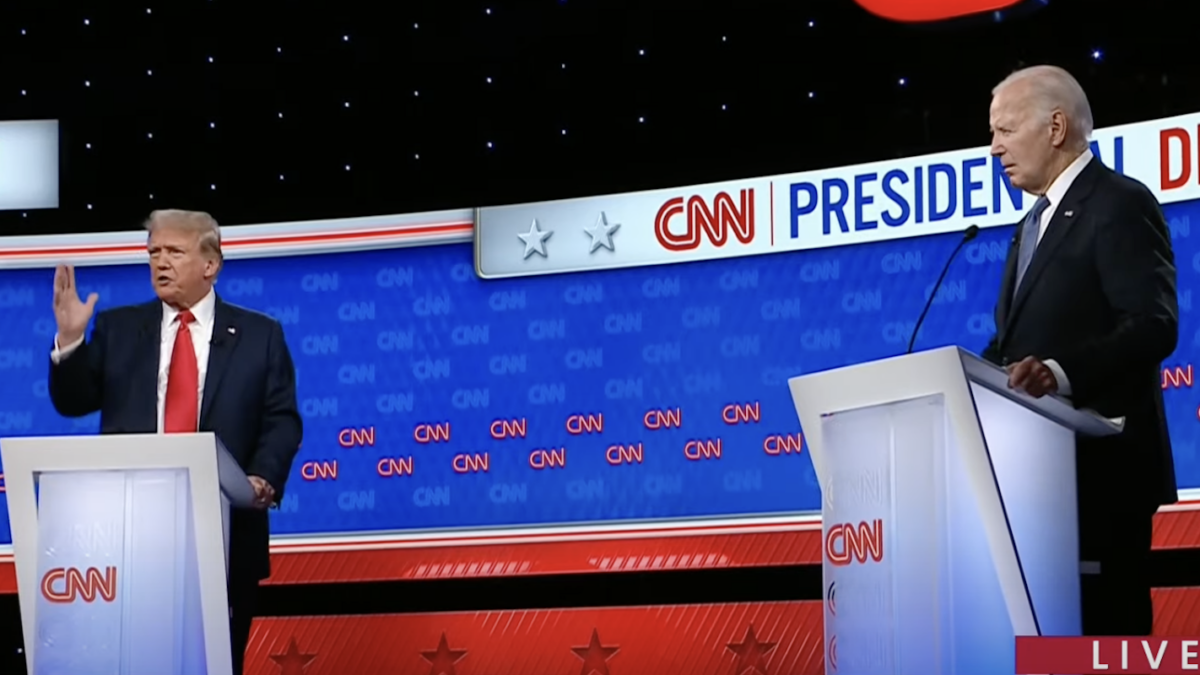
Look. Listen.

I don’t actually remember when I learned it: but I remember learning the fact about Presidential debates that we probably all remember learning. The fact that they didn’t used to matter, until the first televised Presidential debate, in 1960, between John Kennedy and Richard Nixon. That debate was important, I was taught, because Kennedy won it: because Nixon looked bad. Nixon was recovering from the flu, and refused makeup, and so he looked flushed and sweaty, where Kennedy looked dashing and charming. I remember learning that, while people who watched the debate on TV thought Kennedy won, people who listened to the debate on the radio thought that Nixon won: because Nixon, for all he looked sweaty and nervous, actually gave better answers to the questions. (By the way: I have to point out that the Kennedy-Nixon debates started with opening statements that were EIGHT MINUTES long. Can you even imagine either one of these two 2024 candidates giving a coherent eight-minute speech? I assume the 1960 candidates had a teleprompter for that opening statement, but still.) I remember that when I learned that, I thought it was funny; and I was sort of glad of it, because, of course, Nixon was an awful President, and Kennedy was much better — so it was a good thing that Nixon lost that debate. Right?

Right?

I was reminded of this recently when I watched Biden lose his debate against Trump: and then — only then — did it really hit me. No, it was not a good thing that Kennedy won that debate. We should never select our leaders based on appearances, based only on the surface level qualities — based on style over substance. Sure, I guess Kennedy was a good President; he was certainly a better person than Nixon, so I’m glad that Kennedy won the election — though I will say that Nixon actually did a number of good things while he was in office; just not enough to counterbalance the bad, mainly because he was the one who pushed the Southern Strategy on the Republican party, ensuring that they would lean hard into both the evangelical vote and the white nationalist vote, and because of Watergate and the deterioration of norms and standards like “The President should FOLLOW THE FUCKING LAW” — but the fact that Kennedy “won” a debate, despite having presented the lesser argument, because he was better-looking on TV? I hate that. Because that’s style over substance: and that’s bullshit.

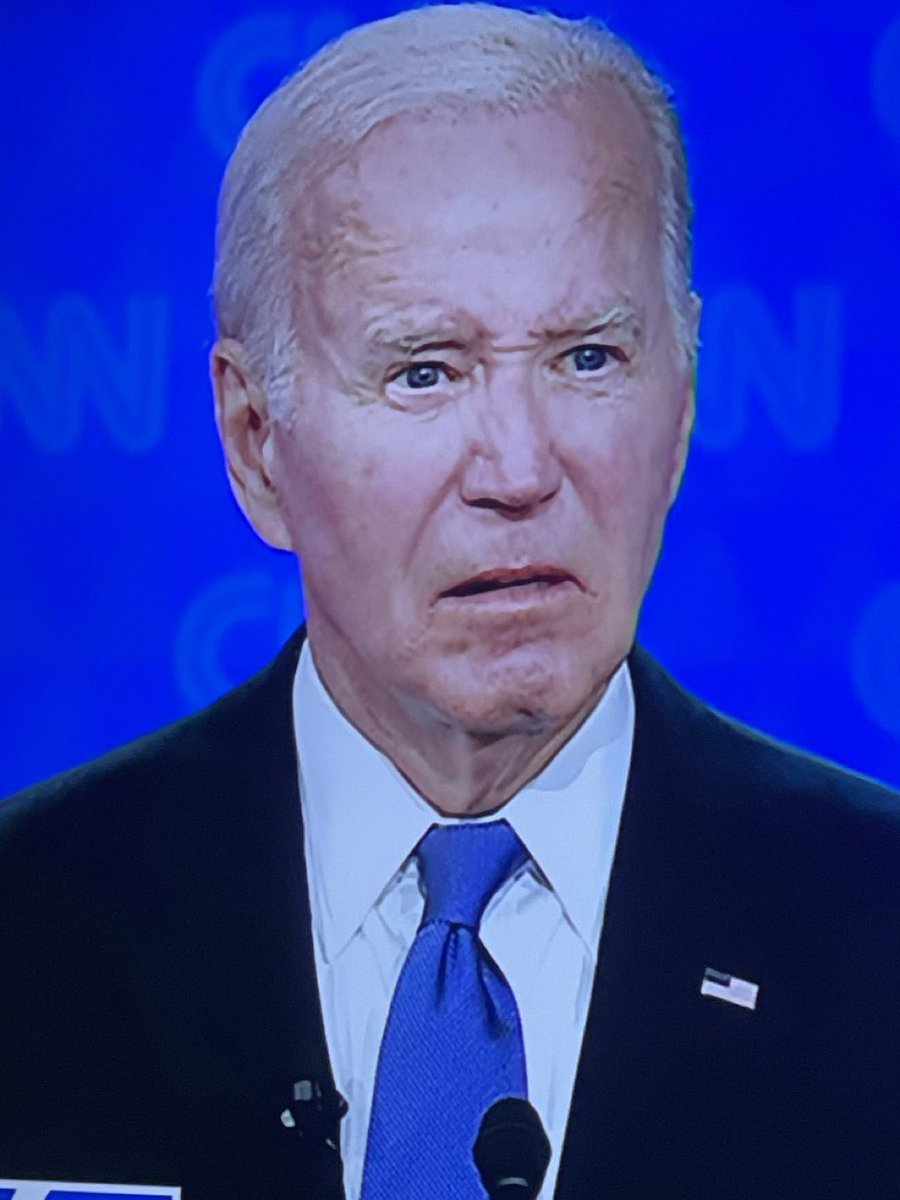
And while I was watching the Biden-Trump debate, and cringing, and cradling my head in my hands, and cursing both under my breath and out loud, while I watched Joe Biden reveal the depths of his infirmity, I realized: that’s style over substance, too.

And it should not determine our choice for who gets our vote in November.

No, it’s not that simple. Yes, Biden did more than look bad, he revealed that he has weaknesses; I’m not about to excuse them — I wish he would step aside because of those weaknesses. He won’t, though, and it’s a problem. It’s a problem both for the election and for the administration after it: because if he wins, we will have a President with diminished capacity for four years. Let’s not imagine that no serious crises will happen in that time which would require more immediate resources of cognitive capacity than Biden apparently has.

But see, that’s where the problem lies: in appearances.

As I said, Biden should step aside. He should bow out with dignity, accepting that his best effort isn’t good enough, what we need is an actual candidate who can actually beat Donald Trump, someone who can energize — hell, anyone. Some independents, some core blue voters, some non-white non-majority groups; anybody. Biden excites literally no one. Which puts us all at risk: and why? Because ol’ Scranton Joe “truly believes” that he is the best person to beat Donald Trump.

I don’t doubt that he believes it, with all his heart, quite sincerely. He’s just wrong, is all. He may be able to beat Trump: but he’s not the best person, because right at this moment he’s gone from kinda losing in the polls to definitely losing, and there’s no clear way for him to make up that ground in time to win the election. It still might happen, he still might beat Trump: but he’s not the best candidate to do it, not any more.

The election isn’t actually about soothing Joe Biden’s ego, and it isn’t about helping him prove to the whole wide world that he’s still got it. This election is about stopping the MAGA movement that actually literally wants to destroy the country as it exists currently; and for that, Joe Biden should not be the nominee. I know he wants to fight Trump, and he wants to beat Trump: but if he helps the Dems to transition to a successor — most obvious is Kamala Harris but I’m open to other suggestions — then he is helping to beat Donald Trump, and he would absolutely be remembered for being instrumental in winning that fight. He should withdraw from the race, make a speech, and go down in history; and the Democrats should hold an open primary at the convention, then pull out all the stops for whoever wins the most delegates. I don’t care who it is (As long as it isn’t Marianne Williamson), because the excitement coming out of that convention, and the change from Biden to a younger, more vigorous person will help bring out the votes to beat Trump. That’s what should happen.

But you see, the reason why that should happen is because of how bad Joe Biden looked at the debate. That’s why. It’s not the only reason: he’s uniquely unpopular, because he’s a shitty candidate and always has been; but the truth is he’s done a good job as President. The Inflation Reduction Act, the infrastructure bill, the CHIPS act, restoring the economy after the pandemic, supporting NATO and Ukraine — he’s done a really good job, especially in comparison with his predecessor and current opponent. Putting that record against Donald Trump’s should be more than enough to win the election, in the end.

It’s not. Because he looked bad. Not because he said bad things: but because he looked bad — while saying (mostly) good things.

It’s style over substance. It’s his appearance that is actually making the difference in the campaign going forward; if he looked better, sounded better, if the number of his age was about five lower (And age is just a number, so the number is part of appearances as well), he’d be able to overcome his drawbacks and he’d win, I’d have no doubt. Now I have doubt: and it’s because of what I see people saying about the race because of how Biden looked. How he sounded. His appearance, at the debate. Not his ideas, not really what he said: just how he looks, how he sounds, what we associate — what we assume — with someone who is his age.

That is unacceptable. Always. It was back in 1960, and it is now. We should be willing to look past how someone looks and how someone sounds, and examine carefully who they actually are: what they stand for, what they will do to and for the country. We do it all the time in other areas of our lives: we buy fixer-upper houses and project cars; we choose life partners who are good companions, not simply the hottest person available; we buy discount and clearance items that might be slightly less than perfect. Some of us — like, say, Donald Trump — only go for the surface appeal, but that should tell you how empty and terrible it is to do that: do we really want our country to be in any way like the relationship of Donald and Melania Trump?

But then, when it comes to choosing people to run the country, almost everybody picks based on surface traits: and we just accept it, don’t we? We just say to each other, “He looks terrible — he probably can’t do the job.” We watch videos of people stumbling and tripping and fumbling, whether it is over their words or over their feet. We make fun of how Donald Trump stands, how he dances, what his looks like, what his skin looks like. We mock both men for how they speak: not what they say, but how they say it. We talk, with all seriousness, about which candidate looks Presidential.

I don’t even know what the fuck that means. What is it to look Presidential? Wouldn’t it be true that anyone who was the President automatically looked Presidential? Does it really come down to who has a neater haircut and cleaner clothes? Who has a bigger nose, or a squarer jaw? Do we care about the President’s tailor, or their clothing budget? Do we care about their weight? About their height?

Apparently, we do. Because that’s how many of us make our voting decisions. No considerations: just vibes.

Not gonna lie, I kinda want this on a T-shirt.

Here. Let’s try an experiment. Let’s try the other side of this equation. Let’s look at the substance.

**I am not going to ignore the signs of cognitive decline, like that moment that has been soundbited (Soundbitten?) so universally, when Biden froze and then ended by saying “We beat Medicare.” We’ll get to that. But stick with me for now. Don’t focus on a single soundbite.

This is the transcript of the debate. Please read all of it, if you are interested and concerned about the actual issues in this election; but here I’m just going to quote the responses to the first question. (Let me note here, as I have noted elsewhere, that our willingness to blame or credit the President alone with the state of the economy is freaking ridiculous; nothing the President does makes much of a difference in the economy. Congress passing laws regarding taxes or regulations have more influence, but the economy is much larger than most tax laws or regulations can encompass, and while some parts of the economy may be strongly affected by specific actions in Washington, other parts will be entirely separate. Also, things that the government does often take years to actually have an impact: so every time, a President’s economy is mainly the economy of his predecessor. The economy of the Trump years was built by Obama; Biden’s economy was built mainly by Trump; the next economy will be the result of these last four years. And still not really because of the President’s actions alone. The President does nothing alone: please remember that. But regardless, good actions for the economy are good actions, so here it is.)

JAKE TAPPER: President Biden, inflation has slowed, but prices remain high. Since you took office, the price of essentials has increased. For example, a basket of groceries that cost $100 then, now costs more than $120; and typical home prices have jumped more than 30 percent.

What do you say to voters who feel they are worse off under your presidency than they were under President Trump?

BIDEN:  You have to take a look at what I was left when I became president, what Mr. Trump left me.

We had an economy that was in freefall. The pandemic are so badly handled, many people were dying. All he said was, it’s not that serious. Just inject a little bleach in your arm. It’d be all right.

The economy collapsed. There were no jobs. Unemployment rate rose to 15 percent. It was terrible.

And so, what we had to do is try to put things back together again. That’s exactly what we began to do. We created 15,000 new jobs. We brought on – in a position where we have 800,000 new manufacturing jobs.

But there’s more to be done. There’s more to be done. Working class people are still in trouble.

I come from Scranton, Pennsylvania. I come from a household where the kitchen table – if things weren’t able to be met during the month was a problem. Price of eggs, the price of gas, the price of housing, the price of a whole range of things.

That’s why I’m working so hard to make sure I deal with those problems. And we’re going to make sure that we reduce the price of housing. We’re going to make sure we build 2 million new units. We’re going to make sure we cap rents, so corporate greed can’t take over.

The combination of what I was left and then corporate greed are the reason why we’re in this problem right now.

In addition to that, we’re in a situation where if you had – take a look at all that was done in his administration, he didn’t do much at all. By the time he left, there’s – things had been in chaos. There was (ph) literally chaos.

And so, we put things back together. We created, as I said, those (ph) jobs. We made sure we had a situation where we now – we brought down the price of prescription drugs, which is a major issue for many people, to $15 for – for an insulin shot, as opposed to $400. No senior has to pay more than $200 for any drug – all the drugs they (inaudible) beginning next year.

And the situation is making – and we’re going to make that available to everybody, to all Americans. So we’re working to bring down the prices around the kitchen table. And that’s what we’re going to get done.

Okay: there are some stumbles there, but this is a man with a stutter. Ignore those little slips, as long as he got back on message and made his points.

Look at his points: he was handed a shit show of an economy, coming out of the pandemic (True), which Trump fucked up royally. But they went to work, and created millions of jobs, including 800,000 manufacturing jobs (Both true, the 15 million figure and the 800,000, though it’s also true that many of those jobs were layoffs from the pandemic which people were re-hired for. But also, successfully getting people back to work? That counts, for me.) He knows there is more to be done: he speaks to his own past growing up in a household that had to make ends meet, so he understands the pain we’re all going through, and then he identifies, correctly, the cause of the inflation apart from the pandemic: corporate greed. He points out other places that he has fought corporate greed, specifically big pharma and insulin; and it’s a damn good point.

That’s a good answer. That is an answer with substance.

Now here’s what Trump said.

 We had the greatest economy in the history of our country. We had never done so well. Every – everybody was amazed by it. Other countries were copying us.

We got hit with COVID. And when we did, we spent the money necessary so we wouldn’t end up in a Great Depression the likes of which we had in 1929. By the time we finished – so we did a great job. We got a lot of credit for the economy, a lot of credit for the military, and no wars and so many other things. Everything was rocking good.

But the thing we never got the credit for, and we should have, is getting us out of that COVID mess. He created mandates; that was a disaster for our country.

But other than that, we had – we had given them back a – a country where the stock market actually was higher than pre-COVID, and nobody thought that was even possible. The only jobs he created are for illegal immigrants and bounceback jobs; they’re bounced back from the COVID.

He has not done a good job. He’s done a poor job. And inflation’s killing our country. It is absolutely killing us.

Greatest economy in the history of the world, huh? Since our current economy is better, that’s false. Every time Trump says “Everyone was amazed by it,” assume it’s a lie; it is. Everybody wants our wealth: but our economy is actually a shit show, as evidenced by the income inequality and wealth disparities. Most other countries know why that’s bad, and they work to avoid getting into the hole we’re in. I appreciate that he owns up to spending trillions of dollars to keep the economy afloat, but if you’re going to argue (I don’t agree, but Trump has argued) that money from the government increased inflation, then you should own your own contribution to the inflation. “No wars” my ass; warlike actions and policies likely to increase tensions leading to war are not the same as being peaceful. Trump assassinated an Iranian general, after ending the pact that kept Iran from pursuing nuclear weapons; he backed Israel over Palestine, which, along with pissing off Iran, exacerbated the tensions that helped create the current situation in Gaza (which he blames Biden for); he personally tried to start wars with North Korea and with China by insulting their leaders; he threatened NATO and fucked with the Ukraine while supporting Putin every way he could, TO THIS DAY; he pulled out of the Paris Climate Accord and promoted fossil fuels while destroying the environment: which will most definitely help create wars in the future as people grow more desperate over climate change; he continued the wars in Afghanistan and in Syria. Trump did not get credit for getting us out of COVID because he fuckin didn’t: his administration put in place the shutdowns and promoted the creation of the vaccines, which were instrumental in coming out of the pandemic — but that was despite Trump’s best efforts to fuck everything up; and you don’t get credit for solving a problem you created, which is absolutely the story of the pandemic that Trump blew off for the first three months, when a more careful and rational approach would have saved thousands of lives.

And apart from the lies (But not more important: because while no politician tells the whole truth and nothing but the truth, the quantity and sheer unreality of Trump’s lies are unmatched by anyone else in public life, let alone in American politics), look at what he says here. It’s fluff. The “greatest economy.” That shit he always does about adding how other people perceive and talk about his actions — everybody was amazed by it, we got credit or didn’t get credit, nobody believed that was even possible; nobody gives a shit what other people thought about how awesome you are, Donny, we care about what you actually did. And what did he say here about what they actually did?

He says they spent the money. That’s it. The rest is vague opinion. And talking shit about Biden, also unfounded — sure, pal, it was the vaccine mandate that was the disaster, not THE ACTUAL FUCKING DISASTER.

Rebuttal, Mr. President?

BIDEN:  Well, look, the greatest economy in the world, he’s the only one who thinks that, I think. I don’t know anybody else who thinks it was great – he had the greatest economy in the world.

And, you know, the fact of the matter is that we found ourselves in a situation where his economy – he rewarded the wealthy. He had the largest tax cut in American history, $2 trillion. He raised the deficit larger than any president has in any one term. He’s the only president other than Herbert Hoover who has lost more jobs than he had when he began, since Herbert Hoover. The idea that he did something that was significant.

And the military – you know, when he was president, they were still killing people in Afghanistan. He didn’t do anything about that. When he was president, we still found ourselves in a position where you had a notion that we were this safe country. The truth is, I’m the only president this century that doesn’t have any – this – this decade – doesn’t have any troops dying anywhere in the world, like he did.

All true. The bit about Herbert Hoover is a weird dig when we all know that Trump lost jobs because of the pandemic, not just because he was a dolt; he is a dolt, but before the pandemic the economy had created almost 7 million jobs during Trump’s term, so there’s serious context there with that statistic which shouldn’t be left out — and the comment about how Biden doesn’t have any troops dying anywhere is false, because troops have died, in Afghanistan, under Biden; it is also callous and meaningless when we are funding two enormously devastating proxy wars. Like I said, Biden isn’t a great candidate, he isn’t the best president, and like any politician he is shading the truth to serve himself.

But he is speaking the truth, and answering questions, and sticking to the subject. And as I hope you’re seeing, when you look at the words and don’t listen to his voice or look at his face, then these are good answers.

As for Trump?

TAPPER:  President Trump, I want to follow up, if I can. You wanted…

TRUMP:  Am I allowed to respond to him?

TAPPER:  Well, I’m going to ask you a follow-up. You can do whatever you want with the minute that we give you.

I want to follow up. You want to impose a 10 percent tariff on all goods coming into the U.S. How will you ensure that that doesn’t drive prices even higher?

TRUMP:  Not going to drive them higher. It’s just going to cause countries that have been ripping us off for years, like China and many others, in all fairness to China – it’s going to just force them to pay us a lot of money, reduce our deficit tremendously, and give us a lot of power for other things.

But he – he made a statement. The only thing he was right about is I gave you the largest tax cut in history. I also gave you the largest regulation cut in history. That’s why we had all the jobs. And the jobs went down and then they bounced back and he’s taking credit for bounceback jobs. You can’t do that.

He also said he inherited 9 percent inflation. No, he inherited almost no inflation and it stayed that way for 14 months. And then it blew up under his leadership, because they spent money like a bunch of people that didn’t know what they were doing. And they don’t know what they were doing. It was the worst – probably the worst administration in history. There’s never been.

And as far as Afghanistan is concerned, I was getting out of Afghanistan, but we were getting out with dignity, with strength, with power. He got out, it was the most embarrassing day in the history of our country’s life.

Sigh. Okay, the tariff thing is a lie, and I hope we all know that by now; tariffs are costs that get passed on to the purchaser, the consumer, like every other increase in production costs. Hmmmm — almost like inflation, huh? While some Chinese companies shouldered the additional cost, most didn’t, and since China put tariffs on US goods, mostly agricultural products, in retaliation, any benefit from Trump’s tariffs should be offset by the loss of, say, soybean sales, which largely moved to Brazil.

The Trump tax cut was not the biggest in history (though it was the biggest cut in corporate taxes in US history). Were his tax cuts and his deregulation cuts the reason for the increases in jobs under Trump? I mean, probably not, since the increase in jobs and the decrease in unemployment were both steady for years before and after the 2017 Trump tax cut. Like I said, there’s a delay in results from implementation of new laws and so on — but nothing changed until 2020, when the unemployment rate skyrocketed because of the pandemic. So I don’t see “all the new jobs” coming from the tax cut and deregulation push from the Trump administration — said deregulation push having been largely stopped by the courts, and largely reversed by Biden. And as I commented earlier, I have no idea why Biden gets no credit for bounceback jobs: people who were out of work are back at work, and if the economy were worse off than it is, that wouldn’t be true; so if the President gets any credit for economic progress under his administration, then Biden should get credit for the jobs after the pandemic. (If Trump wanted credit for them, he should have won the election. [Also, he does give himself credit for the recovered “bounceback” jobs that returned during 2020, while he was in office.]) The inflation rate comment is false (“Almost no inflation” maybe, okay), though certainly the inflation rate was MUCH higher under Biden than under Trump: it was 1.4% in January 2021 when Biden took office, immediately went up to 5% by May, and the rate peaked at 9.1% in June 2022.

As for the Afghanistan withdrawal, which Trump keeps hitting Biden about, everyone should know that Trump negotiated it, not Biden. Biden abided by the agreement Trump signed with the Taliban. Maybe he shouldn’t have — the Taliban hadn’t kept up their end of the deal — but it’s pretty goddamn sticky to discard your predecessor’s treaties and deals, and to escalate tensions by so doing. Only an asshole would do something like that. More to the point, Trump set up the problems with the withdrawal by negotiating only with the Taliban, not the Afghan government, and not setting enough conditions on the withdrawal of troops, just dropping a hard date for the total withdrawal, which made it impossible to accomplish the task smoothly — or as Trump put it, getting out with “dignity, strength, and power.” If Chump had wanted to make that happen himself, he should have negotiated a withdrawal date before he left office — or else won the election.

I’m not going to comment on the most embarrassing day in the history of our country’s life. But I will post this link.

I don’t want to go through the whole debate, but largely it was like this: Biden answered the question — often shading the truth to benefit himself, sometimes speaking straightforward untruths — while Trump straight-out lied, often avoiding the question while continuing to make shit up about migrants and inflation and Biden’s effect on the US’s international reputation. Here’s a detailed fact check that is worth at least skimming, to see the difference in the candidates’ truthiness.

It is definitely worth noting, without using it to excuse all of Biden’s lapses, that Trump was certainly guilty of using the Gish Gallop to overwhelm Biden with bullshit: and it is particularly effective against an opponent with a stutter, who may get frozen in trying to respond to all of the lies all at once, and being unable to pick a specific starting point while also providing a substantive answer of their own. And, of course, the CNN moderators’ choice to not fact check anyone on anything certainly helped Trump more than Biden, since Trump uses bullshit more often and far more aggressively than Biden.

Let’s just finish up this piece with one more question: the question Trump got about accepting the results of the election. As he failed to do the last time he lost, in 2020, and as he essentially did when he won, persistently claiming that he won the popular vote if you don’t count the illegal votes, which of course do not exist.

DANA BASH:  To you, a specific concern that voters have about you. Will you pledge tonight that once all legal challenges have been exhausted that you will accept the results of this election regardless of who wins and you will say right now that political violence in any form is unacceptable?

TRUMP:  Well, I shouldn’t have to say that, but, of course, I believe that. It’s totally unacceptable.

TRUMP:  And if you would see my statements that I made on Twitter at the time, and also my statement that I made in the Rose Garden, you would say it’s one of the strongest statements you’ve ever seen.

In addition to the speech I made, in front of, I believe, the largest crowd I’ve ever spoken to, and I will tell you, nobody ever talks about that. They talk about a relatively small number of people that went to the Capitol. And in many cases were ushered in by the police.

And as Nancy Pelosi said, it was her responsibility, not mine. She said that loud and clear.

But the answer is, if the election is fair free, and I want that more than anybody.

And I’ll tell you something – I wish he was a great president because I wouldn’t be here right now. I’d be at one of my many places enjoying myself. I wouldn’t be under indictment because I wouldn’t have been his political appoint – you know, opponent. Because he indicted me because I was his opponent.

I wish he was a great president. I would rather have that.

I wouldn’t be here. I don’t mind being here, but the only reason I’m here is he’s so bad as a president that I’m going to make America great again. We’re going to make America great again.

We’re a failing nation right now. We’re a seriously failing nation. And we’re a failing nation because of him.

His policies are so bad. His military policies are insane. They’re insane.

These are wars that will never end with him. He will drive us into World War Three and we’re closer to World War Three than anybody can imagine. We are very, very close to World War Three, and he’s driving us there.

And Kim Jong-Un, and President Xi of China – Kim Jong-Un of North Korea, all of these – Putin – they don’t respect him. They don’t fear him. They have nothing going with this gentleman and he’s going to drive us into World War Three.

BIDEN:  If you want a World War Three, let him follow (ph) and win, and let Putin say, do what you want to NATO – just do what you want.

There’s a thing called Article Five, an attack on one is attack on all, a required response.

The idea – the idea – I can’t think of a single major leader in the world who wouldn’t trade places with what job I’ve done and what they’ve done because we are a powerful nation, we have wonderful piece (ph), because of the people, not me, because of the American people. They’re capable of anything and they step up when they’re needed.

And right now, we’re needed. We’re needed to protect the world because our own safety is at stake.

And again, you want to have war, just let Putin go ahead and take Kyiv, make sure they move on, see what happens in Poland, Hungary, and other places along that border. Then you have a war.

BASH:  President Trump, as I come back to you for a follow-up. The question was, will you accept the results of this election regardless of who wins?

TRUMP:  Just to finish what he said, if I might, Russia – they took a lot of land from Bush. They took a lot of land from Obama and Biden. They took no land, nothing from Trump, nothing.

He knew not to do it. He’s not going to play games with me. He knew that. I got along with him very well, but he knew not to play games.

He took nothing from me, but now, he’s going to take the whole thing from this man right here.

That’s a war that should have never started. It would’ve never started ever with me. And he’s going to take Ukraine and, you know, you asked me a question before, would you do this with – he’s got us in such a bad position right now with Ukraine and Russia because Ukraine’s not winning that war.

He said, I will never settle until such time – they’re running out of people, they’re running out of soldiers, they’ve lost so many people. It’s so sad.

They’ve lost so many people and they’ve lost those gorgeous cities with the golden domes that are 1,000-years-old, all because of him and stupid decisions.

Russia would’ve never attacked if I were president.

BASH:  President Trump, the question was, will you accept the results of the election regardless of who wins? Yes or no, please?

TRUMP:  If it’s a fair and legal and good election – absolutely. I would have much rather accepted these but the fraud and everything else was ridiculous that if you want, we’ll have a news conference on it in a week or we’ll have another one of these on – in a week.

But I will absolutely – there’s nothing I’d rather do. It would be much easier for me to do that than I’m running again. I wasn’t really going to run until I saw the horrible job he did. He’s destroying our country.

I would be very happy to be someplace else, in a nice location someplace. And again, no indictments, no political opponent’s stuff, because it’s the only way he thinks he can win.

But unfortunately, it’s driven up by numbers and driven it up to a very high level, because the people understand it.

BIDEN:  Let’s see what your numbers are when this election is over.

TRUMP:  We’ll see.

BIDEN:  Let’s see. You’re a whiner. When you lost the first time, you continued to appeal and appeal to courts all across the country.

Not one single court in America said any of your claims had any merit, state or local, none.

But you continue to promote this lie about somehow there’s all this misrepresentation, all the stealing. There’s no evidence of that at all.

And I tell you what? I doubt whether you’ll accept it because you’re such a whiner. The idea if you lose again, you’re accepting anything, you can’t stand the loss. Something snapped in you when you lost the last time.

So let’s be fair: he said, directly, that political violence is unacceptable. But he also said that “only a very few people were involved in the insurrection on January 6th: “They talk about a relatively small number of people that went to the Capitol. And in many cases were ushered in by the police.” And he misrepresented his part in what happened, telling them to fight like hell if they wanted to still have a country, taking three hours to post any kind of statement while people were suffering and dying in political violence instigated in his name. And no matter how clearly Bash asked for his simple yes or no answer, he would only agree to accept the results conditionally, according to his own estimation of those results — which means, of course, that he won’t accept those results, as he continued to reject the 2020 results even in these same answers about accepting the 2024 results.

That is Donald Trump’s substance: lies, misdirection, and the promise of violence in opposition to democracy.

Now go back and read what Joe Biden said here. That’s substance.

This last Thursday, we saw more of Joe Biden’s substance in his press conference after the NATO summit. And yes, he fucked up twice: he called Ukrainian president Volodymyr Zelenskyy “President Putin,” and he called Vice President Harris “Vice President Trump.” But please let us not think that he was actually confused who he was talking about: he caught and corrected himself on the Putin/Zelenskyy mistake, and though he never did on the Harris/Trump one, he talked about “her” qualifications to be Vice President and also President if it was necessary — he was not confused about who his Vice President is, or who the president of Ukraine is. In terms of screwing up names? Come on. I have called students by the wrong names more times than I can count. Students have addressed me with the name of literally every other male teacher I have ever worked with. Every administrator I have ever had has called me Mr. Humphreys. I had a student call me “Mom” once. This is not indicative of cognitive decline, it’s just a slip: it’s just appearance, nothing substantive. It’s a joke, a meme. Make fun of him for it: but don’t pretend it says anything about Biden’s ability to run the country. What, are we afraid that he’ll give the order to launch nuclear weapons, but instead of saying “Attack Russia,” he’ll say, “Attack Rhode Island?” And the nukes will be in the air before he realizes the mistake? Please.

Apart from his gaffes (And has been pointed out by many pundits, Biden has always been prone to gaffes: because he’s a shitty candidate and always has been.), Biden spent an hour answering questions, which he did not have in advance, from various reporters, many of whom asked him directly about how fucked up he was and if he would step aside for someone younger and if he thought he was too decrepit to finish his term — I mean, I’m a pacifist, and some of those questions would have had me yelling “COME AT ME BRO!” The rest of the questions were about serious foreign policy issues, and Biden answered them in detail. Exhaustive detail. Without notes. Without freezing. Without losing his train of thought, though as always, because he stutters, he paused a lot, stumbled and restarted, and often fell back on familiar phrases like “Here’s the deal” and counting out his points and so on. He sounded old, certainly: but he sounded like a man who knew his shit.

Because he is. He does.

All right, so if he knws his shit, what actually happened at the debate? I mean, he was so much worse that night than he was at the press conference, or at the State of the Union: or even how he was at the Biden watch party he visited immediately after getting his ass kicked by the actual worst President we’ve ever had. Why did he freeze so badly? Why did he sound so incoherent, so weak and halting even apart from his stutter? Why did he stand there with his mouth hanging open? Why did he shuffle out onto the stage like a dead man on marionette strings?

Is he actually too old and too incapable to be President for the next four years? For real: is he?

The truth is, I don’t know. Neither do you. Neither does Joe Biden. If he maintains what he can do now, then he can make it; his other appearances over the last two weeks and his substance in the debate both show that. But can he maintain his current level of ability? How far and how fast will he decline? His decline from the State of the Union to the debate was precipitous: but so was his climb back up for the events following it. So which is indicative of his real ability?

I don’t want to get into personal details about people in my life, but let me just say this: I have watched people go through very serious declines, physically and mentally. And I have watched some of those people — but not others — return to a better state, to more capable versions of themselves, after those serious declines. It is impossible to predict, in the absence of an actual diagnosis of something like Alzheimer’s or Parkinson’s, how someone will progress or regress cognitively. We do not understand the human mind, not at all. Believe that.

The fact that Biden came back and gave better answers, and had more energy, by the end of the debate, shows me that his worst moments are not his only moments, not his full capacity, even if he was talking about fucking golf. His performance at the NATO summit press conference shows me that he still has quite a lot of ability to do the things that are necessary for doing his job — even if he can’t get people’s fucking names right.

I think there is a genuine decline in his cognitive ability. That “We beat Medicare” answer was honestly shocking to watch. But let’s look at reality: the Presidency is not a one-man show. He is surrounded by other people, aides and advisors and cabinet members and other political leaders, military leaders: all the goddamn time. People who are not undergoing cognitive decline. While the President makes the final call in critical circumstances, it’s not like standing up on stage during a debate: he is never put on the spot, with millions watching him, under a time clock, with his enemy standing twenty feet away, when he has to make a decision about peace and war, or about declaring a national emergency, or anything else that the President has to do. It’s never a situation where a man freezing for ten seconds would change the outcome. Never. Someone (I would expect it to be Kamala Harris, but I’m sure there are others) might have to grab his lapels, shake him, slap his cheek and yell “SNAP OUT OF IT, MAN!” like in some 1950s melodrama; but more realistically, Ol’ Shaky Joe would be given time enough, support enough, rest enough, and everything else he needs, to make any one specific critical decision. So long as he can come back to his ability to think and reason, to understand and — not even remember, just be reminded of the important points, hold them in his mind long enough to make a decision — then he can do the parts of the job that really matter. He’ll still be able to give shitty speeches, as shown by the several he has given since the debate. He’ll still be able to meet with foreign dignitaries, even if he just gets marionetted out for a handshake and a brief appearance at a state dinner — don’t think he’d be the first or the only world leader who looked like shit when making official presentations. He’ll continue to stumble and freeze in high pressure situations, and that will be awful to watch and make us all feel bad; but Joe Biden has no one to blame but himself for whatever happens to him in his next term, if he wins. If it ruins his legacy, if it makes him the laughingstock of a nation or a world that is focused on appearances, then that’s his goddamn fault. I think we can pretty safely say that LITERALLY EVERYONE has told him to step aside: he is the only one who decided to keep in this race. The only one. I will not feel bad for anything he goes through as he slowly destroys himself trying to do the hardest job in the world for four more years, at his age.

That doesn’t matter: what matters is how his next term, if he stays in and if he wins, will affect the rest of us. As I said, I do not believe that any critical decision will be wrongly made, or be unmade, by a man who makes the slips that Biden makes: because he never acts alone. I do not believe for a second that Biden stuttering, or freezing, or stumbling when he walks, makes Putin more likely to invade another country. Makes Hamas more likely to murder Israelis, or Netanyahu more likely to commit genocide against the Palestinian people. I do not believe for a second that anyone in this world will consider both the horrifying things that this country has done around the world, for decades if not centuries, things we continue to do — and look at Joe Biden looking confused on stage, and think, “Yep, THAT GUY is the reason I don’t respect the US any more.” No. We fool ourselves into thinking we are respected and loved. We are not. We are hated and feared. And we should be: we are selfish, and greedy, and callous, and destructive, and violent, and in every way appalling, to every other people and country on this Earth, and indeed to the Earth itself. We’ll destroy anything and everything for our immediate profit or pleasure.

Please understand that the United States, on the international scene, is Donald Trump. And we always have been.

And that’s why we must not elect Donald Trump. Why we must not double down on our own worst tendencies by giving the epitome of this country’s narcissistic arrogance the power to direct our actions and influence our society and our government for the next four years. Or for longer, if he has his way.

We’re like Joe Biden: we’re pretty shitty, and we’ve always been pretty shitty: but we can get better, or we can get worse. Donald Trump cannot get better.

The final point is this: if Biden wins, and then his cognitive and physical decline reaches the point where he genuinely cannot do the job any more, we have a system in place whereby he can be replaced, by his vice president. Since Kamala Harris would be the automatic frontrunner if Biden did step aside: all we’re risking with Biden now is however long he can last in the office before he can’t, and then we get President Harris, as we hopefully would if Biden were to drop out. If he stays in — and he’s staying in — then we get President Biden, as we have him now, for some period of time up to four years; then we automatically get President Harris.

If Biden wins.

The issue is not whether Joe Biden can do the job: he can (because he has and he is, right now), until he can’t, and then he would have an immediate successor in place who would certainly do a fine job, if not the best job anyone could do. The issue is whether Joe Biden can beat Donald Trump. And that’s not actually up to him: that’s up to us.

There’s the real question, and I’ll leave you with it — because like my above questions, I don’t know the answer.

Do we still have the cognitive capacity to win the election? To make the right choice, no matter how much we dislike the options, no matter how many concerns we may have for the future? Do we recognize the real risks at stake here, the real harm that could be done because of how we vote in November?

I guess we’ll see.

Either/Or, Neither/Nor

Oof. That was a rough night.

I watched the Presidential debate on CNN last Thursday, and I wish I hadn’t. Or rather, I wish I hadn’t seen what I saw, because I wish it hadn’t happened the way that it did. I wish there hadn’t been a debate for me to watch, because it did not go well for my side. Or, even better, I wish the sides were different: I wish the debate had featured entirely different candidates, giving entirely different answers to the questions — which probably should have been moderated by entirely different journalists on an entirely different channel.

Overall, I’m going to give that debate a vigorous No. None of the Above, please. We saw that Biden is too old and depleted to make up for his shitty moderate stances, and we already knew, and had confirmed for us, that Trump is a lying sack of crap who uses rage and cynicism to make up for his catastrophic reactionary stances. The whole thing just made me feel desperate and hopeless.

And that’s exactly the way it is supposed to be. At least according to the preferences of the people and forces which shape the politics of this country. Which, in our current state of affairs, is not the will of the people nor the votes of the majority: because this country is, practically speaking, not a democracy. The simplest understanding of a democracy is that the majority will of the people rules, and no president has ever been elected by a majority of the citizens of this country, let alone the residents. Certainly not these two specimens.

But that’s fine because this is actually a constitutionally limited republic, not a democracy. So there.

Actually dog Meme Generator - Imgflip
ACtually…

No, I’m fucking around, because there are internet bros who always get snotty when people in political arguments say this country is a democracy. It’s not. By the strictest definition, at least — and it’s a distinction that doesn’t even matter at all, and the fact that shitty people use their nitpickery about it to shame and silence people pisses me off: so I’m mocking those people. Sorry if it is confusing. At least the dog in that Actually meme is cute.

But here’s the real actually: whatever the intended shape of the government for this country, we are in truth currently controlled by an oligarchy: a plutocracy (or maybe a kakistocracy and certainly a kleptocracy) made up of people with too much money, who are willing (unsurprising, but still disgusting) and able (appalling and even more disgusting) to influence the political machinery of the country in order to benefit themselves, at the expense of all the rest of us. They have captured both major parties, thanks in large part to the influential power of money in our elections, particularly as unleashed by the Citizens United decision, and sanctioned de facto by politicians’ continued inability to pass election financing reform, solely because they put their own interests before those of the nation or their constituents.

Unsurprising. But still disgusting.

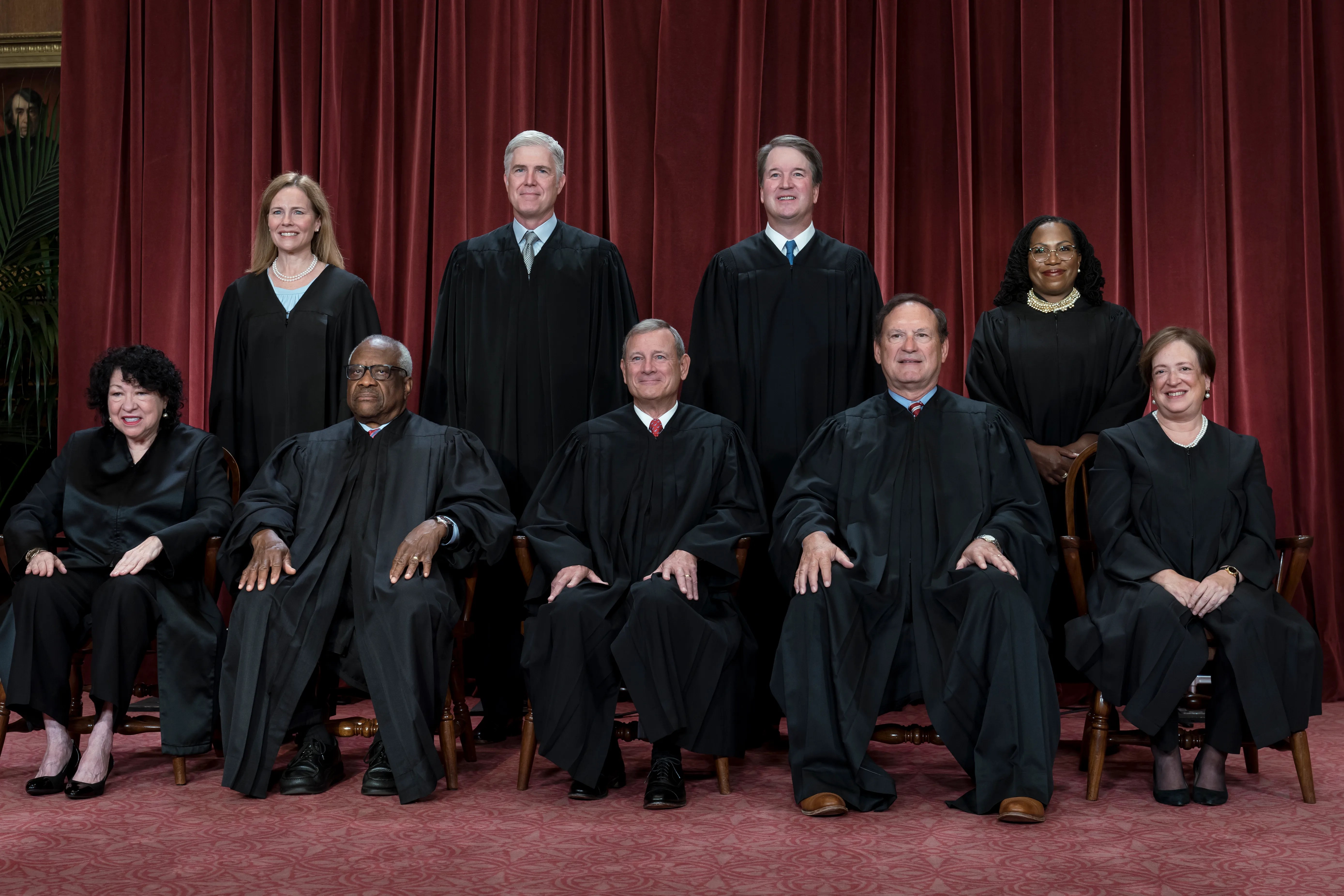
Because the people who run the politicians who run the country are in the business of doing business — namely using their money to make even more money, which is their sole purpose and motivation, their raison d’etre — the corruptions they create in our politics are mostly those which benefit business. They just got their personal Supreme Court to knock down Chevron deference, for instance, which will make it much easier for them — rich people who can afford the attorneys and legal costs, that is — to challenge government regulations in court, because now judges, who are definitely not experts in such matters as workplace safety or environmental impact, but who, like most people — especially these fucking people

Or at least six of them

— like to think they are experts in every way that actually matters, can knock down regulations that they personally don’t think are valid or necessary. Even if the actual experts disagree with them. And do we think that our One-Percenter overlords will be taking advantage of this process?

You bet your sweet bippy we do.

But the point is, the people in charge are best served by the continued dominance of the two major parties. Because both parties rely on enormous infusions of cash in order to defeat — each other. Elections like this one, choices like this one — like the contest between these two terrible old men, the Mummy and the Blob — serve the preferences of the ruling class, because they make us desperate, not hopeful. If we had a good candidate, one who gave us hope — and the last one such was Barack Obama (who still was not a great president, because he, like Joe, was too moderate and didn’t do enough to change the life of the average citizen of this country; though in fairness to Obama, he was trying to make change pretty much on his own, and fighting against the entire political machine, and of course he lost. Donald Trump gave some segment of the populace hope, but he’s a lying sack of shit, so that hope doesn’t count, in my opinion.) — then it would inspire people to get involved, to take action; the rulers do better, have more control, when we despair, and give up, and lie down and take it. Take whatever they give us, and hate everything — and do nothing. Most of us don’t even vote. Which makes it that much easier for the plutocrats to control the votes of those who do turn out. And they like that it is only two parties, and in every specific electoral contest, for every seat and every office, it is winner take all — the person who gets one more vote beats the person who gets one fewer vote — because that also makes it easier to control the politicians. This system means the two opponents are best served by focusing only on each other, cooperatively blocking any third candidate (who already has a named role in most three-way races: “spoiler”) and fighting to the death against their one nemesis, fighting for every single vote: and that means the holders of the moneybags, the distributors of the thirty pieces of silver — the rich fuckers who try to control everything — have a death grip on the entire system, because they have a death grip on both of the two major parties: because they offer either party a way to destroy the other party if the other party dares to try to give up that sweet, sweet dark campaign money. Their money is the best way for both parties to get one more vote than the other party.

See? If the Democrats stop taking corporate One-Percenter cash, they will lose all elections to the Republicans, and vice versa. Shit, even members of the parties who don’t continue to meet with the approval of our corporate masters can’t win elections, because they can’t win primaries in the face of huge amounts of money. And third parties can’t possibly compete with the amount of money that continues to flow to the two major parties — and there’s no need for the One-Percenters to shift their money to the third parties, because the two major parties do everything their masters ask of them, whether it is Trump cutting taxes on corporations (with a bone thrown to the rest of us in the form of a middle class tax cut which had a sunset clause, the tax cuts ending in 2025 [After the end of a hypothetical second Trump term, and no it’s not a coincidence: there ain’t no cynic like a government cynic], while the corporate tax cut did not.) or Biden failing to rein in the corporate profiteering which helped drive the inflation that may cost him re-election.

But if Biden, like Trump, fails to win re-election, that doesn’t matter, of course, at least not to the people who matter; because if Biden loses, our corporate hegemony will be perfectly satisfied with Trump in the White House. The one they couldn’t abide would be Bernie: and that’s why Bernie lost two primaries to deeply unpopular candidates. Because money. And political machinery controlled by money.

Welcome to politics where votes don't count and only money matters - drew  carey oiler meme - quickmeme

Wow. I’m sorry: I didn’t even mean to go that far down this road. Now I’m wrecked in the eternal darkness of the abyss at the end, mired in hopelessness.

No. Fuck that. You know why? Because there is hope. Really. There is hope because, whatever those racist elitist pricks who founded this country meant to do, what they actually did was create a lasting democracy. A democracy — shut the FUCK up about a constitutionally limited republic, please, Internet Bros — because the power to change the entire government rests, in the end, in the hands of the people. No matter how cynical we are, I am, about who is in charge, and no matter how we keep feeling like there’s no way anything can change: there IS a way for things to change, and it is through Americans casting votes for their choice of candidate (and in some cases for their choice of laws). Because we can choose to remove and replace our elected officials, who — money or not — are chosen ONLY by votes, according to our laws, according to our system of government. There is no tiebreaker that counts how much money the candidate has. All that matters, for determining who runs this country, is the votes.

Yes: of course those votes are generally easy to influence through money; that’s how we got to where we are. But influence is not control. No matter how many times I call them overlords and masters and rulers, they are not: the rich influence everything, and so end up getting what they want most of the time. But not all the time. Because it is still votes that change the government. All of it: obviously we could vote in a new President, and new Senators and Representatives; but also, if we stack up enough votes for congresspeople who will actually do what we want them to do, then even the Supreme Court, the one unelected branch, can be controlled: they can be impeached and removed from office, they can be outnumbered by an expansion of the Court, their decisions can be overridden by laws passed by Congress, and even, if necessary, by Constitutional amendments: which are passed by popular vote.

Make no mistake: getting people to vote for anything is nearly impossible, unless you have, at this point, billions of dollars to pour into the campaign. But if something is nearly impossible, it is still possible.

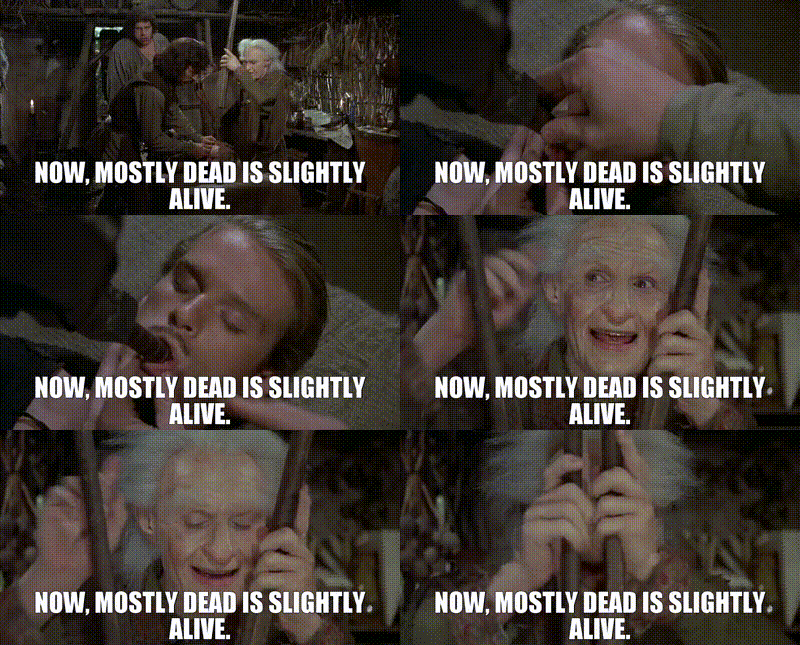
YARN | Now, mostly dead is slightly alive. | The Princess Bride | Video gifs  by quotes | cb1a7c60 | 紗
Just like my hopes. Not all dead. Not yet.

(And also, let me note in passing that we have as much money as the One-Percenters: we just spend it on food and stuff. But we could buy ourselves an election, even in the face of all the dark money in the world, if we really needed to. Just think about that.)

It’s possible for us to throw off the yoke and chains of our oppressors. It is. We’ve done it before, in opposition to slavery and the secession of the Confederacy; after the Great Depression; during the fight for civil rights. We can do it again. The way to compensate for a lack of ready money to throw around is: organization. And patience. If I may paraphrase the Doors: they got the bucks, but — we got the numbers.

But that is the long term goal. So. What do we do about this current debacle?

Clearly we don’t want either of these fucking guys — sorry, I’ve gone far afield, let me bring it back:

These fucking guys (Source)

We don’t want either of these fucking guys to be in control of our lives. Not even a little bit. I’ve been arguing for a while now, going back to 2020, that Biden is the better choice; but I still don’t want him to be President, and I never have. He was my third-to-last choice in the crowded Democratic field in 2020 (The two below him on my list were Marianne Williamson, because combining lunacy with complete inexperience is just about the worst thing you can do, and Michael Bloomberg, because actually putting one of the One-Percenters in charge is the worst thing you can do. [Note that, Trumpers. I don’t know how you got tricked into forgetting that, but that’s who Trump really is. Actually.]), and he was my second choice even in this election where my first choices (Elizabeth Warren and Bernie Sanders — and Andrew Yang, and Jay Inslee, and Cory Booker and Julian Castro and John Hickenlooper and Tim Ryan and JESUS CHRIST FUCKING ANYBODY ELSE) didn’t run, because Dr. Cornel West would be a far better President than either the Geezer or the Groper. The Sleeper or the Shitbag. The Fumbler or the Fascist.

So do we vote for the third party candidates?

Do we boycott and refuse to vote?

We do not: because this election will put one of these two into the White House. The system cannot change between now and November; not unless we actually rise up and revolt. I don’t plan to grab a pitchfork and light a torch; if you do, we’re going to have to have some serious talks about what you plan to do and why, because violent revolution is something I can’t support as a pacifist; and as someone who both read AND understood George Orwell’s 1984 (That’s not a dig against you: that’s another one for the internet bros who say things like, “Facebook took down my anti-trans meme! It’s LITERALLY 1984!”), I recognize that revolutions generally don’t change the system, they only change the people who hold the whip: they don’t change who the whip falls on, nor remove the whip entirely. So we can discuss it, but I don’t think violent revolution is the right thing to do.

I think the right thing to do is to work on improving the system. We don’t even need to change it, to tear it down and build a new one, because as I said, this actually is a democracy in the most important sense: no, we do not vote directly on all political matters (which is actually what a “democracy” means, control by the people without representatives), but our votes have the greatest authority. We can vote to change literally anything in our system, even the system itself through Constitutional amendment.

I do think we’ll need to change a whole lot of things to make the system functional in the long term. But there are a couple of specific things that we can work to change in the fairly short term — meaning in the next, say, five to twenty years, but not before November — that will make an enormous difference, and make it much easier — even simply possible — to change everything else we need to change. Those things are the factors which give the plutocrats their ability to influence politics so powerfully: unlimited money in campaigns, unlimited advertising in campaigns, monied lobbying and the revolving-door interactions between the government and industry, the winner-take-all two-party system (and other minority-rule structures like the electoral college). I think there are politicians who would be willing to change those things for the better. Or maybe there are people who would be willing to become politicians in order to change those things for the better. Starting with money in politics: that is the simplest and most direct way we have to challenge the plutocrats, the One-Percenters. And people like John McCain existed. People like Alexandria Ocasio-Cortez, who unseated a corporate Democrat using only small-dollar donations, exist and are currently in Washington. It is possible. It can be done. It may take years or even decades to get a majority of such people in Congress: but we can do it. And that’s what we need to do.

But what do we do about November?

About these two fucking guys?

I know some of you aren’t going to like hearing this, and I don’t like saying it: but the answer is, we have to vote for Joe Biden. The arguments haven’t changed, not even with that incredible faceplant of a debate performance. Trump is still a wannabe fascist, who will do untold damage to the actual lives of real people during the four years he would be in office; not to mention the damage he would do to our democracy. Biden is a failure as a leader of our nation: both because he hasn’t done nearly as much as he should have done, and because he is a miserable excuse for a figurehead — not the most important role of a president, but not a negligible one. But he is not a threat to our nation’s continued existence. Trump really is.

Don’t stay home: the MAGAts won’t. Don’t vote for RFK Jr. (If you would otherwise vote for a Democrat, that is: if you’re a Trump voter, go right ahead and vote for ol’ Brain Worms): he’s a seriously terrible candidate in his own right (and currently only on the ballot in eight states, so literally cannot win 270 electoral votes and take the presidency) and votes cast for him would only result in the victory of Trump or Biden, with no positive effect at all; because he’s not running as representative of a legitimate third party. If you want to vote Green Party or Libertarian Party or another established third party, that has more merit, because a larger number of votes cast for a third party makes it easier for the third party to gain entry into future races, which is part of the way we break the duopoly of Democrats and Republicans; but be aware that, in this election, taking a vote away from a Democrat, even a shambling mound like Joe Biden, makes it more likely that Trump will take over, and that will be very bad for us all. Including Republicans, whatever they think about how much they’ll laugh in all those stupid lib faces once Trump is in charge. The truth is that Donald Trump is not our friend, and will not do anything to help anyone but himself, if he is returned to the White House. I promise you. For the same reason, I will not be voting for Cornel West, even though I like and admire him and would choose him over every other candidate. My vote for Dr. West will not make him win: and I cannot abide the thought of a second Trump term.

So I will do the right thing to protect and serve my country and my fellow Americans: I will not choose None of the Above, and I will not cast a protest vote. I will vote for Joe Biden.

This fucking guy.

And then I will work to make sure this kind of bullshit stops. Once and for all.

No more malarkey.

Making a New Impression

There’s a lot that’s wrong with this country.

We have the highest medical costs combined with some of the worst outcomes; one of the highest rates of infant mortality among the industrialized world, and also one of the highest rates of death in childbirth for women.

We have the largest and most expensive military in the world, and by any estimate, we are one of the most war-mad nations on Earth. We currently have active duty military personnel stationed in 150 countries around the world.

Our education system is inefficient where it is not simply ineffective. As a country, we don’t read. (So really, I’m not sure why I’m writing this.) We have a biased and often irrational media, run by a steadily shrinking number of corporations and consumed by a shrinking minority of the people.

Wealth and income disparity have been increasing, and our rates of poverty, childhood poverty, and especially food insecurity have been increasing steadily for decades. We also, not coincidentally, have the largest and most expensive prison system, with the greatest number of prisoners of any country on Earth – over 2.2 million adults incarcerated, with another 5 million on parole or probation.

And even fifty years after the civil rights movement, every one of these problems is worse for minority populations than it is for white citizens.

There’s a lot that’s wrong. But despite all of that, there is one thing, at least, that we do right, and it’s more important than all of these: this country is still a democracy, where the votes of the citizenry select our leaders; where we have the power to elect, and to remove, essentially anyone in power over us. If and when the people of this country develop the political will to tackle any or all of these problems, we are the ones who have the power to do so: we set the agenda, we determine the government’s size and shape, and we choose its priorities. The only thing stopping us from at least trying to deal with these issues is ourselves.

And that means that perhaps the worst problem this country faces is this: only about 50% of eligible voters actually cast their ballots in an election. In Presidential election years, it’s around 60%; in midterm elections it’s about 40%; the rate is lower for local and special elections. The primary happened here in Arizona this past Tuesday, and we seem to have set a record for primaries: we cracked a million votes cast. Of course, there are more than three and a half million registered voters in the state, so our record is less than 30% of the potential total. Exciting.

Even though we have the ultimate power to determine our nation’s path, we don’t do it. Not that we can’t, we just don’t. The best thing about this country, and we don’t take advantage of it.

So why don’t we? Honestly, there are a lot of reasons: the biggest is that people don’t think that their individual vote will matter, so they don’t cast it; that’s a tough one to overcome, too, because logically, it’s true. There has never been a serious election won by a single citizen’s vote. Small elections can build momentum for large elections, and so there might be a snowball effect started by a single person’s vote; but even an argument like this one I’m making here, trying to convince people it’s important to vote, has to rely on large aggregates of voters: if all of the citizens who didn’t vote in the last election voted in the next one, they could almost outvote the entire election, in which only 58.1% of eligible voters cast a ballot. Certainly that group of voters would have been larger than either of the groups who voted for the two major candidates. But that fact, while disturbing in the extreme, is still about millions of voters – tens of millions of voters. Nobody can argue that one single person’s vote would have turned the tide.

Then there are the institutional obstacles to voting: the fact that U.S. elections happen on a workday, that polling places are limited and sometimes hard to get to, especially in rural areas; in many cases there are factors that cause voter suppression, sometimes even deliberately, such as pre-emptive removal of voters from registration rolls, or the frequent imposition of ID requirements for voting. The 2.2 million prisoners I mentioned above, along with a large number of the 5 million parolees, have had their civil rights suspended or stripped because of their crimes, often including their right to vote. I myself was disenfranchised by my state, Arizona, in the 2016 primary because even though independent voters, which is how I registered in Arizona in 2014, can vote in primary elections, they cannot vote in presidential preference elections, which is what that primary was called, when we were offered the chance to choose between Hillary Clinton and Bernie Sanders. I didn’t get to do it because of that rule and the way the state defined that particular election.

Of course there are circumstantial reasons why people don’t vote: they’re busy, they’re sick, they couldn’t find a babysitter, there were unforeseen complications. When we’re talking about 100 million uncast ballots, the number of people who didn’t vote because they had food poisoning that day is probably in the hundreds of thousands. And I don’t really have a solution to offer there, other than to stay away from the clams; they seem a little sketchy. Also, gross.

But avoiding bad seafood is not going to solve this problem. Of course not. However: the argument that one single voter does not change elections, while true, vanishes in the face of another truth: that the 100 million votes, which are more than enough to swing the last election in any direction at all, are made up of individual, insignificant votes. There is little significance in a single vote, but there is nation-shattering significance in the 100 million votes – and that means that each of those votes contains a small amount of that earth-shaking power. Getting people to stay away from shellfish wouldn’t change a national election; but it would change (I’m assuming) some number of potential non-votes into votes: and in conjunction with everything else we might do, it might just change enough non-votes into votes to actually change the election, change the government, change the country: change the world.

So seriously: stay away from the clams, for at least a couple of days before the election.

In thinking about all of this, particularly while reading the President’s Twitter account, where he stumps for every Republican candidate he can think of, and also in my disappointment over the blue wave here in Arizona in the primary this week (The turnout may have been record-setting, but there were still only about 400,000 Democrats who voted, compared to over 500,000 Republicans. That’s not a blue wave, that’s a red splash with a blue ripple.), I thought of one small factor that, by itself, may not amount to much, but I think does have an impact on election turnout. Maybe even as much as the clams do. And if it isn’t directly causative of non-votes, it does, I think, have some influence: and it’s one of those things that would be easy as well as beneficial to change, in ways other than the effect on voter turnout. Also like avoiding clams, which is good for health and also because they’re gross.

The factor is this: our first impression of elections.

We all know that first impressions can make a difference. They don’t always, and even in the cases where they do, subsequent interactions can entirely overwhelm that first impression: my wife’s first impression of me was that I was cute but dumb; then she thought I was an arrogant jerk; and then she realized that I was cute but socially awkward. It’s the third impression that found the truth – though there’s a pretty strong argument for that first impression, I’ll admit. (And probably for the second.) I almost lost my chance at my favorite college job, my position as a custodian at the Civic Auditorium, because my initial interview gave my boss the impression that I could not work with managers – my application said that my previous two jobs had ended because of personal conflicts with management. Fortunately, they listened to my explanations of those personal problems (In one case, the management was badly mishandling the clientele, and I couldn’t abide it; and in the other case, the manager had a crush on the very beautiful woman who is now my wife, and resented that she made it all the way to that third impression of me and the dates that came afterward) and gave me a chance, which led to my five years of work for the Civic.

But those first impressions mattered. I have two examples where a bad first impression was overcome, but that’s because I don’t remember most of the situations where I made a really bad first impression: because those first impressions led to – nothing. Those are the dates I never went on, the jobs that never even called me back. There are more of those than the other kind, for me as for all of us; and first impressions have a lot to do with that.

And what are our first impressions of elections, of voting? In the most informal sense, it’s the mock-democracy – the deMOCKracy, if you will (I’m sorry about that. But not sorry enough to take it out.) – of voting to decide where to go for a night out, or what to do with a group of friends. In essentially every case where we vote for something like that, the outcome is a foregone conclusion, the vote is a sham, and the only point is to make the loudest dissident shut up so we can all just go to Olive Garden. The person who calls for a vote is the one who realizes that they have the majority on their side, and if they can get everyone to abide by “Majority Rules,” then the argument is over and they win, without all the bother of having to convince everyone. In some cases the vote is even shadier, because these are the kind of elections where parents decide that their votes count twice. We’ve all done this, and we do this still, and while it isn’t good governance, it’s also not very easily connected to national elections; as young people we may realize these elections are fixed, but we also realize that it’s probably okay if we just go ahead and go to Olive Garden, and that while it’s unfair that Mom and Dad get two votes each, we also realize that we kids have the power of the Whine Veto. (The Whine Veto is when a child overrides parents’ votes through whining: “Mooooooooooommm, Iiiiii dooooonnnnnn’t WWAAAAAAAANNNNNNNNAAAAAAAAAA go to Olive Garden!” “FINE! We’ll go to McDonald’s!” If Mr. Trump could do the same thing, he’d be the most effective president in history, in the sense that he’d get a lot of things done. Would they be the right things? How much do you like eating at McDonald’s? Or, more realistically, eating Trump brand steaks at Mar a Lago?)

Those votes, in this argument as in life, don’t really count. No: the first place we encounter actual voting for actual elections, on a smaller than national scale, is in school. When we elect student council officers. That, I would argue, is our first impression of the democratic process in this country: and not only does it give us a bad first impression, but it’s also an accurate bad impression, because the things that are wrong with student body elections are also what’s wrong with our national elections.

First of all, there are the candidates. For every serious student body candidate, for every student who wants to do a good job and help out the school and the student body, there is a goofball who runs because they think it’s funny, and at least two candidates who run because they want the attention, they want to win for the sake of winning, they want to put “Student Body President” on their resume. And so it is in our national elections: for every Barack Obama, John McCain or Mitt Romney, there’s a Vermin Supreme, a Deez Nuts, or a Donald Trump. (Note: I don’t mean to ride Mr. Trump in this piece; but I maintain that there was nobody in this country who was as surprised by his election win as he was himself. Actually, his wife might have been more surprised.) And though Harambe, who was at the time of the 2016 election not only a gorilla, but also dead, only got a small number of write-in votes for president, sometimes, the joke candidate wins.

My high school elected two very capable young men to the position of President and Vice President for three years, alternating positions between them. They were good guys; they did a good job. Then our senior year, another guy ran as a joke. He was a nice guy, but not really presidential; he wasn’t involved in student body activities, didn’t have any leadership experience, didn’t really care about school politics; he just thought it would be funny to run. And as students do around the country, the rest of us thought it would be funny as hell to vote for him, instead of the two guys we actually wanted to have as student body president.  And of course, I don’t have to tell my fellow American citizens, he won. And I will say he took it on, tried hard, and did a decent job; but the lesson to be learned is – well, it’s one we clearly haven’t learned as a country, because people wrote in Harambe.

I would argue that it’s student body elections that teach us to vote based on humor and irony, rather than considered and rational opinions.

Speaking of Harambe, one of the student body elections at the school where I now teach featured a poster that made a joke about Harambe, and who he would have voted for had he not been killed. There’s another aspect of elections where student body campaigns echo, or foreshadow, national elections to the detriment of our democracy: because student body election campaigns, even more than the candidates, are a joke. The kids slap up some homemade posters, heavy on the glitter; they make a single speech, usually during lunchtime; and then people vote. That’s not a campaign, that’s a plug for a would-be You-Tuber: Click like and subscribe if you enjoyed this poster, if you laughed at this speech. There aren’t any discussions of issues or causes, no proposals made other than the most basic; student elections are pure identity politics, nothing but a popularity contest. If people don’t vote for their bestie, then they vote with their sense of humor (if they’re not voting for the cutest candidate, that is.).

How does that prepare us for a substantive debate of the issues, for an election that will help set the course of our entire country for some number of years? It doesn’t. It does help to prepare us for elections that run entirely on attack ads, negative campaigning, gotcha media strikes, manufactured scandals, and of course, partisan politics, where people vote for their team and not for the other team for no other reason than that. And look: that’s exactly what we have.

Again, I’m not trying to argue that student body elections are the cause of our current madhouse of a democracy; but first impressions do matter. We see trends in student body elections that recur in national elections, and unless those flaws are inherent in the system, inborn in us and therefore inescapable, then what this repetition shows us is that we vote as adults in the same way and for the same reasons that we vote as children.

So the question is, why do we vote that way as children?

I think it’s mostly cynicism and despair, honestly. As students in school, we are all too aware that we don’t control things. That the student body president, even if we elect one that is after more than a bullet point on a resume, is really not much more than a bullet point on a resume. That the aspects of school life that are controlled by the elected student officers are not the important aspects; that they are ceremonial, maybe even just distractions. Like a president who gives speeches, who hold press conferences, who streams out comments on Twitter, but who doesn’t really do much of substance to change the lives of ordinary citizens, certainly not on his own. We know it as students, and we suspect it as adult citizens, and so the natural response is to either vote as a joke, or to not vote at all: because to participate sincerely is to get played for a sucker. “You thought this mattered?” our fellow says, and rolls his eyes at our naivete; rather than face that, we write in Harambe. We go to work, or stay home, rather than drive to the polling place on the second Tuesday in November. Just like we did in high school. I said “we” elected a pair of nice young men as our student body president and vice president for three years, but that was a lie; I never voted in those elections. I never cared.

When it comes to national elections, that indifference, that desire to avoid looking a fool, is wrong. Elections do matter, now; votes do matter. In high school, they probably don’t: and therein lies the solution I’d like to suggest. Because just like fighting the influence of bad clams, I think it is at least possible that student body elections help to suppress at least some votes, because people who go through elections that don’t matter may not care enough to vote in the very next election available to them, which may be a national election the November after they graduate high school – or even while they are still in high school, if they are 18 their senior year – and if they don’t vote in that one, they may not vote in the next one. I think that probably happens, and when we’re talking about 100 million non-voters, it may happen hundreds of thousands of times.

Here’s what I propose. I say we make student body elections matter. Doing so would be simple, and would actually have a number of benefits: all we have to do is make student leadership positions matter. We have to allow student council members to have real power. They should win a place on the school board. They should have a seat in administrative meetings, at least ones that don’t relate to confidential matters. They should actually be able to speak for the student body, in some way that genuinely matters at the school.

If the position was more than a ceremonial sash, then the elections would become more serious, almost instantly. The students would care who was representing them if that representative could actually make a difference in their lives; and in a high school, that is not only possible, but preferable. There are a large number of aspects of daily high school life that don’t matter much to the adults in the room, but matter quite a lot to students. Like the dress code. Like the tardy policy. Like off-campus privileges. If a student body president could actually fight for and win those privileges, then students would elect a president who could do those things, and they wouldn’t vote for Harambe.

Doing this wouldn’t just change the votes and the elections. It would also change the leaders: it would prepare those students for positions of larger responsibility. It would show all of the students that elected leaders can and should make a difference in the lives of their constituents. It would show all of us that democratically elected leaders can have some impact, despite the Powers That Be looming above and behind them. It would also make public schools more responsive to the will of the student body, which, I would argue, is sorely needed all on its own merits. I’ve watched my school grow more and more autocratic and dictatorial, for no reason other than they can and because they don’t care how the students feel about it; I’ve watched my students grow more angry, and also more cynical and hopeless about it; and then I see my fellow Americans. I see 30% voter turnout. I see candidates like Joe Arpaio, the 86-year-old convicted felon who ran for Senate in Arizona, and pulled in over 100,000 votes – ten percent of the total, almost 20% of his party’s total votes. I see that, and I wish those people had written in Harambe.

But really, I wish to find a way to change these trends, to make our elections and our democracy into what they should be. And though I don’t think I can stop people from eating clams, I think I might be able to get them to make a change in high schools. We can, and we should, for all kinds of reasons. There’s a lot that’s wrong with this country: let’s make this one right.

Book Review: The Demon-Haunted World

Image result for the demon-haunted world

The Demon-Haunted World

by Carl Sagan

Published the year he died, Sagan’s The Demon-Haunted World is a haunted book. I haven’t read his other work (Though now I plan to), but this one seems darker than what I had imagined his work would be like. It’s not hopeless or despairing; it’s a serious warning about a serious problem, and what seemed to me like a fairly frustrated attempt to cut through a thick layer of hogwash on a specific issue that obviously bothered Sagan quite a lot: namely the idea of alien abduction.

The general warning about the serious problem is the overall thrust of the book, and it is about the need for a free people to think skeptically. Sagan being who he was, he came at the idea from a scientist’s perspective; he describes at length the need for scientists to be skeptical, to be willing to question anything, most particularly their own most cherished beliefs. He gives example after example of scientists describing the need to build beautiful, elegant theories that explain great answers to great questions – and then tear them down completely when those theories are contradicted by the evidence. He talks about the shift from Newton to Einstein to quantum mechanics, and he talks about how astrophysicist Fred Hoyle was able to contribute as much to the field of astronomy when he was wrong as he was when he was right (and in both cases his contributions were prodigious, Sagan says).

Because Sagan is not only talking about science, and because he practiced what he preached, he makes a concerted effort in this book to talk about the flawed nature of scientists, the scientists who did more harm than good, the ones who told themselves they could ignore the ethical responsibility of considering the potential uses of their discoveries – a deception, Sagan argues, as he states unequivocally that the extraordinary power of modern scientific discoveries and the technology that comes from them imposes a greater responsibility than ever before for scientists to act as ethically as possible in considering what potential harm could be done by their work, and taking action to minimize that harm. He talks about the various ways that science can be manipulated and used to do harm; though he is also clear that none of that harm tells us that science is itself harmful or bad or should be feared or avoided. Knowledge is power, and power can be used to do – well, anything; but ignoring the power doesn’t protect us from it, it simply makes it easier for someone else to use it harmfully.

What else is Sagan talking about other than science itself, than the beauty and power of the scientific mindset, of skeptical thinking and a reliance on repeatable experiment and observable data? He’s talking about everything, really. There isn’t an aspect of life or modern society where a skeptical mindset would be inappropriate. The book covers a lot of aspects of society and culture; the exploration of the alien abduction myth, rather than simply being a screed against a continuing falsehood that Sagan, as an astrophysicist, took personally; he goes back through history and connects the alien abduction myth to past myths, of fairy abductions, of divine intervention in the lives of mortals. In addition to showing how a skeptical mindset quickly takes the alien abduction story apart, he also shows how it could be used to remove a dozen other pernicious ideas in our culture, including racism, sexism, and nationalism.

It’s beautifully done. This is a lovely book, fascinating in its ideas and easily digestible in the presentation of them. And as I said, it isn’t hopeless: Sagan also makes sure to express to the reader his unquenchable curiosity and his enormous capacity for wonder, which he also says must be fostered and encouraged along with the skeptical mindset; because when our cherished ideas are disproven by the evidence, when the flaws in our reasoning are found by our own penetrating, skeptical questions, it is our sense of wonder and our need to feel awe that makes us look again for a new answer to replace the one we just discarded. Wonder makes us get up and try again, after we knock ourselves down; and the combination of those two qualities is what gives this book its hope.

The thing that makes it scary is that Sagan wrote it twenty years ago. And on the first page – the first damn page – he said this:

Science is more than a body of knowledge; it is a way of thinking. I have a foreboding of an America in children’s or grandchildren’s time – when the United States is a service and information economy; when nearly all the key manufacturing industries have slipped away to other countries; when awesome technological powers are in the hands of a very few, and no one representing the public interest can even grasp the issues; when the people have lost the ability to set their own agendas or knowledgeably question those in authority; when, clutching our crystals and nervously consulting our horoscopes, our critical faculties in decline, unable to distinguish between what feels good and what’s true, we slide, almost without noticing, back into superstition and darkness.

[…]

The candle flame gutters. Its little pool of light trembles. Darkness gathers. The demons begin to stir.

Yeah. This book scared me, all right. I hope it also inspired me. I do intend to use one entire chapter/essay in my classes this coming school year, to try to make that candle burn a little brighter, if I can; and I would like to recommend that everyone read this book when you get the chance, because after Sagan finishes talking about alien abduction, he talks about democracy, and the need for scientific skeptical thinking and also scientific wonder and awe, to save our democracy, to save our country. And I for one think he was right.

Letter To My Congresswoman

I’m an American high school teacher, so as you can imagine, this last week has been a time of turmoil. And for the first time — a fact which I find shameful– this latest school shooting has actually driven me to do something. I wrote my representative in Congress, Martha McSally, who is currently running for the Arizona Senate seat that will be vacated by the retiring Jeff Flake, about gun control.

I should have done this many times in the past, and I can’t justify my own inaction. I’ve argued about this topic for years, but to say that I’ve never voiced my opinion to the people who can actually do something — well. I’ve done it now. Sent the email ten minutes ago. I will also be sending a version of this to every candidate who runs for McSally’s seat — one which will probably be hotly contested, considering the political climate in this country and the fact that this is a Democratic area with a Republican representative — and I welcome anyone who wants to use this as a framework for their own letter. Steal it, steal a paragraph, steal everything you want. Do more than I have done. Let’s see what we can make happen.

February 23, 2018

To Representative McSally:

I am an independent voter living in Tucson, in the 2nd Congressional District for Arizona. I am an educator: I have taught high school English for eighteen years, for the last four at Sonoran Science Academy, one of the premier STEM charter schools in the state – the only high school in Tucson which Governor Ducey visited this past year. I am writing to you despite knowing that you are currently very busy, seeking a new job in addition to performing the duties of your current position, because you should know that I will also be seeking a new position, and quite possibly a new profession, unless you and your fellow Congresspeople can do the right thing. Unless you bring some sense to the debate over gun control, and specifically firearms in schools, then Tucson, and Arizona, and this country will lose thousands of outstanding teachers and educators. Like me.

The sense I seek – the sense I demand – in this debate has three elements, one positive change, one negative stance, and a general direction. The positive change is simple: Congress must repeal the Dickey Amendment of 1996, which prohibits the Centers for Disease Control from performing any research into gun violence in this country if said research “may be used to advocate or promote gun control.” I find this law appalling, entirely apart from my stance on gun control, because it is nothing more than enforced ignorance: it is a law passed by our government intended solely to limit and suppress knowledge. It flies in the face of science because it presumes an outcome and refuses the research for fear of that outcome – but it is entirely possible that the outcome of that research would be evidence against gun control! There is absolutely no reason to prevent the CDC from investigating the causes of gun deaths, and 30,000 reasons to allow that research to go forward, every year. I say that as an educator, not as an advocate for gun control; the truth is always better than ignorance, and I for one would gladly change my stance on gun control if the evidence supported such a change. Congress must allow the CDC to dispel our ignorance, to teach us why this problem is unique to the United States. That knowledge, suppressed for twenty years, is why this debate is still so acrimonious: because we do not know the facts behind it. We do not know if the right to bear arms is a cause of those 30,000 annual deaths, or if it prevents even more deaths while contributing to none. We are left searching for reasons, for answers, while the body that could provide us with several of those answers sits with its hands tied. Please: make this the first action you take regarding this debate. Jay Dickey himself regrets his namesake law and argued for its repeal in 2012, after the shooting in Aurora, Colorado. Strip away the veil of ignorance, and let us know the truth. Repeal the Dickey Amendment.

The negative stance I would ask you to support has to do with a common reaction to the atrocity of school shootings. I have been a teacher since 2000, and I was in school to become a teacher when the massacre happened at Columbine; I have watched, again and again, as maniacs with firearms have devastated communities by targeting our children. Every time this happens, whether the debate remains local or expands to include the entire nation, at some point, someone will suggest arming the teachers. This time the suggestion came most clearly from our president, Mr. Trump. He Tweeted that “Highly trained, gun adept, teachers/coaches would solve the problem instantly, before police arrive. GREAT DETERRENT!” Allow me to state, unequivocally, that this is false. Highly trained teachers is what this nation already has, but we are, as we should be, highly trained in education, not in combat. I would never presume to lecture you, who have been in combat, on what that experience means and what training and preparation went into making it possible for you to fight for our country, but I am entirely and absolutely sure that I do not have what you had. I do not have the training, I do not have the preparation, I do not have the will to fight. My classroom is not a battleground, and I am not a warrior. What’s more, I will not become such. Turning me from an educator into a fighter would destroy too much of what I need to be successful in my profession: it would change my relationship to my students, it would change my view of myself and my role, it would change the priorities for my continuing professional development and the allocation of resources. It would make my position untenable for me, and if it ever becomes policy, I will quit. I will quit immediately and without reservation, and I will not be alone: please recognize that thousands and thousands of teachers feel as I do. The country already has a teacher shortage, and a longstanding problem with hiring and retaining quality educators; do not make it worse by misunderstanding who we are and what we do. I will never carry a weapon in school, and I will never fire on a student. Don’t ask me to.

Lastly, I would ask you to join me in moving the gun control debate in a general direction that I hope you will be able to support. I recognize the right to self-defense and the concomitant right to keep and bear arms. I oppose authoritarian government, and applaud the democratization of physical force through the private ownership of firearms. But the reality is that the ready availability of firearms, particularly of weapons that have uniquely destructive properties, allow for the unequal and devastating use of force in a way that reduces individual rights: one 19-year-old man’s ability to purchase an AR-15 and “countless” magazines has taken the right to life, the right to liberty, the right to pursue happiness, away from thousands of students. While of course such simple measures as a waiting period for semi-automatic rifles, or an age limit of 21 on the purchase of long guns, or a limit on magazine capacity, or a universal background check system, would not stop all massacres and would not affect the majority of gun deaths, the simple fact that such measures would stop some massacres, and would reduce gun deaths, without materially affecting the right to bear arms or the ability of Americans to defend themselves, makes these measures requisite. It makes them necessary. It makes their continued absence a failure and a dereliction of duty. I myself was inspired to write you, an action I have not taken in the past, by the political will and activity of the victims of the Parkland shooting; I consider myself to be derelict in my duty in not having taken up this cause in the past with the same vigor and determination that these teenagers are showing us now. I am a teacher; I am an adult; I should have been fighting this fight, not waiting for children to fight it for me. Had I fought for these measures in the past, had everyone who agrees with me done so, had all the congresspeople and elected leaders in this nation done what we all (I hope) know to be the right thing, then this particular massacre would not have occurred. That weighs on me, and though I don’t hope it weighs on you, I hope you can empathize with me about it. I hope you can understand the determination that I now have, that this situation not continue as it has in the past, that we not let this moment sink back into oblivion and change nothing and do nothing. I will not take up arms and fire on a student: but neither will I be silent while madmen do exactly that.

I hope you can agree with me on these three actions: to repeal the Dickey Amendment and allow the CDC to investigate the causes of gun violence; to oppose the absurd idea that our schools should encourage or require teachers to carry arms as a means of defending students from attack; and to press for some common-sense gun safety measures that would help to regulate arms without removing any citizen’s inalienable right to self-defense. Please believe that my vote, and my support, depend on that agreement.

Sincerely,

Theoden Humphrey

I said I would still rant a little.

Let’s talk.

I know I just said last night that I was going to reduce the rants and move towards a simple journal about my experience trying to be a published writer. I also said I was terrible at arguing. Both of those things are true.

But also, I think that continuing the conversation is vital to our democracy. People frequently blame our president for his continuous denigration of the media, and you can see the results in how frequently that charge is echoed by his supporters; but the free press alone is not enough to protect our country and our liberties. We all need to think about it, and talk about it. The women’s marches, last year and this, are a wonderful example of citizens participating in the conversation, and the interview I heard this morning on NPR in which a woman criticized the marches for not having a clear message was, I think, missing the point. If you are determined that the answer must be clearly known and entirely solidified before you speak up, before you take action, then you’re assuming that the answer is simple, and therefore so is the problem.

We’re talking about our country. Our democracy. It is not simple. Especially not when you also include women’s rights in our society, women’s issues within our culture, gender politics, and the culture of sexual assault and harassment in the conversation. I recognize that the woman making the comment on the radio was trying to say that we should limit the conversation to a single talking point, but then it becomes easy to discard because that single talking point doesn’t affect everyone. Sometimes a single issue should be the exclusive focus, but sometimes it should be broader. Both types of conversation are necessary: a marriage can’t be considered healthy just because the two people have figured out who does the dishes, but no marriage can go on without figuring out who does the dishes.

So here’s a conversation I came across and that I would like to participate in. Not as an argument, just a conversation. It’s a couple of days old, now, but if Fox News will let me, I will link to this blog in the comments, and see if anyone gives me a response. I welcome responses of any kind.

It’s an op-ed called The Truth About Trump’s First Year, by Allen C. Guelzo, a professor of history at Gettysburg University. The first victory for the president, according to Professor Guelzo, is simply that he is still president:


But despite the Russia investigation by Special Counsel Robert Mueller, despite the unrelenting fury of the princes of the op-ed pages, despite President Trump’s hiring of staff he was forced to fire, and despite his much-criticized tweets, the president is still in charge at the White House. And he appears to be wearing down all but his severest critics.


The last sentence is the thesis of the essay (though Guelzo goes a bit further than that by the end of the piece), that the President is convincing all and sundry that, actually, he’s doing a better job than we have given him credit for. The slant of the piece is apparent in the list of “despites:” the Mueller investigation is not over, of course, and Professor Guelzo does not list the various elements of the investigation that have already called the president’s actions and associations into question; the “unrelenting fury of the princes of the op-ed pages” is a wonderfully loaded phrase, calling into question both the rationality and impartiality of the pundits, and also implying they are undemocratic, unlike the Man of the People in the White House (I will not point out that Mr. Guelzo is himself declaiming on the opinion page, as I’m doing the same; but I will include this picture of the Man of the People.);

Image result for trump private residence the tweets are “much-criticized” not because we’re all biased against the President, but because the man should not Tweet as he does – and nearly every interview I hear with a supporter of the President says the same. You think there’s broad bipartisan support for DACA? Run a poll on whether or not Twitter should close the President’s account. So I think that Professor Guelzo is already discounting things that should not be discounted, in any assessment of the President’s first year in office.
But let’s see how the President is wearing down his critics. The first issue raised is ISIS: Guelzo refers to a New York Times op-ed that discussed the collapse of the Islamic State this past year; the author, Ross Douthat, who describes himself in the piece as focusing primarily on finding fault with the President’s actions, grudgingly gives the President some of the credit for ISIS’s collapse:

So very provisionally, credit belongs where it’s due — to our soldiers and diplomats, yes, but to our president as well.

But Douthat’s argument isn’t terribly good, either:

I mean the war against the Islamic State, whose expansion was the defining foreign policy calamity of Barack Obama’s second term, whose executions of Americans made the U.S.A. look impotent and whose utopian experiment drew volunteers drunk on world-historical ambitions and metaphysical dreams. Its defeat was begun under Obama, and the hardest fighting has been done by Iraqis — but this was an American war too, and we succeeded without massive infusions of ground troops, without accidentally getting into a war with Russia, and without inspiring a huge wave of terrorism in the West.

Right, so as Douthat himself states, the war effort began under Mr. Obama, and was fought primarily by troops from the countries involved – Iraqis in the struggle to overthrow ISIS in their country, and Kurds and Arab soldiers in Syria; at least 160,000 fighting troops, and about 2,000 U.S. advisers, plus the American personnel carrying out airstrikes and artillery support – and so I immediately have to question how much of an American war this was. Yes, we were involved; but the President changed very little about that, he didn’t send more troops, didn’t appreciably change the strategy or the resources, didn’t bring new allies into the coalition. He gave the U.S. generals more freedom in deciding strategy, but how much influence did that really have? Were our generals behind the actual strategy as carried out by the fighting men? And then the success markers Douthat lists – we DIDN’T send in thousands of American troops, we DIDN’T get into a war with Russia, we DIDN’T inspire new terrorists (Well. Not yet. Right?) – I mean, that’s a low bar. I didn’t do any of those things, either. Can I have credit for the victory? (Snark aside, this article from the Guardian makes a compelling argument that the collapse of the actual Caliphate was inevitable, and that we have not yet seen what will come of ISIS as a stateless terrorist organization, which is what we have made of al Qaeda and the Taliban – both of which we are still fighting. I think this is not much of a victory at all, let alone a victory for the President. I will also say that the collapse of the Islamic State is a good thing, and that U.S. forces do deserve some credit.)

Next in Professor Guelzo’s argument is this:

Douthat’s observation was followed by never-Trumper and fellow columnist Bret Stephens’ insistence that, despite the collapse of ISIS and other achievements, President Trump must remain beyond the pale because he lacks “character.”

What Stephens didn’t say was that the Constitution does not list “character” as a prerequisite for the presidency, nor do voters necessarily reward it – or punish a perceived lack of character.

The issue of “character” certainly did nothing to affect Bill Clinton, or, for that matter, Lyndon Johnson and John F. Kennedy. Stephens’ attack was a pout, and when pundits turn to pouting, it means they have lost faith in their own argument.

This is, unsurprisingly, a poor rendition of Stephens’s argument. Stephens, who calls himself a conservative, discusses how the conservative viewpoint was once the one that touted character as the most important criterion for political office; he describes how the President’s particular personality has had harmful effects on his own administration. He makes a dozen points to support his contention, and to dismiss them all with “Well, character’s not in the Constitution!” is a pretty ridiculous red herring. Guelzo’s other point about character not affecting Clinton or Kennedy or Johnson is obviously false: Clinton was destroyed by the Lewinsky scandal, and Gore was sunk by the same torpedo; whether or not Kennedy would have been affected by character assassination was made moot by the other assassination. Professor’s Guelzo’s argument regarding this President seems to be that if one gets elected, and does not specifically violate the requirements in the Constitution, then that shows that one is satisfactorily performing the office.

I suppose we’re not going to talk about the emoluments clause. Did you know that Trump never even set up the blind trust (which wasn’t going to be that blind since his children are not exactly disconnected from him) for his company? I didn’t know that either.

Guelzo then refers to a third New York Times columnist, David Brooks, who wrote about how people meeting the President are surprised to find that he’s not actually a lunatic in person. I suppose that’s a victory. This is followed with these critiques of the left’s response to the President’s inauguration:

[A]s we turn the page on President Trump’s first year in office, the dirigible of anti-Trumpism is assuming an amusingly deflated look. It actually began deflating in the first few weeks of the Trump presidency, after Antifa thugs gave the “resistance” a self-inflicted black eye and a “Women’s March” made the wearing of funny hats its biggest accomplishment.

All right: so “Antifa thugs” that gave the resistance a black eye is only valid from a specific point of view, one that was looking for a black eye to give the left after the largest single protest movement in the history of humankind – which, apparently, only accomplished the wearing of funny hats. I think the only response to this is to reverse it: the white supremacists in Charlottesville gave the President’s party a black eye, which they tried to cover up with their MAGA hats. No, that’s not all the Republican party and the conservative movement accomplished in the last year, and the very worst elements affiliated with the right should not taint that entire half of the political spectrum. So too with the Women’s March or Antifa, which all by itself should not be tainted by its worst members – none of whom, I will say, drove their car into protestors.

What’s next, Professor Guelzo?

President Trump succeeded in getting Neil Gorsuch confirmed to fill the seat on the Supreme Court vacated by the death of Justice Antonin Scalia. In addition to Gorsuch, the Senate has confirmed 22 Trump nominees for federal appeals and district courts, with another 43 awaiting action.

What’s more, as Jonathan Adler of the Case Western Reserve University Law School has said: “The overall intellectual caliber of Trump’s nominees has been as high, if not higher, than any recent predecessor. That’s almost the opposite of what you might have expected.”

Okay, this is certainly an accomplishment; the appointment of Justice Gorsuch was one of the most pivotal issues that swung traditional conservatives to support the rather unconventional candidate picked by the GOP’s base. Turns out that this is actually an impressive number of judicial appointments:

Trump ranks sixth of 19 presidents filling the highest number of judgeships at the Supreme, appellate and District Court levels in their first year in office, while Obama ranked tenth, according to a Los Angeles Times analysis Friday.

The president has appointed 23 judges, including Supreme Court Justice Neil Gorsuch, a dozen appellate court judges and 10 District Court judges. Obama appointed 13 judges—Supreme Court Justice Sonia Sotomayor, three appellate court judges and nine District Court judges.

Source

Of course, context is everything. You know that, Professor: you’re a teacher. You teach history, for Pete’s sake. Why would you drain all the context out of this, if not to achieve a slanted partisan talking point?

Context:

Trump’s success comes in part from the fact that the GOP holds a slim majority in the Senate, which confirms Trump’s picks. In addition, Republican senators in Obama’s first five years blocked three dozen judicial nominations, Politifact found. Democrats used a simple majority to pass most judicial confirmation votes, not a super-majority of 60.

“Nominations pretty much came to a halt until the start of the Trump administration when the Senate started quickly confirming his nominees,” University of Georgia law professor Susan Brodie Haire told the LA Times.

Source


And as to Professor Guelzo’s comments about the intellectual prowess of Trump’s nominees, this is why he went with the opinion of a single pundit using a single subjective metric:

However, the American Bar Association’s Standing Committee on the Federal Judiciary has rated four of Trump’s nominees as “not qualified,” which is close to 14 percent of his picks and a higher percentage than recent presidents.

Of the 23 confirmed judges, only nine have previous judicial experience and most have backgrounds in litigation in either private practice or government. The association bases its ratings not on candidates’ politics, but their “integrity, professional competence and judicial temperament,” its guidelines state.

And while 23 confirmed appointments and 43 awaiting processing is impressive,

There are still more than 140 vacancies in the federal judiciary.

Source


Context, Professor.

At this point in the piece, however, Professor Guelzo does take on a more fair and balanced view of the President’s first year in office.

And despite an undeniable string of misfires with Congress (especially on the “repeal and replace” of ObamaCare), there are now more grins than grimaces among Trump loyalists from the increasing number of successes the president has scored over trade deals (withdrawal from the Trans-Pacific Partnership), the repair of the crucial diplomatic relationship with Israel, the decline in illegal border crossings, and the economy.

I mean, the withdrawal from TPP may have been a victory, but I have heard nothing but negatives about the renegotiation of NAFTA, the withdrawal from the Paris Accord, the attempted scuttling of the Iran nuclear deal. I suppose we have improved our relationship with Israel, though of course there are two sides in Israel and we have pleased the hardline conservative faction while upsetting the more liberal faction, so it’s more that the President shifted our relationship with Israel than that he repaired it; the President’s decision to move the U.S. embassy has also made our relationships with Arab nations much more difficult, especially Jordan, a nation whose population is 30% naturalized Palestinians, with another 2 million Palestinian refugees living in the country.

So what’s the clear victory here? Must be this:

“It’s the economy, stupid,” was once a Democratic battle cry; it may now become President Trump’s.

The Dow Jones industrial average has soared from 18,259 on the day President Trump was elected to over 26,000, in what one analyst called “the most doubted bull market of all time.” New jobs created topped 200,000 in December, driving the unemployment rate down to 4.1 percent – the lowest in 17 years.


I mean, how can I argue with this?

Luckily for me, I don’t have to. Professor Guelzo argued it for me.


Anti-Trump diehards will argue that these are not really Trump accomplishments at all, but the last successes of the Obama years. There is probably some truth in that. The reality is, though, that it’s irrelevant.

Every president takes the credit (or assumes the blame) for what occurs on his watch, and harvests the votes afterward.


Simply put, I don’t think the truth is irrelevant. I don’t think the ability to “harvest votes” (A strange phrase, when one thinks that every vote is a person) justifies all. He’s right, of course, that every president takes credit for things that aren’t his doing; but that sucks, and we shouldn’t accept it, let alone encourage it.

So let’s tell the truth. President Obama was not the greatest president in history. Nor was President Clinton. The Democratic Party has done some really bad work in the last two decades, including the catastrophe of the 2016 primaries that led to Hillary Clinton’s nomination. (Some specifics: President Obama never dealt with Guantanamo; the continued and in some ways intensified involvement in Middle East nation building – the longest war in our history, presided over by Obama longer than any other president including Bush – has had terrible consequences; Obamacare is a travesty of a gutted compromise when what we should have had was single-payer healthcare, or nothing. President Clinton ravaged the welfare system, took down the Glass-Steagall Act and thereby was the single most important precursor of the 2007 Wall Street collapse, and yeah, really did lack character in important ways, which have continued to resonate to this day. And the 2016 primaries? Superdelegates and collusion among the DNC leadership, anyone?) I also have argued and will continue to argue that the President should not be impeached until and unless he is proven to have committed high crimes and misdemeanors against this nation, just as I argued that President Clinton should not have been impeached just because he cheated on his wife; the idea that he lied about it and therefore perjured himself was too much of the snake eating its own tail. I think the Russia investigation is important to restore some faith and credibility to a democracy that got invaded by Russian hackers; but I doubt that it will bring down the President, and unless Mueller finds evidence of high crimes and misdemeanors committed by the President, evidence that has so far been nonexistent, it should not bring him down.

And on the other hand: it’s the economy, stupid. Our current President deserves little if any credit for the unemployment rate, which has been going down steadily since its height in 2008-2009. The arguments that conservatives have been using to knock that progress, that the official unemployment rate doesn’t include those who gave up looking for work, and that the current rate doesn’t reflect the number of people who are underemployed, are still true. The bull stock market only increases wealth disparity, as it concentrates more wealth in the hands of those who had the money to invest big in the market before it went up, an issue which the tax overhaul only intensified, and no amount of short-term tax cuts for the 99% can counteract. Income inequality is the number one place where our entire government, of millionaires for millionaires, fails to act to protect our country and our citizens; I hope I don’t need to actually argue that the election of a billionaire real estate developer has not brought progress on this issue. The deficit and national debt have been increased, as it always is by the majority party when they are in control, and despite past Republican claims that they would rein in spending, despite the President’s claims that he would drain the swamp and oppose the entrenched Washington interests. Did you see, by the way, that the President has now said that he will campaign for incumbents? Or at least that he’ll avoid primaries?

At the same time, the President has launched an all-out war against immigrants, which has had the effect of scaring millions of people, and therefore both reducing border crossings and increasing tension with other countries; I can’t see it as a good thing in the final summation – though it has not yet run its course, so we’ll have to wait and see before we can judge that. He has agitated our enemies (Iran, North Korea) and insulted our allies (Germany and the EU, the Arab nations, and all of those shitholes). He has, whether Professor Guelzo wants to admit it or not, so soiled the office of the Presidency that even his staunchest allies are forced to turn hypocrite or offer weak criticisms of his Tweeting while ignoring the bullying, the accusations of sexual assault and misconduct, and the clear racism. It’s true that poor character is not the exclusive province of the President; but it’s also true that he does exhibit it to an extent that Americans should decry, regardless of their positions on policy. It’s a tired trope, but I would get fired if I did half the shit that the President does, and I’m only responsible for a hundred or so students. That’s the truth.

Conservatives may be pleased by the reduction of regulations, by the dismantling of the EPA and the Department of Education; they should be pleased by the appointment of conservative judges, particularly Justice Gorsuch. I’m sure corporations are still whooping it up over the tax cuts, and those who are seeing direct benefits, such as the increased wages and the bonuses, should be happy too. The current administration has had victories, both symbolic and practical.

But that’s not the whole story. And the conversation should continue, and continue to be as honest as we can possibly make it.

Spring Break Book Review #1: Angels and Ages

(So here’s the deal: it’s my Spring Break, and I plan to spend it reading. I will be posting as many reviews as I can. Here’s the first, for the book I finished reading Saturday, March 18 — first day of Spring Break.)

Angels and Ages: A Short Book about Darwin, Lincoln, and Modern Life

by Adam Gopnik

This was an interesting one: one of those “slow burn” sort of books. I came across it at my local used bookstore (Bookman’s in Tucson – Woo! Bookman’s!) in the discount rack, marked down to $1. I had just a day or two before read an article by Mr. Gopnik (Who is a 30-year veteran at the New Yorker) online, and so I recognized the name; even though I have been trying not to buy new books until I clear off my To Be Read shelf –or, rather, shelves – I couldn’t resist the subject matter. So I bought it, and even though I haven’t been able to find time or energy very well of late, what with school-before-Spring-Break, I decided to give it a read.

Odd phrase, that. Am I being generous with my time, granting Mr. Gopnik, and Mr. Darwin and Mr. Lincoln, a few of my hours, growing ever more precious as I age? I am acting as an audience, without which they would be forgotten (Well, at least a little bit. But then, the whole point of the Darwin half of this book is that those little bits, little bits of time and little bits of life, are all there are.). But then again, they are giving me something even better: they are inspiring me.

Mr. Lincoln, who comes off a little bit worse than his iconic status (and rightfully so) nonetheless inspires me to believe in the power of a single man to change things; particularly in the last summative chapter, this book points out how incredibly influential Lincoln was with this analogy: imagine if Boris Yeltsin had been able to maintain the Russian empire, and also install a functioning democracy obeying the rule of law. That is Lincoln’s accomplishment, and though the Civil War likely would have happened without him, and the subsequent events of Reconstruction, Jim Crow, and eventual ongoing equality, the country wouldn’t have been the same. He also inspires me because he was a freethinker, an atheist, an introvert, and a deeply literate man.

Mr. Darwin, who comes off a bit better than most depictions and associations of him (and rightfully so) inspires me with his ability to be focused on both the infinite and the infinitesimal. Gopnik shows how Darwin had extraordinary powers of concentration and observation, and these, along with a constant need to ask, “Why is this so? How did this get to be this way?” are what led him to his great world-changing theory – which he knew was world-changing, also knew was absolutely correct (as far as science can ever be absolute or correct), and sought, and found, the best way to pour this thought into the collective consciousness of the world. It is remarkable, Gopnik shows, that a theory that in most people’s hands would have been a mere footnote in biology and likely would have taken generations if not centuries to percolate up through the strata until it hit the top – like, as Gopnik says, Gregor Mendel’s work on genetics – was able to completely shift the world’s conversation from a Young Earth creationism to the truth in a single generation. I also love that Mr. Darwin was so deeply in love with his wife that he delayed publication of his work because it would upset her, and also that his own atheism was softened by the same knowledge: that his devout wife would be upset by too-vigorous protestations of what he knew to be true. Though I don’t have to make the same compromise, I appreciate that he did it for her.

I am inspired, last but not least, by Mr. Gopnik. This is a complicated book; too complicated, in some ways, because the ideas and the writing are dense, and for me, the subject matter a touch too abstract to hold me down while I work my way through it. It’s written like an essay – unsurprisingly, it started as two essays in the New Yorker, one on each great man (United in this book first by the coincidence of a shared birthday – February 12, 1809 – and second by their impact on the world) – and it’s tough to follow, because Gopnik intentionally didn’t write it as a historical/biographical book. Since I haven’t ever read a good biography of either man, some of this book was lost on me. But I appreciate the enormous effort and scholarship that went into all the thought in this book, and the basic thesis that the two men are equally important to the creation of the modern world, Lincoln in the proof of the ability of liberal democracy and the rule of law to survive, Darwin in the revolution he led that changed essentially everything in the world about how we live with science. I appreciate the effort it shows in the density and complexity and beauty of the language Gopnik uses. I appreciate that he shows how Darwin and Lincoln are Darwin and Lincoln – and not, say, Alfred Russel Wallace and Stephen Douglas – because of how extraordinarily good both men were as writers. Both masters of rhetoric. Both able to accomplish what they did because of how Lincoln spoke, and how Darwin wrote, and how both of them argued.

I like this argument. I like how it’s written. I would like to be able to do the same thing as any or all three of these, at least as a writer.

Thank you, gentlemen. I appreciate your time.