This Third Day Is Harder

I’m having a tougher time finding the positive space today. I didn’t sleep well last night, had a rough hour with one of my online classes today; and of course, the universe dropped this on us:

I tried to think of something I could share today that would be happy; but honestly, I’ve just been singing Bill Withers songs in my head all day. I won’t say I grew up listening to him (I kind of did, though, because “Lean On Me” is an anthem for me. First song I learned to play on the piano, back when I was still going to Sunday School. And that was a looooong time ago.) but the last few years I’ve come to appreciate his genius: once I found out just how many beautiful songs he wrote that I already knew. My favorite thing that I found out today, listening to his Best Of… album, was that one of my favorite R&B hooks was taken from Mr. Withers.

You just need to hear the first ten seconds — though of course, if you want to hear the whole song, it’s worth it. And it’s only two minutes.

And here it is again, from 1996:


But thinking about this is sad. So I can’t write about this.

At the same time, though, I can’t pretend even on my happiest day that the world isn’t caving in under the weight of sadness and fear and pain — I want to add “right now” at the end of that sentence, but it’s always like that for some of us, at least some days: every day is sad. Every day there is death and loss and sorrow and grief. And while I don’t want to dwell on that, I want to bring some joy even to people who are grieving right now — and any time — I don’t want to ignore it, either, don’t want to pretend that the pain isn’t real.

So while I will grieve for Mr. Withers’s passing, I will remember this, from another of my very favorite artists:

“Listen,” said Granger, taking his arm, and walking with him, holding aside the bushes to let him pass. “When I was a boy my grandfather died, and he was a sculptor. He was also a very kind man who had a lot of love to give the world, and he helped clean up the slum in our town; and he made toys for us and he did a million things in his lifetime; he was always busy with hishands. And when he died, I suddenly realized I wasn’t crying for him at all, but for the things he did. I cried because he would never do them again, he would never carve another piece of wood or help us raise doves and pigeons in the back yard or play the violin the way he did, or tell us jokes the way he did. He was part of us and when he died, all the actions stopped dead and there was no one to do them just the way he did. He was individual. He was an important man. I’ve never gotten over his death. Often I think, what wonderful carvings never came to birth because he died. How many jokes are missing from the world, and how many homing pigeons untouched by his hands. He shaped the world. He did things to the world. The world was bankrupted of ten million fine actions the night he passed on.”

Granger stood looking back with Montag. “Everyone must leave something behind when he dies, my grandfather said. A child or a book or a painting or a house or a wall built or a pair of shoes made. Or a garden planted. Something your hand touched some way so your soul has somewhere to go when you die, and when people look at that tree or that flower you planted, you’re there. It doesn’t matter what you do, he said, so long as you change something from the way it was before you touched it into something that’s like you after you take your hands away. The difference between the man who just cuts lawns and a real gardener is in the touching, he said. The lawn-cutter might just as well not have been there at all; the gardener will be there a lifetime.”

Ray Bradbury, Fahrenheit 451

I’m sure I’ve posted this before, but this is the passage that sticks with me. This is what I think of when I think of death, and when I think of memory, and of legacy. I don’t know if I believe in a soul, but I certainly know two things: the world has been bankrupted of uncountable fine actions, now that Mr. Withers has passed on; and, whenever we hear things like this, things that he shaped and touched, he will be there. His soul will live on in this.


And here, of course, is where Bill Withers’s soul will touch all of us: because Mr. Withers told us how we handle the unbearable weight of the world. With the help of others.

Thank you, sir. Rest well.

This Morning

This morning, I’m thinking about Game of Thrones.

Image result for game of thrones

I haven’t watched it.

YEAH, THAT’S RIGHT, I HAVEN’T WATCHED IT. YOU GOT SOMETHING TO SAY ABOUT IT? COME SAY THAT TO MY FACE,WHY DON’T YOU?

Okay, that’s probably angrier than the situation warrants. But I know there are people who reacted to this with that level of shock that approaches anger, when the raised  voice of surprise turns into a shout, a roar, of outrage. (Or at least there are people who would. I think all of my readers are calm, contemplative, rational types. But then, maybe those aren’t the descriptors for the average Game of Thrones fan.)

I have been surprised to see the response that this show has gotten, especially these last three weeks as the final season has slouched towards Bethlehem to be born, so to speak. And honestly, it has made me regret not watching the show; I mean, this is high fantasy, this is my kind of stuff: this is the thing that I should have been on board with right from the start, and I should be reveling in this rare moment when fantasy captures center stage, when the imaginations of millions are fired up, all at once, by swords and sorcery. It’s a beautiful thing. I wish I was part of it.

I’m not.

I blame George R. R. Martin.

That’s the problem, you see. Because I didn’t need to watch the first few seasons of this show: I read the books. I started reading The Song of Ice and Fire in 2003, when the third book had just come out in paperback. One of my favorite students from my first school — great guy, smart and funny as hell, the son of one of my fellow English teachers; he was repeating a class in summer school that he had had no business failing over the regular school  year, but it worked out for me, because he had no problem doing anything I asked, and also made the class fun for everyone in it, made the discussions better, told fun stories, asked good questions, everything you want from a student — he recommended the books to me, and I took him up on it. And I was hooked: those are outstanding books, with a level of action and raw blood-curdling savagery that you don’t normally see in high fantasy, which tends much more towards Tolkien and his magical floating elves and roly-poly hobbits. (Not that there’s anything wrong with that, but can you imagine a sex scene in Tolkien? I really, really hope your answer was no.) I burned right straight through the first three books in the series, and gushed about them with Danny, the guy who got me to read them. I excitedly told him that the fourth book was slated to come out soon. And he warned me: Martin doesn’t make deadlines. The third book had apparently been delayed two or three times before being published, so I shouldn’t expect the fourth book to come out as scheduled.

Danny was right. The fourth book was delayed, and then delayed again; it was finally released in — I think it was 2005? (Wikipedia confirms.) I remember buying it in Portland, at Powell’s City of Books, because we moved to Oregon in 2004. But I bought it, in hardback, and read it excitedly, too; and it was great — but it was incomplete.

If you don’t know, the series goes  through probably twenty different point of view characters, switching between them every chapter. Some of the story lines are wildly separated; part of the interest was in seeing how Martin was going to draw all these threads together into a single web. It was fascinating. But the fourth book, A Feast for Crows, was only half of the storylines. What gives? I thought, angrily, because several of my favorite characters hadn’t made an appearance at all (And I already got burned on this in The Wheel of Time, when a wall collapsed on Mat at the end of one book AND THEN HE WASN’T MENTIONED EVEN ONCE IN THE NEXT BOOK. If you’ve read the series, then you know my pain; if you haven’t, don’t worry about it.) and I wanted to know what was going to happen to them. But at the end of the book, there was an author’s note: Mr. Martin said, “I know, this is only half the story. But don’t worry! It was only because there was too much to put in one volume, so we split it into two books, both covering the same time span, but with different main characters. That other book is almost done; it’ll be out any day now.”

That’s what he said, in essence.

He lied.

It took SIX YEARS.

2011 was when that book, Book Five, was published.

Know when Book Six was published?

Yeah: we all want to  know that. Because it hasn’t been.

A Song of Ice and Fire was projected as a seven-book series. The book that was “almost done” took six years to finish, and the next book is going on eight years. The last book? Well: George R. R. Martin is 70 years old now. And not in the best of health.

Like I said, I got burned by The Wheel of Time. That was my favorite series: and though Robert Jordan, the brilliant author, was in no way at fault for this, he died before he could finish the series; he was diagnosed with a rare blood disease that killed him at just 59. I don’t mean to put too much weight on a set of fantasy books, but those books are a great gift, and it is a terrible loss that Mr. Jordan wasn’t given the time to finish them.

George R. R. Martin has had the time. He just hasn’t done it.

And in the meantime, he started making this TV show.

I’m bitter about it. Unreasonably so, I fully admit. I’m actually extremely glad that Game of Thrones has been so hugely successful; it’s nothing but a bright moment for fantasy, and something that can only help the genre, and would-be fantasy authors like me. I’m grateful to Mr. Martin for penning the series, and for getting it on TV, and for helping to make it so good that it has become a cultural phenomenon.

I’ll watch the show eventually. I’m curious, my wife is curious; I want to see it. I need to get over this grudge against Martin. I realize that. And the show isn’t only his, and I have nothing against the other excellent people who have done, it seems, an amazing job of storytelling.

But no matter how good it is, no matter how well the show has done, and no matter how unfair it is of me to berate an author for not writing fast enough (and worse, hypocritical, because my first novel was published in 2009, and was the first in a trilogy — but I haven’t written the second book yet), I still can’t help but be bitter about Martin taking so goddamn long, and letting himself get distracted by television when he should be first dedicated to writing the books, and finishing the story for his first fans, his readers.

Know why?

Because Danny’s never going to get to read the end of the series.

Danny died of leukemia. He never even got to read Book Five.

It’s stupid to put these things together like this; Danny’s loss would have been tragic any time, and there are a million things he never got to do, and reading these books was not the top of that list, not the saddest nor the most important. But I talked to him, near the end, on the phone, and you know what we talked about? Books. Fantasy books. So yeah, I put them together. And I blame George R. R. Martin for not writing those books fast enough for my friend to get to read them all. And I blame the show for being the final distraction that now likely means the book series will never be finished. And I don’t give a shit if none of this is reasonable.

I hope you all enjoy the show, I really do. And I’ll watch them eventually.

But right now, I’m not watching Game of Thrones.

This Morning

This morning I understand why people talk about God.

Not why they believe in a god; that is, I think, an entirely personal choice, based on individual feelings, and it’s a choice I haven’t made and feelings I haven’t felt.

But I think I see why people use God in arguments, why they rely on God as an explanation, why they write books and sermons and songs that describe God as the answer. It’s because doing so is comforting. I don’t think it’s easy, because relying on God as the answer means you have to accept some stupid and disturbing answers — like killing is bad unless God does it, war is hell unless it is a holy war in God’s name, the suffering of innocents helps others to recognize the horror of sin — that’s a lot to swallow right there, and you need a whole lot of soul butter to get it down.

Okay, I only said that last  metaphor so I could use the phrase “soul butter.” One of my absolute favorite phrases. Mark Twain. So good. Really, though, it takes a lot of faith to accept those answers, and faith is generally hard to maintain. So I don’t think that God as an answer is easy. But I do think it’s comforting.

The world is large. It is large, and it is inevitable: things happen that are terrible, and they keep happening, and will always keep happening, because even if we conquer the world, the universe is larger still. Disease and disaster and death, disappointment and despair and devastation. And the worst part of all of this is that the world is not only large, but it comes into our small lives and crushes us and those around us intently, intensely, instantly. It would be one thing if the profound absurdity that is the U.S. government affected only those in Washington, only those who wanted to be movers and shakers; I could sit here in my living room, with my dogs beside me and my wife sleeping in the next room, and write my tiny blogs for my few dozen readers (if that), and work with my teacher-friends at my little school teaching literature to my young students, and everything would be fine. But it’s not like that: the government in Washington has a direct and substantial impact on me personally, on my wife, on my friends, on my students. Hell, it has an impact on my dogs: it has an impact on my literature. I keep seeing references to our current political situation in things I read; last night I was re-reading The Eye of the World by Robert Jordan, one of my absolute favorite fantasy epics, and I got to the chapter about  Aridhol, the city that had been great, one of the allied nations that fought back the tide of evil, until they grew too desperate, and a man came who whispered poison in the ear of the king, and the city grew dark and evil, paranoid and cold and harsh, until the people turned in on themselves and destroyed themselves out of fear and anger and mistrust, and now the city was Shadar Logoth, Where the Shadow Waits, and the evil is palpable and visible and able to kill anyone who comes inside its borders; and if that isn’t precisely what is happening in this country, right now, then I’m a devout Christian  and a Republican.

The world is large, and because it is large, the things that happen are beyond our control: we can’t stop the world from turning, I can’t stop famine and cancer and drug addiction and rape and death. But those things affect me and those around me directly, all the time. Even when I am insulated from the worst suffering because I am a white middle-class American. Famine, along with other terrible travails in Central America, makes people come to this country; the government cracks down, and one of my students loses his mother because she is deported. Another of my students, one of the smartest kids at the school, can’t get his visa for a month because he needs to be extremely vetted. Cancer and drug addiction are in my family. Rape culture and the violence in our society means that people cannot be vulnerable, they must be on guard at all times — and even then we are not safe from violation, from degradation. And death? How do we deal with death?

How do I tell my wife that things will be all right? How do I tell my students that their lives won’t be devastated by circumstances beyond their control? How do I tell myself those things?

That’s why it must be comforting to be able to say, in all of those difficulties: “God.” God is the answer. God is the reason, and God has a plan. It doesn’t change those terrible things, but it means you at least don’t have to think about them. God is a replacement for thinking, and though that clearly isn’t a good thing, it does sound relaxing, particularly when all the thinking in the world isn’t going to change the fact that we’re all going to die, and we’re not going to die at the same time, and that means all of us will be devastated by loss, one by one, until we are lost ourselves.

And wouldn’t it be nice to think that there is another place where we all get to go hang out together, forever, where everything is nice and nothing is inevitable because nothing changes.

Yes. I understand.

You know what, though? I still don’t wish I believed.

Book Review: Redwall Book — is it #6?

Image result for Salamandastron

Salamandastron

by Brian Jacques

(*Note: it’s #5, actually.)


Now this is a good Redwall book.

There are some things that come close to my complaints in the past: the books in this series, while all well-written and sweet and fun, have tended towards a formula, to the detriment of a couple of the installments. And there are pieces here that are also part of the formula, to wit: a young male member of the Redwall community finds the sword of Martin the Warrior (How the hell could these people lose a sword this many times? I mean, come on! Every book they find that dang sword! Somebody needs to give these guys a pad of sticky notes.); a hare of the Long Patrol who can eat more than three other animals combined; the vermin army that attacks is led by a vicious evil beastie who rules them with fear and violence; said vermin army (spoiler – but not really) is defeated in the end; there are cute baby animals and playful pranksterish adolescent animals and kindly but staid elderly animals; and there’s a lot of food.

Goddamn, there’s a lot of food in these books. It’s like their one way to celebrate both their general happiness in life and also their victories over their enemies: some massive feast, with detailed descriptions of the dishes and the animals eating as much as they can.

But in this book, Jacques was able to add enough newness that the familiar elements felt familiar, rather than stale. Like the animal who finds and wields the sword (A squirrel this time, named Samkim) is not really the big hero: he does some good things, but mainly, he loses the sword and spends most of the book trying to chase it down; a different creature is actually the one who saves the day. While the vermin army was familiar, it doesn’t actually attack Redwall, and so there wasn’t the usual depiction of a siege. There was a siege, but it had an entirely different character because it takes place at the hollow volcano stronghold of the Badger lords and the hare Long Patrol: Salamandastron. And it is the badger lords who save the day. Also, the cute baby animal goes out on a quest, as do the pranksterish adolescents; this made both familiar character types more sympathetic, and minimized their cuteness and pranksterishness, which I really liked. This book had more to do with the badgers of Salamandastron, and also the shrews of the GUOSSIM (“Logalogalog!” has to be one of the best battle cries I’ve ever known. Along with the Tick’s immortal “SPOOOOOOON!”), than it had to do with Redwall itself, though Redwall is still a prominent part of the story; so this one felt like it expanded the world, rather than walked the same old paths.

There was also, though I don’t want to spoil the story any more than I already have (Come on, you knew the bad guys weren’t going to win. This is a children’s fantasy series. No way the bad guys actually win.), some real tension and suspense: because there is death in this book, and it isn’t just minor characters. The battle for Salamandastron has casualties on both sides, and indeed, goes against the badgers in several ways, for much of the book; creatures that seem set up to play major roles end up dying; there is a sad but realistic depiction of a serious contagious disease, and the way such a thing could rip through a community during the medieval times that these books are essentially set in. It meant that when some characters that I liked managed to survive, I was genuinely happy, because I knew there was a real chance they might not, so it was a victory when they did.

Other fantasy authors, take note. Except for you, George R. R. Martin. You already know more than enough about killing off your own characters.

This was a really good book, one of the best so far. Looking forward to more.

Book Review: The Devil’s Highway

Related image

The Devil’s Highway

by Luis Alberto Urrea


In May, 2001, 26 men tried to cross the border from Mexico into the United States. Three of them were paid guides – coyotes; the others were poor workers, mostly from the southern part of Mexico, all looking for work, hoping to make some money. They tried to walk through some of the ugliest, cruelest, deadliest desert in the world.

Twelve of them survived.

This was a rough book to read. Urrea does an incredible job of showing these people for who they were; even the coyotes, who weren’t bad people – they weren’t the heads of the ring, just flunkies; the one who led the trip, who took the wrong turn and got them lost, was a 19-year-old kid who couldn’t make enough money working in a factory that made roofing tiles, so he took on this job, instead. The men who paid for the trip were husbands and fathers; none of them wanted to emigrate, just to get a job, earn some money, and pay for something back home. Mostly they wanted to buy or build a better house for their wives and sweethearts and children and mothers. Urrea explains all of it: how the men (Plenty of these walking trips through the desert include women and children, but this particular group happened to be all men, ranging in age from 16 to 56) got approached by a friendly coyote, a fixer, someone who made all the arrangements, who talked to the poor coffee farmers, the broke factory workers, about how much money they could make in the North. Urrea talks about how Mexico, unlike the US, stretches now east-west, but north-south; El Norte is to the poor of Mexico’s southern states what the western frontier was to Huckleberry Finn and the 49ers: opportunity. But this opportunity costs money – an average of $1700 per person, not counting expenses on the way; how are these dirt-poor men supposed to pay for that? Easy, says the fixer; my boss, the head of the ring, can guarantee a loan to cover the whole amount. You can pay it off out of all that money you’ll make working in the citrus fields of Florida, or the slaughterhouses of Oklahoma. Only 15% interest. No need for collateral: miss a payment – we kill your family.

So these men took a chance. And then their lead guide, the one who really knew the route, took a powder: he vanished the day before the group was supposed to board their final bus, for the last leg before their long walk. No problem: the ring sent two more guides, to back up the second-in-command, the 19-year-old.

And then they took a wrong turn.

They spent four days in the Arizona desert, in an area known as the Devil’s Highway. Complete desolation, stuck between a national park, a reservation, and an enormous military base. Sand, rocks, cacti, unclimbable mountains; nothing else. Not a hundred miles from where I’m sitting, right now, in air-conditioned comfort, which made reading this book a bizarre experience: as Urrea went on and on about the harsh conditions, the terrors of the cacti, the rough, jagged, broken terrain, the unbelievable heat (There was a heat wave when those men went: it hit 108 degrees one day. At night it never got below 85.), I couldn’t fathom that the place where I live could be so deadly. I mean, sure, it’s too hot in the summertime, but – deadly? The book describes others who got stuck out in the desert and succumbed to the heat, tourists and daytrippers; they died in mere hours.

And I walk my dog in that heat. I mean, early in the morning, of course – but still, in July, it’s probably 80-90 when we walk. Thinking about people dying in those conditions was bizarre. Though not as bizarre, I’m sure, as actually going through it.

Urrea brings it to life. He talks extensively about what the heat of the desert does to you, which was a particularly brutal chapter to read, coming as it did in between the stories of the men walking, and then the description of those same men dying. He talks almost as much about the Border Patrol, who they are and what they do; though at first Urrea is not terribly flattering – just honest – by the end, when the story becomes just a rescue attempt, those BP agents become heroes. They saved lives by risking their own, and it was quite inspiring to read.

It’s a good book. The writing is remarkable, and it gives a far better and clearer picture of immigration and the border than anything else I’ve encountered. Highly recommended, even if you don’t live in the desert.

Hey — You Wanna See a Dead Body?

Working Stiff
By Dr. Judy Melinek and T.J. Mitchell

This was an outstanding book. And it was extraordinarily gruesome.

It’s not the first non-fiction book I’ve read about corpses and cadavers and the like; Stiff, by Mary Roach, was another excellent book that explored the different ways that we in the modern world deal with our dead — burial, cremation, preservation, repurposing, and the like. And if you want to include fiction, forget about it: I read a pile of the Kay Scarpetta mystery novels, not to mention all the zombies. And it’s a lot of zombies.

But this book is the first memoir I’ve read by an actual medical examiner (co-authored with her husband, who is a writer), a fully trained pathologist who examines the dead in order to determine how they got that way.

And Dr. Melinek holds nothing back: she describes the procedures (Including how they remove and examine the organs), the tools (Including a butcher knife and a pair of long-handled pruning shears), and the responses: her own as well as those of the victims’ families. It is a detailed, up-close guided tour to the world of the medical examiner.

She talks about gunshot wounds, about stabbings, about poisonings; she talks about drug overdoses; she talks about heart attacks and strokes and TRALI, the incredibly rare syndrome when one receives a blood transfusion with just the wrong sorts of antibodies (Or, as in this case, one has just the wrong antibodies already in the bloodstream when that transfusion happens) and the lungs fill with fluid, causing death within hours. She talks quite a lot about falls and drownings and car accidents.

And she talks about being pregnant, and being a mother; she talks about her career and her marriage; she talks about her attempt to become a surgeon before she settled on pathology. She talks about living in several different cities in pursuit of her goals. She talks, entirely candidly and at length, about her own father’s suicide by hanging at the age of 38, when she was 13.

And yeah: she talks about 9/11. You see, Dr. Melinek began working as a medical examiner in New York City in July of 2001. She was one of the 30 medical examiners that dealt with all of the human remains recovered from the World Trade Center and the subsequent events.

So: if you don’t mind hearing about blood and guts, and perhaps most disturbingly, what happens to the blood and the guts when things go wrong, I think this is definitely a book worth reading. It is honest, it is genuine, it is clear, it is informative. It is really gross. And it is really good.

Sims Update: The Storm Breaks

Evil Witch

She’s evil because she’s green. But notice the small happier face in the bottom corner.


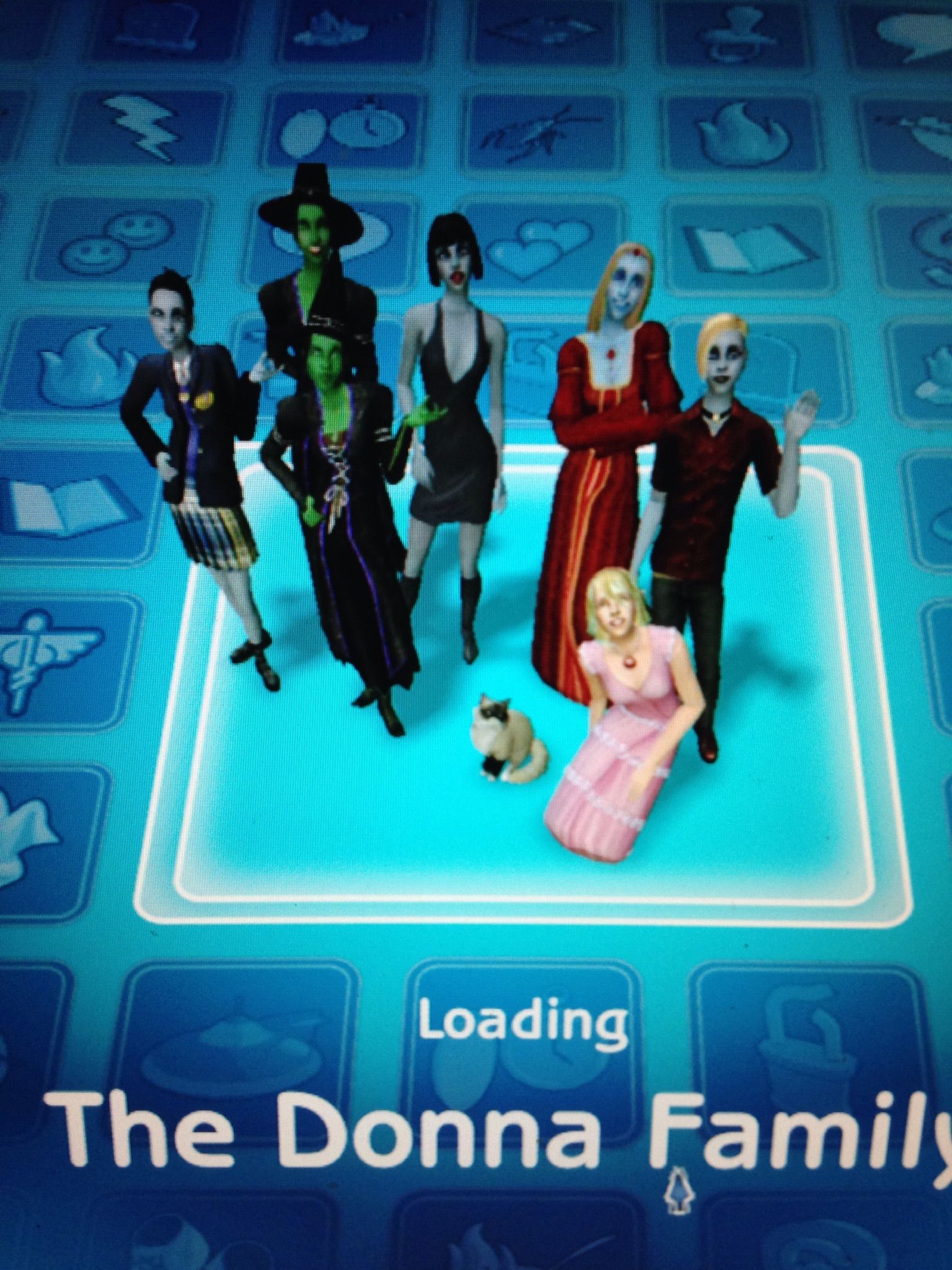
The time came. The evil witch, Kim Cordial, decided to make her move. Unable to ruin her sister’s family, and unsatisfied with the parade of men marching through her bedroom, she decided her next step was power: followed by corruption. She needed an ally, however, because the “good” witch, Bella Donna — who can’t be that good, Kim knew, because look how badly Kim’s life went under Bella’s watch — had a vampire for a lover, and that could be trouble. (I took this as the sign that Bella had lost her way: she actually married Lisa, but against my intention, Bella Donna became Bella Raymond. Clearly, she is no longer the Lady of Belladonna Cove, right? Right. Dazzled and distracted by a pale blonde beauty.)

Countess Lisa, Bella Donna, and their cat, Elphaba.

Countess Lisa, Bella Raymond-nee-Donna, and their cat, Elphaba.


But as Fortune would have it, there was a perfect candidate right under Kim’s roof: her teenaged daughter, Hecate. Kim turned Hecate to the Dark Side, and Hecate took right to it. Soon she was spending all night at her spellbook studying the dark arts, or stirring her cauldron; any exhaustion or discomfort could be removed simply by sitting in her mother’s evil throne (which fills a dark witch’s bars up to max). Taking another cue from her mother, she started bringing home boys, one after another, and dating them until they had a crush on her or even fell in love; there’s something about green women, obviously, that drives Sim-men wild. Two sets of twins, one brother after another — first the Patels, a nice, normal family with too many children because the mother had a wish to have ten babies, and I shrugged and said, “You got it,” (They’re up to seven, at the moment — but more on the Patels later.) and then the Contender boys.

Meanwhile, Kim went back into politics, which Bella Donna had left, choosing to follow the Adventurer track to try to alleviate her immortal ennui; and when Kim was at least elected mayor (I have no doubt there was magic and corruption both involved), she made her move. I had tested the Tabula Rasa spell on another Sim — who asked for it; because one day when Kim was out on the town with a casual social group, another of my Sims jumped her. Literally. And I honestly don’t know why: I assume the angry Sim’s husband had whistled at Kim, and might have been Attracted to Kim while she was singing karaoke, but I’m not sure why Isabel Attacked Kim as soon as Kim finished her song. But attacking an evil witch is a mistake: so I had Kim give her a Tabula Rasa, followed by an Invisible Servant attack. The Tabula Rasa spell does just what it did on Buffy the Vampire Slayer, which made me enormously happy: it made Isabel forget all of her memories — ending her marriage as a consequence. The Invisible Servant gave her a beating, and then just for the hell of it, Kim turned her into an evil witch. So Kim knew her arsenal, and she made use: she called Bella and invited her over, and then the second the good witch arrived, Kim hit her with Tabula Rasa. Boom: in my storyline, Bella forgot all about her duty to her Cove; and in the Sim world, all of Bella’s relationship scores went to 0.

Being evil is very funny. Even when you're making soup.

Being evil is very funny.
Even when you’re making soup.


Which, it turned out, was a mistake. Because my next step was to have Kim and Hecate move in with Bella and her vampire lover, Lisa Raymond, and then take over their palatial home, which has to be the estate of The Lady of the Cove. But Bella didn’t like Kim any more, because of the Tabula Rasa; and since Bella is still a good witch and Kim is an evil witch, they hated each other instinctively: all of their conversations went badly, and any positive relationship moves got maybe half the points. Getting them to the point where Bella — obviously under Kim’s magical control — invited Kim to move in was a serious pain.

But it happened. Kim and Hecate moved in. And immediately went to work: they glassed in the top-floor balcony, and made Countess Lisa first Bite and infect Bella, and then make her way up to the greenhouse-walled balcony, followed by Bella.

Witches Must Burn

Bella on the left. For some reason, she’s in her tennis whites with her hair in a bun.


My original intent was to have them suffer in the sunlight for eternity; but it turns out that vampires — which I haven’t played very much in the Sims, and so don’t know all the ins and outs of — actually die in the sunlight. And I didn’t want Bella dead: I wanted her captive. So I backed out without saving, and then had Kim mix up a Vampicillin potion, which cures vampirism. Bella drank it — though the sunlight had already burned her to nearly empty on Hunger, Bladder, Hygiene, and Energy — and turned human, immediately collapsing into sleep. Which meant that she missed watching her wife Lisa die.

(I have video captures of all of this, but the file type is archaic. I will try to convert them.)

Oh — why did Lisa have to die? Because while Hecate was out on one of her many dates, Countess Lisa showed up there at random — and out of the blue, I noticed her face appear in Hecate’s queue: and when I hovered over it, it said “Bite neck!” I canceled it immediately, not wanting Hecate to get vamped — though I wish I hadn’t, because that would have fit the story perfectly, with Lisa coming after the Cordials as part of this feud — but clearly, Lisa was plotting against them, and had to be removed. So she was.

And now Hecate is my Wormtongue, twisting all of the families of Belladonna cove, while Kim crouches atop the hill and gloats in the face of her enemy. She has been kind enough to give Bella a refrigerator, so Bella doesn’t starve; Bella also gave up all of the magical reagents she had in her Inventory, which earned her a chair and a table. Then she drank Witch Begone, losing all of her power (Necessary because otherwise she could teleport out of her prison.), and that earned her a sink and a plastic lounge chair to sleep in. Then she had quite a bit of trouble, because the ashes of the former Countess Lisa were still in there on the floor, and Bella has an 8 in Neat: so she kept sweeping up the ashes, and then just dropping them again, because she had no garbage can to put them in. This was very funny for a surprisingly long time. Finally I caved and gave her a garbage chute. So now she is a self-sufficient prisoner, who can Freestyle when she is bored, wash her hands in her sink, make herself bologna sandwiches, and then nap in her plastic lounger. What a life.

And then there are the ghosts: the house came with three of them, who were annoying at first to Bella and Lisa; but witches can cast spells on ghosts — Expello Simae makes them go away quite nicely, and they’ve been resting peacefully for a while. Once Kim moved in and Lisa died, there was a new ghost, and she was pissed: Countess Lisa. Countess Lisa actually killed Bella when I wasn’t looking — because ghosts jump out and scare Sims, and if the Sims are too low on needs at that moment, they have a heart attack. I had to back out without saving, because I wasn’t done with Bella; but then I had to deal with Lisa. So I had Kim resurrect her as a zombie. So the vampire became a ghost, and then a vampire-zombie — still a vampire, because she burns in the sunlight, but now she shuffles around and groans like a zombie.

Flush with success, I had Kim repeat the feat with the other three ghosts. (Pro tip: witches need to have Gold Aspiration mood before they can successfully raise the dead. Otherwise nothing happens. I got Kim to gold by having her WooHoo. I like it: the evil witch uses sex to power her necromancy. Seems fitting. If only I could have her sacrifice her lovers to her evil gods. Maybe in the Sims 4 . . .) So now there are four zombies, two witches, a tormented prisoner, and a cat living in the house.

Ladies and gentlemen, my new Witch Queen and her household.

Two of the old ghosts-turned-zombies are actually teenagers. They have to go to school. You can rise from the grave, but you can't escape the truancy laws.

Two of the old ghosts-turned-zombies are actually teenagers. They have to go to school. You can rise from the grave, but you can’t escape the truancy laws.


And while on a date with Hecate (Totally out of my control — but obvious evidence that the Sim universe wants me to keep doing this), her date, Cassius Contender, got bit by a new vampire in town.

The evil is spreading.

DOUBLE REVIEW! SO MUCH SCIENCE!

Death from The Skies by Philip Plait
Guns, Germs, and Steel by Jared Diamond


I normally don’t review two books at once. There are reasons not to do it now: these two books have more in contrast than they do in common, and my reading of both was quite different: Death From the Skies I read over the course of a couple of months, a little here and a little there; Guns, Germs and Steel I tried to read straight through, and failed to complete — at least partly because that is not, for me, the best way to read popular science.

But these books do have some important things in common: they are both popular science non-fiction, DFTS in the hard science of astronomy, GGAS from the social science of anthropology. Both are about death, destruction and the end of civilization as we know it. I finished one only a few days before I gave up on the other, which proximity promptly juxtaposed them in my mind (YES! Been waiting for a chance to say “juxtaposed.” That alone is enough reason to review them both together.). Both have, for me, an interesting premise. Neither includes zombies.

Now let’s get to the more extensive and interesting list of the differences. DFTS is about future death and destruction: the book is a list of all of the ways that the universe could wipe out all life on Earth: asteroid impact, massive solar flare, black hole fly-by, gamma ray burst, supernova, even alien invasion. GGAS is about the death and destruction that has happened in the past, specifically to the human race, caused by the rest of the human race. It asks one essential question: why is it that some civilizations have been able to thrive and grow, and others have not? And when civilizations come into contact with each other, and one or the other is destroyed or subsumed, what determines which civilization survives and which dies?

It’s an interesting subject, I think. Diamond takes as his prime example the conquest of the Incan empire by the conquistador Francisco Pizarro. Why was it that the Spanish empire managed to overcome the Incan empire? Why wasn’t it the other way around — Incan ships crossing the Atlantic, Incan soldiers wiping out hordes of Spanish troops, and an Incan general capturing the Spanish king, demanding an entire room full of gold for ransom, and then executing the king anyway, as Pizarro did to Atahualpa, the Incan emperor? Or why couldn’t the Incas fight off the Spanish, and establish their own hegemony over the Americas? Diamond examines this and every other contact between civilizations that he can, and in exhaustive — and I mean exhaustive, fatiguing, meticulous, infinite as well as infinitesimal, and finally brain-numbing — detail, he explains.

Here’s the spoiler: it’s the title. The Spanish conquest of the Incas was accomplished not by Pizarro, but by smallpox, which had been dropped off on the coast of Mesoamerica ten years before, by Hernan Cortes and his troops in Mexico, along with the various explorers and traders who followed Columbus’s lead to the New World. Atahualpa wasn’t even supposed to be the Emperor of the Incas: the emperor of the Incas for thirty years before Pizarro’s attack was Huayna Capac, who led the empire to the height of its size and power — until he died of a fever, probably either smallpox or measles. Along with his successor, his eldest son Ninan Cuyochi. The empire was the divided between Atahualpa and his brother Huascar, who proceeded to wage a civil war for control which Atahualpa won after several years of fighting — right before he was captured by Pizarro. The battles that did occur between the Spanish and the Incas were won by the use of guns, steel weapons and armor, and mounted cavalry, none of which the Incas had.

Diamond actually explains every reason why the Incas didn’t have cavalry, why the Europeans had the deadlier diseases, why they had better weapons, why they had guns, why they had better ships, why they had writing; it has everything to do with the ecology, the geography, and the histories of the two areas of the world, the Americas and Eurasia. And honestly, it’s pretty interesting.

The problem is that Diamond writes sometimes like a popular science writer, but much more often like a scientist, which he is. And that’s fine. But like all scientists writing treatises about their research, his goal is to be meticulous and scrupulous in explaining how he came to his conclusions, rather than to make the book interesting. And I think he succeeds in that: because I felt like he asked the same question ten or twelve times, from different angles — why didn’t the Incas have cavalry horses? Why didn’t they have large domesticated mammals? Why didn’t they have the same agricultural productivity? Why didn’t they have the same population? Why didn’t they have the same specialization of professions within society? Why didn’t they have writing? — and every time gave a complete answer, but every time it was the same answer: geography, ecology, and history. Over and over and over again.

And then he moved on to Australia. And then Africa. And at that point, I just couldn’t take it any more, and I stopped reading it.

Now Phillip Plait: that man knows how to make a popular science book interesting for the average reader. Every chapter describes a new way that the universe could kill us all. Each chapter begins with a hypothetical description of that death, how it would arrive, how it would progress, and specifically how it would kill us (Generally speaking, Robert Frost was right: fire, or ice.); then the chapter describes the science behind the cataclysmic event; then it describes the probability of that event happening, based on our knowledge of the universe. He goes from the most concrete elements to the most abstract, and because of that, by the time you get to the abstract stuff, you’re ready for it, and you understand what he’s talking about, and you want to know more — generally because the description of the deaths is pretty horrific, but the probability of any of them happening is “Pretty danged small,” or else it’s a certainty — but not for billions of years. Like when the sun dies. Definitely going to happen; definitely going to kill us; definitely not due for about 7 billion years. It’s comforting, really.

(Not all of it. The first chapter, on asteroid impact, is actually pretty scary, as is the second, about massive solar flares wiping out our power and communications. The solar flares couldn’t kill us directly — but I’ve read enough post-apocalyptic fiction to know that if the power and communications go, Road Warrior and cannibalism are not far behind. And I would not do well in that world. The alien invasion one is much more speculative — but it’s creepy as hell. Robot spiders. That’s all I’m going to say.)

And here’s how Plait handles the science: he makes jokes — good ones, including a Spinal Tap reference. He explains the science, but he also makes it clear why we should or should not know the details. An example: before Plait gets into the chapter about the end of the universe, he takes a few pages to discuss scientific notation (And I apologize for the formatting — the exponents were superscript in my draft, I swear. Don’t know how to make it happen on WordPress.) — our planet is 4×10^9 years old, the universe 1.3×10^10. The end of the universe will come sometime around 10^70 years from now. And Plait was smart enough to know that people would think, “Wow — that’s sixty times the current age of the universe. That’s a really long time.” But the thing is, it’s not. 10^15 years is not six times as long as 10^9 years: it’s 1,000,000 times as long. That’s the age of the Earth lived over again one million times. And I’m thinking about my summer break in four months, and it seems a long way off. 10^70 years is so absurdly far into the future we can’t even fathom it. And Plait explained that, in a way I could understand. It helped.

Plus he explains all the awesome stuff about the universe. I feel like I understand black holes better now — just in time for me to watch Interstellar on Hulu. And now I know that spaghettification is a thing. My new favorite thing, in fact.

So here’s the point: I’m glad I read part of GGAS. I’m glad I didn’t spend any more time reading the rest. If you are terribly interested in prehistory and the rise and fall of civilizations, you may want to read it — it is very clear and easy to understand, and yep, it’s thorough. But for me, I’d rather read about the Milky Way colliding with Andromeda in a few tens of billions of years. GGAS just made me want to play Civilization on my computer.

Which I may just go do now.

Serving the Battle-God

There’s a poem that I have taught for years, a piece by the American author, journalist, and poet Stephen Crane. I’m reminded of it every time Memorial Day or Veterans’ Day rolls around; every time my Facebook feed is filled with “God Bless the Military” statements and sentiments. Here it is.

“Do not weep, maiden, for war is kind”

Do not weep, maiden, for war is kind.
Because your lover threw wild hands toward the sky
And the affrighted steed ran on alone,
Do not weep.
War is kind.

Hoarse, booming drums of the regiment,
Little souls who thirst for fight,
These men were born to drill and die.
The unexplained glory flies above them,
Great is the battle-god, great, and his kingdom—
A field where a thousand corpses lie.

Do not weep, babe, for war is kind.
Because your father tumbled in the yellow trenches,
Raged at his breast, gulped and died,
Do not weep.
War is kind.

Swift, blazing flag of the regiment,
Eagle with crest of red and gold,
These men were born to drill and die.
Point for them the virtue of slaughter,
Make plain to them the excellence of killing
And a field where a thousand corpses lie.

Mother whose heart hung humble as a button
On the bright splendid shroud of your son,
Do not weep.
War is kind.

I love this poem. Not only has it helped to clarify my own feelings about the military, but it has served as an incredibly useful teaching tool over the years. It’s become one of my favorite lessons, the one I look forward to and plan around. Even though it is probably the saddest thing I teach, both for subject matter, and because, no matter how well I teach it, whether my students understand it as I do or not — it doesn’t change the U.S. military. I can’t kill the Battle-God.

I lead my students through this first as though it were sincere: we skip the second and fourth stanzas, and I gloss over the specifics of the imagery; we focus on the apparent speaker, and who that person might be. It seems, based on the speaker’s attempts to comfort the surviving relatives — first sweetheart, then child, then mother — of soldiers killed in battle, that the speaker would be a military spokesman, the guy who writes the letter home or delivers the telegram that says “We regret to inform you . . .” I get my students to make a list of the kinds of things this familiar figure would say: Your loved one was very brave. He was a patriot, he was a hero. He died for a greater good, fighting for his country. He didn’t suffer. On the surface, it all seems to fit, and they get it quickly.

Then we go back and look more carefully at the images. In the first stanza, the lover throws wild hands toward the sky, and the affrighted steed runs on alone. So the man was shot while riding a horse into battle. But for me, the steed running on is a telling detail: I would think the horse, terrified by the sights and sounds and smells of the battle, and by the sudden violent loss of his rider, would run away from the fighting. But if the steed runs on — that implies it was already going that way. So perhaps this man was shot in the back while fleeing, perhaps even by his own side, killed as a deserter. I ask the students: doesn’t it seem strange that a military man would describe this scene so specifically to that dead man’s sweetheart — and then afterwards tell her not to cry, because war, which killed her terrified (and cowardly) lover, is kind?

Maybe I’m reading too much into that one. But look at the third stanza. Look at the details in the description of the father dying — see how painful and pathetic it is? And realize that this is, apparently, being described to that dead man’s child. His young child, because it is a “babe.” (I often think of the scene with Christopher Walken and the gold watch in Pulp Fiction, one of the most horrifyingly amusing scenes I know of in any movie.) I mime this for my students: I crouch down with my hands on my knees, and bounce as I say, in that cheerful sing-song we use to ask little kids if they want to see Santa Claus or ride the pony: “Okay, little boy, let me tell you about your daddy: he was shot in the chest, fell on his face in the mud, and died choking on his own blood!” Then I stand up and say, in an aggressively sarcastic tone, “Oh — and don’t cry. Because war is kind.” It’s effective.

After I take them through the fifth stanza, which I think of as ironically juxtaposing the humble, unimportant mother (whose heart is but a button) with the bright, splendid shroud of the son (I like connecting this to the American flag we drape over soldiers’ coffins, though Crane probably just meant the actual white winding sheet. There’s another one, too: the yellow trenches the dying man chokes in in the third stanza really should be a reference to the use of mustard gas in World War I — but Stephen Crane died in 1900, so, nope. Possibly a reference to yellow fever, since he did cover the Spanish-American War, where more soldiers died of disease than from bullets and bombs.) — a pair of images that lionizes the dead man and devalues the living, sorrowing mother — I have them look at the second and fourth stanzas, where the speaker changes and the tone changes. These stanzas, with their references to drums and glory and swift, blazing regimental flags, seem much more like the words of a pro-military warmonger, at first. I point out for them the irony in the comparison between the little souls, pointless (“The unexplained glory flies above them,” either the American flag, or the idea of gloriously dying in war, or both), valueless (“These men were born to drill and die,” and nothing else), and the line “Great is the Battle-God.” I ask them who the Battle-God is; though I have to get them past the idea that it is Ares — there is always at least one who is very proud to know this fact — since that is more symbolic than I need it to be. I ask them who is made great by battle — and who, in truth, is made greater when the losses in that battle are greater. Who rules over a kingdom of a thousand corpses? The answer I want is: the generals. The presidents. The ones who send the little souls to die, and are made famous by their ability to order men killed. I ask them how on Earth it can be said that slaughter is virtuous and killing excellent — and I help them recognize that there is really only one place in our world where it is possible to be an excellent killer, and it is a virtue to wipe out swaths of people as if they were lambs being slaughtered; that one place is, of course, war.

Yup. War is kind.

This poem, all in all, strikes me as a criticism of the military: not the soldiers, though they are certainly seen as fools or children who die for no good reason; and not the officers who would bring the sad news home to the survivors, if they are sincere in their desire to comfort — that’s the point of the list of common statements these people would use: there is no way that anyone would actually talk to a family member the way the speaker in this poem does, as he says quite the opposite of what we would expect: your lover is a coward; your father died in incredible pain; your son only matters because he died, and you don’t matter at all. But if those people, those officers, are knowingly lying about the experiences of those who died in war, there can only be one reason: they want that child, that babe, to grow up and — follow in his father’s footsteps. They want the family members to believe that those who die in war were heroes, every one of them, even though the officer telling them of this heroism knows the truth: these soldiers died for nothing, in great pain and fear, because the only thing that matters is that they die: their corpses make the Battle-God great. Those liars serve the Battle-Gods, and they make a new generation of little souls thirst for fight; they ensure that their destiny, which could otherwise be grand and great, as any human’s could be, is — to drill and die. This poem criticizes two groups: those who profit from the deaths of soldiers — the Battle-Gods — and those who lie to people in order to get men to agree to be soldiers, and to die for the aggrandizement of the Battle-Gods. The recruiters.

And that’s why I think of it every Memorial Day. Because that’s exactly how I feel about the military.

Those men and women who volunteer to fight because they want to protect innocent lives, because they believe in the cause, or in their country, I have great respect for, in some ways. There is no question to me that the willingness to die for the safety and well-being of another person is one of the most honorable qualities a person can have. I think it less honorable, but still virtuous, to be willing to fight and kill for the same cause — for the sake of other people. This is why I have great respect, too, for police and firefighters and other people who put themselves into harm’s way in order to protect the rest of us. They are brave, they are strong, they are noble and good.

That’s the good stuff. Now here’s the bad.

Our military is not always used to serve the greater good. It is sometimes, because the Army Corps of Engineers builds things, and because the military has been used for rescue missions, for relief missions, and, sometimes, for peacekeeping; I think the National Guard has been used more frequently and reasonably in this way, simply because it is the National Guard, and the U.S. hasn’t been invaded in two hundred years. The National Guard, and the Coast Guard, then become large bodies of well-equipped, well-trained people serving to keep people safe and happy. This is what the military should do, and the only branches that should still exist, in my opinion. Yes, some wars — World War II and the American Civil War, from the Union’s perspective — are actually fought for the greater good; but even those wars do not require a standing military like the Army, Navy, Air Force, and Marines. We could send our National Guard to fight, if necessity required it; even better, maybe we could offer some genuine support, troops and materiel, to the United Nations. Imagine what they could do with the military might of the U.S. Then ask yourself why the U.N. doesn’t have that already.

Because our military is, and has always been, used to do harm. They are sent to foreign lands to kill and destroy, not to help people, but to serve the “national interest.” Not to keep us safe, but to achieve policy goals. Not to die so that others may live — but to make the Battle-God great with their corpses. And this is a crime, and a tragedy, without exception. I refuse to accept, for instance, that the millions who died in Vietnam served any greater purpose, for the United States. For the Vietnamese, one could argue that they died protecting their country from a terrible foe, a foreign aggressor who dropped millions of tons of high explosives, incendiaries, and poison on their country; perhaps that was worth all the murder, all the destruction, all the death. But for us? For the U.S.? What was that war but evil? The same for the war in Iraq, and the extended war in Afghanistan. Perhaps you could argue that Osama bin Laden needed to die for 9/11, but the argument is troubled by the fact that we made bin Laden, training him to fight the Soviets in the ’80’s, and by the fact that we invaded and destroyed Afghanistan but retain strong ties with Saudi Arabia, and with Israel, and with Turkey, and with dozens of other countries with histories of terrible human rights abuses.

Not to mention our own record in that area. How any nation that manned Abu Ghraib, that STILL maintains Guantanamo Bay, can claim to be protecting people or freedom or human rights, is beyond me.

Now it becomes a question of, not the greater good, but the greater evil. It is bad enough to attack a sovereign nation for your own political purposes, bad enough to kill for your ideals; but to use good people as your weapons to do that? Because those people who join the military for noble reasons, the ones who are willing to die for others, are the best of people, those who are willing to send those good people to their deaths, must be the worst of people. They are even more vile when they do it for selfish reasons, which is why Dick Cheney (Who knowingly lied us into war) is a worse man than George W. Bush (Who, for the most part, stupidly believed what he was told, and was otherwise knowingly selfish and arrogant), who is a worse man than Barack Obama. But all of them sent good people to die unnecessarily, and thus are they all villains.

But are even those people the worst?

I think it — let’s say naive — to join the U.S. military for honorable and noble reasons, in the modern era. Perhaps it made sense in the nation’s first century, though I personally consider the American Revolution a political war, not a war for the greater good (Yeah, we won our freedom from the British. So did Canada. How many people died for that one?), and the Mexican-American War and the Indian Wars were nothing but bad. But today, a thinking person cannot believe that joining the military will be all noble or all good. Because in this country, which does still have free speech and a free press, I think it impossible to believe the military only does good things, unless one possesses great skill in the most Orwellian of doublethink, or the deepest ethnocentric prejudices (“Everything we do is good, because ‘Merica!”).

Unless, of course, one is actively, aggressively, and successfully lied to, exactly when one is most vulnerable.

That’s why the worst people in the world, in relation to the U.S. military — if it is not the Battle-Gods themselves, that is — are recruiters.

That’s who Stephen Crane was criticizing in his poem: those who would lie to the family members, who would try to make war seem glorious and good when it is nothing but evil and suffering; those who knowingly manipulate and deceive, in order to bring fresh meat to the grinder, in order to aggrandize the Battle-Gods, to make their kingdoms — not a thousand corpses, but tens of thousands, a million. More.

The people who show up at high schools, particularly high schools with low graduation rates, with terrible college attendance rates, where the local community is economically depressed (Because I never once saw a recruiter in my own upper-class public high school, and I have not seen a single recruiter in the school where I teach now, which has a near-100% college attendance rate — but they were there every damn week in St. Helens, Oregon, which is everything I just described.), and stand there in clean, well-pressed uniforms, challenging children to perform feats of strength — as though it matters in the military how many goddamn pull-ups you can do, over how many people you can kill or how slowly you can die — and handing out prizes to those who “win,” and telling children who don’t know any better that: the U.S. Military is honorable, and glorious, and good; that it protects our freedoms and it makes the world safe for democracy; that joining up will make them better people, give them a better future, and offer them adventure and a wonderful life.

I would excuse those people if I believed that they actually thought what they said was true. And inasmuch as the military uses new recruits to bring in other recruits — which they do, in one of the more callous and appalling pyramid schemes I know of, as they actually offer promotions to those who can lure in larger numbers of fellow victims — I don’t blame the actual people who try to tell their friend that they should join up, too. They are naive children, who have been manipulated and lied to themselves. But that isn’t who mans the recruiting offices, or the tables at high school lunchtimes. Those are the older soldiers. The ones who know better, and who do it anyway. They are the ones who make the military seem good, so that good people will join, so that they can then be used, by evil men, to do evil.

Perhaps the most insidious and harmful part of this process now is the tendency of the military, since World War II and the G.I. Bill, to glorify the military as something other than a military: they make the military sound like a job, rather than an institution that creates death. With this, you have people signing up to serve in the military who don’t have noble reasons, nor evil ones; they just don’t know what else to do with themselves. This is perhaps the worst, because it is the easiest: for these people, you don’t even have to lie that much. The GI Bill is a real thing; the military does offer benefits to veterans; you can indeed learn skills that will serve you later in life. All those things are true. To talk about this, as a recruiter, you just have to ignore two things: one, the vast majority of soldiers do not do skilled work, and so will gain nothing of practical use — particularly not those who may after service have access to money for college, but have not one of the academic skills necessary to succeed in college, possibly because they blew off high school knowing they would just be going into the military at 18 — and two, you have to ignore that the reason the military exists is to kill, and the first job of any soldier is to die. If you can ignore those things as a recruiter, you can make the military sound just fabulous; if you can ignore those things as a recruit, you can look forward to your service. You can also see the military as a way to cure your ills, your laziness, your juvenile delinquency, your chemical addictions, your weight problem; all of these are put forward as valid reasons to sign up, and all of them have brought in new corpses for the kingdom. Hell: we even see military service as a way to get laid, because you get in shape and get a cool uniform and you get to be a badass — and women loooooove a badass in uniform with six-pack abs. Just watch Top Gun. That’ll prove it.

So that’s what I think about, when I see memes honoring soldiers. I think: Did you really sign up to protect freedoms? Or was it just that you couldn’t get a job? If you did sign up to protect freedom, did you think of fighting the Taliban in the hills of Afghanistan, quite literally on the other side of the world, and so removed from anything even remotely good for America that nobody even tries to justify the war any more beyond “You broke it, you bought it?” If you believed fighting in Afghanistan would be noble, who lied to you? And how hard did they have to work to convince you?

It all makes it very hard to look at a serviceman and say “Thank you.” I know it’s not their fault, and I know that many of them do have genuinely noble intentions in joining the military; some of them have noble intentions despite going into it with eyes wide open; and to those people, for their intent, I am indeed grateful, and I will salute them, and I will thank them. The same for those veterans who fought in the past, and those who died, for actual noble causes.

But most of the time, I just feel sorry for them, these little souls who thirst for fight, these men who were born to drill and die — or at least that is what they are told, by the Battle-Gods and their vile minions. All they are is more corpses for the kingdom.
Let me close with another poem, this one by a soldier who died, for his country, soon after writing this.

Dulce Et Decorum Est
by Wilfred Owen

Bent double, like old beggars under sacks,
Knock-kneed, coughing like hags, we cursed through sludge,
Till on the haunting flares we turned our backs
And towards our distant rest began to trudge.
Men marched asleep. Many had lost their boots
But limped on, blood-shod. All went lame; all blind;
Drunk with fatigue; deaf even to the hoots
Of disappointed shells that dropped behind.

GAS! Gas! Quick, boys!– An ecstasy of fumbling,
Fitting the clumsy helmets just in time;
But someone still was yelling out and stumbling
And floundering like a man in fire or lime.–
Dim, through the misty panes and thick green light
As under a green sea, I saw him drowning.

In all my dreams, before my helpless sight,
He plunges at me, guttering, choking, drowning.

If in some smothering dreams you too could pace
Behind the wagon that we flung him in,
And watch the white eyes writhing in his face,
His hanging face, like a devil’s sick of sin;
If you could hear, at every jolt, the blood
Come gargling from the froth-corrupted lungs,
Obscene as cancer, bitter as the cud
Of vile, incurable sores on innocent tongues,–
My friend, you would not tell with such high zest
To children ardent for some desperate glory,
The old Lie: Dulce et decorum est
Pro patria mori.