

I am now always suspicious of quotations that I find on the internet. Too many of them get misquoted and misattributed; particularly when they are turned into lovely images with flowers and weathered wood in the background, as this one is.
Like this, for instance.

There are many iterations of this one, which does in fact seem to be a Chinese proverb. Though the other images don’t have a baby sea turtle in them, so, y’know — lame. But definitely a Chinese proverb, at least according to the majority of the Google results.
Or wait: maybe it’s from a fantasy series by an author named Jeff Wheeler. Who created a culture named Dawanjir. (To be fair, the series is strongly influenced by Chinese culture, according to Goodreads. But still. This meme just says it is a Dawanjir proverb, and then slaps the author’s name under it.)
Or maybe it was this Joshua Muax guy?
No, wait, I’m wrong — it was Benjamin Franklin who said it.
(Benjamin Franklin is probably the one person most frequently given internet credit for stuff he never said.)

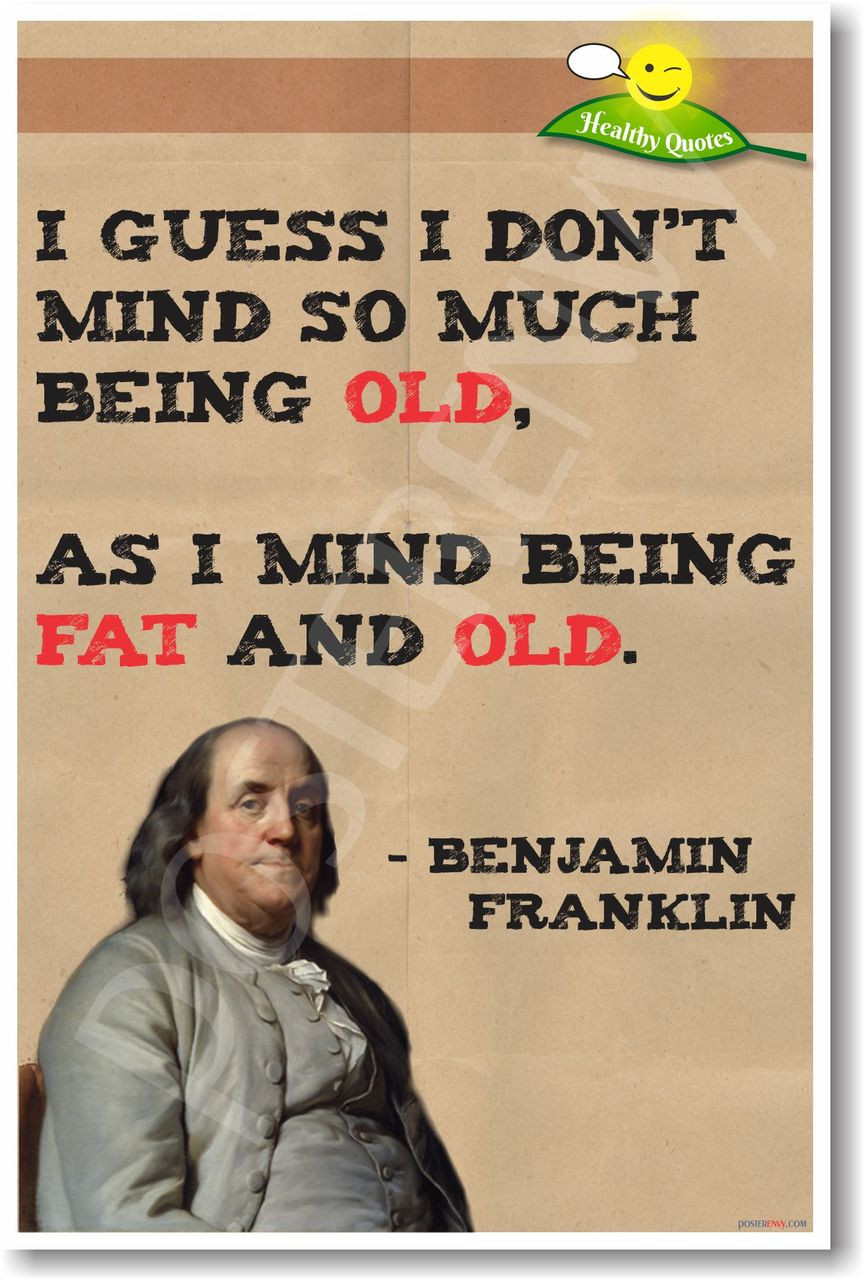
But it turns out that, in fact, my first meme has it right:

That is the actual quote, and it was originally written by Alfred, Lord Tennyson, in a poem (a VERY LONG poem) he wrote after a good friend, Arthur Henry Hallum, died young. The poem is called “In Memoriam A.H.H.” And I would quote it here, but — seriously, it’s over 180 pages long. It’s here, if you’d like to read it.
All of this is a very roundabout way to come to my question: is this true? Is it better to have loved and lost, than never to have loved at all?
I started thinking about this last week, when I went to visit my father and help out with the memorial for his wife. My dad’s wife Linda (who was, of course, my stepmother, but I never ever called her that or thought of her that way) passed away in February, from complications from paraplegia, which she had lived with for about two and a half years. She and my father had been together at that point for thirty years, give or take; they had been married for almost twenty-five years.

Linda’s passing was hard. The two and a half years before that had been extremely hard, on both Linda and my father. The four months after her death were very difficult for Dad, as well. And so at the end of all of that, I certainly found myself wondering: was it worth it?
I won’t presume to even try to answer this for my father; I only bring up his love and loss to explain why my thoughts turned down such a cynical and morbid path. When I was thinking about this, I was thinking about myself and my wife: we also have been together for almost thirty years, and married for nearly twenty. I hope and expect to be with her until one of us passes: and that thought was the one that started me on this track.
Let’s be clear: the answer is yes. Without a doubt, it is better to have loved and lost than never to have loved at all. I would never give up my wife, or my life with my wife, no matter how difficult the end of our lives together may be. And I have some idea, now, just how difficult it may be, for one or both of us — but that doesn’t matter, because suffering would never wash out all the incredible happiness and the years – decades — of simple contentment which my marriage has brought me. I do not undervalue contentment, as I hope you don’t, either — as many people do when they think about love, and how love changes from fiery passion to simple human affection and connection. The novel The Awakening, by Kate Chopin, with which I have tormented several years’ worth of AP Literature classes (The book is good, but it’s written in Victorian English, which is not my students’ cup of tea; and the main character is intentionally obnoxious in some ways, which makes it hard to sympathize with her. Actually, all the characters are obnoxious, which generally makes students want to give up on the book.), features a protagonist who believes that life should be mad passion, extreme highs and lows, especially in love; this leads her to unfortunate decisions and a bad ending. My romance has stayed more passionate than many, I think (Mainly because my wife is SUPER hot); but even if it fades to simple companionship, I think that would be a wonderful thing to have in my twilight years.
More to the point, there are people who avoid romance and particularly commitment because they believe that the fire fades, that the passion diminishes; and that is somehow sad — and therefore they avoid love because they don’t want to suffer that diminishment. For them, tis better to have never loved at all, than to have loved and then lost that love, at least the passionate part of that love. And those people are clearly wrong.
But here’s the thing: I don’t know if they are. They don’t know if they’re right. Tennyson didn’t know if he was right: because there’s no way to compare the two states of being. If you have loved and lost, then you can’t have never loved; if you’ve never loved, then you can’t have loved and lost.
I’m not trying to logic my way into a clever Gotcha! to disprove Lord Tennyson; even I’m not that annoying, I hope. It’s not that we can’t live two lives in order to compare them: it’s that we can’t possibly know what our lives would be like if things went differently. I think about this a fair amount, not least because I’m a fantasy writer who reads and teaches science fiction as well, and so I have spent more than my fair share of hours thinking about time travel and alternate history. I’ve read (and taught) about the butterfly effect, and about the multiverse; I wrote two books about a time-traveling Irish pirate (They’re right here, and I swear to you that Book III will be out by spring of next year), for Pete’s sake. And in my own life, I have thought extensively about the slow accrual of causal events, themselves too insignificant to recognize, which add up to something significant, in terms of my life with my love: because if I had not been a screwup in high school, and therefore lacked the GPA to get into a four-year school; if my father had not lived and worked in California and had a friend who taught physics at UCSC, who mentioned to my father that UCSC had a creative writing program; if I had not gone to the community college after high school in order to transfer to UCSC to study writing; if my counselor there had gotten my transfer credits right and I had finished at community college in two years instead of three; and if I had not been wearing a button that said “A dragon on the roof keeps burglars away” and thus gotten into a conversation with a fellow gamer nerd who became my friend and eventually helped me get a job distributing student IDs at the school — I would never have met my wife. All those ridiculous coincidences had to happen in just that way for me to find the love of my life. And also, let me say, there are just as many on her side: just as many ways that her path could have taken her far away from me. Which would have changed both of our lives.
For the better? For the worse?
Who knows? Who can possibly say?
One way it could have gone differently would have been if I had been able to succeed as a student in high school. I got my first Ds and Fs in my freshman and sophomore years, mainly because I did not have study habits. But I developed those study habits, quickly, when I went to community college; so certainly I could have had them in high school. If I had stayed in my honors tracks and earned good grades, I might have followed most of my friends, who went to Ivy League or similar top-tier schools. I might have ended up a lawyer, as many of my friends in high school did. I love argument and I write and read well, so it would make sense. My oldest friend did that, and he started his own law firm; could I have joined him in that? Could it be McGuire, Humphrey and Associates, LLC? (No question Josh would get first billing, by the way.)
Would I be happier that way? Ignoring for the moment the obvious other possibility that goes along with that alternate track, which is that I would have met and fallen in love and presumably married someone else; and though she would not be as perfect and wonderful as my wife is — because there is no one as perfect and wonderful as my wife — I had fallen in love before I met my wife, and so I could probably fall in love with someone else. But forget that: the question is, would I be happy if I never fell in love, or at least never married?
My brother Marvin is three years older than me, so he’ll be 52 this month. And though I don’t know all the details of his romantic life (and don’t want to pry), I know that he has never lived with a woman and never married a woman. (Also I know that he is not gay, which wouldn’t matter to me in the slightest either way, but one of my favorite stories is from when Marvin had dinner with our dad and Linda, and after a prolonged silence at one point, Dad and Linda burst out with, “You know, it’s okay if you’re gay.” To which Marvin responded, in some way, “Thank you? But I’m not?” Which is a scene that still cracks me up. But Dad and Linda thought they should say that because Marvin had not brought home any women to meet them, and so they made a reasonable assumption.) Marvin is exceptionally accomplished: his degree is in music composition, and after he graduated he became a digital editor in a recording studio, teaching himself how to handle the equipment and the tasks involved; and then after that, he became a self-taught software engineer and web designer, which he now does professionally — all the while keeping up his music; he sings and plays several instruments, in addition to writing and arranging in several different genres. (Also, he can ride a unicycle off-road.) And the question has to be asked: would he have been able to do all that if he had gotten into a long-term romantic relationship? Would he have wanted to do the same things? Or would he have made entirely different choices?
To the point: my brother is essentially a happy man. I am also essentially a happy man. Though our father has not been all that happy for the last few years, for a very long time before that, he was an extremely happy man — and, now that he has moved through the most immediate grief, and reached the closure of a memorial service, I think he can be happy again. Our mother, by the way, has been single since she and Dad divorced in the early 90s; and she is also a happy woman, most of the time. She had one proposal, some years ago, from a man she had been dating; she turned him down. And went happily on her way.
So is it better to have loved and lost than never to have loved at all? Frankly, I don’t think it’s possible to decide.
What is definitely true is this: once one has found love, real love, love that brings joy and contentment, love that lasts as long as life does and then even beyond that: there is nothing that would persuade one to give that love up. Not even the knowledge that some people might be happier living without that kind of commitment, that kind of potential turmoil, and without the devastating grief that waits at the end for all of us who love another person. I love my wife, and I always will; and that is who I am. Would I be happier if I had never met her? No: because that would not be me. That would be some other dude. Maybe a happy dude, but not me. My life became mine when that gorgeous woman came up to me in the cafeteria at Cabrillo Community College and said, “Hey — do you like gum?”
In truth, I love it. And her. Forever.

 Just Dusty