This Morning


This morning I am thinking about singing with my mother.

My mother and I used to sing together all the time when I was small. Whenever we’d drive anywhere, we never listened to the radio; we sang songs. Old songs, silly songs, campfire songs:  John Brown’s Baby and My Grandfather’s Clock and If I Had a Hammer.

She called me the other night, happy because a friend who could handle the interwebs found for her one of the original singers of some of her favorites, which she used to sing with her father.

Here’s the one she mentioned specifically. I don’t know if your mother does this, but my mother drops conversational references that I have never heard before, because she talks about things to someone else — my mother has MANY friends — and thinks she told me. There are also times when she tells me things, and I forget, but she remembers forever that she told me. I don’t know which category this is in, but when she said, “I found the prune song!” I was at a total loss.

Here it is: the prune song. That I don’t remember her ever talking about. Dang sure we never sang it together, though she might have sung it to me.


Here’s one I sang with my dad, (Surprising because my dad can’t sing), and he had a different set of lyrics; I had no idea this one had this many verses — we only sang the chorus.


(Here’s the version my dad taught me, by the way. I love this man intensely. I love my dad, too — but this guy RULES.)


Here’s the same man singing another one I loved singing with my mom; this one made her uncomfortable, I remember, I think because we’re talking about a six-year-old singing about beer and sliding over naked people.


This one I loved, and still sing, because it’s pirate-y as hell. Here it is by a chorus, because my mom loves choral music.


Here’s the song I remember most fondly: a completely ridiculous, and frequently racist, song about an Ottoman Turk in a feud with a Russian Cossack.


And here’s a version of it with an equally offensive cartoon — and it says it was banned, but I SWEAR I saw this at some point in my life.


I’m going to go sing some songs now. You should, too.

On top of spagheeeeettttttiiiiiii, alll covered with cheeeeeeeseee….
Spring Break Book Review #6

(Had a slowdown there when I had to get some work done for school, and had a family visit. But it’s still Spring Break! And I’m still reading!)

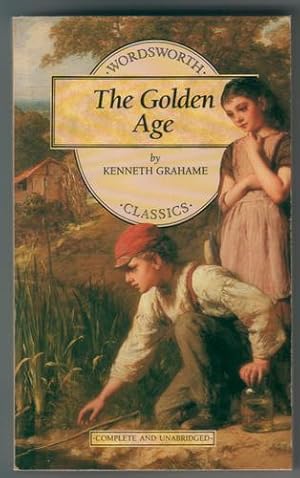
Image result for the golden age kenneth grahame

The Golden Age

by Kenneth Grahame

I think I have just read the most British book ever written.

It’s Victorian, of course. Written by the man who wrote The Wind in the Willows. It is about a family of children, three boys and two girls, who are orphaned; but that fact is, in proper British fashion, never really talked about: it is hinted at by saying that they know a long succession of aunts and uncles, none of whom they get along with too terribly well, and never talking about their mother and father. It describes their childhood in the most idyllic fashion imaginable: they scamper and run and play in the green meadows and fertile farms and darkened woods of the English countryside, never seen as anything other than glorious and, yes, golden; and the narrative is almost entirely tongue in cheek, but not in a terrible way: it’s more like a grownup playing along with children, taking their games seriously, believing what they believe, but always knowing and appreciating the innocence of those kids.

It’s nicely done, actually. Made me laugh several times. The kids have great imaginations, and they play games that sound like enormous fun, and made me want to go out and steal a rowboat and row it up a creek, pretending to be Jason and the Argonauts in search of the Golden Fleece. I like how they constantly try to dodge their lessons – provided, in very upper-class-British fashion, by a tutor and a governess; I like how they play King Arthur and fight over who gets to be Lancelot. There is a very sweet moment when they plan to throw a snarky celebration when their much-feared governess departs, but as the day grows closer, they realize they don’t really hate her, but will miss her when she is gone, and their snarky celebration turns into a genuine sadness over the leavetaking. There is a hilarious moment when they play a game at midnight, creeping through their house, and in the process scare off their new replacement tutor, who thinks they are ghosts and goblins. There are many realistic moments when they talk about their relationship with each other, which sibling is the tattle-tale, which one is the most manipulative, which one is the easiest to trick; and also when they talk about their relationships with adults, who often condescend or ignore, or – worst of all – think that everything they say is funny. So annoying, those would-be comedians.

It is a golden age: so golden it’s almost fantasy. Which is interesting, because this book is almost more fantastic, in the sense of being make-believe, than The Wind in the Willows, which has fantastic elements in a much more serious and realistic setting and plotline. This book is very much a depiction of childhood innocence, and it was a lot of fun to visit those halcyon days of yore.

Book Memories

I’ve always been proud of my memory. I remember as a kid I found the word “eidetic,”and didn’t quite understand that it was the same thing as “photographic,” so I began using it to describe my memory. It’s not eidetic, actually, because the word describes the ability to recall visual images with remarkable vividness after only a short time of exposure, and my visual memory is awful. But I can remember trivia like nobody’s business. It never takes me more than two days to memorize all of my students’ names, for instance, and I can rattle off half of the rules of D&D with no trouble.

In the last few years, however, I’ve lost that pride in my memory. Partly because as I’ve grown older it has become less sharp, less capacious; I forget stuff now. My wife used to call me her Port-a-Mem, because she could tell me to remember something and I would; now I need to write stuff down. But the larger reason is that I can’t seem to recall my own childhood very well. I have a friend who has almost perfect recall of anything that happened in our childhood, and I don’t have any recollection of half the things he talks about the two of us doing in our elementary school years. I have to struggle to remember my teachers, or any of the lessons I learned in school. Holiday memories, meals or presents or specific events; I have very few. I remember we went to the Christmas Revels every year, but I don’t remember them. I remember going to First Night in Boston, both with my family and with my friends, but all I remember is those frigging plastic trumpets, the same ones that made such a noise at the World Cup a few years ago. I read about authors who use their childhood as a treasure trove – or maybe a mine shaft is a better analogy – from which they draw ideas for prose or poetry, but I feel like I don’t have that. It feels like a disadvantage, like a vital element of being a writer that I lack. I know this isn’t unusual, either for people in general or for writers in specific – we ain’t all Marcel Proust, who wrote seven volumes starting from the memory of a cookie – but it makes me a little sad that I have a good memory that used to be a great memory: only not for myself. My own life is, while sometimes clear and picture-perfect, mostly a blur.

But then this morning I realized something. It may be that the reason why I don’t have a very good memory for my own life is because my memory is already full: of the lives of other people. I remember books.

Maybe it’s not unusual, maybe there’s nothing special about my memory of books, but I remember them quite well. My wife has, on several occasions, bought a book that sounds interesting, started reading it, and then discovered that she has read it before; I never do that. I can always pick out the books I’ve read before. I remember the books I teach, too; far better than I remember the students I taught them to. I haven’t taught John Knowles’s insipid novel A Separate Peace in ten or twelve years; but I still remember that it’s in the fourth chapter when the narrator throws Finny out of the diving tree; and it’s chapter ten when Leper Lepellier goes crazy. I remember some of the details about the daily life of Ivan Denisovich, and the cloned generations of Where Late the Sweet Birds Sang, even though I only taught those books once apiece.

I remember that the book where I found the word “eidetic” was Piers Anthony’s Bio of a Space Tyrant. And I remember almost everything about that whole series. Hope Hubris was the guy with the eidetic memory. What a terrible name. I thought it was so clever at the time.

So I’m thinking now that somewhere along the line I made the choice: I was going to remember what I read. I have wanted to be a writer since about the 4th grade, so that may be about where I decided; that was when my family read Sherlock Holmes and Edgar Allan Poe together, one of my fonder – and clearer – memories of childhood. I also read Tolkien and a whole lot of books by Anthony around that time; this is why I write fantasy and science fiction and horror, I would think. (Horror also because at age 13 I discovered Stephen King, and I have never stopped reading his books.) So perhaps I dedicated some of the memory that would otherwise have captured my own life to the retention of the fictional lives I read about.

Now I just have to decide if that’s good or bad.